He Accepts Us As We Are: Love Renders Us Worthy

Our job is to love others
without stopping to inquire
whether or not they are worthy.
That is not our business and, in fact,
it is nobody’s business.

What we are asked to do is to love,
and this love itself will render
both ourselves and our neighbors
worthy if anything can.
~Thomas Merton from  Catholic Voices in a World on Fire
This is a time of too many seriously ill people and too few resources to care for them intensively, therefore doctors and nurses are placed in an ethical dilemma: they must decide who receives the critical care needed to save them and who doesn’t. It is an awful and awe-filled dilemma – no one wants to be in the position of deciding who is “worthy” of the only ventilator available, or the scarce medication, or the only empty ICU bed. Yet medical professionals are trained in triage to assess who is most likely to survive thanks to an extreme and immediate intervention and who would be unlikely to survive – essentially, who is “worthy.”

Thankfully, God doesn’t have to triage His children, deciding who gets His intervention and who must wait or go without care. God is not faced with limited resources. God has no dilemma about our worthiness: we are worthy because He loves us and we are His.

So should we love one another as best we can, even in times like these. We share, we give, we serve, and yes, we will sacrifice.

No less than what God has done for us.
This year’s Lenten theme for Barnstorming:

God sees us as we are,
loves us as we are,
and accepts us as we are.
But by His grace,
He does not leave us where we are.
~Tim Keller

1 O Love that wilt not let me go,
I rest my weary soul in thee;
I give thee back the life I owe,
that in thine ocean depths its flow
may richer, fuller be.

2 O Light that follow’st all my way,
I yield my flick’ring torch to thee;
my heart restores its borrowed ray,
that in thy sunshine’s blaze its day
may brighter, fairer be.

3 O Joy that seekest me through pain,
I cannot close my heart to thee;
I trace the rainbow thro’ the rain,
and feel the promise is not vain
that morn shall tearless be.

4 O Cross that liftest up my head,
I dare not ask to fly from thee;
I lay in dust life’s glory dead,
and from the ground there blossoms red,
life that shall endless be.
He Loves Us As We Are: Terrible Clarity

Romantic love is blind to everything
except what is lovable and lovely,

but Christ’s love sees us
with terrible clarity and sees us whole.

Christ’s love so wishes our joy
that it is ruthless against everything in us
that diminishes our joy.
The worst sentence Love can pass
is that we behold the suffering
which Love has endured for our sake,

and that is also our acquittal.
The justice and mercy of the judge
are ultimately one.

~Frederick Buechner

We see with terrible clarity
the Love we are shown,
the Love given freely to the undeserving,
the Love paying our ransom in full,
the Love enduring all for us~

this Judge convicts,
metes out justice upon His own head,
serves the whole sentence Himself,
thus sets us free
to see and share
the Love we are shown.

We are called now
-especially now-
to love as we are loved.

This year’s Lenten theme for Barnstorming:

God sees us as we are,
loves us as we are,
and accepts us as we are.
But by His grace,
He does not leave us where we are.
~Tim Keller

He Sees Us As We Are: Tending the Sick

Keep watch, dear Lord,
with those who work, or watch, or weep this night,
and give your angels charge over those who sleep.
Tend the sick, Lord Christ;
give rest to the weary,
bless the dying,
soothe the suffering,
pity the afflicted,
shield the joyous;
and all for your love’s sake.
Amen.
~Common Book of Prayer

Now you are the body of Christ, and each one of you is a part of it.
1Corinthians 12:27

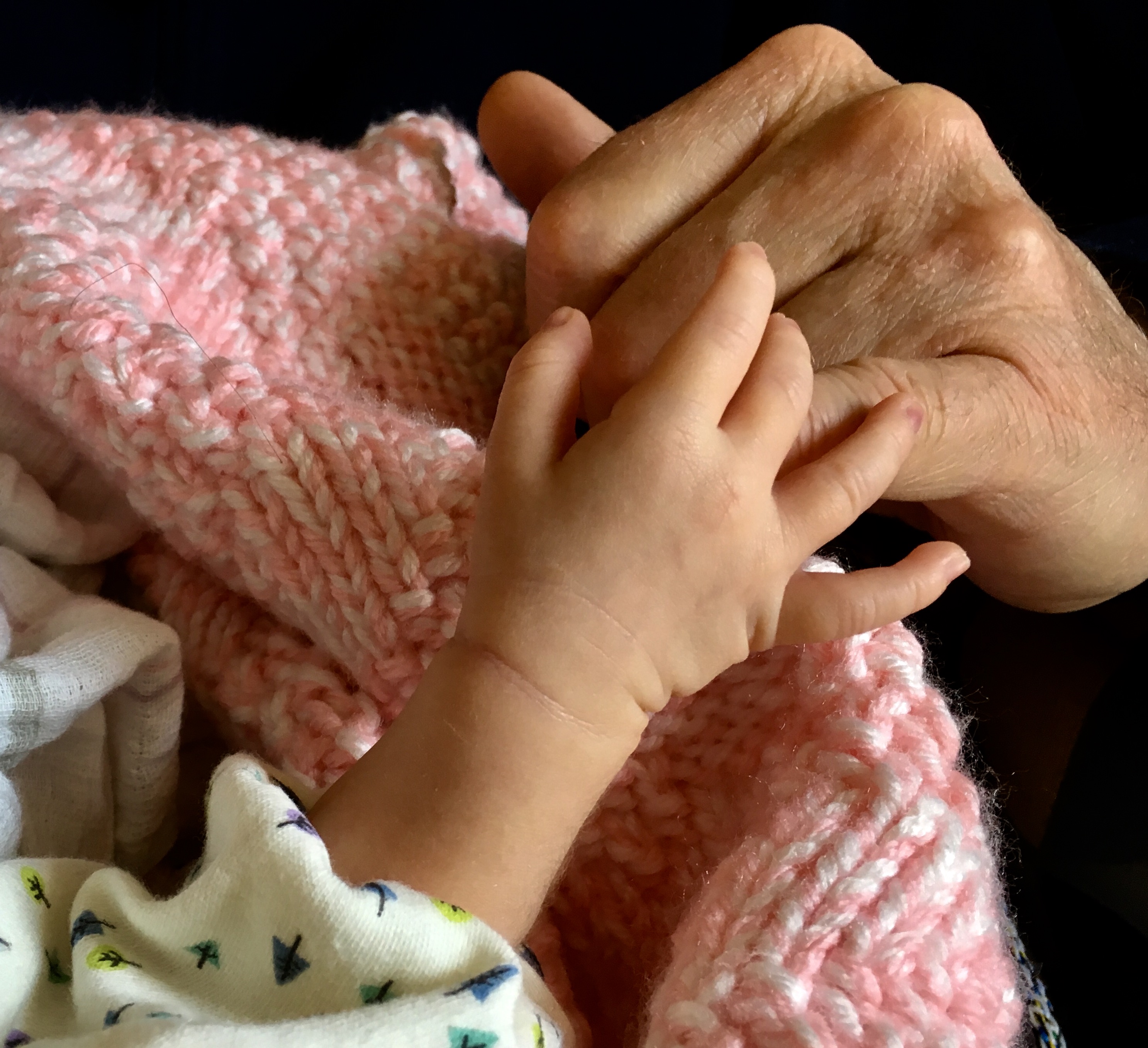
Christ has no body now but yours.
No hands, no feet on earth but yours.
Yours are the eyes through which he looks compassion on this world.
Yours are the feet with which he walks to do good.
Yours are the hands through which he blesses all the world.
Yours are the hands,
yours are the feet,
yours are the eyes,
you are his body.
Christ has no body now on earth but yours.
~Teresa of Avila

The whole mass of Christians
are the physical organism through which Christ acts—
that we are his fingers and muscles,
the cells of His body
.
~C.S. Lewis

Thousands are working around the clock
to tend to those who are ill and hurting,
~even at their own peril~
just as those who love the body of Christ
have done through centuries
of plagues and pandemics.

They know,
despite their own weariness,
each one who suffers,
each dear one,
is part of His body,
part of Our body.

We are the cells of His Being
still walking, weeping, loving
on this trembling earth.

This year’s Lenten theme on Barnstorming:

God sees us as we are,
loves us as we are,
and accepts us as we are.
But by His grace,
He does not leave us where we are.
~Tim Keller


From the love of my own comfort
From the fear of having nothing
From a life of worldly passions
Deliver me O God

From the need to be understood
From the need to be accepted
From the fear of being lonely
Deliver me O God Deliver me O God

And I shall not want,
I shall not want when I taste Your goodness
I shall not want
From the fear of serving others
From the fear of death or trial
From the fear of humility
Deliver me O God Deliver me O God
~Audrey Assad “I Shall Not Want”

Why Another?

Here dies another day
During which I have had eyes, ears, hands
And the great world round me;
And with tomorrow begins another.
Why am I allowed two?
~G.K. Chesterton “Evening”

Even on a Monday,
despite so much of the world
suffering,
there is work
that must be done;
I’ve been allowed
this day
to do my best
and maybe as this day dies
there will come, just as miraculous,
another.

Did You Cry?

To pull the metal splinter from my palm
my father recited a story in a low voice.
I watched his lovely face and not the blade.
Before the story ended, he’d removed
the iron sliver I thought I’d die from.

I can’t remember the tale,
but hear his voice still, a well
of dark water, a prayer.
And I recall his hands,
two measures of tenderness
he laid against my face,
the flames of discipline
he raised above my head.

Had you entered that afternoon
you would have thought you saw a man
planting something in a boy’s palm,
a silver tear, a tiny flame.
Had you followed that boy
you would have arrived here,
where I bend over my wife’s right hand.

Look how I shave her thumbnail down
so carefully she feels no pain.
Watch as I lift the splinter out.
I was seven when my father
took my hand like this,
and I did not hold that shard
between my fingers and think,
Metal that will bury me,
christen it Little Assassin,
Ore Going Deep for My Heart.
And I did not lift up my wound and cry,
Death visited here!
I did what a child does
when he’s given something to keep.
I kissed my father.
~Li-Young Lee, “The Gift”

Your father enters the poem
early,
storying past
the metal splinter
in your palm.

I set your paternity
—and the poem—
aside,
to reach back for my mother
and try to remember

what kind of day it was
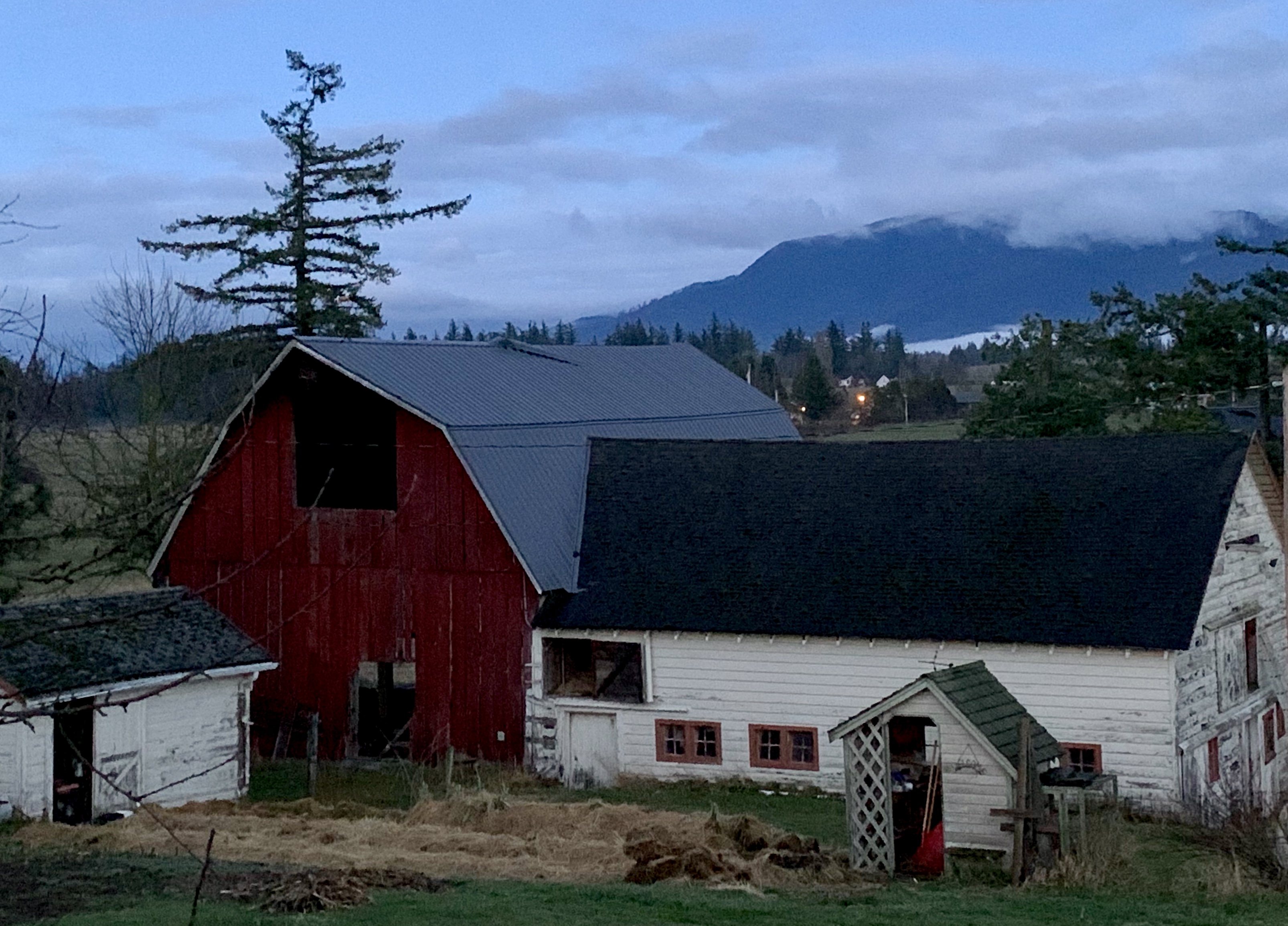
when I played by the barn
where, it is said,
my own father raised pigs
(I do not remember this).

And what kind of day it was
when I found the barn,
door open,
silent

and tried to pluck silver lines
from silver webs
long-left,
then tendered my hand
on noiseless silvered wood

until my palms
were rife with the evidence
of my trying,

and mother
spent the night
with a silver tweezer,
counting as she went…
ninety-eight
ninety-nine
one hundred—

a ritual for my
tears.

And now I wonder,
Li-Young—did you cry,
and who was in the story,
and how many times
have you counted it since,
to forget,
and to remember.

~L. L. Barkat, “Li-Young Lee’s Splinter” from  Love, Etc.

I did, without ever wanting to, remove my child’s splinter, lance a boil, immobilize a broken arm, pull together sliced skin, clean many dirty wounds. It felt like I was always crossing the line between mommy and doctor.  But someone had to do it, and a four hour wait in the emergency room didn’t seem warranted.

My own child learned to cope with hurt made worse by someone they trusted to be comforter. I dealt with inflicting pain, temporary though it may be, to flesh that arose from my own flesh.  It hurt as much as if it were my own wound needing cleansing, not theirs.

Our wounds are His – He is constantly feeling our pain as He performs healing surgeries in our lives, not because He wants to but because He must, to save us from our own destruction.

Too often we yell and kick and protest in our distress, wanting it our way, not His way, making it all that much more difficult for both of us.

If only we can come to acknowledge His intervention is our salvage:
our tears to flow in relief, not anguish, we cling to His protection rather than pushing Him away, we kiss Him in gratitude as we are restored again and yet again.

Drying Inward From the Edge

 
I know what my heart is like
      Since your love died:
It is like a hollow ledge
Holding a little pool
      Left there by the tide,
      A little tepid pool,
Drying inward from the edge.
~Edna St. Vincent Millay “Ebb”


I wondered if that was how forgiveness budded;
not with the fanfare of epiphany,
but with pain gathering its things,
packing up,
and slipping away unannounced in the middle of the night.

— Khaled Hosseini from The Kite Runner

My mother was seven years younger than I am now when my father left her for a younger woman.  For months my mother withered, crying until there were no more tears left, drying inward from her edges.  

It took ten years, but he came back like an overdue high tide.   She was sure her love had died but the tepid pool refilled, the incoming water cool to the touch, finally overflowing beyond imagining.

The Moment You Forgot

It was like the moment when a bird decides not to eat
from your hand,
and flies, just before it flies, the moment the rivers seem
to still
and stop because a storm is coming, but there is no
storm, as when
a hundred starlings lift and bank together before they
wheel and drop,
very much like the moment, driving on bad ice, when it
occurs to you
your car could spin, just before it slowly begins to spin,
like
the moment just before you forgot what it was you were
about to say,
it was like that, and after that, it was still like that, only
all the time.

~Marie Howe “Part of Eve’s Discussion”

We all know how vulnerable we are to temptation; we know our failings and weaknesses yet how quickly we can go from knowing to forgetting.

There is a stillness, a suspension of time, in that moment of knowing – there is constant internal debate about the choices we face and what to do with that knowledge.

How many of us, knowing well the consequences, still do what we ought not to do? How many of us, having been previously told, having learned from history, having already experienced our own banishment, still make the wrong decision?

All of us, all the time, that’s how many. We are helpless despite our knowledge of good and evil. We forget, over and over.

Thank God for His grace in the face of our poor memories. Thank God He still feeds us wholly from His loving hands.

With A Heavy Heart

Outside the house the wind is howling
and the trees are creaking horribly.
This is an old story
with its old beginning,
as I lay me down to sleep.
But when I wake up, sunlight
has taken over the room.
You have already made the coffee
and the radio brings us music
from a confident age. In the paper
bad news is set in distant places.
Whatever was bound to happen
in my story did not happen.
But I know there are rules that cannot be broken.
Perhaps a name was changed.
A small mistake. Perhaps
a woman I do not know
is facing the day with the heavy heart
that, by all rights, should have been mine.
~Lisel Mueller “In November”

It does not escape me~
(I wake every day knowing this)
the earthquake happened somewhere else,
a tornado leveled some other town,
a plane full of ordinary people like me was shot out of the sky,
a drunk driver destroyed a family,
a fire left a forest and homes in ashes,
a missing son’s body was found frozen in an avalanche,
a devastating diagnosis darkens
someone’s remaining days.

No mistake has been made,
yet I wake knowing this part of my story
has not yet visited me-
the heavy heart
that should have been mine
awaits,
still breaking,
still bleeding,
still beating
still believing miracles can happen.

The Long Road of Weariness and Want

We think of him as safe beneath the steeple,
Or cosy in a crib beside the font,
But he is with a million displaced people
On the long road of weariness and want.
For even as we sing our final carol
His family is up and on that road,

Fleeing the wrath of someone else’s quarrel,
Glancing behind and shouldering their load.
Whilst Herod rages still from his dark tower
Christ clings to Mary, fingers tightly curled,
The lambs are slaughtered by the men of power,
And death squads spread their curse across the world.
But every Herod dies, and comes alone
To stand before the Lamb upon the throne.
~Malcolm Guite “Refugee”

…as you sit beneath your beautifully decorated tree, eat the rich food of celebration, and laugh with your loved ones, you must not let yourself forget the horror and violence at the beginning and end of the Christmas story. The story begins with the horrible slaughter of children and ends with the violent murder of the Son of God. The slaughter depicts how much the earth needs grace. The murder is the moment when that grace is given.

Look into that manger representing a new life and see the One who came to die. Hear the angels’ celebratory song and remember that sad death would be the only way that peace would be given. Look at your tree and remember another tree – one not decorated with shining ornaments, but stained with the blood of God.

As you celebrate, remember that the pathway to your celebration was the death of the One you celebrate, and be thankful.
~Paul Tripp

There can be no consolation;
only mourning and great weeping,
sobbing that wrings dry
every human cell,
leaving dust behind,
dust, only dust
which is beginning
and end.

He came to us
for times such as this,
born of
the dust of woman and
the breath of Spirit,
God who bent down to
lie in barn dust,
walk on roads of dust,
die and be laid to rest as dust
in order to conquer
such evil as this
that could terrify masses
and massacre innocents.

He became dust to be
like us
He began a mere speck in a womb
like us,
so easily washed away
as unexpected, unneeded, unwanted.

Lord, You are long expected.
You are needed
You are wanted.

Your heart beat
like ours
breathing each breath
like ours
until a fearful fallen world
took Your
and our breath
away.

You shine through
the shadows of death
to guide our stumbling uncertain feet.
Your tender mercies flow freely
when there is no consolation
when there is no comfort.

You hear our cries
as You cry too.
You know our tears
as You weep too.
You know our mourning
as You mourned too.
You know our dying
as You died too.

Only God can glue together
what evil has shattered.

We will know His peace
when He comes
to bring us home,
our tears finally dried,
our cells no longer
just dust,
as we are glued together
by the breath of God
forevermore.

the tender mercy of our God,
    by which the rising sun will come to us from heaven
to shine on those living in darkness
    and in the shadow of death,
to guide our feet into the path of peace.
Luke 1: 78-79

We Are No Longer Alone: He Will Come Like A Child

He will come like last leaf’s fall.
One night when the November wind
has flayed the trees to the bone, and earth
wakes choking on the mould,
the soft shroud’s folding.


He will come like frost.
One morning when the shrinking earth
opens on mist, to find itself
arrested in the net
of alien, sword-set beauty.


He will come like dark.
One evening when the bursting red
December sun draws up the sheet
and penny-masks its eye to yield
the star-snowed fields of sky.


He will come, will come,
will come like crying in the night,
like blood, like breaking,
as the earth writhes to toss him free.
He will come like child.
~Rowan Williams “Advent Calendar”

How have we diminished the worth of a child?

More and more we resist humanity’s mandate to ensure a future for those who come after us.

Our excuse: the world is dying, the climate an emergency,
how do we dare expose future generations to desolation and destruction?

Better to have no children at all.
So many choose childlessness, doing whatever it takes to remain childless.

Yet all feel outrage at the images of children suffering
and dying trying to escape poverty, homelessness, war and evil:

A toddler lying face down in the water on a Turkish beach,
at first glance almost as if napping, but this sleep is forever.
A father drowned in the Rio Grande protecting his daughter, also drowned,
trying to bring her to a safe future in the States.

This is nothing new in the history of humanity.
We kill unborn children every day in our own private wars
that we justify without guilt or regret.

When confronted by images of dead children while eating breakfast,
when millions cry out with the shame of it,
so many tears falling like raindrops soaking deep on holy ground,
ground we share with the poor and oppressed and homeless,
ground we no longer can hoard.

These images change from one day to the next,
birthing life, taking life,
a child in the womb becomes ghost in the tomb,
so we come undone,
forced to unbuild walls we hide behind.

God Himself came like a child – bloody, broken, crying.
The earth writhes in the reality that if conceived today, Jesus would likely be washed away before His birth, considered inconvenient and so unfortunate to be born to an impoverished refugee family. The world was much too harsh for Him to thrive.

So we would toss away the Son, the Light, the Hope and cling to our darkness.

What is the worth of such a Child?
He answers clearly:
He came because we are worthy of both His birth and His death.

Thy cradle here shall glitter bright,
And darkness breathe a newer light,
Where endless faith shall shine serene,
And twilight never intervene

~from Veni Redemptor Genium (Come Thou Redeemer of the Earth)

Oh little child it’s Christmas night
And the sky is filled with glorious light
Lay your soft head so gently down
It’s Christmas night in Bethlehem town.

Chorus:
Alleluia the angels sing
Alleluia to the king
Alleluia the angels sing
Alleluia to the king.

Sleep while the shepherds find their way
As they kneel before you in the golden hay
For they have brought you a woolly lamb
On Christmas night in Bethlehem.

Chorus

Sleep till you wake at the break of day
With the sun’s first dawning ray
You are the babe, who’ll wear the crown
On Christmas morn in Bethlehem town.

Alleluia