He Sees Us As We Are: Tending the Sick

Keep watch, dear Lord,
with those who work, or watch, or weep this night,
and give your angels charge over those who sleep.
Tend the sick, Lord Christ;
give rest to the weary,
bless the dying,
soothe the suffering,
pity the afflicted,
shield the joyous;
and all for your love’s sake.
Amen.
~Common Book of Prayer

Now you are the body of Christ, and each one of you is a part of it.
1Corinthians 12:27

Christ has no body now but yours.
No hands, no feet on earth but yours.
Yours are the eyes through which he looks compassion on this world.
Yours are the feet with which he walks to do good.
Yours are the hands through which he blesses all the world.
Yours are the hands,
yours are the feet,
yours are the eyes,
you are his body.
Christ has no body now on earth but yours.
~Teresa of Avila

The whole mass of Christians
are the physical organism through which Christ acts—
that we are his fingers and muscles,
the cells of His body
.
~C.S. Lewis

Thousands are working around the clock
to tend to those who are ill and hurting,
~even at their own peril~
just as those who love the body of Christ
have done through centuries
of plagues and pandemics.

They know,
despite their own weariness,
each one who suffers,
each dear one,
is part of His body,
part of Our body.

We are the cells of His Being
still walking, weeping, loving
on this trembling earth.

This year’s Lenten theme on Barnstorming:

God sees us as we are,
loves us as we are,
and accepts us as we are.
But by His grace,
He does not leave us where we are.
~Tim Keller


From the love of my own comfort
From the fear of having nothing
From a life of worldly passions
Deliver me O God

From the need to be understood
From the need to be accepted
From the fear of being lonely
Deliver me O God Deliver me O God

And I shall not want,
I shall not want when I taste Your goodness
I shall not want
From the fear of serving others
From the fear of death or trial
From the fear of humility
Deliver me O God Deliver me O God
~Audrey Assad “I Shall Not Want”

The Otherness of Things

I am struck by the otherness of things rather than their same-
ness. The way a tiny pile of snow perches in the crook of a
branch in the tall pine, away by itself, high enough not to be
noticed by people, out of reach of stray dogs. It leans against
the scaly pine bark, busy at some existence that does not
need me.

It is the differences of objects that I love, that lift me toward
the rest of the universe, that amaze me. That each thing on
earth has its own soul, its own life, that each tree, each clod is
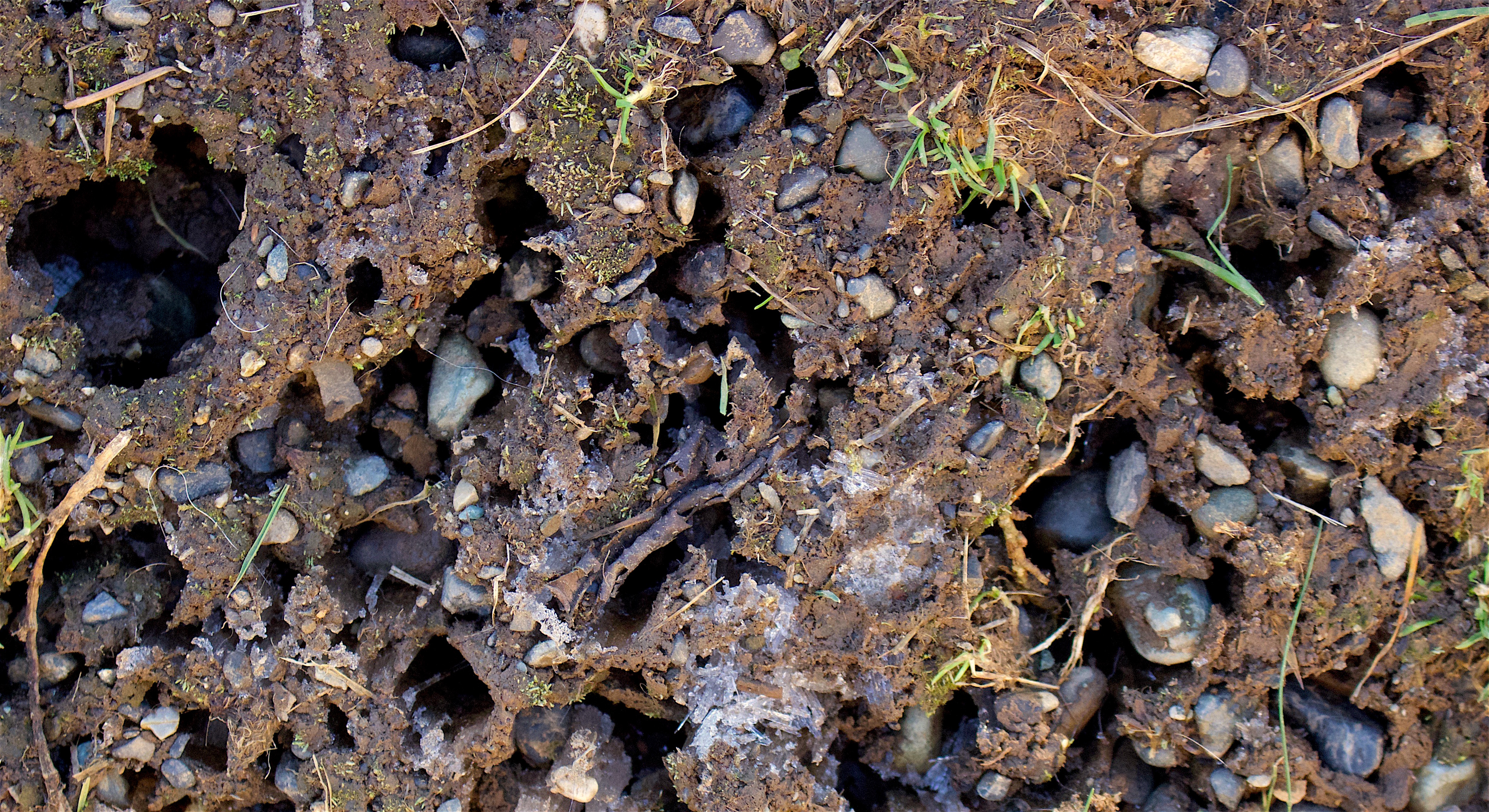
filled with the mud of its own star. I watch where I step and see
that the fallen leaf, old broken grass, an icy stone are placed in
exactly the right spot on the earth, carefully, royalty in their
own country.
~Tom Hennen “Looking for the Differences” from Darkness Sticks to Everything. 

We dwell so much on our differences rather than our similarities, especially in an intense political year like this one. There is nothing wrong with “otherness” if each other is seen as God sees us.

We each are one of His precious and specially-made creations, worthy of existence even in our muddy, rocky, fragile state.

These days, though a “snowflake” is disparaged in the political banter of the day as weak and overly sensitive, there is nothing more uniquely “other” than an individual crystalline creation falling from heaven to the exact spot where it is intended to land. Something so unique becomes part of something far greater than it could be on its own, blending in, infinitely stronger, but never lost.

I am placed here, weak as I am, in the exact right spot, for reasons I continue to uncover and discover. I try every day, as best as I can, to not get lost and, of course, to stay out of the mud.

So Then, Live

It is not only prayer that gives God glory but work.
Smiting on an anvil,
sawing a beam,
whitewashing a wall,
driving horses,
sweeping,
scouring,
everything gives God some glory
if being in his grace you do it as your duty.
To go to communion worthily gives God great glory,
but to take food in thankfulness and temperance
gives him glory too.
To lift up the hands in prayer gives God glory,
but a man with a dungfork in his hand,
a woman with a slop pail,
gives him glory too.
He is so great that all things give him glory
if you mean they should.
So then, my brethren, live.
~Gerard Manley Hopkins – Poems and Prose of Gerard Manley Hopkins

Photo of Aaron Janicki haying with his Oberlander team in Skagit County courtesy of Tayler Rae
photo by Tayler Rae

Thanks in large part to how messily we humans live, this world is a grimy place.  

As an act of worship, we work at cleaning up after ourselves.  Hands that clean toilets, scrub floors, carry bedpans, pick up garbage might as well be clasped in prayer–it is in such mundane tasks God is glorified.

I spend time every day carrying buckets and wielding a pitchfork because it is my way of restoring order to the disorder inherent in human life.  It is with gratitude that I’m able to pick up one little corner of my world, making stall beds tidier for our farm animals by mucking up their messes and in so doing, I’m cleaning up a piece of me at the same time.

I never want to forget the mess I’m in and the mess I am.  I never want to forget to clean up after myself.  I never want to feel it is a mere and mundane chore to worship with dungfork and slop pail.

It is my privilege.  It is His gift to me.
It is Grace that comes alongside me, to keep pitching the muck and carrying the slop when I am too weary to do it myself.

Waiting for News of Spring

It’s a motley lot. A few still stand
at attention like sentries at the ends
of their driveways, but more lean
askance as if they’d just received a blow
to the head, and in fact they’ve received
many, all winter, from jets of wet snow
shooting off the curved, tapered blade
of the plow. Some look wobbly, cocked
at oddball angles or slumping forlornly
on precariously listing posts. One box
bows steeply forward, as if in disgrace, its door
lolling sideways, unhinged. Others are dented,
battered, streaked with rust, bandaged in duct tape,
crisscrossed with clothesline or bungee cords.
A few lie abashed in remnants of the very snow
that knocked them from their perches.
Another is wedged in the crook of a tree
like a birdhouse, its post shattered nearby.
I almost feel sorry for them, worn out
by the long winter, off-kilter, not knowing
what hit them, trying to hold themselves
together, as they wait for news from spring.
~Jeffrey Harrison “Mailboxes in Late Winter”

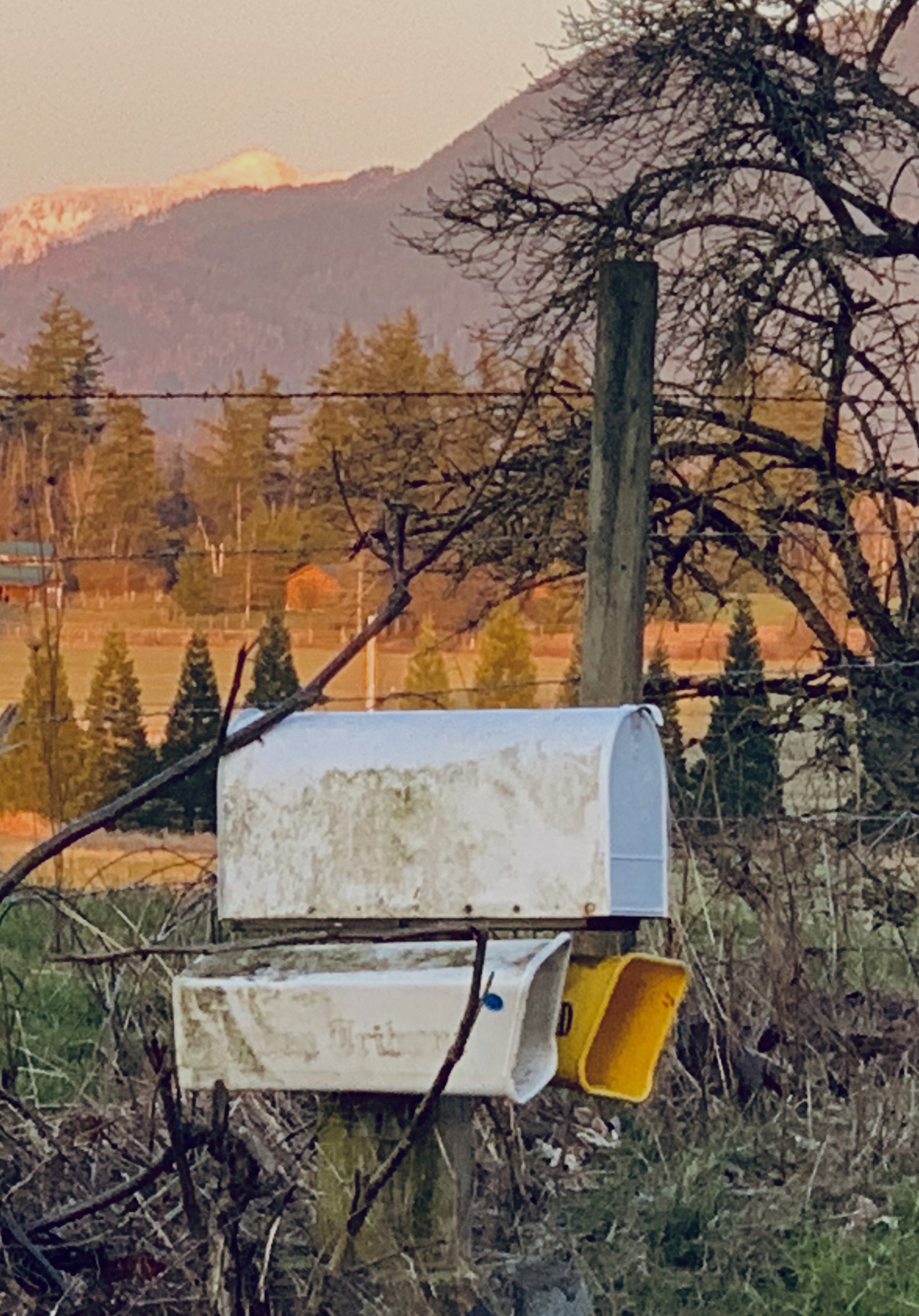
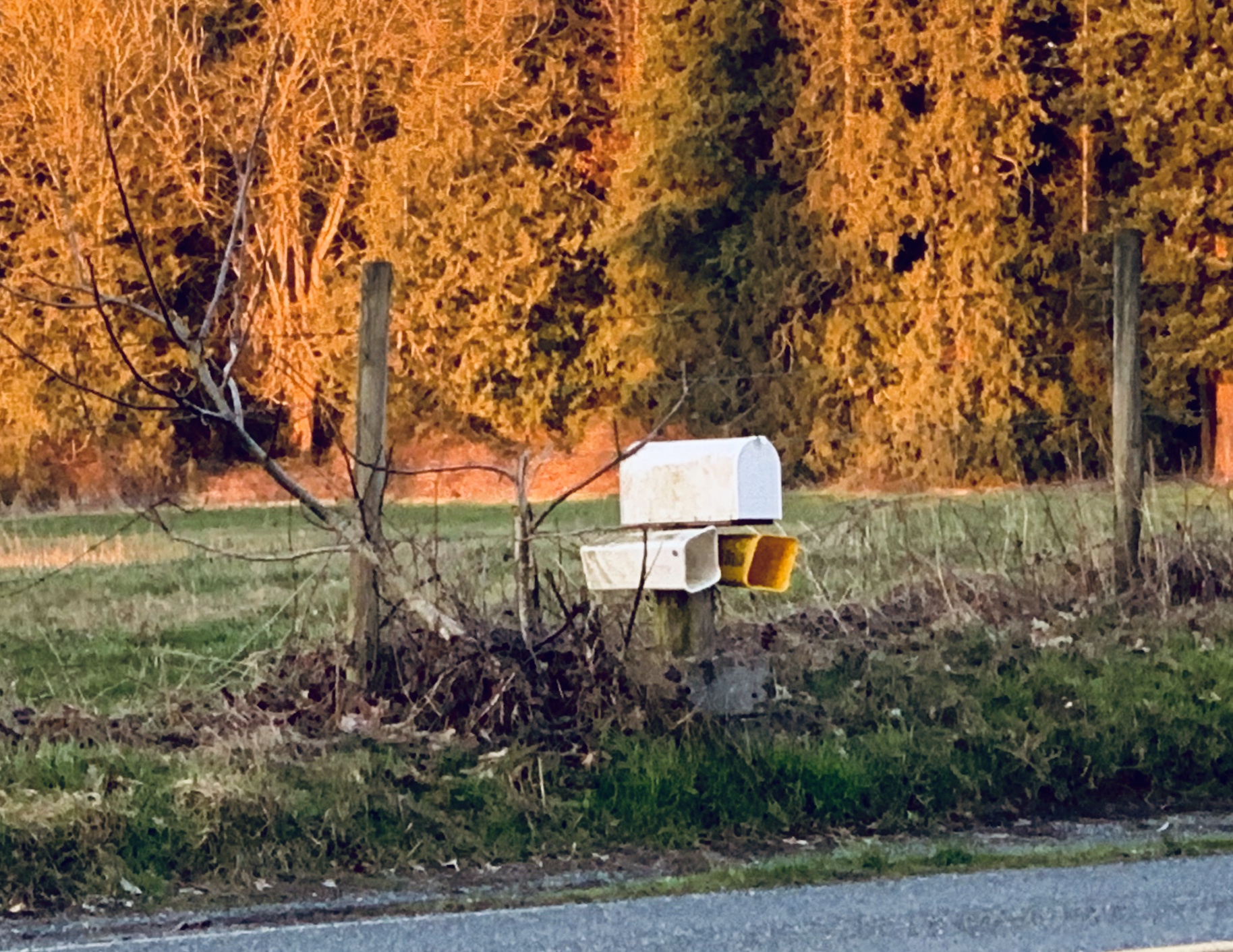
This time of year I too often feel like an off-kilter mailbox – rusty, dented, leaning rather than upright, covered with mildew and lichens — it will take some effort to look presentable after a long winter.

There isn’t much that would recommend me as a potential destination; most of the mail that is delivered to me is junk mail or bills. It is a rare pleasure to find a hand-addressed card or note. I have myself to thank for that: I rarely send one to anyone else. I’m not even sure I could find a stamp at home if I wanted one.

It reminds me how infrequently I actually hand write any form of communication any more, how dependent I’ve become on the instantaneous nature of texting and email, and how much I used to enjoy writing letters back and forth to family and friends, in what feels like another life.

Letters can be forever–a tangible representation of the writer illustrated by their choice of envelope, stamp and paper, writing utensil, style of script, sometimes a scent. The neatness or hurried nature of the writing says something about the urgency with which it was written. Emails have none of those features, and can feel ephemeral, although we know they can always be found and retrieved, for good and for ill, by those who know how to look for them.

It has been too long. It’s time to commit to writing a letter a week to someone who needs to be able to tangibly feel my caring about them, right in their hands.

Then just maybe, I can share news of the spring to come.

With Great Power Comes Great Responsibility

With great power there must also come great responsibility
~The “Peter Parker Principle” from Spiderman Comics (1962)

From everyone who has been given much, much will be demanded; and from the one who has been entrusted with much, much more will be asked.
Luke 12:48
b

This line, the final conclusion to the parable of the wise and faithful servant has become a modern mantra – thanks to Spiderman, the Supreme Court, Winston Churchill, President Obama and Bill and Melinda Gates.

Yet no one actually quotes the entire New Testament parable itself that ends with this very concept.

The story Jesus tells in Luke 12: 42-48 makes us wince, just as it is meant to:

42 The Lord answered, “Who then is the faithful and wise manager, whom the master puts in charge of his servants to give them their food allowance at the proper time? 43 It will be good for that servant whom the master finds doing so when he returns. 44 Truly I tell you, he will put him in charge of all his possessions.45 But suppose the servant says to himself, ‘My master is taking a long time in coming,’ and he then begins to beat the other servants, both men and women, and to eat and drink and get drunk. 46 The master of that servant will come on a day when he does not expect him and at an hour he is not aware of. He will cut him to pieces and assign him a place with the unbelievers.4“The servant who knows the master’s will and does not get ready or does not do what the master wants will be beaten with many blows. 48 But the one who does not know and does things deserving punishment will be beaten with few blows. From everyone who has been given much, much will be demanded; and from the one who has been entrusted with much, much more will be asked.

The same story as told in the gospel of Matthew ends with “weeping and gnashing of teeth.”

Somehow that part is left out of Spiderman’s story and is a bit too close to home for those in power and those with immense wealth — like Peter Parker, we know all too well the reality of just how fragile and weak we really are despite our perceived Spidey powers.
We don’t have a choice in the matter if we want to live in Him as Christians, identifying by name with the Son of God who gave up everything for us.

We owe much when to us much has been given. U.S. Presidents can learn from the wisdom of Spiderman, remembering Who actually spoke it first.
Stillness of the Heart

It was like a church to me.
I entered it on soft foot,
Breath held like a cap in the hand.
It was quiet.
What God there was made himself felt,
Not listened to, in clean colours
That brought a moistening of the eye,
In a movement of the wind over grass.

There were no prayers said. But stillness
Of the heart’s passions – that was praise
Enough; and the mind’s cession
Of its kingdom. I walked on,
Simple and poor, while the air crumbled
And broke on me generously as bread.
~R.S. Thomas “The Moor” Collected Poems: R. S. Thomas

This is a Sabbath morning
when I’m surrounded by His stilling presence~
when God is felt,
neither seen or heard,
overtaking me
within each breath taken,
following the path of each glistening tear,
feeding me manna from sky and body,
becoming the ground reaching to meet my foot
with each step I take.

Why Another?

Here dies another day
During which I have had eyes, ears, hands
And the great world round me;
And with tomorrow begins another.
Why am I allowed two?
~G.K. Chesterton “Evening”

Even on a Monday,
despite so much of the world
suffering,
there is work
that must be done;
I’ve been allowed
this day
to do my best
and maybe as this day dies
there will come, just as miraculous,
another.

How It’s Meant to Be


There comes a time in every fall
before the leaves begin to turn
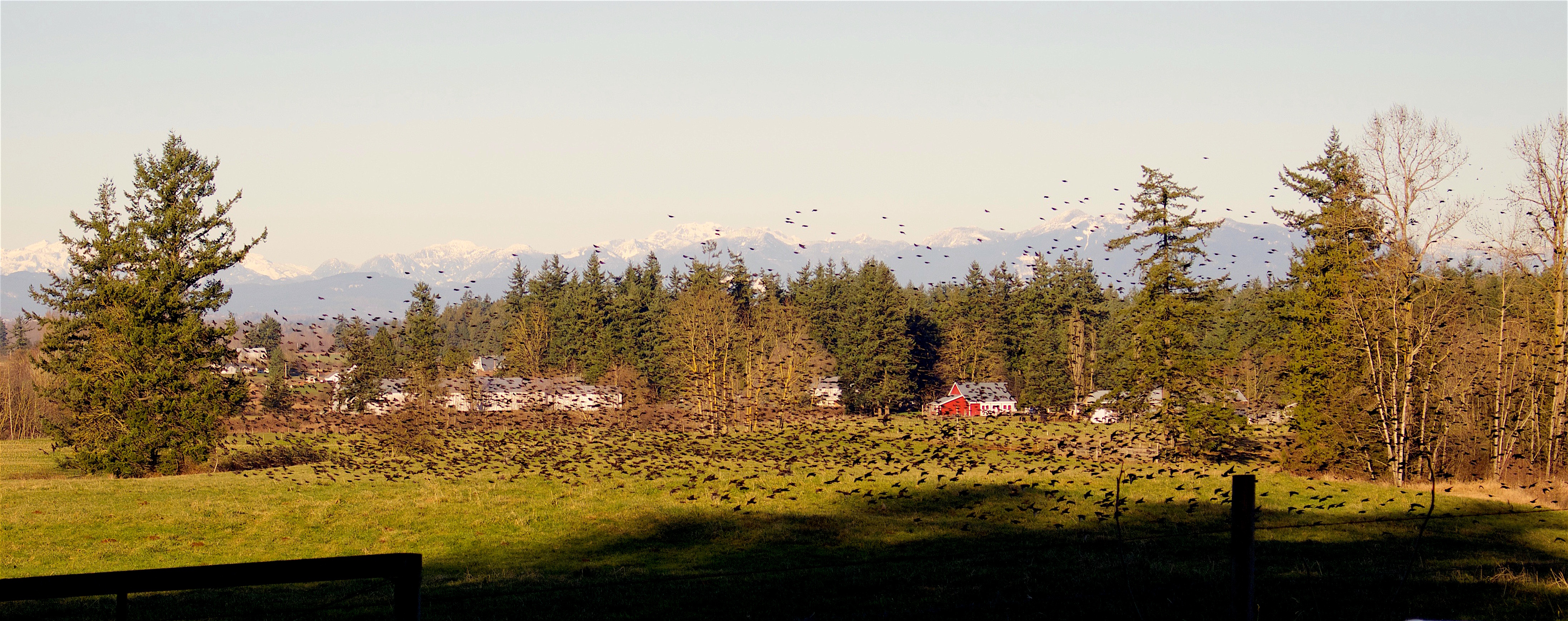
when blackbirds group and flock and gather
choosing a tree, a branch, together
to click and call and chorus and clamor
announcing the season has come for travel.

Then comes a time when all those birds
without a sound or backward glance
pour from every branch and limb
into the air, as if on a whim
but it’s a dynamic, choreographed mass
a swoop, a swerve, a mystery, a dance

and now the tree stands breathless, amazed
at how it was chosen, how it was changed.

~Julie Cadwallader Staub “Turning” from Wing Over Wing

…yesterday I heard a new sound above my head
a rustling, ruffling quietness in the spring air

and when I turned my face upward
I saw a flock of blackbirds
rounding a curve I didn’t know was there
and the sound was simply all those wings,
all those feathers against air, against gravity
and such a beautiful winning:
the whole flock taking a long, wide turn
as if of one body and one mind.

How do they do that?

If we lived only in human society
what a puny existence that would be

but instead we live and move and have our being
here, in this curving and soaring world
that is not our own
so when mercy and tenderness triumph in our lives
and when, even more rarely, we unite and move together
toward a common good,

we can think to ourselves:

ah yes, this is how it’s meant to be.
~Julie Cadwallader Staub from “Blackbirds” from Wing Over Wing

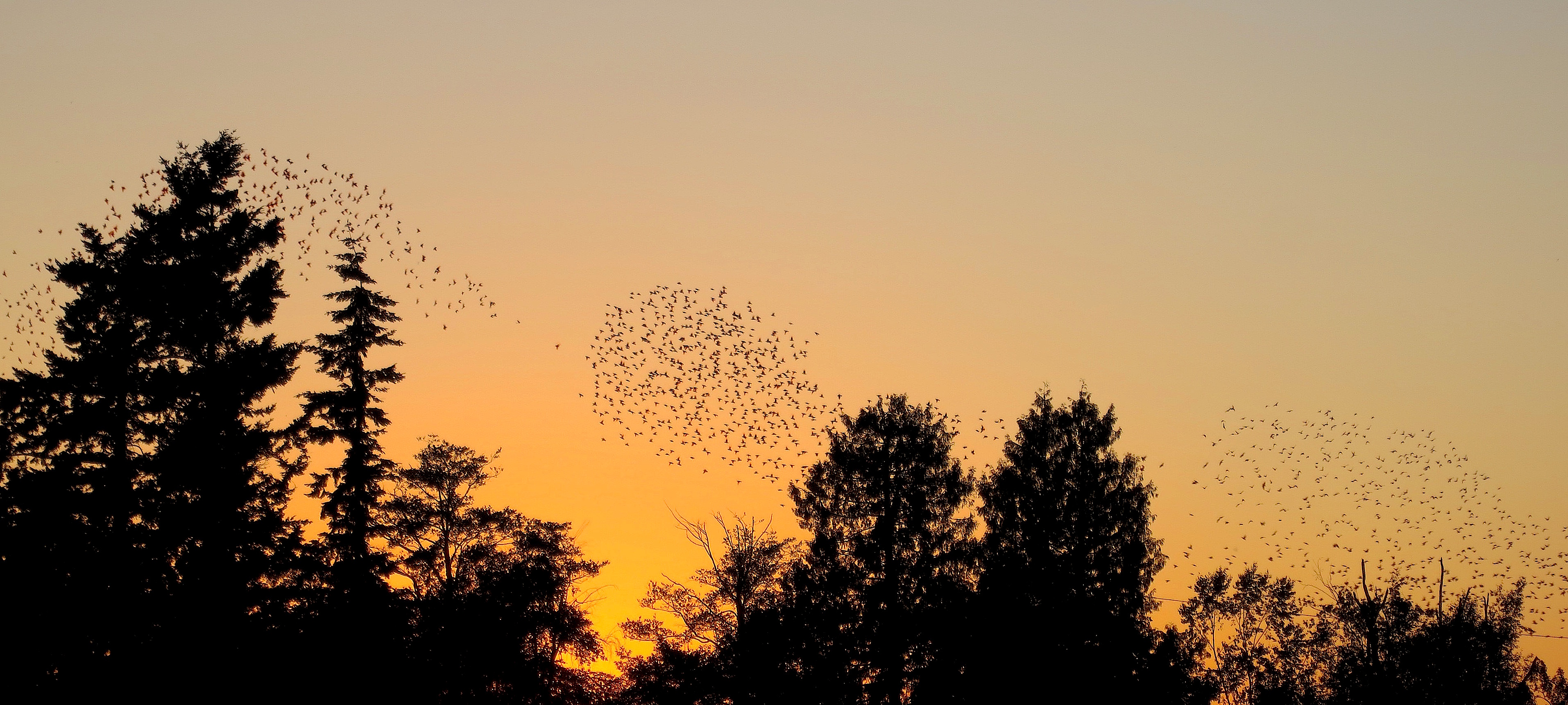
Out of the dimming sky a speck appeared,
then another, and another.
It was the starlings going to roost. 
They gathered deep in the distance,  flock sifting into flock,
and strayed towards me, transparent and whirling, like smoke.
They seemed to unravel as they flew,
lengthening in curves, like a loosened skein. 
I didn’t move;
they flew directly over my head for half an hour. 

Each individual bird bobbed and knitted up and down
in the flight at apparent random, for no known reason except
that that’s how starlings fly, yet all remained perfectly spaced.
The flocks each tapered at either end from a rounded middle, like an eye.
Overhead I heard a sound of beaten air, like a million shook rugs, a muffled whuff.
Into the woods they sifted without shifting a twig,
right through the crowns of trees, intricate and rushing, like wind.

Could tiny birds be sifting through me right now,
birds winging through the gaps between my cells,
touching nothing, but quickening in my tissues, fleet?
~Annie Dillard from Pilgrim at Tinker Creek

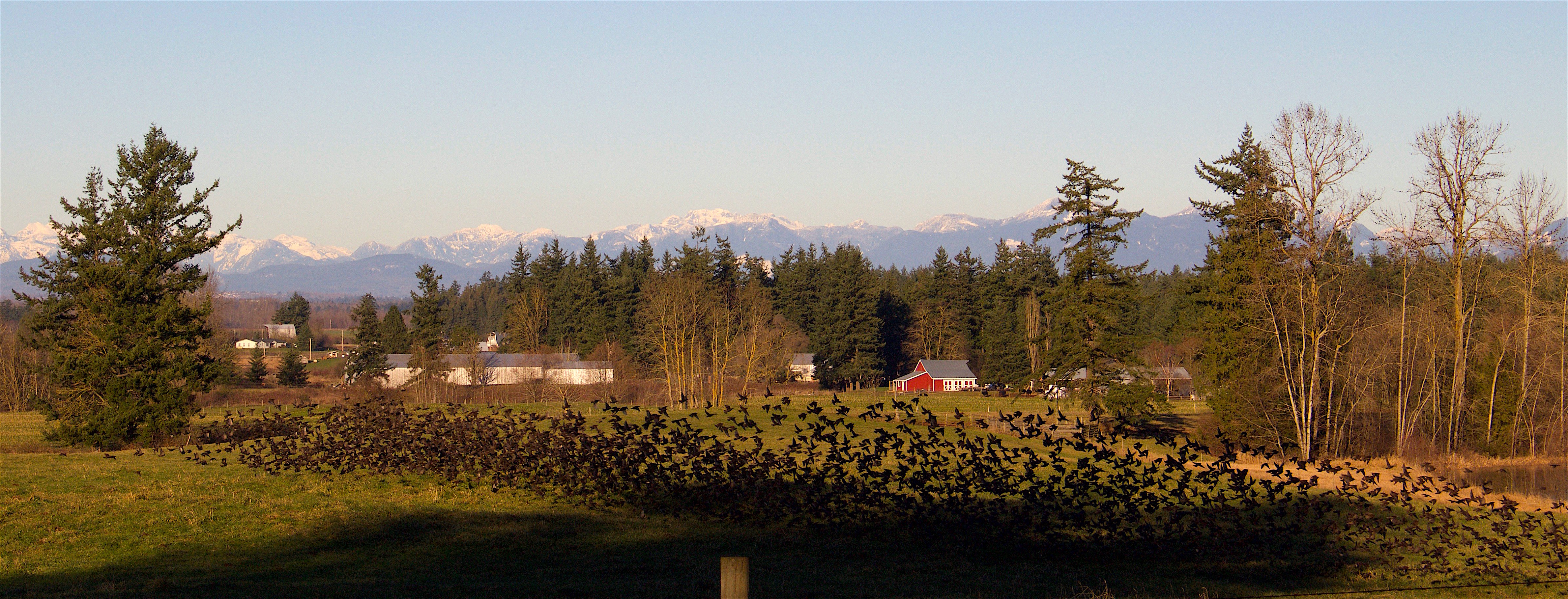
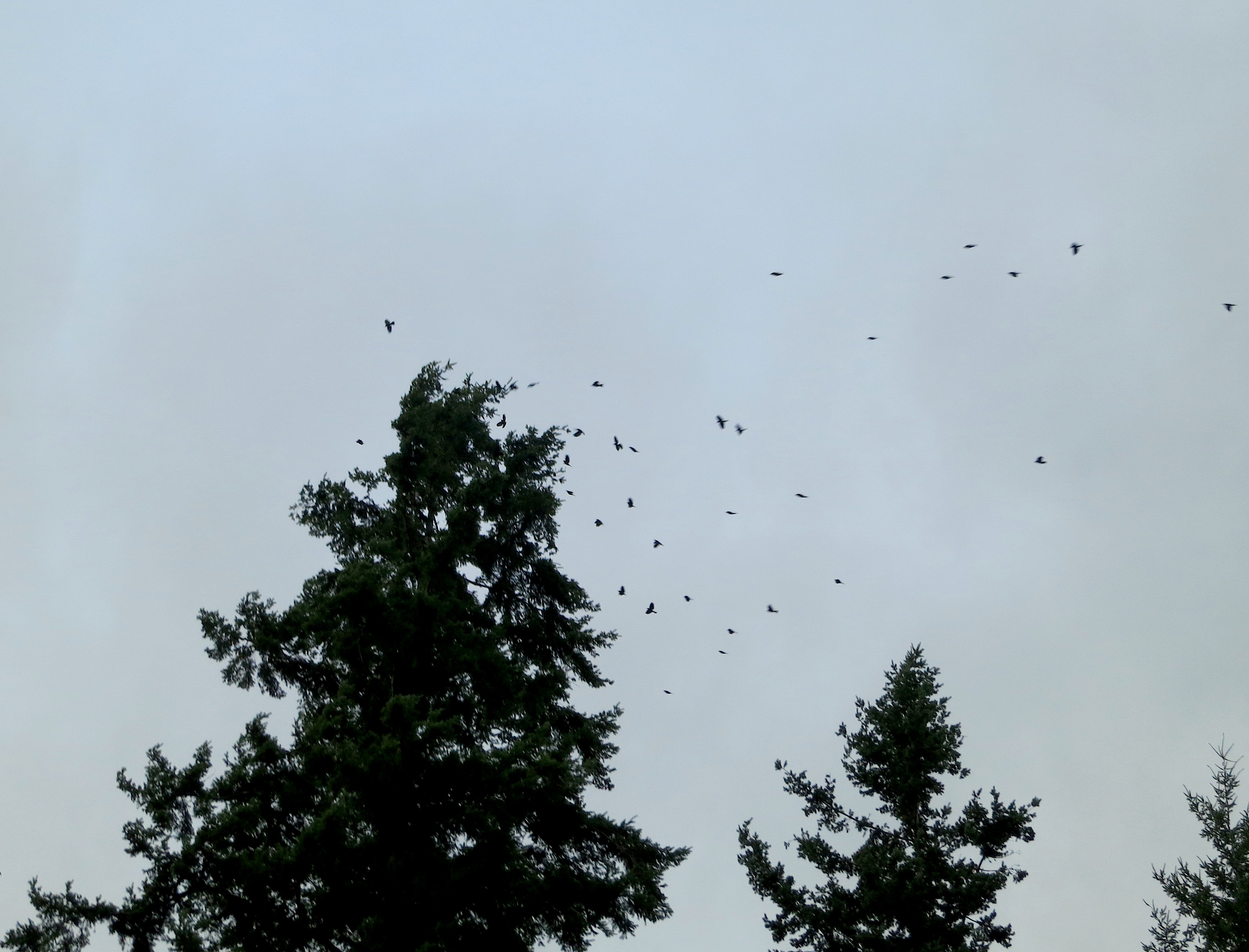
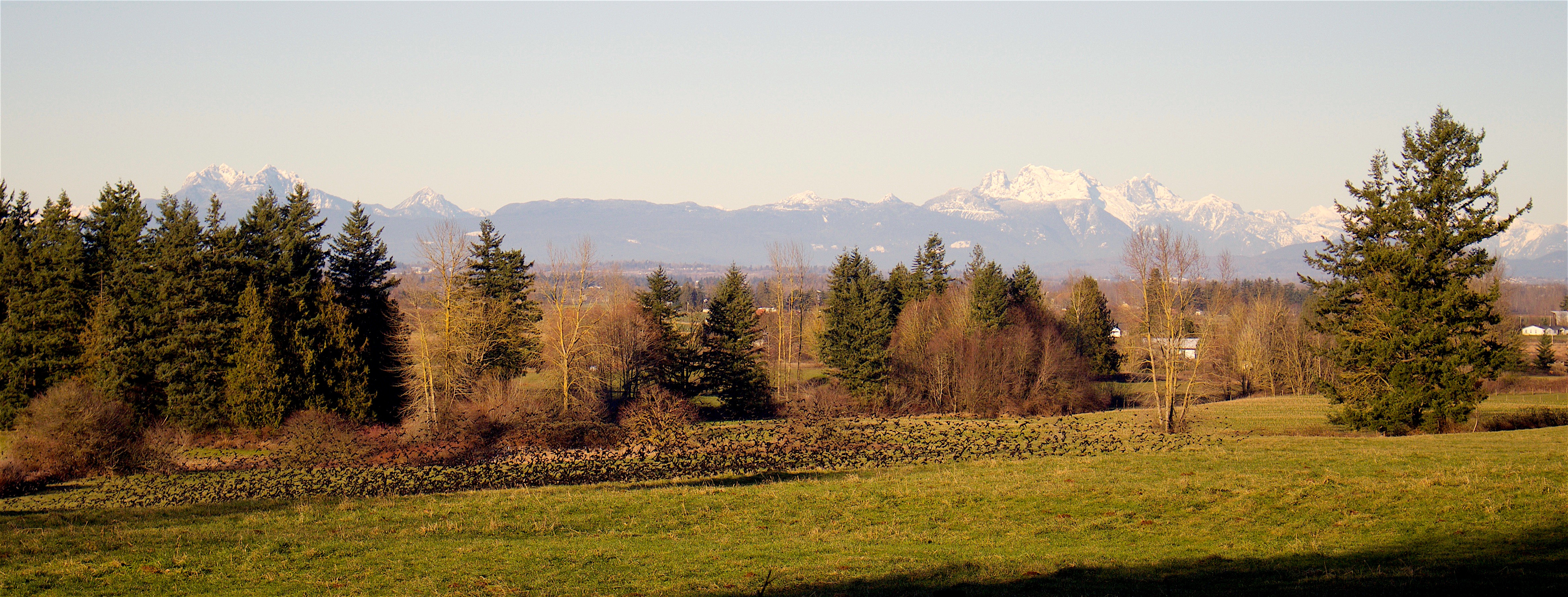
Watching the starlings’ murmuration is a visceral experience – my heart leaps to see it happen above me.  I feel queasy following its looping amoebic folding and unfolding path.

Thousands of individual birds move in sync with one another to form one massive organism existing solely because each tiny component anticipates and cooperates to avoid mid-air collisions.  It could explode into chaos but it doesn’t.  It could result in massive casualties but it doesn’t.  They could avoid each other altogether but they don’t – they come together with a purpose and reasoning beyond our imagining. Even the silence of their movement has a discernible sound of air rushing past wings.

We humans are made up of just such cooperating component parts, that which is deep in our tissues, programmed in our DNA.  Yet we don’t learn from our designed and carefully constructed building blocks.  We have become frighteningly disparate and independent creatures, each going our own way bumping and crashing without care.

We have lost our internal moral compass for how it is meant to be.

The rustling ruffling quiet of wings in the air is actually muffled weeping.

Falling Toward Each Other

We are waiting for snow
the way we might wait
for permission
to breathe again.

For only the snow
will release us, only the snow
will be a letting go, a blind falling
towards the body of earth
and towards each other.
~Linda Pastan from “Interlude”

I wish one
could press snowflakes
in a book
like flowers.
~James Schuyler from “February 13, 1975”

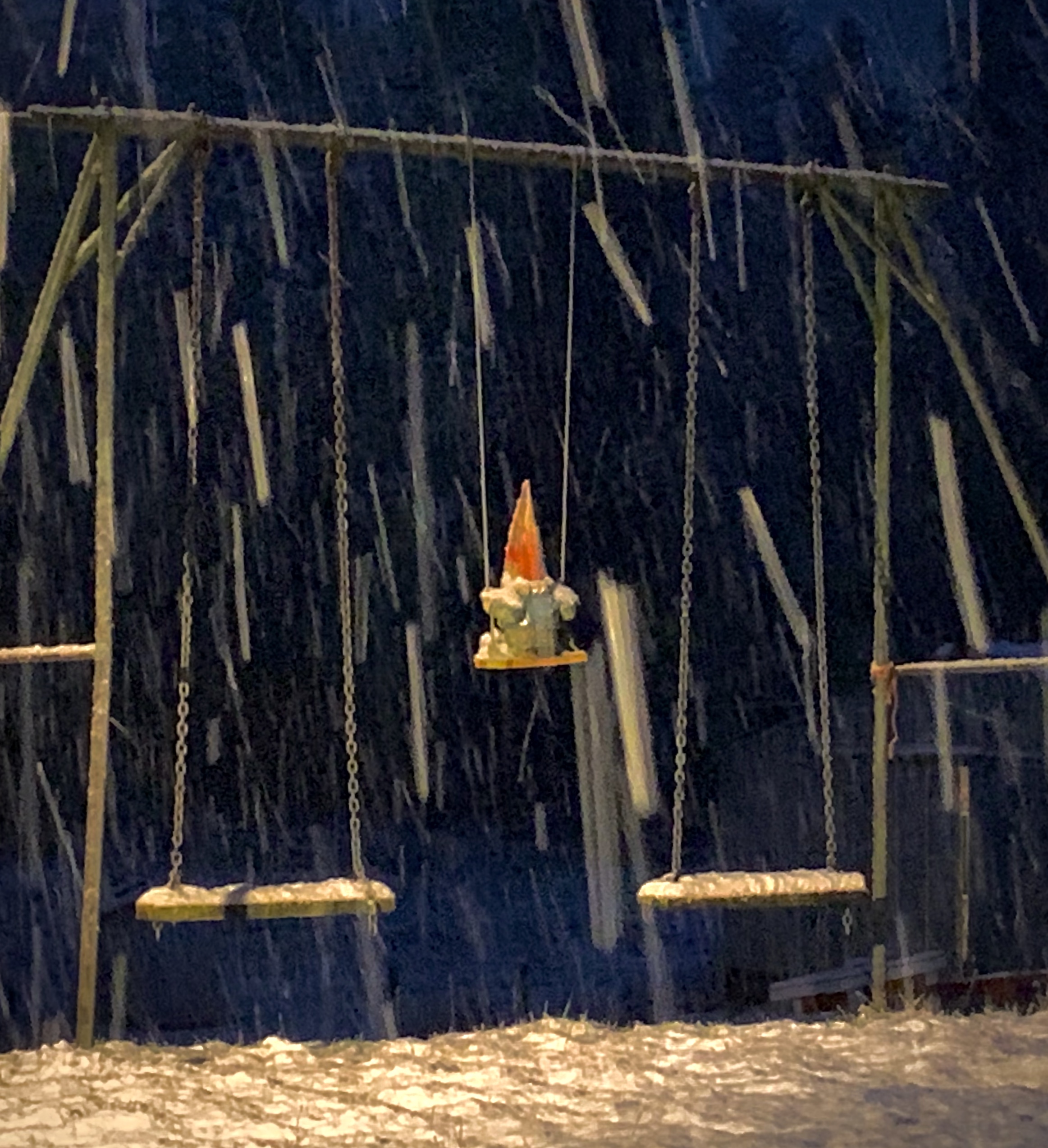
I wait with bated breath, wondrous at today’s snowfall, to see the landscape transformed. Each snowflake falls alone, settling in together in communal effort. And each is created as a singular masterpiece itself.

We, the created, are like each snowflake. Together we change the world, sometimes for better, too often for worse. But each of us have come from heaven uniquely designed and purposed, preciously preserved for eternity through God’s loving sacrifice.

Without Him, we melt between the pages of history.

photo by Alexay Kljatov, pbs.org

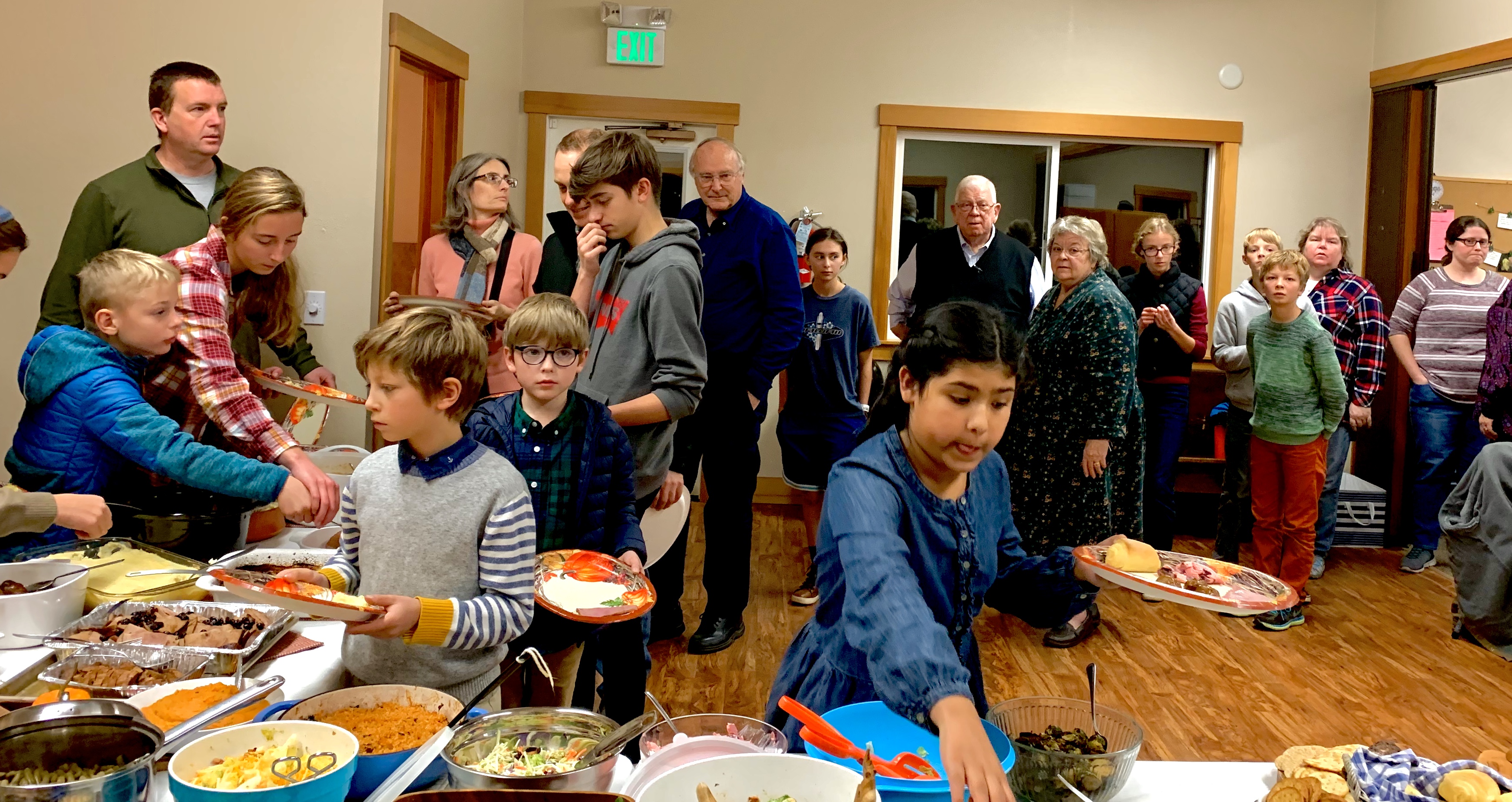
The Healing Power of a Church Potluck

The church, I think, is God’s way of saying,
“What I have in the pot is yours,
and what I have is a group of misfits
whom you need more than you know
and who need you more than they know.” 

“Take, and eat,” he says,
“and take, and eat,
until the day, and it is coming,
that you knock on my door.
I will open it, and you will see me face to face.”

He is preparing a table.
He will welcome us in.
Jesus will be there, smiling and holy,
holding out a green bean casserole.
And at that moment, what we say, what we think, and what we believe will be the same:
“I didn’t know how badly I needed this.”
~Jeremy Clive Huggins from “The Church Potluck”

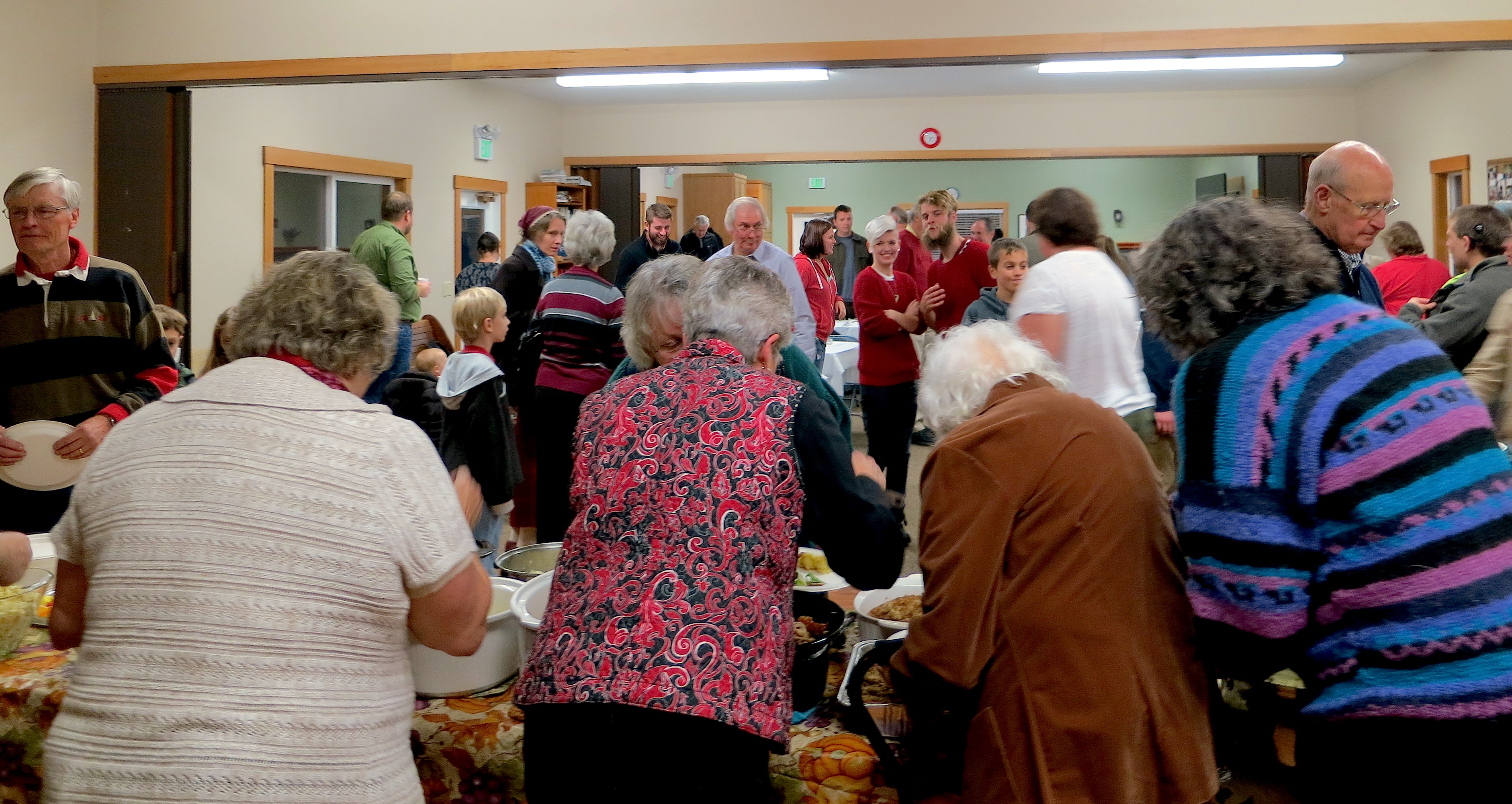
Perhaps a celebration at the end of a long cold winter month
Possibly a need of respite from a month of dieting
Likely a response to bad headline news day after day:
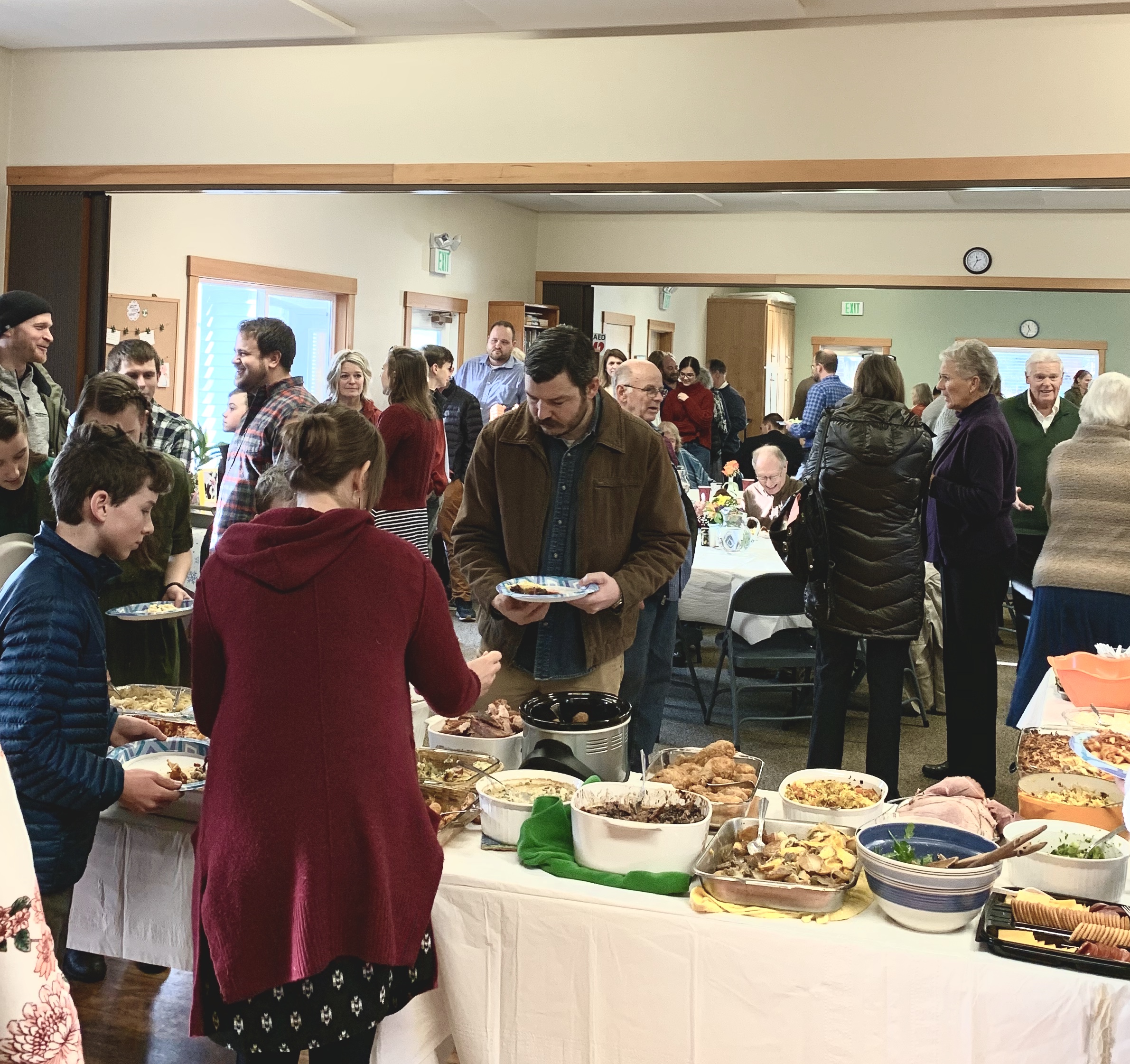
A potlatch, a potluck, a communion of comfort food.

What to bring? What soothes stomach and heart?

Macaroni and cheese, with drizzled bread cubes on top
Beef stew chuck-a-block with vegetables and potatoes
Buckets of fried chicken
Greenbean casserole
Meat loaf topped with ketchup
Tossed Caesar salad
Tator tots drizzled with cheese
Jello and ham buns

Home made bread, steaming, soft
Whole chocolate milk
And ice cream sundaes

Nothing expensive
Or extravagant
Or requiring going into debt to pay.

A fitting ending to a Sabbath of worship,
After meeting for prayer and hymns and the Word;
When times get tough, when we feel all alone,
When we drown in discouragement.

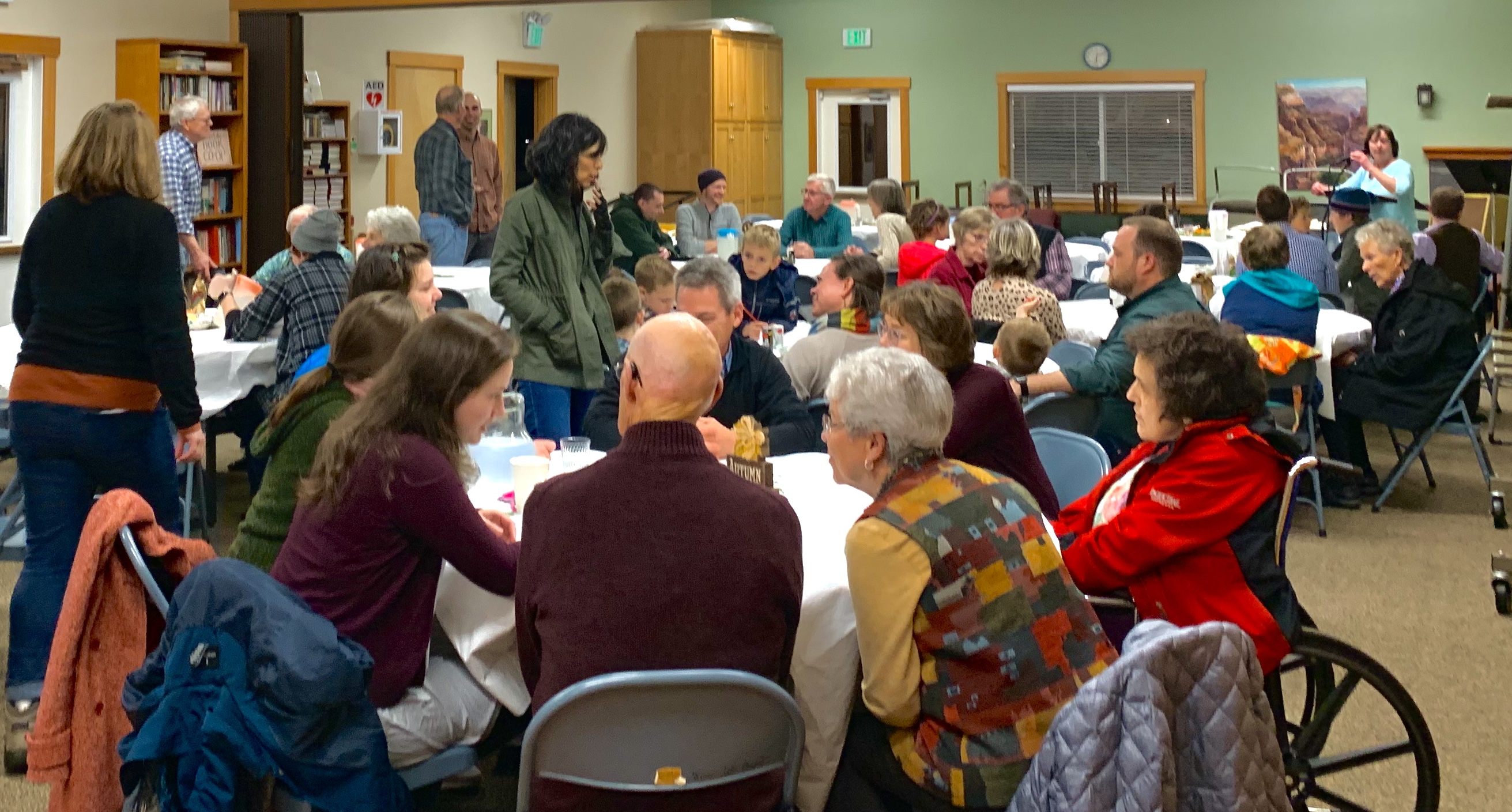
This is time for connecting congregation and community,
For huddling against life’s storm
Forgetting our worries for a time
And sharing God’s comfort food, all together, misfits that we are,
Smiling to know — we all badly needed this.