This morning when I awoke, I first read the essay below by Morton Kelsey from the Lenten devotional book Bread and Wine.
Only afterward did I read the news about the possible intentional crashing of a German airliner by an apparently rogue co-pilot, killing all 150 individuals on board while the captain was locked outside the cockpit, pounding on the door trying in vain to open it to prevent the destruction. Imagining the fear and panic of all on board in their final minutes sits heavily on us all; here is yet another reason to contemplate the darkness of the human condition as we move toward the reality of Good Friday next week.
May the souls of the tragic and innocent victims find rest in God; may we who are yet living answer the pounding on the door of the cellar of our darkened souls:
Scratch the surface of a human being and the demons of hate and revenge … and sheer destructiveness break forth.
The cross stands before us to remind us of this depth of ourselves so that we can never forget. These forces continue to break forth in many parts of the world now, and many of us would like to forget how in some places in the United States we treat a person whose skin is black.
Again and again we read the stories of violence in our daily papers, of the mass murders and ethnic wars still occurring in numerous parts of our world. But how often do we say to ourselves: “What seizes people like that, even young people, to make them forget family and friends, and suddenly kill other human beings?” We don’t always ask the question in that manner. Sometimes we are likely to think, almost smugly: “How different those horrible creatures are from the rest of us. How fortunate I am that I could never kill or hurt other people like they did.”
I do not like to stop and, in the silence, look within, but when I do I hear a pounding on the floor of my soul. When I open the trap door into the deep darkness I see the monsters emerge for me to deal with. How painful it is to bear all this, but it is there to bear in all of us. Freud called it the death wish, Jung the demonic darkness. If I do not deal with it, it deals with me. The cross reminds me of all this.
This inhumanity of human to human is tamed most of the time by law and order in most of our communities, but there are not laws strong enough to make men and women simply cease their cruelty and bitterness. This destructiveness within us can seldom be transformed until we squarely face it in ourselves. This confrontation often leads us into the pit. The empty cross is planted there to remind us that suffering is real but not the end, that victory still is possible…
~Morton Kelsey from “The Cross and the Cellar”
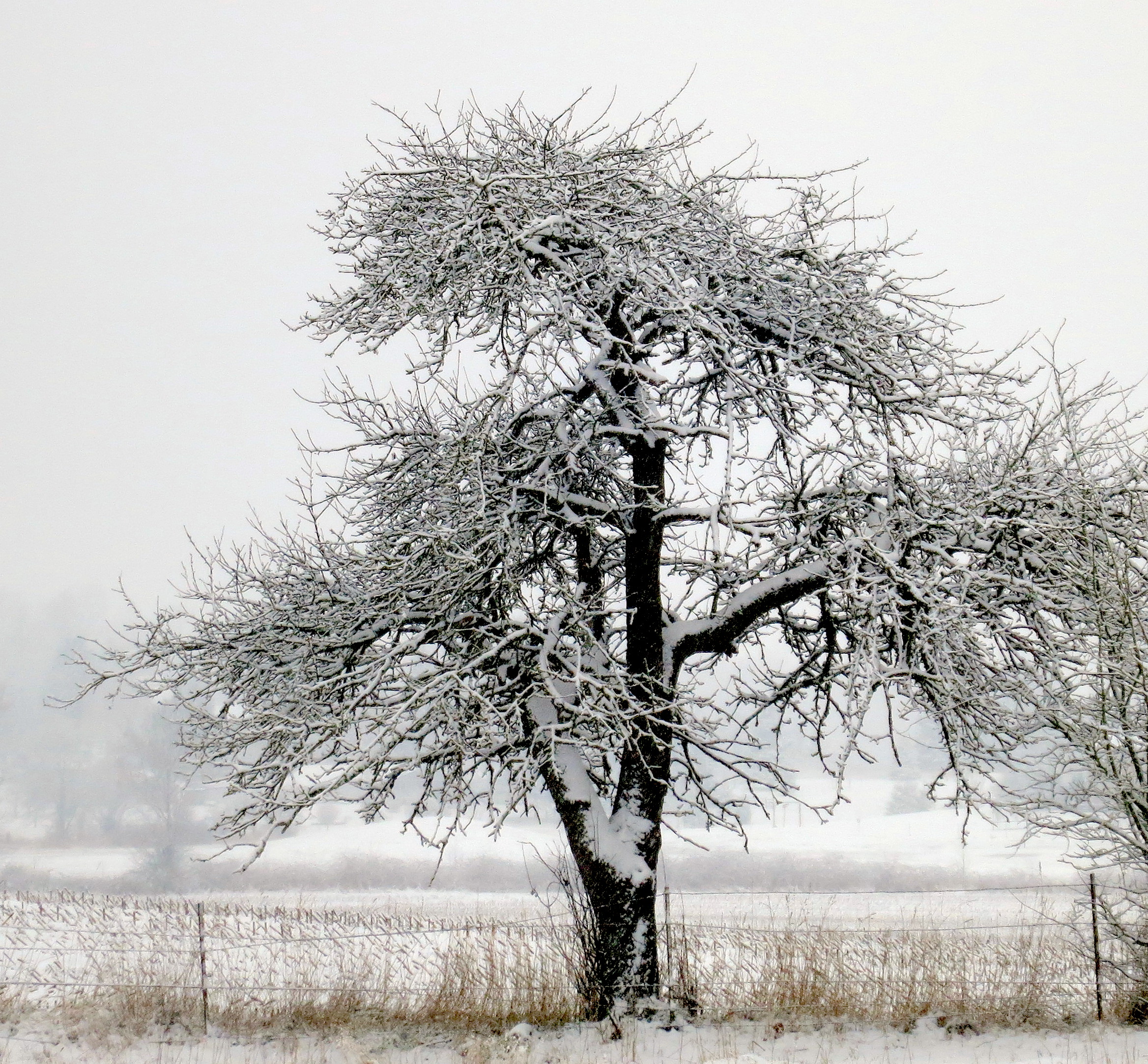
My sorrow’s flower was so small a joy It took a winter seeing to see it as such. Numb, unsteady, stunned at all the evidence Of winter’s blind imperative to destroy, I looked up, and saw the bare abundance Of a tree whose every limb was lit and fraught with snow. What I was seeing then I did not quite know But knew that one mite more would have been too much. ~Christian Wiman from Once in the West: Poems
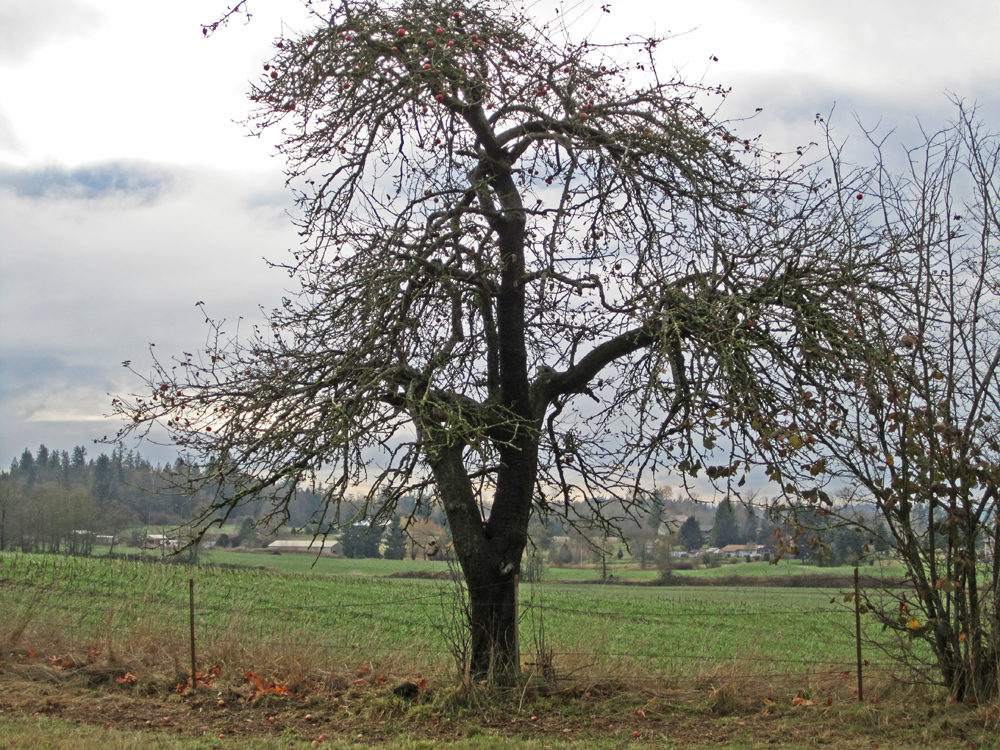
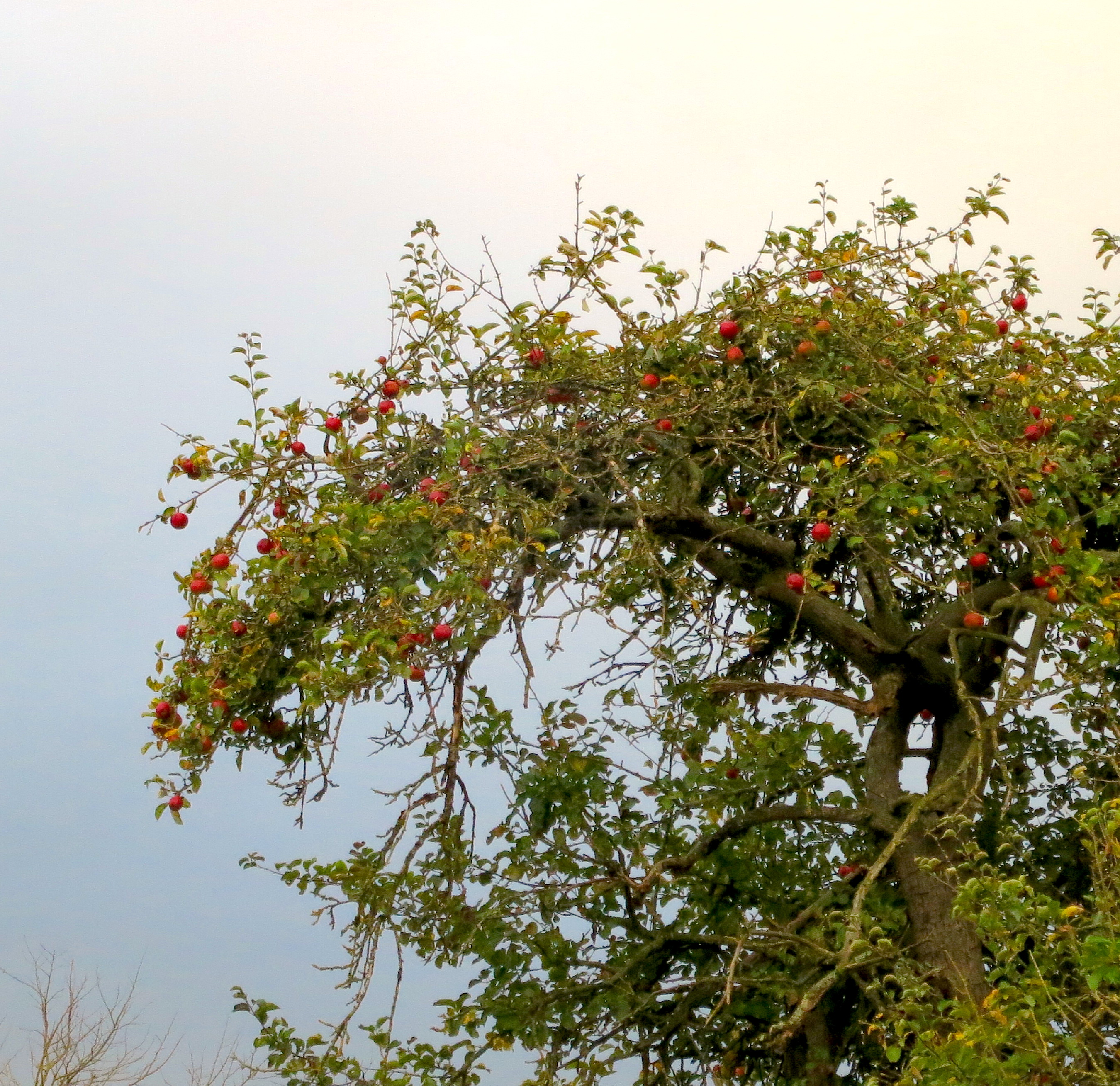
Our weakest branch strains to bear
summer’s bounty without breaking –
too soon comes winter’s heavy burden –
such pruning sorrow leaves us gaping,
allowing the strongest to remain to fruit.
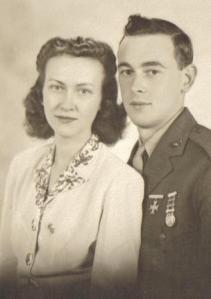
Seventy two years ago this week, my parents were married. Christmas Eve certainly wasn’t a typical wedding anniversary, but it did make it easy to remember during their years together. It was a date of necessity, only because a justice of the peace was available to marry a score of war-time couples in Quantico, Virginia, shortly before the newly trained Marine officers were shipped out to the South Pacific to fight in WWII.
Now that they are both gone, when I look at their young faces in their only wedding portrait, I see a hint of the impulsive decision that led to that wedding just a week before my father left for 30 months. They had known each other for over a year, had talked about a future together, but with my mother starting a teaching job, and the war potentially impacting all young men’s lives very directly, they had not set a date.
My father had to put his college education on hold to enlist, knowing that would give him some options he wouldn’t have if drafted, so they went their separate ways as he headed east to Virginia for his Marine officer training, and Mom started her high school teaching career as a speech and drama teacher in rural Colville in Eastern Washington. One day in early December, he called her and said, “If we’re going to get married, it’ll need to be before the end of the year. I’m shipping out the first week in January.” Mom went to her high school principal, asked for a two week leave of absence which was granted, told her astonished parents, bought a dress, and headed east on the train with a friend who had received a similar call from her boyfriend. This was a completely uncharacteristic thing for my overly cautious mother to do so it must have been love.
They were married in a brief civil ceremony with another couple as the witnesses. They stayed in Virginia only a couple days and took the train back to San Diego, and my father left. Just like that. Mom returned to her teaching position and the first three years of their married life was letter correspondence only, with gaps of up to a month during certain island battles when no mail could be delivered or posted.
As I sorted through my mother’s things following her death six years ago, their letters to each other, stacked neatly and tied together, reside now in a box in my bedroom. I have not yet opened them but will when I’m ready. What I will find there will be words written by two young people who could not have foretold the struggles that lay ahead for them during and after the war but who both depended on faith and trust to persevere despite the unknowns. The War itself seemed struggle enough for the millions of couples who endured the separation, the losses and grieving, as well as the eventual injuries–both physical and psychological. It did not seem possible that beyond those realities, things could go sour after reuniting.
The hope and expectation of happiness and bliss must have been overwhelming, and real life doesn’t often deliver. After raising three children, their 35 year marriage fell apart with traumatic finality. When my father returned (again) over a decade later, asking for forgiveness, they remarried and had five more years together before my father died.
And so too there must have been expectations of happiness in the barn on that first Christmas Eve. It must have been frightening for the parents of this special Baby, knowing in their minds but not completely understanding in their hearts what responsibility lay in their arms. They had to find faith and trust, not just in God who had determined what their future held, but in each other, to support one another when things became very difficult. Those challenges mounted up quickly: there was to be no room for them, there was a baby to deliver without assistance from anyone, and the threat of Herod’s murder of innocents eventually drove them from their home country.
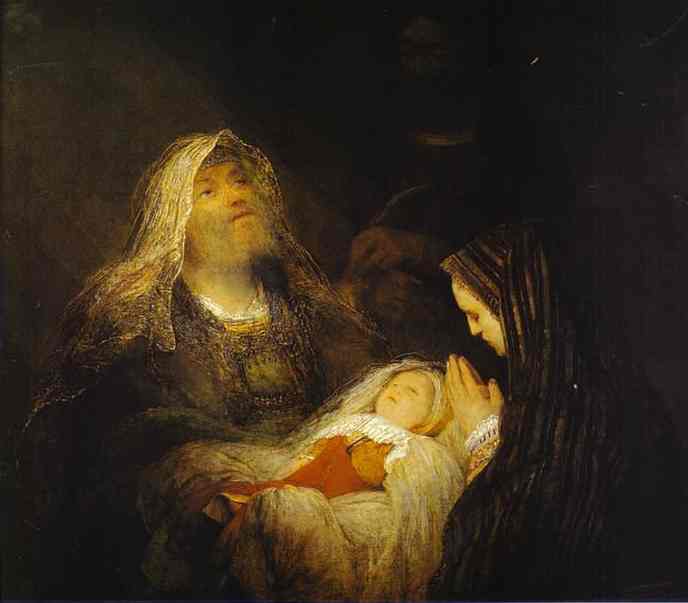
When Mary and Joseph go to the temple for the circumcision and consecration of their son the following week, they allow a “righteous and devout man”, Simeon, to hold their baby as, moved by the Holy Spirit, he tells them the role this child is to play in the world. He prays to the Lord, “As you have promised, you now dismiss your servant in peace. For my eyes have seen your salvation, which you have prepared in the sight of all people, a light for revelation to the Gentiles and for glory to your people Israel.”
It must have been like looking into a crystal ball to hear Simeon speak, as we’re told “the child’s father and mother marveled at what was said about him.” But Simeon didn’t whitewash the reality to come. It would have been easy to do so– simply mention salvation, the light and the glory that will come to the people due to this little baby, but leave out the part about how His existence would cause division in Israel as well as the rejection, anguish and suffering that He would experience. Not only that, but the pain is not His alone but will be His parents’ to bear as well. I’m sure that statement must have ended the sense of “marvel” they were feeling, and replaced it instead with great sorrow and trepidation.
Christmas is a time of joy, a celebration of new beginnings and new life when God became man, humble, vulnerable and tender. But it also gives us a foretaste for the profound sacrifice made in giving up this earthly life, not always so gently. A baby in a manger is a lovely story to “treasure up” in our hearts but once He became a bleeding Redeemer on a cross, it pierces our living beating hearts, just as Simeon foretold.
My parents, such young idealistic adults 72 years ago, now servants dismissed from this life in peace. As I peer at their faces in their wedding photo, I know those same eyes, then unaware of what was to come, now behold the light, the salvation and the glory~~the ultimate Christmas~~in His presence.
Song of Simeon by Aert De Gelder, a student of Rembrandt
Outside the house the wind is howling and the trees are creaking horribly. This is an old story with its old beginning, as I lay me down to sleep. But when I wake up, sunlight has taken over the room. You have already made the coffee and the radio brings us music from a confident age. In the paper bad news is set in distant places. Whatever was bound to happen in my story did not happen. But I know there are rules that cannot be broken. Perhaps a name was changed. A small mistake. Perhaps a woman I do not know is facing the day with the heavy heart that, by all rights, should have been mine. ~Lisel Mueller “In November”
They shall grow not old, as we that are left grow old: Age shall not weary them, nor the years condemn. At the going down of the sun and in the morning We will remember them. ~Lawrence Binyonfrom “For the Fallen” (1914)
When you go home tell them of us and say – “For your tomorrow we gave our today” from “The Kohima Epitaph
We are the dead; short days ago We lived, felt dawn, saw sunset glow, Loved and were loved, and now we lie In Flanders fields. ~John McCrae from “In Flanders Fields”
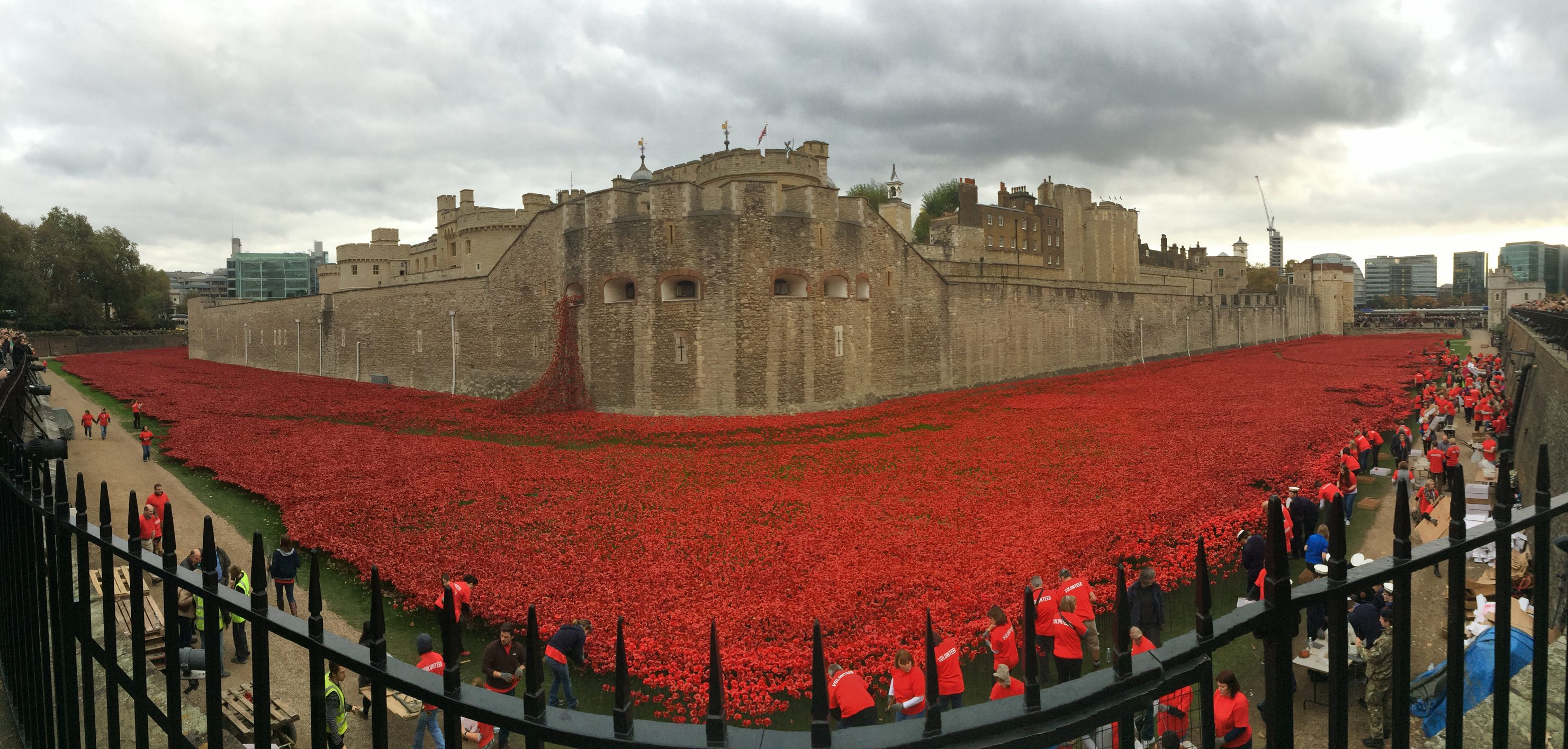
Tower of London Poppies representing the fallen soldiers from the UK and colonies in WWI from BBC London
Courage is almost a contradiction in terms. It means a strong desire to live taking the form of a readiness to die. ~ G.K. Chesterton
This is the treacherous month when autumn days With summer’s voice come bearing summer’s gifts. Beguiled, the pale down-trodden aster lifts Her head and blooms again. The soft, warm haze Makes moist once more the sere and dusty ways, And, creeping through where dead leaves lie in drifts, The violet returns. Snow noiseless sifts Ere night, an icy shroud, which morning’s rays Will idly shine upon and slowly melt, Too late to bid the violet live again. The treachery, at last, too late, is plain; Bare are the places where the sweet flowers dwelt. What joy sufficient hath November felt? What profit from the violet’s day of pain? ~Helen Hunt Jackson “November”
The passing of the summer fills again my heart with strange sweet sorrow, and I find the very moments precious in my palm. Each dawn I did not see, each night the stars in spangled pattern shone, unknown to me, are counted out against me by my God, who charges me to see all lovely things… ~Jane Tyson Clement from “Autumn”
Your death, near now, is of an easy sort. So slow a fading out brings no real pain. Breath growing short Is just uncomfortable. You feel the drain Of energy, but thought and sight remain:
Enhanced, in fact. When did you ever see So much sweet beauty as when fine rain falls On that small tree And saturates your brick back garden walls, So many Amber Rooms and mirror halls?
Ever more lavish as the dusk descends This glistening illuminates the air. It never ends. Whenever the rain comes it will be there, Beyond my time, but now I take my share.
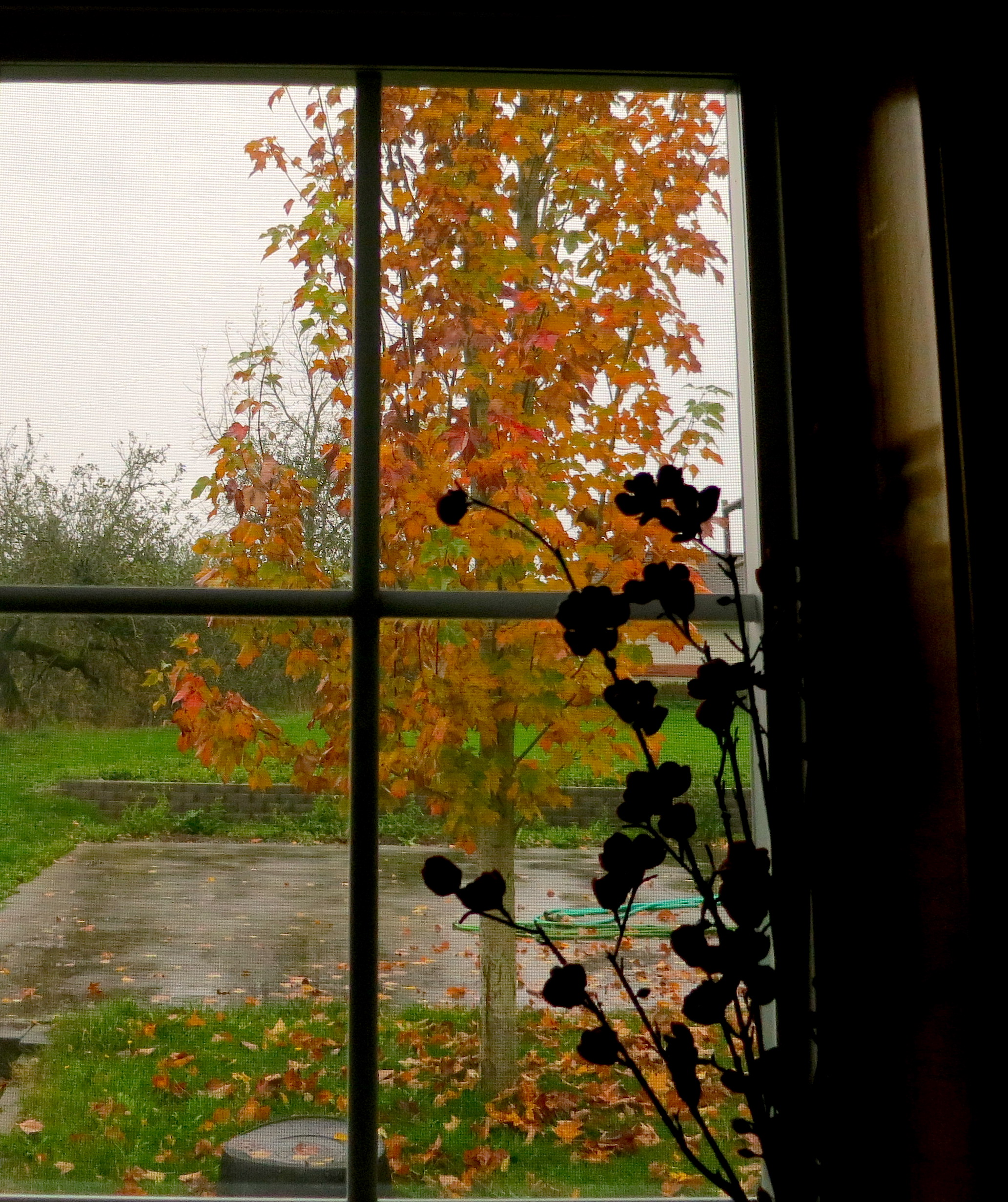
My daughter’s choice, the maple tree is new. Come autumn and its leaves will turn to flame. What I must do Is live to see that. That will end the game For me, though life continues all the same:
Filling the double doors to bathe my eyes, A final flood of colors will live on As my mind dies, Burned by my vision of a world that shone So brightly at the last, and then was gone. ~Clive James (who is terminally ill) from this week’s New Yorker























 Barnstorming