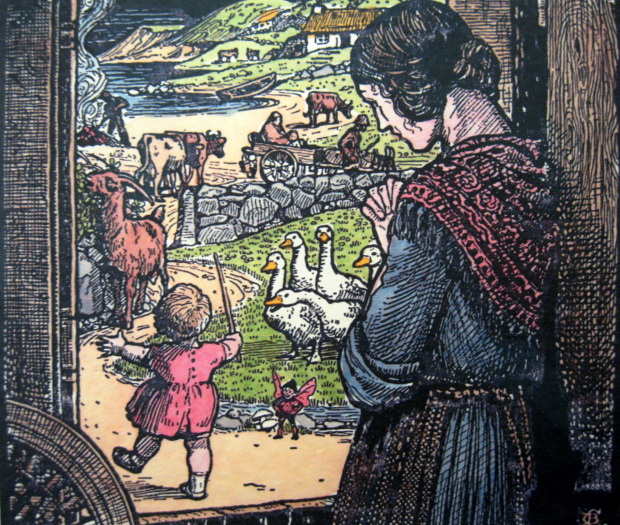
God keep my jewel this day from danger; From tinker and pooka and bad-hearted stranger. From harm of the water, from hurt of the fire. From the horns of the cows going home to the byre. From the sight of the fairies that maybe might change her. From teasing the ass when he’s tied to the manger. From stones that would bruise her, from thorns of the briar. From evil red berries that wake her desire. From hunting the gander and vexing the goat. From the depths o’ sea water by Danny’s old boat. From cut and from tumble, from sickness and weeping; May God have my jewel this day in his keeping. ~Winifred Lett (1882-1973) “Prayer for a Child“
I pray because I can’t help myself. I pray because I’m helpless. I pray because the need flows out of me all the time, waking and sleeping. It doesn’t change God. It changes me. ~C.S. Lewis
This “prayer for a child” has hung on the wall in our home for nearly four decades, purchased when I was pregnant with our first. When I first saw it with its drawing of the praying mother watching her toddler leave the safety of the home to explore the wide world, I knew it addressed most of my worries as a new mama, in language that helped me smile at my often irrational fears. I would glance at it dozens of time a day; it would remind me of God’s care for our children through every scary thing, real or imagined.
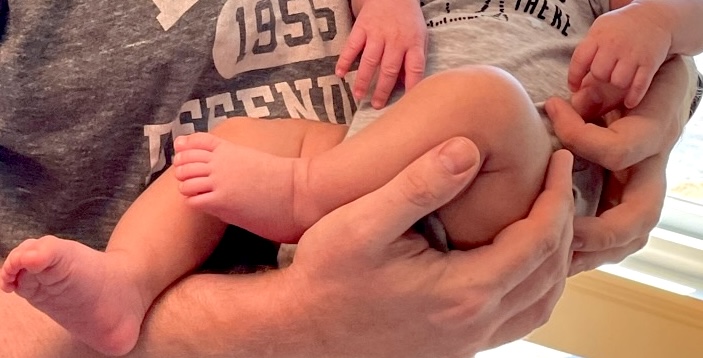
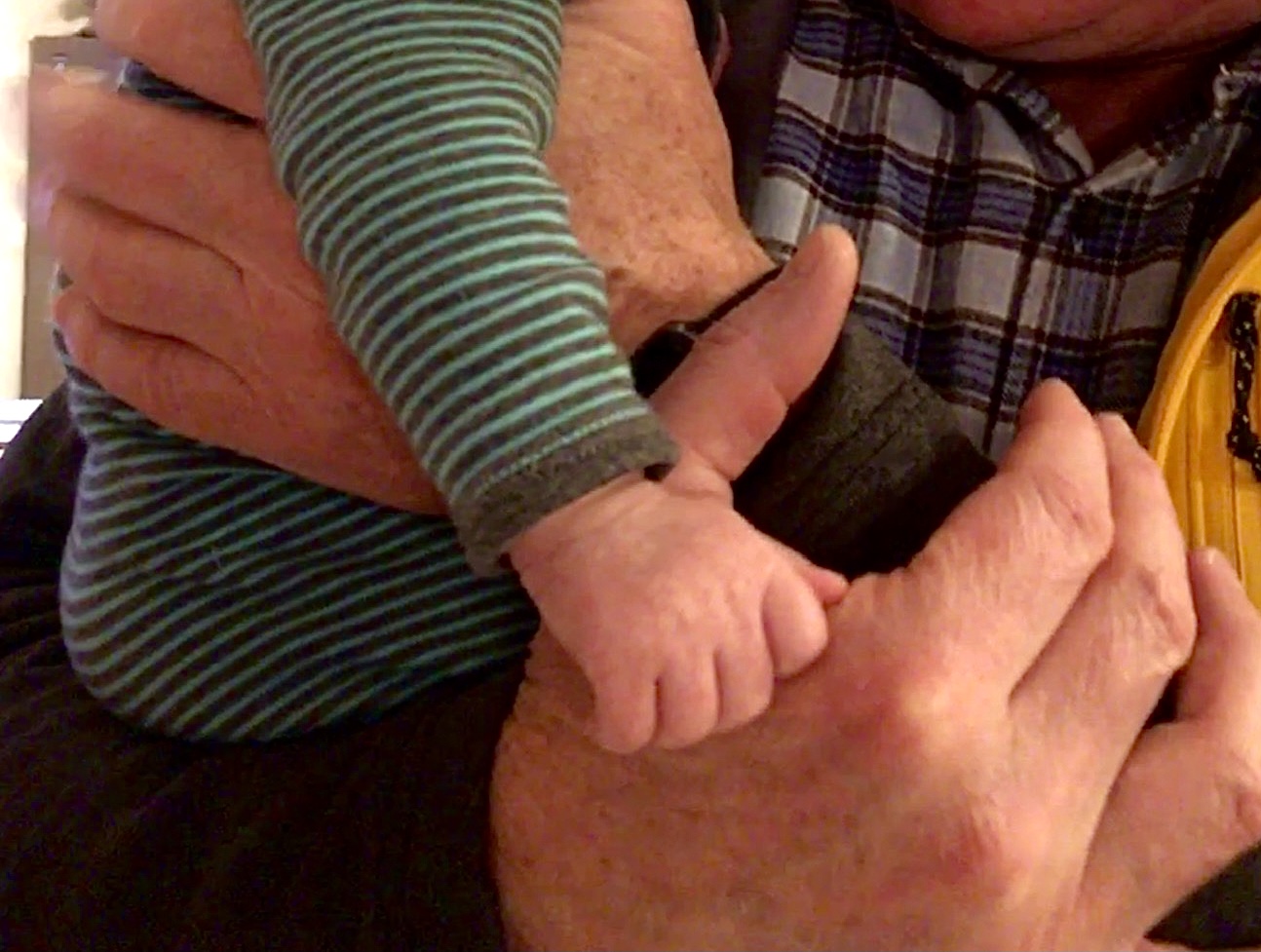
I continue to pray for our grown children and their God-given spouses, and now for six precious grandchildren, the latest of whom was born yesterday afternoon.
I pray because I can’t not pray, and because I’m helpless without the care and compassion of our sovereign God for each of us, especially when we are brand new, completely dependent and helpless.
May I be changed by my prayers and molded into a truly “grand” mother for our half dozen cherished grandchildren, each a jewel in His keeping.
One-Time
Monthly
Yearly
Make a one-time or recurring donation to support daily Barnstorming posts
If you suddenly and unexpectedly feel joy, don’t hesitate. Give in to it. There are plenty of lives and whole towns destroyed or about to be. We are not wise, and not very often kind. And much can never be redeemed. Still, life has some possibility left. Perhaps this is its way of fighting back, that sometimes something happens better than all the riches or power in the world. It could be anything, but very likely you notice it in the instant when love begins. Anyway, that’s often the case. Anyway, whatever it is, don’t be afraid of its plenty. Joy is not made to be a crumb. ~Mary Oliver “Don’t Hesitate”
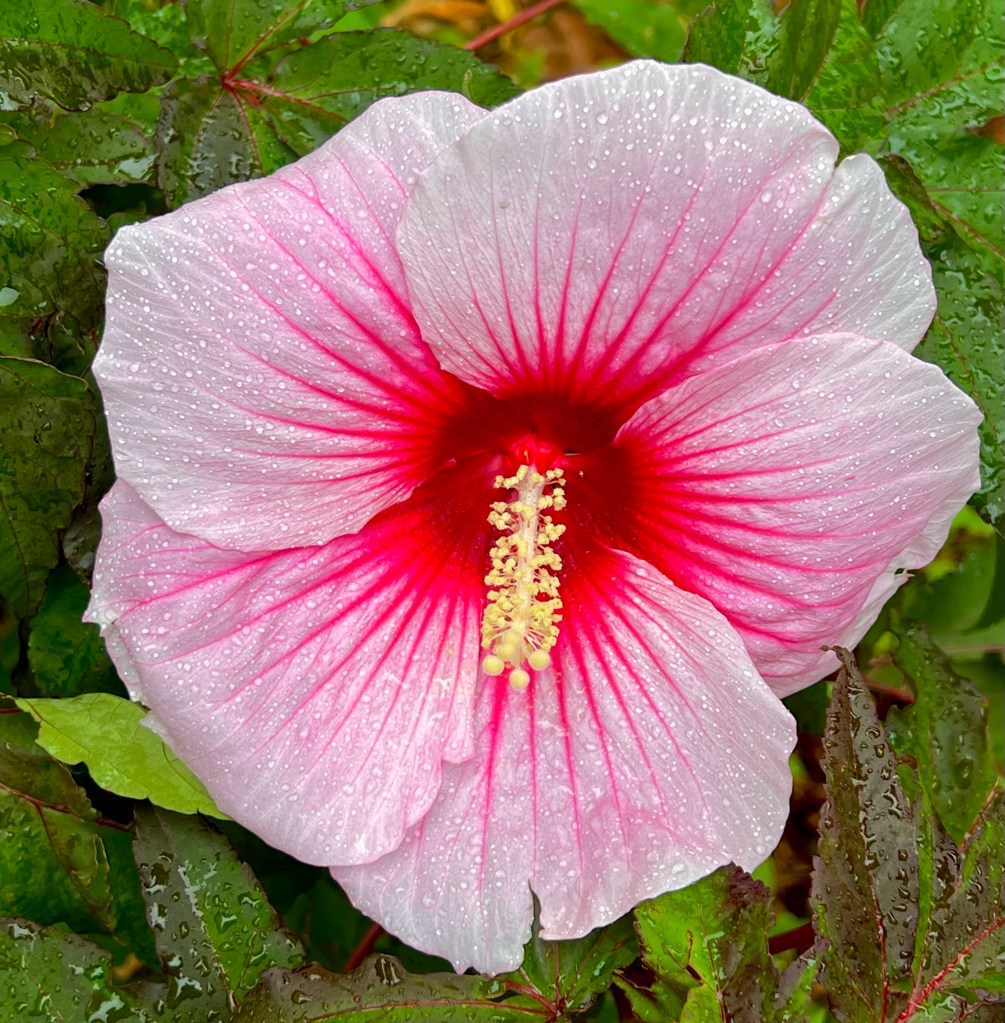
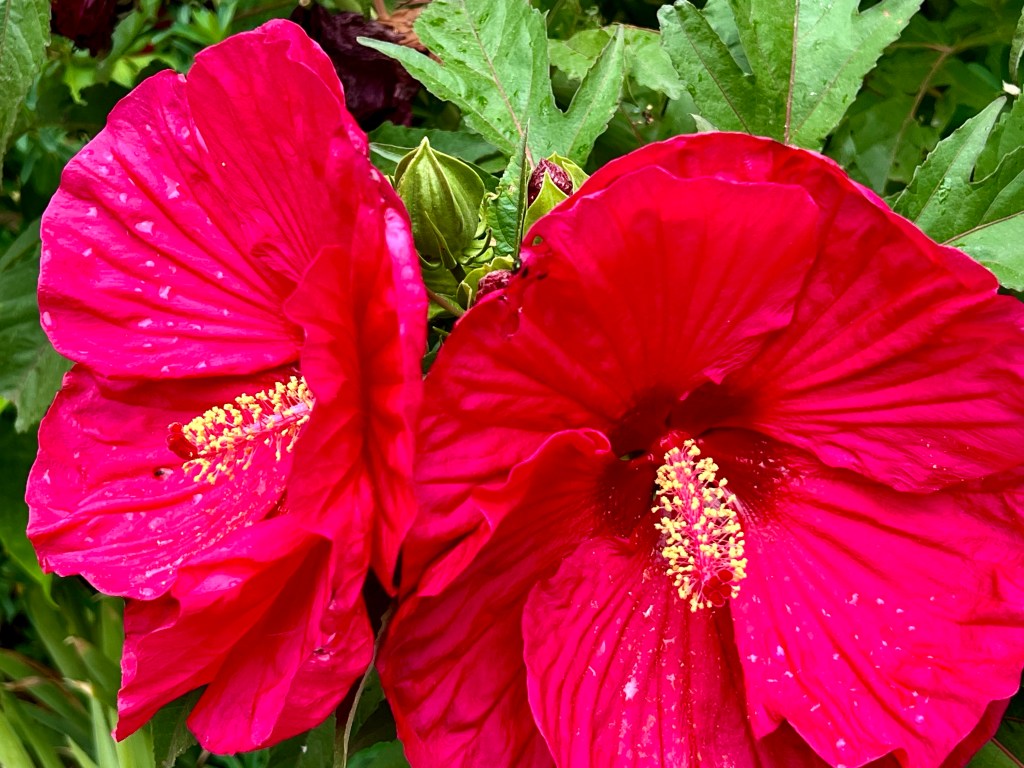
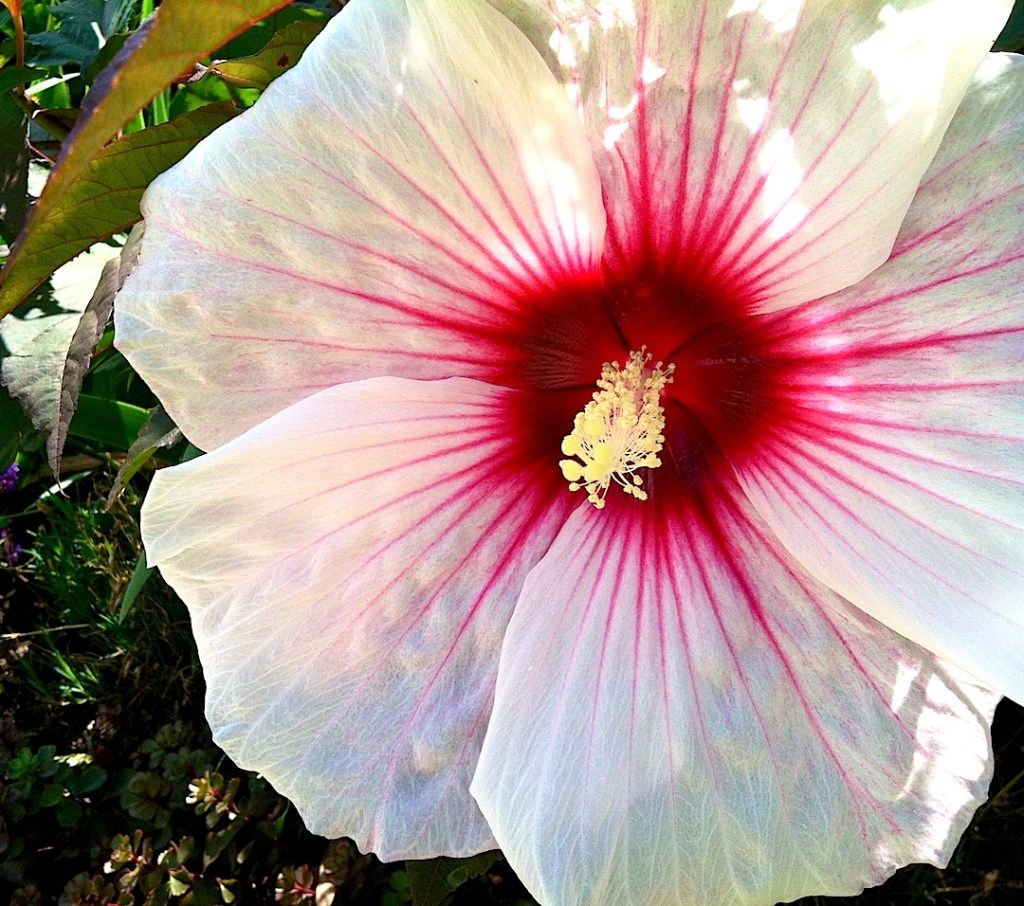
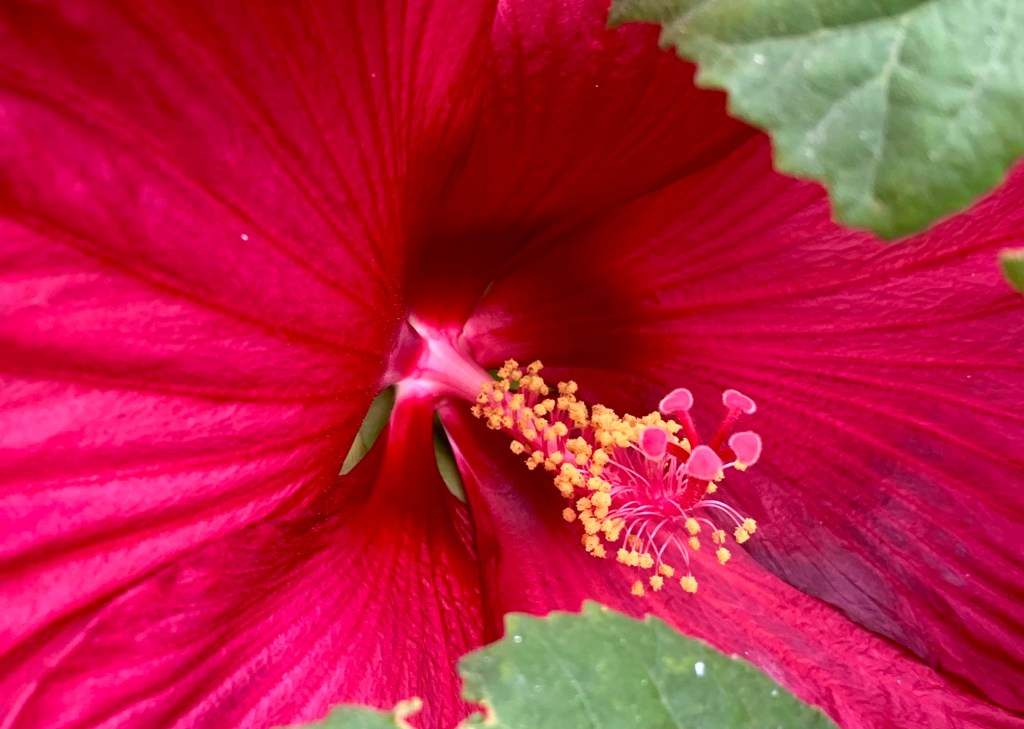
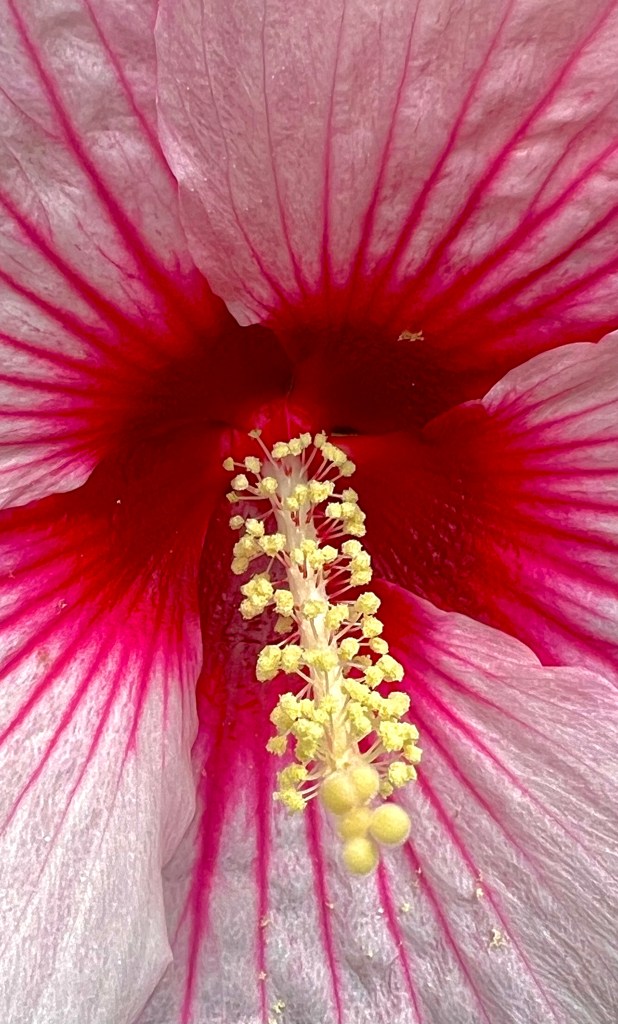
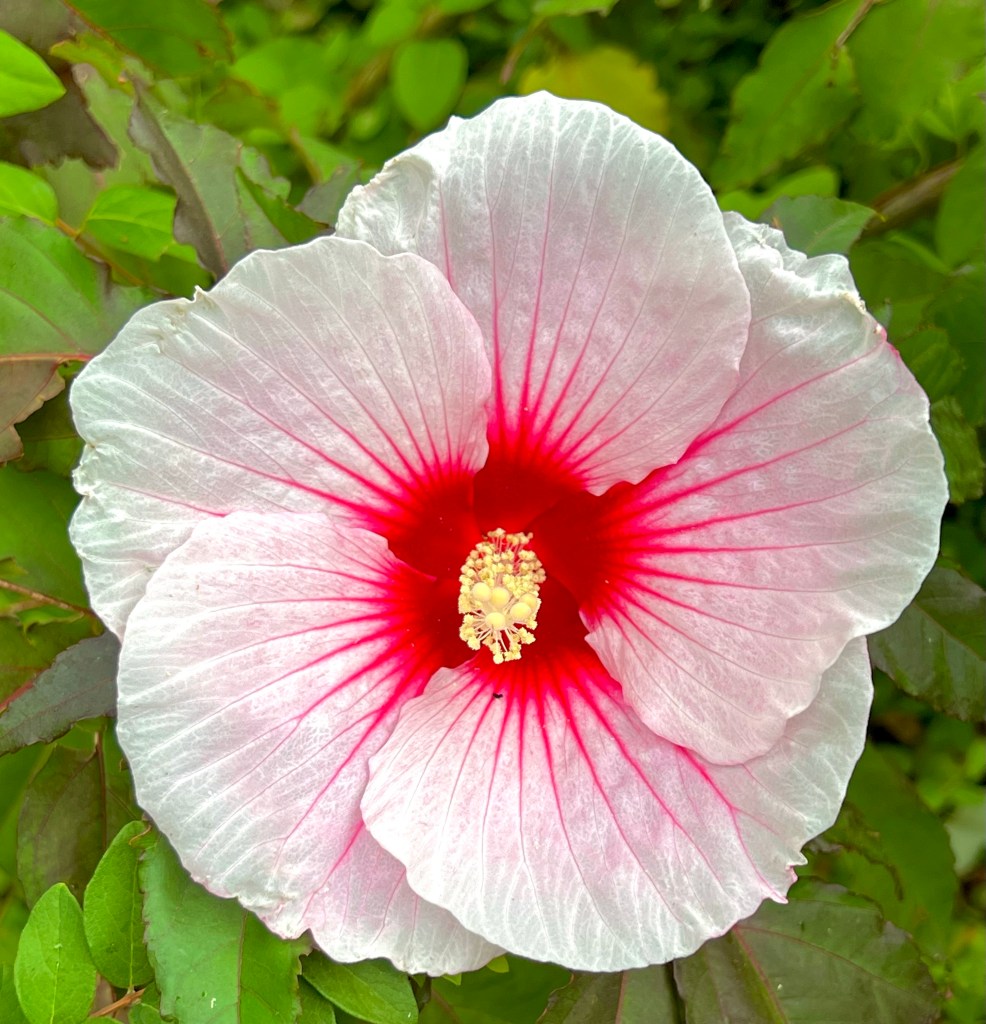
In nature there are no colors or shades. Only hues. The flower of the hibiscus is the purest red I know, as if it draws its color from a divine source. ~Toni Morrison
Joy is not made from a crumb nor from a dusting of hibiscus pollen. It can happen spontaneously. Joy is meant to catch our breath and bring us to our knees with gratitude.
I want to hold fast to the hue of joy I felt during visits to all five (soon to be six!) of our grandchildren at various times over the past two weeks. Their lives are so full of possibility: sunny faces bright with joy and cheeks that bloom like hibiscus.
One-Time
Monthly
Yearly
Make a one-time or recurring donation to support daily Barnstorming posts
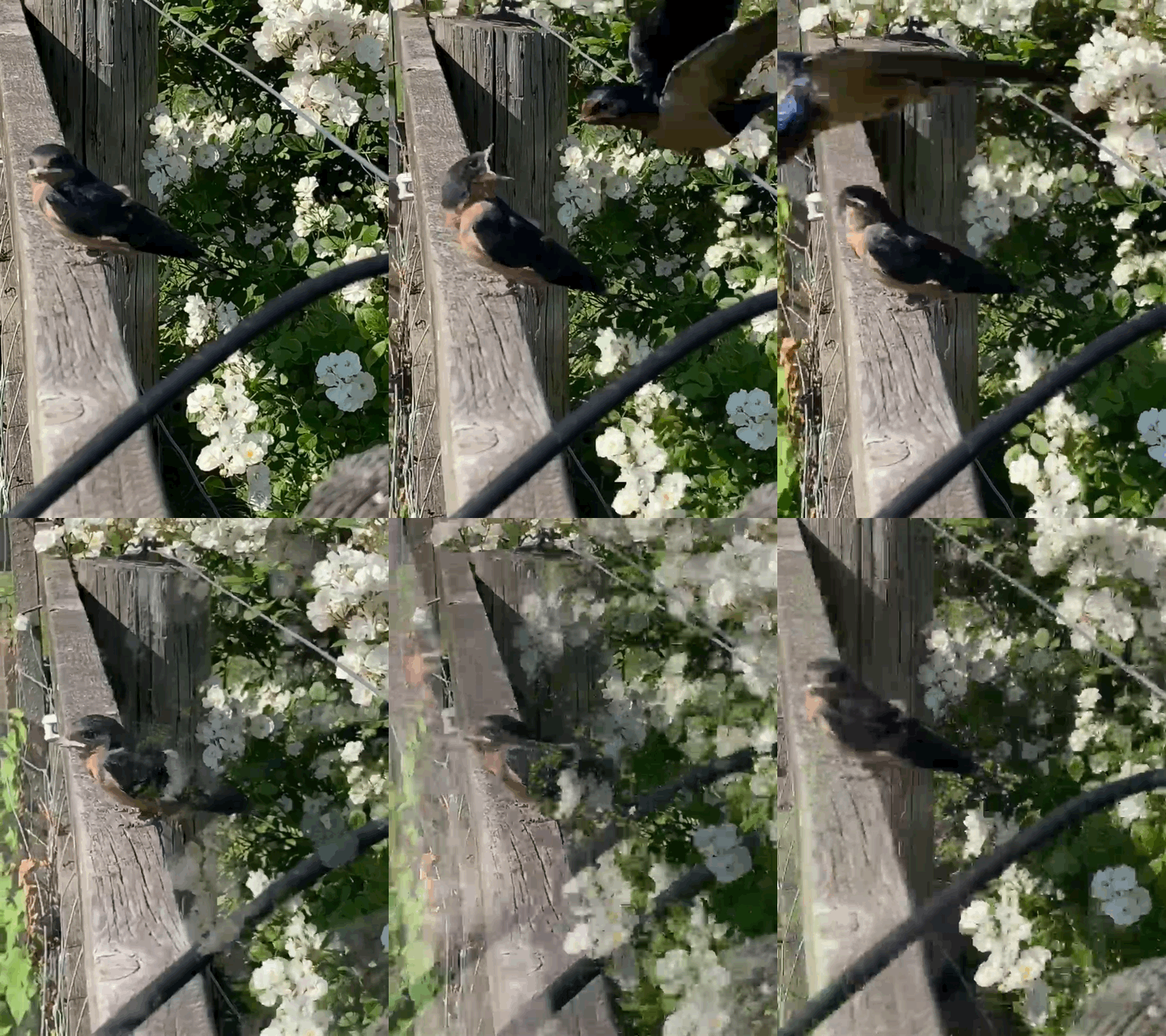
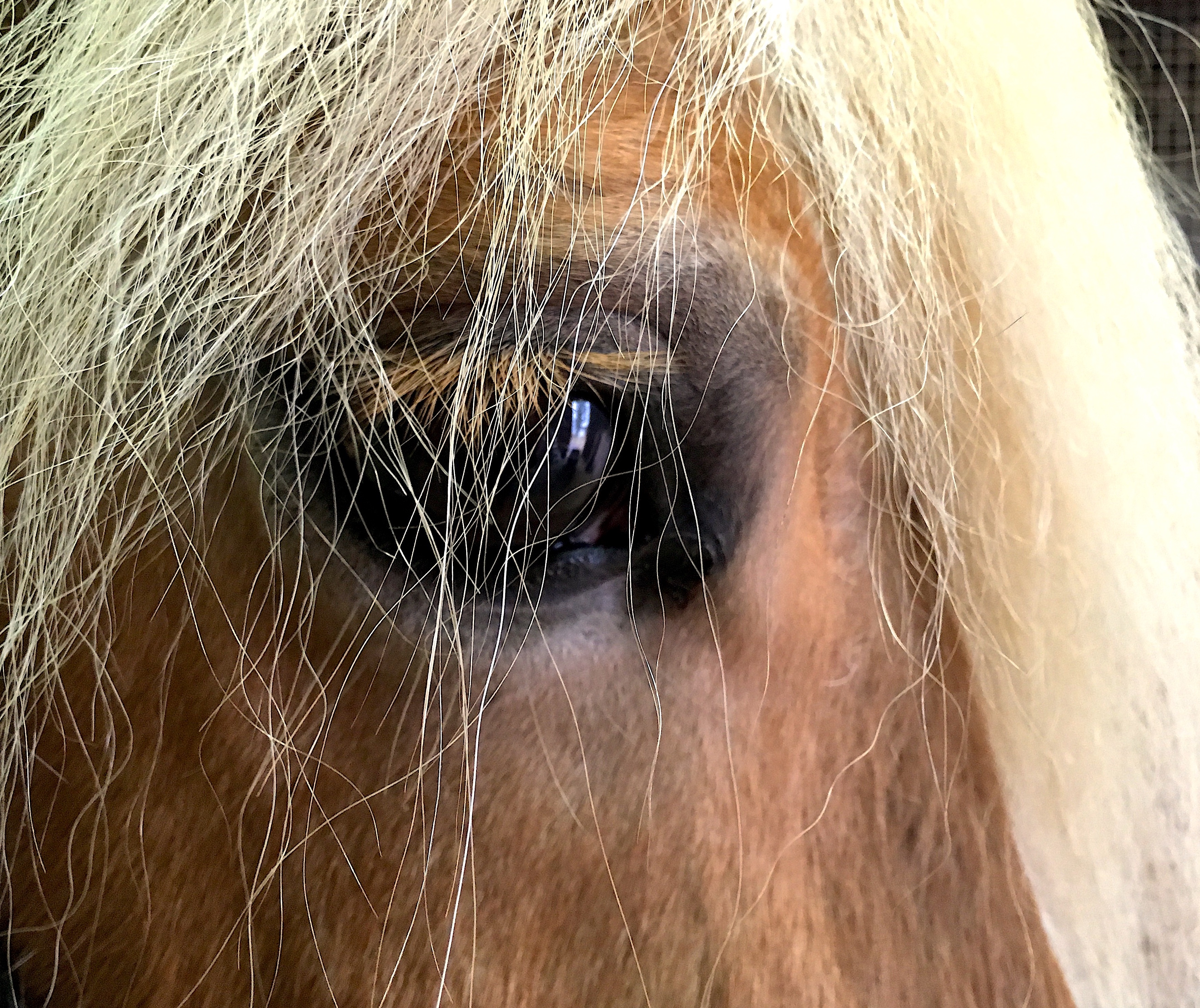
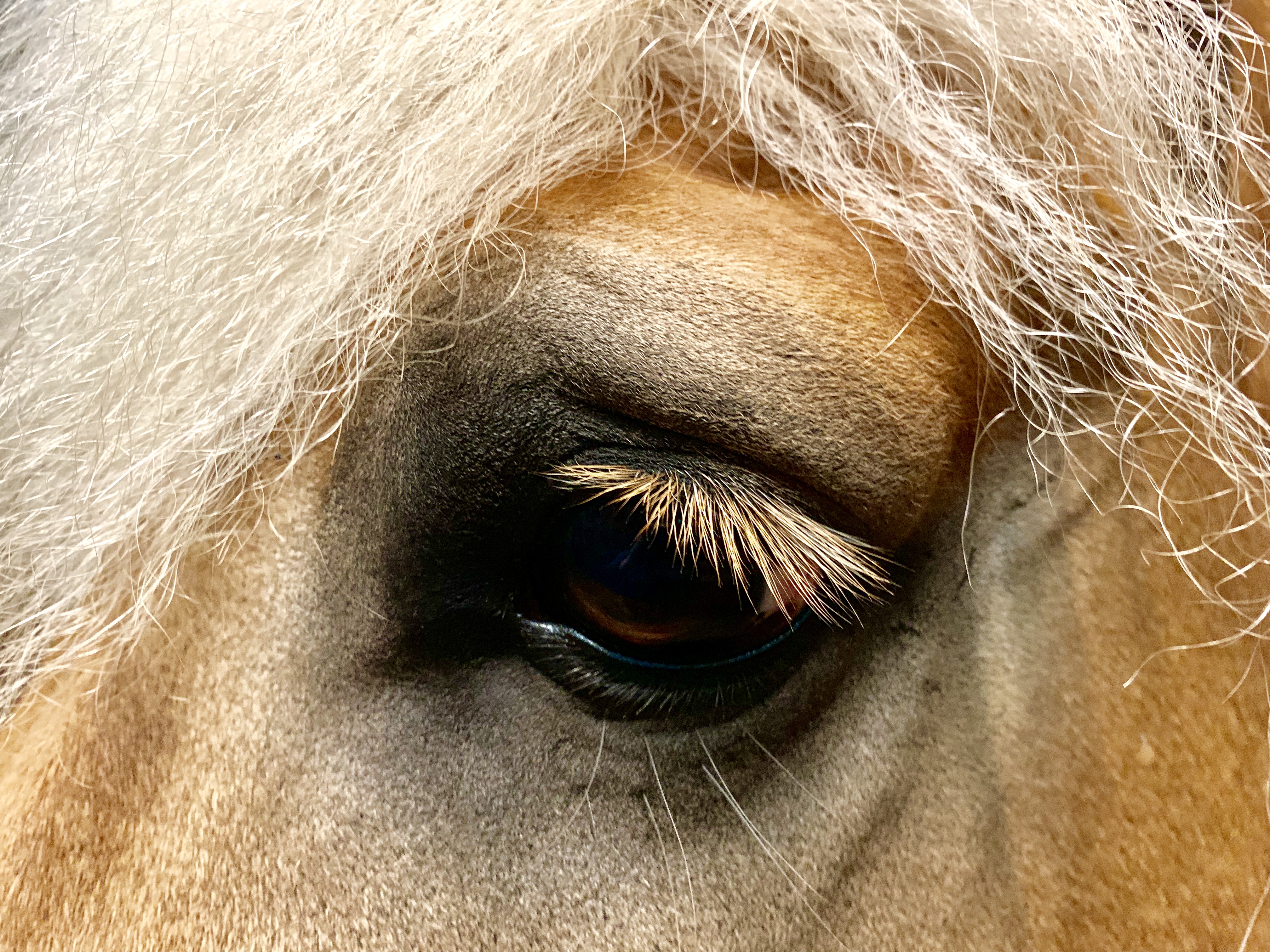
The squirrel sticks its head from the tree’s knot, shrieking directions, a village gossip with a huge plumed tail. It moves down the scalloped bark, swaying on tiny nails, and stops, eye-level with my swollen belly. A black blur of bird swoops, the velvet of its wing against my cheek. It nests among a ruckus of robins, less interested in being fed than being heard. Around the curve of the road, I near the farmer’s fence. His mare lowers her fan of lashes. In the pond, a fish flips, exposing its silver stomach. ~Tina Barry, “The Animals Know” from Beautiful Raft
photo by Harry Rodenberger
video by Harry Rodenberger
It has been over thirty years since I carried a child in my belly. Each time, I remember having the feeling our farm animals knew I was “expecting” even before it became obvious. Maybe it was because I was so overjoyed, I carried myself differently. After experiencing a miscarriage and two years of infertility workups, it felt almost magical being pregnant. It seemed as if our invisibly growing baby was already welcomed by all the creatures on our farm and were celebrating the anticipation along with us.
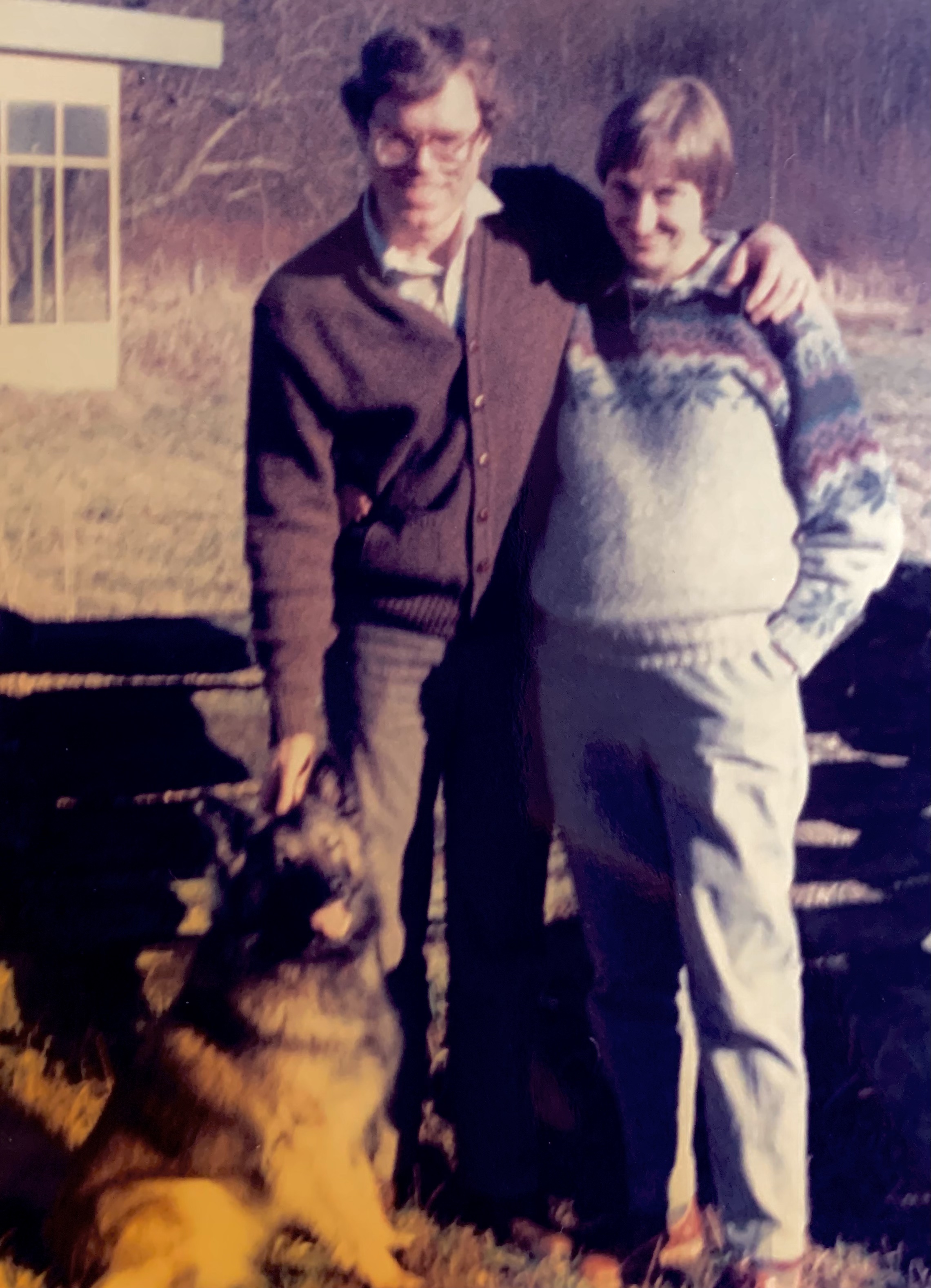
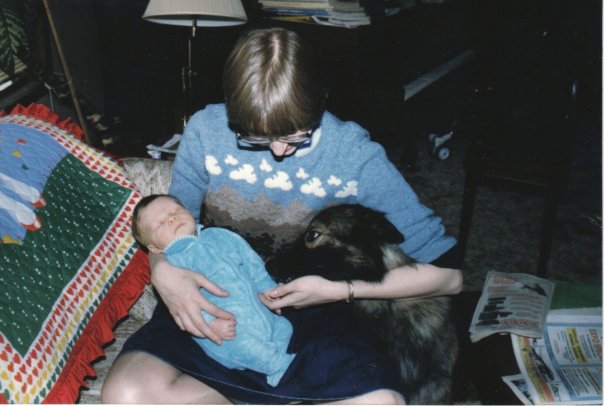
While I was pregnant with our first son, after such a long wait for parenthood, we bought a new dog, Tango and moved to a farm from the city. She was a year old and had never been around babies, so we weren’t sure how she would adapt to both new surroundings and new owners. As we drove six hours to her bring her to her new home, she happily settled in for the trip lying on my bulging tummy, pummeled by kicks from a baby she would soon meet face to face.
She loved him as soon as she saw him. She had known him and understood him as he grew inside.
Now, decades later, our family’s next generation is fulfilling their own hopes for the future: we have four cherished grandchildren in addition to the two we are now waiting to meet — one will be any day now.
The expectation of new life is so sweet. All that lives and breathes anticipates this new soul budding and about to bloom.
Somehow, they just know…
One-Time
Monthly
Yearly
Make a one-time or recurring donation to support daily Barnstorming posts
It is eighteen years ago, almost to the day — A sunny day with leaves just turning, The touch-lines new-ruled — since I watched you play Your first game of football, then, like a satellite Wrenched from its orbit, go drifting away Behind a scatter of boys. I can see You walking away from me towards the school With the pathos of a half-fledged thing set free Into a wilderness, the gait of one Who finds no path where the path should be.
That hesitant figure, eddying away Like a winged seed loosened from its parent stem, Has something I never quite grasp to convey About nature’s give-and-take — the small, the scorching Ordeals which fire one’s irresolute clay. I have had worse partings, but none that so Gnaws at my mind still. Perhaps it is roughly Saying what God alone could perfectly show — How selfhood begins with a walking away, And love is proved in the letting go. ~C. Day Lewis “Walking Away” from Complete Poems
You can kiss your family and friends good-bye and put miles between you, but at the same time you carry them with you in your heart, your mind, your stomach, because you do not just live in a world but a world lives in you. ~ Frederick Buechner
Once again I bid goodbye, if only for a little while. It never gets easier to part from one’s family members when they are called to be far away.
I began writing regularly over twenty years ago to consider more deeply my time left on this earth and what my family meant to me, here and now, and for eternity. Family is carried inside the words I write without often writing about them directly. They inspire and challenge me; they love and stretch me. As our children married, then were blessed with children of their own, I know they are sustained by what they have carried away from this home as each drifted away.
Life is about nurture – helping the cherished seeds you carried deep inside to thrive when let go. Then we can never really be lonely; our hearts never empty. We stay connected, one another, forever, even when miles and miles and lifetimes apart.
One-Time
Monthly
Yearly
Make a one-time or recurring donation to support daily Barnstorming posts
I am what you make me; nothing more. I swing before your eyes as a bright gleam of color, a symbol of yourself. ~Franklin K. Lane, Secretary of the Interior, 1914 Flag Day address
Sometimes, as a child, when I was bored, I’d grab a step ladder, pull it into our hallway, climb half way up and carefully lift the plywood hatch that was the portal to our unlit attic. It took some effort to climb up into the attic from the ladder, juggling a flashlight at the same time, but once seated safely on the beams above our ceiling, being careful not to put my foot through the carpet of insulation, I could explore what was stowed and normally inaccessible to me.
All the usual attic-type things were put up there: Christmas ornaments and lights, baby cribs and high chairs, lamps and toys no longer used. Secrets to my parents’ past were stored away there too. It was difficult imagining them as young children growing up on opposite sides of the state of Washington, in very different circumstances, or as attractive college students who met at a dance, or as young marrieds unencumbered by the daily responsibilities of a family. The attic held those images and memories like a three dimensional photo album.
My father’s dark green Marine Corps cargo trunk was up there, the one that followed him from Officer Training in Quantico, Virginia, to beach and mountain battles on Tarawa, Tinian and Saipan in the South Pacific, and three years later back home again. It had his name and rank stenciled on the side in dark black lettering. The buckles were stiff but could be opened with effort, and in the dark attic, there was always the thrill of unlatching the lid, and shining the flashlight across the contents. His Marine Corps dress uniform lay inside underneath his stiff brimmed cap. There were books about protocol, and a photo album which contained pictures of “his men” that he led in his battalion, and the collection of photos my mother sent of herself as she worked as a teacher of high school students back home.
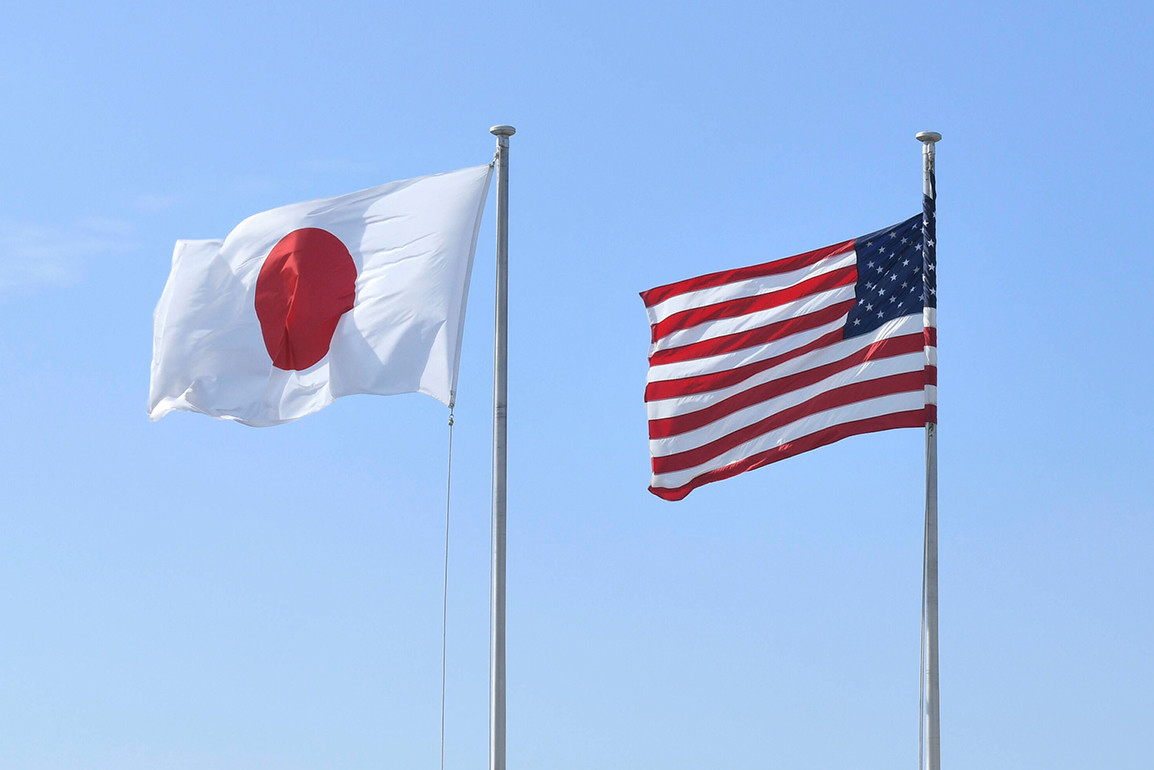
Most fascinating was a folded Japanese flag inside a small drawstring bag, made of thin white see-through cloth with the bold red sun in the middle. Surrounding the red sun were the delicate inked characters of many Japanese hands as if painted by artists, each wishing a soldier well in his fight for the empire. Yet there it was, a symbol of that soldier’s demise, itself buried in an American attic, being gently and curiously held by an American daughter of a Marine Corps captain. It would occur to me in the 1960s that some of the people who wrote on this flag might still be living, and certainly members of the soldier’s family would still be living. I asked my father once about how he obtained the flag, and he, protecting both me and himself, waved me away, saying he couldn’t remember. I know better now. He knew but could not possibly tell me the truth.
These flags, charms of good luck for the departing Japanese soldier as he left his neighborhood or village for war, are called Hinomaru Yosegaki (日の丸寄せ書き). Tens of thousands of these flags came home with American soldiers; it is clear they were not the talisman hoped for. A few of these flags are now finding their way back to their home country, to the original villages, to descendants of the lost soldiers. So now has this flag.
Eighty years ago doesn’t seem that long, a mere drop in the river of time. There is more than mere mementos that have flowed from the broken dam of WWII, flooding subsequent generations of Americans, Japanese, Europeans with memories that are now lost as the oldest surviving soldiers in their 90’s pass, scores of them daily, taking their stories of pain and loss and heroism with them. My father could never talk with a person of Asian descent, Japanese or not, without being visibly uneasy. As a child, I saw and felt this from him, but heard little from his mouth.
When he was twenty two years old, pressed flat against the rocks of Tarawa, trying to melt into the ground to become invisible to the bullets whizzing overhead, he could not have conceived that sixty five years later his twenty two year old grandson would disembark from a jumbo jet at Narita in Tokyo, making his way to an international school to teach Japanese children. My father would have been shocked that his grandson would settle happily into a culture so foreign, so seemingly threatening, so apparently abhorrent. Yet this irony is the direct result of the horrors of that too-long horrible bloody war of devastation: Americans and Japanese, despite so many differences, have become the strongest of allies, happily exchanging the grandchildren of those bitterly warring soldiers back and forth across the Pacific. It too was my privilege to care for Japanese exchange students daily in my University health clinic, peering intently into their open faces and never once seeing the enemy that my father feared.
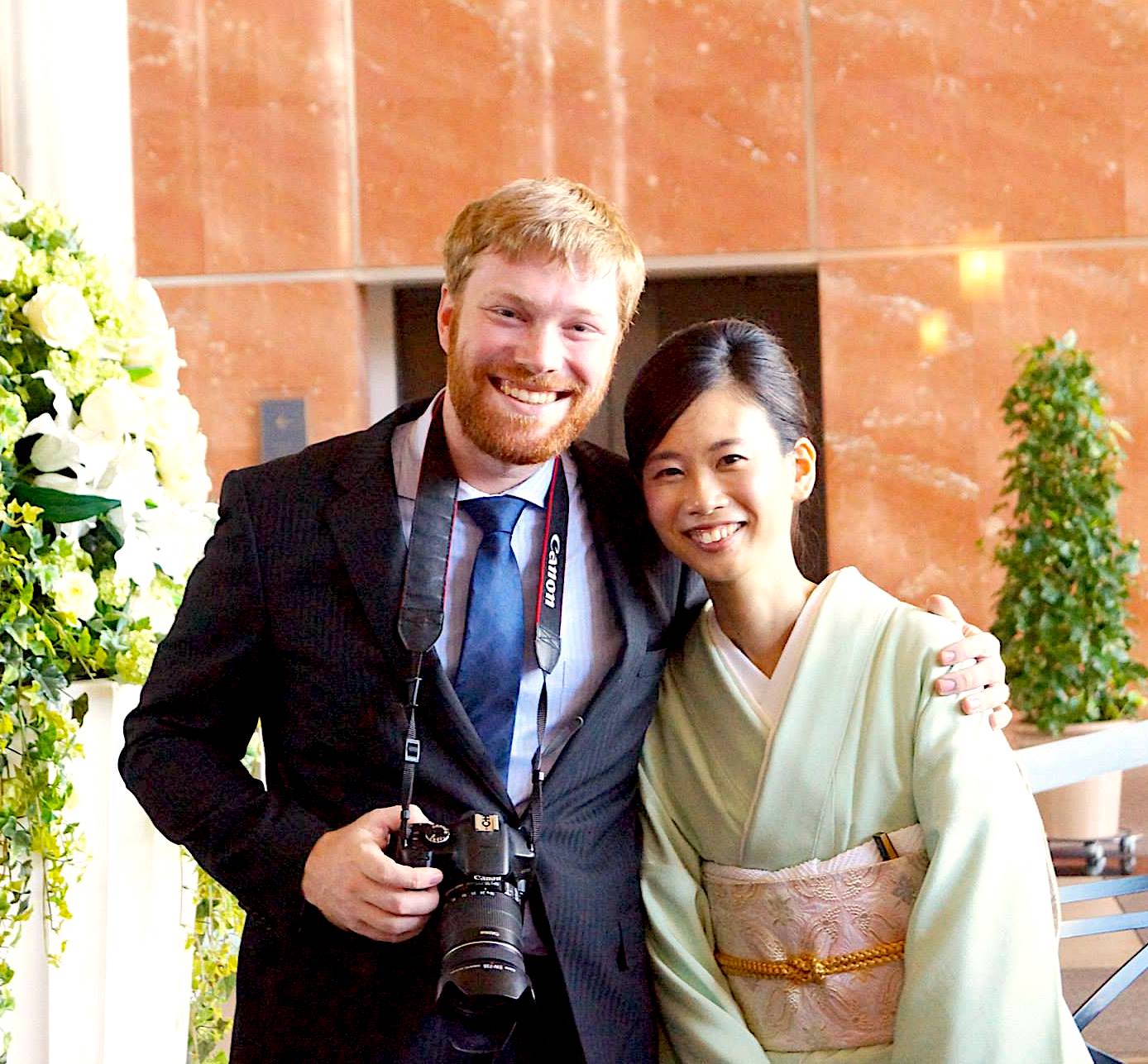
Now all these decades later, our son taught for 13 years in Tokyo, with deep admiration and appreciation for each of his students, some of whom were great-grandchildren of WWII Japanese soldiers. He married a granddaughter of those my father fought. Their two children are the perfect amalgam of once warring, yet now peaceful, cultures; a symbol of blended and blending peoples overcoming the hatred of past generations, creating a new world.
Our son and daughter-in-law, having settled their family in the States, are adapting to a different language, culture and flag. I pray our son having devoted part of his life as teacher and missionary to the land of the rising sun has redeemed his grandfather, the soldier-warrior of the past century.
(U.S. Air Force photo by Staff Sgt. Peter Reft)
One-Time
Monthly
Yearly
Make a one-time or recurring donation to support daily Barnstorming posts
She sees a starling legs-up in the gutter. She finds an earthworm limp and pale in a puddle. What’s wrong with them? she says. I tell her they’re dead.
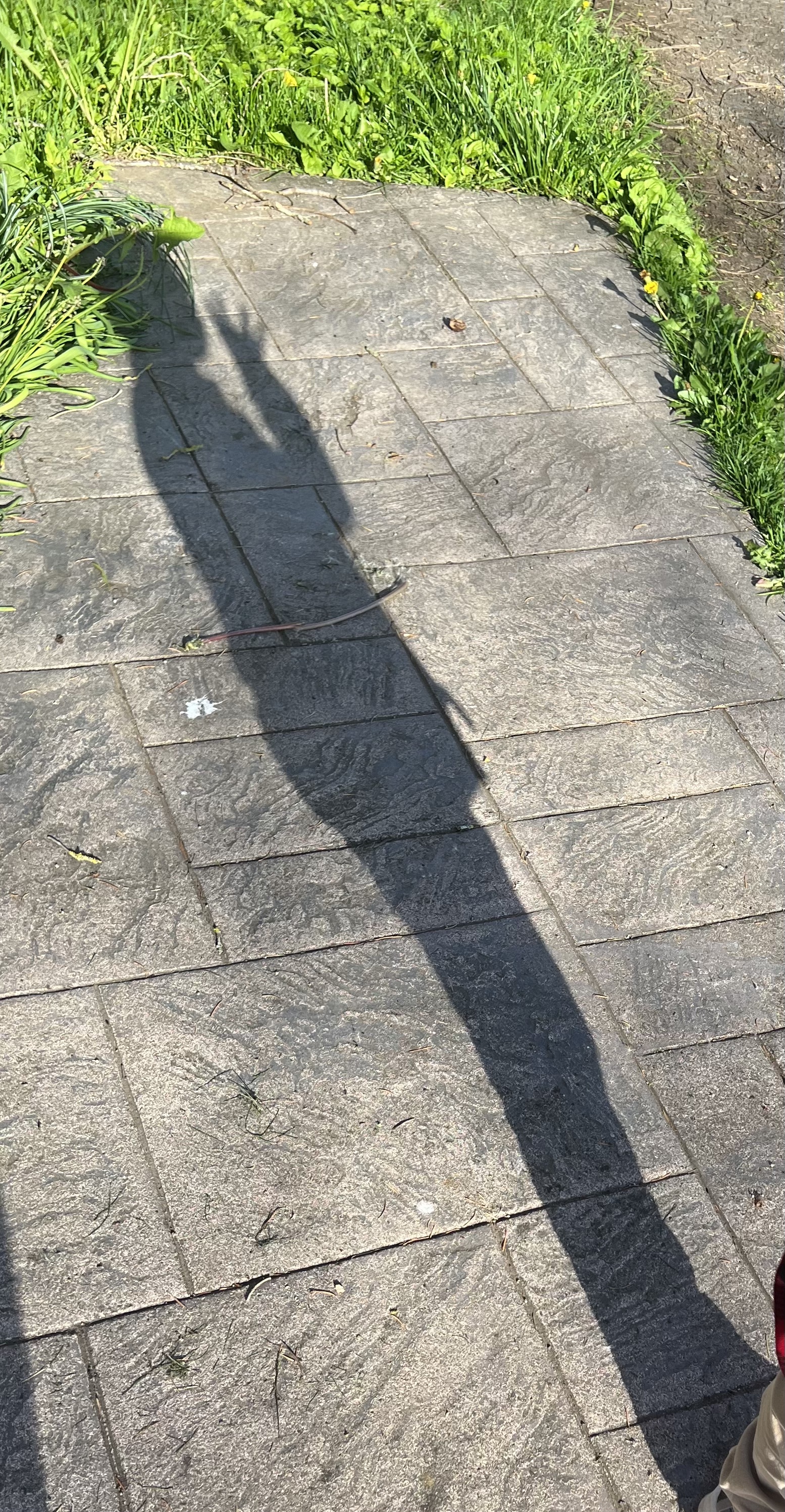
She scowls at me. She stares at her short shadow And makes it dance in the road. She shakes its head. Daddy, you don’t look pretty, she says. I agree.
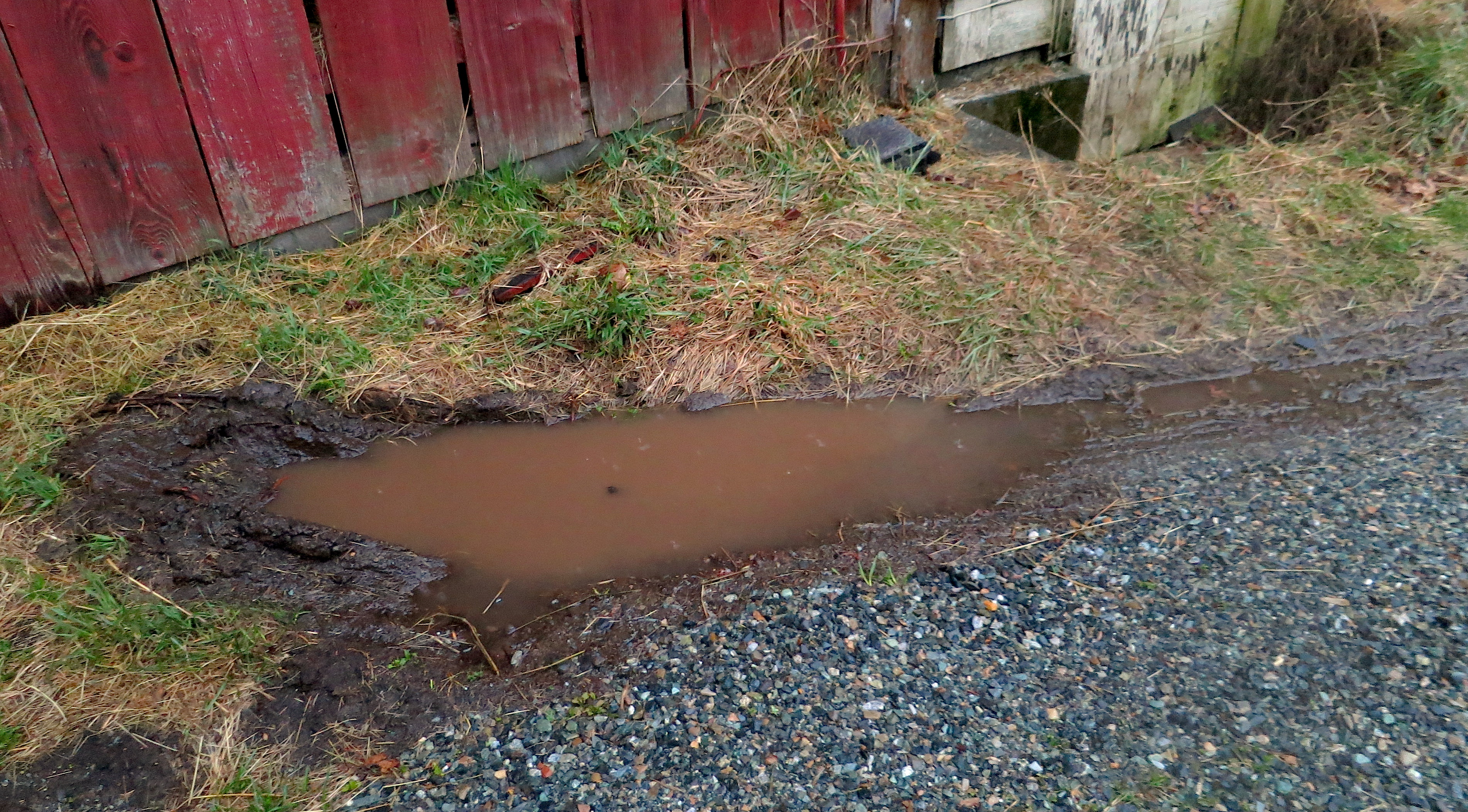
She stomps on a sewer grid where the slow rain Is vanishing. Do you want to go down there? I tell her no. Neither do I she says.
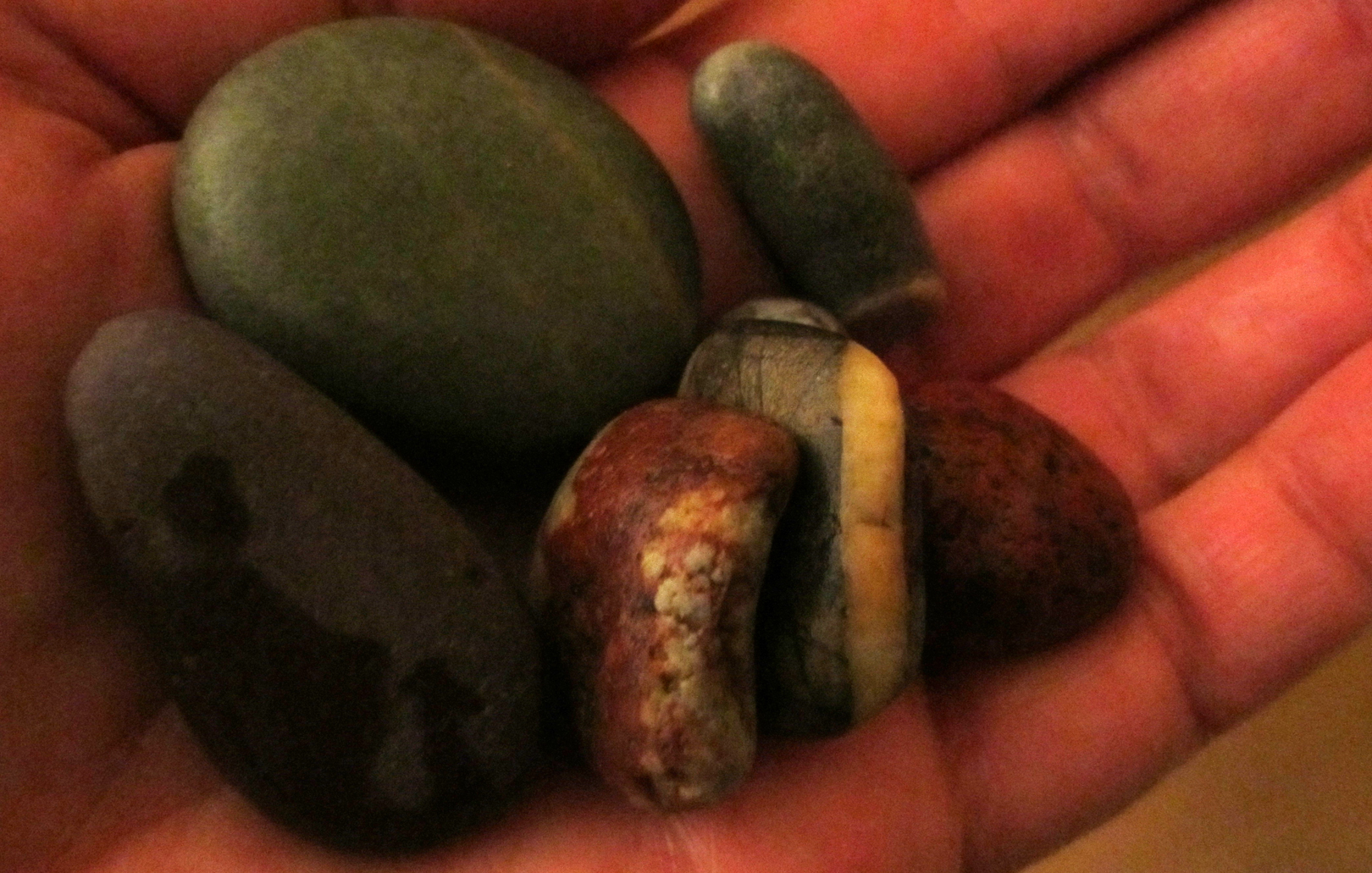
She picks up a stone. This is an elephant. Because it’s heavy, smooth, slate gray, and hers, I tell her it’s very like an elephant.
We’re back. The starling is gone. Where did it go? She says. I tell her I don’t know, maybe A cat took it away. I think it’s lost.
I tell her I think so too. But can’t you find it? I tell her I don’t think so. Let’s go look. I show her my empty hands, and she takes one. ~David Wagoner “Walking around the Block with a Three-Year Old” from Traveling Light
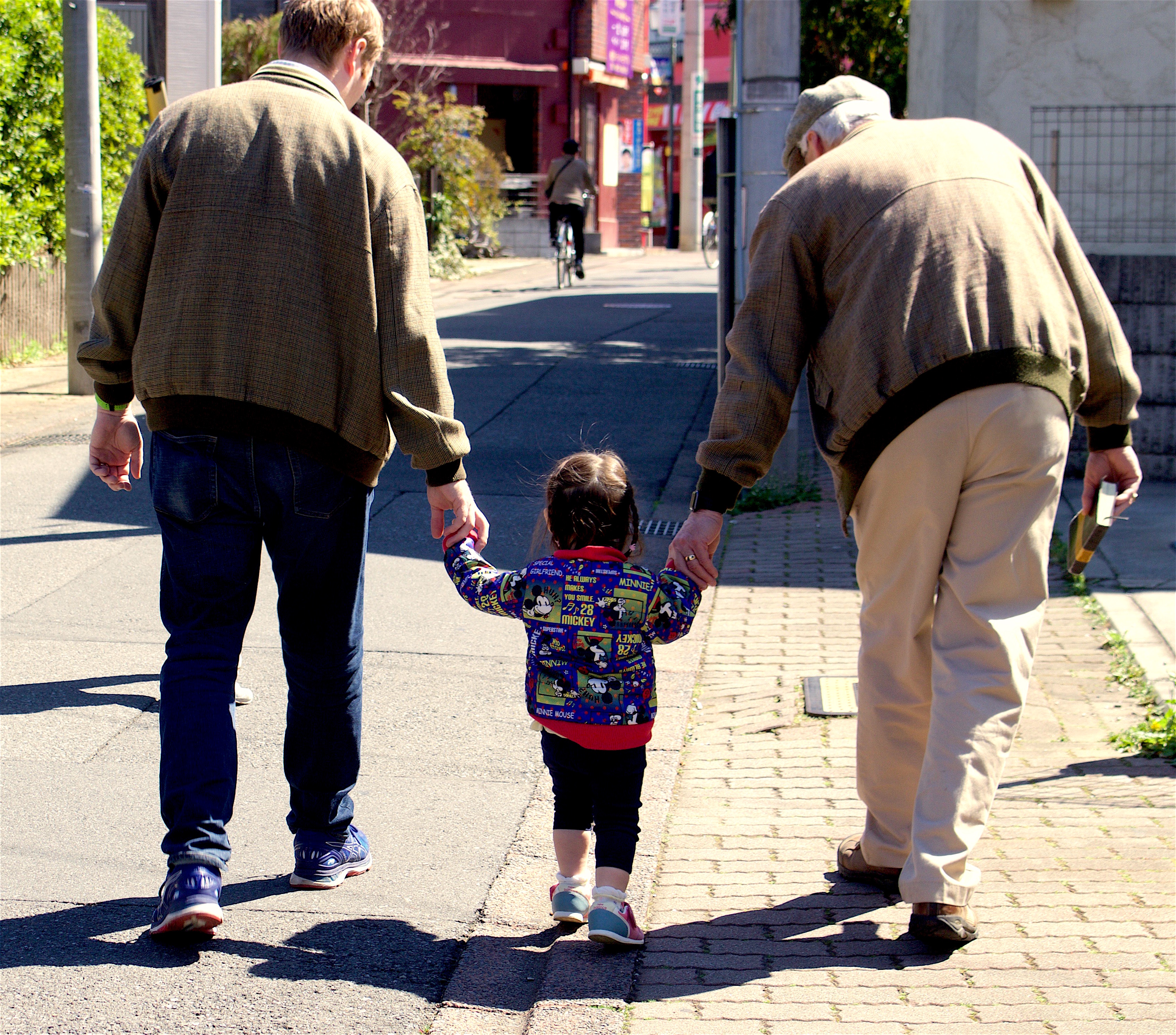
These days, I spend most of my waking time walking and talking with a very special three year old. As he works in the barn with me, or just exploring the farm, he is helping me readjust how I look at the world, to see it the way he does and to try to figure out why things are the way they are. What seems logical to me doesn’t always make sense to him, so I need to put into words what I tend to take for granted.
Sometimes I just have to say I don’t know the answer to his question, because I really don’t know and I want him to believe in my truthfulness.
Whatever I say to him will get filed away in his memory banks for a lifetime, so I use careful words and respect his justifiable skepticism. I want to teach him to think through life’s puzzles without relying too much on outside opinions. What I hope is that even when I am empty of answers, he will always want to explore his questions while alongside me, trusting me as I hold his hand while we walk and talk together. I’m never empty when I am holding his hand.
I want him to remember that most of all.
One-Time
Monthly
Yearly
Make a one-time or recurring donation to support daily Barnstorming posts
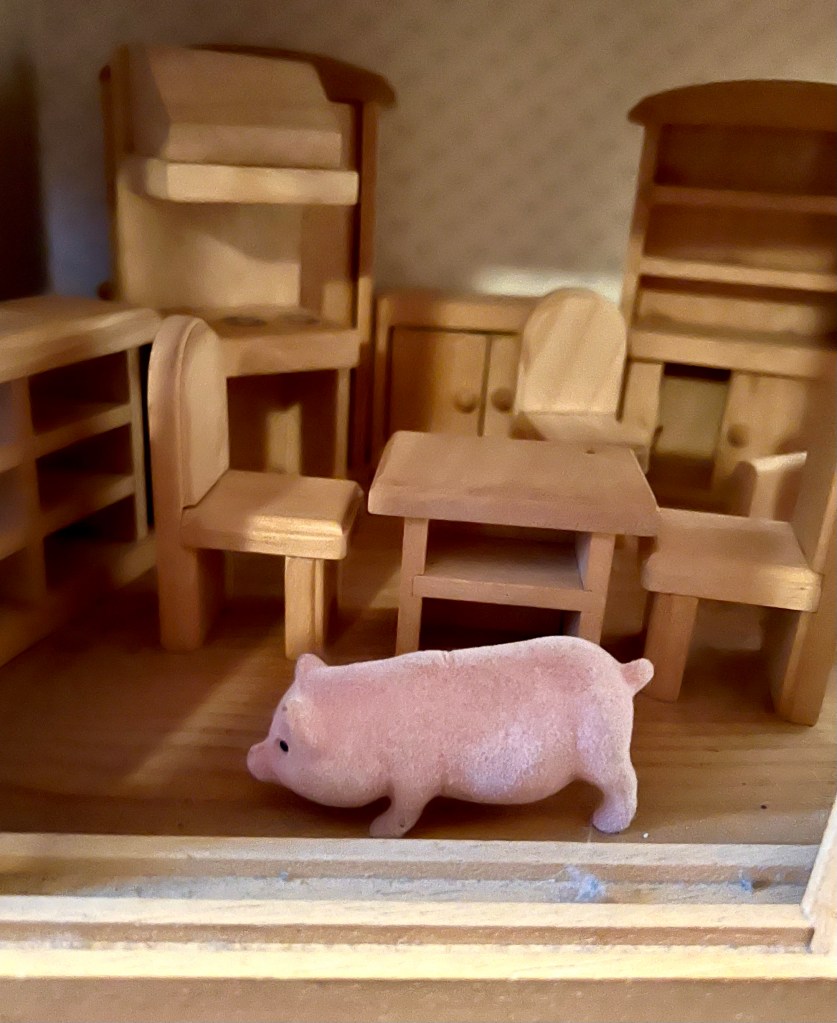
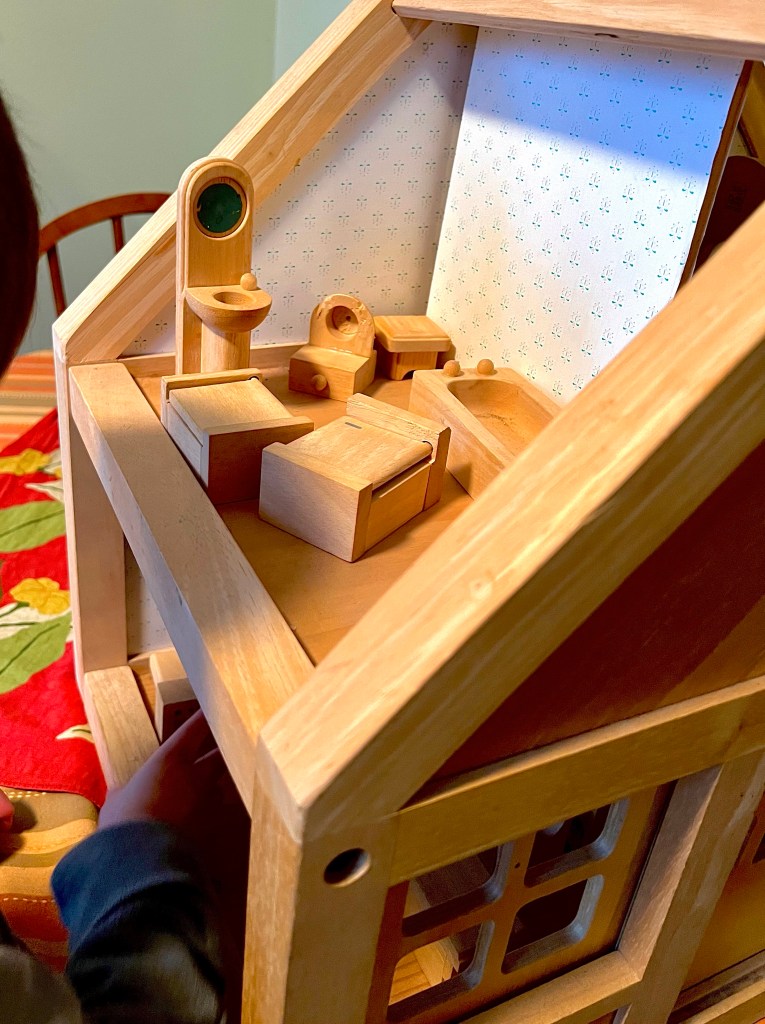
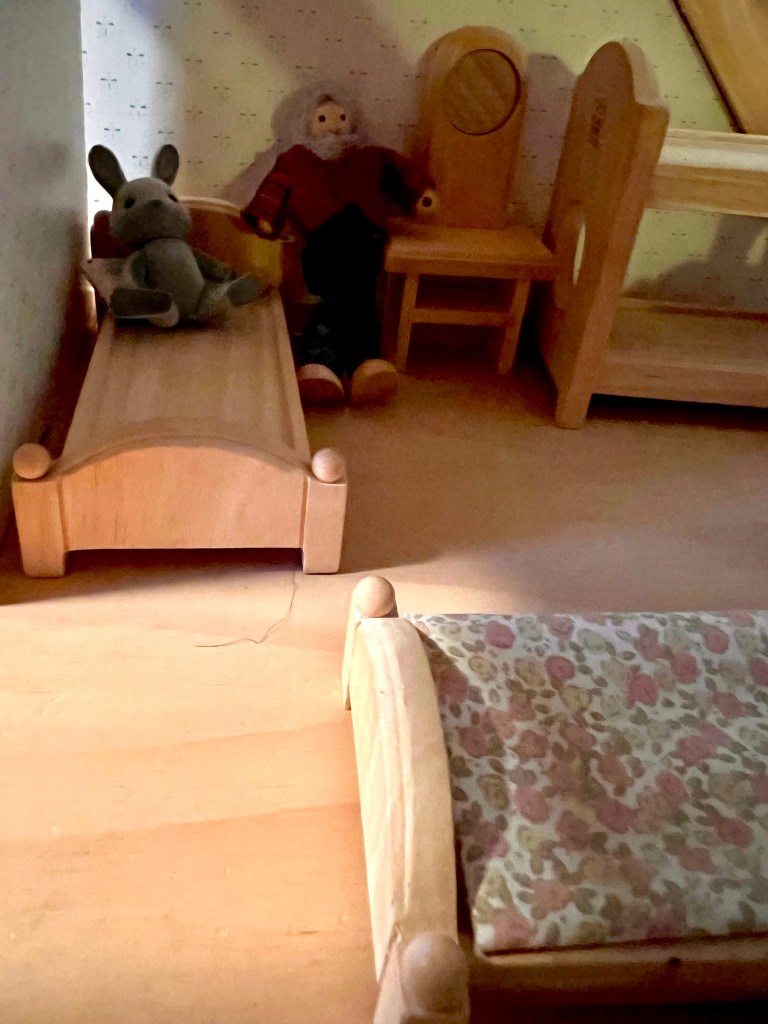
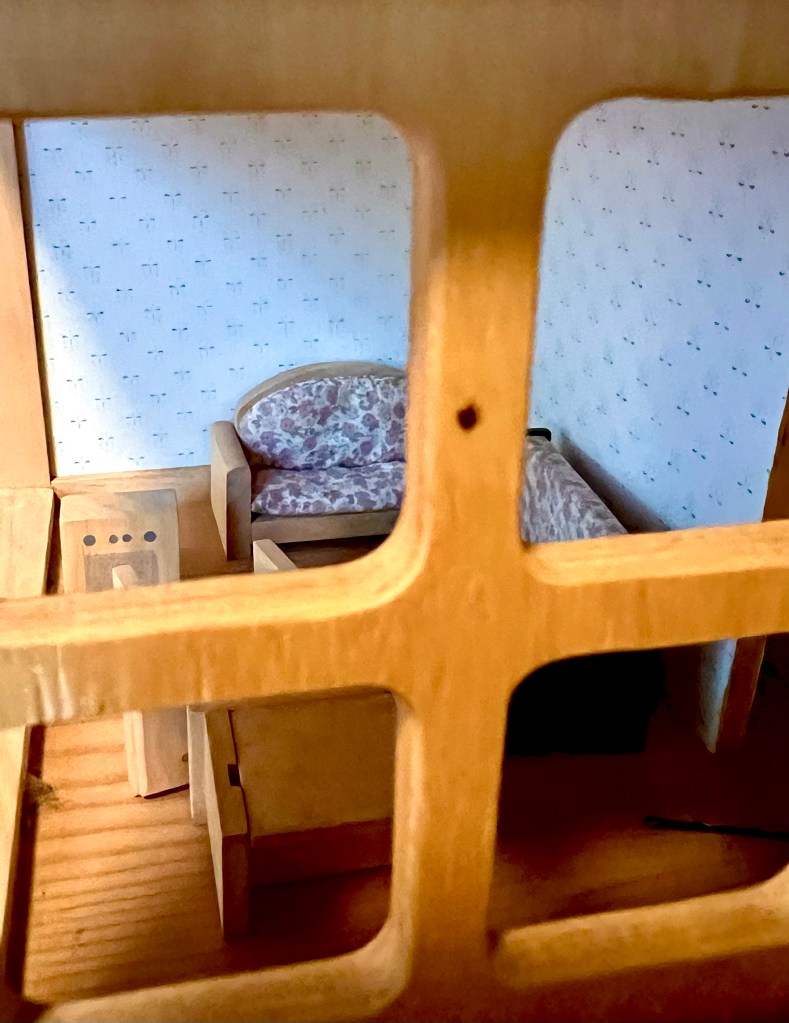
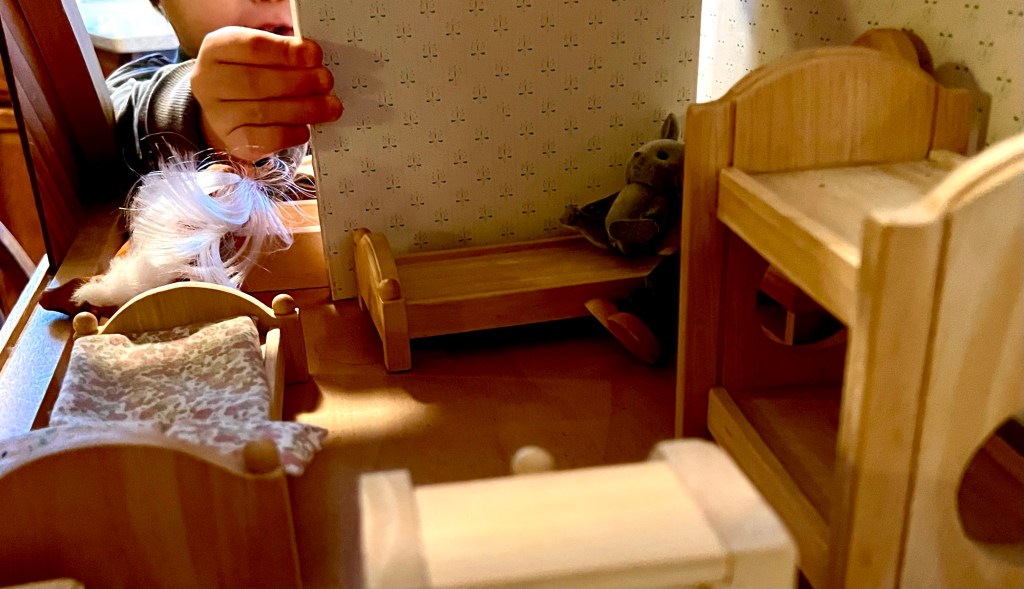
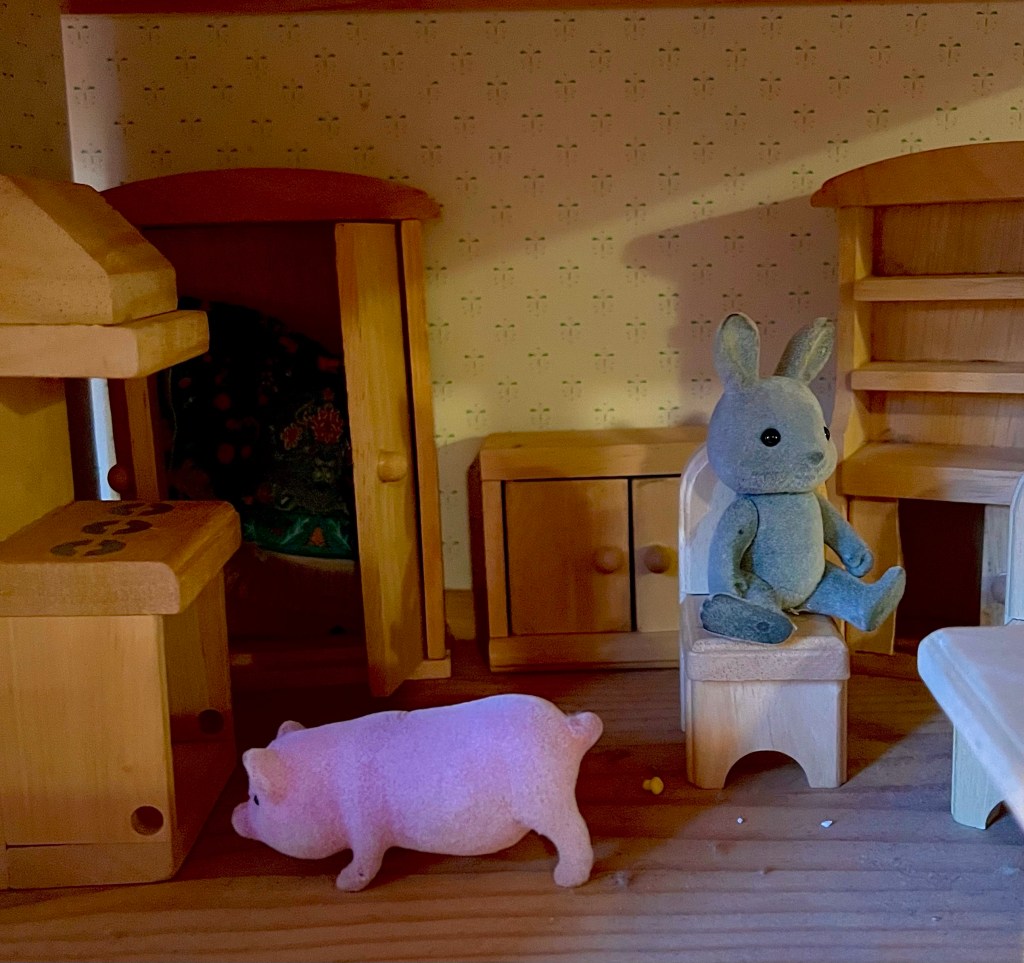
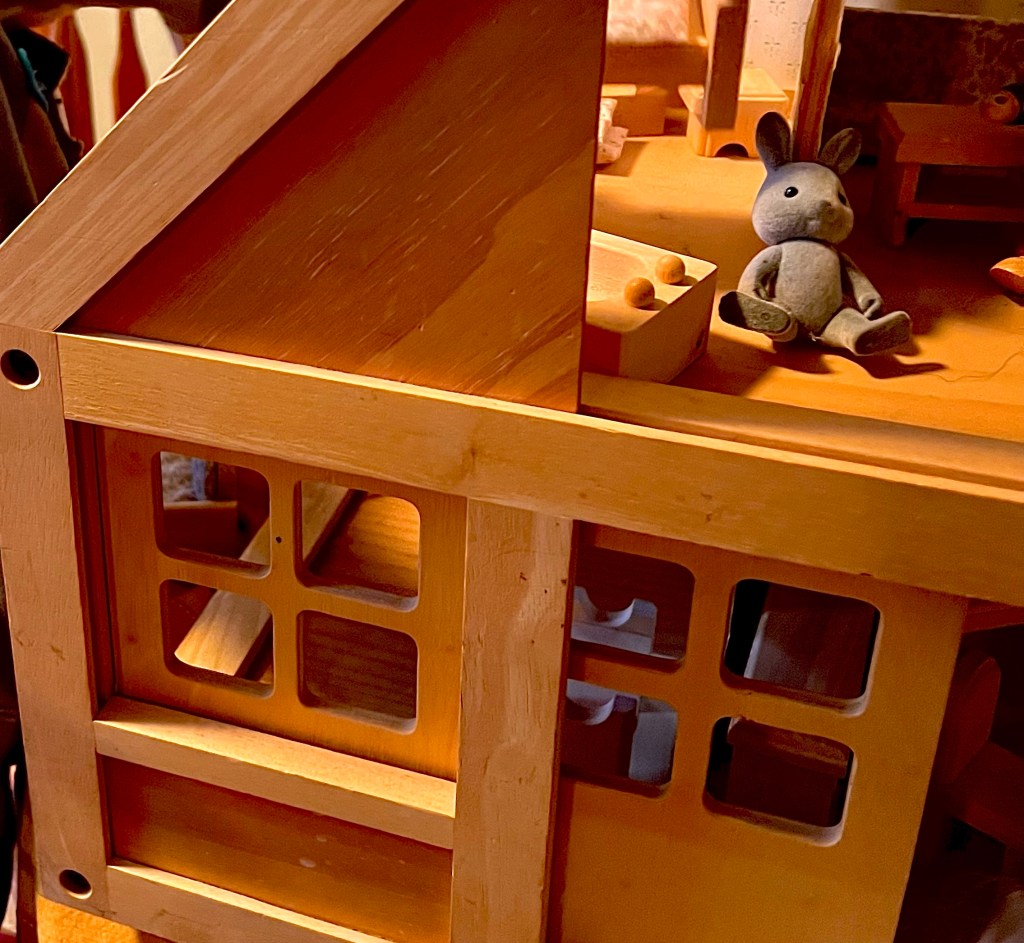
There in the attic of forgotten shapes (Old coats in plastic, hat boxes, fur capes Amongst the smells of mothballs and cigars), I saw the doll house of our early years, With which my mother and my aunt had played, And later where my sister and I made The towering grown-up hours to smile and pass: The little beds, the tin-foil looking glass, Bookcases stamped in ink upon the walls, Mismatched chairs where sat the jointed dolls, The clock whose face, no larger than a dime, Had, for all these years, kept the same time. I remembered how we set the resin food Atop a table of stained balsa wood, The shiny turkey hollow to the tap, The cherry pie baked in a bottle cap. Now it is time to go to sleep, we spoke, Parroting the talk of older folk, And laid the dolls out fully-clothed in bed After their teeth were brushed, and prayers were said, And flipped the switch on the low-wattage sun. But in the night we’d have something break in, Kidnap the baby or purloin the pie — A tiger, maybe, or a passer by — Just to make something happen, to move the story. The dolls awoke, alarmed, took inventory. If we made something happen every day, Or night, it was the game we knew to play, Not realizing then how lives accrue, With interest, the smallest things we do. ~A.E. Stallings “The Doll House”
I was born with a severe imagination deficiency. I could not create my way out of a paper bag, much less make up a story. This never seemed like much of an impediment since I am quite content dealing with the daily challenges of real life. I married someone with a similar world view and we both thrived in our banal and mundane world.
Then we had children. Children born with intact and active imaginations. Children with imaginary friends, and monsters under the bed and a world outside our front door that I didn’t recognize. And they have grown up to have children with wild imaginings too.
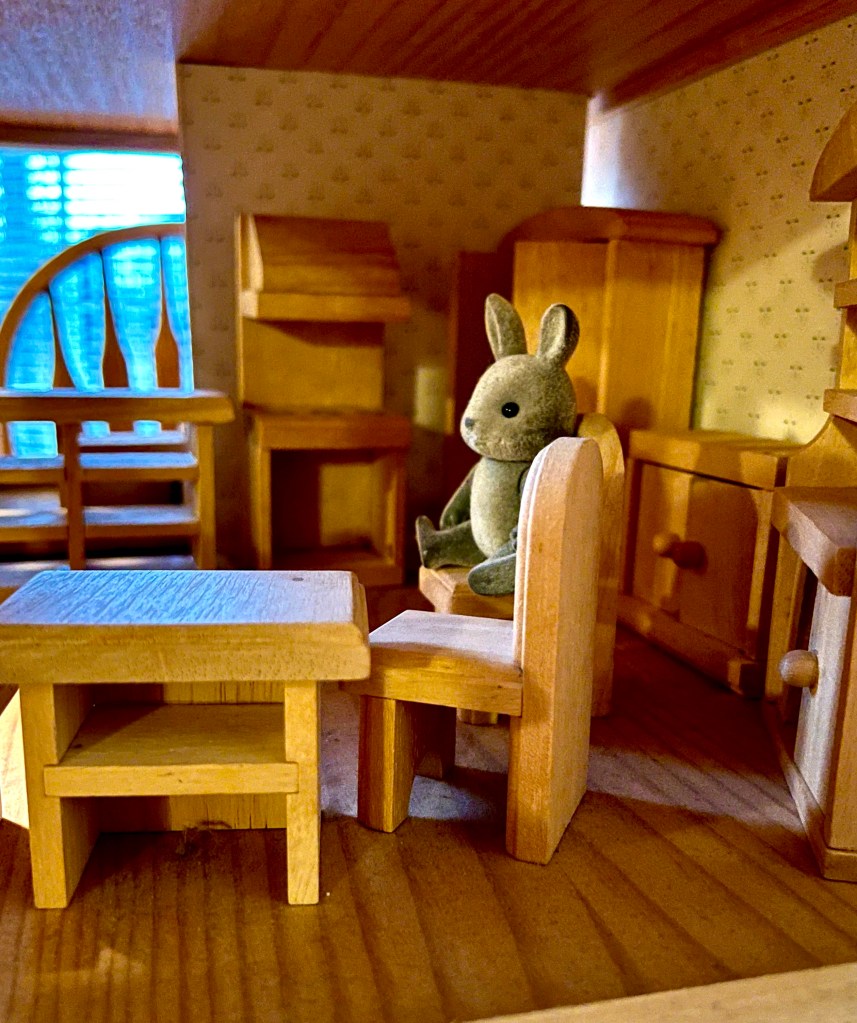
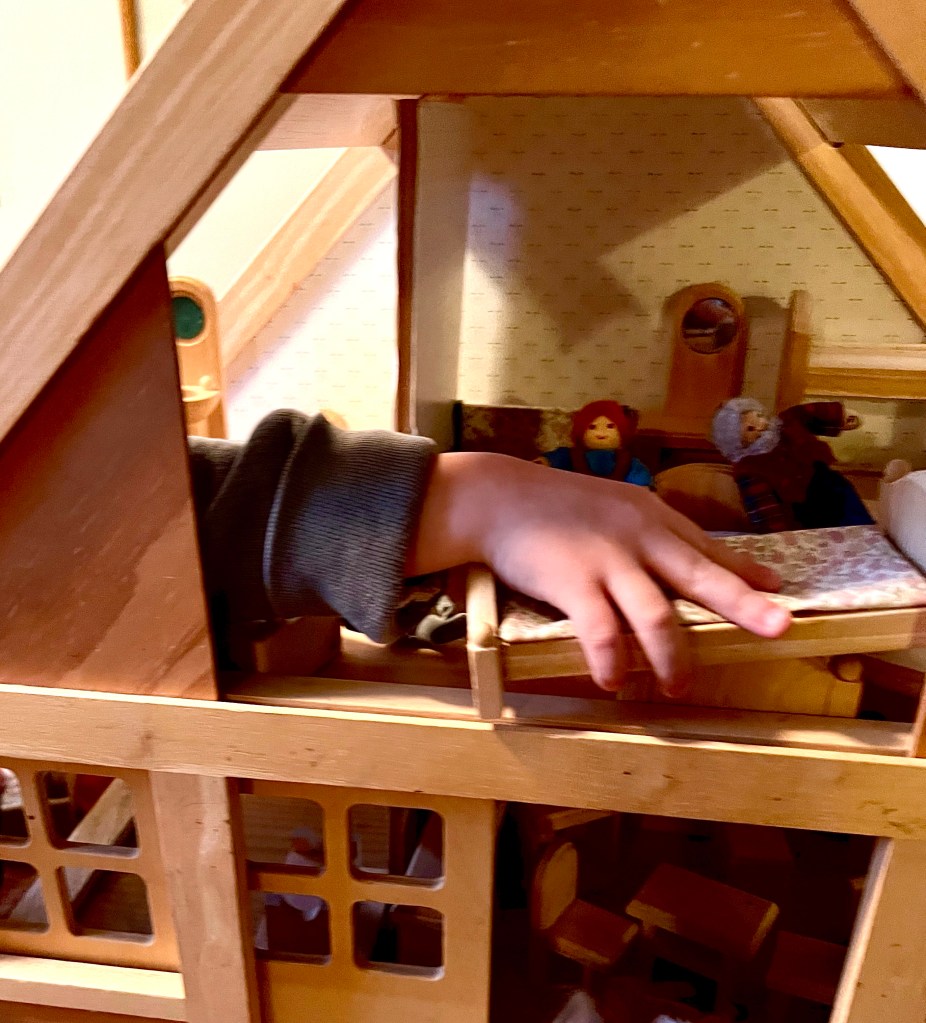
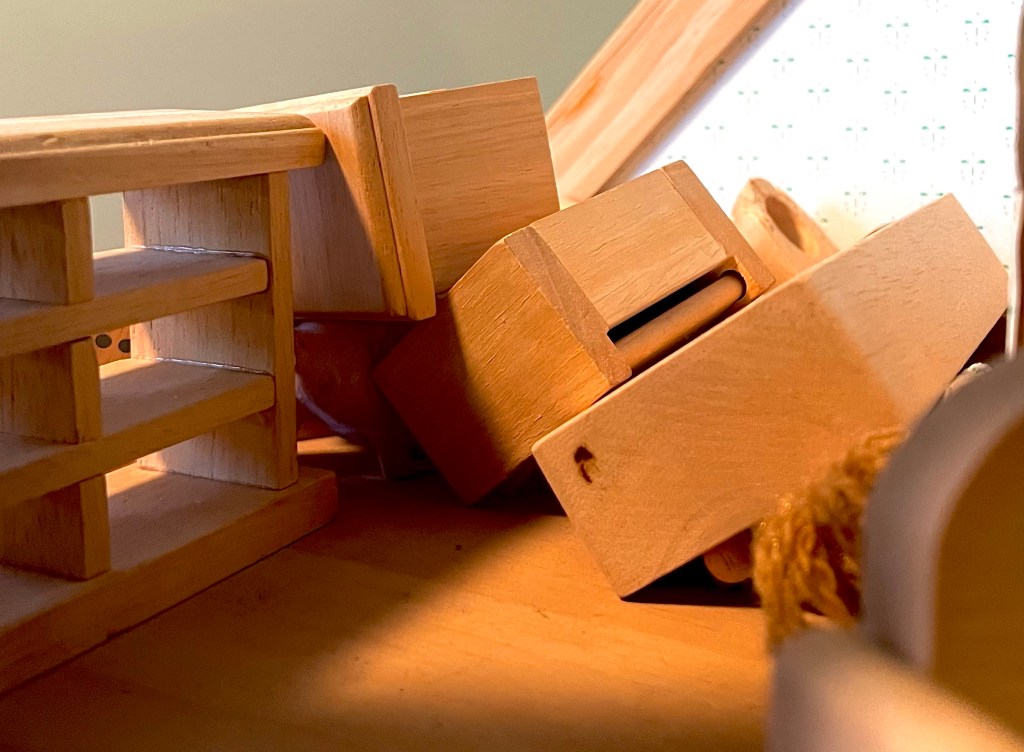
Our old doll house is a pretty tame place to exercise excessive levels of creativity, with characters and furniture to move around, conversations to overhear and conflicts to resolve. So I watch grandchildren make something happen in their world while I continue to make sense of the world I was born into.
Their stories become interest accrued on lives well-composed and imagined. Even when a giant troll comes and knocks over all the furniture – there is no need for real life earthquakes in their created-reality.
Be thou the rainbow in the storms of life. The evening beam that smiles the clouds away, and tints tomorrow with prophetic ray. ~Lord Byron
But mark! what arch of varied hue From heaven to earth is bowed? Haste, ere it vanish, haste to view The Rainbow in the cloud.
How bright its glory! there behold The emerald’s verdant rays, The topaz blends its hue of gold With the deep ruby’s blaze.
Yet not alone to charm thy sight Was given the vision fair;– Gaze on that arch of colored light, And read God’s mercy there. ~Felicia Hemans from “The Rainbow”
The true harvest of my daily life is somewhat as intangible and indescribable as the tints of morning or evening. It is a little star-dust caught, a segment of the rainbow which I have clutched. ~Henry David Thoreau
Painting the indescribable with words necessitates subtlety, sound and rhythm on a page. The best word color portraits I know are by Gerard Manley Hopkins who created through startling combinations: “crimson-cresseted”, “couple-colour”, “rose-moles”, “fresh-firecoal”, “adazzle, dim”, “dapple-dawn-drawn”, “blue-bleak embers”, “gash gold-vermillion”.
I understand, as Thoreau does, how difficult it is to harvest a day using ordinary words. Like grasping ephemeral star trails or the transient rainbow that moves away as I approach, what I bring to the page or screen is intangible yet so very real.
I will keep reaching for rainbows, searching for the best words to preserve my days and nights forever. It does feel like I’m clutching at a moment in time moving through my fingers.
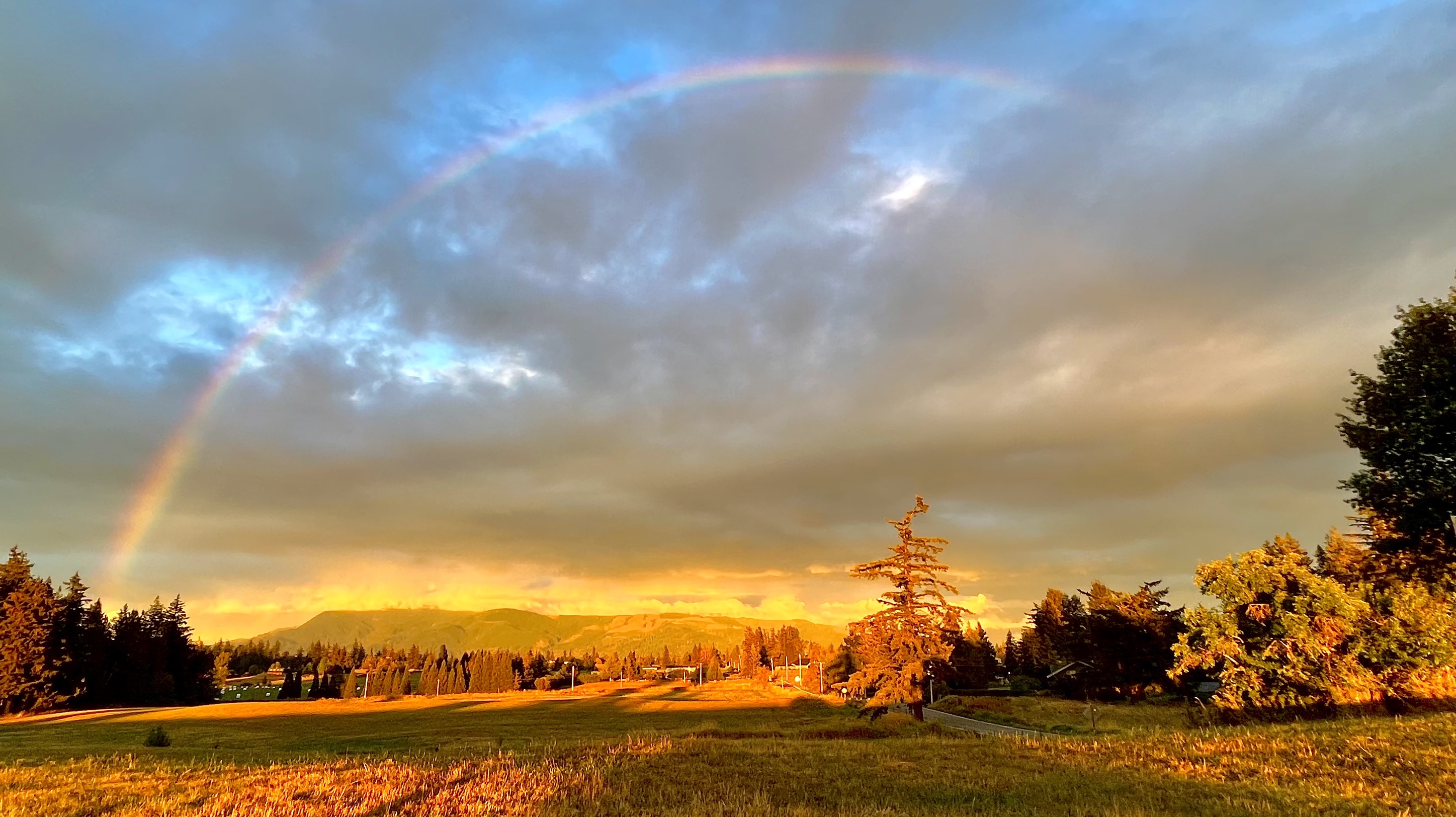
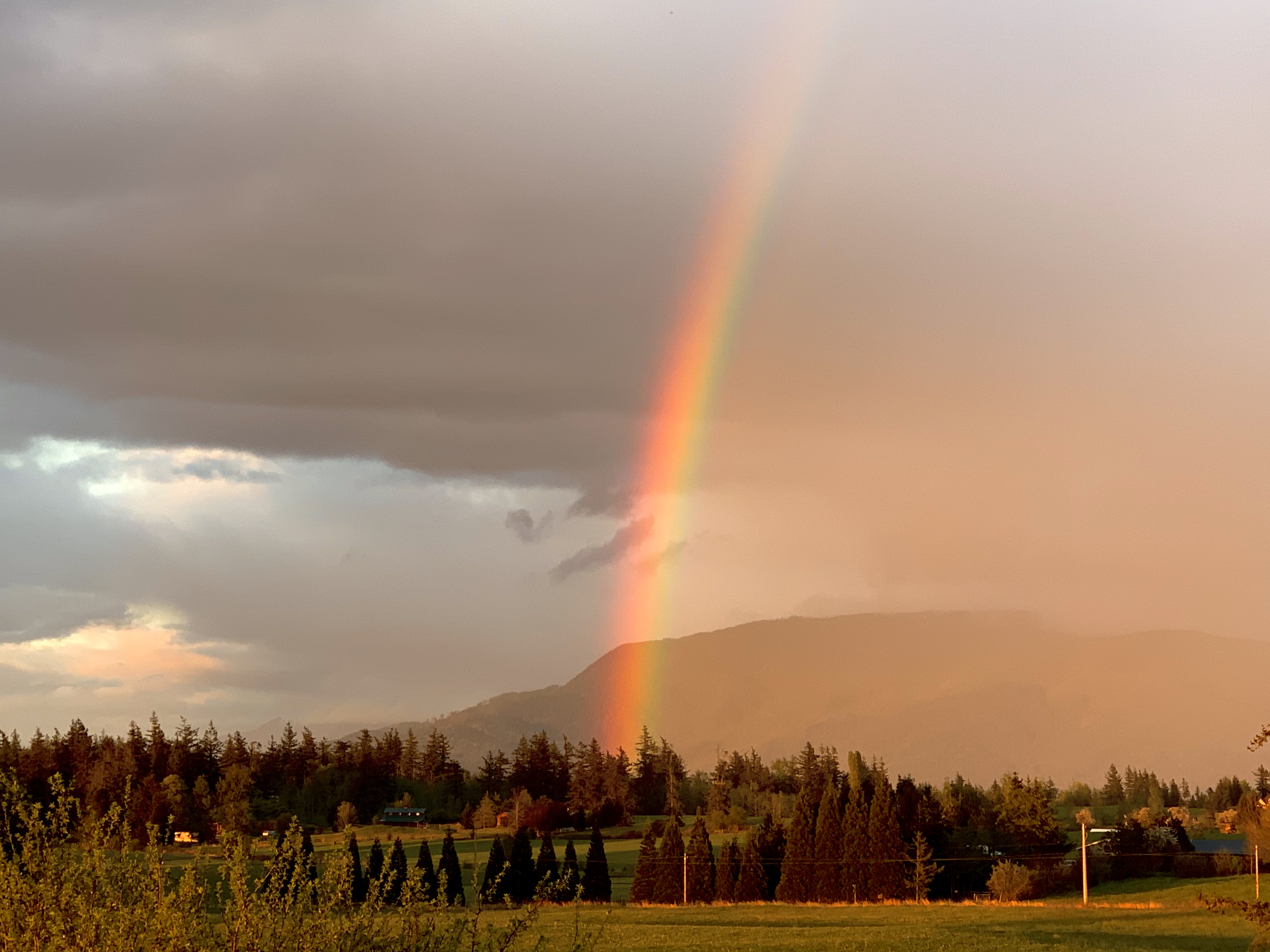
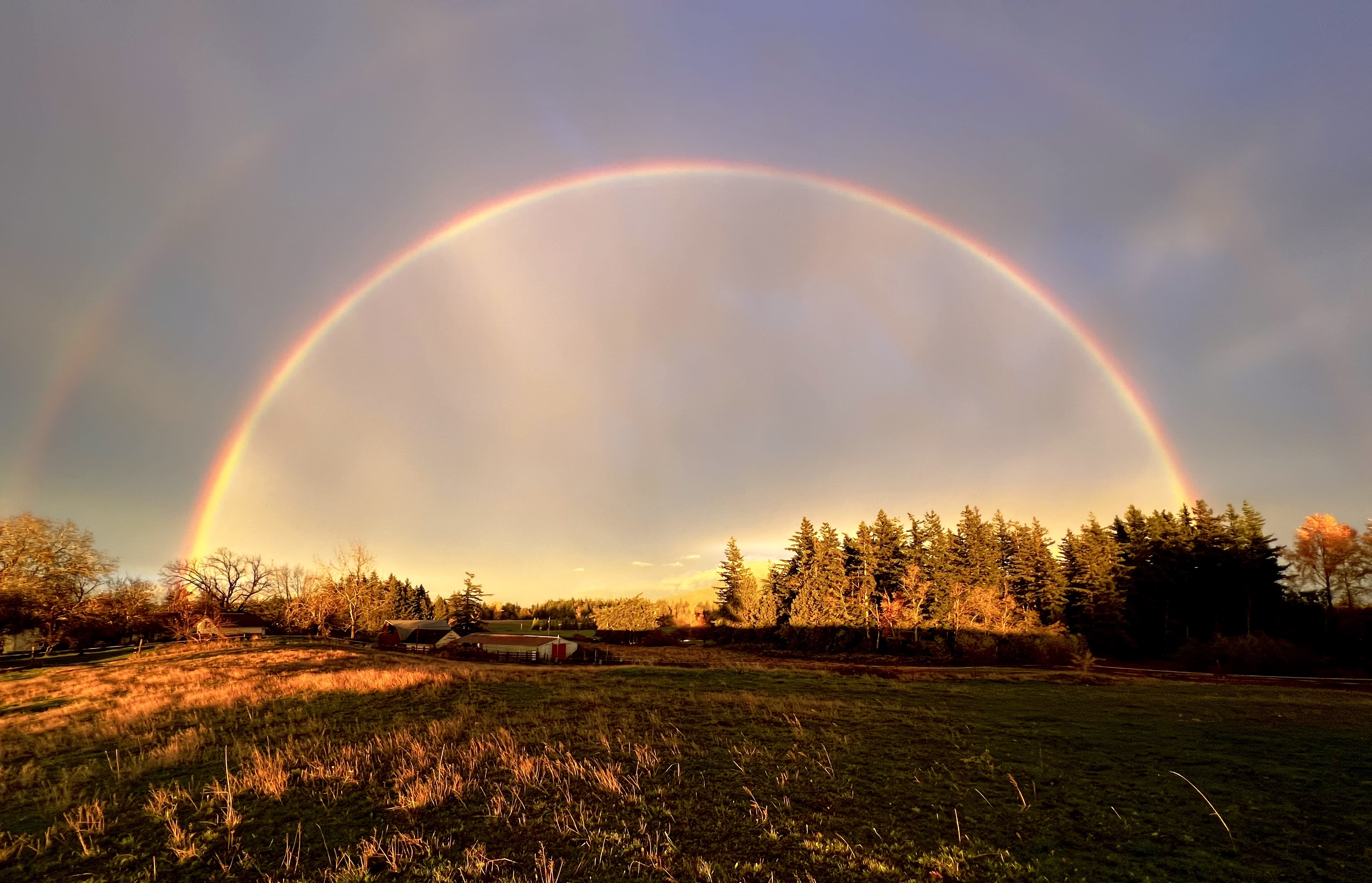
I witnessed this Sabbath rainbow last night from our farm, standing with two of our very young grandchildren, hoping they would remember it enough to describe it to our someday great-grandchildren. Perhaps they will even read my words and know how much it mattered to me that they experience such beauty and promise.
I want them to always remember: in the beginning was the Word, and we are created by the same Author who writes incredible rainbows across the sky.
One-Time
Monthly
Yearly
Make a one-time or recurring donation to support daily Barnstorming posts
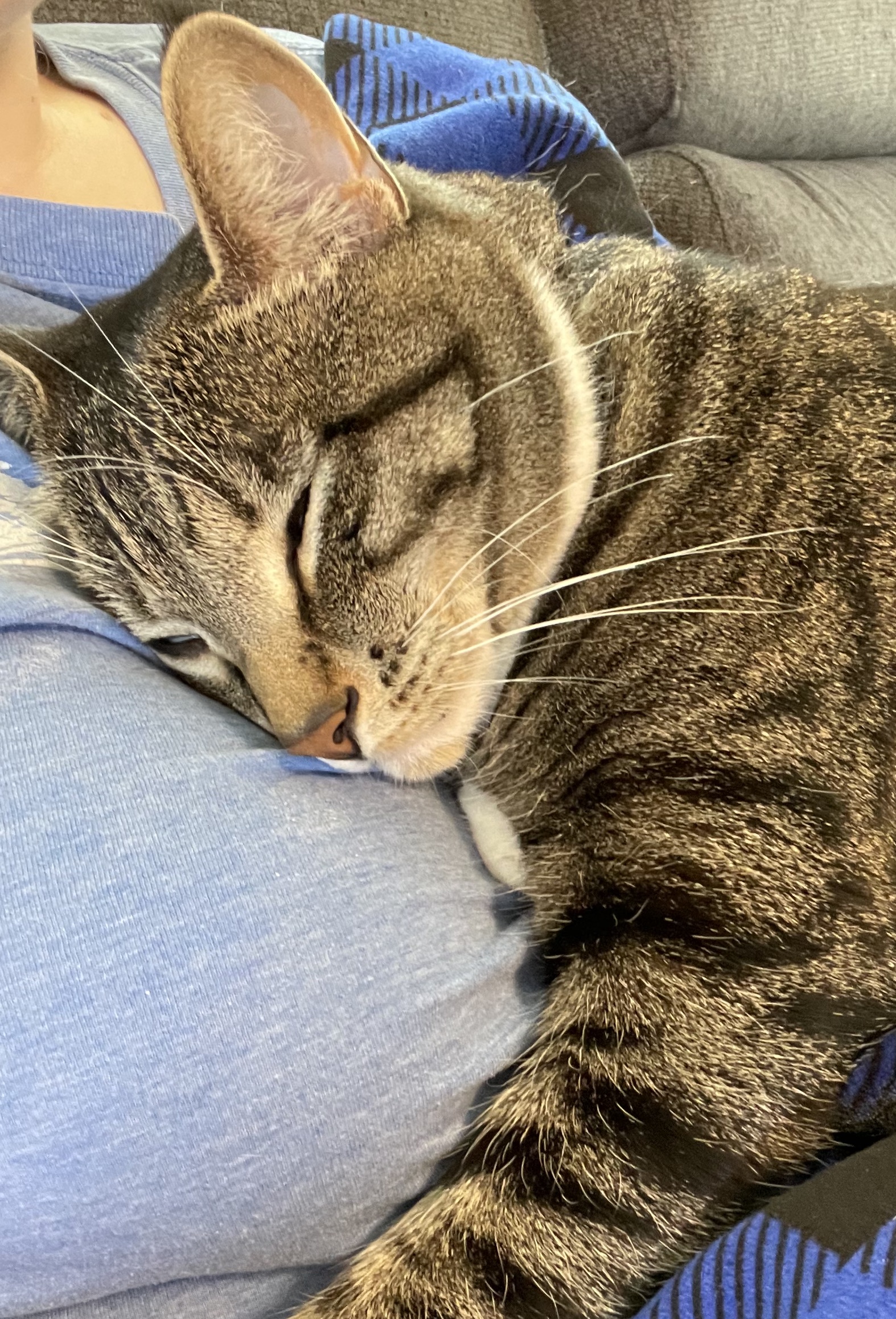
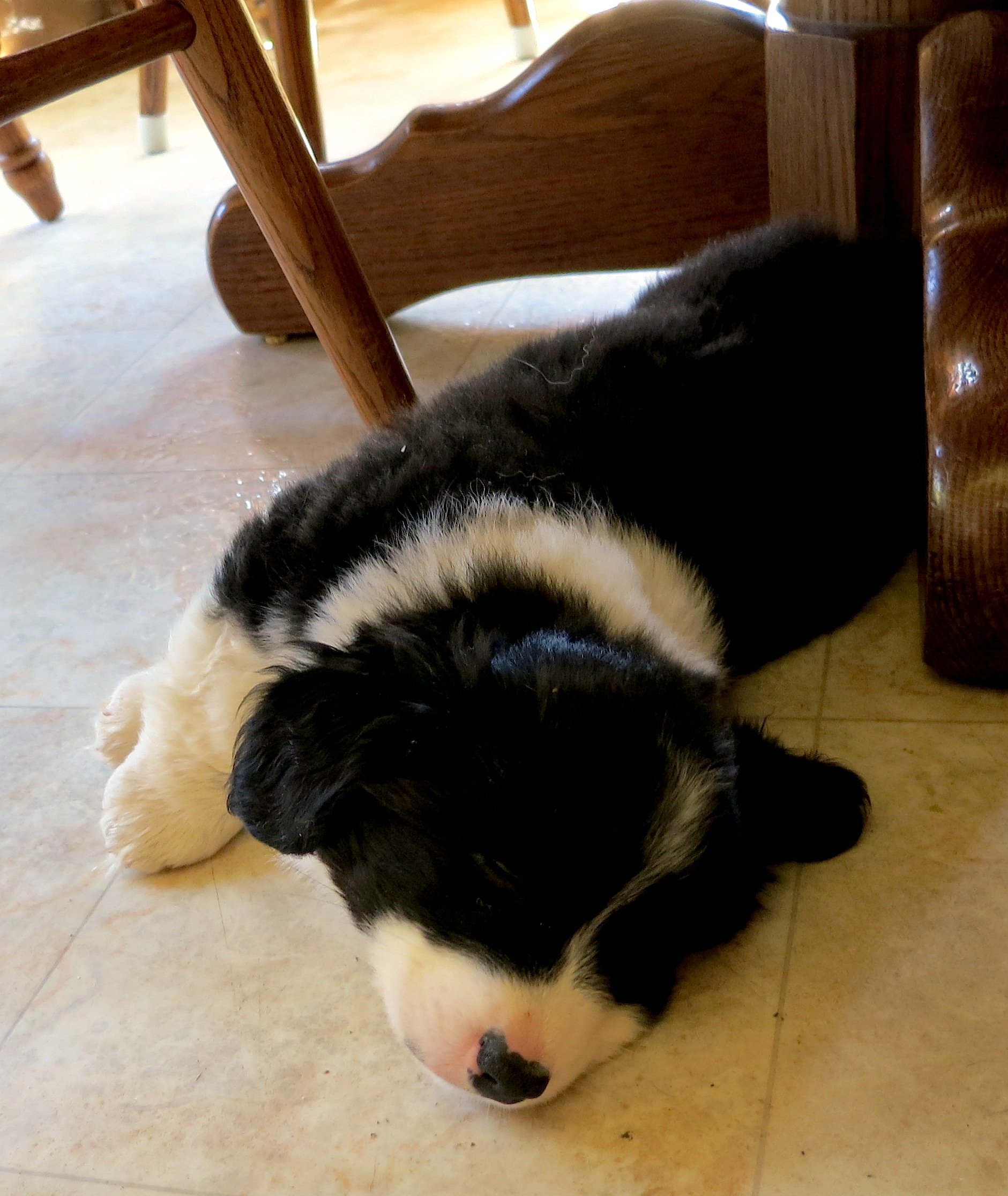
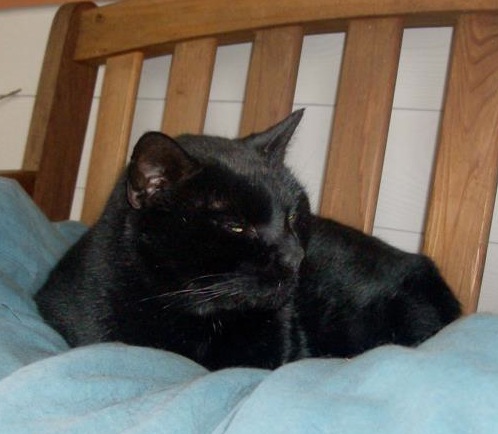
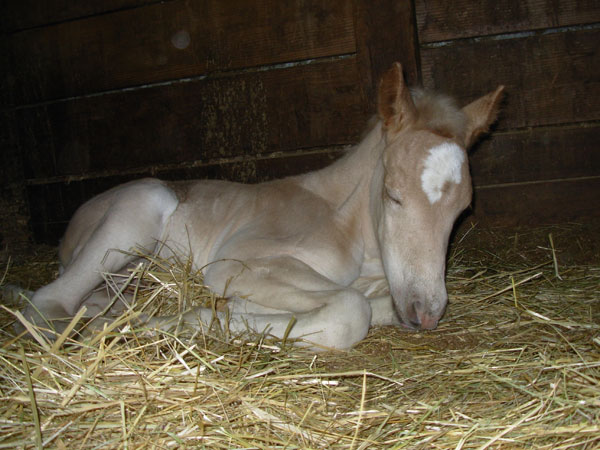
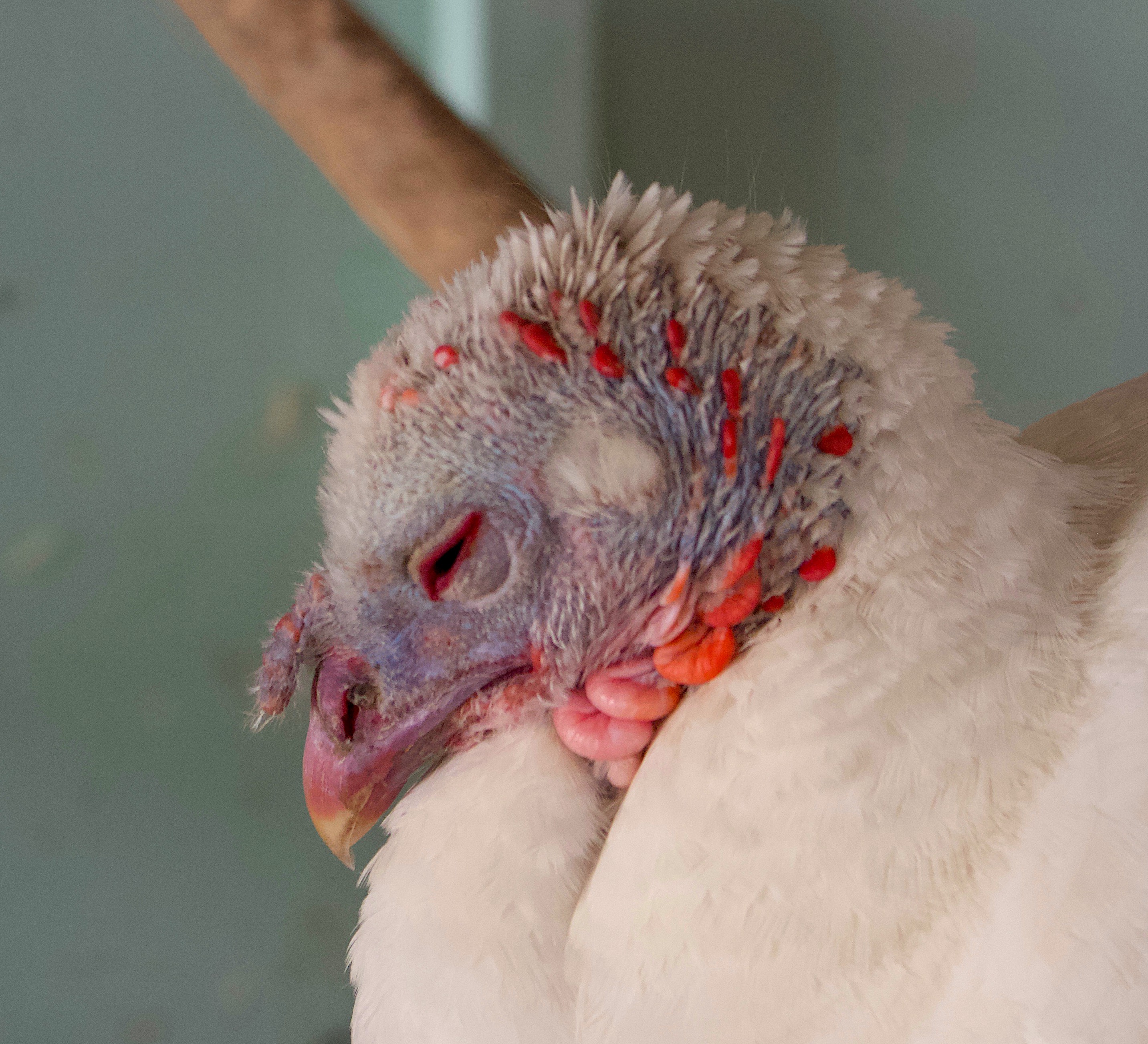
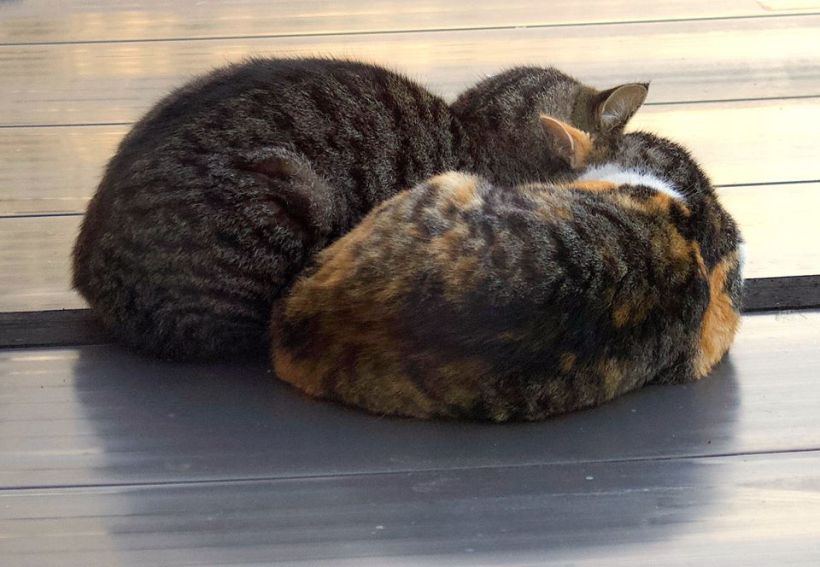
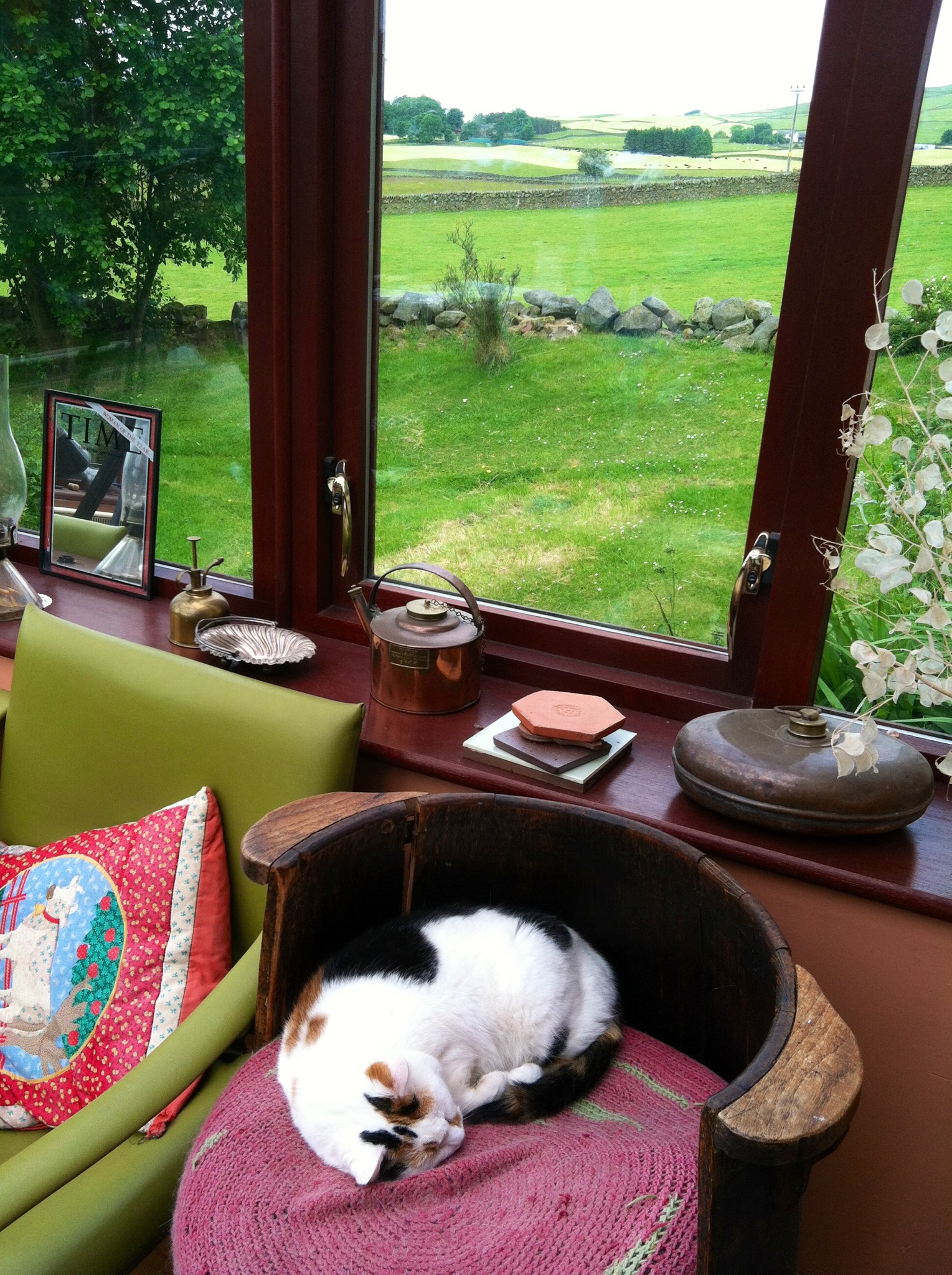
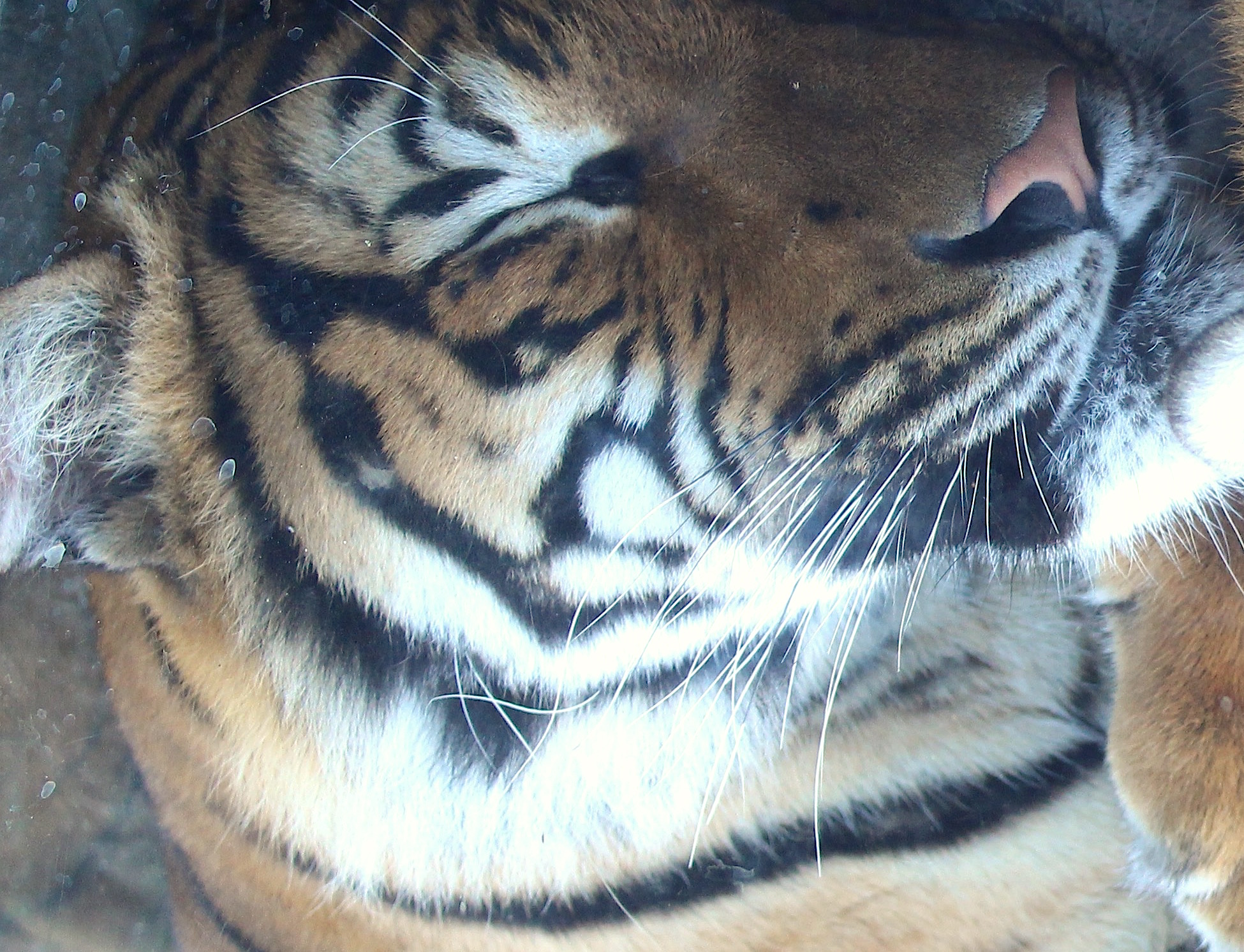
I believe the world would be a better place if we all could stop in the middle of the day and just rest our eyes for awhile — to look at the inside of our eyelids for a few minutes, to pause, to pray, to purr with contentment…
…perchance to dream. Aye, there’s the rub.
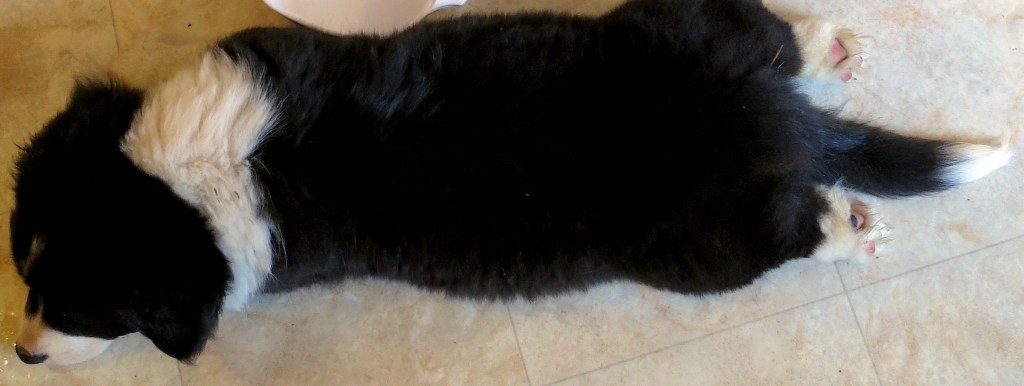
Perhaps, we might wake with a new perspective and an improved attitude. Works like a charm for our grandchildren.
And for me as well…
One-Time
Monthly
Yearly
Make a one-time or recurring donation to support daily Barnstorming posts
Leave the dishes. Let the celery rot in the bottom drawer of the refrigerator and an earthen scum harden on the kitchen floor. Leave the black crumbs in the bottom of the toaster. Throw the cracked bowl out and don’t patch the cup. Don’t patch anything. Don’t mend. Buy safety pins. Don’t even sew on a button. Let the wind have its way, then the earth that invades as dust and then the dead foaming up in gray rolls underneath the couch. Talk to them. Tell them they are welcome. Don’t keep all the pieces of the puzzles or the doll’s tiny shoes in pairs, don’t worry who uses whose toothbrush or if anything matches, at all. Except one word to another. Or a thought. Pursue the authentic—decide first what is authentic, then go after it with all your heart. Your heart, that place you don’t even think of cleaning out. That closet stuffed with savage mementos. Don’t sort the paper clips from screws from saved baby teeth or worry if we’re all eating cereal for dinner again. Don’t answer the telephone, ever, or weep over anything at all that breaks. Pink molds will grow within those sealed cartons in the refrigerator. Accept new forms of life and talk to the dead who drift in through the screened windows, who collect patiently on the tops of food jars and books. Recycle the mail, don’t read it, don’t read anything except what destroys the insulation between yourself and your experience or what pulls down or what strikes at or what shatters this ruse you call necessity ~Louise Erdrich “Advice to Myself”
I am a messy person, coming from a long line of messy people. My paternal grandmother never had a clear kitchen counter, or a dining room table without piles of books and papers, spilling over with knickknacks and half-completed craft projects everywhere. I loved the chaos of her house since the messes left behind by her grandchildren weren’t as noticeable. I always felt at home, as if I was not being constantly monitored as a potential mess about to happen.
During this past (very hot) week, in our own home some sixty years later, we have grown from two residents to twelve with a lovely reunion of our children and grandchildren after four years of living far-flung and unable to gather. With four children under six years of age together, our house became even more of a whirlwind than it ordinarily is. I took no photos to demonstrate this, but trust me, the floor was covered with all manner of organic and inorganic matter most of the time. This was bliss, as long as I didn’t step on something sharp or suspiciously slimy in my bare feet.
The biggest surprise was a very early morning, about 4:30 AM, when the house was still dark and quiet except for our ten month old grandson who had not adapted yet to our time zone, so was up early for his breakfast. As I tiptoed quietly into my <very messy chaotic> kitchen to retrieve something, I noticed a good sized dust bunny on the linoleum floor and bent down to pick it up to toss in the trash can. To my surprise, it leaped away from my fingers!
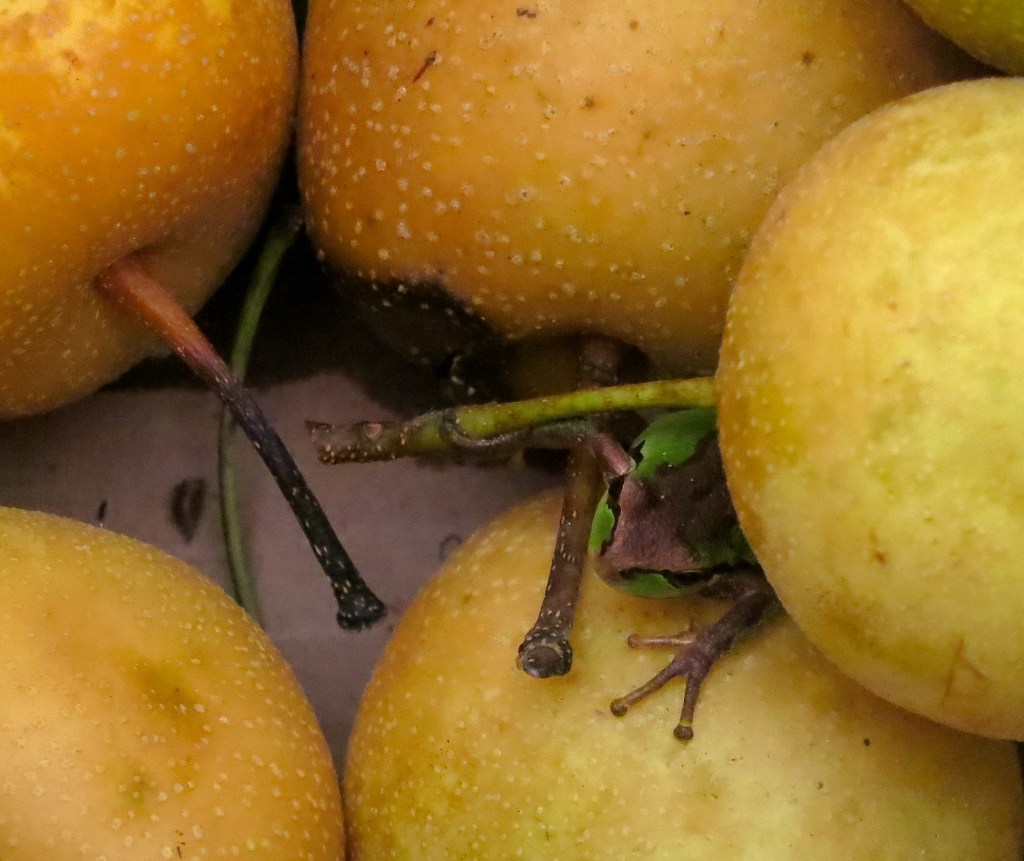
It kept jumping away and when my eyes finally focused in the early morning light, I realized it wasn’t an escaping dust bunny, but a tree frog covered in dust fuzz from my less than tidy floor. It must have come in the house from the perpetually open front door and hidden under a piece of furniture, being transformed into a furry froggy Frankenstein.
I caught it and carried it outside into the morning dawn, setting it free into the chaos of the world outside, rather than coping inside with my insufficient housekeeping. No, I didn’t think to get a photo. Oh, well. Some things you just have to take on faith.
After all, my heart has been leaping and rejoicing all week to have our family under one roof for a brief few days and whether the house was clean was simply a secondary concern. It actually is not a concern at all.
You can’t clean out a mama’s heart; it carries so much over the years that may need sweeping and scrubbing, but this was not the week to worry about it. My worth is not in what I own or how pristine I keep things, but in the depth of my commitment to those who I am given the privilege to know and love.
One-Time
Monthly
Yearly
Make a one-time or recurring donation to sponsor daily Barnstorming posts



















 Barnstorming