The whole concept of the Imago Dei (or)…the ‘Image of God’ is the idea that all men have something within them that God injected…
This gives him a uniqueness, it gives him worth, it gives him dignity. And we must never forget this…there are no gradations in the Image of God.
Every man from a treble white to a bass black is significant on God’s keyboard, precisely because every man is made in the Image of God.
One day we will learn that.
We will know one day that God made us to live together as brothers and to respect the dignity and worth of every man. – Martin Luther King, Jr. from his “The American Dream” sermon, July 4, 1965
photo by Lea Gibson
Next to the Blessed Sacrament itself, your neighbor is the holiest object presented to your senses.
~C. S. Lewis from The Weight of Glory
Martin Luther King, Jr. spoke frequently of a hoped-for day when all people would be united as God’s children, joined together by our joint creation as the Image of God. Not one of us reflects God more than another but together form His body and His kingdom on earth.
Dr. King’s words and wisdom continue to inform us of our shortcomings 50 years later as we flounder in our flaws and brokenness; so many question not only the validity of equality of all people of all shades, but even doubt the existence of a God who would create a world that includes the crippled body, the troubled mind, the questioned gender, the genetically challenged, the human beings never allowed to draw a breath.
Yet we are all one, a composition made up of white and black keys too often discordant, sometimes dancing to different tempos, only on rare occasions a symphony. The potential is there for harmony, and Dr. King would see and hear that in his time on earth.
Perhaps today we unite only in our shared tears, shed for the continued strife and disagreements, shed for the injustice that results in senseless killings, shed for our inability to hold up one another as holy in God’s eyes as His intended creation.
We can weep together on this day, knowing, as Dr. King knew, a day will come when the Lord God will wipe tears away from all faces — all colors just as they are. No gradations.
On days when there was a break in the fighting, the two of us drank hot tea.
We were rattled by the same passions.
Both of us looked upon the world as a meadow in May
over which women and horses wander. ~Isaac Babel “The Story of a Horse”
War and détente will go on, détente and renewed tearings asunder,
we can never break free from the dark and degrading past.
Let us see life again, nevertheless, in the words of Isaac Babel
as a meadow over which women and horses wander. ~Maxine Kumin “Women and Horses”
I believe in the gift of the horse, which is magic,
their deep fear-snorts in play when the wind comes up,
and the ballet of nip and jostle, plunge and crow hop.
I trust them to run from me, necks arched in a full swan’s S, tails cocked up over their backs like plumes on a Cavalier’s hat. I trust them to gallop back, skid to a stop, their nostrils
level with my mouth, asking for my human breath that they may test its intent, taste the lure of it. I believe in myself as their sanctuary and in the earth with its summer plumes of carrots,
its clamber of peas, beans, masses of tendrils as mine. ~Maxine Kumin from “Credo”
So this is a picture of peacefulness,
the carelessness of a summer afternoon on horseback,
wandering along a hilltop
a gallop through a meadow,
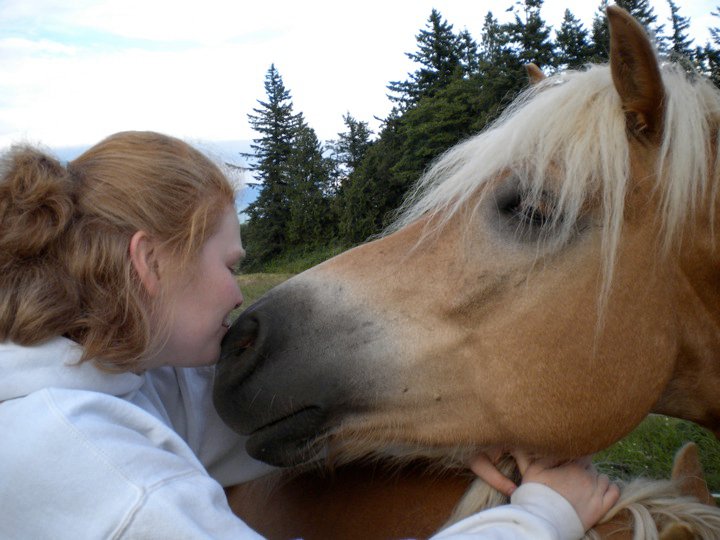
a sharing of breath with an animal that chooses,
instead of running far away,
to circle around
and come back
again and yet again.
…and there it is again — beauty the brave, the exemplary,
blazing open. Do you love this world? Do you cherish your humble and silky life? Do you adore the green grass, with its terror beneath?
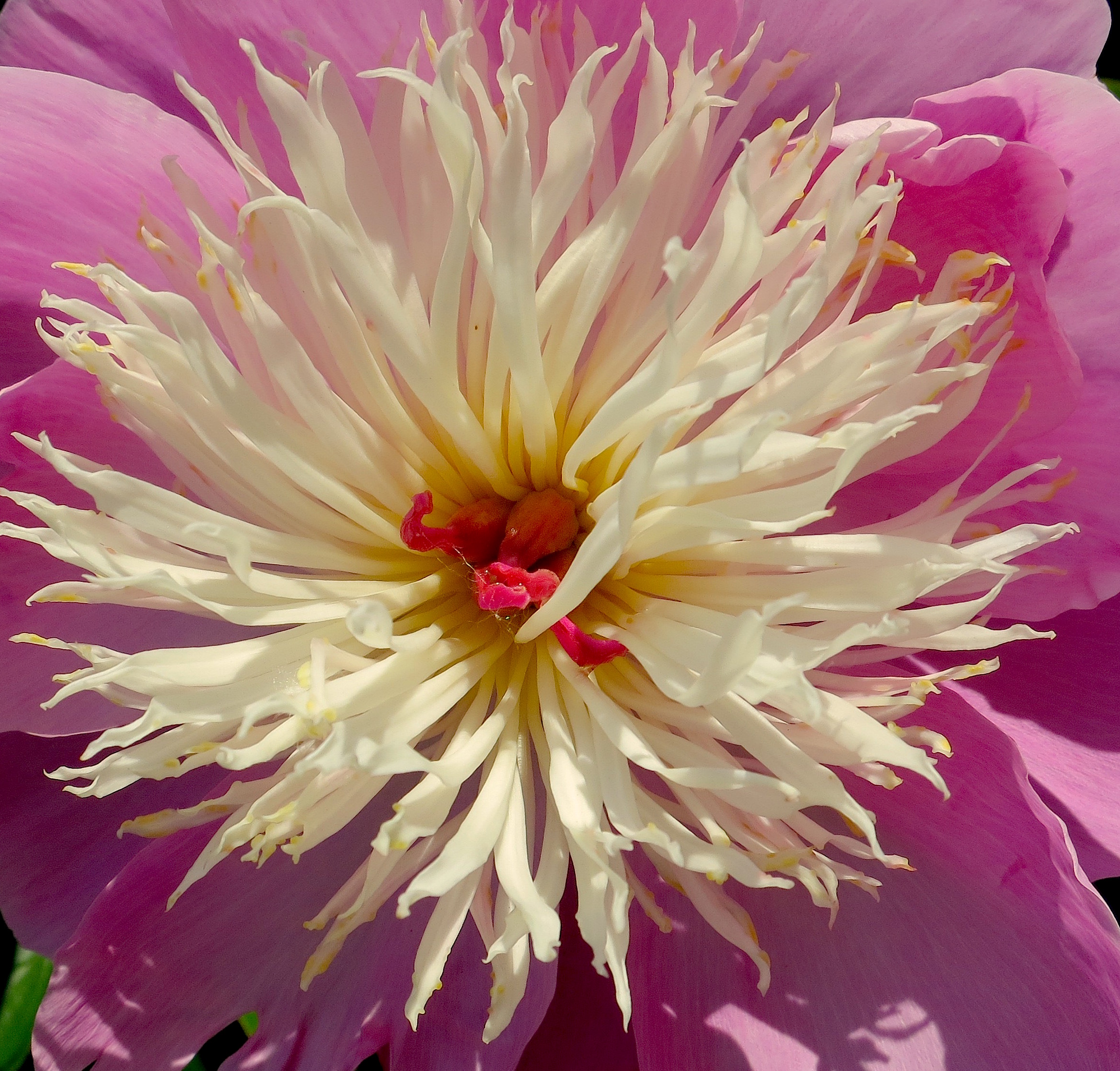
Do you also hurry, half-dressed and barefoot, into the garden, and softly, and exclaiming of their dearness, fill your arms with the white and pink flowers,
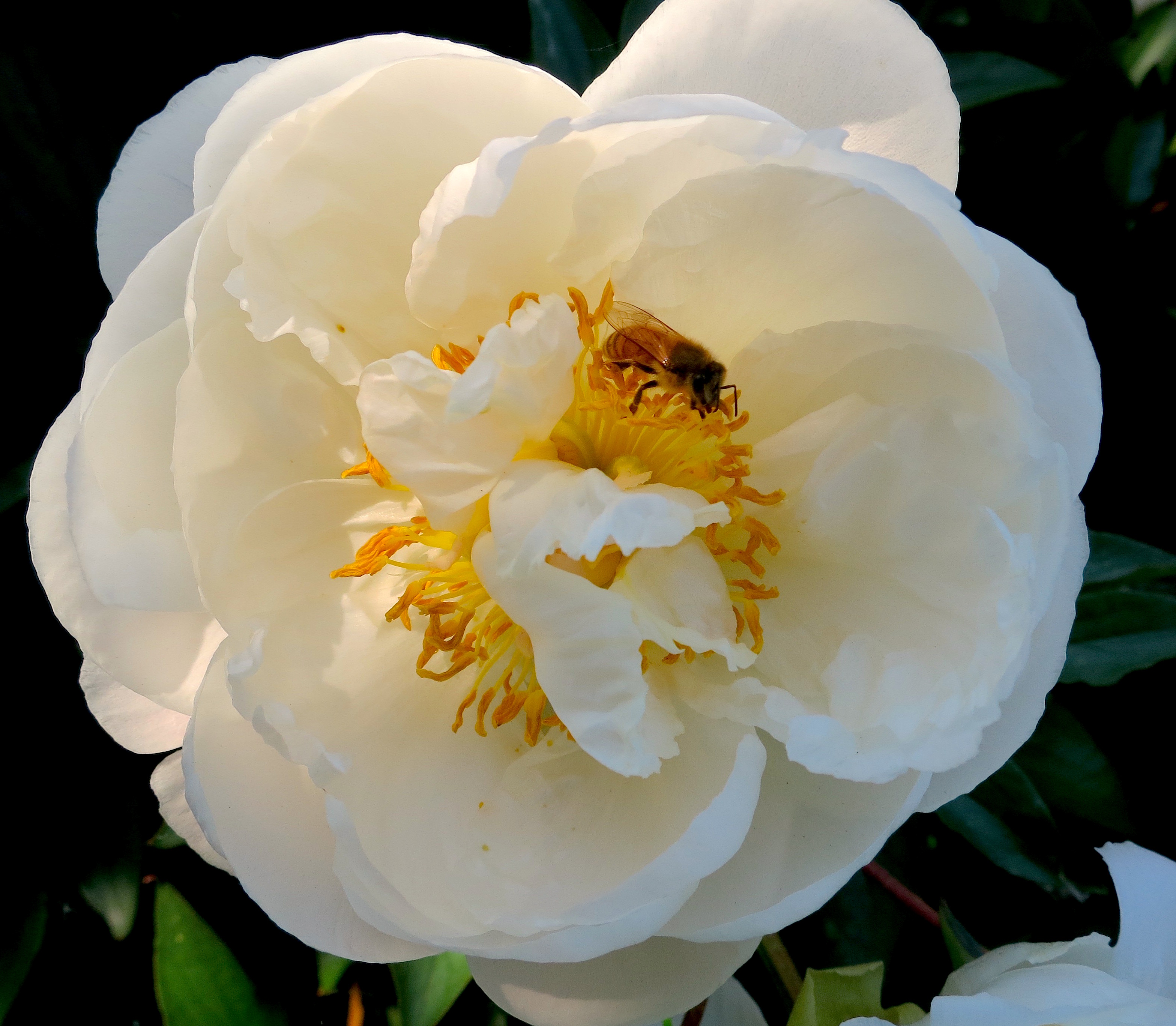
with their honeyed heaviness, their lush trembling, their eagerness to be wild and perfect for a moment, before they are nothing, forever? ~Mary Oliver from “Peonies”
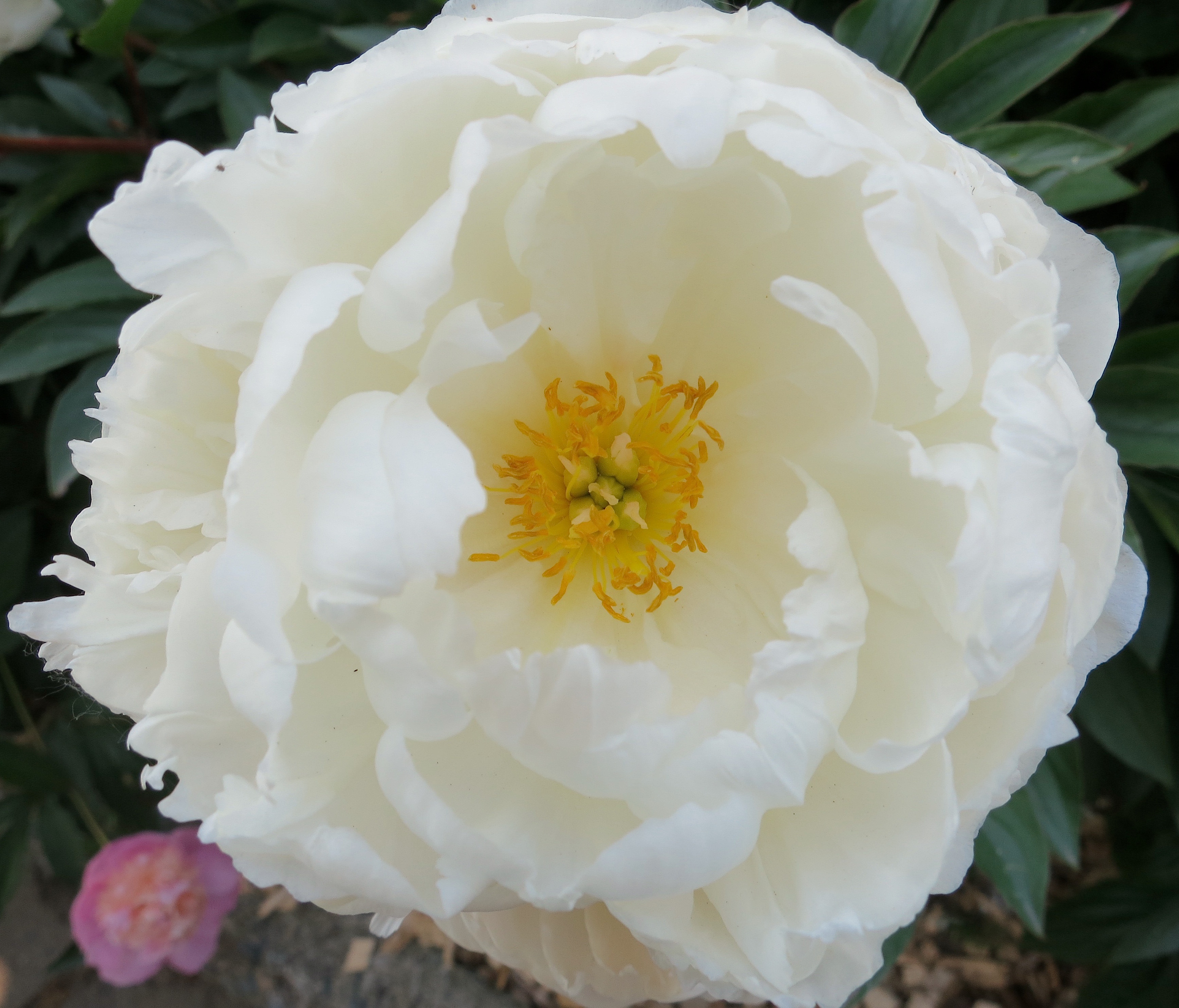
White peonies blooming along the porch send out light while the rest of the yard grows dim.
Outrageous flowers as big as human heads! They’re staggered by their own luxuriance: I had to prop them up with stakes and twine.
The moist air intensifies their scent, and the moon moves around the barn to find out what it’s coming from.
In the darkening June evening I draw a blossom near, and bending close search it as a woman searches a loved one’s face. ~Jane Kenyon “Peonies at Dusk”
Year after year, I bring peonies to the graves
of those from whom I came,
to lay one after another exuberant head
upon each headstone,
a moment of connection between us
before it shatters,
its petals perfectly
scattered to the wind.
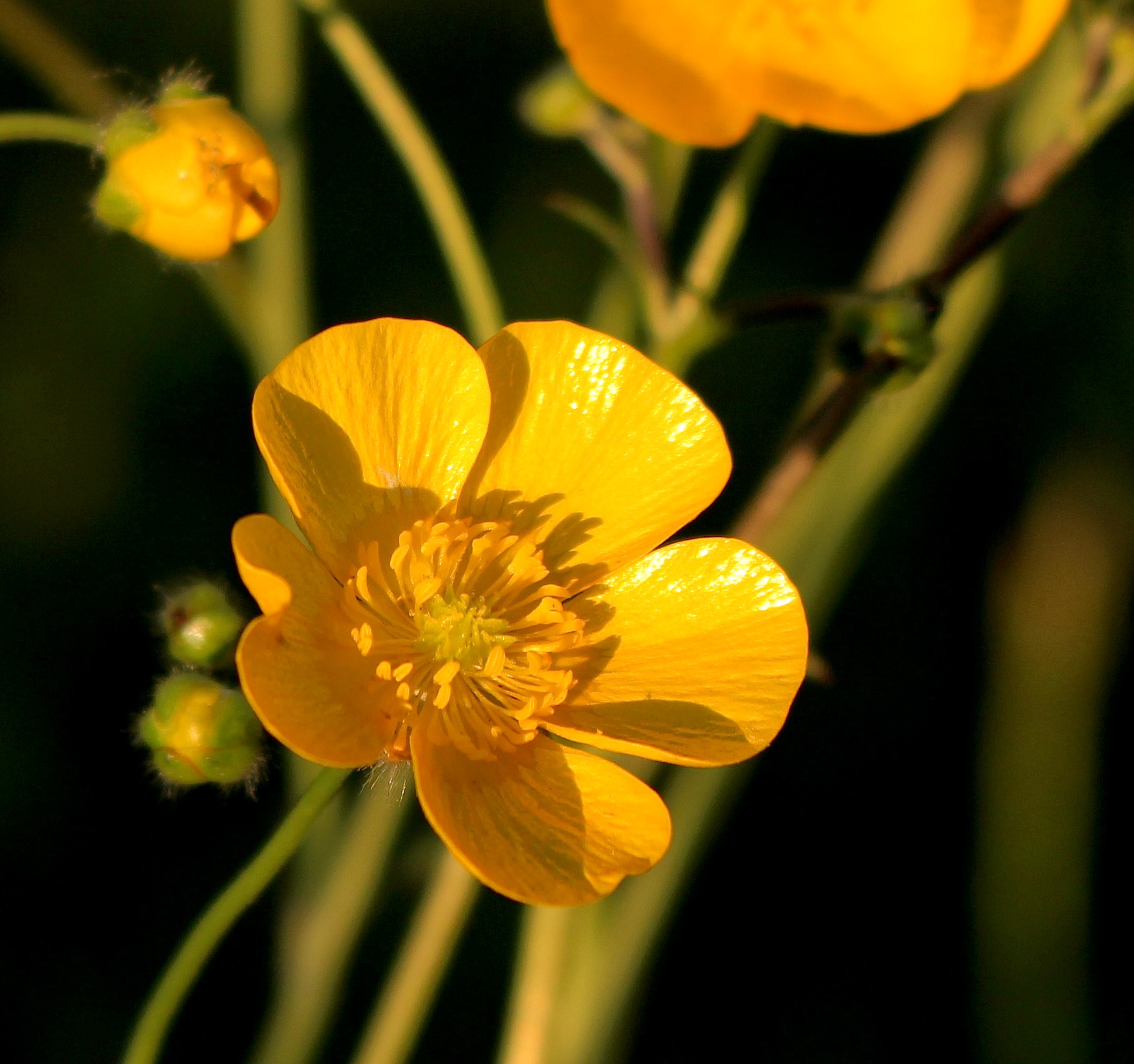
{Buttercup’s} heart was a secret garden and the walls were very high.
Buttercup: We’ll never survive. Westley: Nonsense. You’re only saying that because no one ever has.
Westley: Hear this now. I will always come for you. Buttercup: But how can you be sure? Westley: This is true love. You think this happens every day?
That day, she was amazed to discover that when he was saying “As you wish”, what he meant was, “I love you.” And even more amazing was the day she realized she truly loved him back.
~William Golding, quotes from The Princess Bride
How was I ever blessed to find a farm boy?
A farm boy who says “I love you” in many ways every day.
The walls of my secret garden heart came tumbling down…
People have said, “Don’t cry” to other people for years and years, and all it has ever meant is, “I’m too uncomfortable when you show your feelings. Don’t cry.” I’d rather have them say, “Go ahead and cry. I’m here to be with you.”
~Mister Fred Rogers
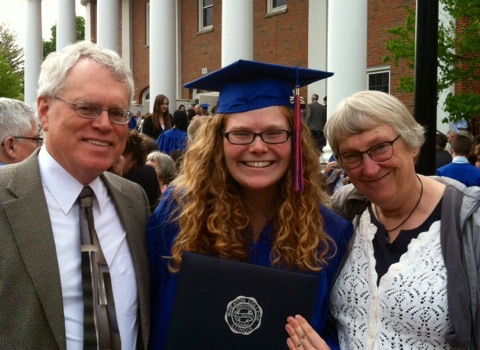
I am a crier, no question about it, whether it is listening to the old “whistle” theme from the Lassie TV show, or watching any children’s choir sing. Certain hymns will always trigger tears, and of course, baptisms, weddings, and graduations. Yesterday was joyfully tear-filled, with our youngest child receiving her college degree.
Tears don’t bother me, whether it is my own or someone else’s. My office and exam rooms are well- stocked with tissues, and one of my routine mental health history questions is “when did you last have a good cry?” Some patients will look at me blankly, not sure they ever remember crying, and others will burst into tears at the mere suggestion.
No matter what the reason for tears, it is a powerful expression of feeling, like a smile or a grimace. I watch for those cues and sometimes can feel the emotion as surely as if it were my own.
Seventy two years ago this week, my parents were married. Christmas Eve certainly wasn’t a typical wedding anniversary, but it did make it easy to remember during their years together. It was a date of necessity, only because a justice of the peace was available to marry a score of war-time couples in Quantico, Virginia, shortly before the newly trained Marine officers were shipped out to the South Pacific to fight in WWII.
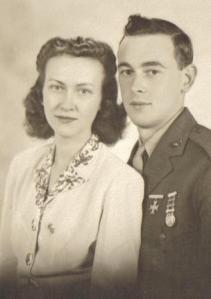
Now that they are both gone, when I look at their young faces in their only wedding portrait, I see a hint of the impulsive decision that led to that wedding just a week before my father left for 30 months. They had known each other for over a year, had talked about a future together, but with my mother starting a teaching job, and the war potentially impacting all young men’s lives very directly, they had not set a date.
My father had to put his college education on hold to enlist, knowing that would give him some options he wouldn’t have if drafted, so they went their separate ways as he headed east to Virginia for his Marine officer training, and Mom started her high school teaching career as a speech and drama teacher in rural Colville in Eastern Washington. One day in early December, he called her and said, “If we’re going to get married, it’ll need to be before the end of the year. I’m shipping out the first week in January.” Mom went to her high school principal, asked for a two week leave of absence which was granted, told her astonished parents, bought a dress, and headed east on the train with a friend who had received a similar call from her boyfriend. This was a completely uncharacteristic thing for my overly cautious mother to do so it must have been love.
They were married in a brief civil ceremony with another couple as the witnesses. They stayed in Virginia only a couple days and took the train back to San Diego, and my father left. Just like that. Mom returned to her teaching position and the first three years of their married life was letter correspondence only, with gaps of up to a month during certain island battles when no mail could be delivered or posted.
As I sorted through my mother’s things following her death six years ago, their letters to each other, stacked neatly and tied together, reside now in a box in my bedroom. I have not yet opened them but will when I’m ready. What I will find there will be words written by two young people who could not have foretold the struggles that lay ahead for them during and after the war but who both depended on faith and trust to persevere despite the unknowns. The War itself seemed struggle enough for the millions of couples who endured the separation, the losses and grieving, as well as the eventual injuries–both physical and psychological. It did not seem possible that beyond those realities, things could go sour after reuniting.
The hope and expectation of happiness and bliss must have been overwhelming, and real life doesn’t often deliver. After raising three children, their 35 year marriage fell apart with traumatic finality. When my father returned (again) over a decade later, asking for forgiveness, they remarried and had five more years together before my father died.
And so too there must have been expectations of happiness in the barn on that first Christmas Eve. It must have been frightening for the parents of this special Baby, knowing in their minds but not completely understanding in their hearts what responsibility lay in their arms. They had to find faith and trust, not just in God who had determined what their future held, but in each other, to support one another when things became very difficult. Those challenges mounted up quickly: there was to be no room for them, there was a baby to deliver without assistance from anyone, and the threat of Herod’s murder of innocents eventually drove them from their home country.
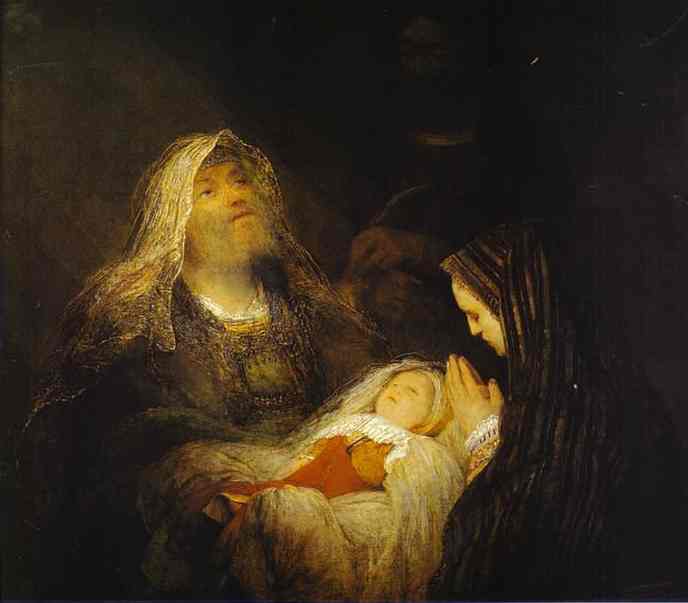
When Mary and Joseph go to the temple for the circumcision and consecration of their son the following week, they allow a “righteous and devout man”, Simeon, to hold their baby as, moved by the Holy Spirit, he tells them the role this child is to play in the world. He prays to the Lord, “As you have promised, you now dismiss your servant in peace. For my eyes have seen your salvation, which you have prepared in the sight of all people, a light for revelation to the Gentiles and for glory to your people Israel.”
It must have been like looking into a crystal ball to hear Simeon speak, as we’re told “the child’s father and mother marveled at what was said about him.” But Simeon didn’t whitewash the reality to come. It would have been easy to do so– simply mention salvation, the light and the glory that will come to the people due to this little baby, but leave out the part about how His existence would cause division in Israel as well as the rejection, anguish and suffering that He would experience. Not only that, but the pain is not His alone but will be His parents’ to bear as well. I’m sure that statement must have ended the sense of “marvel” they were feeling, and replaced it instead with great sorrow and trepidation.
Christmas is a time of joy, a celebration of new beginnings and new life when God became man, humble, vulnerable and tender. But it also gives us a foretaste for the profound sacrifice made in giving up this earthly life, not always so gently. A baby in a manger is a lovely story to “treasure up” in our hearts but once He became a bleeding Redeemer on a cross, it pierces our living beating hearts, just as Simeon foretold.
My parents, such young idealistic adults 72 years ago, now servants dismissed from this life in peace. As I peer at their faces in their wedding photo, I know those same eyes, then unaware of what was to come, now behold the light, the salvation and the glory~~the ultimate Christmas~~in His presence.
Song of Simeon by Aert De Gelder, a student of Rembrandt
Abandon entouré d’abandon, tendresse touchant aux tendresses… C’est ton intérieur qui sans cesse se caresse, dirait-on; se caresse en soi-même, par son propre reflet éclairé. Ainsi tu inventes le thème du Narcisse exaucé. ~Rainer Maria Rilke “Dirait-on” from his French Poetry collection ‘Les chansons de la rose’
Abandon upon abandon, tenderness upon tenderness… Your hidden self unceasingly turns inward, a caress;
caressing itself, in and of its own reflection illuminated. Thus you’ve invented the tale of Narcissus sated.
The dozen red roses from my husband for Valentine’s Day brought this beautiful piece to mind:
There is nothing so tender as a rose in full bloom–
no longer an enclosed bud
but an opening,
petal unfolding upon petal
in caressing abandon.



























 Barnstorming