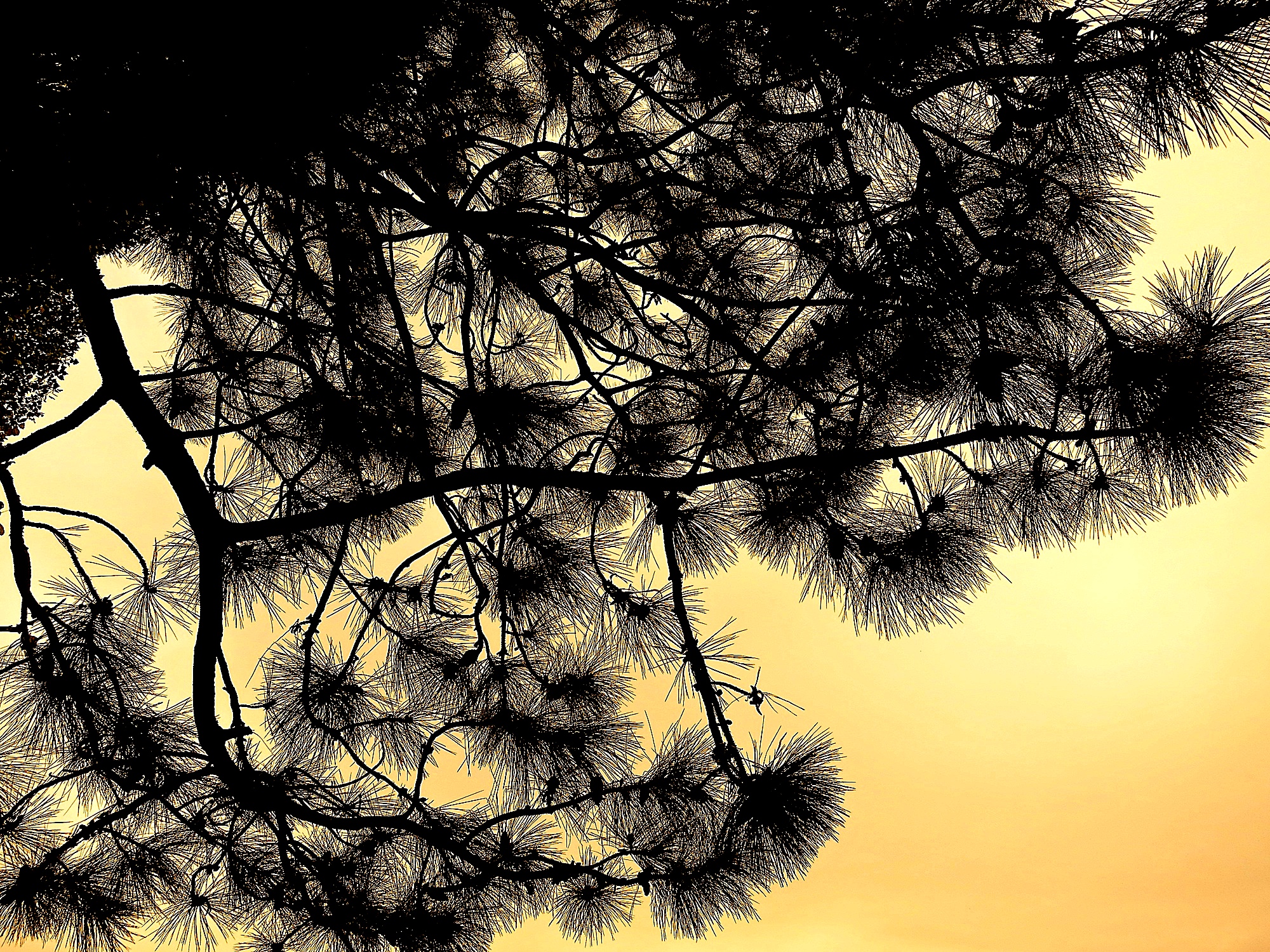
Had I the heavens’ embroidered cloths, Enwrought with golden and silver light, The blue and the dim and the dark cloths Of night and light and the half light, I would spread the cloths under your feet: But I, being poor, have only my dreams; I have spread my dreams under your feet; Tread softly because you tread on my dreams. ~William Butler Yeats from “Aedh Wishes for the Cloths of Heaven“
I know for a while again, the health of self-forgetfulness, looking out at the sky through a notch in the valley side, the black woods wintry on the hills, small clouds at sunset passing across. And I know that this is one of the thresholds between Earth and Heaven, from which I may even step forth from myself and be free. ~ Wendell Berry, Sabbaths 2000
John O’Donohue gave voice to the connection between beauty and those edges of life — thresholds was the word he loved— where the fullness of reality becomes more stark and more clear.
If you go back to the etymology of the word “threshold,” it comes from “threshing,” which is to separate the grain from the husk. So the threshold, in a way, is a place where you move into more critical and challenging and worthy fullness.
There are huge thresholds in every life.
You know that, for instance, if you are in the middle of your life in a busy evening, fifty things to do and you get a phone call that somebody you love is suddenly dying, it takes ten seconds to communicate that information.
But when you put the phone down, you are already standing in a different world. Suddenly everything that seems so important before is all gone and now you are thinking of this.So the given world that we think is there and the solid ground we are on is so tentative. And a threshold is a line which separates two territories of spirit, and very often how we cross is the key thing.
Over a decade ago, someone told me that my writing reflected a “sacramental” life — touching and tasting the holiness of everyday moments, as if they are the cup and bread of God’s eternal grace and gift.
I allow those words to sit warmly beside me during the hours I struggle to know what to share here.
It is all too tempting to focus on sacrament over the sacrifice it represents. As much as I love the world and the beauty in the moments I share here, we should explore the “thin places” between heaven and earth, through forgetting self, stepping forth through a holy threshold into something far greater.
I feel so unworthy — in fact, threshed to pieces most days, incapable of thinking of anything but how I feel reduced to fragments. Perhaps those fragments are like the droplets coming from a farm sprinkler at sunset, sparkling and golden despite waning light, bringing something essential to someone feeling dry, parched and dusty.
I may even step forth from myself and be free.
Then we can walk each other home.
One-Time
Monthly
Yearly
Make a one-time or recurring donation to support daily Barnstorming posts
A butterfly dancing in the sunlight, A bird singing to his mate, The whispering pines, The restless sea, The gigantic mountains, A stately tree, The rain upon the roof, The sun at early dawn, A boy with rod and hook, The babble of a shady brook, A woman with her smiling babe, A man whose eyes are kind and wise, Youth that is eager and unafraid— When all is said, I do love best A little home where love abides, And where there’s kindness, peace, and rest. ~Scottie McKenzie Frasier “The Things I Love”
When all is said and done, I love best the people who bring kindness, peace and rest to the little house we call home.
It is enough and everything.
One-Time
Monthly
Yearly
Make a one-time or recurring donation to support daily Barnstorming posts
Green was the silence, wet was the light the month of June trembled like a butterfly ~Pablo Neruda from “Sonnet XL”
Why do we bother with the rest of the day, the swale of the afternoon, the sudden dip into evening, then night with his notorious perfumes, his many-pointed stars?
This is the best— throwing off the light covers, feet on the cold floor, and buzzing around the house on espresso— maybe a splash of water on the face, a palmful of vitamins—
but mostly buzzing around the house on espresso, dictionary and atlas open on the rug, the typewriter waiting for the key of the head, a cello on the radio, and, if necessary, the windows— trees fifty, a hundred years old out there, heavy clouds on the way and the lawn steaming like a horse in the early morning. ~Billy Collins “Morning”
We are now four days into summer but aside from the date on the calendar, it would be difficult to prove otherwise. After a dry stretch of warm late spring weather, it is now unseasonably cool, the skies stony gray, the rivers running full and fast, the ground peppered with puddles. Rain has fallen at night, hiding behind the cover of darkness as if ashamed of itself.
As it should be.
What all this moisture will yield is acres and acres of towering grass growth, more grass than imaginable, more grass than we can keep mowed, burying the horses up to their backs as they dive head long into the pasture. The Haflingers don’t need to lower their necks to graze, choosing instead to simply strip off the ripe tops of the grasses as they forge paths through five foot forage. It is like children at a birthday party swiping the frosting off cupcake after cupcake, licking their fingers as they go. Instead of icing, the horses’ muzzles are smeared with dandelion fluff, grass seed and buttercup petals.
In the northwest, June can tend to shroud its promise of longer days under clouds. Outdoor weddings brace for rain and wind with a supply of umbrellas, graduation potlucks are served in the garage and Fourth of July picnics stay safely under cover. There is a wary anticipation of solstice as it signals the slow inexorable return of darkness from which we have barely recovered.
So I tremble as I too splash through the squishiness of late June, quivering like a wet butterfly emerging from its cocoon ready to unfurl its wings to dry, but unsure how to fly and uncertain of the new world that awaits. In fact the dark empty cocoon can look mighty inviting on a rainy June night. If I could manage to squeeze myself back in, it might be worth a try.
After all, there is no place like home.
One-Time
Monthly
Yearly
Make a one-time or recurring donation to support daily Barnstorming posts
There are no creatures you cannot love. A frog calling at God From the moon-filled ditch As you stand on the country road in the June night. The sound is enough to make the stars weep With happiness. In the morning the landscape green Is lifted off the ground by the scent of grass. The day is carried across its hours Without any effort by the shining insects That are living their secret lives. The space between the prairie horizons Makes us ache with its beauty. Cottonwood leaves click in an ancient tongue To the farthest cold dark in the universe. The cottonwood also talks to you Of breeze and speckled sunlight. You are at home in these great empty places along with red-wing blackbirds and sloughs. You are comfortable in this spot so full of grace and being that it sparkles like jewels spilled on water. ~Tom Hennen “From a Country Overlooked”, from Darkness Sticks to Everything
There are some God’s creatures I struggle to love – fleas, chiggers, mosquitoes, ticks, slugs, yellow jackets among them. Also poisonous snakes, spiders and scorpions come to mind. And then there are pathogenic bacteria, parasites and viruses…
It is not their fault I struggle to find their value – only God knows why He made them as He did.
What I have learned over 7 decades is to try to look for beauty wherever I am.
To listen to the breezes and the birds, to look for how the light plays with leaves and water and how it is all created to help us feel at home for the time we are here.
Yet, this is an imperfect world where beauty doesn’t provide shelter to those with their basic needs unfulfilled – where there is no comfort, no safety, no hope.
God, deliver us from being too comfortable when others suffer. Help us feel Your love to pass on to those in need. Help us to know how to make a difference for them. We know that makes a difference to You.
AI image created for this post
One-Time
Monthly
Yearly
Make a one-time or recurring donation to support daily Barnstorming posts
We come across a ridge and hear a cowbell in the cove beyond, a tinkle sweetening the air with vague rubato as the breeze erases tones and then the notes resume like echoes from the past or from a cave inside the cliff, a still, calm voice in dialect and keeping its own company, both out of time and long as time, both here and from a higher sphere, as if the voice of history were intimate as memory. ~Robert Morgan “Cowbell”
Over my head, I see the bronze butterfly, Asleep on the black trunk, Blowing like a leaf in green shadow. Down the ravine behind the empty house, The cowbells follow one another Into the distances of the afternoon. To my right, In a field of sunlight between two pines, The droppings of last year’s horses Blaze up into golden stones. I lean back, as the evening darkens and comes on. A chicken hawk floats over, looking for home. I have wasted my life. ~James Wright “Lying in a Hammock at William Duffy’s Farm in Pine Island, Minnesota”
photo by Kate Steensma from Steensma Creamery
One of the lullabies I remember hearing as a youngster were cowbells in the pasture outside my bedroom window on our small family farm. Each of our three milking Guernsey cows wore a bell on her neck so my dad could tell where they were in our wooded field. He’d whistle and call “Come Bossy!” and they would walk single file into the barn, ringing and tinkling with each step, for their twice daily grain and hand-milking.
When I was old enough, I liked to perch on top of their bony backs while my dad leaned his head into their flank, whistling a tune while he milked them, the steaming stream of milk hitting the metal bucket with a high-pitched whine. The bells on their necks still chimed as the cows chewed, moving their heads up and down to finish their meal.
This was divine music that soothed and reassured me and I felt I could follow it anywhere. All was right with the world, thanks to the cows and their intrinsic tunes created by their movements, as if they were created to charm their keepers.
There are moments when I believe we are hearing what heaven must sound like.
Now, seven decades later, the soft harmony of cowbells is replaced by the random chords of wind chimes hanging outside our house.
The memory of cowbell music remains a reminder: I have not wasted my life if I can taste heaven through such simple things and magical moments.
But I still need more cowbell…
This year’s Lenten theme:
…where you go I will go… Ruth 1:16
and because there is always a need for more cowbell…
One-Time
Monthly
Yearly
Make a one-time or recurring donation to support daily Barnstorming posts
When I was a child I once sat sobbing on the floor Beside my mother’s piano As she played and sang For there was in her singing A shy yet solemn glory My smallness could not hold
And when I was asked Why I was crying I had no words for it I only shook my head And went on crying
Why is it that music At its most beautiful Opens a wound in us An ache a desolation Deep as a homesickness For some far-off And half-forgotten country
I’ve never understood Why this is so
But there’s an ancient legend From the other side of the world That gives away the secret Of this mysterious sorrow
For centuries on centuries We have been wandering But we were made for Paradise As deer for the forest
And when music comes to us With its heavenly beauty It brings us desolation For when we hear it We half remember That lost native country
We dimly remember the fields Their fragrant windswept clover The birdsongs in the orchards The wild white violets in the moss By the transparent streams
And shining at the heart of it Is the longed-for beauty Of the One who waits for us Who will always wait for us In those radiant meadows
Yet also came to live with us And wanders where we wander. ~Anne Porter “Music” from Living Things
One evening, when our daughter was only a toddler, just learning the words to tell us what she needed, I was preparing dinner, humming to a choral music piece playing in the background.
She sat on the kitchen floor, looking up at me, her eyes welling full with tears like pools of reflected light spilling over from some deep-remembered reservoir.
At first I thought she was hurt or upset but then could see she was feeling an ache a desolation deep as a homesickness as she wept for wonder at the sad beauty of the music that spoke for her the words she could not express:
Of the One who waits for us Who will always wait for us In those radiant meadows
Yet also came to live with us And wandered where we wander.
For our present troubles are small and won’t last very long. Yet they produce for us a glory that vastly outweighs them and will last forever! So we don’t look at the troubles we can see now; rather, we fix our gaze on things that cannot be seen. For the things we see now will soon be gone, but the things we cannot see will last forever… 2Corinthians 4:17-18
This year’s Lenten theme:
…where you go I will go… Ruth 1:16
AI image created for this post
One-Time
Monthly
Yearly
Make a one-time or recurring donation to support daily Barnstorming posts
All I could see from where I stood Was three long mountains and a wood; I turned and looked another way, And saw three islands in a bay. So with my eyes I traced the line Of the horizon, thin and fine, Straight around till I was come Back to where I’d started from; And all I saw from where I stood Was three long mountains and a wood.
Over these things I could not see; These were the things that bounded me; And I could touch them with my hand, Almost, I thought, from where I stand. And all at once things seemed so small My breath came short, and scarce at all.
The world stands out on either side No wider than the heart is wide; Above the world is stretched the sky,— No higher than the soul is high. The heart can push the sea and land Farther away on either hand; The soul can split the sky in two, And let the face of God shine through. But East and West will pinch the heart That can not keep them pushed apart; And he whose soul is flat—the sky Will cave in on him by and by. ~Edna St. Vincent Millay at age 19, from “Renascence”
I know for a while again, the health of self-forgetfulness, looking out at the sky through a notch in the valley side, the black woods wintry on the hills, small clouds at sunset passing across. And I know that this is one of the thresholds between Earth and Heaven, from which I may even step forth from myself and be free. ~ Wendell Berry, Sabbaths 2000
I was told once by someone I respected that my writing reflected “sacramental” living — reflecting my effort to touch and taste the holiness of everyday moments, as if they are the cup and bread that sustain us.
I allowed that feedback to sit warmly beside me, like a comforting companion during the hours I struggled with what to share here.
Yet, as tomorrow begins weeks of Lenten observance, I realize it is all too tempting to emphasize sacrament over the sacrifice it inevitably represents.
As much as I love the world and the beauty I find here, I need to recognize there will be “thin places” between heaven and earth where we must forget “self” and step forth through a holy threshold into something far greater.
So I struggle with what sacrificial living truly means, as a terrifying illuminating freedom remaining far beyond my grasp.
I may even step forth from myself and be free…
photo of San Juan Islands by Joel De Waardphoto of San Juan Islands by Joel De Waardphoto of San Juan Islands by Joel De WaardAI image created for this post
One-Time
Monthly
Yearly
Make a one-time or recurring donation to support daily Barnstorming posts
Make a monthly donation
Make a yearly donation
Choose an amount
$10.00
$25.00
$50.00
$5.00
$15.00
$100.00
$5.00
$15.00
$100.00
Or enter a custom amount
$
Your contribution is deeply appreciated and helps to offset the costs of maintaining an ad-free website.
This was our pretty gray kitten, hence her name; who was born in our garage and stayed nearby her whole life. There were allergies; so she was, as they say, an outside cat. But she loved us. For years, she was at our window. Sometimes, a paw on the screen as if to want in, as if to be with us the best she could. She would be on the deck, at the sliding door. She would be on the small sill of the window in the bathroom. She would be at the kitchen window above the sink. We’d go to the living room; anticipating that she’d be there, too, hop up, look in. She’d be on the roof, she’d be in a nearby tree. She’d be listening through the wall to our family life. She knew where we were, and she knew where we were going and would meet us there. Little spark of consciousness, calm kitty eyes staring through the window.
After the family broke, and when the house was about to sell, I walked around it for a last look. Under the eaves, on the ground, there was a path worn in the dirt, tight against the foundation — small padded feet, year after year, window to window.
When we moved, we left her to be fed by the people next door. Months after we were gone, they found her in the bushes and buried her by the fence. So many years after, I can’t get her out of my mind. ~Philip F. Deaver, “Gray” from How Men Pray
Our pets witness the routine of our lives. They know when the food bowl remains empty too long, or when no one offers their lap to stroke their fur.
They sit silently waiting and wondering, a little spark of consciousness, aware of our family life. They know when things aren’t right at home. They hear the raised voices and they hear the strained silences.
Sometimes a farm cat moves on, looking for a place with more consistency and better feeding grounds. Most often they stick close to what they know, even if it isn’t entirely a happy or welcoming place. After all, it’s home; that’s where they stay, through thick and thin.
When my family broke as my parents split, after the furniture was removed and the dust of over thirty five years of marriage swept up, I wondered if our cat and dog had seen it coming before we did, witnesses to the fact. They had been peering through the window at our lives, gauging what amount of spilled-out love might be left over for them.
I still can’t get them out of my mind – they, like me, became children of divorce. We all knew when we left behind the only home we had ever known, we could never truly feel at home again.
AI image created for this post
One-Time
Monthly
Yearly
Make a one-time or recurring donation to support daily Barnstorming posts
Make a monthly donation
Make a yearly donation
Choose an amount
$10.00
$25.00
$50.00
$5.00
$15.00
$100.00
$5.00
$15.00
$100.00
Or enter a custom amount
$
Your contribution is deeply appreciated to help offset the cost of maintaining an ad-free website.
With a heavy heart and prayers for those who have lost their homes and livelihoods in the fires in southern California – the love that lights a home from within will never end up in ashes
We need to separate to see the life we’ve made, to leave our house where someone waits, patiently, warm beneath the sheets, to don layers of armor, sweater, coat, mittens, scarf, to stride down the frozen road, putting distance between us this cold winter morning, to look back and see, on the hilltop, our life, lit from inside. ~Laura Foley “To See It” from It’s This
Our bedroom suffused in a dark dawn’s ethereal glow from a moon-white sky, mixing a million stars and snowflakes
A snow light covers all, settling gently around us, tucking in the drifting corners of a downy comforter
I take a moment to watch you sleep, your slow even breaths and peaceful face- grateful for each day and night I spend with you.
I know you know ~ we remind each other in many ways, to never forget.
What blessing comes from a love lit from within – thriving in the dark of night, yet never shining brighter than in the delights and daylights of a new morning together.
One-Time
Monthly
Yearly
Make a one-time or recurring donation to support daily Barnstorming posts
Make a monthly donation
Make a yearly donation
Choose an amount
$10.00
$25.00
$50.00
$5.00
$15.00
$100.00
$5.00
$15.00
$100.00
Or enter a custom amount
$
Your contribution is deeply appreciated to help offset the costs in maintaining an ad-free website.
In the quiet misty morning When the moon has gone to bed, When the sparrows stop their singing And the sky is clear and red, When the summer’s ceased its gleaming When the corn is past its prime, When adventure’s lost its meaning – I’ll be homeward bound in time
Bind me not to the pasture Chain me not to the plow Set me free to find my calling And I’ll return to you somehow
If you find it’s me you’re missing If you’re hoping I’ll return, To your thoughts I’ll soon be listening, And in the road I’ll stop and turn Then the wind will set me racing As my journey nears its end And the path I’ll be retracing When I’m homeward bound again
Bind me not to the pasture Chain me not to the plow Set me free to find my calling And I’ll return to you somehow
In the quiet misty morning When the moon has gone to bed, When the sparrows stop their singing I’ll be homeward bound again. ~Marta Keen “Homeward Bound”
Eighty-two years ago, my parents married on Christmas Eve. It was not a conventional wedding day but a date of necessity, only because a justice of the peace was available to marry a score of war-time couples in Quantico, Virginia, shortly before the newly trained Marine officers were shipped out to the South Pacific to fight in WWII.
When I look at my parents’ young faces – ages 22 and just turned 21 — in their only wedding portrait, I see a hint of the impulsive decision that led to that wedding just a week before my father left for 30 months. They had known each other at college for over a year, had talked about a future together, but with my mother starting a teaching job in a rural Eastern Washington town, and the war potentially impacting all young men’s lives very directly, they had not set a date.
My father put his college education on hold to enlist, knowing that would give him some options he wouldn’t have if drafted, so they went their separate ways as he headed east to Virginia for his Marine officer training, and Mom started her high school teaching career as a speech and drama teacher. One day in early December of 1942, he called her and said, “If we’re going to get married, it’ll need to be before the end of the year. I’m shipping out the first week in January.” Mom went to her high school principal, asked for a two week leave of absence which was granted, told her astonished parents, bought a dress, and headed east on the train with a friend who had received a similar call from her boyfriend.
This was a completely uncharacteristic thing for my overly cautious mother to do, so… it must have been love.
They were married in a brief civil ceremony with another couple as the witnesses. They stayed in Virginia only a couple days and took the train back to San Diego, and my father was shipped out. Just like that. Mom returned to her teaching position and the first three years of their married life was composed of letter correspondence only, with gaps of up to a month during certain island battles when no mail could be delivered or posted.
As I sorted through my mother’s things following her death over a decade ago, I found their war-time letters to each other, stacked neatly and tied together in a box.
In my father’s nearly daily letters home to my mother during WWII, month after month after month, he would say, over and over, while apologizing for the repetition:
“I will come home to you, I will return, I will not let this change me, we will be joined again…”
This was his way of convincing himself even as he carried the dead and dying after island battles: men he knew well and the enemy he did not know. He knew they were never returning to the home they died protecting and to those who loved them.
He shared little of battle in his letters as each letter was reviewed and signed off by a censor before being sealed and sent. This story, however, made it through:
“You mentioned a story of Navy landing craft taking the Marines into Tarawa. It reminded me of something which impressed me a great deal and something I’m sure I’ll never forget.
So you’ll understand what I mean I’ll try to start with an explanation. In training – close order drill- etc. there is a command that is given always when the men form in the morning – various times during the day– after firing– and always before a formation is dismissed. The command is INSPECTION – ARMS. On the command of EXECUTION- ARMS each man opens the bolt of his rifle. It is supposed to be done in unison so you hear just one sound as the bolts are opened. Usually it is pretty good and sounds O.K.
Just to show you how the morale of the men going to the beach was – and how much it impressed me — we were on our way in – I was forward, watching the beach thru a little slit in the ramp – the men were crouched in the bottom of the boat, just waiting. You see- we enter the landing boats with unloaded rifles and wait till it’s advisable before loading. When we got about to the right distance in my estimation I turned around and said – LOAD and LOCK – I didn’t realize it, but every man had been crouching with his hand on the operating handle and when I said that — SLAM! — every bolt was open at once – I’ve never heard it done better – and those men meant business when they loaded those rifles.
A man couldn’t be afraid with men like that behind him.”
My father did return home to my mother after nearly three years of separation. He finished his college education to become an agriculture teacher to teach others how to farm the land while he himself became bound to the pasture and chained to the plow.
He never forgot those who died, making it possible for him to return home. I won’t forget either.
My mother and father could not have foretold the struggles that lay ahead for them. The War itself seemed struggle enough for the millions of couples who endured the separation, the losses and grieving, as well as the eventual injuries–both physical and psychological. It did not seem possible that beyond those harsh and horrible realities, things could go sour after reuniting.
The hope and expectation of happiness and bliss must have been overwhelming, and real life doesn’t often deliver. After raising three children, their 35 year marriage fell apart with traumatic finality. When my father returned home (again) over a decade later, asking for forgiveness, they remarried and had five more years together before my father died in 1995.
Christmas is a time of joy, a celebration of new beginnings and new life when God became man, humble, vulnerable and tender. But it also gives us a foretaste for the profound sacrifice made in giving up this earthly life, not always so gently.
As I peer at my father’s and mother’s faces in their wedding photo, I remember those eyes, then so trusting and unaware of what was to come. I find peace in knowing they both have returned home to behold the Light, the Salvation and the Glory~~the ultimate Christmas~~in His presence.
AI image created for this postAI image created for this post
One-Time
Monthly
Yearly
Make a one-time or recurring donation to support daily Barnstorming posts