So Gruntled

josekelsy

TOSHIBA Exif JPEG

I was introduced to the word gruntled  a few years ago and instantly knew what it was meant to describe– that unsurpassed feeling of contentment.


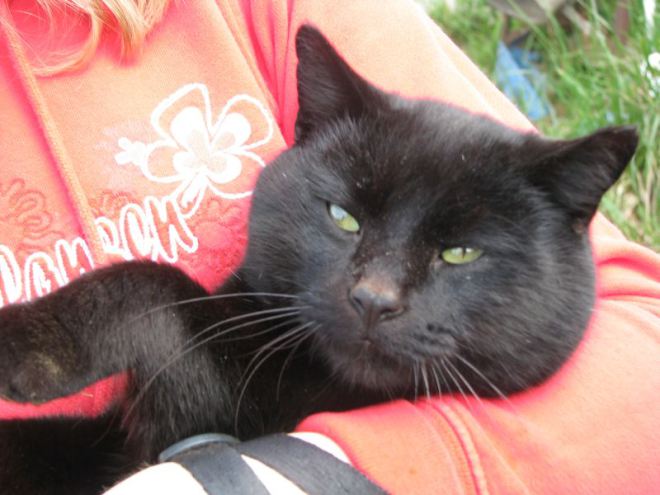
the rumbling vibration of a cat’s purr,
flannel sheets warmed when wind and snow blur,

a filling meal of fresh home grown food
a cow chewing cud, eyes closed in serene mood,

the slow wakening after a full night’s sleep,
a pig’s wallow in cool mud so deep,

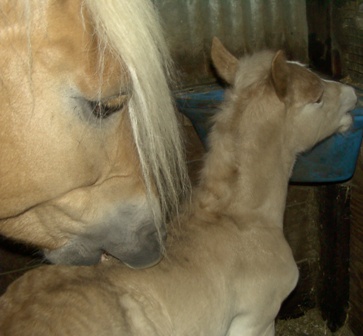
the low-throated nicker of a mare to her foal,
a tub of warm water when muscles exert a toll,

the sucking hungry baby in rocking chair bliss,
a cuddle in jammies before bed with a book not to miss.
~Emily Gibson


And so every day, I seek the momentary and fleeting bliss of gruntlement.  So simple, so honest, so true, so gruntled.

Tonyasleep1

pigsleep

homer3


An Extra Effort

One of the joys of living on a farm is the ability to walk out the back door and harvest what is needed for a meal right out of the ground, or the orchard, or the berry patch, or from within the hen house. “Eat local” can’t begin to compare with “Eat from the Backyard”.

So over the years on the farm, we’ve raised chickens–starting with the chicks under a hot lamp, watching the growing pullets start laying dainty small eggs which, over several months of hen development, become full size oval jumbo AA eggs, discovered warm in a cozy nest under a hen’s breast. There is distinct satisfaction of a “eureka!” moment anytime a new egg is gathered. It is even more gratifying when the egg is broken in the pan and two yolks pour out instead of one, a symbol of that hen’s extra effort that day.

When our hens were free range, the finding of the nest and gathering of the eggs was definitely a greater challenge than simply opening a chicken coop door. It required investment of time and ingenuity to think like a hen trying to hide her brood. I would remind myself that a hen’s brain is smaller than a walnut and mine is, well…. bigger, so this should not have been such a difficult task.

Our chicken raising days ended abruptly a few years ago when a marauder of some sort dug its way under the wire into the coop in a stealth operation in the dark of night and, leaving only feathers behind, took and stole off with every hen from the roost while she slept. We didn’t have the heart to replace them given the possibility of that happening again, no matter what precautions we took.

So these days our fresh eggs arrive weekly with my husband’s uncle, who graciously shares his plentiful egg crop with us when he comes for Sunday dinner. I do miss the daily egg hunt, the cackle of a hen as she is about to lay, the musical hum she makes when she is happily brooding on the nest, and the feel of her plump fluffiness as I reach underneath her to wrap my hand around that warm smooth oval surface.

It all comes back to me when I break one of those fresh eggs into the pan and it is a double yolker.

Some hen made a special effort, just for me.

Buttercup Bantams bred by Benjamin Janicki at Janicki Buttercups

Foggy and Fine Days


morning18151

frozenpineneedles

webbymoss

The weather and my mood have little connection.
I have my foggy and my fine days within me;
my prosperity or misfortune has little to do with the matter.
– Blaise Pascal

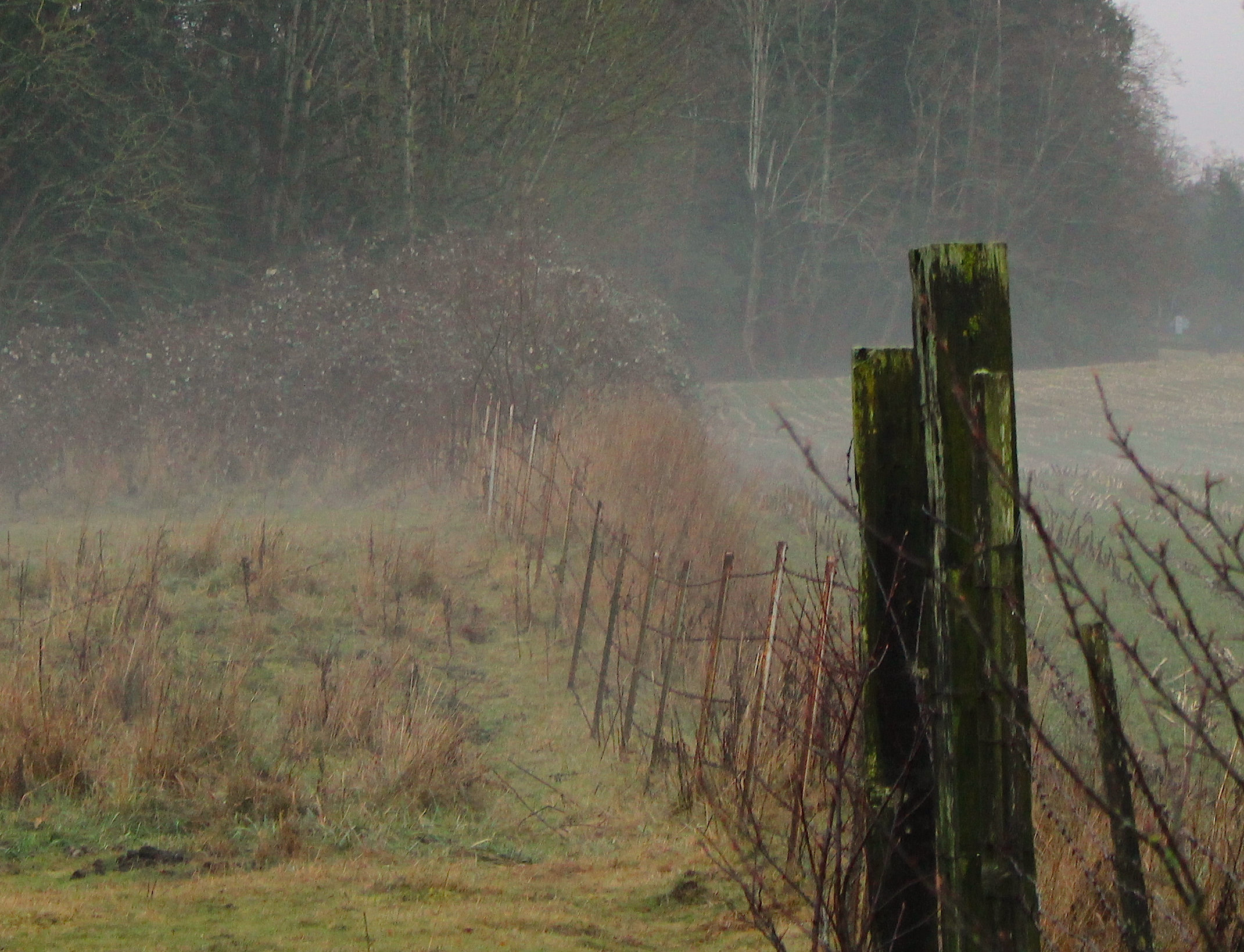
There has been freezing fog the last several mornings when I’ve gone out to do barn chores. This is fog that literally sticks to the world, dripping in tiny icicles from everything, swallowing up all visible landscape, hushing bird song, erasing all color, homogenizing everything.

It also sucks up my horses as I send them out to the field from the barn. They lead slowly out to the gate, sniffing the wet cold air, hesitant to be turned out into the grey sea surrounding them. What is there to eat out here in this murk? Each one, when turned loose, wanders into the soup, disappearing, as if never to be seen again. One by one they move boldly forward to look for their buddies, although seeing nothing, hearing nothing, smelling nothing–lost and alone and bewildered until somehow they meet up in the mist.

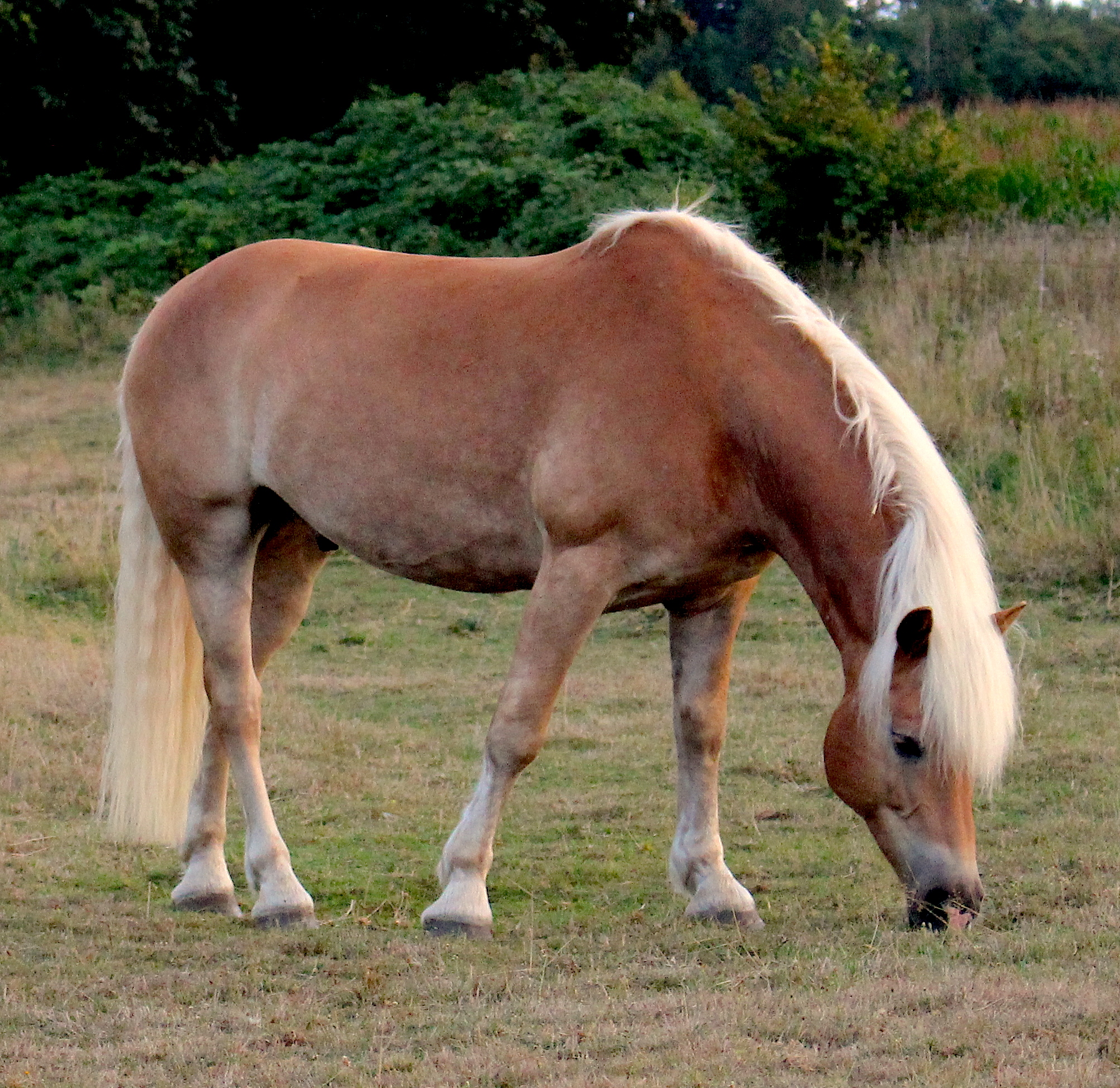
I muse at their initial confusion and then their utter conviction there must be “something out there” worth finding. They are dependent on all the usual cues–visual, auditory, olfactory–all useless in the fog. Instead they rely on some inner sonar to find each other and bunch together in a protective knot, drops of fog dew clinging to their manes, their eyelashes and their muzzle whiskers. As day wears on, the fog dissipates, their coats dry under the warming sun, and the colors of the fields and trees and palomino horses emerge from the cocoon of haze.

Too often I feel lost in fog too–disconnected, afloat and circling aimlessly, searching for a touch point of purpose and direction and anything that is not smothering and gray. Perhaps I’ll bump into a fellow fog wanderer and we’ll remain knotted together, relieved in the connection to something solid and familiar. The isolation I sometimes feel may simply be a self-absorbed state of mind, sucking me in deep, separating me from others, distancing me from joy. I’m soaked, dripping and shivering.

If I only had the faith of my horses in the mist, I’d charge into the fog fearlessly, knowing there are others out there ready to band together for company, comfort and support, to await the sun. When that warm rejuvenation arrives, though not always as quickly as I would wish for, it will be enough to dry my whiskers, put color back in my cheeks and refresh my hopes and dreams.

Being lost in the fog is never forever.  The sun is always up there somewhere and all will be fine.


morning18152

morningmists

Pulling Down Christmas

165770_1801190828697_1207615738_32169045_8245518_n

tree145

What went up must come down.  It isn’t just a law of physics.  It is the reality of Christmas.

True,  some houses have multicolored lights strung along their gutters year round, just not illuminated.  And I’ve known some people’s artificial trees to stay up until Valentine’s Day or longer.   But most of us dismantle what we so lovingly strung up, trimmed and decorated only a month or so ago.  It is a sad day taking down Christmas.

As a child I was so reluctant to see the tree come down that I’d cut a sprig of evergreen branch,  complete with tinsel, and would put it in a vase of water in my bedroom in order for a small part of Christmas to linger a little longer.  By April it would be crispy dry and forgotten and my mother would sneak in and toss it out, without my even missing it.

All the anticipation is spent and our energy wanes.  Winter has only begun and now we’re boxing up the twinkling lights and putting away the ribbons and bows.  All the fun stuff is tucked away for another year in the garage and attic.   Maybe we have the timing of this celebration all wrong.  Instead of the Twelve Days of Christmas it should be the Twelve Weeks–the lights should stay up until St. Patrick’s Day at least, just to keep us out of the shadows and doldrums of winter.

Today, as I swept up the last of the fir needles that had dropped to the floor, I knew, like the tree that I watered faithfully in the house for over two weeks, I too have been drying up and parts of me  left behind for others to sweep up.    There had been the excitement of family brought together from all ends of the earth,  friends gathering for meals and games,  special church services, but now, some quiet time is sorely needed.   The party simply can’t be sustained.  The lights have to go off, and the eyes have to close.

So we will now walk into a winter replete with the startling splash of orange red that paints the skies in the evenings, the stark and gorgeous snow covered peaks surrounding us during the day,  the grace of bald eagles and trumpeter swans flying overhead,  the heavenly lights that twinkle every night,  the shining globe that circles full above us, and the loving support of the Hand that rocks us to sleep when we need it.

We don’t need full stockings on the hearth, Christmas villages on the side table, or a blinking star on the top of the tree to know the comfort of His care and the astounding beauty of His creation, available for us without batteries, electrical plug ins, or the need of a ladder.

Instead of us pulling down Christmas, Christmas pulls us up from the doldrums, alive to possibility.

Every day. Year round. And we hold our breath, listening and waiting.


A perfect description of the persistence of Advent and Christmas comes from one of my favorite writers and theologians Frederick Buechner:

The house lights go off and the footlights come on. Even the chattiest stop chattering as they wait in darkness for the curtain to rise. In the orchestra pit, the violin b​ows are poised. The conductor has raised the baton.

In the silence of a midwinter dusk there is far off in the deeps of it somewhere a sound so faint that for all you can tell it may be only the sound of the silence itself. You hold your breath to listen.

You walk up the steps to the front door. The empty windows at either side of it tell you nothing, or almost nothing. For a second you catch a whiff in the air of some fragrance that reminds you of a place you’ve never been and a time you have no words for. You are aware of the beating of your heart.

The extraordinary thing that is about to happen is matched only by the extraordinary moment just before it happens. Advent is the name of that moment.

The Salvation Army Santa Claus clangs his bell. The sidewalks are so crowded you can hardly move. Exhaust fumes are the chief fragrance in the air, and everybody is as bundled up against any sense of what all the fuss is really about as they are bundled up against the windchill factor.

But if you concentrate just for an instant, far off in the deeps of yourself somewhere you can feel the beating of your heart. For all its madness and lostness, not to mention your own, you can hear the world itself holding its breath.
~originally published in Whistling in the Dark and later in Beyond Words

sunrise17153

A Calico Diplomat


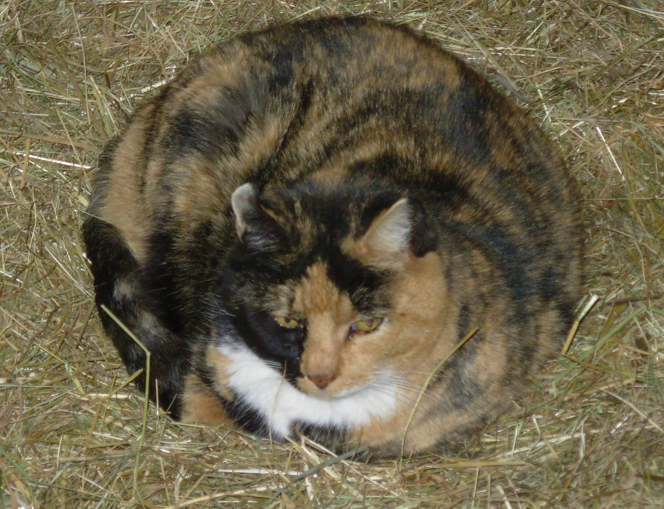
Cally, our adopted calico cat from close friends who moved across the country, was quite elderly and fading fast.  Winter is always a tough time for barn cats, even with snug shelter, plentiful food and water.  We had lost our 16+ year old tuxedo kitty just a couple months previously, and Cally, not much younger,  would not last much longer.  She got up to eat and potty, and still licked her front paws clean, but couldn’t manage much else.  Her frame was thin and frail, her coat dull and matted in places, she’d been deaf for some time and her eyes rheumy.  She spent her days and nights in a nest of hay on the floor of our horse barn, watching the comings and goings of horse hooves and people rolling by with wheelbarrows full of manure.  I brought her a little rug to give her a bit more cushion and protection from drafts, and I was not surprised to find her permanently curled up there in the morning.  Her time had come.

When Cally first arrived as a youngster, she strolled onto our farm and decreed it satisfactory.  She moved right in, immediately at home with the cows, horses, chickens,  our aging dog Tango (who loved cats) and our other cats.   In no time, she became the undisputed leader, with great nobility and elegance.  There was no one questioning her authority.

We knew Cally was unusual from the start.  Tango initially approached her somewhat warily, given the reaction Tango elicited from our other cats (typically a hair raising hiss, scratch and spit).  Instead, Cally marched right up, rubbed noses with Tango, and they became fast friends, cuddling together on our front porch whenever it was time to take a nap.  They were best pals.  Tango surely loved anyone who would snuggle up to her belly and keep her warm and Cally was the perfect belly warmer (as Garrison Keillor says, “a heater cat”).

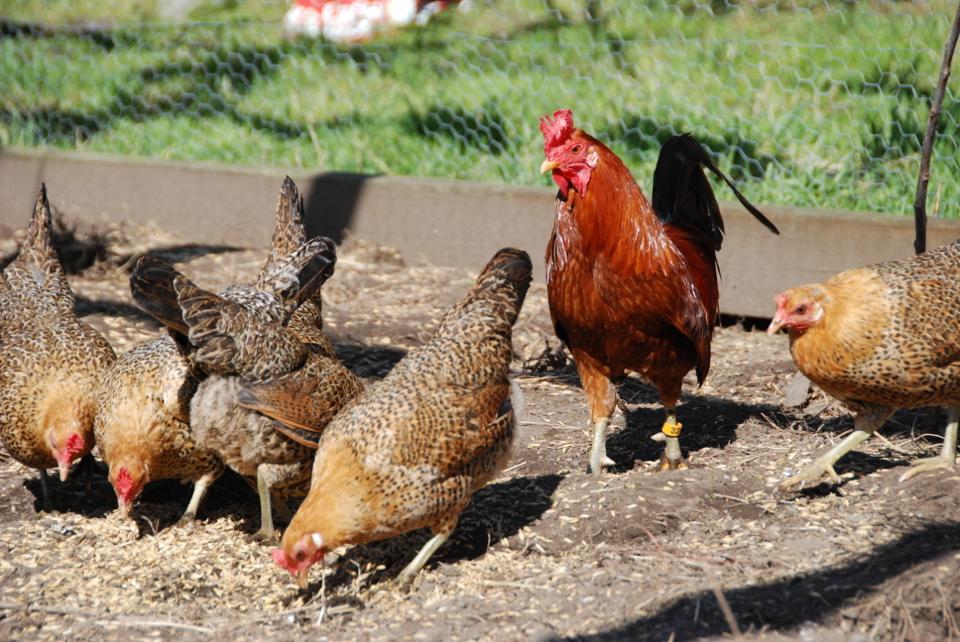
Our free range Araucana rooster seriously questioned this dog/cat relationship.    He was a bit indignant about a front porch communal naptime and would strut up the sidewalk, walk up and down the porch and perch on the railing,  muttering to himself about how improper it was, and at times getting quite loud and insistent about it.  They completely ignored him, which obviously bugged him, proud and haughty bird that he was.

One fall morning, as I opened the front door to go down the driveway to get the newspaper in the pre-dawn mist, I was astonished to see not just a cat and dog snuggled together on the porch mat, but the rooster as well, tucked up next to Tango’s tail.  As usual,  Tango and Cally didn’t move a muscle when I appeared, as was their habit–I always had to step over them to get to where I needed to go.  The rooster, however, was very startled to see me,  almost embarrassed.  He stood up quickly, flapped his wings a few times, and swaggered off crowing, just to prove he hadn’t compromised his cock-sure raison d’etre.

No, I didn’t have my camera with me and I never found them all together ever again.  You, dear reader, will have to just take it on faith.

After Tango died, Cally rebounded by taking on the training of our new corgi pup and making sure he understood her regal authority in all things, and demanding, in her silent way, his respect and servitude.  He would happily chase other cats, but never Cally.    They would touch noses, she would rub against his fur, and tickle his chin with her tail and all he could think to do was smile and wag at her.

So I figure a dog, a cat and a rooster sleeping together was our little farm’s version of the lion and lamb lying down together, diplomacy of the purest kind, the most diverse becoming one.  The peaceable kingdom was right outside our front door,  a harbinger of what is promised someday for the rest of us.  Despite claws, sharp teeth, and talons, it will be possible to snuggle together in harmony and mutual need for warmth and comfort.

Our special Cally made it happen on earth with her special statesmanship.  I suspect she’s met up with Tango, and possibly one rooster with attitude, for a nice nap together on the other side.

Homesick at Home

homeaprilevening

Solastalgia–a pining for a lost environment or a state of homesickness when still at home.  This word is derived from solacium (“comfort”) and algia (“pain”) and coined by Professor Glenn Albrecht in Australia in his research in Environmental Studies.  He has been studying Australian farmers displaced by climate changes that have rendered their land and homes uninhabitable dust bowls.  Their despair is losing not just their livelihoods but more emphatically, the familiarity and solace of surroundings lasting for generations of family members.  They become lost souls at home.

It is easy to dismiss talk of “home”  in this modern day as sentimental hogwash.  When we can travel globally in a matter of hours and via computer can arrive in anyone’s backyard, living room or even bedroom, “home” seems an outmoded concept.

Yet human beings thrive on predictability, stability and familiarity.   When home no longer resembles home,  when the birds no longer sing as they once did, the native flowers no longer bloom, the trees no longer move in the breeze, where can we seek solace and comfort?

We are homesick right in our own back yards, if there is still a back yard left to dwell within.

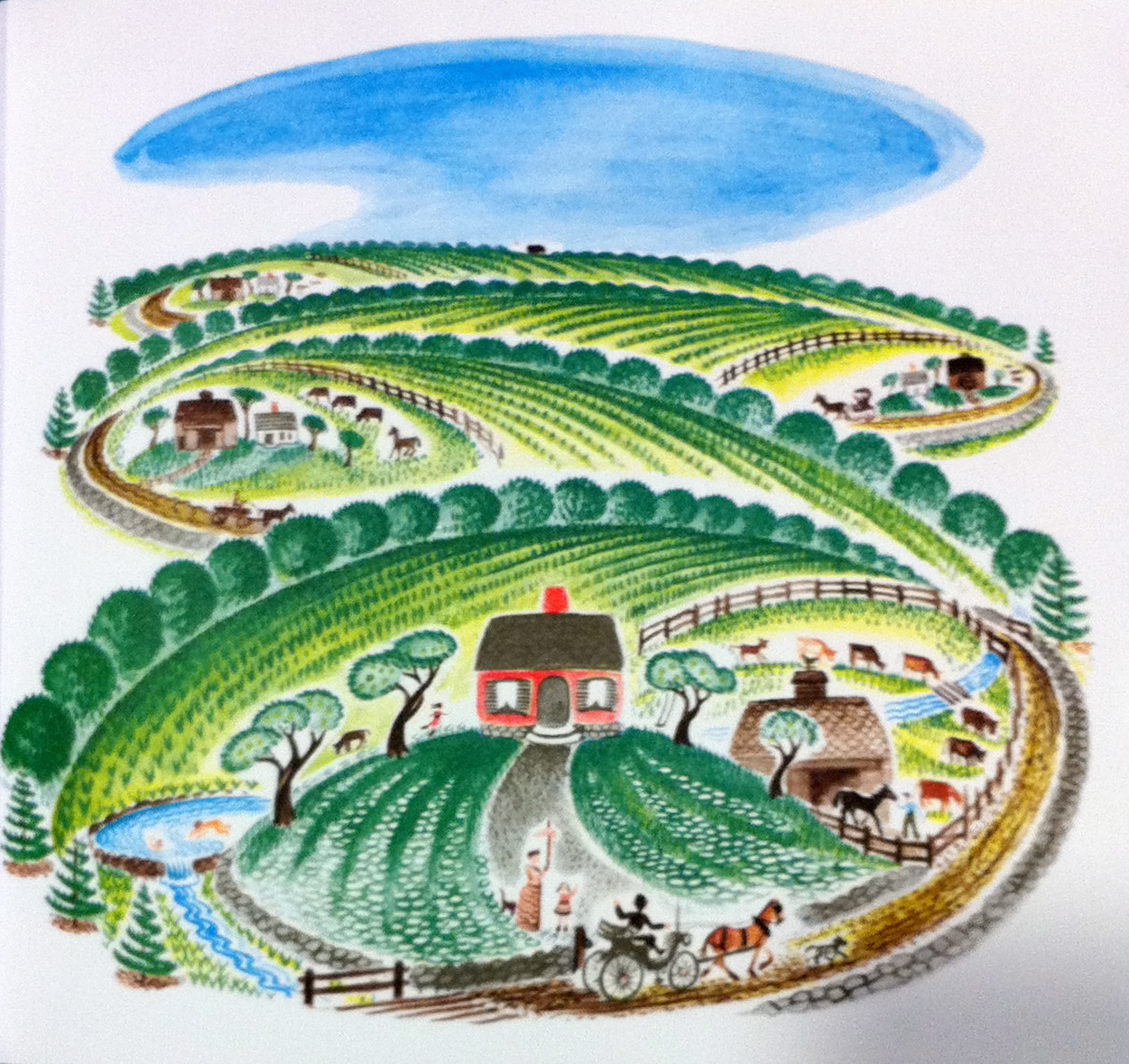
As a child, one of my favorite books was Virginia Lee Burton’s “Little House”, written in 1942, about a cottage built sturdy out in the countryside to last for generations of one family.

The Little House by Virginia Burton

” The Little House was very happy as she sat on the hill and watched the countryside around her.  She watched the sun rise in the morning and she watched the sun set in the evening.  Day followed day, each one a little different than the one before… but the Little House stayed just the same.”

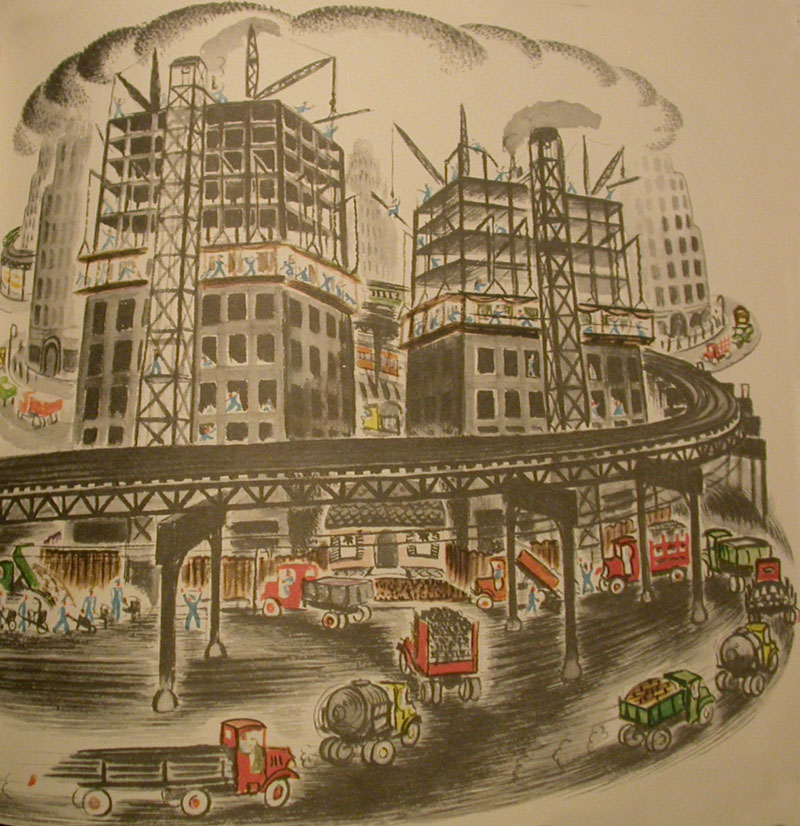
As the years go by, more houses are built near by and then a town surrounds the cottage, and finally it is engulfed in the noisy, smelly, sooty, smoky city.

The Little House by Virginia Burton

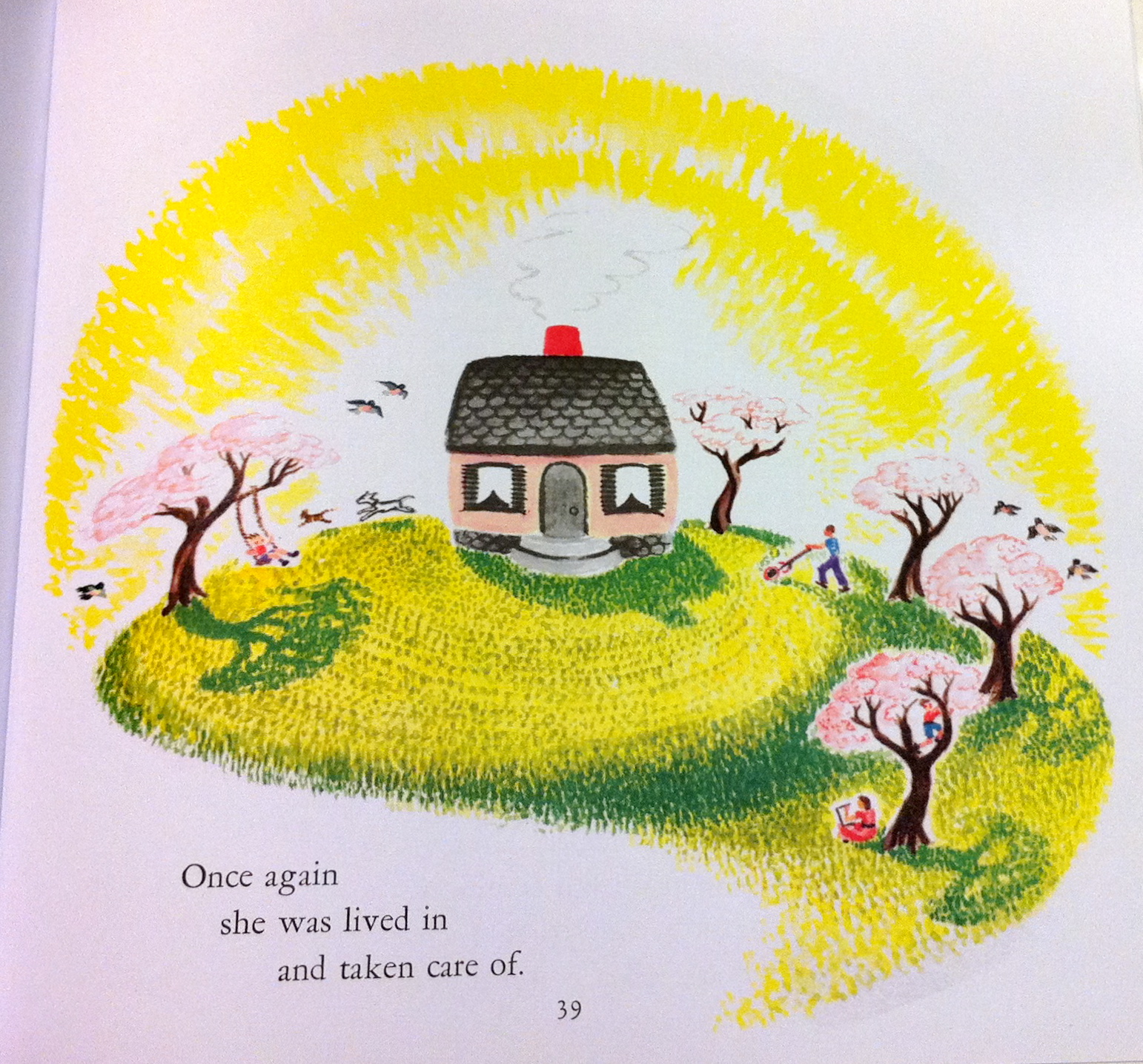
Eventually a great-granddaughter finds the Little House and moves it out far into the countryside to become “home” once again.

littlehousefinal

Voltaire reminded us to cultivate our own garden and more recently, Joni Mitchell observed:  “They paved paradise and put up a parking lot.”   How many live somewhere that looks like it did 20, 60, 100 years ago?   How many would recognize our childhood homes if we drove by now?   How will our children remember “home”?

I have found one cure for solastalgia —  create home where you are and where your people might be for generations to come.  One of the most effective ways is to plant bulbs, bushes, flowers and trees.  Again and again.  This cure is as old as Johnny and his appleseeds or the French fable “The Man Who Planted Trees” about the shepherd who restored an entire valley by planting acorns.

It has to do with restoring life on the land.  Home is more than just the boards and doors and windows and fireplaces.  It is the earth we steward and the care we provide.

Solace is available for the homesick because of the capability of our hands and hearts.

The Man Who Planted Trees:

http://www.youtube.com/watch?v=v_7yEPNUXsU

Knitting Hearts

leawheaton2

leaponyTo Lea on her birth day, celebrated twenty two years ago with much drama and joy — we cherish each day with you in our lives…


May the wind always be in her hair
May the sky always be wide with hope above her
And may all the hills be an exhilaration
the trials but a trail,
all the stones but stairs to God.

When it’s hard to be patient…make her willing to suffer
When it’s ridiculous to be thankful … make her see all is grace
When it’s radical to forgive…make her live the foundation of our faith
And when it’s time to work … make her a holy wonder.

May she be bread and feed many with her life and her laughter
May she be thread and mend brokenness and knit hearts…
~Ann Voskamp from “A Prayer for a Daughter”

lea004 lea006

lea005

36412_10150212209130462_4895558_n

288771_534260771454_6302440_o

leawheaton

leawedding

Best of Barnstorming Photos Summer/Fall 2014

potintilla

photo by Tomomi Gibson

sunset713141

wwupetunia

pnpsunset714

sunset72114

bobbiewindow

augustmorn3

morningdew95143

sunset722142

sunset92horses

sunset8165

sunset8168

qal814

thistledown824142


wetweb2


webdew2

sunrise82414

homer81014

morningdew95146

sunrise97147

cactusbloom

sunrise97148

frog96141

tonypony

raindrops1126

autumn9271415

shadow2

clouds101143

octobermtbakerarea3

octobertwinlakes9

octobertwinlakes20

octobermtbakerarea

morningdew95145

rainjewels2

nasturtiumleaf

blueberryleaf

octobermaple

sunset11914

pampas2

mistyfence

sunset1224145

tree141pampas4

adventfull2

thebuds

A Loss of Innocence

snow225146

As a physician-in-training in the late 1970’s, I rotated among a variety of inner city public hospitals, learning clinical skills on patients who were grateful to have someone, anyone, care enough to take care of them. There were plenty of homeless street people who needed to be deloused before the “real” doctors would touch them, and there were the alcoholic diabetics whose gangrenous toes would self-amputate as I removed stinking socks. There were people with gun shot wounds and stabbings who had police officers posted at their doors and rape victims who were beaten and poisoned into submission and silence. Someone needed to touch them with compassion when their need was greatest.

As a 25 year old idealistic and naive student, I truly believed I could make a difference in the 6 weeks I spent in any particular hospital rotation. That proved far too grandiose and unrealistic, yet there were times I did make a difference, sometimes not so positive, in the few minutes I spent with a patient. As part of the training process, mistakes were inevitable. Lungs collapsed when putting in central lines, medications administered caused anaphylactic shock, pain and bleeding caused by spinal taps–each error creates a memory that never will allow such a mistake to occur again. It is the price of training a new doctor and the patient always–always– pays the price.

I was finishing my last on-call night on my obstetrical rotation at a large military hospital that served an army base. The hospital, built during WWII was a series of far flung one story bunker buildings connected by miles of hallways–if one part were bombed, the rest of the hospital could still function. The wing that contained the delivery rooms was factory medicine at its finest: a large ward of 20 beds for laboring and 5 delivery rooms which were often busy all at once, at all hours.  Some laboring mothers were married girls in their midteens whose husbands were stationed in the northwest, transplanting their young wives thousands of miles from their families and support systems. Their bittersweet labors haunted me: children delivering babies they had no idea how to begin to parent.

I had delivered 99 babies during my 6 week rotation. My supervising residents and the nurses on shift had kept me busy on that last day trying to get me to the *100th* delivery as a point of pride and bragging rights; I had already followed and delivered 4 women that night and had fallen exhausted into bed in the on call-room at 3 AM with no women currently in labor, hoping for two hours of sleep before getting up for morning rounds. Whether I reached the elusive *100* was immaterial to me at that moment.

I was shaken awake at 4:30 AM by a nurse saying I was needed right away. An 18 year old woman had arrived in labor only 30 minutes before and though it was her first baby, she was already pushing and ready to deliver. My 100th had arrived. The delivery room lights were blinding; I was barely coherent when I greeted this almost-mother and father as she pushed, with the baby’s head crowning. The nurses were bustling about doing all the preparation for the delivery:  setting up the heat lamps over the bassinet, getting the specimen pan for the placenta, readying suture materials for the episiotomy.

I noticed there were no actual doctors in the room so asked where the resident on call was.

What? Still in bed? Time to get him up! Delivery was imminent.

I knew the drill. Gown up, gloves on, sit between her propped up legs, stretch the vulva around the crowning head, thinning and stretching it with massaging fingers to try to avoid tears. I injected anesthetic into the perineum and with scissors cut the episiotomy to allow more room, a truly unnecessary but,  at the time, standard procedure in all too many deliveries. Amniotic fluid and blood dribbled out then splashed on my shoes and the sweet salty smell permeated everything. I was concentrating so hard on doing every step correctly, I didn’t think to notice whether the baby’s heart beat had been monitored with the doppler, or whether a resident had come into the room yet or not. The head crowned, and as I sucked out the baby’s mouth, I thought its face color looked dusky, so checked quickly for a cord around the neck, thinking it may be tight and compromising. No cord found, so the next push brought the baby out into my lap. Bluish purple, floppy, and not responding. I quickly clamped and cut the cord and rubbed the baby vigorously with a towel.

Nothing, no response, no movement, no breath. Nothing.  I rubbed harder.

A nurse swept in and grabbed the baby and ran over to the pediatric heat lamp and bed and started resuscitation.

Chaos ensued. The mother and father began to panic and cry, the pediatric and obstetrical residents came running, hair askew, eyes still sleepy, but suddenly shocked awake with the sight of a blue floppy baby.

I sat stunned, immobilized by what had just happened in the previous five minutes. I tried to review in my foggy mind what had gone wrong and realized at no time had I heard this baby’s heart beat from the time I entered the room. The nurses started answering questions fired at me by the residents, and no one could remember listening to the baby after the first check when they had arrived in active pushing labor some 30 minutes earlier. The heart beat was fine then, and because things happened so quickly, it had not been checked again. It was not an excuse, and it was not acceptable. It was a terrible terrible error. This baby had died sometime in the previous half hour. It was not apparent why until the placenta delivered in a rush of blood and it was obvious it had partially abrupted–prematurely separated from the uterine wall so the circulation to the baby had been compromised. Potentially, with continuous fetal monitoring, this would have been detected and the baby delivered in an emergency C section in time. Or perhaps not. The pediatric resident worked for another 20 minutes on the little lifeless baby.

The parents held each other, sobbing, while I sewed up the episiotomy. I had no idea what to say,  mortified and helpless as a witness and perpetrator of such agony. I tried saying I was so sorry, so sad they lost their baby, felt so badly we had not known sooner. There was nothing that could possibly comfort them or relieve their horrible loss or the freshness of their raw grief.

And of course they had no words of comfort for my own anguish.

Later, in another room, my supervising resident made me practice intubating the limp little body so I’d know how to do it on something other than a mannequin. I couldn’t see the vocal cords through my tears but did what I was told, as I always did.

I cried in the bathroom, a sad exhausted selfish weeping. Instead of achieving that “perfect” 100, I learned something far more important: without constant vigilance, and even with it,  tragedy intervenes in life unexpectedly without regard to age or status or wishes or desires. I went on as a family physician to deliver a few hundred babies during my career,  never forgetting the baby that might have had a chance, if only born at a hospital with adequately trained well rested staff without a med student trying to reach a meaningless goal.

This baby should now be in his 30’s with children of his own, his parents now proud and loving grandparents.

I wonder if I’ll meet him again — this little soul only a few minutes away from a full life — if I’m ever forgiven enough to share a piece of heaven with humanity’s millions of unborn babies who,  through intention or negligence,  never had opportunity to draw a breath.

Then, just maybe then, forgiveness will feel real and grace will flood the terrible void where, not for the first time nor the last,  guilt overwhelmed what innocence I had left.

snowonsnowdrops

For more information :

Intrauterine Fetal Demise – birthinjurycenter.org/types-of-birth-injuries/intrauterine-fetal-demise/
So Pressed For Time

dictionary

Six years after her death, I’m slowly sorting through my mother’s packed up possessions stored in one of our farm outbuildings. Some boxes I am still not ready to open, such as the 30 months of letters written by my newlywed father and mother while he fought in several bloody island battles as a Marine in the South Pacific during WWII. Other boxes contain items from too distant an era to be practical in my kitchen, such as the ones labeled “decorative teacups” or “assorted tupperware bowls”.

But I do open the boxes of books. My mother was a high school speech teacher during those war years, and she had a good sense of a classic book, so there are always treasures in those boxes.

Recently I rediscovered the 1956 Webster’s New Dictionary of the Twentieth Century that I grew up with. This book was massive, easily weighing 10 pounds, and served as a booster seat for haircuts, a step stool for trying to reach the cookie jar on the kitchen cupboard, and of course, for looking up any obscure word that ever existed in all of history. Or so it seemed.

An amazing tome. And as I flipped through the pages, I found some old familiar friends that were neither black nor white nor read all over.

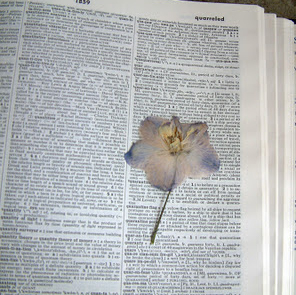
Wildflowers had been carefully pressed between the pages–over two dozen specimens paper thin themselves, their existence squeezed into two dimensions–still showing faint pink or blue, or purple color, almost exuding a long ago fragrance from a summer over fifty years ago. As a child I regularly wandered out to our fields and woods to gather crimson clover blossoms, buttercup, dandelions, daisies, wild violets, wild ginger, and (shame on me!) trillium and calypso lady slippers for bouquets for my mother, and she would select the most perfect to slide between the pages of the dictionary. Occasionally she would pull out one to gently paste on a hand written card she sent to a friend.

Here were my once perfect flowers, preserved and pressed for time, just waiting for the middle-aged me to rediscover them lying between wonderful words that I love to roll in my mouth and type on a page. They are too fragile to paste to a greeting card, or even to handle due to their brittleness. They need to stay right where they are, for another generation or two or three to discover.

I too am so pressed for time, becoming more fragile, perhaps more brittle than I care to admit. My mother and father are now blown away like the puff ball seeds of the dandelion, on to other horizons, but the sturdy old dictionary is going nowhere. It will be passed down, its delicate passengers preserved inside, a long ago far away summer afternoon of flower gathering to be shared as a great grandchild opens the book to look up a favorite word sometime in the not so far off future.dictionary2