So It Goes

I spent seven hours yesterday at my daughter’s house
helping her expand their garden by at least ten times.
We dug up sod by the shovelful, shook off the dirt as
best we could; sod into the wheelbarrow and off to the
pile at the edge of the yard. Then all that over and over
again. Five hours total work-time, with time out for lunch
and supper. By the time I got home I knew all too well
that seventy-two is not thirty-five; I could barely move.

I got to quit earlier than Nadine. She told me I’d done
enough and that I should go get a beer and lie down on
the chaise lounge and cheer her on, which is what I did.

All this made me remember my father forty years ago
helping me with my garden. My father’s dead now, and
has been dead for many years, which is how I’ll be one
of these days too. And then Nadine will help her child,
who is not yet here, with her garden. Old Nadine, aching
and sore, will be in my empty shoes, cheering on her own.

So it goes. The wheel turns, generation after generation,
around and around. We ride for a little while, get off and
somebody else gets on. Over and over, again and again.
~David Budbill “Seventy-Two Is Not Thirty-Five” from Tumbling toward the End

The wheel turns, we cycle around again, get on and eventually get off.
This is a week of July birthdays in our family, for both old and young.

This hit me when we celebrated our grandson’s third birthday a few days ago in a suburban backyard where my daughter has continued the Gibson/Polis gardening tradition, using the compost we hauled in our truck from our farm several hours away.

Her peas were full and ripe and juicy, her greens lush and tasty – simple perfection thanks to her careful tending.

Meanwhile, our son gardens with his three boys in a very small urban backyard in Denver, teaching them what is weed and what will become a future meal.

I couldn’t help but get weepy, enjoying that special birthday feast.

…and knowing someday, our grandsons will plant and weed and harvest from the soil just as we and their parents did, over and over, again and again.

And this is why my eyes are closed
It’s just as well for all I’ve seen
And so it goes, and so it goes
And you’re the only one who knows

~Billy Joel

Embraced By God’s Restless Love

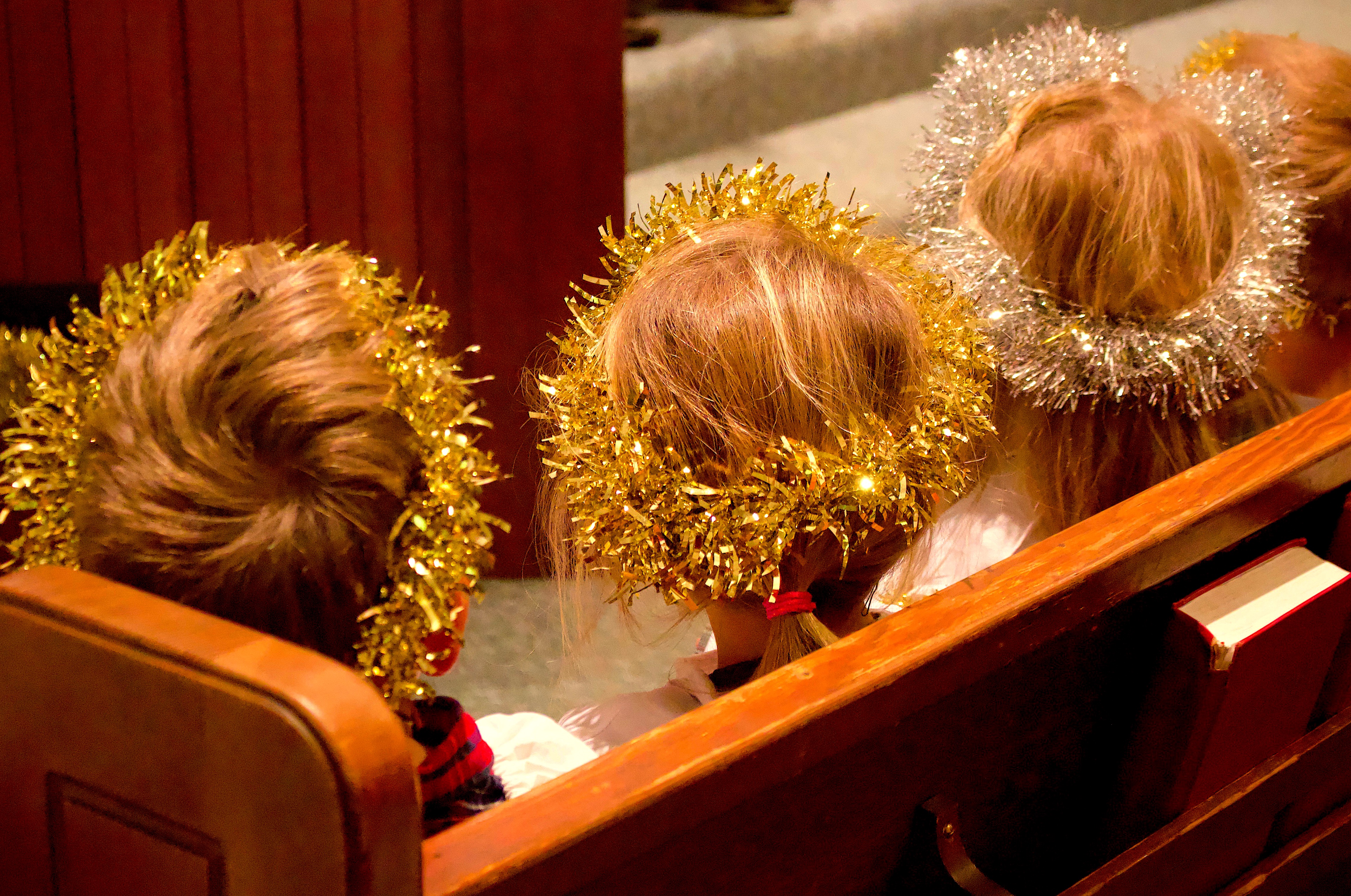
The old church leans awry and looks quite odd,
But it is beautiful to us, and God.

~Stephen Paulus “The Old Church”

The church knelt heavy
above us as we attended Sunday School,
circled by age group and hunkered
on little wood folding chairs
where we gave our nickels, said
our verses, heard the stories, sang
the solid, swinging songs.

It could have been God above
in the pews, His restless love sifting
with dust from the joists. We little
seeds swelled in the stone cellar, bursting
to grow toward the light
.

Maybe it was that I liked how, upstairs, outside,
an avid sun stormed down, burning the sharp-
edged shadows back to their buildings, or
how the winter air knifed
after the dreamy basement.

Maybe the day we learned whatever
would have kept me believing
I was just watching light
poke from the high, small window
and tilt to the floor where I could make it
a gold strap on my shoe, wrap
my ankle, embrace
any part of me.
~Maureen Ash “Church Basement”

There could be so much wrong with the church overall,
comprised as it is
with fallen people
with broken wings,
looking odd and leaning awry,
determined to find flaws in each other’s
doctrine, rituals, tradition, beliefs.

What is right with the church:
who we pray to, why we sing,
whose body we comprise
so bloodied, fractured, yet healed
despite our thoroughly motley messiness~
Our Lord of Heaven and Earth
rains down His restless love upon our heads.

Hives and Swarms

Here is the place; right over the hill    
Runs the path I took; 
You can see the gap in the old wall still,    
And the stepping-stones in the shallow brook. 

There is the house, with the gate red-barred,    
And the poplars tall; 
And the barn’s brown length, and the cattle-yard,    
And the white horns tossing above the wall. 

There are the beehives ranged in the sun;    
And down by the brink 
Of the brook are her poor flowers, weed-o’errun,    
Pansy and daffodil, rose and pink. 

A year has gone, as the tortoise goes,    
Heavy and slow; 
And the same rose blows, and the same sun glows,    
And the same brook sings of a year ago. 

I can see it all now,—the slantwise rain    
Of light through the leaves, 
The sundown’s blaze on her window-pane,    
The bloom of her roses under the eaves. 

Just the same as a month before,—    
The house and the trees, 
The barn’s brown gable, the vine by the door,—    
Nothing changed but the hives of bees. 

Before them, under the garden wall,    
Forward and back, 
Went drearily singing the chore-girl small,    
Draping each hive with a shred of black. 

Trembling, I listened: the summer sun    
Had the chill of snow; 
For I knew she was telling the bees of one    
Gone on the journey we all must go! 
~John Greenleaf Whittier from “Telling the Bees”

An old Celtic tradition necessitates sharing any news from the rural household with the farmer’s bee hives, whether cheery like a new birth or a wedding celebration or sad like a family death.  This ensures the hives’ well-being and continued connection to home and farm – the bees are kept in the loop, so to speak, so they stay at home, not swarming to move on to a more hospitable and presumably communicative place.

Good news seems always easy to share; we tend to keep bad news to ourselves so this tradition helps remind us that what affects one of us, affects us all. These days, with instant news at our fingertips at any moment, bad news is constantly bombarding us. Like the bees in the hives of the field, we want to flee from it and find a more hospitable home.

I do hope the Beekeeper comes and personally reassures us:
“Here is what has happened.
All will be okay.
We will navigate this life together.
Please stay with me.”

O gentle bees, I have come to say
That grandfather fell to sleep to-day.
And we know by the smile on grandfather’s face.
He has found his dear one’s biding place.
So, bees, sing soft, and, bees, sing low.
As over the honey-fields you sweep,—
To the trees a-bloom and the flowers a-blow
Sing of grandfather fast asleep;
And ever beneath these orchard trees
Find cheer and shelter, gentle bees.
~Eugene Field from “Telling the Bees”


Telling the Bees

beeswarm5148


beehives


Here is the place; right over the hill 
   Runs the path I took; 
You can see the gap in the old wall still, 
   And the stepping-stones in the shallow brook. 
There is the house, with the gate red-barred, 
   And the poplars tall; 
And the barn’s brown length, and the cattle-yard, 
   And the white horns tossing above the wall. 
There are the beehives ranged in the sun; 
   And down by the brink 
Of the brook are her poor flowers, weed-o’errun, 
   Pansy and daffodil, rose and pink. 
A year has gone, as the tortoise goes, 
   Heavy and slow; 
And the same rose blows, and the same sun glows, 
   And the same brook sings of a year ago. 
I can see it all now,—the slantwise rain 
   Of light through the leaves, 
The sundown’s blaze on her window-pane, 
   The bloom of her roses under the eaves. 
Just the same as a month before,— 
   The house and the trees, 
The barn’s brown gable, the vine by the door,— 
   Nothing changed but the hives of bees. 
Before them, under the garden wall, 
   Forward and back, 
Went drearily singing the chore-girl small, 
   Draping each hive with a shred of black. 
Trembling, I listened: the summer sun 
   Had the chill of snow; 
For I knew she was telling the bees of one 
   Gone on the journey we all must go! 
~John Greenleaf Whittier from “Telling the Bees”
saturdaylight2
north71516
An old Celtic tradition necessitates sharing any news from the household with the local bee hives, whether cheery like a new birth or a wedding celebration or sad like a family death.  This ensures the hives’ well-being and continued connection to home and farm – the bees are kept in the loop, so to speak, so they stay at home, not swarm and move on to a more hospitable place.
Good news seems always easy to share; we tend to keep bad news to ourselves so this tradition helps remind us that what affects one of us, affects us all.
These days, with instant news at our fingertips at any moment, bad news is constantly bombarding us. Like the bees in the hives of the field, we want to flee from it and find a more hospitable home.
I do hope the Beekeeper comes personally to say:
“Here is what has happened. All will be okay. We will navigate this life together.”
O gentle bees, I have come to say
That grandfather fell to sleep to-day.
And we know by the smile on grandfather’s face.
He has found his dear one’s biding place.
So, bees, sing soft, and, bees, sing low.
As over the honey-fields you sweep,—
To the trees a-bloom and the flowers a-blow
Sing of grandfather fast asleep;
And ever beneath these orchard trees
Find cheer and shelter, gentle bees.
~Eugene Field from “Telling the Bees”
roses826171
beeswarm51410

Financial Support for the Barnstorming Blog from our Readers

Your financial support helps to keep this blog an ad-free daily offering. Your contribution of any amount is encouragement to me and deeply appreciated.

$10.00

A Daily Rhythm

sashaeye

tonyeye

When I pull open the barn doors,
every morning
and each evening,
as my grandparents did
one hundred years ago,
six rumbling voices
rise in greeting.
We exchange scents,
nuzzle each others’ ears.

I do my chores faithfully
as my grandparents once did–
draw fresh water
into buckets,
wheel away
the pungent mess underfoot,
release an armful of summer
from the bale,
reach under heavy manes
to stroke silken necks.

I don’t depend
on our horses’ strength
and willingness to
don harness
to carry me to town
or move the logs
or till the soil
as my grandparents did.

Instead,
these soft eyed souls,
born on this farm
two long decades ago,
are simply grateful
for my constancy
morning and night
to serve their needs
until the day comes
they need no more.

I depend on them
to depend on me
to be there
to open the doors;
their low whispering welcome
gives voice
to the blessings of
living on a farm
ripe with rhythms and seasons,
as if today and tomorrow are
just like one hundred years ago.
~EPG


barnlight

eveningbarnsept1