It’s a hard time to be human. We know too much and too little. Does the breeze need us? The cliffs? The gulls? If you’ve managed to do one good thing, the ocean doesn’t care. But when Newton’s apple fell toward the earth, the earth, ever so slightly, fell toward the apple as well.
~Ellen Bass from “The World Has Need of You”
God speaks to each of us as he makes us, then walks with us silently out of the night.
These are the words we dimly hear:
You, sent out beyond your recall, go to the limits of your longing. Embody me.
Flare up like a flame and make big shadows I can move in.
Let everything happen to you: beauty and terror. Just keep going. No feeling is final. Don’t let yourself lose me.
Nearby is the country they call life. You will know it by its seriousness.
Give me your hand. ~Rainer Maria Rilke from “Book of Hours”
For too much of my life I have focused on the future, bypassing the present. There is always a goal to achieve, a conclusion becoming commencement of the next phase, a sunset turning right around in a few hours to become sunrise.
When the present is so hard, so overwhelming, so riveting, so tenderly full of life or achingly full of death, I grab hold with all my strength to try and secret it away and keep it forever. Even if it slips away from me, elusive and evasive, torn to bits by the unrelenting and devastating movement of time, I have felt the earth move, ever so slightly, toward me.
So, whether out of joy or pain, I must write to harvest those times to make them last a little bit longer. Maybe not forever; they will be lost downstream into the ether of unread words.
Even if unread, I am learning that words, which had the power in the beginning to create all life, can bring tenderness and meaning back to my life. I embody Him.
How blessed to live the gift twice: not just in the moment itself but in writing words that preserve and treasure it all up.
Is everything sad going to come untrue? What’s happened to the world? ~J.R.R. Tolkien from The Return of the King
The world is indeed full of peril and in it there are many dark places. But still there is much that is fair. And though in all lands, love is now mingled with grief, it still grows, perhaps, the greater.
~J.R.R Tolkien from The Fellowship of the Ring
Yet again unspeakable terror strikes down ordinary people living their lives–once again our soil is soaked with the blood of our sons and daughters, our sisters and brothers.
In our minds, we want to rewind and replay the events of a tragedy in a way that would prevent it from happening in the first place. We want to bring the dead and injured back to health again. The major devastating earthquake becomes a mere tremor, the flooding tsunami is only one foot, not over thirty feet tall, the terrorist hijackers are prevented from ever boarding a plane, the shooter changes his mind at the last minute, lays down his arms and calls someone for help with his overwhelming distress and anger.
We want so badly for it all to be untrue. The bitter reality of horrendous daily suffering and sadness all over the earth is too much for us to absorb. We plead for relief, beg for a better day. What has happened to the world?
Our minds may play mental tricks like this, but God does not play tricks. He knows and feels what we do. He too wanted to see it rewound and replayed differently so He came to us to know our grief and sadness, to weep with us, to suffer for us, to die to end such evil. And because of this, because of a God who came to dwell with us, was broken, died and then rose again whole and holy, we are assured, in His time, everything sad will come untrue.
Our tears will be dried, our grief turned to joy, our pain nonexistent, not even a memory. It will be a new day, a better day when love is greater than anger, dissolving our grief – as it is written, trustworthy and true.
May that be a day when we can no longer overwhelmed with evil but we will overcome evil with good.
He will wipe away every tear from their eyes, and death shall be no more, neither shall there be mourning, nor crying, nor pain anymore, for the former things have passed away. And he who was seated on the throne said, “Behold, I am making all things new.” Also he said, “Write this down, for these words are trustworthy and true.
~Revelation 21: 4-5
Reflecting on the courage shown by Tanzanian park rangers and my kidnapped research colleagues on this unforgettable day 41 years ago — I’m reposting this part of my Gombe saga from when I worked as a student research assistant for Jane Goodall in western Tanzania in 1975.
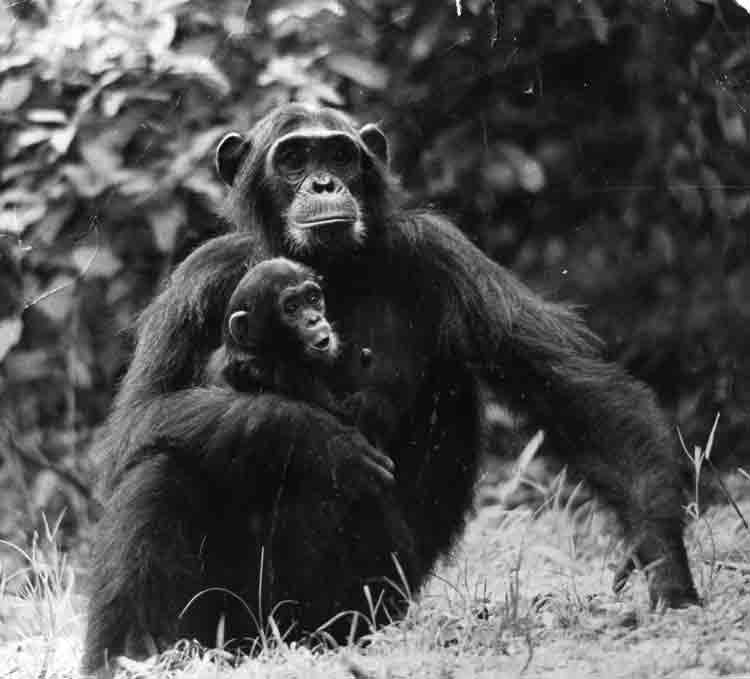
At first glance, Gombe National Park in Tanzania felt like paradise—a serene piece of the earth filled with exotic and fascinating wildlife, an abundance of fish and fruit to eat, and the rich unfamiliar sounds and smells of the tropical jungle. It was a façade. It was surrounded by the turmoil and upheaval of political rebellion and insurgencies in its neighboring countries, inflamed even more by the fall of Saigon in Vietnam a month previously due to the earlier pull out of the Americans from that long and tragic war.
Only a few miles north of our research station in Gombe National Park in western Tanzania, there had been years of civil war in the small land locked country of Burundi. When the wind was just right, we could hear gunfire and explosions echoing over the valleys that separated us. Escaping refugees would sometimes stop for food on their way to villages in Tanzania to the south, seeking safe haven in one of the poorest countries in the world, only a decade into its own experiment with socialism, Ujamaa.
There was also word of ongoing military rebellion against the dictatorship of President Mobutu in the mountainous country of Zaire twelve miles west across Lake Tanganyika.
Morning comes early for field studies of wildlife, as the research day must start before the chimpanzee and baboon subjects wake up and begin to stir. Before midnight, while we slept soundly in our metal huts scattered up the mountainside, a group of armed soldiers arrived by boats to the shore of Gombe National Park.
Storming the beach huts housing two unarmed Gombe park rangers and their families, the soldiers seized one and demanded to be told where the researchers were. The ranger refused to provide information and was severely beaten about the head and face by the butts of the rifles carried by the invaders. The armed soldiers then divided into smaller groups and headed up the trails leading to the huts, coming upon four sleeping student researchers, tying them up, taking them hostage, forcing them into boats and taking them across the lake back to Zaire.
Asleep farther up the mountain, we were wakened by some students who were fleeing, hearing the commotion. No one really understood what was happening down lower on the mountain. There were shouts and screams, and gun shots had been heard. Had someone been injured or killed? There was no choice but to run and hide deep in the bush at a predetermined gathering spot until an “all clear” signal was given by the rangers.
We hurried along barely familiar trails in the black of the jungle night, using no flashlights, our hearts beating hard, knowing we had no defense available to us other than the cover of darkness.
That was the longest wait for morning of my life, sitting alongside Jane holding her son Grub. A hand full of other students had also made their way to the hiding spot, none of us knowing what to think, say or do. We could only barely see each other’s faces in the darkness and were too frightened to make any sounds. We carried no weapons, and there was no way to communicate with the outside world. We had no idea how many of us may be missing, or possibly dead.
Jane held Grub in her arms, trying to keep him quiet, but his eight year old imagination was ignited by the events that had just unfolded.
“Will they kidnap me, Jane? Will they come for me? Where will they take us? Will they shoot us dead?”
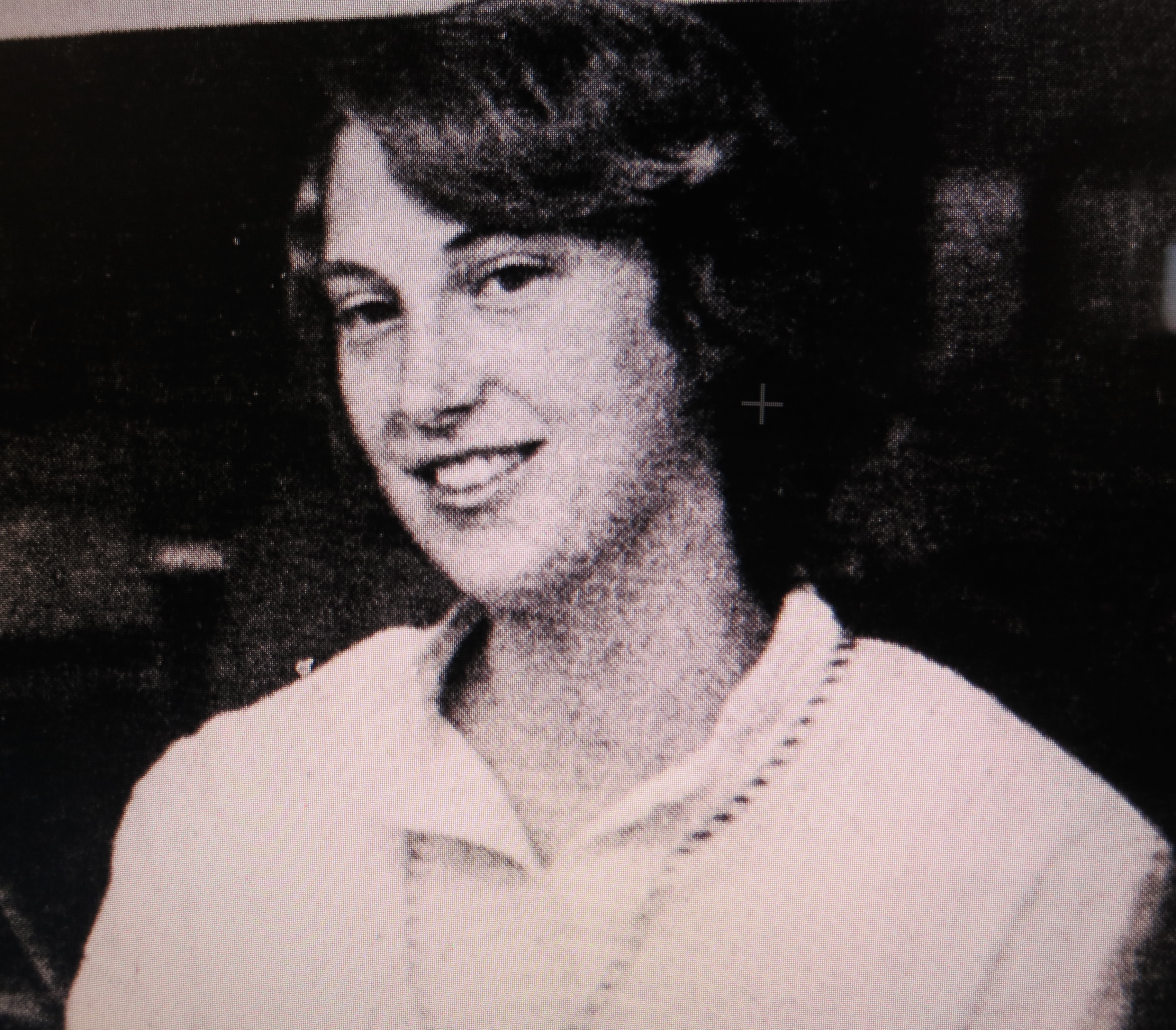
Jane, her face hidden by her blonde hair loose about her shoulders, sat rocking him, cradling him. “Shhh, shhh, we don’t want them to find us. We’re safe staying right here. Everything will be fine in the morning. No one will take you from me.”
Grub began to sob silently into her shoulder.
When the morning of May 20 dawned, the park rangers located us, and pieced together the events as best they could–the soldiers were Zairean rebels living in remote mountains, fighting an insurgency against the Zaire government. Seeking funds for their cause, they saw a kidnapping of Americans and Europeans as a way to raise quick funds and world publicity and sympathy. Four of our friends/coworkers were missing, the camp was ransacked and the rangers beaten but with no life threatening injuries. There was no way to remain safe at the Park, and our colleagues needed whatever help we could offer for their rescue.
We were able to send a messenger to a nearby fishing village, and a radio call was sent out to the small town of Kigoma, then relayed to Dar Es Salaam and Nairobi. Help arrived within a few hours, when a United Nations boat monitoring the civil war activities in Burundi pulled off shore near our camp. We were told we needed to evacuate Gombe that day, and would be taken to Kigoma, and then flown by bush pilot to Nairobi, Kenya to cooperate in the investigation of the kidnapping.
In Nairobi, at the US Embassy, I met CIA agents who viewed our wild primate studies with suspicion. Each of us were grilled individually as to our political beliefs, our activities at the camp and whether we may be somehow involved in subversive actions against the Zaire or Tanzanian governments. We were dumbfounded that our own countrymen would be so skeptical about our motives for being in Africa. It became clear our own government would be no help in resolving the kidnapping and bringing our friends home to safety. The agents did not shed any light on whether they knew our friends were alive or dead.
We were then hustled into a press conference where we were interviewed for television and print media by the worldwide news agencies, and my parents saw me on the CBS evening news before they actually heard my voice over the phone. I flew back to Stanford the next day, spending 24 hours on a plane that made six stops up the coast of West Africa on its way back west, to tell what I knew to President Lyman and other administration officials at Stanford as they prepared a plan to locate and free the students. I then returned home to Washington state to await any news that came too slowly from a place so far away that I remain astonished to this day that I was ever there at all.
It took over three months, private negotiations and ransom money to free all four of our friends back to safety.
The pain I feel now is the happiness I had before. That’s the deal.
C.S. Lewis
For thus says the LORD of hosts, Once more in a little while, I am going to shake the heavens and the earth, the sea also and the dry land. I will shake all the nations; and they will come with the wealth of all nations, and I will fill this house with glory,’ says the LORD of hosts. Haggai 2:6-7
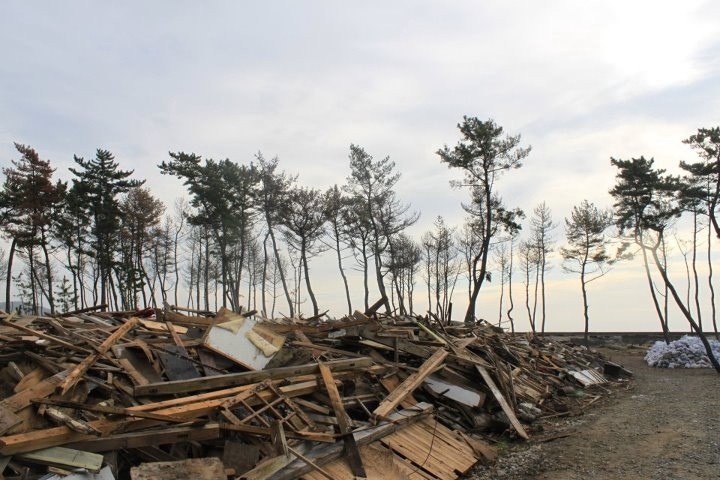
the rubble piled on the beach at Tohoku, Japan, after the 3/11/11 tsunami
In March 2012, we stayed with our friends Brian and Bette Vander Haak at their cabin on a bluff just above the beach at Sendai, Japan, just a few dozen feet above the devastation that wiped out an entire fishing village below during the 3/11/11 earthquake and tsunami. We walked that stretch of beach, learning of the stories of the people who had lived there, some of whom did not survive the waves that swept their houses and cars away before they could escape. We walked past the footprints of foundations of hundreds of demolished homes, humbled by the rubble mountains yet to be hauled away to be burned or buried and scanned acres of wrecked vehicles now piled one on another, waiting to become scrap metal. It is visual evidence of life suddenly and dramatically disrupted.
This was a place of recreation and respite for some who visited regularly, commerce and livelihood for others who stayed year round and then, in ongoing recovery efforts, was struggling to be restored to something familiar. Yet it looked like a foreign ghostly landscape. Even many trees perished, lost, broken off, fish nets still stuck high on their scarred trunks. There were small memorials to lost family members within some home foundations, with stuffed animals and flowers wilted from the recent anniversary observance.
It was a powerful place of memories for those who lived there and knew what it once was, how it once looked and felt, and painfully, what it became in a matter of minutes on 3/11. The waves swept in inexplicable suffering, then carried their former lives away. Happiness gave ground to such terrible pain that could never have hurt as much without the joy that preceded it.
We want to ask God why He doesn’t do something about the suffering that happens anywhere a disaster occurs –but if we do, He will ask us the same question right back. We need to be ready with our answer and our action.
God knows suffering. Far more than we do. He took it all on Himself, feeling His pain amplified, as it was borne out of His love and joy in His creation.
Now five years later, on March 11, beautiful Tohoku and Sendai, and its dedicated survivors are slowly recovering, but their inner and outer landscape is forever altered. What remains the same is the tempo of the waves, the tides, and the rhythm of the light and the night, happening just as originally created.
In that realization, pain gives way. It cannot stand up to His love, His joy, and our response.
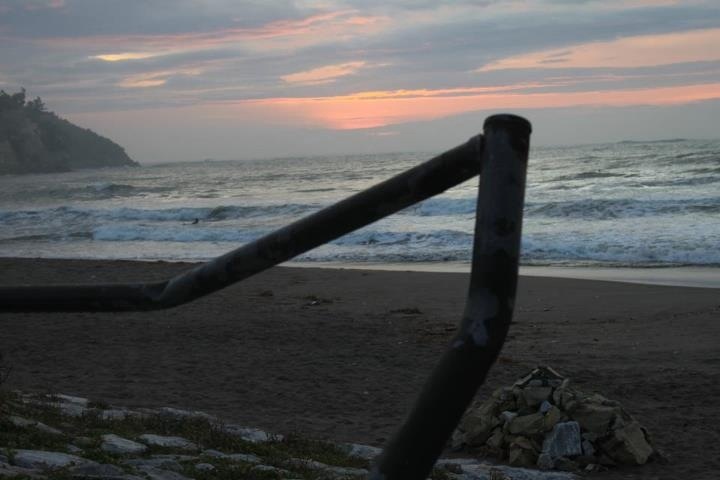
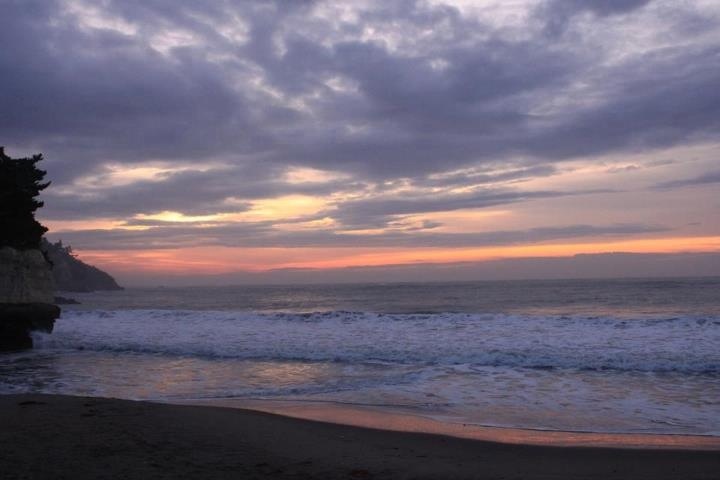
The beach at Tohoku, Japan where the tsunami hit 5 years ago today.
“When the oceans rise and thunders roar I will soar with You above the storm Father you are King over the flood I will be still, know You are God” from “Still”
During this Lenten season, I will be drawing inspiration from the new devotional collection edited by Sarah Arthur —Between Midnight and Dawn
Minnie Paterson rocked slowly in her rocking chair, nursing her infant son. She sat near the south window of the lighthouse living quarters, and studied the rain streaming down in rivulets.Wind gusts rattled the window. A lighthouse keeper’s home was constantly buffeted by wind, but this early winter storm picked up urgency throughout the night.Now with first light, Minnie looked out at driving rain blowing sideways, barely able to make out the rugged rocks below.The Pacific Ocean was anything but; the mist hung gray, melding horizon into sea, with flashes of white foam in crashing waves against the rocky cliffs of Cape Beale.
Whenever storms came, it seemed the Paterson family lived at the edge of civilization. Yet these storms were the reason she and Tom and their five children lived on the rugged west coast of Vancouver Island, in isolation at the southern edge of Barkley Sound. Tom’s job was to keep the foghorn blaring and the light glowing above the treacherous rocks, to guide sea vessels away from certain peril. The storms sometimes were too powerful even with the lighthouse as a beacon of warning. In January 1906, the ship Valencia had wrecked off the coast and only a few survivors had managed to make their way to shore, staggering up the rocky trail to the lighthouse where she warmed them by the stove and fed them until rescuers could come.
Eleven months later, Minnie was setting about getting breakfast ready when her husband came down the stairs in a rush from the upper room where he tended the light.
“Mother, it’s a ship! I just now see it. It is battered by the waves, its sails in tatters! I can see a man waving a distress signal from the deck. It will surely run aground against the rocks—I must telegraph the village to send out rescuers.”
Minnie went to the window again but could see nothing in the mist. Surely this could not be another Valencia disaster! Tom went to the telegraph in the corner of the room and tapped out the urgent message to the fishing village of Bamfield, five miles away inside Barkley Sound. He sat impatiently waiting for a reply, drumming his fingers on the desk. After ten minutes, he sent the message again with no response.
“The lines are down. I’m certain of it. The fallen trees pull them down in this wind. We’ll be unable to summon the rescuers. This ship is doomed, just like the Valencia. There is no way we can reach them in this weather and they can’t come ashore here in lifeboats. They’ll crash on the rocks…”
Seeing the helplessness Tom felt, Minnie knew immediately what she must do.He could not leave his post—it was a condition of his job.She would have to run the six miles for help, through the forest.She kissed Tom and the children goodbye, donned a cap and sweater, and as her feet did not fit in her boots, she put on her husband’s slippers. She ran down the long stairway down the hill taking their dog as a precaution to help warn her of bears on the trails.
Minnie first had to cross through a tideland inlet with water waist deep. She quickly stripped from the waist down, held her pants and slippers over her head and crossed through the icy water, her dog swimming alongside. Shivering on the other side, she quickly dressed, and started down the narrow winding forest trail, scrambling over large fallen trees blocking the way. She waded through deep mud, and crossed rocky beaches where wild waves drenched her. At times the tide was so high she crawled on her hands and knees through underbrush so as not to be swept away by the storm.
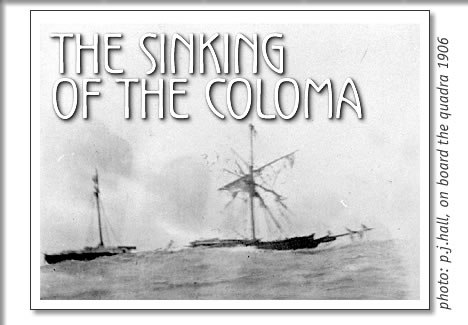
After four hours, she reached a home along the trail and with a friend, launched a rowboat to go on to Bamfield. The two women notified the anchored ship Quadra, which set out immediately for Cape Beale. Within an hour, the Quadra had reached the Coloma which was taking on water fast, and drifting close to the rocks on shore.
Minnie walked the long way back home that night, clothing tattered, muscles cramping, exhausted and chilled. Her breasts overflowing, she gratefully fed her baby, unaware for days that her efforts rescued the crew of the Coloma. Tragically, her health compromised, she died in 1911 of tuberculosis, forever a heroine to remember.
This is a story Dan and I were told while staying in Bamfield on our honeymoon over thirty years ago. On a bright September day we walked the trail to the Cape Beale lighthouse, a most challenging and beautiful part of the world. The trail was so difficult, I was sure I was not going to make it to the lighthouse and back, so how Minnie managed in a December storm, in the dark, is beyond imagining. Her bravery captured me and I honor her sacrifice with this rendering of her story. EPG
Big Foot, a great Chief of the Sioux often said,
“I will stand in peace till my last day comes.”
He did many good and brave deeds for the white man and the red man.
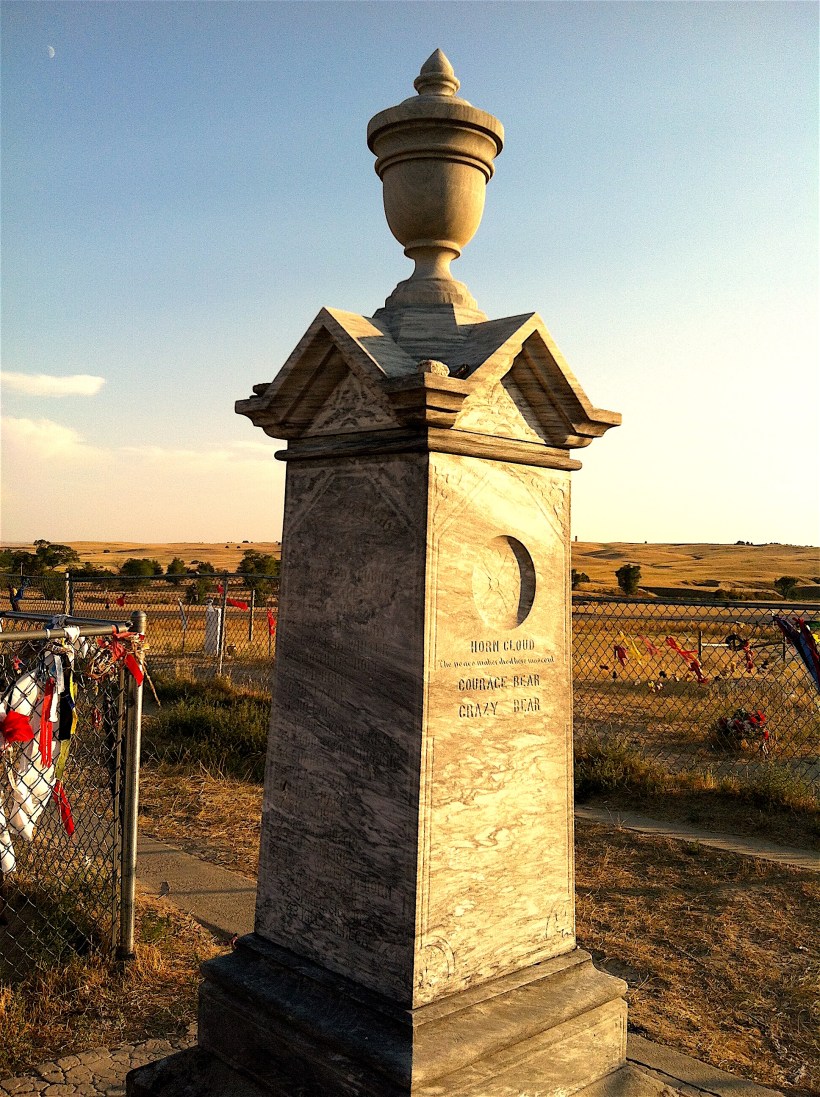
Many innocent women and children who knew no wrong died here.
~Inscription on the Wounded Knee Monument
“the nation’s hoop is broken and scattered.
There is no center any longer, and the sacred tree is dead.”
~Black Elk, (wounded trying to rescue his people after the Wounded Knee Massacre) from Black Elk Speaks
“Today is the anniversary of the massacre at Wounded Knee, which took place in South Dakota in 1890. Twenty-three years earlier, the local tribes had signed a treaty with the United States government that guaranteed them the rights to the land around the Black Hills, which was sacred land. The treaty said that not only could no one move there, but they couldn’t even travel through without the consent of the Indians.
But in the 1870s, gold was discovered in the Black Hills, and the treaty was broken. People from the Sioux tribe were forced onto a reservation, with a promise of more food and supplies, which never came. Then in 1889, a native prophet named Wovoka, from the Paiute tribe in Nevada, had a vision of a ceremony that would renew the earth, return the buffalo, and cause the white men to leave and return the land that belonged to the Indians. This ceremony was called the Ghost Dance. People traveled across the plains to hear Wovoka speak, including emissaries from the Sioux tribe, and they brought back his teachings. The Ghost Dance, performed in special brightly colored shirts, spread through the villages on the Sioux reservation, and it scared the white Indian agents. They considered the ceremony a battle cry, dangerous and antagonistic. So one of them wired Washington to say that he was afraid and wanted to arrest the leaders, and he was given permission to arrest Chief Sitting Bull, who was killed in the attempt. The next on the wanted list was Sitting Bull’s half-brother, Chief Big Foot. Some members of Sitting Bull’s tribe made their way to Big Foot, and when he found out what had happened, he decided to lead them along with the rest of his people to Pine Ridge Reservation for protection. But it was winter, 40 degrees below zero, and he contracted pneumonia on the way.
Big Foot was sick, he was flying a white flag, and he was a peaceful man. He was one of the leaders who had actually renounced the Ghost Dance. But the Army didn’t make distinctions. They intercepted Big Foot’s band and ordered them into the camp on the banks of the Wounded Knee Creek. Big Foot went peacefully.
The next morning federal soldiers began confiscating their weapons, and a scuffle broke out between a soldier and an Indian. The federal soldiers opened fire, killing almost 300 men, women, and children, including Big Foot. Even though it wasn’t really a battle, the massacre at Wounded Knee is considered the end of the Indian Wars, a blanket term to refer to the fighting between the Native Americans and the federal government, which had lasted 350 years.
One of the people wounded but not killed during the massacre was the famous medicine man Black Elk, author of Black Elk Speaks (1932). Speaking about Wounded Knee, he said: ‘I did not know then how much was ended. When I look back now from this high hill of my old age, I can still see the butchered women and children lying heaped and scattered all along the crooked gulch as plain as when I saw them with eyes still young. And I can see that something else died there in the bloody mud, and was buried in the blizzard. A people’s dream died there. It was a beautiful dream.'”
~Garrison Keillor from A Writers’ Almanac
Like most twentieth century American children, I grew up with a sanitized understanding of American and Native history. I had only a superficial knowledge of what happened at Wounded Knee, a low hill that rises above a creek bed on the South Dakota Pine Ridge Reservation, gleaned primarily from the 71 day symbolic standoff in 1973 between members of the Oglala Sioux and the American Indian Movement and the FBI, resulting in several shooting deaths.
Three years ago, when our son was teaching math at Little Wound High School on the Pine Ridge Reservation, we visited the site of this last major battle between the white man and Native people, which broke the spirit of the tribes’ striving to maintain their nomadic life as free people. This brutal massacre of over 150 Lakota men, women and children by the Seventh Regiment of the U.S. Army Cavalry took place in December 1890.
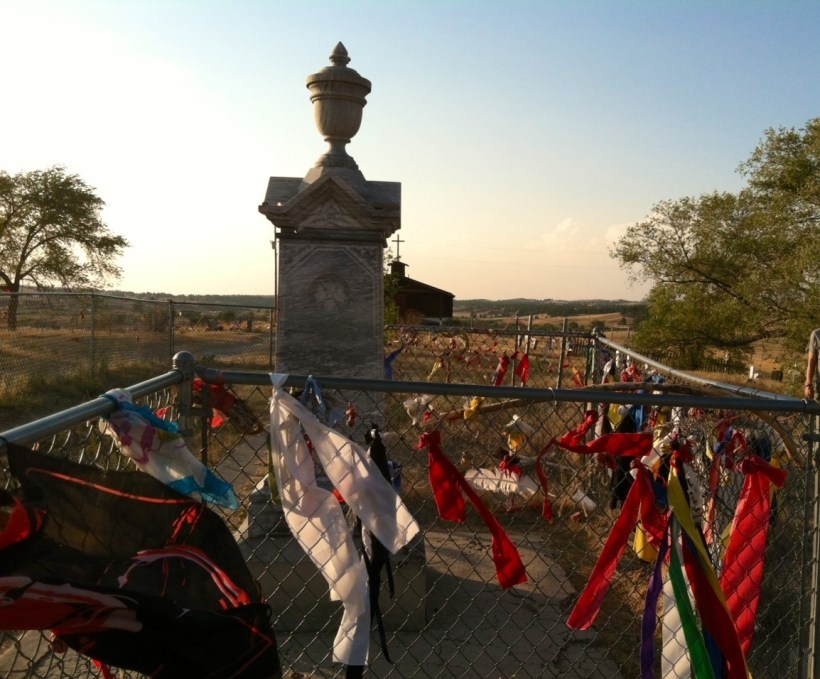
The dead lay where they fell for four days due to a severe blizzard. When the frozen corpses were finally gathered up by the Army, a deep mass grave was dug at the top of the hill, the bodies buried stacked one on top of another. The massive grave is now marked by a humble memorial monument surrounded by a chain link fence, adjacent to a small church, circled by more recent Lakota gravesites.
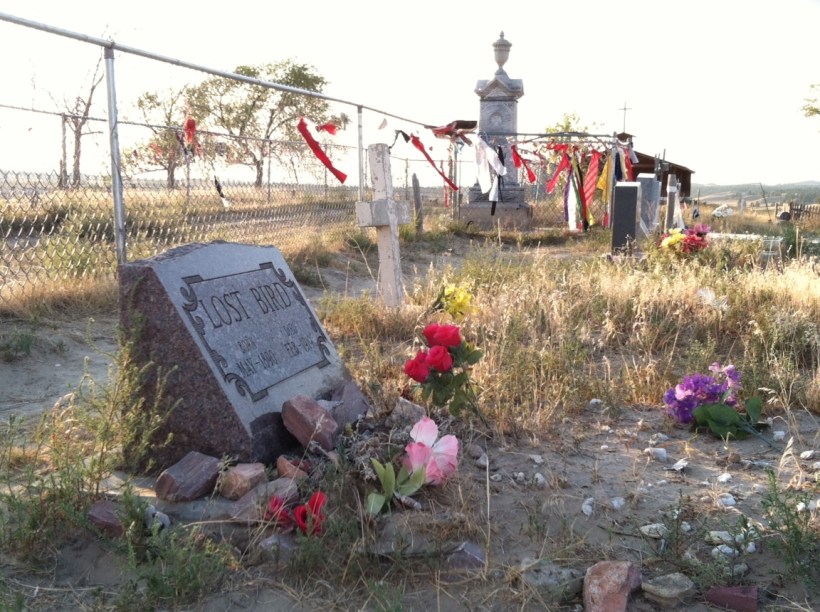
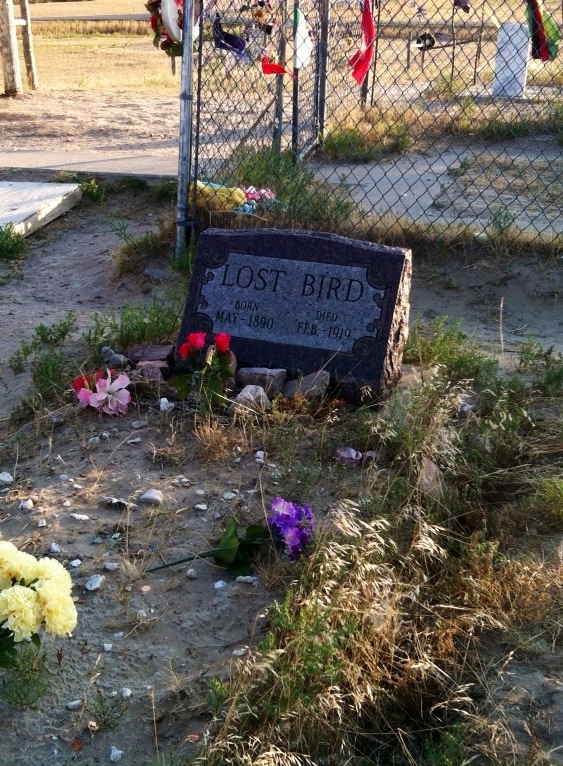
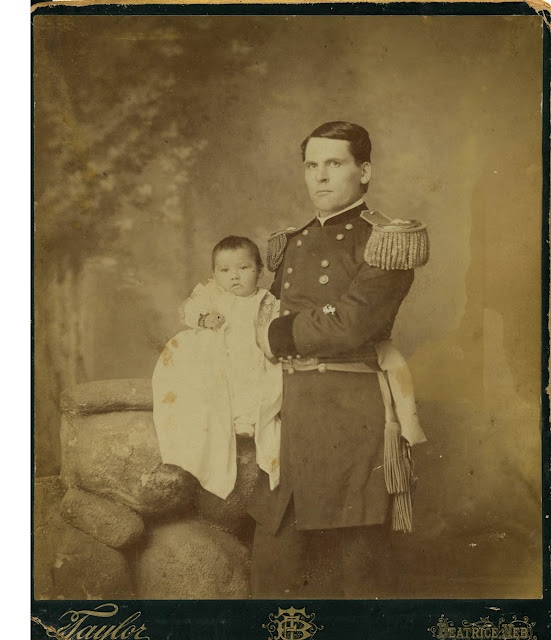
Four infants survived the four days of blizzard conditions wrapped in their dead mothers’ robes. One baby girl, only a few months old, was named “Lost Bird” after the massacre, bartered for and adopted by an Army Colonel as an interesting Indian “relic.” Rather than this adoption giving her a new chance, she died at age 29, having endured much illness, prejudice in white society, as well as estrangement from her native community and culture. Her story has been told in a book by Renee Sansom Flood, who helped to locate and move her remains back to Wounded Knee, where in death she is now back with her people.
There is unspeakable desolation and sadness on that lonely hill of graves. It is a regrettable part of our history that descendants of immigrants to American soil need to understand: by coming to the “New World” for opportunity, or refuge from oppression elsewhere, we made refugees of the people already here.
As Black Elk wrote, the dreams of a great people have been scattered and lack a center.
We must never allow hope to be buried at Wounded Knee nor must we ever forget what it means to no longer be safe in one’s own homeland.
A voice is heard in Ramah, mourning and great weeping, Rachel weeping for her children and refusing to be comforted, because they are no more. Matthew 2:18 and Jeremiah 31:15
Jesus wept. John 11:35
“My soul is overwhelmed with sorrow to the point of death. Stay here and keep watch with me.” 39 Going a little farther, he fell with his face to the ground and prayed, “My Father, if it is possible, may this cup be taken from me. Yet not as I will, but as you will.” Matthew 26: 38-39
God could, had He pleased, have been incarnate in a man of iron nerves, the Stoic sort who lets no sigh escape him. Of His great humility He chose to be incarnate in a man of delicate sensibilities who wept at the grave of Lazarus and sweated blood in Gethsemane. Otherwise we should have missed the great lesson that it is by his will alone that a man is good or bad, and that feelings are not, in themselves, of any importance. We should also have missed the all-important help of knowing that He has faced all that the weakest of us face, has shared not only the strength of our nature but every weakness of it except sin. If He had been incarnate in a man of immense natural courage, that would have been for many of us almost the same as His not being incarnate at all. ― C.S. Lewis, The Collected Letters of C.S. Lewis
…as you sit beneath your beautifully decorated tree, eat the rich food of celebration, and laugh with your loved ones, you must not let yourself forget the horror and violence at the beginning and end of the Christmas story. The story begins with the horrible slaughter of children and ends with the violent murder of the Son of God. The slaughter depicts how much the earth needs grace. The murder is the moment when that grace is given.
Look into that manger representing a new life and see the One who came to die. Hear the angels’ celebratory song and remember that sad death would be the only way that peace would be given. Look at your tree and remember another tree – one not decorated with shining ornaments, but stained with the blood of God.
As you celebrate, remember that the pathway to your celebration was the death of the One you celebrate, and be thankful. ~Paul Tripp
Written for too many innocents who have died this year at the hands of others…
There can be no consolation;
only mourning and great weeping,
sobbing that wrings dry
every human cell,
leaving dust behind,
dust, only dust
which is beginning
and end.
He came to us
for times such as this,
born of
the dust of woman and
the breath of Spirit,
God who bent down to
lie in barn dust,
walk on roads of dust,
die and be laid to rest as dust
in order to conquer
such evil as this
that could terrify masses
and massacre innocents.
He became dust to be
like us
He began a mere speck in a womb
like us,
so easily washed away
as unexpected, unneeded, unwanted.
Lord, You are long expected.
You are needed
You are wanted.
Your heart beat
like ours
breathing each breath
like ours
until a fearful fallen world
took Your
and our breath
away.
You shine through
the shadows of death
to guide our stumbling uncertain feet.
Your tender mercies flow freely
when there is no consolation
when there is no comfort.
You hear our cries
as You cry too.
You know our tears
as You weep too.
You know our mourning
as You mourned too.
You know our dying
as You died too.
God weeps
as tragedy happens.
Evil comes not from God
yet humankind embraces it.
Sin is a choice
we made from the beginning,
a choice we continue to make.
Only God can glue together
what evil has shattered.
He just asks us to hand Him
the pieces of our broken hearts.
We will know His peace
when He comes
to bring us home,
our tears will finally be dried,
our cells no longer
just dust,
never only dust
as we are glued together
by the breath of God
forevermore.
~EPG
the tender mercy of our God, by which the rising sun will come to us from heaven to shine on those living in darkness and in the shadow of death, to guide our feet into the path of peace. Luke 1: 78-79
Lully, lulla, thou little tiny child,
By by, lully, lullay.
1. O sisters too,
How may we do,
For to preserve this day?
This poor Youngling
For Whom we sing
By by, lully, lullay?
2. Herod the king,
In his raging,
Chargèd he hath this day
His men of might,
In his own sight,
All young children to slay.
3. That woe is me,
Poor Child for Thee!
And ever morn and may,
For thy parting
Neither say nor sing,
By, by, lully, lullay.
Lully, lullay, thou little tiny Child,
By by, lully, lullay.
Good people all, this Christmas time
Consider well and bear in mind
What our good God for us has done
In sending His beloved Son
With Mary holy we should pray
To God with love this Christmas day
In Bethlehem upon that morn’
There was a blessed Messiah born
Near Bethlehem did shepherds keep
Their flocks of lambs and feeding sheep
To whom God’s angels did appear
Which put the shepherds in great fear
“Arise and go”, the angels said
“To Bethlehem, be not afraid
For there you’ll find this happy morn’
A princely Babe, sweet Jesus born”
With thankful heart and joyful mind
The shepherds went that Babe to find
And as God’s angel had foretold
They did our Savior Christ behold
Within a manger He was laid
And by his side the Virgin maid
As long foretold upon that morn’
There was a blessed Messiah born
What wondrous love is this, O my soul, O my soul!
What wondrous love is this, O my soul!
What wondrous love is this
That caused the Lord of bliss
To bear the dreadful curse for my soul, for my soul,
To bear the dreadful curse for my soul!
When I was sinking down, sinking down, sinking down,
When I was sinking down, sinking down,
When I was sinking down
Beneath God’s righteous frown,
Christ laid aside His crown for my soul for my soul,
Christ laid aside His crown for my soul.
To God and to the Lamb I will sing, I will sing;
To God and to the Lamb I will sing;
To God and to the Lamb,
Who is the great I AM,
While millions join the theme, I will sing, I will sing,
While millions join the theme, I will sing.
And when from death I’m free, I’ll sing on, I’ll sing on;
And when from death I’m free, I’ll sing on.
And when from death I’m free
I’ll sing His love for me,
And through eternity I’ll sing on, I’ll sing on,
And through eternity I’ll sing on.
I’ll tell you a secret: poems hide. In the bottoms of our shoes, they are sleeping. They are the shadows drifting across our ceilings the moment before we wake up. What we have to do is live in a way that lets us find them. — Naomi Shihab Nye
Poems were hidden from me for decades. I was oblivious a hundred times a day to their secrets: dripping right over me in the shower, rising over hills bright pink, tucked under a toadstool, breathing deeply as I auscultated a chest, unfolding with each blossom, settling heavily on my eyelids at night.
The day I awoke to them was the day thousands of innocents died in sudden cataclysm of airplanes and buildings and fire — people not knowing when they got up that day it would be their last. And such taking of life happens again and again; our world weeps.
Suddenly poems show themselves. I begin to see, listen, touch, smell, taste as if each day would be my last.
I have learned to live in a way that lets me see through the hiddenness and now it overwhelms me. Poems are everywhere when I look.
And I don’t know if I have enough time left to write them all down.
The world is indeed full of peril and in it there are many dark places. But still there is much that is fair. And though in all lands, love is now mingled with grief, it still grows, perhaps, the greater. — J. R. R. Tolkien
We forget that God is right there, waiting for us to turn to him, no matter how dire our situation. We forget the reassuring words of his messengers: “Fear not.” God always seeks to draw close to us — even in the depths of hell.
…it comes down to this: the only way to truly overcome our fear of death is to live life in such a way that its meaning cannot be taken away by death. It means fighting the impulse to live for ourselves, instead of for others. It means choosing generosity over greed. It also means living humbly, rather than seeking influence and power. Finally, it means being ready to die again and again — to ourselves, and to every self-serving opinion or agenda. ~Johann Christoph Arnold
We watch once again as unspeakable terror strikes down people so much like ourselves — those who are living ordinary lives, doing routine things. Tears never need translation, no matter what foreign or local neighborhood soil is soaked with the blood of innocents.
Evil exists, visits our world daily and yesterday settled like a shroud over Paris. As we learned after the airplanes-as-weapons tragedies of 9/11, massive expense, military action and legislation can barely keep evil-doers at bay and tend to even encourage them. No place on this earth can ever be truly secure through the efforts of mere man. After all, we too are fallen, and those who do evil can look so much like ourselves.
So we must fall back on what we were told long ago and each and every day in 365 different verses in the Word itself: fear not.
Do not be overwhelmed with evil but overcome evil with good.
The goal of this life is to live for others, to live in such a way that death cannot erase the meaning and significance of a life. We are called to give up our selfish agendas in order to consider the needs of the other guy and the greater good. Cherish life, all lives, including, as is crystal clear from Christ’s example, those who hate and want to murder us.
Our only defense against evil is God’s offense; only He will lead us to Tolkien’s “where everything sad will come untrue”, where tears are no longer translated as sorrow, but can only be understood as tears of joy.
Let my prayer arise~ Lord I have cried to Thee, hearken unto Thee. Incline not my heart to evil words.
It is not enough to offer a silent thank you, looking down at dark mums and the garden’s final offerings of autumn—late-planted greens, their small leaves fragile and pale. And bright orange peppers, the odd liveliness of their color signaling an end. It is not enough to welcome God into every small fold of the day’s passing. To call upon some unknown force to let the meat be fresh, the house not burn, the evening to find us all here again. Yet, we are here again. And we have witnessed the miracle of nothing. A slight turning of empty time, bare of grief and illness and pain. We have lived nondescript this season, this day, these sixty-minutes. But it is not enough. To bow our heads in silence. To close our eyes and see in each moment of each second the uneventful wonder of none. ~Pamela Steed Hill “The Miracle of Nothing”
As I ponder the tragic commonness of a loved one lost
in the midst of a routine day:
in a classroom
in a church
in a crosswalkon a downed airplane
or sinking boat
taken suddenly without goodbyes,
I realize the miracle of a day of nothing much happening
makes it very special indeed.
God dwells in the folds of our existence;
we dare to risk its unfolding
to set Him free.










 Barnstorming