This Need To Kneel

roseleafrain

I know this happiness
is provisional:

the looming presences –
great suffering, great fear –

withdraw only
into peripheral vision:

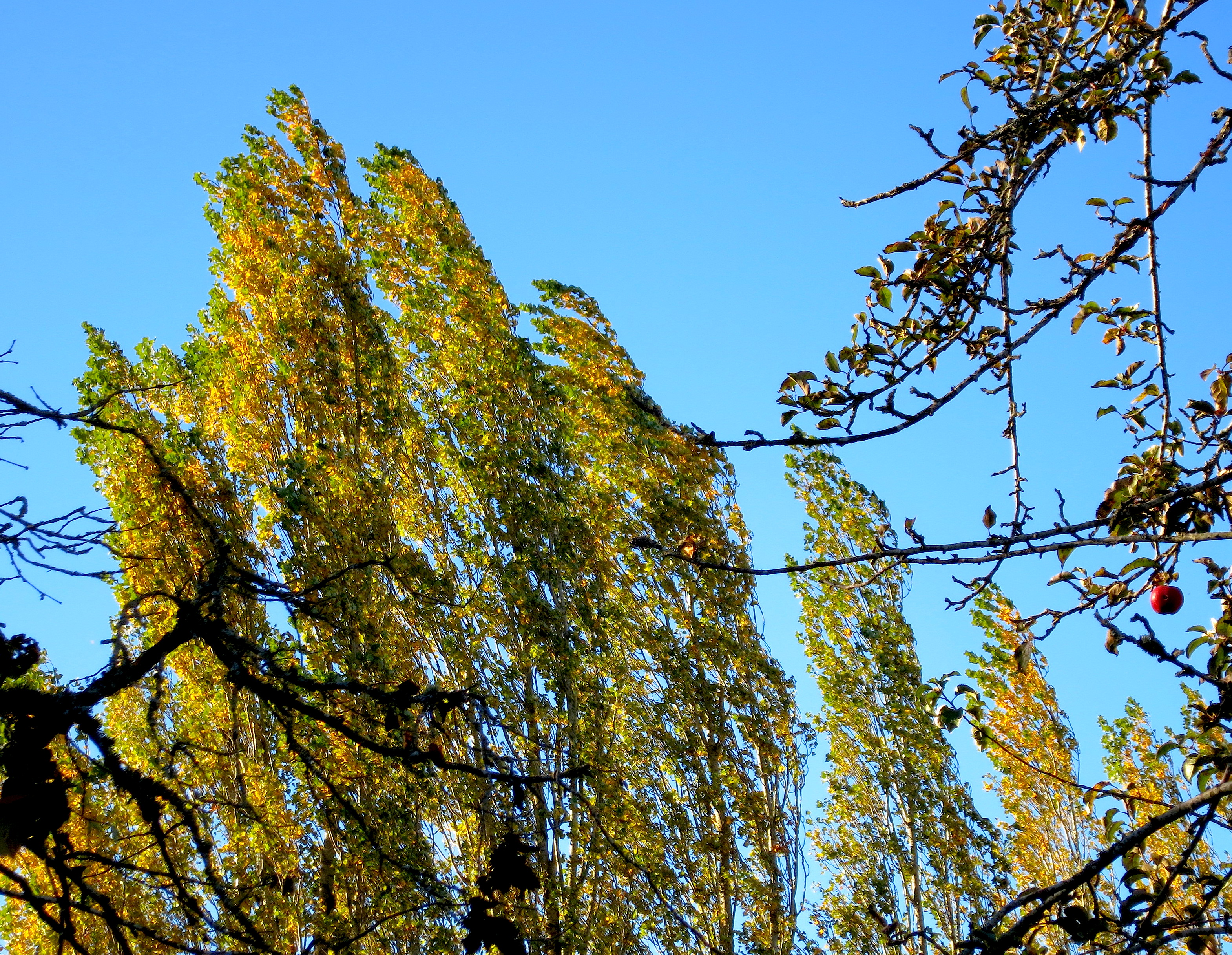
but ineluctable this shimmering
of wind in the blue leaves:

this flood of stillness
widening the lake of sky:

this need to dance,
this need to kneel:

this mystery…
~Denise Levertov “Of Being”

bluestskies

poplarwind

Here is the mystery, the secret, one might almost say the cunning, of the deep love of God: that it is bound to draw upon itself the hatred and pain and shame and anger and bitterness and rejection of the world, but to draw all those things on to itself is precisely the means chosen from all eternity by the generous, loving God, by which to rid his world of the evils which have resulted from human abuse of God-given freedom.
~N.T.Wright

tomatoshine

Inundated by the overwhelmingly bad news of the world,
blasted 24/7 from cable TV,
highlighted in rapidly changing headlines online,
and tweeted real time from every nook and cranny,
we must cling to the mystery
of His magnetism for our weaknesses and flaws.
He willingly pulls our evil out of us
and onto Himself.

Hatred and pain,
shame and anger,
our bitterness disappears
into the vortex of His love and beauty,
the dusty corners of our hearts vacuumed spotless.

We are let in on this secret:
He is not sullied by absorbing the dirty messes of our lives.
Instead, as we kneel forgiven,
He washes us forever clean.

cloversept

rainykale4


A Healthy Fence Row

morning528151

mistyfence

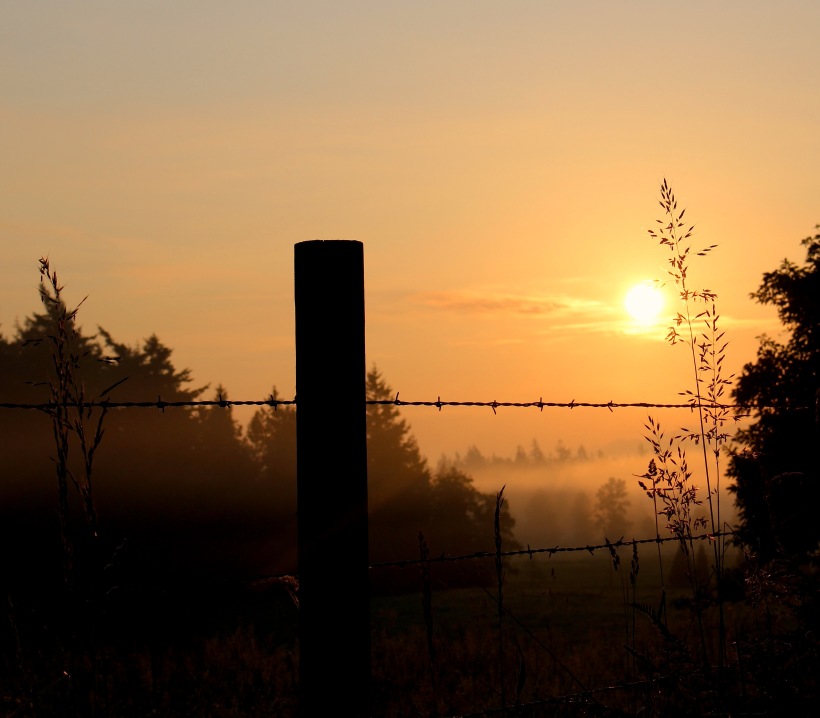
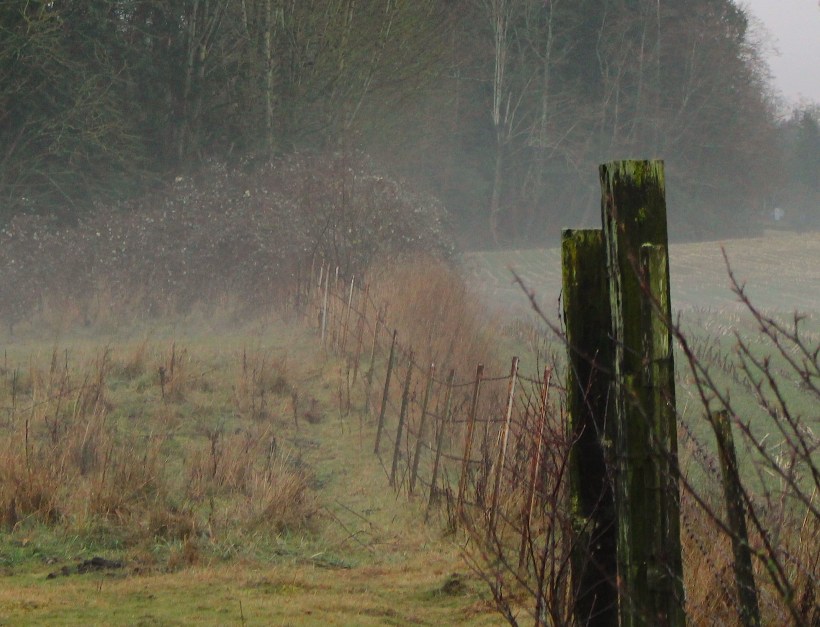
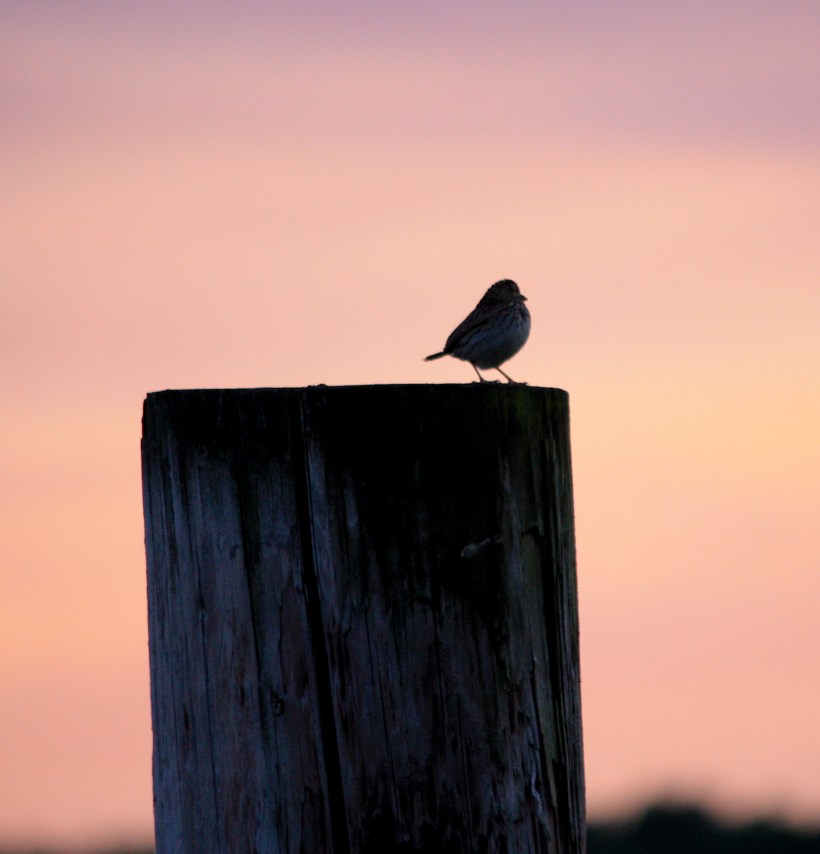
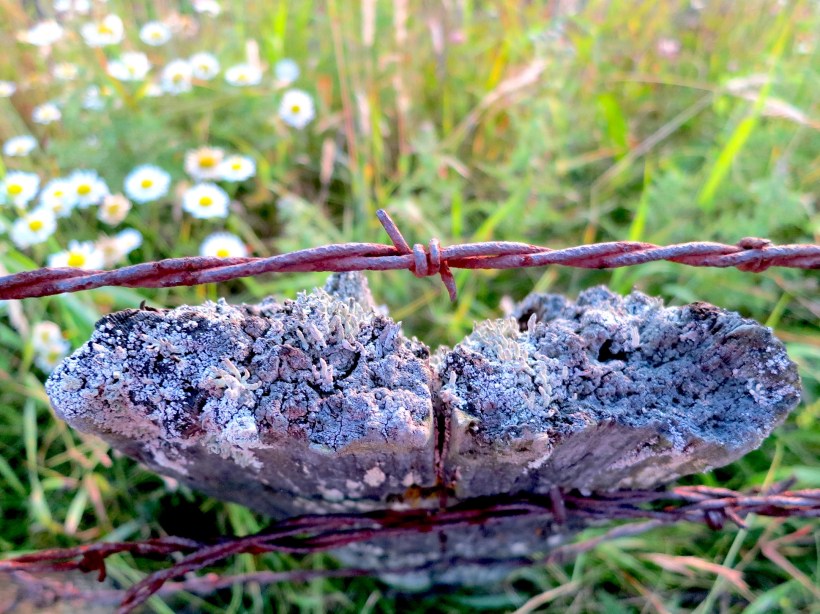
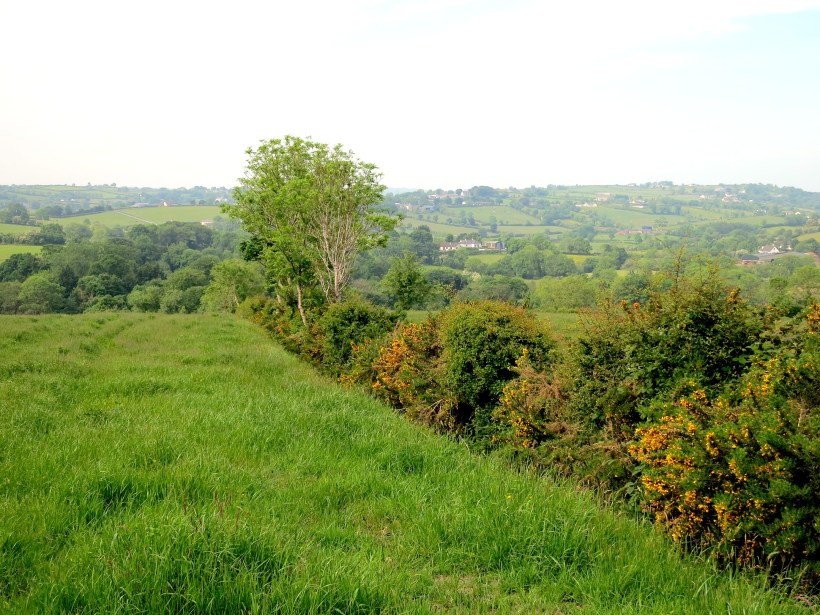
Brushy fencerows are in a sense a gift from man to nature — at least if, after the posts are dug in and the fence stapled to the posts, nature is given some free reign. Birds sitting on the fence and posts will pass undigested seeds in their droppings. Some of these seeds of blackberry, wild cherry, elderberry, bittersweet, sassafras, mulberry, and unfortunately, in some areas, multiflora rose, will take root in the loose soil around the posts and later in soil dug up by woodchucks. Chipmunks scurrying along the fence will bring and bury acorns and hickory nuts, while the wind will deliver dandelion, milkweed, and thistle seeds — all ingredients for a healthy fencerow.
~David Kline from Great Possessions

fence

Before I built a wall I’d ask to know
What I was walling in or walling out,
And to whom I was like to give offence.

He will not go behind his father’s saying,
And he likes having thought of it so well
He says again, “Good fences make good neighbors.”
~Robert Frost from “Mending Fences”

fencepostssunset32

birdonpostrodenberger
photo by Harry Rodenberger


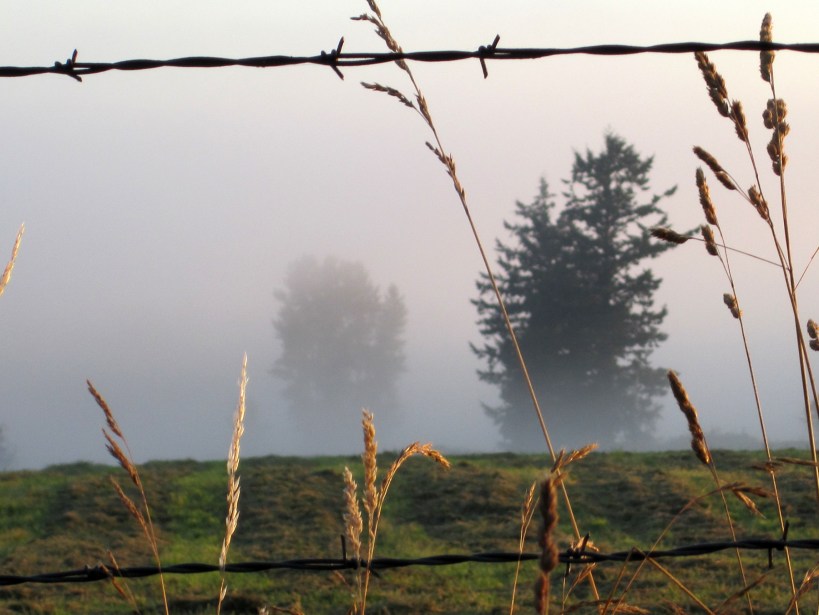
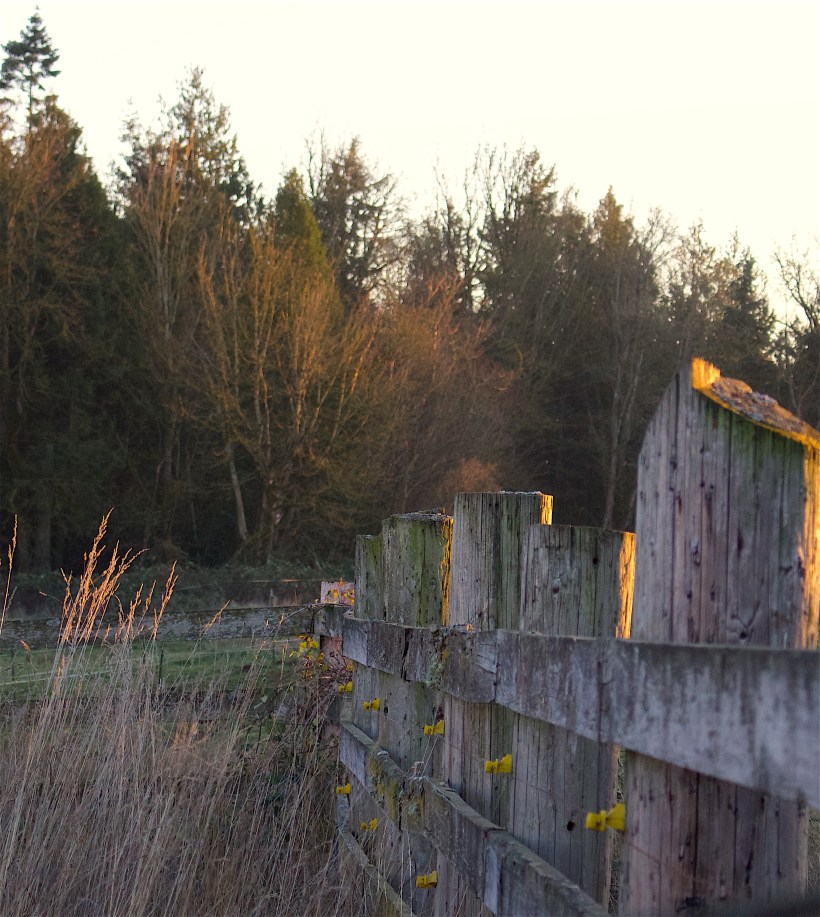
I maintain, in my haphazard and often ineffectual way, our farm’s wood rail and hot wire fences to keep the horses confined, preventing them from wandering into the adjacent orchard, corn field, or most risky of all, the road. As utilitarian as a fence is for that purpose, the fence row itself is the hospitality center for all sorts of diversity of flora and fauna.  It doesn’t repel; it invites.

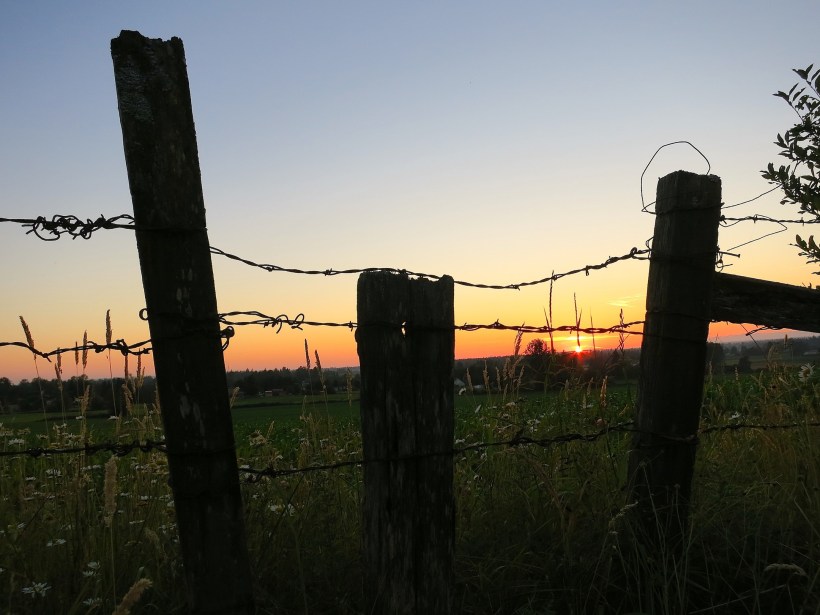
As one travels in the United Kingdom and across the plains and mountains of North America, old fences are everywhere. Some fences were built painstakingly of stone centuries ago, some of old barbed wire, now falling and decrepit, no longer effective, but still testimony to a determined farmer’s desire to section off his barren land from another’s barren land, or perhaps the requirement borne of the homesteading laws of the time. Robert Frost wrote in his poem “Mending Fences” that a fence spans the balance between man’s sometimes irrational desire for barriers, acknowledging the order that they bring to an uncertain and sometimes unpredictable world that lays beyond our walls.

Political fences continue to exist in many parts of the world today, created primarily out of fear. Indeed, new walls have been proposed, absurdly ridiculous in their scope and expense.  Much celebration accompanied the fall of the Berlin Wall after its years of imposing testimony to the lack of trust and understanding between people who were once relatives, neighbors and friends. The Great Wall of China still stands, now primarily tourist attraction, no longer serving any other useful purpose other than to illustrate the lengths to which man goes to barricade himself off from others.

So why maintain life’s fences, even if the building and maintaining of these fences seems a futile and foolish task when they are pushed down, blown over in the winds, with trees fallen over them, and overgrown with brush and wild blackberries?

Fences, like rules and laws, define order and structure. They can bite back if they are breached. If crashed and broken, they are hazardous in and of themselves, not withstanding the potential dangers that lay beyond them. Remove them altogether and we risk losing the diversity represented in the fence row itself.

So, in the best of times, we are mending walls out of continuing need for contact with our neighbors. We meet across the barriers to shake hands and visit while we repair the fences together, leaving the barriers standing and strong, and the space in the fence row becomes even more diverse and welcoming. In the worst of times, we fortify and hide behind the walls, making them taller, wider, deeper, creating greater and greater gulfs between us and eventually losing touch forever as the walls themselves deteriorate without the necessary mutual “mending”.

So we must not love walls themselves, but must maintain them with our neighbor. We don’t worship the walls themselves but instead respect the foundation they rest on and the life they protect within the row itself.

We accept such boundaries with humility, recognizing their necessity is due to our own imperfections, as we too are full of prickles and barbs that too easily draw blood when breached.

oldfence

moydalganfield5

sunsetfence

sunsetfence

Crossing the Threshold

hayfield

earsgrass

John O’Donohue gave voice to the connection between beauty and those edges of life—
thresholds was the word he loved—
where the fullness of reality becomes more stark and more clear.

If you go back to the etymology of the word “threshold,” it comes from “threshing,” which is to separate the grain from the husk. So the threshold, in a way, is a place where you move into more critical and challenging and worthy fullness.

There are huge thresholds in every life.

You know that, for instance, if you are in the middle of your life in a busy evening, fifty things to do and you get a phone call that somebody you love is suddenly dying, it takes ten seconds to communicate that information.

But when you put the phone down, you are already standing in a different world. Suddenly everything that seems so important before is all gone and now you are thinking of this.

So the given world that we think is there and the solid ground we are on is so tentative.
And a threshold is a line which separates two territories of spirit, and very often how we cross is the key thing.

When we cross a new threshold worthily, what we do is we heal the patterns of repetition
that were in us that had us caught somewhere.

~John O’Donohue from an “On Being” interview with Krista Tippett on “Becoming Wise”

clouds7816

I emerge from the mind’s
cave into the worse darkness
outside, where things pass and
the Lord is in none of them.
I have heard the still, small voice
and it was that of the bacteria
demolishing my cosmos. I
have lingered too long on
this threshold, but where can I go?
To look back is to lose the soul
I was leading upwards towards
the light. To look forward? Ah,
what balance is needed at
the edges of such an abyss.
I am alone on the surface
of a turning planet. What
to do but, like Michelangelo’s
Adam, put my hand
out into unknown space,
hoping for the reciprocating touch?
~R.S. Thomas “Threshold”

fullmoon61916


These past few months of mass shootings, tragic deaths and never-ending conflict have forced us all to a threshold needing to be crossed. Yet we stand stubborn, immobilized, frozen and dying on the spot, peering out in fear but never peering inward for self-examination.

Instead of submitting to the crushing winnowing that must happen to blow away the chaff of our lives, to get down to the kernel of truth that sustains us, we cling to the old and familiar. It is we who have delivered ourselves a non-choice between two deeply flawed individuals for president. They represent what evils we tolerate as a people: celebrating entitlements, tolerating their legal, moral and financial shenanigans simply because they are rich and famous.

Unwilling to change attitude or perspective, reluctant to move forward into largely uncharted territory, mired in a tribalism only skin deep, we wonder why history repeats itself, why we are dying every day, by our own hand or by others’.

How to cross worthily? How to cross together, arm in arm, united in the need to move forward beyond this mess we have made for ourselves?

We need a good threshing, badly. We need to be worthy. We need to reach out our hands into the unknown that lies ahead, hoping and praying Someone is there to grab hold and lead us across to a better day.


thimbleweb

Plunged into the Dark Abyss

salpiglossis

The ultimate weakness of violence is that it is a descending spiral
begetting the very thing it seeks to destroy.
Instead of diminishing evil, it multiplies it.
Through violence you may murder the liar,
but you cannot murder the lie, nor establish the truth.
Through violence you may murder the hater,
but you do not murder hate.
In fact, violence merely increases hate.
So it goes.
Returning violence for violence multiplies violence,
adding deeper darkness to a night already devoid of stars.
Darkness cannot drive out darkness:
only light can do that.
Hate cannot drive out hate: only love can do that.
Hate multiplies hate,
violence multiplies violence,
and toughness multiplies toughness
in a descending spiral of destruction….
The chain reaction of evil —
hate begetting hate,
wars producing more wars —
must be broken,
or we shall be plunged
into the dark abyss of annihilation.
~
Dr. Martin Luther King, Jr. from Strength to Love

salpiglossis3

The world is indeed full of peril and in it there are many dark places.
But still there is much that is fair. And though in all lands, love is now
mingled with grief, it still grows, perhaps, the greater.
— J. R. R. Tolkien

rainyrose

We forget that God is right there, waiting for us to turn to him, no matter how dire our situation.  We forget the reassuring words of his messengers: “Fear not.”   God always seeks to draw close to us — even in the depths of hell.
…it comes down to this: the only way to truly overcome our fear of death is to live life in such a way that its meaning cannot be taken away by death.  It means fighting the impulse to live for ourselves, instead of for others.  It means choosing generosity over greed.  It also means living humbly, rather than seeking influence and power.  Finally, it means being ready to die again and again — to ourselves, and to every self-serving opinion or agenda.

~Johann Christoph Arnold

hydrangearainyblu

This week, bullets have been fired out of fear and anger by, and have struck down, people who look and are just like us.  Shed tears never need translation or interpretation, no matter what color cheeks they moisten.

Distrust and fear continue to impact our communities daily, settling like a shroud over the most routine activities.  So we must fall back on what we were told long ago and each and every day in 365 different verses in the Word itself: fear not.

Do not be overwhelmed with evil but overcome evil with good.

The goal of this life is to live for others, to live in such a way that death cannot erase the meaning and significance of a life.  We are called to give up our selfish agendas in order to consider the dignity of others and their greater good.

Cherish life, all lives, including, as is crystal clear from Christ’s example,  those who are so fearful, they hate and want to murder us.

Our only defense against evil is God’s offense; only He will lead us to Tolkien’s “where everything sad will come untrue”, where tears are no longer shed in sorrow,  but can only be tears of joy.

dewypetunia

A Hard Time

fidalgobeach2

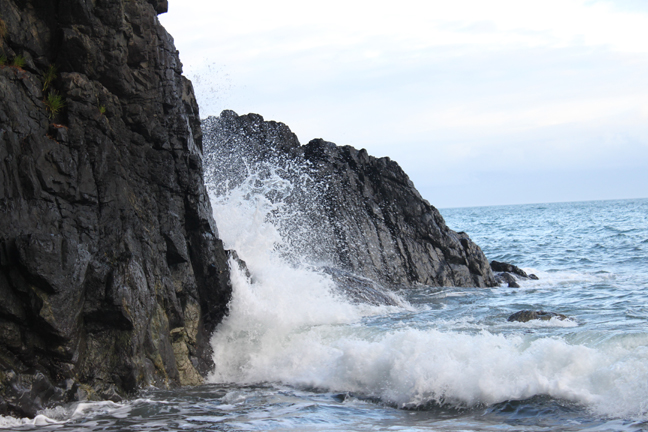
Wavecrash2
photo by Nate Gibson

It’s a hard time to be human. We know too much
and too little. Does the breeze need us?
The cliffs? The gulls?
If you’ve managed to do one good thing,
the ocean doesn’t care.
But when Newton’s apple fell toward the earth,
the earth, ever so slightly, fell
toward the apple as well.
~Ellen Bass from “The World Has Need of You”

20120726-212655

God speaks to each of us as he makes us,
then walks with us silently out of the night.

These are the words we dimly hear:

You, sent out beyond your recall,
go to the limits of your longing.
Embody me.

Flare up like a flame
and make big shadows I can move in.

Let everything happen to you: beauty and terror.
Just keep going.  No feeling is final.
Don’t let yourself lose me.

Nearby is the country they call life.
You will know it by its seriousness.

Give me your hand.
~Rainer Maria Rilke from “Book of Hours”

applehole

For too much of my life I have focused on the future, bypassing the present.  There is always a goal to achieve,  a conclusion becoming commencement of the next phase, a sunset turning right around in a few hours to become sunrise.

When the present is so hard, so overwhelming, so riveting, so tenderly full of life or achingly full of death, I grab hold with all my strength to try and secret it away and keep it forever.   Even if it slips away from me, elusive and evasive, torn to bits by the unrelenting and devastating movement of time, I have felt the earth move, ever so slightly, toward me.

So, whether out of joy or pain, I must write to harvest those times to make them last a little bit longer.  Maybe not forever; they will be lost downstream into the ether of unread words.

Even if unread, I am learning that words, which had the power in the beginning to create all life, can bring tenderness and meaning back to my life.  I embody Him.

How blessed to live the gift twice: not just in the moment itself but in writing words that preserve and treasure it all up.

appledew2


When Sad Comes Untrue

weepingrose

Is everything sad going to come untrue? What’s happened to the world?
~J.R.R. Tolkien from The Return of the King

The world is indeed full of peril and in it there are many dark places. But still there is much that is fair. And though in all lands, love is now mingled with grief, it still grows, perhaps, the greater.
~J.R.R Tolkien from The Fellowship of the Ring

Yet again unspeakable terror strikes down ordinary people living their lives–once again our soil is soaked with the blood of our sons and daughters, our sisters and brothers.

In our minds, we want to rewind and replay the events of a tragedy in a way that would prevent it from happening in the first place.   We want to bring the dead and injured back to health again.  The major devastating earthquake becomes a mere tremor, the flooding tsunami is only one foot, not over thirty feet tall, the terrorist hijackers are prevented from ever boarding a plane, the shooter changes his mind at the last minute, lays down his arms and calls someone for help with his overwhelming distress and anger.

We want so badly for it all to be untrue.  The bitter reality of horrendous daily suffering and sadness all over the earth is too much for us to absorb.   We plead for relief, beg for a better day. What has happened to the world?

Our minds may play mental tricks like this, but God does not play tricks.  He knows and feels what we do.  He too wanted to see it rewound and replayed differently so He came to us to know our grief and sadness, to weep with us, to suffer for us, to die to end such evil.  And because of this, because of a God who came to dwell with us, was broken, died and then rose again whole and holy, we are assured, in His time, everything sad will come untrue.

Our tears will be dried, our grief turned to joy, our pain nonexistent, not even a memory.  It will be a new day, a better day when love is greater than anger, dissolving our grief – as it is written, trustworthy and true.

May that be a day when we can no longer overwhelmed with evil but we will overcome evil with good.

He will wipe away every tear from their eyes, and death shall be no more, neither shall there be mourning, nor crying, nor pain anymore, for the former things have passed away. And he who was seated on the throne said, “Behold, I am making all things new.” Also he said, “Write this down, for these words are trustworthy and true.
~Revelation 21: 4-5

drizzleweed2

A Dying Dream

20120826-121458.jpg

20120826-213501.jpg

Big Foot, a great Chief of the Sioux often said,
“I will stand in peace till my last day comes.”
He did many good and brave deeds for the white man and the red man.
Many innocent women and children who knew no wrong died here.
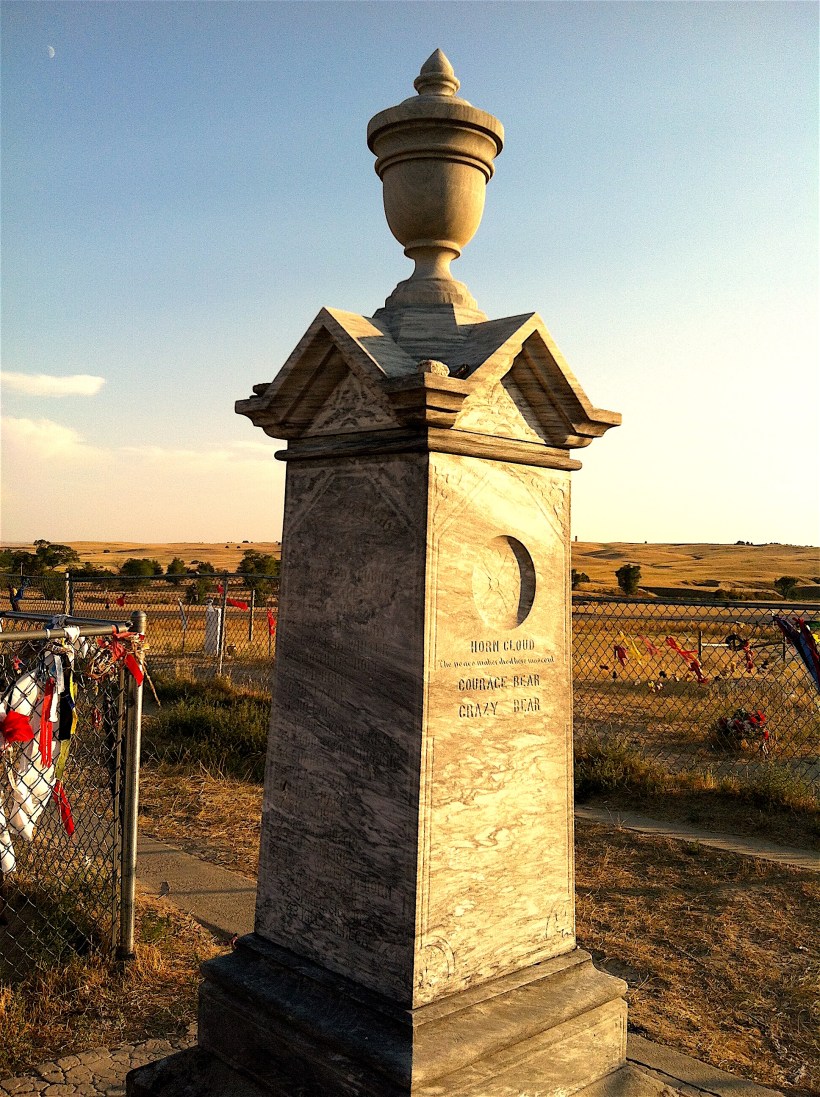
~Inscription on the Wounded Knee Monument

“the nation’s hoop is broken and scattered.
There is no center any longer, and the sacred tree is dead.”
~Black Elk, (wounded trying to rescue his people after the Wounded Knee Massacre)  from Black Elk Speaks
woundedknee

From today’s  Writers’ Almanac by Garrison Keillor:

“Today is the anniversary of the massacre at Wounded Knee, which took place in South Dakota in 1890. Twenty-three years earlier, the local tribes had signed a treaty with the United States government that guaranteed them the rights to the land around the Black Hills, which was sacred land. The treaty said that not only could no one move there, but they couldn’t even travel through without the consent of the Indians.

But in the 1870s, gold was discovered in the Black Hills, and the treaty was broken. People from the Sioux tribe were forced onto a reservation, with a promise of more food and supplies, which never came. Then in 1889, a native prophet named Wovoka, from the Paiute tribe in Nevada, had a vision of a ceremony that would renew the earth, return the buffalo, and cause the white men to leave and return the land that belonged to the Indians. This ceremony was called the Ghost Dance. People traveled across the plains to hear Wovoka speak, including emissaries from the Sioux tribe, and they brought back his teachings. The Ghost Dance, performed in special brightly colored shirts, spread through the villages on the Sioux reservation, and it scared the white Indian agents. They considered the ceremony a battle cry, dangerous and antagonistic. So one of them wired Washington to say that he was afraid and wanted to arrest the leaders, and he was given permission to arrest Chief Sitting Bull, who was killed in the attempt. The next on the wanted list was Sitting Bull’s half-brother, Chief Big Foot. Some members of Sitting Bull’s tribe made their way to Big Foot, and when he found out what had happened, he decided to lead them along with the rest of his people to Pine Ridge Reservation for protection. But it was winter, 40 degrees below zero, and he contracted pneumonia on the way.

Big Foot was sick, he was flying a white flag, and he was a peaceful man. He was one of the leaders who had actually renounced the Ghost Dance. But the Army didn’t make distinctions. They intercepted Big Foot’s band and ordered them into the camp on the banks of the Wounded Knee Creek. Big Foot went peacefully.

The next morning federal soldiers began confiscating their weapons, and a scuffle broke out between a soldier and an Indian. The federal soldiers opened fire, killing almost 300 men, women, and children, including Big Foot. Even though it wasn’t really a battle, the massacre at Wounded Knee is considered the end of the Indian Wars, a blanket term to refer to the fighting between the Native Americans and the federal government, which had lasted 350 years.

One of the people wounded but not killed during the massacre was the famous medicine man Black Elk, author of Black Elk Speaks (1932). Speaking about Wounded Knee, he said: ‘I did not know then how much was ended. When I look back now from this high hill of my old age, I can still see the butchered women and children lying heaped and scattered all along the crooked gulch as plain as when I saw them with eyes still young. And I can see that something else died there in the bloody mud, and was buried in the blizzard. A people’s dream died there. It was a beautiful dream.'”
~Garrison Keillor from A Writers’ Almanac
20120826-121437.jpg

Like most twentieth century American children, I grew up with a sanitized understanding of American and Native history.  I had only a superficial knowledge of what happened at Wounded Knee, a low hill that rises above a creek bed on the South Dakota Pine Ridge Reservation, gleaned primarily from the 71 day symbolic standoff in 1973 between members of the Oglala Sioux and the American Indian Movement and the FBI, resulting in several shooting deaths.

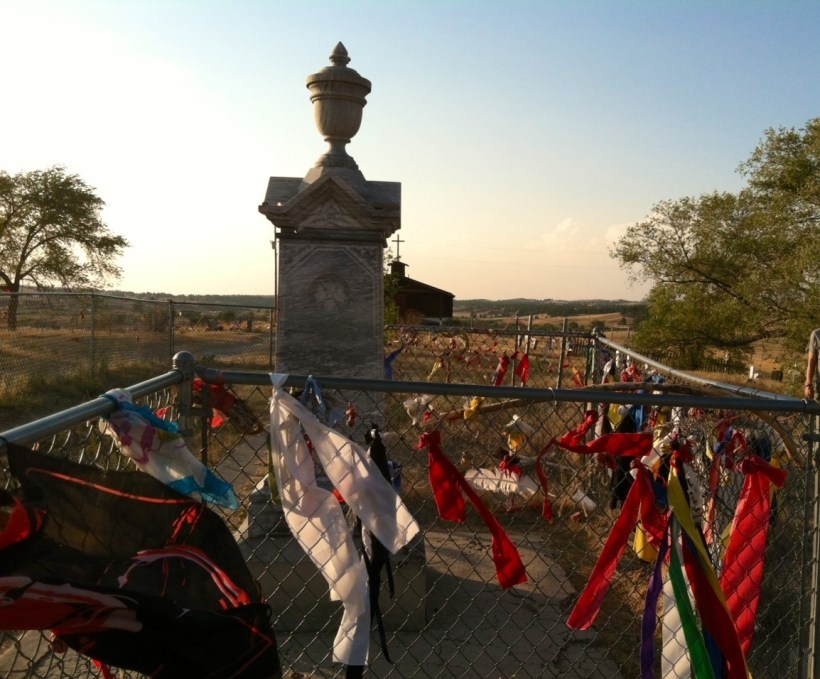
Three years ago, when our son was teaching math at Little Wound High School on the Pine Ridge Reservation, we visited the site of this last major battle between the white man and Native people, which broke the spirit of the tribes’ striving to maintain their nomadic life as free people. This brutal massacre of over 150 Lakota men, women and children by the Seventh Regiment of the U.S. Army Cavalry took place in December 1890.

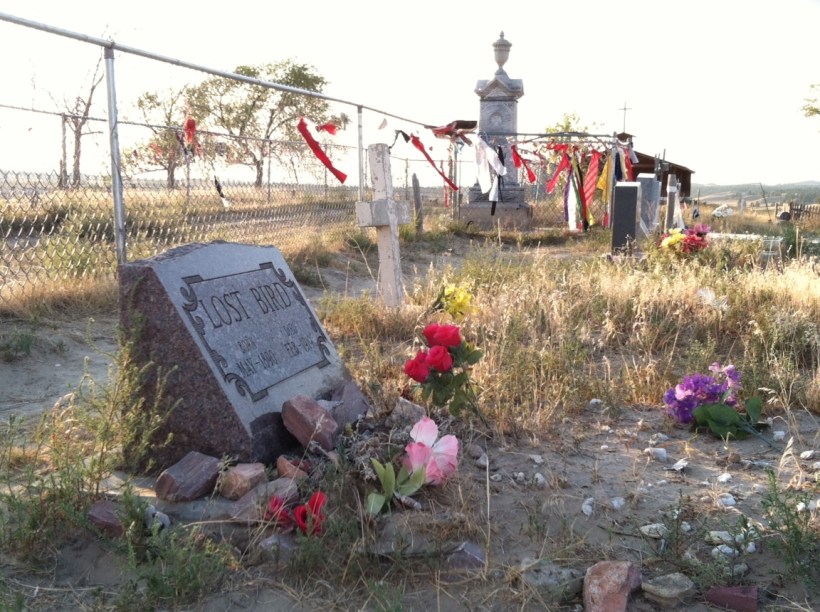
The dead lay where they fell for four days due to a severe blizzard. When the frozen corpses were finally gathered up by the Army, a deep mass grave was dug at the top of the hill, the bodies buried stacked one on top of another. The massive grave is now marked by a humble memorial monument surrounded by a chain link fence, adjacent to a small church, circled by more recent Lakota gravesites.

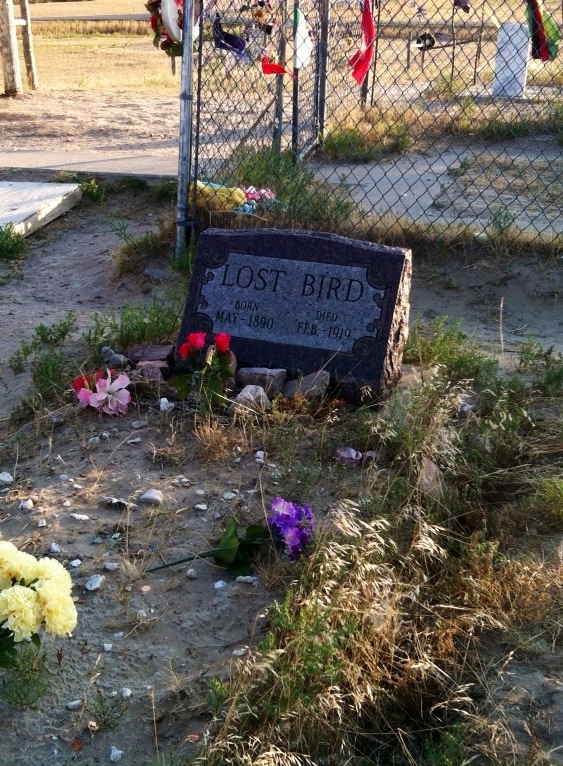
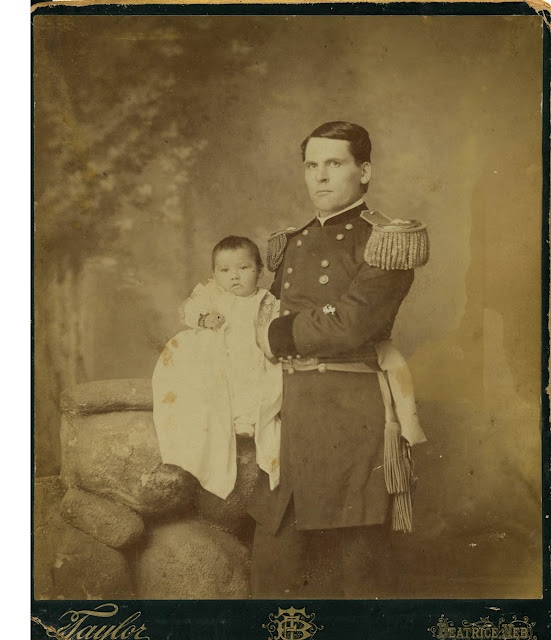
Four infants survived the four days of blizzard conditions wrapped in their dead mothers’ robes. One baby girl, only a few months old, was named “Lost Bird” after the massacre, bartered for and adopted by an Army Colonel as an interesting Indian “relic.” Rather than this adoption giving her a new chance, she died at age 29, having endured much illness, prejudice in white society, as well as estrangement from her native community and culture. Her story has been told in a book by Renee Sansom Flood, who helped to locate and move her remains back to Wounded Knee, where in death she is now back with her people.

There is unspeakable desolation and sadness on that lonely hill of graves. It is a regrettable part of our history that descendants of immigrants to American soil need to understand: by coming to the “New World” for opportunity, or refuge from oppression elsewhere, we made refugees of the people already here.

As Black Elk wrote, the dreams of a great people have been scattered and lack a center.

We must never allow hope to be buried at Wounded Knee nor must we ever forget what it means to no longer be safe in one’s own homeland.
 

20120826-121525.jpg

God Among Us: Waiting in Silence

evening112915


We have waited in silence
on your loving-kindness,
O God.
~Psalm 48:8

The Lord is in his holy temple;
    let all the earth be silent before him.
Habakkuk 2:20


Then hear now the silence
He comes in the silence
in silence he enters
the womb of the bearer
in silence he goes to
the realm of the shadows
redeeming and shriving
in silence he moves from
the grave cloths, the dark tomb
in silence he rises
ascends to the glory
leaving his promise
leaving his comfort
leaving his silence
So come now, Lord Jesus
Come in your silence
breaking our noising
laughter of panic
breaking this earth’s time
breaking us breaking us
quickly Lord Jesus
make no long tarrying
When will you come
and how will you come
and will we be ready
for silence
your silence
~Madeleine L’Engle “Ready for Silence”
 _________________________
In our weakness, we are so noisy.
We think strength
is in shouting and shooting.
Instead we broke you,
we break each other
and ourselves.
We have forgotten the power
of waiting in silence,
waiting for your silence,
so come now
clothed in our weakness,
to carry us home.
~EPG


A new Advent Hymn from Redeemer in New York City

O come, Desired of nations,
Whom priest and prophet long foretold,
Will break the captive fetters,
Redeem the long-lost fold.

O come in peace and meekness,
For lowly will your cradle be:
Though clothed in human weakness,
We shall your God-head see

O come, Divine Messiah,
The world in silence waits the day
When hope shall sing its triumph,
And sadness flee away.
~In Silence, Advent hymn from Redeemer Presbyterian, New York


How silently, how silently
The wondrous gift is given!
So God imparts to human hearts
The blessings of His heaven.
~from “O Little Town of Bethlehem”

overthehill

Hang on to Hope

staircase2


aleaf2

As long as there is one upright man, as long as there is one compassionate woman, the contagion may spread and the scene is not desolate. Hope is the thing that is left to us, in a bad time. I shall get up Sunday morning and wind the clock, as a contribution to order and steadfastness.

Sailors have an expression about the weather: they say, the weather is a great bluffer. I guess the same is true of our human society — things can look dark, then a break shows in the clouds, and all is changed, sometimes rather suddenly. It is quite obvious that the human race has made a queer mess of life on this planet. But as a people we probably harbor seeds of goodness that have lain for a long time waiting to sprout when the conditions are right. Man’s curiosity, his relentlessness, his inventiveness, his ingenuity have led him into deep trouble. We can only hope that these same traits will enable him to claw his way out.

Hang on to your hat. Hang on to your hope. And wind the clock, for tomorrow is another day.

Sincerely,

E. B. White ~from Letters of Note: Correspondence Deserving of a Wider Audience compiled by Shaun Usher


We can’t claw our way out of
the mess we’ve made of things;
it takes Someone
to dig us out of the hole,
brush us off,
clean us up,
and breathe fresh breath into our nostrils.
We can only hope
hope will be contagious.
We can only hope
and grab hold when His hand reaches down
to pick us up out of the dirt.
Classes are suspended at my University today

blueberryleaf13

sunrise1123151

aleaf4

Tears Need No Translation

raindrops111415

rose111415

The world is indeed full of peril and in it there are many dark places.
But still there is much that is fair. And though in all lands, love is now
mingled with grief, it still grows, perhaps, the greater.
— J. R. R. Tolkien

We forget that God is right there, waiting for us to turn to him, no matter how dire our situation.  We forget the reassuring words of his messengers: “Fear not.”   God always seeks to draw close to us — even in the depths of hell.

…it comes down to this: the only way to truly overcome our fear of death is to live life in such a way that its meaning cannot be taken away by death.  It means fighting the impulse to live for ourselves, instead of for others.  It means choosing generosity over greed.  It also means living humbly, rather than seeking influence and power.  Finally, it means being ready to die again and again — to ourselves, and to every self-serving opinion or agenda.
~Johann Christoph Arnold

We watch once again as unspeakable terror strikes down people so much like ourselves — those who are living ordinary lives, doing routine things.  Tears never need translation, no matter what foreign or local neighborhood soil is soaked with the blood of innocents.

Evil exists, visits our world daily and yesterday settled like a shroud over Paris.   As we learned after the airplanes-as-weapons tragedies of 9/11, massive expense, military action and legislation can barely keep evil-doers at bay and tend to even encourage them.   No place on this earth can ever be truly secure through the efforts of mere man.  After all, we too are fallen, and those who do evil can look so much like ourselves.

So we must fall back on what we were told long ago and each and every day in 365 different verses in the Word itself: fear not.
Do not be overwhelmed with evil but overcome evil with good.

The goal of this life is to live for others, to live in such a way that death cannot erase the meaning and significance of a life.  We are called to give up our selfish agendas in order to consider the needs of the other guy and the greater good.  Cherish life, all lives, including, as is crystal clear from Christ’s example,  those who hate and want to murder us.

Our only defense against evil is God’s offense; only He will lead us to Tolkien’s “where everything sad will come untrue”, where tears are no longer translated as sorrow,  but can only be understood as tears of joy.

raindrops1114151

mapleleaf111415

rose2111415

Let my prayer arise~
Lord I have cried to Thee,
hearken unto Thee.
Incline not my heart
to evil words.