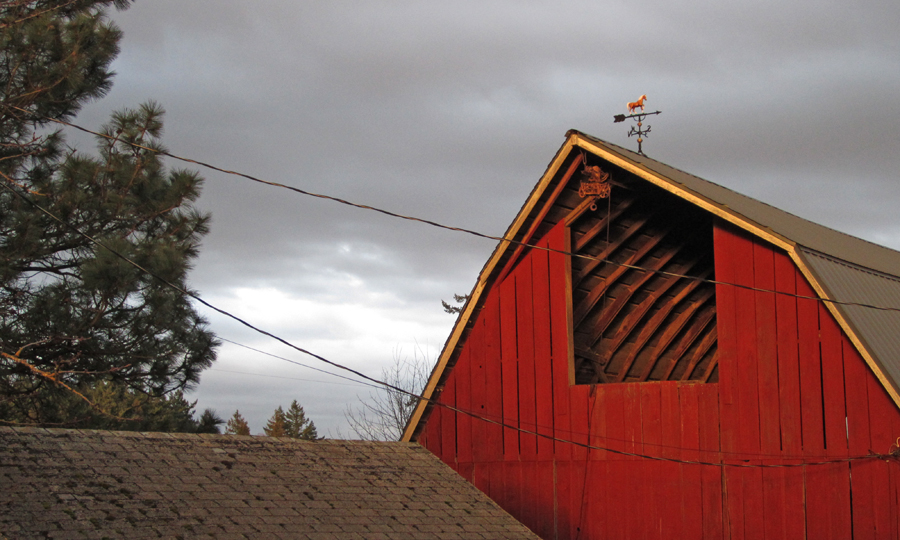
Let it Go

photo by Josh Scholten

I let her garden go.
let it go, let it go
How can I watch the hummingbird
Hover to sip
With its beak’s tip
The purple bee balm — whirring as we heard
It years ago?

The weeds rise rank and thick
let it go, let it go
Where annuals grew and burdock grows,
Where standing she
At once could see
The peony, the lily, and the rose
Rise over brick

She’d laid in patterns. Moss
let it go, let it go
Turns the bricks green, softening them
By the gray rocks
Where hollyhocks
That lofted while she lived, stem by tall stem,
Blossom with loss.
~ Donald Hall from “Her Garden” about Jane Kenyon

Some gray mornings
heavy with clouds
and tear-streaked windows
I pause melancholy
at the passage of time.

Whether to grieve over
another hour passed
another breath exhaled
another broken heart beat

Or to climb my way
out of deepless dolor
and start the work of
planting the next garden

It takes sweat
and dirty hands
and yes,
tears from heaven
to make it flourish
but even so
just maybe
my memories
so carefully planted
might blossom fully
in the soil of loss.

photo by Josh Scholten


Thinking Rhubarb

madrhubarb
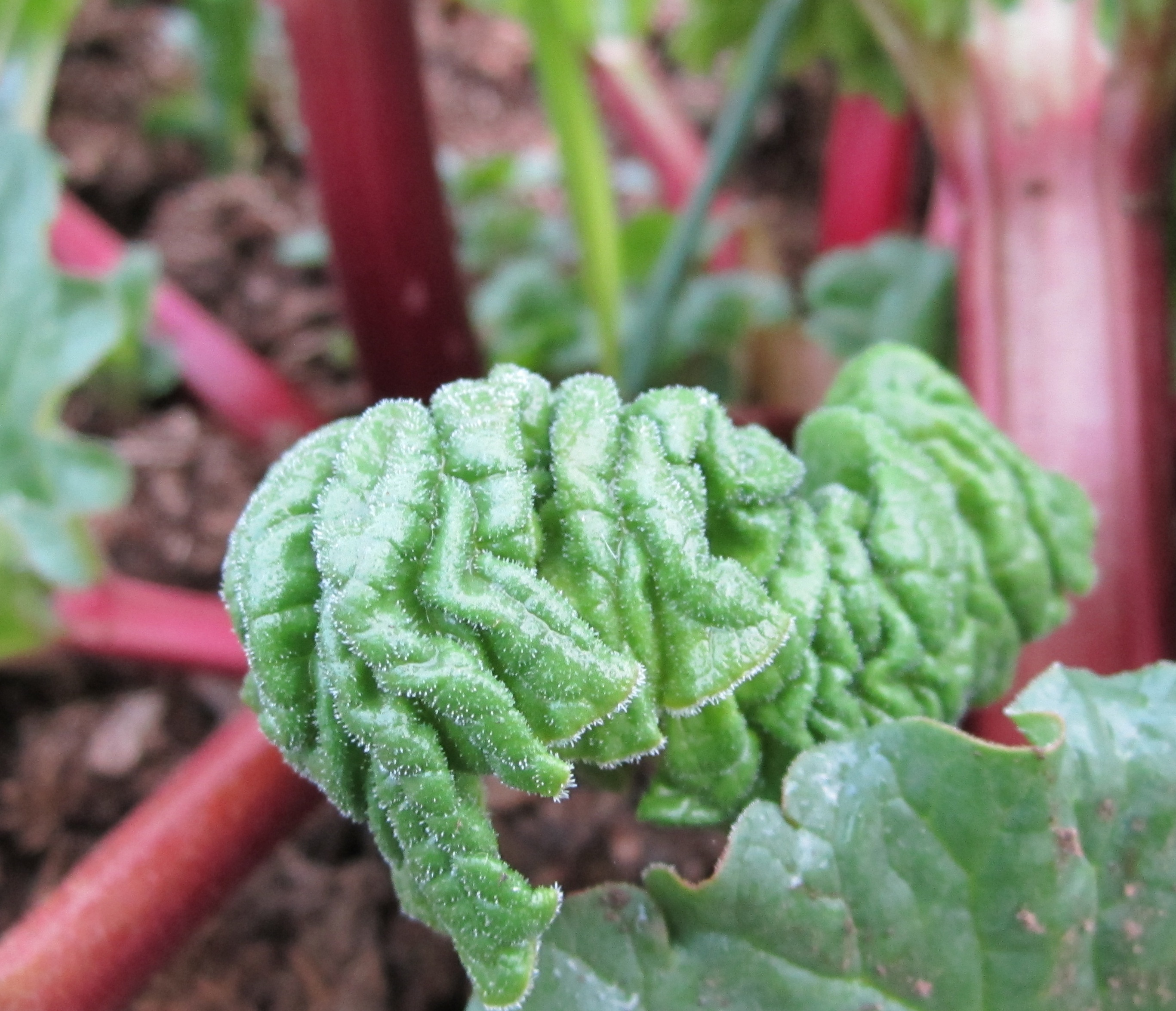
Like a mad red brain
the involute rhubarb leaf
thinks its way up
through loam.
~Jane Kenyon from “April Chores”

Over the last two weeks, the garden is slowly reviving, and rhubarb “brains” have been among the first to appear from the garden soil, wrinkled and folded, opening full of potential, “thinking” their way into the April sunlight.

Here I am, wishing my own brain could similarly rise brand new and tender every spring from the dust rather than leathery and weather-toughened, harboring the same old thoughts and patterns.  Indeed, more wrinkles seem to be accumulating on the outside of my skull rather than the inside.

Still, I’m encouraged by my rhubarb cousin’s return every April.  Like me, it may be a little sour that necessitates sweetening, but its blood courses bright red and it is very very much alive.


Lenten Grace — Responsible Serenity

marchsunset

We live in an imperfect world, with imperfect characters to match. Our imperfections should not keep us from dreaming of better things, or even from trying, within our limits, to be better stewards of the soil, and more ardent strivers after beauty and a responsible serenity.
~Jane Kenyon from “In the Garden of My Dreams”

Beauty is right outside my back door, whether it is in a misty dawn moment or an early twilight serenade.  It heals me after an imperfect day and an imperfect night’s sleep.

Today I will strive to be a steward for serenity, aiding its growth and helping it flourish.

Never perfect but not giving up.  Never perfect but serene with the responsibility.

IMG_0578

Lenten Grace — Appetite for Sun

photo by Josh Scholten

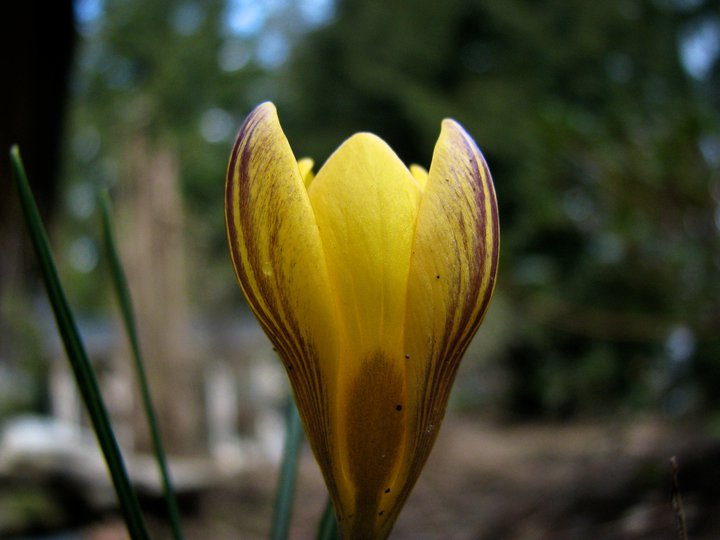
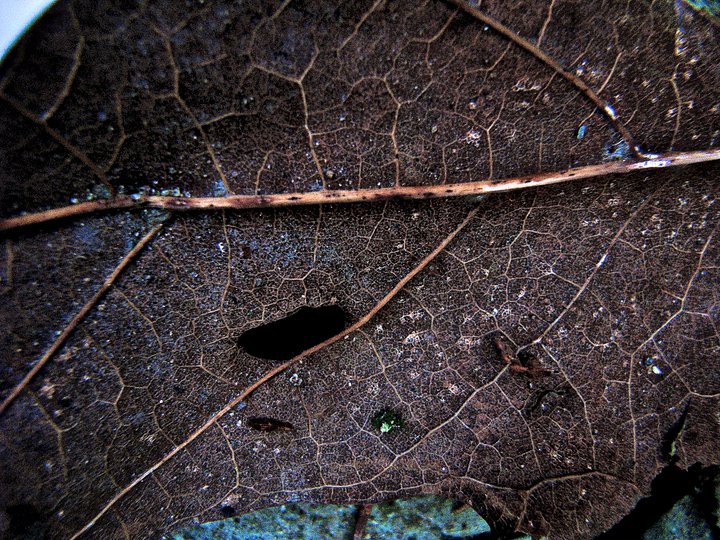
I saw that a yellow crocus bud had pierced
a dead oak leaf, then opened wide. How strong
its appetite for the luxury of the sun!
~Jane Kenyon from Otherwise: New and Selected Poems

Our appetite is strong for light and warmth.  Our desire is to defeat death, to pierce through the decay and flourish among the living, opening wide our face to the luxury of grace freely given.

We need only follow the pathway out of darkness.  We need only follow the Son as he leads the way.

photo by Josh Scholten

Lenten Grace — Then Water Enters

photo by Josh Scholten
Rebuked, she turned and ran
uphill to the barn. Anger, the inner   
arsonist, held a match to her brain.   
She observed her life: against her will   
it survived the unwavering flame.
The barn was empty of animals.   
Only a swallow tilted
near the beams, and bats
hung from the rafters
the roof sagged between.

Her breath became steady
where, years past, the farmer cooled  
the big tin amphoræ of milk.
The stone trough was still
filled with water: she watched it  
and received its calm.

So it is when we retreat in anger:  
we think we burn alone
and there is no balm.
Then water enters, though it makes  
no sound.
~Jane Kenyon from “Portrait of a Figure Near Water”

There is a balm badly needed for souls scorched by their own anger.

Allowing anger to smolder only leaves us awash in ashes.  I am witness through my own eyes how my indignation inflames like an “inner arsonist”, leaving behind the shadows that forever cloud my vision.  I will not see clearly until I stop feeding the fire.

Time to let the water enter in, to flood and cool the flame, to cleanse, renew and forgive,  to restore a calm, silent and serene.

That is the balm badly needed.  That is the balm freely given.

I just need to apply it to where it hurts the most.

A Single Green Sprout

photo by Josh Scholten

Now wind torments the field,
turning the white surface back
on itself, back and back on itself,
like an animal licking a wound.

A single green sprouting thing
would restore me . . .

Then think of the tall delphinium,
swaying, or the bee when it comes
to the tongue of the burgundy lily.
~Jane Kenyon from “February: Thinking of Flowers”

photo by Josh Scholten

Bereft of Birdsong

newyearbaker

Silence and darkness grow apace, broken only by the crack of a hunter’s gun in the woods.  Songbirds abandon us so gradually that, until the day when we hear no birdsong at all but the scolding of the jay, we haven’t fully realized that we are bereft — as after a death.  Even the sun has gone off somewhere… Now we all come in, having put the garden to bed, and we wait for winter to pull a chilly sheet over its head.  
~Jane Kenyon from “Good-by and Keep Cold”

Every day now we hear hunters firing in the woods and the wetlands around our farm, most likely aiming for the few ducks that have stayed in the marshes through the winter, or possibly a Canadian goose or a deer to bring home for the freezer.   The usual day-long symphony of birdsong is replaced by shotguns popping, hawks and eagle screams and chittering, the occasional dog barking, with the bluejays and squirrels arguing over the last of the filbert nuts.

In the clear cold evenings, when coyotes aren’t howling in the moonlight, the owls hoot to each other across the fields from one patch of woods to another, their gentle resonant conversation echoing back and forth.    The horses confined to their stalls in the barns snort and blow as they bury their noses in flakes of summer-bound hay.

But there is no birdsong arias,  leaving me bereft of their blending musical tapestry that wake me at 4 AM in the spring.   No peeper orchestra from the swamps in the evenings, rising and falling on the breeze.
It is too too quiet.

The chilly silence of the darkened days is now interrupted by all percussion, no melody at all.   I listen intently for early morning and evening serenades returning.
It won’t be long.
jansunset

Last Sweet Exhalations

photo by Josh Scholten

These things happen…the soul’s bliss
and suffering are bound together
like the grasses….

The last, sweet exhalations
of timothy and vetch
go out with the song of the bird;
the ravaged field
grows wet with dew.
~Jane Kenyon from Twilight–After Haying


So bound together–the sweetness and the suffering.
I have seen it in others and known it myself.

Renewal and rebirth come from ravage.

Already I am emptying out, not yet filling full from the lungs of eternity.
Breathing will be easy one day, so fresh, so cleansing, so infinite.

Until then,
I’m holding my breath tightly,
blessed by that last, sweet gasp.

photo by Josh Scholten

Lenten Reflection–Piercing the Soul

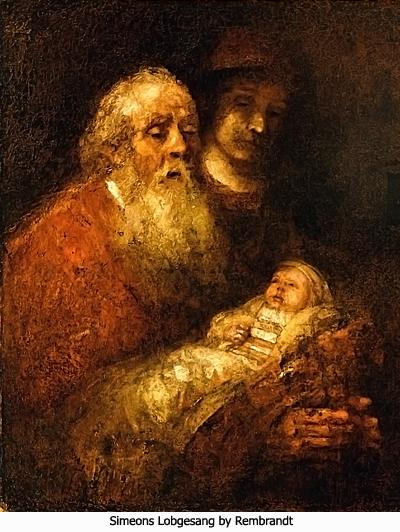
“This child is like a pearl,
Some men will forfeit everything
To have his love, while others cling
To worthless things and forfeit life.
He is a source of peace—and strife.
And many thoughts he will reveal
That men have thought they could conceal.
And you, most blessed woman too,
Will see what wicked men can do.
Your love to him will take its toll,
And like a sword will pierce your soul.”
from John Piper in “Simeon

Older than eternity, now he
is new. Now native to earth as I am, nailed
to my poor planet, caught
that I might be free, blind in my womb
to know my darkness ended,
brought to this birth for me to be new-born,
and for him to see me mended
I must see him torn.
from “Accompanied by Angels” by Luci Shaw

The God of curved space, the dry
God, is not going to help us, but the son
whose blood splattered
the hem of his mother’s robe.
“Looking at Stars”  by Jane Kenyon

This was the day she had been told would come yet she could not have anticipated how horrific would be His suffering, how hideous His wounds, how extensively His blood covered those around Him.  She could not have imagined the helplessness she felt in being unable to comfort Him, ease His pain, or smooth His torn brow.  She could not have known she would feel His hurt so deeply; it was as if she too had been lacerated and drained of life herself.

Yet looking down at her from the cross, despite His own distress, He compassionately provides for her future care and protection.  He continues loving her even when He is beyond her reach. He doesn’t abandon her even as He endures the unendurable–separation from His Father and betrayal by His people.

She shed her blood bearing Him, birthing Him to breathe and walk and live fully on this earth;  now her heart breaking,  she watches Him surrender and take His last breath.
He sheds His cleansing blood in parting, once and for all mending all that is pierced and broken in us, yet rending forever that which separates us from God.


Barn Blaze

Let the light of late afternoon
shine through chinks in the barn, moving
up the bales as the sun moves down.

Let it come, as it will, and don’t
be afraid. God does not leave us
comfortless, so let evening come.

from “Let Evening Come” by Jane Kenyon

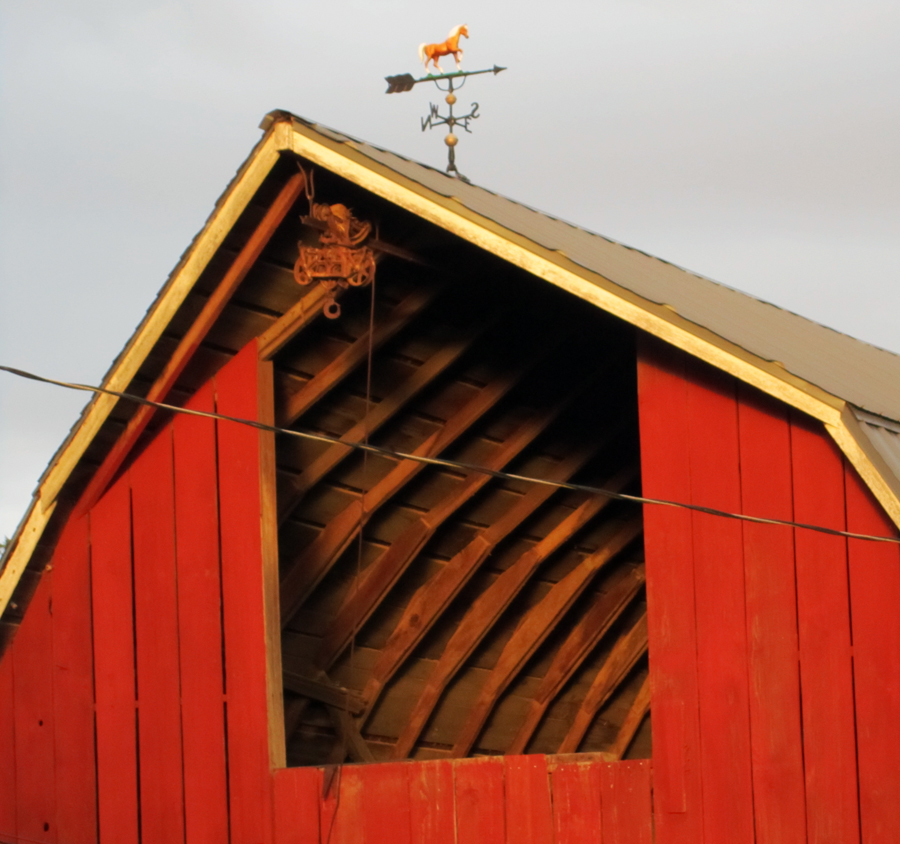
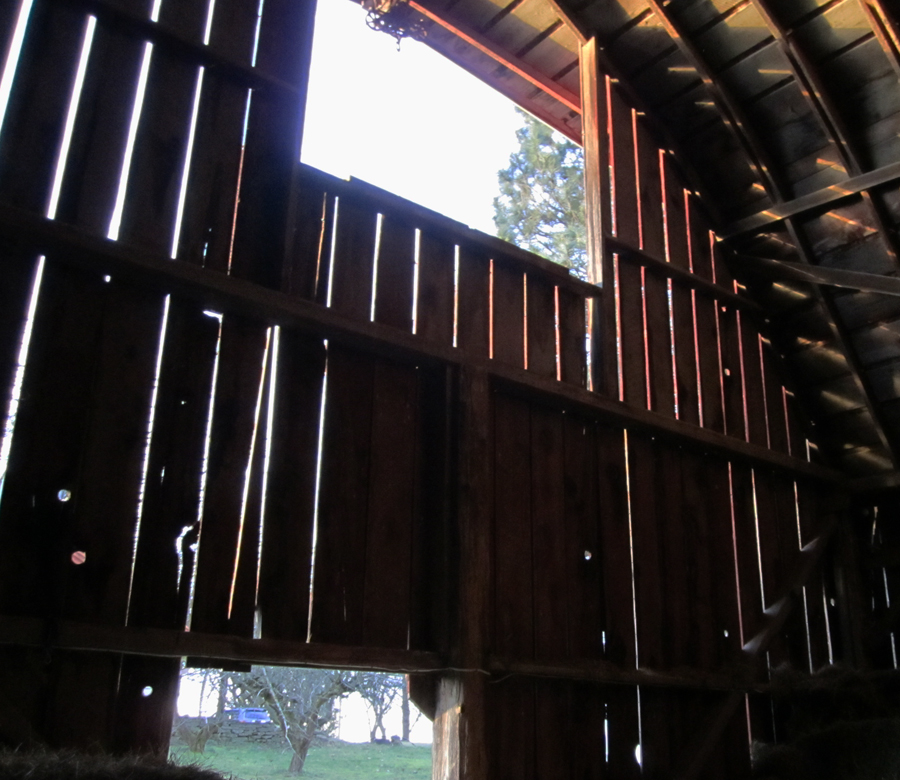
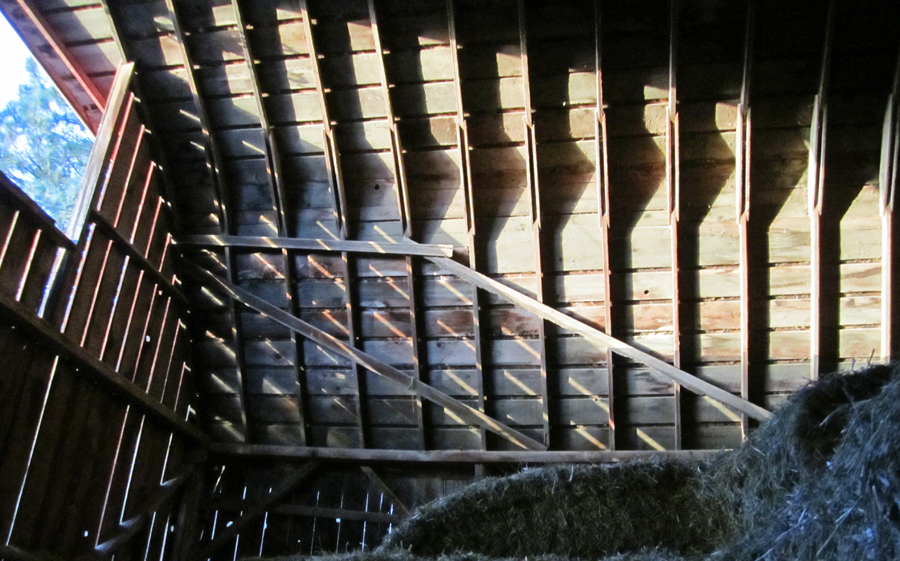
During our northwest winters, there is so little sunlight on gray cloudy days that I routinely turn on the two light bulbs in the big hay barn any time I need to go in to fetch hay bales for the horses. This is to help me avoid falling into the holes that inevitably develop in the hay stack between bales. The murky lighting tends to hide the dark shadows of the leg-swallowing pits among the bales, something that is particularly hazardous when carrying a 60 pound hay bale.

When I went to feed the horses at sunset tonight, I looked up at the lights blazing in the hay barn and went to the light switch to shut them off, but the switch was already off. Puzzled, I realized that lighting up the barn was a precise angle of the setting sun, not light bulbs at all. The last of the day’s sun rays were streaming through the barn slat openings, richocheting off the roof timbers onto the bales, casting an almost fiery glow onto the hay. The barn was ignited and ablaze without fire and smoke which are the last things one would even want in a hay barn. I could scramble among the bales without worry to get my chores accomplished.

It seems even in my life outside the barn I’ve been falling into more than my share of dark holes lately. Even when I know where they lie and how deep they are, some days I will manage to step right in anyway. Each time it knocks the breath out of me, makes me cry out, makes me want to quit trying to lift the heavy loads. It leaves me fearful to even venture out.

Then, amazingly, a light comes from the most unexpected of places, blazing a trail to help me see where to step, what to avoid, how to navigate the hazards to avoid collapsing on my face. I’m redirected, inspired anew, granted grace, gratefully calmed and comforted amid my fears. Even though the light fades, and the darkness descends again, it is only until tomorrow. Then it will reignite again.

The light returns and so will I.