When From Death I’m Free: Made Happy By Simple Things

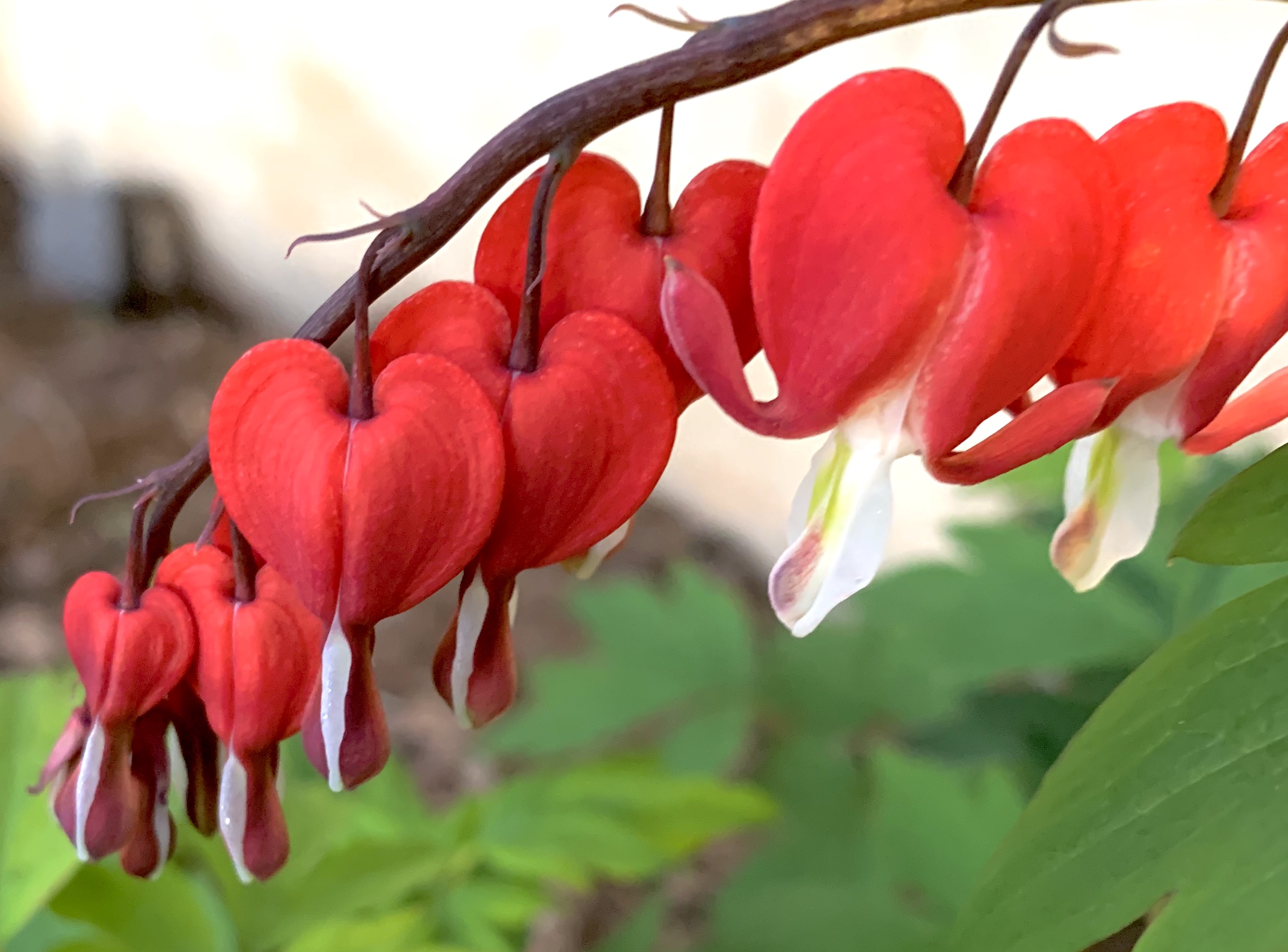
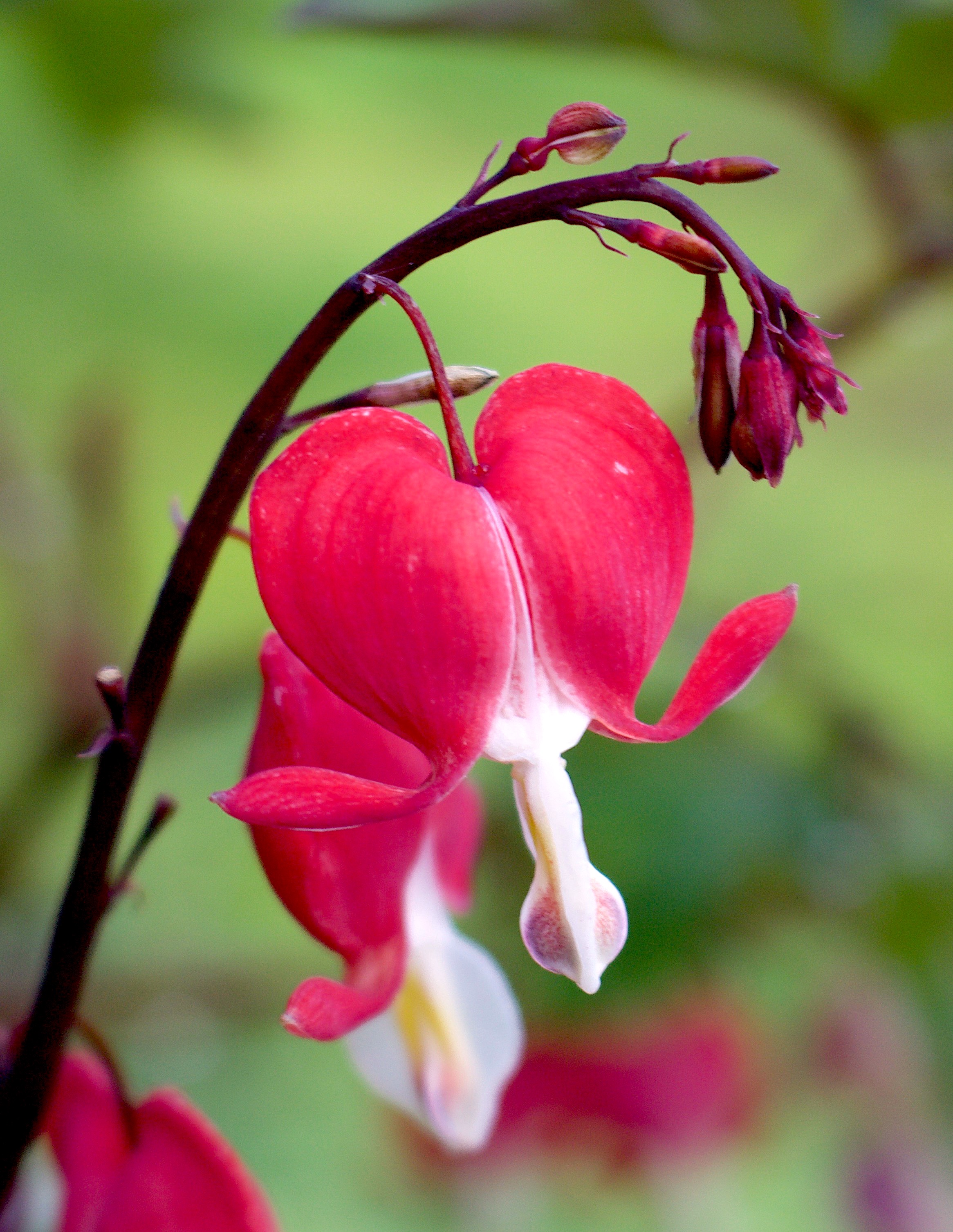
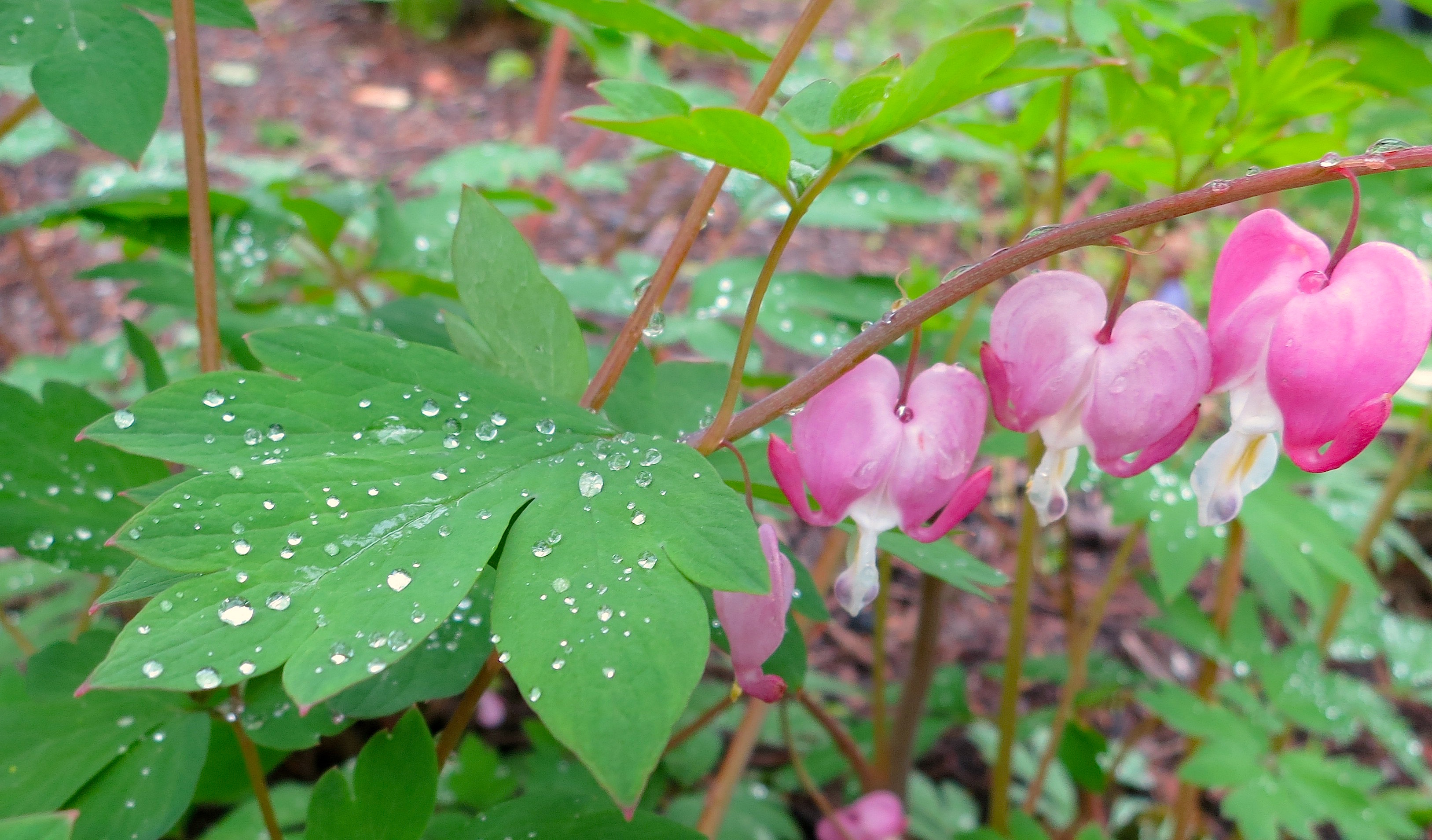
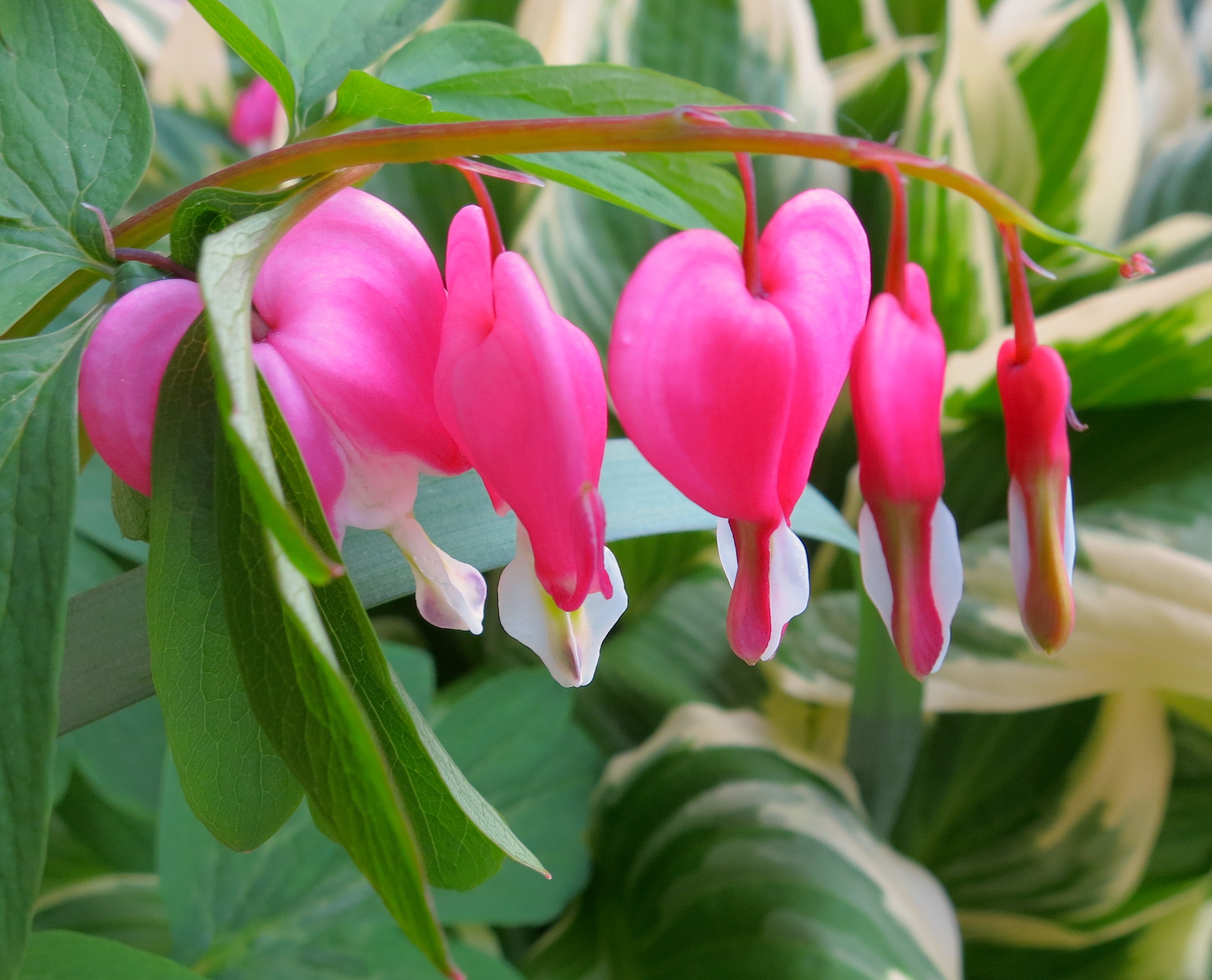
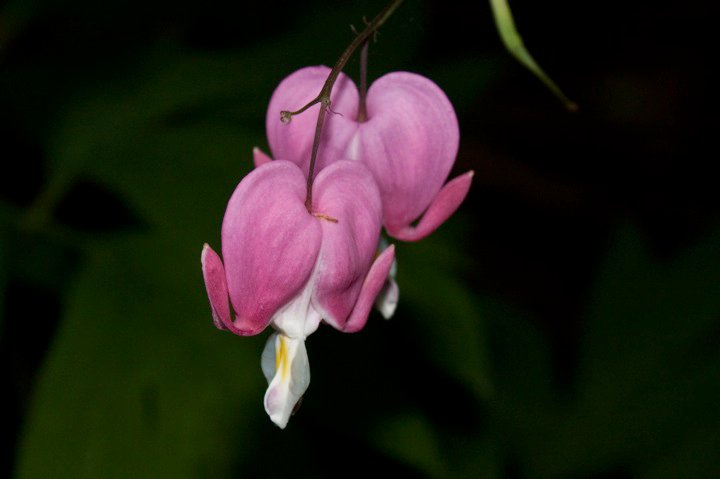
I know a bleeding-heart plant that has thrived
for sixty years if not more, and has never
missed a spring without rising and spreading
itself into a glossy bush, with many small red
hearts dangling. Don’t you think that deserves
a little thought? The woman who planted it
has been gone for a long time, and everyone
who saw it in that time has also died or moved
away and so, like so many stories, this one can’t
get finished properly. Most things that are
important, have you noticed, lack a certain
neatness. More delicious, anyway, is to
remember my grandmother’s pleasure when
the dissolve of winter was over and the green
knobs appeared and began to rise, and to cre-
ate their many hearts. One would say she was
a simple woman, made happy by simple
things. I think this was true. And more than
once, in my long life, I have wished to be her.

~Mary Oliver “The Bleeding-Heart” from New and Selected Poems
Volume Two

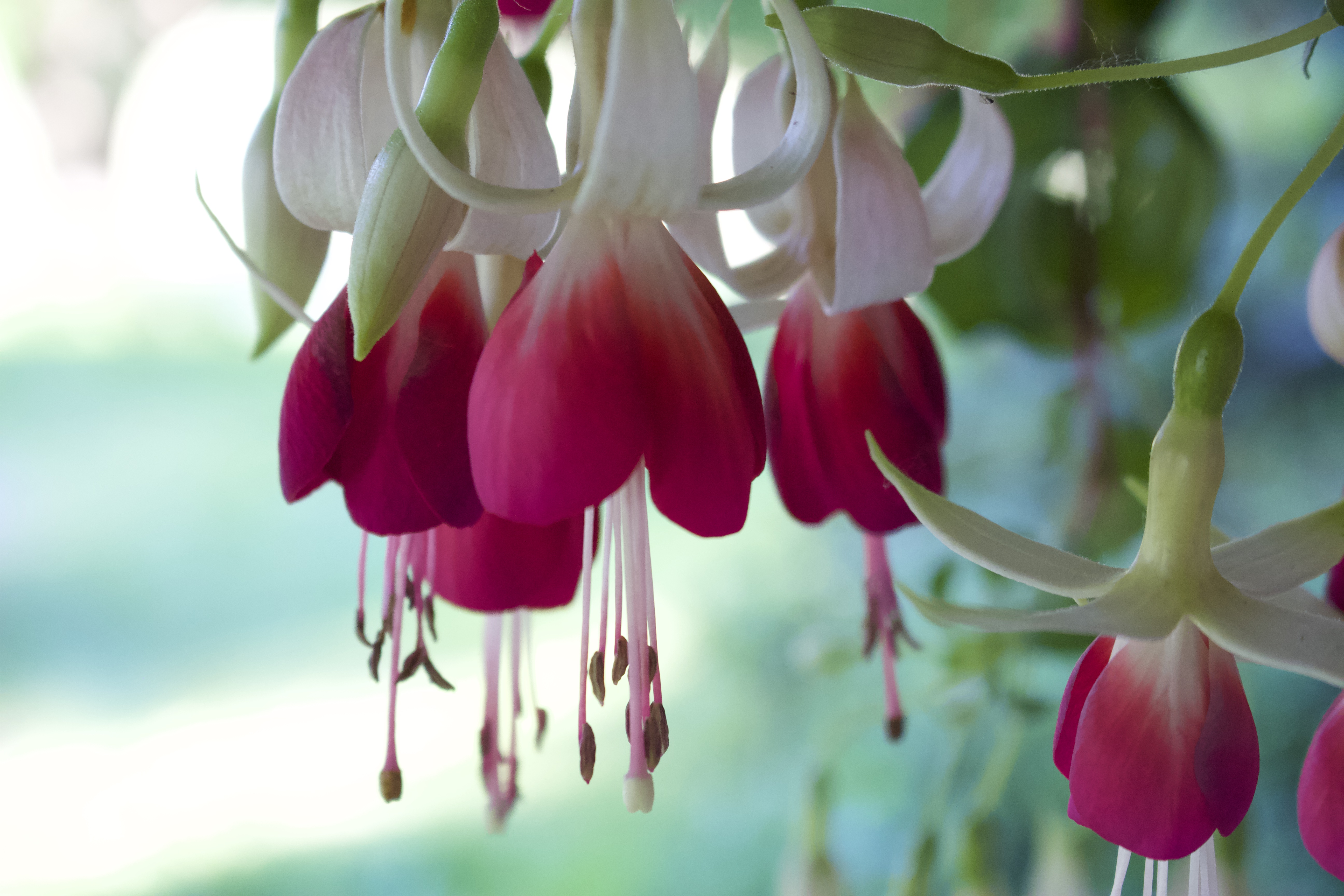
My Grandma Kittie grew flowers–lots of them. Her garden stretched along both sides of the sidewalk to her old two story farm house, in window boxes and beds around the perimeter, in little islands scattered about the yard anchored by a tree, or a piece of driftwood, a gold fish pond or a large rock. Wisteria hung like a thick curtain of purple braids from the roof of her chicken coop, and her greenhouse, far bigger than her home, smelled moist and mossy with hanging fuschia baskets. For her it was full time joy disguised as a job: she sold seedlings, and ready-to-display baskets, and fresh flower arrangements. 

She often said she was sure heaven would be full of flowers needing tending, and she was just practicing for the day when she could make herself useful as a gardener for God.

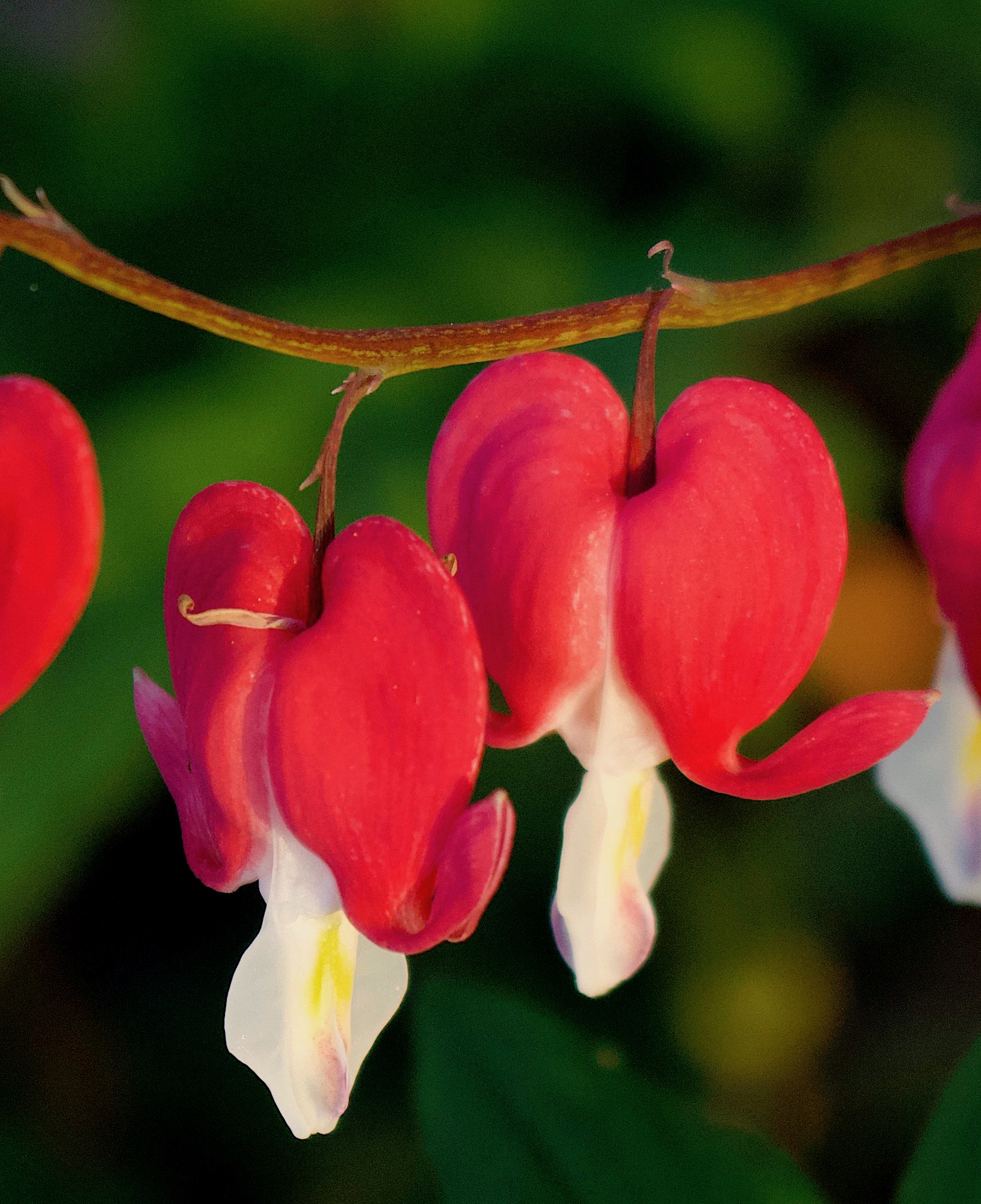
Visiting Grandma meant spending summer evenings in her yard heavy with wafting flower perfume. She especially loved her bleeding hearts bushes that returned every spring, dripping their red blossoms over her unruly lawn.

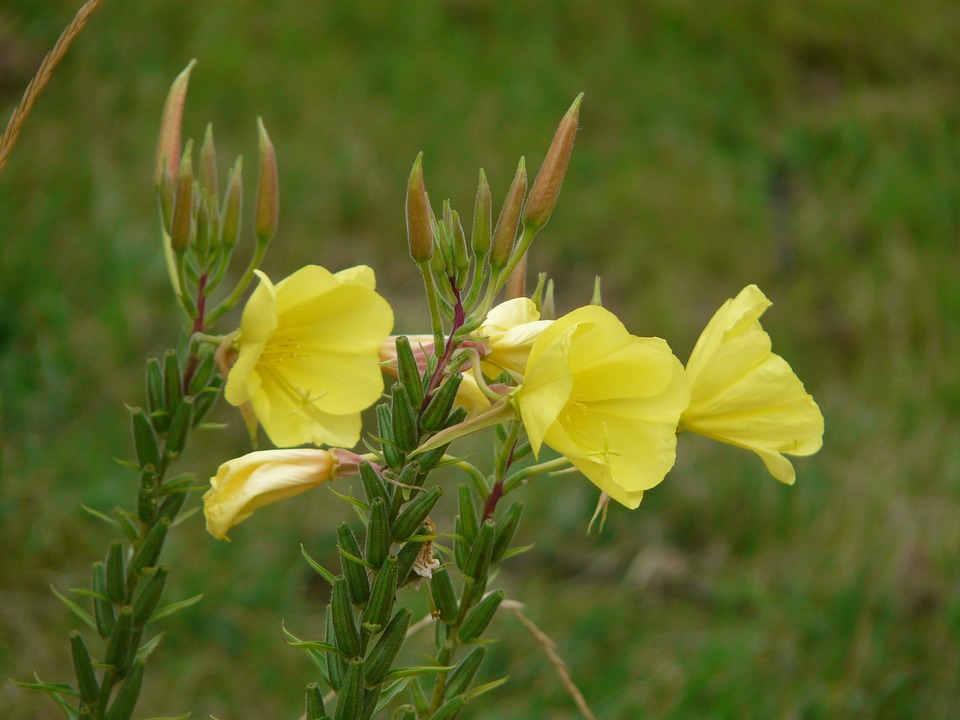
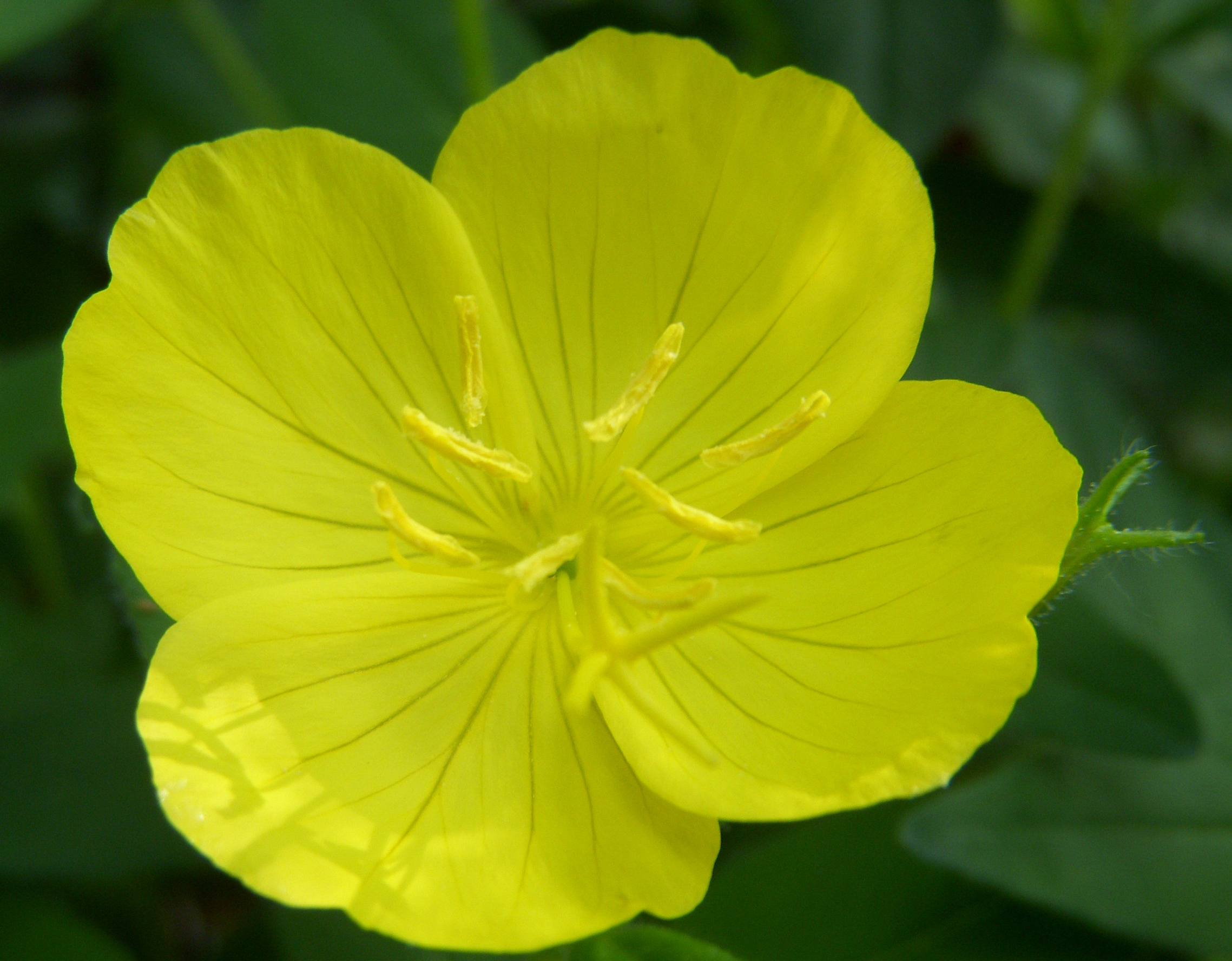
Another of her favorite flowers was the evening primrose.  It was one of a few night blooming plants meant to attract pollinating moths. Its tall stems were adorned by lance shaped leaves, with multiple buds and blooms per stem.  Each evening, and it was possible to set one’s watch by its punctuality, only one green wrapped bud per stem would open, revealing a bright yellow blossom with four delicate veined petals, a rosette of stamens and a cross-shaped stigma in the center, rising far above the blossom.  The yellow was so vivid and lively, it seemed almost like a drop of sun had been left on earth to light the night.  By morning, the bloom would begin to wither and wilt under the real sunlight, somehow overcome with the brightness, and would blush a pinkish orange as it folded upon itself, ready to die and drop from the plant in only a day or two, leaving a bulging seed pod behind.

I would settle down on the damp lawn at twilight, usually right before dusk fell, to watch the choreography of opening of blossoms on stem after stem of evening primrose. Whatever the trigger was for the process of unfolding, there would be a sudden loosening of the protective green calyces, in an almost audible release. Then over the course of about a minute, the overlapping yellow petals would unfurl, slowly, gently, purposefully, revealing their pollen treasure trove inside.  It was like watching time lapse cinematography, only this was an accelerated, real time flourish of beauty, happening right before my eyes. I always felt privileged to witness each unveiling as Grandma liked to remind me that few flowers ever allowed us to behold both their birth and death. The evening primrose was not at all shy about sharing itself and it would enhance the show with a sweet lingering fragrance.

Grandma knew how much I enjoyed the evening primrose display, so she saved seeds from the seed pods for me, and helped me plant them at our house during one of her spring time visits. I remember scattering the seeds with her in a specially chosen spot, in anticipation of the “drops of sun” that would grace our yard come summertime.  However, Grandma was more tired than usual on this particular visit, taking naps and not as eager to go for walks or eat the special meals cooked in honor of her visit. Her usually resonant laughing brown eyes appeared dull, almost muddy.

The day she was to return to her home, she came into the kitchen at breakfast time, wearily setting down her packed bags.  She gave me a hug and I looked at her.  Something was dreadfully wrong.  Grandma’s eyes were turning yellow.

Instead of returning home that day, she went to the hospital. Within a day, she had surgery and within two days, was told she had terminal pancreatic cancer.  She did not last long, her skin becoming more jaundiced by the day, her eyes more icteric and far away.  She soon left her earthly gardens to cultivate those in heaven.

I’ve kept bleeding hearts and evening primrose in my garden ever since. Grandma’s heart dangles from the bushes and she is released from each primrose bloom as it unfolds precipitously in the evening. She wafts across the yard in its perfume. Her spirit, a drop of sun coming to rest, luminous, for a brief stay upon the earth, only to fall before we’re ready to let it go. But as the wilted bloom lets go, its seeds have already begun to form.

I’m sure Grandma is still growing flowers. And my soil-covered hands look more like hers every day.
The grass withers and the flowers fall,
    because the breath of the Lord blows on them.
    Surely the people are grass.
 The grass withers and the flowers fall,
    but the word of our God endures forever.

Isaiah 40: 7-8
This Lenten season I reflect on the words of the 19th century southern spiritual hymn “What Wondrous Love is This”

One-Time
Monthly
Yearly

Make a one-time or recurring donation to support daily Barnstorming posts

Make a monthly donation

Make a yearly donation

Choose an amount

$10.00
$25.00
$50.00
$5.00
$15.00
$100.00
$5.00
$15.00
$100.00

Or enter a custom amount

$

Your contribution is deeply appreciated.

Your contribution is appreciated.

Your contribution is appreciated.

DonateDonate monthlyDonate yearly
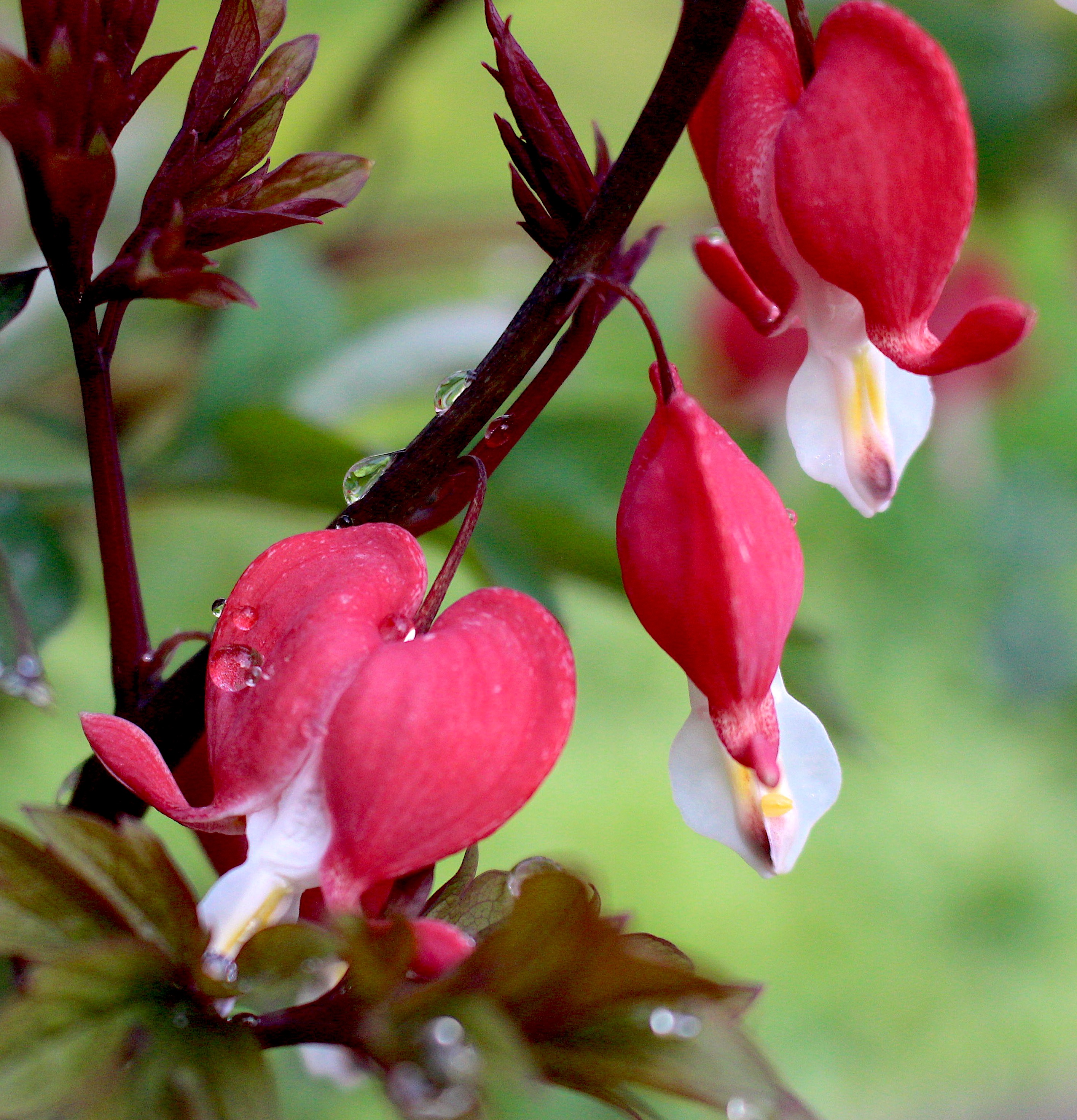
A Bleeding Heart

bleedinghearts20182


Love your neighbor as yourself is part of the great commandment.

The other way to say it is, ‘Love yourself as your neighbor.’ Love yourself not in some egocentric, self-serving sense but love yourself the way you would love your friend in the sense of taking care of yourself, nourishing yourself, trying to understand, comfort, strengthen yourself.

Ministers in particular, people in the caring professions in general, are famous for neglecting their selves with the result that they are apt to become in their own way as helpless and crippled as the people they are trying to care for and thus no longer selves who can be of much use to anybody. 

It means pay mind to your own life, your own health and wholeness, both for your own sake and ultimately for the sake of those you love too. Take care of yourself so you can take care of them.

A bleeding heart is of no help to anybody if it bleeds to death.
~Frederick Buechner from Telling Secrets


bleedinghearts2018


We are reminded every time we hear safety instructions on an airplane before a flight takes off: “in the event of a sudden pressure change in the cabin, oxygen masks will appear – remember to put your own on before helping others with their masks.”   

If we aren’t able to breathe ourselves, we won’t last long enough to be of assistance to anyone around us.  Too often,  sacrificing self-care threatens others’ well-being.

A headline appeared in my email from the American Psychiatric Association this morning: “Physicians Experience the Highest Suicide Rate of Any Profession” – there is rampant depression and burn-out among those who should know best how to recognize and respond to the danger signs — for women physicians, nearly 1 out of 5 are afflicted.   Yet the work load only seems to increase, not diminish, the legal and moral responsibility weighs more heavily, and the hours available for sleep and respite shrink.  In forty years of practicing medicine (my father liked to remind me “when are you going to stop ‘practicing’ and actually ‘do’ it?”),  the work has never gotten easier, only harder and heavier.

I see suicidal patients all day and am immensely grateful I’ve never been suicidal, thank God, but anxiety is embedded deep in my DNA from my non-physician fretful farmer ancestors.  Anxiety becomes the fuel and driver of the relentless physician journey on long lonely roads, spurring us to stay awake too many hours and travel too far when we should be closing our eyes and taking a break to breathe, just breathe.

However, we are trained to respond to anxiety from the first day in anatomy class:
“and while you, Miss Polis, are trying to think of the name of that blood vessel, your patient is exsanguinating in front of you– drip, drip, drip….”

Terror-stricken at the thought I was inadequate to the task of saving a life, it took years for me to realize the name of the vessel didn’t bloody matter as long as I knew instinctively to clamp it, compress it, or by the love of the Living God, transfuse my own blood from my bleeding heart into my patient’s.

I learned well those many years ago:

To save a life, I must preserve my own.


bleedingweepinghearts


bleedingheart1

Ununderstandable

marshmallowglow2
dandyweb
dandyfluff
This fevers me, this sun on green,
On grass glowing, this young spring.
The secret hallowing is come,
Regenerate sudden incarnation,
Mystery made visible
In growth, yet subtly veiled in all,
Ununderstandable in grass,
In flowers, and in the human heart,
This lyric mortal loveliness,
The earth breathing, and the sun.
~Richard Eberhart from “This Fevers Me”
I understand so little
of the mystery that surrounds me
yet I see it made visible,
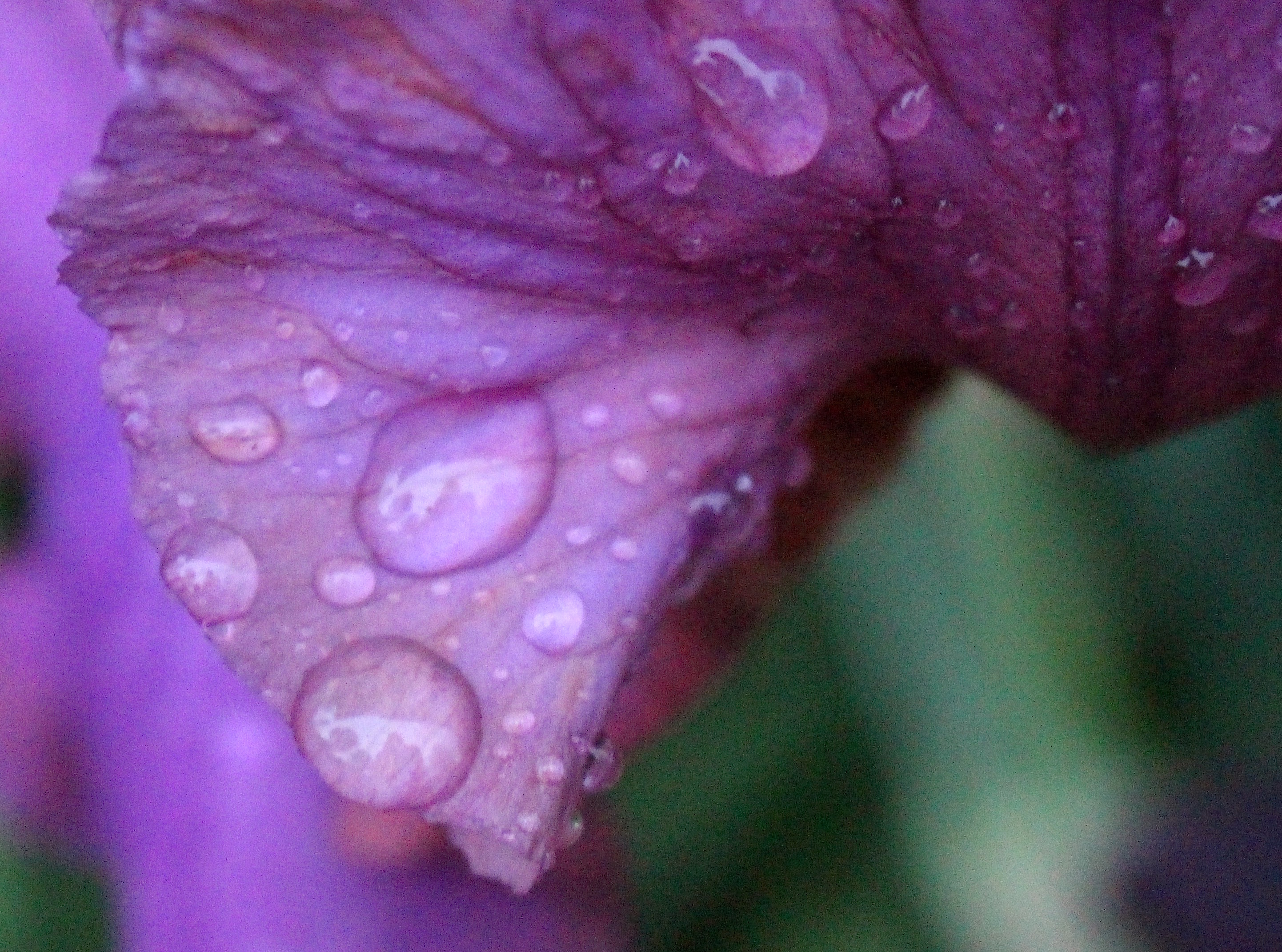
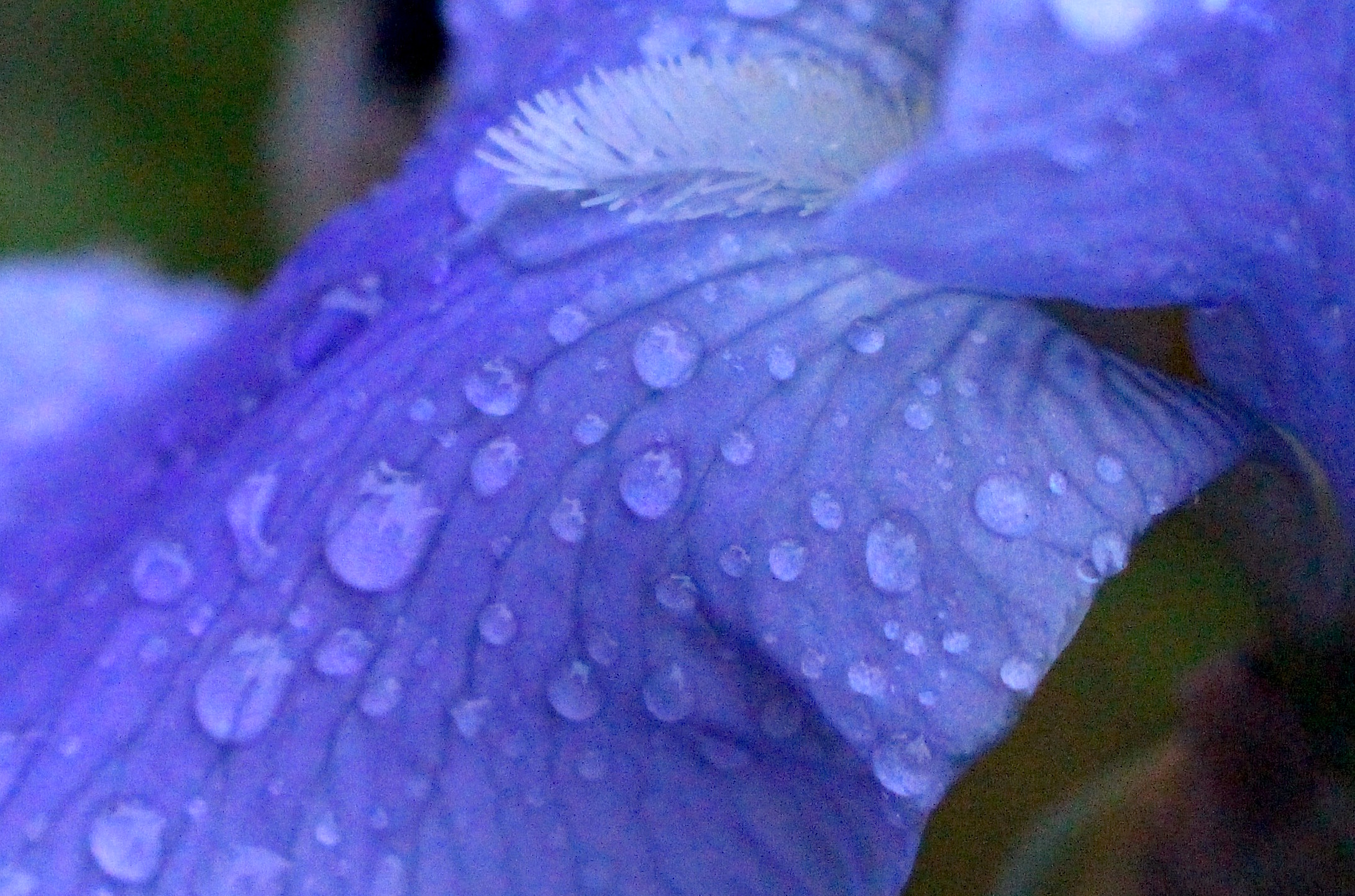
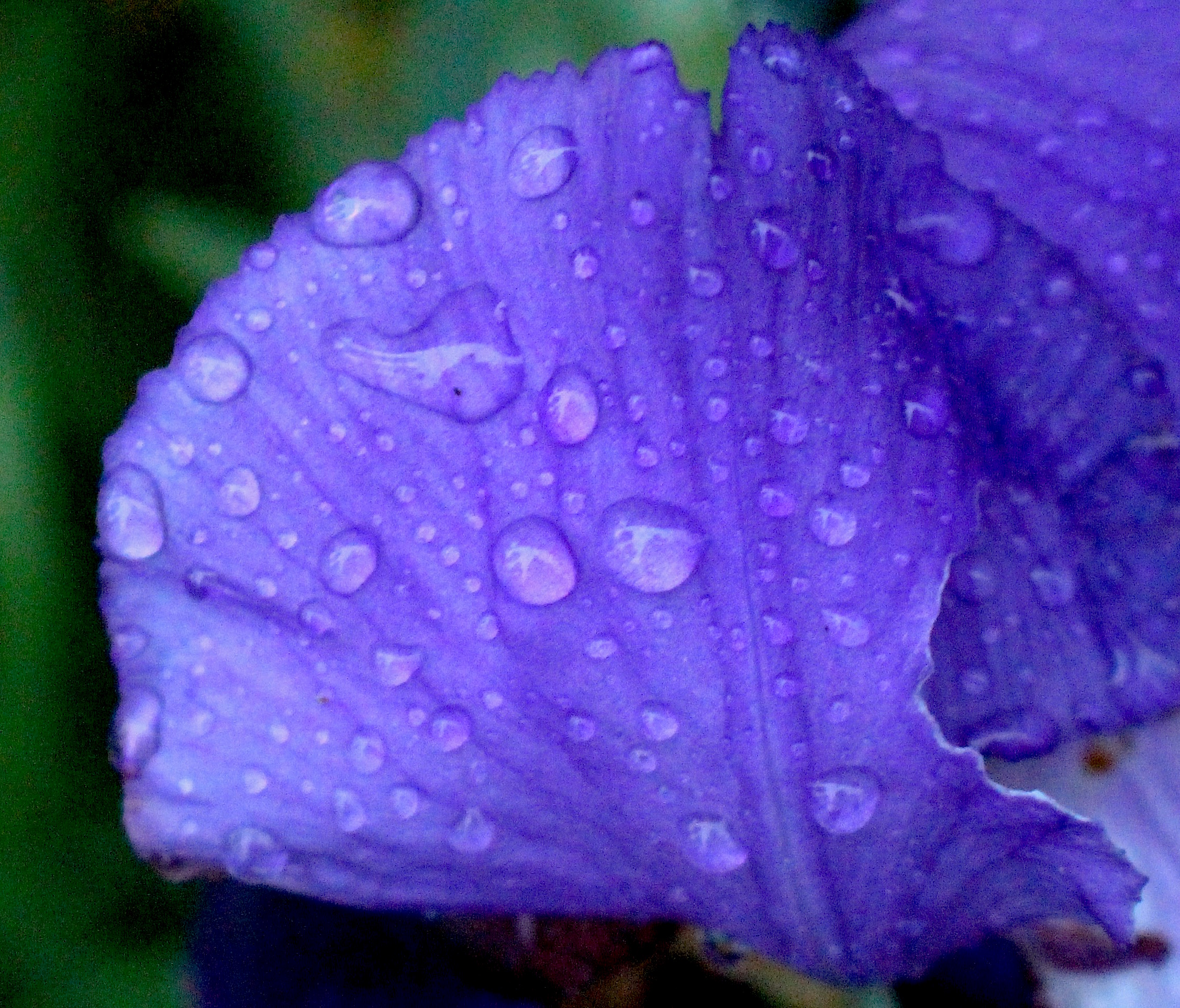
like the raindrop tears from above
rousing me from my slumber.
I breathe deeply,
letting the loveliness, like oxygen,
find its way deep
filling my heart.
hearttears
irisrain512
irisrain5121
irisrain5122
irisrain5124
irisrain5125

Prepare for Joy: Substitution Allowed

IMG_5015

emergingtrillium

For the essence of sin is
man substituting himself for God,
while the essence of salvation is
God substituting Himself for man.

Man asserts himself against God and puts himself
where only God deserves to be;
God sacrifices Himself for man and puts Himself
where only man deserves to be.

Man claims prerogatives that belong to God alone;
God accepts penalties that belong to man alone.
~John Stott, The Cross of Christ

Our struggle with God, from our first breath,
is wanting to forget we are made from dust, molded from mud,
and will return to the ground, no matter what.
Between the womb and the tomb is the choice of acting
as though we own the earth and somehow it owes us everything because we exist,
or whether we tread lightly, knowing each breath, each morsel, each day
is an undeserved gift granted by Him taking our place.
When we acknowledge that His heart on earth bled
so that ours will continue to beat,
so that we may laugh, cry, love and worship–
only then we are right with God,
instead of insisting we be God.

His heart for ours. A substitution made perfect.

tulip12

heart

Lenten Reflection–Substitutions Allowed

photo by Josh Scholten

For the essence of sin is
man substituting himself for God,
while the essence of salvation is
God substituting Himself for man.

Man asserts himself against God and puts himself
where only God deserves to be;
God sacrifices Himself for man and puts Himself
where only man deserves to be.

Man claims prerogatives that belong to God alone;
God accepts penalties that belong to man alone.

John Stott, The Cross of Christ

Our struggle with God, from our first breath, is wanting to forget we are made from dust, molded from mud, and will return to the ground, no matter what. Between the womb and the tomb is the choice of acting as though we own the earth and somehow it owes us everything because we exist, or whether we tread lightly, knowing each breath, each morsel, each day is an undeserved gift granted by Him taking our place. When we acknowledge that His heart on earth bled so that ours will continue to beat, so that we may laugh, cry, love and worship–only then we are right with God, instead of insisting we be God.

His heart for ours. A substitution made perfect.