A Calling Out

geese113162

geesev6

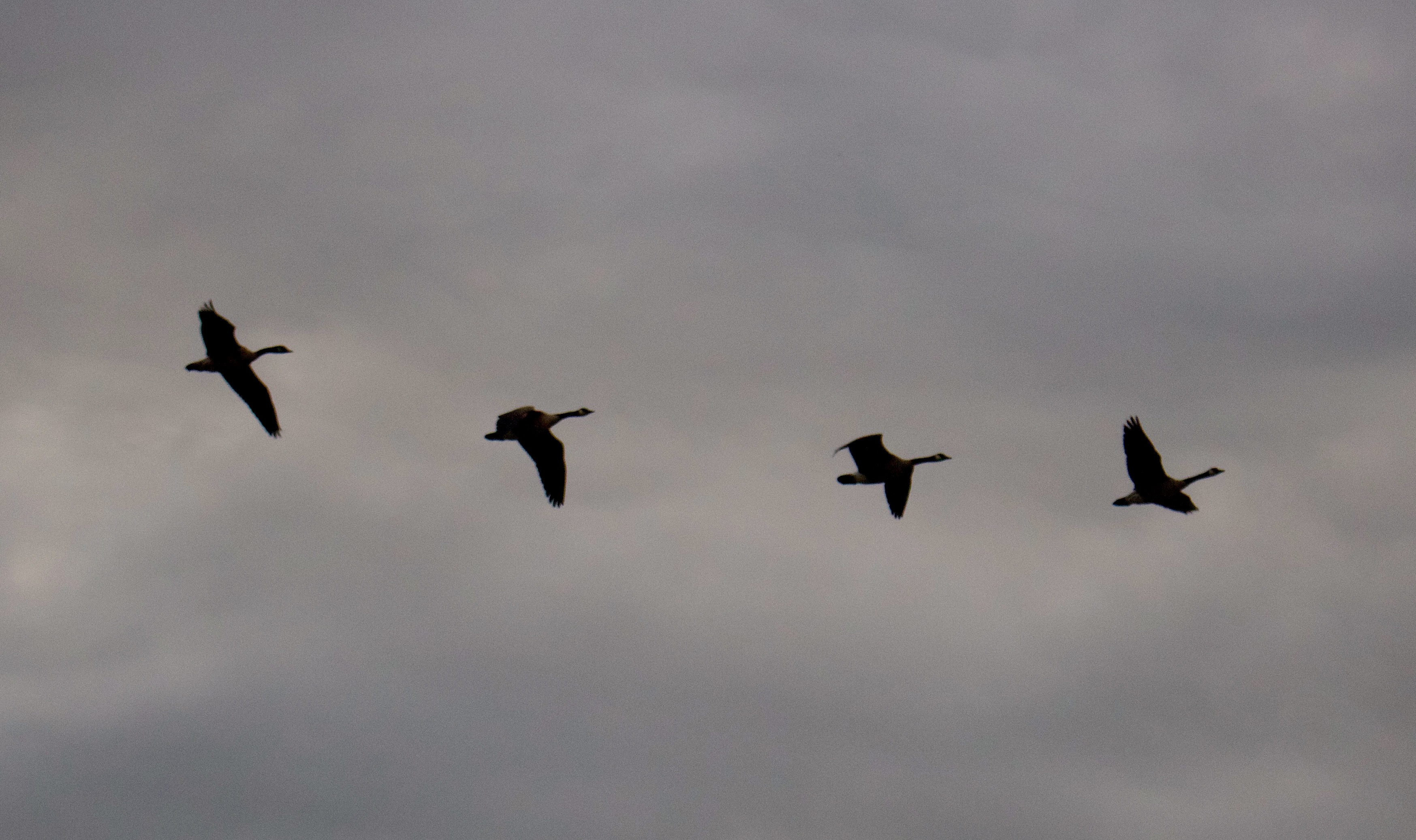
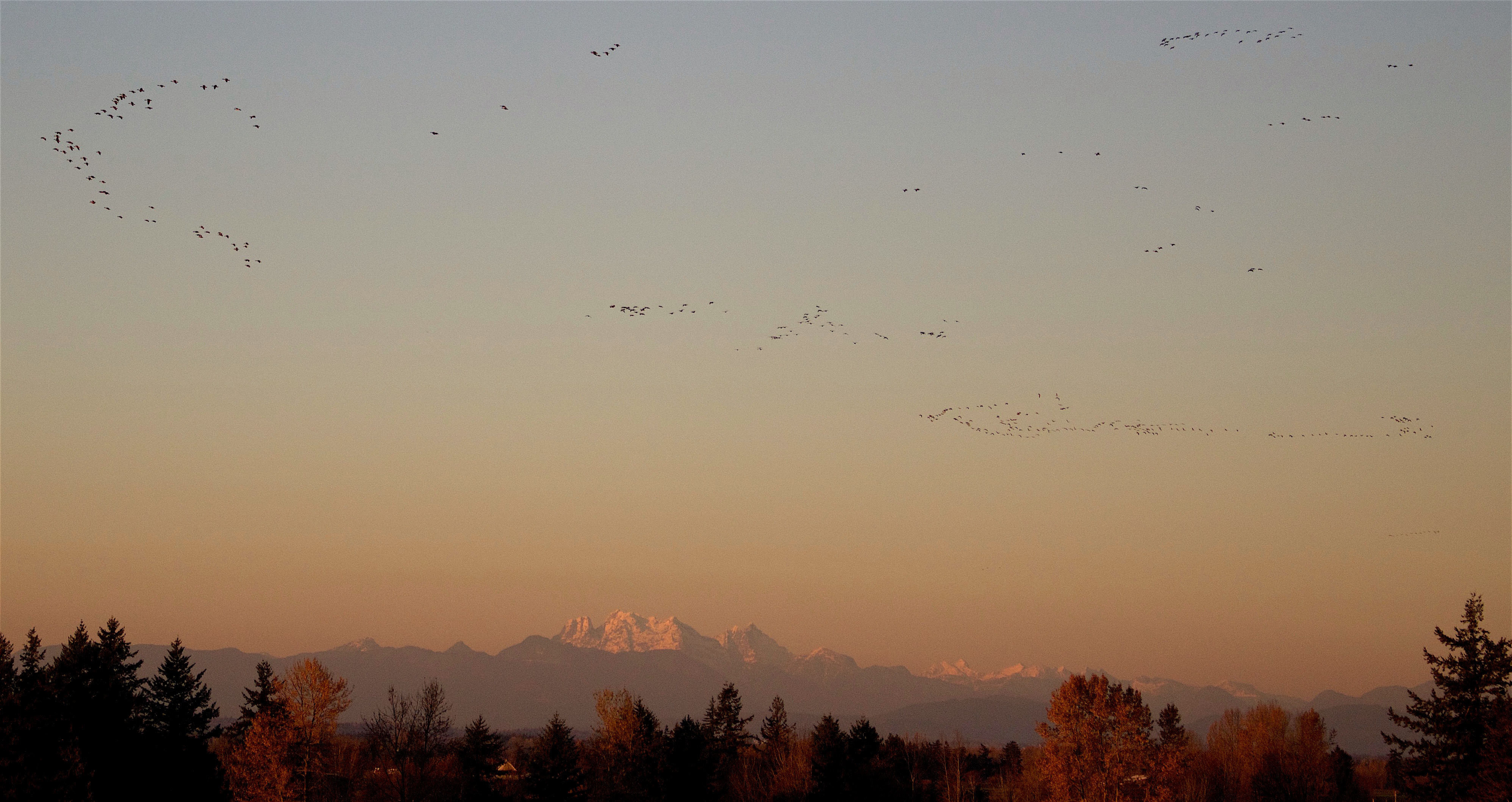
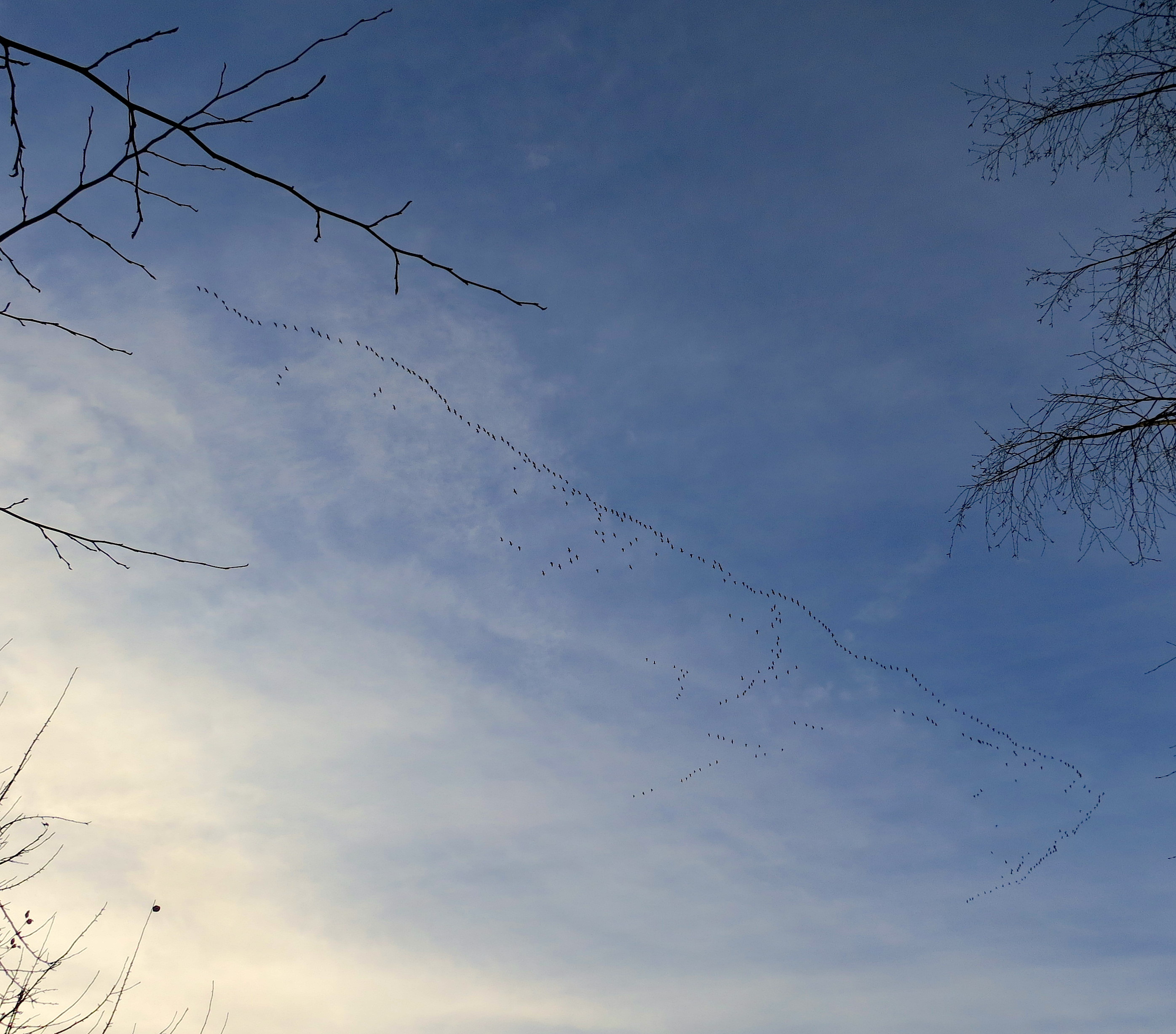
A psalm of geese
labours overland

cajoling each other
near half…

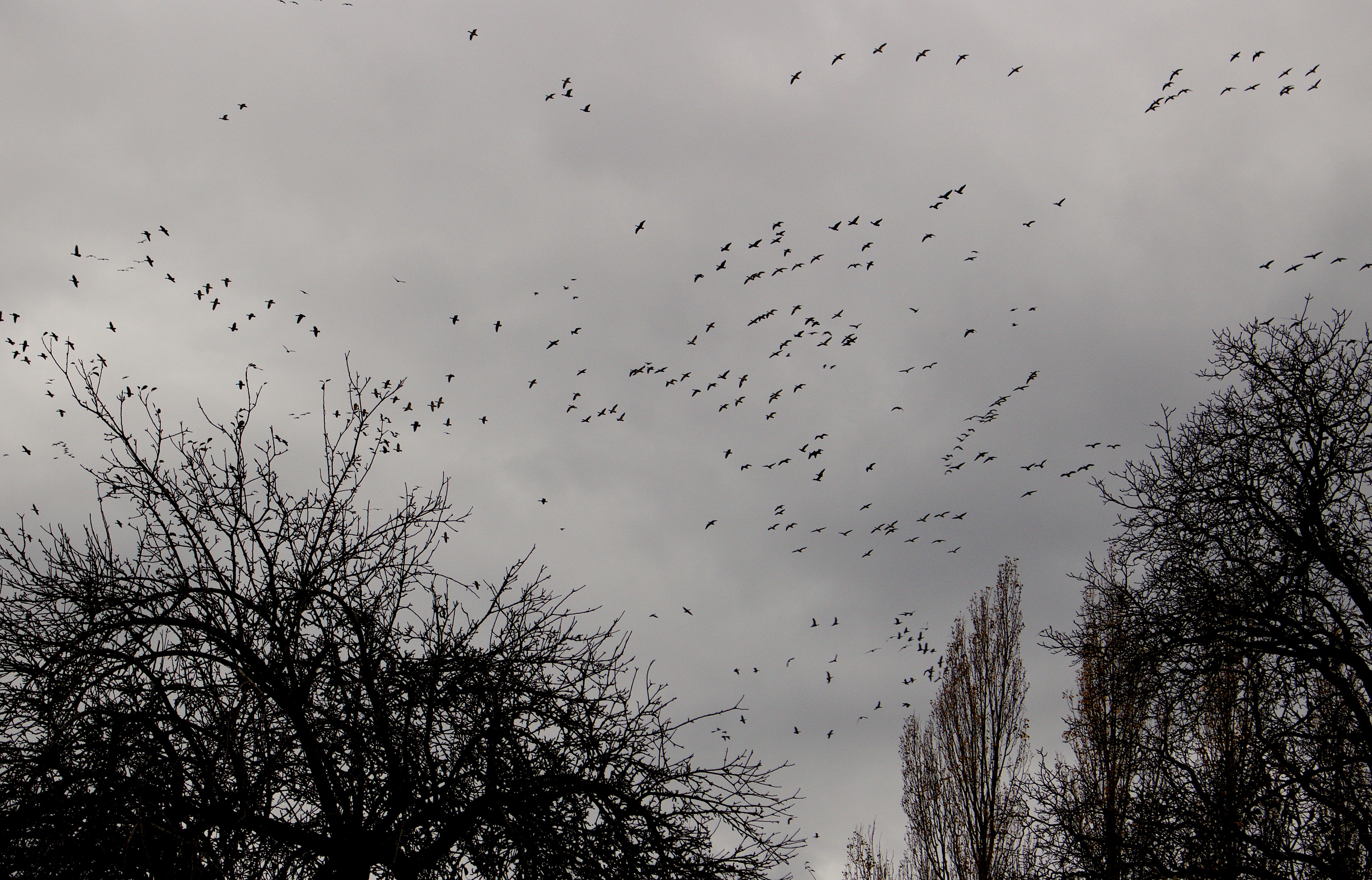
The din grew immense.
No need to look up.

All you had to do
was sit in the sound

and put it down
as best you could…

It’s not a lonesome sound
but a panic,

a calling out to the others
to see if they’re there;
~Dermot Healy from A Fool’s Errand

geese913

geese113165

We are here to witness the creation and abet it. We are here to notice each thing so each thing gets noticed. Together we notice not only each mountain shadow and each stone on the beach but, especially, we notice the beautiful faces and complex natures of each other. We are here to bring to consciousness the beauty and power that are around us and to praise the people who are here with us. We witness our generation and our times. We watch the weather. Otherwise, creation would be playing to an empty house.
~Annie Dillard from The Meaning of Life
edited by David Friend

geese1119152

By the time Saturday rolls around, I am overwhelmed by the amount of “noticing” I needed to do in the course of my work that week.  Each patient, and there are so many,  deserves my full attention for the few minutes we are together.  I start my clinical evaluation the minute I walk in the exam room and begin taking in all the complex verbal and non-verbal clues sometimes offered by another human being.

How are they calling out to me?

What someone tells me about what they are feeling may not always match what I notice:  the trembling hands, the pale skin color, the deep sigh, the scars of self injury.  I am their audience and a witness to their struggle; even more, I must understand it in order to best assist them.  My brain must rise to the occasion of taking in another person, offering them the gift of being noticed and being there for them, just them.

This work I do is distinctly a form of praise: the patient is the universe for a few moments and I’m grateful to be watching and listening. When my patient calls out to me, may they never feel they are playing to an empty house.

evening113163

geesesouth

geese11516

Send Our Roots Rain

redsquare

Justus quidem tu es, Domine, si disputem tecum; verumtamen
justa loquar ad te: Quare via impiorum prosperatur? (Jeremiah 12)

Thou art indeed just, Lord, if I contend
With thee; but, sir, so what I plead is just.
Why do sinners’ ways prosper? and why must
Disappointment all I endeavour end?
    Wert thou my enemy, O thou my friend,
How wouldst thou worse, I wonder, than thou dost
Defeat, thwart me? Oh, the sots and thralls of lust
Do in spare hours more thrive than I that spend,
Sir, life upon thy cause. See, banks and brakes

Now, leavèd how thick! lacèd they are again
With fretty chervil, look, and fresh wind shakes
Them; birds build — but not I build; no, but strain,
Time’s eunuch, and not breed one work that wakes.

Mine, O thou Lord of life, send my roots rain
~Gerard Manley Hopkins  “Thou art indeed just, Lord”

rainstorm

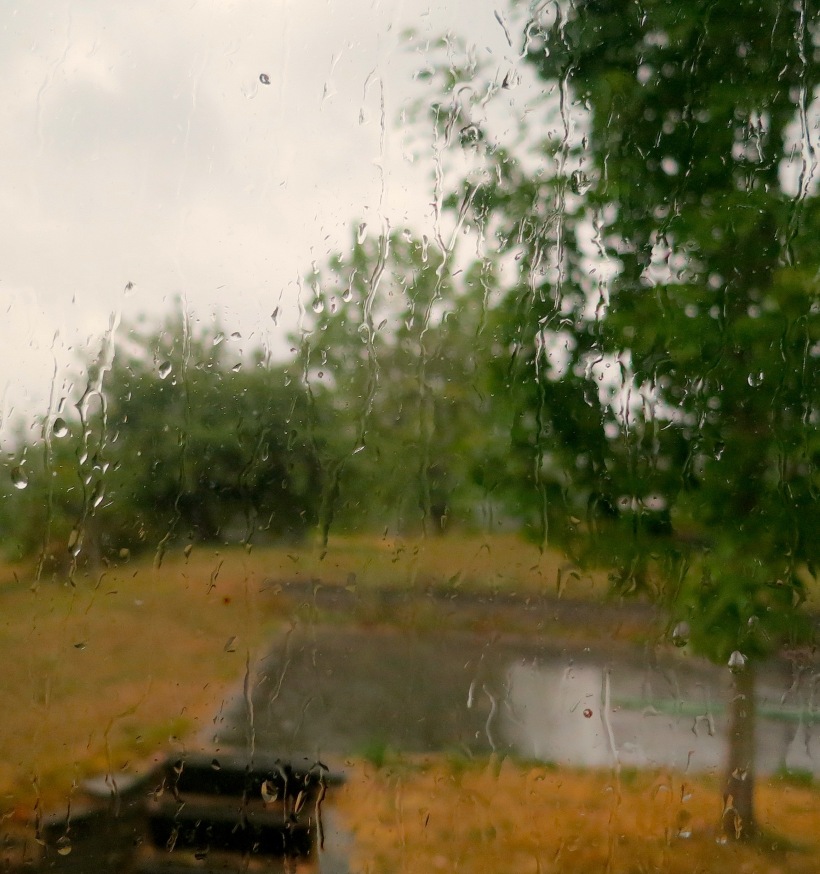
As I look out through a tear-streaked window at the beginning of this dark day,
I feel inadequate to the task before me.

Parched and struggling patients will line my schedule in weeks to come;
they are anxious and already weary and barren, seeking something, anything
to ease their distress in a hostile world.
Preferably an easy pill to swallow.
Nothing that hurts going down.

While others thrive around them,
they wilt and wither, wishing to die.

Lord of Life, equip me to find the words to say that might help.
May it be about more than
genetics, neurotransmitters and physiology.

In this dry season for young lives,
send your penetrating rain to reach them
and those who guide them.
Reach down and shake our roots fiercely
to slake our continual thirst.

1031drops7

When to be Glad

embrace

gardengrass

Well I know now the feel of dirt under the nails,
I know now the rhythm of furrowed ground under foot,
I have learned the sounds to listen for in the dusk,
the dawning and the noon.

I have held cornfields in the palm of my hand,
I have let the swaying wheat and rye run through my fingers,
I have learned when to be glad for sunlight and for sudden
thaw and for rain.

I know now what weariness is when the mind stops
and night is a dark blanket of peace and forgetting
and the morning breaks to the same ritual and the same
demands and the silence.
~Jane Tyson Clement from No One Can Stem the Tide

sunset98163

Soon to arrive, a wave of 15,000 young people
with such potential to grow,
their health needs entrusted to us
as if we tend them as gardeners:
most thriving and flourishing,
yet some already withering,
their roots thirsting.

As the winds of time bring
new thousands to our care,
blown in from places unknown,
I weary weep for those who may not bloom,
wondering if I will fail to water or care enough~

or is it me with thirst unceasing,
my roots drying from each new morning’s
same ritual and same demands unceasing,
as if I’ve forgotten how to be glad for this work,
being met with the silence
of my own gardeners.

rainyleaf7

dillweb


The Fierce Humility of Rain

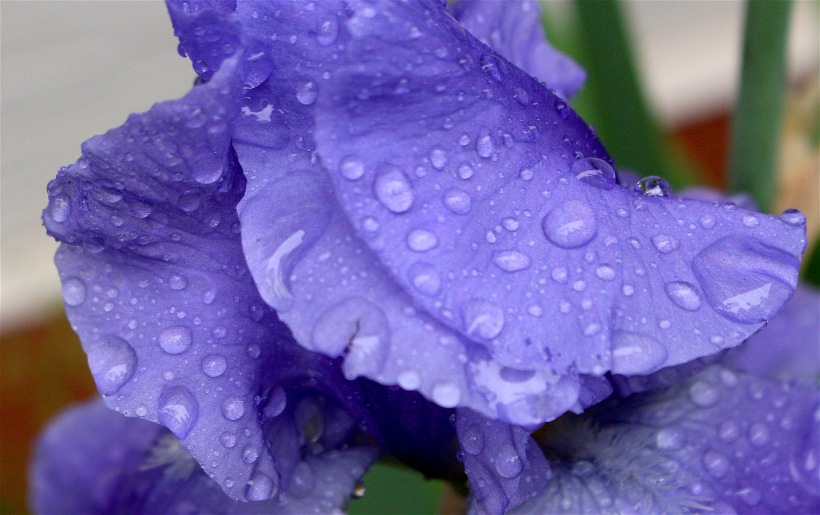
rainyiris52016

rainyrose2

Praise to the Maker of the torrent
and the hurricane,
praise for the fierce humility of rain:

whose motion will not end, neither come to rest
nor ascend again until, like grace,
it finds the lowest empty place.
~Matthew Baker “Rainfall”

rainyiris2

rainypeony

See, banks and brakes
Now, leavèd how thick! lacèd they are again
With fretty chervil, look, and fresh wind shakes
Them; birds build — but not I build; no, but strain,
Time’s eunuch, and not breed one work that wakes.

Mine, O thou Lord of life, send my roots rain
~Gerard Manley Hopkins from “Thou art indeed just, Lord”

rainytransparent2

rainyiris3

As I look out through a tear-streaked window at the beginning of this lightening day,
I fear inadequacy to the task before me:
Parched and struggling patients line my schedule.
Anxious and weary and barren too young,
seeking something, anything
to ease their distress in a hostile world,
preferably an easy pill to swallow.
Nothing that hurts going down.

While others thrive around them,
they wilt and wither,
wishing to cease breathing.

Lord of Life, equip me to find the words to say that might help.
May it be about more than genetics, neurotransmitters and physiology.

In this dry season for young lives,
send your penetrating rain
to fill with grace
the emptiest space.
Reach down and shake their roots
fiercely
and slake their thirst.

storm518163

haflingerrainbow

Handing the Medical Chart Back to the Patient

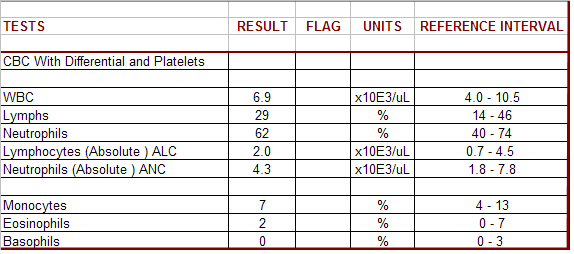
CBC-lymphocytes-report

Seventy years ago my maternal grandmother, having experienced months of fatigue, abdominal discomfort and weight loss, underwent exploratory abdominal surgery, the only truly diagnostic tool available at the time. One brief look by the surgeon told him everything he needed to know: her liver and omentum were riddled with tumor, clearly advanced, with the primary source unknown and ultimately unimportant.  He quickly closed her up and went to speak with her family–my grandfather, uncle and mother.  He told them there was no hope and no treatment, to take her back home to their rural wheat farm in the Palouse country of Eastern Washington and allow her to resume what activities she could with the time she had left.  He said she had only a few months to live, and he recommended that they simply tell her that no cause was found for her symptoms.

So that is exactly what they did.  It was standard practice at the time that an unfortunate diagnosis be kept secret from terminally ill patients, assuming the patient, if told, would simply despair and lose hope.  My grandmother was gone within a few weeks, growing weaker and weaker to the point of needing rehospitalization prior to her death.  She never was told what was wrong and,  more astonishing, she never asked.

But surely she knew deep in her heart.  She must have experienced some overwhelmingly dark moments of pain and anxiety, never hearing the truth so that she could talk about it with her physician and those she loved.  But the conceit of the medical profession at the time, and indeed, for the next 20-30 years, was that the patient did not need to know, and indeed could be harmed by information about their illness.  We modern more enlightened health care professionals know better.  We know that our physician predecessors were avoiding uncomfortable conversations by exercising the “the patient doesn’t need to know and the doctor knows better” mandate.  The physician had complete control of the health care information–the details of the physical exam, the labs, the xray results, the surgical biopsy results–and the patient and family’s duty was to follow the physician’s dictates and instructions, with no questions asked.

Even during my medical training in the seventies, there was still a whiff of conceit about “the patient doesn’t need to know the details.”   During rounds, the attending physician would discuss diseases right across the hospital bed over the head of the afflicted patient, who would often worriedly glance back and worth at the impassive faces of the intently listening medical student, intern and resident team.   There would be the attending’s brief pat on the patient’s shoulder at the end of the discussion when he would say, “someone will be back to explain all this to you.” But of course, none of us really wanted to and rarely did.

Eventually I did learn how important it was to the patient that we provide that information. I remember one patient who spoke little English, a Chinese mother of three in her thirties, who grabbed my hand as I turned to leave with my team, and looked me in the eye with a desperation I have never forgotten.   She knew enough English to understand that what the attending had just said was that there was no treatment to cure her and she only had weeks to live.  Her previously undiagnosed pancreatic cancer had caused a painless jaundice resulting in her hospitalization and the surgeon had determined she was not a candidate for a Whipple procedure.  When I returned to sit with her and her husband to talk about her prognosis, I laid it all out for them as clearly as I could.  She thanked me, gripping my hands with her tear soaked fingers.  She was so grateful to know what she was dealing with so she could make her plans, in her own way.

Thirty years into my practice of medicine,  I now spend a significant part of my patient care time in providing information that helps the patient make plans, in their own way.  I figure everything I know needs to be shared with the patient, in real time as much as possible, with all the options and possibilities spelled out.  That means extra work, to be sure,  and I spend extra time on patient care after hours more than ever before in my efforts to communicate with my patients.  Every electronic medical record chart note I write is sent online to the patient via a secure password protected web portal, usually from the exam room as I talk with the patient.  Patient education materials are attached to the progress note so the patient has very specific descriptions, instructions and further web links to learn more about the diagnosis and my recommended treatment plan.  If the diagnosis is uncertain, then the differential is shared with the patient electronically so they know what I am thinking.  The patient’s Major Problem List is on every progress note, as are their medications, dosages and allergies, what health maintenance measures are coming due or overdue,  in addition to their “risk list” of alcohol overuse, recreational drug use, poor eating habits and tobacco history.  Everything is there, warts and all, and nothing is held back from their scrutiny.

Within a few hours of their clinic visit, they receive their actual lab work and copies of imaging studies electronically, accompanied by an interpretation and my recommendations.  No more “you’ll hear from us only if it is abnormal” or  “it may be next week until you hear anything”.   We all know how quickly most lab and imaging results, as well as pathology results are available to us as providers, and our patients deserve the courtesy of knowing as soon as we do, and now regulations insist that we share the results.   Waiting for results is one of the most agonizing times a patient can experience.   If it is something serious that necessitates a direct conversation, I call the patient just as I’ve always done.  When I send electronic information to my patients,  I solicit their questions, worries and concerns by return message.  All of this electronic interchange between myself and my patient is recorded directly into the patient chart automatically, without the duplicative effort of having to summarize from phone calls.

In this new kind of health care team, the patient has become a true partner in their illness management and health maintenance because they now have the information to deal with the diagnosis and treatment plan.  I don’t ever hear “oh, don’t bother me with the details, just tell me what you’re going to do.”   I have never felt more empowered as a healer when I now can share everything I have available, as it becomes available.  My patients are empowered in their pursuit of well-being, whether living with chronic illness, or recovering from acute illness.  No more secrets.  No more power differential.  No more “I know best.”

After all, it is my patient’s life I am impacting by providing them unrestricted access to the self-knowledge that leads them to a better appreciation for their health and and understanding of their illnesses.

And so I am impacted as well, as it is a privilege to live and work in an age where such a doctor~patient relationship has now become possible.
Between Midnight and Dawn: Pouring Out Ourselves

fencepost11816

fenceposttop1

I know how to be brought low, and I know how to abound. In any and every circumstance, I have learned the secret of facing plenty and hunger, abundance and need. I can do all things through him who strengthens me. Yet it was kind of you to share my trouble.
~Philippians 4:12-14

The truth that many people never understand, until it is too late, is that the more you try to avoid suffering the more you suffer because smaller and more insignificant things begin to torture you in proportion to your fear of being hurt.
~Thomas Merton

We want to avoid suffering, death, sin, ashes. But we live in a world crushed and broken and torn, a world God Himself visited to redeem. We receive his poured-out life, and being allowed the high privilege of suffering with Him, may then pour ourselves out for others.
Elisabeth Elliot


Much of my professional work as a physician involves helping people avoid suffering. Either I strive to prevent illness, or address symptoms early, or once someone is very sick or injured, try to mitigate the discomfort and misery. Sometimes I am able to help. Too often they are futile efforts. At that point all I can give is myself, caring for my patient as best I can. There is no medication, no physical manipulation or surgery, no magic touch that makes the difference that love can.

In a flawed and broken world, there will be suffering that cannot be prevented. We can run, but we can’t hide. It is avoidance that hurts us most. For some, it is the temporary anesthesia of alcohol or other recreational substances, a burrowing into numbness that prevents feeling anything at all. For others, it is the never-ending quest for fulfillment in pleasure, which is transient and hollow, or accumulating material goods, which eventually bore, become obsolete and pile up in landfills.

He poured Himself into us as He suffered. In turn, thus filled, we have ourselves to give.

Nothing else lasts. Nothing else matters.

I’m not sure God wants us to be happy. I think he wants us to love, and be loved. But we are like children, thinking our toys will make us happy and the whole world is our nursery. Something must drive us out of that nursery and into the lives of others, and that something is suffering.
~C. S. Lewis

fenceposttop2

lichen19165


During this Lenten season, I will be drawing inspiration from the new devotional collection edited by Sarah Arthur —Between Midnight and Dawn

Now and Now and Now

bakerlight

sunset15166


And so you have a life that you are living only now,
now and now and now,
gone before you can speak of it,
and you must be thankful for living day by day,
moment by moment …
a life in the breath and pulse and living light of the present…

~Wendell Berry

_____________________

My days are filled with anxious people, one after another after another.  They sit at the edge of their seat, struggling to hold back the flood from brimming eyes, fingers gripping the arms of the chair, legs jiggling.   Each moment, each breath, each rapid heart beat overwhelmed by panic-filled questions:  will there be another breath?  must there be another breath?   Must this life go on like this in fear of what the next moment will bring?

The only thing more frightening than the unknown is the knowledge that the next moment will be just like the last.  There is a serious gratitude deficiency going on here, a lack of recognition of a moment just passed that can never be retrieved and relived.   There is only fear of the next and the next so that the now and now and now is lost forever.

Their worry and angst is contagious as the flu.
I mask up and wash my hands of it throughout the day.
I wish a simple vaccination could protect us all from unnamed fears.

I want to say to them and myself:
Stop.  Stop this.  Stop this moment in time. Stop and stop and stop.
Stop expecting some one, some thing or some drug must fix this feeling.
Stop being blind and deaf to the gift of each breath.
Just stop.
And simply be.

I want to say:
this moment is ours,
this moment of weeping and sharing
and breath and pulse and light.
Shout for joy in it.
Celebrate it.
Be thankful for tears that can flow over grateful lips
and stop holding them back.

Stop me before I write,
out of my own anxiety,
yet another prescription
you don’t really need.

Just be–
and be blessed–
in the now and now and now.


sunset17163

The Doctor is In

waterfall 3

waterfall2

Astonishing material and revelation appear in our lives all the time.
Let it be.
Unto us, so much is given.
We just have to be open for business.

~Anne Lamott from Help Thanks Wow: Three Essential Prayers

__________________________________

I have the privilege to work in a profession where astonishment and revelation awaits me behind each exam room door.

In a typical clinic day, I open that door up to thirty plus times, close it behind me and settle in for the ten or fifteen minutes I’m allocated per patient.  I need to peel through the layers of each person quickly to find the core of truth about who they are and why they’ve come to me.

Sometimes what I’m looking for is right on the surface: in their tears, in their pain, in their fears.  Most of the time, it is buried deep and I need to wade through the rashes and sore throats and coughs and headaches and discouragement to find it.

Once in awhile, I actually do something tangible to help right then and there — sew up a cut, lance a boil, splint a fracture, restore hearing by removing a plug of wax from an ear canal.

Often I find myself giving permission to a patient to be sick — to take time to renew, rest and trust their bodies to know what is best for a time.

Sometimes, I am the coach pushing them to stop living sick — to stop hiding from life’s challenges, to stretch even when it hurts, to get out of bed even when not rested, to quit giving in to symptoms that can be overcome rather than be overwhelming.

Always I’m looking for an opening to say something a patient might think about after they leave my clinic — how they can make better choices, how they can be bolder and braver in their self care, how they can intervene in their own lives to prevent illness, how every day is just one thread in the larger tapestry of their lifespan.

Each morning I rise early to get work done at home before I actually arrive at my desk at work, trying to avoid feeling unprepared and inadequate to the volume of tasks heaped upon each day.   I know I will be stretched beyond my capacity, challenged by the unfamiliar, the unexpected and will be stressed by obstacles thrown in my way.  I know I will be held responsible for things I have little to do with, simply because I’m the one “in charge” as the decision-maker.

It is always tempting to go back to bed and hide.

Instead of hiding,  I go to work as the exam room doors need to be opened and the layers peeled away.  I understand the worry, the fear and the pain because I have lived it too.  Even now in my seventh decade of life,  I am learning how to let it be, even if it is scary.  It is a gift perhaps I can share.

No matter what waits behind the exam room door,  it will be astonishing to me.

I’m grateful to be open for business.  The Doctor is In.


waterfall

Saved By a Storm

leawedding


Your rolling and stretching had grown quieter that stormy winter night
twenty three years ago, but no labor came as it should.
A week overdue post-Christmas,
you clung to amnion and womb, not yet ready.
Then the wind blew more wicked
and snow flew sideways, landing in piling drifts,
the roads becoming impassable, nearly impossible to traverse.

So your dad and I tried,
worried about being stranded on the farm far from town.
Our little car got stuck in a snowpile in the deep darkness,
our tires spinning, whining against the snow.
A nearby neighbor’s bulldozer dug us out to freedom.
You floated silent and still, knowing your time was not yet.

Creeping slowly through the dark night blizzard,
we arrived to the warm glow of the hospital.
You slept.
I, not at all.

Morning sun glistened off sculptured snow outside our window,
and your heart had ominously slowed in the night.
We both were jostled, turned, oxygenated, but nothing changed.
You beat even more slowly, letting loose your tenuous grip on life.

The nurses’ eyes told me we had trouble.
The doctor, grim faced, announced
delivery must happen quickly,
taking you now, hoping we were not too late.
I was rolled, numbed, stunned,
clasping your father’s hand, closing my eyes,
not wanting to see the bustle around me,
trying not to hear the shouted orders,
the tension in the voices,
the quiet at the moment of opening
when it was unknown what would be found.
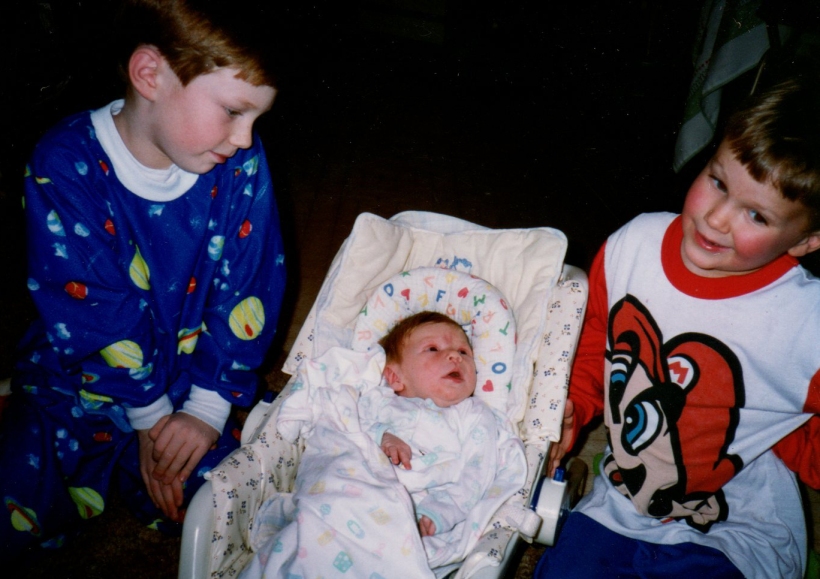
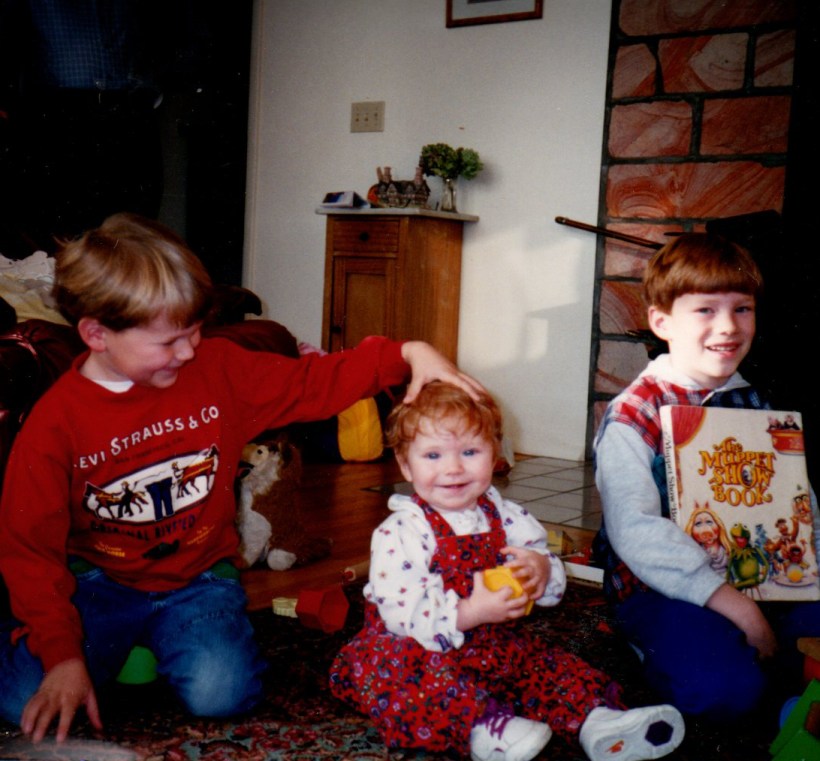
And then you cried. A hearty healthy husky cry, a welcomed song.
Perturbed and disturbed from the warmth of womb,
to the cold shock of a bright lit operating room,
your first vocal solo brought applause
from the surrounding audience who admired your pink skin,
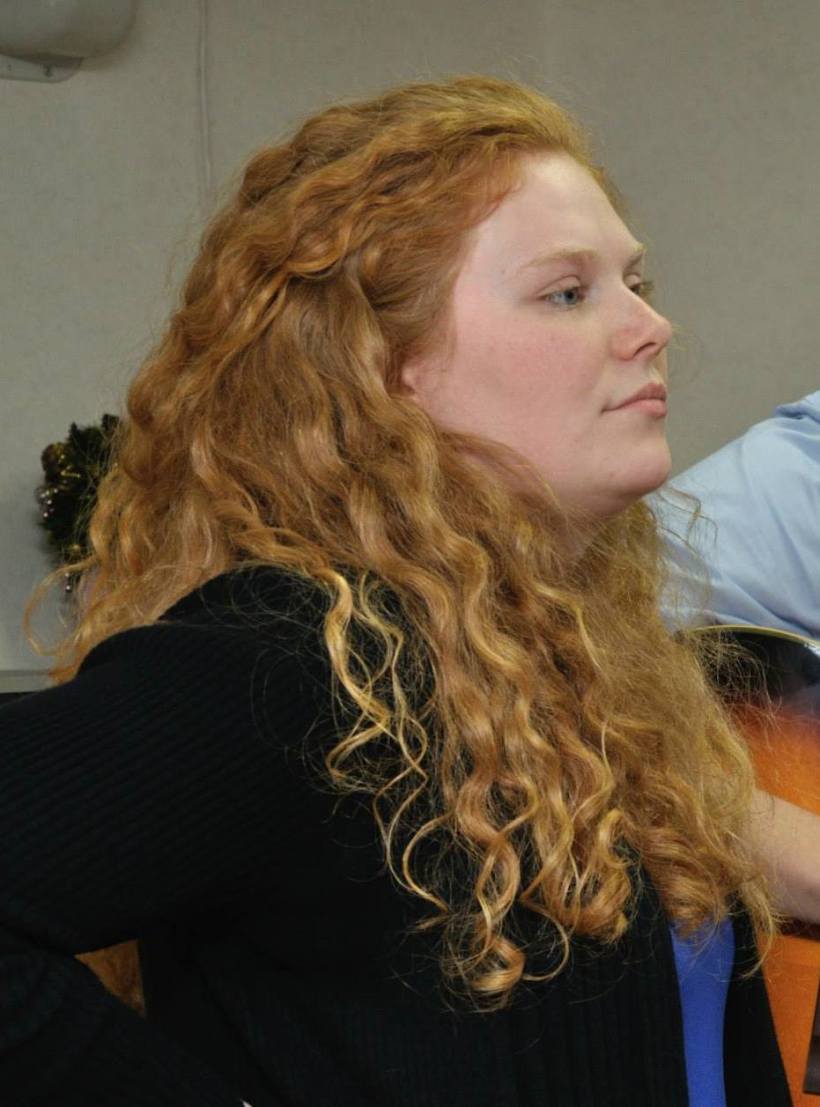
your shock of damp red hair, your blue eyes squeezed tight,
then blinking open, wondering and wondrous,
emerging saved from the storm within and without.

You were brought wrapped for me to see and touch
before you were whisked away to be checked over thoroughly,
your father trailing behind the parade to the nursery.
I closed my eyes, swirling in a brain blizzard of what-ifs.

If no snow storm had come,
you would have fallen asleep forever within my womb,
no longer nurtured by my aging placenta,
cut off from what you needed to stay alive.
There would have been only our soft weeping,
knowing what could have been if we had only known,
if God provided a sign to go for help.

Saved by a storm and dug out from a drift:
I celebrate each time I hear your voice singing.


*my annual “happy birthday” to Lea,
now a college graduate and school teacher*

leawheaton2


Just checking to see if she is real...
Just checking to see if she is real…

A farmer's daughter

lea004

Only Human

redcurrant61115

photo by Nate Gibson

                                                                                                                               above photo by Nate Gibson

pastureoctober1


They work with herbs
and penicillin.
They work with gentleness
and the scalpel.
They dig out the cancer,
close an incision
and say a prayer
to the poverty of the skin.
They are not Gods
though they would like to be;
they are only human
trying to fix up a human.
Many humans die.
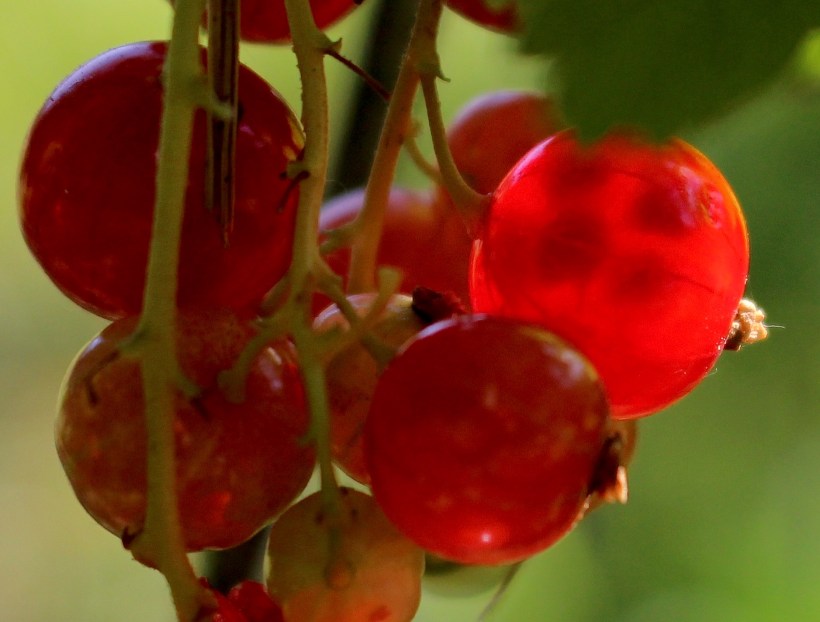
They die like the tender,
palpitating berries
in November.
But all along the doctors remember:
First do no harm.
They would kiss if it would heal.
It would not heal.

If the doctors cure
then the sun sees it.
If the doctors kill
then the earth hides it.
The doctors should fear arrogance
more than cardiac arrest.
If they are too proud,
and some are,
then they leave home on horseback
but God returns them on foot.
~Anne Sexton “Doctors”


Decades ago, essayist, journalist and storyteller E.B. White advised, “Be obscure clearly.”

As a physician, I work at clarifying obscurity about the human condition daily, dependent on my patients to communicate the information I need to make a sound diagnosis and treatment recommendation.  There is much that is still unknown and difficult to understand about psychology, physiology and anatomy.  Then throw in a disease process or two or three to complicate what appears to be “normal”, and further consider the side effects and complications of various treatments — even evidence-based decision making isn’t equipped to reflect perfectly the best and only solution to a problem.  Sometimes the solution is very muddy, hardly pristine and clear.

Let’s face the lack of facts of the plethora of shifting, changing facts.  Our conceit about our clinical work is ready to unseat us and plunk us in the dust even on the best of days when everything goes well.  We hope our patients communicate their concerns clearly and comprehensively, reflecting accurately what is happening with their health.  In a typical clinic day we see things we’ve never seen before, must expect the unexpected, learn things we never thought we’d need to know, attempt to make the better choice between competing treatment alternatives, unlearn things we thought were gospel truth but have just been disproved by the latest double blind controlled study which may later be reversed by a newer study.   Our footing, advertised by our training as so solid and reliable,  is quicksand much of the time even though our patients trust we are giving them advice based on a foundation of truth learned over years of education and experience.   Add in medical decision-making that is driven by cultural, political or financial outcomes rather than what works best for the individual, and our clinical clarity becomes even further obscured.

Over thirty years of doctoring in the midst of the mystery of medicine — learning, unlearning, listening, discerning, explaining, guessing, hoping,  along with constant silent praying — has taught me the humility that any good clinician must have when making decisions with and about patients.  What works well for one patient may not be at all appropriate for another despite what the evidence says or what an insurance company or the government is willing to pay for.  Each person we work with deserves the clarity of a fresh look and perspective, to be “known” and understood for their unique circumstances rather than treated by cook-book algorithm.  The complex reality of health care reform may dictate something quite different.

The future of medicine is dependent on finding clarifying solutions to help unmuddy the health care decisions our patients face. We have entered a time of information technology that is unparalleled in bringing improved communication between clinicians and patients because of more easily shared electronic records.  The pitfall of not knowing what work up was previously done will be a thing of the past.  The risk and cost of redundant procedures can be avoided.  The patient shares responsibility for maintenance of their medical records and assists the diagnostic process by providing online symptom and outcomes documentation.   The benefit of this shared record is not that all the muddiness in medicine is eliminated, but that an enhanced transparent partnership between clinician and patient develops,  reflecting a relationship able to transcend the unknowns.

So we can be obscure clearly.   Lives depend on it.
And maybe we can stay on the horse and out of the dirt a little while longer.

elderberry2

pyracantusnov