These sudden ends of time must give us pause. We fray into the future, rarely wrought Save in the tapestries of afterthought. More time, more time. ~Richard Wilbur from “Year’s End”
Whenever you find tears in your eyes, especially unexpected tears, it is well to pay the closest attention. They are not only telling you something about the secret of who you are, but more often than not God is speaking to you through them of the mystery of where you have come from and is summoning you to where, if your soul is to be saved, you should go next.
~Frederick Buechner
I’m not paying close enough attention if I’m too busy looking for kleenex. It seems the last couple weeks I have had more than ample opportunity to find out the secret of who I am, where I have come from and where I am to be next, and I’m loading my pockets with kleenex, just in case.
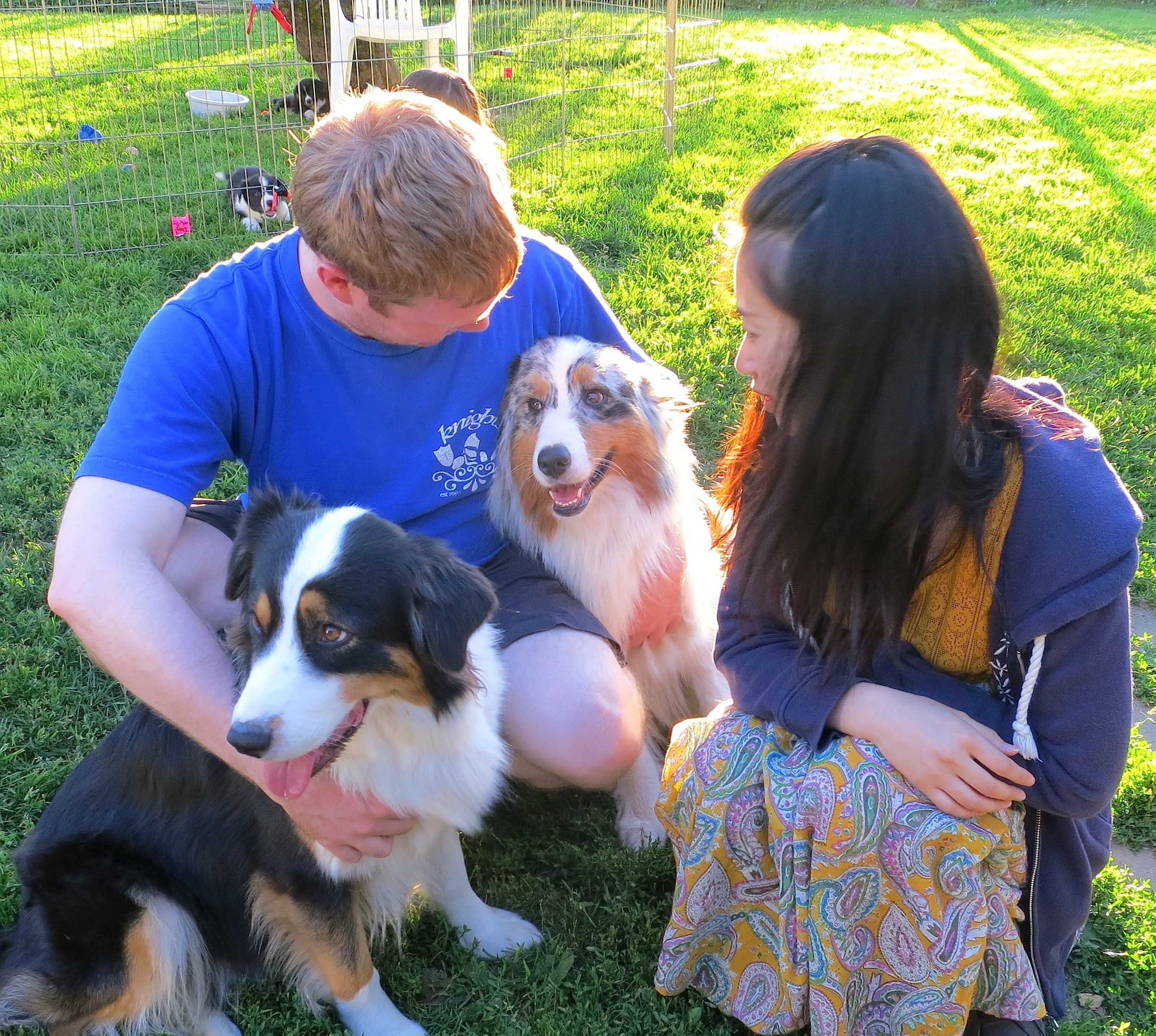
It mostly has to do with welcoming our children, their spouses and their friends back home for the holidays to become a full out noisy messy chaotic household again, with lots of music and laughter and laundry and meal preparation. It is about singing grace together before a meal and choking on precious words of gratitude. It certainly has to do with bidding farewell again, as we begin to do a few hours from now and, to gather them in for the hug and then unclasping and letting go, urging and encouraging them to go where their hearts are telling them they are needed and called to be. I too was let go once and though I would try to look back, too often in tears, I knew to set my face toward the future. It led me here, to this farm, this marriage, this family, this work, to more tears, to more letting go, as it will continue if I live long enough to weep again and again with gusto and grace.
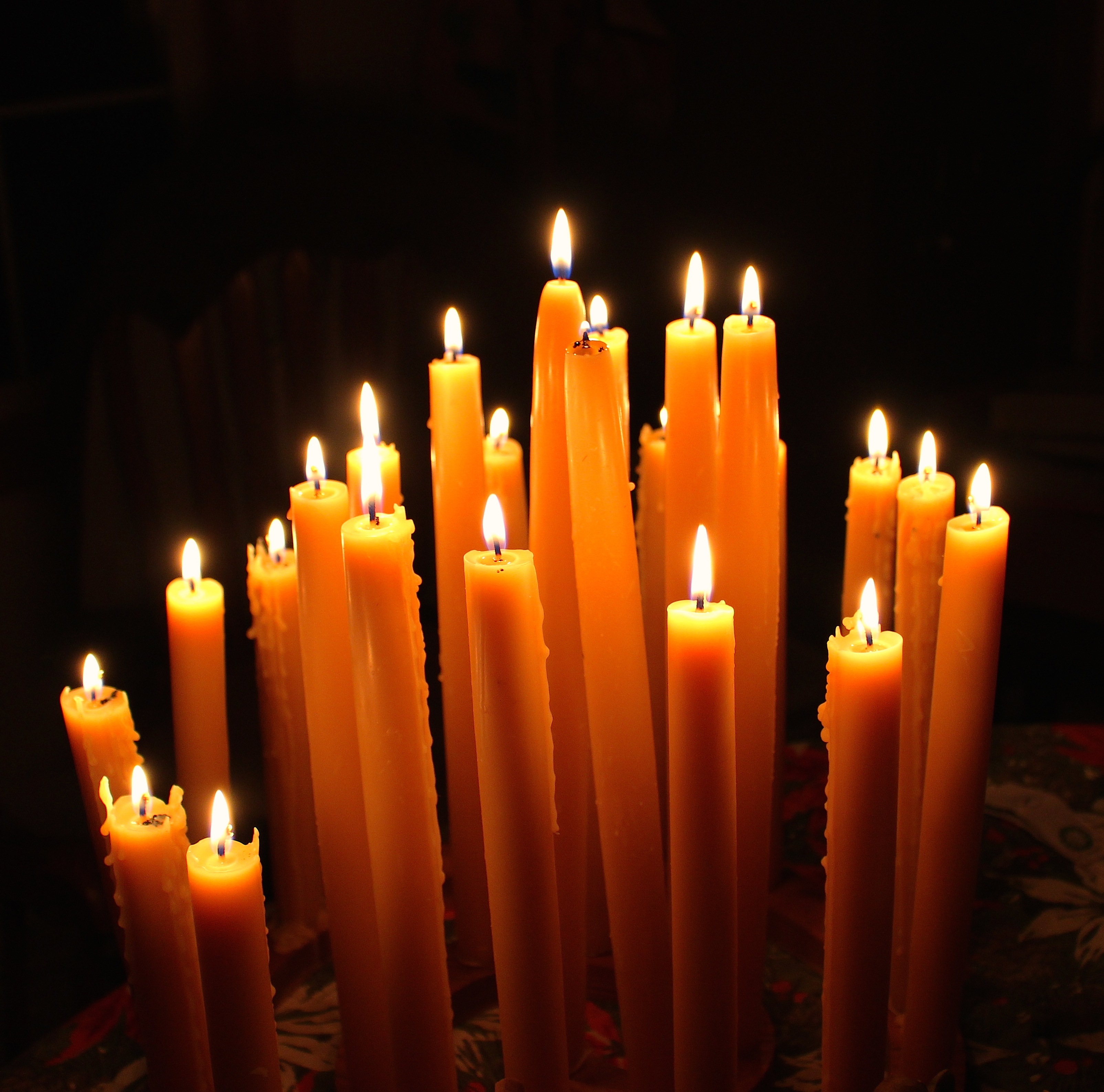
This is where I should go next: to love so much and so deeply that letting go is so hard that tears are no longer unexpected or a mystery to me. They release the fullness that can no longer be contained: God’s still small voice spilling down my cheeks drop by drop like wax from a burning candle. No kleenex needed. Let it flow.
In 1959, our family moved from an older 2 story farm house in a rural community north of Seattle, to a rambler style home on seven acres just outside the city limits of Olympia, Washington. It was a big adjustment to move to a much smaller house without a basement or upper story, no garage, and no large haybarn nor chicken coop on fewer acres. It meant most things we owned didn’t make the move with us.
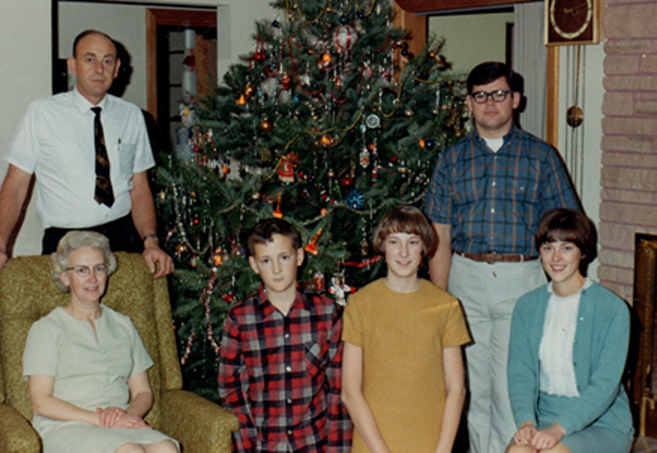
The rambler had side by side mirror image rooms as the central living space between the kitchen on one side and the hallway to the bedrooms on the other. The living room could only be entered through the front door and the family room was accessed through the back door with a shared sandstone hearth in the center, containing a fireplace in each room. The only opening between the rooms had a folding door which was shut most of the year. In December, the door was opened to accommodate the Christmas tree, so it was partially in the living room and depending on its generous width, spilling over into the family room. That way it was visible from both rooms, and didn’t take up too much floor space.
The living room, containing the only carpeting in the house and our “best” furniture, was sacrosanct by parental decree. To keep our two matching sectional sofas, an upholstered chair and gold crushed velvet covered love seat in pristine condition, the room was off-limits unless we had company or for some very specific reason, like practicing the piano that sat in one corner. The carpet was never to develop a traffic pattern, there would be no food, beverage, or pets ever allowed in that room, and the front door was not to be used unless a visitor arrived. The hearth never saw a fire lit on that side because of the potential of messy ashes or smoke smell. This was not a room where our family gathered, talked loudly, laughed much or roughhoused on the floor. This was not a room for arguments or games and certainly not for toys. For most of the year, the “living” room was not lived in at all. The chiming clock next to the hearth, wound with weighted cones on the end of chains, called out the hours without an audience.
One week before Christmas, a tree was chosen to fit in the space where it could overflow into the family room. I enjoyed decorating the “family room” side of the tree, using all my favorite ornaments that were less likely to break if they fell on the linoleum floor on that side of the door. Only on Christmas morning, it was our privilege to “mess” up the living room with wrapping paper, ribbons and us.
It was as if the Christmas tree itself symbolized a house divided, with a “formal” side in the living room and a “real life” face on the other side where daily “living” was actually taking place. Our tree straddled more than just the two rooms. Every year the tree’s branches tried to reach out to shelter a family that was slowly and imperceptibly falling apart, much like the drying fir needles falling to the floor, only to be swept away.
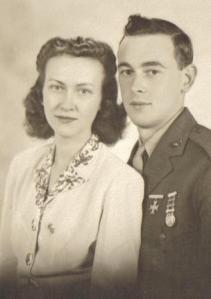
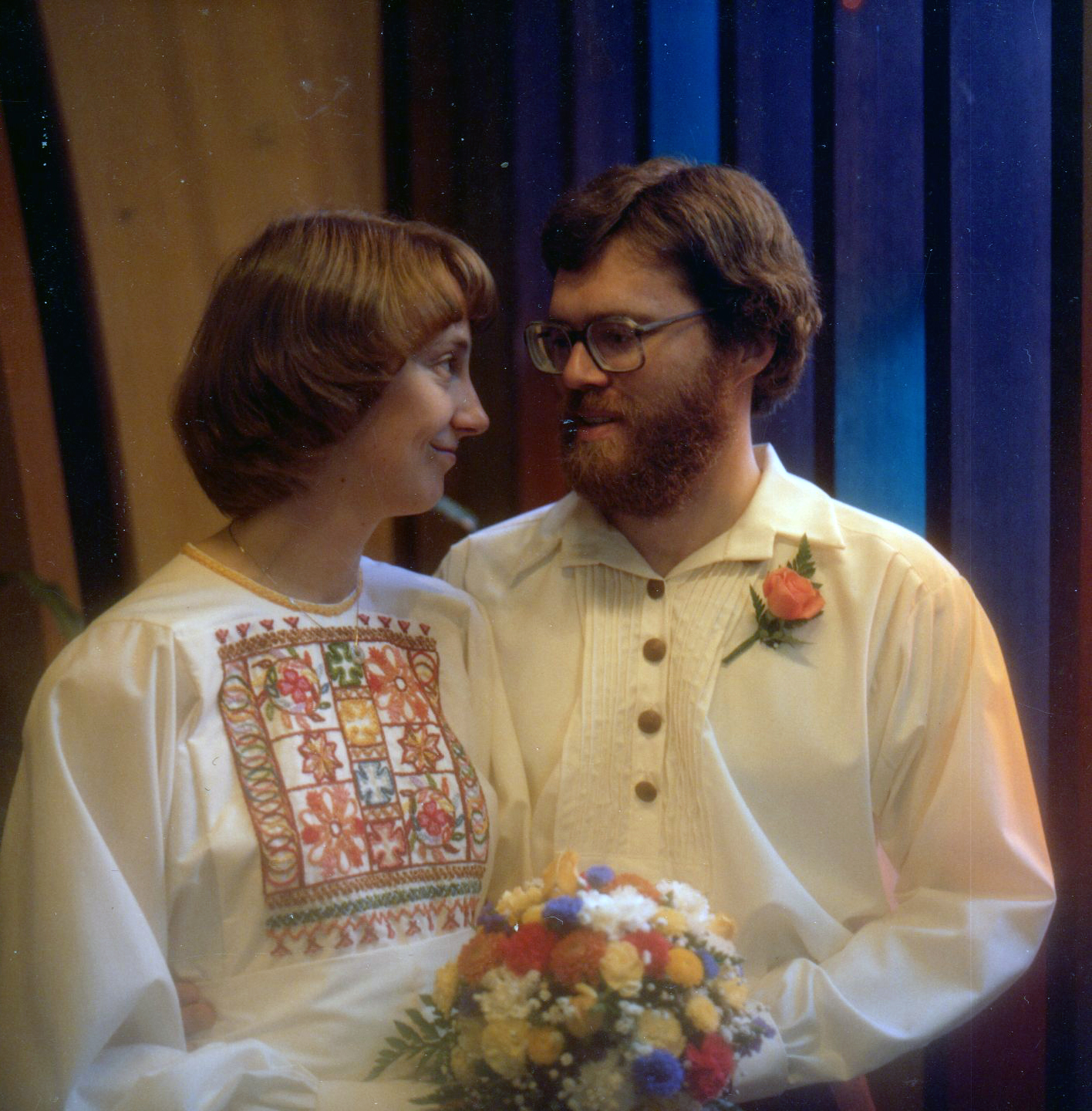
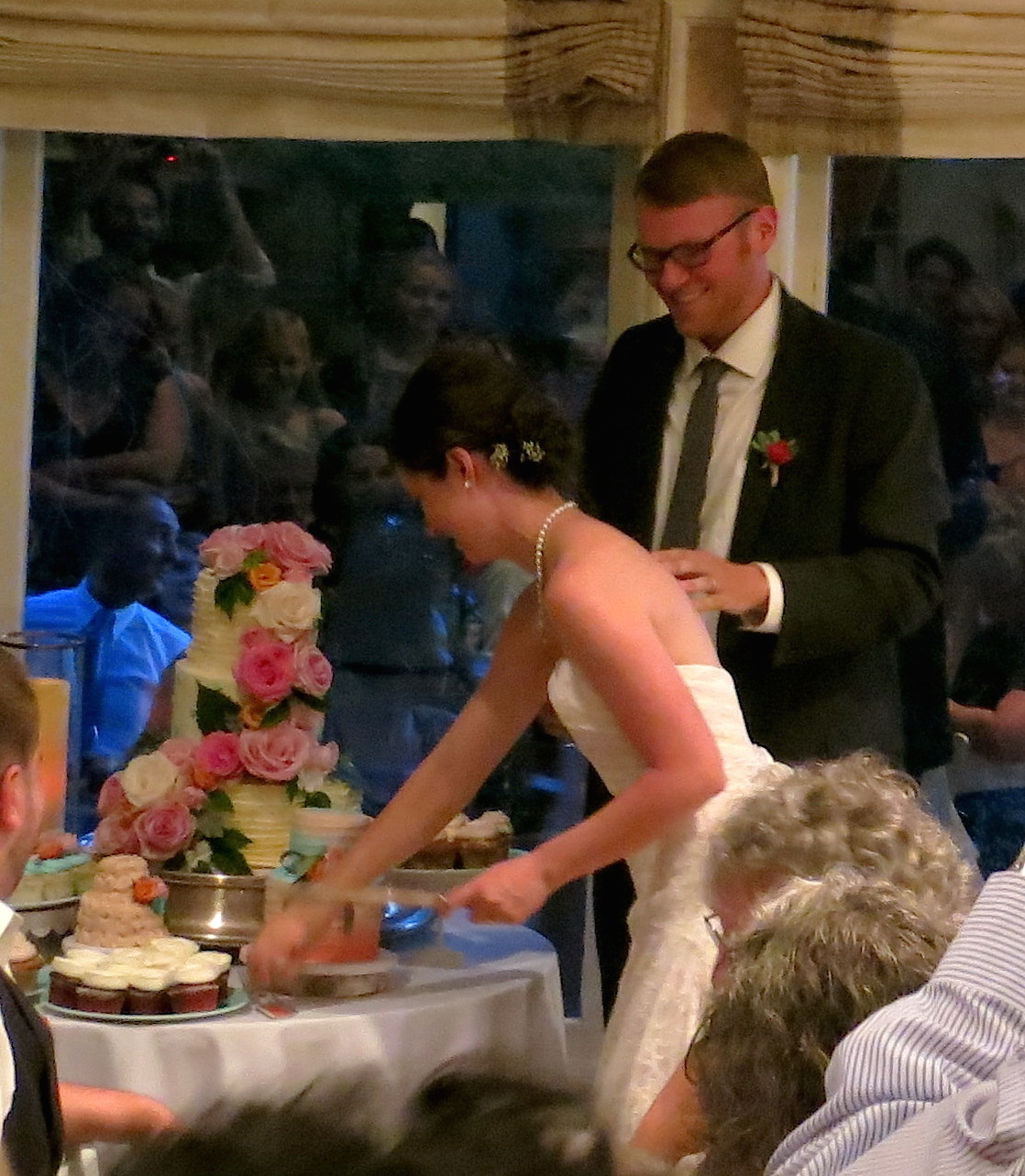
Seventy two years ago this week, my parents were married. Christmas Eve certainly wasn’t a typical wedding anniversary, but it did make it easy to remember during their years together. It was a date of necessity, only because a justice of the peace was available to marry a score of war-time couples in Quantico, Virginia, shortly before the newly trained Marine officers were shipped out to the South Pacific to fight in WWII.
Now that they are both gone, when I look at their young faces in their only wedding portrait, I see a hint of the impulsive decision that led to that wedding just a week before my father left for 30 months. They had known each other for over a year, had talked about a future together, but with my mother starting a teaching job, and the war potentially impacting all young men’s lives very directly, they had not set a date.
My father had to put his college education on hold to enlist, knowing that would give him some options he wouldn’t have if drafted, so they went their separate ways as he headed east to Virginia for his Marine officer training, and Mom started her high school teaching career as a speech and drama teacher in rural Colville in Eastern Washington. One day in early December, he called her and said, “If we’re going to get married, it’ll need to be before the end of the year. I’m shipping out the first week in January.” Mom went to her high school principal, asked for a two week leave of absence which was granted, told her astonished parents, bought a dress, and headed east on the train with a friend who had received a similar call from her boyfriend. This was a completely uncharacteristic thing for my overly cautious mother to do so it must have been love.
They were married in a brief civil ceremony with another couple as the witnesses. They stayed in Virginia only a couple days and took the train back to San Diego, and my father left. Just like that. Mom returned to her teaching position and the first three years of their married life was letter correspondence only, with gaps of up to a month during certain island battles when no mail could be delivered or posted.
As I sorted through my mother’s things following her death six years ago, their letters to each other, stacked neatly and tied together, reside now in a box in my bedroom. I have not yet opened them but will when I’m ready. What I will find there will be words written by two young people who could not have foretold the struggles that lay ahead for them during and after the war but who both depended on faith and trust to persevere despite the unknowns. The War itself seemed struggle enough for the millions of couples who endured the separation, the losses and grieving, as well as the eventual injuries–both physical and psychological. It did not seem possible that beyond those realities, things could go sour after reuniting.
The hope and expectation of happiness and bliss must have been overwhelming, and real life doesn’t often deliver. After raising three children, their 35 year marriage fell apart with traumatic finality. When my father returned (again) over a decade later, asking for forgiveness, they remarried and had five more years together before my father died.
And so too there must have been expectations of happiness in the barn on that first Christmas Eve. It must have been frightening for the parents of this special Baby, knowing in their minds but not completely understanding in their hearts what responsibility lay in their arms. They had to find faith and trust, not just in God who had determined what their future held, but in each other, to support one another when things became very difficult. Those challenges mounted up quickly: there was to be no room for them, there was a baby to deliver without assistance from anyone, and the threat of Herod’s murder of innocents eventually drove them from their home country.
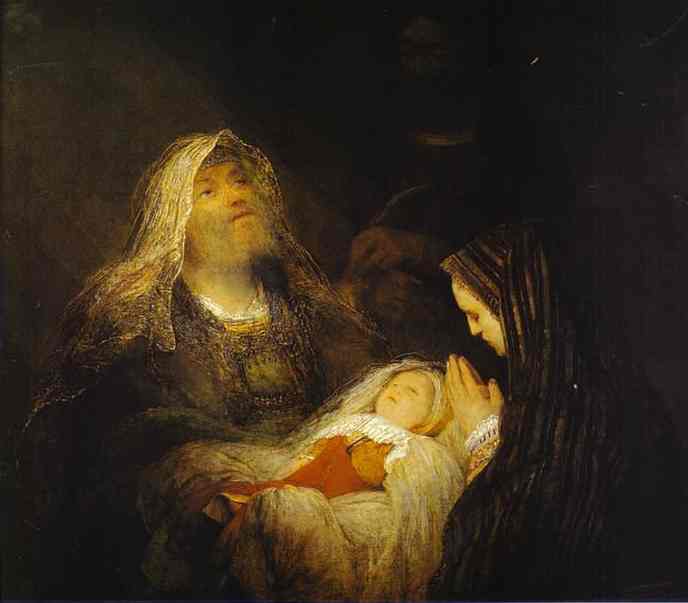
When Mary and Joseph go to the temple for the circumcision and consecration of their son the following week, they allow a “righteous and devout man”, Simeon, to hold their baby as, moved by the Holy Spirit, he tells them the role this child is to play in the world. He prays to the Lord, “As you have promised, you now dismiss your servant in peace. For my eyes have seen your salvation, which you have prepared in the sight of all people, a light for revelation to the Gentiles and for glory to your people Israel.”
It must have been like looking into a crystal ball to hear Simeon speak, as we’re told “the child’s father and mother marveled at what was said about him.” But Simeon didn’t whitewash the reality to come. It would have been easy to do so– simply mention salvation, the light and the glory that will come to the people due to this little baby, but leave out the part about how His existence would cause division in Israel as well as the rejection, anguish and suffering that He would experience. Not only that, but the pain is not His alone but will be His parents’ to bear as well. I’m sure that statement must have ended the sense of “marvel” they were feeling, and replaced it instead with great sorrow and trepidation.
Christmas is a time of joy, a celebration of new beginnings and new life when God became man, humble, vulnerable and tender. But it also gives us a foretaste for the profound sacrifice made in giving up this earthly life, not always so gently. A baby in a manger is a lovely story to “treasure up” in our hearts but once He became a bleeding Redeemer on a cross, it pierces our living beating hearts, just as Simeon foretold.
My parents, such young idealistic adults 72 years ago, now servants dismissed from this life in peace. As I peer at their faces in their wedding photo, I know those same eyes, then unaware of what was to come, now behold the light, the salvation and the glory~~the ultimate Christmas~~in His presence.
Song of Simeon by Aert De Gelder, a student of Rembrandt
We are more together than we know, how else could we keep on discovering we are more together than we thought? You are the known way leading always to the unknown, and you are the known place to which the unknown is always leading me back. More blessed in you than I know… ~Wendell Berry from “The Country of Marriage”
Heartbreaking summer beyond taste, Ripeness and frost are soon to know; But might such color hold the west, And time, and time, be honey-slow… ~Léonie Adams from “Midsummer”
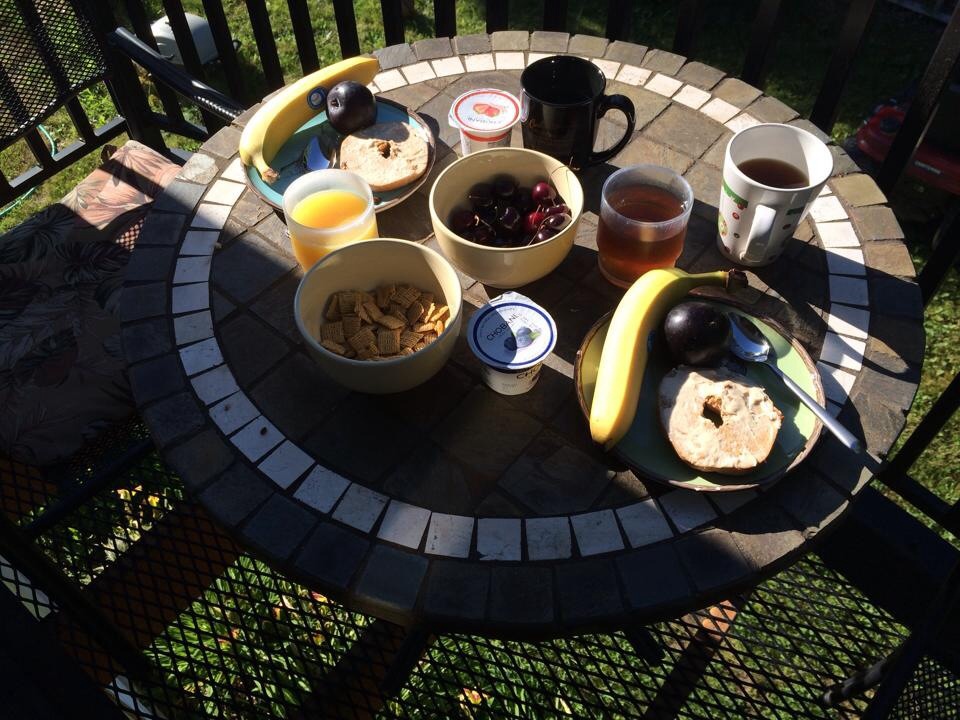
Every morning I sit across from you at the same small table, the sun all over the breakfast things— curve of a blue-and-white pitcher, a dish of berries— me in a sweatshirt or robe, you invisible.
Most days, we are suspended over a deep pool of silence. I stare straight through you or look out the window at the garden, the powerful sky, a cloud passing behind a tree.
There is no need to pass the toast, the pot of jam, or pour you a cup of tea, and I can hide behind the paper, rotate in its drum of calamitous news.
But some days I may notice a little door swinging open in the morning air, and maybe the tea leaves of some dream will be stuck to the china slope of the hour—
then I will lean forward,
elbows on the table,
with something to tell you,
and you look up, as always,
your spoon dripping milk, ready to listen.
~Billy Collins “A Portrait of the Reader With a Bowl of Cereal”
—let me yell for joy at what I have been given, at the blessedness that I have been afforded, at the long seasons of grace you have spun out for me
in a great summer taffy of a life. ~A.G. Harmon from patheos.com
Do you know how the dream looms? how if summer misses one of us the two of us miss summer— Summer when the lungs of the earth take a long breath for the change to low contralto singing mornings when the green corn leaves first break through the black loam— And another long breath for the silver soprano melody of the moon songs in the light nights when the earth is lighter than a feather, the iron mountains lighter than a goose down— So I shall look for you in the light nights then, in the laughter of slats of silver under a hill hickory. In the listening tops of the hickories, in the wind motions of the hickory shingle leaves, in the imitations of slow sea water on the shingle silver in the wind— I shall look for you. ~Carl Sandburg, “Silver Wind”
Creating foundation that will last in the fitting of stone to stone, different, separate, but stronger when the fit is perfect~~
If you should look for this place after a handful of lifetimes:
Look for foundations of sea-worn granite, my fingers had the art to make stone love stone, you will find some remnant.
~Robinson Jeffers from “Tor House”














 Barnstorming