The World Persists in its Beauty

Though he was ill and in pain,
in disobedience to the instruction he
would have received if he had asked,
the old man got up from his bed,
dressed, and went to the barn.
The bare branches of winter had emerged
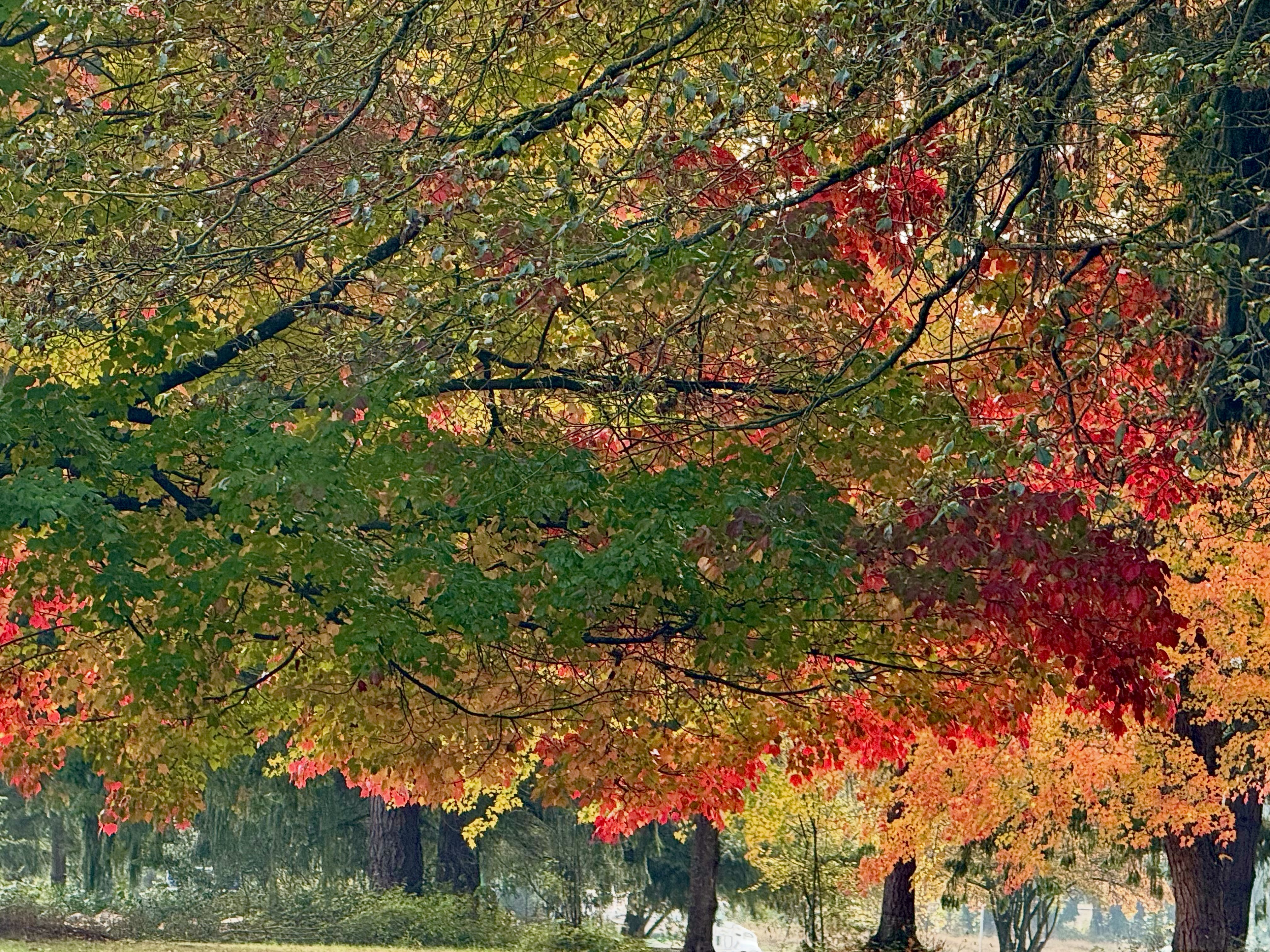
through the last leaf-colors of fall,
the loveliest of all, browns and yellows
delicate and nameless in the gray light
and the sifting rain. He put feed
in the troughs for eighteen ewe lambs,
sent the dog for them, and she
brought them. They came eager
to their feed, and he who felt
their hunger was by their feeding
eased. From no place in the time
of present places, within no boundary
nameable in human thought,
they had gathered once again,
the shepherd, his sheep, and his dog
with all the known and the unknown
round about to the heavens’ limit.
Was this his stubbornness or bravado?
No. Only an ordinary act
of profoundest intimacy in a day
that might have been better. Still
the world persisted in its beauty,
he in his gratitude, and for this
he had most earnestly prayed.

~Wendell Berry “XI”

He (the professor) asked what I made
of the other students (at Oxford) so I told him.
They were okay, but they were all very similar…
they’d never failed at anything or been nobodies,
and they thought they would always win.
But this isn’t most people’s experience of life.

He asked me what could be done about it.
I told him the answer was to send them all out for a year
to do some dead-end job
like working in a chicken processing plant
or spreading muck with a tractor.
It would do more good than a gap year in Peru. 

He laughed and thought this was tremendously witty.
It wasn’t meant to be funny.
~James Rebanks from The Shepherd’s Life:Modern Dispatches from an Ancient Landscape
(or how a sheep farmer succeeds at Oxford and then goes back to the farm)

For over forty years, I have spent about an hour a day shoveling manure out of our horse stalls and I’m a better person for it.

Wheeled to a mountainous pile in our barnyard, this daily collection of manure happily composts year round, becoming rich fertilizer in a matter of months through a crucible-like heating process of organic chemistry, bacteria and earthworms. Nothing mankind has achieved quite matches the drama of useless and basically disgusting stuff transforming into the essential elements needed for productive growth and survival.

Our government certainly hasn’t discovered the secret. This is a metaphor I can <ahem> happily muck about in.

I’m in awe, every day, at being part of this process — in many ways a far more tangible improvement to the world than anything else I manage to accomplish every day. The horses, major contributors that they are, act underwhelmed by my enthusiasm. I guess some miracles are relative, depending on one’s perspective, but if the horses understood that the grass they contentedly eat in the pasture, or the hay they munch on during the winter months, was grown thanks to their carefully recycled waste products, they might be more impressed.

Their nonchalance about the daily mucking routine is understandable. If they are outside, they probably don’t notice their beds are clean when they return to the stalls at night. If they are inside during the heavy rain days, they feel duty-bound to be in my face as I move about their stall, toting my pitchfork and pushing a wheelbarrow. I’m a source of constant amusement as they nose my jacket pockets for treats that I never carry, as they beg for scratches on their unreachable itchy spots, and as they attempt to overturn an almost full load, just to see balls of manure roll to all corners of the stall like breaking a rack of billiard balls in a game of pool.

Good thing I’m a patient person always seeking an object lesson in whatever I see or do ~ mucking out stalls every day helps me tolerate the proverbial muck I encounter in the news. And spending an hour a day getting dirty in the real stuff somehow makes the virtual manure less noxious.

Indeed, everyone should be mucking out, especially during election season, as I think the world would generally be a better place.

Swift Elation with a Sense of Sadness

Then summer fades and passes and October comes.
We’ll smell smoke then,
and feel an unexpected sharpness,
a thrill of nervousness,
swift elation,
a sense of sadness and departure.
~ Thomas Wolfe

Such days of autumnal decline hold a strange mystery which adds to the gravity of all our moods.
~Charles Nodier

I was drinking in the surroundings:
air so crisp you could snap it with your fingers
and greens in every lush shade imaginable
offset by autumnal flashes of red and yellow.
~Wendy Delsol

October feels bittersweet, heralding the inevitable slow down to winter stillness.

The garden is put to bed, lawnmowers stored away, horses fluffy with winter fur coats, pruning shears not yet sharpened for the winter work of refinement and shaping.

Yet the air sparkles, sharp-edged in the lungs.

I am never ready for this crush of dark hours descending so quickly. Yet it comes with the promise of light and growth to come.

And so we feast on October while pondering what comes next.

A Radical Amazement

I shall open my eyes and ears.
Once every day I shall simply stare

at a tree, a flower, a cloud, or a person.
I shall not then be concerned at all to ask what they are but simply be glad that they are.
I shall joyfully allow them the mystery of what C.S. Lewis calls their “divine, magical, terrifying and ecstatic” existence.
~Clyde Kilby in “Amazed in the Ordinary”

Our goal should be to live life in radical amazement. ….get up in the morning and look at the world in a way that takes nothing for granted. Everything is phenomenal; everything is incredible; never treat life casually. To be spiritual is to be amazed.

~Abraham Joshua Heschel

An open heart is alive to wonder, to the sheer marvel of “isness.”
It is remarkable that the world is,
that we are here,
that we can experience it.
This world is not ordinary.
Indeed, what is remarkable is that
it could ever look ordinary to us.


An open heart knows “radical amazement.”
An open heart and gratitude go together.
We can feel this in our bodies.
In the moments in my life
when I have been most grateful,
I have felt a swelling,
almost a bursting in my chest.
~Marcus Borg from The Heart of Christianity

photo by Nicole Moore

Much of the time I sleep-walk through each day, oblivious, as if in dense fog with unseeing wide-open eyes.

Especially if I’m rushing from here to there, I sense time slowing: I stumble through the days, the path appears indiscernible, my future uncertain, my purpose elusive.

How to stay awake and aware of the radical amazement of each moment given to me?

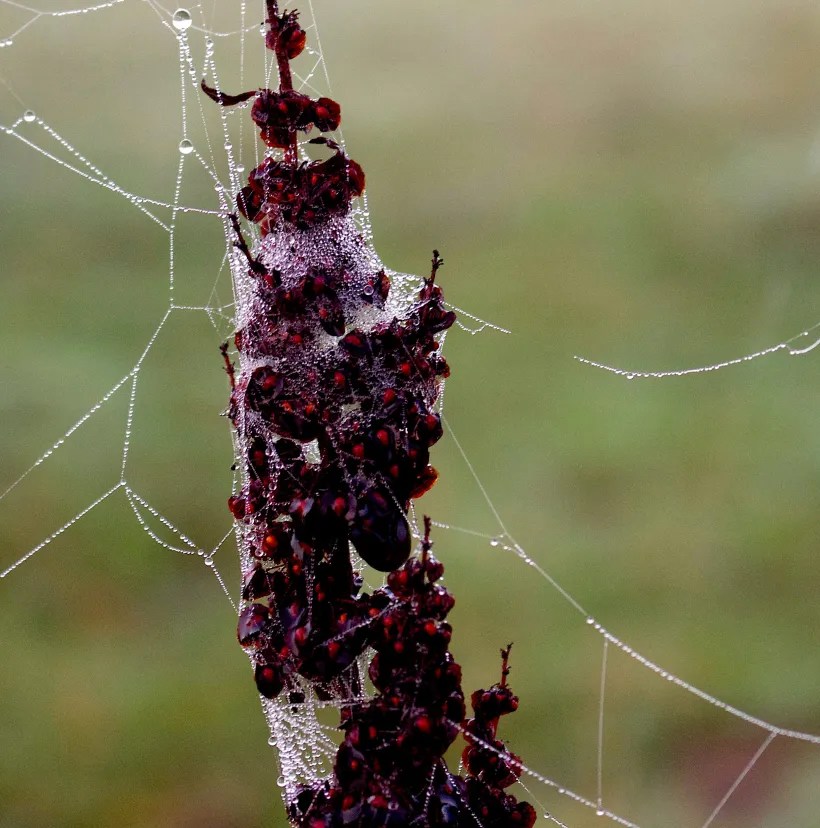
When I’m simply glad, everything becomes more vivid — the sounds of geese flying overhead, the smell of the farm, the layers of a foggy landscape, the taste of an autumn apple right from the tree, the string of fog-drop pearls on a spider web, the necessity and intensity of every breath, my purpose to be witness.

So wake me to be amazed anew -please- to see all that is around me. I want to chew on it again and again, simply savoring and simply glad.

You Who Are Reading This Now…

Starting here, what do you want to remember?
How sunlight creeps along a shining floor?
What scent of old wood hovers, what softened
sound from outside fills the air?

Will you ever bring a better gift for the world
than the breathing respect that you carry
wherever you go right now? Are you waiting
for time to show you some better thoughts?

When you turn around, starting here, lift this
new glimpse that you found; carry into evening
all that you want from this day. This interval you spent
reading or hearing this, keep it for life –

What can anyone give you greater than now,
starting here, right in this room, when you turn around?
~William Stafford, “You Reading This, Be Ready” from Ask Me

Now after nearly seventeen years of daily writing here in this spot:

I have come to know you
who I will never meet face to face in this life
but who share with me:
your love of the land, the clouds, the light,
your families,
your vocations and gifts,
your hopes and dreams,
and most of all —
our Lord and Creator.

What do I want to remember about today?
I treasure your encouragement as it finds its way here to light the gray and dusty corners of my life: a kind word, a silent tear, a gentle smile, a shared prayer.

What do I want you to remember about having visited here?
I want you to feel the nurture of hope in these words, sensing the warmth of the sun on your face from these photos, to almost feel you are here, or as close as possible.

Mostly, I want you to know each morning,
I invite you to walk with me as a fellow pilgrim.

Carry this with you, pass on its message to others.
You never know where it might end up.

lyrics:
Even before we call on Your name
To ask You, O God,
When we seek for the words to glorify You,
You hear our prayer;
Unceasing love, O unceasing love,
Surpassing all we know.
Glory to the Father, and to the Son, and to the Holy Spirit.
Even with darkness sealing us in,
We breathe Your name,
And through all the days that follow so fast,
We trust in You;
Endless Your grace, O endless Your grace,
Beyond all mortal dream.
Both now and forever,
And unto ages and ages, Amen.

Now Available:
New Barnstorming photo notecards for Autumn sent to you as a thank you for your donation to support this website

To Keep Looking Out

Dawn comes later and later now,
and I, who only a month ago
could sit with coffee every morning
watching the light walk down the hill
to the edge of the pond and place
a doe there, shyly drinking,

then see the light step out upon
the water, sowing reflections
to either side — a garden
of trees that grew as if by magic —
now see no more than my face,
mirrored by darkness, pale and odd,

startled by time. While I slept,
night in its thick winter jacket
bridled the doe with a twist
of wet leaves and led her away,
then brought its black horse with harness
that creaked like a cricket, and turned

the water garden under. I woke,
and at the waiting window found
the curtains open to my open face;
beyond me, darkness. And I,
who only wished to keep looking out,
must now keep looking in.
~Ted Kooser “A Letter in October”

God knows we seek out light
these autumn mornings

praying to see multicolors filling the lines outside;
my face a shadow in a blackened window pane

Some mornings we can only see our own reflection
mirrored by darkness, startled by time, as we wonder what comes next.

God knows, as each year passes, we need His Light illuminating us as we look beyond ourselves, but even more as we look within.

Revealing the Inner Tree

If we could,
like the trees,
practice dying,
do it every year
just as something we do—
like going on vacation
or celebrating birthdays—
it would become
as easy a part of us
as our hair or clothing.

Someone would show us how
to lie down and fade away
as if in deepest meditation,
and we would learn
about the fine dark emptiness,
both knowing it and not knowing it,
and coming back would be irrelevant.

Whatever it is the trees know
when they stand undone,
surprisingly intricate,
we need to know also
so we can allow
that last thing
to happen to us
as if it were only
any ordinary thing,

leaves and lives
falling away, the spirit, complex,
waiting in the fine darkness
to learn which way
it will go.
~Grace Butcher, “Learning from Trees” from Poetry of Presence

And is it not enough that every year
A richly laden autumn should unfold
And shimmer into being leaf by leaf,
It’s scattered ochres mirrored everywhere
In hints and glints of hidden red and gold
Threaded like memory through loss and grief,
When dusk descends,when branches are unveiled,
When roots reach deeper than our minds can feel
And ready us for winter with strange calm,
That I should see the inner tree revealed
And know its beauty as the bright leaves fall
And feel its truth within me as I am?

It is not yet enough. So I must try,
In my poor turn, to help you see it too,
As though these leaves could be as rich as those,
That red and gold might glimmer in your eye,
That autumn might unfold again in you,
Feeling with me what falling leaves disclose.

~Malcolm Guite from “And is it Not Enough?”

If I were to die as a leaf does,
I would want to change my clothes just bit by bit,
overnight oozing gradually to scarlet,
bleeding into the green a little bit more,
until I’m so unrecognizable,
I’ll seem brand new.

That would be ideal.

The reality is a fading to grey and brown,
my edges withered and torn,
bug-bitten with holes and weather-beaten bruised,
dangling and fearful of letting go
and so forgotten.

So I remember:
no one, not one, falls
without its Maker knowing.
No one, not one, dies
without being made brand new.

As the Rain Begins…

The room darkened, darkened until
our nakedness became a form of gray;
then the rain came bursting,
and we were sheltered, blessed,
upheld in a world of elements
that held us justified.
In all the love I had felt for you before,
in all that love,
there was no love
like that I felt when the rain began…
~John Updike from “The Blessing” from Collected Poems.

As the rains return,
as we shelter together,
blessed by the passing years and miles,
our unknowns have become known,
our understanding breathed in silence.

Though we be gray as the clouds above,
our hearts still beat in synchrony
each pulsing moment
more sacred than the last.

Lyrics: A soft voice, a kind word
A tender touch in a hard world
Your voice like rain after the seeds are sown
Your kindness and grace is all I’ve ever known

We’re not the same, you and me
You’re an evergreen and I’m a maple tree
Sometimes I’m bare, sometimes I’m sweet
You can carry on consistently
And in a million little ways, you show
How to take two souls and make one home

You love the dirt, I find life in words
I sit and think, you relish your work
You could teach, teach a master class
Without a word you show us how to make a feast from scratch
And in a million little ways, you show
How to take two souls and make one home
And in a million little ways, you show
How to take two souls and make one home

A sanctuary for our children
A sanctuary for our fears and hopes
Here in the wilderness, our world longs for this
To be known and loved

Lyrics: In the quiet misty morning
When the moon has gone to bed,
When the sparrows stop their singing
And the sky is clear and red,
When the summer’s ceased its gleaming
When the corn is past its prime,
When adventure’s lost its meaning –
I’ll be homeward bound in time

Bind me not to the pasture
Chain me not to the plow
Set me free to find my calling
And I’ll return to you somehow

If you find it’s me you’re missing
If you’re hoping I’ll return,
To your thoughts I’ll soon be listening,
And in the road I’ll stop and turn
Then the wind will set me racing
As my journey nears its end
And the path I’ll be retracing
When I’m homeward bound again

Bind me not to the pasture
Chain me not to the plow
Set me free to find my calling
And I’ll return to you somehow

In the quiet misty morning
When the moon has gone to bed,
When the sparrows stop their singing
I’ll be homeward bound again.

~Marta Keen “Homeward Bound”

It’s Half Past October

What can l say, now that summer’s gone,
with the weight of its heat,
its thick blanket of humidity,

the cacophony of zinnias, marigolds, salvia?
Now the sky is clear blue and cloudless,

that sure one-note that can only mean October.
You’re gone.
The leaves turn gold in the calendar’s rotisserie,
giving up their green, and the burning bushes
have ignited, struck their book of matches.

It’s enough to make the heart break, isn’t it?
We keep going down the one road, there’s no turning back.
~Barbara Crooker “Now” from Small Rain

…the golden hour of the clock of the year.
Flowers that were once bright as a box of crayons
are now seed heads and thistle down.
All the feathery grasses shine in the slanted light.
…time to draw the drapes against the wind,
time to hunker down.
Summer’s fruits are preserved in syrup,
but nothing can stopper time.
No way to seal it in wax or amber;
it slides though our hands like a rope of silk.
~Barbara Crooker from “And Now it’s October” from Small Rain.

It’s half-past October, the woods
are on fire, blue skies stretch
all the way to heaven. Of course,
we know that winter is coming, its thin
winding sheets and its hard narrow bed.
But right now, the season’s fermented
to fullness…
~Barbara Crooker from “Reel” in The Book of Kells

Another October. The maples have done their slick trick
of turning yellow almost overnight; summer’s hazy skies
are cobalt blue.
I want to praise things
that cannot last. The scarlet and orange leaves
are already gone, blown down by a cold rain,
crushed and trampled. They rise again in leaf meal

and wood smoke.
I want to praise everything brief and finite.
night falls swiftly, tucking us in her black velvet robe,
the stitches showing through, all those little lights,
our little lives, rising and falling.
~Barbara Crooker from “Equinox”

This slow fading away of October
renders us transient ourselves-

only visitors here,
no laying down claims,
simply passing through
enjoying the scenery,
knowing this too won’t last…

Yet it is sweet
~let me say it again~
oh so sweet
while we’re here.

A Mosaic of Four Seasons

Autumn

Winter is an etching,
spring a watercolor,
summer an oil painting

and autumn a mosaic of them all.
~Stanley Horowitz
, a poem in Readers’ Digest Nov. 1983

Winter
Winter

L’Inverno (Winter)
Opus 8, No. 4, in F minor

I. Allegro non molto–
Frozen and trembling in the icy snow,
In the severe blast of the horrible wind,
As we run, we constantly stamp our feet,
And our teeth chatter in the cold.
II. Largo–
To spend happy and quiet days near the fire,
While, outside, the rain soaks hundreds.
III. Allegro–
We walk on the ice with slow steps,
And tread carefully, for fear of falling.
Symphony, If we go quickly, we slip and fall to the ground.
Again we run on the ice,
Until it cracks and opens.
We hear, from closed doors,
Sirocco, Boreas, and all the winds in battle.
This is winter, but it brings joy.

~Vivaldi (Winter poem)

Spring
Spring
Spring
Spring

La Primavera (Spring)
Opus 8, No. 1, in E Major

I. Allegro–
Festive Spring has arrived,
The birds salute it with their happy song.
And the brooks, caressed by little Zephyrs,
Flow with a sweet murmur.
The sky is covered with a black mantle,
And thunder, and lightning, announce a storm.
When they are silent, the birds
Return to sing their lovely song.
II. Largo e pianissimo sempre–
And in the meadow, rich with flowers,
To the sweet murmur of leaves and plants,
The goatherd sleeps, with his faithful dog at his side.
III. Danza pastorale. Allegro–
To the festive sound of pastoral bagpipes,
Dance nymphs and shepherds,
At Spring’s brilliant appearance.

~Vivaldi (Spring poem)

Summer
Summer
Summer
Summer

L’Estate (Summer)
Opus 8, No. 2, in G minor

I. Allegro non molto–
Under the heat of the burning summer sun,
Languish man and flock; the pine is parched.
The cuckoo finds its voice, and suddenly,
The turtledove and goldfinch sing.
A gentle breeze blows,
But suddenly, the north wind appears.
The shepherd weeps because, overhead,
Lies the fierce storm, and his destiny.
II. Adagio; Presto–
His tired limbs are deprived of rest
By his fear of lightning and fierce thunder,
And by furious swarms of flies and hornets.
III. Presto–
Alas, how just are his fears,
Thunder and lightening fill the Heavens, and the hail
Slices the tops of the corn and other grain.
~Vivaldi (Summer poem)

Autumn
Autumn
Autumn
Autumn
Autumn
Autumn

L’Autunno (Autumn)
Opus 8, No. 3, in F Major

I. Allegro–
The peasants celebrate with dance and song,
The joy of a rich harvest.
And, full of Bacchus’s liquor,
They finish their celebration with sleep.
II. Adagio molto–
Each peasant ceases his dance and song.
The mild air gives pleasure,
And the season invites many
To enjoy a sweet slumber.
III. Allegro–
The hunters, at the break of dawn, go to the hunt.
With horns, guns, and dogs they are off,
The beast flees, and they follow its trail.
Already fearful and exhausted by the great noise,
Of guns and dogs, and wounded,
The exhausted beast tries to flee, but dies.

~Vivaldi (Autumn poem)

I walk this farm lane to stand at the same spot
countless times through the year,
as witness to the changing palette around me.

The Artist lovingly chooses His color and technique
with a gentle touch for each season.

So too, He paints my life with richness and variety:
from the austere lines in winter,
to a green emergence in spring,
a summer of sweet fruitfulness
and a mosaic crescendo in autumn.

The Artist’s signature can be spotted on each masterpiece,
gracing the transforming canvas of each of our lives.

When Old and Lame

All winter your brute shoulders strained against collars, padding
and steerhide over the ash hames, to haul
sledges of cordwood for drying through spring and summer,
for the Glenwood stove next winter, and for the simmering range.

In April you pulled cartloads of manure to spread on the fields,
dark manure of Holsteins, and knobs of your own clustered with oats.
All summer you mowed the grass in meadow and hayfield, the mowing machine
clacketing beside you, while the sun walked high in the morning;

and after noon’s heat, you pulled a clawed rake through the same acres,
gathering stacks, and dragged the wagon from stack to stack,
and the built hayrack back, uphill to the chaffy barn,
three loads of hay a day from standing grass in the morning.

Sundays you trotted the two miles to church with the light load
a leather quartertop buggy, and grazed in the sound of hymns.
Generation on generation, your neck rubbed the windowsill
of the stall, smoothing the wood as the sea smooths glass.

When you were old and lame, when your shoulders hurt bending to graze,
one October the man, who fed you and kept you, and harnessed you every morning,
led you through corn stubble to sandy ground above Eagle Pond,
and dug a hole beside you where you stood shuddering in your skin,

and lay the shotgun’s muzzle in the boneless hollow behind your ear,
and fired the slug into your brain, and felled you into your grave,
shoveling sand to cover you, setting goldenrod upright above you,
where by next summer a dent in the ground made your monument.

For a hundred and fifty years, in the Pasture of dead horses,
roots of pine trees pushed through the pale curves of your ribs,
yellow blossoms flourished above you in autumn, and in winter
frost heaved your bones in the ground – old toilers, soil makers:

O Roger, Mackerel, Riley, Ned, Nellie, Chester, Lady Ghost.
~Donald Hall “Name of Horses”

Today, we said goodbye to our last Haflinger mare after four decades of being a breeding farm. We have two geldings left on the farm, in their early 20’s.

I was dreading this day but knew it would eventually come.

Belinda, who I have written about here, flew from the Netherlands as a baby with her mother in 1998, bringing new bloodlines to North America from an East German Haflinger breeding program, at the time only recently accessible to breeders with the opening of the Berlin Wall.

She proved to be a great broodmare here on our farm and her foals all sold quickly to other breeders. However, her last twelve years of retirement were complicated by metabolic imbalance and a tendency toward laminitis. We finally had to make the hard choice to bring out the vet to gently help her pass with intravenous medication into eternal lush pastures she could tolerate. Then the local hauler picked her up for cremation. No bullets to the brain, no hole to be dug.

We have done our final parting with our horses in this way over our forty years of Haflinger ownership. It is certainly different from how it was done when I was a kid on a small cow and horse farm. Our family mare, Dolly, in 1965, was put down by a vet’s bullet to the head after an agonizing bout with colic. My dad sent me back to the house beforehand, not wanting me to watch. Still, I could not help but hear the gunshot as if it had gone right through me as well. It took Dad the rest of the day to dig a hole deep enough so she could be buried on our farm.

At first her grave was my place to cry where no one but the trees and wild flowers could see.

When my tears finally dried up, it was a place to sing loudly where no one but chipmunks and my dog could hear.

And before I left for college, it became the sanctuary where I retreated to talk to God when my church no longer was.

I suspect her bones lie there still, with tall trees now growing through her ribs. That dent in the ground will always betray the spot.

We’ll remember you fondly, Belinda. You traveled far to come here and gave us your best. We promised you would live here on this farm, in peace, until your last breath.

Belinda’s last evening out on pasture