“The sunlight now lay over the valley perfectly still. I went over to the graveyard beside the church and found them under the old cedars… I am finding it a little hard to say that I felt them resting there, but I did… I saw that, for me, this country would always be populated with presences and absences, presences of absences, the living and the dead. The world as it is would always be a reminder of the world that was, and of the world that is to come.” Wendell Berry in Jayber Crow
Today, as always over the last weekend of May, we have a family reunion where most turn up missing. A handful of the living come together for lunch and then a slew of the no-longer-living, some of whom have been caught napping for a century or more, are no-shows.
It is always on this day of cemetery visiting that I feel keenly the presence of their absence: the great greats I never knew, a great aunt who kept so many secrets, an alcoholic grandfather I barely remember, my grandmother whose inherent messiness I inherited, my parents who separated for ten years late in life, yet reunited long enough for their ashes to rest together for eternity.
It is good, as one of the still-for-now living, to approach these plots of grass with a wary weariness of the aging. But for the grace of God, there will I be sooner than I wish to be. There, thanks to the grace of God, will I one day be an absent presence for my children and hoped-for grandchildren to ponder.
The world as it is remembers the world that was. The world to come calls us home in its time, where we all will be present and accounted for — our reunion celebration.
Drying inward from the edge. ~Edna St. Vincent Millay “Ebb”
My mother was my age when my father left her for a younger woman. For weeks my mother withered, crying until there were no more tears left, drying inward from her edges.
It took ten years, but he came back like an overdue high tide. She was sure her love had died but the tepid pool refilled, the water cool to the touch, yet overflowing.
What is there beyond knowing that keeps
calling to me? I can’t
turn in any direction
but it’s there. I don’t mean
the leaves’ grip and shine or even the thrush’s
silk song, but the far-off
fires, for example,
of the stars, heaven’s slowly turning
theater of light, or the wind
playful with its breath;
or time that’s always rushing forward,
or standing still
in the same — what shall I say —
moment.
What I know
I could put into a pack
as if it were bread and cheese, and carry it
on one shoulder,
important and honorable, but so small!
While everything else continues, unexplained
and unexplainable.
….mostly I just stand in the dark field,
in the middle of the world, breathing in and out…
~Mary Oliver from “What is there beyond knowing”
Yesterday, we packed up the remnants of our sons’ childhood, boxing up their bedrooms to put away their school notebooks and artwork in garage storage next to the boxes containing their departed grandparents’ lives. The bedrooms are now pristine and less chaotic, ready for overnight visitors from faraway lands, but I lay awake troubled and tossing in the winds of my life’s changing.
What I know will be packed up in a box someday by my children, a simple portable box to be tucked away and reopened by some future generation who will puzzle over why this or that was saved. While time rushes forward, it is disorienting as everything else is unexplainable.
I can only stand and wait, breathless yet breathing, to know what is there beyond knowing.
As a child, my father helped me dig a square of dense red clay, mark off rows where zinnias would grow, and radishes and tender spinach leaves. He’d stand with me each night as daylight drained away to talk about our crops leaning on his hoe as I would practice leaning so on mine.
Years later now in my big garden plot, the soggy remnant stems of plants flopped over several months ago, the ground is cold, the berries gone, the stakes like hungry sentries stand guarding empty graves. And still I hear his voice asking what I think would best be planted once the weather warms. ~Margaret Mullins “Lonely Harvest”
Nothing was helping. Everything had been tried for a week of the most intensive critical care possible. A twenty year old man, completely healthy only two weeks previously, was holding on to life by a mere thread and nothing and no one could stop his dying.
His battle against MRSA pneumonia precipitated by a brief influenza-like illness had been lost. Despite aggressive hemodynamic, antibiotic and ventilator management, he was becoming more hypoxic, his lungs collapsing and his renal function deteriorating. He had remained unresponsive during the ordeal due to intentional sedation for his time in the ICU.
The intensivist looked weary and defeated. The nurses were staring at their laps, unable to look up, their eyes tearing. The hospital chaplain reached out to hold this young man’s mother’s hands.
After almost a week of heroic effort and treatment, there was now clarity about the next step.
Two hours later, a group of family and friends gathered in the waiting room outside the ICU doors. Most were the age of their friend; they assisted each other in tying on the gowns over their clothing, helped distribute gloves and masks. Together, holding each other up, they waited for the signal to come in after the ventilator had been removed and he was barely breathing without assistance. They entered his room and gathered around his bed.
He was ravaged by this sudden illness, his strong young body beaten and giving up. His breathing was now ragged and irregular, the sedation preventing response but not necessarily preventing awareness. He was surrounded by silence as each individual who had known and loved him struggled with the knowledge that this was the final goodbye.
His father approached the head of the bed and put his hands on his boy’s forehead and cheek. He held his son’s face tenderly, bowing in silent prayer and then murmuring words of comfort. It was okay to let go. It was okay to leave us now. We will see you again. We’ll meet again. We’ll know where you can be found.
His mother stood alongside, rubbing her son’s arms, gazing into his face as he slowly slowly slipped away. His father began humming, indistinguishable notes initially, just low sounds coming from a deep well of anguish and loss.
As the son’s breaths spaced farther apart, his dad’s hummed song became recognizable as the hymn of praise by John Newton, Amazing Grace. The words started to form around the notes. At first his dad was singing alone, giving this gift to his son as he passed, and then his mom joined in as well. His sisters wept and sang. His friends didn’t know all the words but tried to sing through their tears. The chaplain helped when we stumbled, not knowing if we were getting it right, not ever having done anything like this before.
Amazing Grace, how sweet the sound, That saved a wretch like me. I once was lost but now am found, Was blind, but now I see.
Through many dangers, toils and snares I have already come; ‘Tis Grace that brought me safe thus far and Grace will lead me home.
Yea, when this flesh and heart shall fail, And mortal life shall cease, I shall possess within the veil, A life of joy and peace.
When we’ve been here ten thousand years Bright shining as the sun. We’ve no less days to sing God’s praise Than when we’ve first begun.
And then he left us, his flesh and heart having failed, to enter into a new life of joy and peace.
His mom hugged each sobbing person there–the young friends, the nurses, the doctors humbled by a powerful pathogen. She thanked each one for being present for his death, for their vigil kept through the week in the hospital.
This young man, stricken by a common virus followed by a devastating bacterial pneumonia, was now lost to this mortal life, having profoundly touched so many people in his dying. His parents’ grief in their loss, so gracious and giving to the young people who had never confronted death before, remains, even now a few years later, unforgettable.
This was their promise to their son as they let him go, as he was lost to them: that he would be found, that he was deeply loved.
This was their sacred gift to us who witnessed this love in the letting go: such Grace will lead us all home.
“Sundays too my father got up early And put his clothes on in the blueback cold, then with cracked hands that ached from labor in the weekday weather made banked fires blaze. No one ever thanked him.
I’d wake and hear the cold splintering, breaking. When the rooms were warm, he’d call, and slowly I would rise and dress, fearing the chronic angers of that house,
Speaking indifferently to him, who had driven out the cold and polished my good shoes as well. What did I know, what did I know of love’s austere and lonely offices?”
– Robert Hayden, Those Winter Sundays
Of all the beasts that God allows In England’s green and pleasant land, I most of all dislike the Cows: Their ways I do not understand. It puzzles me why they should stare At me, who am so innocent; Their stupid gaze is hard to bear —
To country people Cows are mild, And flee from any stick they throw; But I’m a timid town bred child, And all the cattle seem to know. ~from “Cows” by T.S. Eliot, published long after his death
Raised with cows
outside my back door,
I sat dreamily
on their bony backs
while dad milked,
the rhythmic
swoosh swoosh
filling the metal pail
as barn cats circled and purred.
The perfected stare of the cow;
I love
their unblinking interest
in the absurdity
of people and
what we do.
I fall
into the deep pool
of their brown eyes
and drown
there willingly,
anchored
by their curious gaze
and why they should care
about me
at all.
Do not go where the path may lead; go instead where there is no path and leave a trail. ~Ralph Waldo Emerson
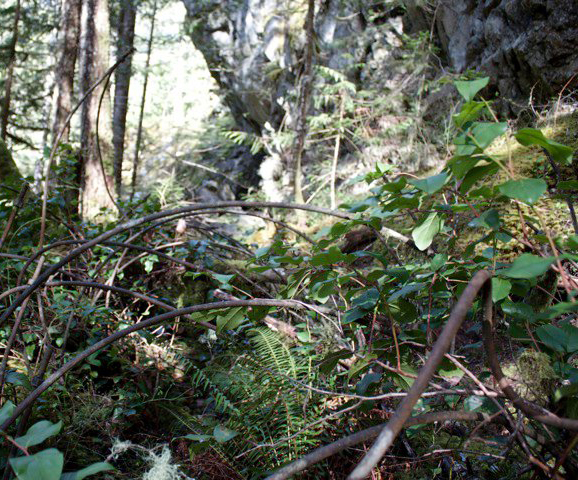
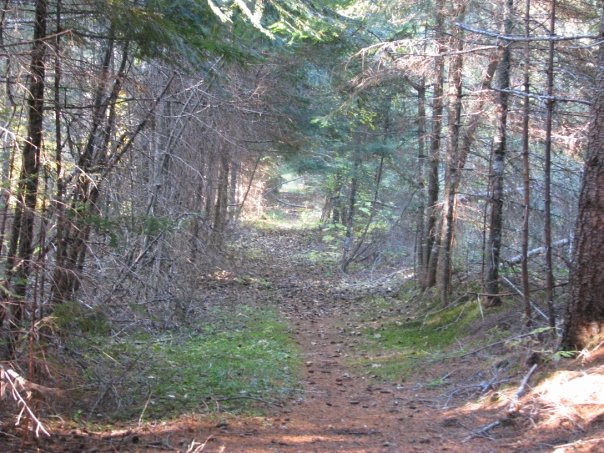
Just like a certain recent U.S. President, my father chose to relax by brush cutting. Later on in life he enjoyed the still peace and quiet of fishing, but when I was young, his favorite thing to do when he had extra time was to grab his brush hook from the garage, sling it over his shoulder, and head out into our woods. There he would spend hours whacking away at the undergrowth of a lush Pacific Northwest forest, creating open areas for our cows to graze and making trails through seemingly impenetrable trees, foliage and blackberry patches.
Making trails seemed to give him a sense of control and accomplishment that he rarely felt in his government desk job. It created huge “brush piles” which became controlled bonfires on “burn” days in late October, reducing to ashes what once had been an impassable mess.
Somehow I found and married a man who also enjoys clearing brush, using that same sixty year old brush hook handle that now bears the sweat marks of two beloved men in my life.
The path for me is clearer after their work is done. I can now find my way.
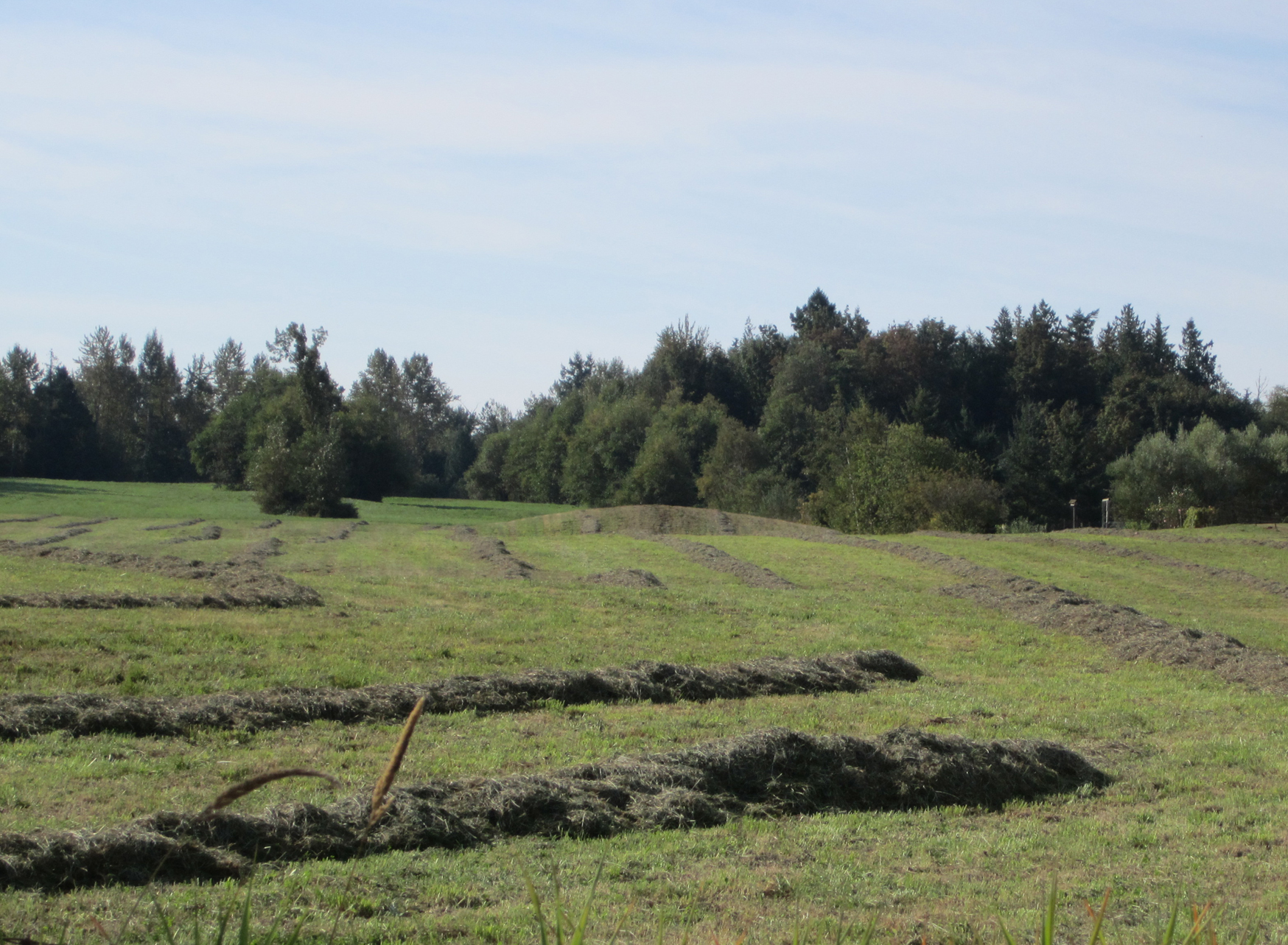
The fact is the sweetest dream that labor knows. My long scythe whispered and left the hay to make. ~Robert Frost in “Mowing”
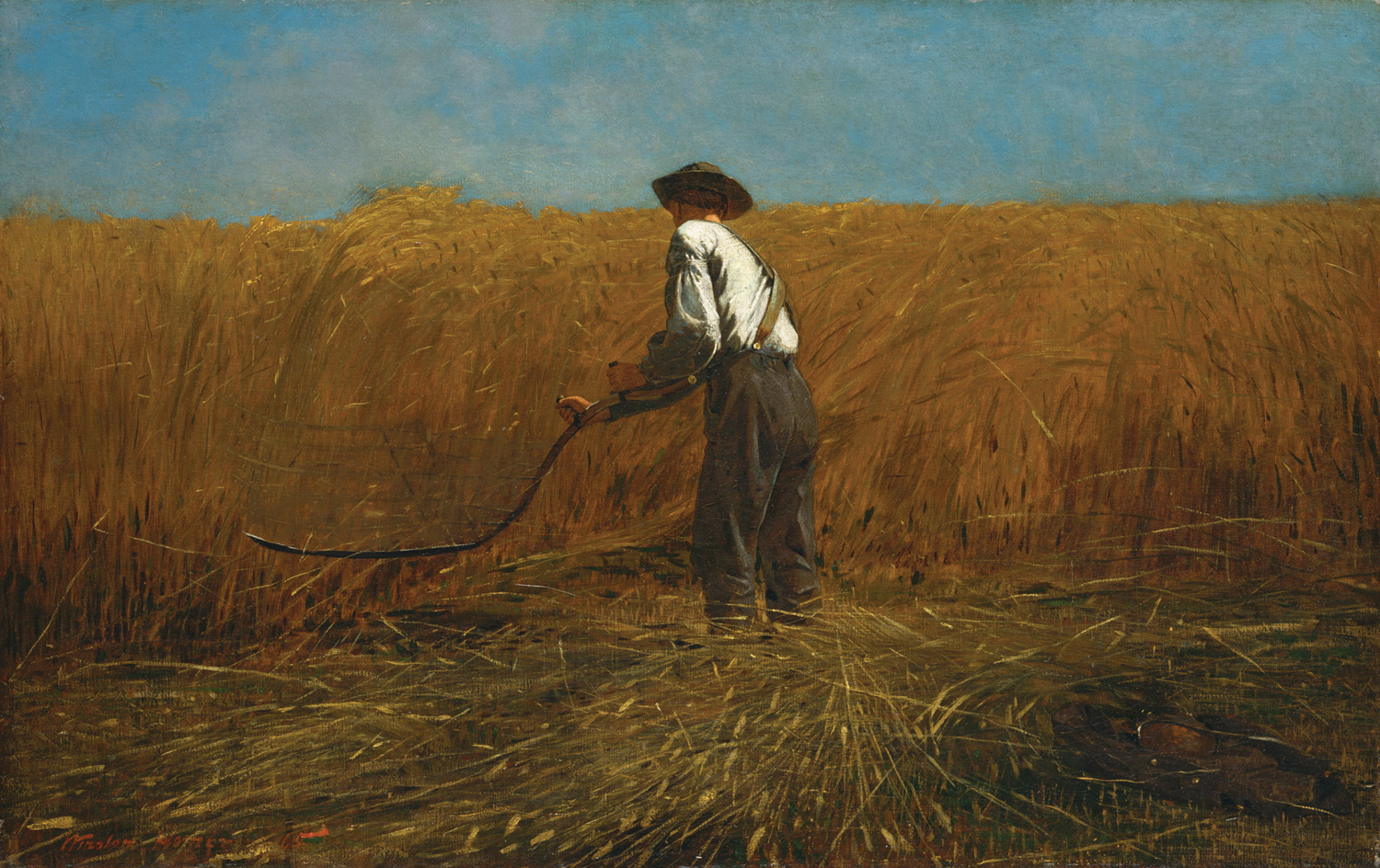
I grew up watching my father scythe our hay in our field because he had no mower for his tractor. He enjoyed physical labor in the fields and woods–his other favorite hand tool was a brush cutter that he’d take to blackberry bushes. He would head out to the field with the scythe over this shoulder, grim reaper style. Once he was standing on the edge of the grass needing to be mowed, he would then lower the scythe, curved blade to the ground, turn slightly, positioning his hands on the two handles just so, raise the scythe up past his shoulders, and then in a full body twist almost like a golf swing, he’d bring the blade down. It would follow a smooth arc through the base of the standing grass, laying clumps flat in a tidy pile in a row alongside the 2 inch stubble left behind. It was a swift, silky muscle movement, a thing of beauty.
This work was a source of his satisfaction and “sweetest dream.” I know now what he must have felt–there is a contentment found in sweaty work showing visible results. I understand that “earnest love” that drives us to work, and tangibly leaves the evidence of our labors behind.
Harvest work is not for sissies. I learned that watching my father’s continual sweep across the field and hearing his whispering scythe.
“It was the face of spring, it was the face of summer, it was the warmness of clover breath.
Pomegranate glowed in her lips, and the noon sky in her eyes.
To touch her face was that always new experience of opening your window one December morning, early,
and putting out your hand to the first white cool powdering of snow
that had come, silently, with no announcement, in the night.
And all of this, this breath-warmness and plum-tenderness was held forever in one miracle of photographic
is chemistry which no clock winds could blow upon to change one hour or one second;
this fine first cool white snow would never melt, but live a thousand summers.”
Ray Bradbury in Dandelion Wine
Every autumn my father, an agriculture teacher by training, brought home gunny sacks of grass seed from the feed and seed store. He would start up his 1954 Farmall Cub tractor, proceed to disc and harrow an acre of bare ground in our field, and then fill the seeder, distributing seed on the soil for his annual agronomy cover crop over winter growing experiment. The little sprouts would wait to appear in the warming spring weather, an initial green haziness spread over the brown dirt, almost like damp green mold. Within days they would form a plush and inviting velveteen green cushion, substantial enough for a little wiggle of blades in the breezes. A few weeks later the cover would be a full fledged head of waving green hair, the wind blowing it wantonly, bending the stems to its will. It was botanical pasture magic, renewable and marvelous, only to be mowed and stubble turned over with the plow back into the soil as nutrition for the summer planting to come. It was the sacrificial nature of cover crops to be briefly beautiful on top of the ground, but the foundational nurture once underground.
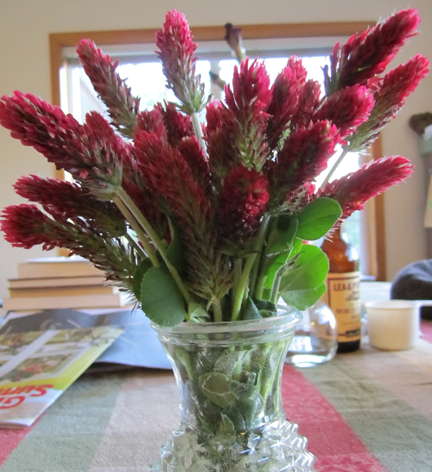
One spring the expected grassy carpet growth didn’t look quite the same after germination–the sprouts were little round leaves, not sharp edged blades. Instead of identical uniform upright stems, the field was producing curly chaotic ovoid and spherical shapes and sizes. Clover didn’t abide by the same rules as grasses. It had a mind of its own with a burgeoning and bumpy napped surface that didn’t bend with breezes, all its effort invested instead in producing blossoms.
A hint of pink one morning was so subtle it was almost hallucinatory. Within a day it was unmistakeably reddening and real. Within a week the green sea flowed with bobbing crimson heads. We had never seen such vibrancy spring from our soil before. It exuded scented clover breath, the fragrance calling honey bees far and near. True reverie.
The field of crimson dreams and sated honey bees lasted several weeks before my father headed back out on the Farmall to turn it under with the plow, burying the fading blossoms into the ground. Their sacrifice bled red into the soil, their fragrant breath halted, their memory barely recognizable in the next summer crop germination. Yet the crimson heads were there, feeding the growth of the next generation, deepening the green as it reached to the sun.
Such a sweet thing, alive a thousand summers hence in the soil.
What a beautiful feeling.
Crimson and clover, over and over.
To make a prairie it takes a clover and one bee, One clover, and a bee, And revery. The revery alone will do, If bees are few. Emily Dickinson



 Barnstorming