~May Swenson from “October”

I frequently tramped eight or ten miles through the deepest snow to keep an appointment with a beech-tree, or a yellow birch, or an old acquaintance among the pines.
~Henry David Thoreau
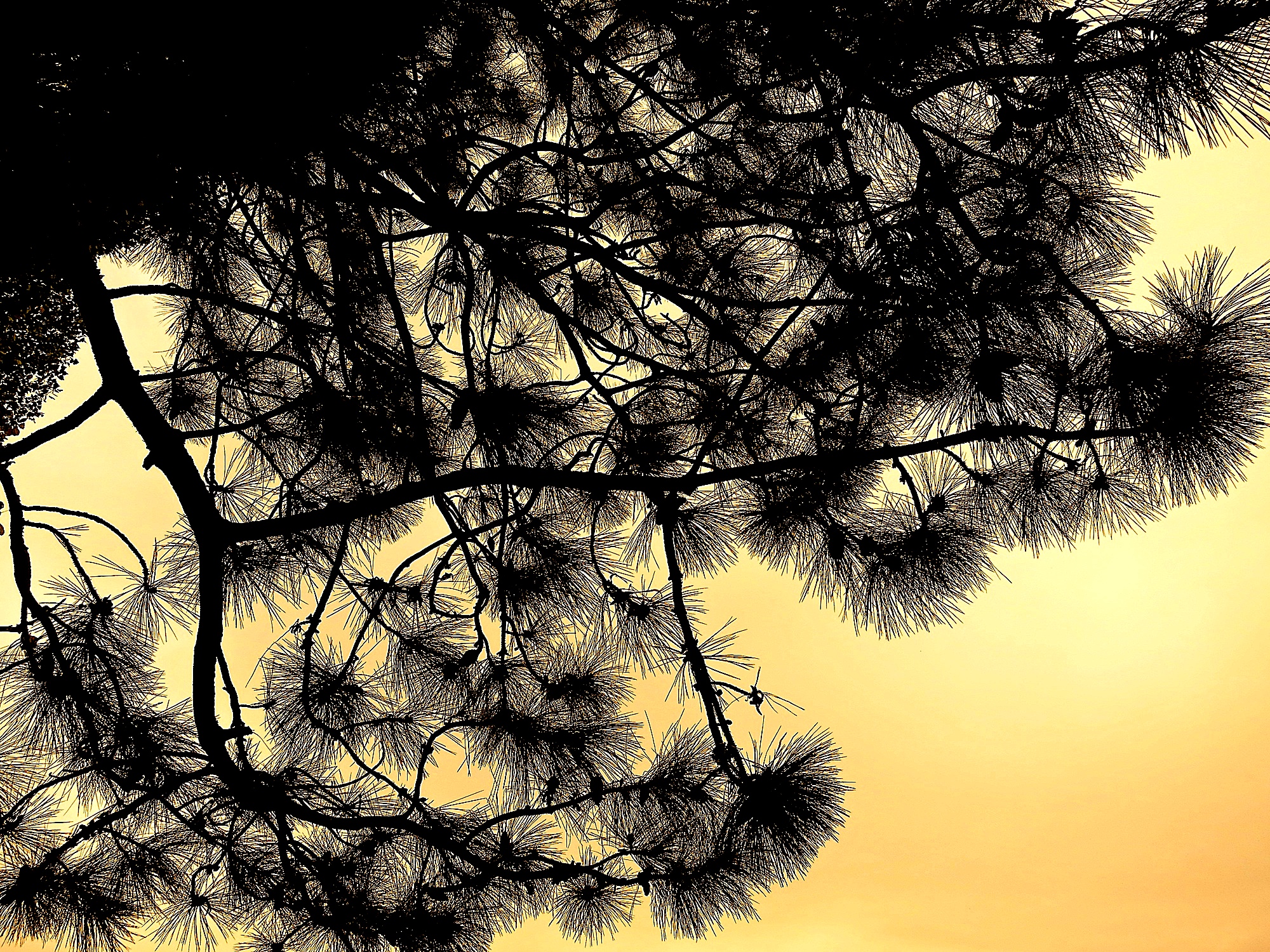
You can live for years next door to a big pine tree, honored to have so venerable a neighbor, even when it sheds needles all over your flowers or wakes you, dropping big cones onto your deck at still of night.
~Denise Levertov
I hear you call, pine tree, I hear you upon the hill, by the silent pond
where the lotus flowers bloom, I hear you call, pine tree.
What is it you call, pine tree, when the rain falls, when the winds
blow, and when the stars appear, what is it you call, pine tree?
I hear you call, pine tree, but I am blind, and do not know how to
reach you, pine tree. Who will take me to you, pine tree?
~Yone Noguchi “I Hear You Call, Pine Tree”
Our wet side of the state is not pine tree country — they prefer the dry climate east of the mountains. Once planted here, however, they take hold and make the best of their wet feet.
The tall pine along our barn driveway must be at least sixty years old — it is starting to look its age, as am I. Sure, there are some bare branches, a few brown needles, yet it still drops cones in the hope of a future generation of pine seedlings. The squirrels are too fast and whisk the seeds to their hideaways before they can sprout and take hold.
This old acquaintance of mine, this venerable pine and I, we may sway in the breeze and be bent by ice and snow, but we weather the years together. After all, our roots go deep and our arms reach to the sky.
Any patch of sunlight in a wood will show you something about the sun which you could never get from reading books on astronomy.
These pure and spontaneous pleasures are ‘patches of Godlight’ in the woods of our experience.
~C.S. Lewis
A solstice moment
when light replaces
where darkness thrives:
there is a wounding
that tears us open,
cleaving us,
so joy can enter the cracks
that hurt the most.


Scars come in various sizes and shapes, some hidden, some quite obvious to all. How they are inflicted also varies–some accidental, others therapeutic, and too many intentional. The most insidious are the ones so deep inside, no one can see or know they are there.
Back in our woodlot stands a sawed off stump of a cedar that was old growth in virgin forest over a hundred years ago. One day the clearcut loggers came through our part of this rural county and took every tree they could to haul to the local sawmills to become beams and lumber for the growing homesteading population in the region. This cedar once was grand and vast, covering an immense part of the forest floor, providing protection to trillium at its feet and finches’ nests and raptors hunting in its branches. It nurtured its environment until other plans were made, and one day, axes fell on its sides to cut out the notches for the springboards where two loggers stood to man the saw which brought the tree down. Where the wood went is anyone’s guess. It could be one of the mighty beams supporting our old hay barn roof or it could have become the foundation flooring of a nearby one room school house. It surely had a productive and meaningful life as part of a structure somewhere until rot or carpenter ants or fire brought it once again to its knees.
But the stump remains, a tombstone of remembrance of a once grand tree, the notch scars embedded deep in its sides, nursing new seedlings from its center and moss, lichen and ferns from its sides.
I come from logger stock so I don’t begrudge these frontier settlers their hard scrabble living, nor minimize their dangerous work in order to feed themselves and their families. It’s just I’m struck by those scars even one hundred years later — such a visible reminder of what once was a vital living organism toppled for someone’s need and convenience.
Trees are not unique. It happens to people too. Everyday scars are inflicted for reasons hard to justify. Too often I see them self-inflicted in an effort to feel something other than despair. Sometimes they are inflicted by others out of fear or need for control.
Sometimes they are simply the scars of living, wounds accumulated along the pathway we tread, often to letting in Light where there was none before.
None of them are as deep and wide as the scars that were accepted on our behalf, nor as wondrous as the love that oozed from them, nor as amazing as the grace that abounds to this day because of the promise spelled out by them. These are scars from the Word made Flesh.
As a result, that Tree lives.


I remember my affliction and my wandering,
the bitterness and the gall.
20 I well remember them,
and my soul is downcast within me.
21 Yet this I call to mind
and therefore I have hope:
22 Because of the Lord’s great love we are not consumed,
for his compassions never fail.
23 They are new every morning;
great is your faithfulness.
Lamentations 3: 19-23

I wished to wade in the trillium
and be warmed near the white flames.
I imagined the arch of my foot
massaged by the mosses.
This field immersed in gravity
defying growth. Green and glorious.
It let me know that out of the
soil came I, and green I shall be.
Whether an unnamed weed or a
wild strawberry I will join in
the hymn.
~Luci Shaw from “Spring Song, Very Early Morning”
The trillium only thrives where death has been.
The mulch of hundreds of autumns fluffs the bed where trillium bulbs sleep, content through most of the year.
When the frost is giving way to dew, the trillium leaves peek out, curious, testing the air.
A few stray rays of sun filtering through the overgrowth and canopy encourage the shoots to rise, spread and unfurl.
In the middle, a white bud appears in humility, almost embarrassed to be seen at all.
There is pure declaration of triune perfection.
In a matter of days, the petals spread wide and bold so briefly, curl purplish. Wilt and return aground.
Leaves wither and fall unnoticed, becoming dust once again.
Beauty arises from decay.
Death gives way to pure perfection.


During this Lenten season, I will be drawing inspiration from the new devotional collection edited by Sarah Arthur —Between Midnight and Dawn
In the hope that 2016 will be filled with daily opportunities for a slow walk through moments of serene beauty~
blessings to you all from Barnstorming!


For more “Best of Barnstorming” photos:
Seasons on the Farm:
BriarCroft in Summer, in Autumn, in Winter,
at Year’s End
There is so very little we can do,
Friends, for these beautiful children of ours,
They will come to grief and suffer and you
And I bow to darkness and evil powers.
The gentle boy who wrote poems goes
For a walk in January and does not return.
His mother and father search the woods. The snow
Is deep. All night their hearts burn
For him. He is found, hanging from a limb,
And the father carries the body of his son
Into the yard and tenderly lays him
On the step. Stephen, O darling one,
See how your parents’ hearts break for you.
There is so very little we can do.
~Gary Johnson
Our woodlot lies quiet this time of year. There have been numerous wind storms that have snapped trees or uprooted them completely and they rest where they have fallen, a crisscross graveyard of trunks that block paths and thwart us on the trails. Years of leaves have fallen undisturbed, settling into a cushiony duff that is spongy underfoot, almost mattress-like in its softness, yet rich and life-giving to the next generation of trees.
We’ve intentionally left this woods alone for over twenty years. When we purchased this farm, cows had the run of the woods, resulting in damage to the trees and to the undergrowth. We fenced off the woods from the fields, not allowing our horses access. It has been the home for raccoon, deer and coyotes, slowly rediscovering its natural rhythms and seasons.
It feels like time to open the trails again. We’ve cut through the brush that has grown up, and are cutting through the fallen trunks to allow our passage.
We bought this farm from a remarkable 82 year old man who loved every tree here. After spending 79 years on this farm, he treasured each one for its history, its fruit, its particular place in the ground, and would only use the wood if God had felled the tree Himself. The old farmer directed us to revere the trees as he had, and so we have. When he first took us on a tour of the farm, it was in actuality a tour of the trees, from the large walnuts in the front yard, to the poplars along the perimeter, to the antique apples, cherries and pear, the filbert grove, the silver plum thicket, as well as the mighty seventy plus year old Douglas fir, Western hemlock and Red cedar trees reestablished after the original logging in the early twentieth century. The huge old stumps still bore the carved out eight inch notches for the springboards on which the lumbermen balanced to cut away with their axes at the massive diameter of the trees.
He led us to a corner of the woods and stood beneath a particular tree, tears streaming down his face. He explained this was where his boy had hung himself, taking his life at age fifteen in 1968. The old farmer still loved this tree, as devastating as it was to lose his son so unexpectedly from one of its branches. He stood shaking his head, his tears dropping to the ground. I knew his tears had watered this spot often over the years. He looked at our boys—one a two year old in a pack on my back, and the other a four year old gripping his daddy’s hand—and told us he wished he’d known, wished there could have been something he could have done, wished he could have understood his son’s despair, wished daily there was a way to turn back the clock and make it all turn out differently. He wanted us to know about this if we were to own this woods, this tree, this ground, with children to raise here so there would be something we could do to prevent this from happening again to one of our own.
I was shaken by such raw sharing and the obvious sacredness of the spot. Though the boy lay buried in a nearby cemetery, a too-young almost-man lost forever for reasons he never found to express to others, it was as if this spot, now hallowed by his father’s tears, was his grave. This tree witnessed his last act and last breath on earth.
We have left the woods untouched in our effort to let it restore and heal, and to allow that tree to blend into the forest again, surrounded by new growth and life. We have told this young man’s story to our children and are reminded of the precious gift of life we all have been given, and that it must be treasured and clung to, even in our darkest moments. This father’s tears watering this woods are testimony enough of his own clinging to life, through his faith in God and in respect to the memory of his beloved boy.
The old farmer and his wife now share the ground with their son, reunited again a only few miles away from our home that was theirs for decades. Their woods is reopening to our feet, allowing us passage again, and despite the darkness that overwhelms it each winter, the woods bear life amidst the dying as a forever reminder.
And we will not forget. It is so very little, but the very least we can do.
The most exemplary nature is that of the topsoil.
It is very Christ-like in its passivity and beneficence,
and in the penetrating energy that issues
out of its peaceableness.
It increases by experience,
by the passage of seasons over it,
growth rising out of it
and returning to it,
not by ambition or aggressiveness.
It is enriched
by all things that die
and enter into it.
It keeps the past,
not as history or as memory,
but as richness, new possibility.
Its fertility is always building up
out of death into promise.
Death is the bridge or the tunnel
by which its past
enters its future.
~Wendell Berry from “The Native Hill”
Again I resume the long
lesson: how small a thing
can be pleasing, how little
in this hard world it takes
to satisfy the mind
and bring it to its rest.
Within the ongoing havoc
the woods this morning is
almost unnaturally still.
Through stalled air, unshadowed
light, a few leaves fall
of their own weight.
The sky
is gray. It begins in mist
almost at the ground
and rises forever. The trees
rise in silence almost
natural, but not quite,
almost eternal, but
not quite.
What more did I
think I wanted? Here is
what has always been.
Here is what will always
be. Even in me,
the Maker of all this
returns in rest, even
to the slightest of His works,
a yellow leaf slowly
falling, and is pleased.
~Wendell Berry “VII”
The set seed and the first bulbs showing.
The silence that brings the deer.
The trees are full of handles and hinges;
you can make out keyholes, latches in the leaves.
Buds tick and crack in the sun, break open
slowly in a spur of green.
*
The small-change colours of the river bed:
these stones of copper, silver, gold.
The rock-rose in the waste-ground
finding some way to bloom. The long
spill of birdsong. Flowers, all
turned to face the hot sky. Nothing stirs.
*
That woody clack of antlers.
In yellow and red, the many griefs of autumn.
The dawn light through amber leaves
and the trees are lanterned, blown
the next day to empty stars.
Smoke in the air; the air, turning.
*
Under a sky of stone and pink
faring in from the north and promising snow:
the blackbird.
In his beak, a victory of worms.
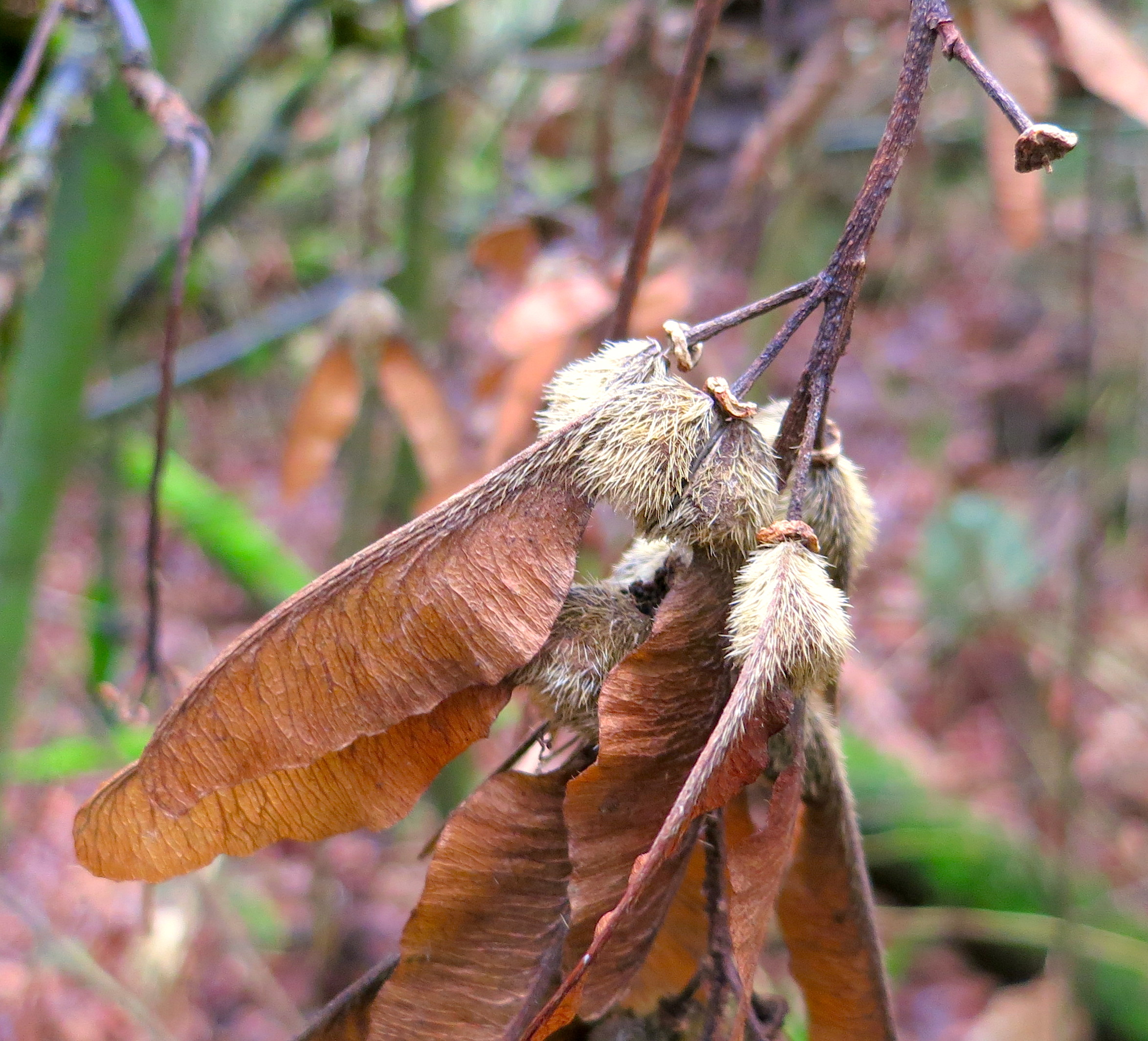
The winged seed of the maple,
the lost keys under the ash.
~Robin Robertson “Finding the Keys”
If only there were verbal keys as plentiful
as those that twirl from the maple branch,
words freed, ready to unlatch life’s secrets
and push ajar the doors of heavy hearts.
May we open just enough
to listen,
unlock horns,
and receive what falls
into our empty arms.