A voice is heard in Ramah, mourning and great weeping, Rachel weeping for her children and refusing to be comforted, because they are no more. Matthew 2:18 and Jeremiah 31:15
We think of him as safe beneath the steeple, Or cosy in a crib beside the font, But he is with a million displaced people On the long road of weariness and want.
For even as we sing our final carol His family is up and on that road, Fleeing the wrath of someone else’s quarrel, Glancing behind and shouldering their load.
Whilst Herod rages still from his dark tower Christ clings to Mary, fingers tightly curled, The lambs are slaughtered by the men of power, And death squads spread their curse across the world.
But every Herod dies, and comes alone To stand before the Lamb upon the throne. ~Malcolm Guite “Refugee”
When Christ was born in Bethlehem, Fair peace on earth to bring, In lowly state of love He came To be the children’s King.
And round Him, then, a holy band Of children blest was born, Fair guardians of His throne to stand Attendant night and morn.
And unto them this grace was giv’n A Saviour’s name to own, And die for Him Who out of Heav’n Had found on earth a throne.
O blessèd babes of Bethlehem, Who died to save our King, Ye share the martyrs’ diadem, And in their anthem sing!
Your lips, on earth that never spake, Now sound th’eternal word; And in the courts of love ye make Your children’s voices heard.
Lord Jesus Christ, eternal Child, Make Thou our childhood Thine; That we with Thee the meek and mild May share the love divine. ~Laurence Houseman “The Holy Innocents”
There is no consolation for families of those children lost to death too soon: a rogue king’s slaughter of innocents.
And still today – so much needless death of the young, on the same ground, flooded with blood, across disputed borders and faith.
Arms ache with the emptiness of grief, beds and pillows lie cold and unused, hugs never to come again.
There is no consolation for loss then or now; only mourning and great weeping, sobbing that wrings dry every human cell,
leaving only dust behind: our beginning and our end.
One-Time
Monthly
Yearly
Make a one-time or recurring donation to support daily Barnstorming posts
About suffering they were never wrong, The old Masters: how well they understood Its human position: how it takes place While someone else is eating or opening a window or just walking dully along; How, when the aged are reverently, passionately waiting For the miraculous birth, there always must be Children who did not specially want it to happen, skating On a pond at the edge of the wood: They never forgot That even the dreadful martyrdom must run its course Anyhow in a corner, some untidy spot Where the dogs go on with their doggy life and the torturer’s horse Scratches its innocent behind on a tree.
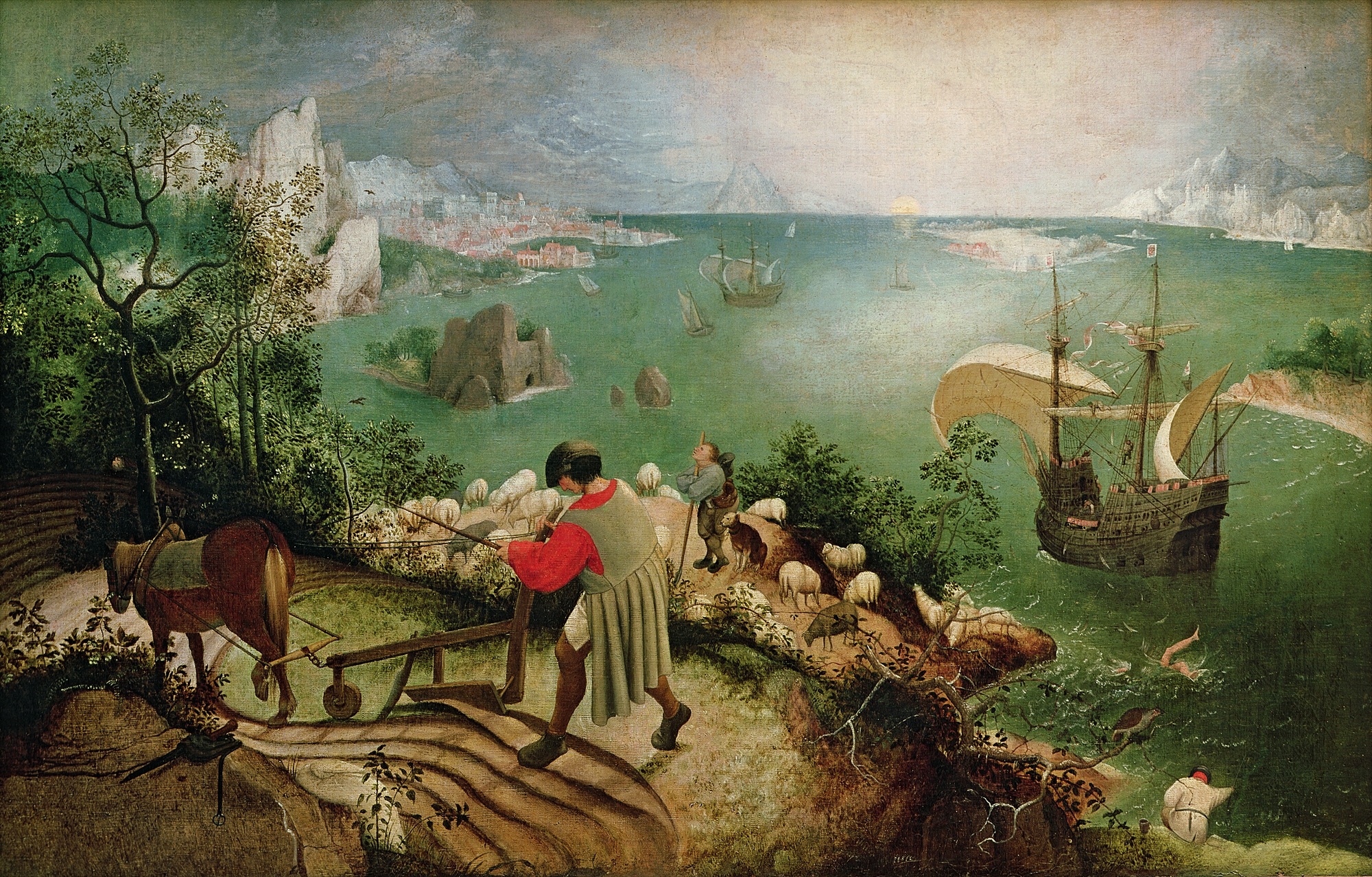
In Breughel’s Icarus, for instance: how everything turns away Quite leisurely from the disaster; the ploughman may Have heard the splash, the forsaken cry, But for him it was not an important failure; the sun shone As it had to on the white legs disappearing into the green Water, and the expensive delicate ship that must have seen Something amazing, a boy falling out of the sky, Had somewhere to get to and sailed calmly on. ~W.H. Auden “Musée des Beaux Arts”
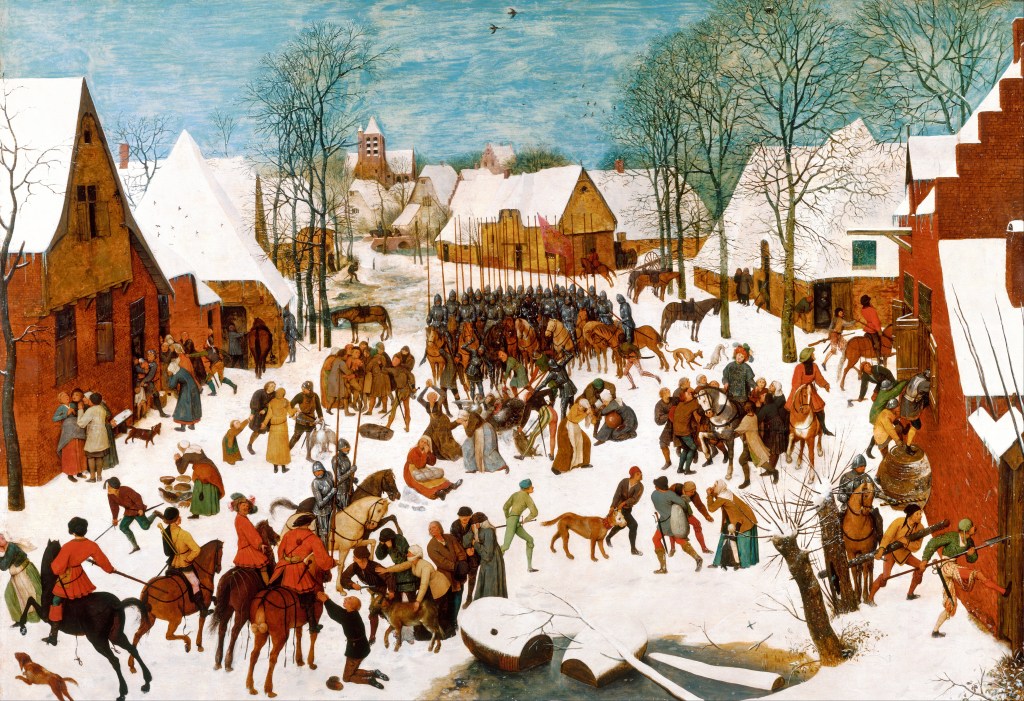
Landscape with the Fall of Icarus, c.1555 (oil on canvas) by Bruegel, Pieter the Elder (c.1525-69); Musees Royaux des Beaux-Arts de Belgique, Brussels, Belgium; “Census in Bethlehem” by Pieter Bruegel -Musees Royaux des Beaux-Arts de Belgique, Brussels, Belgium; “Massacre of the Innocents” by Pieter Bruegel
…as you sit beneath your beautifully decorated tree, eat the rich food of celebration, and laugh with your loved ones, you must not let yourself forget the horror and violence at the beginning and end of the Christmas story. The story begins with the horrible slaughter of children and ends with the violent murder of the Son of God. The slaughter depicts how much the earth needs grace. The murder is the moment when that grace is given.
Look into that manger representing a new life and see the One who came to die. Hear the angels’ celebratory song and remember that sad death would be the only way that peace would be given. Look at your tree and remember another tree – one not decorated with shining ornaments, but stained with the blood of God.
As you celebrate, remember that the pathway to your celebration was the death of the One you celebrate, and be thankful. ~Paul Tripp
God weeps when tragedy and suffering happens.
Such evil comes not from God yet humankind expects it, walking dully past, barely noticing. It is simply part of existence – easier to not stop and feel the pain or get involved.
But God does not walk past our hurt and trouble, does not ignore, nor pretend to not see or hear our cries.
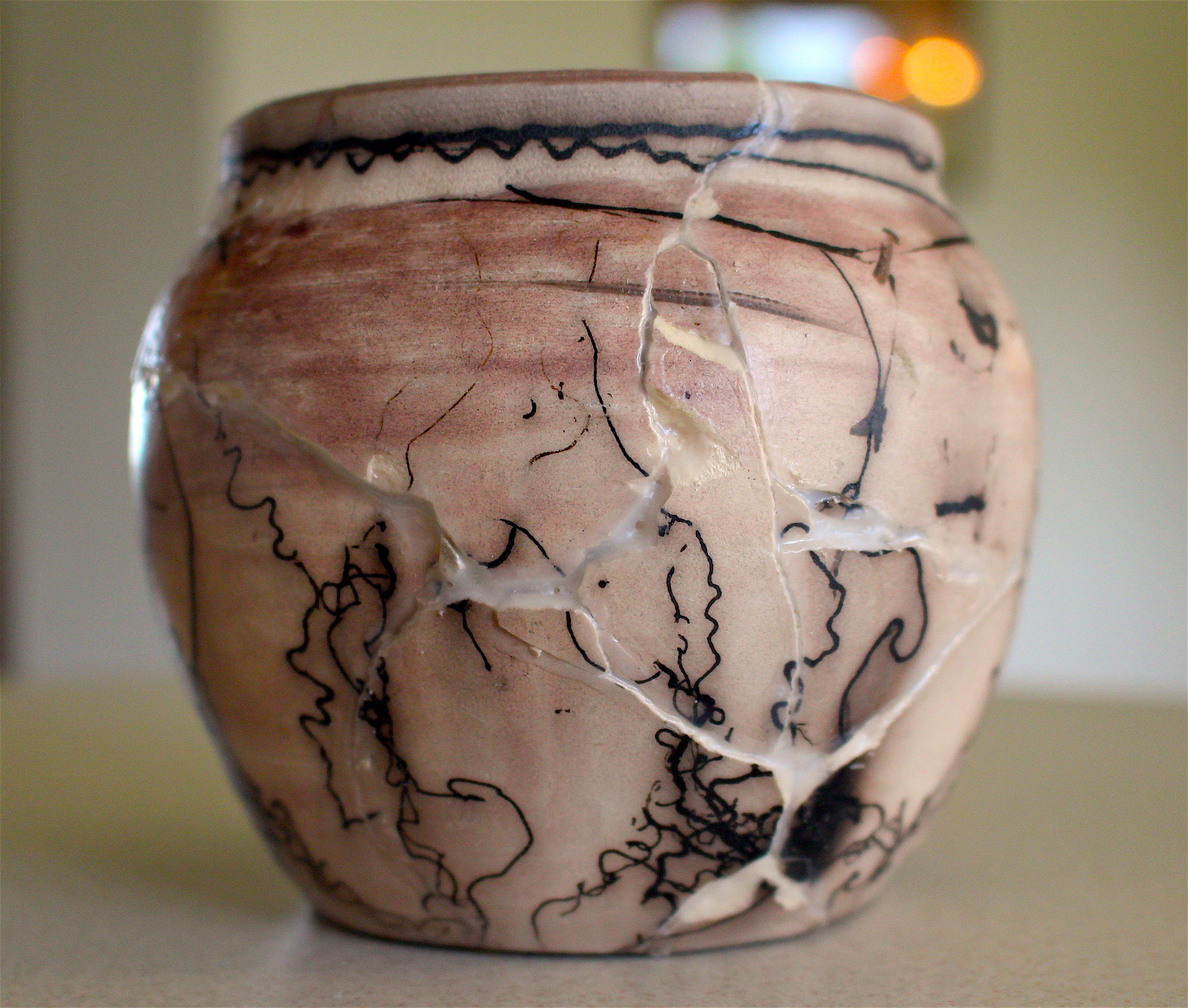
Only God glues together what evil has shattered. Only God could become the Man who loves us enough to take our suffering upon His own shoulders — becoming forsaken so that we are not.
One-Time
Monthly
Yearly
Make a one-time or recurring donation to support daily Barnstorming posts
…mourning and great weeping, weeping for her children and refusing to be comforted, because they are no more. from Matthew 2:18 and Jeremiah 31:15
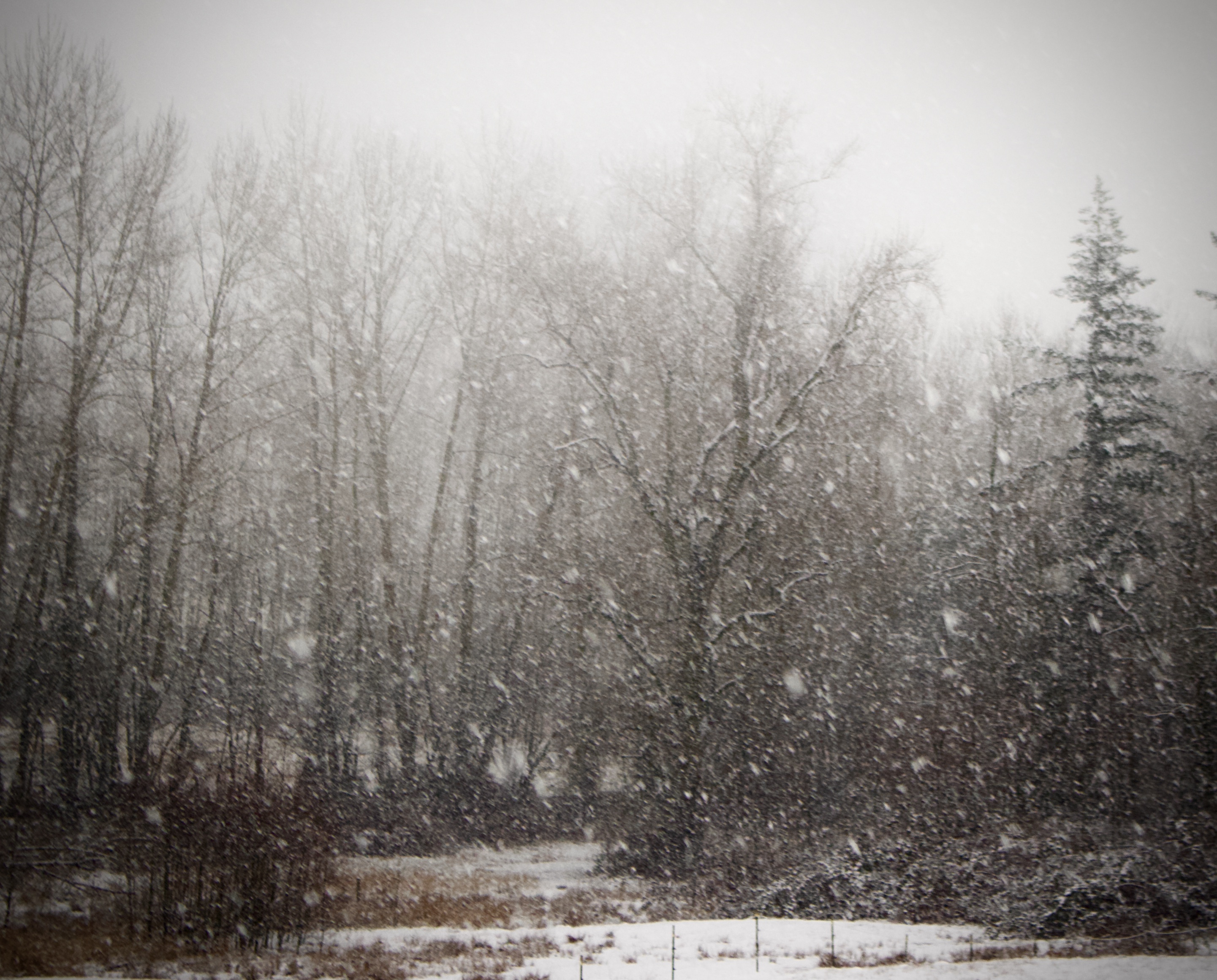
Newtown, CT December 2012 There are the fields we’ll walk across In the snow lightly falling. In the snow lightly falling, There are the fields we’ll walk across.
There are the houses we’ll walk toward In the snow lightly falling. In the snow lightly falling, There are the houses we’ll walk toward.
There are the faces we once kissed In the snow lightly falling. In the snow lightly falling, There are the faces we once kissed.
Incredible how we laughed and cried In the snow lightly falling. In the snow lightly falling, Incredible how we laughed and cried.
Incredible how we’ll meet again In the snow lightly falling. In the snow lightly falling, Incredible how we’ll meet again.
No small hand will go unheld In the snow lightly falling. In the snow lightly falling, No small hand will go unheld.
No voice once heard is ever lost In the snow lightly falling. In the snow lightly falling, No voice once heard is ever lost. ~Dick Allen “Solace”
In mourning for the families of Uvalde, Texas
There is no comfort for these families. Their arms ache with emptiness, their childrens’ beds and pillows cold tonight, dolls and stuffed animals awaiting all night hugs that will never come again.
There is no earthly consolation; only mourning and great weeping, sobbing that wrings dry every human cell, leaving only dust behind, which is our beginning and our end.
Christ came to us for times such as this, born of the dust of woman and the breath of Spirit. God bent down to be cradled in barn dust, walk on roads of dust, die and be laid to rest as dust to conquer such evil as this – the slaughter and massacre of innocents.
He became dust to be like us He began a mere speck in a womb like us His heart beat like ours breathing each breath like ours until a fearful fallen world took His and our breath away.
He shines His Light through the darkness of tragic deaths to guide our stumbling uncertain feet. His tender mercies flow freely when there is no consolation, when there is no comfort.
He hears our cries as He cried too. He knows our tears as He wept too. He knows our mourning as He mourned too. He knows our dying as He died too.
God wept as this happened yesterday. Evil comes not from God yet humankind embraces it. Sin is our ongoing choice, a decision made from our beginning, but we can choose to end it now.
Only God can glue together what evil has shattered. He asks us to hand Him the pieces of our broken hearts, abandon our evil ways and sin no more.
We will know His peace when He comes to bring us home, our tears finally dried, our cells no longer just dust, as we are glued together by the word and breath and voice of God forevermore.
the tender mercy of our God, by which the rising sun will come to us from heaven to shine on those living in darkness and in the shadow of death, to guide our feet into the path of peace. Luke 1: 78-79
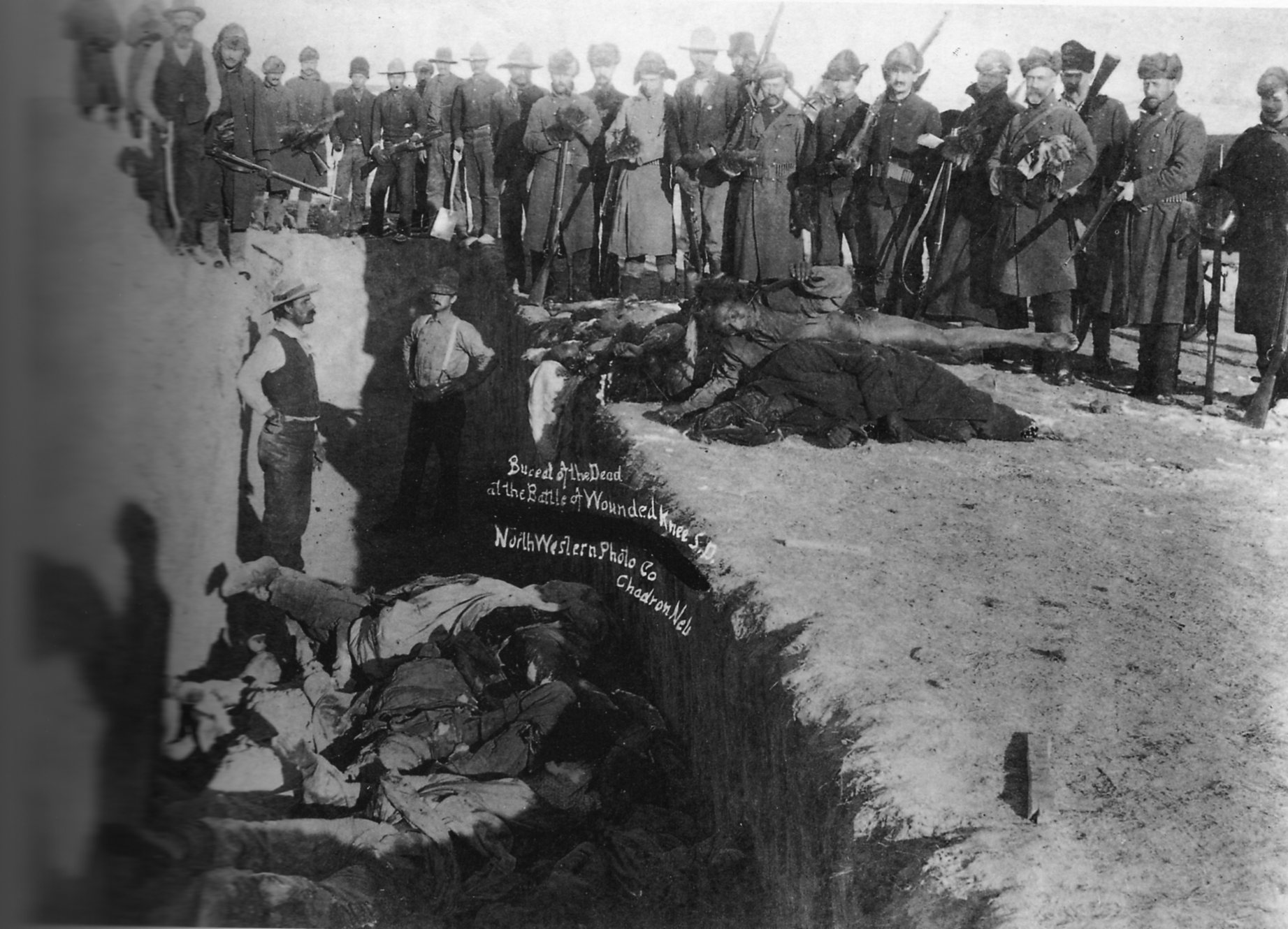
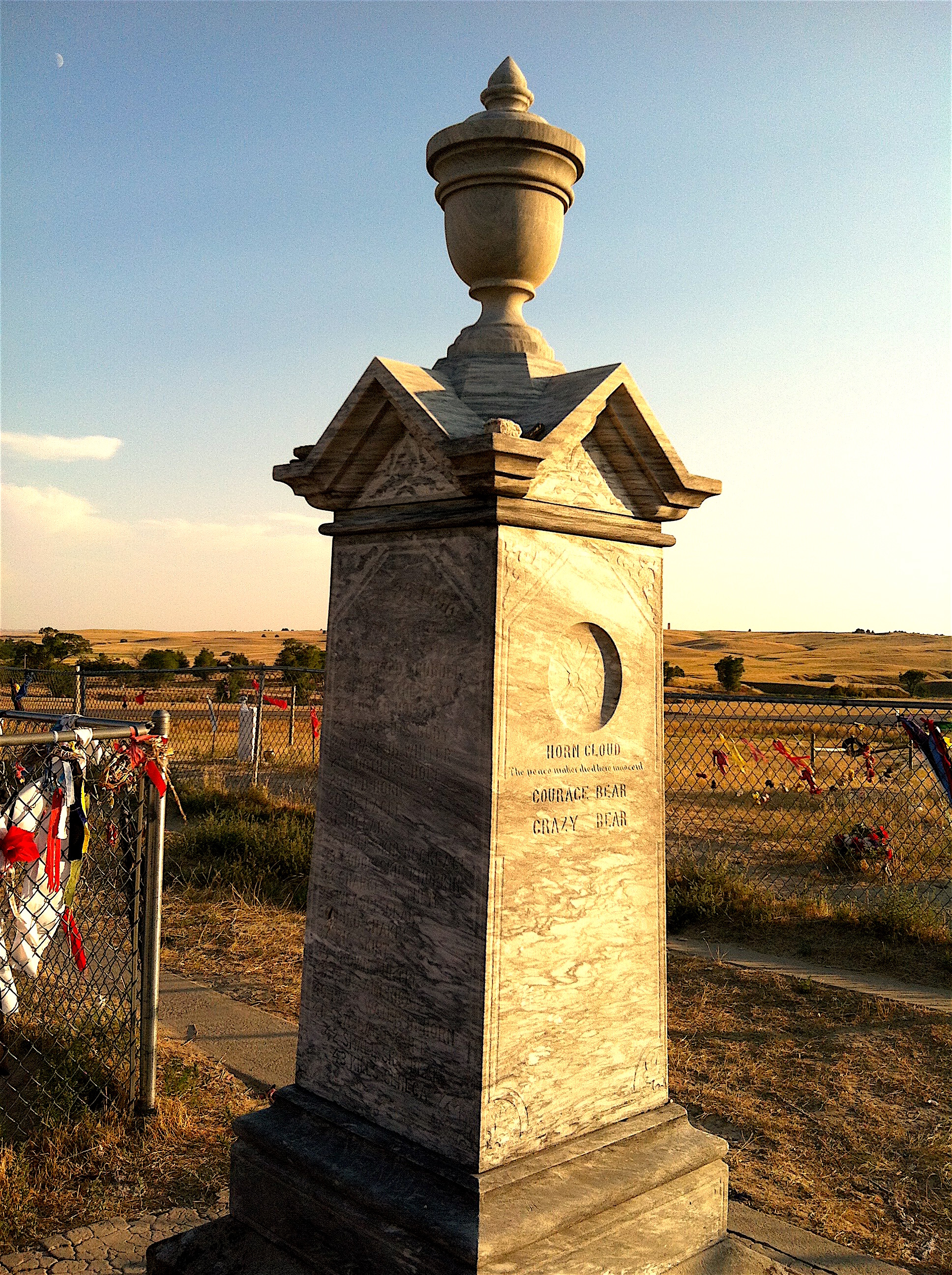
The mass gravesite at Wounded Knee, Pine Ridge Reservation, South DakotaBurial of the dead in the mass gravesite at Wounded Knee
Big Foot, a great Chief of the Sioux often said, “I will stand in peace till my last day comes.” He did many good and brave deeds for the white man and the red man. Many innocent women and children who knew no wrong died here. ~Inscription on the Wounded Knee Monument
I did not know then how much was ended. When I look back now from this high hill of my old age, I can still see the butchered women and children lying heaped and scattered all along the crooked gulch as plain as when I saw them with eyes still young. And I can see that something else died there in the bloody mud, and was buried in the blizzard. A people’s dream died there. It was a beautiful dream. And I, to whom so great a vision was given in my youth, — you see me now a pitiful old man who has done nothing, for the nation’s hoop is broken and scattered. There is no center any longer, and the sacred tree is dead. ~Black Elk, (wounded trying to rescue his people after the Wounded Knee Massacre) from Black Elk Speaks
From today’s The Writer’s Almanac:
December 29 is the anniversary of themassacre at Wounded Knee, which took place in South Dakota in 1890. Twenty-three years earlier the local tribes had signed a treaty with the United States government that guaranteed them the rights to the land around the Black Hills, which was sacred land. The treaty said that not only could no one move there, but they couldn’t even travel through without the consent of the Indians.
But in the 1870s gold was discovered in the Black Hills and the treaty was broken. People from the Sioux tribe were forced onto a reservation with a promise of more food and supplies, which never came. Then in 1889 a native prophet named Wovoka, from the Paiute tribe in Nevada, had a vision of a ceremony that would renew the earth, return the buffalo, and cause the white men to leave and return the land that belonged to the Indians. This ceremony was called the Ghost Dance. People traveled across the plains to hear Wovoka speak, including emissaries from the Sioux tribe, and they brought back his teachings. The Ghost Dance, performed in special brightly colored shirts, spread through the villages on the Sioux reservation and it scared the white Indian agents. They considered the ceremony a battle cry, dangerous and antagonistic. So one of them wired Washington to say that he was afraid and wanted to arrest the leaders and he was given permission to arrest Chief Sitting Bull, who was killed in the attempt. The next on the wanted list was Sitting Bull’s half-brother, Chief Big Foot, known to his own people as Spotted Elk. Some members of Sitting Bull’s tribe made their way to Big Foot and when he found out what had happened he decided to lead them along with the rest of his people to Pine Ridge Reservation for protection. But it was winter, 40 degrees below zero, and he contracted pneumonia on the way.
Big Foot was sick, he was flying a white flag, and he was a peaceful man. He was one of the leaders who had actually renounced the Ghost Dance. But the Army didn’t make distinctions. They intercepted Big Foot’s band and ordered them into the camp on the banks of the Wounded Knee Creek. Big Foot went peacefully.
The next morning federal soldiers began confiscating their weapons and a scuffle broke out between a soldier and an Indian. The federal soldiers opened fire, killing almost 300 men, women, and children, including Big Foot. Even though it wasn’t really a battle, the massacre at Wounded Knee is considered the end of the Indian Wars, a blanket term to refer to the fighting between the Native Americans and the federal government, which had lasted 350 years.
One of the people wounded but not killed during the massacre was the famous medicine man Black Elk, author of Black Elk Speaks (1932). Speaking about Wounded Knee, he said:
“I did not know then how much was ended. When I look back now from this high hill of my old age, I can still see the butchered women and children lying heaped and scattered all along the crooked gulch as plain as when I saw them with eyes still young. And I can see that something else died there in the bloody mud, and was buried in the blizzard. A people’s dream died there. It was a beautiful dream.”
Like most twentieth century American children, I grew up with a sanitized understanding of American and Native history. I had only a superficial knowledge of what happened at Wounded Knee, a low hill that rises above a creek bed on the South Dakota Pine Ridge Reservation, gleaned primarily from the 71 day symbolic standoff in 1973 between members of the Oglala Sioux and the American Indian Movement and the FBI, resulting in several shooting deaths.
Nine years ago, when our son was teaching math at Little Wound High School on the Pine Ridge Reservation, we visited the site of this last major battle between the white man and Native people, which broke the spirit of the tribes’ striving to maintain their nomadic life as free people. This brutal massacre of nearly 300 Lakota men, women and children by the Seventh Regiment of the U.S. Army Cavalry took place in December 1890.
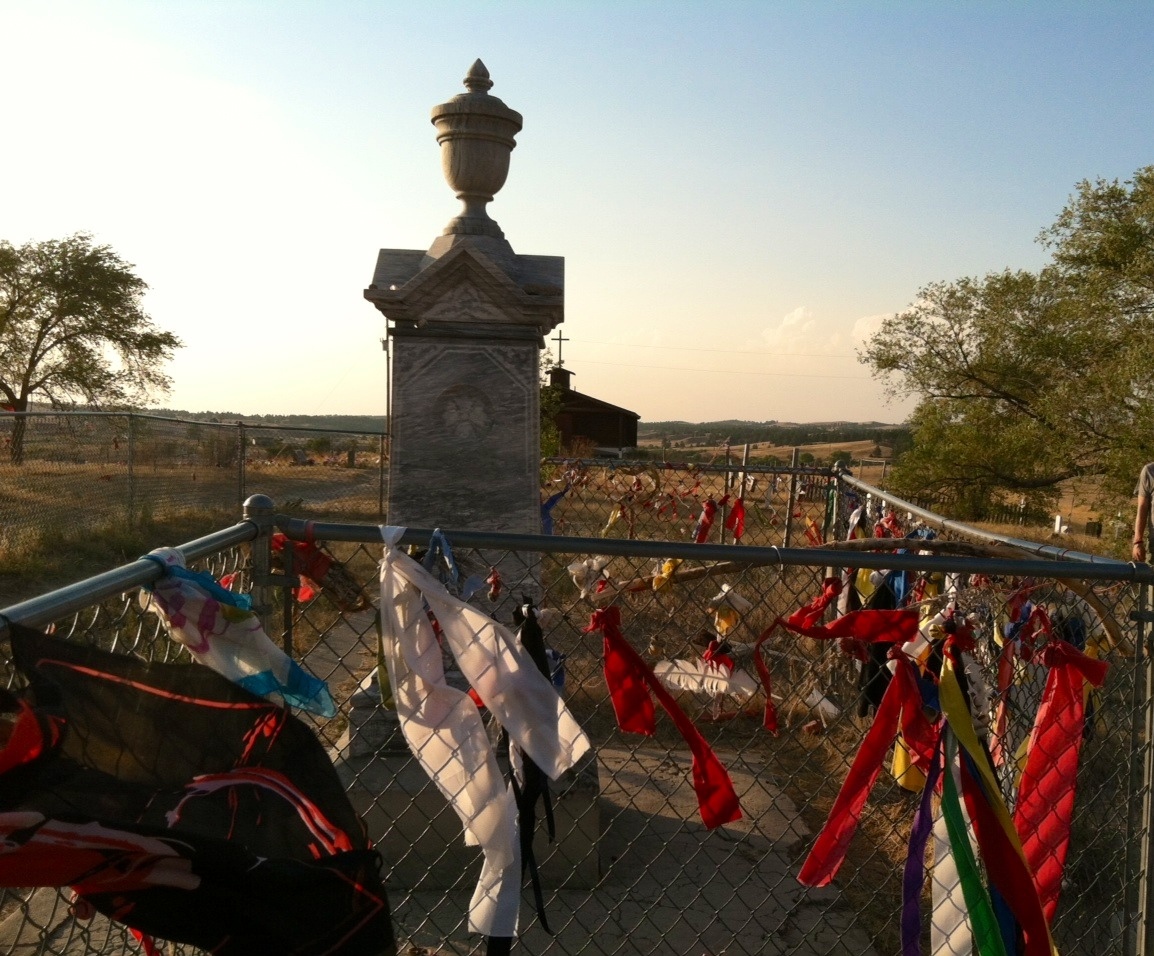
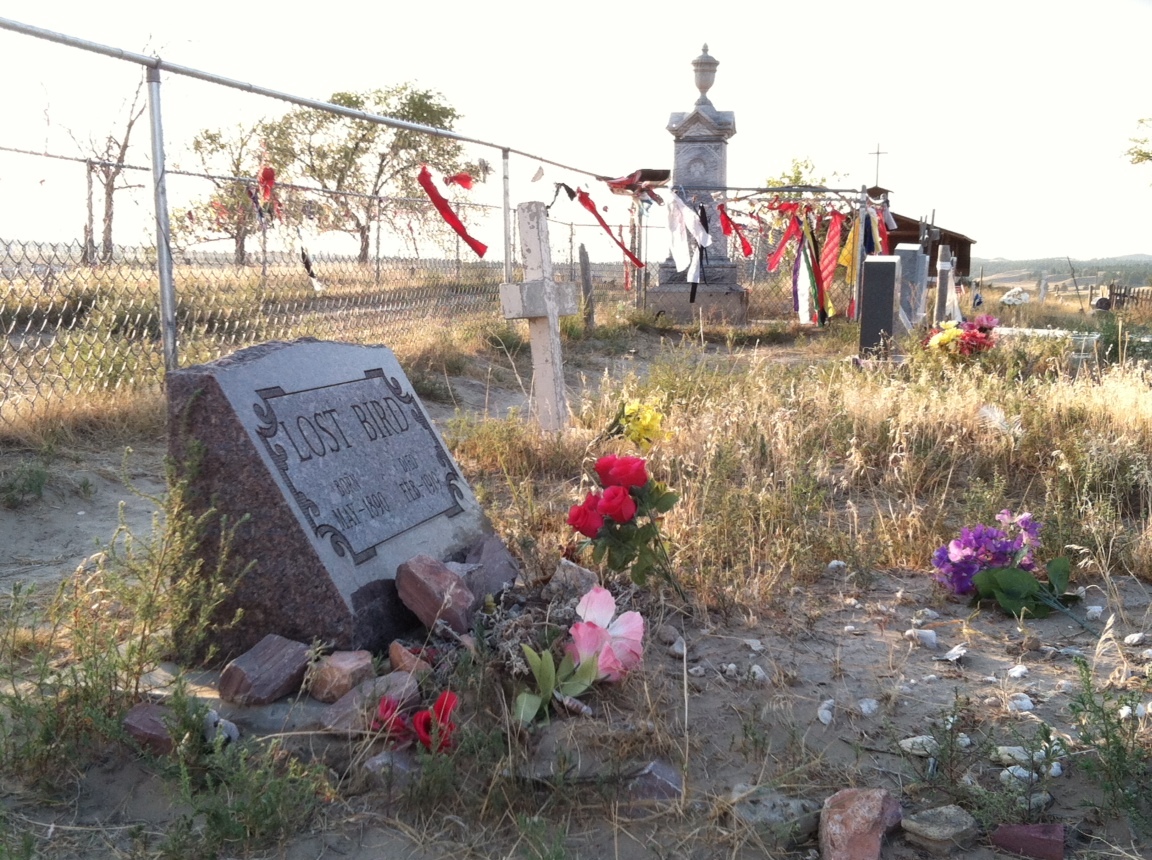
The dead lay where they fell for four days due to a severe blizzard. When the frozen corpses were finally gathered up by the Army, a deep mass grave was dug at the top of the hill, the bodies buried stacked one on top of another. The massive grave is now marked by a humble memorial monument surrounded by a chain link fence, adjacent to a small church, circled by more recent Lakota gravesites.
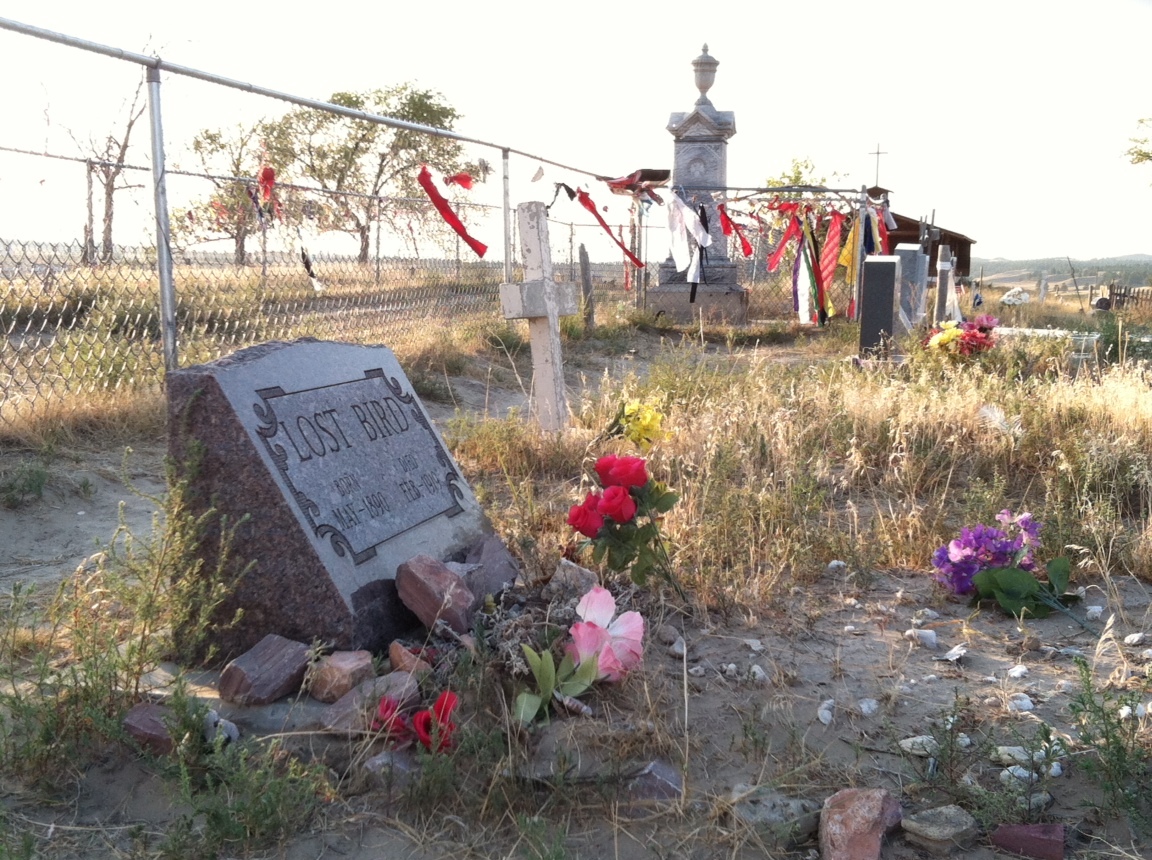
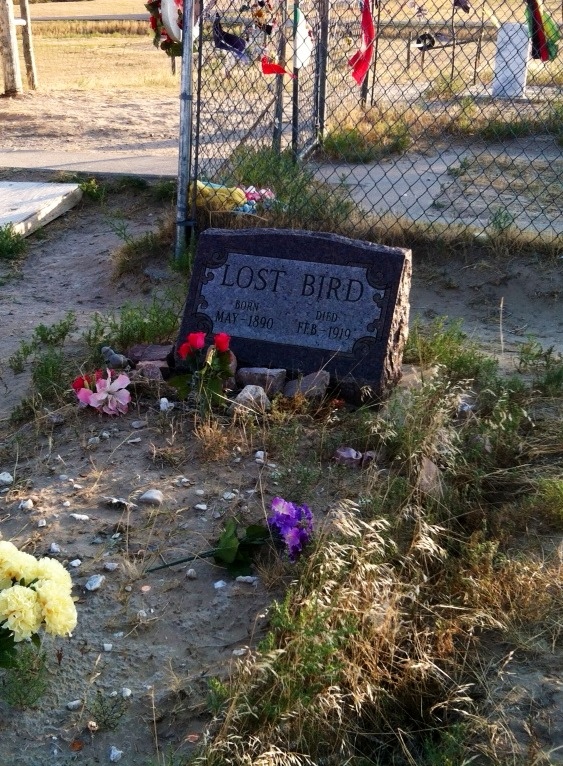
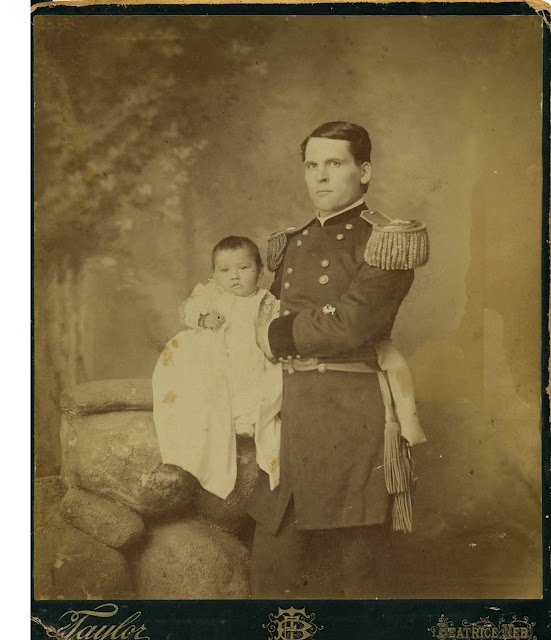
Four infants survived the four days of blizzard conditions wrapped in their dead mothers’ robes. One baby girl, only a few months old, was named “Lost Bird” after the massacre, bartered for and adopted by an Army Colonel as an interesting Indian “relic.” Rather than this adoption giving her a new chance, she died at age 29, having endured much illness, prejudice in white society, as well as estrangement from her native community and culture. Her story has been told in a book by Renee Sansom Flood, who helped to locate and move her remains back to Wounded Knee, where in death she is now back with her people.
There is unspeakable desolation and sadness on that lonely hill of graves. It is a regrettable part of our history that descendants of immigrants to American soil need to understand: by coming to the “New World” for opportunity, or refuge from oppression elsewhere, we made refugees of the people already here.
As Black Elk wrote, the dreams of a great people have been scattered and lack a center. He was not only speaking of his own tribe, but was presciently speaking of our current divisiveness – due to extremism, we lack “a center” in our current governmental discourse.
We must never allow hope to be buried at Wounded Knee nor must we ever forget what it means to no longer be safe in one’s own homeland.
Lost Bird after her adoption
One-Time
Monthly
Yearly
Make a one-time or recurring donation to Barnstorming
We think of him as safe beneath the steeple, Or cosy in a crib beside the font, But he is with a million displaced people On the long road of weariness and want. For even as we sing our final carol His family is up and on that road, Fleeing the wrath of someone else’s quarrel, Glancing behind and shouldering their load. Whilst Herod rages still from his dark tower Christ clings to Mary, fingers tightly curled, The lambs are slaughtered by the men of power, And death squads spread their curse across the world. But every Herod dies, and comes alone To stand before the Lamb upon the throne. ~Malcolm Guite “Refugee”
…as you sit beneath your beautifully decorated tree, eat the rich food of celebration, and laugh with your loved ones, you must not let yourself forget the horror and violence at the beginning and end of the Christmas story. The story begins with the horrible slaughter of children and ends with the violent murder of the Son of God. The slaughter depicts how much the earth needs grace. The murder is the moment when that grace is given.
Look into that manger representing a new life and see the One who came to die. Hear the angels’ celebratory song and remember that sad death would be the only way that peace would be given. Look at your tree and remember another tree – one not decorated with shining ornaments, but stained with the blood of God.
As you celebrate, remember that the pathway to your celebration was the death of the One you celebrate, and be thankful. ~Paul Tripp
There can be no consolation; only mourning and great weeping, sobbing that wrings dry every human cell, leaving dust behind, dust, only dust which is beginning and end.
He came to us for times such as this, born of the dust of woman and the breath of Spirit, God who bent down to lie in barn dust, walk on roads of dust, die and be laid to rest as dust in order to conquer such evil as this that could terrify masses and massacre innocents.
He became dust to be like us He began a mere speck in a womb like us, so easily washed away as unexpected, unneeded, unwanted.
Lord, You are long expected. You are needed You are wanted.
Your heart beat like ours breathing each breath like ours until a fearful fallen world took Your and our breath away.
You shine through the shadows of death to guide our stumbling uncertain feet. Your tender mercies flow freely when there is no consolation when there is no comfort.
You hear our cries as You cry too. You know our tears as You weep too. You know our mourning as You mourned too. You know our dying as You died too.
Only God can glue together what evil has shattered.
We will know His peace when He comes to bring us home, our tears finally dried, our cells no longer just dust, as we are glued together by the breath of God forevermore.
the tender mercy of our God, by which the rising sun will come to us from heaven to shine on those living in darkness and in the shadow of death, to guide our feet into the path of peace. Luke 1: 78-79
A voice is heard in Ramah, lamentation and bitter weeping;
Rachel weeping for her children;
she refuses to be comforted for her children,
because they are not…
Jeremiah 31:15 and Matthew 2:18
And the slaughters continue…
There is no consolation for the families of the lost.
Their arms aching with emptiness,
beds and pillows lying cold and unused,
laughter and smiles and hugs
that never come again.
There can be no consolation;
only mourning and great weeping,
sobbing that wrings dry
every human cell,
leaving dust behind,
dust, only dust
which is beginning
and end.
He came to us
for times such as this,
born of
the dust of woman and
the breath of Spirit,
God who bent down to
lie in barn dust,
walk on roads of dust,
die and be laid to rest as dust
in order to conquer
such evil as this
that could horrify masses
and massacre innocents.
He became dust to be
like us
He began a mere speck in a womb
like us
so easily washed away
as unwanted.
His heart beat
like ours
breathing each breath
like ours
until a fearful fallen world
took His
and our breath
away.
He shines through
the shadows of death
to guide our stumbling uncertain feet.
His tender mercies flow freely
when there is no consolation
when there is no comfort.
He hears our cries
as He cried too.
He knows our tears
as He wept too.
He knows our mourning
as He mourned too.
He knows our dying
as He died too.
God wept
as this happens.
Evil comes not from God
yet humankind continues to embrace it.
Only God can glue together
what evil has shattered.
He just asks us to hand Him
the pieces of our broken hearts.
We will know His peace
when He comes
to bring us home,
our tears will finally be dried,
our cells no longer
just dust,
as we are glued together
by the breath of God
forevermore.
the tender mercy of our God, by which the rising sun will come to us from heaven to shine on those living in darkness and in the shadow of death, to guide our feet into the path of peace. Luke 1: 78-79
Big Foot, a great Chief of the Sioux often said,
“I will stand in peace till my last day comes.”
He did many good and brave deeds for the white man and the red man.
Many innocent women and children who knew no wrong died here.
~Inscription on the Wounded Knee Monument
“the nation’s hoop is broken and scattered.
There is no center any longer, and the sacred tree is dead.”
~Black Elk, (wounded trying to rescue his people after the Wounded Knee Massacre) from Black Elk Speaks
“Today is the anniversary of the massacre at Wounded Knee, which took place in South Dakota in 1890. Twenty-three years earlier, the local tribes had signed a treaty with the United States government that guaranteed them the rights to the land around the Black Hills, which was sacred land. The treaty said that not only could no one move there, but they couldn’t even travel through without the consent of the Indians.
But in the 1870s, gold was discovered in the Black Hills, and the treaty was broken. People from the Sioux tribe were forced onto a reservation, with a promise of more food and supplies, which never came. Then in 1889, a native prophet named Wovoka, from the Paiute tribe in Nevada, had a vision of a ceremony that would renew the earth, return the buffalo, and cause the white men to leave and return the land that belonged to the Indians. This ceremony was called the Ghost Dance. People traveled across the plains to hear Wovoka speak, including emissaries from the Sioux tribe, and they brought back his teachings. The Ghost Dance, performed in special brightly colored shirts, spread through the villages on the Sioux reservation, and it scared the white Indian agents. They considered the ceremony a battle cry, dangerous and antagonistic. So one of them wired Washington to say that he was afraid and wanted to arrest the leaders, and he was given permission to arrest Chief Sitting Bull, who was killed in the attempt. The next on the wanted list was Sitting Bull’s half-brother, Chief Big Foot. Some members of Sitting Bull’s tribe made their way to Big Foot, and when he found out what had happened, he decided to lead them along with the rest of his people to Pine Ridge Reservation for protection. But it was winter, 40 degrees below zero, and he contracted pneumonia on the way.
Big Foot was sick, he was flying a white flag, and he was a peaceful man. He was one of the leaders who had actually renounced the Ghost Dance. But the Army didn’t make distinctions. They intercepted Big Foot’s band and ordered them into the camp on the banks of the Wounded Knee Creek. Big Foot went peacefully.
The next morning federal soldiers began confiscating their weapons, and a scuffle broke out between a soldier and an Indian. The federal soldiers opened fire, killing almost 300 men, women, and children, including Big Foot. Even though it wasn’t really a battle, the massacre at Wounded Knee is considered the end of the Indian Wars, a blanket term to refer to the fighting between the Native Americans and the federal government, which had lasted 350 years.
One of the people wounded but not killed during the massacre was the famous medicine man Black Elk, author of Black Elk Speaks (1932). Speaking about Wounded Knee, he said: ‘I did not know then how much was ended. When I look back now from this high hill of my old age, I can still see the butchered women and children lying heaped and scattered all along the crooked gulch as plain as when I saw them with eyes still young. And I can see that something else died there in the bloody mud, and was buried in the blizzard. A people’s dream died there. It was a beautiful dream.'”
~Garrison Keillor from A Writers’ Almanac
Like most twentieth century American children, I grew up with a sanitized understanding of American and Native history. I had only a superficial knowledge of what happened at Wounded Knee, a low hill that rises above a creek bed on the South Dakota Pine Ridge Reservation, gleaned primarily from the 71 day symbolic standoff in 1973 between members of the Oglala Sioux and the American Indian Movement and the FBI, resulting in several shooting deaths.
Three years ago, when our son was teaching math at Little Wound High School on the Pine Ridge Reservation, we visited the site of this last major battle between the white man and Native people, which broke the spirit of the tribes’ striving to maintain their nomadic life as free people. This brutal massacre of over 150 Lakota men, women and children by the Seventh Regiment of the U.S. Army Cavalry took place in December 1890.
The dead lay where they fell for four days due to a severe blizzard. When the frozen corpses were finally gathered up by the Army, a deep mass grave was dug at the top of the hill, the bodies buried stacked one on top of another. The massive grave is now marked by a humble memorial monument surrounded by a chain link fence, adjacent to a small church, circled by more recent Lakota gravesites.
Four infants survived the four days of blizzard conditions wrapped in their dead mothers’ robes. One baby girl, only a few months old, was named “Lost Bird” after the massacre, bartered for and adopted by an Army Colonel as an interesting Indian “relic.” Rather than this adoption giving her a new chance, she died at age 29, having endured much illness, prejudice in white society, as well as estrangement from her native community and culture. Her story has been told in a book by Renee Sansom Flood, who helped to locate and move her remains back to Wounded Knee, where in death she is now back with her people.
There is unspeakable desolation and sadness on that lonely hill of graves. It is a regrettable part of our history that descendants of immigrants to American soil need to understand: by coming to the “New World” for opportunity, or refuge from oppression elsewhere, we made refugees of the people already here.
As Black Elk wrote, the dreams of a great people have been scattered and lack a center.
We must never allow hope to be buried at Wounded Knee nor must we ever forget what it means to no longer be safe in one’s own homeland.
A voice is heard in Ramah, mourning and great weeping, Rachel weeping for her children and refusing to be comforted, because they are no more. Matthew 2:18 and Jeremiah 31:15
Jesus wept. John 11:35
“My soul is overwhelmed with sorrow to the point of death. Stay here and keep watch with me.” 39 Going a little farther, he fell with his face to the ground and prayed, “My Father, if it is possible, may this cup be taken from me. Yet not as I will, but as you will.” Matthew 26: 38-39
God could, had He pleased, have been incarnate in a man of iron nerves, the Stoic sort who lets no sigh escape him. Of His great humility He chose to be incarnate in a man of delicate sensibilities who wept at the grave of Lazarus and sweated blood in Gethsemane. Otherwise we should have missed the great lesson that it is by his will alone that a man is good or bad, and that feelings are not, in themselves, of any importance. We should also have missed the all-important help of knowing that He has faced all that the weakest of us face, has shared not only the strength of our nature but every weakness of it except sin. If He had been incarnate in a man of immense natural courage, that would have been for many of us almost the same as His not being incarnate at all. ― C.S. Lewis, The Collected Letters of C.S. Lewis
…as you sit beneath your beautifully decorated tree, eat the rich food of celebration, and laugh with your loved ones, you must not let yourself forget the horror and violence at the beginning and end of the Christmas story. The story begins with the horrible slaughter of children and ends with the violent murder of the Son of God. The slaughter depicts how much the earth needs grace. The murder is the moment when that grace is given.
Look into that manger representing a new life and see the One who came to die. Hear the angels’ celebratory song and remember that sad death would be the only way that peace would be given. Look at your tree and remember another tree – one not decorated with shining ornaments, but stained with the blood of God.
As you celebrate, remember that the pathway to your celebration was the death of the One you celebrate, and be thankful. ~Paul Tripp
Written for too many innocents who have died this year at the hands of others…
There can be no consolation;
only mourning and great weeping,
sobbing that wrings dry
every human cell,
leaving dust behind,
dust, only dust
which is beginning
and end.
He came to us
for times such as this,
born of
the dust of woman and
the breath of Spirit,
God who bent down to
lie in barn dust,
walk on roads of dust,
die and be laid to rest as dust
in order to conquer
such evil as this
that could terrify masses
and massacre innocents.
He became dust to be
like us
He began a mere speck in a womb
like us,
so easily washed away
as unexpected, unneeded, unwanted.
Lord, You are long expected.
You are needed
You are wanted.
Your heart beat
like ours
breathing each breath
like ours
until a fearful fallen world
took Your
and our breath
away.
You shine through
the shadows of death
to guide our stumbling uncertain feet.
Your tender mercies flow freely
when there is no consolation
when there is no comfort.
You hear our cries
as You cry too.
You know our tears
as You weep too.
You know our mourning
as You mourned too.
You know our dying
as You died too.
God weeps
as tragedy happens.
Evil comes not from God
yet humankind embraces it.
Sin is a choice
we made from the beginning,
a choice we continue to make.
Only God can glue together
what evil has shattered.
He just asks us to hand Him
the pieces of our broken hearts.
We will know His peace
when He comes
to bring us home,
our tears will finally be dried,
our cells no longer
just dust,
never only dust
as we are glued together
by the breath of God
forevermore.
~EPG
the tender mercy of our God, by which the rising sun will come to us from heaven to shine on those living in darkness and in the shadow of death, to guide our feet into the path of peace. Luke 1: 78-79
Lully, lulla, thou little tiny child,
By by, lully, lullay.
1. O sisters too,
How may we do,
For to preserve this day?
This poor Youngling
For Whom we sing
By by, lully, lullay?
2. Herod the king,
In his raging,
Chargèd he hath this day
His men of might,
In his own sight,
All young children to slay.
3. That woe is me,
Poor Child for Thee!
And ever morn and may,
For thy parting
Neither say nor sing,
By, by, lully, lullay.
Lully, lullay, thou little tiny Child,
By by, lully, lullay.
Good people all, this Christmas time
Consider well and bear in mind
What our good God for us has done
In sending His beloved Son
With Mary holy we should pray
To God with love this Christmas day
In Bethlehem upon that morn’
There was a blessed Messiah born
Near Bethlehem did shepherds keep
Their flocks of lambs and feeding sheep
To whom God’s angels did appear
Which put the shepherds in great fear
“Arise and go”, the angels said
“To Bethlehem, be not afraid
For there you’ll find this happy morn’
A princely Babe, sweet Jesus born”
With thankful heart and joyful mind
The shepherds went that Babe to find
And as God’s angel had foretold
They did our Savior Christ behold
Within a manger He was laid
And by his side the Virgin maid
As long foretold upon that morn’
There was a blessed Messiah born
What wondrous love is this, O my soul, O my soul!
What wondrous love is this, O my soul!
What wondrous love is this
That caused the Lord of bliss
To bear the dreadful curse for my soul, for my soul,
To bear the dreadful curse for my soul!
When I was sinking down, sinking down, sinking down,
When I was sinking down, sinking down,
When I was sinking down
Beneath God’s righteous frown,
Christ laid aside His crown for my soul for my soul,
Christ laid aside His crown for my soul.
To God and to the Lamb I will sing, I will sing;
To God and to the Lamb I will sing;
To God and to the Lamb,
Who is the great I AM,
While millions join the theme, I will sing, I will sing,
While millions join the theme, I will sing.
And when from death I’m free, I’ll sing on, I’ll sing on;
And when from death I’m free, I’ll sing on.
And when from death I’m free
I’ll sing His love for me,
And through eternity I’ll sing on, I’ll sing on,
And through eternity I’ll sing on.
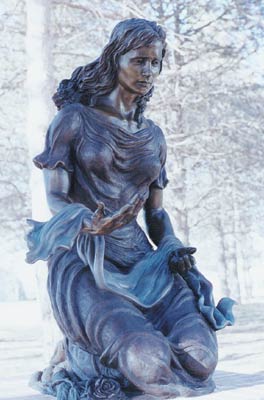
Rachel weeping for children who are no more, sculptor Sondra Jonson
A voice is heard in Ramah, mourning and great weeping, Rachel weeping for her children and refusing to be comforted, because they are no more. Matthew 2:18 and Jeremiah 31:15
In mourning for the people of Newtown, Connecticut
There is no consolation for these families.
Their arms aching with emptiness tonight,
beds and pillows lying cold and unused,
dolls and stuffed animals awaiting all night hugs
that will never come again.
There can be no consolation;
only mourning and great weeping,
sobbing that wrings dry
every human cell,
leaving dust behind,
dust, only dust
which is beginning
and end.
He came to us
for times such as this,
born of
the dust of woman and
the breath of Spirit,
God who bent down to
lie in barn dust,
walk on roads of dust,
die and be laid to rest as dust
in order to conquer
such evil as this
that could horrify masses
and massacre innocents.
He became dust to be
like us
He began a mere speck in a womb
like us
so often too easily washed away
as unwanted.
His heart beat
like ours
breathing each breath
like ours
until a fearful fallen world
took His
and our breath
away.
He shines through
the shadows of death
to guide our stumbling uncertain feet.
His tender mercies flow freely
when there is no consolation
when there is no comfort.
He hears our cries
as He cried too.
He knows our tears
as He wept too.
He knows our mourning
as He mourned too.
He knows our dying
as He died too.
God wept
as this happened.
Evil comes not from God
yet humankind embraces it.
Sin is our choice
we made from the beginning,
the choice we continue to make.
Only God can glue together
what evil has shattered.
He just asks us to hand Him
the pieces of our broken hearts.
We will know His peace
when He comes
to bring us home,
our tears will finally be dried,
our cells no longer
just dust,
never only dust
as we are glued together
by the breath of God
forevermore.
the tender mercy of our God, by which the rising sun will come to us from heaven to shine on those living in darkness and in the shadow of death, to guide our feet into the path of peace. Luke 1: 78-79
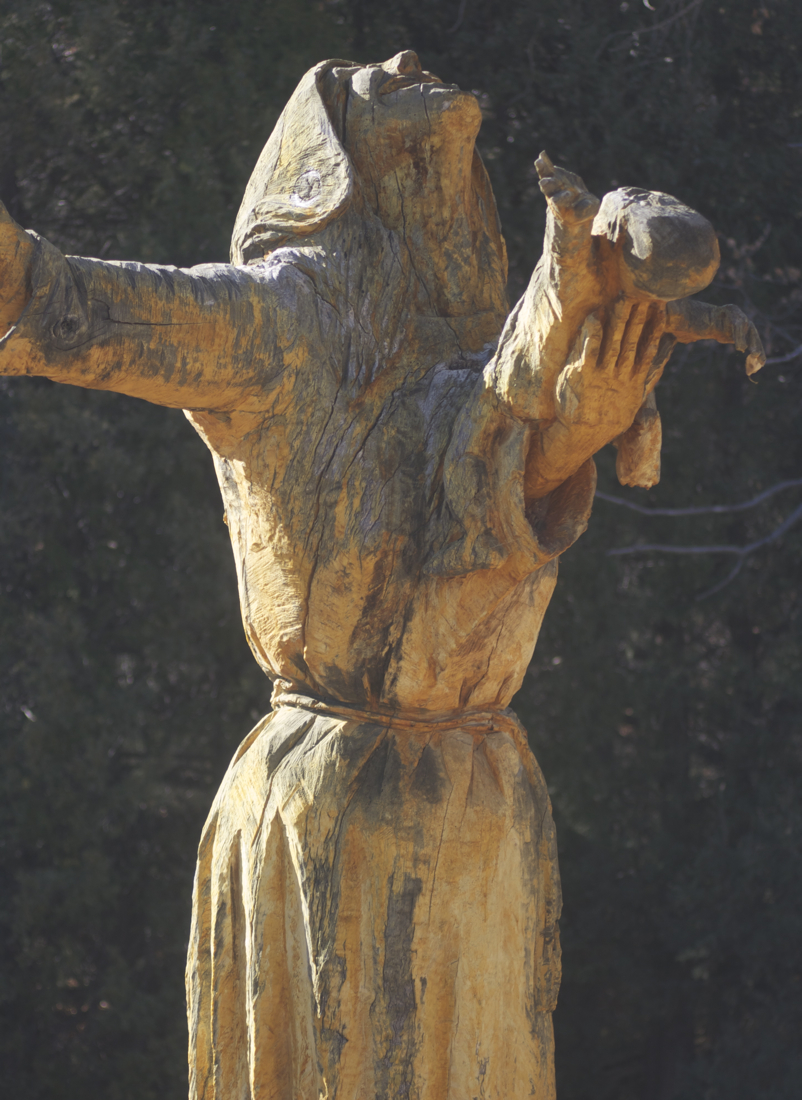
Wood sculpture of Rachel weeping, located at Our Lady of Guadelupe Abbey, Texas
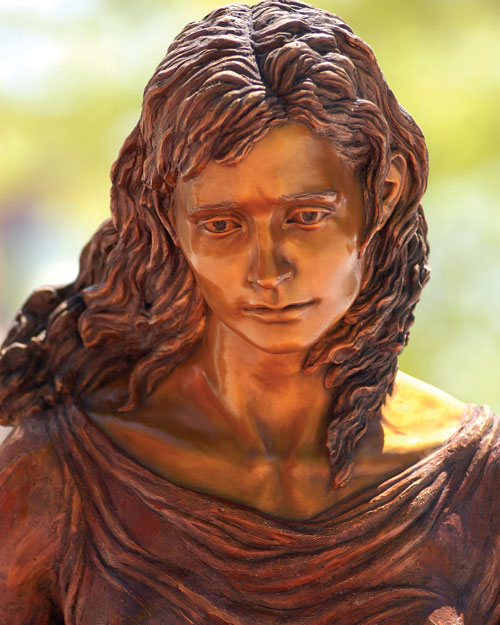
Rachel weeping for the children who are no more
Sculptor Sondra Jonson











 Barnstorming