When It Doesn’t Matter a Hill of Beans

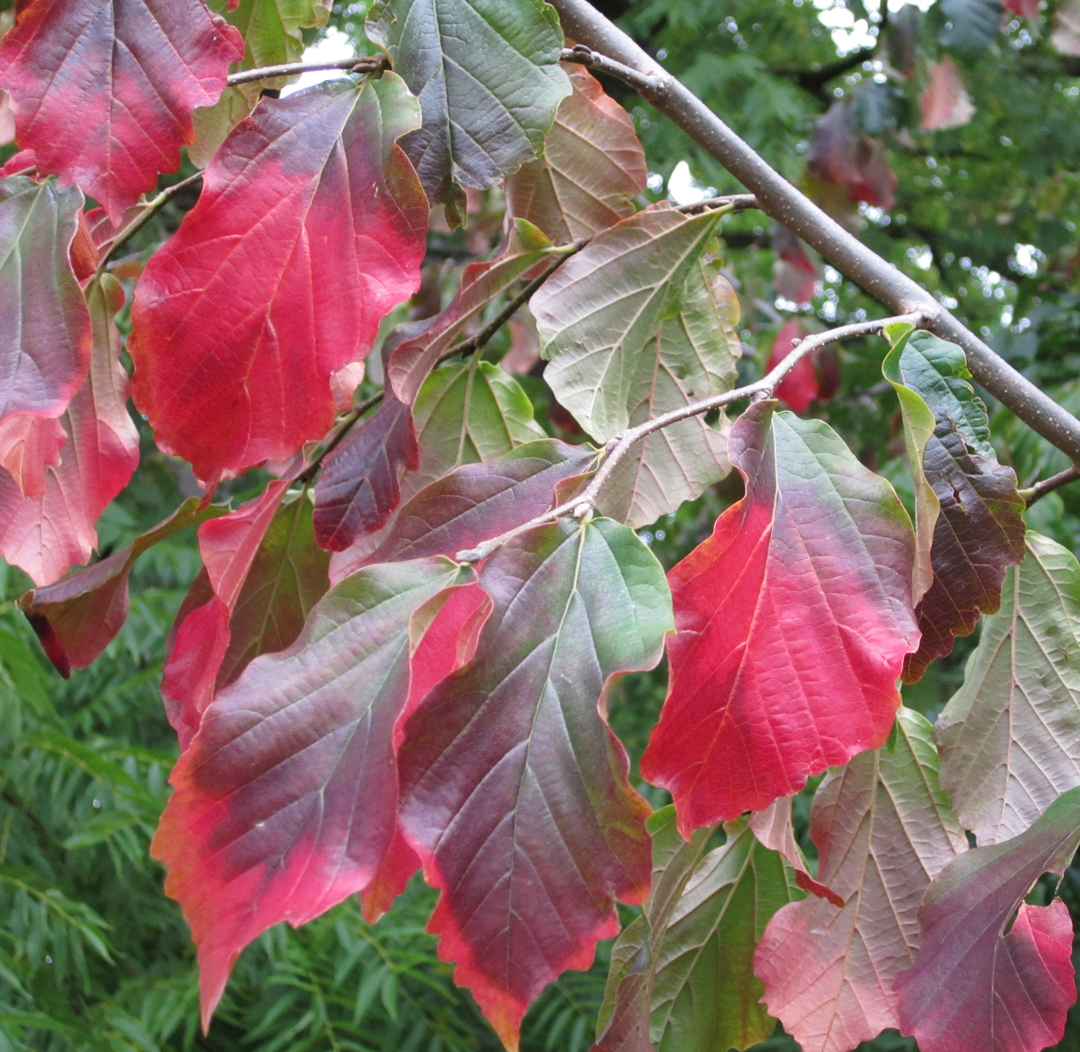
Fall begins again even though I’m unprepared.  No matter which way I turn,  autumn’s kaleidoscope displays new patterns, new colors, new empty spaces as I watch the world die into itself once again.

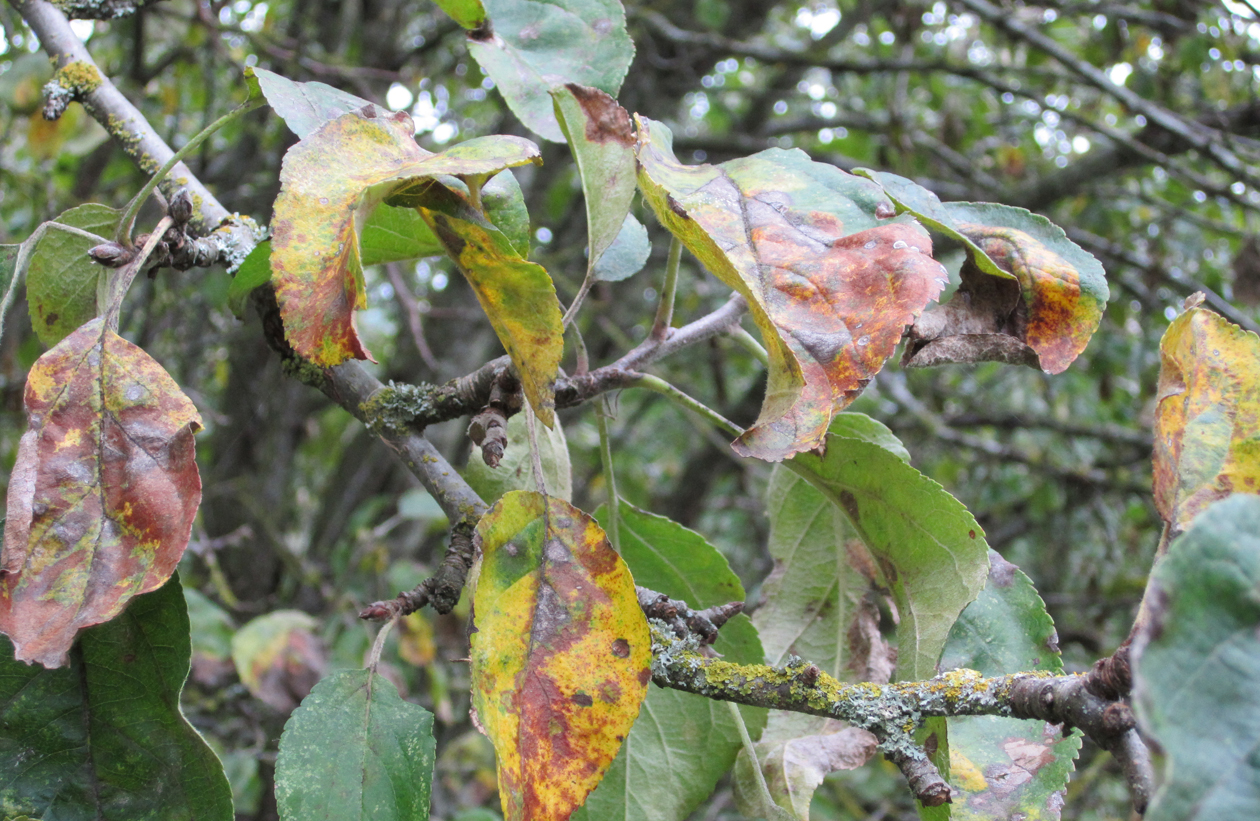
Some dying blazes out in fury — a calling out for attention.  Then there is the dying that happens without anyone taking much notice: a plain, tired, rusting away letting go.

I spent the morning adjusting to this change in season by occupying myself with the familiar task of moving manure.  Cleaning barn is a comforting chore, allowing me to transform tangible benefit from something objectionable and just plain stinky to the nurturing fertilizer of the future. It feels like I’ve actually accomplished something.

As I scooped and pushed the wheelbarrow, I remembered another barn cleaning fifteen years ago, when I was one of a few friends left cleaning over ninety stalls after a Haflinger horse event that I had organized at our local fairgrounds. Some people had brought their horses from over 1000 miles away to participate for several days.  There had been personality clashes and harsh words among some participants along with criticism directed at me that I had taken very personally.  As I struggled with the umpteenth wheelbarrow load of manure, tears stung my eyes and my heart.  I was miserable with regrets.   After going without sleep and making personal sacrifices over many months planning and preparing for the benefit of our group,  my work felt like it had not been acknowledged or appreciated.

A friend had stayed behind with her family to help clean up the large facility and she could see I was struggling to keep my composure.  Jenny put herself right in front of my wheelbarrow and looked me in the eye, insisting I stop working for a moment and listen.

“You know,  none of these troubles and conflicts will amount to a hill of beans years from now.  People will remember a fun event in a beautiful part of the country,  a wonderful time with their horses, their friends and family, and they’ll be all nostalgic about it, not giving a thought to the infighting or the sour attitudes or who said what to whom.   We are horse people and human beings, for Pete’s sake, prone to complain and grouse about life.  So don’t make this about you and whether you did or didn’t make everyone happy.  You loved us all enough to make it possible to meet here and the rest was up to us.  So quit being upset about what you can’t change.  There’s too much you can still do for us.”

During tough times, Jenny’s advice replays, reminding me to stop expecting or seeking appreciation from others, or feeling hurt when harsh words come my way.   She was right about the balm found in the tincture of time and she was right about giving up the upset in order to die to self and self absorption, and keep focusing outward.

I have remembered.

Subsequently, unknown to both of us at the time,  Jenny herself spent over six years dying from breast cancer, while living her life sacrificially and sacramentally every day, fighting a relentless disease that was, for a time, immobilized in the face of her faith and intense drive to live. She became a rusting leaf, fading imperceptibly over time, crumbling at the edges until the day when she finally let go.   Her dying did not flash brilliance, nor draw attention at the end.  Her intense focus during the years of her illness had always been outward to others, to her young family and friends, to the healers she spent so much time with in medical offices, to her belief in the plan God had written for her and others.

So four years ago she let go her hold on life here. And we reluctantly have let her go.   Brilliance now cloaks her as her focus is on things eternal.

You were so right, Jenny.  Nothing from fifteen years ago amounts to a hill of beans; it simply doesn’t matter any more.

Except the words you spoke to me.

And I won’t be upset that I can’t change the fact that you have left us.

We’ll catch up later.

photo of Jenny Rausch in her last year on earth, by sister Ginger-Kathleen Coombs
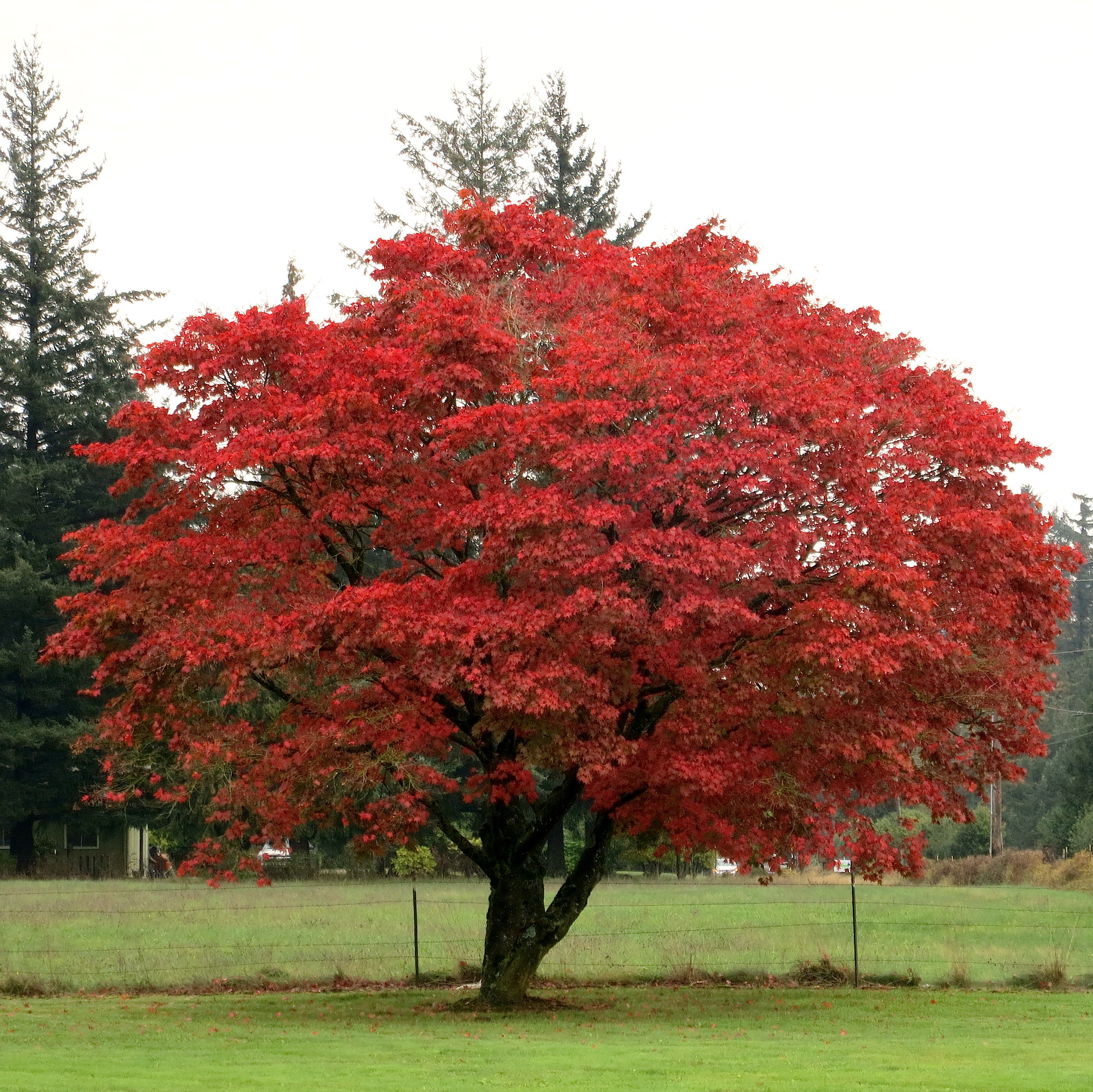
novpoleroadtree

The Old Self Shed

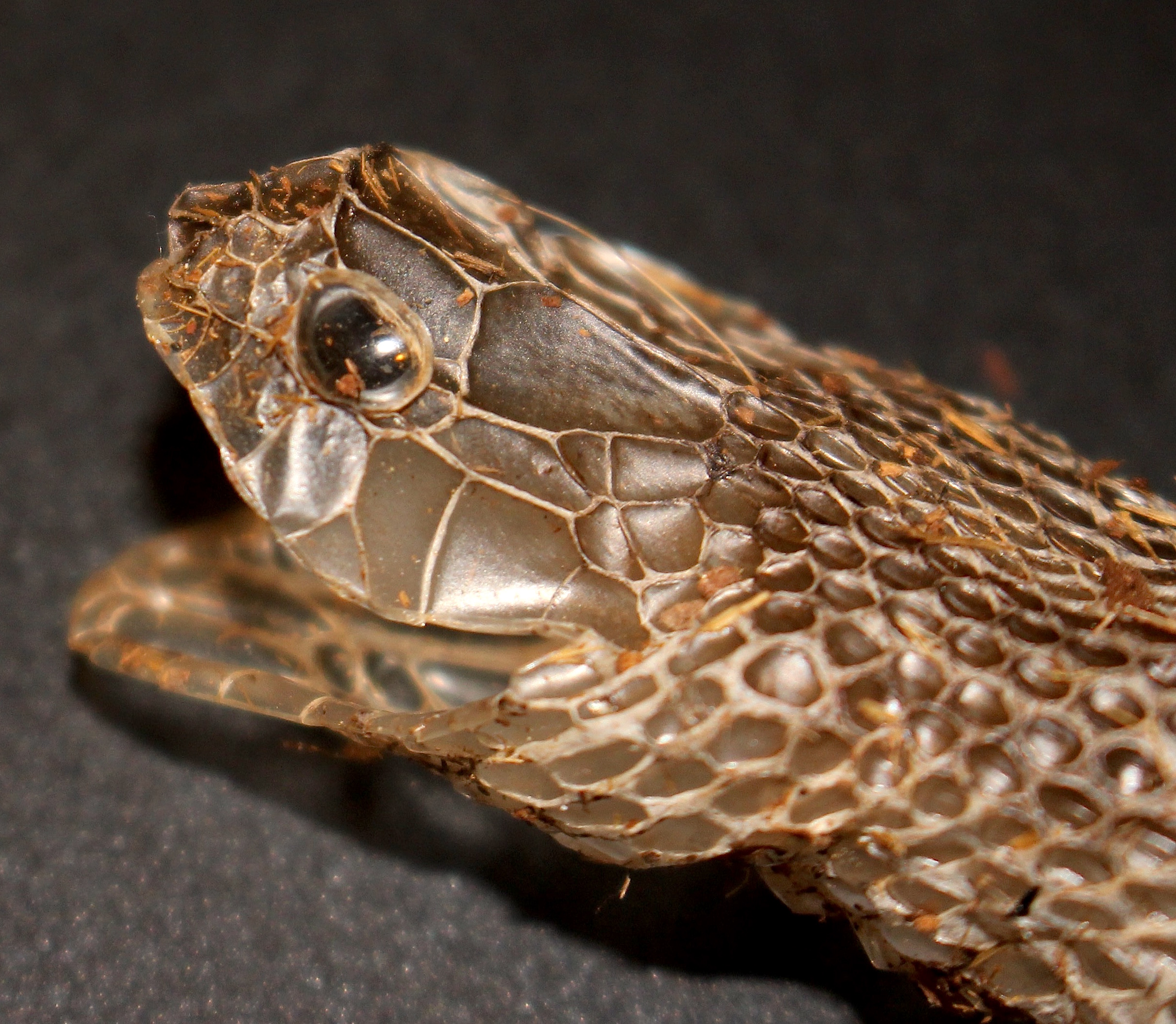
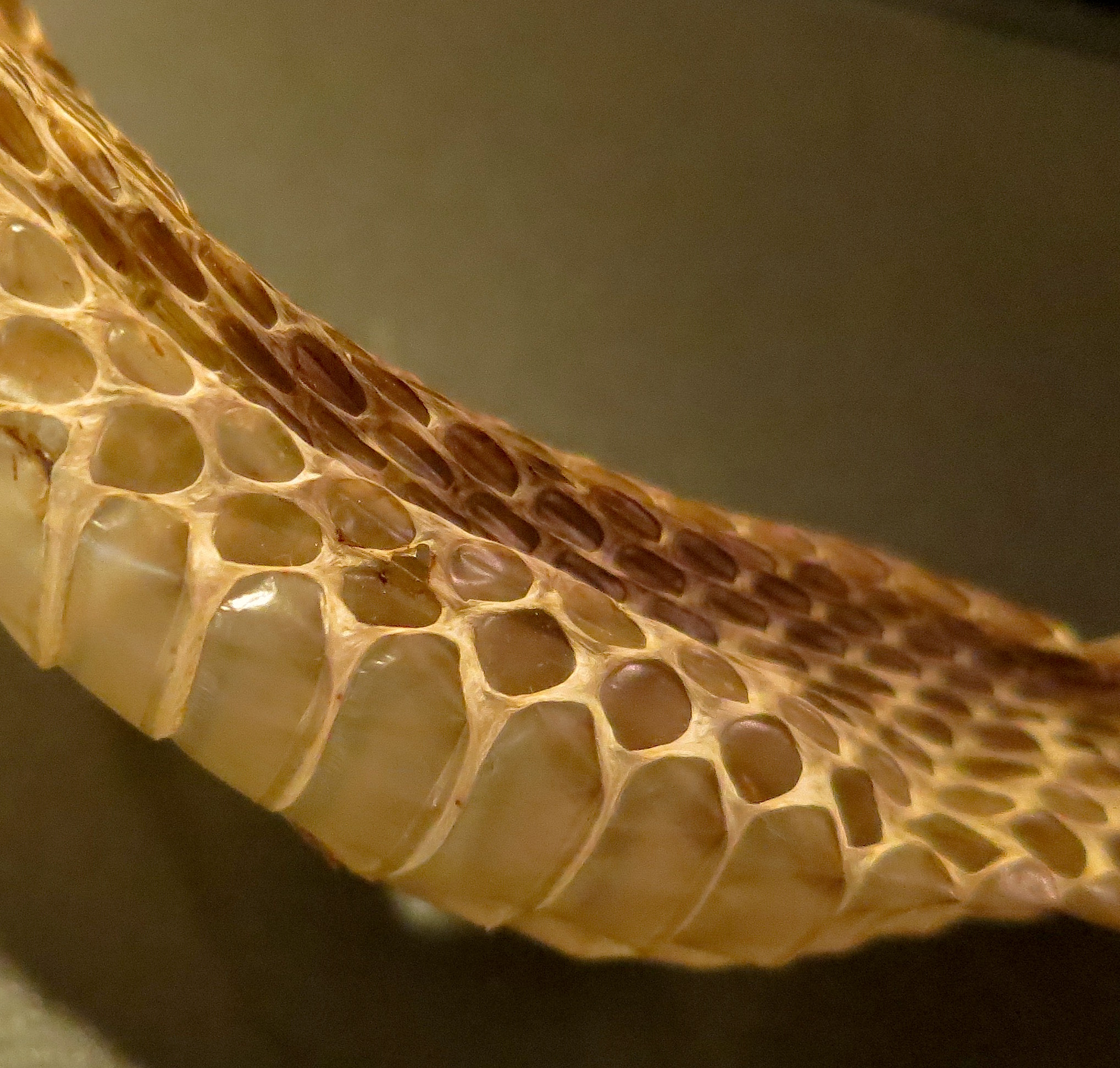
snakeskin9
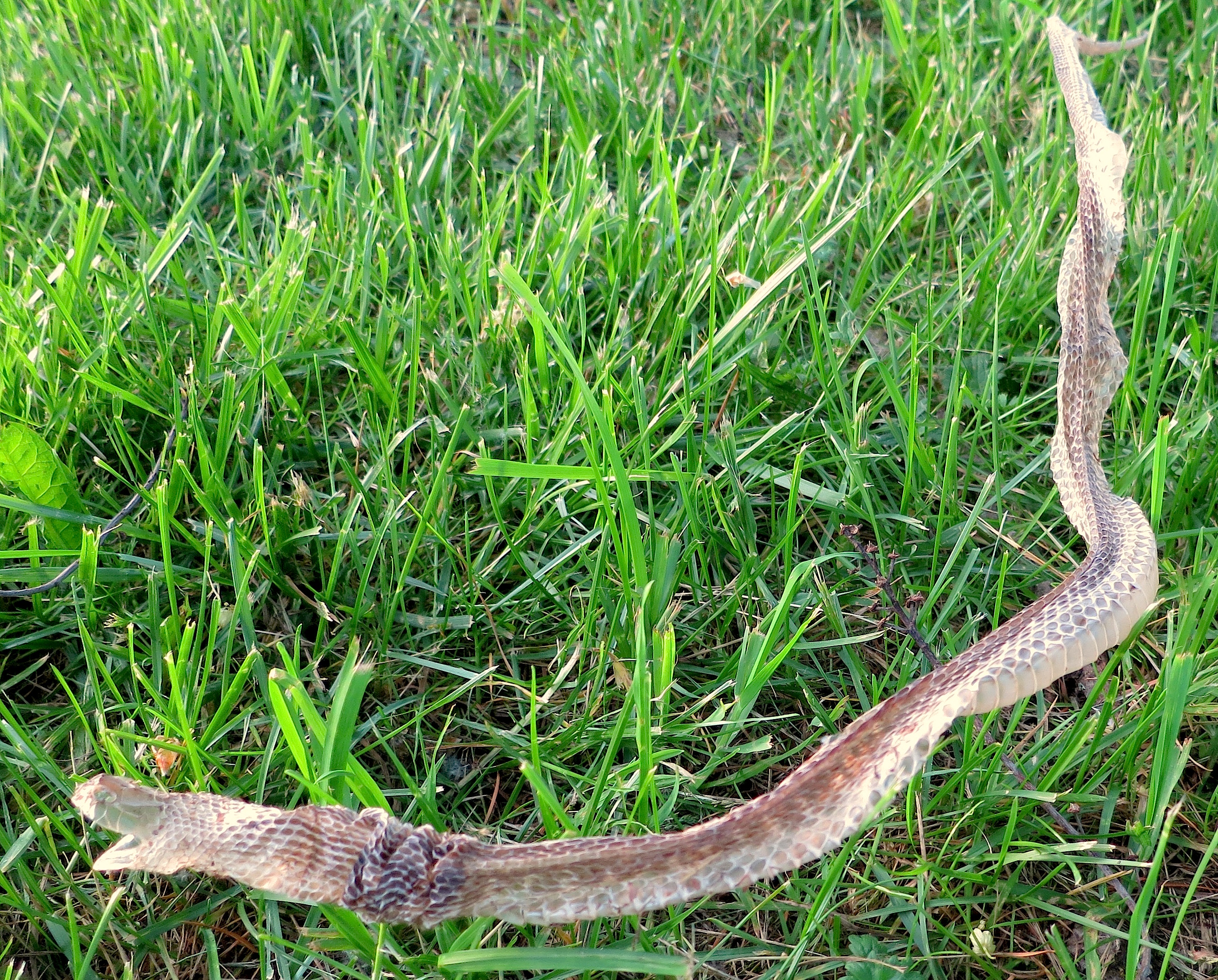
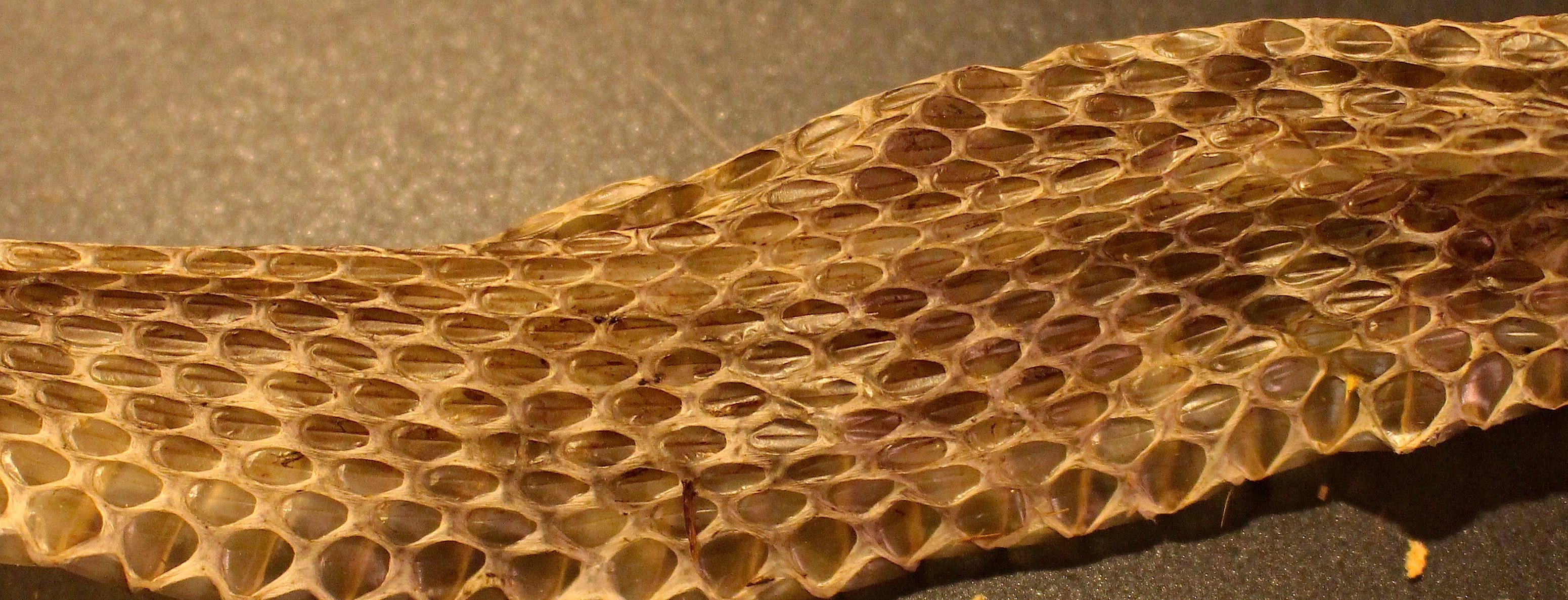
snakeskinintact
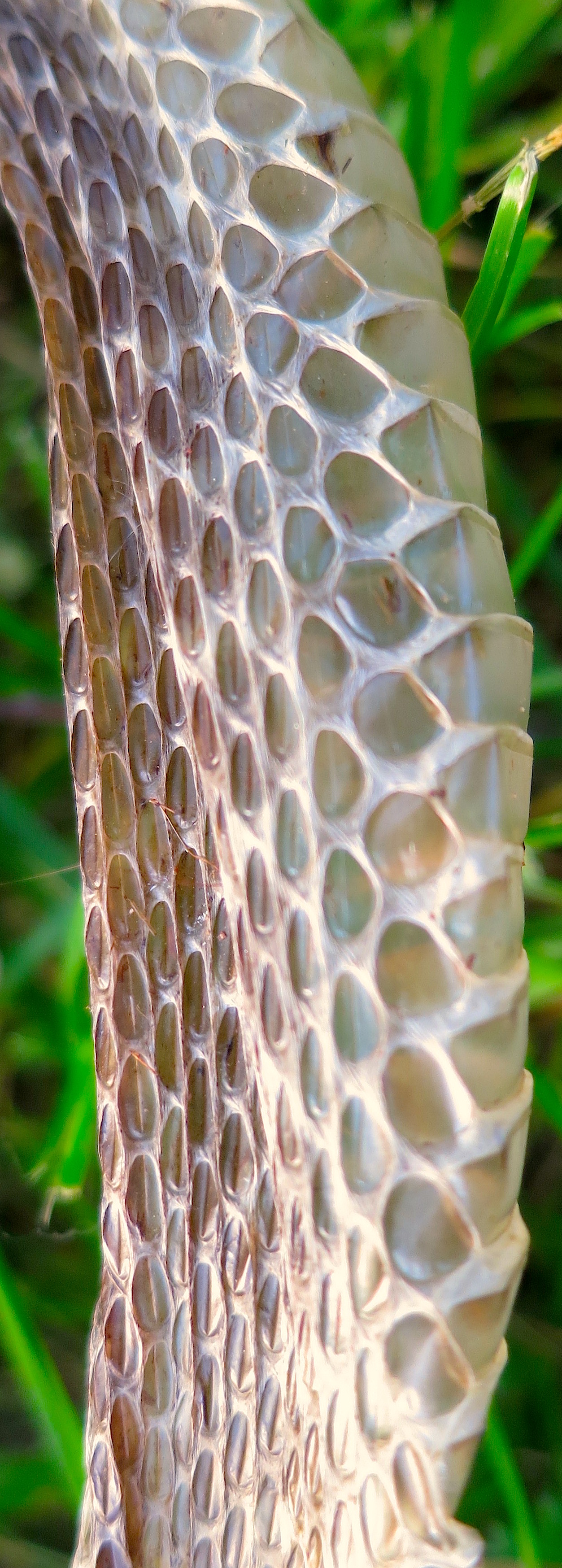
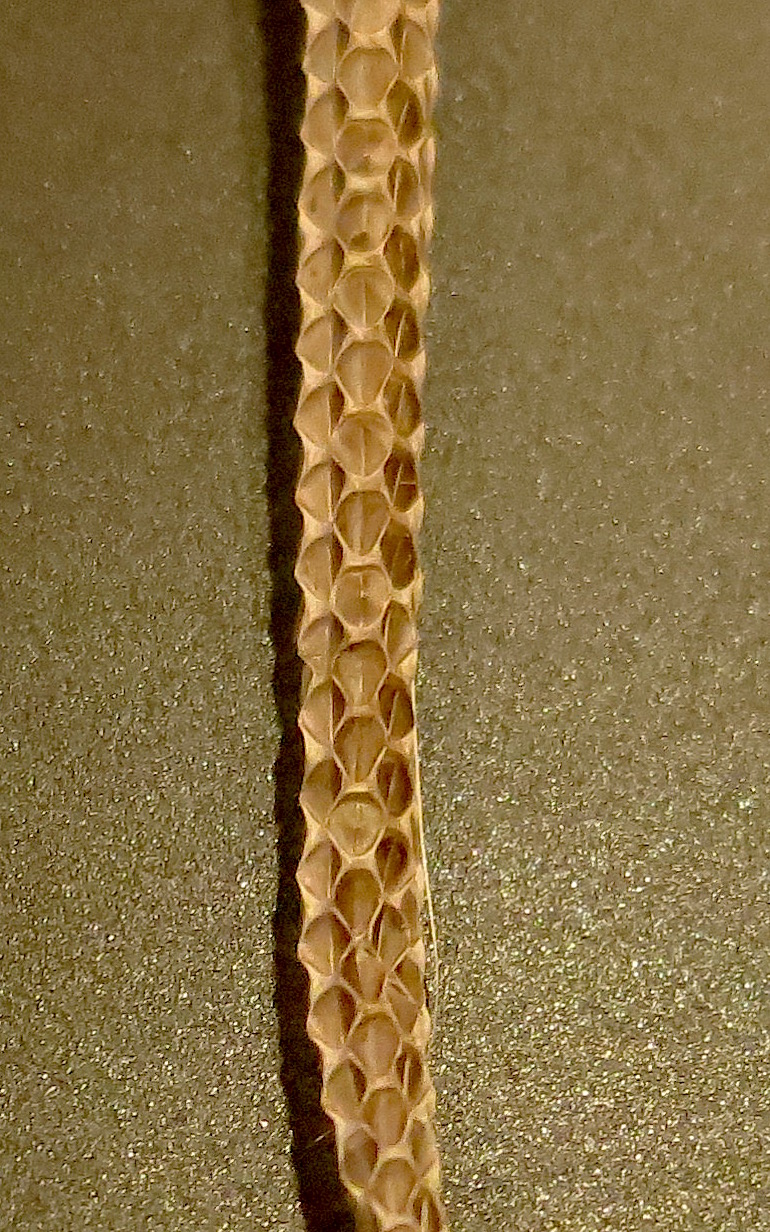
snakeskin2
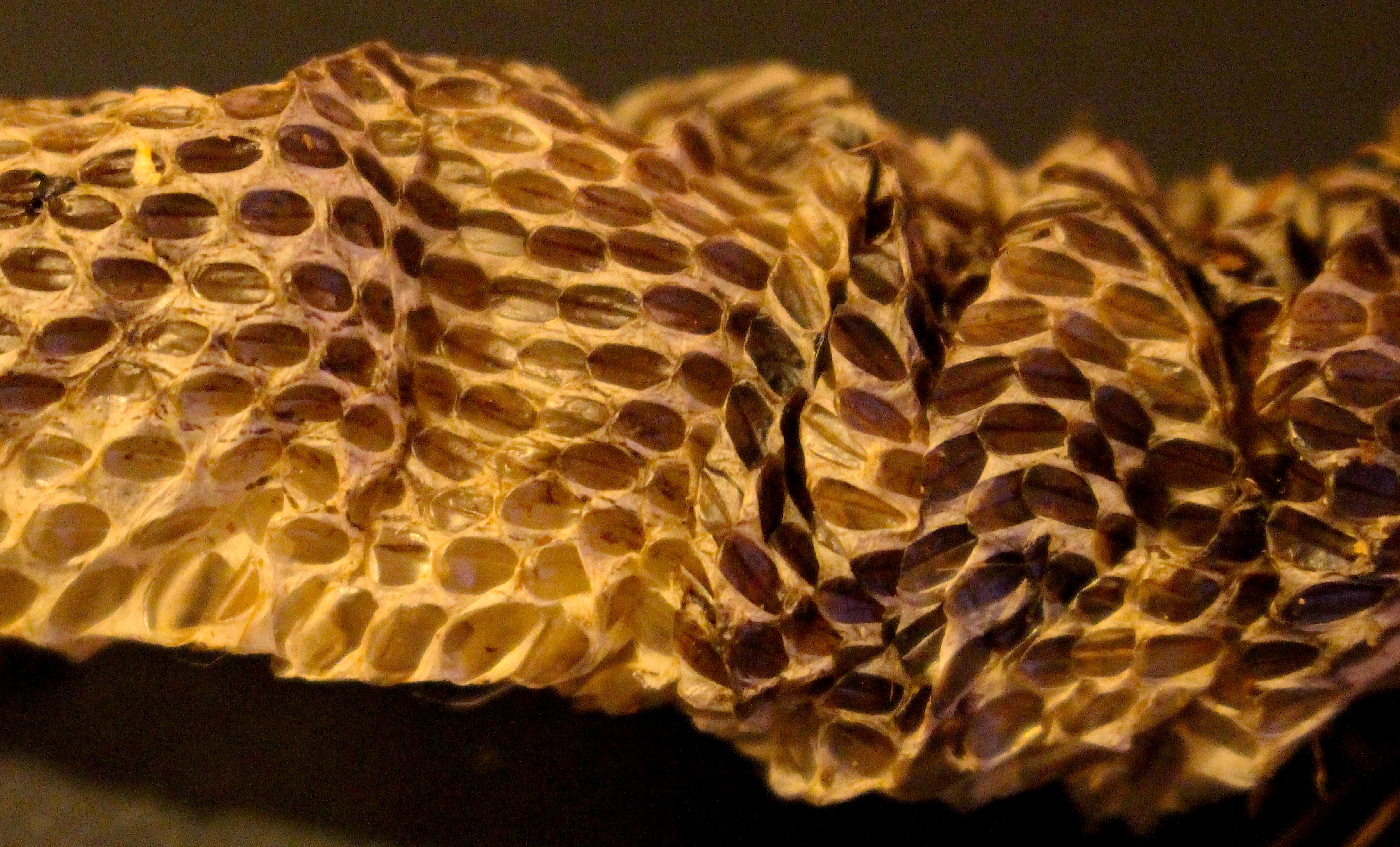
Cast off on a sunny day
onto a warm manure pile,
a wriggled-free fresh snakeskin,
almost covered by my fresh load~
lay blended with old hay, horse hair, shavings,
tucked among what is already digested,
dumped and discarded.
This, an intact hollowed shadow
of a still living creature
who has moved on:
I too need to leave my old self
shrugged off onto the manure pile,
shed when it no longer fits
the ways I’ve grown hallowed,
a fitting remembrance of
who I once was,
yet left behind.
snakeskin1
snakeskin3
snakeskin10
snakeskin5
snakeskin4

Decomposition

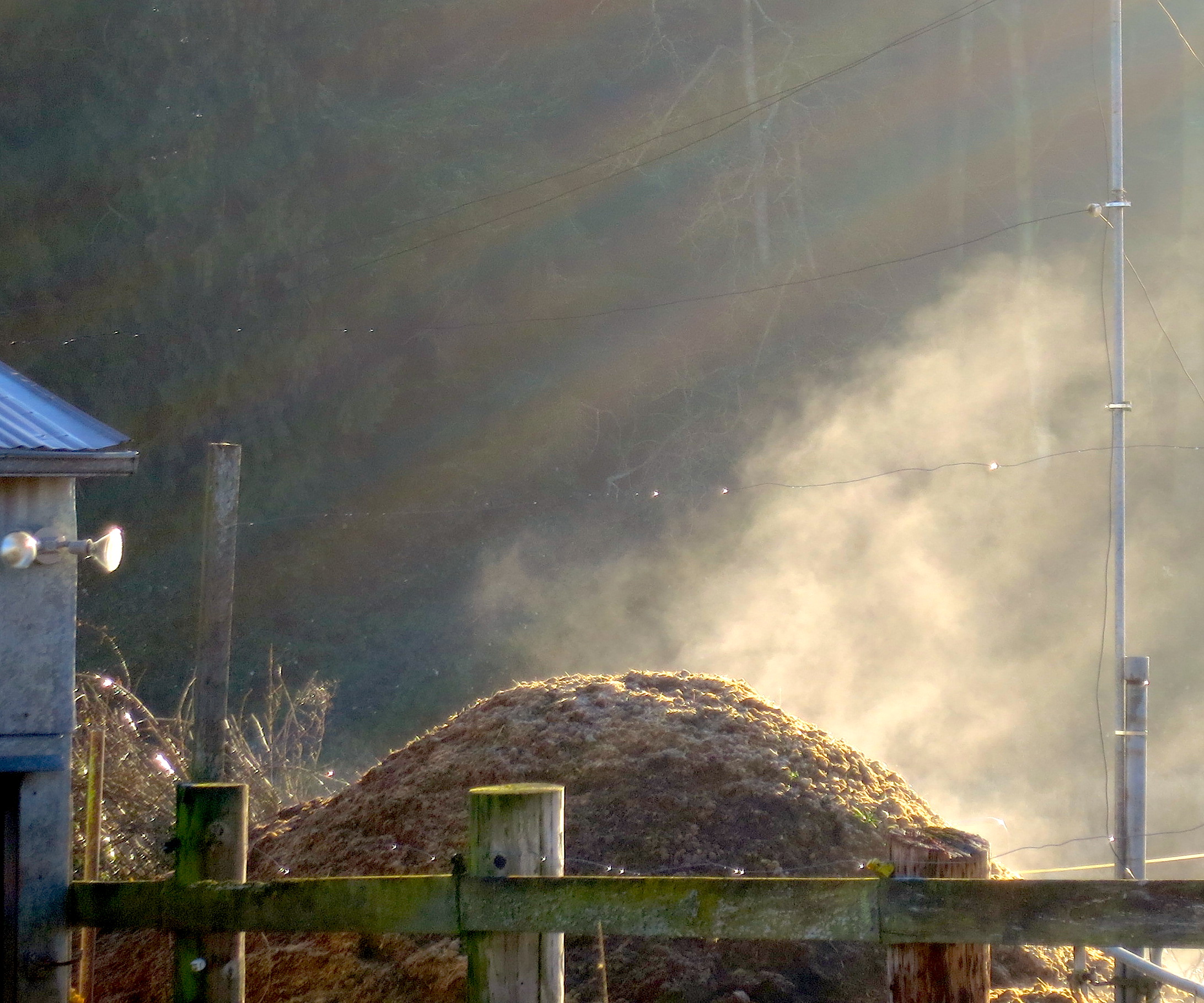
compostjanuary

I’ve banked nothing, or everything.
Every day the chores need doing again.
Early in the morning, I clean the horse barn with a manure fork. 
Every morning, it feels as though it could be the day before
or a year ago
or a year before that. With every pass, I give the fork one final upward flick
to keep the manure from falling out,
and every day I remember where I learned to do that and from whom.
Time all but stops. 

But then I dump the cart on the compost pile.
I bring out the tractor and turn the pile, once every three or four days.
The bucket bites and lifts, and steam comes billowing out of the heap.
It’s my assurance that time is really moving forward,
decomposing us all in the process.
~Verlyn Klinkenborg from More Scenes from the Rural Life


Lenten Grace — Dungforks and Slop Pails

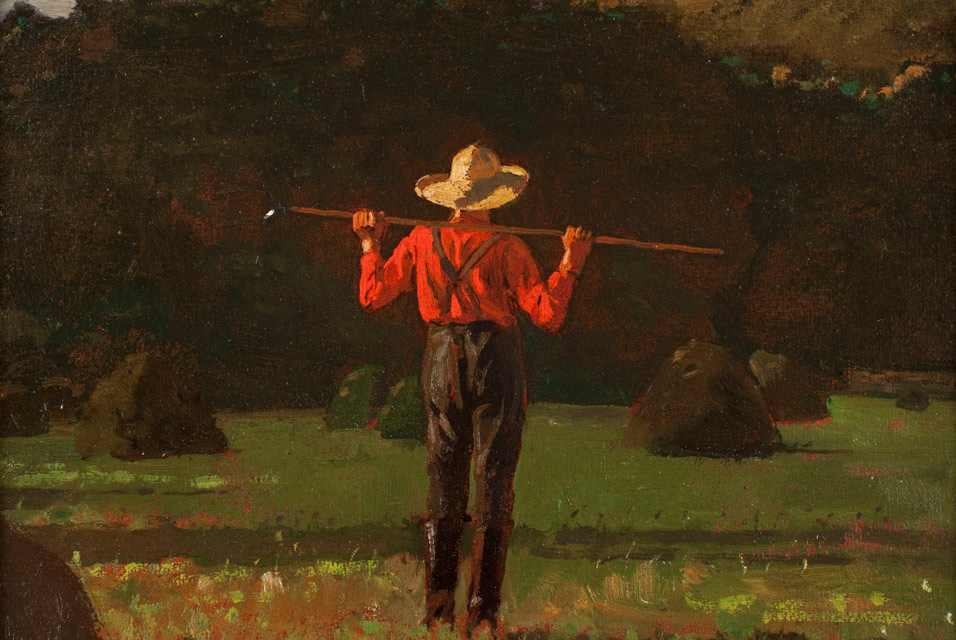
Farmer with a pitchfork by Winslow Homer

To lift up the hands in prayer gives God glory,
but a man with a dungfork in his hand,
a woman with a slop pail,
give Him glory, too.
God is so great
that all things give Him glory
if you mean that they should.
~Gerard Manley Hopkins

Thanks in large part to how messy we humans are, this world is a grimy place.   As an act of worship, we keep cleaning up after ourselves.  The hands that clean the toilets, scrub the floors, carry the bedpans, pick up the garbage might as well be clasped in prayer–it is in such mundane tasks God is glorified.

I spend an hour every day carrying dirty buckets and wielding a pitchfork because it is my way of restoring order to the disorder inherent in human life.  It is with gratitude that I’m able to pick up one little corner of my world, making stall beds tidier for our farm animals by mucking up their messes and in so doing, I’m cleaning up a piece of me at the same time.

I never want to forget the mess I’m in and the mess I am.  I never want to forget to clean up after myself.  I never want to feel it is a mere and mundane chore to worship with dungfork and slop pail.

It is my privilege.  It is His gift to me.
It is Grace that comes alongside me, to keep pitching the muck and carrying the slop when I get weary.

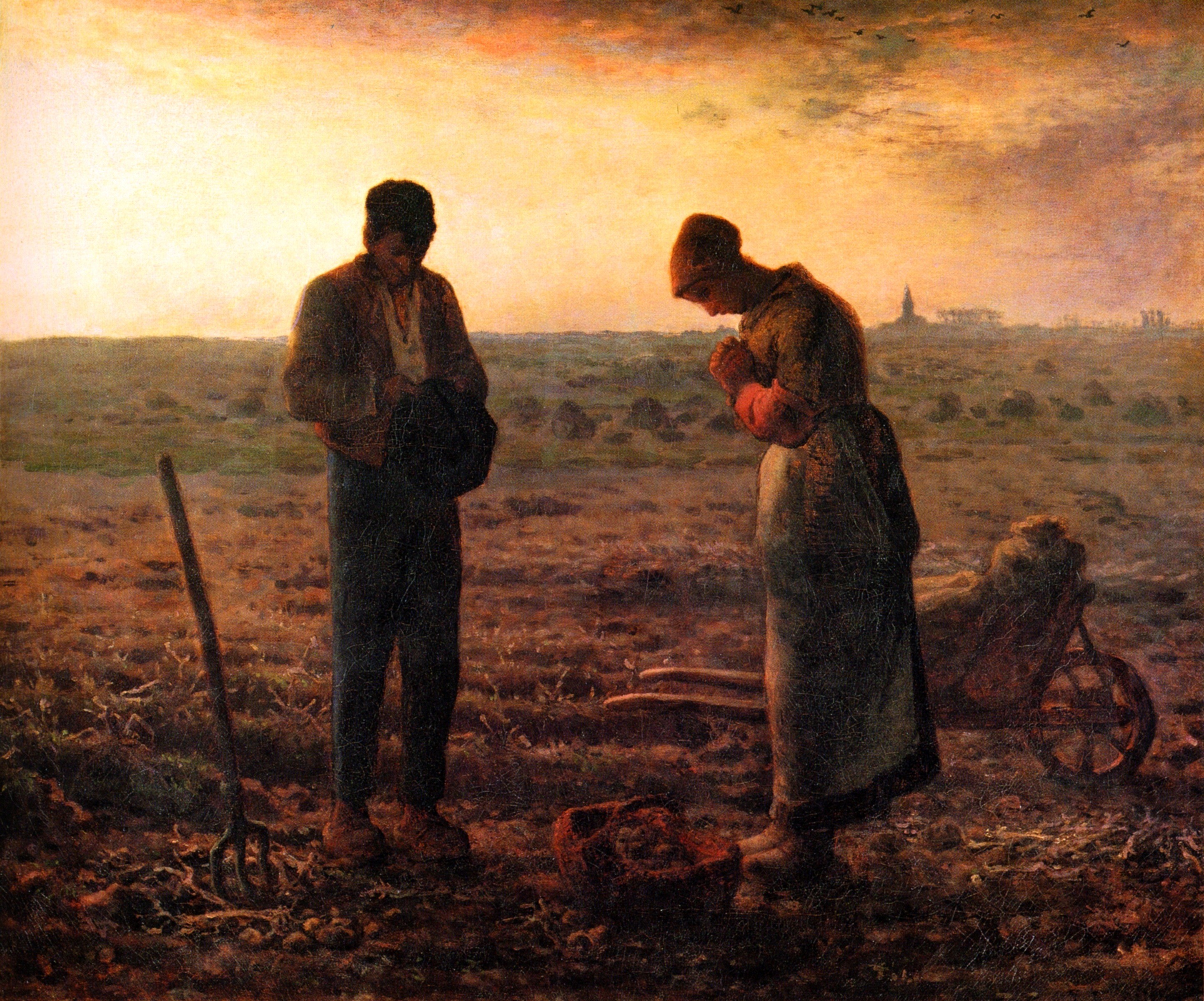
The Angelus by Jean-François Millet

Lenten Grace — Sacrament of the Present Moment

Photo by Kathy Yates

It is in these afflictions, which succeed one another each moment, that God, veiled and obscured, reveals himself, mysteriously bestowing his grace in a manner quite unrecognized by the souls who feel only weakness in bearing their cross…
Jean Pierre du Caussade from The Sacrament of the Present Moment

The past few mornings have unveiled in mist and fog, tentative spring dawns of freezing air and warming soil trying to break loose from the vise grip of a tired and dying winter.

I am struggling under the load of 14 hour work days in addition to keeping a barn clean and animals and humans fed.  Even sleep is not restful when there is so little time to quiet myself in reflection and gratitude.

I am keenly reminded of my weakness as my strength wanes at the end of a long day, having slipped in the mud while trying to gain traction unloading a couple hundred pounds of manure from the wheelbarrow.  Landing on my backside, my pants soaking through,  I can choose to laugh or cry.

I choose to see the baptism of mud as a sacrament of the present moment,  reminding me of my need for a cleansing grace.

I laugh and cry.

Though obscured from view, God is nevertheless revealed in these moments of being covered in the soil of earth and the waste of its creatures.

He knows I need reminding that I too am dust and to dust shall return.
He knows I am too often wasteful and a failed steward, so need reminding by landing me amidst it.
He knows I need to laugh at myself, so puts me right on my backside.
He knows I need to cry, so sends me those with the saddest stories and greatest needs.
He knows I need Him, always and ever more, to restore a sacrament of grace evident in the present moment and every moment to come.


Hostelry of Worms

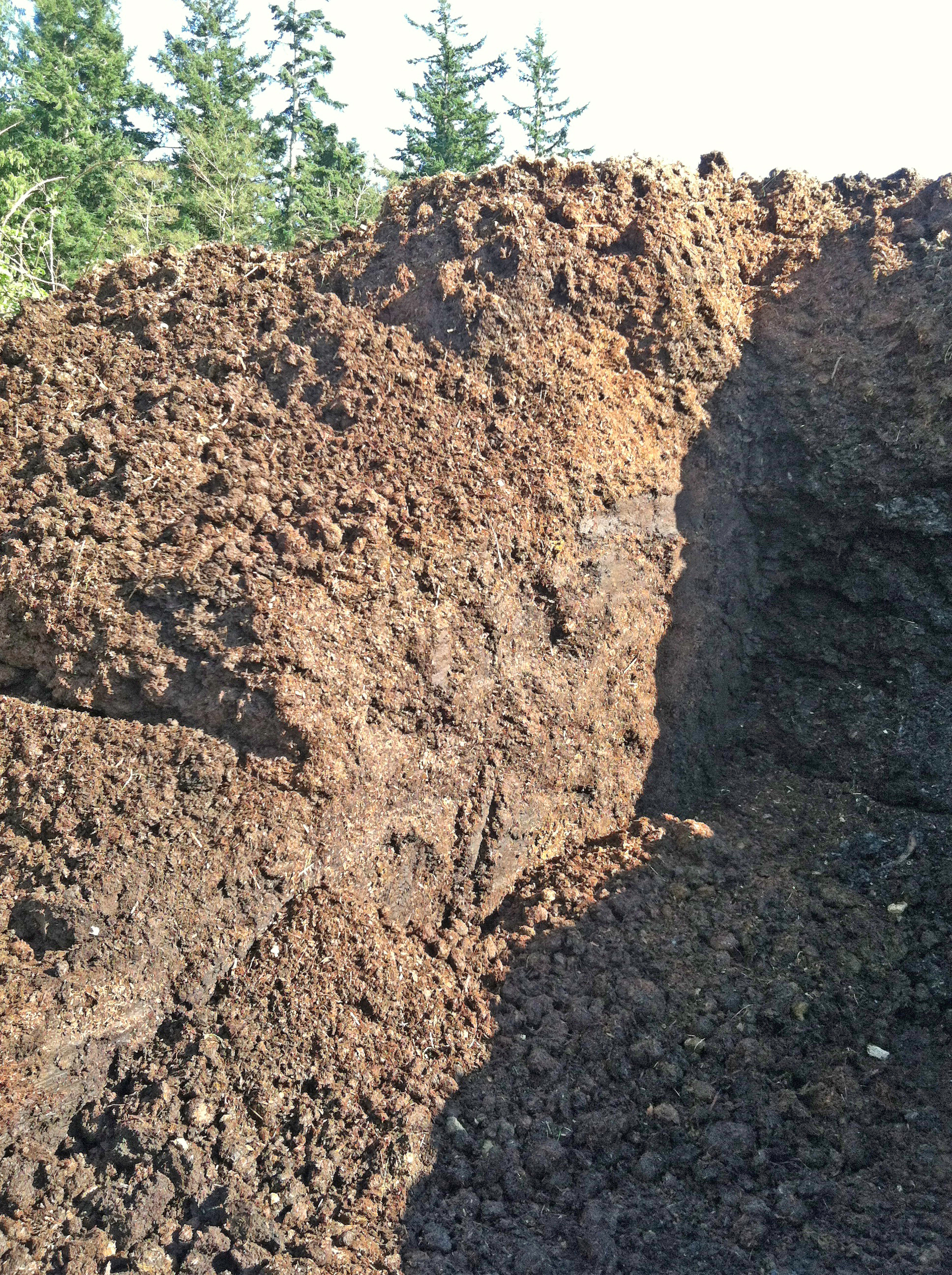
a cross section of 30 months of composted manure
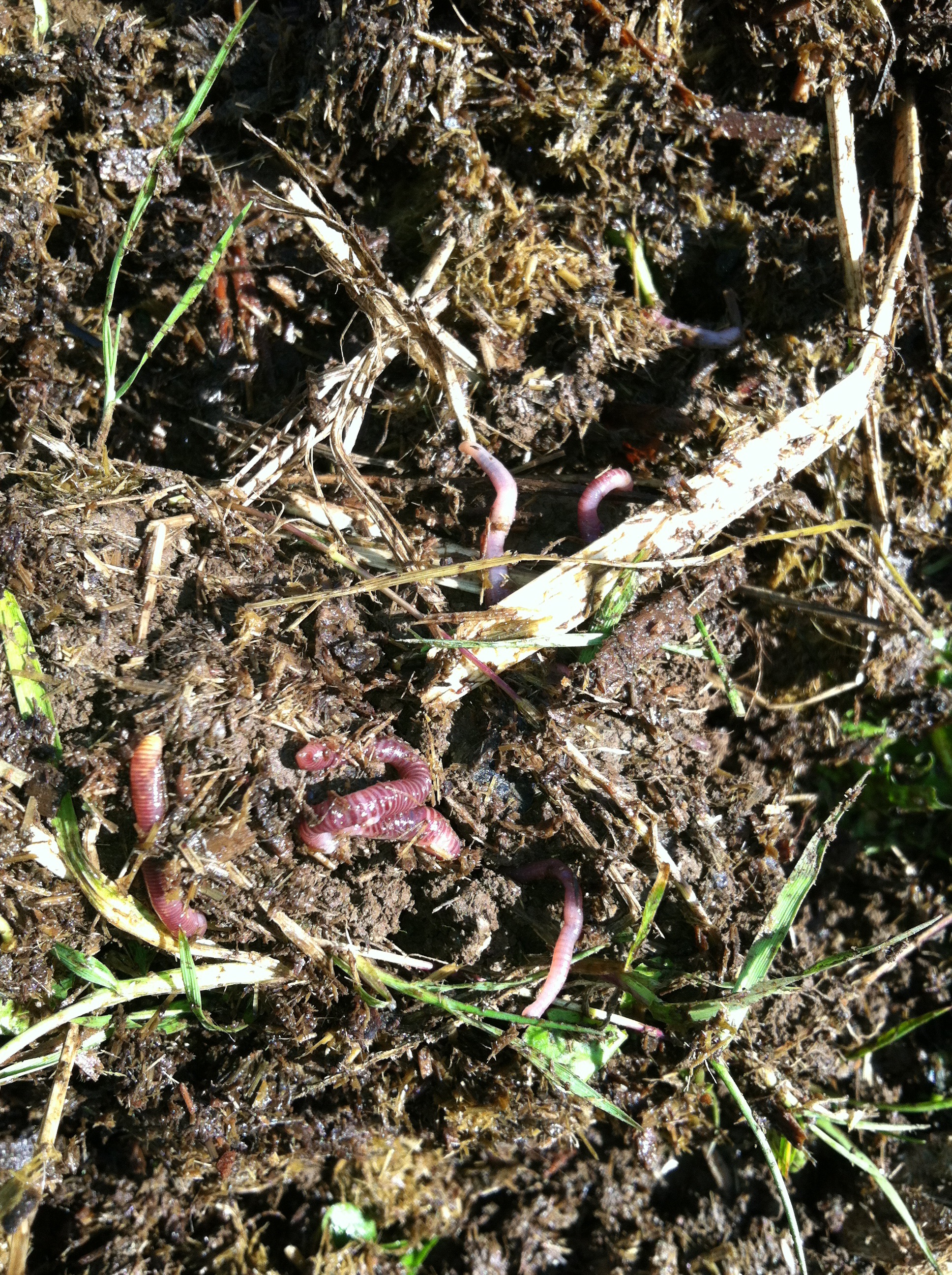
a plethora of red wigglers

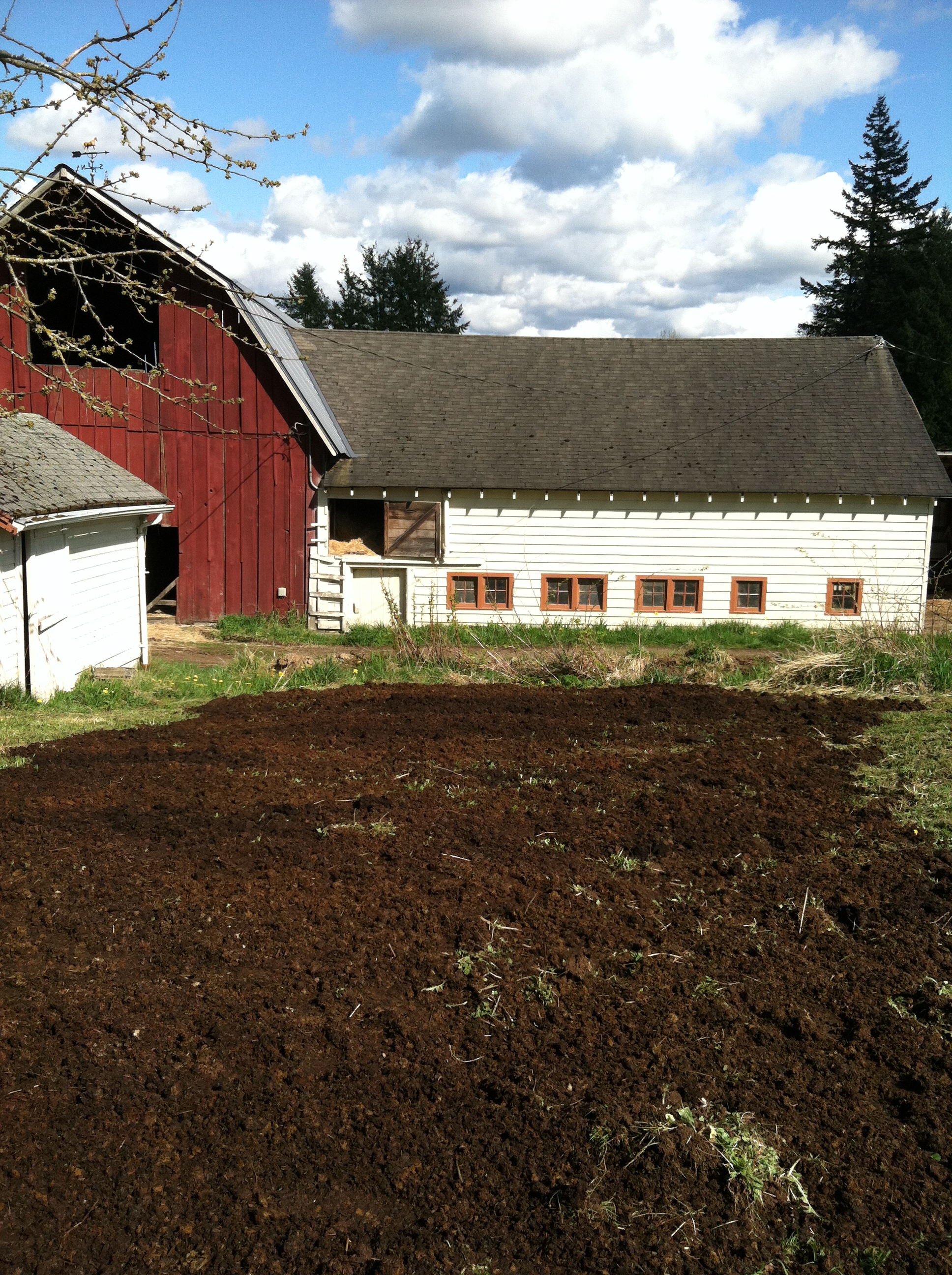
A sunny spring day lured us outside for yard and garden prep for the anticipated grass and weed explosion in a few short weeks. We’ve been carefully composting horse manure for over two years behind the barn, and it was time to dig in to the 10 foot tall pile to spread it on our garden plots. As Dan pushed the tractor’s front loader into the pile, steam rose from its compost innards. As the rich soil was scooped, thousands of newly exposed red wiggler worms immediately dove for cover. Within seconds, thousands of naked little creatures had, well, …wormed their way back into the security of warm dirt, rudely interrupted from their routine. I can’t say I blamed them.

Hundreds of thousands of wigglers ended up being forced to adapt to new quarters today, leaving the security of the manure mountain behind. As I smoothed the topping of compost over the garden plot, the worms–gracious creatures that they are–tolerated being rolled and raked and lifted and turned over, waving their little bodies expectantly in the cool air before slipping back down into the dark. There they will begin their work of digesting and aerating the tired soil of the garden, reproducing in their unique hermaphroditic way, leaving voluminous castings behind to further feed the seedlings to be planted.

Worms are unjustly denigrated by humans primarily because we don’t like to be surprised by them. We don’t like to see one in our food, especially only part of one, and are particularly distressed to see them after we’ve digested our food. Once we get past that bit of squeamishness, we can greatly appreciate their role as the ultimate recyclers, leaving the earth a lot better off once they are finished with their work. We humans actually suffer by comparison, so to be called “a worm” is really not as bad as it sounds at first. The worm may not think so.

I hope to prove a worthy innkeeper for these new tenants. May they live long and prosper. May worms be forgiving for the continual disruption of their routine. May I smile the next time someone calls me a worm.

The garden is covered with rich composted manure

Another Manure Tale

I spend about an hour a day shoveling manure out of eight horse stalls.  Wheeled to a mountainous pile in our barnyard,  it happily composts year round, becoming rich fertilizer in a matter of months through a crucible-like heating process of organic chemistry, bacteria and earthworms.  Nothing mankind has achieved quite matches the drama of useless and basically disgusting stuff transforming into the essential elements needed for productive growth and survival.  I’m in awe, every day, at being part of this process.  The horses, major contributors that they are, act underwhelmed by my enthusiasm.  I guess some miracles are relative, depending on one’s perspective, but if the horses understood that the grass they contentedly eat in the pasture, or the hay they munch on during the winter months, was grown thanks to their carefully recycled manure, they might be more impressed.

Their nonchalance about the daily mucking routine is understandable.  If they are outside, they probably don’t notice their beds are clean when they return to the stalls at night.  If they are inside during the heavy rain days, they feel duty-bound to be in my face as I move about their stall, toting my pitchfork and pushing a wheelbarrow.  I’m a source of constant amusement as they nose my jacket pockets for treats that I never carry, as they beg for scratches on their unreachable itchy spots, and as they attempt to overturn an almost full load, just to see balls of manure roll to all corners of the stall like breaking a rack of billiard balls in a game of pool.  Good thing I’m a patient person.

So my stallion discovered a way to make my life easier rather than complicating it.  He hauled a rubber tub into his stall from his paddock, by tossing it into the air with his teeth and throwing it, and it finally settled against one wall.  Then he began to consistently pile his manure, with precise aim, right in the tub.  I didn’t ask him to do this.  It had never occurred to me.  I hadn’t even thought it was possible for a horse to house train himself.  But there it is, proof that some horses prefer neat and tidy rather than the whirlwind eggbeater approach to manure distribution.  After a day of his manure pile plopping, it is actually too heavy for me to pick up and dump into the wheelbarrow all in one tub load, but it takes 1/4 of the time to clean his stall than the others, and he spares all this bedding.  What a guy.

Now, once I teach him to put the seat back down when he’s done, he’s welcome to move into the house…

There Must Be a Pony in Here Somewhere…

pile2

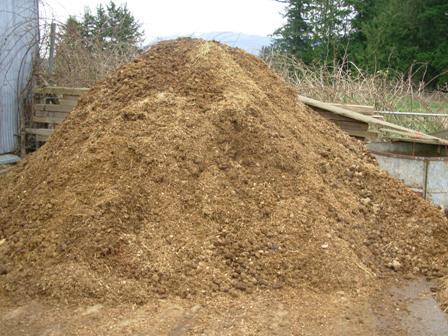
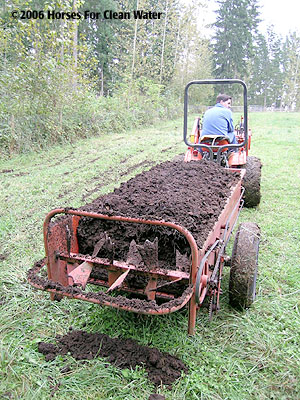
It’s manure spreading time at BriarCroft–time to recycle six months of accumulated Haflinger poop (plus shavings) back to the fields from where it originated. The fields soon will be too wet and mushy to run the manure spreader over without cutting deep ruts, so October is our window of opportunity to reduce the mountains of manure that have accumulated over the spring and summer so we can start “fresh” for the fall and winter. There is nothing quite so satisfying as making good use of what appears to the average citizen to be noxious organic material.

Au, contraire!

This poop is the best fertilizer in the world, because it is produced, with love and not much effort, by our Haflingers.

Scooping poop out of stalls is a therapeutic exercise in more ways than one and usually far more satisfying than pitching the figurative stuff
all day in other settings. There are a few Haflingers that are ‘pilers’—beautifully barn trained creatures that they are, leaving nice neat little collections tidily in one corner of the stall, one deposit on top of the other, so that when you are cleaning, you have only to remove 20 lbs. of manure in one forkful without having to do a thing to the rest of the stall except fluff the shavings. Then some Haflingers are of the ‘the more the merrier’ variety–leaving many small piles around the stall like so many Easter eggs to be found. It is more time consuming to clean, but satisfying as the stall looks so much better when you leave it than when you walked in. Lastly are the Haflinger ‘blenders’ whose stalls remind me somewhat of my children’s bedrooms on a very bad day. If you dare to open the door, you’ll find a whirlwind of everything mixed together, impossible to sort clean stuff from dirty stuff and the temptation is to just walk back out and close the door without even trying.

We pile our manure loads onto cement slab, and as the months go by there is greater challenge to accomplish the dumping of the load as the wheelbarrow must be pushed or pulled up the pile. Eventually one feels like Sisyphus attempting to roll the rock uphill only to have it roll back down again and have to start again. Manure piles do settle though, and shrink with the decomposition taking place, so it is possible to keep loading on top and not see a whole lot of change in the height of the hill over time. When the time comes for spreading, we start digging into the pile, revealing layers as if on an archaeological dig. The steam rises from the opened pile, and sometimes the heat is so great that I barely touch it comfortably with my bare hand. It steams in the manure spreader and as it flies out the back of the spreader onto the fields, it appears to be a great gaseous chemical concoction that we are throwing back to the grass (which of course it is!)

We are rewarded with the growing grass in the spring–indeed this is the ‘pony’ in this pile of poop–in fact many ponies! Brown smelly organic material returns back to the land to provide sweet green organic material for the next winter. It is a remarkably simple formula. We purchase no additional fertilizers, we buy little outside hay. The Haflingers provide for the fields, the fields provide for the Haflingers, then the Haflingers provide for the fields once again. Our mission, as we choose to accept it, is to get it back out to the fields, and when the grass is ready to harvest, bring it back in. Transformation of waste to nourishment all in one year’s time.  In this day and age, this is referred to as “sustainability”.  I call it good stewardship.

Can I say the same of the things I cast off as “worthless waste” in my own life? There are stinky, yucky, messy and ugly parts of myself that I wish I could throw away, flush and never see again.   Is it possible that I should be figuratively gathering it up, to haul off and pile up to decompose all on its own, in the fervent hope it will be somehow transformed into something useful?

Instead I tend to let the piles accumulate around me in my daily life.  Rather than shoveling into a transforming clean-up, I remain messy too much of the time.

So perhaps I better start looking for the “pony” buried deep in my own pile . I know he’s in there just waiting to be found.  I just have to get dirty and start digging…

DSCN3762

Bed Spreading

shavingspile

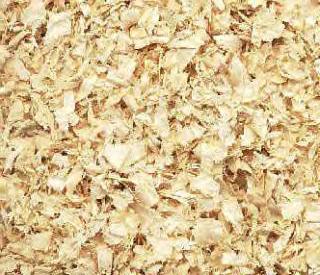
When I glanced out the  window and saw the large shavings truck pull up to our barn to dump its load in the shavings shed, you’d have thought it was the Second Coming.  I could almost hear the trumpet sound and the heavens sing.  It was that welcome and long anticipated.

We’re in the middle of a wood shavings shortage in the northwest and have been for over a year.  Even pellet stoves are going wanting. Here we are in the land of the evergreens, of thousands of acres of woodlands, and in the old days, a saw mill on every corner.  Many factors have threatened the lumber industry in our part of the country: less expensive lumber coming down from Canada, the spotted owl and the Endangered Species Act, and most recently, a new housing slump because of the economic down turn.  The mills shut down for extended times so the shavings stockpiles have evaporated quickly.  In addition, the mills have decided that their own shavings can convert to pretty decent fuel for steam powered machinery, so they are keeping it and burning it themselves, when previously, it went to whoever would haul it away–free.

No more.

I always try to plan ahead for when I’ll need my next truckload of shavings for bedding the horse stalls.  A two week lead time used to work pretty well, and by the time I’m scooping my last wheelbarrow load to haul to the barn, the truck will drive in ready to dump the next mountain for me, usually lasting about 2-3 months, depending on the time of year and how many horses we have.

I called in early December, knowing I’d need more shavings soon, but hadn’t run out yet.  The local friendly shavings guy said he was out of the business.  It’s not looking good, I was told.  Orders were backing up and the stockpiles were gone.  They were totally dependent on the mills starting back up after Christmas and I was totally dependent on them.

Meantime I was starting to be very careful in my stall cleaning strategy.  No more wasteful scooping of shavings and poop–I needed to filter out the good shavings as best I could.  It easily doubled the cleaning time, this “panning for poop” approach.  But I stretched the shavings I had another week or so.

Then I had to go buy baled shavings at the feed store to tide me over.  This is an outrageously expensive way to go–easily 6x the cost of bulk shavings hauled in by truck.   Pretty soon, even the baled shavings were sold out and none anticipated any time soon.  Then we resorted to straw bedding–a truly desperate measure.  Cleaning straw beds in horse stalls is one of the most difficult jobs as the horse manure just sinks to the bottom of the straw bed and has to be searched out like so many brown Easter eggs.    Straw makes Haflingers happy though–it is like a constant brunch underfoot.

So I was near despair and so were all my local horsey friends.  Then my ship came in from British Columbia today.  Yes, it is costing 150% more than it did when I last had a truckload hauled in a year ago.  But it is sweet fluffy shavings and it made my day.

When I came home tonight, it was pure joy to put on my muck boots and head to the barn.  I started in on the cleaning process and realized that two months of scrimping had left these dirt floor stalls in a sad and mired state.  They are not damp, but they are in dire need of a deep clean that I cannot even begin to do–it will take weeks to dig out all the old stuff so the new bed can be spread.  All I could really do was put on a coating of fresh clean shavings tonight on top of the layers, knowing full well they will be mixed up thoroughly and spoiled by the morning.  However, over time, I will manage to get back to the clean beds I once had.

We can tend to accumulate a lot of muck in our lives, never really doing a deep clean when it is needed.  We get pretty used to sleeping in it, eating in it and not even noticing it after awhile.  But the day when fresh new clean stuff arrives in our lives, how do we react?  Just put it on top of the muck and hope no one will notice what is still underneath?  Abandon the old stalls and build new ones, ready for a fresh start?  Or dig down and really get rid of the old dirt, working as long as it takes to remove it?  What an amazing thing to have a chance to clean it all up!

All I know is that I celebrate that there is still renewal that can come into my life when I least expect it or deserve it.  I can start again and hope for the best.   There is nothing like a sweet fresh bed to rest in.

The Scents of Spring

springblossom

I admit it.  Right this minute, I should be doing our taxes.  We’re down to the last minute and I have all the paperwork stacked on the desk beside me, but I’m not doing it.  It is too miserable a task to even contemplate.  Instead tonight I went outside to capture spring.

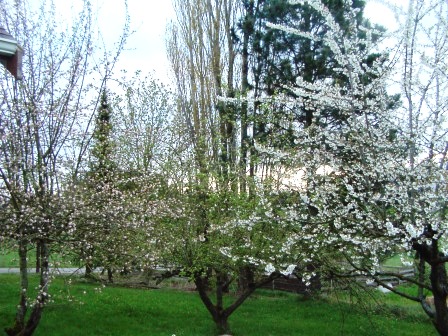
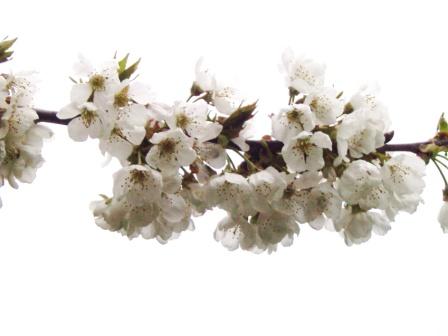
The last few mornings, when I have risen just before dawn, I have gone outside to breathe deeply of the scents that hang heavy in the cool moist air.  The perfume from thousands of orchard blossoms on our farm is heady and intoxicating.  There is nothing quite like these two weeks each year when our farm becomes a mass of snow white and pink scented flowers, busy with honey bees and eventually showering petals to the ground as the fruit starts to form.

Unfortunately, I’m allergic to tree pollen.  I breathe deeply and… sneeze and wheeze.  Even the best medicine can’t stop my reaction. So much loveliness causes so much misery.  So I retreat back to the house and look out the window and enjoy the view from afar, dabbing my dripping nose.

Ironically, this is the same time of year our dairy farm neighbors start to empty their manure lagoons and begin to spread their thousands of gallons of liquid manure on the surrounding fields, readying the ground for the hay or corn crop to come later on this summer. That scent hangs heavy in the cool moist air as well, pungent and unforgettable, penetrating even into our clothing so we carry the smell back into the house with us.  Of course I’m not allergic to manure.  In fact, as nasty a smell as it is, it’s invigorating in a perverse sort of way.  I know where it comes from, I know what its potential is, and I know the crop it yields.  It is, in itself, as treasured as the blossoms that yield fruit on our farm.

Taxes are the manure in our lives.  They are pretty stinky too.  Just like manure, an inevitable part of our daily existence, just as disagreeable.  Yet, spread out where needed, those collective taxes fertilize and grow our communities, our schools, our roads, our health care (and a few other things we may wish would not be funded).

So I must get to work spreading numbers across my desktop in the hope they may yield fruit of their own, sometime, somewhere.  The Cents of Spring.