I let her garden go.
let it go, let it go How can I watch the hummingbird Hover to sip With its beak’s tip The purple bee balm — whirring as we heard It years ago?
The weeds rise rank and thick
let it go, let it go Where annuals grew and burdock grows, Where standing she At once could see The peony, the lily, and the rose Rise over brick
She’d laid in patterns. Moss
let it go, let it go Turns the bricks green, softening them By the gray rocks Where hollyhocks That lofted while she lived, stem by tall stem, Blossom with loss. ~ Donald Hall from “Her Garden” about Jane Kenyon
Some gray mornings
heavy with clouds
and tear-streaked windows
I pause melancholy
at the passage of time.
Whether to grieve over
another hour passed
another breath exhaled
another broken heart beat
Or to climb my way
out of deepless dolor
and start the work of
planting the next garden
It takes sweat
and dirty hands
and yes,
tears from heaven
to make it flourish
but even so
just maybe
my memories
so carefully planted
might blossom fully
in the soil of loss.
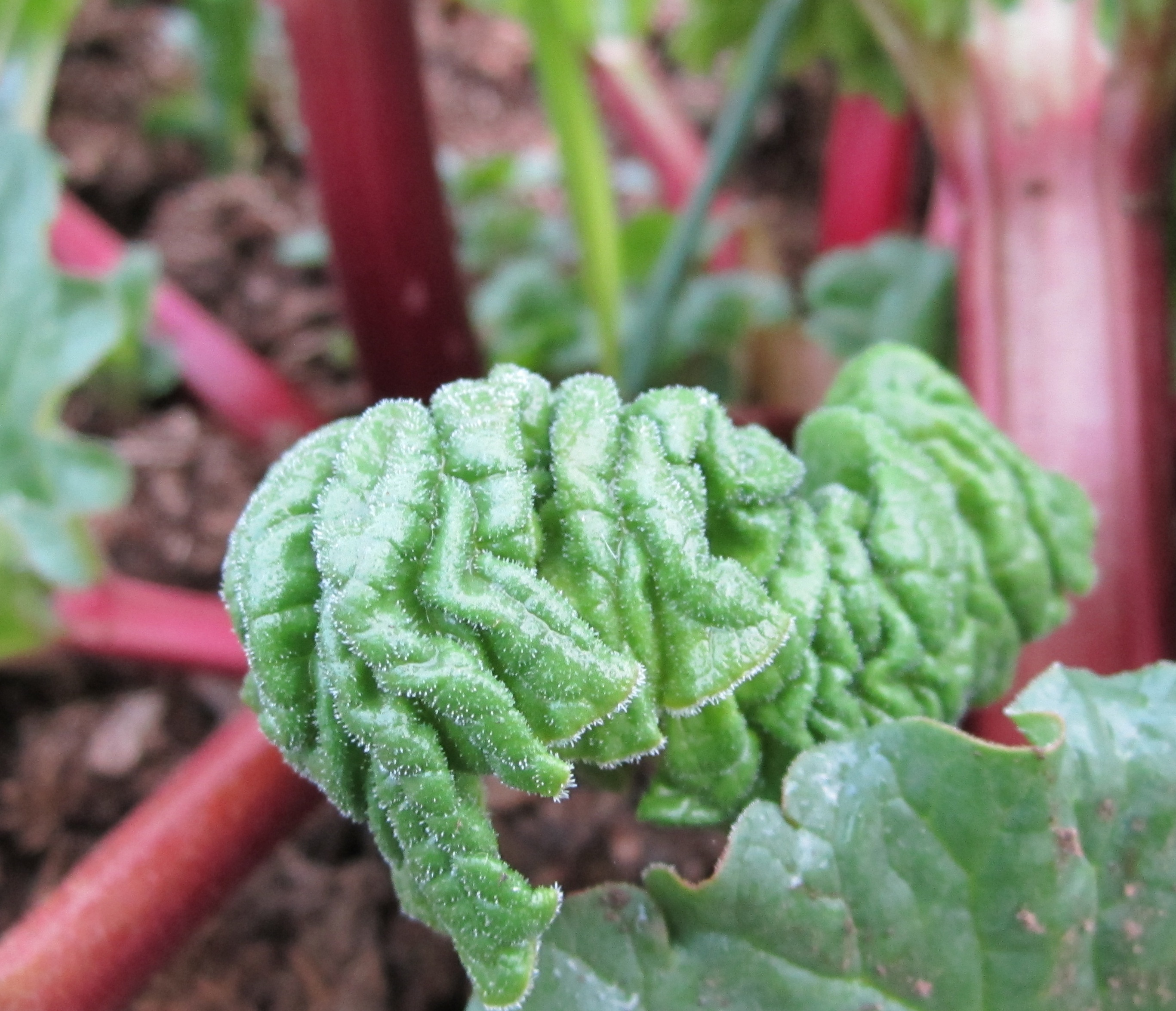
Like a mad red brain the involute rhubarb leaf thinks its way up through loam. ~Jane Kenyon from “April Chores”
Over the last two weeks, the garden is slowly reviving, and rhubarb “brains” have been among the first to appear from the garden soil, wrinkled and folded, opening full of potential, “thinking” their way into the April sunlight.
Here I am, wishing my own brain could similarly rise brand new and tender every spring from the dust rather than leathery and weather-toughened, harboring the same old thoughts and patterns. Indeed, more wrinkles seem to be accumulating on the outside of my skull rather than the inside.
Still, I’m encouraged by my rhubarb cousin’s return every April. Like me, it may be a little sour that necessitates sweetening, but its blood courses bright red and it is very very much alive.
In trees still dripping night some nameless birds Woke, shook out their arrowy wings, and sang, Slowly, like finches sifting through a dream.
The pink sun fell, like glass, into the fields. Two chestnuts, and a dapple gray, Their shoulders wet with light, their dark hair streaming, Climbed the hill. The last mist fell away.
And under the trees, beyond time’s brittle drift, I stood like Adam in his lonely garden On that first morning, shaken out of sleep, Rubbing his eyes, listening, parting the leaves, Like tissue on some vast, incredible gift.
Every moment and every event of every man’s life on earth plants something in his soul. For just as the wind carries thousands of winged seeds, so each moment brings with it germs of spiritual vitality that come to rest imperceptibly in the minds and wills of men. Most of these unnumbered seeds perish and are lost, because men are not prepared to receive them: for such seeds as these cannot spring up anywhere except in the soil of freedom, spontaneity and love.
— Thomas Merton from “New Seeds of Contemplation”
May I be receptive soil.
May I become garden and nursery.
May roots reach deep within me.
May I bloom and fruit in God’s time.
The sacred moments, the moments of miracle, are often the everyday moments, the moments which, if we do not look with more than our eyes or listen with more than our ears reveal only…a gardener, a stranger coming down the road behind us, a meal like any other meal. But if we look with our hearts, if we listen with all our being and imagination.. what we may see is Jesus himself. ~Frederick Buechner
We can be blinded by the everyday-ness of it. A simple loaf of bread is only that. A gardener crouches in a row of weeds, trying to restore order in chaos. A wanderer along the road engages in conversation.
Every day contains millions of everyday moments that are lost and forgotten, seemingly meaningless.
We would see Jesus if we only opened our eyes and listened with our ears. At the table, on the road, in the garden.
There is nothing everyday about the miracle of Him abiding with us.
“I alternate between thinking of the planet as home
– dear and familiar stone hearth and garden –
and as a hard land of exile in which we are all sojourners.”
~Annie Dillard from Teaching a Stone To Talk
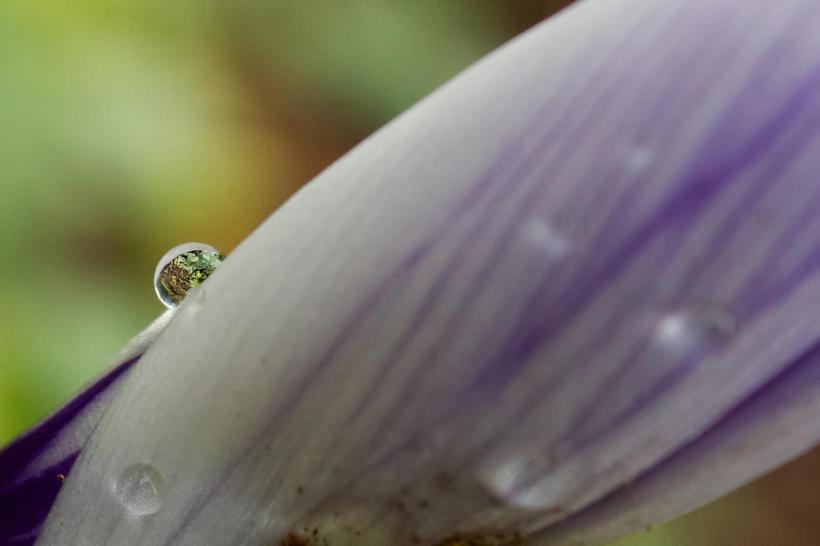
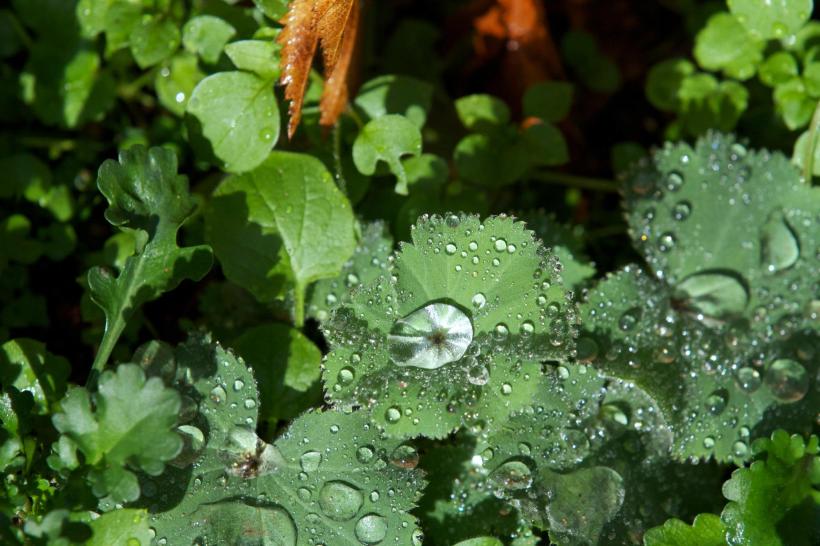
I find it very difficult to admit I am as temporary as a dew drop on a leaf, a mere mirrored reflection of this incredible place where I dwell. I want it to last, I want it etched in stone, I want to be remembered beyond the next generation, I want not to be lost to the ether.
Yet I, like everyone, am sojourner only, not settled and certainly not lasting. As a garden flourishes and then dies back, so will I. This is exile in the wilderness until I am led back home.
As a child, my father helped me dig a square of dense red clay, mark off rows where zinnias would grow, and radishes and tender spinach leaves. He’d stand with me each night as daylight drained away to talk about our crops leaning on his hoe as I would practice leaning so on mine.
Years later now in my big garden plot, the soggy remnant stems of plants flopped over several months ago, the ground is cold, the berries gone, the stakes like hungry sentries stand guarding empty graves. And still I hear his voice asking what I think would best be planted once the weather warms. ~Margaret Mullins “Lonely Harvest”
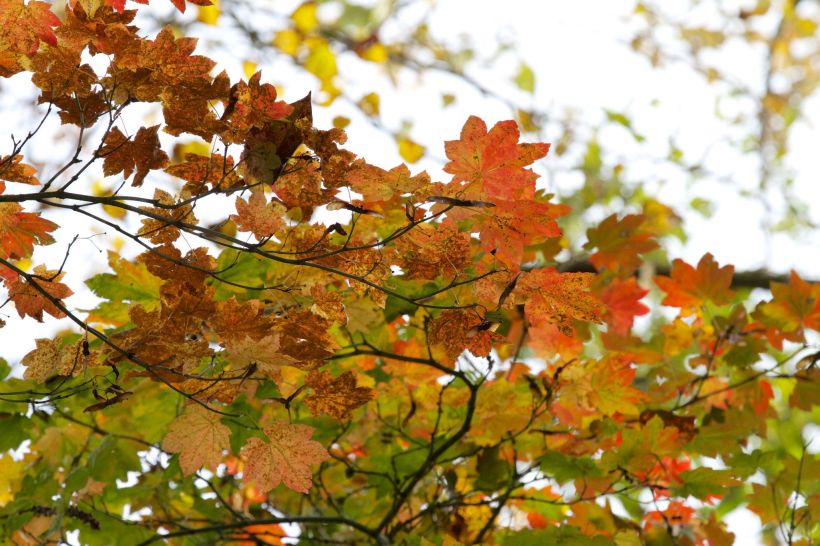
My friend, you have led me farther than I have ever been. To a garden in autumn. To a heaven of impermanence where the final falling off is slow, a slow and radiant happening. The light is gold. And while we’re here, I think it must be heaven. ~Elizabeth Spires from “In Heaven it is Always Autumn”
I wander the autumn garden mystified at the passing of the weeks since seed was first sown, weeds pulled, peapods picked. It could not possibly be done so soon–this patch of productivity and beauty, now wilted and brown, vines crushed to the ground, no longer fruitful.
The root cellar is filling up, the freezer packed. The work of putting away is almost done.
So why do I go back to the now barren soil I so carefully worked, numb in the knowledge I will pick no more this season, feel the burst of a cherry tomato exploding in my mouth or the green freshness of a bean straight off the vine?
Because for a few fertile weeks, only a few weeks, the garden was a bit of heaven on earth, impermanent but a real taste nonetheless. We may have mistaken Him for the gardener when He appeared to us radiant, suddenly unfamiliar, but He offered the care of the garden, to bring in the sheaves, to share the forever mercies in the form of daily bread grown right here and now.
When He says my name, then I will know Him. He will lead me farther than I have ever been.
photo by Josh Scholten
…in heaven it is always autumn, his mercies are ever in their maturity. God comes to thee, not as in the dawning of the day, not as in the bud of the spring, but as the sun at noon, to illustrate all shadows, as the sheaves in harvest… ~John Donne in Christmas Day Sermon 1624
“Poetry is a rich, full-bodied whistle, cracked ice crunching in pails, the night that numbs the leaf, the duel of two nightingales, the sweet pea that has run wild, Creation’s tears in shoulder blades.” ~Boris Pasternak
Sweet peas and pumpkins are strange neighbors on the same table
Always separated by weather and season,
one from late spring, the other from mid-autumn,
truly never meant to meet.
Yet here they are, side by side,
grown in the same soil
through the same weeks,
their curling vines entwined.
A dropped packet of sweet pea seeds
forgotten in the weeds during summer rains;
escapees swelled and thrived, now forming rich autumn blooms
gracing a harvest table with bright pastels and spring time fragrance.
Perhaps I too may bloom where I land, even ill-timed, out of place,
I might run wild, interwoven, bound to others
who look nothing like me, encouraged to climb higher,
to blossom bravely in the face of a killing frost.
“Here are sweet-peas, on tip-toe for a flight:
With wings of gentle flush o’er delicate white,
And taper fingers catching at all things,
To bind them all about with tiny rings.”
~John Keats
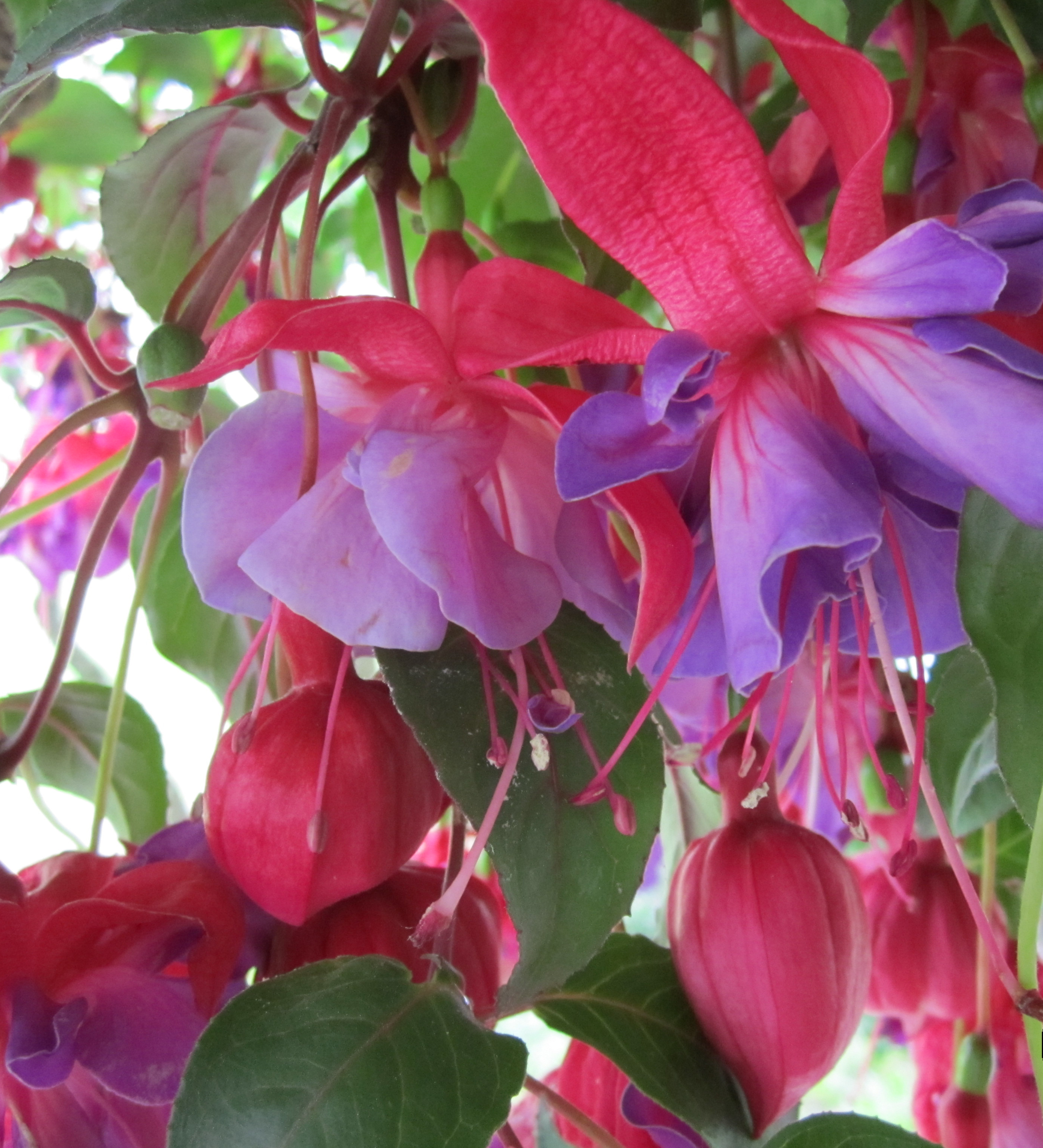
Grandma grew flowers–lots of them. Her garden stretched along both sides of the sidewalk to her old two story farm house, in window boxes and beds around the perimeter, in little islands scattered about the yard anchored by a tree, or a piece of driftwood, a gold fish pond or a large rock. Wisteria hung like a thick curtain of purple braids from the roof of her chicken coop, and her greenhouse, far bigger than her home, smelled moist and mossy with hanging fuschia baskets. For her it was full time joy disguised as a job: she sold seedlings, and ready-to-display baskets, and fresh flower arrangements. She often said she was sure heaven would be full of flowers needing tending, and she was just practicing for the day when she could make herself useful as a gardener for God.
Visiting Grandma was often an overnight stay, and summer evenings in her yard were heavy with wafting flower perfume. She would also allow entry into her “fuschia house” to walk among hundreds of delicate dangling multi-colored blossoms. There was overwhelming temptation to audibly pop the bulbous unopened blossoms but she had a “no touch, just look” policy, reminding her grandchildren that each plant knew the precise instant when a flower should open, and it should not happen a moment sooner or nature’s rhythm would be disturbed.
One of her favorite rhythmic flowers –indeed it was so hardy and vigorous it really could be considered a weed–was the evening primrose. It was one of a few night blooming plants meant to attract pollinating moths. Its tall stems were adorned by lance shaped leaves, with multiple buds and blooms per stem. Each evening, and it was possible to set one’s watch by its punctual cycles, only one green wrapped bud per stem would open, revealing a bright yellow blossom with four delicate veined petals, a rosette of stamens and a cross-shaped stigma in the center, rising far above the blossom. The yellow was so vivid and lively, it seemed almost like a drop of sun had been left on earth to light the night. By morning, the bloom would begin to wither and wilt under the real sunlight, somehow overcome with the brightness, and would blush a pinkish orange as it folded upon itself, ready to die and drop from the plant in only a day or two, leaving a bulging seed pod behind.
I would settle down on the damp lawn at twilight, usually right before dusk fell, to watch the choreography of opening of blossoms on stem after stem of evening primrose. Whatever the trigger was for the process of unfolding, there would be a sudden loosening of the protective green calyces, in an almost audible pop. Then over the course of about a minute, the overlapping yellow petals would unfurl, slowly, gently, purposefully, revealing their pollen treasure trove inside. It was like watching time lapse cinematography, only this was an accelerated, real time flourish of beauty, happening right before my eyes. I always felt privileged to witness each unveiling as Grandma liked to remind me that few flowers actually allowed us to behold their birthing process. The evening primrose was not at all shy about sharing itself and it would enhance the show with a sweet lingering fragrance.
Grandma knew how much I enjoyed the evening primrose display, so she saved seeds from the seed pods for me, and helped me plant them at our house during one of her spring time visits. I remember scattering the seeds with her in a specially chosen spot, in anticipation of the “drops of sun” that would grace our yard come summertime. However, Grandma was more tired than usual on this particular visit, taking naps and not as eager to go for walks or eat the special meals cooked in honor of her visit. Her usually resonant laughing brown eyes appeared dull, almost muddy.
The day she was to return home she came into the kitchen at breakfast time, wearily setting down her packed bags. She gave me a hug and I looked at her, suddenly understanding what I had feared to believe. Something was dreadfully wrong. Grandma’s eyes were turning yellow.
Instead of returning home that day, she went to the hospital. Within a day, she had surgery and within two days, was told she had terminal pancreatic cancer. She did not last long, her skin becoming more jaundiced by the day, her eyes more icteric and far away. She soon left her earthly gardens to cultivate those in heaven.
I’ve kept hanging fuschia baskets on my porch and evening primrose has been in my garden ever since. Grandma is inside each bloom as it opens on its own schedule, according to its own rhythm, unfolding precipitously in the evening. She wafts across the yard in its perfume. Her spirit is a drop of sun coming to rest, luminous, for a brief stay upon the earth, only to die before we’re ready to let it go. But as the wilted bloom lets go, the seeds have already begun to form.
Surely Grandma is still growing flowers, lots of them. They blossom under her loving care, each bud opening on schedule, not a moment sooner than it should.
photo by Troy Mullens from blog ICU Nature
Evening Primrose by John Clare
When once the sun sinks in the west,
And dewdrops pearl the evening’s breast;
Almost as pale as moonbeams are,
Or its companionable star,
The evening primrose opes anew
Its delicate blossoms to the dew;
And, hermit-like, shunning the light,
Wastes its fair bloom upon the night,
Who, blindfold to its fond caresses,
Knows not the beauty it possesses;
Thus it blooms on while night is by;
When day looks out with open eye,
Bashed at the gaze it cannot shun,
It faints and withers and is gone.




 Barnstorming