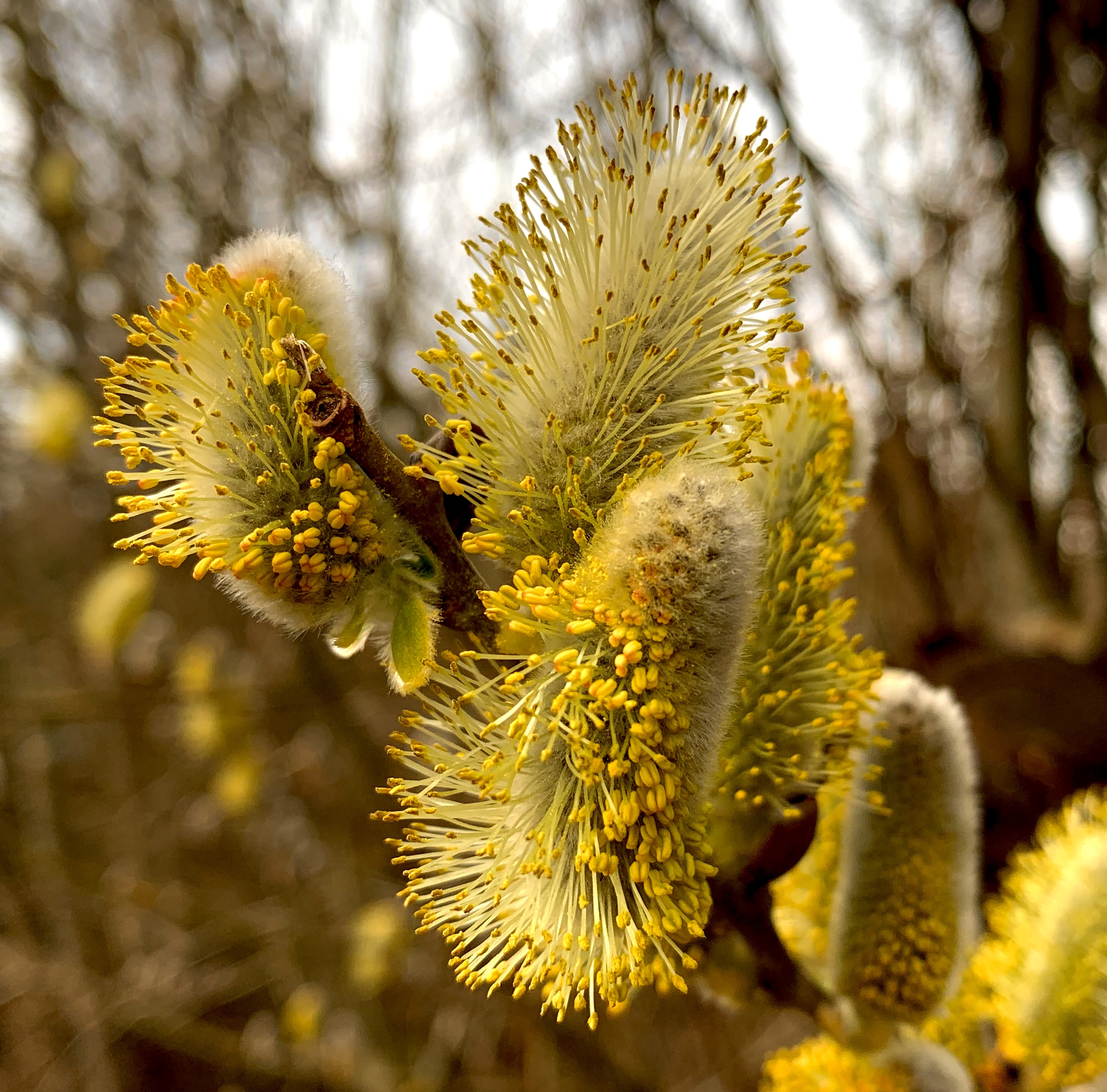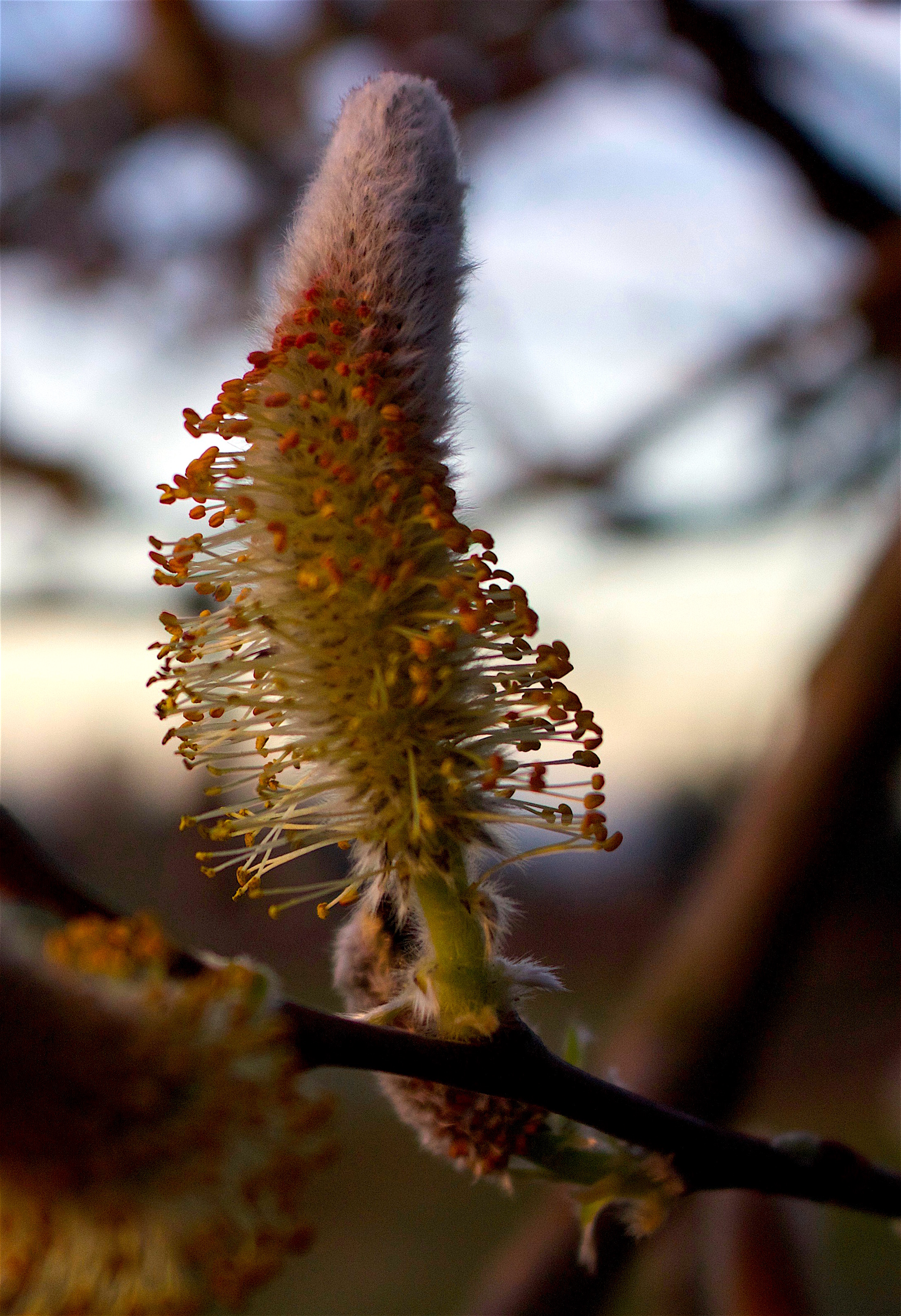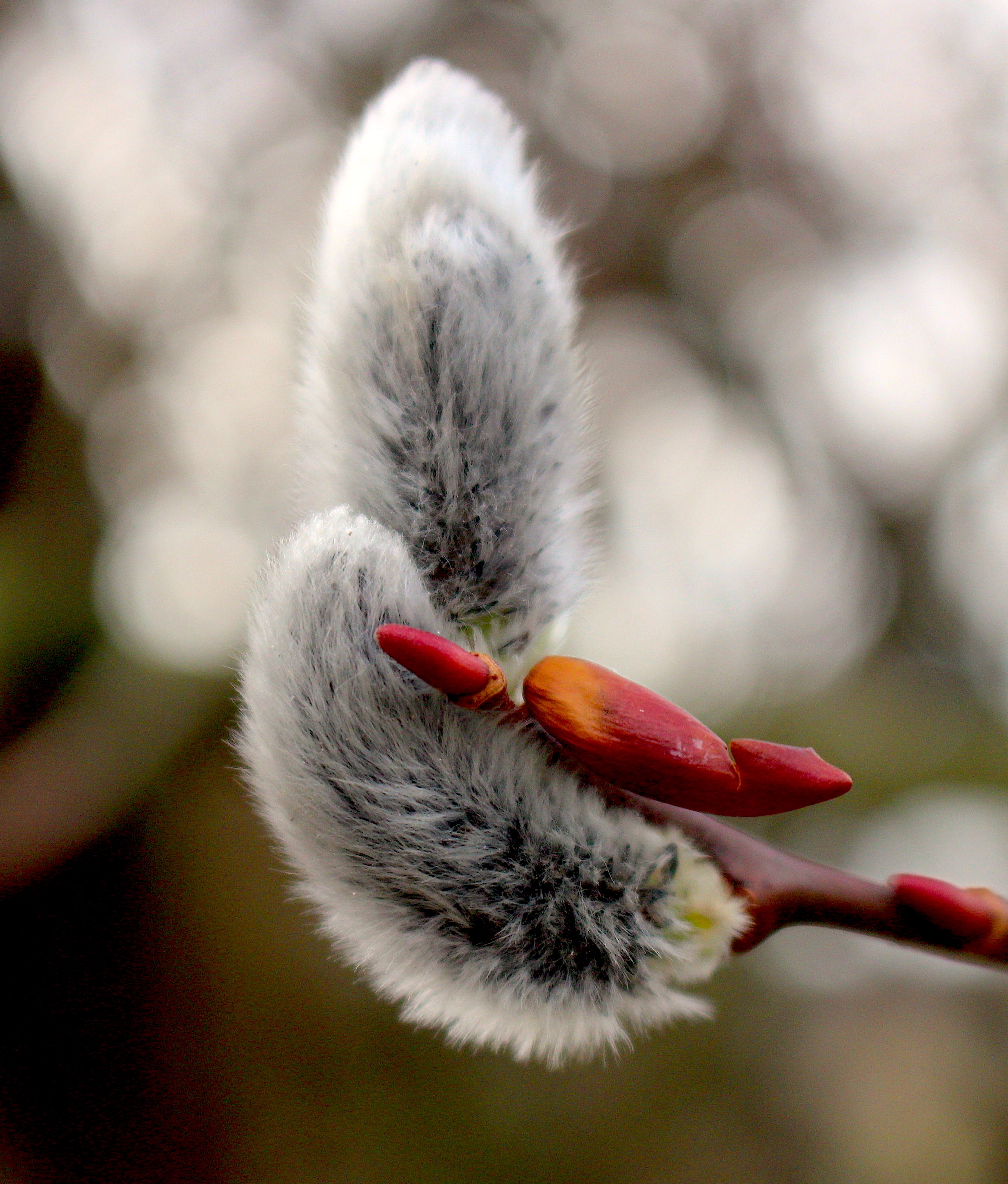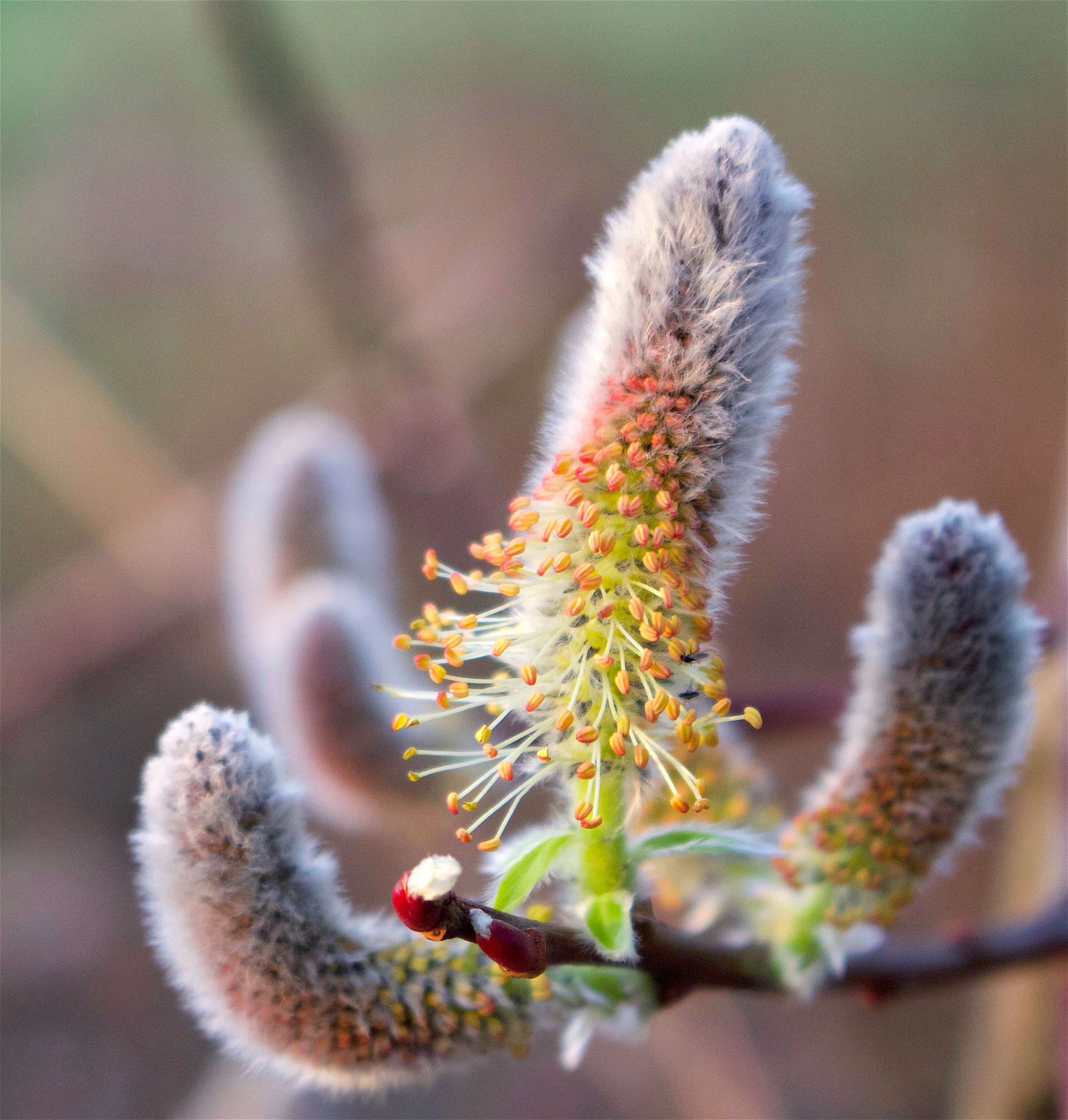
Fixing Eyes on the Unseen – Not Yet Not

For in this hope we were saved.
But hope that is seen is no hope at all.
Who hopes for what they already have?
But if we hope for what we do not yet have,
we wait for it patiently.

Romans 8:24-25

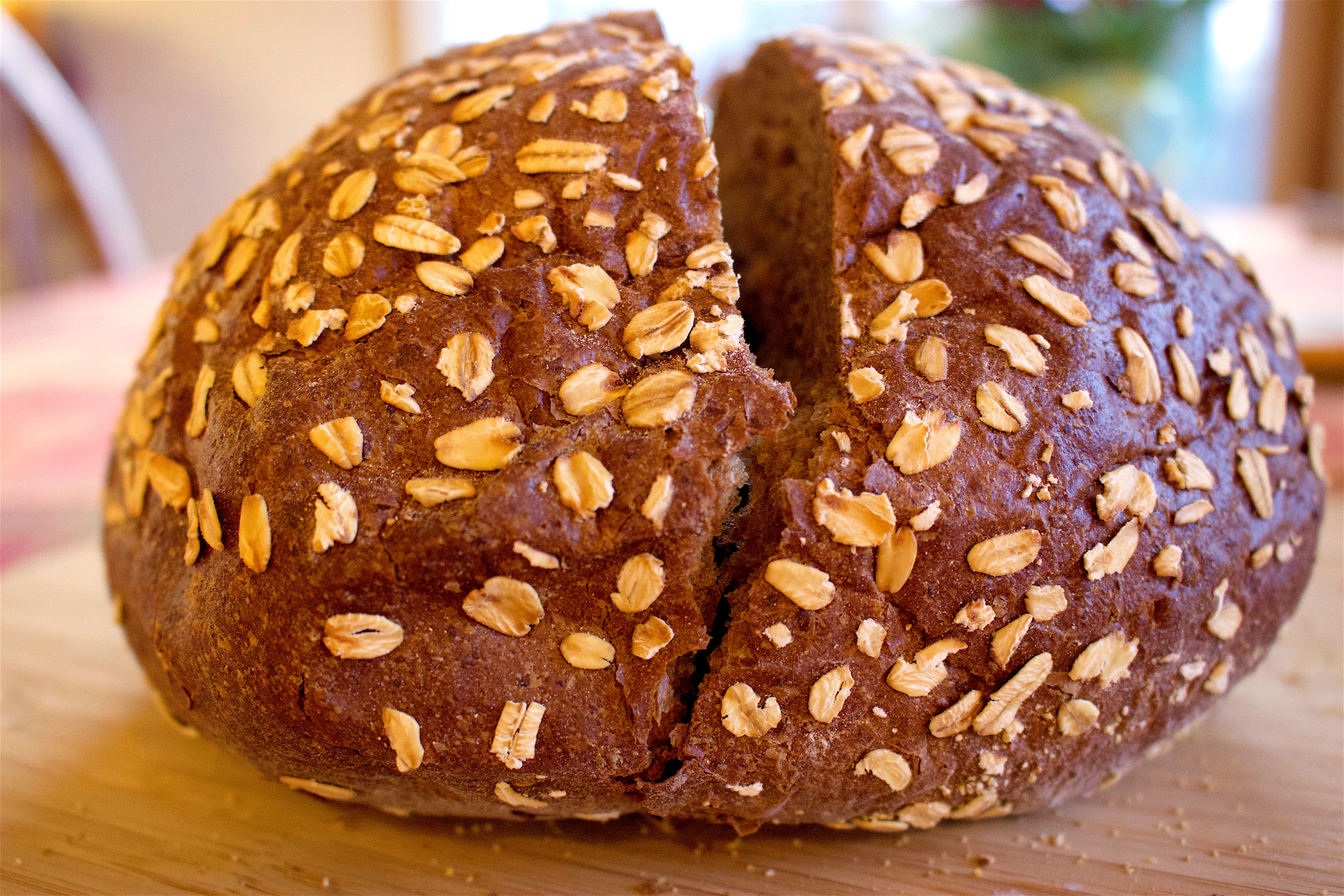
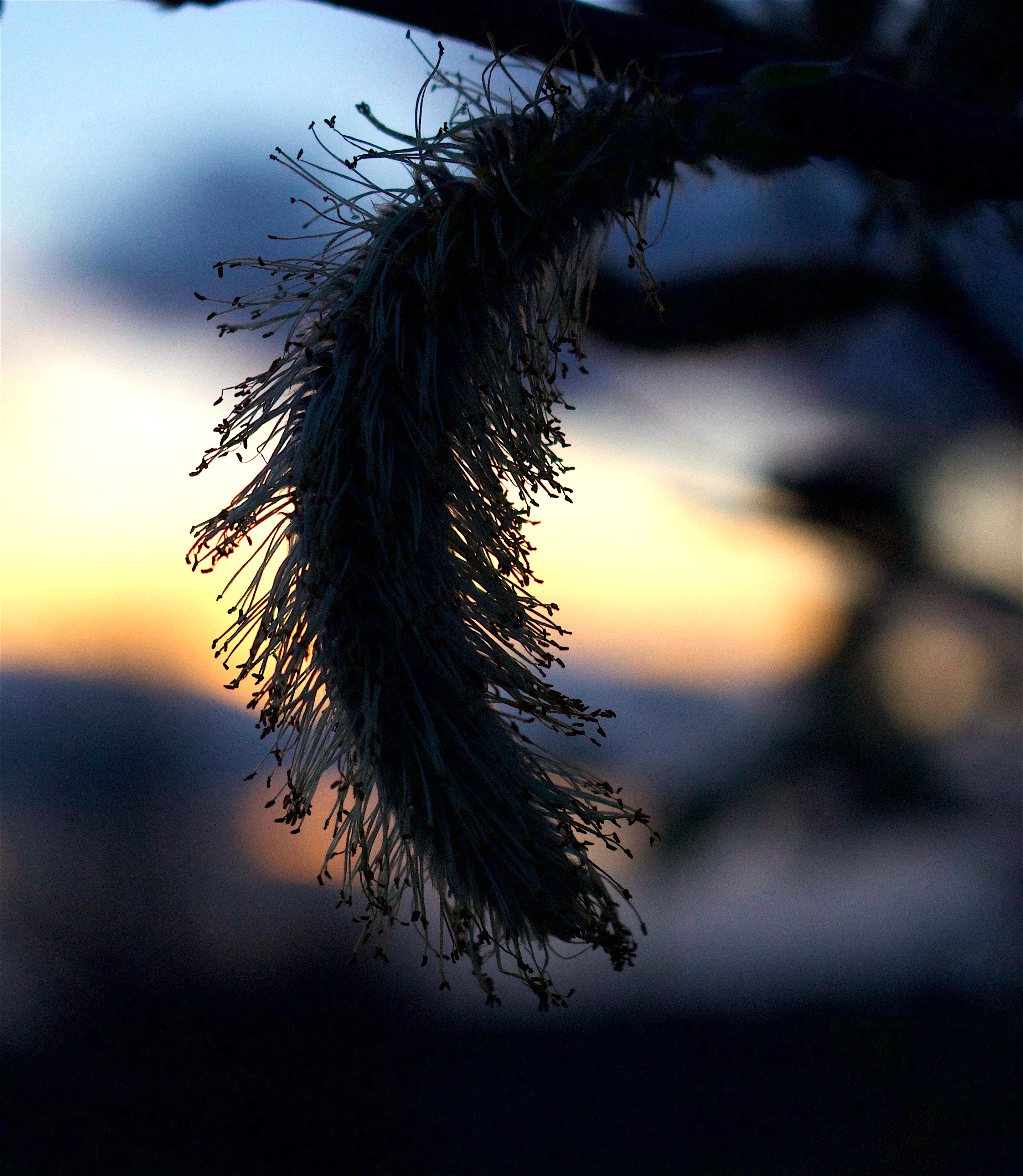
Morning of buttered toast;
of coffee, sweetened, with milk.

Out the window,
snow-spruces step from their cobwebs.
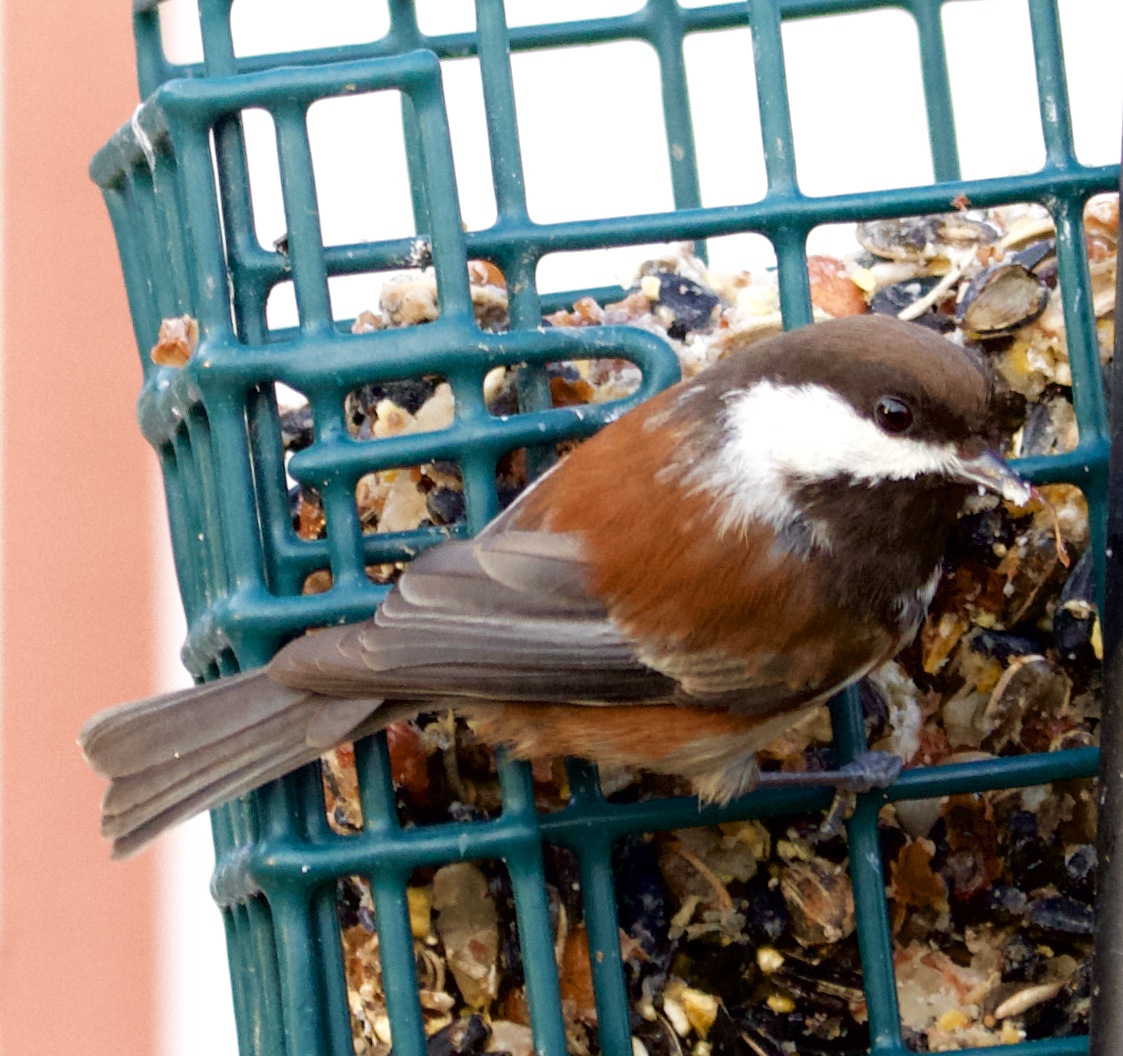
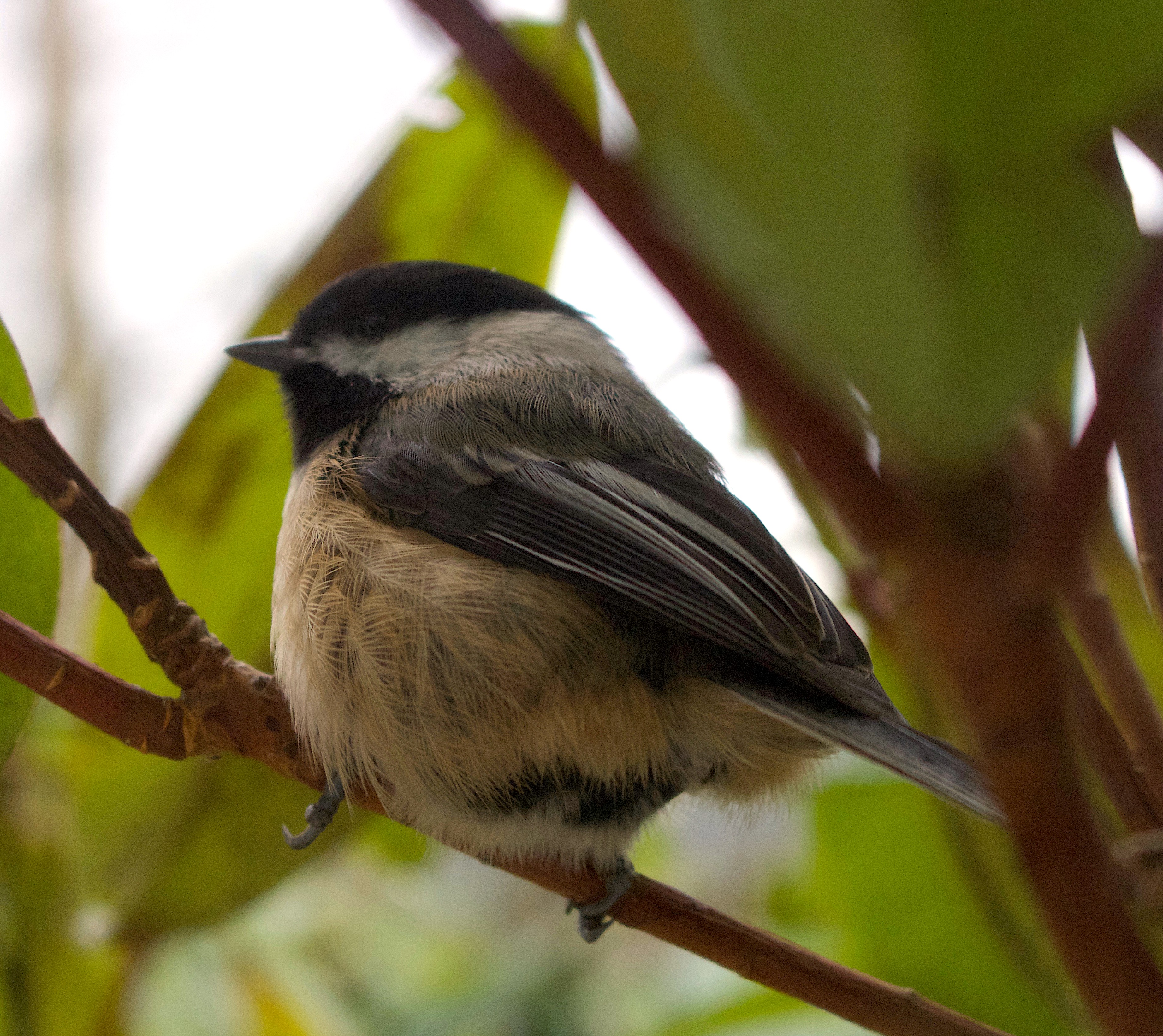
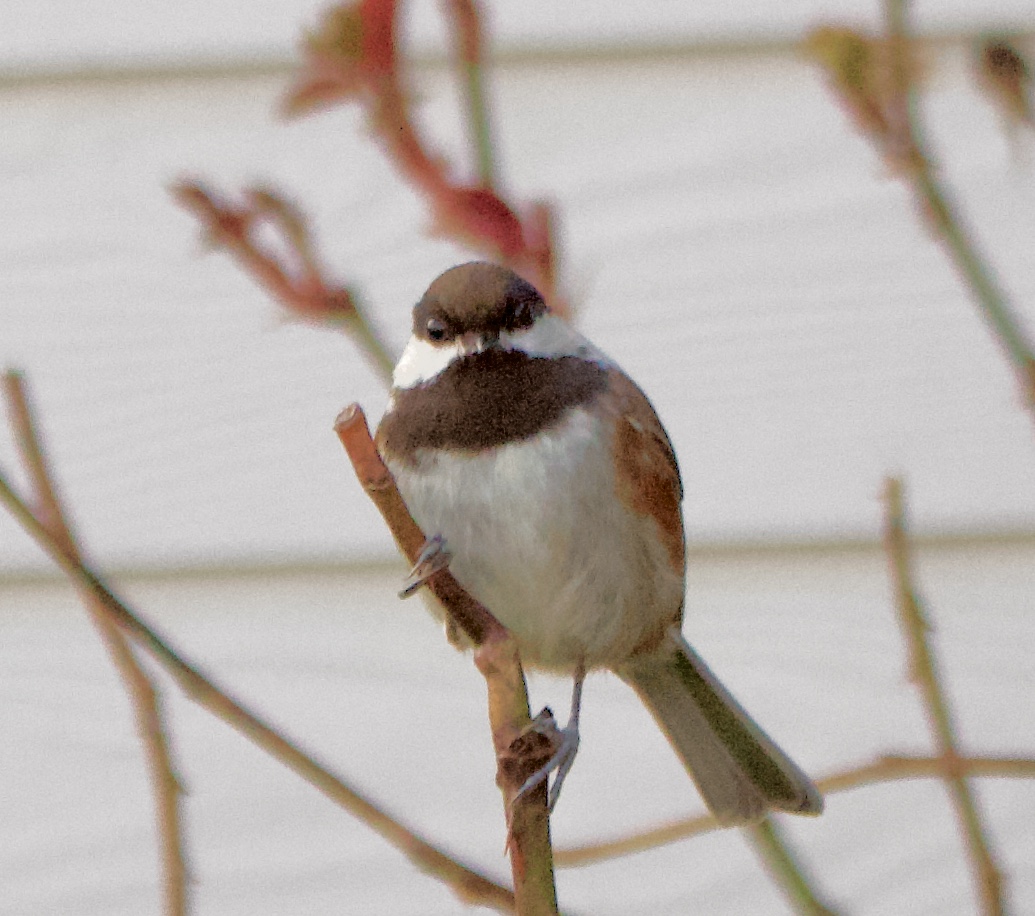
Flurry of chickadees, feeding then gone.
A single cardinal stipples an empty branch—
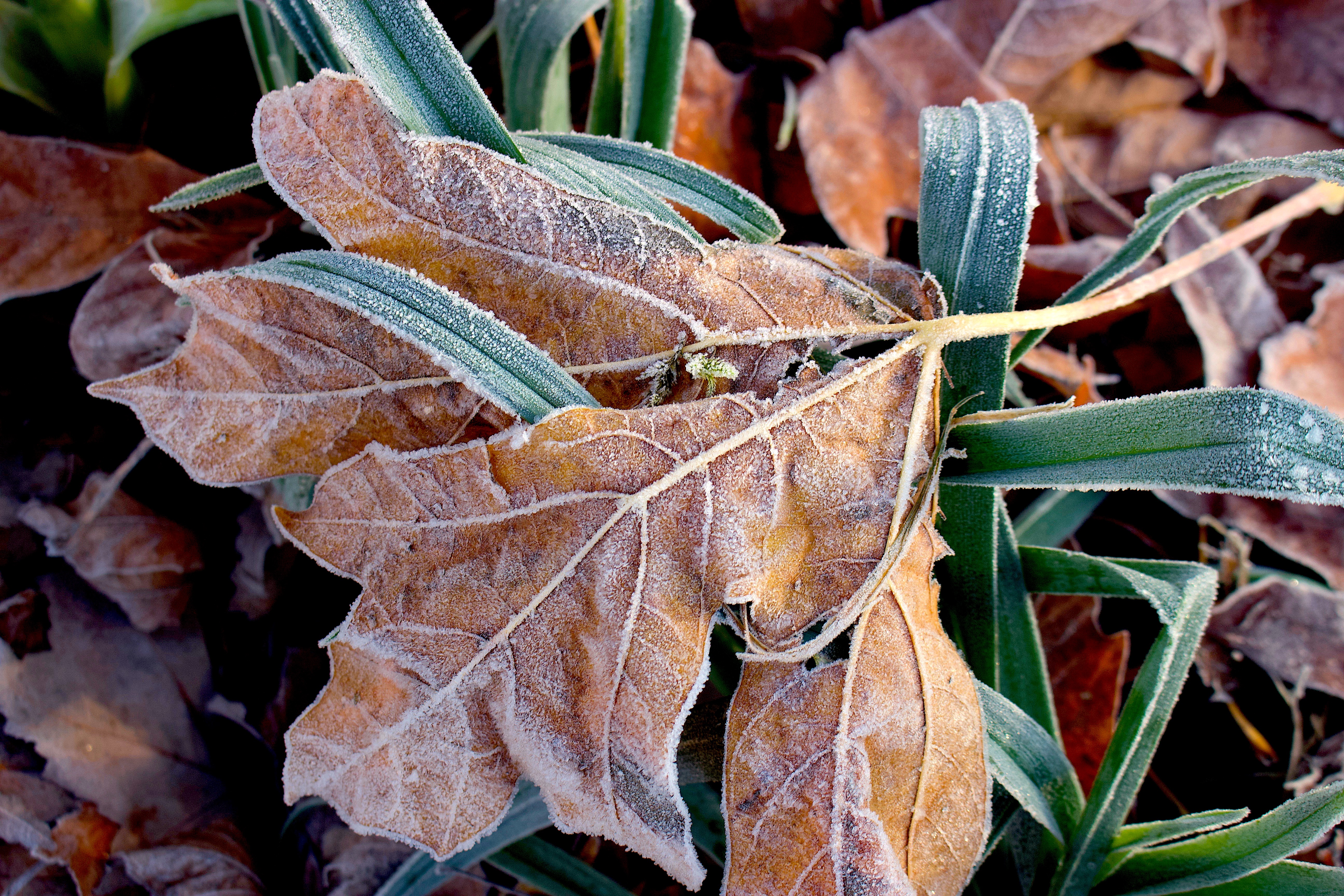
one maple leaf lifted back.

I turn my blessings like photographs into the light;
over my shoulder the god of Not-Yet looks on:

Not-yet-dead, not-yet-lost, not-yet-taken.
Not-yet-shattered, not-yet-sectioned,
not-yet-strewn.

Ample litany, sparing nothing I hate or love,
not-yet-silenced, not-yet-fractured; not-yet-

Not-yet-not.

I move my ear a little closer to that humming figure,
I ask him only to stay.
~Jane Hirshfield “Not Yet”
from The Lives of the Heart.

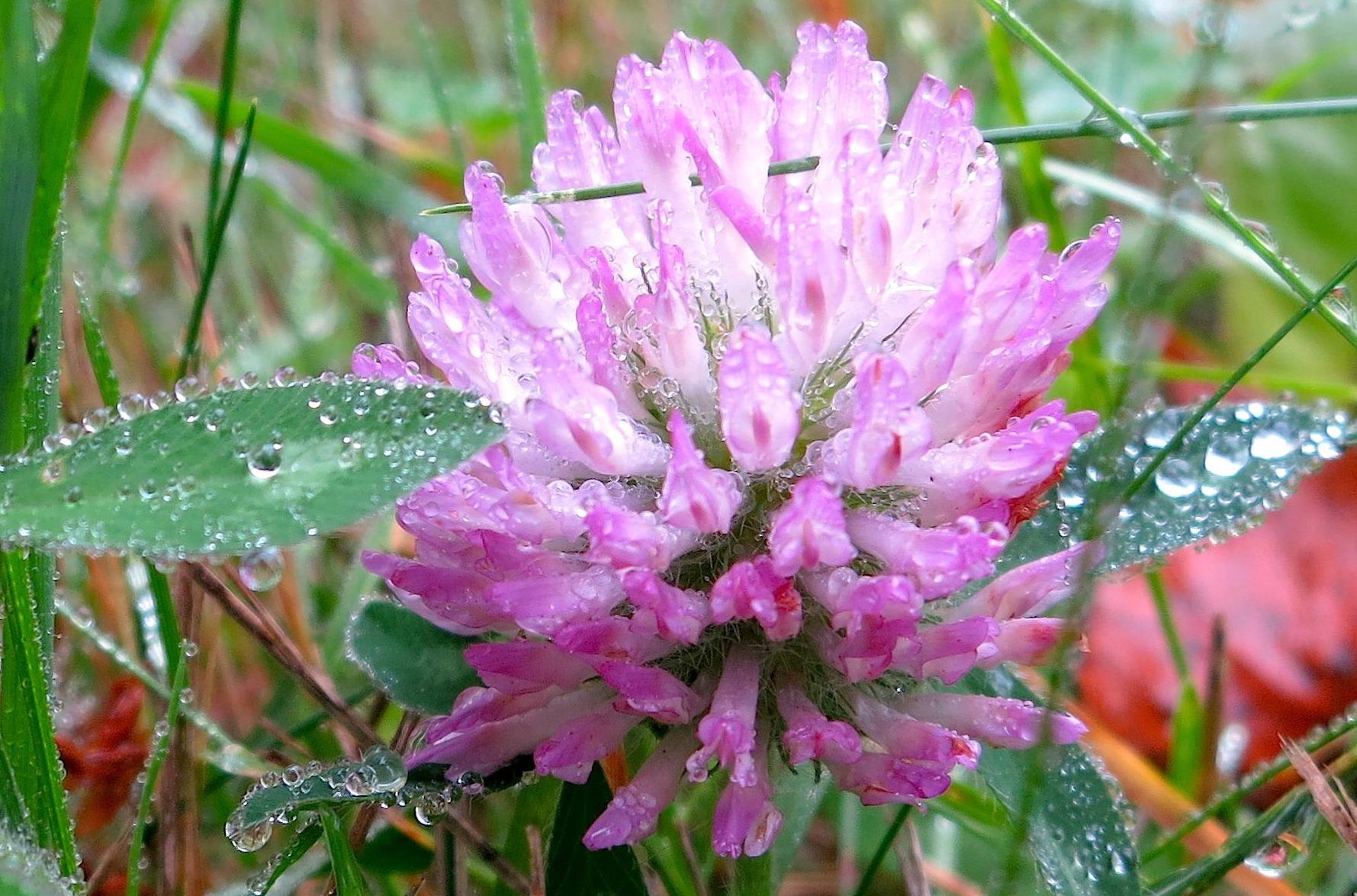
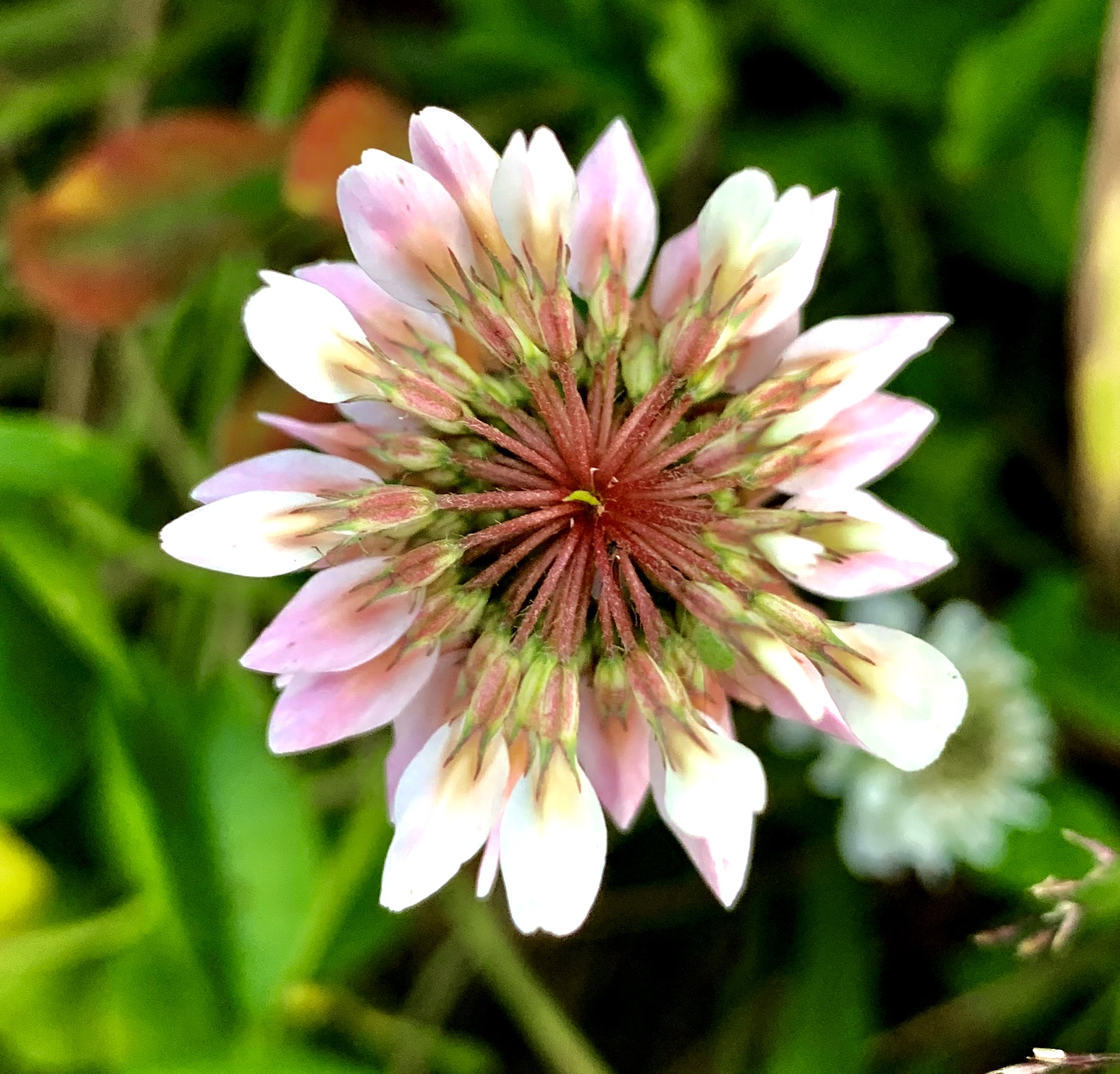
To wait for the “not yet” is a hard sweet tension.

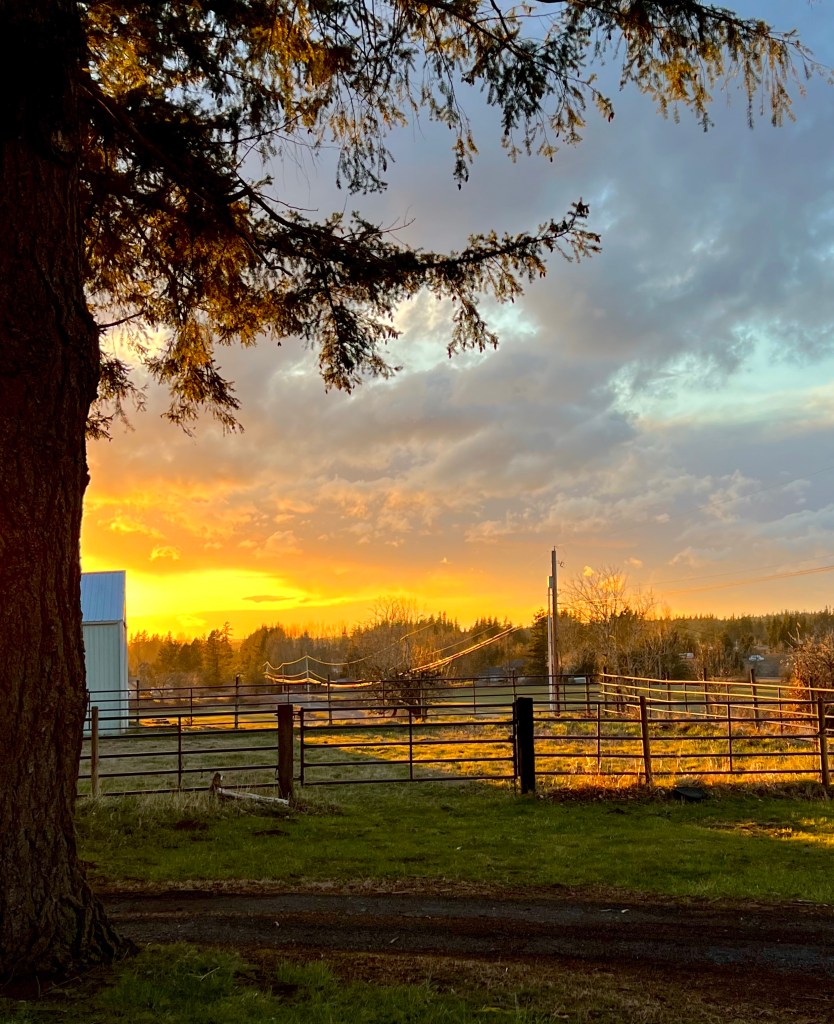
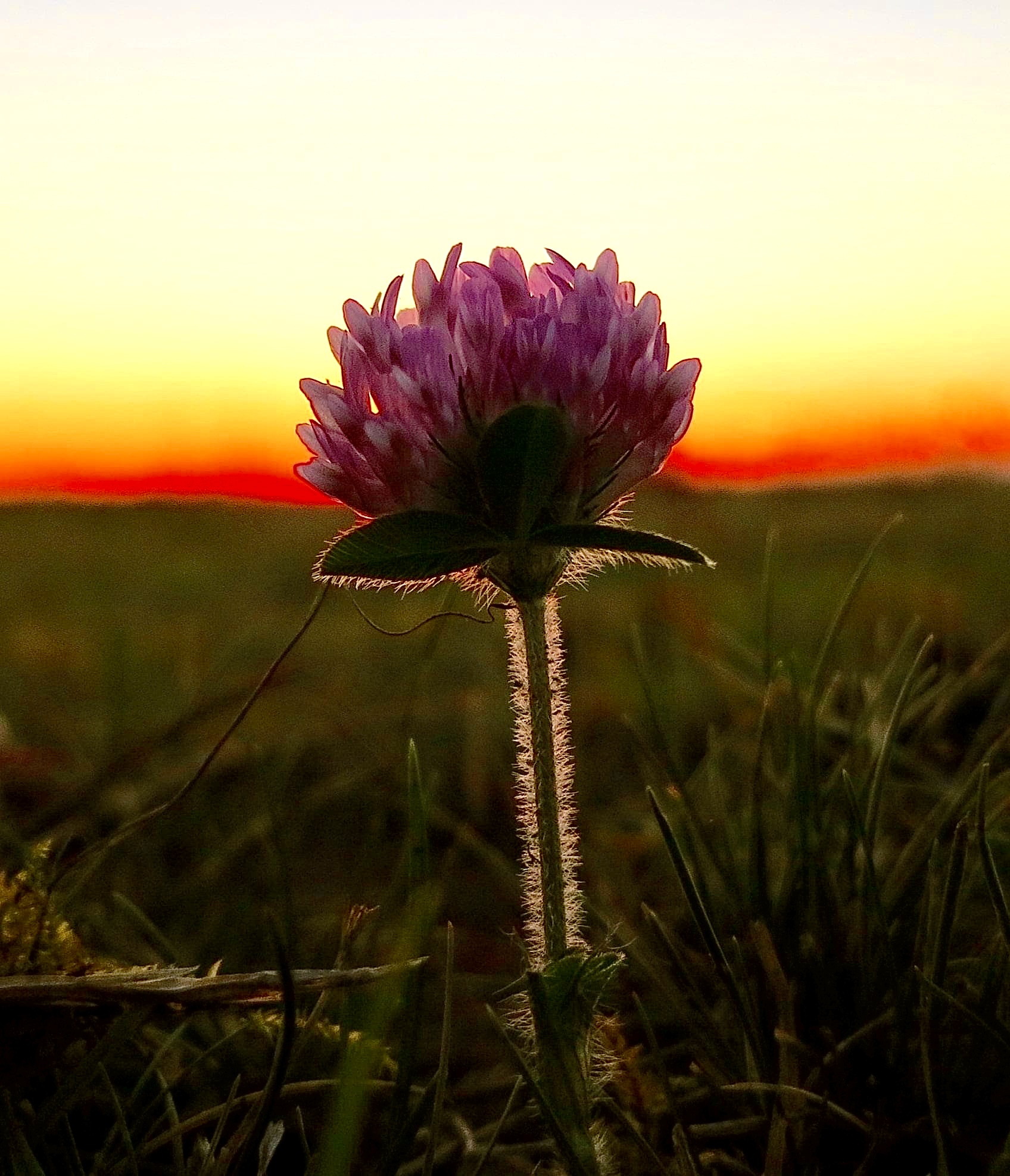
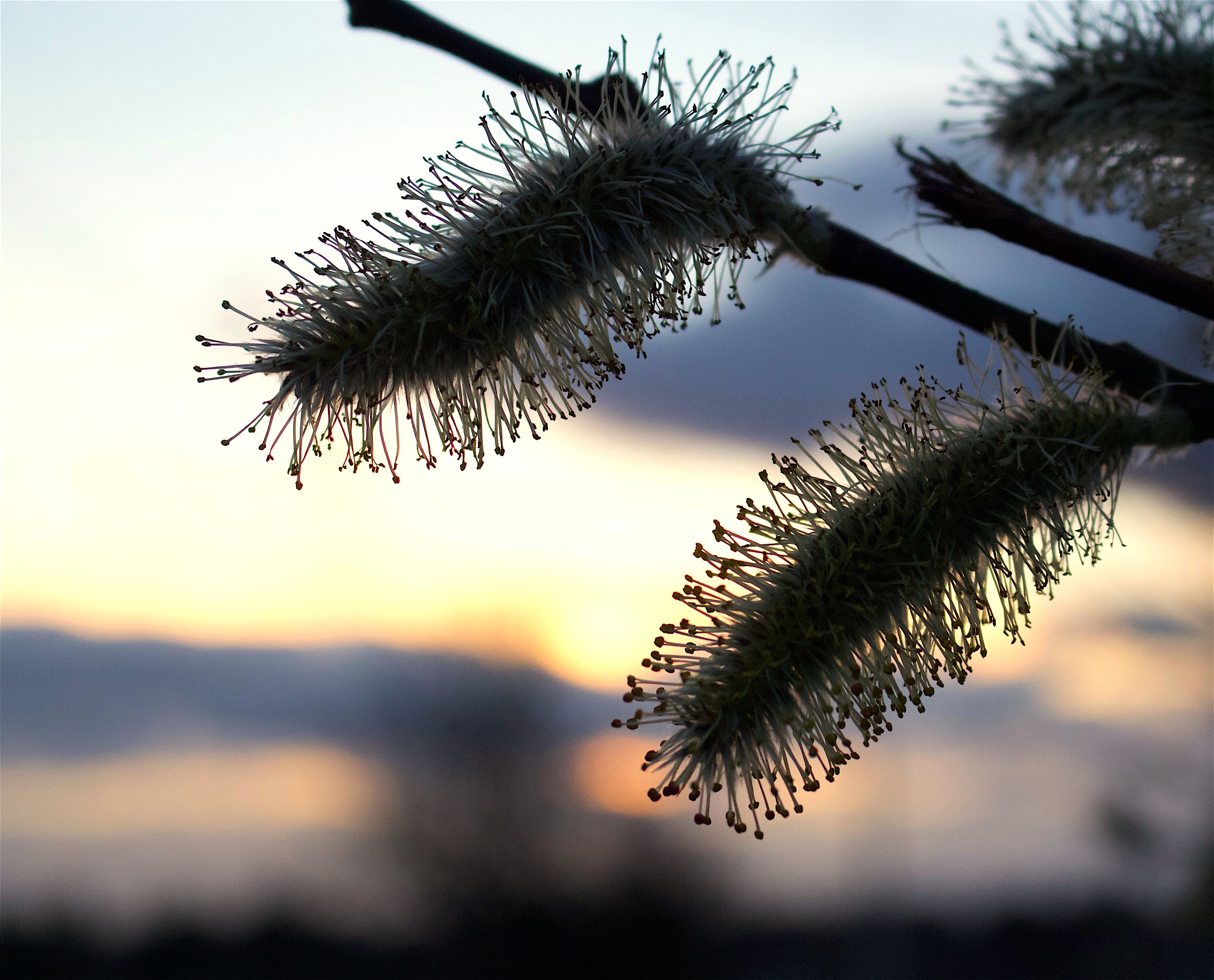
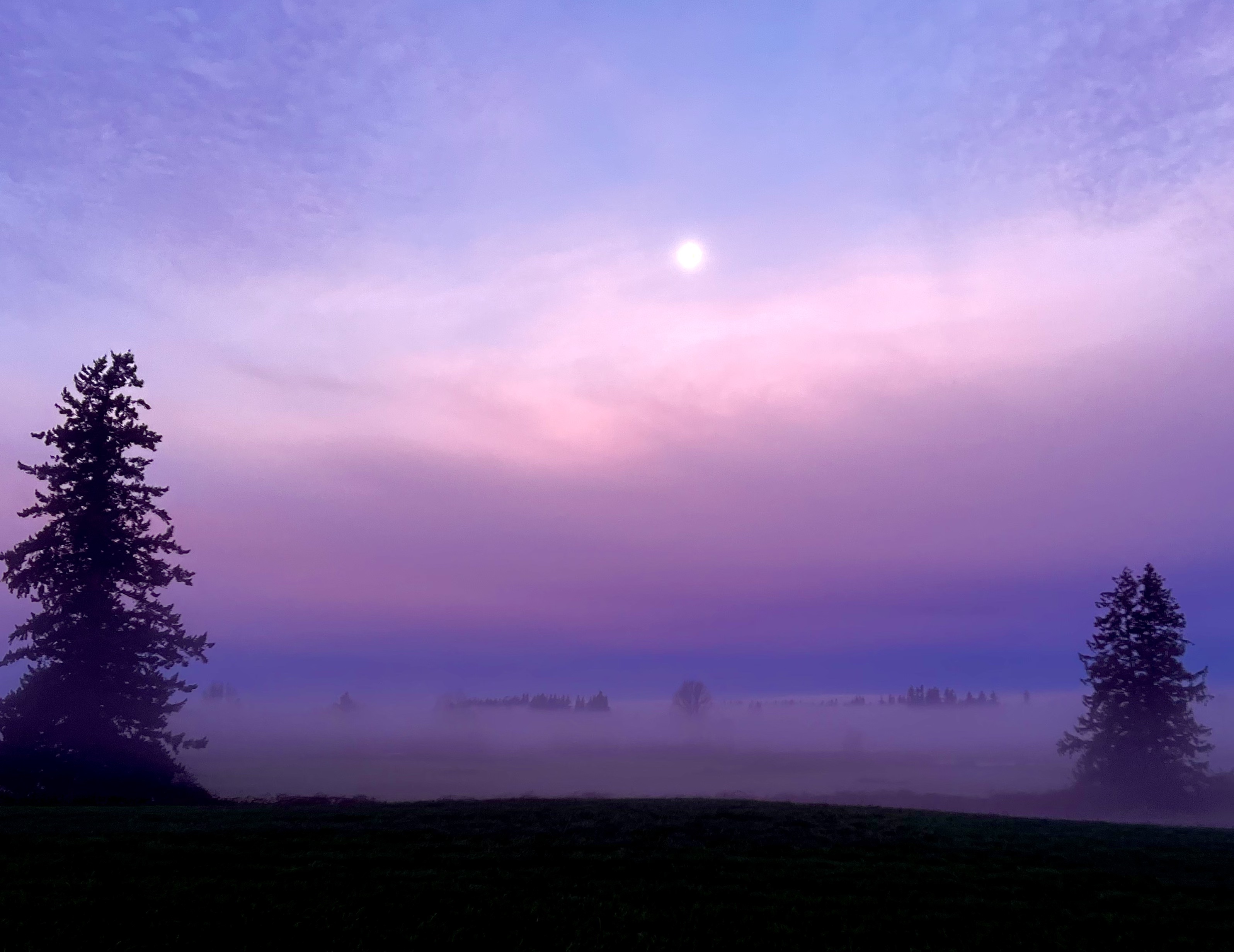
There is tension in knowing that something profound is happening – a vernal equinox, a brilliant sunrise, a fading sunset, a new life growing, but the transformation is not yet complete, and I’m unsure when it will be.

I am still unfinished business and so is everyone else.

In less than three weeks I will be reminded of what is yet to come. I will know the shock of the empty tomb. My heart will burn within me as more is revealed, through the simple act of bread breaking.

Waiting is never easy;
it can be painful to be patient,
staying alert to possibility and hope.
Others won’t understand why I wait,
nor do they comprehend what I could possibly be waiting for.

I’m all-ready, not-yet-finished, not-yet-not.

By waiting and by calm you shall be saved,
In quiet and in trust your strength lies.
~Isaiah 30:15

This year’s Lenten theme:
So we fix our eyes not on what is seen, but on what is unseen, since what is seen is temporary, but what is unseen is eternal.
2 Corinthians 4: 18

Fixing Eyes on the Unseen – A Peculiar Treasure

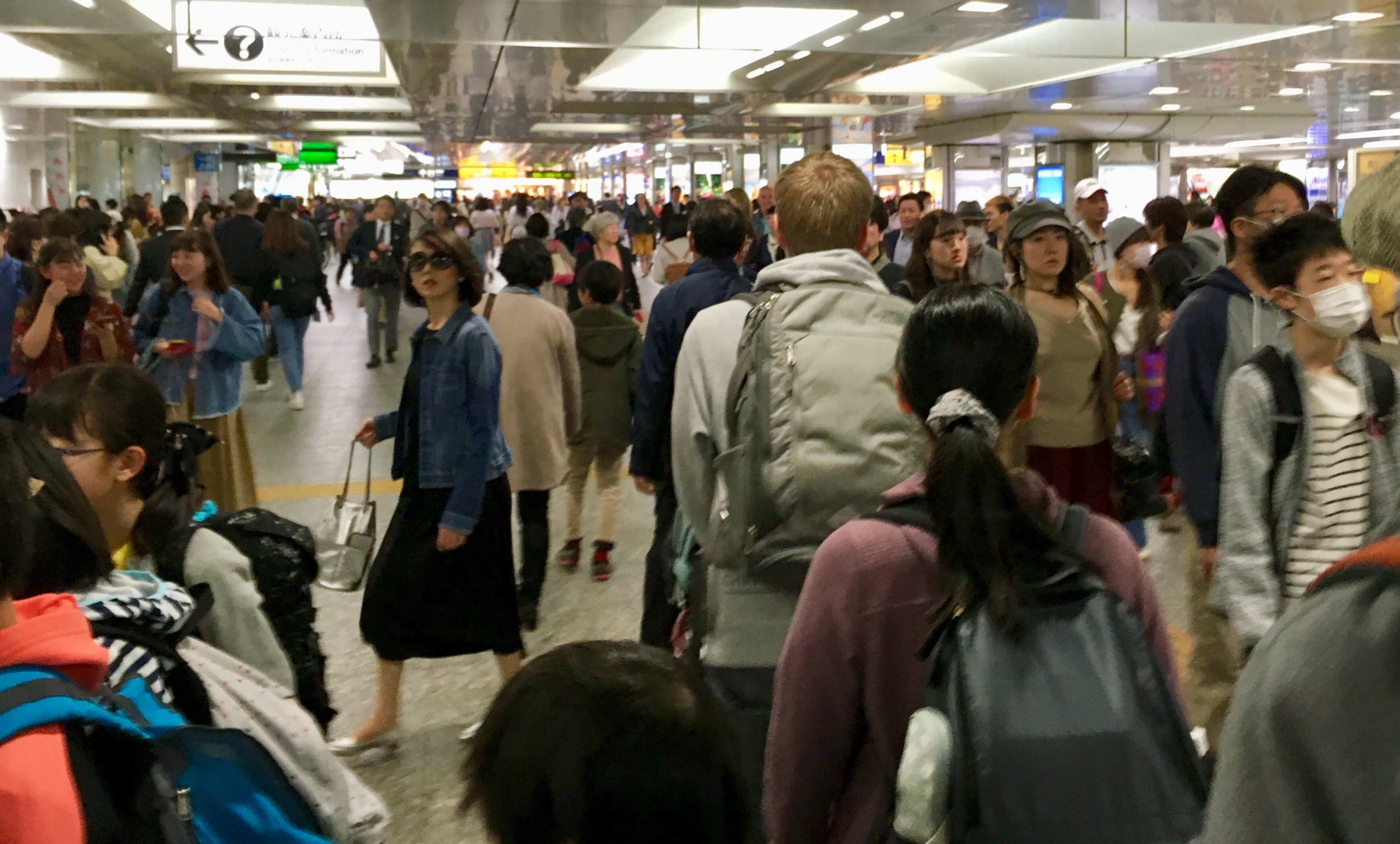
Imagine yourself in a big city in a crowd of people.  
What it would be like to see all the people in the crowd like Jesus does —
an anonymous crowd with

old ones and young ones,
fat ones and thin ones,
attractive ones and ugly ones—
think what it would be like to love them.  

If our faith is true, if there is a God,
and if God loves, he loves each one of those.  
Try to see them as loved.  
And then try to see them, these faces, as loved by you.  
What would it be like to love these people, to love these faces —
the lovable faces, the kind faces, gentle compassionate faces?  
That’s not so hard.  
But there are lots of other faces —
disagreeable faces, frightening faces, frightened faces, cruel faces, closed faces. …
they are all peculiar treasures.  


In Exodus, God said to Israel,
“You shall be a peculiar treasure unto me above all people.”  
God meant it for all of us.
~Frederick Buechner from The Remarkable Ordinary: How to Stop, Look, and Listen to Life

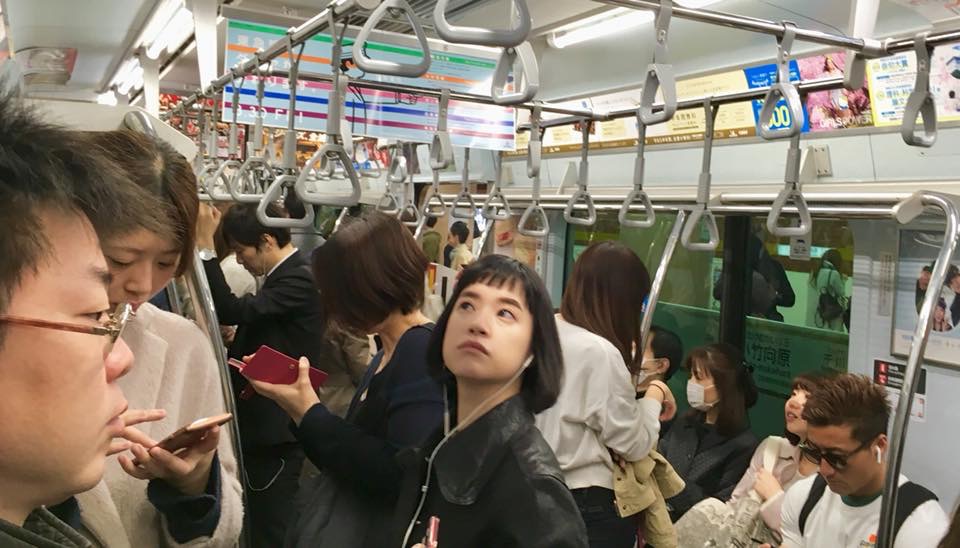
t doesn’t take long for me to be overwhelmed by humanity when we have visited some of the world’s largest cities. Airports are a shock of weaving lines of weary people and crying children, commuter trains are packed with individuals standing like sardines for an hour or more twice a day, the stations are a sea of bobbing heads flowing out onto the streets where the crosswalks become a mass hive of activity whenever the light changes.

Yet I’ve been struck by the effort some locals make to help visitors who look lost, or who simply look different. There is outreach at times that is spontaneous, genuine and completely unexpected. Those are easy faces to love and we do. What is much much harder to is love those hundreds of thousands who rush past us on their way to work, to shop, to return home.  How can I even begin to have the capacity?

Who greeted Jesus after he entered Jerusalem in the final week of His life? These were not all friendly faces. He loved them all any way, every single one of them were peculiar treasures to him, forgiven and redeemed by His walk to, and death on, the cross.

I realize much of the time I too feel rushed, not bothering to reach out and be helpful when needed. Even so, He loves me still, flaws and all, as His redeeming grace is meant for one such as me – a peculiar treasure.  

Because of His love, I become the real thing and not just a distorted reflection of what I think I should be.

This year’s Lenten theme:
So we fix our eyes not on what is seen, but on what is unseen, since what is seen is temporary, but what is unseen is eternal.
2 Corinthians 4: 18

Fixing Eyes on the Unseen – A Door Left Open

The world hides God from us,
or we hide ourselves from God,
or for reasons of his own God hides himself from us,
but however you account for it,
he is often more conspicuous by his absence than by his presence,
and his absence is much of what we labor under and are heavy laden by.
Just as sacramental theology speaks of a doctrine of the Real Presence,
maybe it should speak also of a doctrine of the Real Absence
because absence can be sacramental, too,
a door left open,

a chamber of the heart kept ready and waiting.
~Frederick Buechner from Telling the Truth

…my faith has weathered in a holy way;
it’s larger, gentler, especially as I have learned to bear the needs of others,
to pour myself out at least a little bit like God does for me.
In that offering, I’ve learned a lot about God’s quiet, ever-present nourishment.
A larger, patient acceptance has come to me.
I haven’t found every answer, I still ‘want’ so much more of God than I have,
and yet, I also have learned to live with the holy hunger that is the groaning

of God’s Spirit within me as I wait for the full coming of the Kingdom.⁣
~Sarah Clarkson reflecting on Buechner’s quote above

For in this hope we were saved. But hope that is seen is no hope at all. Who hopes for what they already have? But if we hope for what we do not yet have, we wait for it patiently.
Romans 8:24-25

To wait is a hard sweet paradox in the Christian life.  It is hard not yet having what we are promised will be coming – truly Real Absence for now.  But it is sweet to have certainty it is coming because of the footprints we have seen:

He has been here among us. 

Like the labor of childbirth, we groan knowing what it will take to get there, yet we are full to brimming already.

The waiting won’t be easy; it will often be painful to be patient, staying alert to possibility and hope when we are exhausted, barely able to function.  Others won’t understand why we wait, nor do they comprehend what we could possibly be waiting for. 

We persevere together, with patience, watching and hoping; we are a community groaning together in sweet expectation.

This year’s Lenten theme:
So we fix our eyes not on what is seen, but on what is unseen, since what is seen is temporary, but what is unseen is eternal.
2 Corinthians 4: 18

Fixing Eyes on the Unseen – A Greening Glory

Be still, and know that I am God…
Psalm 46:10

Be still and know that I am God.
Be still and know that I am.
Be still and know.
Be still.
Be.

Christ with me,
Christ before me,
Christ behind me,
Christ in me,
Christ beneath me,
Christ above me,
Christ on my right,
Christ on my left,
Christ when I lie down,
Christ when I sit down,
Christ when I arise,
Christ in the heart of every man who thinks of me,
Christ in the mouth of everyone who speaks of me,
Christ in every eye that sees me,
Christ in every ear that hears me.
~St. Patrick

Six years a slave, and then you slipped the yoke,
Till Christ recalled you, through your captors cries!
Patrick, you had the courage to turn back,
With open love to your old enemies,
Serving them now in Christ, not in their chains,
Bringing the freedom He gave you to share.
You heard the voice of Ireland, in your veins
Her passion and compassion burned like fire.

Now you rejoice amidst the three-in-one,
Refreshed in love and blessing all you knew,
Look back on us and bless us, Ireland’s son,
And plant the staff of prayer in all we do:
A gospel seed that flowers in belief,
A greening glory, coming into leaf.
~Malcolm Guite  — A St. Patrick Sonnet

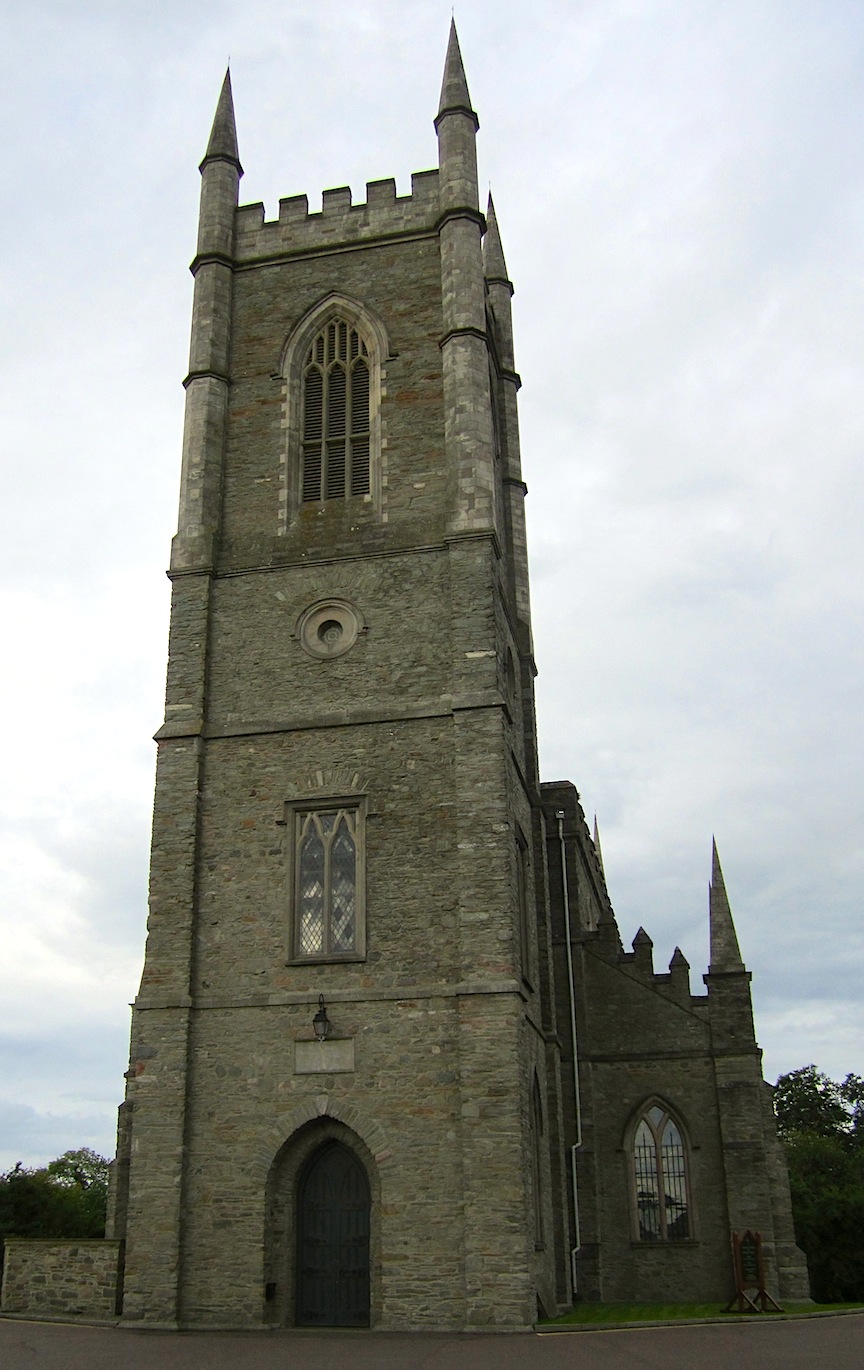
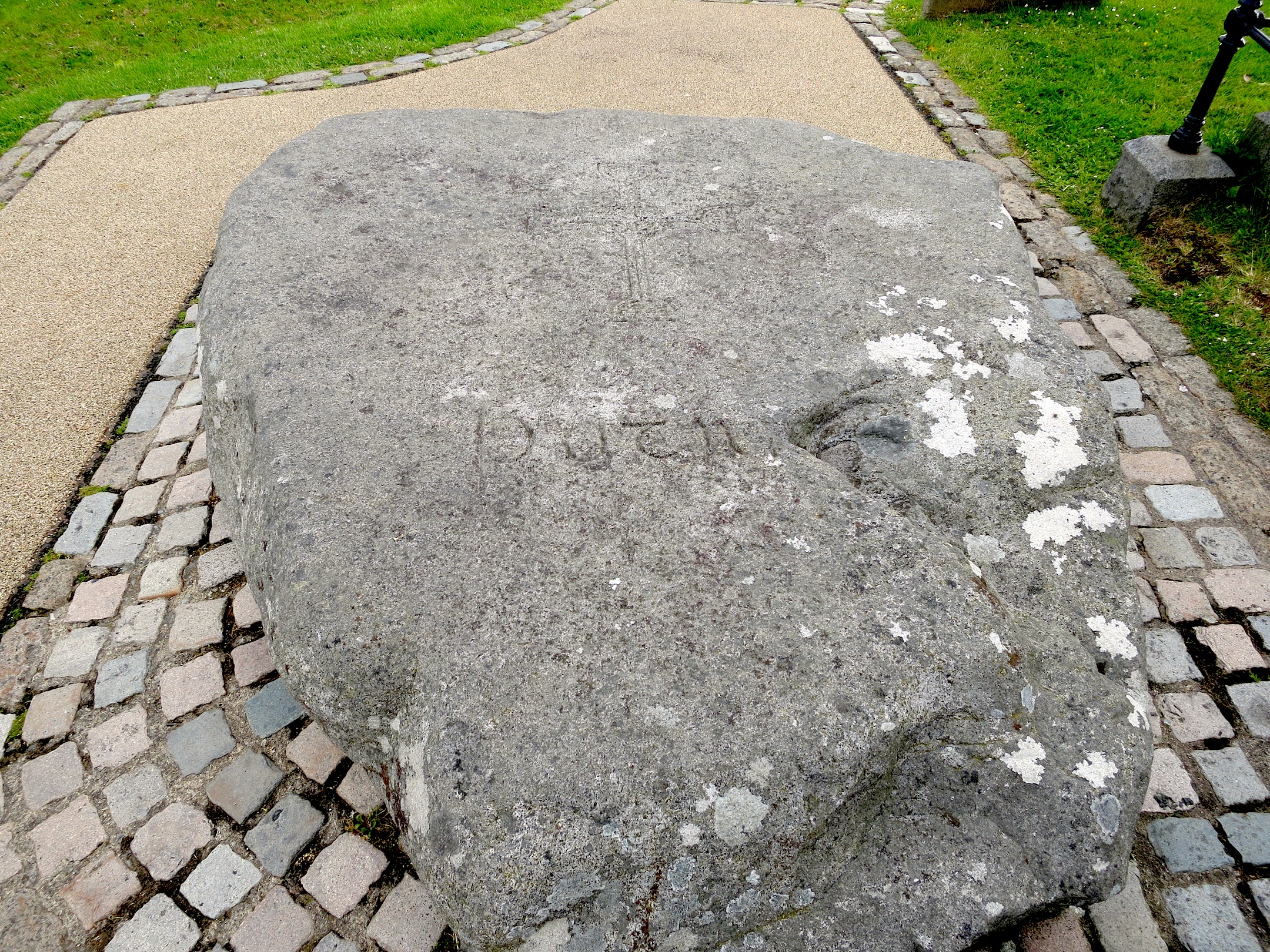
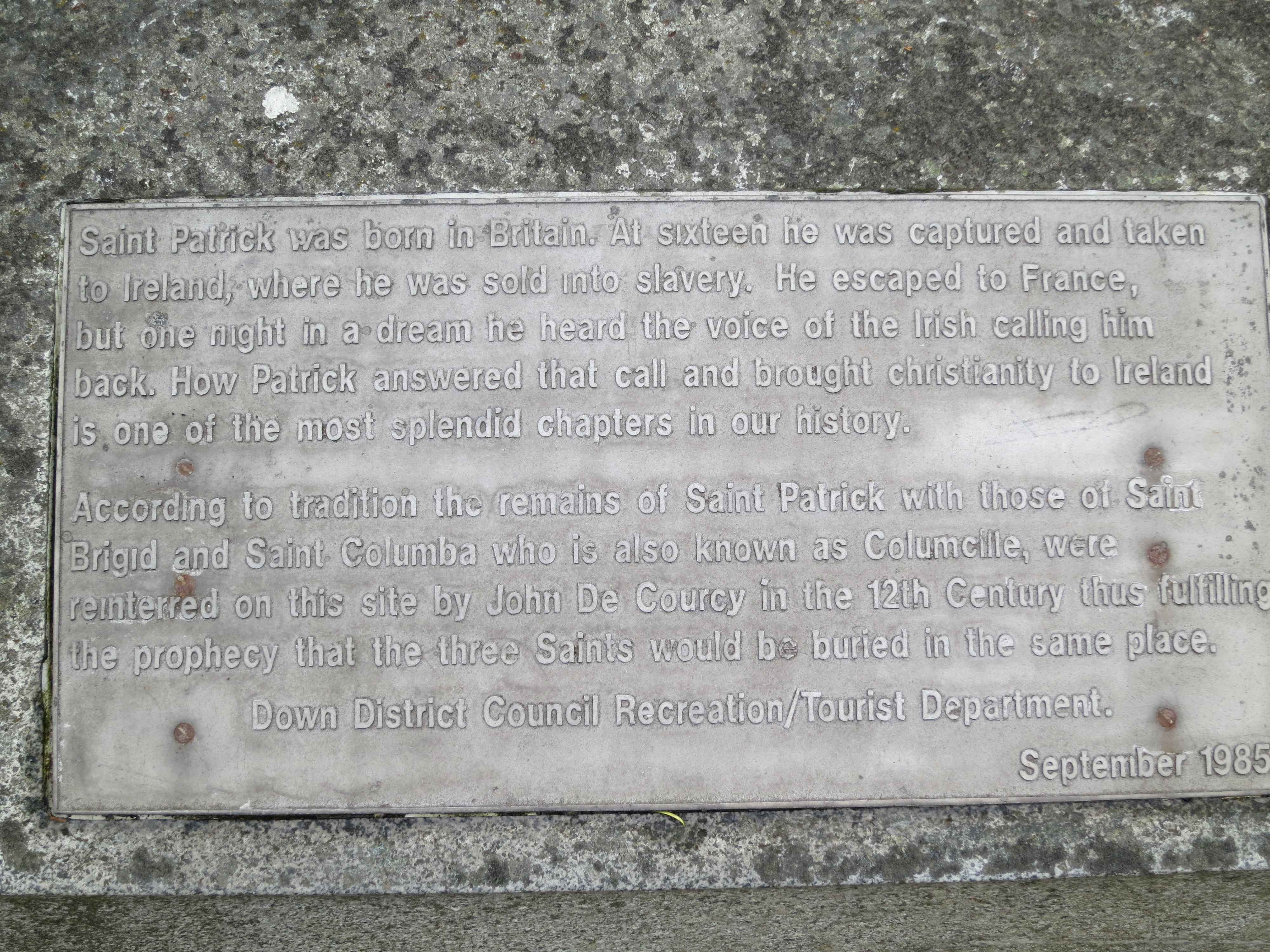
St. Patrick is little remembered for his selfless missionary work in Ireland in the fifth century, but rather has become a caricature of all the drunken silliness of this day.  Visiting his grave in Downpatrick, Ireland, just a humble stone on a hill top overlooking the sea, I wondered what he would make of the modern March 17.

He would advise us to be still and know.

He would plant his staff in us and all we do; we would respond by flowering up from the green.

St. Patrick’s Cathedral, Downpatrick, Northern Ireland
St. Patrick’s grave marker

This year’s Lenten theme:
So we fix our eyes not on what is seen, but on what is unseen, since what is seen is temporary, but what is unseen is eternal.
2 Corinthians 4: 18

Fixing Eyes on the Unseen – Leave the Rest to God

I think there is no suffering greater than
what is caused by the doubts of those who want to believe. 

I know what torment this is, but I can only see it, 
in myself anyway, as the process by which faith is deepened. 
What people don’t realize is how much religion costs. 
They think faith is a big electric blanket, 
when of course it is the cross. 


It is much harder to believe than not to believe. 
If you feel you can’t believe, you must at least do this: 
keep an open mind. 
Keep it open toward faith, 
keep wanting it, 
keep asking for it, 
and leave the rest to God.
~Flannery O’Connor from The Habit of Being: Letters of Flannery O’Connor

And those are called blessed who make the effort to remain open-hearted. 

Nothing that comes from God,
even the greatest miracle, can be proven like 2 x 2 = 4.
It touches one;
it is only seen and grasped when the heart is open and the spirit purged of self.
Then it awakens faith. 

… the heart is not overcome by faith,
there is no force or violence there, compelling belief by rigid certitudes. 
What comes from God
touches gently,
comes quietly;
does not disturb freedom;
leads to quiet, profound, peaceful resolve within the heart.
~Romano Guardini from The Living God

On my doubting days, when my faith is weak,
I remember the risen Christ reaching out
to place Thomas’s hand in His very real wounds,
guiding the doubter to believe
His painful sacrifice is reality.

His open wounds call out to my mind and heart-
Christ’s flesh and blood fortifies my faith
by such a gentle guiding touch.

This year’s Lenten theme:
So we fix our eyes not on what is seen, but on what is unseen, since what is seen is temporary, but what is unseen is eternal.
2 Corinthians 4: 18

What will be left when I’ve drawn my last breath
Besides the folks I’ve met and the folks who know me
Will I discover a soul saving love or
Just the dirt above and below me?

I’m a doubting Thomas
I took a promise
I do not feel safe
O’ me of little faith

Sometimes I pray for a slap in the face
Then I beg to be spared cause I’m a coward
If there’s a master of death I bet he’s holding his breath
Cause I show the blind and tell the deaf
About his power

I’m a doubting Thomas
I can’t keep my promises
Cause I don’t know what’s safe
O’ me of little faith

Can I be used to help others find truth
When I’m scared that I’ll find proof that it’s a lie
Can I be led down a trail dropping bread crumbs
To prove I’m not ready to die

Please give me time to decipher the signs
Please forgive me for time that I’ve wasted

I’m a doubting Thomas
I’ll take your promise
Though I know nothing’s safe
O’ me of little faith
~Chris Thile

Fixing Eyes on the Unseen – An Exaltation of Purple

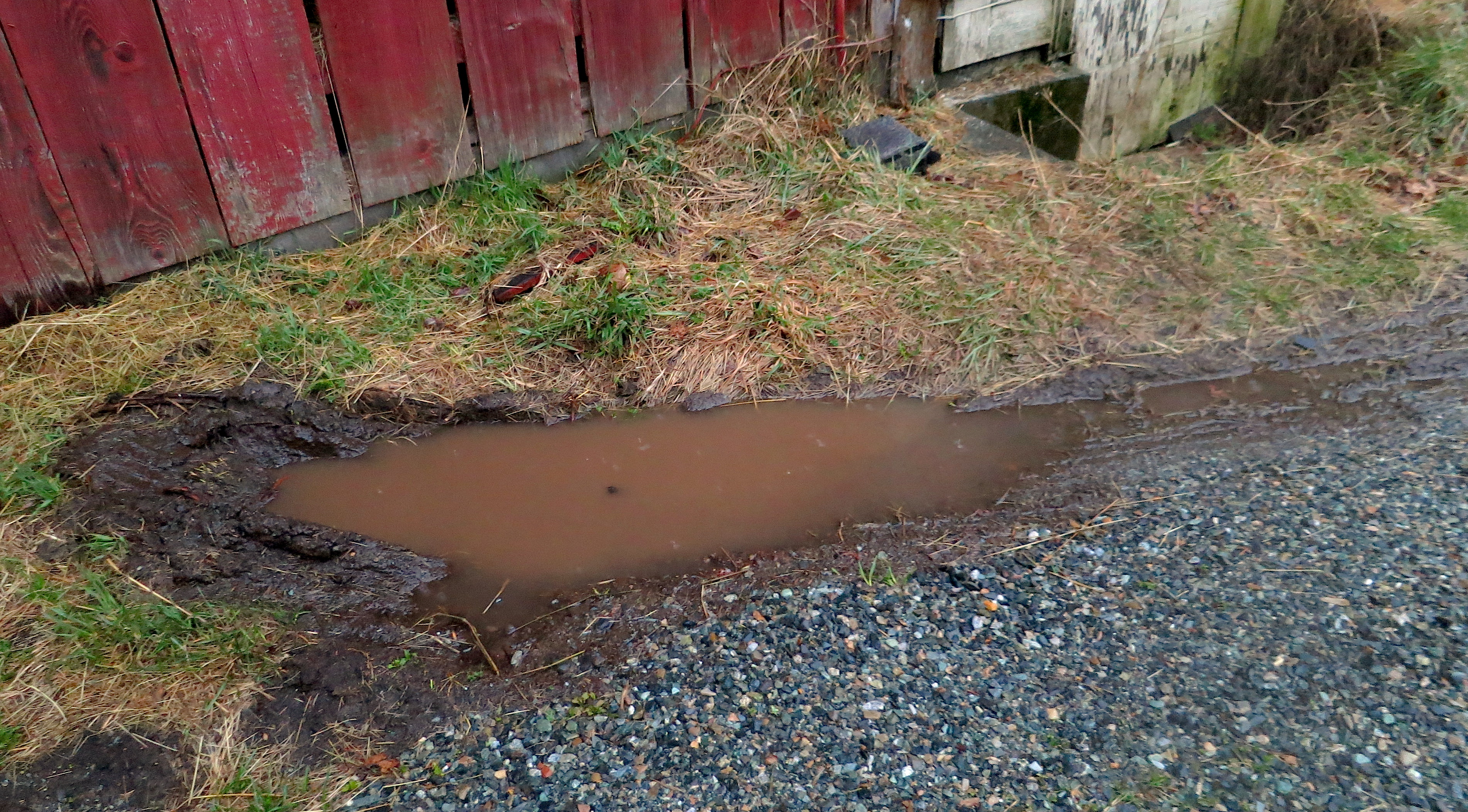
Here in purgatory bare ground
is visible, except in shady places
where snow prevails.

Still, each day sees
the restoration of another animal:
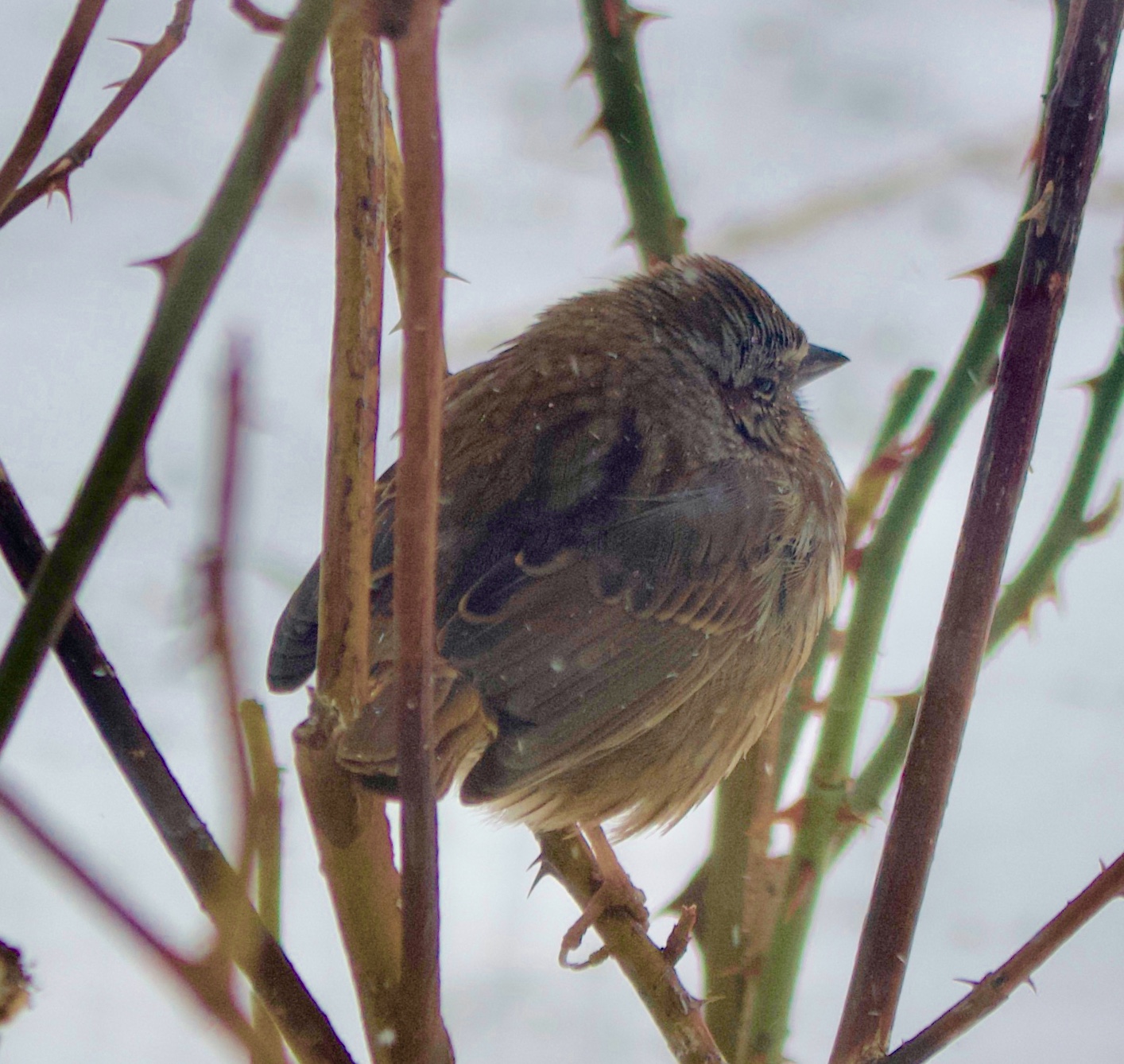
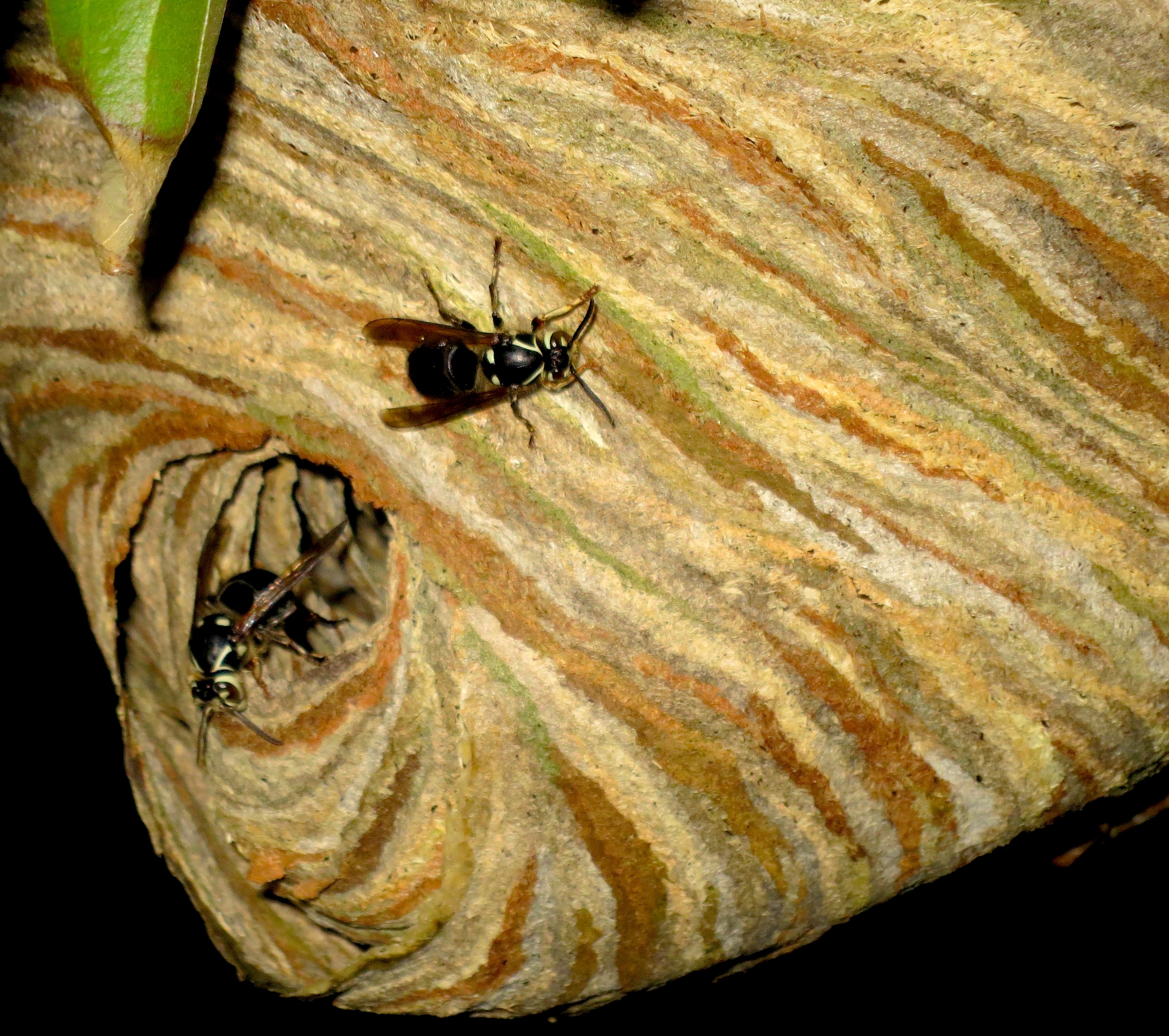
a sparrow, just now a sleepy wasp;
and, at twilight, the skunk
pokes out of the den,
anxious for mates and meals. . . .

On the floor of the woodshed
the coldest imaginable ooze,
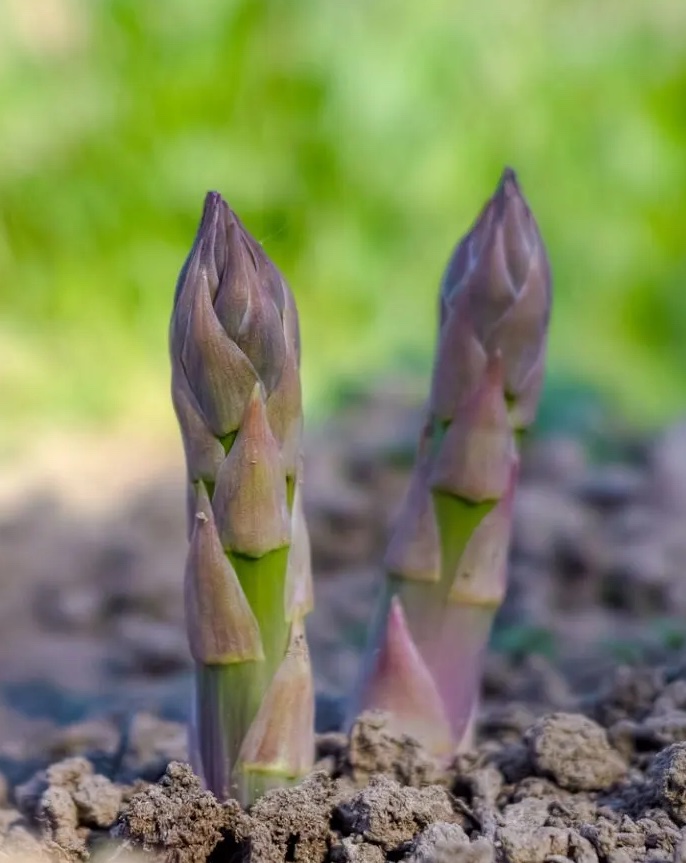
and soon the first shoots
of asparagus will rise,
the fingers of Lazarus. . . .

Earth’s open wounds — where the plow
gouged the ground last November —
must be smoothed; some sown
with seed, and all forgotten.

Now the nuthatch spurns the suet,
resuming its diet of flies, and the mesh
bag limp and greasy, might be taken
down.

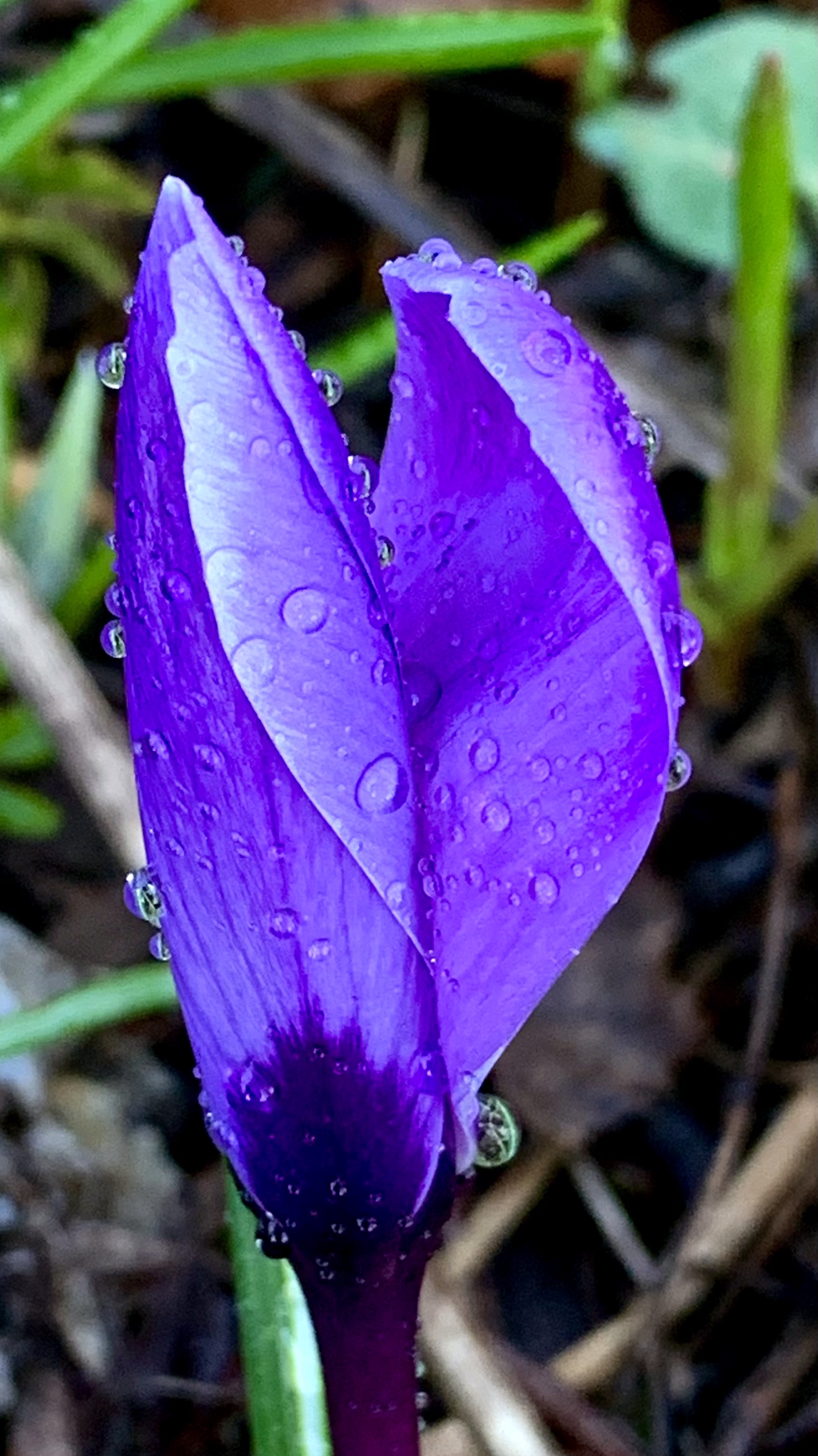
Beside the porch step
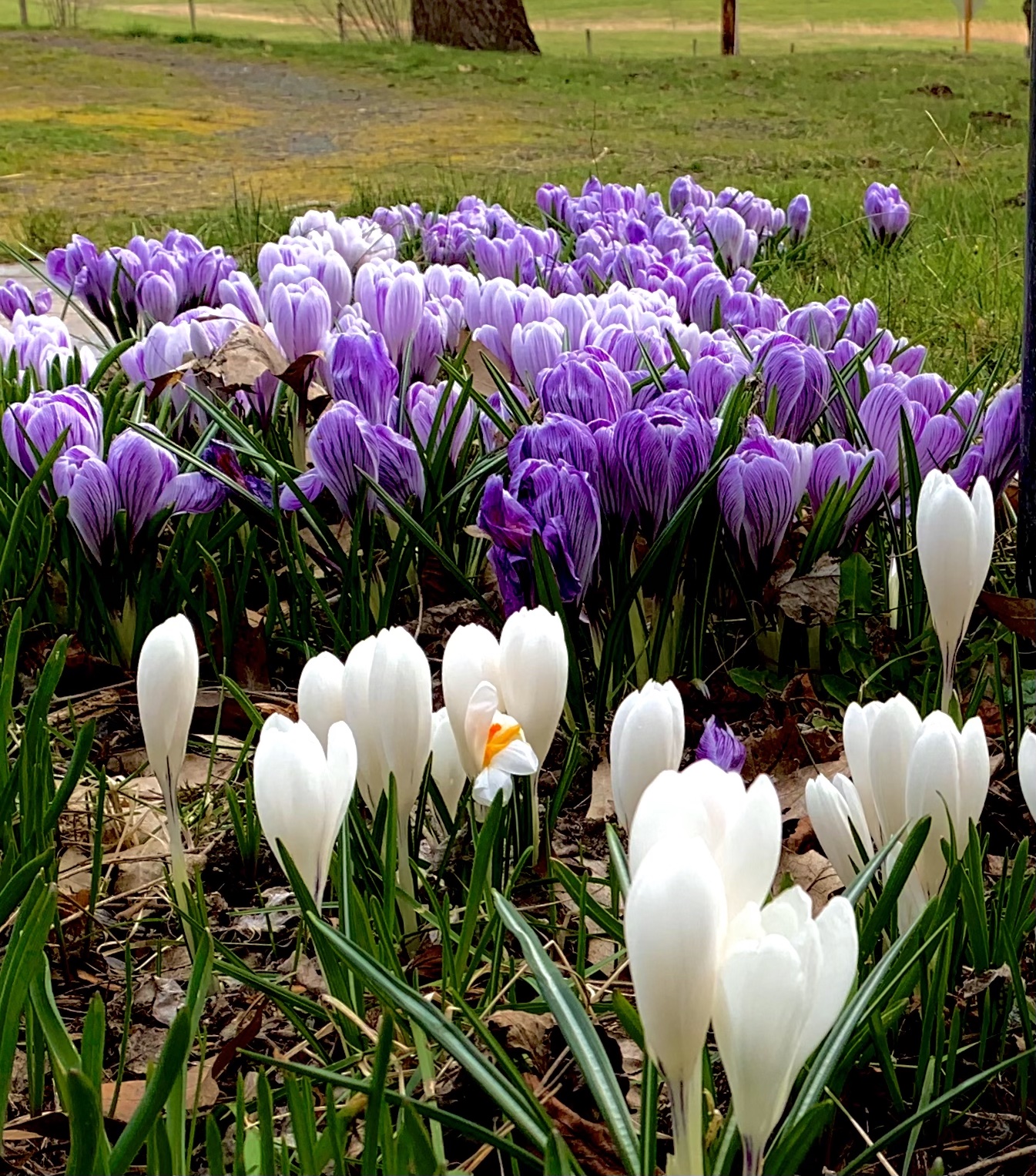
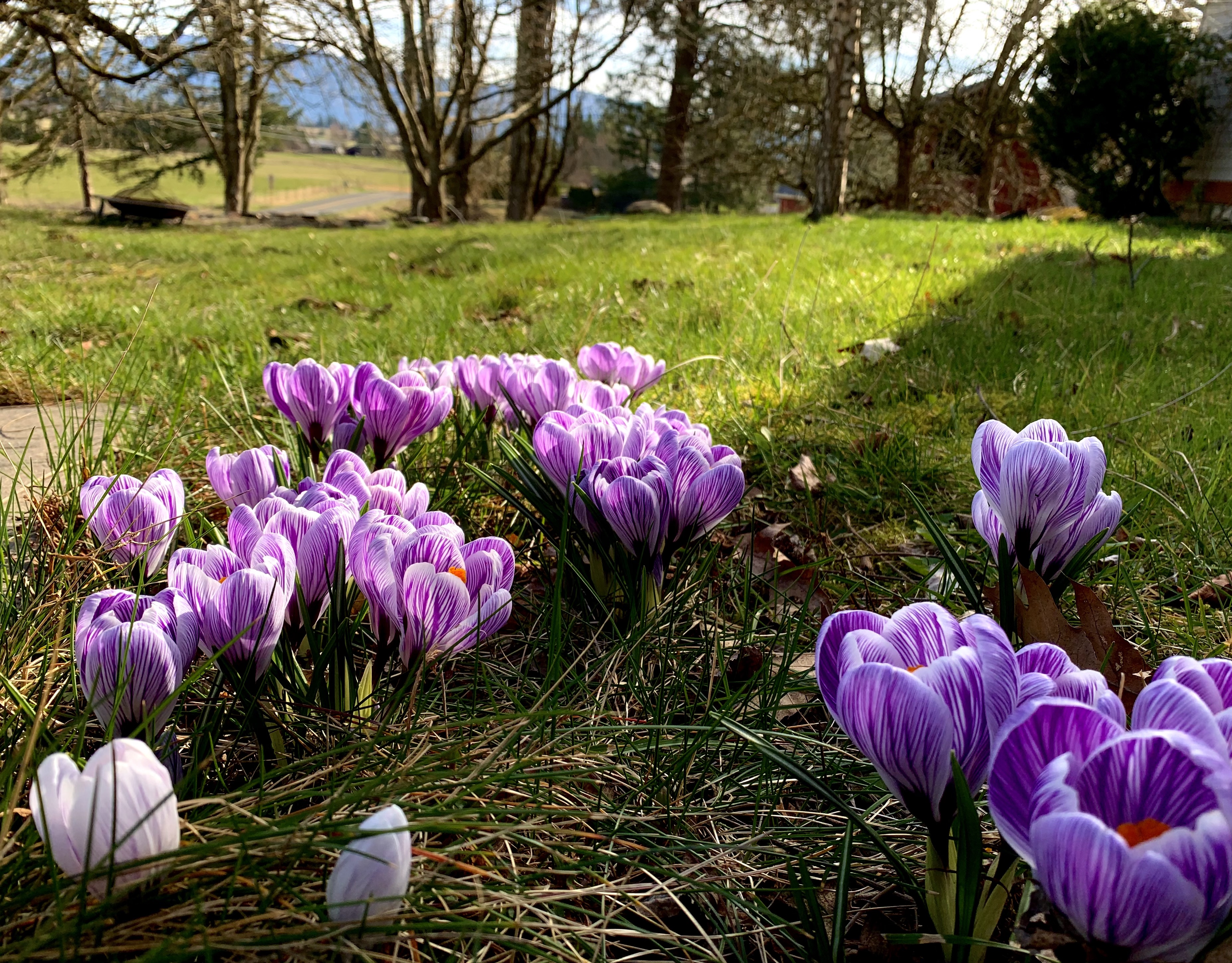
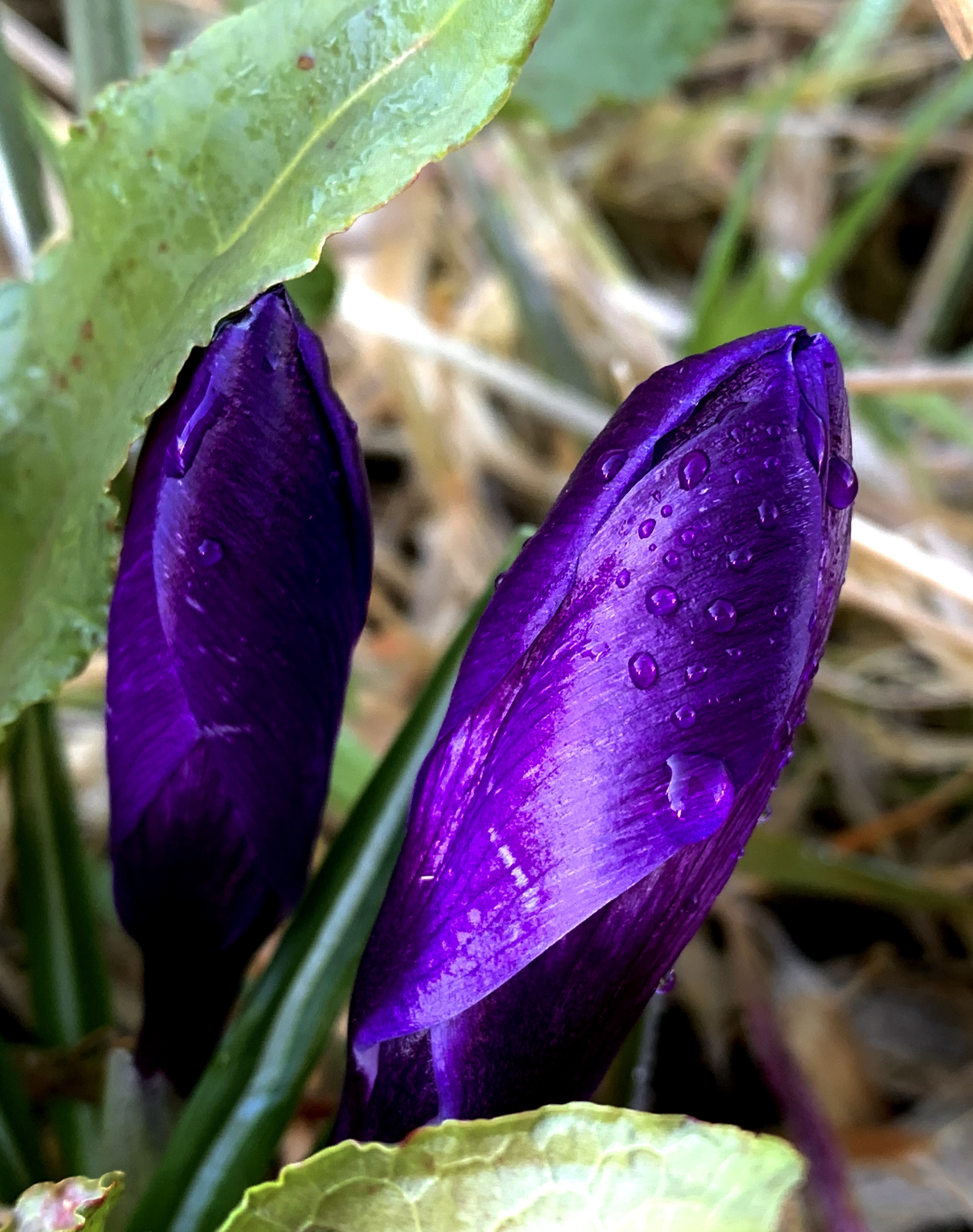
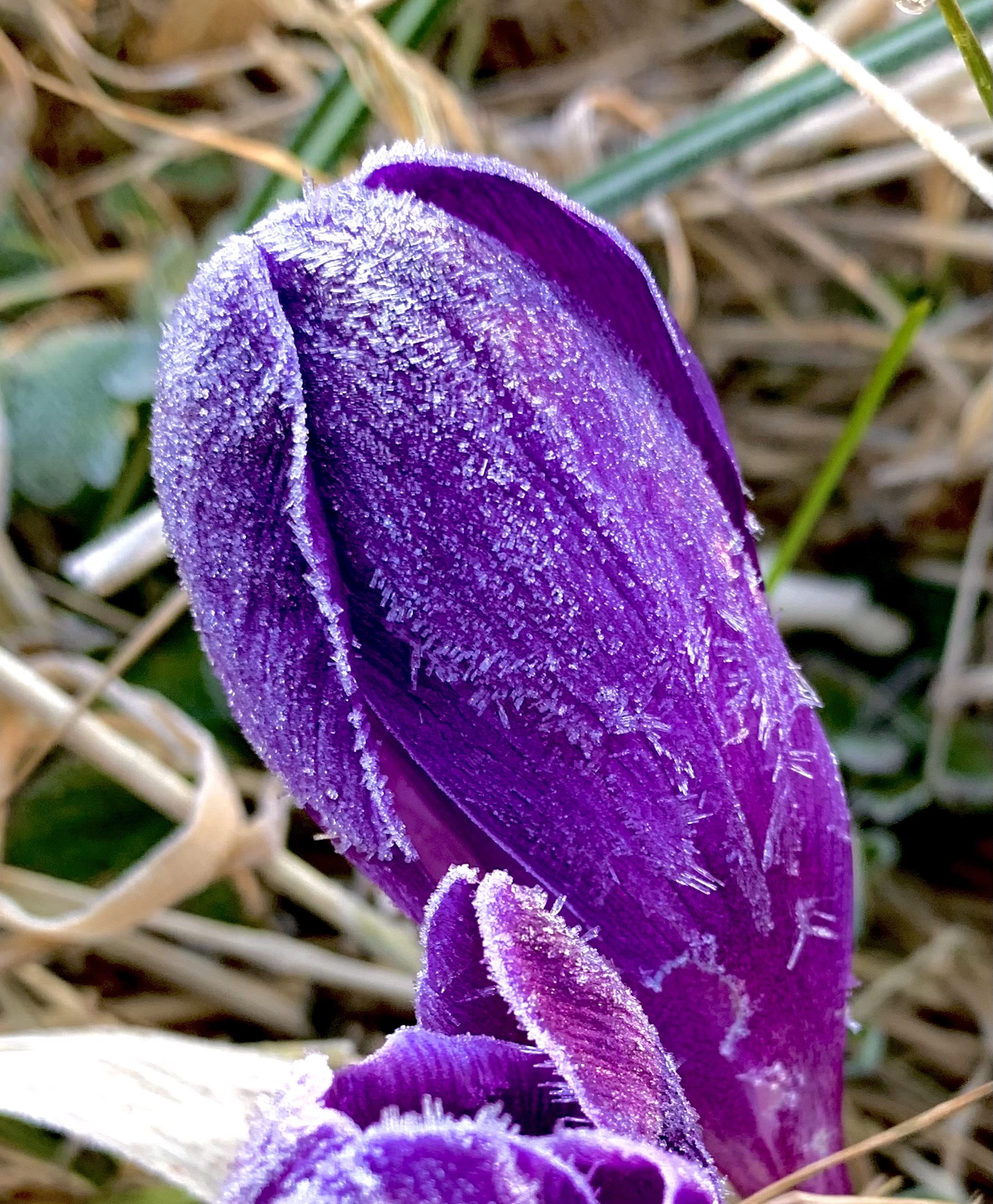
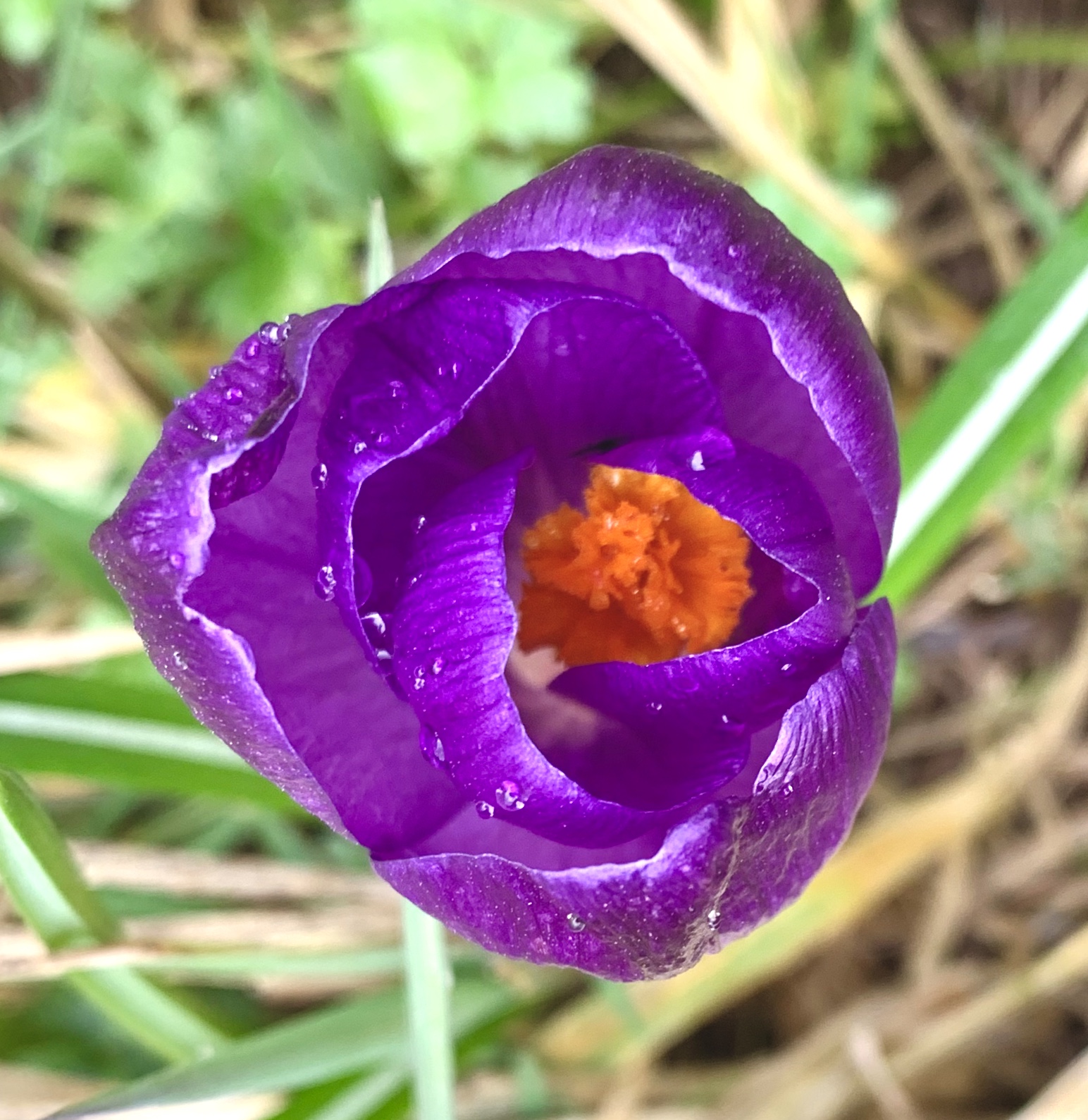
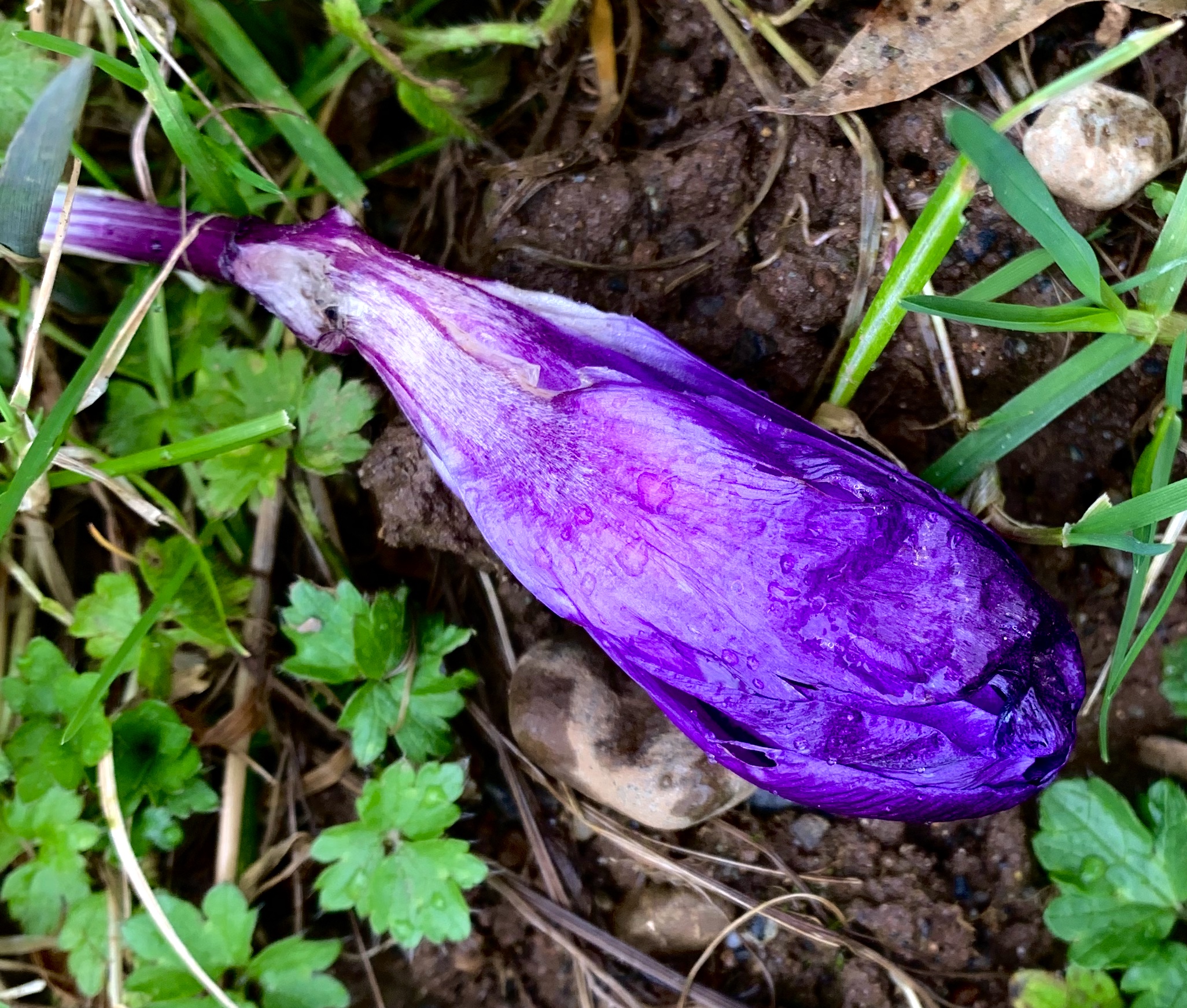
the crocus prepares an exaltation
of purple, but for the moment
holds its tongue. . . .
~Jane Kenyon, “Mud Season” from Collected Poems.

photo by http://www.positivebloom.com

Walking, I drew my hand over the lumpy
bloom of a spray of purple; I stripped away
my fingers, stained purple; put it to my nose,

the minty honey, a perfume so aggressively
pleasant—I gave it to you to smell,
my daughter, and you pulled away as if

I was giving you a palm full of wasps,
deceptions: “Smell the way the air
changes because of purple and green.”

This is the promise I make to you:
I will never give you a fist full of wasps,
just the surprise of purple and the scent of rain.
~Kwame Dawes “Purple”

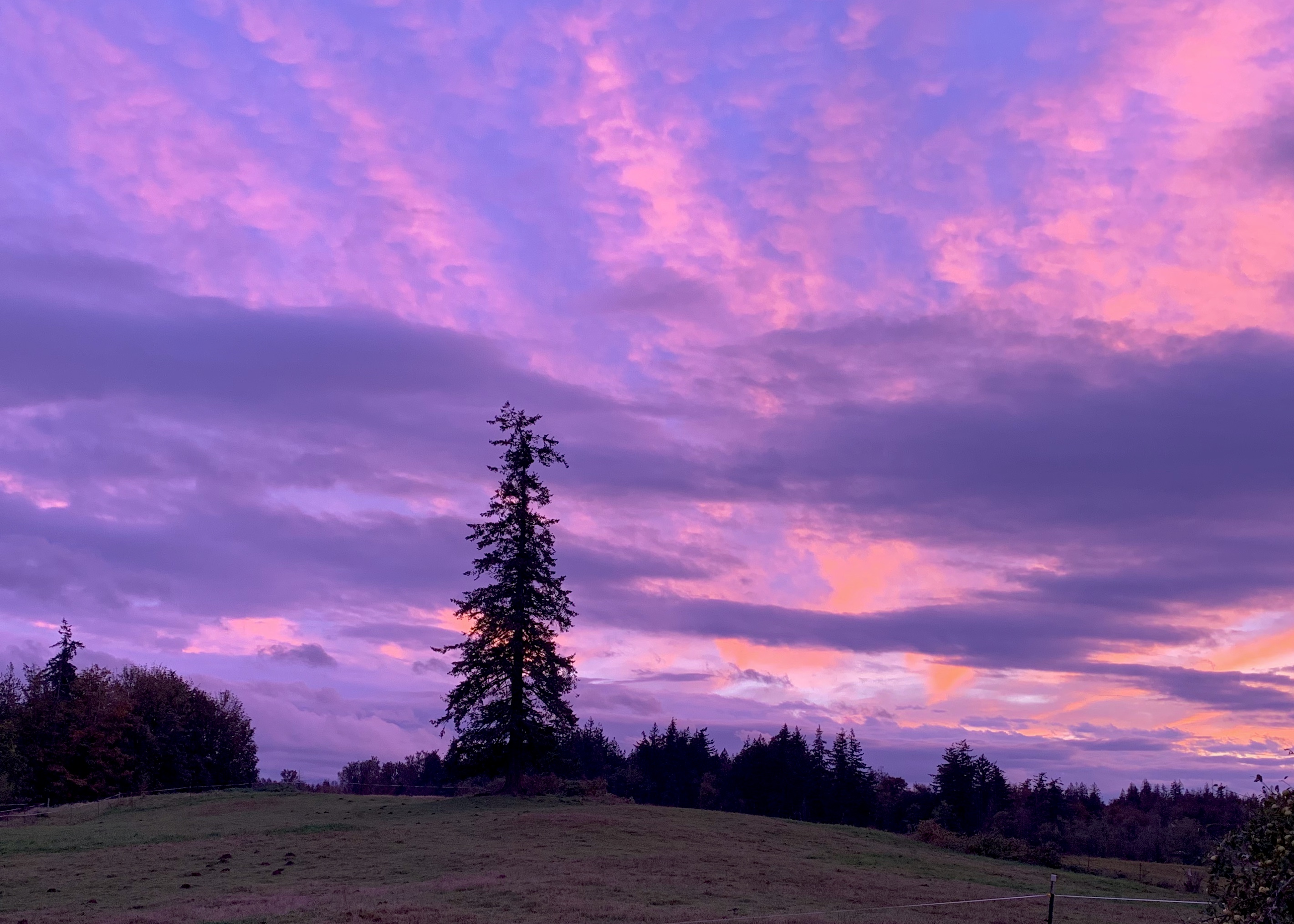
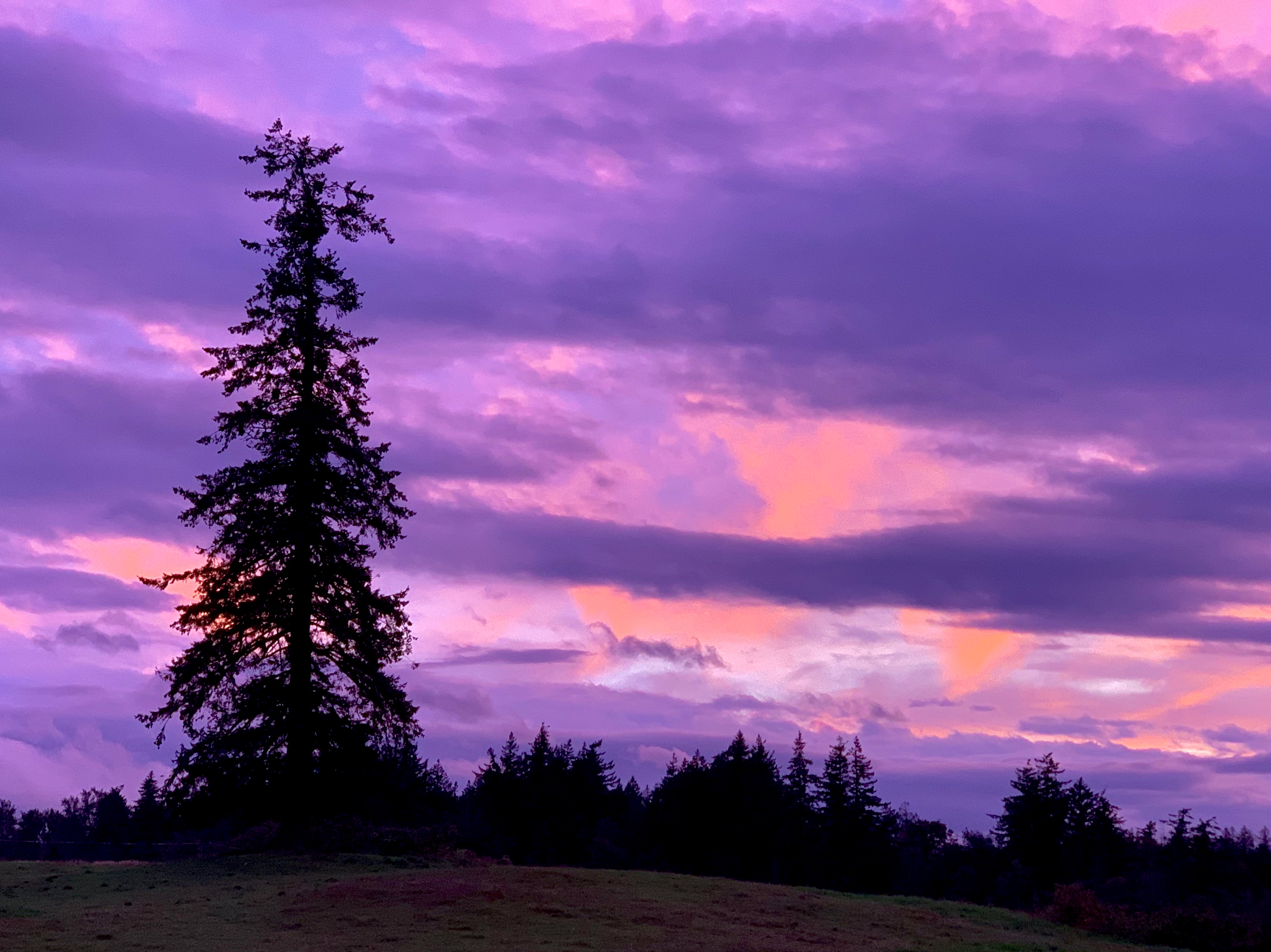
I have always identified more with the bland plainness of mud season as squishy brown ground is underfoot. I tend to dress myself in browns and never in elegant purples. It’s not that I don’t like purple – I do. I just have never felt worthy to be adorned in it like the sky and flowers and fruit.

Perhaps my reluctance to wear purple is that it represents the those who are regal and royal … yet also those who are bruised and battered … all at once.

I know One who was both, who took a beating for me in my place.

This year’s Lenten theme:
So we fix our eyes not on what is seen, but on what is unseen, since what is seen is temporary, but what is unseen is eternal.
2 Corinthians 4: 18

Fixing Eyes on the Unseen: Because the Sun Has Risen

I believe in God as I believe that the Sun has risen,
not only because I see it,
but because by it I see everything else.
~C.S. Lewis from “They Asked For A Paper,” in Is Theology Poetry?

I see your world in light that shines behind me,
Lit by a sun whose rays I cannot see,
The smallest gleam of light still seems to find me
Or find the child who’s hiding deep inside me.
I see your light reflected in the water,
Or kindled suddenly in someone’s eyes,
It shimmers through the living leaves of summer,
Or spills from silver veins in leaden skies,
It gathers in the candles at our vespers
It concentrates in tiny drops of dew
At times it sings for joy, at times it whispers,
But all the time it calls me back to you.
I follow you upstream through this dark night
My saviour, source, and spring, my life and light.
~Malcolm Guite “I am the Light of the World”

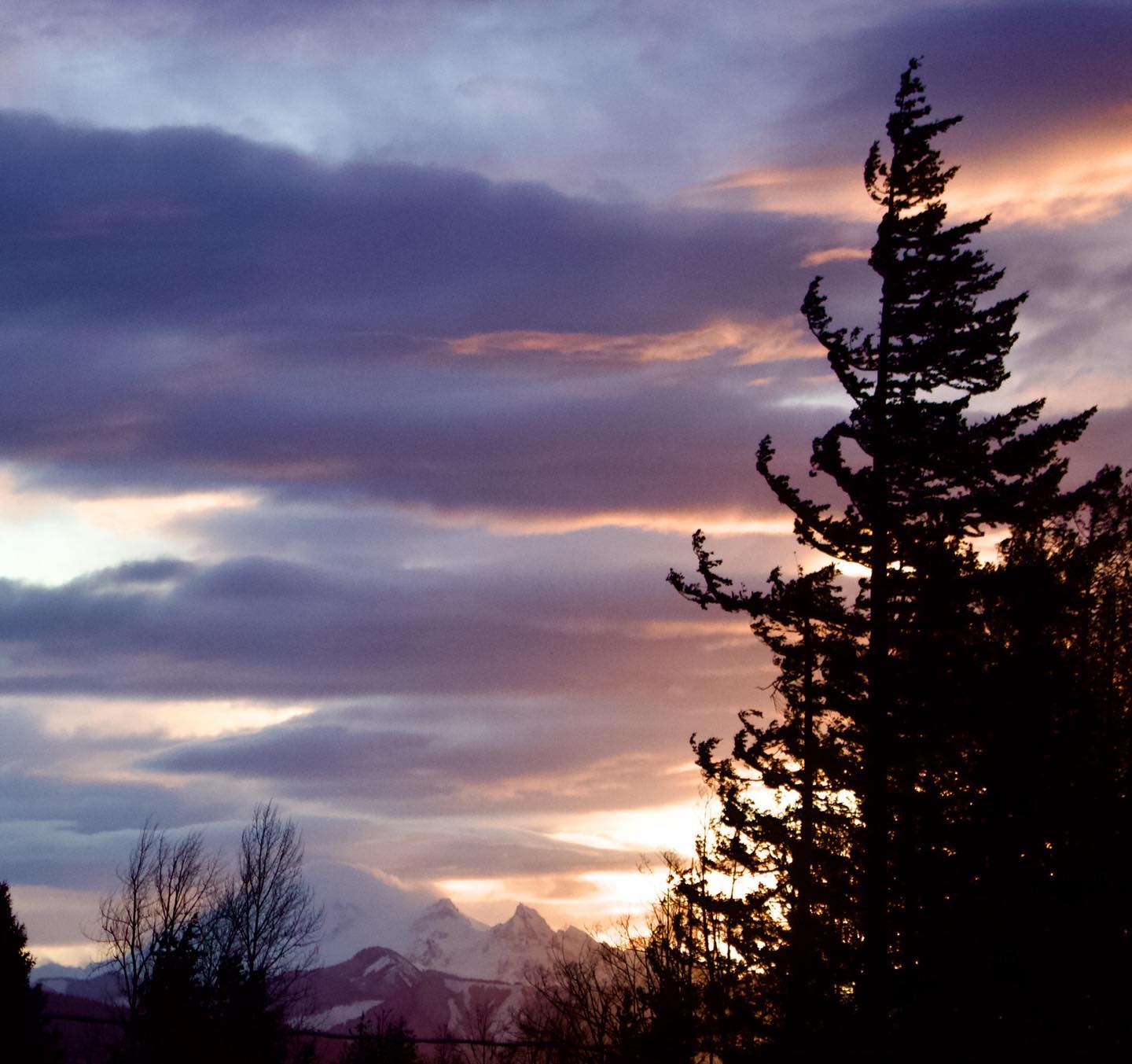
Without God’s Light that comes reliably every morning, I would be hopelessly casting about in the dark, stumbling and fumbling my way without the benefit of His illumination.

It feels like a fresh gift each time, whether brilliantly painted, or much of the time, a sullen and sodden gray.

I fix my eyes on the unseen, as it is lit in the Lord.
And then:
was blind, but now I see…

This year’s Lenten theme:
So we fix our eyes not on what is seen, but on what is unseen, since what is seen is temporary, but what is unseen is eternal.
2 Corinthians 4: 18

Fixing Eyes on the Unseen: A Most Important Day

“Choose the least important day in your life. It will be important enough.”          
Mrs. Gibbs to Emily in Our Town

We are ages away
from our high school class
where first we walked
the streets of Grover’s Corners
and have lived decades and
decades of important days
writing our own scenes
along the way. In this theater
we meet again the lives of people
as ordinary and extraordinary
as we are and find ourselves
smiling and weeping watching
a play we first encountered as teens.
In our 70’s Our Town brings us joy
and also breaks our hearts.
Now we know.
~
Edwin Romond Seeing “Our Town” in Our 70’s”

We don’t have time to look at one another.
I didn’t realize.
All that was going on in life and we never noticed.

Oh, earth, you’re too wonderful for anybody to realize you. 
Do any human beings ever realize life while they live it?

– every, every minute? 
~Thornton Wilder, from Emily’s monologue in Our Town
He has made everything beautiful in its time. Also, he has put eternity into man’s heart, yet so that he cannot find out what God has done from the beginning to the end. 12 I perceived that there is nothing better for them than to be joyful and to do good as long as they live; 13 also that everyone should eat and drink and take pleasure in all his toil—this is God’s gift to man. 14 I perceived that whatever God does endures forever; nothing can be added to it, nor anything taken from it.
Ecclesiastes 3: 11-14


One of our very special friends from church got married today to a high school classmate she knew over sixty-some years ago. Both had recently lost spouses and found their way to each other to join together for the rest of their days. Today became a most important day in their lives, a day they could not have imagined as teenagers so long ago.

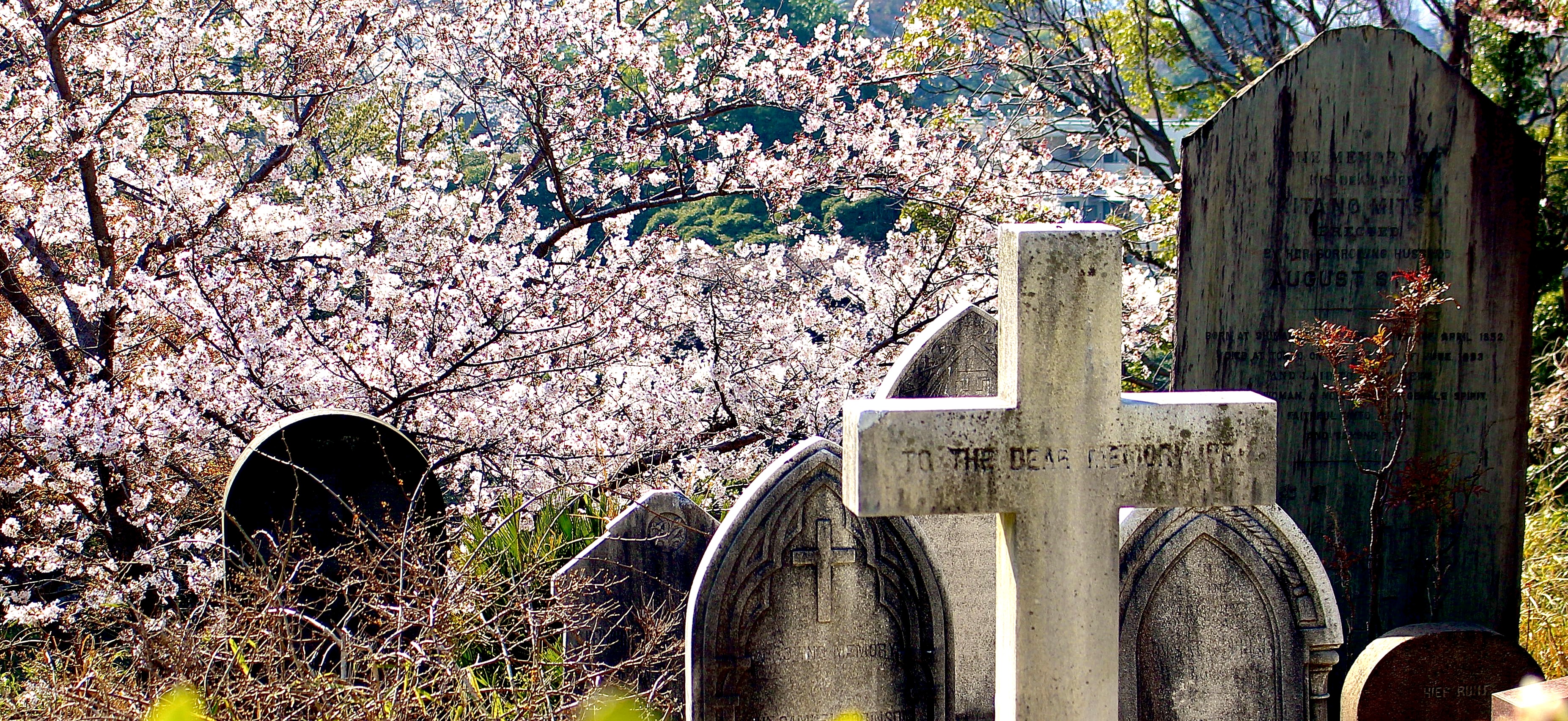
The post-ceremony reception was joyous, full of other high school classmates who recognized how extraordinary it was for two lives to come full circle after all the ordinary “least important” days of high school. Observing this tight-knit community celebrating together reminds me of Grover’s Corners of Thornton Wilder’s “Our Town” where even those in the cemetery under the ground continue to engage in conversation and commentary about their family and friends, sometimes wistful, sometimes full of regrets.
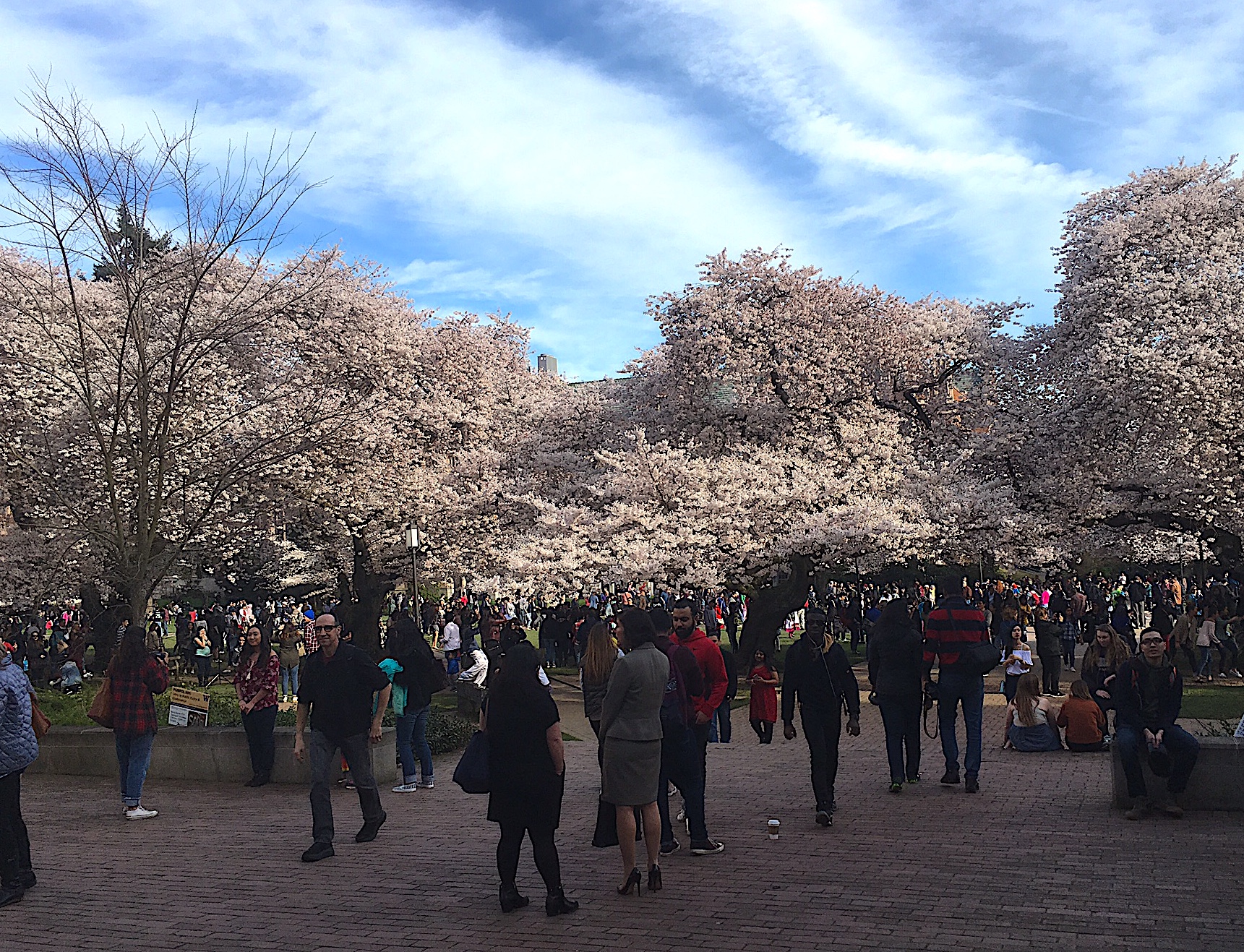
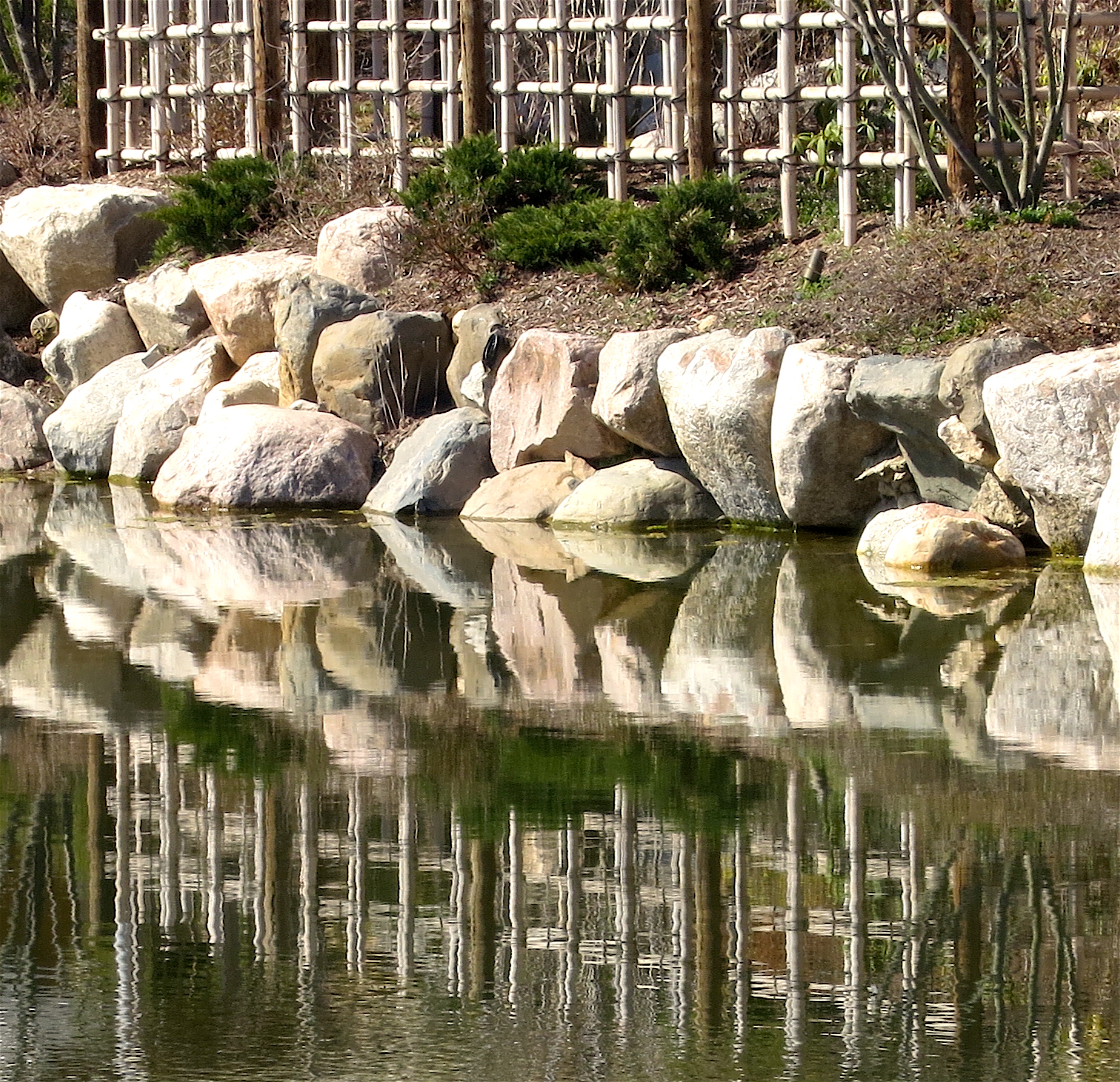
There is so much we miss while we are living out our ordinary days because our capacity for seeing what is truly important is so limited – if we paid attention to it all, we would be overwhelmed and exhausted.

Yet God’s unlimited vision has a plan for each of us, even if we cannot see it in the moment – His divine gift to us, right from our very beginning, until the moment we take our last breath.

This year’s Barnstorming Lenten theme is taken from 2 Corinthians 4: 18:
So we fix our eyes not on what is seen, but on what is unseen, since what is seen is temporary, but what is unseen is eternal.

Fixing Eyes on the Unseen – From Earth and Ashes

This is the liturgy of rain,
falling on mountain, field, and ocean—
indifferent, anonymous, complete—
of water infinitesimally slow,
sifting through rock, pooling in darkness,
gathering in springs, then rising without our agency,
only to dissolve in mist or cloud or dew.

This is a litany to earth and ashes,
to the dust of roads and vacant rooms,
to the fine silt circling in a shaft of sun,
settling indifferently on books and beds.
This is a prayer to praise what we become,
“Dust thou art, to dust thou shalt return.”
Savor its taste—the bitterness of earth and ashes.

Until at last it is our litany, mon vieux,
my reader, my voyeur, as if the mist
steaming from the gorge, this pure paradox,
the shattered river rising as it falls—
splintering the light, swirling it skyward,
neither transparent nor opaque but luminous,
even as it vanishes—were not our life.

~Dana Gioia from “The Litany”

Heaven knows we need never be ashamed of our tears,
for they are rain upon the blinding dust of earth, overlying our hard hearts.
I was better after I had cried, than before–
more sorry, more aware of my own ingratitude, more gentle.
~Charles Dickens as “Pip” in Great Expectations

God’s people are reminded today, Ash Wednesday, that our stay here is temporary. That reality always makes me weep. I tend to fix my eyes on what I see around me as part of my daily life, like breathing in and out. The world lures me with its beauty, yet when it quakes and burns and shatters as it surely does at times, I am devastated to acknowledge my own eventual return to dust and ashes.

Even so, the rain falls, gathers into rivers and oceans, but rises again as mist back to the heavens. Light splinters and spills into colors and hues in that misty veil — God’s people become the unseen, no longer bitter ash, not transparent nor opaque but at once luminous and eternal and glorious.

Over the next few weeks of Lenten preparation, I hope to better understand what I cannot yet see, trusting that what comes next far surpasses any glory my eyes have witnessed here.

This year’s Barnstorming Lenten theme is taken from 2 Corinthians 4: 18:
So we fix our eyes not on what is seen, but on what is unseen, since what is seen is temporary, but what is unseen is eternal.

Not Remotely Mystical

When it’s over, I want to say all my life
I was a bride married to amazement.
I was the bridegroom, taking the world into my arms.

When it’s over, I don’t want to wonder
if I have made of my life something particular, and real.

I don’t want to find myself sighing and frightened,
or full of argument.

I don’t want to end up simply having visited this world.

~Mary Oliver from “When Death Comes”

Probably Mary Oliver doesn’t stress out
about her hair or quote Led Zeppelin or start
to go upstairs to write something mystical
about a wood duck, but get sidetracked
by The Millionaire Matchmaker, watching four episodes
until, panicked by self-loathing, she hits the remote.

She lives somewhere kind of remote.
Is there even a Walmart out
in Provincetown? Mary never, in an episode
of frugality, shops there instead of the food co-op and starts
lying about where the Moose Tracks
ice cream came from, feigning loyalty to the mystical


oils and bulk grains of the co-op where Mystical
Mac ‘N Cheese costs an absurd $3.95 a box. There’s a remote
chance Mary, while pondering lilies, would get sidetracked
by a voicemail from her agent. Even Mary Oliver spaces out
on occasion and forgets to turn off her phone. Her days start
before dawn; wouldn’t she sometimes have episodes

of thinking, “To hell with the swan, I’m going to watch episodes
of Lost in bed all day?” It must be exhausting to be mystical
all the time, having to think up poems that start
with a smelly turtle and end with the glory of the soul. The remote,
sleek as an otter, lolls on her nightstand, calling out 
for her to take just this one morning off, to follow the tracks


of Matt Lauer and Dr. Phil instead of mucky tracks
left in the marsh by tick-ridden deer. Euphoric episodes
bound like grasshoppers through St. Mary’s poems, but out
in nature there must be days when nothing is special, when mystical epiphanies can’t break through the clouds. Is Mary ever so remote from it all that touching a leaf leaves her blank?

Does she start to get frantic, to fear she’s lost the connection?
She starts picturing herself in a smock with a nametag,
cleaning finger tracks off the automatic doors while wearing Mona Lisa’s remote smile, a smile barely wide enough to keep her employed. Fighting episodes of despair, she can’t figure out how to turn a shopping cart into a mystical symbol for death—piece of cake for most poets, but not for our Mary, out


there with the flora and fauna, not remotely accustomed to the episodes comprising life for those of us not “married to amazement,” the unmystical singles’ club, sidetracked by diversions. We start toward the door, but we rarely make it out.
~Christine Heppermann, “Pure” from  Poisoned Apples: Poems for You, My Pretty

wood duck photo from Audobon Society

Moose Tracks ice cream has nothing on Tillamook Mudslide ice cream. And I can quote Simon and Garfunkel but not Led Zeppelin. Cracker Barrel Mac n Cheese is better than any other. If I’m going to take a day to get lost in a binge of streaming episodes, it is most likely going to be Outlander. And I don’t fuss about my hair.

<sigh>

I am well aware I fall far short from the example set by Mary Oliver, Jane Kenyon, Annie Dillard and others for whom writing became a mystical passion of self-discovery in their observation of creation and search for understanding of the Creator.

As someone who as a child could spend hours fascinated by the tiniest bug or follow ant tracks through the woods or catch pollywogs in the creek or lie motionless in a hideaway of tall grass watching clouds roll by on a summer afternoon, I can easily be accused of way too much “blissing out” on sunrises and sunsets as I walk through my days on earth.

The reality is something completely different. I compose my writing and photos as I go about my day, whether it is scooping manure in the barn, taking quick breaks to see how the light is changing outside, or gardening, or hanging up the laundry on the clothesline. I pull over on my way to work for a quick picture if something catches my eye. A trip to the grocery store offers opportunities for a back-roads drive to see how the surrounding cornfields are growing and raspberries are ripening. When I’m fortunate, I’ll spot an eagle in a roadside tree or a new calf nursing.

So every day is a new exploration of what is in my own backyard, not remotely mystical but simply there to be seen and mused over. Rather than married to amazement, I’m attracted to the remarkably mundane. But it does mean I need to walk out the door to meet it head-on.

Even
After
All this time
The sun never says to the earth,

“You owe
Me.”

Look
What happens
With a love like that,
It lights the
Whole
Sky.
~Daniel Ladinsky, from “The Gift”

One-Time
Monthly
Yearly

Make a one-time or recurring donation to support daily Barnstorming posts

Make a monthly donation

Make a yearly donation

Choose an amount

¤5.00
¤10.00
¤20.00
¤5.00
¤15.00
¤100.00
¤5.00
¤15.00
¤100.00

Or enter a custom amount

¤

Your contribution is deeply appreciated.

Your contribution is appreciated.

Your contribution is appreciated.

DonateDonate monthlyDonate yearly