Pull Open the Barn Doors

I like farming.
I like the work.
I like the livestock and the pastures and the woods. 
It’s not necessarily a good living, but it’s a good life. 
I now suspect that if we work with machines
the world will seem to us to be a machine,
but if we work with living creatures
the world will appear to us as a living creature. 
That’s what I’ve spent my life doing,

trying to create an authentic grounds for hope.
~Wendell Berry, horse farmer, essayist, poet, professor
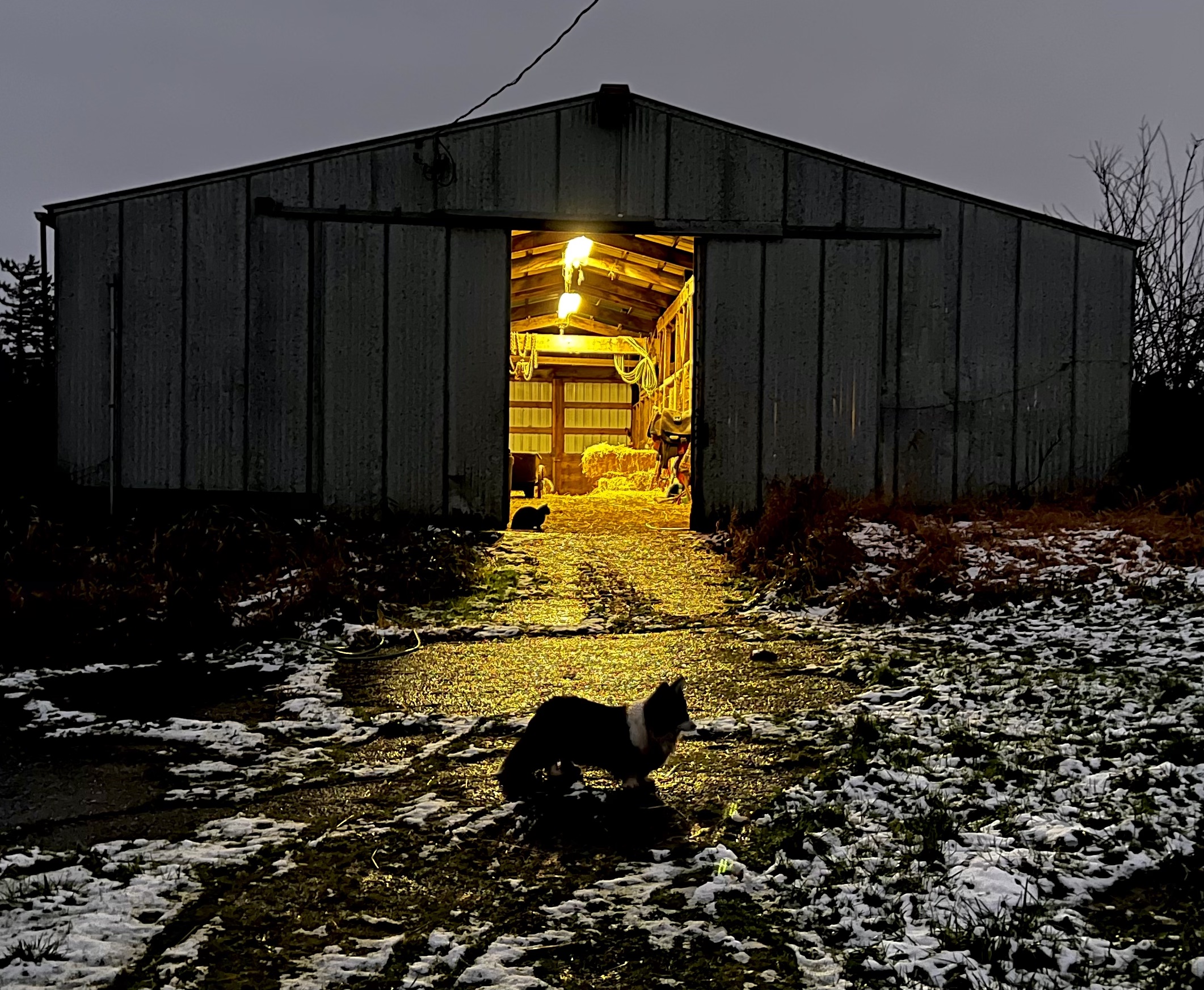
The barn is old, and very old,
But not a place of spectral fear.
Cobwebs and dust and speckling sun
Come to old buildings every one.
Long since they made their dwelling here,
And here you may behold


Nothing but simple wane and change;
Your tread will wake no ghost, your voice
Will fall on silence undeterred.
No phantom wailing will be heard,
Only the farm’s blithe cheerful noise;
The barn is old, not strange.

~Edward Blunden from “The Barn”

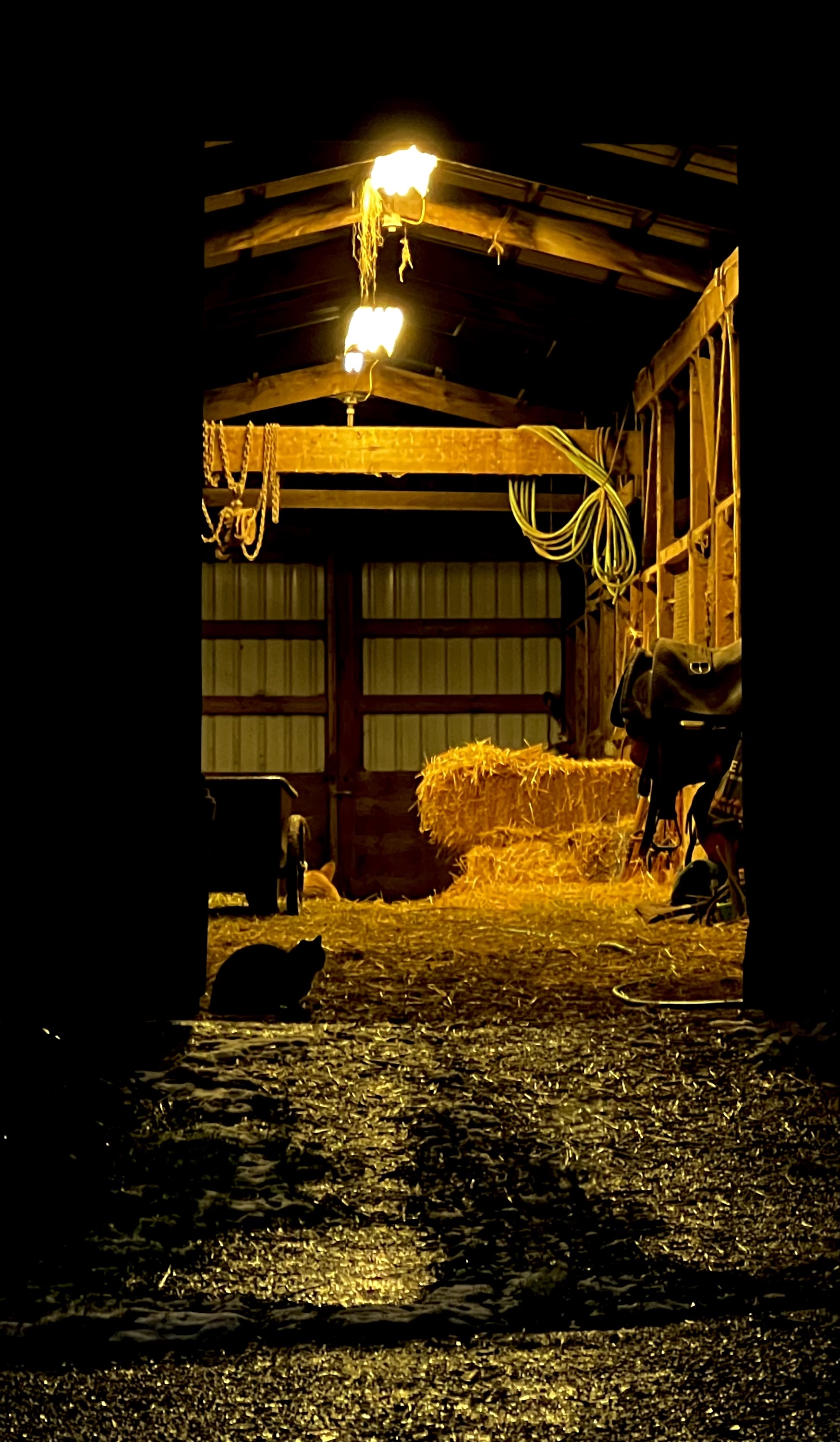
When we pull open the barn doors,
every morning
and each evening,
as our grandfathers did
over a hundred years ago,
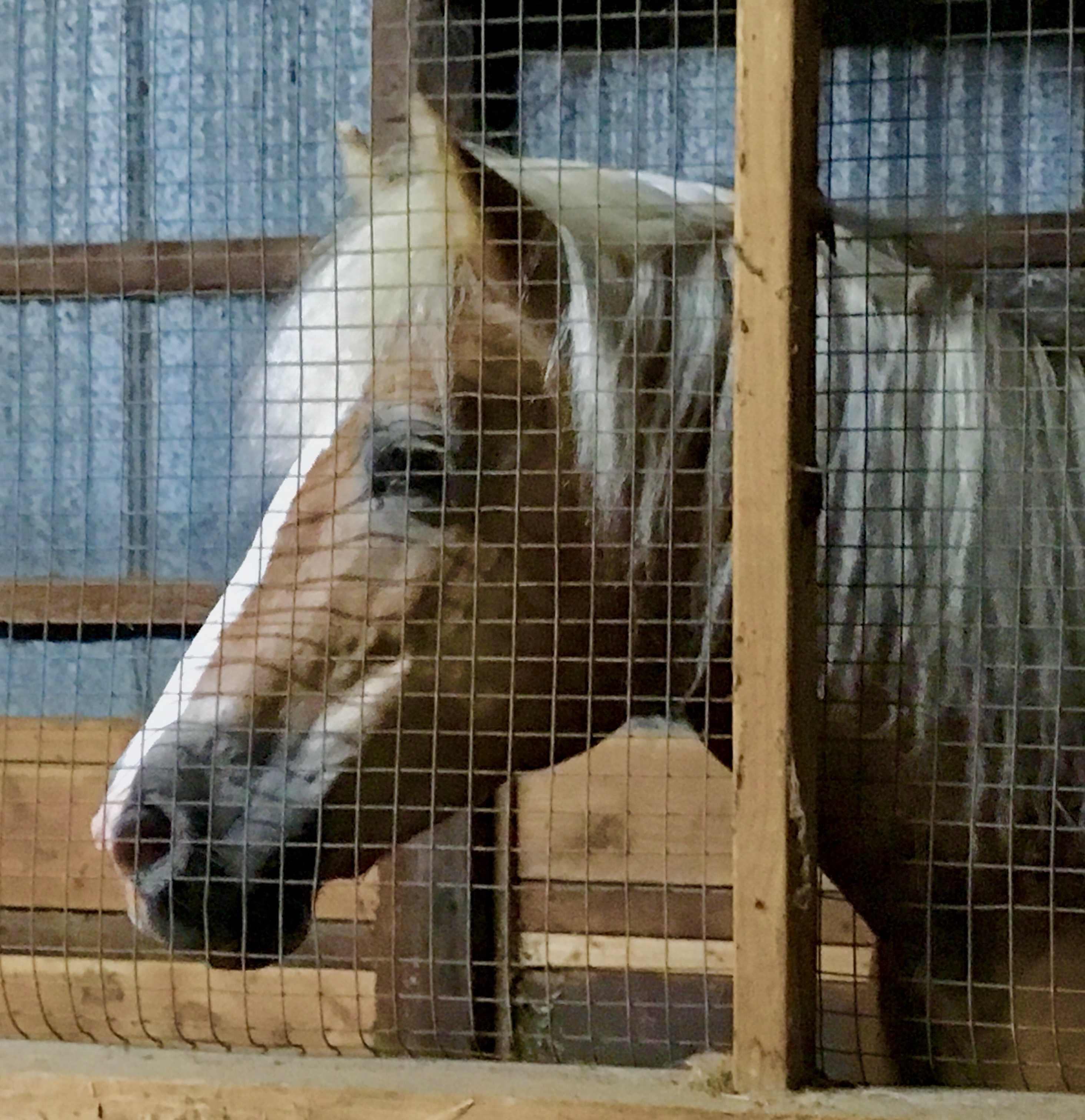
six rumbling voices
rise in greeting.
We exchange scents,
nuzzle each others’ ears.

We do our chores faithfully
as our grandfathers once did–
draw fresh water
into buckets,
wheel away
the pungent mess underfoot,
release an armful of summer
from the bale,
reach under heavy manes
to stroke silken necks.

We don’t depend
on our horses’ strength
and willingness to
don harness
to carry us to town
or move the logs
or till the soil
as our grandfathers did.

Instead,
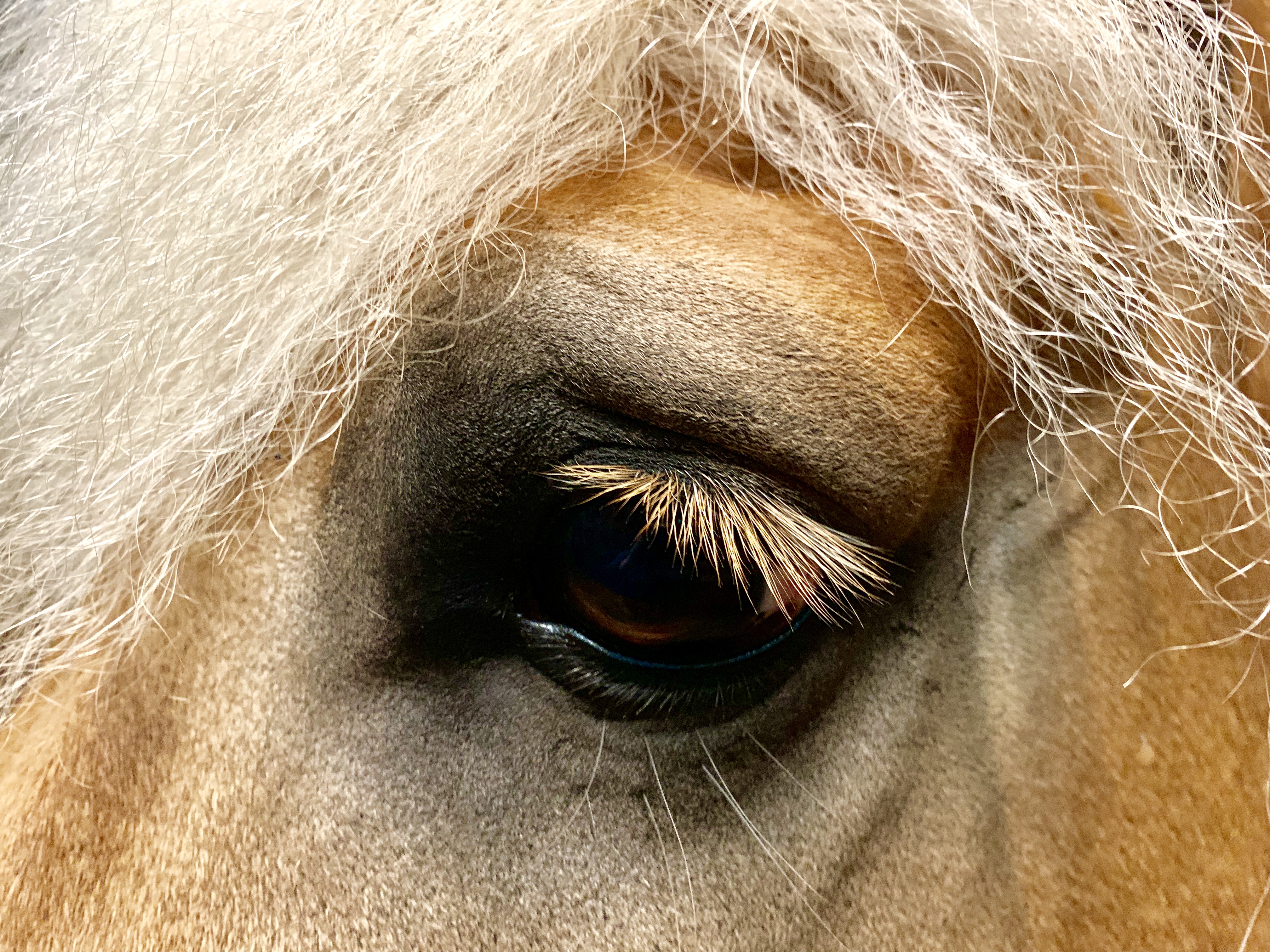
these soft eyed souls,
some born on this farm
three long decades ago,
are simply grateful
for our constancy
morning and night
to serve their needs
until the day comes
they need no more.

And we depend on them
to depend on us
to be there
to open the doors;
their low whispering welcome
gives voice
to the blessings of
living on a farm
ripe with rhythms and seasons,
as if today and tomorrow are
just like one hundred years ago.

Click on this link for a typical barn moment: https://www.facebook.com/707166118/videos/10156035185231119/

Lyrics:

This is a barn and I know it’s haunted
The corn rattles and the shadows move
It’s just the way, it’s just the way I’m feeling
I want to lie down in a field of rain

This is a river and I pray for the bottom
Some kind of measure of the way things change
I’ve been stuck in the middle of a slow storm, counting the days, love

I know we’re in the dark, and the cold comes
Through the very cracks that let the light through
Bring me something back from that sunny coast, and keep us, moving on

These are the shadowlands, I’ve known them
And I think it’s going to be the long way down
But I’ll be the tiny flame, that you carry around, around, around

I know we’re in the dark, and the cold comes
Through the very cracks that let the light through
Bring me something back from that sunny coast, and keep us, moving on

This is a blessing and I don’t date doubt it
We built a boat out of willow trees
We caught the moonlight, like a mirror
Shine right through to the best of me
We’ve been living in abandoned houses
Sometimes we’re tending to abandoned fields
It’s just the way it’s just the way I’m feeling
I want to wake up with the sun in my head
~Chris Pureka

One-Time
Monthly
Yearly

Make a one-time or recurring donation to support Barnstorming

Make a monthly donation

Make a yearly donation

Choose an amount

¤5.00
¤10.00
¤20.00
¤5.00
¤15.00
¤100.00
¤5.00
¤15.00
¤100.00

Or enter a custom amount

¤

Your contribution is deeply appreciated.

Your contribution is appreciated.

Your contribution is appreciated.

DonateDonate monthlyDonate yearly
To Muck and Shovel and Sing

“He (the professor) asked what I made of the other students (at Oxford) so I told him.
They were okay, but they were all very similar…
they’d never failed at anything or been nobodies,
and they thought they would always win.
But this isn’t most people’s experience of life.

He asked me what could be done about it.
I told him the answer was to send them all out for a year
to do some dead-end job
like working in a chicken processing plant
or spreading muck with a tractor.
It would do more good than a gap year in Peru. 

He laughed and thought this was tremendously witty.
It wasn’t meant to be funny.

~James Rebanks from The Shepherd’s Life
(how a sheep farmer succeeds at Oxford and then goes back to the farm)


In our barn we have a very beat up old AM/FM radio that sits on a shelf next to the horse stalls and serves as company to the horses during the rainy stormy days they stay inside, and serves as distraction to me as we clean stalls of manure and wet spots in the evening.  We live about 10 miles south of the Canadian border, so most stations that come in well on this radio’s broken antenna are from the lower mainland of British Columbia.  This includes a panoply of stations spoken in every imaginable language– a Babel of sorts that I can tune into: Spanish, Japanese, Chinese, Hindi, Russian, French and of course, proper British accent English.  But standard issue American melting pot genetic mix that I am, I prefer to tune into the “Oldies” Station and reminisce.

There is a strange comfort in listening to songs that I enjoyed 40-50+ years ago, and I’m somewhat miffed and perplexed that they should be called “oldies”.  Oldies always referred to music from the 20’s, 30’s and 40’s, not the 50’s, 60’s, and 70’s!   I listen and sing along with a mixture of feeling ancient and yet transported back to my teens.  I can think of faces and names I haven’t thought of in decades, remember special summer days picking berries and hear long lost voices from school days. I can smell and taste and feel things all because of the trigger of a familiar song.   There is something primordial –deep in my synapses– that is stirred by this music. In fact, I shoveled manure to these same songs 50 years ago, and somehow, it seems not much as changed. 

Or has it? One  (very quick) glance in the mirror tells me it has and I have.

YesterdayI Got You, Babe and you were a Bridge Over Troubled Waters for this Natural Woman who just wants to be Close to You so You’ve Got a Friend.  There’s Something in the way I Cherish The Way We Were and of course Love Will Keep Us Together. If You Leave Me Now,  You’re So VainI’ve always wanted it My Way but How Sweet It Is when I Want To Hold Your Hand.  Come Saturday Morning we’re Born to Be Wild.

Help! Do You Know Where You’re Going To?  Me and You and A Dog Named Boo will travel Country Roads and Rock Around the Clock even though God Didn’t Make the Little Green Apples.  Fire and Rain will make things All Right Now once Morning is Broken, I’ll Say a Little Prayer For You.

I Can’t Get No Satisfaction from the Sounds of Silence — If— Those Raindrops Keep Fallin’ on My HeadStand By Me as It’s Just My Imagination that I am a Rock,when really I only want Time in a Bottle and to just Sing, Sing a Song.

They just don’t write songs like they used to.  I seem to remember my parents saying that about the songs I loved so well.  Somehow in the midst of decades of change, there are some constants.  Music still touches our souls, no matter how young or old we are.

And there will always be manure that needs shoveling.

An Advent Paradox: From Filth to Flowers


The poor, old stable of Christ’s old, poor country is only four rough walls, a dirty pavement, a roof of beams and slate. It is dark, reeking. The only clean thing in it is the manger where the owner piles the hay and fodder.

Fresh in the clear morning, waving in the wind, sunny, lush, sweet-scented, the spring meadow was mown. The green grass, the long, slim blades, were cut down by the scythe; and with the grass the beautiful flowers in full bloom – white, red, yellow, blue. They withered and dried and took on the one dull color of hay. Oxen dragged back to the barn the dead plunder of May and June. And now that grass has become dry hay and those flowers, still smelling sweet, are there in the manger to feed the slaves of man.

The animals take it slowly with their great black lips, and later the flowering fields, changed into moist dung, return to light on the litter which serves as bedding.

This is the real stable where Jesus was born. The filthiest place in the world was the first room of the only pure man ever born of woman. The Son of Man, who was to be devoured by wild beasts calling themselves men, had as his first cradle the manger where the animals chewed the cud of the miraculous flowers of spring.
~Giovanni Papini from “The Real Stable”


As is my routine on Saturdays, I spent the day in the barn, breaking ice and refilling water buckets, then going from stall to stall to clean out the manure and wet spots, and finally adding fresh bedding. Then I climbed high in the hay stack in the barn and rolled hay bales down to load into the wheel barrow to push into the stable for Sunday Sabbath, a day of rest. There are always chores to do every day, but they can be abbreviated on Sunday thanks to the work accomplished the previous day. This is the nature of farming– preparing and readying for what is to come.

Farmers, by nature, are a hopeful lot. We plan ahead, plot out our next year’s crop, choose our seed in advance and plant it with anticipation. We prune and we plow and we store up mountains of feed far in advance. We evaluate pedigrees and scrutinize genetics carefully. And we wait patiently. As I clean their stalls, I watch my mares’ bellies roll with the movement of their unborn foals and I picture the new life in my mind’s eye. There is a harvest of hope in those bellies.

Unlike many modern horse barns, our decades old stable is a particularly plain and humble place with dirt floors, and as the support beams have settled over the years the door hinges don’t hang balanced and true any longer, so the stall doors are sticky and sometimes hard to open in the winter weather. Despite the lack of fancy design though, I haven’t heard the horses complain–their meals taste as good, they are warm and dry in the cold windy weather and cool in the hot weather. Their needs are met there and amazingly, so are mine.

Christmas began in a stable–probably a dark cave that served the purpose of housing animals. It most assuredly was plain and humble, smelling of manure and urine, and animal fur. Yet it also would have smelled of the sweetness of stored forage, and there would have been the reassuring sounds of animals chewing and breathing deeply. It was truly the only place a group of scruffy shepherds could have felt welcomed without being tossed out as unsuitable visitors– they undoubtedly arrived at the threshold in bad need of a bath, smelly, dirty and terrified and yet left transformed, returning to their fields full of praise and wonder, telling all they met what they had seen. No bath could scrub so clean as the sight of what that stable contained.

There could not have been a more suitable place for this birth that was to change the world: the promise of cleansing hope and peace in the midst of our knee deep filth. Despite our sorry state, we are welcomed into the sanctuary of the stable, sown, grown, pruned and harvested to become seed and food for others.

If even the shepherds became a harvest of hope, the flowers of the future,  then surely so can we.


 Jesus our brother, kind and good
Was humbly born in a stable rude
And the friendly beasts around Him stood,
Jesus our brother, kind and good.

Thus every beast by some good spell,
In the stable dark was glad to tell
Of the gift he gave Immanuel,
The gift he gave Immanuel.


Mucking Out

compostjanuary

“He (the professor) asked what I made of the other students (at Oxford) so I told him.
They were okay, but they were all very similar…
they’d never failed at anything or been nobodies,
and they thought they would always win.
But this isn’t most people’s experience of life.

He asked me what could be done about it.
I told him the answer was to send them all out for a year
to do some dead-end job
like working in a chicken processing plant
or spreading muck with a tractor.
It would do more good than a gap year in Peru. 

He laughed and thought this was tremendously witty.
It wasn’t meant to be funny.

~James Rebanks from The Shepherd’s Life:Modern Dispatches from an Ancient Landscape
(or how a sheep farmer succeeds at Oxford and then goes back to the farm)

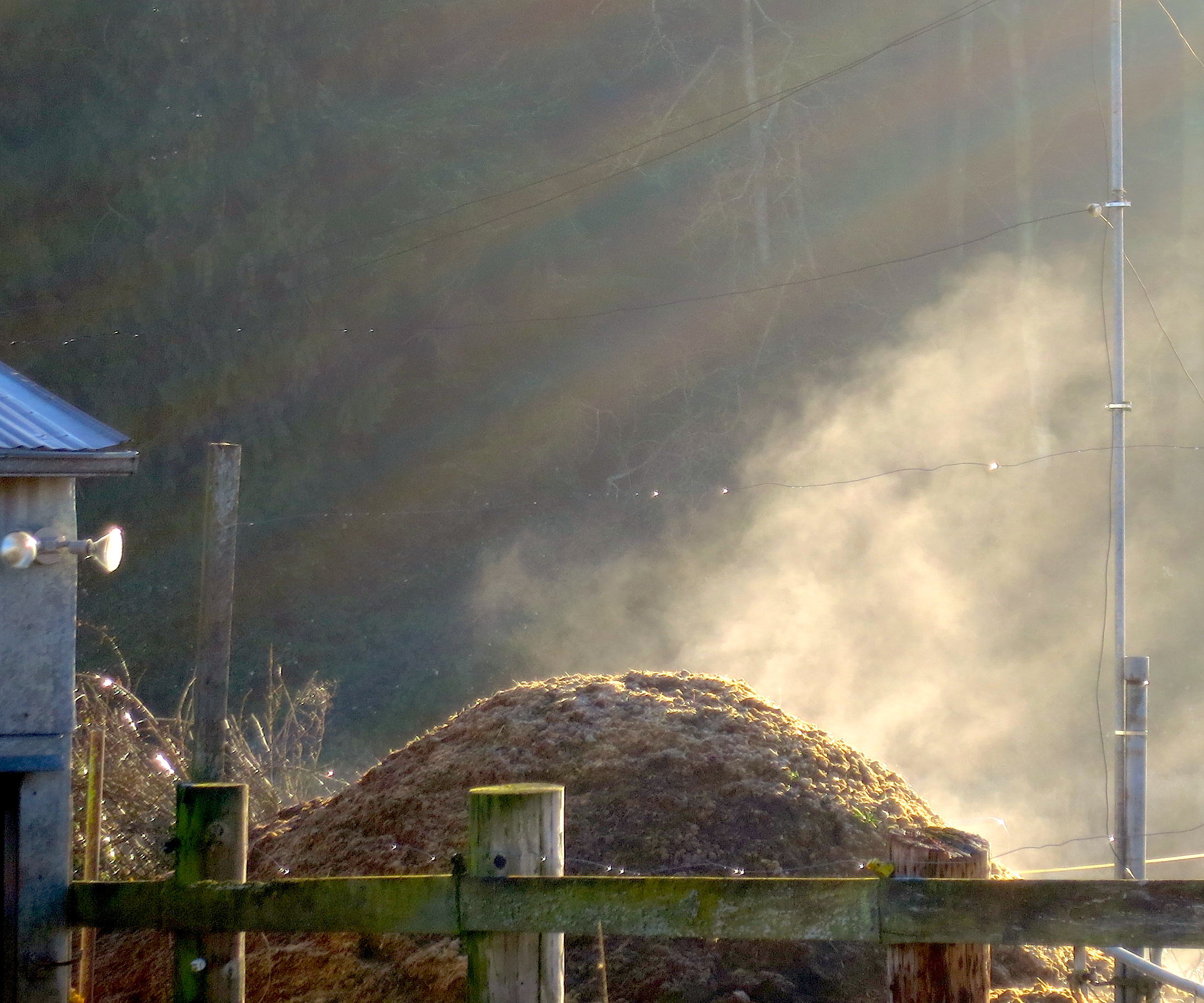
For almost thirty years, I have spent about an hour a day shoveling manure out of numerous horse stalls and I’m a better person for it.  Wheeled to a mountainous pile in our barnyard,  this daily collection of manure happily composts year round, becoming rich fertilizer in a matter of months through a crucible-like heating process of organic chemistry, bacteria and earthworms.  Nothing mankind has achieved quite matches the drama of useless and basically disgusting stuff transforming into the essential elements needed for productive growth and survival.   This is a metaphor I can <ahem> happily muck about in.

I’m in awe, every day, at being part of this process — in many ways a far more tangible improvement to the world than anything else I manage to accomplish every day.  The horses, major contributors that they are, act underwhelmed by my enthusiasm.  I guess some miracles are relative, depending on one’s perspective, but if the horses understood that the grass they contentedly eat in the pasture, or the hay they munch on during the winter months, was grown thanks to their carefully recycled waste products, they might be more impressed.

Their nonchalance about the daily mucking routine is understandable.  If they are outside, they probably don’t notice their beds are clean when they return to the stalls at night.  If they are inside during the heavy rain days, they feel duty-bound to be in my face as I move about their stall, toting my pitchfork and pushing a wheelbarrow.  I’m a source of constant amusement as they nose my jacket pockets for treats that I never carry, as they beg for scratches on their unreachable itchy spots, and as they attempt to overturn an almost full load, just to see balls of manure roll to all corners of the stall like breaking a rack of billiard balls in a game of pool.

Good thing I’m a patient person always seeking an object lesson in whatever I see or do ~ mucking out stalls every day helps me tolerate the proverbial muck I encounter every day off the farm.  And spending an hour a day getting dirty in the real stuff somehow makes the virtual manure less noxious.  Everyone should be mucking out as I think the world would generally be a better place.

My former stallion, now gelded, discovered a way to make my life easier rather than complicating it.  He hauled a rubber tub into his stall from his paddock, by tossing it into the air with his teeth and throwing it, and it finally settled against one wall.  Then he began to consistently pile his manure, with precise aim, right in the tub.  I didn’t ask him to do this.  It had never occurred to me.  I hadn’t even thought it was possible for a horse to house train himself.  But there it is, proof that some horses prefer neat and tidy rather than the whirlwind eggbeater approach to manure distribution.  After a day of his manure pile plopping, it is actually too heavy for me to pick up and dump into the wheelbarrow all in one tub load, but it takes 1/4 of the time to clean his stall than the others, and he spares all this bedding.

What a guy.  He provides me unending inspiration in how to keep my own personal muck concentrated rather than spreading it about,  contaminating the rest of the world.

Now, once I teach him to put the seat back down when he’s done, he’s welcome to move into the house…

poop