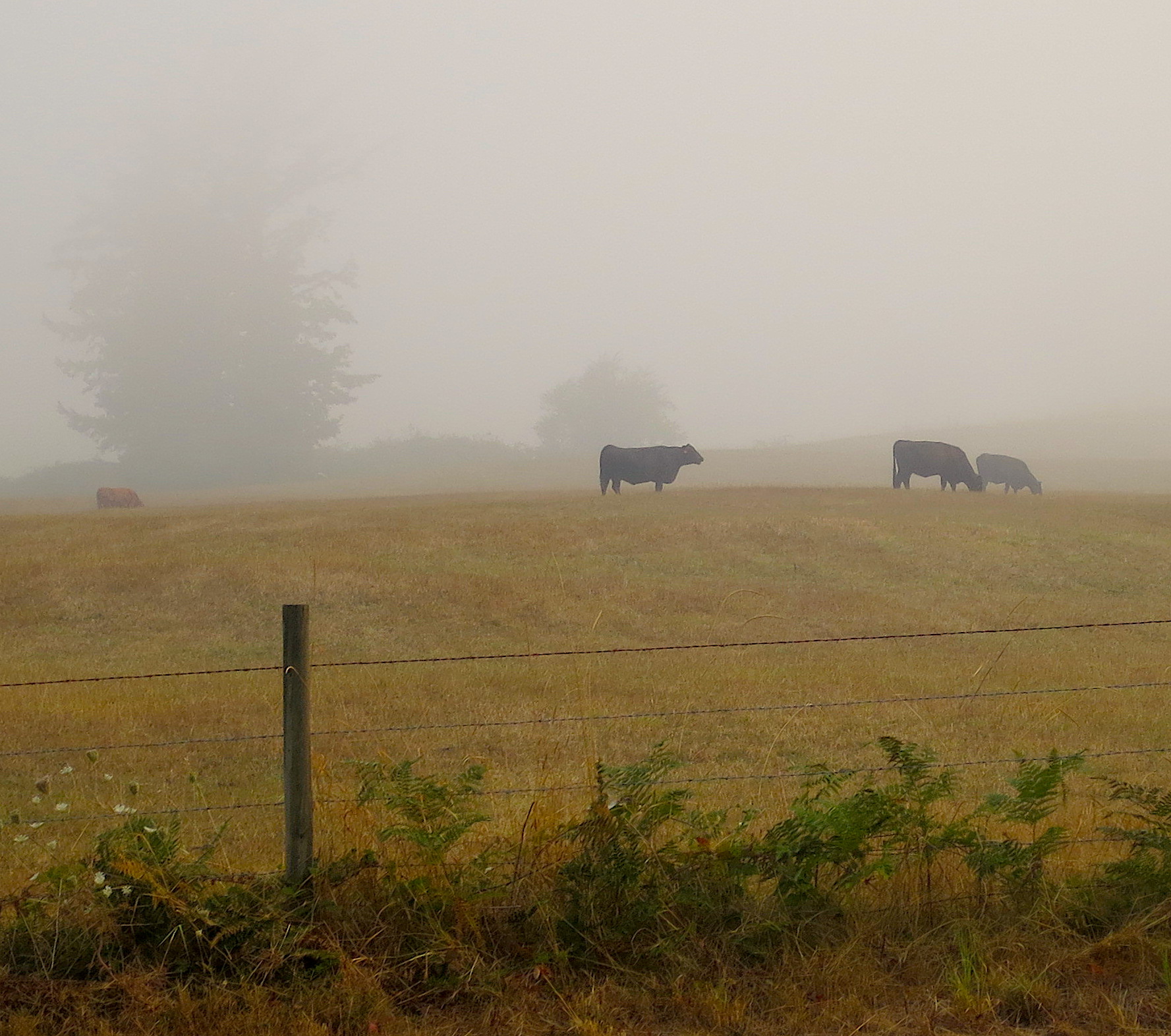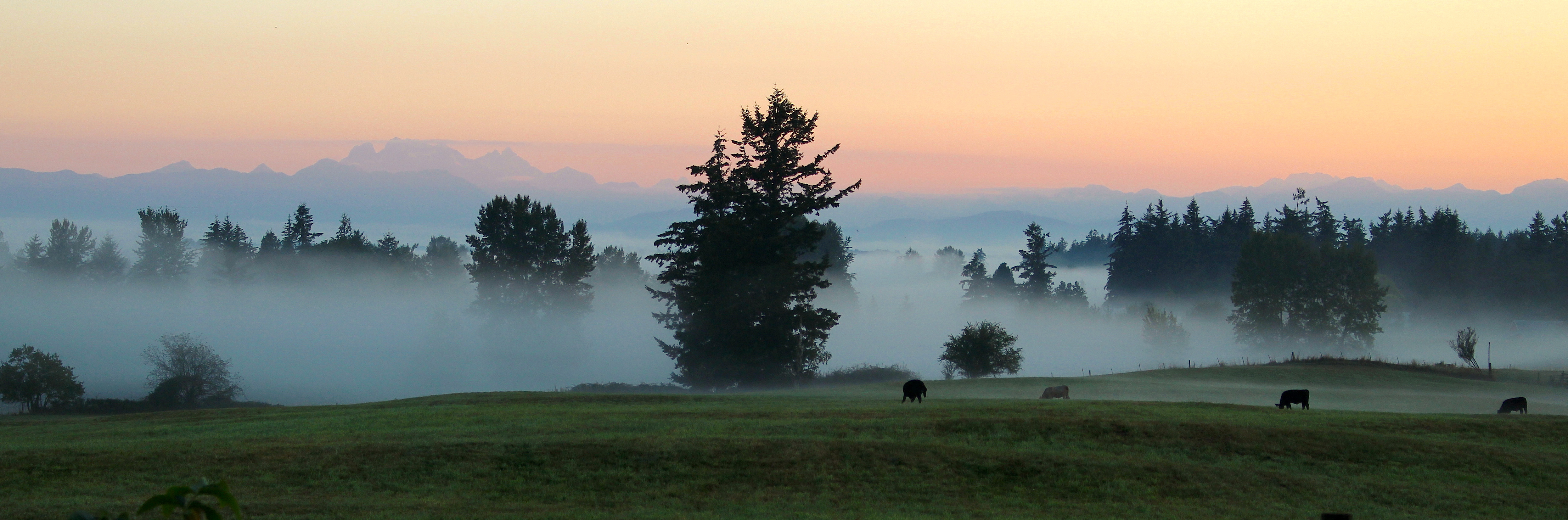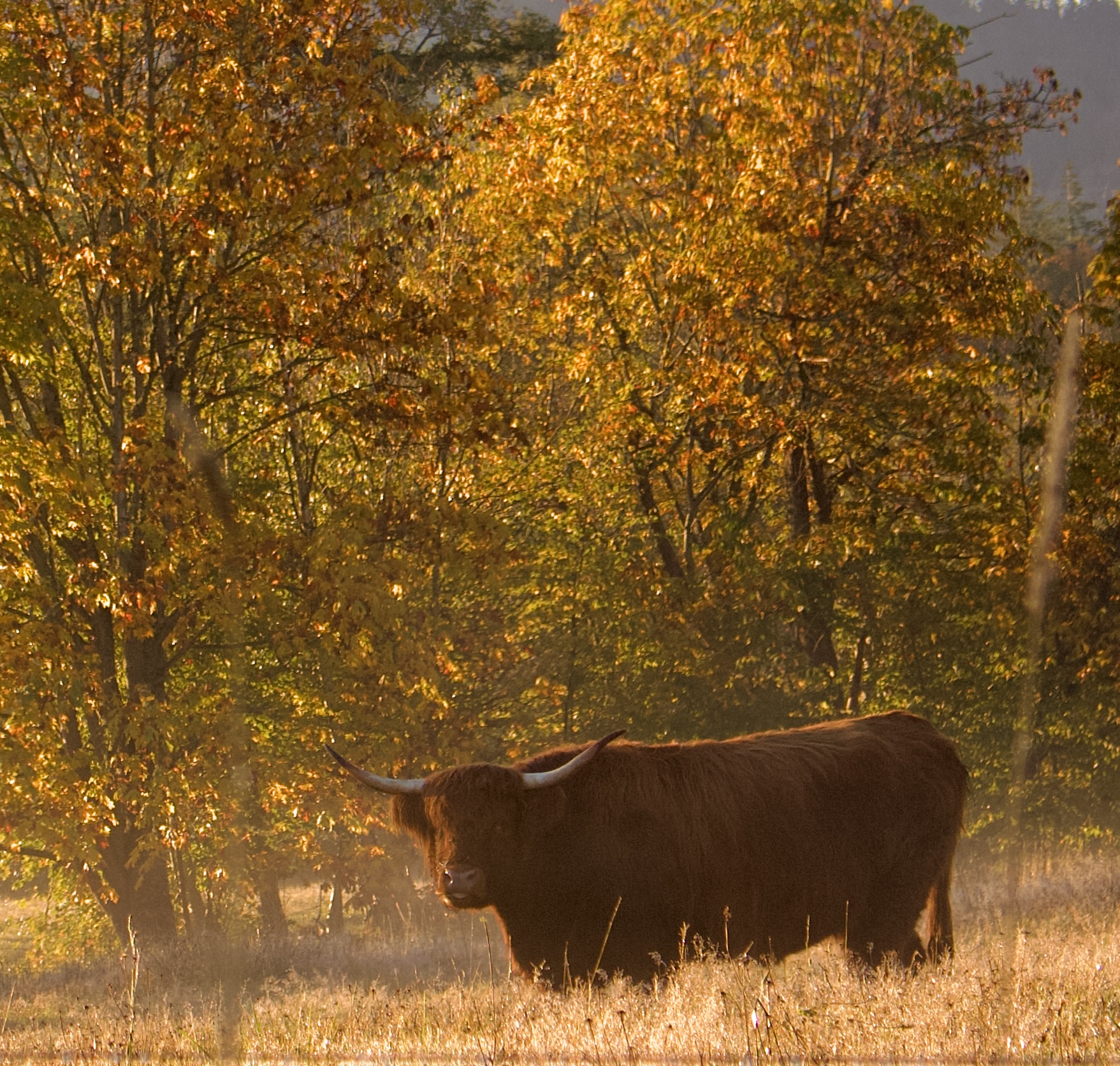
A Faded Sort of Cow

Summer is over, the old cow said,
And they’ll shut me up in a draughty shed
To milk me by lamplight in the cold,
But I won’t give much for I am old.
It’s long ago that I came here
Gay and slim as a woodland deer;
It’s long ago that I heard the roar
Of Smith’s white bull by the sycamore.
And now there are bones where my flesh should be;
My backbone sags like an old roof tree,
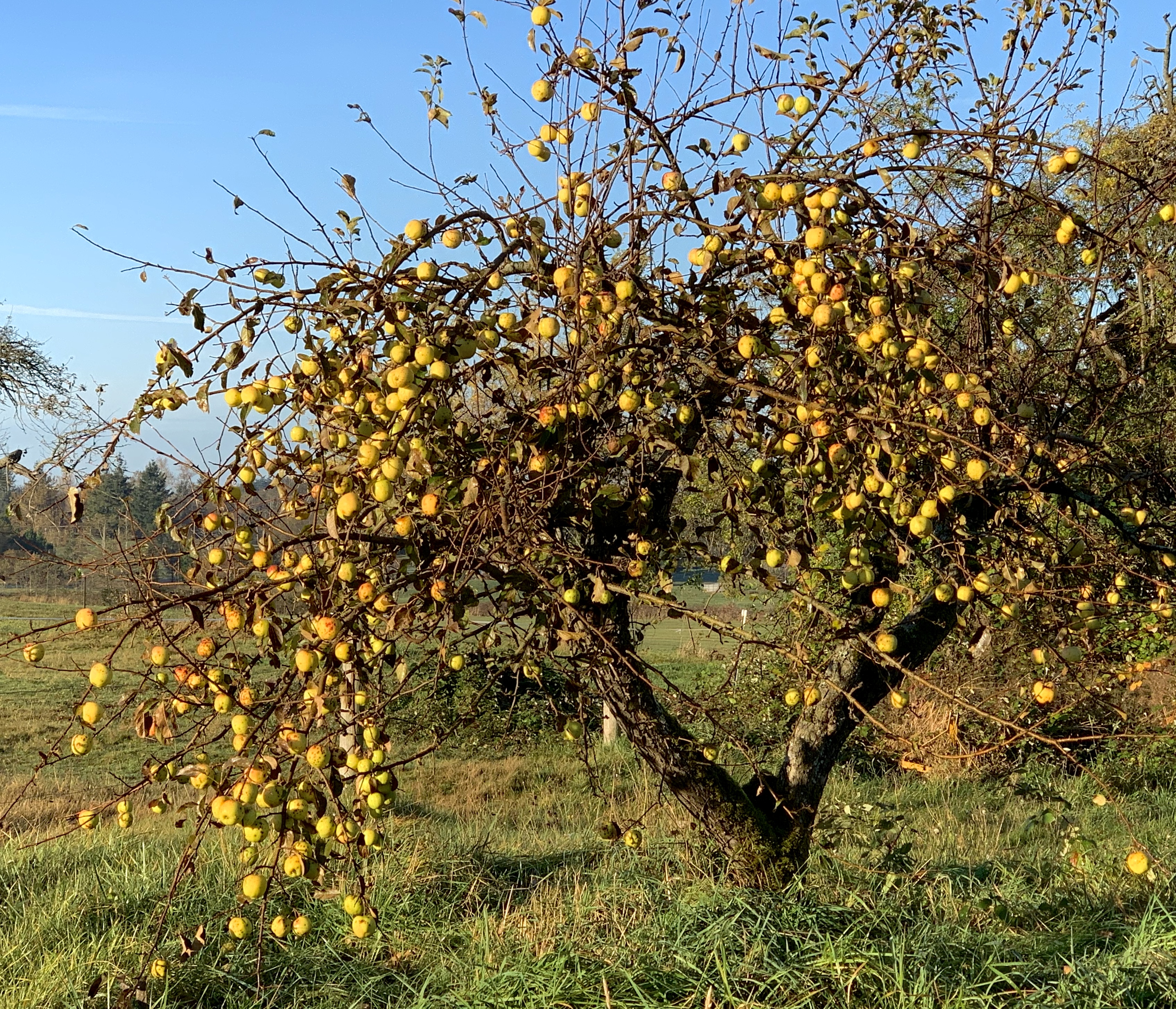
And an apple snatched in a moment’s frolic
Is just so many days of colic.

I’m neither a Jersey nor Holstein now
But only a faded sort of cow.
My calves are veal and I had as lief
That I could lay me down as beef;
Somehow, they always kill by halves, —
Why not take me when they take my calves?
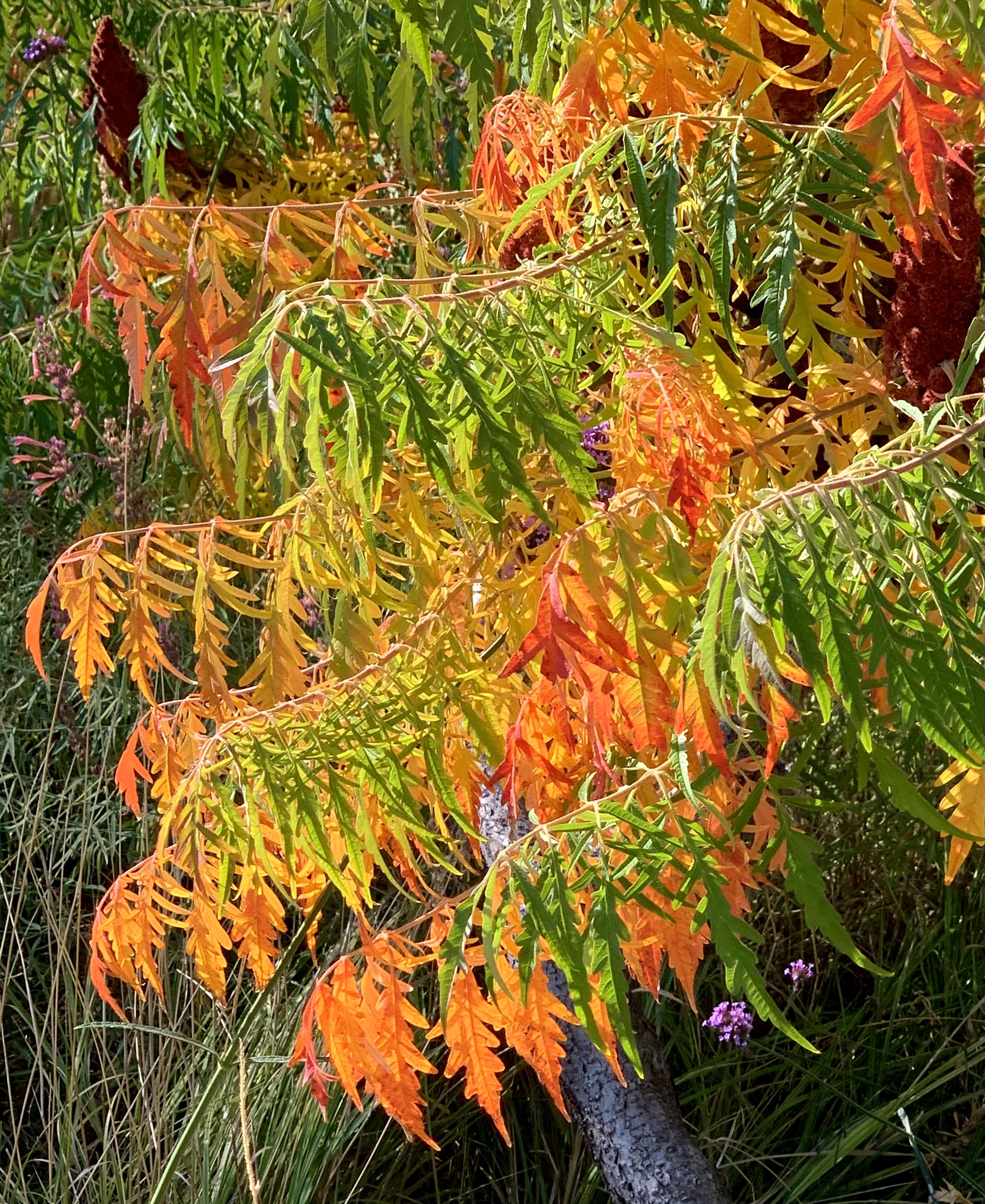
Birch turns yellow and sumac red,
I’ve seen this all before, she said,
I’m tired of the field and tired of the shed.
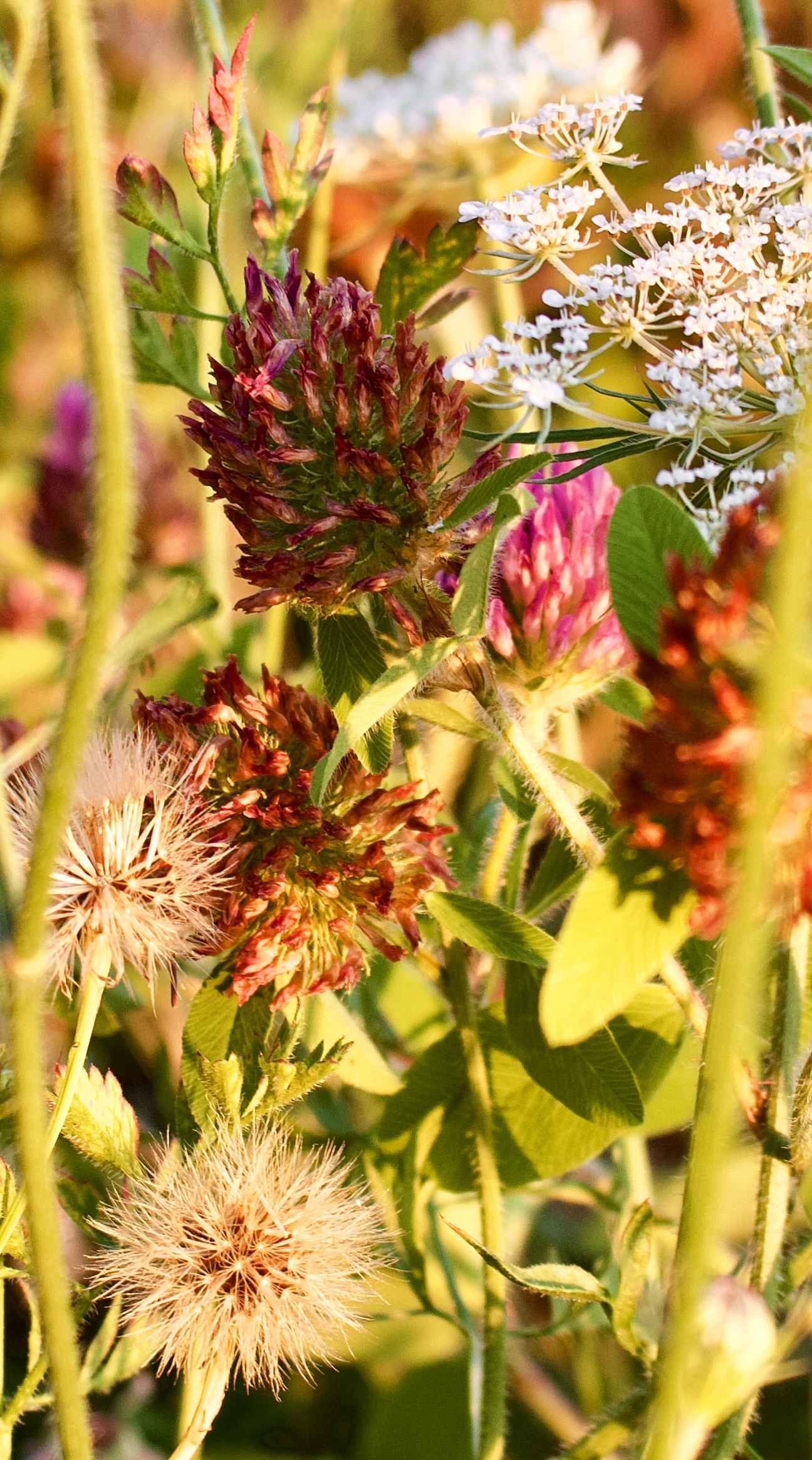
There’s no more grass, there’s no more clover;
Summer is over, summer is over.

~Robert Hillyer “Moo!”
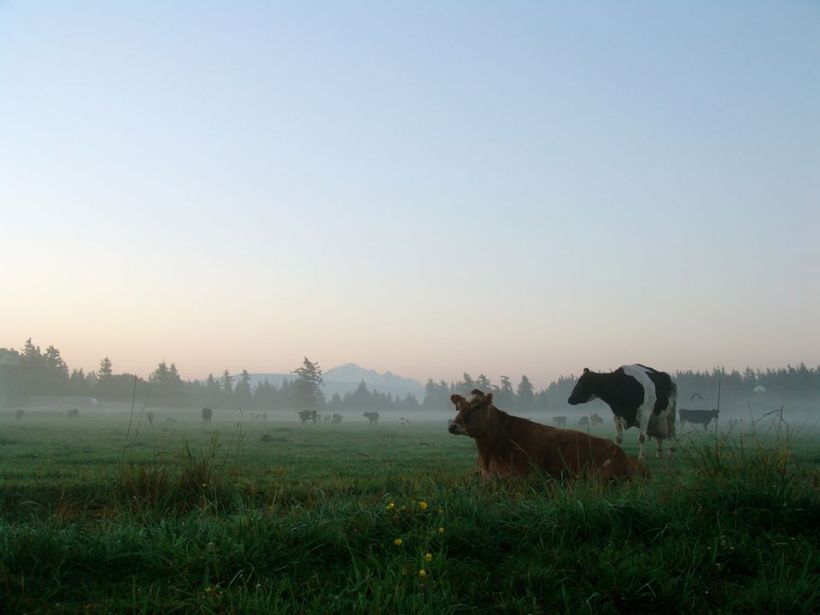
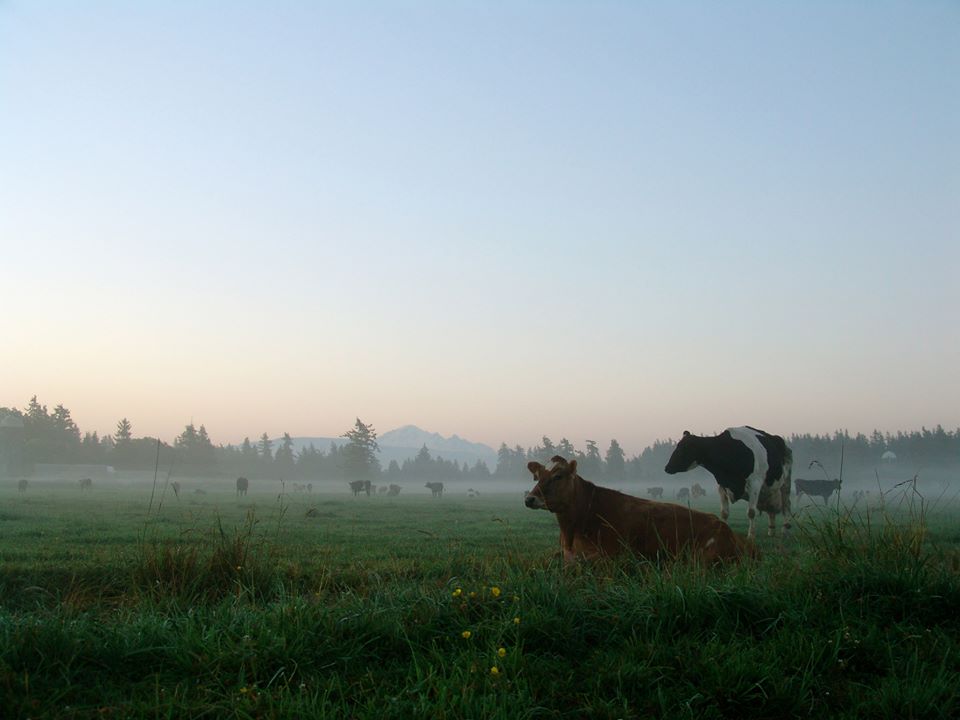
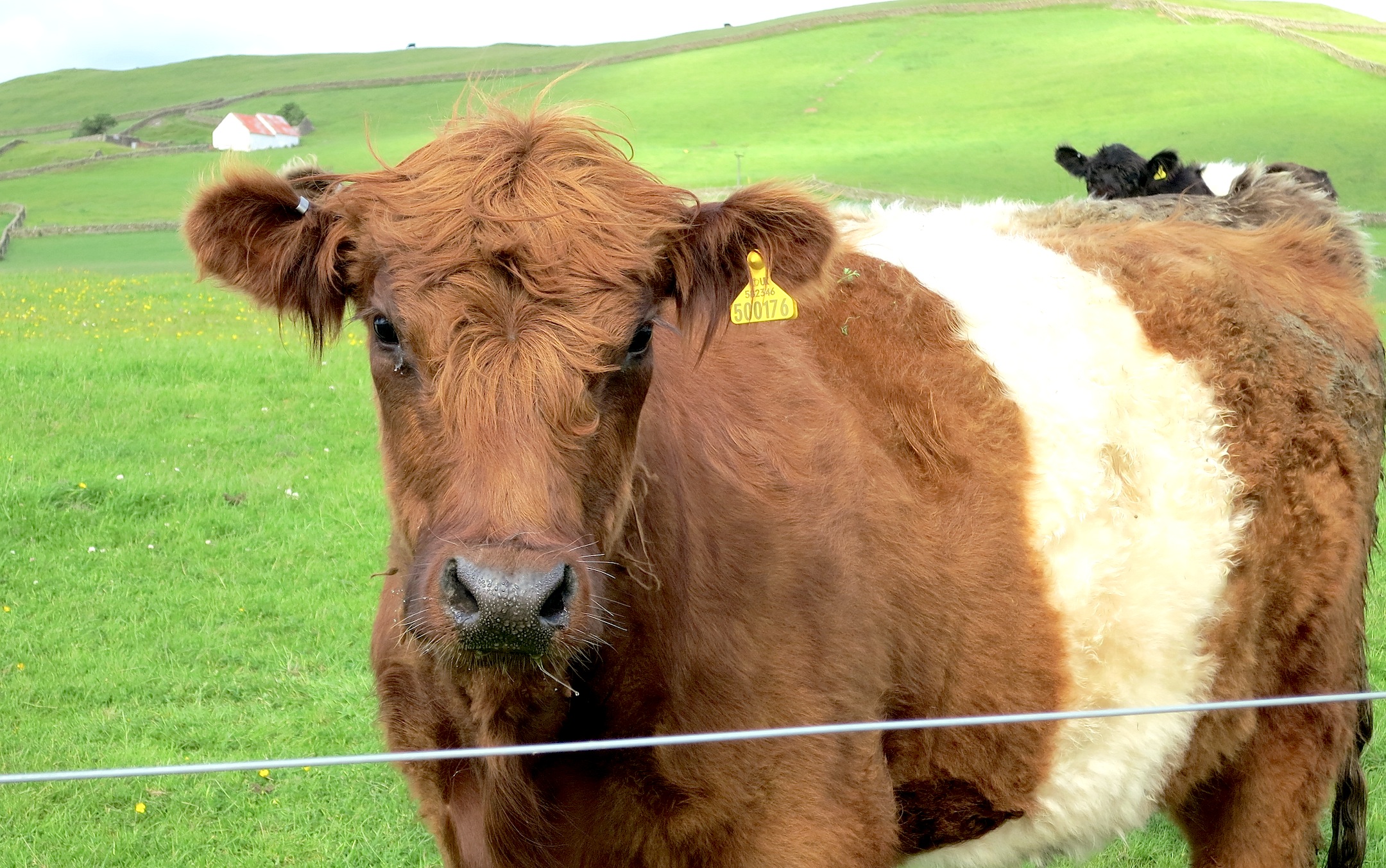
photo by Kate Steensma of Steensma Creamery

Something inspires the only cow of late
To make no more of a wall than an open gate,
And think no more of wall-builders than fools.
Her face is flecked with pomace and she drools
A cider syrup. Having tasted fruit,
She scorns a pasture withering to the root.
She runs from tree to tree where lie and sweeten
The windfalls spiked with stubble and worm-eaten.
She leaves them bitten when she has to fly.
She bellows on a knoll against the sky.
Her udder shrivels and the milk goes dry.

~Robert Frost “The Cow in Apple Time”
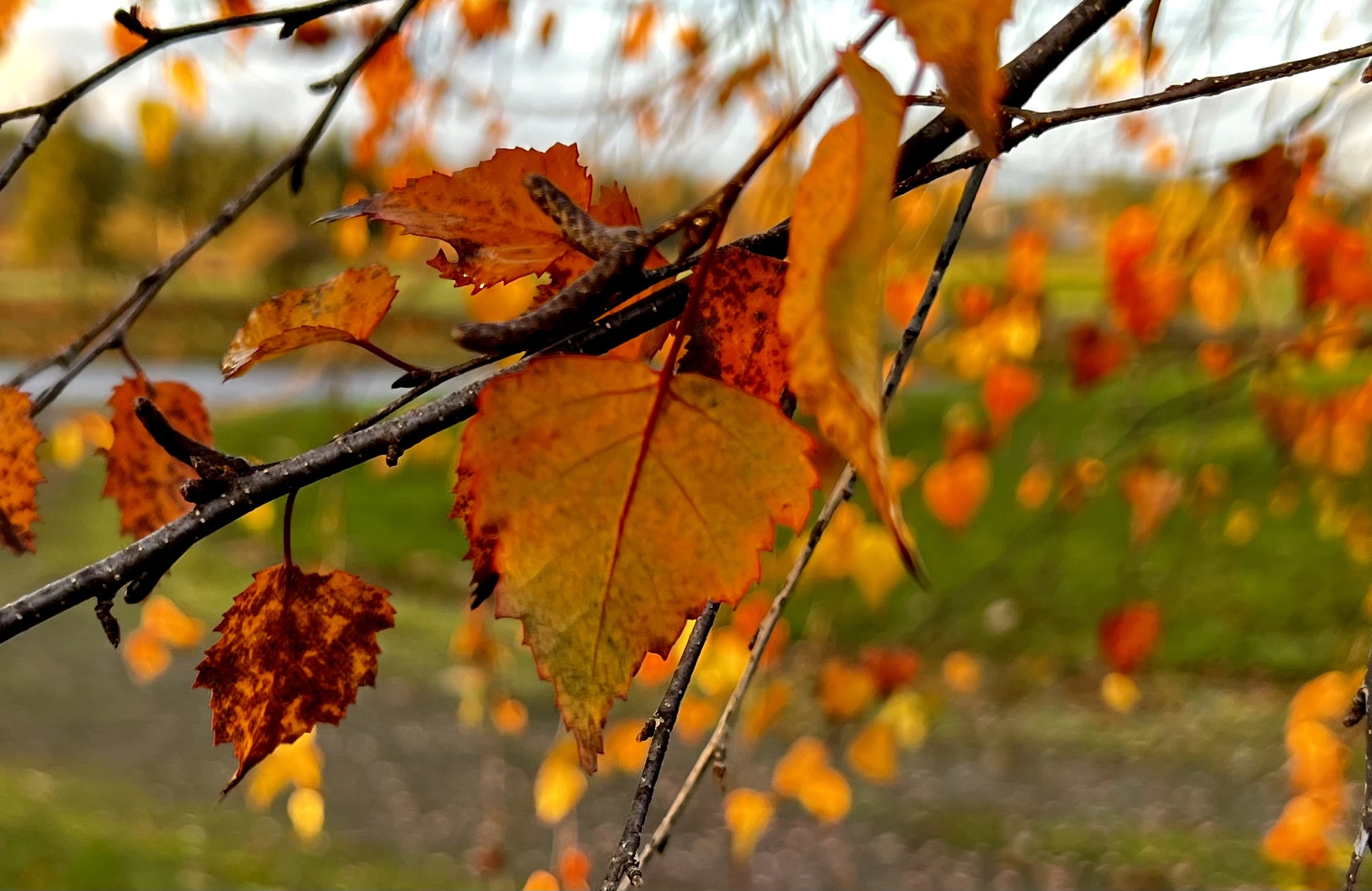
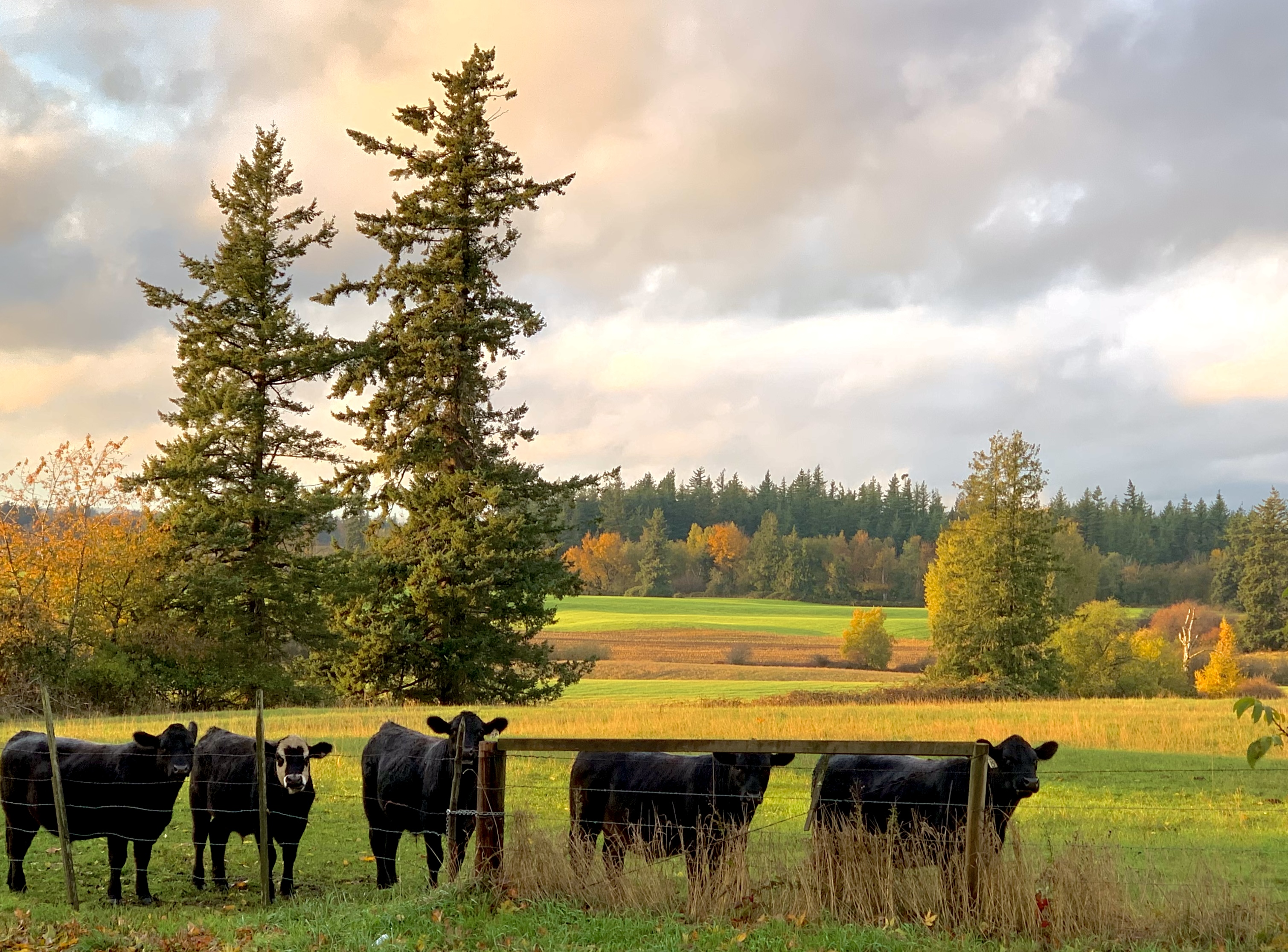
I have lived among cows, our own and our neighbors’, dairy and beef, most of my life. Given their status as a food source, cows aren’t always granted a long life, but I do envy those who spend much of the year chewing cud outside in pastoral settings.

We’ve owned some aged cows. They can be set in their ways and don’t particularly like a change in routine. They prefer a communal life, bearing calves, surrendering their milk, and ensuring the herd hierarchy is maintained with a minimum of fuss.

I remember my dad curing a cow’s habit of eating apples directly from a tree branch. She had the apple lodged in her esophagus as it had slipped down her throat unchewed, but too large to pass through to her rumen. She was foaming at the mouth, breathing fine, but the apple was a visible lump palpable mid-way down her neck. My dad grabbed a short two by four board and a hammer, placed the board on one side of her neck lump, and with the hammer, hit her neck precisely over the apple, crushing it. She was immediately cured and sauntered over to grab more apples, off the ground rather than the branch.

Cows can experience various health issues, sometimes relating to infections in their udders, but not infrequently, trouble with their hooves. They can get abscesses which are quite painful until emptied, as well as sharp rocks or gravel wedged into their foot. This sometimes necessitates hoof work done by a specialist who visits dairy farms on a regular basis.

I confess I (along with a million or so other folks) spend an inordinate amount of time watching YouTube channels of cow hoof trimming. I have no desire to do the job myself, but restoring a limping cow to a comfortably walking cow is a skill that must be very gratifying.

As an aging female myself, I know all about aches and pains. I too feel the sadness of summer coming to an end, when the grass and clover grows sparse in the field, and when chilly nights are best spent in the shelter of the barn.

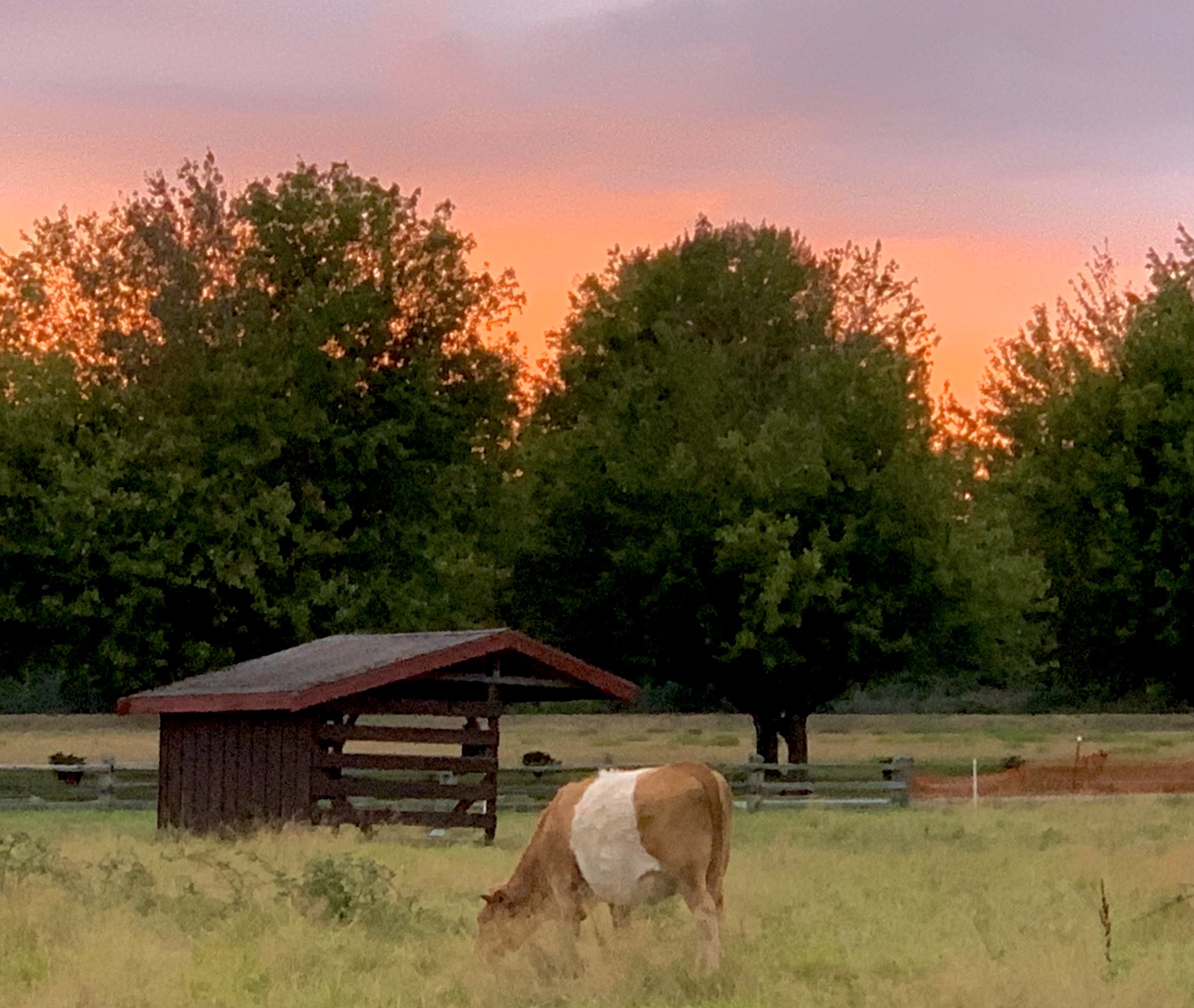
But I’m not yet ready to give up on this sweet pastoral life. There are still some days left, and apples to pick up off the ground, for this fading old cow…
One-Time
Monthly
Yearly

Make a one-time or recurring donation to support daily Barnstorming posts

Make a monthly donation

Make a yearly donation

Choose an amount

$10.00
$25.00
$50.00
$5.00
$15.00
$100.00
$5.00
$15.00
$100.00

Or enter a custom amount

$

Your contribution is deeply appreciated.

Your contribution is appreciated.

Your contribution is appreciated.

DonateDonate monthlyDonate yearly
Where You Go, I Will Go: We Need More Cow Bell

We come across a ridge and hear
a cowbell in the cove beyond,
a tinkle sweetening the air
with vague rubato as the breeze
erases tones and then the notes
resume like echoes from the past
or from a cave inside the cliff,
a still, calm voice in dialect
and keeping its own company,
both out of time and long as time,
both here and from a higher sphere,
as if the voice of history
were intimate as memory.

~Robert Morgan “Cowbell”

Over my head, I see the bronze butterfly,   
Asleep on the black trunk,
Blowing like a leaf in green shadow.   
Down the ravine behind the empty house,   
The cowbells follow one another   
Into the distances of the afternoon.   
To my right,
In a field of sunlight between two pines,   
The droppings of last year’s horses   
Blaze up into golden stones.
I lean back, as the evening darkens and comes on.   
A chicken hawk floats over, looking for home.
I have wasted my life.
~James Wright “Lying in a Hammock at William Duffy’s Farm in Pine Island, Minnesota”

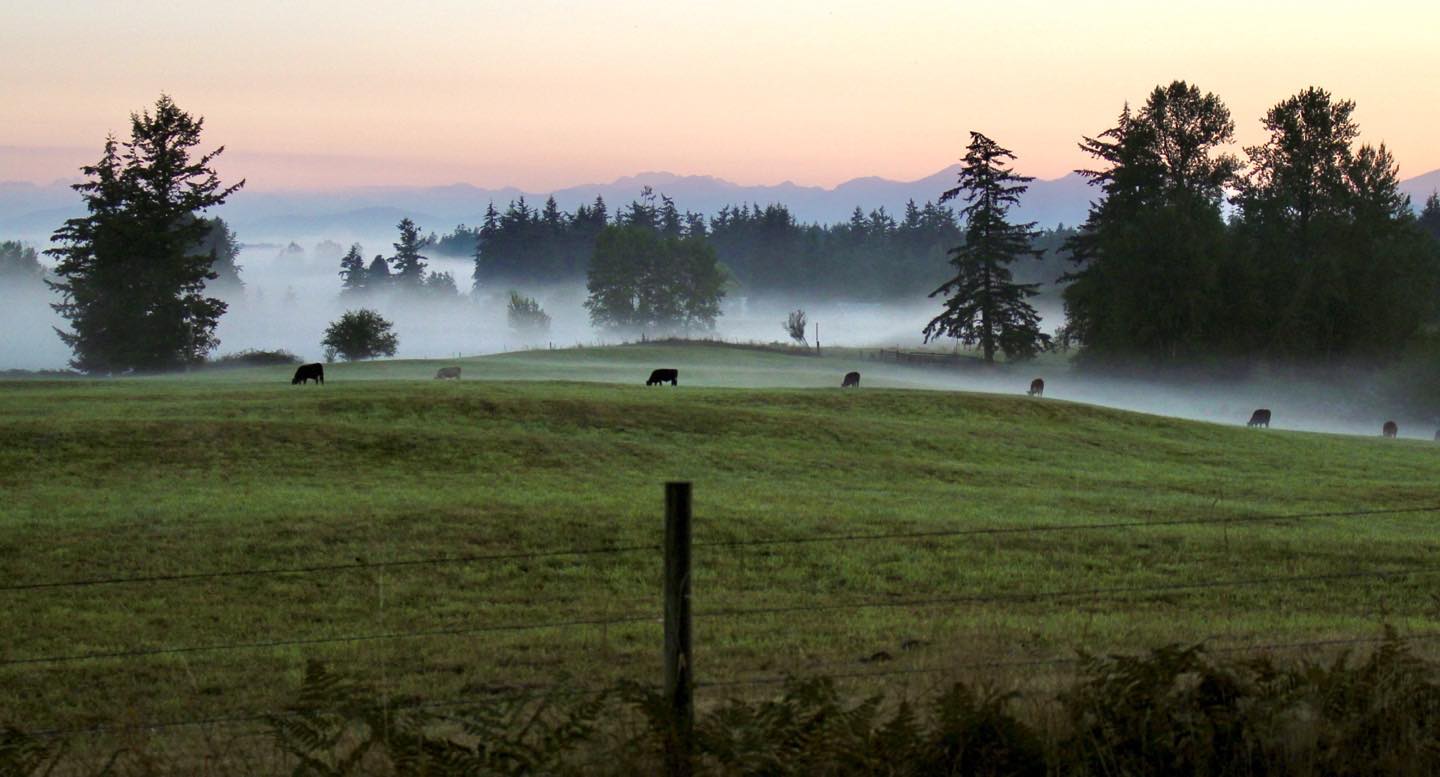
photo by Kate Steensma from Steensma Creamery

One of the lullabies I remember hearing as a youngster were cowbells in the pasture outside my bedroom window on our small family farm. Each of our three milking Guernsey cows wore a bell on her neck so my dad could tell where they were in our wooded field. He’d whistle and call “Come Bossy!” and they would walk single file into the barn, ringing and tinkling with each step, for their twice daily grain and hand-milking.

When I was old enough, I liked to perch on top of their bony backs while my dad leaned his head into their flank, whistling a tune while he milked them, the steaming stream of milk hitting the metal bucket with a high-pitched whine. The bells on their necks still chimed as the cows chewed, moving their heads up and down to finish their meal.

This was divine music that soothed and reassured me and I felt I could follow it anywhere. All was right with the world, thanks to the cows and their intrinsic tunes created by their movements, as if they were created to charm their keepers.

There are moments when I believe we are hearing what heaven must sound like.

Now, seven decades later, the soft harmony of cowbells is replaced by the random chords of wind chimes hanging outside our house.

The memory of cowbell music remains a reminder: I have not wasted my life if I can taste heaven through such simple things and magical moments.

But I still need more cowbell…

This year’s Lenten theme:

…where you go I will go…
Ruth 1:16

and because there is always a need for more cowbell…

One-Time
Monthly
Yearly

Make a one-time or recurring donation to support daily Barnstorming posts

Make a monthly donation

Make a yearly donation

Choose an amount

$10.00
$25.00
$50.00
$5.00
$15.00
$100.00
$5.00
$15.00
$100.00

Or enter a custom amount

$

Your contribution is deeply appreciated.

Your contribution is appreciated.

Your contribution is appreciated.

DonateDonate monthlyDonate yearly

Her Cowness

There were a few dozen who occupied the field
across the road from where we lived,
stepping all day from tuft to tuft,
their big heads down in the soft grass,
though I would sometimes pass a window
and look out to see the field suddenly empty
as if they had taken wing, flown off to another country.

Then later, I would open the blue front door,
and again the field would be full of their munching
or they would be lying down
on the black-and-white maps of their sides,
facing in all directions, waiting for rain.
How mysterious, how patient and dumbfounded
they appear in the long quiet of the afternoon.

But every once in a while, one of them
would let out a sound so phenomenal
that I would put down the paper
or the knife I was cutting an apple with
and walk across the road to the stone wall
to see which one of them was being torched
or pierced through the side with a long spear.

Yes, it sounded like pain until I could see
the noisy one, anchored there on all fours,
her neck outstretched, her bellowing head
laboring upward as she gave voice
to the rising, full-bodied cry
that began in the darkness of her belly
and echoed up through her bowed ribs into her gaping mouth.

Then I knew that she was only announcing
the large, unadulterated cowness of herself,
pouring out the ancient apologia of her kind
to all the green fields and the gray clouds,
to the limestone hills and the inlet of the blue bay,
while she regarded my head and shoulders
above the wall with one wild, shocking eye.
~Billy Collins “Afternoon with Irish Cows”

Most of my life I have lived surrounded by cows. I have great appreciation for their pastoral presence, and know well their nosiness and their noisiness.

There isn’t anything else that sounds like a cow in heat. Nothing. Especially in the middle of the night.

There is the fascination of following a meandering cow path through a field –where there is no such thing as a straight line.

And there isn’t anything quite as riveting to a cow than a human approaching the gate.

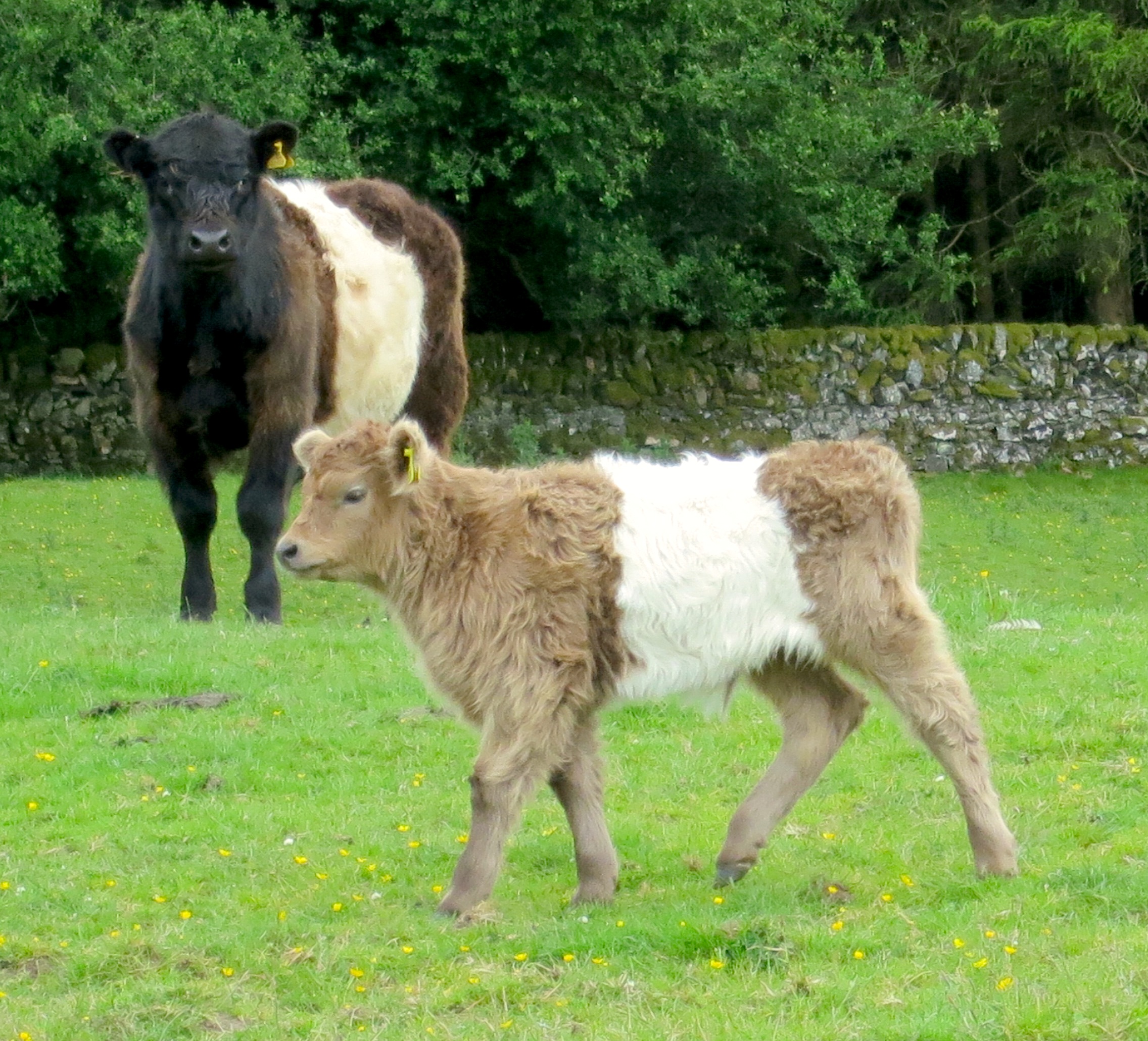
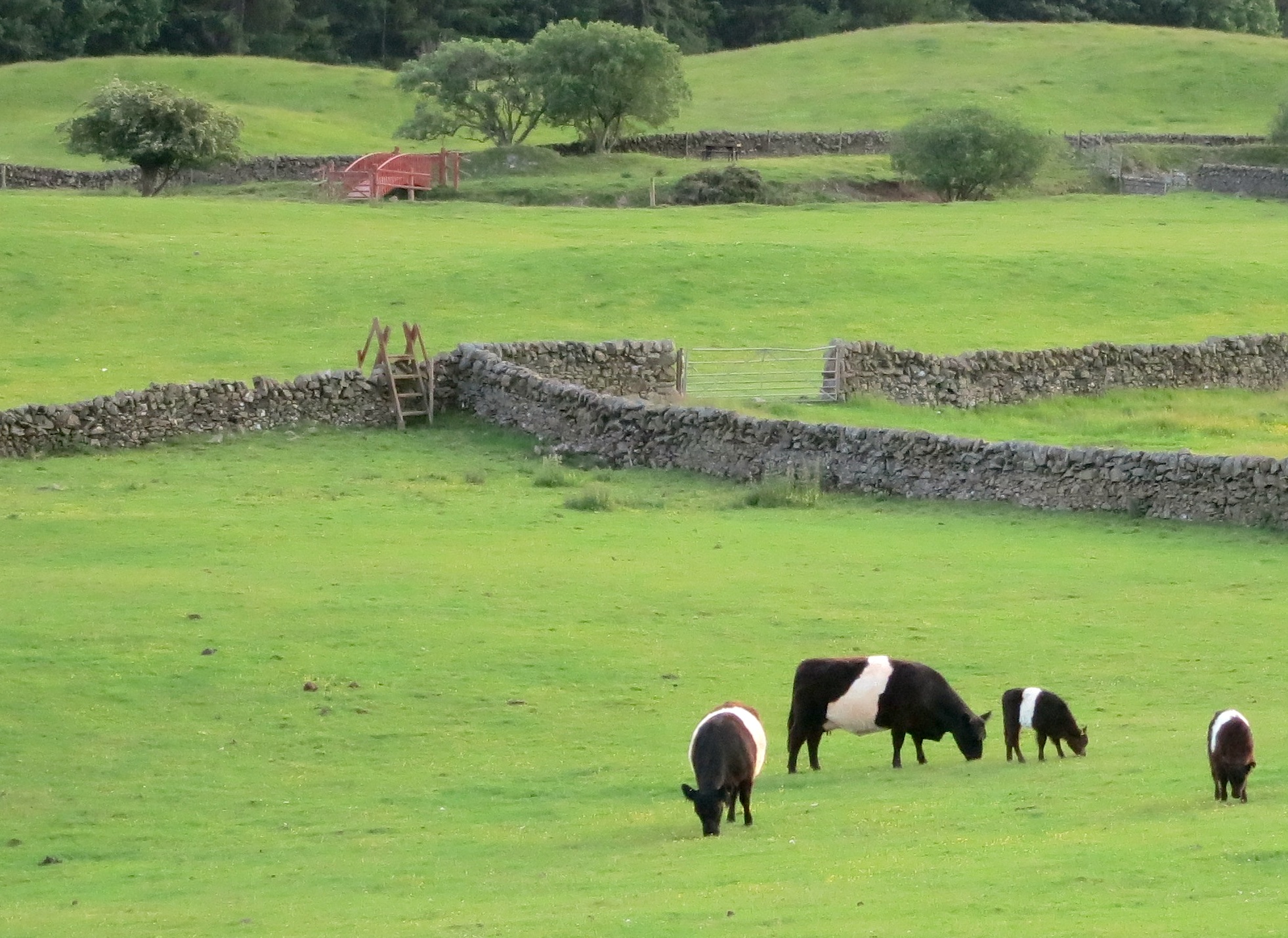
During our farm stays in Ireland and Scotland a few years back, we made a point to get to know the local bovines, just for comparison’s sake. At home we raised Scottish Highland cattle, so we felt we could speak their language, even if they were Belted Galloways rather than Highlanders. Sure enough, we were just as riveting to them as they were to us.

We have talked about getting a couple of furry cows again for the farm. It’s been awhile since we hosted some here. I’m nostalgic for their reassuring cud chewing, their soft flap of ear, their round transparent eyes, but most of all watching the acrobatics of a tongue that wraps itself around a clump of grass while grazing and can reach up and clean out a moist nose.

A wondrous creature — the bovine – true magnificence and mystery in their cowness.

You Come Too


sunrise94141

I’m going out to clean the pasture spring;
I’ll only stop to rake the leaves away
(And wait to watch the water clear, I may):
I sha’n’t be gone long.—You come too.

I’m going out to fetch the little calf
That’s standing by the mother. It’s so young,
It totters when she licks it with her tongue.
I sha’n’t be gone long.—You come too.
~Robert Frost “The Pasture”
sunrise9414