A Toxic Weed

sunset96161

shadesofgray

It was 1978 and I was a third year medical student when my friend was slowly dying of metastatic breast cancer.  Her deteriorating cervical spine, riddled with tumor, was stabilized by a metal halo drilled into her skull and attached to a scaffolding-like contraption resting on her shoulders.  Vomiting while immobilized in a halo became a form of medieval torture.  During her third round of chemotherapy, her nausea was so unrelenting that none of the conventional medications available at the time would give her relief.  She was in and out of the hospital multiple times for rehydration with intravenous fluids, but her desire was to be home with her husband and children for the days left to her on this earth.

Her family doctor, at his wit’s end, finally recommended she try marijuana for her nausea.  My friend was willing to try anything at that point, so one of her college age children located a using friend, bought some bud and brought it home.

Smoking, because of its relatively rapid effects, didn’t do much other than make her feel “out of it” so that she was less aware of her family,  and she hated that the entire house reeked of weed, especially as she still had two teenage children still at home.  Her nausea prevented her from eating marijuana mixed into food.

Desperate times called for desperate measures.  I simmered the marijuana in a small amount of water to soften it, then combined it with melted butter.  That mixture was chilled until it was solid and I molded multiple bullet size suppositories, which were kept in the freezer until needed for rectal administration.  Although we never could warm up the suppositories to a temperature that was comfortable for her without them melting into unusable marijuana mush, she found that she could get relief from the nausea within twenty minutes of inserting the frozen marijuana butter rectally.  It worked, without her feeling as stoned as the smoked marijuana.

My actions, though compassionate, were also illegal and if my medical school had found out I was acting as an apothecary, preparing an illicit drug for use for a non-FDA approved indication, I could have lost my student standing and future profession.   I don’t regret that I did what I could to help my friend when she needed it. Subsequent studies have confirmed the efficacy of marijuana, in various forms, for nausea from HIV and chemo, muscle spasm from multiple sclerosis and quadra- and paraplegia, some types of chronic pain, and glaucoma, yet it has never been seen by the medical community a first line drug for any of those conditions.  During my professional career, I have prescribed Marinol, the FDA approved pill form of cannabis in a few cases where it was warranted because of the refractory nature of the patient’s symptoms, for indications that are supported by controlled clinical studies.    This made sense and like most medications, it worked for some, not for all with varying degrees of side effects.

And now, nearly 40 years later, marijuana is readily available everywhere in every imaginable form — smokeable, vapeable, edible, drinkable — in states like ours with legalized recreational use, the shops are on nearly every corner as ubiquitous as the coffee stands.  Our society is split into the users and the abstainers and those who can’t stand the stuff as they know what it has done to their lives.

If you believe the growing number of vocal marijuana promoters, marketers and profiteers, cannabis can ease almost any condition under the sun and make life liveable again.  It is a fine example of not so modern snake oil, as it has been around for thousands of years, except now we have state legislative bodies and through initiatives, the voters, putting their stamp of approval on it for recreational purposes, and as a medical therapy without the regulations or scrutiny we require of any other substance.  For a mere $5 gram, relief is as close as the corner store thanks to the collective wisdom of our citizenry.

As a physician working daily with adolescents and young adults in a college health center, there is no question retail marijuana is now the cannabis equivalent to the  growing market for artisan beers and local microbreweries.  There are distinct brands and strengths to attract users of all types and needs.  Yet one thing hasn’t changed with legalization: marijuana is not for everyone,  particularly not for young developing brains, particularly not for the mentally ill nor the pregnant.

Patients who have enormous antipathy for the pharmaceutical industry or for government agencies responsible for studies of drug safety and effectiveness seem to lose their skepticism when confronting the for-profit motivation of marijuana growers, brokers and storefront sellers. After all, isn’t this a free market system now happily unconstrained by the need for proof for safety or efficacy?  The most attractive product at the best price to the consumer wins.  We are now revisiting the devastation to our societal health and well being thrust upon us decades ago by the tobacco industry.  And we thought we were winning that battle of making cigarettes socially unacceptable and unwelcome.

Cannabis use has become as normalized as tobacco or alcohol to the point of some parents smoking or ingesting THC with their adolescent and adult children as part of holiday gatherings, special family events (Super – Bowl, anyone?) and evenings-at-home  “wind-down” routines.  It is a challenge for a clinician to question the judgment of a parent who sees no problem in their 18 year old using marijuana to help sleep or reduce their stress level or ease the pain of their knee injury, especially since that is exactly what the parent is doing themselves.

Although I see marijuana as the “least” of the problem recreational drugs, not as physically devastating nor fatal in overdose as nicotine, alcohol, benzodiazepines, methamphetamines, or opiates, I’ve still seen it ruin lives and minds. In its twenty first century ultra high concentrated version,  far more powerful than the weed of the sixties and seventies, it just makes people so much less alive and engaged with the world.   They are anesthetized to all the opportunities and challenges of life.  You can see it in their eyes and hear it in their voices.  In a young person who uses regularly, which a significant percentage choose to do in their fervent belief in its touted “safety”, it can mean more than temporary anesthesia to the unpleasantness of every day hassles.  They never really experience life in its full emotional range from joy to sadness, learning the sensitivity of becoming vulnerable, the lessons of experiencing discomfort and coping, and the healing balm of a resilient spirit.  Instead, it is all about avoidance and getting high.

Marijuana often exhibits paradoxical effects and is unpredictable even in experienced users.  It is a common factor in the history of adolescents and young adults with persistent depressive and anxiety disorders, paranoia, recurring dissociative episodes and psychosis.  Beyond the mental health impacts,  there is frequent morning anxiety, irritability, nausea and abdominal discomfort in some regular users, sometimes to the point of vomiting, which prompts the user ingest even more marijuana to “help improve appetite”.  This is part of the symptom spectrum of cannabinoid hyperemesis syndrome as GI workups, antiemetics and other meds fail to help until marijuana use is discontinued completely.

So, as in most things, buyer beware.  Don’t be snowed by the marketing and promotion designed to sell the most product to the most people.  The profit motive is still alive and well in this country, no matter the cost to the individual.

Even when — especially when– selling a potentially toxic weed.  After all, what’s the matter with a little paranoia among friends?

sunrise826162

Refusing to Pledge an Oath to Life

loneleaf

It is…the refusal to take the oath of loyalty to life…
The man who kills a man kills a man.

The man who kills himself kills all men.
As far as he is concerned, he wipes out the world.
~ G.K. Chesterton

impaled

Suicide rates in the United States have increased by 25% since 1999.

Based on the anguish of the patients I see every day,
one after another and another,
over and over again I hear
a too-easy contemplation of suicide,
from “It would be easier if I were dead”
or “no one cares if I live or die”,
or “the world would be better off without me”,
or “I’m not worthy to be here”
to “that is my plan, it is my right and no one can stop me”.

Without us all pledging an oath to life,
willing to lay ourselves down,
to bridge the sorrow and lead the troubled to the light,
there will be no slowing of this trend.

…when there is no loyalty to life, as stressful and messy as it can be,
…when there is no honoring of the holiness of each created being,
…when there is no resistance to the buffeting winds of life,
only a toppling over, taking out everything and everyone in the way,
our sad and hurting world is wiped out by one suicide,
all people killed by one act of self-murder.

woods27

oakleafhydrangea11122

When you’re weary, feeling small,
When tears are in your eyes
I will dry them all
I’m on your side
When times get rough
And friends just can’t be found
Like a bridge over troubled water
I will lay me down
Like a bridge over troubled water
I will lay me down

When you’re down and out
When you’re on the street
When evening falls so hard
I will comfort you
I’ll take your part
When darkness comes
And pain is all around
Like a bridge over troubled water
I will lay me down
Like a bridge over troubled water
I will lay me down

Sail on, silvergirl
Sail on by
Your time has come to shine
All your dreams are on their way
See how they shine
If you need a friend
I’m sailing right behind
Like a bridge over troubled water
I will ease your mind
Like a bridge over troubled water
I will ease your mind
~Simon and Garfunkel

The Fierce Humility of Rain

rainyiris52016

rainyrose2

Praise to the Maker of the torrent
and the hurricane,
praise for the fierce humility of rain:

whose motion will not end, neither come to rest
nor ascend again until, like grace,
it finds the lowest empty place.
~Matthew Baker “Rainfall”

rainyiris2

rainypeony

See, banks and brakes
Now, leavèd how thick! lacèd they are again
With fretty chervil, look, and fresh wind shakes
Them; birds build — but not I build; no, but strain,
Time’s eunuch, and not breed one work that wakes.

Mine, O thou Lord of life, send my roots rain
~Gerard Manley Hopkins from “Thou art indeed just, Lord”

rainytransparent2

rainyiris3

As I look out through a tear-streaked window at the beginning of this lightening day,
I fear inadequacy to the task before me:
Parched and struggling patients line my schedule.
Anxious and weary and barren too young,
seeking something, anything
to ease their distress in a hostile world,
preferably an easy pill to swallow.
Nothing that hurts going down.

While others thrive around them,
they wilt and wither,
wishing to cease breathing.

Lord of Life, equip me to find the words to say that might help.
May it be about more than genetics, neurotransmitters and physiology.

In this dry season for young lives,
send your penetrating rain
to fill with grace
the emptiest space.
Reach down and shake their roots
fiercely
and slake their thirst.

storm518163

haflingerrainbow

An Oath to Live

mossdrop1

morningmoon118151

It is…the refusal to take the oath of loyalty to life…
The man who kills a man kills a man.

The man who kills himself kills all men.
As far as he is concerned, he wipes out the world.
~ G.K. Chesterton

Suicide rates globally have climbed 60% in the past forty five years,
particularly in developed countries where most folks are sheltered and fed,
where daily survival is entirely in our own hands.
Based on the distress and anguish of the patients I see every day,
there will be no slowing of this trend:
this temptation, this contemplation, this resignation of dying, only a passive
“I wish I were dead” or
“the world is better off without me”~
wipes out the worth of the world.

~where there is no oath of loyalty to live, our own or others’,
as stressful, painful and messy as life can be,
~where there is no honoring of the holiness of the created being,
whether unborn, or breathing heavy through daily struggles, or suffering or dying,
~when there is no longer resistance to standing up to the buffeting winds of life,
only a toppling over, taking out everything and everyone in the way,
~then with each suicide, the world also is wiped out,
the value of all people killed in one act of self-murder.

November is Suicide Prevention Month

woods27

morninglight11815

Known Before We Know

dandyseeds

hivecells

octleaves2

Before Jeremiah knew God, God knew Jeremiah:
“Before I shaped you in the womb, I knew all about you.”
This turns everything we ever thought about God around.
We think that God is an object about which we have questions.
We are curious about God.
We make inquiries about God.
We read books about God.
We get into late-night bull sessions about God.
We drop into church from time to time to see what is going on with God.
We indulge in an occasional sunset or symphony
to cultivate a feeling of reverence about God.

But that is not the reality of our lives with God.
Long before we ever got around to asking questions about God,
God had been questioning us.
Long before we got interested in the subject of God,
God subjected us to the most intensive and searching knowledge.
Before it ever crossed our minds that God might be important,
God singled us out as important.
Before we were formed in the womb,
God knew us.
We are known before we know.

This realization has a practical result:
no longer do we run here and there,
panicked and anxious,
searching for the answers to life.
Our lives are not puzzles to be figured out.
Rather, we come to God,
who knows us and reveals to us the truth of our lives.
The fundamental mistake
is to begin with ourselves
and not God.
God is the center from which all life develops.

~Eugene Peterson from Run With the Horses

My clinic days are full of people panicked and anxious,
too unsure to know themselves,
too unsure to know those around them,
too unsure of knowing which road to choose,
too unsure of whether to take a next breath.

I want to say:
this isn’t about you.
This isn’t about what you know
and what you don’t know or
whether you are sure of where you are headed
or hopelessly lost.
This is about being known
far before you came to be.

This is all you have to know:
You are known.
And the road to choose
is the one that leads
straight to Him who knows you
and the next breath you take
has come straight from Him.

dandy910157

dandy9111

roseleaf1

When the Light Left

sundown

From my six week psychiatric inpatient rotation at a Veteran’s Hospital—February/March 1979

Sixty eight year old male catatonic with depression

He lies still, so very still under the sheet, eyes closed; the only clue that he is living is the slight rise and fall of his chest.  His face is skull like with bony prominences framing his sunken eyes, his facial bones standing out like shelves above the hollows of his cheeks, his hands lie skeletal next to an emaciated body.  He looks as if he is dying of cancer but without the smell of decay.  He rouses a little when touched, not at all when spoken to.  His eyes open only when it is demanded of him, and he focuses with difficulty.  His tongue is thick and dry, his whispered words mostly indecipherable, heard best by bending down low to the bed, holding an ear almost to his cracked lips.

He has stopped feeding himself, not caring about hunger pangs, not salivating at enticing aromas or enjoying the taste of beloved coffee.  His meals are fed through a beige rubber tube running through a hole in his abdominal wall emptying into his stomach, dripping a yeasty smelling concoction of thick white fluid full of calories.   He ‘eats’ without tasting and without caring.  His sedating antidepressant pills are crushed, pushed through the tube, oozing into him, deepening his sleep, but are designed to eventually wake him from his deep debilitating melancholy.

After two weeks of treatment and nutrition, his cheeks start to fill in, and his eyes are closed less often.  He watches people as they move around the room and he responds a little faster to questions and starts to look us in the eye.   He asks for coffee, then pudding and eventually he asks for steak.  By the third week he is sitting up in a chair, reading the paper.

After a month, he walks out of the hospital, 15 pounds heavier than when he was wheeled in.  His lips, no longer dried and cracking, have begun to smile again.

****************************************************************************************************************************

Thirty two year old male rescued by the Coast Guard at 3 AM in the middle of the bay

As he shouts, his eyes dart, his voice breaks, his head tosses back and forth, his back arches and then collapses as he lies tethered to the gurney with leather restraints.  He writhes constantly, his arm and leg muscles flexing against the wrist and ankle bracelets.

“The angels are waiting!!  They’re calling me to come!! Can’t you hear them?  What’s wrong with you?   I’m Jesus Christ, King of Kings!!  Lord of Lords!!  If you don’t let me return to them, I can’t stop the destruction!”

He finally falls asleep by mid-morning after being given enough antipsychotic medication to kill a horse.  He sleeps uninterrupted for nine hours.  Then suddenly his eyes fly open, and he looks startled.

He glares at me.  “Where am I? How did I get here?”

“You are hospitalized in the VA psych ward after being picked up by the Coast Guard after swimming out into the bay in the middle of the night. You said you were trying to reach the angels.”

He turns his head away, his fists relaxing in the restraints, and begins to weep uncontrollably, the tears streaming down his face.

“Forgive them, Father, for they know not what they do.”

*********************************************************************************************************************************

Twenty two year old male with auditory and visual hallucinations

He seems serene, much more comfortable in his own skin when compared to the others on the ward. Walking up and down the long hallways alone, he is always in deep conversation. He takes turns talking, but more often is listening, nodding,  almost conspiratorial.

During a one-on-one session, he looks at me briefly, but his attention continues to be diverted, first watching an invisible something or someone enter the room, move from the door to the middle of the room, until finally, his eyes lock on an empty chair to my left.  I ask him what he sees next to me.

“Jesus wants you to know He loves you.”

It takes all my will power not to turn and look at the empty chair.

**************************************************************************************************************************************

Fifty four year old male with chronic paranoid schizophrenia

He has been disabled with psychiatric illness for thirty years, having his first psychotic break while serving in World War II.   His only time living outside of institutions has been spent sharing a home with his mother who is now in her eighties.  This hospitalization was precipitated by his increasing delusion that his mother is the devil and the voices in his head commanded that he kill her.  He had become increasingly agitated and angry, had threatened her with a knife, so she called the police, pleading with them not to arrest him, but to bring him to the hospital for medication adjustment.

His eyes have taken on the glassy staring look of the overmedicated psychotic, and he sits in the day room much of the day sleeping in a chair, drool dripping off his lower lip.  When awake he answers questions calmly and appropriately with no indication of the delusions or agitation that led to his hospitalization.  His mother visits him almost daily, bringing him his favorite foods from home which he gratefully accepts and eats with enthusiasm.   By the second week, he is able to take short passes to go home with her, spending a lunch time together and then returning to the ward for dinner and overnight.   By the third week, he is ready for discharge, his mother gratefully thanking the doctors for the improvement she sees in her son.  I watch them walk down the long hallway together to be let through the locked doors to freedom.

Two days later, a headline in the local paper:

“Veteran Beheads Elderly Mother”

*************************************************************************************************************************************

Forty five year old male — bipolar disorder with psychotic features

He has been on the ward for almost a year, his unique high pitched laughter heard easily from behind closed doors,  his eyes intense in his effort to conceal his struggles.  Trying to follow his line of thinking is challenging, as he talks quickly, with frequent brilliant off topic tangents, and at times he lapses into a “word salad” of almost nonsensical sentences.  Every day as I meet with him I become more confused about what is going on with him, and am unclear what is expected of me in my interactions with him.  He senses my discomfort and tries to ease my concern.

“Listen, this is not your problem to fix but I’m bipolar and regularly hear command voices and have intrusive thoughts.  My medication keeps me under good control.  But just tell me if you think I’m not making sense because I don’t always recognize it in myself.”

During my rotation, his tenuous tether to sanity is close to breaking.  He starts to listen more intently to the voices in his head, becoming frightened and anxious, often mumbling and murmuring under his breath as he goes about his day.

On this particular morning, all the patients are more anxious than usual, pacing and wringing their hands as the light outdoors slowly fades, with noon being transformed to an oddly shadowy dusk.  The street lights turn on automatically and cars are driving with headlights shining.  We stand at the windows in the hospital, watching the city become dark as night in the middle of the day.   The unstable patients are sure the world is ending and extra doses of medication are dispensed as needed while the light slowly returns to the streets outside.  Within an hour the sunlight is back, and all the patients are napping soundly.

The psychiatrist, now floridly psychotic, locks himself in his office and doesn’t respond to knocks on the door or calls on his desk phone.

Stressed by the recent homicide by one of his discharged patients, and identifying too closely with his patients due to his own mental illness,  he is overwhelmed by the eclipse.   The nurses call the hospital administrator who comes to the ward with two security guards.  They unlock the door and lead the psychiatrist off the ward.  We watch him leave, knowing he won’t be back.

It is as if the light left and only shadow remains.

total eclipse

Of Marijuana and Moss

frostymoss

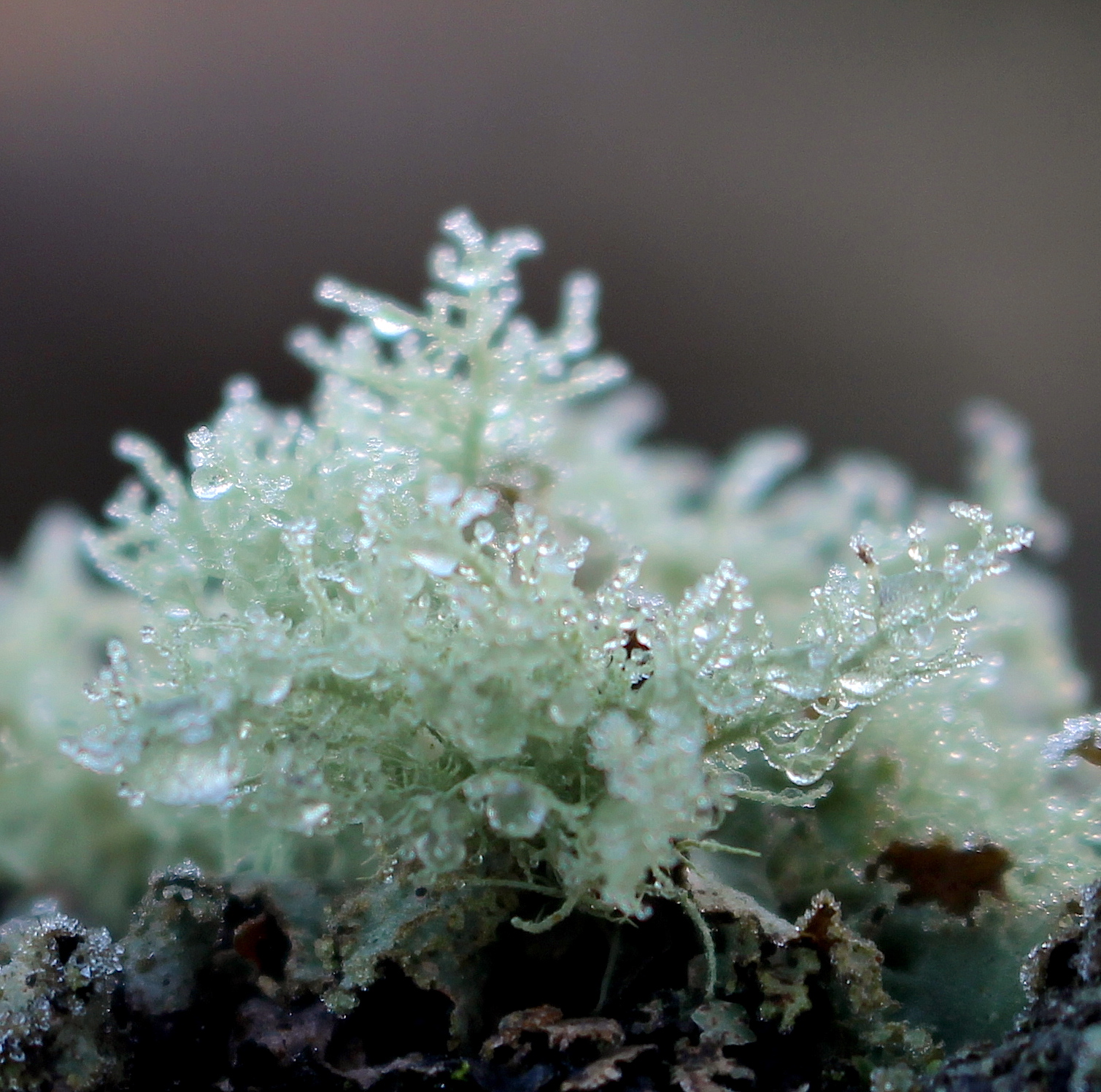
Washington state grows marijuana crops almost as prolific as it grows moss, particularly since legalization of recreational weed last year.  Retail marijuana outlets now are a common sight on our commute to work, complete with their warm glowing lighting, inviting interiors, plush furniture and fancy display cases.  These are not fringy scruffy deadhead establishments but surprisingly upscale.

It has become a brave new retail world for a drug with side effects as varied as the bodies and brains ingesting it.

As a physician working daily with adolescents and young adults in a college health center, there is no question in the last few months retail marijuana is now the cannabis equivalent to the  growing market for artisan beers and local microbreweries.  There are distinct brands and strengths to attract users of all types and needs.  Yet one thing hasn’t changed with legalization: marijuana is not for everyone, and particularly not for young developing brains.  That caution is given lip service in state laws, though little attention has been paid to the effects on underage users until now.

The American Academy of Pediatrics has developed a statement about the health effects of changes in marijuana legality and made recommendations about enforcement policies here.  Seattle pediatrician Dr. Wendy Sue Swanson offers an excellent summary of the concerns over marijuana safety in youth here.

My daily clinical work in a university health center confirms my belief that marijuana is a far more complicated drug than a society desiring legalization chooses to believe.

Cannabis use has become normalized (thanks to NORML) to the point of some parents smoking or ingesting THC with their adolescent and adult children as part of holiday gatherings, special family events (Super – Bowl, anyone?) and evenings-at-home  “wind-down” routines.  It is a challenge for a clinician to question the judgment of a parent who sees no problem in their 18 year old using marijuana to help sleep or reduce their stress level, especially since that is exactly what the parent is doing themselves.  After all, some parents reason, it is safer than alcohol and has never “killed” anyone in an overdose, right?

I guess it depends on the definition of “safer” when comparing two very different mood-altering drugs, both of which have been shown in studies to cause significant potentially long-lasting damaging effects in developing brains.  True, alcohol poisoning carries imminent risk of death and injury while heavy marijuana use may simply cause acute and chronic physical and mental health disorders.

Marijuana often exhibits paradoxical effects and is unpredictable even in experienced users.  It is a common factor in the history of adolescents and young adults with anxiety disorders, paranoia, recurring dissociative episodes and increasingly persistent depressive symptoms.  Beyond the mental health impacts,  I’m seeing puzzling morning nausea and abdominal discomfort in some regular users, sometimes to the point of vomiting, which prompts the user ingest even more marijuana to “help improve appetite”.  This appears to me to be a mild version of cannabinoid hyperemesis syndrome as GI workups, antiemetics and other meds fail to help until marijuana use is discontinued completely.  Many regular users remain unconvinced about the connection —  anecdotally I’m convinced we are seeing a pseudo-withdrawal syndrome from routine use of high THC concentration marijuana.

Other states considering legalization of recreational marijuana will learn a great deal from the Colorado and Washington experiment of growing, regulating, and taxing retail recreational marijuana.  I hope they will look carefully at the effects such laws have on the attitude and habits of youth who are now adopting life-long use patterns and are too often harmed by regular use of powerful chemicals that “older and wiser”  society members have deemed “safe” without sufficient data to back those claims.

Maybe we in Washington state should simply stick to growing moss.

frostymoss3

frostymoss5


A Flower Unplucked

rainyroseA flower unplucked is but left to the falling,
And nothing is gained by not gathering roses.
~Robert Frost from “Asking for Roses”


Robin Williams spent his lifetime coaxing us to laugh till we cried,
making us cringe and too often wanting to hide from his manic intensity.

He left no flower unplucked and now he has left us weeping again
too soon,
petals shattered and strewn,
a lingering scent of roses rising.

rainyrose2

rainyrose3

Bearing the Marks

wwucontrastcolor2

sunsetgrasses6

…Christ does not banish tragedy but carries it into the heart of God.
…in the forty days that followed (the resurrection), Christ was not magically made whole but bore the marks of his passion, and would not rest until we placed our hands—and our hearts—inside them.
~Gregory Wolfe from Seattle Pacific University’s Image Journal, from “The Tragic Sense of Life”

This week brought local news from Seattle Pacific University of yet another person with mental illness making a conscious choice to end his own life by random killing of others.  His personal and private pain becomes magnified exponentially through creating public pain and tragedy;  in this age of “selfies”, it is the ultimate in self-absorption to purposely erase innocent lives just so he will be remembered.

I often see broken people in my work — it is the nature of a primary care clinic.  The vast majority do not seek ways to break others; instead they seek the glue of compassion, a listening ear and sometimes medication that can be a balm of healing their wounds. A few harbor such anger and resentment that their anguish becomes such uncontrolled bleeding that society can only be a tourniquet to make it stop.

Christ showed the way to walk through such unimaginable pain and tragedy.   He carried his bleeding wounds, though his pulse was stilled, straight into the heart of God.   The marks he bore were from us, for us and about us, so we would always remember his sacrifice.

If we bleed, when we bleed … he returned to invite us to reach inside the wounds we inflicted and be forever healed.

rainydogwood

sunsetgrasses7

An Oath of Loyalty to Life

needles

It is…the refusal to take the oath of loyalty to life…
The man who kills a man kills a man.

The man who kills himself kills all men.
As far as he is concerned, he wipes out the world.
~ G.K. Chesterton

Suicide rates globally have climbed 60% in the past forty years,
particularly in developed countries.
Based on the distress of the patients I see every day,
the easy contemplation of suicide,
if only a passive “I wish I were dead”,
there will be no slowing of this trend.

…when there is no sense of loyalty to life, as stressful and messy as it can be,
…when there is no honoring of the holiness of the created being,
…when there is no resistance to the buffeting winds of life,
only a toppling over, taking out everything and everyone in the way,
…the world is wiped out, all people killed in one act of self-murder.

woods27