A Heaven of Impermanence

photo by Josh Scholten

My friend, you have led me farther than I have ever been.
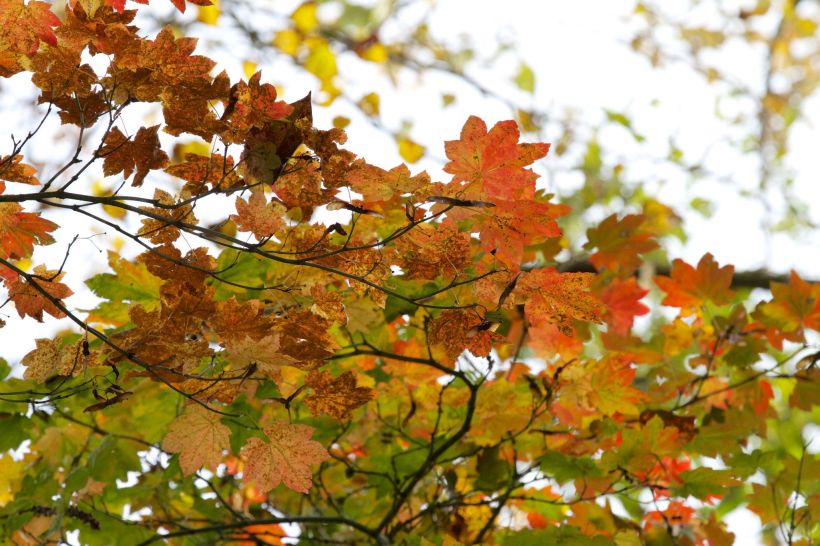
To a garden in autumn. To a heaven of impermanence
where the final falling off is slow, a slow and radiant happening.
The light is gold. And while we’re here, I think it must
    be heaven.
~Elizabeth Spires from “In Heaven it is Always Autumn”

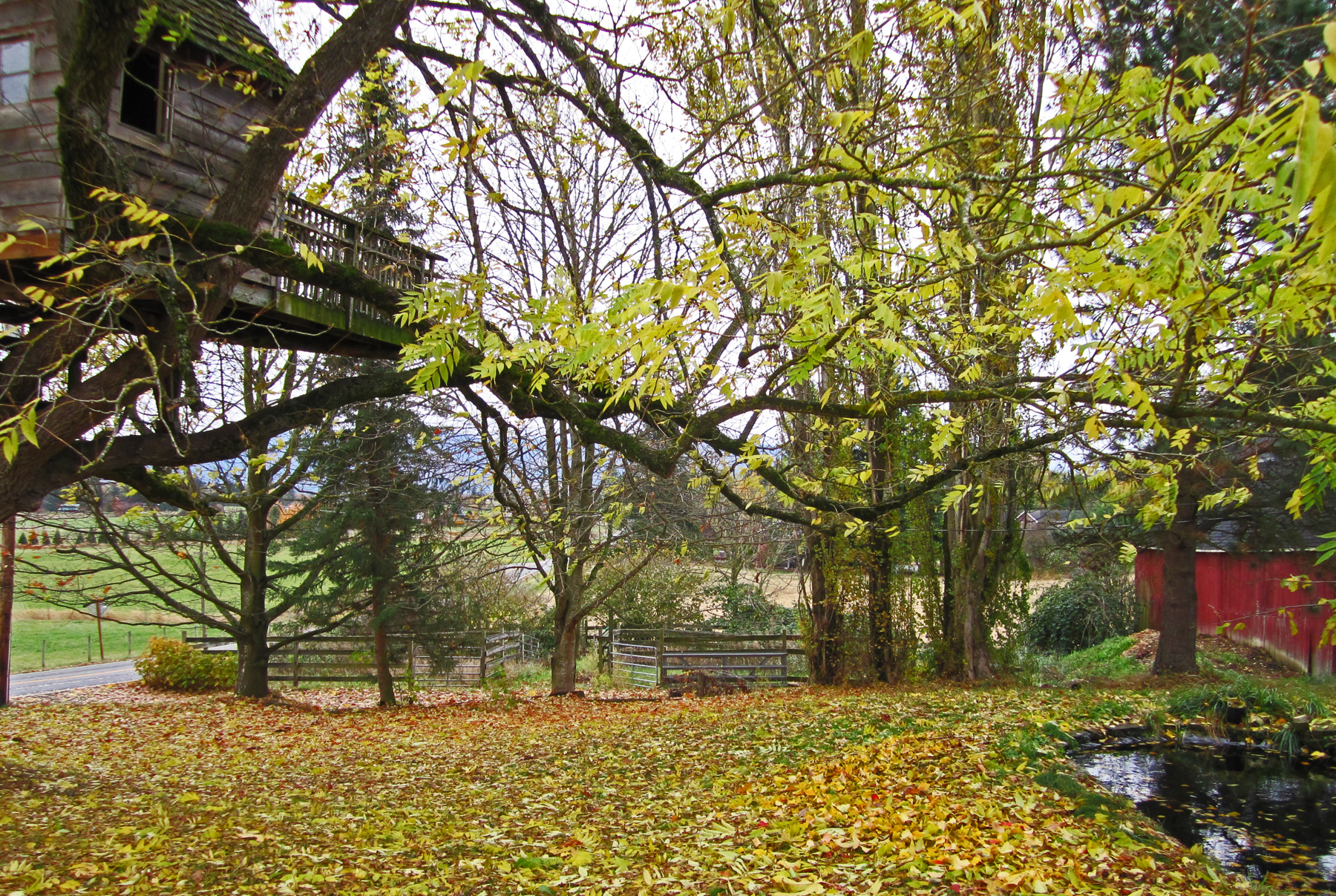
I wander the autumn garden mystified at the passing of the weeks since seed was first sown, weeds pulled, peapods picked.  It could not possibly be done so soon–this patch of productivity and beauty, now wilted and brown, vines crushed to the ground, no longer fruitful.

The root cellar is filling up, the freezer packed.  The work of putting away is almost done.

So why do I go back to the now barren soil I so carefully worked, numb in the knowledge I will pick no more this season, feel the burst of a cherry tomato exploding in my mouth or the green freshness of a bean straight off the vine?

Because for a few fertile weeks, only a few weeks, the garden was a bit of heaven on earth, impermanent but a real taste nonetheless.   We may have mistaken Him for the gardener when He appeared to us radiant, suddenly unfamiliar, but He offered the care of the garden, to bring in the sheaves, to share the forever mercies in the form of daily bread grown right here and now.

When He says my name, then I will know Him.  He will lead me farther than I have ever been.

photo by Josh Scholten

…in heaven it is always autumn, his mercies are ever in their maturity.  God comes to thee, not as in the dawning of the day, not as in the bud of the spring, but as the sun at noon,  to illustrate all shadows, as the sheaves in harvest…
~John Donne in Christmas Day Sermon 1624

Realm of Briar

photo by Josh Scholten

Far from Love the Heavenly Father 
Leads the Chosen Child, 
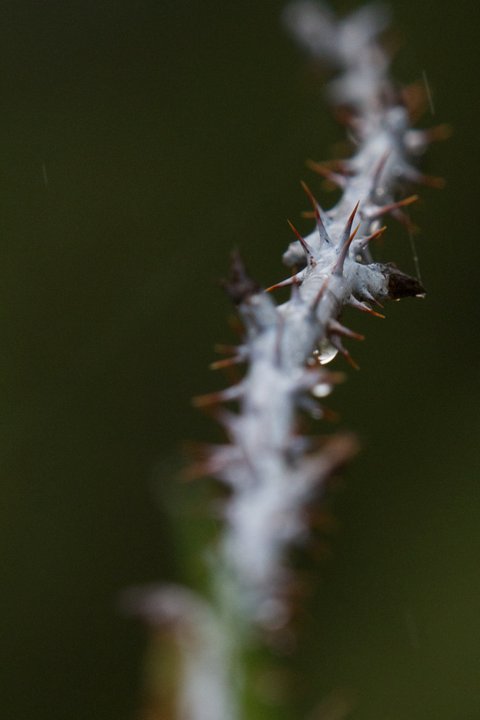
Oftener through Realm of Briar 
Than the Meadow mild.

~Emily Dickinson

I know folks being dragged through the realm of briar right now.  They are dealing with life-threatening disease, disintegration of relationships, significant mental health challenges or the results of random tragedy.  The cruelty of so much earthly suffering cannot be easily explained nor dismissed.  It feels “far from love” to be chosen to walk through a place that rips and tears away at one’s very flesh and spirit.  Yet many of us are chosen to experience such trials rather than allowed to live life in the mild meadow.

The only consolation is that we are not alone on this path of pain.  The Chosen Child, sent to walk alongside us through the realm of briar,  bleeds with us, bleeds because of us, bleeds for us, bleeds when we have nothing left, ultimately bleeds so we no longer have to.

To be everlastingly filled, we must first be emptied.

To find our forever home, we must admit we have lost our way and need rescue.

Accompanied through the realm of briar, we suffer wounds that only Love can heal.

Dreams Of Me

photo by Nate Gibson

I wonder if, in the dark night of the sea, the octopus dreams of me.
N. Scott Momaday

If I am brutally honest with myself, one of my worst fears is to have lived on this earth for a few decades and then pass away forgotten, inconsequential, having left behind no legacy of significance whatsoever.  I know it is self-absorbed to feel the need to leave a mark, but my search for purpose and meaning lasting beyond my time provides new momentum for each day.

The forgetting can happen so fast.  Most people know little about their great great grandparents, if they even know their names.  A mere four generations, a century, renders us dust, not just in flesh, but in memory as well.   There may be a yellowed photograph in a box somewhere, perhaps a tattered postcard or letter written in elegant script, but the essence of who this person was is long lost and forgotten.

It will be no different with me and those who come after me.  Whether or not remembered someday by great great grandchildren or becoming part of the dreams of creatures in the depths of the seas, I am just dust here and there is no changing that.

Good thing this is not our only home.   Good thing we are more than mere memory and dreams.  Good thing there is eternity that transcends good works or long memories or legacies left behind.  Good thing we are loved that much.


Changing Clothes

photo by Josh Scholten

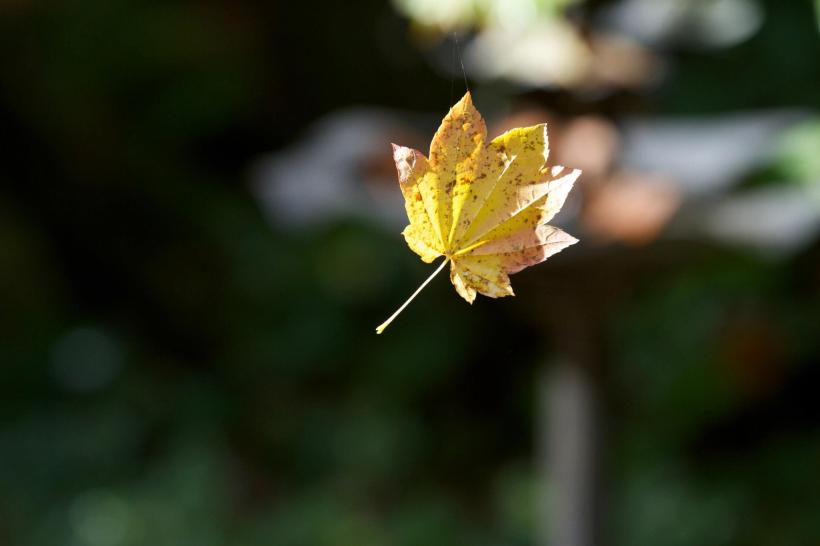
The leaves fall, the wind blows, and the farm country slowly changes from the summer cottons into its winter wools.
Henry Beston

The change of seasons this week offered no gradual transition to ease us gently into autumn– three months of daily sun and balmy temperatures became gray, rainy, windy, stormy cuddle-down cold overnight.   It is a terrible shock to our physiology as well as our wardrobe.  Sweaters and jackets that have not seen the light of day for months are suddenly front and center in the closet.  Sandals are shoved way to the back once again.  Only last week I was still sneaking out to the barn to do morning chores in my pajamas and slippers but now am trussed up in my Carhartts, gloves and muck boots.

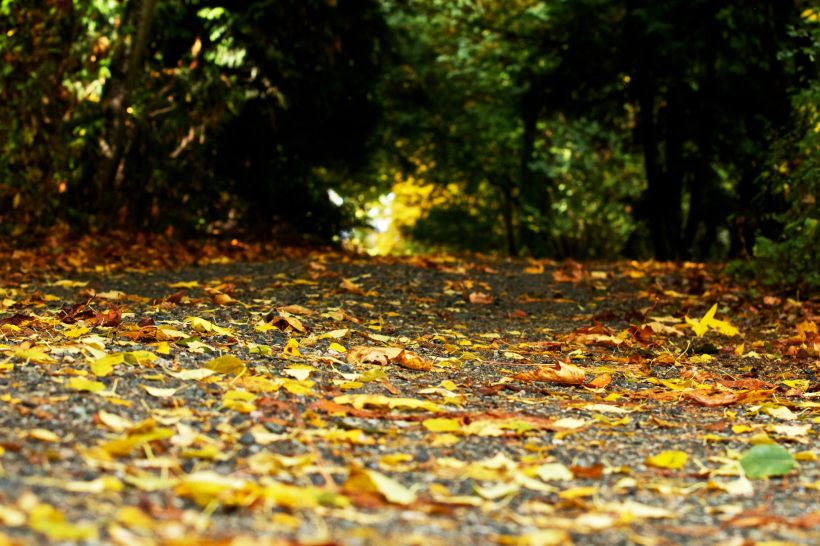
Tough as it is reconcile to shorter days and chilly temperatures, I do appreciate the absolute drama of it all.  Golden leaves dance up and down in the gusts, as if searching for the exactly perfect landing and forever resting spot.  The fallen walnuts inside their round green husks are scattered everywhere underfoot well hidden among the leaves, making navigating are yard’s pathways hazardous, especially in the dark.  I’ve never been good at walking on marbles and these are ping pong ball size marbles.

So all bundled up I pick my way carefully to the barn, wanting not to be embarrassed by falling flat on my face and or by watching trees stripped naked right before my eyes.   As they unceremoniously shed their leafy coats to reveal their skinny skeletons, I’m piling on layers on over my…. layers.

I’m treading on their sacred leavings, much like inadvertently walking across poorly marked graves at a cemetery.   It is truly holy ground.

photo by Josh Scholten

The winds will blow their own freshness into you, and the storms their energy, while cares will drop away from you like the leaves of Autumn

~John Muir

Drawing Nigh

photo by Josh Scholten

“Night is drawing nigh.  How long the road is.  But, for all the time the journey has taken, how you have needed every second of it.”
~Dag Hammarskjöld

It is easy to be grateful for the pretty times of life: those picture-perfect moments that end up on Christmas photo-cards and in detailed descriptions in holiday newsletters.  What we want others to see and what we wish to remember does not always reflect the experiences of the whole journey.  We are naturally programmed to concentrate on “The Best of…” rather than surveying the whole shebang, warts and all.

It isn’t all glorious sunsets and happy endings.  We don’t usually take pictures of the potholes, or celebrate the obstacles and flat tires along the way. It is rare to acknowledge and honor the failing grade, the chronic illness, the mortifying mistake, the tragic accident.

Yet it is all a part of the journey, every second of it, even the moments we try hard to forget are worthy of our appreciation.  Even the difficult times move us a little closer to our destination, perhaps looking bruised and scraped, still making our way slowly, shakily yet surely.

How long the road is.  How fortunate we are to be heading home.

photo by Josh Scholten

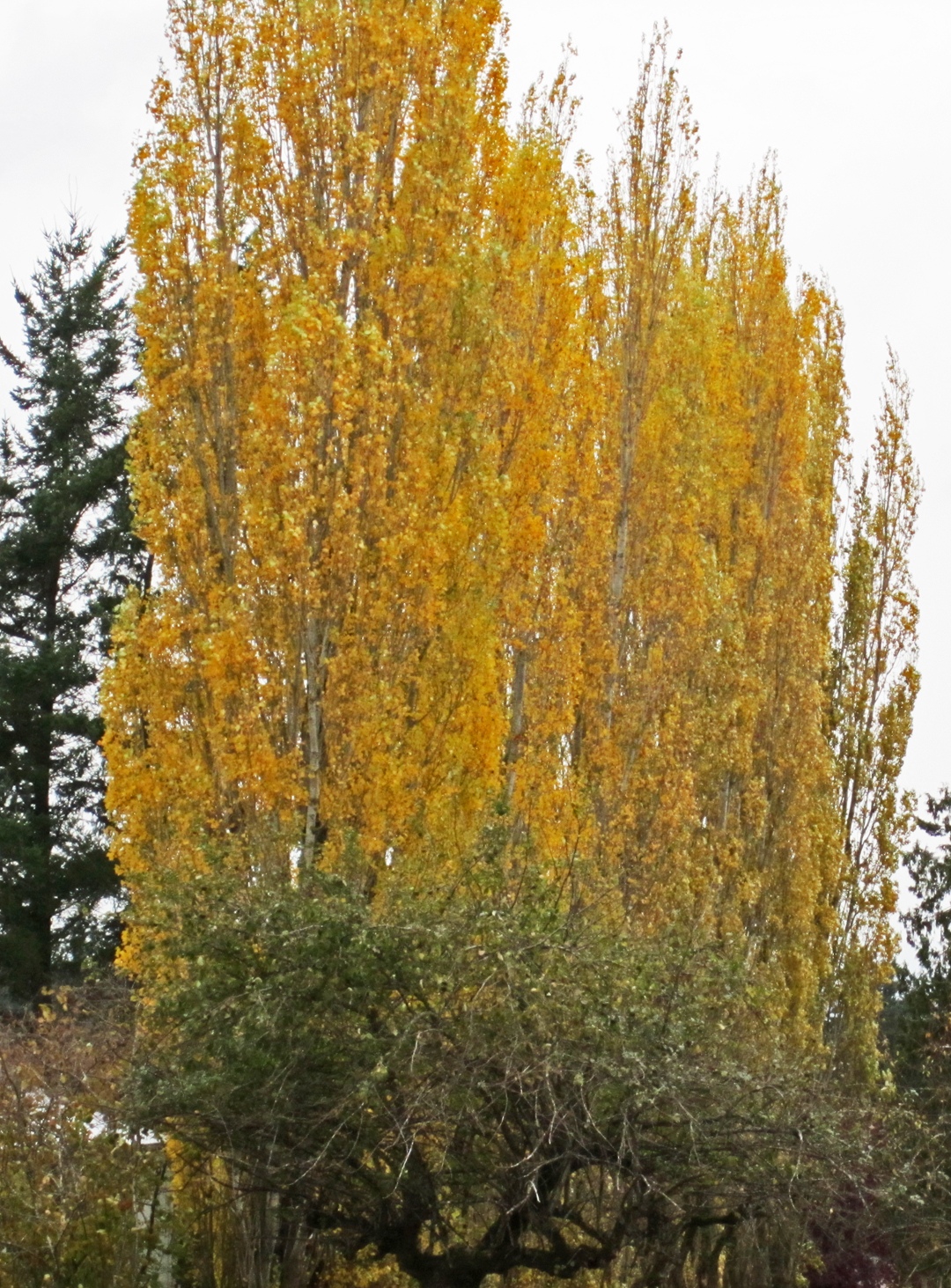
Poplar Torches

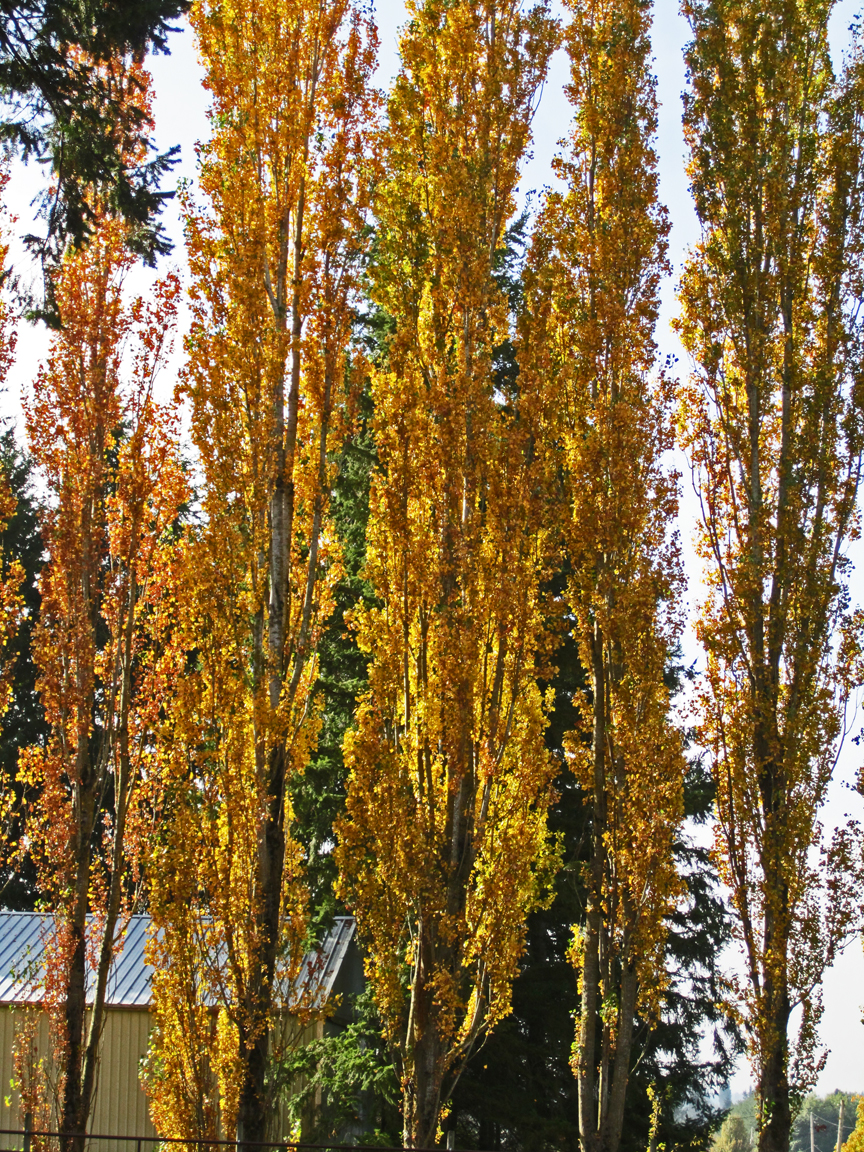
“October’s poplars are flaming torches
lighting the way to winter.”
~ Nova Bair

“I remember it as October days are always remembered, cloudless, maple-flavored, the air gold and so clean it quivers.”
Leif Enger in Peace Like a River

Reblogged from September 2010:

Our eighty-plus year old row of Lombardy Poplars (Populus Nigra –Latin for “people of the dark”) on the west edge of our farm seems to be following me.  The trees themselves, supposedly nearing the end of a typical poplar life span, are grand massively tall specimens, their leaves and branches noisily reacting to the tiniest of breezes.  In greater winds, they bend and sway wildly, almost elastic.  The trees themselves move not an inch in their hot pursuit of me, but beneath the ground is a remarkable stealth root system that is creeping outward, trying to edge closer to the house.

This is what strikes fear in my heart if I don’t resist: I’d have poplars springing alien-like through the floorboards in my kitchen if I didn’t pay attention.

If we leave those roots undisturbed for only a few months, they swell to arm size, lying just below the surface of the ground, busily sprouting numerous new little Populus Nigra along the length of the root.   These are no cute babyish innocent little seedlings.  These are seriously hungry plants determined to be fed from the roots as if from a fire hose.  They literally put on inches over a week;  they are over 6 feet tall in a month or two.   Suddenly I’m faced with dozens of new poplar babies, each sucking on a communal maternal umbilical cord.

We have no choice but to seek and destroy on a regular basis.  It is a shock and awe operation.  I’m shocked at the growth and awed at the strength of the adversary.   Many of these simply cannot be pulled up from the dust by hand as the process results in a root crawling many yards long, heading east toward the house like a heat-seeking missile.  To finish off the job, sometimes the root must be removed entirely by tractor.

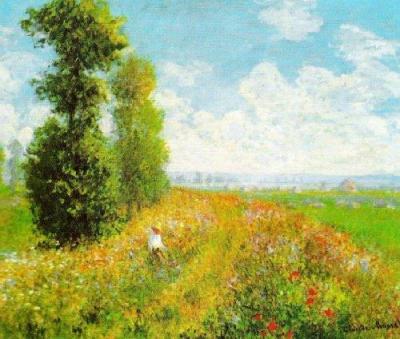
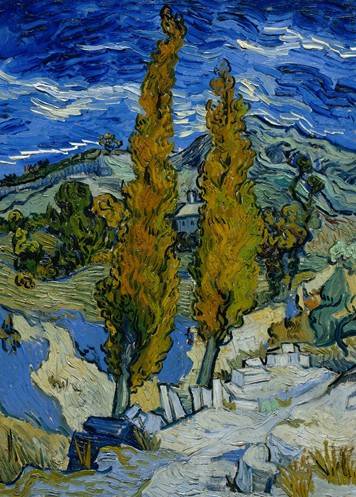
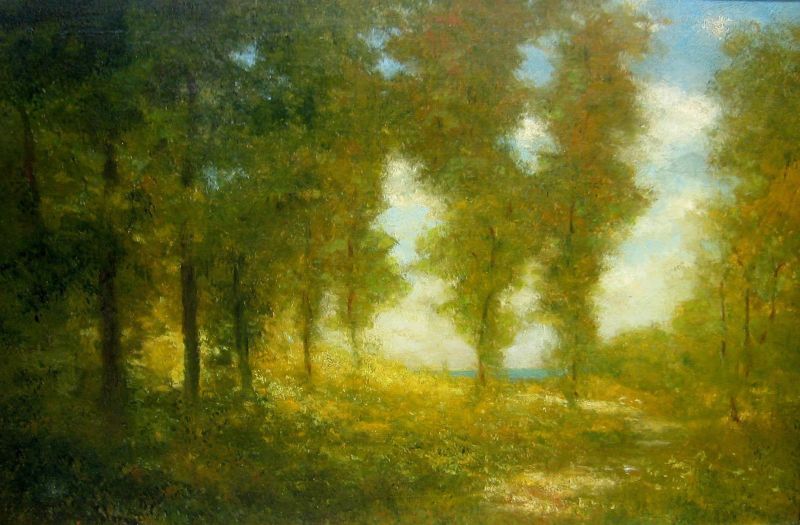
I do have to admire this tree for its fortitude as well as its beauty.  As a wind break, it is unparalleled, its branches and leaves melodious in the breeze.   Autumn sets it aflame, a golden torch, soon to messily scatter its foliage and dying branches as far as arboreally possible.   And it makes for great artwork by the likes of Monet and Van Gogh, creating predictability, uniformity and symmetry in their paintings as well as the palette of our farmscape.

The poplars may be pursuing me but I enjoy the chase.  I gaze with appreciation at our row of poplars’ dark outline against the horizon during orange sunsets.  I miss their hubbub of constant activity when their leaves drop for winter.  Stripped naked, they stand silently waiting for the rush of spring warmth and moisture to start creeping forward again,  ballooning seedlings with a rush of sap, fearlessly growing clones against all odds.

My husband suggested it was time to take the poplars down before they snap off in their old age, overcome in the strong northeasters.  I disagree.  Chopping them off at the base and pulling them out by their roots would be cruel and unsporting of us.  They deserve to struggle against our fight to the finish to prevent their infiltration beyond a defined border row.

I’ve accepted that those shallow roots will likely outlast my efforts to stem the poplar tide.  Eventually I’ll be pulled face first into the dust by their undertow and there I will remain.

As I see it, if you can’t beat them, join them.

Reaching for the Rainbow

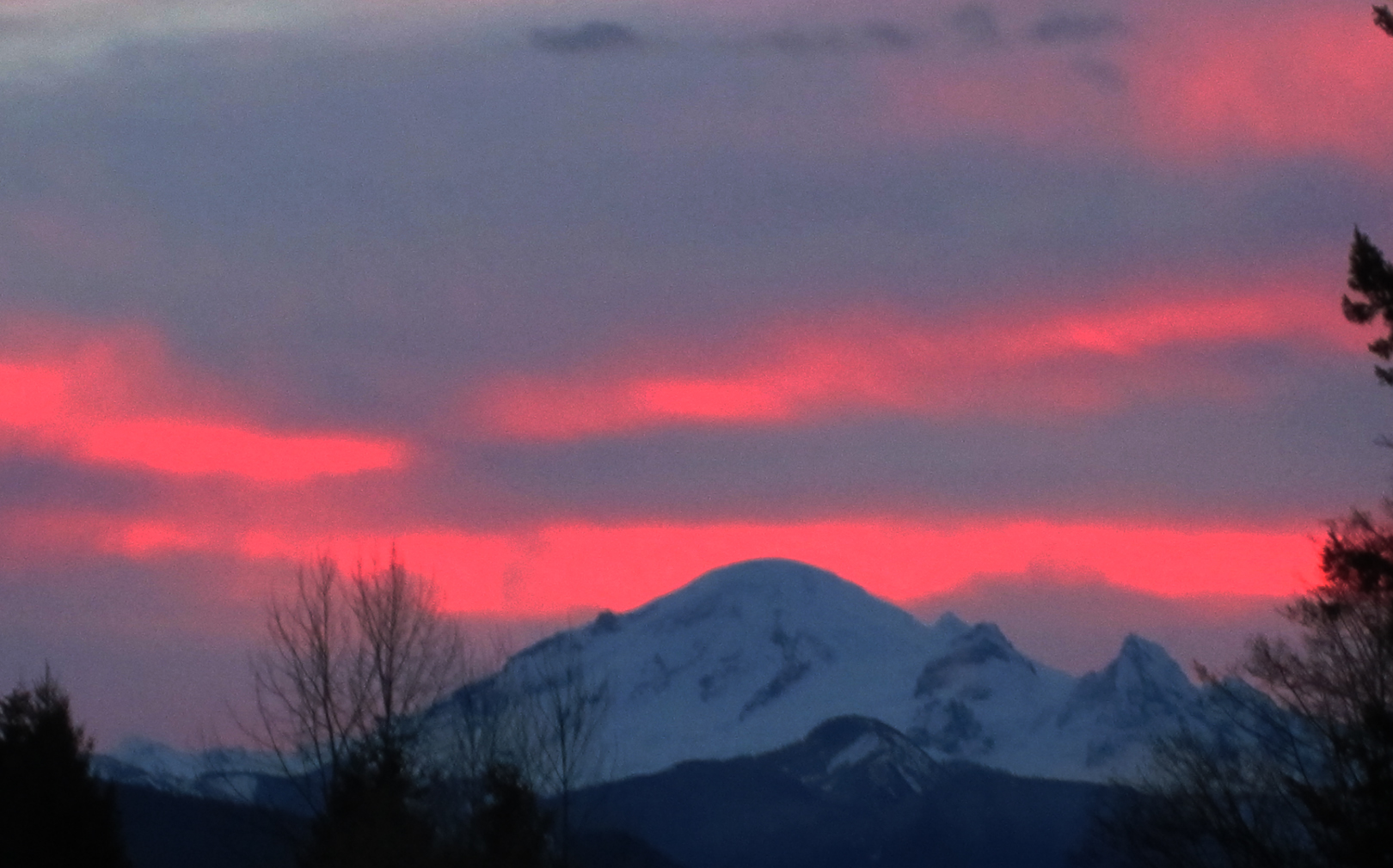
Mt. Baker at sunrise

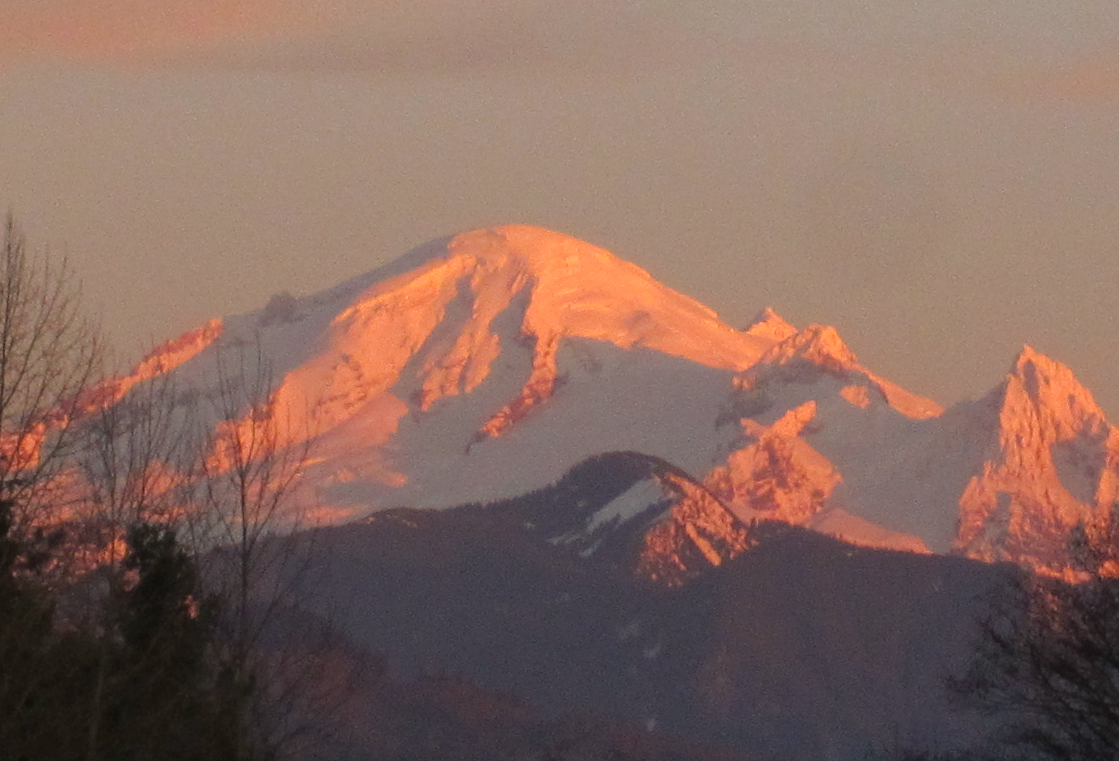
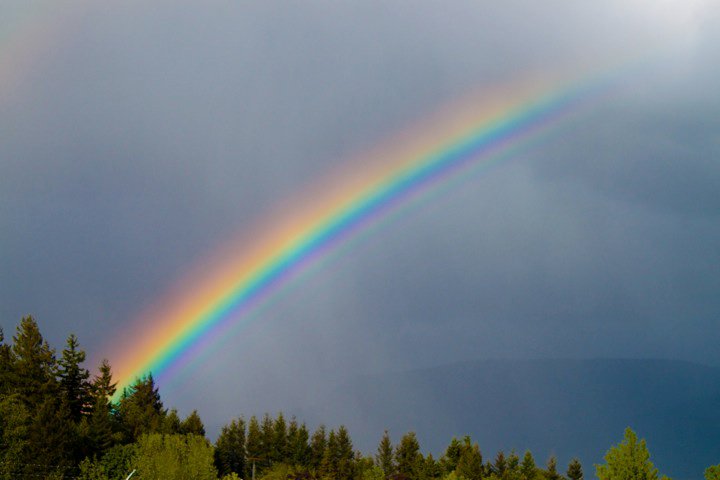
The true harvest of my daily life is somewhat as intangible and indescribable as the tints of morning or evening.  It is a little star-dust caught, a segment of the rainbow which I have clutched.
~Henry David Thoreau

Painting the indescribable with words necessitates subtlety, sound and rhythm on a page.  The best word color portraits I know are by Gerard Manley Hopkins who created  through startling combinations:  “crimson-cresseted”, “couple-colour”, “rose-moles”, “fresh-firecoal”, “adazzle, dim”, “dapple-dawn-drawn”, “blue-bleak embers”, “gash gold-vermillion”.

I understand, as Thoreau does,  how difficult it is to harvest a day using ordinary words.   Like grasping ephemeral star trails or the transient rainbow that moves away as I approach, what I hold on the page is intangible yet very real.

I will keep reaching for the rainbow, searching for the best words to preserve my days and nights forever, for my someday greatgrandchildren, or whoever might have the patience to read.

After all, in the beginning was the Word, and there is no better place to start.

Mt. Baker at sunset
photo by Josh Scholten

It Would Be Cheaper

“Nature is, above all, profligate.  Don’t believe them when they tell you how economical and thrifty nature is, whose leaves return to the soil.  Wouldn’t it be cheaper to leave them on the tree in the first place?
~Annie Dillard

It is a good thing I wasn’t assigned the role of Designer because all would have gone awry in my dedication to resource management, efficiency and creating less waste.    There would be imposed limitations on earth, wind and rain storms.  No wildfires or natural disasters like earthquakes, tsunamis, hurricanes and tornadoes.  To avoid having to blow around, rake, pick up and compost those fallen autumn leaves, all trees would be evergreens, needles long-lasting for decades.  There would be fewer insect species, in particular wasps, fleas, chiggers, bed bugs, mosquitoes and flies.   Fewer rodents, viruses, toxic bacteria and pesky parasites.  The list is endless: things would be different in my Thrifty Design Of All Things Natural.

But of course the balance of living and dying things would then be disturbed and off kilter.

Rather than worry about the wastefulness,  I should revel in the abundance as I watch death recreate itself to life again.  Nature has built-in redundancy, teems with remarkable inefficiency and overwhelms with extravagance.  As just another collection of cells with similar profligacy, I can’t say much and better not complain.  Thank goodness for the redundancy and extravagance found in my own body, from the over supply of nasal mucus during my upper respiratory infection helping me shed viral particles, to the pairing of many organs and parts allowing me a usable spare in case of system failure.

Sometimes cheaper costs more.  Sometimes extravagance is intentional and rational.

Clearly things are meant to be as they are.

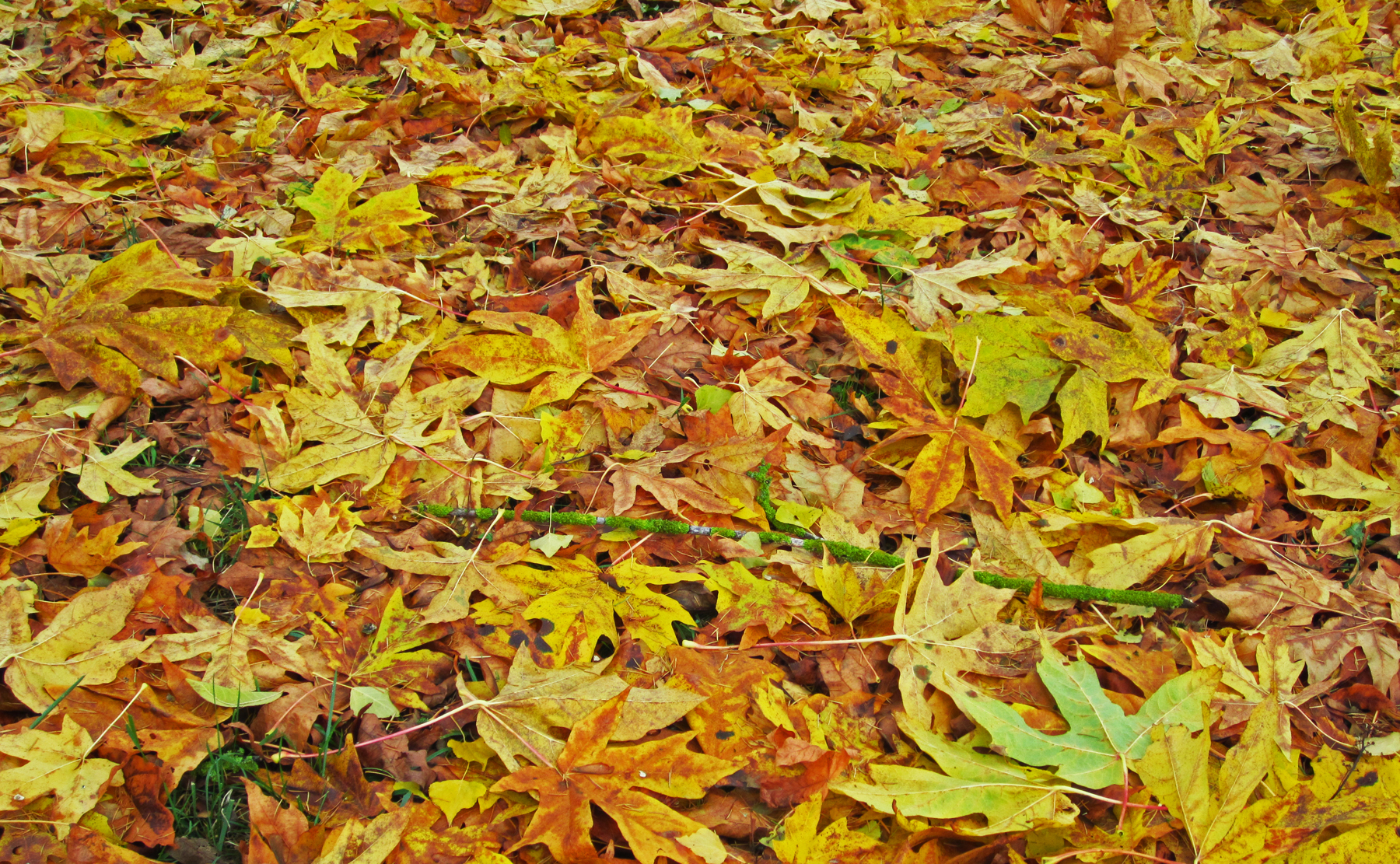
If I am ever in doubt, I can simply look out at the leaf-carpeted front yard…or in the mirror.

Then I will remember and know.

“So let us go on, cheerfully enough, this and every crisping day,
though the sun be swinging east, and the ponds be cold and black,
and the sweets of the year be doomed.” 
~Mary Oliver from Lines Written in the Days of Growing Darkness

Shake Me Like a Cry

The scarlet of maples can shake me like a cry
Of bugles going by.
And my lonely spirit thrills
to see the frosty asters like smoke
upon the hills.
~ William Bliss Carman

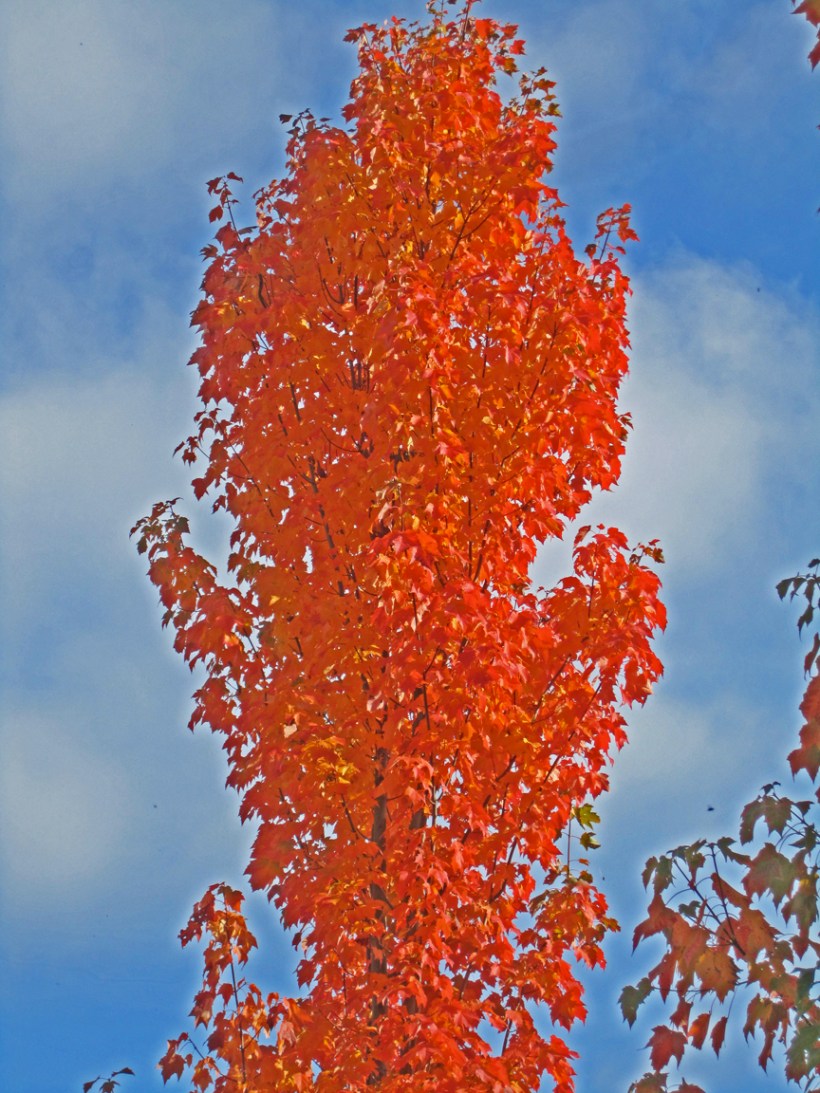
It is like the blowing of taps, this last blast of color before the rains and winter.  There is quickened heartbeat and choking back tears at seeing the vividness outlined by robins egg-blue sky, each maple a torch aflame about to burn down to ash and smoke.

The bright palette is too much to take in all at once.  If only it could spread out through the year and not last only for a week or two when I’m relegated indoors in long work hours and weekend harvest preservation of fruits and vegetables.  I so wish to be two places at once, to be two people, to be more than I am.

So I must harvest autumn in words and pictures, just like preserving the garden and orchard in jars and bags, someday to refresh and restore when gray pervades and mildew threatens to overpower, when hunger for fall shakes me wholly, like a sob.

Like a cry for how it used to be and how it one day will be again.

There is no season when such pleasant and sunny spots may be lighted on, and produce so pleasant an effect on the feelings, as now in October.
~Nathaniel Hawthorne


The Smell of Buttered Toast

Great Harvest Bread Company Chocolate Babka

“The smell of that buttered toast simply spoke to Toad, and with no uncertain voice; talked of warm kitchens, of breakfasts on bright frosty mornings, of cozy parlour firesides on winter evenings, when one’s ramble was over and slippered feet were propped on the fender; of the purring of contented cats, and the twitter of sleepy canaries.”
~Kenneth Grahame, The Wind in the Willows

I’m not a practitioner of the ancient art of aromatherapy for medicinal purposes but I do know certain smells can transport me more effectively than any other mode of travel.  One whiff of a familiar scent can take me back years to another decade and place, almost in time traveling mode.  I am so in the moment, both present and past, my brain sees, hears, feels everything as it was before.

The most vivid are kitchen smells, to be sure.  Cinnamon becomes my Grandma’s farm kitchen, roasting turkey is my mother’s kitchen on Thanksgiving Day, fresh baked bread is my own kitchen during the years I needed to knead as therapy during medical training. Today it is the warmth of a slice of chocolate babka bread for breakfast.

Occasionally I have the privilege of babysitting infants whose skin smells of baby shampoo and powder, so like the soft velvet of my own childrens’.   The newly born wet fur of my foals carries the sweet and sour amnion that was part of every birth I’ve been part of: delivering others and delivering my own.  My heart races at the memory of the drama of those first breaths.

The garden yields its own treasure: tea roses, sweet peas, heliotrope, lemon blossom take me back to lazy breezes past blossoms planted along the house, wafting through open bedroom windows.  The fragrance of the earth after a long awaited rain will remind me of how things smell outside this morning.

I doubt any aromatherapy kit would include my most favorite–the farm smells: newly mown hay, fresh fir shavings for stall bedding,  the mustiness of the manure pile, the green sweetness of a horses’ breath.

Someday I’ll figure out how to bottle all these up to keep forever.   Years from now my rambles will be over, when I’m too feeble to walk to the barn or be part of the hay harvest crew any longer,  I can sit by my fireplace, close my eyes, open it up and take a whiff now and then.  It’ll take me back to a day like today with the best smells on earth in my own backyard.

They will simply speak to me with no uncertain voice.

Jose, lord of the manor and farm