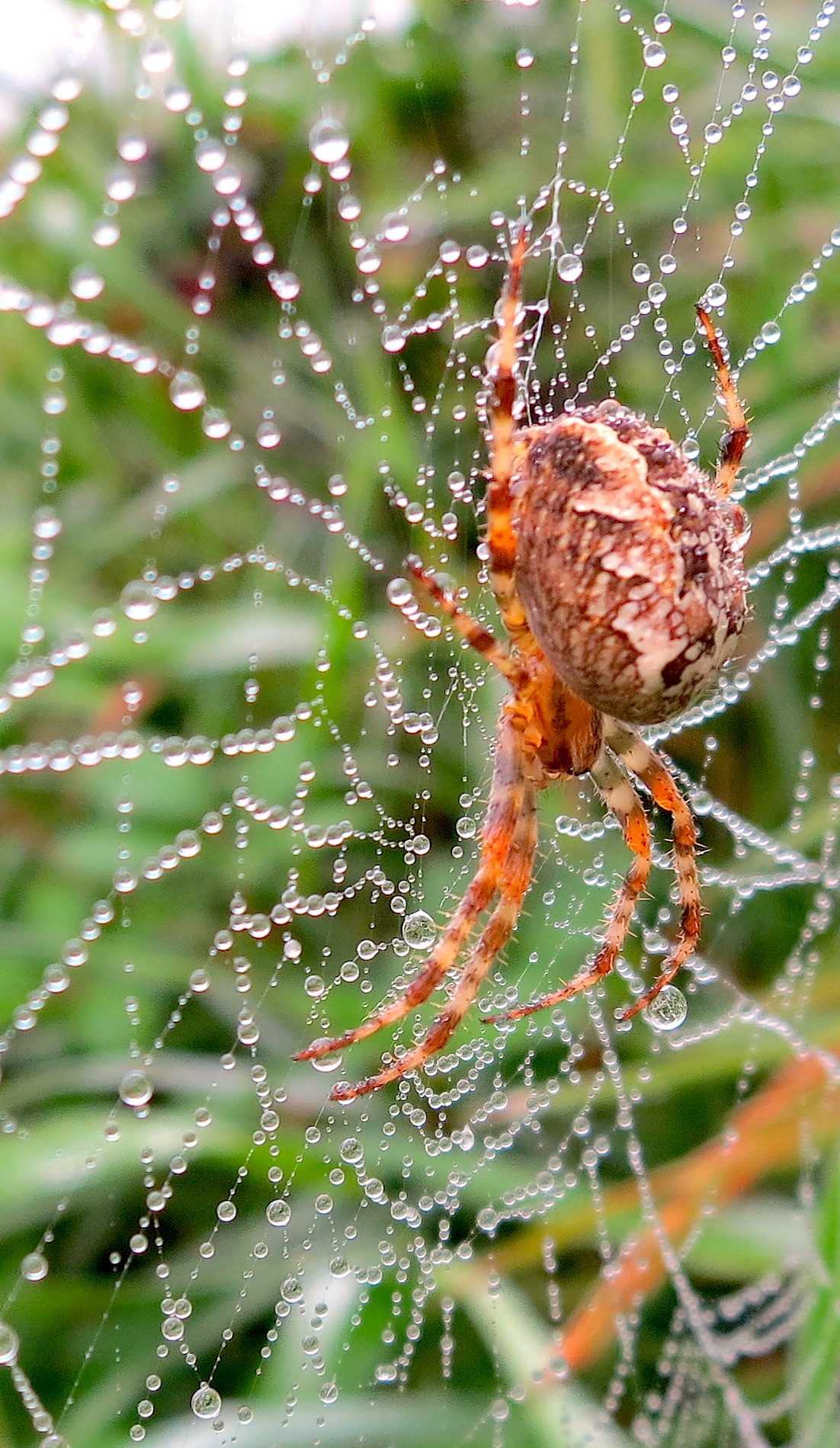
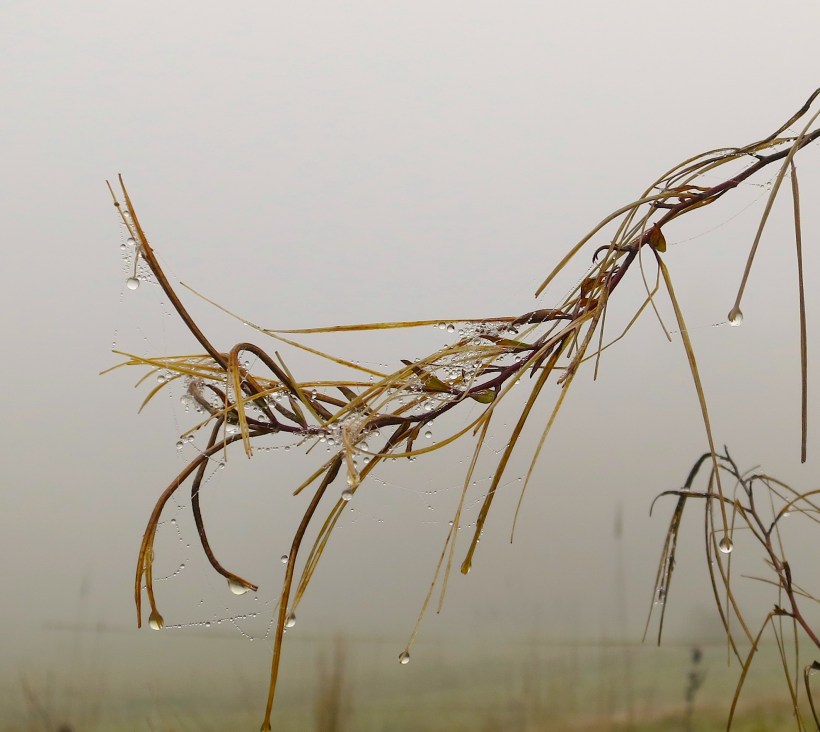
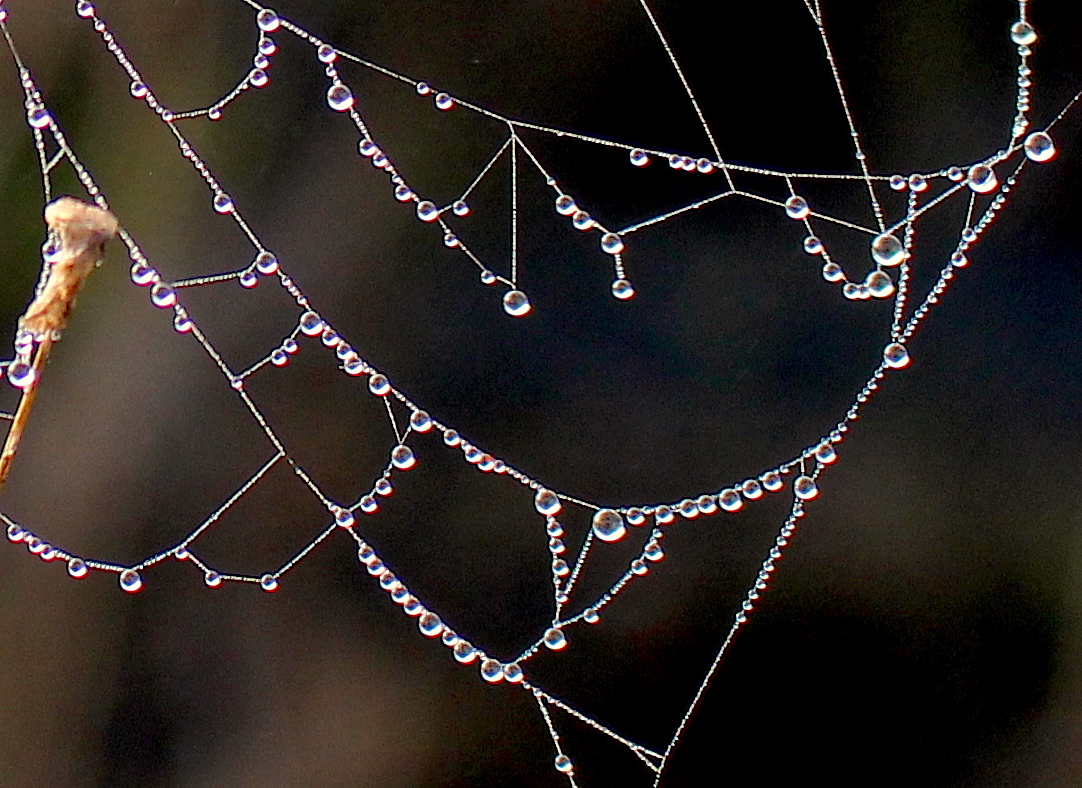
My daughter wouldn’t hurt a spider That had nested Between her bicycle handles For two weeks She waited Until it left of its own accord
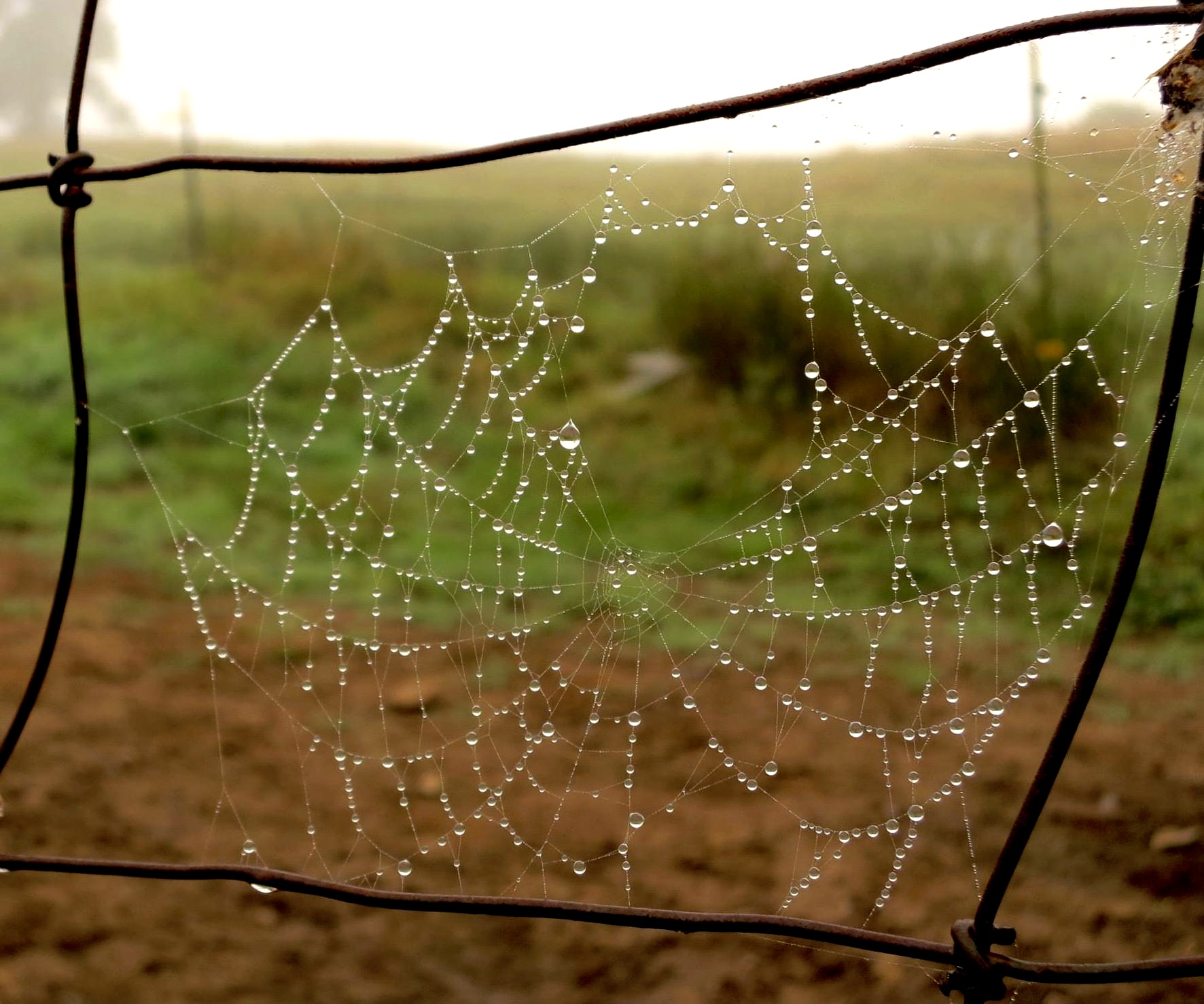
If you tear down the web I said It will simply know This isn’t a place to call home And you’d get to go biking She said that’s how others Become refugees isn’t it? ~Fady Joudah “Mimesis” from Alight
Like these lands we travel through, I have grown weary, so rough, so dry. I wet a finger to give suck but it never lasts longs. When the baby cries, the sound comes sharper. It cuts me.
Some didn’t believe the stories of soldiers pouring south, what they did to the women, to children. Made the men watch then let them live. Some didn’t believe, but my husband did not hesitate: we cannot wait, he said. We travel between slaughter and exile. A foreign land, people who already hate us. How will they ever take us in? What will we do when they turn us back? Afraid ourselves, we instruct the little ones to be quiet, but an infant only understands hunger.
I lay him against me, try the finger trick; he snuggles in and falls asleep, his lips still moving. The moon was full but is now empty, like me. I was a child but now am woman, a mother. Is this all
I can give this child—a world of rage and shame, of bloodshed and vengeance? ~Edward Dougherty from “Between Slaughter and Exile”
Over the eons of human history, very few people groups have been able to remain exactly where they first settled.
The forces that drive tribes, cultures and communities to move on or be chased out are multiple and often overlapping: natural disasters, poverty, disease, prejudice, persecution, oppression, drought, starvation, war, politics.
Some simply seek refuge in hope of a better life.
We who sit safe and snug in our homes forget there was no such comfort for many of the generations preceding us. Those displaced faced terrible risks as they sought out safety. Millions have suffered and died in the hope of securing a future for themselves and their descendants. Countries – even ours, the richest on earth – struggle to house and feed their own residents, much less able to cope with those who arrive even more destitute and desperate. Doors and borders around the world slam shut and remain closed.
No child should be caught in this ongoing cycle of grief and weeping, rage and shame, bloodshed and vengeance, slaughter and exile. We watch history repeat itself, again and again; we become history in the making.
May God work out a solution when mere people cannot.
One-Time
Monthly
Yearly
Make a one-time or recurring donation to support daily Barnstorming posts
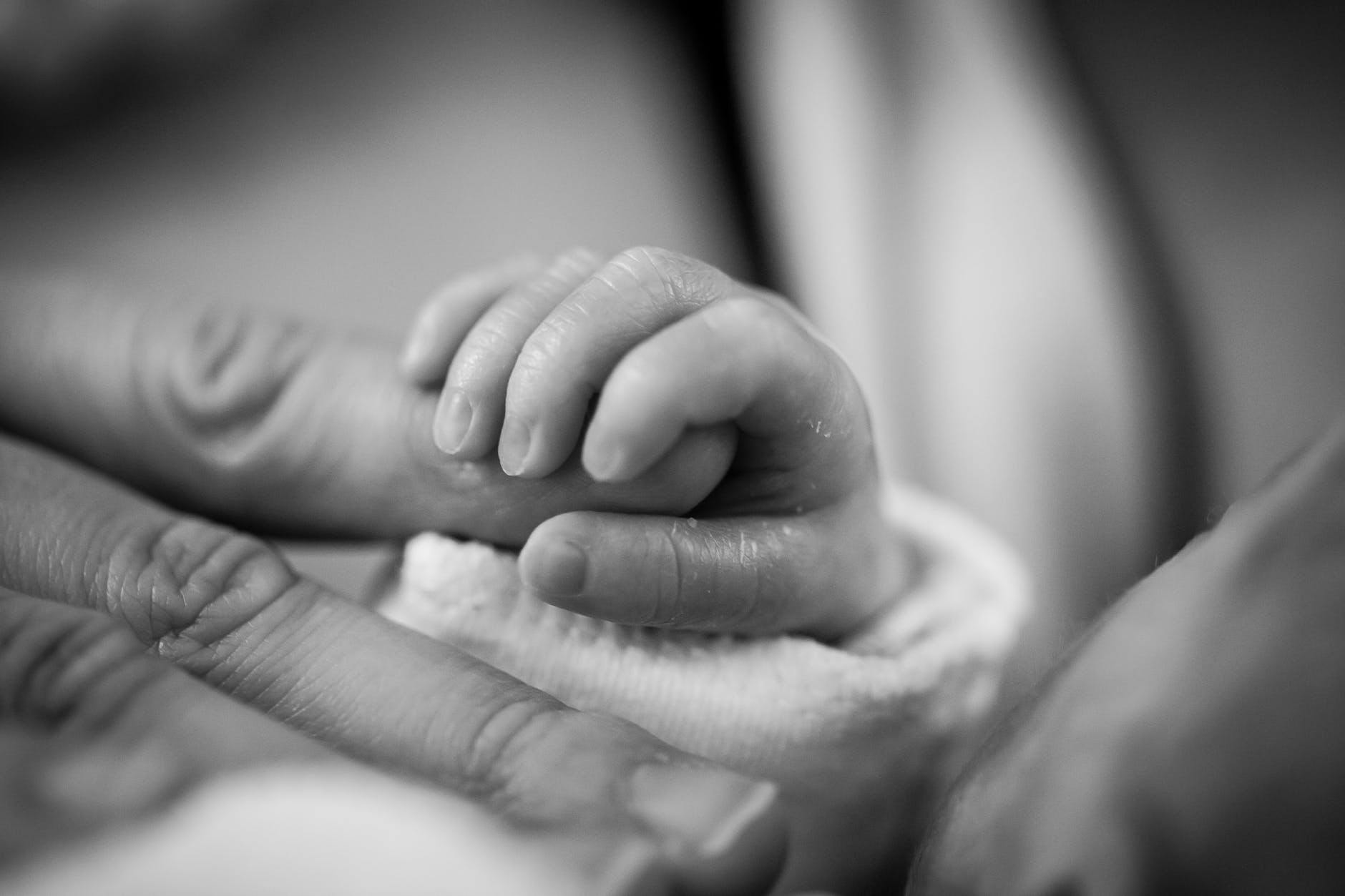
We think of him as safe beneath the steeple, Or cosy in a crib beside the font, But he is with a million displaced people On the long road of weariness and want. For even as we sing our final carol His family is up and on that road, Fleeing the wrath of someone else’s quarrel, Glancing behind and shouldering their load. Whilst Herod rages still from his dark tower Christ clings to Mary, fingers tightly curled, The lambs are slaughtered by the men of power, And death squads spread their curse across the world. But every Herod dies, and comes alone To stand before the Lamb upon the throne. ~Malcolm Guite “Refugee”
We kill at every step, not only in wars, riots, and executions. We kill when we close our eyes to poverty, suffering, and shame. In the same way all disrespect for life, all hard heartedness, all indifference, and all contempt is nothing else than killing. With just a little witty skepticism we can kill a good deal of the future in a young person. Life is waiting everywhere, the future is flowering everywhere, but we only see a small part of it and step on much of it with our feet. ~Hermann Hesse, from Vivos Voco, 1919
For centuries, too many people have had to make the choice of living (and likely dying) oppressed in the midst of conflict and war or they attempt their escape to an uncertain fate on the other side of a border, a fence, or a turbulent sea. Some are given no options and are sold into slavery, taken where their captors wish, or have been rounded up and forced to live far from their ancestral homes.
Some of us descend from people who made the difficult decision to escape war, or hunger, or oppression, or extreme poverty. We live and thrive by the grace and mercy of God to these ancestors.
This God was a refugee Himself, fleeing from a king who sought Him dead. This God knows what it is like to be hated and pursued. He knows the wrath and cruelty of His fellow man.
This God has a name, He has a face and a voice and it is He who ultimately holds our fate in His hands.
This God is not forgotten nor has He forgotten us. He will return to forever banish the darkness surrounding us.
This year’s Advent theme “Dawn on our Darkness” is taken from this 19th century Christmas hymn:
Brightest and best of the sons of the morning, dawn on our darkness and lend us your aid. Star of the east, the horizon adorning, guide where our infant Redeemer is laid. ~Reginald Heber -from “Brightest and Best”
One-Time
Monthly
Yearly
Make a one-time or recurring donation to support daily Barnstorming posts
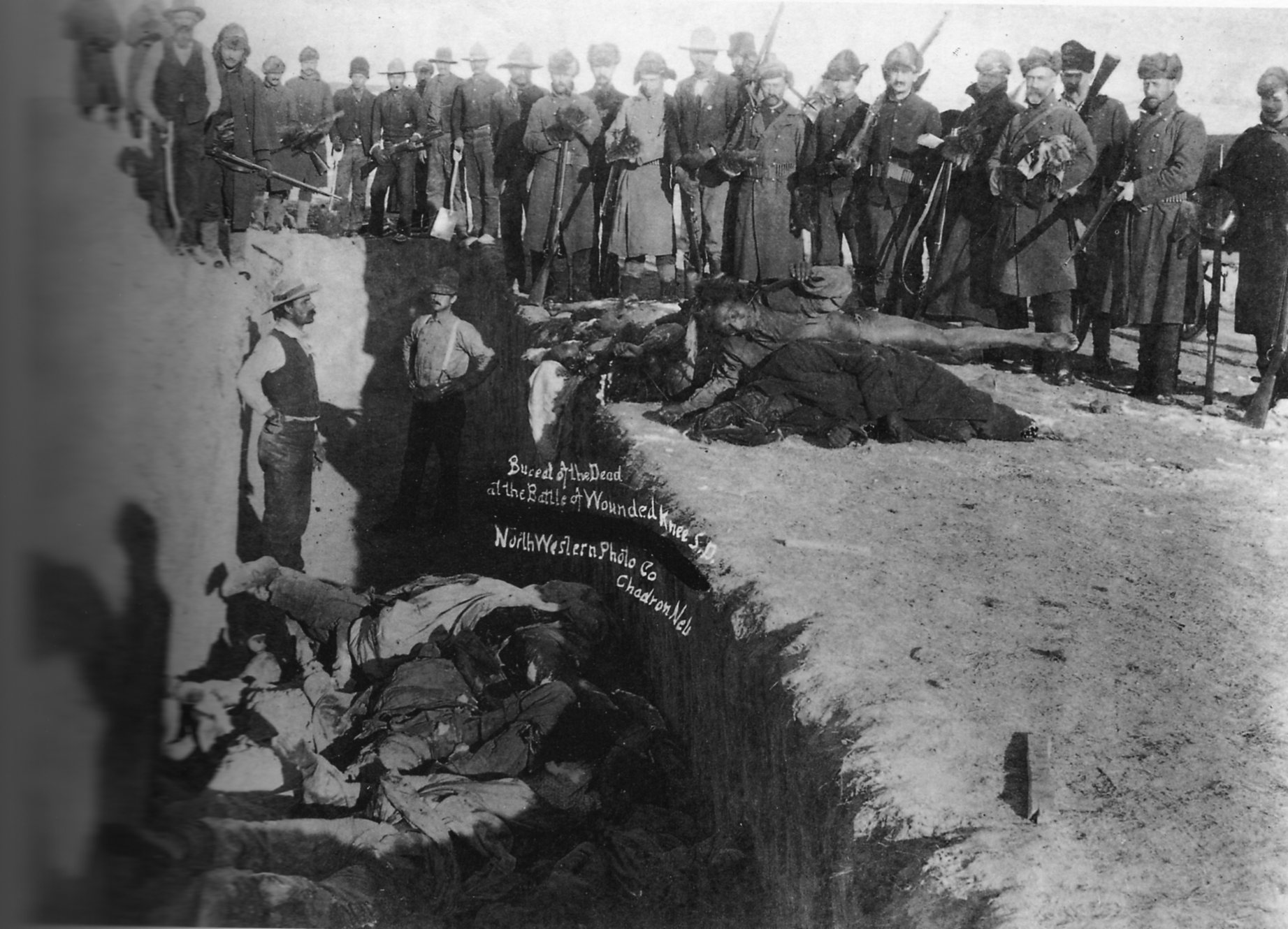
The mass gravesite at Wounded Knee, Pine Ridge Reservation, South DakotaBurial of the dead in the mass gravesite at Wounded Knee
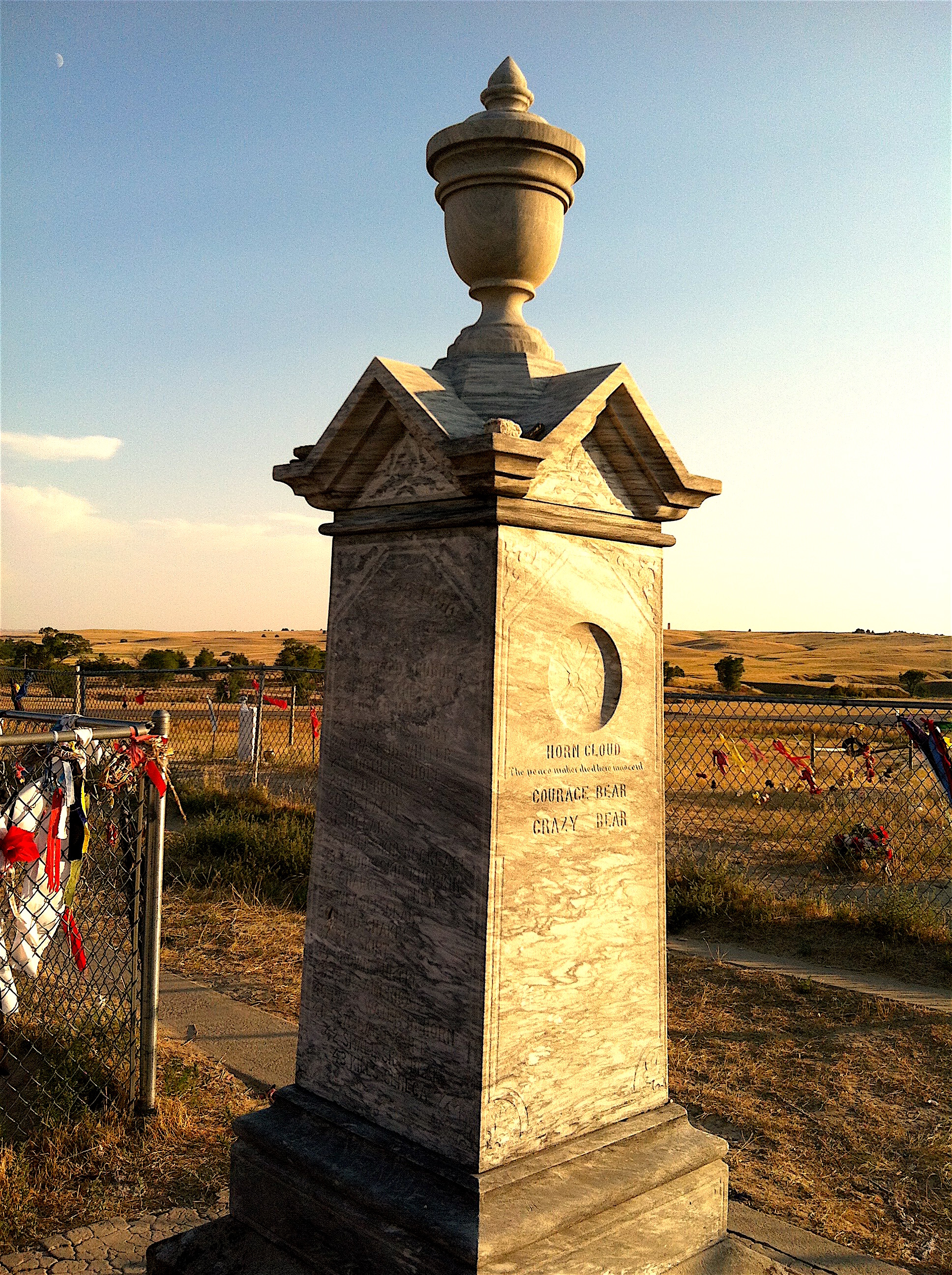
Big Foot, a great Chief of the Sioux often said, “I will stand in peace till my last day comes.” He did many good and brave deeds for the white man and the red man. Many innocent women and children who knew no wrong died here. ~Inscription on the Wounded Knee Monument
I did not know then how much was ended. When I look back now from this high hill of my old age, I can still see the butchered women and children lying heaped and scattered all along the crooked gulch as plain as when I saw them with eyes still young. And I can see that something else died there in the bloody mud, and was buried in the blizzard. A people’s dream died there. It was a beautiful dream. And I, to whom so great a vision was given in my youth, — you see me now a pitiful old man who has done nothing, for the nation’s hoop is broken and scattered. There is no center any longer, and the sacred tree is dead. ~Black Elk, (wounded trying to rescue his people after the Wounded Knee Massacre) from Black Elk Speaks
From today’s The Writer’s Almanac:
December 29 is the anniversary of themassacre at Wounded Knee, which took place in South Dakota in 1890. Twenty-three years earlier the local tribes had signed a treaty with the United States government that guaranteed them the rights to the land around the Black Hills, which was sacred land. The treaty said that not only could no one move there, but they couldn’t even travel through without the consent of the Indians.
But in the 1870s gold was discovered in the Black Hills and the treaty was broken. People from the Sioux tribe were forced onto a reservation with a promise of more food and supplies, which never came. Then in 1889 a native prophet named Wovoka, from the Paiute tribe in Nevada, had a vision of a ceremony that would renew the earth, return the buffalo, and cause the white men to leave and return the land that belonged to the Indians. This ceremony was called the Ghost Dance. People traveled across the plains to hear Wovoka speak, including emissaries from the Sioux tribe, and they brought back his teachings. The Ghost Dance, performed in special brightly colored shirts, spread through the villages on the Sioux reservation and it scared the white Indian agents. They considered the ceremony a battle cry, dangerous and antagonistic. So one of them wired Washington to say that he was afraid and wanted to arrest the leaders and he was given permission to arrest Chief Sitting Bull, who was killed in the attempt. The next on the wanted list was Sitting Bull’s half-brother, Chief Big Foot, known to his own people as Spotted Elk. Some members of Sitting Bull’s tribe made their way to Big Foot and when he found out what had happened he decided to lead them along with the rest of his people to Pine Ridge Reservation for protection. But it was winter, 40 degrees below zero, and he contracted pneumonia on the way.
Big Foot was sick, he was flying a white flag, and he was a peaceful man. He was one of the leaders who had actually renounced the Ghost Dance. But the Army didn’t make distinctions. They intercepted Big Foot’s band and ordered them into the camp on the banks of the Wounded Knee Creek. Big Foot went peacefully.
The next morning federal soldiers began confiscating their weapons and a scuffle broke out between a soldier and an Indian. The federal soldiers opened fire, killing almost 300 men, women, and children, including Big Foot. Even though it wasn’t really a battle, the massacre at Wounded Knee is considered the end of the Indian Wars, a blanket term to refer to the fighting between the Native Americans and the federal government, which had lasted 350 years.
One of the people wounded but not killed during the massacre was the famous medicine man Black Elk, author of Black Elk Speaks (1932). Speaking about Wounded Knee, he said:
“I did not know then how much was ended. When I look back now from this high hill of my old age, I can still see the butchered women and children lying heaped and scattered all along the crooked gulch as plain as when I saw them with eyes still young. And I can see that something else died there in the bloody mud, and was buried in the blizzard. A people’s dream died there. It was a beautiful dream.”
Like most twentieth century American children, I grew up with a sanitized understanding of American and Native history. I had only a superficial knowledge of what happened at Wounded Knee, a low hill that rises above a creek bed on the South Dakota Pine Ridge Reservation, gleaned primarily from the 71 day symbolic standoff in 1973 between members of the Oglala Sioux and the American Indian Movement and the FBI, resulting in several shooting deaths.
Nine years ago, when our son was teaching math at Little Wound High School on the Pine Ridge Reservation, we visited the site of this last major battle between the white man and Native people, which broke the spirit of the tribes’ striving to maintain their nomadic life as free people. This brutal massacre of nearly 300 Lakota men, women and children by the Seventh Regiment of the U.S. Army Cavalry took place in December 1890.
The dead lay where they fell for four days due to a severe blizzard. When the frozen corpses were finally gathered up by the Army, a deep mass grave was dug at the top of the hill, the bodies buried stacked one on top of another. The massive grave is now marked by a humble memorial monument surrounded by a chain link fence, adjacent to a small church, circled by more recent Lakota gravesites.
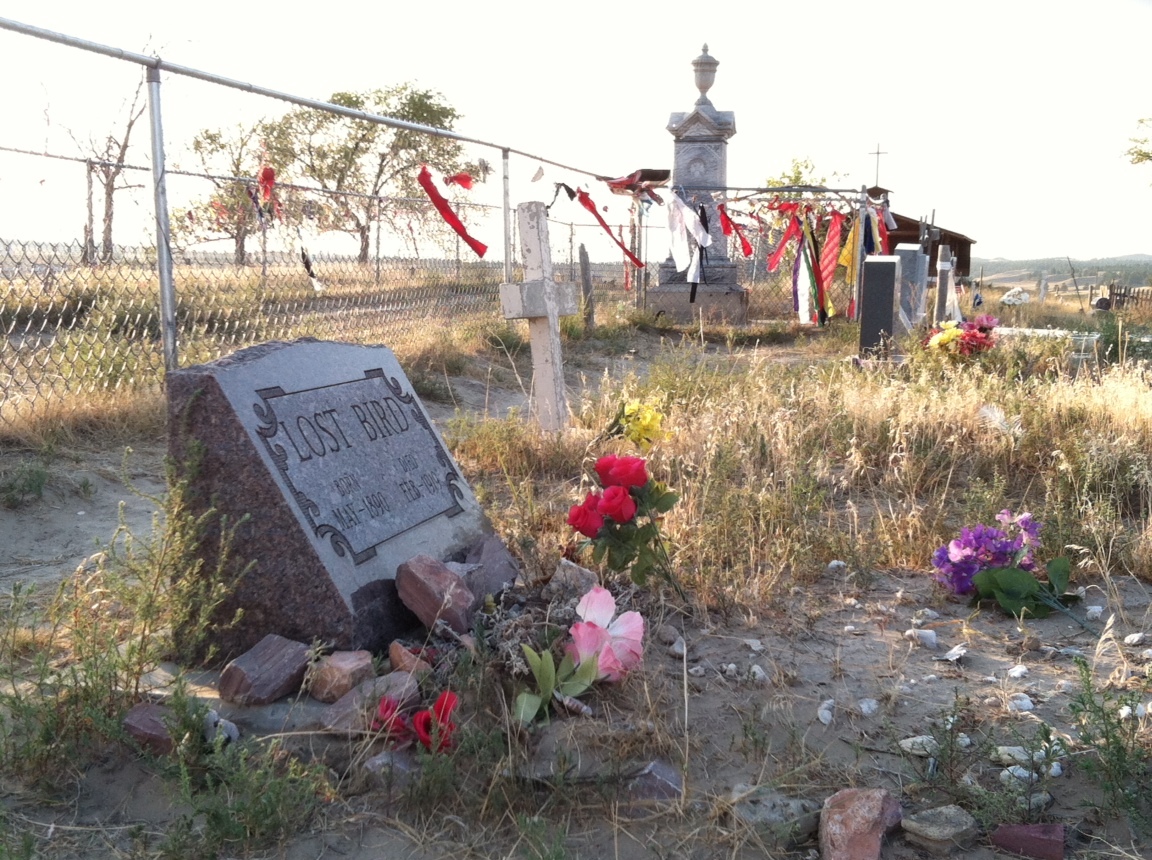
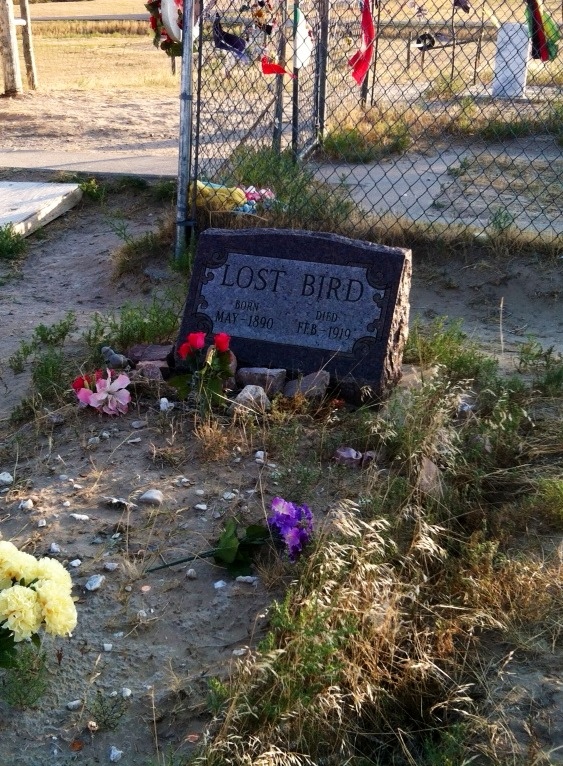
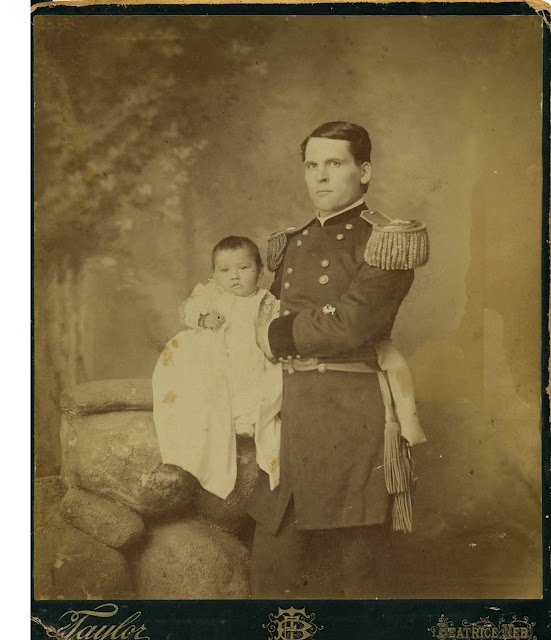
Four infants survived the four days of blizzard conditions wrapped in their dead mothers’ robes. One baby girl, only a few months old, was named “Lost Bird” after the massacre, bartered for and adopted by an Army Colonel as an interesting Indian “relic.” Rather than this adoption giving her a new chance, she died at age 29, having endured much illness, prejudice in white society, as well as estrangement from her native community and culture. Her story has been told in a book by Renee Sansom Flood, who helped to locate and move her remains back to Wounded Knee, where in death she is now back with her people.
There is unspeakable desolation and sadness on that lonely hill of graves. It is a regrettable part of our history that descendants of immigrants to American soil need to understand: by coming to the “New World” for opportunity, or refuge from oppression elsewhere, we made refugees of the people already here.
As Black Elk wrote, the dreams of a great people have been scattered and lack a center. He was not only speaking of his own tribe, but was presciently speaking of our current divisiveness – due to extremism, we lack “a center” in our current governmental discourse.
We must never allow hope to be buried at Wounded Knee nor must we ever forget what it means to no longer be safe in one’s own homeland.
Lost Bird after her adoption
One-Time
Monthly
Yearly
Make a one-time or recurring donation to Barnstorming
We think of him as safe beneath the steeple, Or cosy in a crib beside the font, But he is with a million displaced people On the long road of weariness and want. For even as we sing our final carol His family is up and on that road, Fleeing the wrath of someone else’s quarrel, Glancing behind and shouldering their load. Whilst Herod rages still from his dark tower Christ clings to Mary, fingers tightly curled, The lambs are slaughtered by the men of power, And death squads spread their curse across the world. But every Herod dies, and comes alone To stand before the Lamb upon the throne. ~Malcolm Guite “Refugee”
…as you sit beneath your beautifully decorated tree, eat the rich food of celebration, and laugh with your loved ones, you must not let yourself forget the horror and violence at the beginning and end of the Christmas story. The story begins with the horrible slaughter of children and ends with the violent murder of the Son of God. The slaughter depicts how much the earth needs grace. The murder is the moment when that grace is given.
Look into that manger representing a new life and see the One who came to die. Hear the angels’ celebratory song and remember that sad death would be the only way that peace would be given. Look at your tree and remember another tree – one not decorated with shining ornaments, but stained with the blood of God.
As you celebrate, remember that the pathway to your celebration was the death of the One you celebrate, and be thankful. ~Paul Tripp
There can be no consolation; only mourning and great weeping, sobbing that wrings dry every human cell, leaving dust behind, dust, only dust which is beginning and end.
He came to us for times such as this, born of the dust of woman and the breath of Spirit, God who bent down to lie in barn dust, walk on roads of dust, die and be laid to rest as dust in order to conquer such evil as this that could terrify masses and massacre innocents.
He became dust to be like us He began a mere speck in a womb like us, so easily washed away as unexpected, unneeded, unwanted.
Lord, You are long expected. You are needed You are wanted.
Your heart beat like ours breathing each breath like ours until a fearful fallen world took Your and our breath away.
You shine through the shadows of death to guide our stumbling uncertain feet. Your tender mercies flow freely when there is no consolation when there is no comfort.
You hear our cries as You cry too. You know our tears as You weep too. You know our mourning as You mourned too. You know our dying as You died too.
Only God can glue together what evil has shattered.
We will know His peace when He comes to bring us home, our tears finally dried, our cells no longer just dust, as we are glued together by the breath of God forevermore.
the tender mercy of our God, by which the rising sun will come to us from heaven to shine on those living in darkness and in the shadow of death, to guide our feet into the path of peace. Luke 1: 78-79







 Barnstorming