It Sings

photo by Josh Scholten

The roofs are shining from the rain,
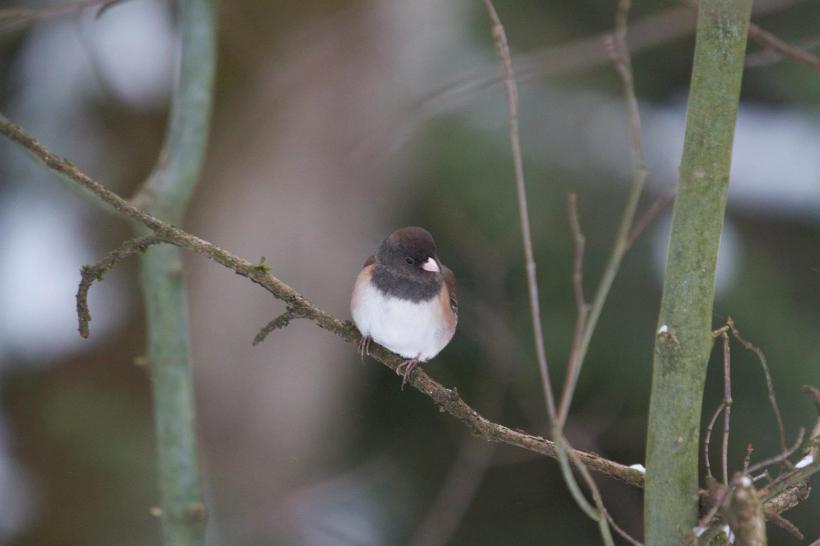
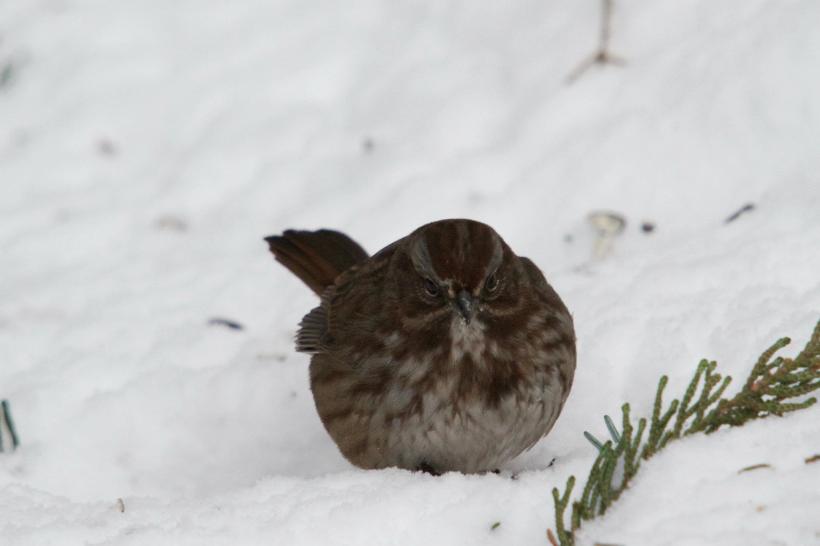
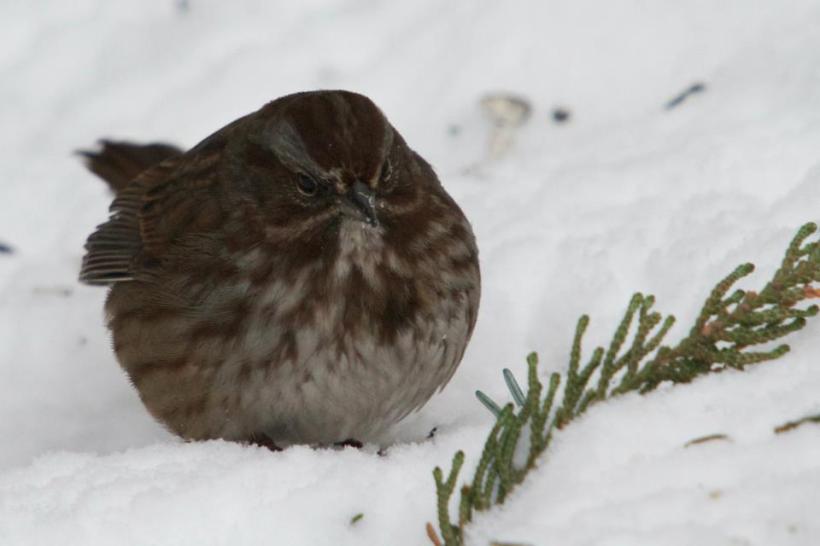
The sparrows twitter as they fly,
And with a windy April grace
The little clouds go by.

Yet the back yards are bare and brown
With only one unchanging tree–
I could not be so sure of Spring
Save that it sings in me.
–  Sara Teasdale, April

Here we are, closing in on mid-April and it has been a week of heavily drifting snowstorms in the plains, tornado weather in the south, and blustering wind and rain in the northwest.  I am not so sure of Spring nor is anyone else.

Yet it sings in me.  Yes it sings.

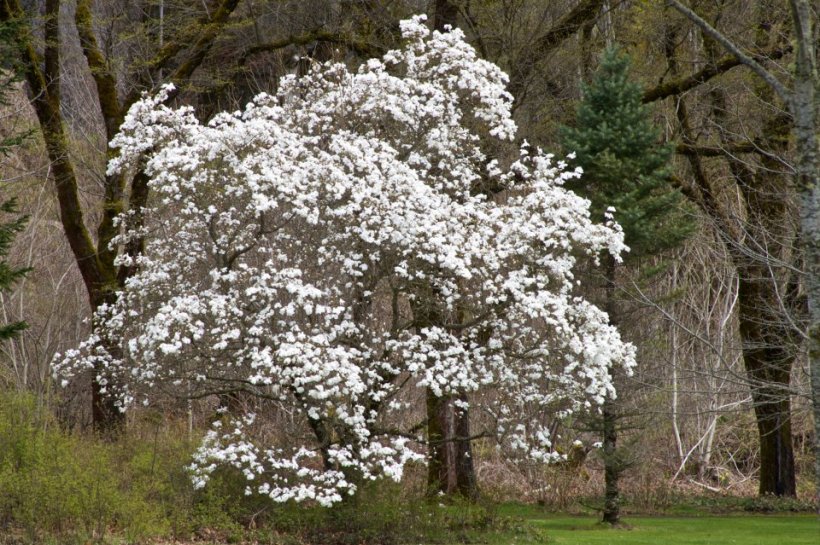
The calendar does not lie, nor does my nose.  The pollen counts are rising despite the rains and as I step outside in early dawn, I can catch the slightest fragrance of just-opening cherry and apple blossoms in the orchard.  Within a week there will be sweet perfume in the air everywhere and the fruit trees become clothed in white puffy clouds of blossom before bursting full into green.

In defiance of the calendar, our oak trees cling stubbornly to their brown bedraggled fall leaves as if ashamed to ever appear naked, even for a week.  In May they will go straight from brown to green without a moment of bare knobby branches.

Even so, it sings in me.  Yes it sings.

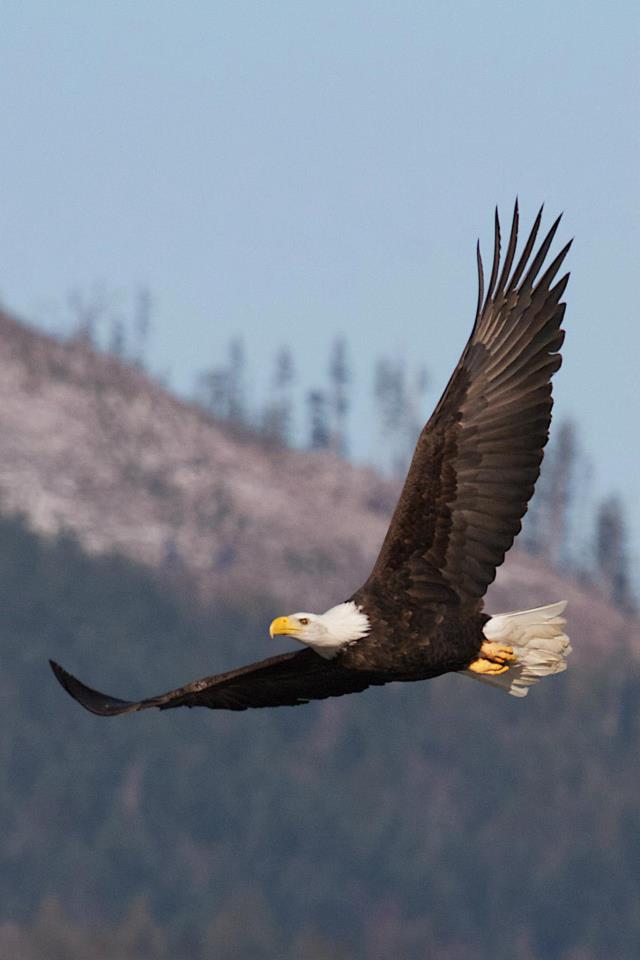
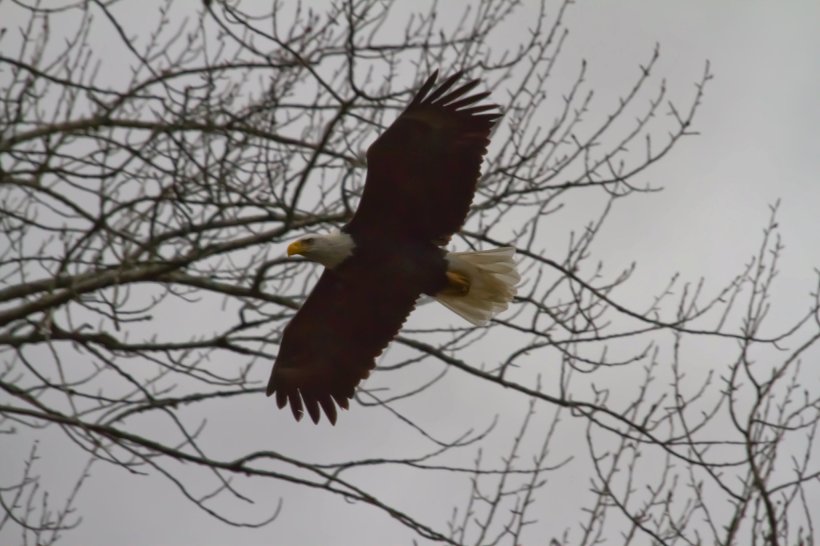
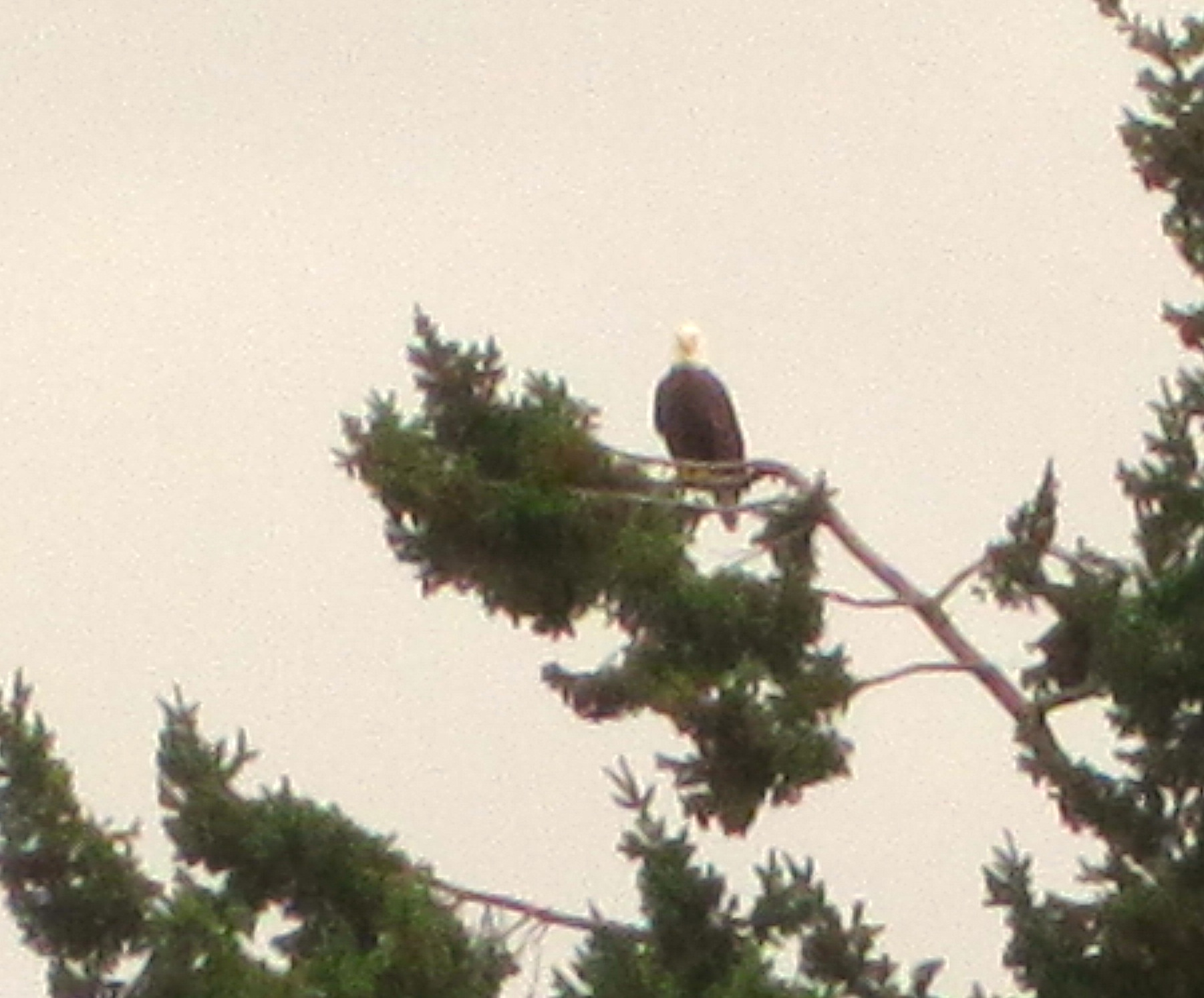
A morning bird symphony tunes up ever earlier including the “scree” and chatter from bald eagles high up in the fir trees surrounding our house.  Nesting has begun despite the wet and cold and wind because their nest is the secure home that calls them back, again and again, year after year.

Like them, it sings in me.  Yes it sings.

I rise opening like a bud, I dress my nakedness to cover up my knobbiness, I wander about outside exulting in the free concert, I manage to do chores despite the distractions — this routine of mine which is so unchanging through the calendar days becomes glorious gift and privilege.

Hopefulness sings in me in Spring.  Yes it sings.

photo by Josh Scholten

Late February Days

photo by Josh Scholten

Late February days; and now, at last,
Might you have thought that
Winter’s woe was past;
So fair the sky was and so soft the air.
The happy birds were hurrying here and there,
as something soon would happen…

–  William Morris from Earthly Paradise

We’ve had a pair of bald eagles who return every winter to our hilltop farm.  They like the high perches offered by our tall Douglas fir trees providing them a 360 degree view of the surrounding countryside and fields.  I suspect their nest is nearby, if not in our woods.  They were back today, full of conversation and gossip, chittering back and forth like a couple of sparrows, only much louder and much much bigger/grander.  The regular inhabitants of our fir trees — crows and red-tailed hawks — are quite put out at the encroachment of eagles on their territory.  They fly about the trees angrily, with scolding and harassing calls.

But the eagles reign wherever they set down talons.  There is simply nothing to argue about.  My only worry about having them in the yard is how vulnerable our cats might be when the wild bunny pickings get thin.   Otherwise I appreciate the eagles for the good neighbors they are.  They keep the rodent population under control, they are polite and don’t throw raucous parties at night, and they have a stable long term marriage, something I deeply respect.

So when their chirpy dialogue quiets down for the night and the hoot owls start in, I think about how much I always miss all this conversation during the silent nights of deep winter.  Happy birds are back, a truly hopeful sign that we are passing into spring, and something soon will happen…

Bereft of Birdsong

newyearbaker

Silence and darkness grow apace, broken only by the crack of a hunter’s gun in the woods.  Songbirds abandon us so gradually that, until the day when we hear no birdsong at all but the scolding of the jay, we haven’t fully realized that we are bereft — as after a death.  Even the sun has gone off somewhere… Now we all come in, having put the garden to bed, and we wait for winter to pull a chilly sheet over its head.  
~Jane Kenyon from “Good-by and Keep Cold”

Every day now we hear hunters firing in the woods and the wetlands around our farm, most likely aiming for the few ducks that have stayed in the marshes through the winter, or possibly a Canadian goose or a deer to bring home for the freezer.   The usual day-long symphony of birdsong is replaced by shotguns popping, hawks and eagle screams and chittering, the occasional dog barking, with the bluejays and squirrels arguing over the last of the filbert nuts.

In the clear cold evenings, when coyotes aren’t howling in the moonlight, the owls hoot to each other across the fields from one patch of woods to another, their gentle resonant conversation echoing back and forth.    The horses confined to their stalls in the barns snort and blow as they bury their noses in flakes of summer-bound hay.

But there is no birdsong arias,  leaving me bereft of their blending musical tapestry that wake me at 4 AM in the spring.   No peeper orchestra from the swamps in the evenings, rising and falling on the breeze.
It is too too quiet.

The chilly silence of the darkened days is now interrupted by all percussion, no melody at all.   I listen intently for early morning and evening serenades returning.
It won’t be long.
jansunset

Advent Sings: Carried Aloft

photo by Josh Scholten

He shielded him and cared for him;
    he guarded him as the apple of his eye,
11 like an eagle that stirs up its nest
    and hovers over its young,
that spreads its wings to catch them
    and carries them aloft.
12 The Lord alone led him;
Deuteronomy 32: 10b-12a from the Song of Moses

Then Moses went up to God, and the Lord called to him from the mountain and said, “This is what you are to say to the descendants of Jacob and what you are to tell the people of Israel: ‘You yourselves have seen what I did to Egypt, and how I carried you on eagles’ wings and brought you to myself. Now if you obey me fully and keep my covenant, then out of all nations you will be my treasured possession. Although the whole earth is mine, you will be for me a kingdom of priests and a holy nation.’ These are the words you are to speak to the Israelites.”
25 So Moses went down to the people and told them.
Exodus 19: 3-6. 25

We live where eagles live.  It is a rare day to not see an eagle sitting in the tall firs around our farm, or flying over the river in search of salmon, or circling high above the valley.   They command awe and my attention is riveted by their strength and beauty.

The eagle, of all God’s creatures, is used as metaphor by God Himself for the care He feels for His people.   The wings of an eagle carry the weight of the world’s cares.

So too, the weight of the world is carried by a baby earth-bound, born in a barn to eventually die on a cross.  Either soaring on the wings of eagles, lying helpless in the straw or hanging forsaken on a tree so we are forever forgiven.

That is man, that God is mindful of us.

That is God, wanting us to know He loves us enough to carry us.

…those who hope in the Lord
    will renew their strength.
They will soar on wings like eagles;
    they will run and not grow weary,
    they will walk and not be faint.
Isaiah 40: 31

Welcoming Heart

Keep a green tree in your heart and perhaps a singing bird will come–
Chinese Proverb

I need reminding that what I offer from my heart reflects what I will receive there.  If I’m grumbling and breaking like a dying vine instead of a green tree, my discouragement entangled by the cobwebs and mildew of worry, then no singing bird will come.

So much better to nurture the singers of joy and gladness with a heart budding green with gratitude, anticipating and expectant.

The welcome mat is out and waiting.

Any time now…

Half Fledged

photo by Emily Gibson, just outside our front door

Sometimes, hard-trying, it seems I cannot pray–
For doubt, and pain, and anger, and all strife.
Yet some poor half-fledged prayer-bird from the nest
May fall, flit, fly, perch–crouch in the bowery breast
Of the large, nation-healing tree of life;–
Moveless there sit through all the burning day,
And on my heart at night a fresh leaf cooling lay.
~George MacDonald from Diary of an Old Soul

There can be no response but to bow in earnest prayer, waiting for the hatch of a healing peace among the diverse peoples and opinions of our nation.   Our lives are half-fledged, not yet fully delivered nor understood, doubt burning into our flesh like thorns on fire.  We have become an angry and hurting nation– those who won and those who lost.  The gloating bloats who we are, beyond recognition.

May our prayers rise like a dove from hearts in turmoil,  once again to soar on the wings of eagles.

Peace, come quickly.
Be no longer moveless.
Move us to higher ground.
Plow deep our hearts.

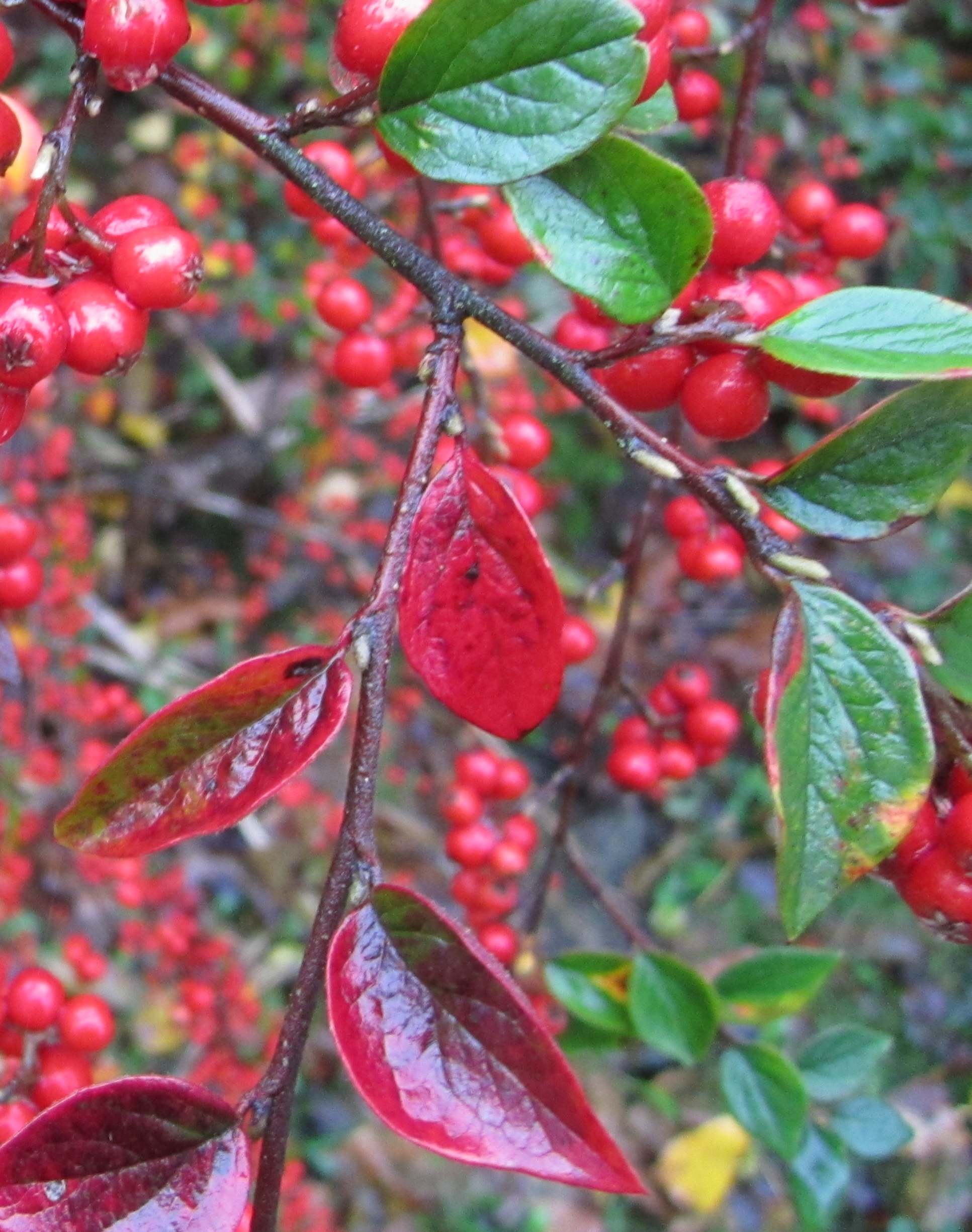
photo of “firethorn” bush (pyracanthus) by Emily Gibson

A Doleful Hymn

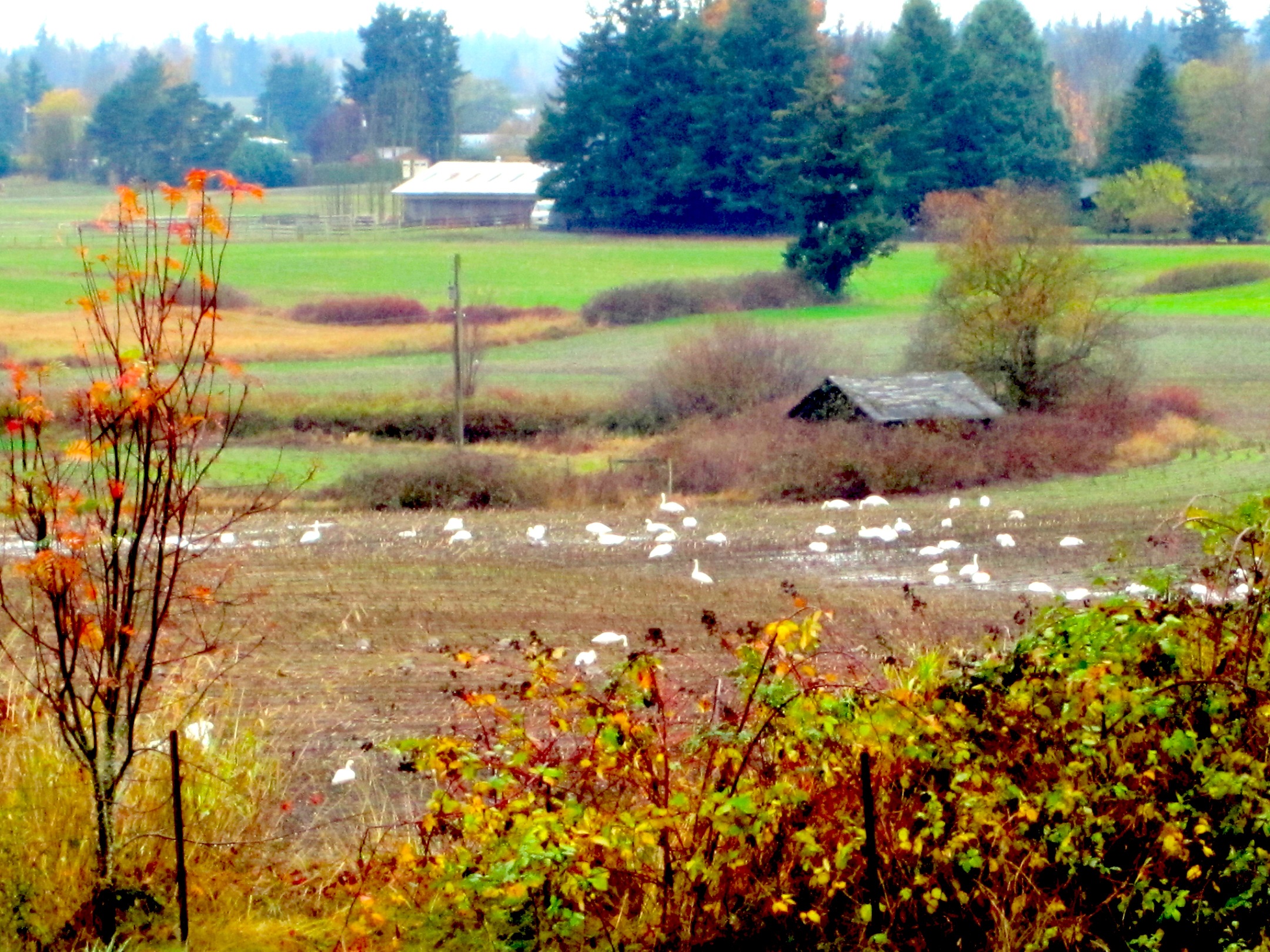
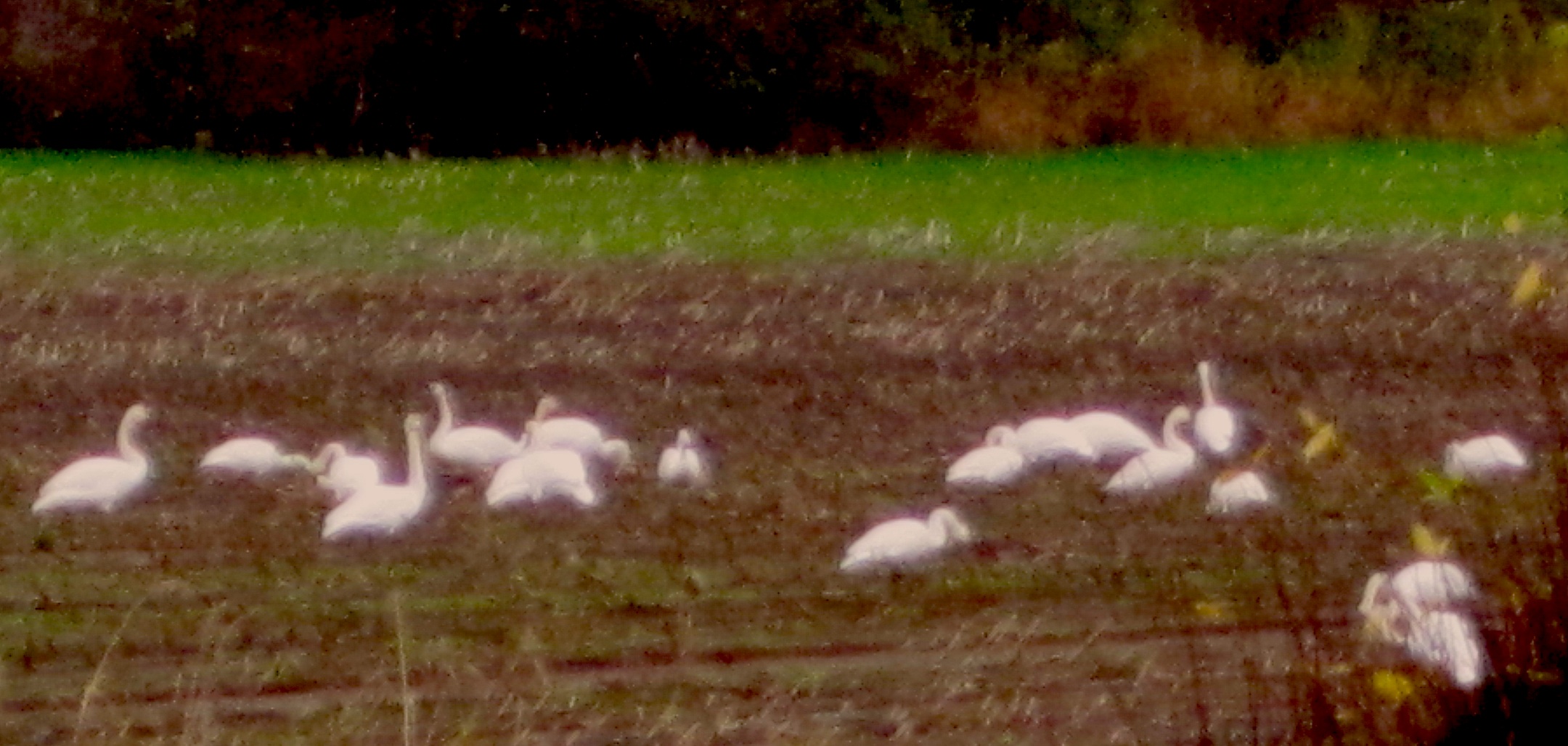
Photo taken today across the road from our farm- feeding swans amid the cornfield stubble
I have looked upon those brilliant creatures,   
And now my heart is sore.
All’s changed since I, hearing at twilight,   
The first time on this shore,
The bell-beat of their wings above my head,   
Trod with a lighter tread.
~William Butler Yeats from “The Wild Swans at Coole”

I was working outside before the sun was up this rainy morning, preparing the horse barn for our vet arriving to perform an on-the-farm surgery on one of our Haflinger horses.  As I prepared the shavings bedding, feeling anxious about the procedure to take place, I heard sounds overhead that come only a few days a year: the swishing hush of wings in flight and the trumpeter swan “doleful hymn” called out as dozens passed above me in a long meandering line against the early dawn greyness.

The swan flocks predictably arrive in early November to eat their fill, feasting in the harvested cornfields surrounding our farm, their bright white plumage a stark contrast to the dulling muddy soil.  And too soon they lift their long graceful necks and fan out their wings to be picked up the wind, leaving us behind and beneath, moving south, heading year after year for their wintering home.

These incredible creatures bring such joy with their annual arrival and brief stay, their leave-taking  a harbinger for this dying time of year, reminding me once again nothing on earth can last.

“‘Tis strange that death should sing…” but in fact,  ’tis strange that death should fly in and out on silken wings.

I give myself over to their beauty, and walk with lighter tread, singing a new song.

I am grateful my sore heart still soars.

‘Tis strange that death
should sing.
I am the cygnet to this pale faint swan,
Who chants a doleful hymn to his own death,
And from the organ-pipe of frailty sings
His soul and body to their lasting rest.
~William Shakespeare from The Life and Death of King John

The swan, like the soul of the poet,
By the dull world is ill understood.
~Heinrich Heine

This Twittering World

photo by Josh Scholten

Distracted from distraction by distraction
Filled with fancies and empty of meaning…

…Not here
Not here the darkness, in this twittering world.
from Burnt Norton (1936) part of Four Quartets by T.S. Eliot

Eliot didn’t have birds or future tweets of the 21st century in mind when he wrote Burnt Norton in 1936.  He was far more concerned about the concept of time and redemption, using the analogies of a garden, a graveyard, and most disturbingly, a subway train of empty-souled people traveling under London in the dark.  Only the present matters as the past cannot be changed and the future remains unknown, trusting the reassurance and salvation of Logos, the source of  the natural and creative order of all things.   Only God Himself remains outside of the constraints of time and place.

Perhaps Eliot had predicted the unknowable future.  It now is a “twittering world” in a way that Eliot, critical of dehumanizing technology of his time,  somehow was prescient enough to foresee.

When birdsong begins on our farm in early June at 4 AM in the apple, cherry, chestnut, and walnut trees outside our bedroom windows, I am brought face to face, eyes and ears wide open, with the immediate present, distracted from the distraction of my dreams by the distraction of awakening to music of the creative order among the branches,  amidst cool morning air.

Once the birds settle into routine conversation after twenty minutes of their loudly tweeted greetings of the day,  I sit down bleary-eyed at my computer to enter the twittering world of technology, too often filled with fancies and empty of meaning.

Yet, I’m determined.  Not here the darkness, if I can keep it at bay.

No darkness here.

photo by Josh Scholten

Moving Up a Notch

Scars come in various sizes and shapes, some hidden, some obvious to all.  How they are inflicted also varies–some quite accidental, others therapeutic, and too many intentional.  The most insidious are the ones deep inside where no one can see or know.

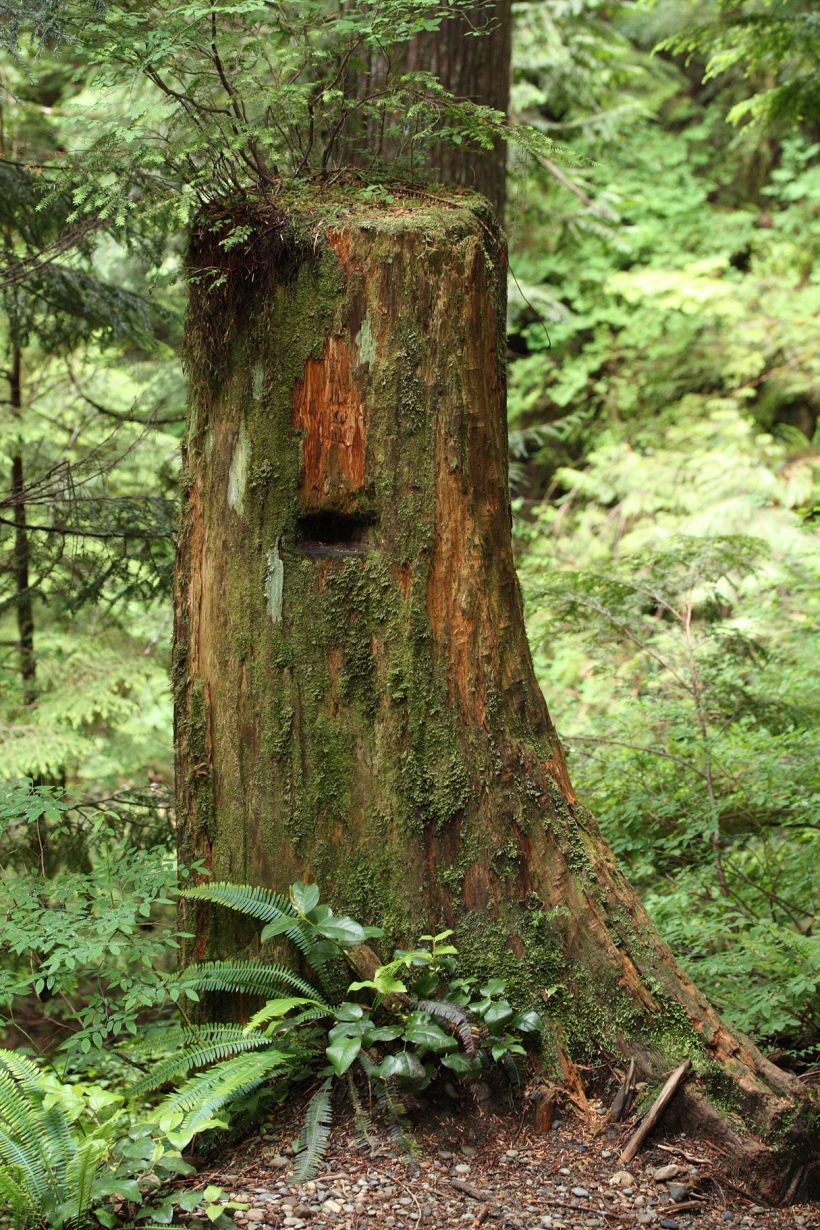
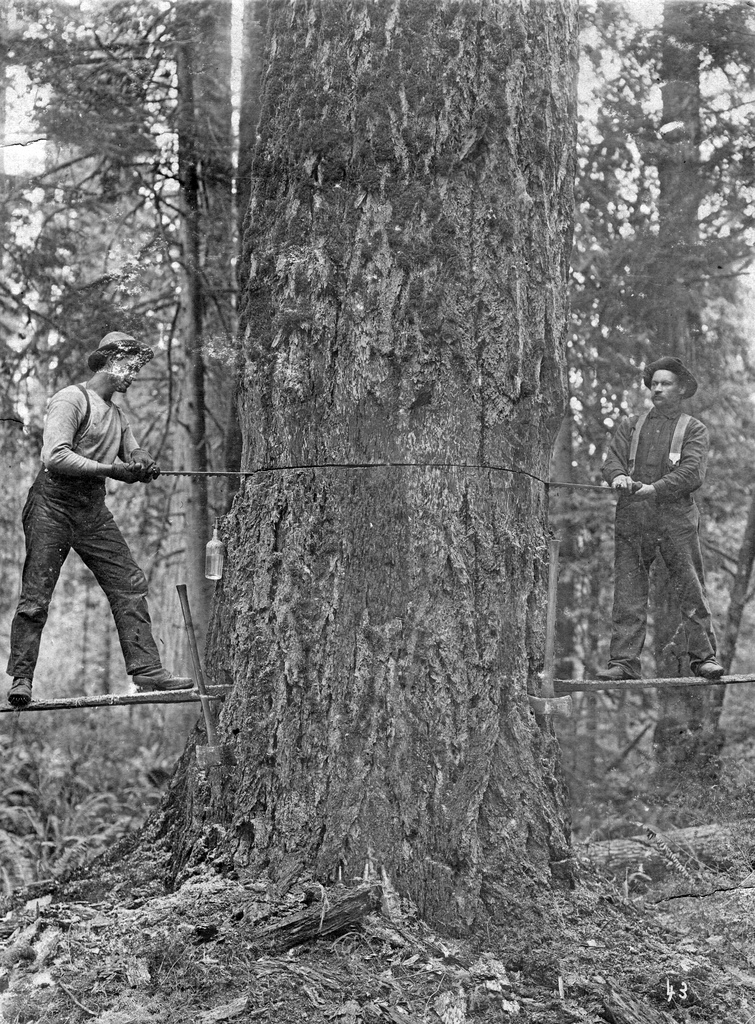
Back in our woodlot stands a sawed off stump of a cedar that was old growth in virgin forest over a hundred years ago.  One day the clearcut loggers came through our part of this rural county and took every tree they could to haul to the local sawmills to become beams and lumber for the growing homesteading population in the region.  This cedar once was grand and vast, covering an immense part of the forest floor, providing protection to trillium at its feet and finches’ nests and raptors hunting in its branches.   It nurtured its environment until other plans were made, and one day, axes fell on its sides to cut out the notches for the springboards where two loggers stood to man the saw which brought the tree down.  Where the wood went is anyone’s guess.  It could be one of the mighty beams supporting our old hay barn roof or it could have become the foundation flooring of a nearby one room school house.  It surely had a productive and meaningful life as part of a structure somewhere until rot or carpenter ants or fire brought it once again to its knees.

But the stump remains, a tombstone of remembrance of a once grand tree, the notch scars embedded deep in its sides, nursing new seedlings from its center and moss, lichen and ferns from its sides.

I come from logger stock so I don’t begrudge them their hard scrabble living, their dangerous work in order to feed themselves and their families.  It’s just that those scars even one hundred years later are such a visible reminder of what once was a vital living organism toppled for someone’s need and convenience.

Trees are not unique.  It happens to people too.  Everyday scars are inflicted for reasons hard to justify.  Too often I see them self-inflicted in an effort to feel something other than despair.  Sometimes they are inflicted by others out of fear or need for control.  Moving up a notch only allows more precise aim and a deeper cut.

Sometimes they are simply the scars of living, accumulated along the pathway we tread.

None of them are as deep and wide as the scars that were accepted on our behalf, nor as wondrous as the love that oozed from them, nor as amazing as the grace that abounds to this day because of the promise spelled out by them.

As a result, that tree lives.


Lenten Reflection–Be Hatched

photo by Josh Scholten

It may be hard for an egg to turn into a bird: it would be a jolly sight harder for it to learn to fly while remaining an egg. We are like eggs at present. And you cannot go on indefinitely being just an ordinary, decent egg. We must be hatched or go bad.
C.S.Lewis

There is certain comfort in incubating in the nest, snuggled warm under a fluffy breast, satisfied with the status quo. I tend toward perpetual nesting myself, preferring home to travel, too easily contented with the familiar rather than stretching into uncharted territory.

But eventually the unhatched egg gets the boot, even by its parents. When there are no signs of life, no twitches and wiggles and movement inside, it is doomed to rot. And we all know nothing is worse than a rotten egg. Nothing.

So we must chip away and crack open our comfy shell, leaving the fragments behind. Feeble, weak and totally dependent on the grace of others to feed and protect us, we are freed of the confinement of the sterility of the commonplace and loosed upon an unsuspecting world.

Eventually we will fly, the wind under our wings.

photo by Josh Scholten