For So It Has Been

roseswirl2
bayviewanacortes
porchrose
I am not resigned to the shutting away of loving hearts in the hard ground.
So it is, and so it will be, for so it has been, time out of mind:
Into the darkness they go, the wise and the lovely.  Crowned
With lilies and with laurel they go; but I am not resigned.
Lovers and thinkers, into the earth with you.
Be one with the dull, the indiscriminate dust.
A fragment of what you felt, of what you knew,
A formula, a phrase remains,—but the best is lost.
The answers quick and keen, the honest look, the laughter, the love,—
They are gone.  They are gone to feed the roses.  Elegant and curled
Is the blossom.  Fragrant is the blossom.  I know.  But I do not approve.
More precious was the light in your eyes than all the roses in the world.
Down, down, down into the darkness of the grave
Gently they go, the beautiful, the tender, the kind;
Quietly they go, the intelligent, the witty, the brave.
I know.  But I do not approve.  And I am not resigned.
~Edna St. Vincent Millay “Dirge Without Music”
Each Memorial Day weekend without fail,
we gather with family, have lunch, reminisce,
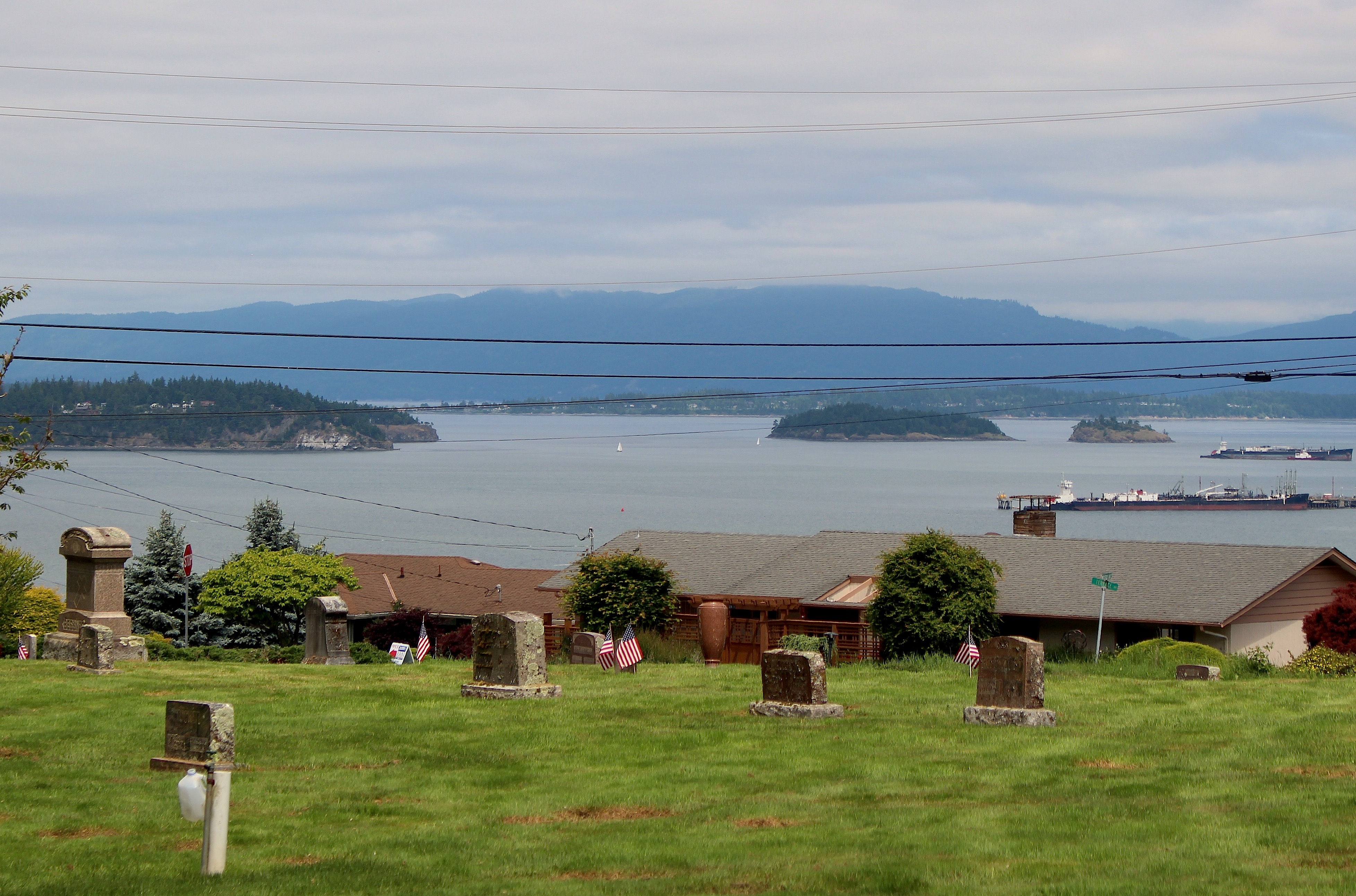
and trek to the cemetery high above Puget Sound
to catch up with our relatives who lie there still,
some we knew and loved and miss,
others not so much, unknown to us
except on genealogy charts,
their names and dates and these stones
all that is left of them.
Yet we know each, as we know ourselves and others,
was tender and kind, though flawed and broken,
was beautiful and strong, though wrinkled and frail,
was hopeful and faithful, though too soon in the ground.

We know this about them
as we know it about ourselves:
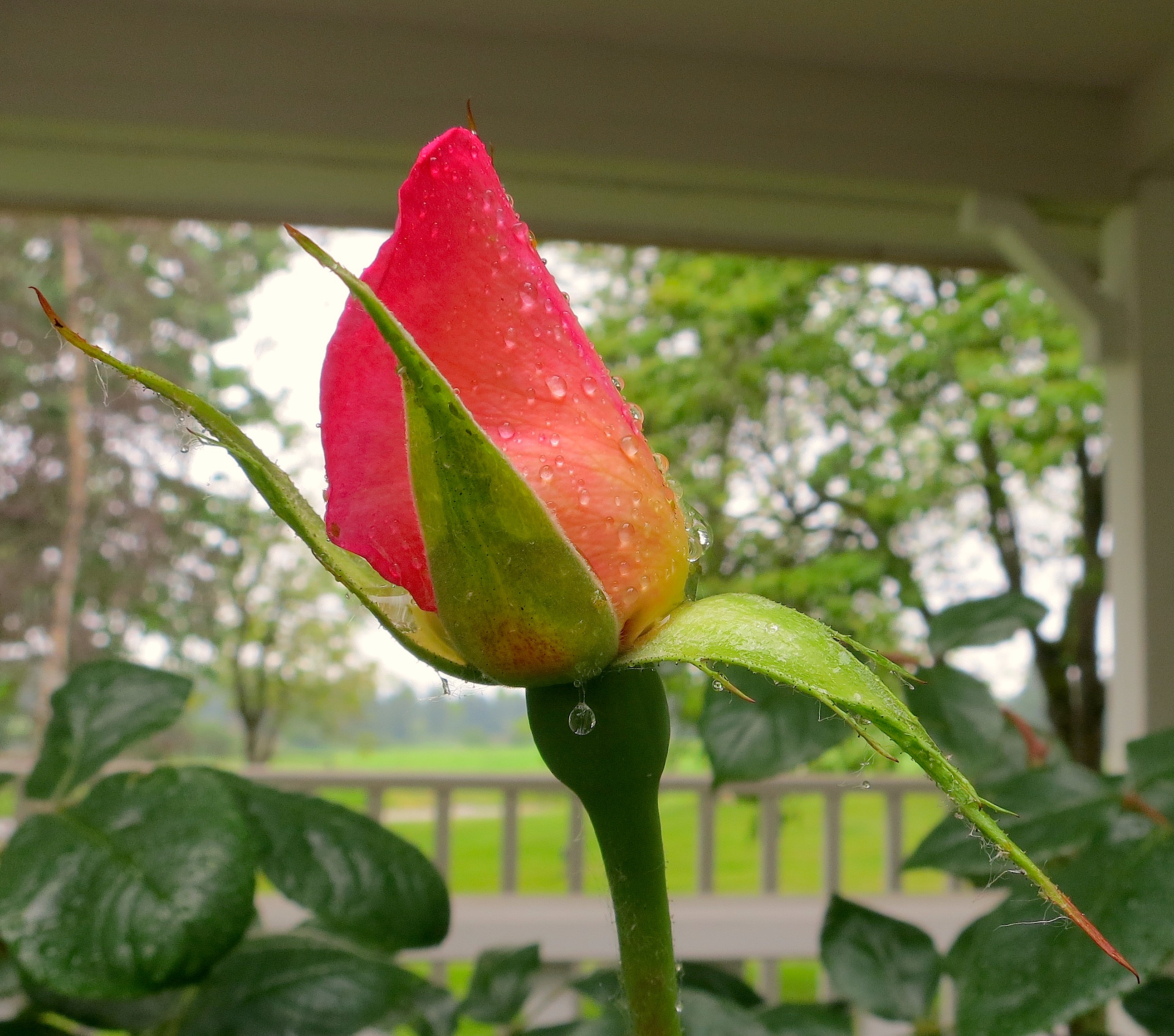
someday we too will feed roses,
the light in our eyes
become elegant swirls with fragrant breath of heaven.
No one asks if we approve of this, nor should they;
So it is, so it will be, for so it has been.

rosemountain
 weepingrose
roseinside

Fenced Off

14119_552516830110_42904068_32556259_1112150_n

My grandmother’s house had been torn down after she sold her property on Similk Bay near Anacortes, Washington to a lumber company.  This was the house where her four babies were born, where she and my grandfather loved and fought and separated and loved again, and where our family spent chaotic and memorable Thanksgiving and Christmas meals.  After Grandpa died suddenly, she took on boarders, trying to afford to remain there on the wooded acreage fronted by stump farm meadows where her Scottish Highland cattle grazed.   She reached an age when it was no longer possible to make it work.   A deal was struck with the lumber company and she had moved to a small apartment, bruised by the move from her farm.

My father realized what her selling to a lumber company meant and it was a crushing thought.  The old growth woods would soon also be stumps on the rocky hill above the bay, opening a view to Mt. Baker to the east, to the San Juan Islands to the north, and presenting an opportunity for development into a subdivision.   He woke my brother and me early one Saturday in May and told us we were driving the 120 miles to Anacortes.  He was on a mission.

As a boy growing up on that land, he had wandered the woods, explored the hill, and helped his dad farm the rocky soil.  There was only one thing he felt he needed from that farm and he had decided to take us with him, to trespass where he had been born and raised to bring home a most prized treasure–his beloved lady slippers from the woods.

These dainty flowers enjoy a spring display known for its brevity–a week or two at the most–and they tend to bloom in small little clusters in the leafy duff mulch of the deep woods, preferring only a little indirect sunlight part of the day.  They are not easy to find unless you know where to look.  My father remembered exactly where to look.

We hauled buckets up the hill along with spades, looking as if we were about to dig for clams at the ocean.  Dad led us up a trail into the thickening foliage, until we had to bushwhack our way into the taller trees where the ground was less brush and more hospitable ground cover.  He would stop occasionally to get his bearings as things were overgrown.   We reached a small clearing and he knew we were near.  He went straight to a copse of fir trees standing guard over a garden of lady slippers.

There were almost thirty of them blooming, scattered in an area about the size of my tiny bedroom at home.  Each orchid-like pink and lavender blossom had a straight backed stem that held it with sturdy confidence.  To me, they looked like they could be little shoes for fairies who may have hung them up while they danced about barefoot.    To my father, they represented the last redeeming vestiges of his often traumatic rearing by an alcoholic father, and were about to be trammeled by bulldozers.  We set to work gently digging them out of their soft bedding, carefully keeping their bulb-like corms from losing a protective covering of soil and leafy mulch.  Carrying them in the buckets back to the car, we felt some vindication that even if the trees were to be lost to the saws, these precious flowers would survive.

When we got home, Dad set to work creating a spot where he felt they could thrive in our own woods.  He found a place with the ideal amount of shade and light, with the protection of towering trees and the right depth of undisturbed leaf mulch.  We carefully placed the lady slippers in their new home, scattered in a pattern similar to how we found them.  Then Dad built a four foot split rail fence in an octagon around them, as a protection from our cattle and a horse who wandered the woods, and as a way to demarcate that something special was contained inside.

The next spring only six lady slippers bloomed from the original thirty.  Dad was disappointed but hoped another year might bring a resurgence as the flowers established themselves in their new home.  The following year there were only three.  Two years later my father left us and them, not looking back.

Sometime after, when my mother had to sell our farm after the divorce, I visited our lady slipper sanctuary in the woods for the last time in the middle of May.  The split rail fence was still there, guarding nothing but old memories.  No lady slippers bloomed.  There was not a trace they had ever been there.  They had simply given up and disappeared.

The new owners of our farm surely puzzled over the significance of the small fenced-off area in the middle of our woods.  They probably thought it surrounded a graveyard of some sort.

And so it did.

What We Can Do

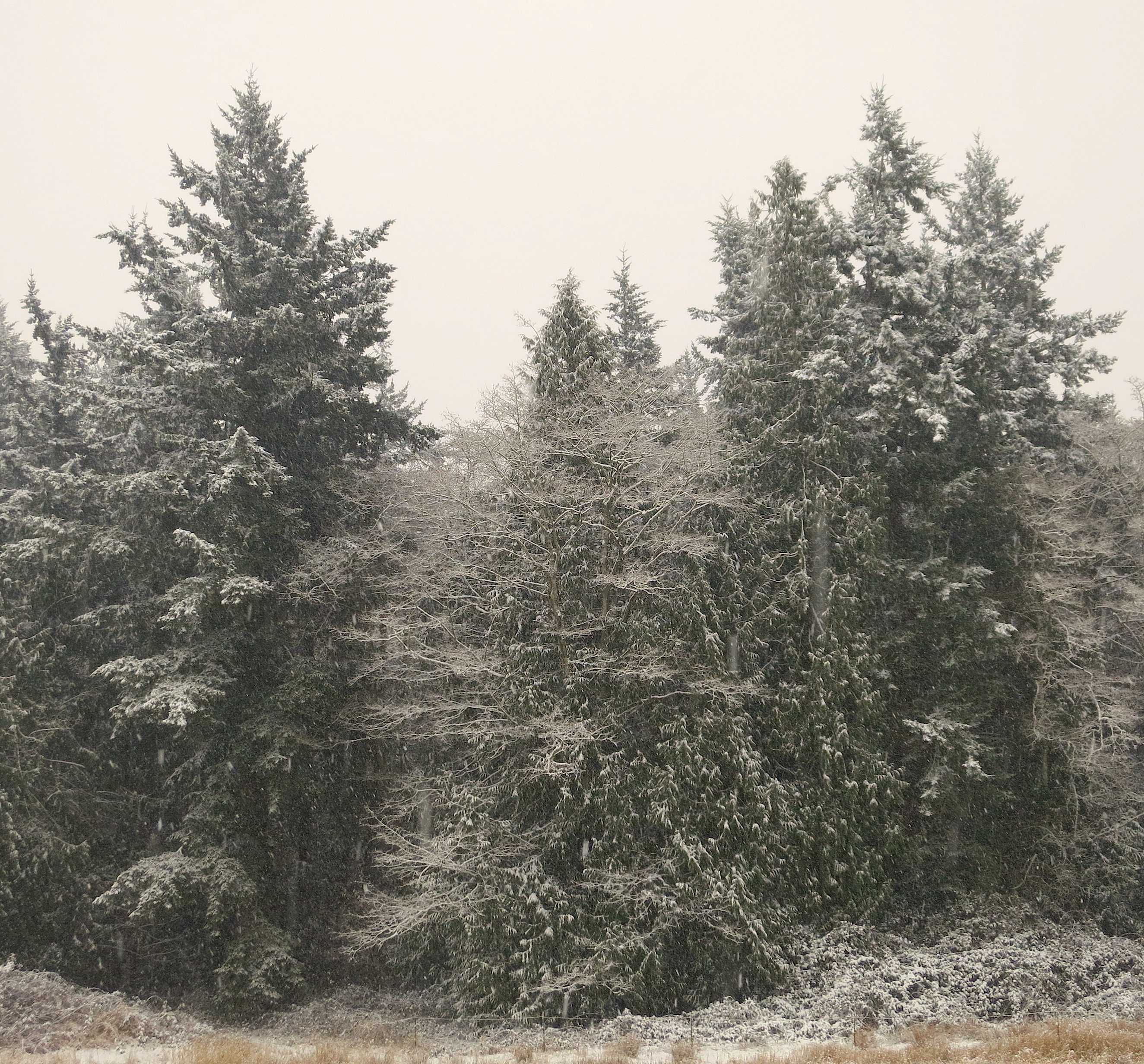
snow22314

There is so very little we can do,
Friends, for these beautiful children of ours,
They will come to grief and suffer and you
And I bow to darkness and evil powers.

The gentle boy who wrote poems goes
For a walk in January and does not return.
His mother and father search the woods. The snow
Is deep. All night their hearts burn

For him. He is found, hanging from a limb,
And the father carries the body of his son
Into the yard and tenderly lays him
On the step. Stephen, O darling one,

See how your parents’ hearts break for you.
There is so very little we can do.
~Gary Johnson


Our woodlot lies quiet this time of year.  There have been numerous wind storms that have snapped trees or uprooted them completely and they rest where they have fallen, a crisscross graveyard of trunks that block paths and thwart us on the trails.  Years of leaves have fallen undisturbed, settling into a cushiony duff that is spongy underfoot, almost mattress-like in its softness, yet rich and life-giving to the next generation of trees.

We’ve intentionally left this woods alone for over twenty years.  When we purchased this farm, cows had the run of the woods, resulting in damage to the trees and to the undergrowth.  We fenced off the woods from the fields, not allowing our horses access. It has been the home for raccoon, deer and coyotes, slowly rediscovering its natural rhythms and seasons.

It feels like time to open the trails again.  We’ve cut through the brush that has grown up, and are cutting through the fallen trunks to allow our passage.

We bought this farm from a remarkable 82 year old man who loved every tree here. After spending 79 years on this farm, he treasured each one for its history, its fruit, its particular place in the ground, and would only use the wood if God had felled the tree Himself.  The old farmer directed us to revere the trees as he had, and so we have.  When he first took us on a tour of the farm, it was in actuality a tour of the trees, from the large walnuts in the front yard, to the poplars along the perimeter, to the antique apples, cherries and pear, the filbert grove, the silver plum thicket, as well as the mighty seventy plus year old Douglas fir, Western hemlock and Red cedar trees reestablished after the original logging in the early twentieth century.   The huge old stumps still bore the carved out eight inch notches for the springboards on which the lumbermen balanced to cut away with their axes at the massive diameter of the trees.

He led us to a corner of the woods and stood beneath a particular tree, tears streaming down his face.  He explained this was where his boy had hung himself, taking his life at age fifteen in 1968.   The old farmer still loved this tree, as devastating as it was to lose his son so unexpectedly from one of its branches.  He stood shaking his head, his tears dropping to the ground.  I knew his tears had watered this spot often over the years.  He looked at our boys—one a two year old in a pack on my back, and the other a four year old gripping his daddy’s hand—and told us he wished he’d known,  wished there could have been something he could have done, wished he could have understood his son’s despair, wished daily there was a way to turn back the clock and make it all turn out differently.  He wanted us to know about this if we were to own this woods, this tree, this ground, with children to raise here so there would be something we could do to prevent this from happening again to one of our own.

I was shaken by such raw sharing and the obvious sacredness of the spot.   Though the boy lay buried in a nearby cemetery, a too-young almost-man lost forever for reasons he never found to express to others, it was as if this spot, now hallowed by his father’s tears, was his grave.  This tree witnessed his last act and last breath on earth.

We have left the woods untouched in our effort to let it restore and heal, and to allow that tree to blend into the forest again, surrounded by new growth and life.  We have told this young man’s story to our children and are reminded of the precious gift of life we all have been given, and that it must be treasured and clung to, even in our darkest moments.  This father’s tears watering this woods are testimony enough of his own clinging to life, through his faith in God and in respect to the memory of his beloved boy.

The old farmer and his wife now share the ground with their son, reunited again a only few miles away from our home that was theirs for decades.  Their woods is reopening to our feet, allowing us passage again, and despite the darkness that overwhelms it each winter, the woods bear life amidst the dying as a forever reminder.

And we will not forget.  It is so very little, but the very least we can do.


snow12201313

Headed Home

banner1

He wasn’t just any drunk.  He was a mean drunk.  Surly, cursing, prone to throwing things and people, especially at home.

My grandmother used to say he learned to drink in the logging camps and I suspect that is true.  He started working as a logger before he was fully grown, dropping out of school, leaving home around age sixteen and heading up to the hills where real money could be made.  He learned more than how to cut down huge old growth Douglas Fir trees, skid them down the hills using a team of horses, and then roll them onto waiting wagons to be hauled to the mills.  He learned how to live with a group of men who surfaced once or twice a month from the hills to take a bath and maybe go to church with their womenfolk. Mostly he learned how to curse and drink.

He headed home to the  farm with muscles and attitude a few years later, and started the process of felling trees there, creating a “stump farm” that was a challenge to work because huge stumps dotted the fields and hills.  He slowly worked at blasting them out of the ground so the land could be tilled.  It proved more than he had strength and motivation to do, so his fields were never very fruitful, mostly growing hay for his own animals.  He went to work in the local saw mill to make ends meet.

He cleaned up some when he met my grandmother, who at eighteen was twelve years younger, and eager to escape her role as chief cook and bottle washer for her widowed father and younger brother.   She was devout, lively and full of energy and talked constantly while he, especially when sober, preferred to let others do the talking.  It was an unusual match but he liked her cooking and she was ready to escape the drudgery of her father’s household and be wooed.

They settled on the stump farm and began raising a family, trying to eke out what living they could from the land, from the sporadic work he found at the saw mill, and every Sunday, took the wagon a mile down the road to the Summit Park Bible Church where they both sang with gusto.

He still drank when he had the money, blowing his pay in the local tavern, and stumbling in the back door roaring and burping, falling into bed with his shoes on.  Grandma was a teetotaler and yelled into his ruddy face about the wrath of God anytime he drank, their four children hiding when the dishes started to fly, and when he would whip off his belt to hit anyone who looked sideways at him.

When their eldest daughter took sick and died quickly of lymphoma at age eight despite the little doctoring that was available, Grandpa got sober for awhile.  He saw it as punishment from God, or at least that is what Grandma told him through her sobs as she struggled to cope with her loss.

Over the years, he relapsed many times, losing fingers in his work at the mill, and losing the respect of his wife, his children and the people in the community.  Grandma left with the kids for several months to cook in a boarding house in a neighboring town, simply to be able to feed her family while Grandpa squandered what he had on drink.   Reconciled over and over again, Grandma would come back to him, sending their growing son to fetch him from the tavern for the night.  My Dad would bicycle to that dark and smoky place,  stand Grandpa up and guide him staggering out to their truck for the weaving drive home on country roads.  On more than one occasion, Grandpa, belligerent as ever, would resist leaving and throw a punch at his boy, usually missing by a mile.

But once the boy grew taller and strong enough to fight back, managing to knock Grandpa to the ground in self-defense, the punching and resistance stopped.   The boozing didn’t.

Grandpa sobered up for good while his boy fought in the war overseas, striking a bargain with God that his boy would come home safe as long as Grandpa left alcohol alone.  It stuck and he stayed sober.  His boy came home.  Grandpa saw it as a promise kept and became an elder in his Bible Church, taught Sunday School and gave his extra cash to the church rather than the tavern.

Sitting in a Christmas Sunday School program one Christmas Eve, Grandpa leaned toward Grandma and she noticed his face broken out in sweat, his face ashen.

“It’s hot in here, “ he said and collapsed in her lap.    He was gone, just like that, and he left the rest of his family behind while sitting in church, sober as can be,  on the day before Christmas.

Finally everlastingly forgiven, he headed one more time, not weaving or swerving but on the straight and narrow,  home.

A Long Ago January Afternoon

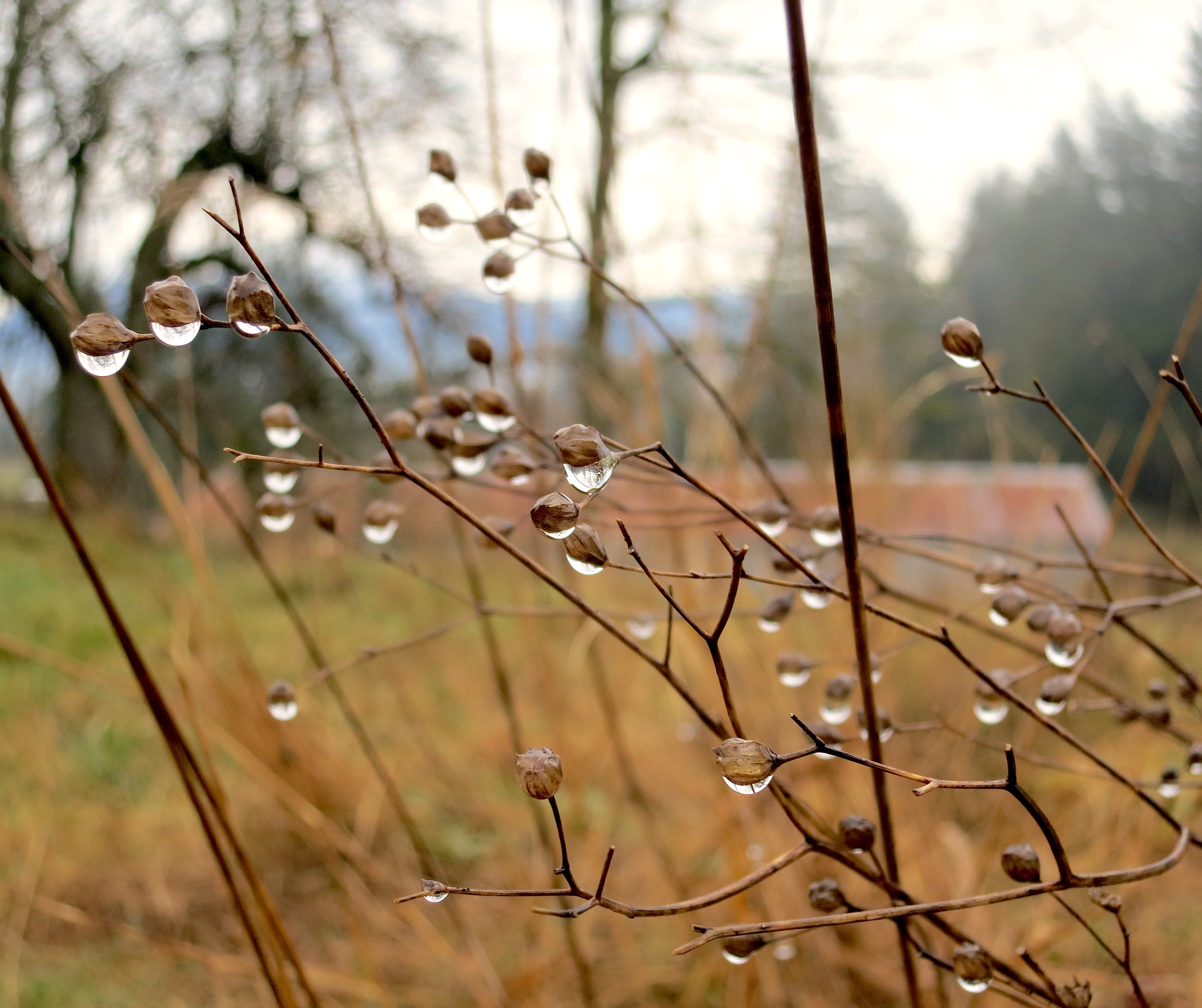
raindrops1315

My own heart let me more have pity on; let
Me live to my sad self hereafter kind,
Charitable; not live this tormented mind
With this tormented mind tormenting yet.
I cast for comfort I can no more get
By groping round my comfortless, than blind
Eyes in their dark can day or thirst can find
Thirst’s all-in-all in all a world of wet.
~Gerard Manley Hopkins

Surfacing to the street from a thirty two hour hospital shift usually means my eyes blink mole-like, adjusting to searing daylight after being too long in darkened windowless halls.  This particular January day is different.   As the doors open, I am immersed in a subdued gray Seattle afternoon, with horizontal rain soaking my scrubs.

Finally remembering where I had parked my car in pre-dawn dark the day before, I start the ignition, putting the windshield wipers on full speed.  I merge onto the freeway, pinching myself to stay awake long enough to reach my apartment and my pillow.

The freeway is a flowing river current of head and tail lights.  Semitrucks toss up tsunami waves cleared briefly by my wipers frantically whacking back and forth.

Just ahead in the lane to my right, a car catches my eye — it looks just like my Dad’s new Buick.  I blink to clear my eyes and my mind, switching lanes to get behind.  The license plate confirms it is indeed my Dad, oddly 100 miles from home in the middle of the week.  I smiled, realizing he and Mom have probably planned to surprise me by taking me out for dinner.

I decide to surprise them first, switching lanes to their left and accelerating up alongside.  As our cars travel side by side in the downpour,  I glance over to my right to see if I can catch my Dad’s eye through streaming side windows.  He is looking away to the right at that moment, obviously in conversation.  It is then I realize something is amiss.  When my Dad looks back at the road, he is smiling in a way I have never seen before.  There are arms wrapped around his neck and shoulder, and a woman’s auburn head is snuggled into his chest.

My mother’s hair is gray.

My initial confusion turns instantly to fury.  Despite the rivers of rain obscuring their view, I desperately want them to see me.  I think about honking,  I think about pulling in front of them so my father would know I have seen and I know.  I think about ramming them with my car so that we’d perish, unrecognizable, in an explosive storm-soaked mangle.

At that moment, my father glances over at me and our eyes meet across the lanes.  His face is a mask of betrayal, bewilderment and then shock, and as he tenses, she straightens up and looks at me quizzically.

I can’t bear to look any longer.

I leave them behind, speeding beyond, splashing them with my wake.  Every breath burns my lungs and pierces my heart.  I can not distinguish whether the rivers obscuring my view are from my eyes or my windshield.

Somehow I made it home to my apartment, my heart still pounding in my ears.  The phone is ringing, futilely.

I throw myself on my bed, bury my wet face in my pillow and pray for a sleep without dreams.


Handing Off Dreams

photo by Dan Gibson
photo by Dan Gibson

snow12201332

leafcarpet

treehousewinter3

Originally published in Country Magazine in 2008, now updated

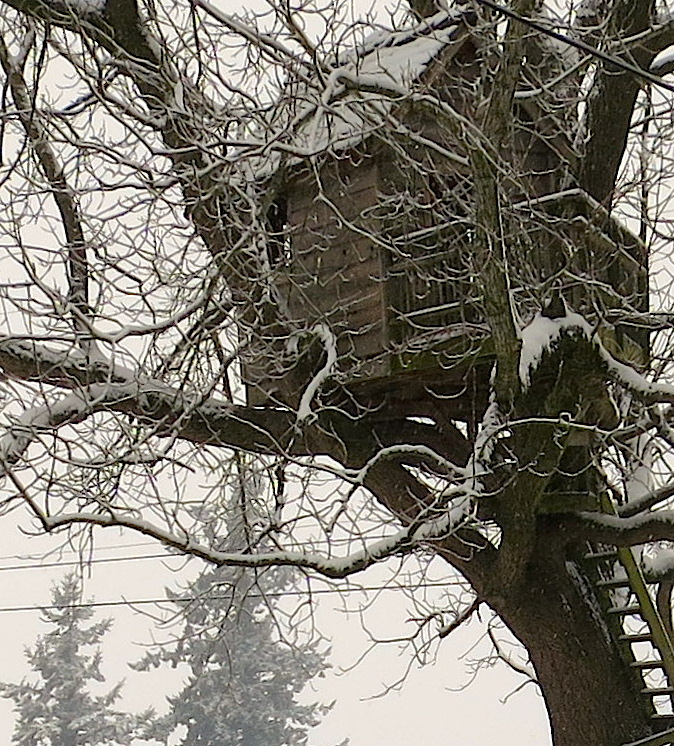
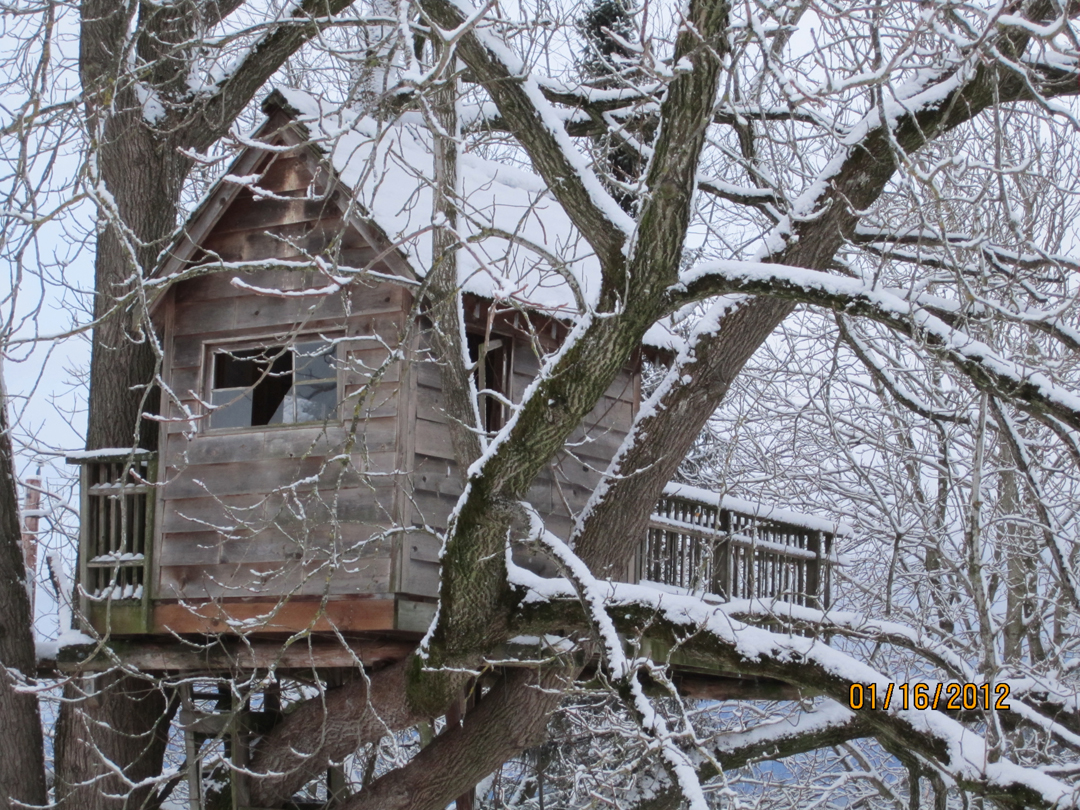
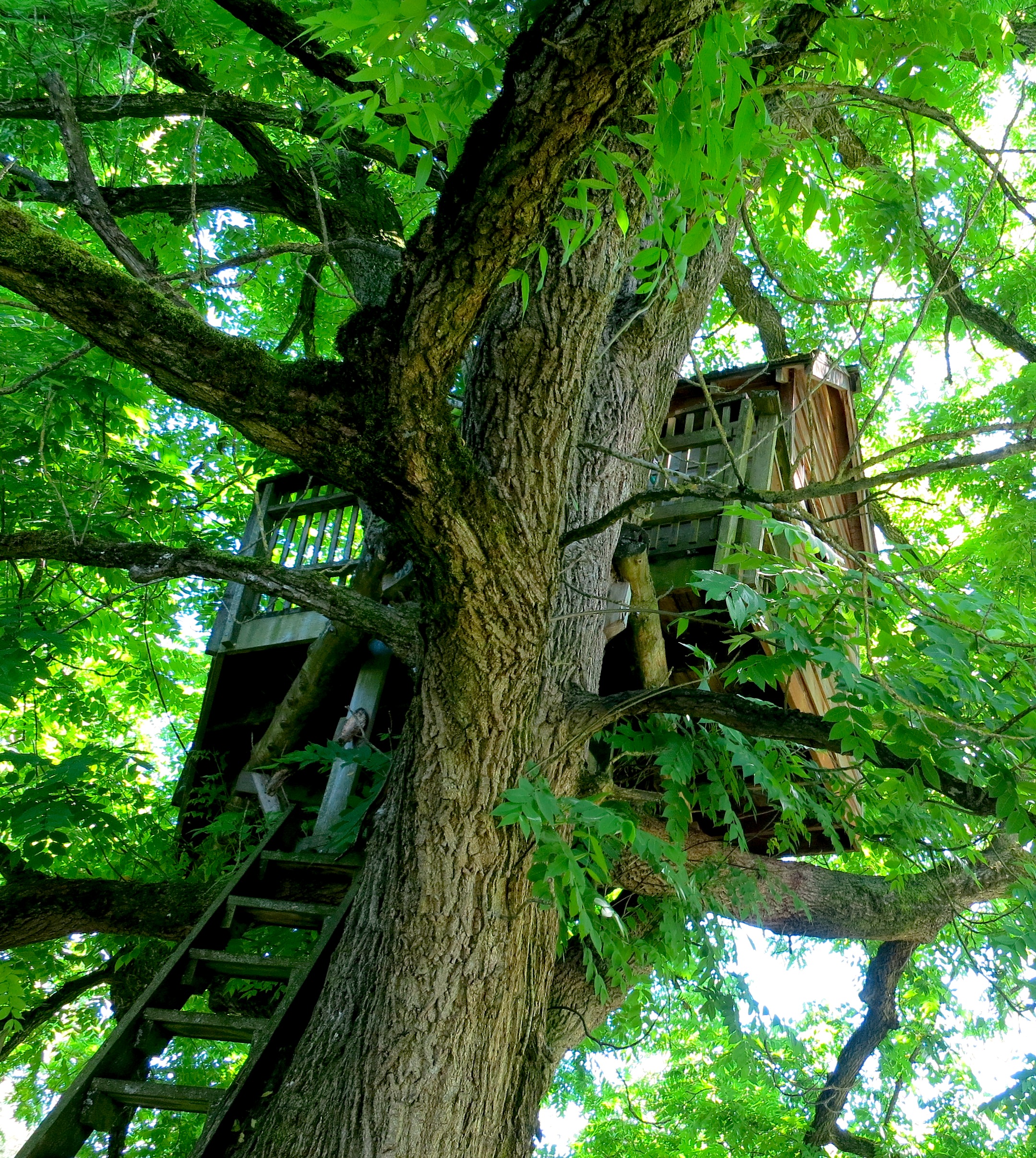
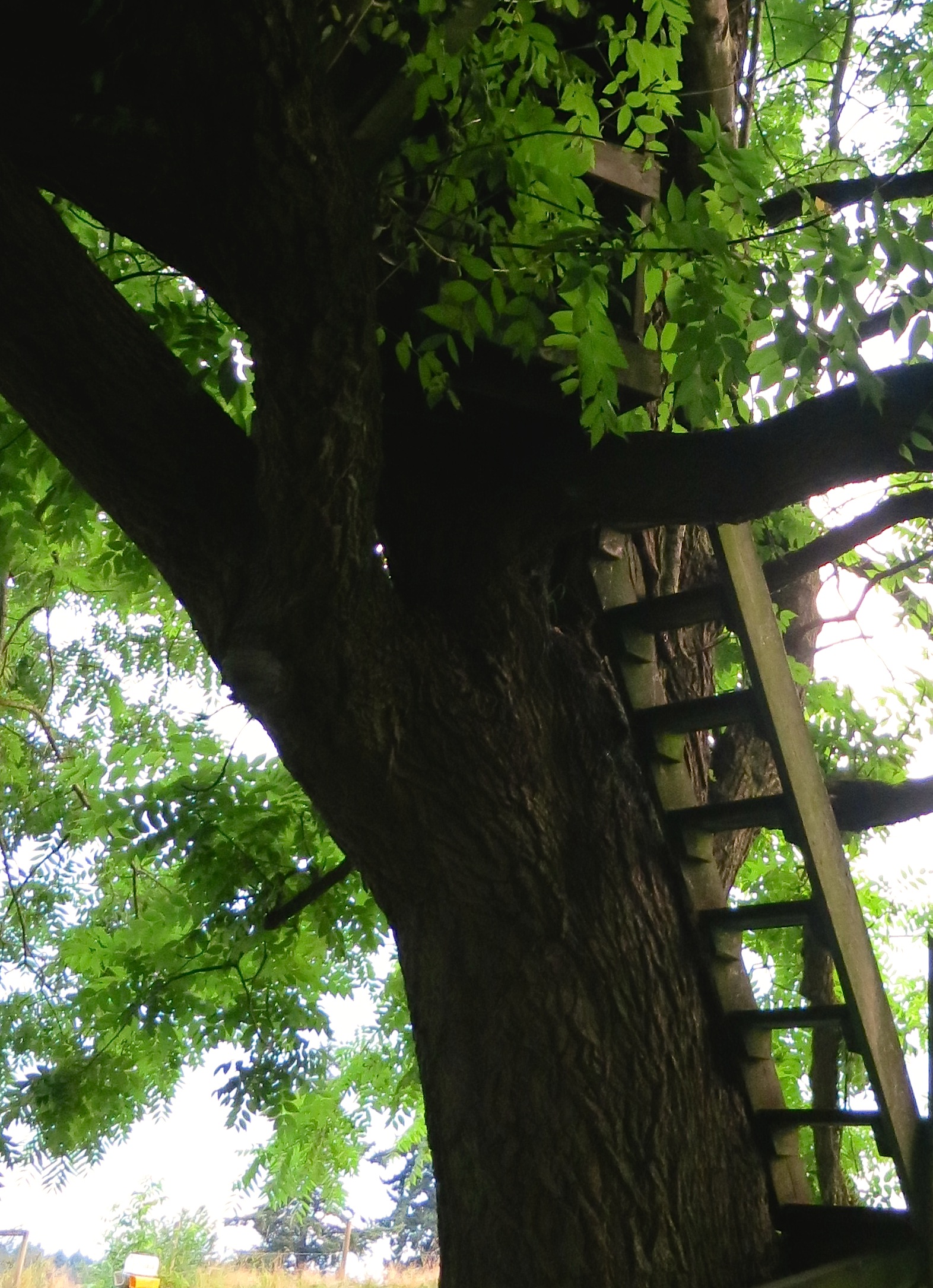
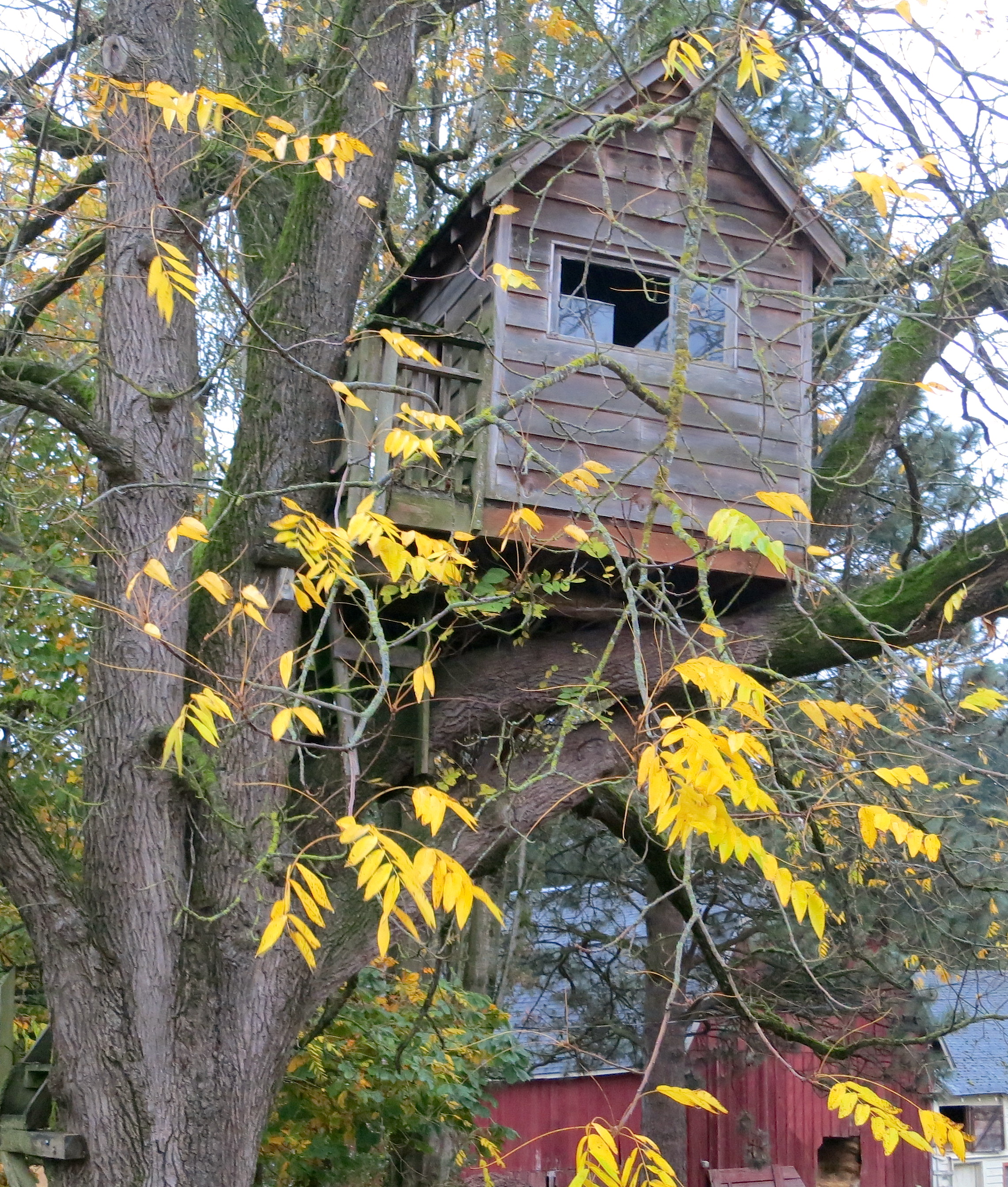
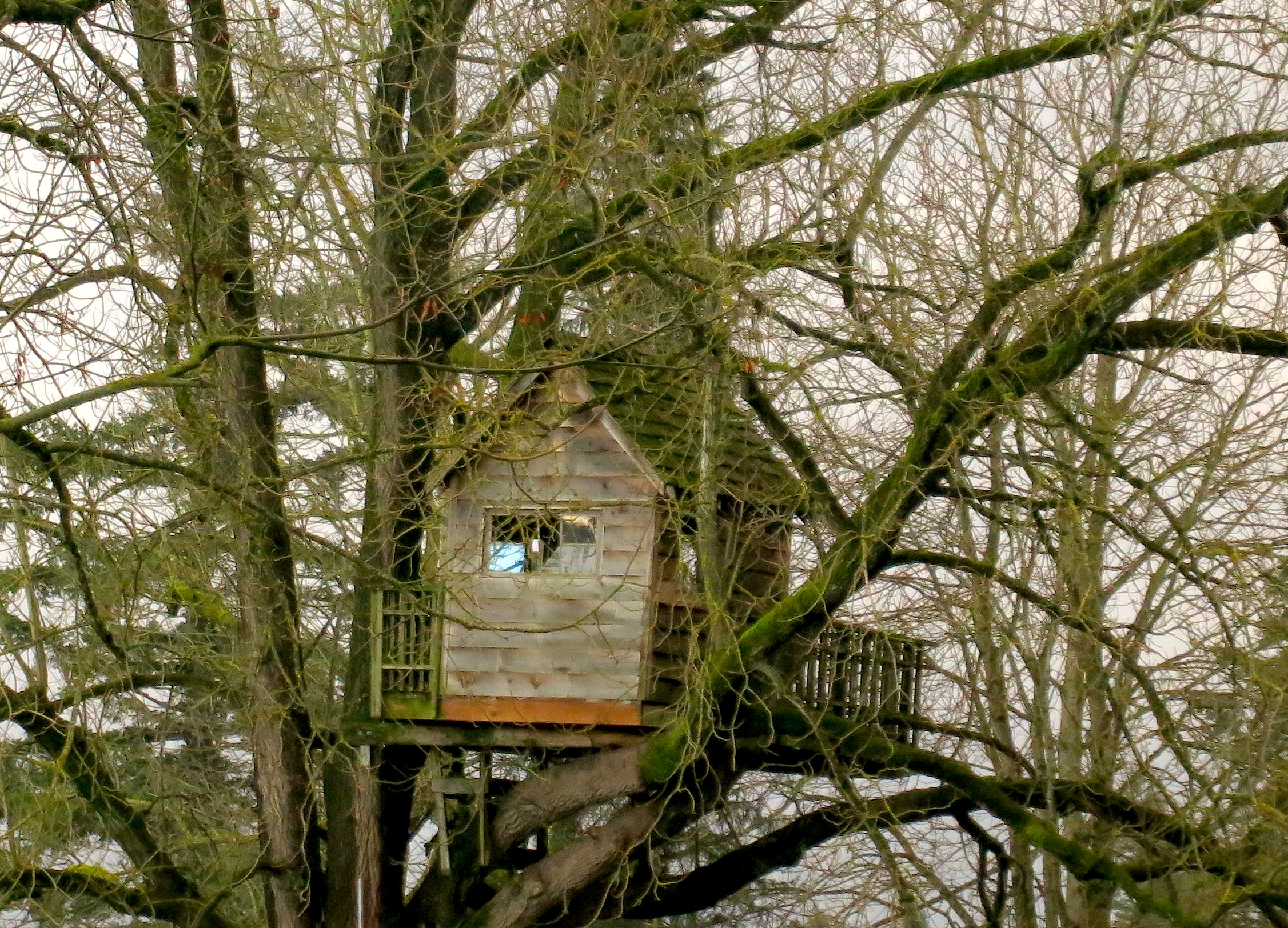
Our treehouse is almost twenty years old, lonesome and empty in our front yard, a constant reminder of abandoned Swiss Family Robinson dreams. Over the years, it has been the setting for a local children’s TV show, laser tag wars, sleep overs and tea parties, even a writer’s retreat with a deck side view of the Cascades to the east, the Canadian Coastal Range to the north and Puget Sound to the west. Now it is a sad shell no longer considered safe, as the support branches in our 100 year old walnut tree are weakening with age and time.

The dream began in February 1995 when our sons were 8 and 6 years old and our daughter just 2. We had plenty of recycled lumber on our old farm and an idea about what to build. My father, retired from his desk job and having recently survived lymphoma diagnosis and treatment, had many previous building projects to his credit, and a few in his mind that he was yet to get to. He was eager to see what he could construct for his grandkids by spring time. He doodled out some sketches of what might work in the tree, and contemplated the physics of a 73 year old man scaling a tree vs. building on the ground and hoisting it up mostly completed. I got more nervous the more I thought about it and hoped we could consider something a little less risky, and hoping the weather wouldn’t clear enough for construction to start any time soon.

The weather cleared, yet my father’s health faded. His cancer relapsed and he was sidelined with a series of doctor’s appointments, hospitalizations and treatment courses. He hung on to that hope of getting the treehouse going by summer, still thinking it through in his mind, still evaluating what he would need to buy to supplement the materials already gathered and piled beneath the tree. In the mean time he lost physical strength day by day.

His dream needed to proceed as he fought his battle, so I borrowed library books on treehouses, and hired two college age brothers who lived down the road to get things started. I figured if my dad got well enough to build again, at least the risky stuff could be already done by the young guys. These brothers took their job very seriously. They pored over the books, took my dad’s plans, worked through the details and started in. They shinnied up the tree, put up pulleys on the high branches and placed the beams, hoisting them by pulling on the ropes with their car bumper. It was working great until the car bumper came off.

I kept my dad updated long distance with photos and stories. It was a diversion for him, but the far off look in his eye told me he wasn’t going to be building anything in this world ever again. He was gone by July. The treehouse was done a month later. It was everything my dad had dreamed of, and more. It had a deck, a protective railing, a trap door, a staircase. We had a open tree celebration and had 15 neighbors up there at once. I’m sure dad was sipping lemonade with us as well, enjoying the view.

Now all these years later, the treehouse is tilting on its foundation as a main weight bearing branch is weakening. We’ve declared it condemned, not wanting to risk an accident.  It remains a daily reminder of past dreams fulfilled and unfulfilled as I look out my window. Much like my father’s body, the old walnut tree is weakening, hanging on by the roots but its muscle failing. It will, sometime, come down in one of our frequent fierce windstorms, just as its nearby partner did a few years ago.

The treehouse dream branched out in another way. One of the construction team brothers decided to try building his own as a place to live in his woods, using a Douglas Fir tree as the center support and creating an octagon, two stories, 30 feet off the ground. He worked on it for two years and moved in, later marrying someone who decided a treehouse was just fine with her, and now they are raising five children there. The next generation is carrying on with the Swiss Family Robinson dream that began in my father’s mind and our front yard.

I still have a whole list full of dreams, some realized and some deferred by time, resources and the limits of my imagination. I feel the clock ticking too, knowing that time slips by me faster and faster. It would be a blessing to see others live out the dreams I have held so close.

Though I may be teetering in the wind like my old tree, barely hanging on, and ready to fall to the ground, I’ll reach out with my branches and hand them off. The time will have come to let go.

walnuthouse

treesteps

treehouse1014

treehousenovember

treehouse2014

What I Nearly Said

cottonwood

‘Hold on,’ she said, ‘I’ll just run out and get him.
The weather here’s so good, he took the chance
To do a bit of weeding.’

                                               So I saw him
Down on his hands and knees beside the leek rig,
Touching, inspecting, separating one
Stalk from the other, gently pulling up
Everything not tapered, frail and leafless,
Pleased to feel each little weed-root break,
But rueful also…

                                         Then found myself listening to
The amplified grave ticking of hall clocks
Where the phone lay unattended in a calm
Of mirror glass and sunstruck pendulums…

And found myself then thinking: if it were nowadays,
This is how Death would summon Everyman.

Next thing he spoke and I nearly said I loved him.
~Seamus Heaney  “A Call”

delicategreen4

The Water’s Just Fine

Reblogging as my Father’s Day tradition. My father departed this soil nearly 19 years ago, having completed umpteen “projects” in his spare time.  This was undoubtedly the most remarkable.   He dove right in to whatever he decided to accomplish.

Here’s to you, Dad.  The water’s still fine.

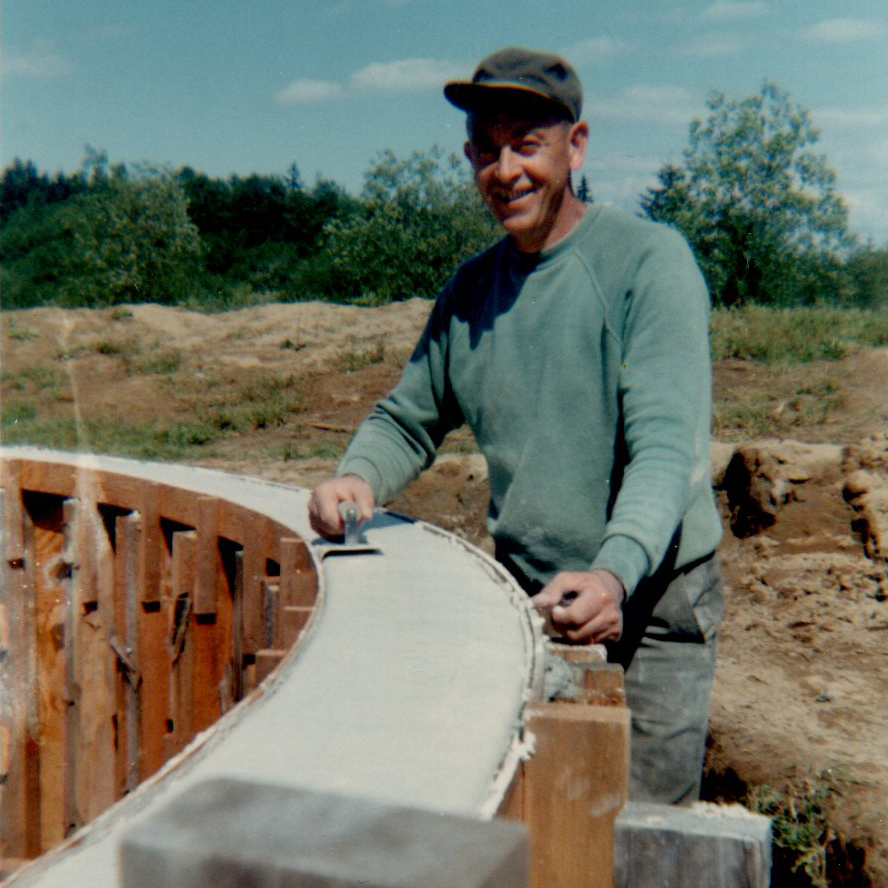
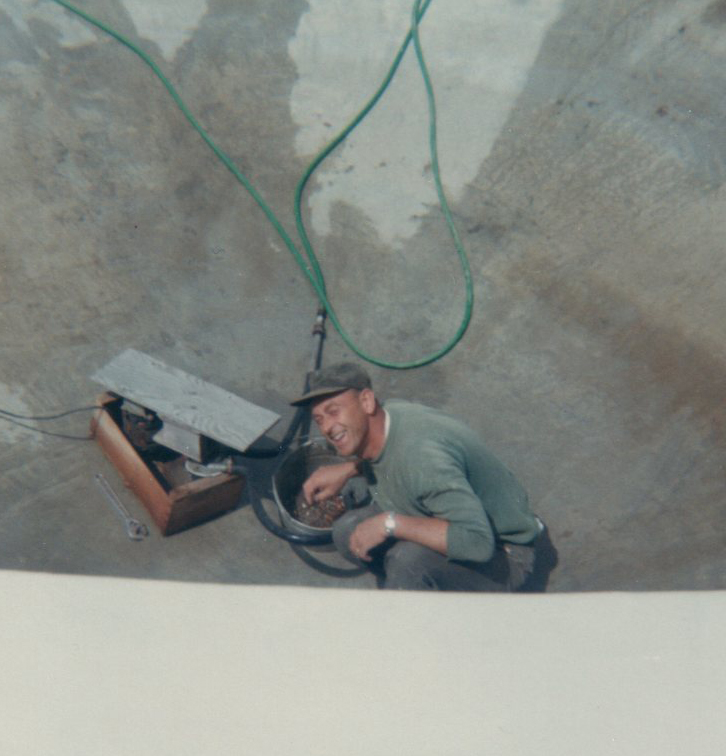
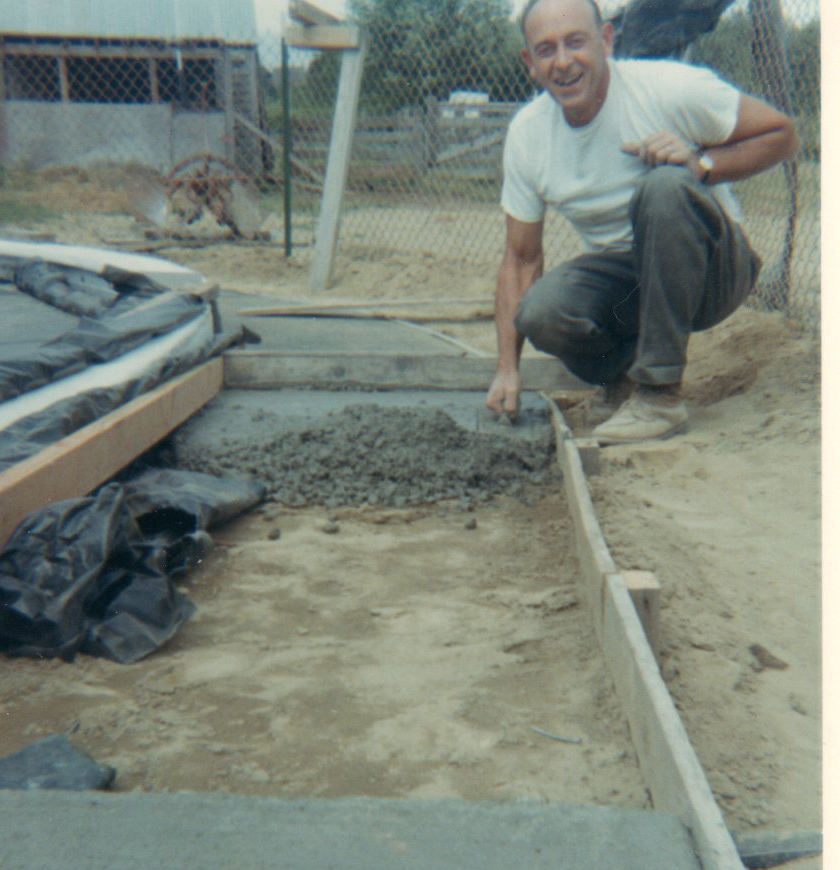
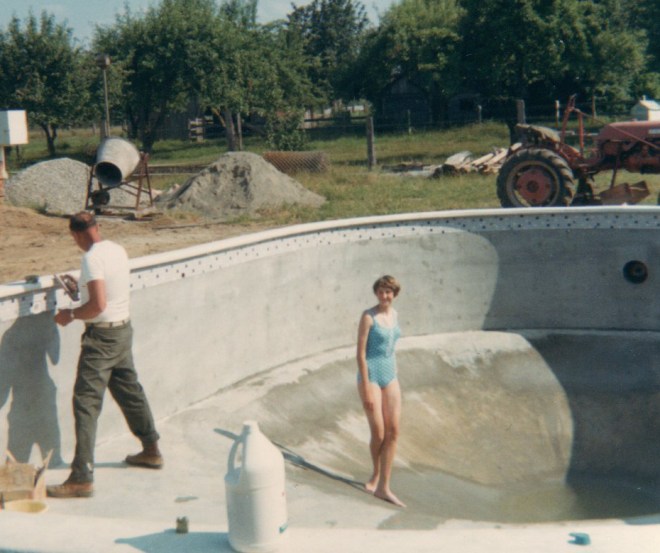
In acknowledgment of Father’s Day, I pull out a particular photo album that chronicles my father’s 1968 backyard project.   This was no ordinary project, but like every other project he took on, it was accomplished during the daylight hours after he got home from his desk job and then consumed most of his weekend waking hours.  He had been dreaming it up for a number of years, and then one day, grabbed a shovel and simply got started and didn’t quit until it was finished.

He was determined to build a full size swimming pool, by himself, with his own two hands.  He did use our little Farmall Cub tractor to blade away the first layer of topsoil, but the rest of the digging was by the shovel-full.   He wanted a kidney shaped pool rather than a rectangular one, so he soaked the wooden forms in water to form the graceful curves. The cement was poured by a cement truck, but the sidewalks were all self-mixed in our own little cement mixer that ran off a small engine.  The tile that lined the top of the pool was all hand grouted and placed, square by square.  The pumphouse/changing room was built alongside.

I was 14 that summer, not truly understanding how extraordinary an effort this was, but simply accepting it as another “dad” project like any other he finished through sheer will, stubbornness and a desire to go on to the next challenge.   Now, 45 years later,  as an adult who is plum tired at the end of an office/clinic work day, I marvel at his energy putting in another four or five hours of physical labor when he came home at night.  No wonder he never suffered from insomnia.

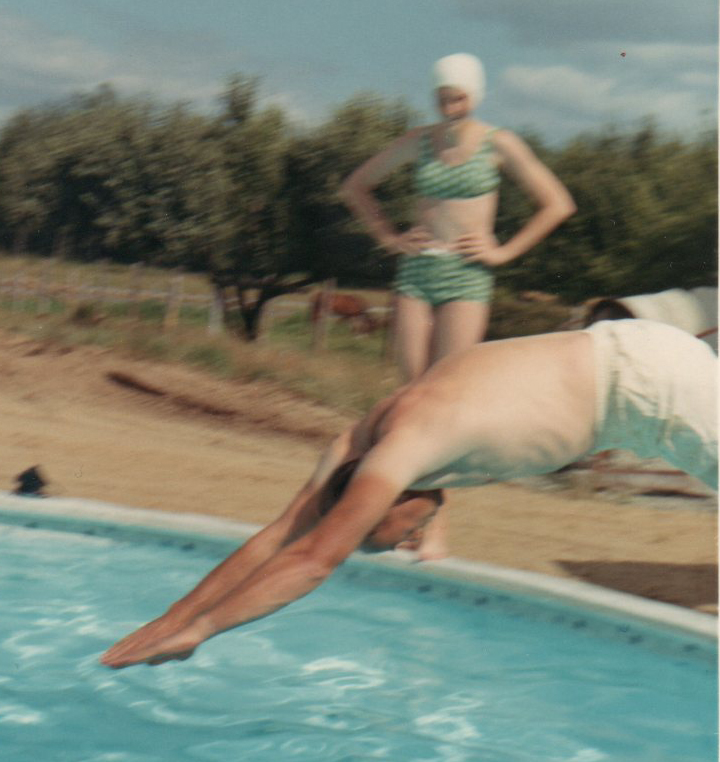
Once the pool was declared finished, a hose ran water for several days, and it took 2 more days to heat it up to a temperature that was survivable.  Then my dad took the first dive in.

Once he had taken that first dive, he was happy.  He swam every once in awhile, but was soon onto another project (reconstructing a steel walled gas station that arrived on our farm in piles of panels on the back of a flat bed truck, so that he could have a full size “shop” to work on indoor projects during the winter).  It was sufficient for him to just to be able to say he had done it himself.

So as I study the look on my father’s face in these photos, I am startled to see my self looking back at me, like a reflection in the water.  I now realize determination and utter stubbornness can manifest in different ways.  I have no mechanical skills whatsoever,  but like my father,  I always have a dream I’m pursuing, and I keep at it until it is accomplished.

Thanks to my dad for showing me how to dive right into life.  The water’s fine.

Raising Boys (and a Girl)

grasshead
My father used to play with my brother and me in the yard.
Mother would come out and say,
“You’re tearing up the grass”
“We’re not raising grass,” Dad would reply.
“We’re raising boys.”
~Harmon Killebrew

To my husband, Dan, who I thank for being much more concerned with raising our children than raising grass.
(our yard remains a dandelion, moss and mole sanctuary while the children have found their way into the wild and wonderful world, serving others to the glory of God)

-3
-1
-5

The Rhythm of Remembrance

My father, a WWII Lieutenant Colonel Marine and commanding officer who served for almost three years straight in the South Pacific, would never talk about his life during the war. Despite not knowing what he saw and endured, I will remember his and others’ service with gratitude.

Barnstorming

“For in self-giving, if anywhere, we touch a rhythm not only of all creation but of all being.”
C.S. Lewis

I’m unsure why the United States does not call November 11 Remembrance Day as the rest of the Commonwealth nations did after WWI. This is a day that demands much more than the more passive name Veterans’ Day represents.

This day calls all citizens who appreciate their freedoms to stop what they are doing and disrupt the routine rhythm of their lives. We are to remember in humble thankfulness the generations of military veterans who sacrificed time, resources, sometimes health and well being, and too often their lives in answering the call to defend their countries.

Remembrance means never forgetting what it costs to defend freedom. It means acknowledging the millions who have given of themselves and continue to do so on our behalf. It means never ceasing to care…

View original post 59 more words