God uses broken things. It takes broken soil to produce a crop, broken clouds to give rain, broken grain to give bread, broken bread to give strength. It is the broken alabaster box that gives forth perfume. ~Vance Havner
And I might add:
a snail wandering into sidewalk foot traffic,
crushed, cracked and dying, clinging to the pavement,
its broken shell a gift of metaphor
of our own leaking brokenness.
…Christ does not banish tragedy but carries it into the heart of God. …in the forty days that followed (the resurrection), Christ was not magically made whole but bore the marks of his passion, and would not rest until we placed our hands—and our hearts—inside them. ~Gregory Wolfe from Seattle Pacific University’s Image Journal, from “The Tragic Sense of Life”
This week brought local news from Seattle Pacific University of yet another person with mental illness making a conscious choice to end his own life by random killing of others. His personal and private pain becomes magnified exponentially through creating public pain and tragedy; in this age of “selfies”, it is the ultimate in self-absorption to purposely erase innocent lives just so he will be remembered.
I often see broken people in my work — it is the nature of a primary care clinic. The vast majority do not seek ways to break others; instead they seek the glue of compassion, a listening ear and sometimes medication that can be a balm of healing their wounds. A few harbor such anger and resentment that their anguish becomes such uncontrolled bleeding that society can only be a tourniquet to make it stop.
Christ showed the way to walk through such unimaginable pain and tragedy. He carried his bleeding wounds, though his pulse was stilled, straight into the heart of God. The marks he bore were from us, for us and about us, so we would always remember his sacrifice.
If we bleed, when we bleed … he returned to invite us to reach inside the wounds we inflicted and be forever healed.
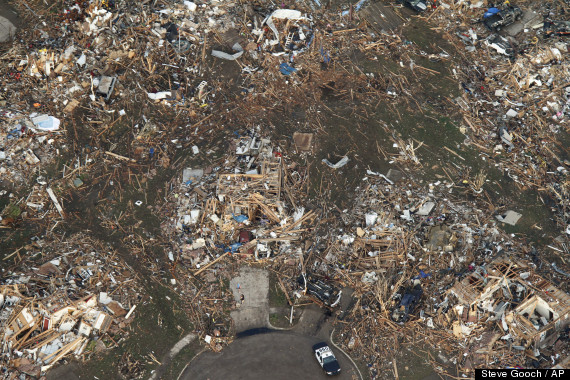
Aerial photo of Moore Oklahoma following May 20 earthquake taken by Steve Gooch for the Associated Press
Yes, long shadows go out from the bales; and yes, the soul must part from the body: what else could it do?
…These things happen … the soul’s bliss and suffering are bound together like the grasses …
The last, sweet exhalations of timothy and vetch go out with the song of the bird; the ravaged field grows wet with dew. ~Jane Kenyon from “Twilight: After Haying”
Celebration is a sign of life in the rubble, the bliss of those arising from an ash heap to walk and breathe again. Heartache is the sight of death in the rubble, the suffering of those trapped and crushed by a roaring force too immense to imagine yet devastatingly real.
Bliss and suffering are bound together like the grasses; we are grasses torn from our roots, ravaged.
Tears flow as they must, wetting the stubble left behind like dew. We weep in sorrow for those lost; we weep in joy for those spared.
What else can a soul do but weep at parting and weep at welcoming?
These things happen, oh yes, these awe-full awful things, they happen.
Our days on earth are like grass; like wildflowers, we bloom and die. ~Psalm 103: 15
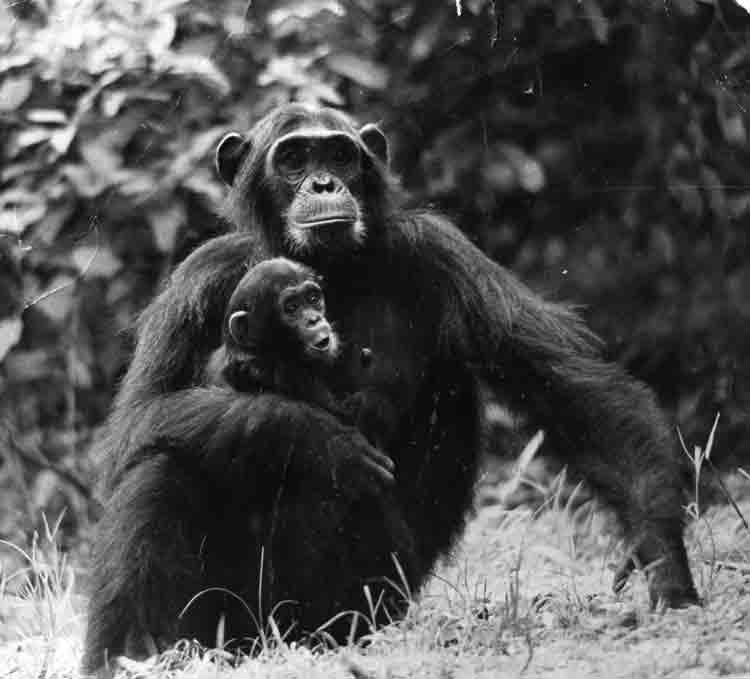
In recognition of this day 38 years ago, I’m reprinting this part of my Gombe saga, working as a student research assistant for Jane Goodall in western Tanzania in 1975.
At first glance, Gombe National Park in Tanzania felt like paradise—a serene piece of the earth filled with exotic and fascinating wildlife, an abundance of fish and fruit to eat, and the rich unfamiliar sounds and smells of the tropical jungle. It was a façade. It was surrounded by the turmoil and upheaval of political rebellion and insurgencies in its neighboring countries, inflamed even more by the fall of Saigon in Vietnam a month previously due to the earlier pull out of the Americans from that long and tragic war.
Only a few miles north of our research station in Gombe National Park in western Tanzania, there had been years of civil war in the small land locked country of Burundi. When the wind was just right, we could hear gunfire and explosions echoing over the valleys that separated us. Escaping refugees would sometimes stop for food on their way to villages in Tanzania to the south, seeking safe haven in one of the poorest countries in the world, only a decade into its own experiment with socialism, Ujamaa.
There was also word of ongoing military rebellion against the dictatorship of President Mobutu in the mountainous country of Zaire twelve miles west across Lake Tanganyika.
Morning comes early for field studies of wildlife, as the research day must start before the chimpanzee and baboon subjects wake up and begin to stir. Before midnight, while we slept soundly in our metal huts scattered up the mountainside, a group of armed soldiers arrived by boats to the shore of Gombe National Park.
Storming the beach huts housing two unarmed Gombe park rangers and their families, the soldiers seized one and demanded to be told where the researchers were. The ranger refused to provide information and was severely beaten about the head and face by the butts of the rifles carried by the invaders. The armed soldiers then divided into smaller groups and headed up the trails leading to the huts, coming upon four sleeping student researchers, tying them up, taking them hostage, forcing them into boats and taking them across the lake back to Zaire.
Asleep farther up the mountain, we were wakened by some students who were fleeing, hearing the commotion. No one really understood what was happening down lower on the mountain. There were shouts and screams, and gun shots had been heard. Had someone been injured or killed? There was no choice but to run and hide deep in the bush at a predetermined gathering spot until an “all clear” signal was given by the rangers.
We hurried along barely familiar trails in the black of the jungle night, using no flashlights, our hearts beating hard, knowing we had no defense available to us other than the cover of darkness.
That was the longest wait for morning of my life, sitting alongside Jane holding her son Grub. A hand full of other students had also made their way to the hiding spot, none of us knowing what to think, say or do. We could only barely see each other’s faces in the darkness and were too frightened to make any sounds. We carried no weapons, and there was no way to communicate with the outside world. We had no idea how many of us may be missing, or possibly dead.
Jane held Grub in her arms, trying to keep him quiet, but his eight year old imagination was ignited by the events that had just unfolded.
“Will they kidnap me, Jane? Will they come for me? Where will they take us? Will they shoot us dead?”
Jane, her face hidden by her blonde hair loose about her shoulders, sat rocking him, cradling him. “Shhh, shhh, we don’t want them to find us. We’re safe staying right here. Everything will be fine in the morning. No one will take you from me.”
She concluded: “They would have to shoot me first…” and at that, Grub began to sob silently into her shoulder. He knew that was how baby chimpanzees were captured by bounty hunters, by shooting the mother dead and snatching the infant from her protective embrace.
When the morning of May 20 dawned, the park rangers located us, and pieced together the events as best they could–the soldiers were Zairean rebels living in remote mountains, fighting an insurgency against the Zaire government. Seeking funds for their cause, they saw a kidnapping of Americans and Europeans as a way to raise quick funds and world publicity and sympathy. Four of our friends/coworkers were missing, the camp was ransacked and the rangers hurt but with no life threatening injuries. There was no way to remain safe at the Park, and our colleagues needed whatever help we could offer for their rescue.
We were able to send a messenger to a nearby fishing village, and a radio call was sent out to the small town of Kigoma, then relayed to Dar Es Salaam and Nairobi. Help arrived within a few hours, when a United Nations boat monitoring the civil war activities in Burundi pulled off shore near our camp. We were told we needed to evacuate Gombe that day, and would be taken to Kigoma, and then flown by bush pilot to Nairobi, Kenya to cooperate in the investigation of the kidnapping.
In Nairobi, at the US Embassy, I met CIA agents who viewed our wild primate studies with some suspicion. Each of us were grilled individually as to our political beliefs, our activities at the camp and whether we may be somehow involved in subversive actions against the Zaire or Tanzanian governments. We were dumbfounded that our own countrymen would be so skeptical about our motives for being in Africa. It became clear our own government would be no help in resolving the kidnapping and bringing our friends home to safety. The agents did not shed any light on whether our friends were alive or dead.
We were then hustled into a press conference where we were interviewed for television and print media by the worldwide news agencies, and my parents saw me on the CBS evening news before they actually heard my voice over the phone.
It took over three months, private negotiations and ransom money to free all four of our friends back to safety.
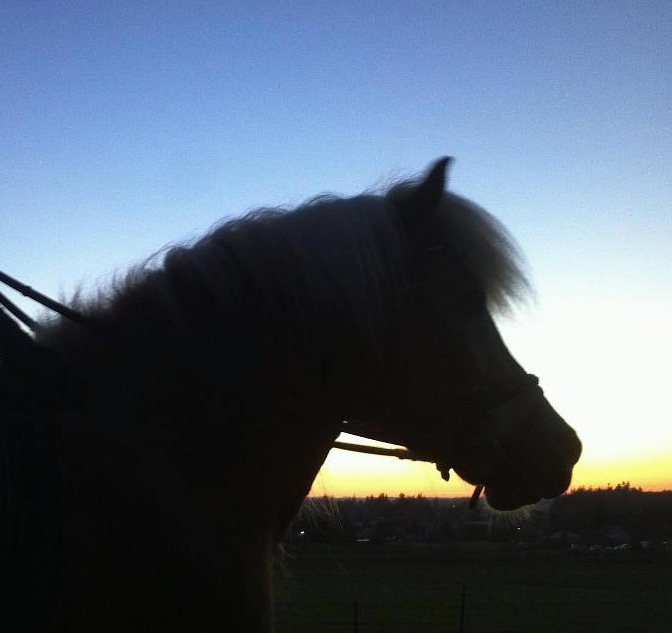
with prayers for the family of a ten year old Whidbey Island girl who died this week while out in the field with her beloved horses –of natural causes and no signs of trauma
photo by Brandon Dieleman
…riding gave her more than a body. It released a gay and hardy soul. She was the happiest thing in the world. And she was happy because she was enlarging her horizon. …A rift in the clouds in a gray day threw a shaft of sunlight upon her coffin as her nervous, energetic little body sank to its last sleep. But the soul of her, the glowing, gorgeous, fervent soul of her, surely was flaming in eager joy upon some other dawn. ~William Allen White from his famous eulogy for his daughter “Mary White” in 1921 written four days after she died in a riding accident
This is a week of very public sorrow for so many, though, not unlike any week, there are those who grieve in their own private agony of loss.
Any child dying is too young too soon. It defies our limited ability to understand or explain.
May we, as did William White over 90 years ago, search for the eloquence in telling the story of that one young life — how her soul lit the world for a brief shining moment and now continues to flame beyond our reach.
The issue is now clear. It is between light and darkness and everyone must choose his side. ~G. K. Chesterton
…love has always sought to put back together that which hate has broken. …our hands have always been able to heal as much as harm. …since the dawn of humanity, each of us contains three people— the angel, the demon, and the one who decides which we will obey.
~Billy Coffey
It should not require an act of evil for us to recognize the human capacity for love, caring and compassion. It should not take fearsome suffering and death of innocents to remind us all life is precious and worthy of our protection, when others would discard it.
We are created to choose sides. Our Creator chose to suffer to guarantee we are eternally worthy of His protection.
(Eliot’s Wasteland echoes the brokenness of this day in Boston)
Burial of the Dead April is the cruelest month, breeding Lilacs out of the dead land, mixing Memory and desire, stirring Dull roots with spring rain. Winter kept us warm, covering Earth in forgetful snow, feeding A little life with dried tubers.
What the Thunder Said After the torchlight red on sweaty faces After the frosty silence in the gardens After the agony in stony places The shouting and the crying Prison and palace and reverberation Of thunder of spring over distant mountains He who was living is now dead We who were living are now dying With a little patience ~T.S. Eliot from “The Wasteland”
Nothing was helping. Everything had been tried for a week of the most intensive critical care possible. A twenty year old man, completely healthy only two weeks previously, was holding on to life by a mere thread and nothing and no one could stop his dying.
His battle against MRSA pneumonia precipitated by a brief influenza-like illness had been lost. Despite aggressive hemodynamic, antibiotic and ventilator management, he was becoming more hypoxic, his lungs collapsing and his renal function deteriorating. He had remained unresponsive during the ordeal due to intentional sedation for his time in the ICU.
The intensivist looked weary and defeated. The nurses were staring at their laps, unable to look up, their eyes tearing. The hospital chaplain reached out to hold this young man’s mother’s hands.
After almost a week of heroic effort and treatment, there was now clarity about the next step.
Two hours later, a group of family and friends gathered in the waiting room outside the ICU doors. Most were the age of their friend; they assisted each other in tying on the gowns over their clothing, helped distribute gloves and masks. Together, holding each other up, they waited for the signal to come in after the ventilator had been removed and he was barely breathing without assistance. They entered his room and gathered around his bed.
He was ravaged by this sudden illness, his strong young body beaten and giving up. His breathing was now ragged and irregular, the sedation preventing response but not necessarily preventing awareness. He was surrounded by silence as each individual who had known and loved him struggled with the knowledge that this was the final goodbye.
His father approached the head of the bed and put his hands on his boy’s forehead and cheek. He held his son’s face tenderly, bowing in silent prayer and then murmuring words of comfort. It was okay to let go. It was okay to leave us now. We will see you again. We’ll meet again. We’ll know where you can be found.
His mother stood alongside, rubbing her son’s arms, gazing into his face as he slowly slowly slipped away. His father began humming, indistinguishable notes initially, just low sounds coming from a deep well of anguish and loss.
As the son’s breaths spaced farther apart, his dad’s hummed song became recognizable as the hymn of praise by John Newton, Amazing Grace. The words started to form around the notes. At first his dad was singing alone, giving this gift to his son as he passed, and then his mom joined in as well. His sisters wept and sang. His friends didn’t know all the words but tried to sing through their tears. The chaplain helped when we stumbled, not knowing if we were getting it right, not ever having done anything like this before.
Amazing Grace, how sweet the sound, That saved a wretch like me. I once was lost but now am found, Was blind, but now I see.
Through many dangers, toils and snares I have already come; ‘Tis Grace that brought me safe thus far and Grace will lead me home.
Yea, when this flesh and heart shall fail, And mortal life shall cease, I shall possess within the veil, A life of joy and peace.
When we’ve been here ten thousand years Bright shining as the sun. We’ve no less days to sing God’s praise Than when we’ve first begun.
And then he left us, his flesh and heart having failed, to enter into a new life of joy and peace.
His mom hugged each sobbing person there–the young friends, the nurses, the doctors humbled by a powerful pathogen. She thanked each one for being present for his death, for their vigil kept through the week in the hospital.
This young man, stricken by a common virus followed by a devastating bacterial pneumonia, was now lost to this mortal life, having profoundly touched so many people in his dying. His parents’ grief in their loss, so gracious and giving to the young people who had never confronted death before, remains, even now a few years later, unforgettable.
This was their promise to their son as they let him go, as he was lost to them: that he would be found, that he was deeply loved.
This was their sacred gift to us who witnessed this love in the letting go: such Grace will lead us all home.
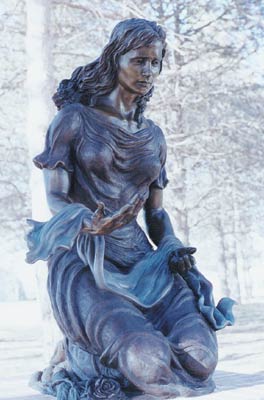
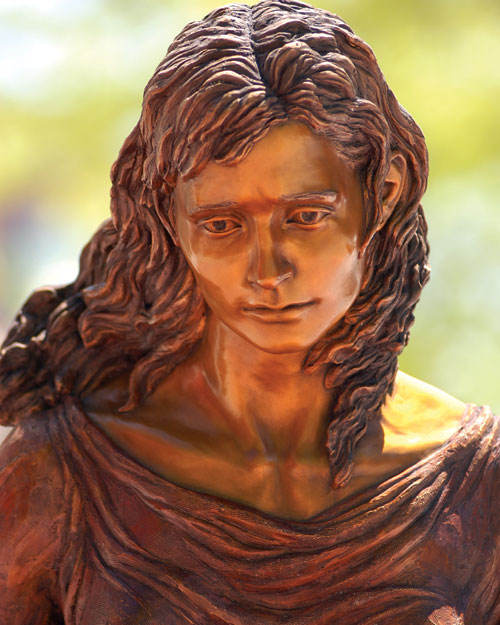
Rachel weeping for children who are no more, sculptor Sondra Jonson
A voice is heard in Ramah, mourning and great weeping, Rachel weeping for her children and refusing to be comforted, because they are no more. Matthew 2:18 and Jeremiah 31:15
In mourning for the people of Newtown, Connecticut
There is no consolation for these families.
Their arms aching with emptiness tonight,
beds and pillows lying cold and unused,
dolls and stuffed animals awaiting all night hugs
that will never come again.
There can be no consolation;
only mourning and great weeping,
sobbing that wrings dry
every human cell,
leaving dust behind,
dust, only dust
which is beginning
and end.
He came to us
for times such as this,
born of
the dust of woman and
the breath of Spirit,
God who bent down to
lie in barn dust,
walk on roads of dust,
die and be laid to rest as dust
in order to conquer
such evil as this
that could horrify masses
and massacre innocents.
He became dust to be
like us
He began a mere speck in a womb
like us
so often too easily washed away
as unwanted.
His heart beat
like ours
breathing each breath
like ours
until a fearful fallen world
took His
and our breath
away.
He shines through
the shadows of death
to guide our stumbling uncertain feet.
His tender mercies flow freely
when there is no consolation
when there is no comfort.
He hears our cries
as He cried too.
He knows our tears
as He wept too.
He knows our mourning
as He mourned too.
He knows our dying
as He died too.
God wept
as this happened.
Evil comes not from God
yet humankind embraces it.
Sin is our choice
we made from the beginning,
the choice we continue to make.
Only God can glue together
what evil has shattered.
He just asks us to hand Him
the pieces of our broken hearts.
We will know His peace
when He comes
to bring us home,
our tears will finally be dried,
our cells no longer
just dust,
never only dust
as we are glued together
by the breath of God
forevermore.
the tender mercy of our God, by which the rising sun will come to us from heaven to shine on those living in darkness and in the shadow of death, to guide our feet into the path of peace. Luke 1: 78-79
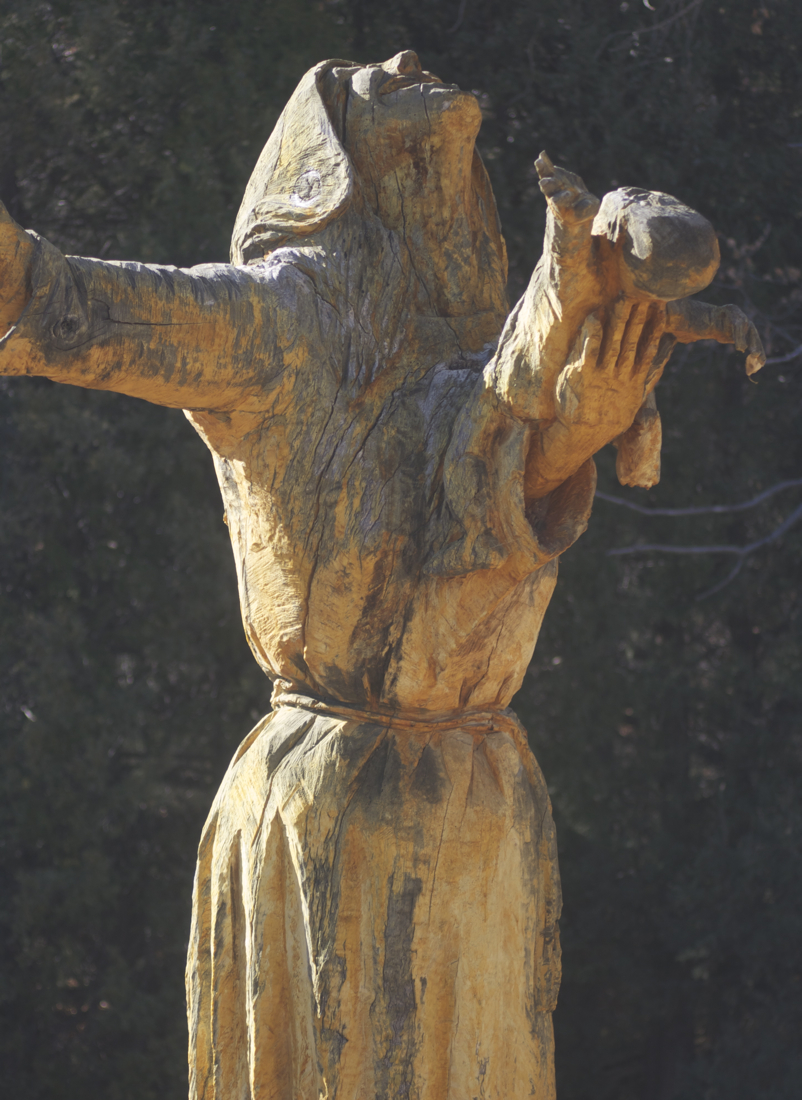
Wood sculpture of Rachel weeping, located at Our Lady of Guadelupe Abbey, Texas
Rachel weeping for the children who are no more
Sculptor Sondra Jonson









 Barnstorming