But By His Grace: Paying Attention

For grace to be grace, it must give us things we didn’t know we needed and take us places where we didn’t know we didn’t want to go. As we stumble through the crazily altered landscape of our lives, we find that God is enjoying our attention as never before. 
~Kathleen Norris from Acedia & Me: A Marriage, Monks, and a Writer’s Life

My grace is sufficient for you,
for my power is made perfect in weakness. 
Therefore I will boast all the more gladly about my weaknesses,

so that Christ’s power may rest on me.  
That is why, for Christ’s sake, I delight in weaknesses, in insults, in hardships, in persecutions, in difficulties.
For when I am weak, then I am strong.
2 Corinthians 12: 9-10

Inundated moment by moment
by overwhelmingly bad news of a pandemic world,
highlighted in rapidly changing headlines,
blasted from cable news 24/7,
tweeted real time from every nook and cranny,
I stumble in my frailty to find something, anything,
to hold me up.

I cling to the mystery of His magnetism for my weakness.

God now has my full attention:
He willingly pulls despair out of me onto Himself
and replaces it with strength I didn’t know
I would need nor would have ever wanted.

Two months ago,
not one of us knew we were to go where
we never expected to go:
by His grace, we have always had
God’s full attention.


This year’s Lenten theme for Barnstorming:

God sees us as we are,
loves us as we are,
and accepts us as we are.
But by His grace,
He does not leave us where we are.
~Tim Keller

He Accepts Us As We Are: Mere Wayfarers

The settled happiness and security which we all desire,
God withholds from us by the very nature of the world:
but joy, pleasure, and merriment, he has scattered broadcast.
We are never safe, but we have plenty of fun, and some ecstasy.
It is not hard to see why.

The security we crave would teach us to rest our hearts in this world
and oppose an obstacle to our return to God:
a few moments of happy love, a landscape, a symphony,
a merry meeting with our friends, a bath
or a football match, have no such tendency.

Our Father refreshes us on the journey with some pleasant inns,
but will not encourage us to mistake them for home.
~C.S. Lewis from The Problem of Pain

I am reminded every day, with every headline shouting bad news:
this is not our home; we are mere wayfarers.

We tend to lose focus on the “why” of our journey on this troubled earth:
so much of our time and energy is understandably spent seeking out safety and security, striving for a road filled with happiness, joy and contentment, as if that should be our ultimate destination and purpose.

Yet the nature of a fallen world leads us down boulder-strewn paths filled with potholes and sheer cliffs. Suddenly nowhere feels safe or secure.

We are now confronted with thousands of ill and hurting people world-wide, some dying before their time, their travels on earth ending abruptly. We wonder who may be next.

Will it be someone I love? Will it be me? He accepts our fear of the unknown destination, as He knows what lies ahead on our journey.

God in His mercy never leaves us homeless or without hope. We are called to be the gift to others who are hurting.

…just as He gifted Himself to us.

For I was hungry and you gave me something to eat,
I was thirsty and you gave me something to drink,
I was a stranger and you invited me in,

 I needed clothes and you clothed me,
I was sick and you looked after me,
I was in prison and you came to visit me.
~Matthew 25:35-6

This year’s Lenten theme for Barnstorming:

God sees us as we are,
loves us as we are,
and accepts us as we are.
But by His grace,
He does not leave us where we are.
~Tim Keller

1. What is the crying at Jordan?
Who hears, O God, the prophecy?
Dark is the season, dark our hearts
and shut to mystery.

2. Who then shall stir in this darkness,
prepare for joy in the winter night.
Mortal in darkness we lie down blindhearted,
seeing no light.

3. Lord, give us grace to awake us,
to see the branch that begins to bloom;
in great humility is hid all heaven
in a little room.

4. Now comes the day of salvation,
in joy and terror the Word is born!
God comes as gift into our lives;
oh let salvation dawn!

He Accepts Us As We Are: In Rock’s Fixity

I rise today
in the power’s strength, invoking the Trinity
believing in threeness,
confessing the oneness,
of creation’s Creator.

I rise today
in heaven’s might,
in sun’s brightness,
in moon’s radiance,
in fire’s glory,
in lightning’s quickness,
in wind’s swiftness,
in sea’s depth,
in earth’s stability,
in rock’s fixity.

I rise today
with the power of God to pilot me,
God’s strength to sustain me,
God’s wisdom to guide me,
God’s eye to look ahead for me,
God’s ear to hear me,
God’s word to speak for me,
God’s hand to protect me,
God’s way before me,
God’s shield to defend me,
God’s host to deliver me,
from snares of devils,
from evil temptations,
from nature’s failings,
from all who wish to harm me,
far or near,
alone and in a crowd.

Around me I gather today all these powers
against every cruel and merciless force
to attack my body and soul.

May Christ protect me today
against poison and burning,
against drowning and wounding,
so that I may have abundant reward;
Christ with me, Christ before me, Christ behind me;
Christ within me, Christ beneath me, Christ above me;
Christ to the right of me, Christ to the left of me;
Christ in my lying, Christ in my sitting, Christ in my rising;
Christ in the heart of all who think of me,
Christ on the tongue of all who speak to me,
Christ in the eye of all who see me,
Christ in the ear of all who hear me.

For to the Lord belongs
salvation,
and to the Lord belongs salvation
and to Christ belongs salvation.
May your salvation, Lord, be with us always.

—”Saint Patrick’s Breastplate,”
Old Irish, eighth-century prayer.

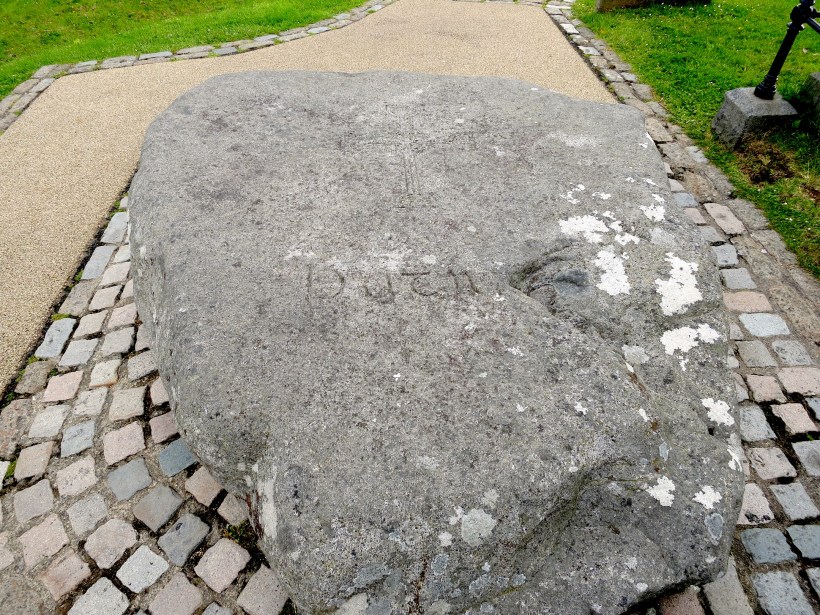
St. Patrick’s grave marker

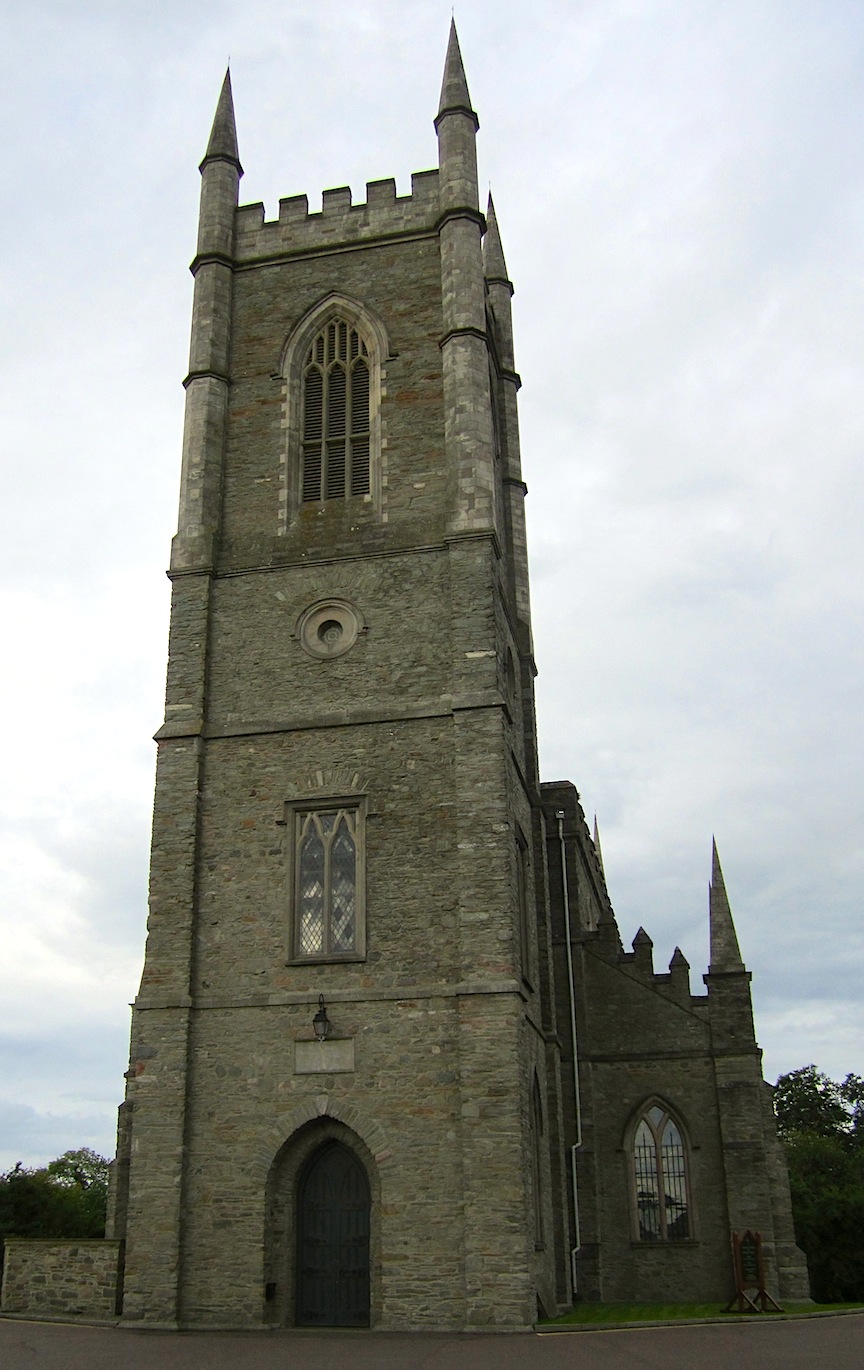
Every year on March 17, St. Patrick is little remembered for his selfless missionary work in Ireland in the fifth century. When we visited his grave in Ireland – a humble stone fixed upon on a hill top next to a cathedral overlooking the sea – I wondered what he would make of how this day, dubbed with his name, is celebrated now.

Perhaps Patrick would observe that this year, March 17 is much quieter and more contemplative than typical. Worldwide we are considering our frail and fragile physical and economic vulnerabilities due to the pandemic viral outbreak.

Patrick, in his prayer, urges us to rise up to meet God’s power of salvation in our lives, even in the toughest scariest times.

God is our Rock and our Redeemer. We are fixed upon Him.

This year’s Lenten theme for Barnstorming:

God sees us as we are,
loves us as we are,
and accepts us as we are.
But by His grace,
He does not leave us where we are.
~Tim Keller

May the strength of God pilot us,
May the wisdom of God instruct us,
May the hand of God protect us,
May the word of God direct us.
Be always ours this day and for evermore.

He Accepts Us As We Are: Love Renders Us Worthy

Our job is to love others
without stopping to inquire
whether or not they are worthy.
That is not our business and, in fact,
it is nobody’s business.

What we are asked to do is to love,
and this love itself will render
both ourselves and our neighbors
worthy if anything can.
~Thomas Merton from  Catholic Voices in a World on Fire

This is a time of too many seriously ill people and too few resources to care for them intensively, therefore doctors and nurses are placed in an ethical dilemma: they must decide who receives the critical care needed to save them and who doesn’t. It is an awful and awe-filled dilemma – no one wants to be in the position of deciding who is “worthy” of the only ventilator available, or the scarce medication, or the only empty ICU bed. Yet medical professionals are trained in triage to assess who is most likely to survive thanks to an extreme and immediate intervention and who would be unlikely to survive – essentially, who is “worthy.”

Thankfully, God doesn’t have to triage His children, deciding who gets His intervention and who must wait or go without care. God is not faced with limited resources. God has no dilemma about our worthiness: we are worthy because He loves us and we are His.

So should we love one another as best we can, even in times like these. We share, we give, we serve, and yes, we will sacrifice.

No less than what God has done for us.

This year’s Lenten theme for Barnstorming:

God sees us as we are,
loves us as we are,
and accepts us as we are.
But by His grace,
He does not leave us where we are.
~Tim Keller

1 O Love that wilt not let me go,
I rest my weary soul in thee;
I give thee back the life I owe,
that in thine ocean depths its flow
may richer, fuller be.

2 O Light that follow’st all my way,
I yield my flick’ring torch to thee;
my heart restores its borrowed ray,
that in thy sunshine’s blaze its day
may brighter, fairer be.

3 O Joy that seekest me through pain,
I cannot close my heart to thee;
I trace the rainbow thro’ the rain,
and feel the promise is not vain
that morn shall tearless be.

4 O Cross that liftest up my head,
I dare not ask to fly from thee;
I lay in dust life’s glory dead,
and from the ground there blossoms red,
life that shall endless be.

He Sees Us As We Are: Worrying A Lot

So I tell you to stop worrying about what you will eat, drink, or wear. Isn’t life more than food and the body more than clothes?
Look at the birds. They don’t plant, harvest, or gather the harvest into barns. Yet, your heavenly Father feeds them.
Aren’t you worth more than they?
Can any of you add a single hour to your life by worrying? 
— Matthew 6:25-27

Jesus does not respond to our worry-filled way of living by saying that we should not be so busy with worldly affairs. He does not try to pull us away from the many events, activities, and people that make up our lives. He does not tell us that what we do is unimportant, valueless, or useless. Nor does he suggest that we should withdraw from our involvements and live quiet, restful lives removed from the struggles of the world.

Jesus’ response to our worry-filled lives is quite different. He asks us to shift the point of gravity, to relocate the center of our attention, to change our priorities. Jesus wants us to move from the “many things” to the “one necessary thing.”

It is important for us to realize that Jesus in no way wants us to leave our many-faceted world. Rather, he wants us to live in it, but firmly rooted in the center of all things. Jesus does not speak about a change of activities, a change in contacts, or even a change of pace.

He speaks about a change of heart. This change of heart makes everything different, even while everything appears to remain the same. This is the meaning of “Set your hearts on his kingdom first…and all these other things will be given you as well.”

What counts is where our hearts are. When we worry, we have our hearts in the wrong place. Jesus asks us to move our hearts to the center, where all other things fall into place.
— Henri Nouwen from Making All Things New

I worried a lot. Will the garden grow, will the rivers
flow in the right direction, will the earth turn
as it was taught, and if not how shall
I correct it?

Was I right, was I wrong, will I be forgiven,
can I do better?

Will I ever be able to sing, even the sparrows
can do it and I am, well,
hopeless.

Is my eyesight fading or am I just imagining it,
am I going to get rheumatism,
lockjaw, dementia?

Finally I saw that worrying had come to nothing.
And gave it up. And took my old body
and went out into the morning,
and sang.
— Mary Oliver from Swan: Poems and Prose Poems

I must confess I am a skilled and well-practiced worrier. It’s deep in my DNA: my mother had truly exceptional worrying capability, awake or asleep. I’m glad she is safe in the arms of Jesus during these uncertain times as she would be beside herself.

As a novel virus passes, person to person to person, from a market in Wuhan, China, to the farthest corners of the earth in a matter of weeks, I find plenty to keep me awake, personally and professionally. 

Yet I know my worry is wasted energy, and worse than that, it pulls me away from the center of all I really need to know: all will be well. It may take time to get there, but eventually all will be well.

Jesus wants my heart, not my worry.

This year’s Lenten theme on Barnstorming:

God sees us as we are,
loves us as we are,
and accepts us as we are.
But by His grace,
He does not leave us where we are.
~Tim Keller

Still, still with Thee, when purple morning breaketh,  
When the bird waketh and the shadows flee;
Fairer than morning, lovelier than the daylight,  
Dawns the sweet consciousness, I am with Thee!


When sinks the soul, subdued by toil, to slumber,  
Its closing eye looks up to Thee in prayer;
Sweet the repose beneath the wings o’ershading,  
But sweeter still to wake and find Thee there.


So shall it be at last, in that bright morning  
When the soul waketh and life’s shadows flee;
O in that hour, fairer than daylight dawning,  
Shall rise the glorious thought, I am with Thee!
~Harriet Beecher Stowe

He Sees Us As We Are: Tending the Sick

Keep watch, dear Lord,
with those who work, or watch, or weep this night,
and give your angels charge over those who sleep.
Tend the sick, Lord Christ;
give rest to the weary,
bless the dying,
soothe the suffering,
pity the afflicted,
shield the joyous;
and all for your love’s sake.
Amen.
~Common Book of Prayer

Now you are the body of Christ, and each one of you is a part of it.
1Corinthians 12:27

Christ has no body now but yours.
No hands, no feet on earth but yours.
Yours are the eyes through which he looks compassion on this world.
Yours are the feet with which he walks to do good.
Yours are the hands through which he blesses all the world.
Yours are the hands,
yours are the feet,
yours are the eyes,
you are his body.
Christ has no body now on earth but yours.
~Teresa of Avila

The whole mass of Christians
are the physical organism through which Christ acts—
that we are his fingers and muscles,
the cells of His body
.
~C.S. Lewis

Thousands are working around the clock
to tend to those who are ill and hurting,
~even at their own peril~
just as those who love the body of Christ
have done through centuries
of plagues and pandemics.

They know,
despite their own weariness,
each one who suffers,
each dear one,
is part of His body,
part of Our body.

We are the cells of His Being
still walking, weeping, loving
on this trembling earth.

This year’s Lenten theme on Barnstorming:

God sees us as we are,
loves us as we are,
and accepts us as we are.
But by His grace,
He does not leave us where we are.
~Tim Keller


From the love of my own comfort
From the fear of having nothing
From a life of worldly passions
Deliver me O God

From the need to be understood
From the need to be accepted
From the fear of being lonely
Deliver me O God Deliver me O God

And I shall not want,
I shall not want when I taste Your goodness
I shall not want
From the fear of serving others
From the fear of death or trial
From the fear of humility
Deliver me O God Deliver me O God
~Audrey Assad “I Shall Not Want”

An Opened Palm of Offering

These woods
on the edges of a lake
are settling now
to winter darkness.
Whatever was going to die
is gone —
crickets, ferns, swampgrass.
Bare earth fills long spaces of a field.
But look:
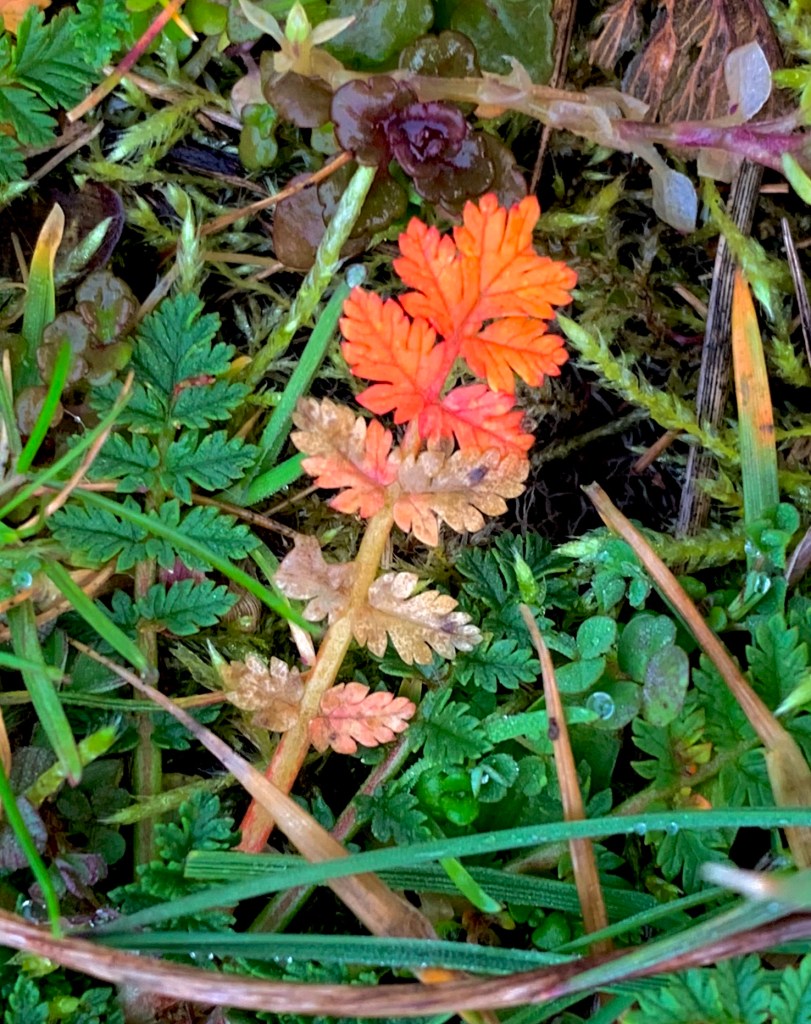
a single oak leaf
brown and shining
like a leather purse.
See what it so delicately offers
lying upturned on the path.
See how it reflects in its opened palm
a cup of deep, unending sky.
~ Laura Foley, “The Offering” from Why I Never Finished My Dissertation

Winter still has us in its chilly grasp for another four weeks. We feel caught up in its wintry web as viruses continue to swirl among us despite efforts to monitor and quarantine, and we wonder when our own turn will come.

The natural world, its joys and its threats, has always had the upper hand. We are dumbfounded, never quick enough to catch on to its tricks and sly mutations, unprepared to respond in the moment.

Like a withering leaf soon to become dust, we offer up what we can when we can: our reflection of the light, our hope of better things to come, our gift of beauty back to a despairing world.

Winter never has the last word.