There is not one blade of grass, there is no color in this world that is not intended to make us rejoice. John Calvin
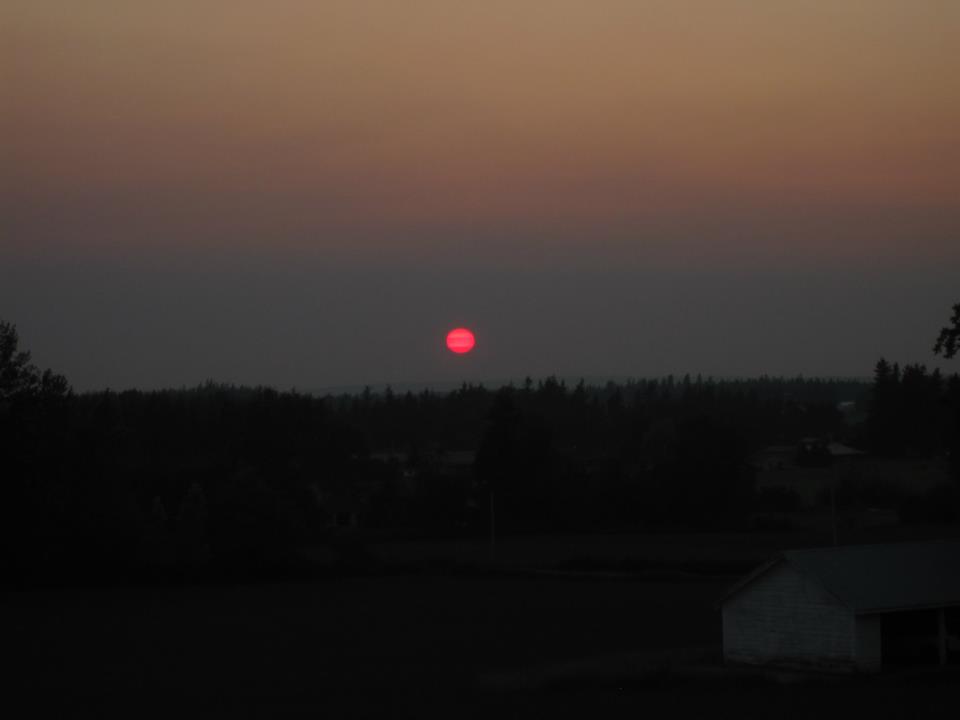
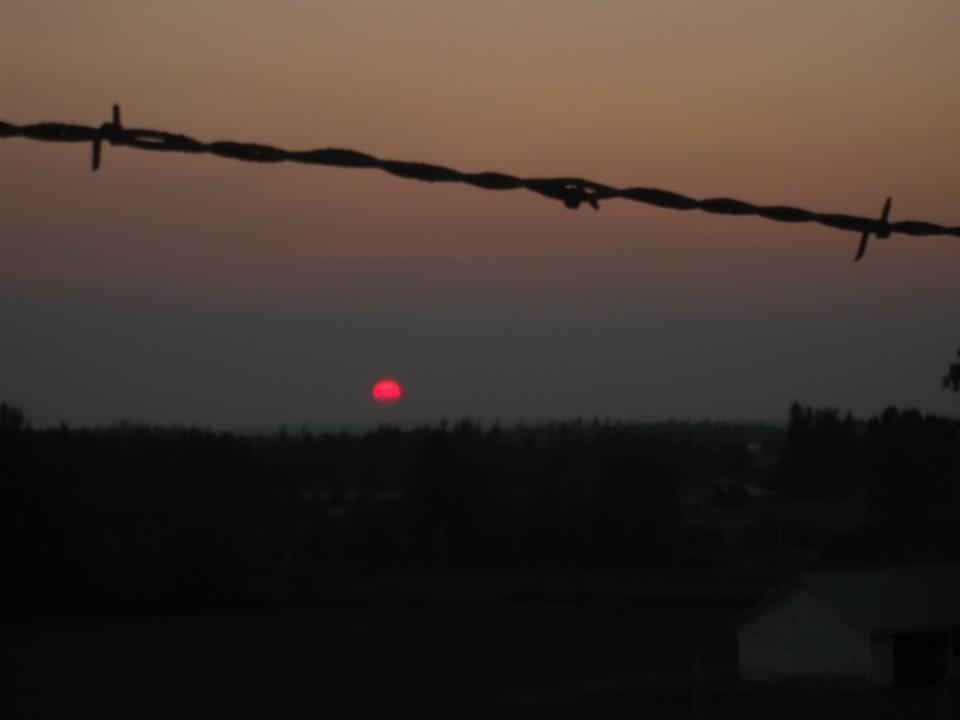
It is too easy to become blinded to the glory surrounding us if we allow it to be routine and commonplace. I can’t remember the last time I celebrated a blade of grass, given how focused I am mowing it into conformity. Too often I’m not up early enough to witness the pink sunrise or I’m too busy to take time to watch the sun paint the sky red as it sets.
I miss opportunities to rejoice innumerable times a day. It takes only a moment of recognition and appreciation to feel the joy, and for that moment time stands still. Life stretches a little longer when I stop to acknowledge the intention of creation as an endless reservoir of rejoicing. If a blade of grass, if a palette of color, if all this is made for joy, then so am I.
Photo by Tayler Rae of Aaron Janicki haying this week with his Belgian team in Skagit County
... The Amish have maintained what I like to think is a proper scale, largely by staying with the horse. The horse has restricted unlimited expansion. Not only does working with horses limit farm size, but horses are ideally suited to family life. With horses you unhitch at noon to water and feed the teams and then the family eats what we still call dinner. While the teams rest there is usually time for a short nap. And because God didn’t create the horse with headlights, we don’t work nights. Amish farmer David Kline in Great Possessions
Nearing 58, I am old enough to have parents who grew up on farms worked by horses, one raising wheat and lentils in the Palouse country of eastern Washington and the other logging in the woodlands of Fidalgo Island of western Washington. The horses were crucial to my grandfathers’ success in caring for and tilling the land, seeding and harvesting the crops and bringing supplies from town miles away. Theirs was a hardscrabble life in the early 20th century with few conveniences. Work was year round from dawn to dusk; caring for the animals came before any human comforts. Once night fell, work ceased and sleep was welcome respite for man and beast.
You can’t have the family farm without the family.–G.K. Chesterton
In the rural countryside where we live now, we’ve been fortunate enough to know people who still dabble in horse farming, whose draft teams are hitched to plows and mowers and manure spreaders as they head out to the fields to recapture the past. Watching a good team work with no diesel motor running means hearing bird calls from the field, the steady footfall of the horses, the harness chains jingling, the leather straps creaking, the machinery shushing quietly as gears turn and grass lays over in submission. No ear protection is needed. There is no clock needed to pace the day. There is a rhythm of nurture when animals instead of engines are part of the work day. The gauge for taking a break is the amount of foamy sweat on the horses and how fast they are breathing.It is time to stop and take a breather, it is time to start back up do a few more rows, it is time to water, it is time for a meal, it is time for a nap, it is time for a rest in a shady spot. This is gentle use of the land with four footed stewards who deposit right back to the soil the digested forage they have eaten only hours before.
When we stop working with our hands, we cease to understand how the world really works. — Clive Thompson
Our modern agribusiness megafarm fossil-fuel-powered approach to food production has bypassed the small family farm which was so dependent on the muscle power of humans and animals. In our move away from horses worked by skilled teamsters, what has been gained in high production values has meant loss of self-sufficiency and dedicated stewardship of a particular plot of ground. Draft breeds, including the Haflinger horses we raise, now are bred for higher energy with lighter refined bone structure meant more for eye appeal and floating movement, rather than the sturdy conformation and unflappable low maintenance mindset needed for pulling work. Modern children are bred for different purpose as well, no longer raised to work together with other family members for a common purpose of daily survival. Their focus at school is waning as they have no morning farm chores when they get up, too little physical work to do before they arrive at their desks in the morning. Their physical energy, if directed at all, is directed to competitive sports, engaged in fantasy combat rather than winning a very real victory over hunger.
I am encouraged when young people still reach for horse collars and bridles, hitch up their horses and do the work as it used to be done. All is not lost if we can still make incremental daily progress, harnessed together as a team with our horses, tilling for truth and harvesting hope.
I like farming. I like the work. I like the livestock and the pastures and the woods. It’s not necessarily a good living, but it’s a good life. I now suspect that if we work with machines the world will seem to us to be a machine, but if we work with living creatures the world will appear to us as a living creature. That’s what I’ve spent my life doing, trying to create an authentic grounds for hope. –Wendell Berry, horse farmer, essayist, poet, professor
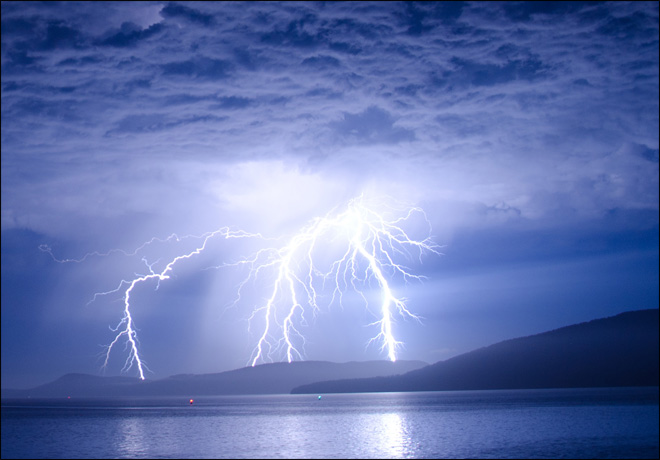
photo of lightning over Anacortes, Washington 7/13/12 from Komonews.com
Now and then there comes a crash of thunder in a storm, and we look up with amazement when he sets the heavens on a blaze with his lightning.
~C.H. Spurgeon
Subtlety is usually sufficient;
safe sky gravitates to gray.
A little shower here, brief sun break there,
scented soft sea breezes
inspiring few complaints
but rarely awe.
Tonight a sudden bright arcing light
splinters out of nowhere,
abruptly demands all attention.
It stops time and severs space,
leaving spots before eyes.
fresh air in nostrils.
Nothing can remain the same
once illuminated ablaze.
Ignited retinas-count the seconds-
then assaulted tympanic membranes.
Crash following flash;
left smoldering and shaken,
earth diminished by grander
grandeur.
It is soon over,
fully doused
in cleansing deluge,
baptized by the relenting
downpour of heaven’s
shattering mercy.
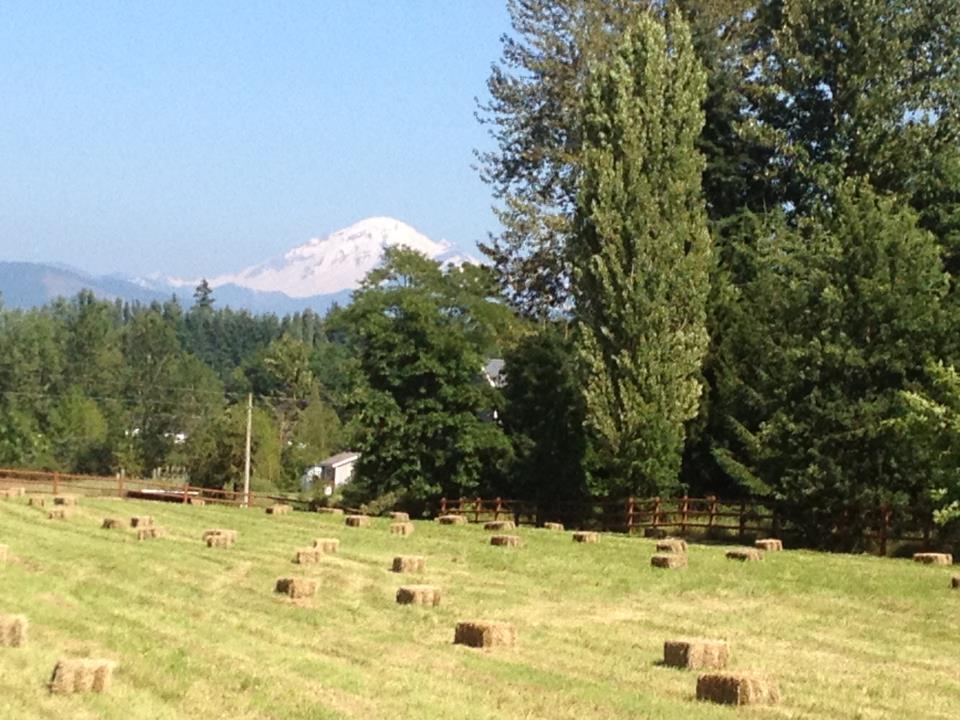
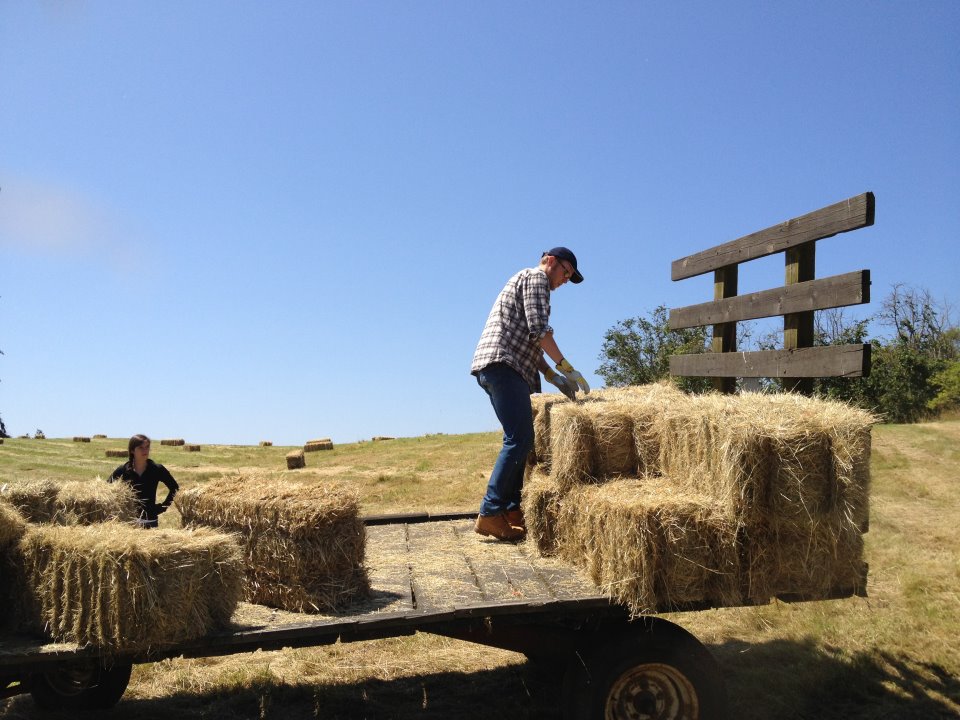
Hayfield at BriarCroft –photo by Nate Gibsonour hay field near the farm –photo by Nate Gibsonunloading bales into the hay barn– photo by Nate Gibsonstacking the wagon –photo by Nate Gibson
“Haymaking” [sonnet]
John Clare (1793-1864).
Tis haytime & the red complexioned sun
Was scarcely up ere blackbirds had begun
Along the meadow hedges here & there
To sing loud songs to the sweet smelling air
Where breath of flowers & grass & happy cow
Fling oer ones senses streams of fragrance now
While in some pleasant nook the swain & maid
Lean oer their rakes & loiter in the shade
Or bend a minute oer the bridge & throw
Crumbs in their leisure to the fish below
—Hark at that happy shout—& song between
Tis pleasures birthday in her meadow scene
What joy seems half so rich from pleasure won
As the loud laugh of maidens in the sun.
If you want to identify me, ask me not where I live, or what I like to eat, or how I comb my hair, but ask me what I am living for, in detail, ask me what I think is keeping me from living fully for the thing I want to live for. ~ Thomas Merton
As a patient waiting to see my health care provider, I would adapt Merton’s template of personal revelation:
If you want to know who I am,
ask me not about my insurance plan,
or what is my current address,
or whether I have a POLST on file,
but ask me what I am most concerned about,
in detail,
ask me what I think is causing my symptoms
and what I think is keeping me
from eating healthy, exercising regularly, choosing moderation in all things
so that I can live fully
for the thing I want to live for.
As a physician in the midst of a busy clinic day, I struggle to know who my patients are beyond their standard medical history and demographics. One of my goals in our primary care clinic, now almost a decade into electronic medical record keeping, is to create a way for interested patients to provide their personal history online to us via our password secured web portal. These are the questions our clinic staff may not have opportunity to ask or record during clinic visits. Having the patient personally document their social history and background for us to have in the chart –in essence, telling us their story in their own words–can be very helpful diagnostically and for individualizing the best treatment approach for each unique individual.
We are creating an “About Me” folder in the electronic medical record that would contain information the patient would provide online via their secure patient portal. It will be introduced once the patient signs onto their patient portal for the first time and views their online chart:
Tell us about yourself This is your own personal history in your own words to be added to your electronic medical record in the folder “About Me”. You can edit and add information at any time via this secure patient portal to update it.
We want to know your story. Only you can tell us what you think is most important for us as your health care providers to know about you. We may not always have the time to ask and document these detailed questions in a brief clinic visit, so we are asking for your help.
Why do we want to know your non-medical background as well as medical background?
We evaluate a patient’s symptoms of concern but we also are dedicated to helping our patients stay healthy life long. To assist us in this effort, it is very helpful to know as much about you as possible, in addition to your past medical history. It is crucial also to understand your family background and social history. We want to know more about your personal goals, and what you think may be preventing you right now from living fully for the things you consider most important to you.
This is your opportunity to tell us about yourself, with suggested questions below that you can consider answering. This information is treated as a confidential part of your medical record, just like all information contained in your record. You can add more at any time by returning to this site.
1) Tell us about your family—who raised you and grew up with you, and who currently lives with you– including racial/ethnic/cultural heritage. If relevant, tell us whether you have biological beginnings outside of your family (e.g. adopted, egg donation, surrogate pregnancy, artificial insemination, in vitro fertilization) Provide information on any illnesses in your biologic family.
2) List the states or countries you have lived in, and what countries outside the U.S. you have lived in longer than a month. Have you served in the military or another government organization, like the Peace Corps?
3) Tell us about your educational and job background. This could include your schooling or training history, paid or volunteer work you’ve done. What are your hobbies, how do you spend your leisure time, what are your passions and future goals. Where do you see yourself in ten years?
4) Tell us about your sexual orientation and/or gender preference.
5) Tell us about your current emotional support system—who are you most likely to share with when things are going very well for you and especially when things are not going well.
6) Tell us about your spiritual background, whether you are part of a faith or religious community and if so, how it impacts your life.
7) Tell us what worries you most about your health.
8) What would you have done differently if you could change things in your life? What are you most thankful for in your life?
9) What else do you feel it is important for us to know about you?
Thank you for helping us get to know you better so we can provide medical care that best meets your unique needs.
As this effort is a work in progress, I’m interested in hearing feedback from patients and health care providers. What additional questions would you want asked as part of personal history documentation in a medical record?
Electronic medical records allow us, as never before, the ability to share information securely between patients and their health care providers.
Patients want to tell us their story. It is time we asked them.
“On the planet the winds are blowing: the polar easterlies, the westerlies, the northeast and southeast trades…Lick a finger, feel the now.” Annie Dillard
We fell asleep last night content in the knowledge that the weather forecast on three different websites confirmed no rain. This is particularly important when there are about 750 bales worth of cut hay lying in our fields curing, getting ready for raking and baling the next day. Rain is the farmer’s best friend most of the time, but definitely not when there is cut hay on the ground. Wet hay becomes moldy hay, or worse–combustible–if not allowed to thoroughly dry, and it gradually loses nutrient value the longer it dries.
As opposed to drought conditions in much of the nation, in the northwest a stretch of at least four days of warmer weather had been long awaited. It was a relief to get the hay finally cut, several weeks later than typical with a promise of at least three more clear days to ted, rake, bale and get it in the barn without being rained on. The air felt sticky and still when we went to bed. I woke about two hours later to a cool breeze coming through the open window–it felt a little too cool. I could hear rumbling in the distance–too low pitched for airplane or truck sounds. Somewhere nearby it was thundering. Thunder meant heavy moisture-filled clouds. Heavy clouds meant showers. Showers meant wet hay. Wet hay meant…well, you get my drift.
The rumbling moved closer and closer, with accompanying flashes of lightning, finally cracking right above us. The wind picked up. I got out of bed to go outside to feel the direction of the wind and see if the rain– licking a finger and holding it up. The wind was southerly but not consistent–the air was changing so quickly that all I could do was acknowledge and anticipate the change, knowing a storm was coming and there was no stopping it. It was the inevitability of feeling the “now” of which Dillard writes.
The breeze was moisture-laden: wet without raindrops. Then they began to fall, gentle at first but finally earnest showering–not a downpour. It lasted less than an hour, just long enough to dampen but not soak. The hay would not be a complete ruin. It could be salvaged. The storm had passed, leaving little damage in its wake, just plenty of noisy drama and jangled nerves.
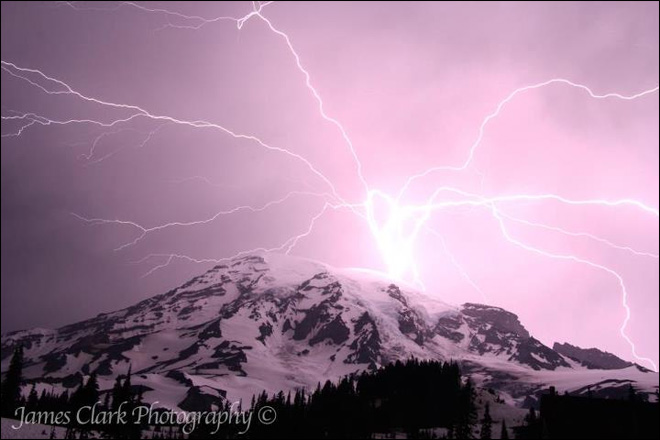
The experience of a thunder storm overhead is unlike any other. It commands our attention, wakes us from sound sleep, turns night into day in a flash, drowns humid heat in a downpour. As some pray for the relief of such a storm, others fear its effects, whether igniting forest fires from lightning strikes, frightening animals or molding cut hay.
I’m content to just be a witness, in wonder at the storm’s strength and command. All I can do is lick a finger and hold it up in awe, knowing I’m here and it’s now.
photo by James Clark Photography of lightening strike over Mt. Rainier 7/8/12
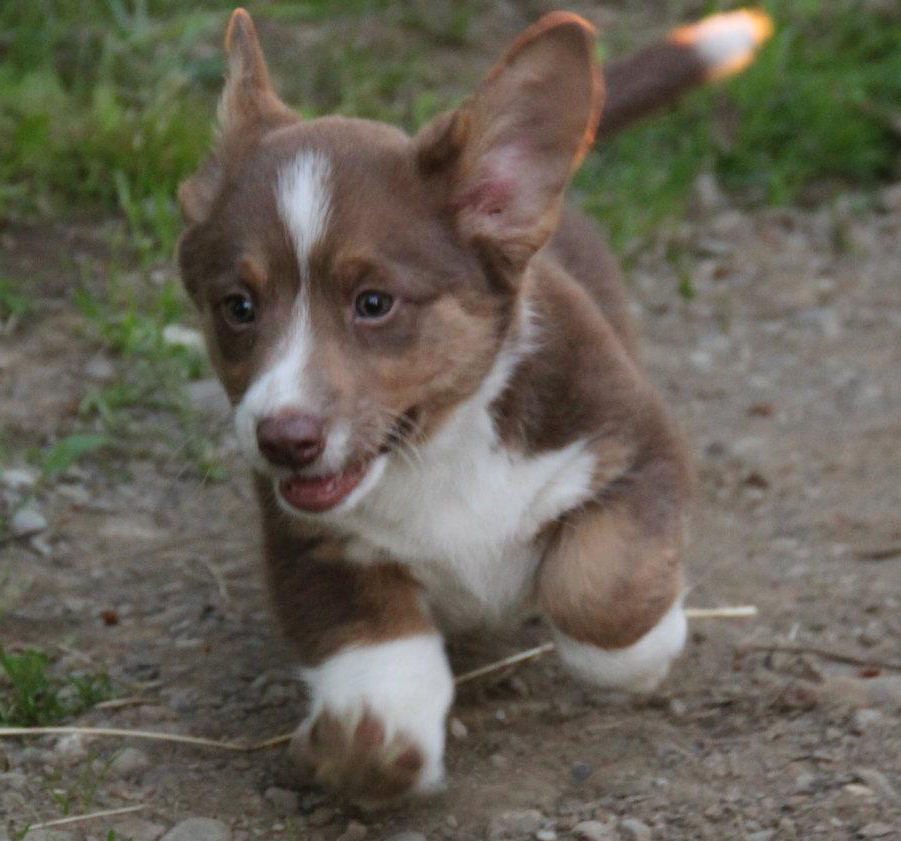
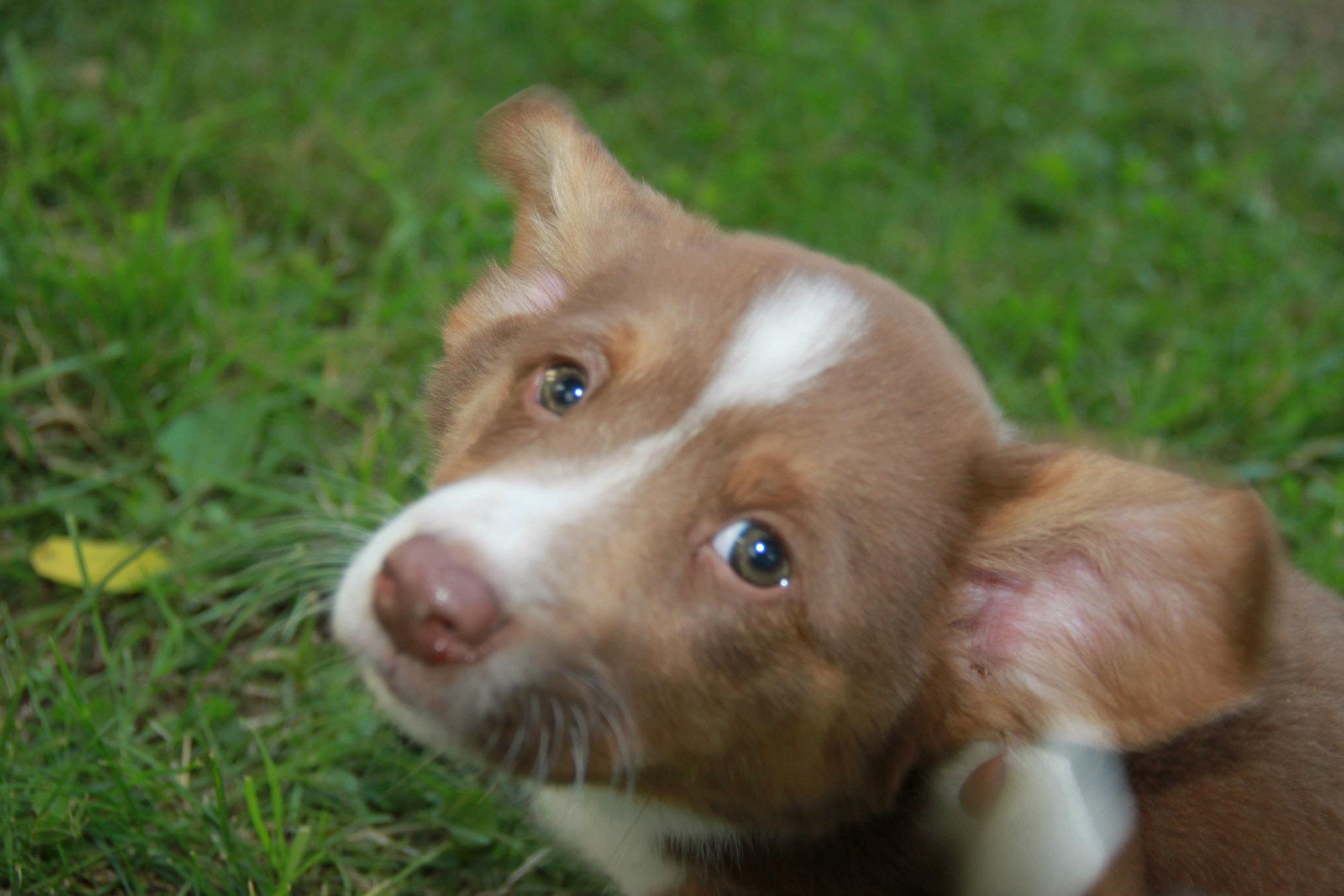
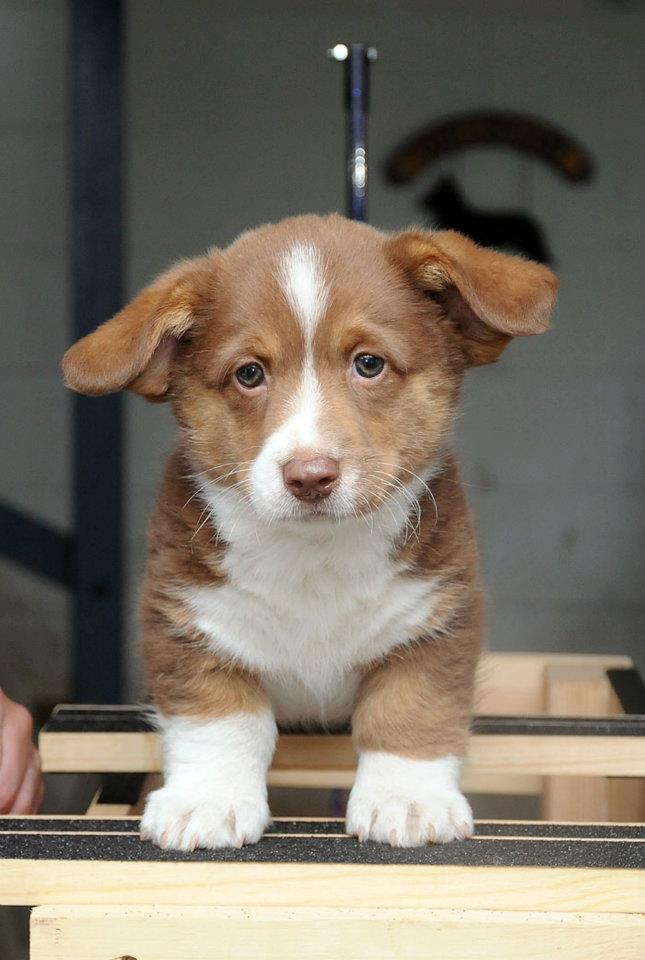
BriarCroft’s new Cardigan Welsh Corgi puppy Samwise Gamgee or “Sam”
Naming a new puppy is almost as important as naming a child. The difference is that a puppy needs a “call” name that will be an invisible leash for the rest of their lives, bringing them running whenever they hear it. Ideally, children will outgrow their invisible leash, but never dogs.
A new puppy at the farm means finding that right name that will be the connection between dog and family. For our 9 week old Cardigan Welsh Corgi, it is “Sam” –named for Frodo’s steadfast and loyal companion Samwise Gamgee in The Lord of the Rings. A Corgi is definitely hobbit-like, from their short legs to their hairy toes to their pointy ears. We lost our older dog Frodo to cancer a few months ago, so this new Sam, as in the classic tale, will carry on where Frodo could not. We feel it fits this little fellow quite well and look forward to our journey together. Thank you to Dune Cardigans for Sam.
Sam saves Frodo numerous times in the Trilogy, staying with him even though he believes Frodo dead: “Don’t leave me here alone. Don’t go where I can’t follow.”
In other memorable exchanges:
Sam: Do you remember the Shire, Mr. Frodo? It’ll be spring soon. And the orchards will be in blossom. And the birds will be nesting in the hazel thicket. And they’ll be sowing the summer barley in the lower fields… and eating the first of the strawberries with cream. Do you remember the taste of strawberries?
Frodo: No, Sam. I can’t recall the taste of food… nor the sound of water… nor the touch of grass. I’m… naked in the dark, with nothing, no veil… between me… and the wheel of fire! I can see him… with my waking eyes!
Sam: Then let us be rid of it (the ring)… once and for all! Come on, Mr. Frodo. I can’t carry it for you… but I can carry you!
“There’s some good in this world, Mr. Frodo… and it’s worth fighting for.”
quotes from from The Lord of the Rings (movie)
photo courtesy of Stonelight Cardigans
Speaking of the “wheel of fire”, not everyone on the farm is happy about the new puppy:
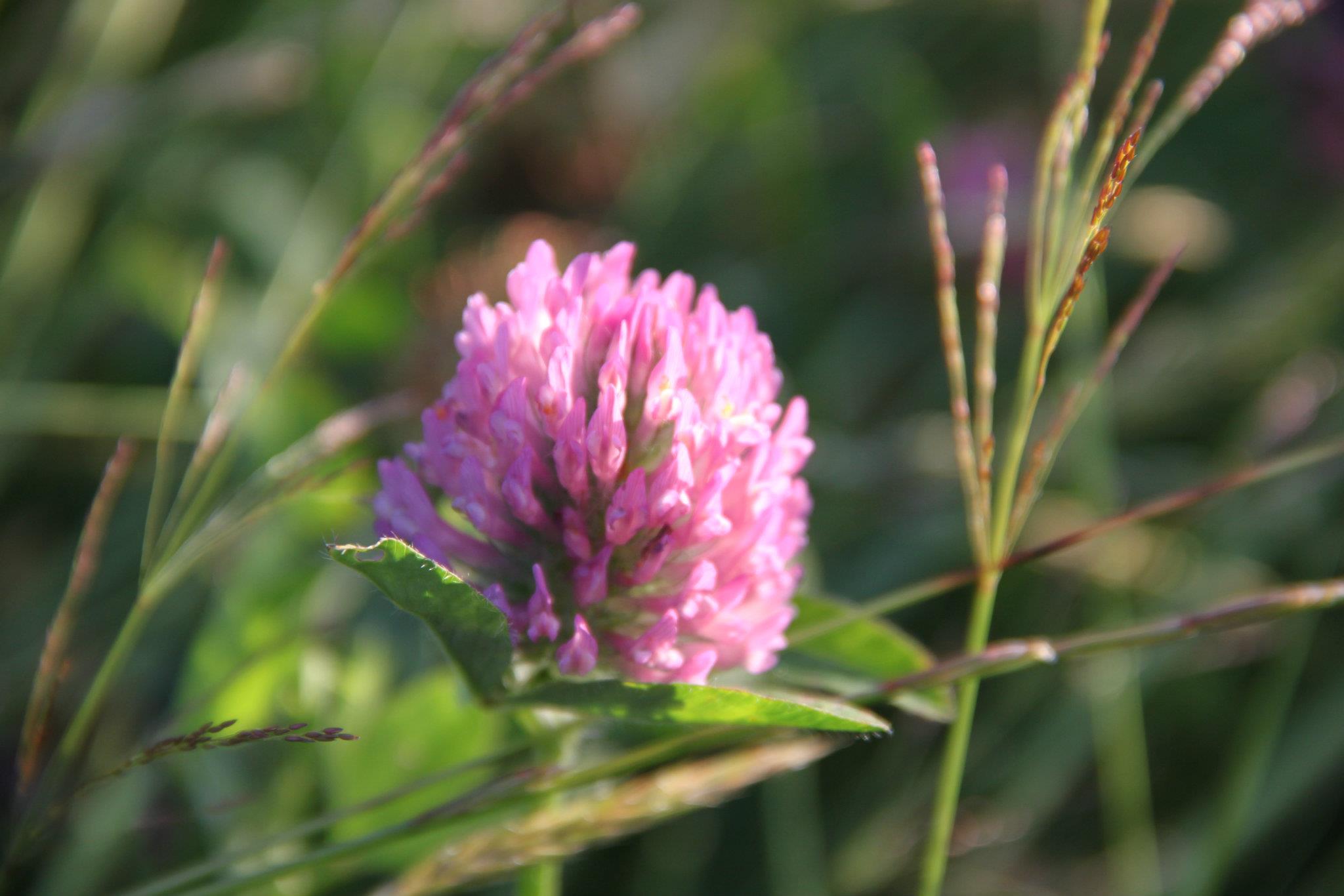
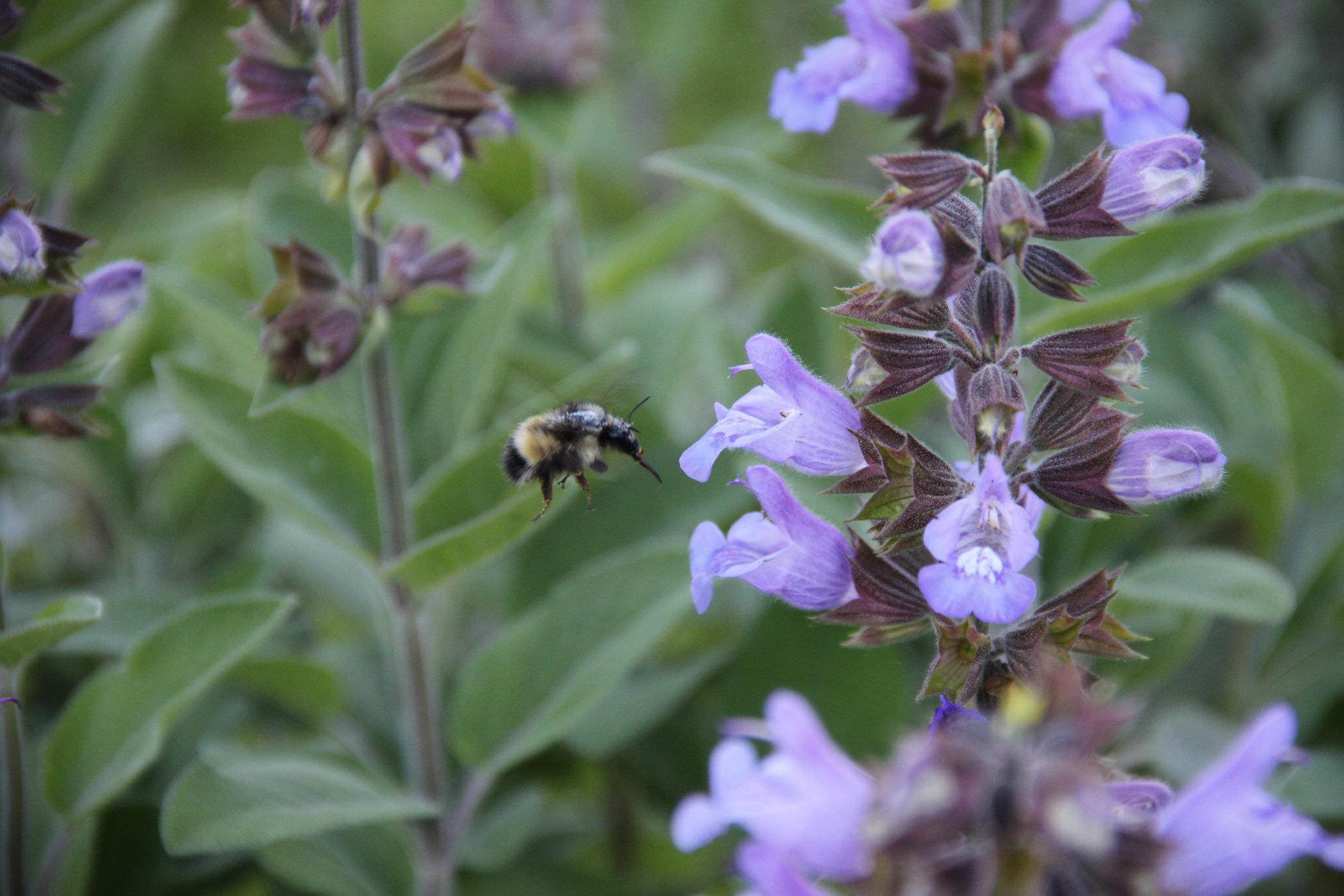
One day in summer when everything has already been more than enough the wild beds start exploding open along the berm of the sea; day after day you sit near them; day after day the honey keeps on coming in the red cups and the bees like amber drops roll in the petals: there is no end, believe me! to the inventions of summer, to the happiness your body is willing to bear.
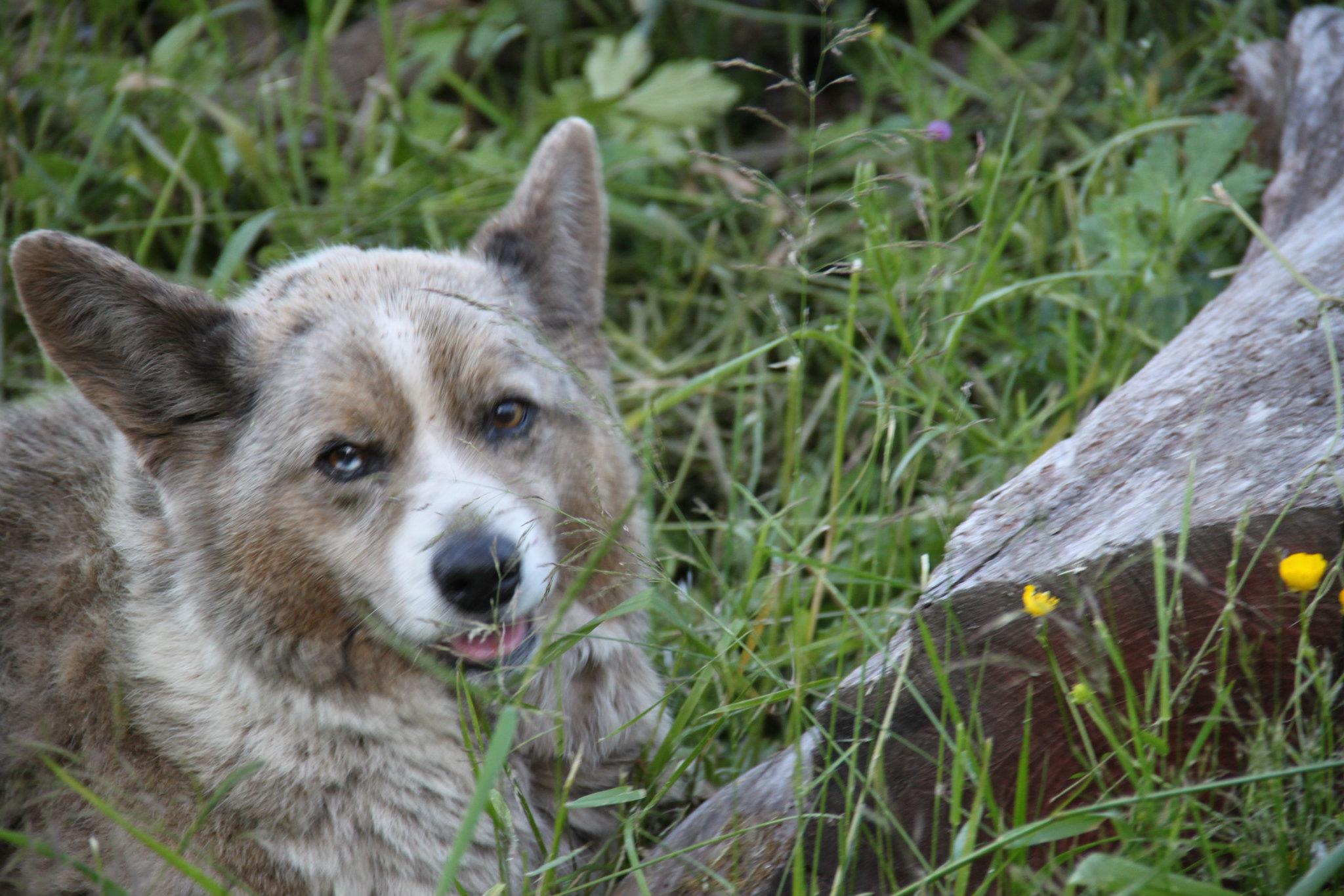
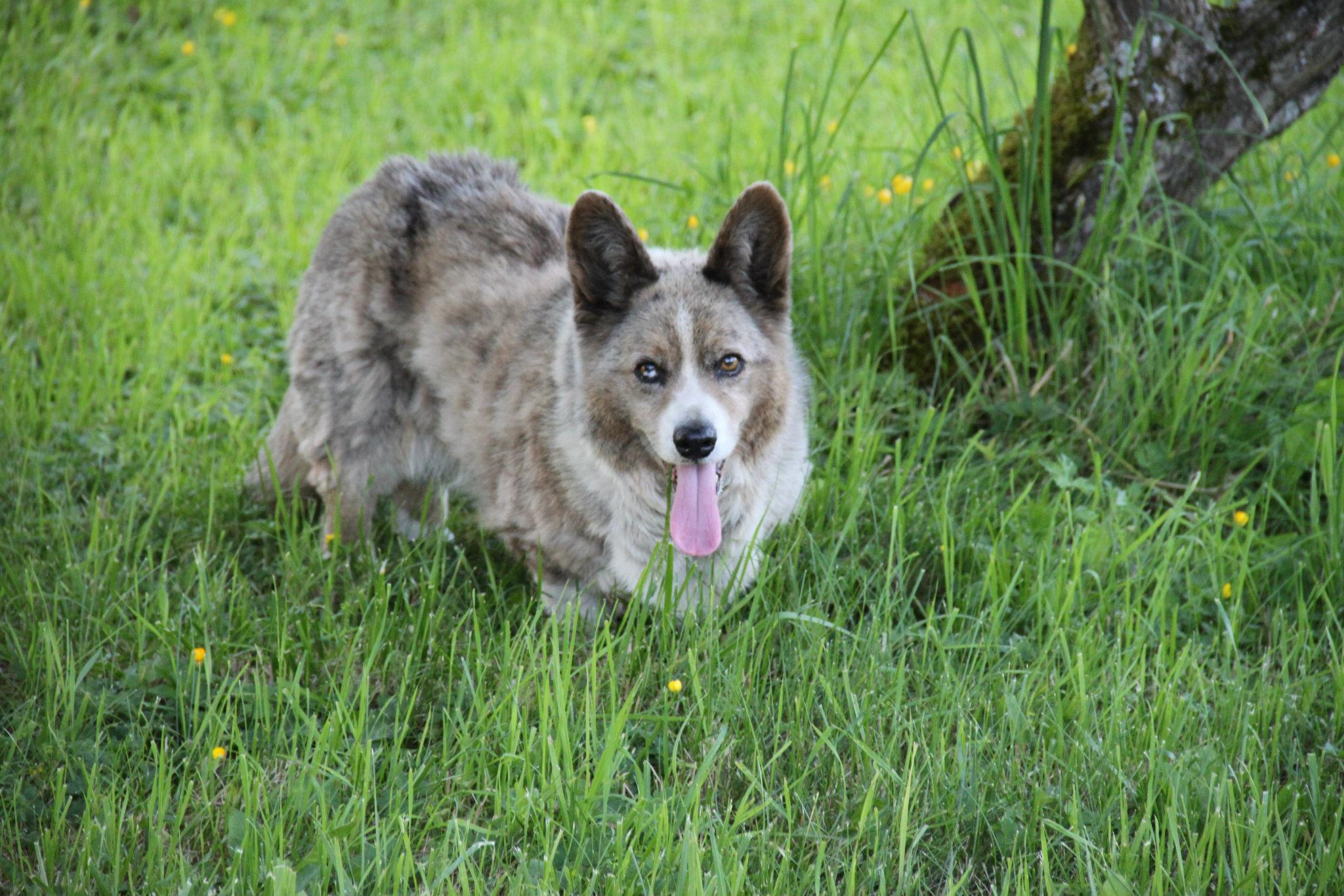
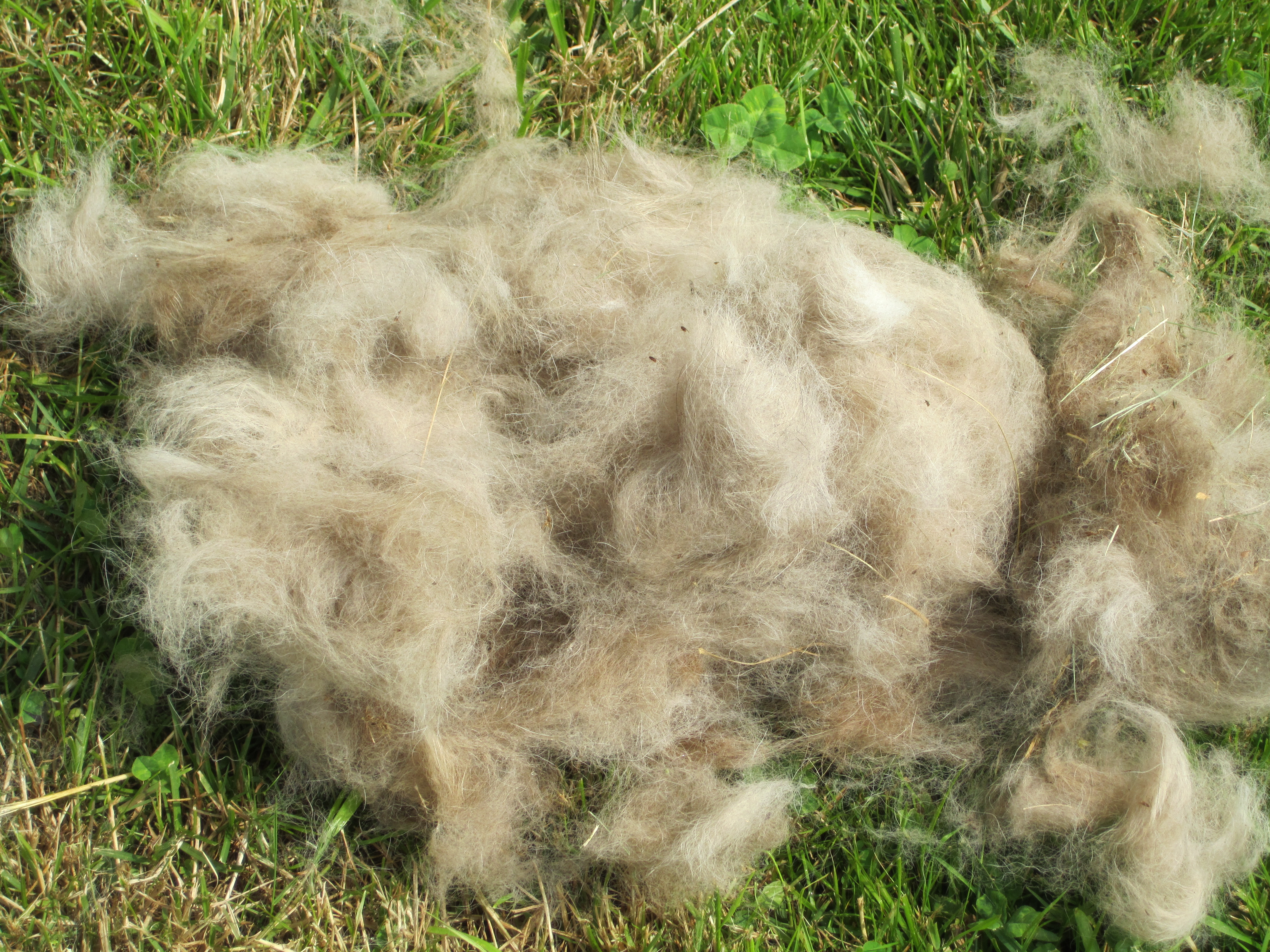
An atypically cool start to the summer meant our farm dog Dylan Thomas, a Cardigan Welsh Corgi, forgot to take off his winter sweater. I completely understand: I wouldn’t want to either if July nighttime temperatures are in the mid-forties and I was an old fellow like he is. Given his need to stay warm since he sleeps outside, Dylan had not yet blown his heavy coat and we had not put much effort into brushing him out. Now the temperatures are finally rising so this means the time has come.
His downy undercoat has been hanging in tufts and bulges all over his body yet packed so tightly in places that the effort of brushing is not easy on dog or human. I know he thinks we’re trying to pull his hide out along with the hair. Shearing a sheep or llama just might be easier. I’ve contemplated getting out the clippers, but a clipped Dylan would die of embarrassment (and probably would catch cold).
We are slowly working on relieving him of his cardigan, brush stroke by brush stroke, in a multi-day process accumulating prodigious quantities of hair that could easily be marketed as high R value insulation filler.
I wish my own extra insulation could just be brushed out and thrown away like Dylan’s hair. Mine clings to me through cold weather and warm, padding my hips and my middle and a few other spots I’d rather not disclose. I know I don’t really need all the extra fluff, and I know what I must do to shed it, but somehow knowing and doing are not always in synch.
In fact I hang on to a lot that I don’t need, some of which only makes me more miserable, as it is no longer useful and is downright detrimental. Some of it is tangible accumulation, in a few piles and closets. Some is not visible but is deeply seeded nevertheless. The excess hurts to have it pulled out by the roots.
We all have an undercoat that we cling to because it guards our heart, providing an insulated layer buffering against the chill and sharp edges of life. We need someone with a good stiff brush, a strong arm and the persistence to save us from ourselves, even when we don’t want saving. The time has come for the coat to blow. We’ll be smooth and free once again, feeling the breezes right through our skin, all the way to our heart.
Man is but a reed, the most feeble thing in nature, but he is a thinking reed. Blaise Pascal
I’m not sure which is getting flabbier faster–my biceps or my brain. As I advance in middle age I tend to avoid overworking both to just get by with only occasional heavy lifting: a hay bale here, a challenging abstract philosophical commentary there. Hard work, whether physical or mental, is getting harder. As a naturally lazy person, I have to be forced into manual and central nervous system labor out of necessity. Necessity happens less and less often unless I go looking for it.
Given the choice between a physical task and a thinking task, I’ll opt for thinking over lifting any day. Even so, I find my mental strengths are ebbing. My brain is less flexible, I can tend to be stiff headed when trying something new, it starts to feel strained if I push it too fast. There are times when it feels like it just goes into spasm and I need to sit down and rub it for awhile. Feeble suddenly doesn’t sound like it just belongs to the aged and infirm.
The only remedy is to use it or lose it, whether muscles or gray matter. So I dig a little deeper each day, even when it hurts to do so. I purposely stretch beyond the point of comfort, just so I know it can still be done. I lift a little higher, heft a little heavier, push a little harder. Being the most feeble thing in nature may mean being easily broken by the smallest effort, but at least I’ll have thought my reedy limitations through thoroughly, chewed on it until there was nothing left and digested what I could.
Eventually I’ll come to accept that my greatest strength is to know what I don’t know.
“I have come to think that if I had the mind, I have not the brain and nerves for a life of pure philosophy. A continued search among the abstract roots of things, a perpetual questioning of all that plain men take for granted, a chewing the cud for fifty years over inevitable ignorance and a constant frontier watch on the little tidy lighted conventional world of science and daily life–is this the best life for temperaments such as ours? Is it the way of health or even of sanity?” C. S. Lewis (in a letter to his father, Aug. 14, 1925)




 Barnstorming