A Z-Pack Pas De Deux

990054084_951e0f2a59

I’ve been really miserable for three days and need that 5 day antibiotic to get better faster.

Ninety eight percent of the time these symptoms are due to a viral infection and will resolve without antibiotics.

But I can’t breathe and I can’t sleep.

You can use salt water rinses and a few days of decongestant nose spray to ease the congestion.

But my face feels like there is a blown up balloon inside.

Try applying a warm towel to your face.

And I’m feverish and having sweats at night.

Your temp is 99.2. You can use ibuprofen or acetominophen to help the feverish feeling.

But my snot is green.

That’s not unusual with viral upper respiratory infections.

And my teeth are starting to hurt and my ears are popping.

Let me know if that is not resolving in a week or so.

But I’m starting to cough.

Your lungs are clear so breathe steam, push fluids and prop up with an extra pillow.

But sometimes I cough to the point of gagging. Isn’t whooping cough going around?

Your illness doesn’t fit the timeline for pertussis.  You can consider using an over the counter cough suppressant.

But I always end up needing antibiotics. This is like my regular sinus infection thing.

There’s plenty of evidence they can do more harm than good.  They really aren’t indicated at this point in your illness and could have nasty side effects.

But I always get better faster with antibiotics. Doctors always give me antibiotics.

Studies show that two weeks later there is no significant difference in symptoms between those treated with antibiotics and those who did self-care without them.

But I have a really hard week coming up and I won’t be able to rest.

This could be your body’s way of saying that you need to evaluate your priorities.

But I just waited an hour to see you.

I really am sorry about the wait; we’re seeing a lot of sick people with this viral thing going around.

But I paid a $20 co-pay today for this visit.

We’re very appreciative of you paying promptly on the day of service.

But I can go down the street to the walk in clinic and for $130 they will write me an antibiotic prescription without making me feel guilty for asking.

I wouldn’t recommend taking unnecessary medication that can lead to bacterial resistance, side effects and allergic reactions. I truly believe you can be spared the expense, inconvenience and potential risk of taking something you don’t really need.

So that’s it?  Salt water rinses and wait it out?  That’s all you can offer?

Let me know if your symptoms are unresolved or worsening in the next week or so.

So you spent all that time in school just to tell people they don’t need medicine?

I believe I help people heal themselves and educate them about when they do need medicine and then facilitate appropriate treatment. 

I’m going to go find a real doctor who will listen to me.

A real doctor vows to first do no harm.  I know you want something different than I’m offering you and I wish you the best as you recover.

To Feel the Hem of Heaven

4095767658_ff9e9711f9_o1

Your days are short here; this is the last of your springs.
And now in the serenity and quiet of this lovely place,
touch the depths of truth, feel the hem of Heaven.
You will go away with old, good friends.
And don’t forget when you leave why you came.

~Adlai Stevenson, to the Class of ’54 Princeton University

icyrose

I was eight years old in June 1963 when the Readers’ Digest arrived in the mail inside its little brown paper wrapper. As usual, I sat down in my favorite overstuffed chair with my skinny legs dangling over the side arm and started at the beginning,  reading the jokes, the short articles and stories on harrowing adventures and rescues, pets that had been lost and found their way home, and then toward the back came to the book excerpt: “The Triumph of Janis Babson” by Lawrence Elliott.

Something about the little girl’s picture at the start of the story captured me right away–she had such friendly eyes with a sunny smile that partially hid buck teeth.  This Canadian child, Janis Babson, was diagnosed with leukemia when she was only ten, and despite all efforts to stop the illness, she died in 1961.  The story was written about her determination to donate her eyes after her death, and her courage facing death was astounding.  Being nearly the same age, I was captivated and petrified at the story, amazed at Janis’ straight forward approach to her death, her family’s incredible support of her wishes, and especially her final moments, when (as I recall 54 years later) Janis looked as if she were beholding some splendor, her smile radiant.

”Is this Heaven?” she asked.   She looked directly at her father and mother and called to them:  “Mommy… Daddy !… come… quick !”

And then she was gone.  I cried buckets of tears, reading and rereading that death scene.  My mom finally had to take the magazine away from me and shooed me outside to go run off my grief.  How could I run and play when Janis no longer could?  It was a devastating realization that a child my age could get sick and die, and that God allowed it to happen.

Yet this story was more than just a tear-jerker for the readers.  Janis’ final wish was granted –those eyes that had seen the angels were donated after her death so that they would help another person see.  Janis  had hoped never to be forgotten.  Amazingly, she influenced thousands of people who read her story to consider and commit to organ donation, most of whom remember her vividly through that book excerpt in Readers’ Digest.  I know I could not sleep the night after I read her story and determined to do something significant with my life, no matter how long or short it was.  Her story influenced my eventual decision to become a physician.  She made me think about death at a very young age as that little girl’s tragic story could have been mine and I was certain I could never have been so brave and so confident in my dying moments.

Janis persevered with a unique sense of purpose and mission for one so young.  As a ten year old, she developed character that some people never develop in a much longer lifetime.  Her faith and her deep respect for the gift she was capable of giving through her death brought hope and light to scores of people who still remember her to this day.

Out of the recesses of my memory, I recalled Janis’ story a few years ago when I learned of a local child who had been diagnosed with a serious cancer.  I could not recall Janis’ name, but in googling “Readers’  Digest girl cancer story”,  by the miracle of the internet I rediscovered her name, the name of the book and a discussion forum that included posts of people who were children in the sixties, like me,  who had been incredibly touched by Janis when they read this same story as a child.  Many were inspired to become health care providers like myself and some became professionals working with organ donation.

Janis and family, may you know the gift you gave so many people through your courage in the midst of suffering, and the resulting hope in the glory of the Lord.  Your days were short here, but you touched the depth of truth and touched the hem of heaven.
~~the angels are coming indeed.

We who have been your old good friends,  because of your story,  have not forgotten how you left us and why you came in the first place.

For excerpts from “The Triumph of Janis Babson”, click here

silverthawwilted

Not Choose Not To Be

sunrise1042

fallyard3

Not, I’ll not, carrion comfort, Despair, not feast on thee;
Not untwist — slack they may be — these last strands of man
In me ór, most weary, cry I can no more. I can;
Can something, hope, wish day come, not choose not to be.
But ah, but O thou terrible, why wouldst thou rude on me
Thy wring-world right foot rock? lay a lionlimb against me? scan
With darksome devouring eyes my bruisèd bones? and fan,
O in turns of tempest, me heaped there; me frantic to avoid thee and flee?
   Why? That my chaff might fly; my grain lie, sheer and clear.
Nay in all that toil, that coil, since (seems) I kissed the rod,
Hand rather, my heart lo! lapped strength, stole joy, would laugh, chéer.
Cheer whom though? the hero whose heaven-handling flung me, fóot tród
Me? or me that fought him? O which one? is it each one? That night, that year
Of now done darkness I wretch lay wrestling with (my God!) my God.
~Gerard Manley Hopkins
sunrise97148

I hear the same anguish
from one patient after another:

their struggle with life makes them
frantic to avoid the fight and flee~

they would
commit suicide,
yet not believing
in God
would mean
jumping from
the pain of living
into

…nothing at all…

I thought
feeling nothing
was the
point
of ceasing
to be

still in their unbelief
they do not recognize
the God who wrestles relentless with them,
who heaven-flung them here
for such sacred struggle

Perhaps they can’t imagine
a God
(who created
doubters
sore afraid
of His caring
enough to die)

so no one
is ever now,
nor ever will be,
~nothing.

sunrise109151

Handing the Medical Chart Back to the Patient

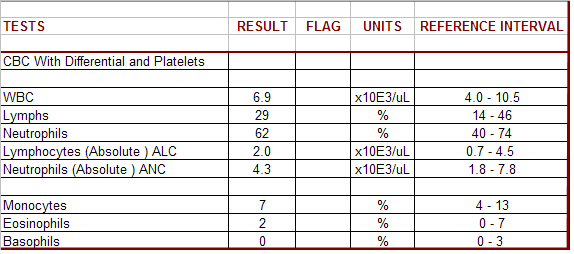
CBC-lymphocytes-report

Seventy years ago my maternal grandmother, having experienced months of fatigue, abdominal discomfort and weight loss, underwent exploratory abdominal surgery, the only truly diagnostic tool available at the time. One brief look by the surgeon told him everything he needed to know: her liver and omentum were riddled with tumor, clearly advanced, with the primary source unknown and ultimately unimportant.  He quickly closed her up and went to speak with her family–my grandfather, uncle and mother.  He told them there was no hope and no treatment, to take her back home to their rural wheat farm in the Palouse country of Eastern Washington and allow her to resume what activities she could with the time she had left.  He said she had only a few months to live, and he recommended that they simply tell her that no cause was found for her symptoms.

So that is exactly what they did.  It was standard practice at the time that an unfortunate diagnosis be kept secret from terminally ill patients, assuming the patient, if told, would simply despair and lose hope.  My grandmother was gone within a few weeks, growing weaker and weaker to the point of needing rehospitalization prior to her death.  She never was told what was wrong and,  more astonishing, she never asked.

But surely she knew deep in her heart.  She must have experienced some overwhelmingly dark moments of pain and anxiety, never hearing the truth so that she could talk about it with her physician and those she loved.  But the conceit of the medical profession at the time, and indeed, for the next 20-30 years, was that the patient did not need to know, and indeed could be harmed by information about their illness.  We modern more enlightened health care professionals know better.  We know that our physician predecessors were avoiding uncomfortable conversations by exercising the “the patient doesn’t need to know and the doctor knows better” mandate.  The physician had complete control of the health care information–the details of the physical exam, the labs, the xray results, the surgical biopsy results–and the patient and family’s duty was to follow the physician’s dictates and instructions, with no questions asked.

Even during my medical training in the seventies, there was still a whiff of conceit about “the patient doesn’t need to know the details.”   During rounds, the attending physician would discuss diseases right across the hospital bed over the head of the afflicted patient, who would often worriedly glance back and worth at the impassive faces of the intently listening medical student, intern and resident team.   There would be the attending’s brief pat on the patient’s shoulder at the end of the discussion when he would say, “someone will be back to explain all this to you.” But of course, none of us really wanted to and rarely did.

Eventually I did learn how important it was to the patient that we provide that information. I remember one patient who spoke little English, a Chinese mother of three in her thirties, who grabbed my hand as I turned to leave with my team, and looked me in the eye with a desperation I have never forgotten.   She knew enough English to understand that what the attending had just said was that there was no treatment to cure her and she only had weeks to live.  Her previously undiagnosed pancreatic cancer had caused a painless jaundice resulting in her hospitalization and the surgeon had determined she was not a candidate for a Whipple procedure.  When I returned to sit with her and her husband to talk about her prognosis, I laid it all out for them as clearly as I could.  She thanked me, gripping my hands with her tear soaked fingers.  She was so grateful to know what she was dealing with so she could make her plans, in her own way.

Thirty years into my practice of medicine,  I now spend a significant part of my patient care time in providing information that helps the patient make plans, in their own way.  I figure everything I know needs to be shared with the patient, in real time as much as possible, with all the options and possibilities spelled out.  That means extra work, to be sure,  and I spend extra time on patient care after hours more than ever before in my efforts to communicate with my patients.  Every electronic medical record chart note I write is sent online to the patient via a secure password protected web portal, usually from the exam room as I talk with the patient.  Patient education materials are attached to the progress note so the patient has very specific descriptions, instructions and further web links to learn more about the diagnosis and my recommended treatment plan.  If the diagnosis is uncertain, then the differential is shared with the patient electronically so they know what I am thinking.  The patient’s Major Problem List is on every progress note, as are their medications, dosages and allergies, what health maintenance measures are coming due or overdue,  in addition to their “risk list” of alcohol overuse, recreational drug use, poor eating habits and tobacco history.  Everything is there, warts and all, and nothing is held back from their scrutiny.

Within a few hours of their clinic visit, they receive their actual lab work and copies of imaging studies electronically, accompanied by an interpretation and my recommendations.  No more “you’ll hear from us only if it is abnormal” or  “it may be next week until you hear anything”.   We all know how quickly most lab and imaging results, as well as pathology results are available to us as providers, and our patients deserve the courtesy of knowing as soon as we do, and now regulations insist that we share the results.   Waiting for results is one of the most agonizing times a patient can experience.   If it is something serious that necessitates a direct conversation, I call the patient just as I’ve always done.  When I send electronic information to my patients,  I solicit their questions, worries and concerns by return message.  All of this electronic interchange between myself and my patient is recorded directly into the patient chart automatically, without the duplicative effort of having to summarize from phone calls.

In this new kind of health care team, the patient has become a true partner in their illness management and health maintenance because they now have the information to deal with the diagnosis and treatment plan.  I don’t ever hear “oh, don’t bother me with the details, just tell me what you’re going to do.”   I have never felt more empowered as a healer when I now can share everything I have available, as it becomes available.  My patients are empowered in their pursuit of well-being, whether living with chronic illness, or recovering from acute illness.  No more secrets.  No more power differential.  No more “I know best.”

After all, it is my patient’s life I am impacting by providing them unrestricted access to the self-knowledge that leads them to a better appreciation for their health and and understanding of their illnesses.

And so I am impacted as well, as it is a privilege to live and work in an age where such a doctor~patient relationship has now become possible.
Now and Now and Now

bakerlight

sunset15166


And so you have a life that you are living only now,
now and now and now,
gone before you can speak of it,
and you must be thankful for living day by day,
moment by moment …
a life in the breath and pulse and living light of the present…

~Wendell Berry

_____________________

My days are filled with anxious people, one after another after another.  They sit at the edge of their seat, struggling to hold back the flood from brimming eyes, fingers gripping the arms of the chair, legs jiggling.   Each moment, each breath, each rapid heart beat overwhelmed by panic-filled questions:  will there be another breath?  must there be another breath?   Must this life go on like this in fear of what the next moment will bring?

The only thing more frightening than the unknown is the knowledge that the next moment will be just like the last.  There is a serious gratitude deficiency going on here, a lack of recognition of a moment just passed that can never be retrieved and relived.   There is only fear of the next and the next so that the now and now and now is lost forever.

Their worry and angst is contagious as the flu.
I mask up and wash my hands of it throughout the day.
I wish a simple vaccination could protect us all from unnamed fears.

I want to say to them and myself:
Stop.  Stop this.  Stop this moment in time. Stop and stop and stop.
Stop expecting some one, some thing or some drug must fix this feeling.
Stop being blind and deaf to the gift of each breath.
Just stop.
And simply be.

I want to say:
this moment is ours,
this moment of weeping and sharing
and breath and pulse and light.
Shout for joy in it.
Celebrate it.
Be thankful for tears that can flow over grateful lips
and stop holding them back.

Stop me before I write,
out of my own anxiety,
yet another prescription
you don’t really need.

Just be–
and be blessed–
in the now and now and now.


sunset17163

The World is Flux

wwucarpet
koigold
sunsetbegonia
The world
is flux, and light becomes what it touches,
becomes water, lilies on water,
above and below water,
becomes lilac and mauve and yellow…

Doctor, if only you could see
how heaven pulls earth into its arms
and how infinitely the heart expands
to claim this world, blue vapor without end.
~Lisel Mueller from “Monet Refuses the Operation”

It is all about the light
when it fluxes and flexes around us,
transforming us, making us something more
than how we started.

If I could only see this in each person,
how light and water transfigures the rankest weed
and the deepest shadows,
if only my heart could expand
as does the heart of God
when He claims us as His own…
then I could truly see,
how heaven pulls earth into its arms,
blue vapor without end.

rain725157

rain725154

rain725159

whole-earth-lrg.en

What Oops Means to Me

wwuredsquare

My husband, who I’ve loved for over three decades, has one (and only one) little annoying habit.  He says “oops!” for almost any reason.  It ends up being a generic exclamation that could mean anything from “I just spilled a little milk” to “There is a fire on the stove”.    If I’m driving and he’s a passenger, an “oops” from him might mean an impending crash or just a plastic bag flying across the road.  It is unnerving, to say the least,  to not know immediately what he is exclaiming about, or its significance.

What he doesn’t realize is that “oops!” can cause a PTSD response in someone with my history.

I was a very nervous third year medical student when I walked through the doors of the giant hospital high on a hill for the first day of my Surgical Rotation.  I had never been in an operating room other than to have my own tonsils removed at age four, and that experience was not exactly my happiest memory.  I worried I was not “cut out” for the OR, and wondered if I would faint watching patients being opened up, smelling the thin trail of smoke of the cautery burning bleeding vessels, or hearing the high pitched bone cutter saw.

The first lesson on my first day was to learn how to gown and glove up without contaminating anything or anyone.  It took several hours for an extremely patient nurse to get me to the point of perfection.  She taught me what to do if my nose itched (ask a circulating “non-sterile” nurse to scratch it over my mask), or if I thought I felt woozy (back away from the operating table so I don’t fall on the patient!).  I was ready to watch my first surgery by the afternoon.

It was fascinating!  I wasn’t lightheaded.  I could handle the sight of blood, wounds and pus, and the sounds and smells didn’t phase me.  I went home elated, eager for the next six weeks of caring for patients in a wholly new way.

Each day I helped in three or four surgeries, being asked to do different tasks by the surgeon, from holding retractors so he could see what he was doing, to doing the suctioning of blood in the surgical field, cauterizing blood vessels, and putting staples and sutures in the skin at the end.  The chief resident I worked with most frequently was a very high energy guy, talking non-stop during the surgeries, sometimes teaching (“what’s this that I’m holding? what does this connect to? tell me the blood supply to this?”), all the while listening to Elvis Presley tapes blasting over the sound system.  He’d dance in place sometimes, and sing along.  To this day, I can’t think of gall bladders without hearing “You Ain’t Nothin’ But  A Hound Dog” in my head.

So when the surgery got complicated, I could tell because all the surgeon’s antics stopped.  He got very quiet, and he focused on his hands, including getting more demanding of the staff around him.  Shadow swept in, covering his normally sunny personality, and he’d bark orders, and sometimes grab my gloved hands and move them where he needed them.

One day, we were involved in a high risk surgery on a patient with late stage liver disease, who had a recent near fatal bleed from dilated blood vessels in her esophagus, caused by back up of circulation that could not easily pass through her scarred liver.  The blood vessel shunt procedure the surgeon was doing would allow the esophageal varices to deflate with less chance of breaking open again.   The surgeon had been intently working, without singing or dancing that day, so when I heard him softly exclaim “oops!”, I looked up at his face.  His eyes were big and round, his forehead sweating.  I looked down at the large blood vessel he had just nicked accidentally, and then the wound filling rapidly with blood.

“We have big trouble here!” he shouted.  I was moved out of the way, and the surgical team launched into action.  I was sent five floors down to the lab to retrieve as much blood for transfusion as I could hold in my arms, and spent the next hour running blood up those five flights of stairs.

That patient didn’t make it.

Sometimes in my dreams, now thirty five years later, I am running those hospital stairs carrying bags of blood, swirling in a vortex of red.   I never do save the patient.

And “oops” always means big trouble.

A Light From Within

window2People are like stained-glass windows.  They sparkle and shine when the sun is out, but when the darkness sets in, their true beauty is revealed only if there is a light from within.
~ Elisabeth Kübler-Ross

In my work I tend to meet people in their dark times.   It is rare for a patient to come to clinic because all is well.  They come because they are struggling to keep going, are running out of fuel, too blown about by the storms of life.

It is my responsibility to search out the light hidden dim within, to assist my patient to fight back the darkness from their inner resources and offer what little I have to stoke and feed the light from the outside.

I offer a sanctuary from the storm; in return I am bathed in their glow.


Good Medicine

photo by Josh Scholten

A good night sleep, or a ten minute bawl, or a pint of chocolate ice cream, or all three together, is good medicine.
~Ray Bradbury

If there is anything I’ve learned in 35 years of my medical career, it’s that I still must “practice” my art every day.  As much as we physicians emphasize the science of what we do, utilizing “evidence based” decisions, there are still days when a fair amount of educated guessing and a gut feeling is based on my past experience, along with my best hunch.  Many patients don’t arrive with classic cook book symptoms that fit the standardized diagnostic and treatment algorithms so the nuances of their stories require interpretation, discernment and flexibility.    I appreciate a surprise once in awhile that makes me look at a patient in a new or unexpected way and teaches me something I didn’t know before.   It keeps me coming back for more, to figure out the mystery and dig a little deeper.

I’ve also learned that not all medicine comes in pills or injections.  This isn’t really news to anyone, but our modern society is determined to seek better living through chemistry, the more expensive and newer the better, whether prescribed or not.  Chemicals have their place, but they also can cause havoc.  It is startling to see medication lists topping a dozen different daily pills.  Some are life-saving.  Many are just plain unnecessary.

How many sleep without the aid of pill or weed or alcohol?  Fewer and fewer.  Poor sleep is one of the sad consequences of our modern age of too much artificial light, too much entertainment keeping us up late, and not enough physical work to exhaust our bodies enough to match our frazzled and fatigued brains.

How many of us allow ourselves a good cry when we feel it welling up?  It could be a sentimental moment–a song that brings back bittersweet memories, a commercial that touches just the right chord of feeling and connection.  It may be a moment of frustration and anger when nothing seems to go right.  It could be the pain of physical illness or injury or the stress of emotional turmoil.  Or just maybe there is weeping when everything is absolutely perfect and there cannot be another moment just like it, so it is tough to let it go unchristened by tears of joy.

And without a doubt, the healing qualities of chocolate are unquestioned by this doctor, however it may be consumed.  It can fix most everything that ails a person. at least for an hour or two.

It doesn’t take an M.D. degree to know the best medicine.  It just takes a degree of common sense.
Time for bed and time to turn off the light.  A good bawl and chocolate will wait for another night.


Cat-Like Observation

photo by Nate Gibson

Even doctors must become patients eventually, and often challenging patients at that.  We know enough to be dangerous but not enough to be in charge.  We want to question everything but try not to.  We can tend to be catastrophic thinkers because that is how we are trained to be, but fear being alarmists.  We want our care providers to actually like us, when we know they inwardly cringe knowing they are dealing with another physician.  We wouldn’t want to take care of us either.

Due to intermittent changes in vision in one eye, I have recently been getting some practice at trying to be a model patient.  Unfortunately, I have become an ‘interesting’ patient, something no patient really wants to be.  That means the symptoms are not classic, the diagnostic tests not straight forward, the exam findings not clear cut, the differential diagnosis list very long.   It also usually means a visit to a tertiary care center for a visit with a sub-subspecialist to try to pick the brain of one of the handful of living physicians who thoroughly understands one aspect of complex human physiology and anatomy.  As a primary care physician who always sees an entire forest when I approach a patient, it is a unique experience to watch a colleague at work who truly concentrates on understanding one leaf on one tree.

A public academic training institution’s subspecialty care outpatient clinic is a fascinating place to spend a few hours.  The waiting room was packed to capacity with people from all walks of life sharing our afternoon together because of a shared concern about one small but crucial part of our bodies — our retinas.  We were all told the average time spent in clinic could be three hours or more and we all knew it was worth the wait so didn’t mind a bit.   Despite the long wait, not one of us would have thought to object when a couple of sheriff deputies accompanying a shackled county jail inmate dressed in his orange jumpsuit were escorted right into an exam room, rather than taking the only empty seats in the waiting room next to several elderly ladies.   We figured he was more than welcome to jump to the head of the line.

Finally my turn came to be seen first by a technician, and then a resident physician, then more testing with more technicians, and finally by the subspecialist attending physician himself.  I appreciated his gracious greeting acknowledging me as a colleague, but also his unhesitating willingness to be my doctor so I could be his patient.  His assessment after his exam  and review of everything that had been done:  there was no clear cause for my symptoms,  so my diagnosis would carry an “undifferentiated” label rather than the currently less preferred “idiopathic” label.   In other words, he didn’t know for sure what was up with my retina and as an expert he didn’t like to admit that, but there it was.

He then smiled and said “so for now we’ll treat you with MICCO.”

MICCO?  I knew there are many new unique pharmaceutical names that I have not been able to keep up with, but this was a brand new one to me that I figured only a sub-subspecialist would know about and be able to prescribe.

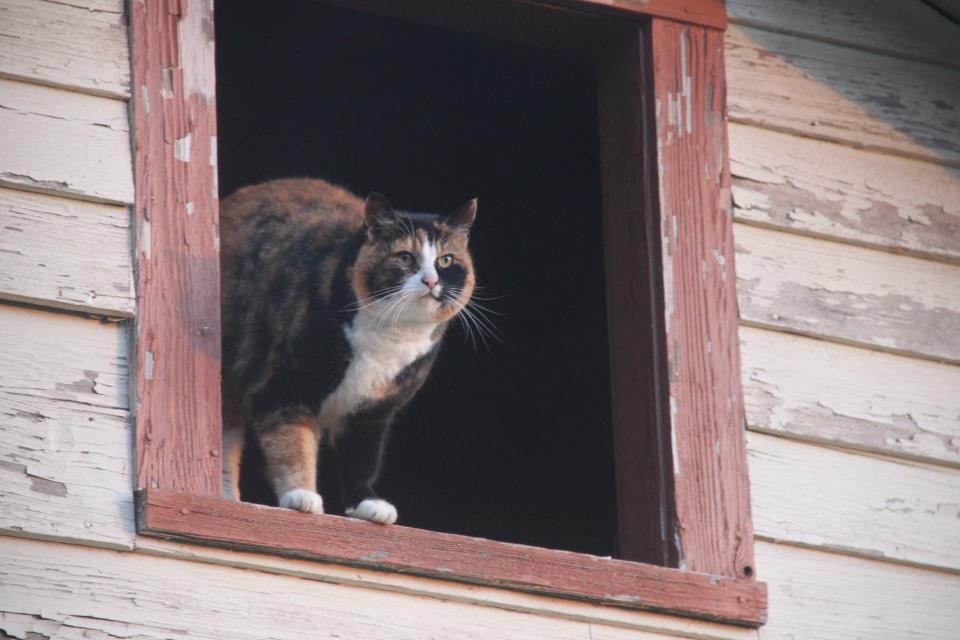
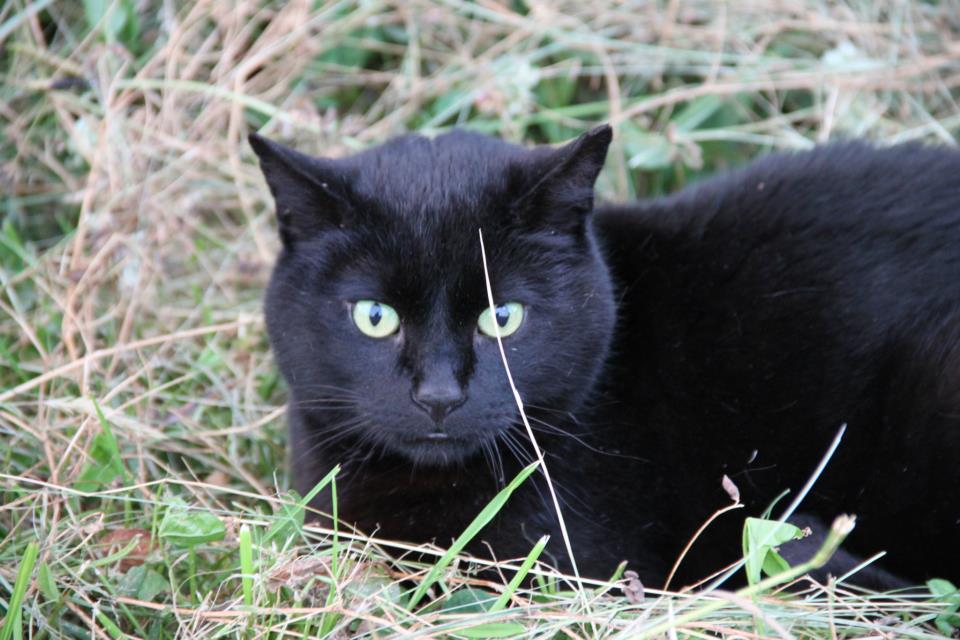
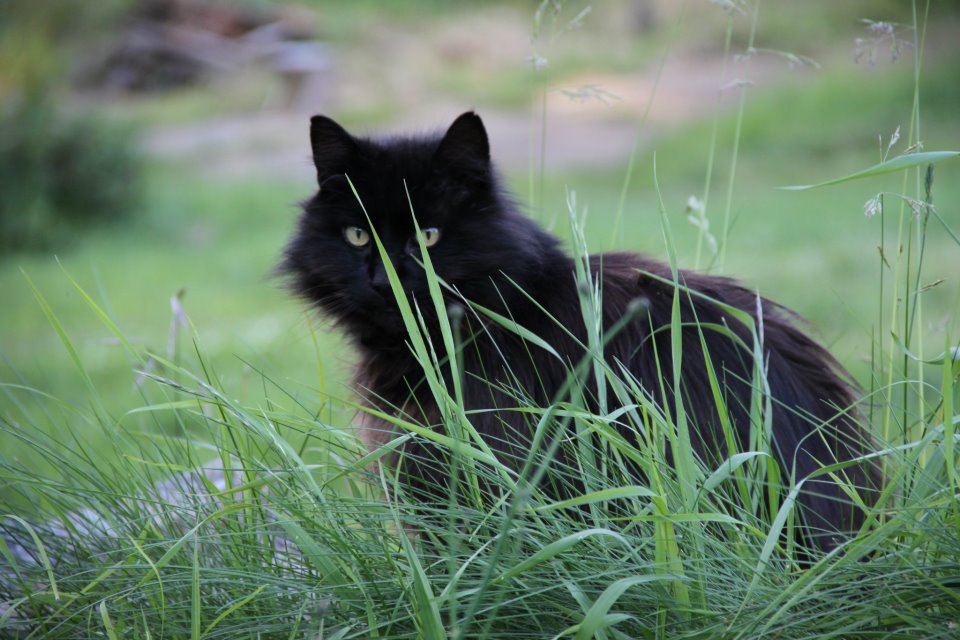
So he explained: Masterful Inactivity Coupled with Cat-like Observation.

In other words, do nothing for the moment but keep a close eye on it and be ready to pounce the minute something changes. Watchful waiting.

I am relieved to only be under watchful surveillance for now even though my diagnosis, its etiology and prognosis is unclear.  I realize it is a treatment strategy I need to use more in my own clinical practice.    It helps solidify that doctor/patient partnership, especially when the patient is a doctor;  I am content to do nothing but watch for now,  knowing I’m being watched.

It was an afternoon well spent in the sub-subspecialty world, as I come away with a commonsense piece of advice very appropriate for some patients in my own primary care practice:

Right now it might appear I’m doing nothing, but doing nothing makes the most sense and is the least risky option.  I’m keeping my unblinking eye on you, ready to spring into action if warranted.

Treatment plan: MICCO prn

photo by Nate Gibson