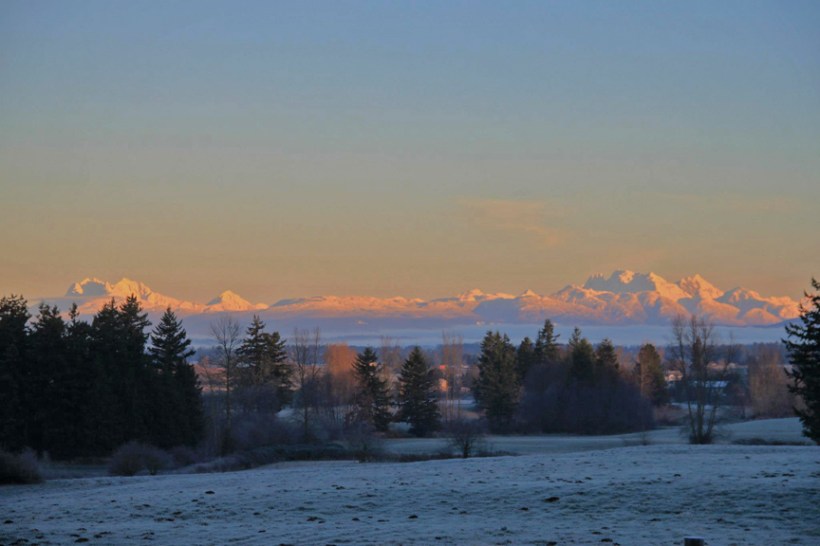
BriarCroft at Year’s End

photo by Nate Gibson

There is nothing like looking, if you want to find something. You certainly usually find something, if you look, but it is not always quite the something you were after.
— J.R.R. Tolkien

photo by Nate Gibson

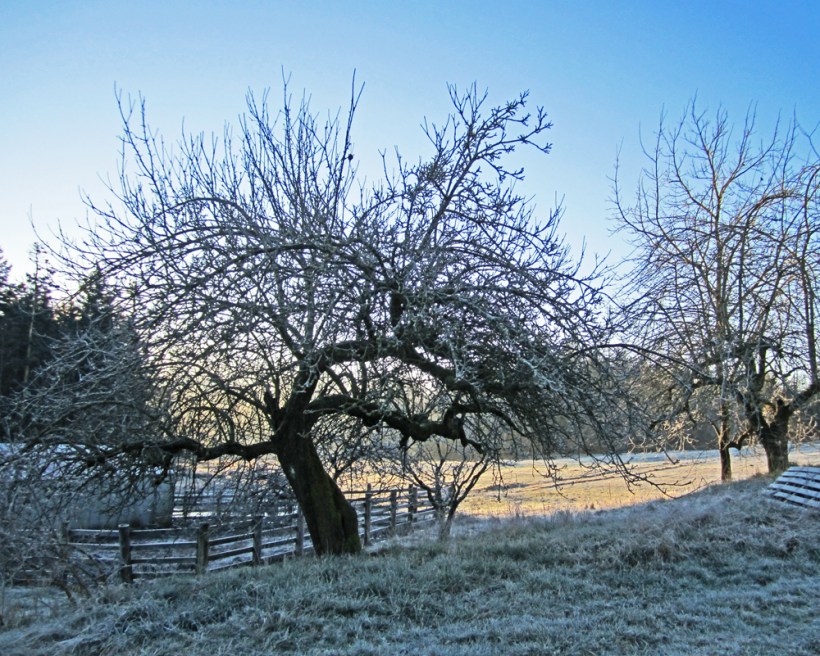
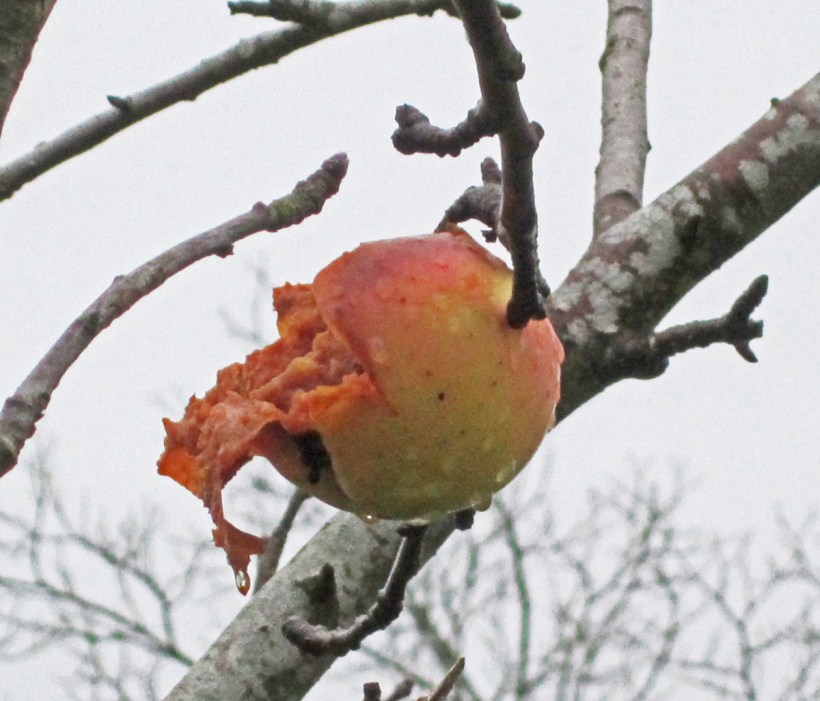
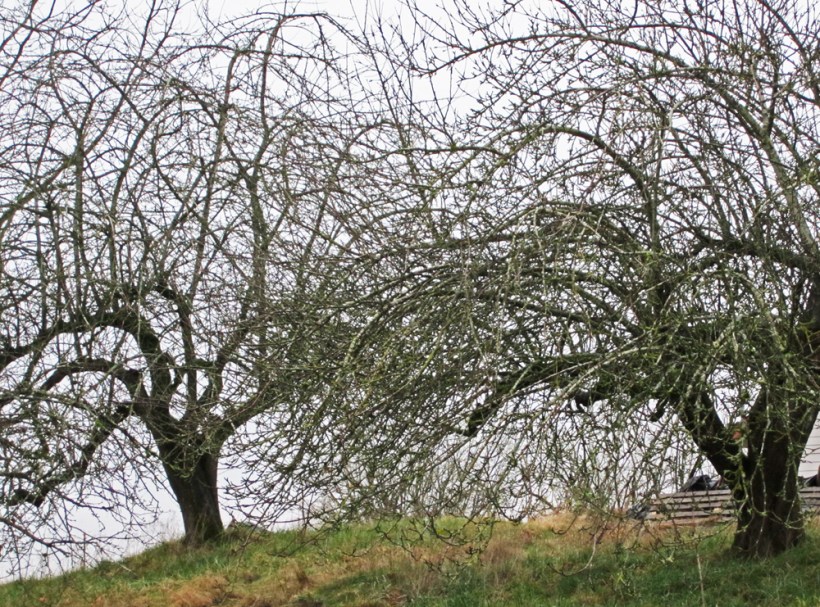
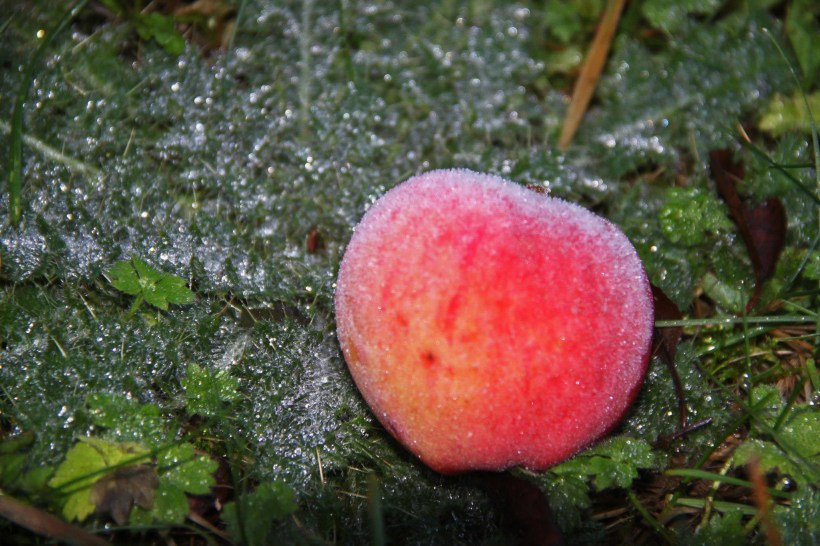
applefieldapplemossbranchesdec

“O cruel cloudless space,
And pale bare ground where the poor infant lies!
Why do we feel restored
As in a sacramental place?
Here Mystery is artifice
And here a vision of such peace is stored,
Healing flows from it through our eyes.”
~May Sarton from Nativity

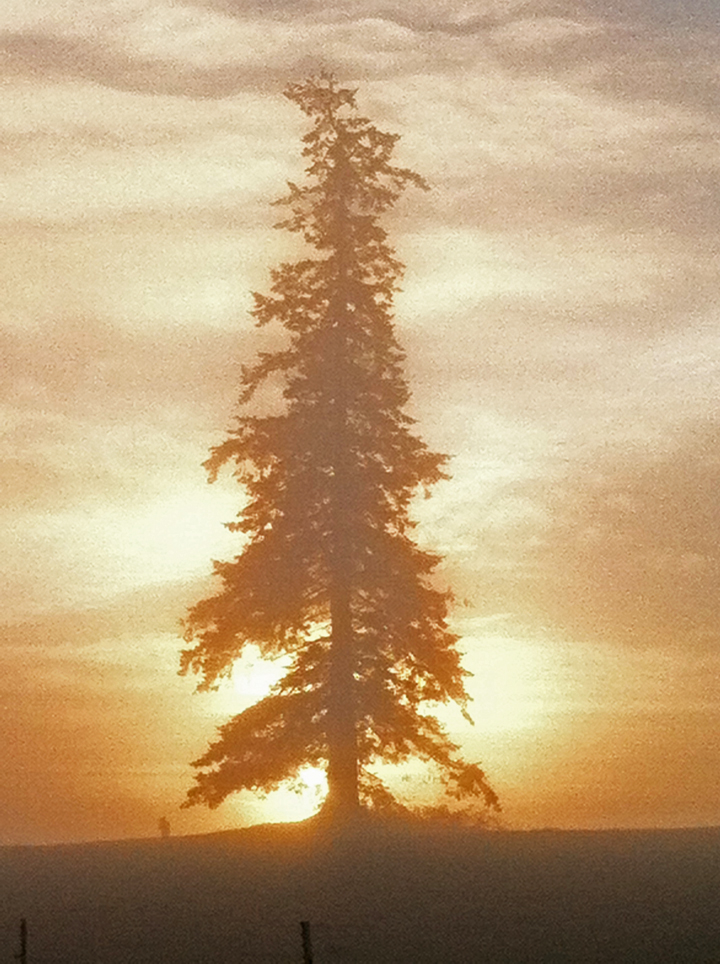
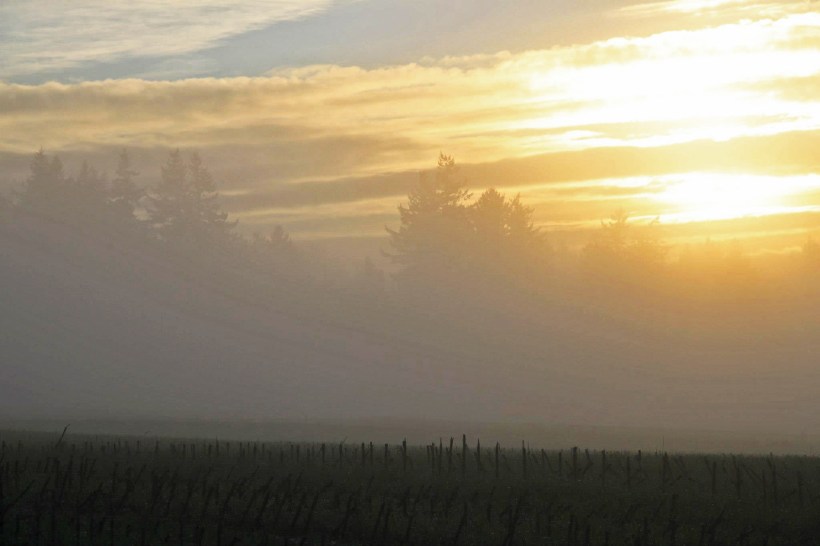
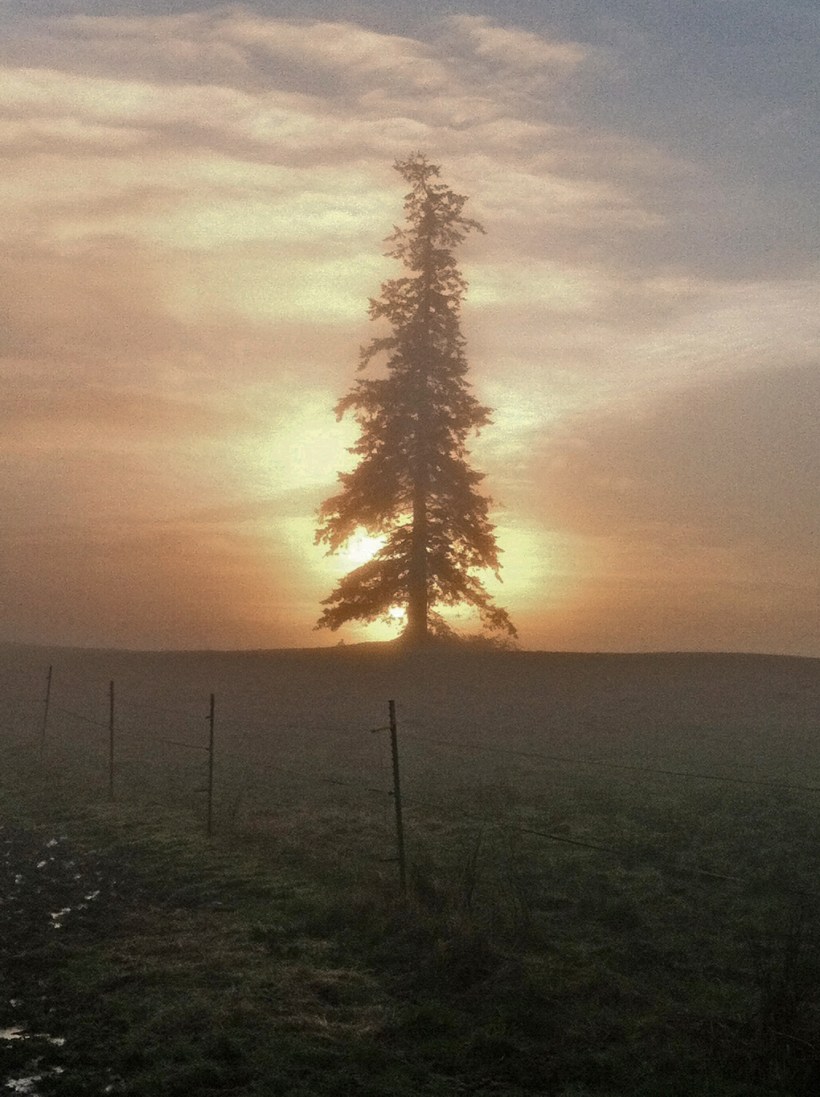
treedecsunset

photo by Nate Gibson

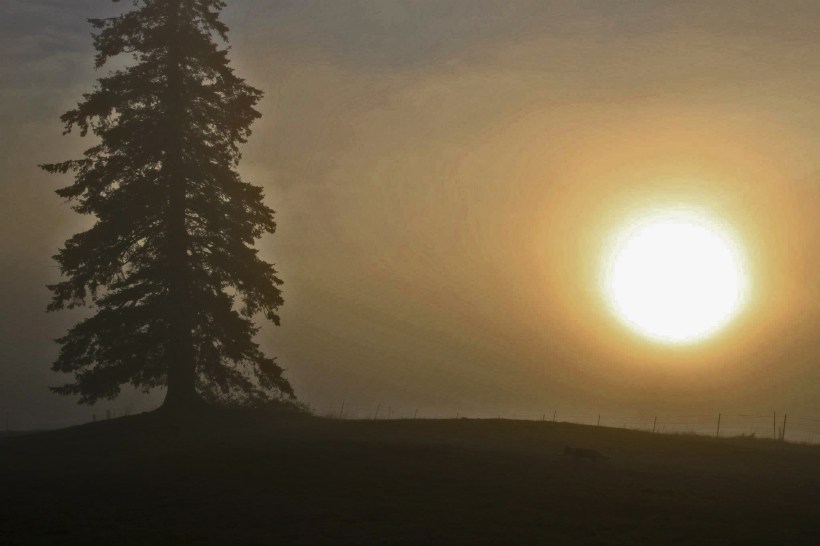
decsuntree“I heard a bird sing
In the dark of December
A magical thing
And sweet to remember.

‘We are nearer to Spring
Than we were in September,’
I heard a bird sing
In the dark of December.”
–   Oliver Herford, I Heard a Bird Sing

appleeat

photo by Nate Gibson

appletreesdec

weedseeddec

“Come, come thou bleak December wind,
And blow the dry leaves from the tree!
Flash, like a Love-thought, thro’me, Death
And take a Life that wearies me.”
–   Samuel Taylor Coleridge, 1772-1834, Fragment 3

blackberrywinter

Dechaybarn

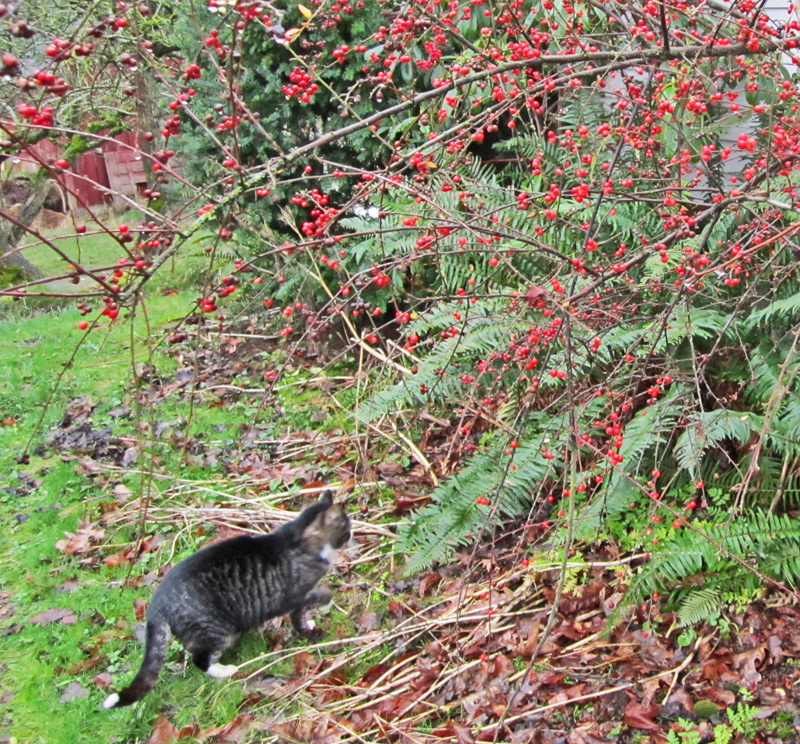
pyradec

“That’s no December sky!
Surely ’tis June
Holds now her state on high
Queen of the noon.

Only the tree-tops bare
Crowning the hill,
Clear-cut in perfect air,
Warn us that still

Winter, the aged chief,
Mighty in power,
Exiles the tender leaf,
Exiles the flower.”
–   Robert Fuller Murray (1863-1894), A December Day

photo by Nate Gibson

“This is what I have heard
at last the wind in December
lashing the old trees with rain
unseen rain racing along the tiles
under the moon
wind rising and falling
wind with many clouds
trees in the night wind.”
–  W. S. Merwin

photo by Nate Gibson

“The grim frost is at hand, when apples will fall thick, almost thunderous, on the hardened earth.”
–  D. H. Lawrence

photo by Nate Gibson

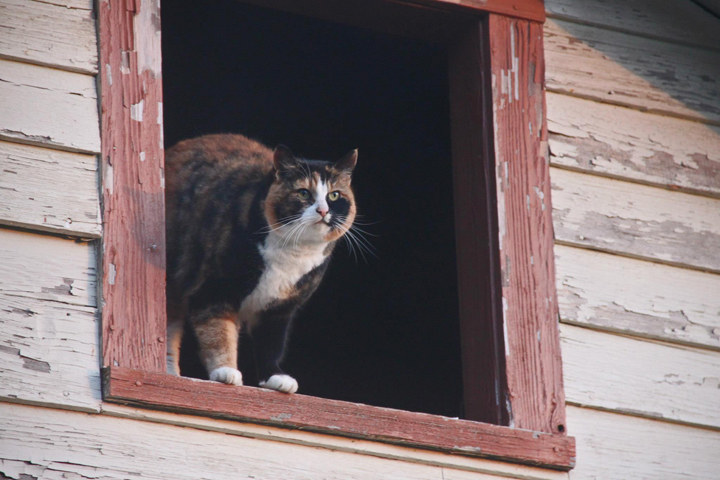
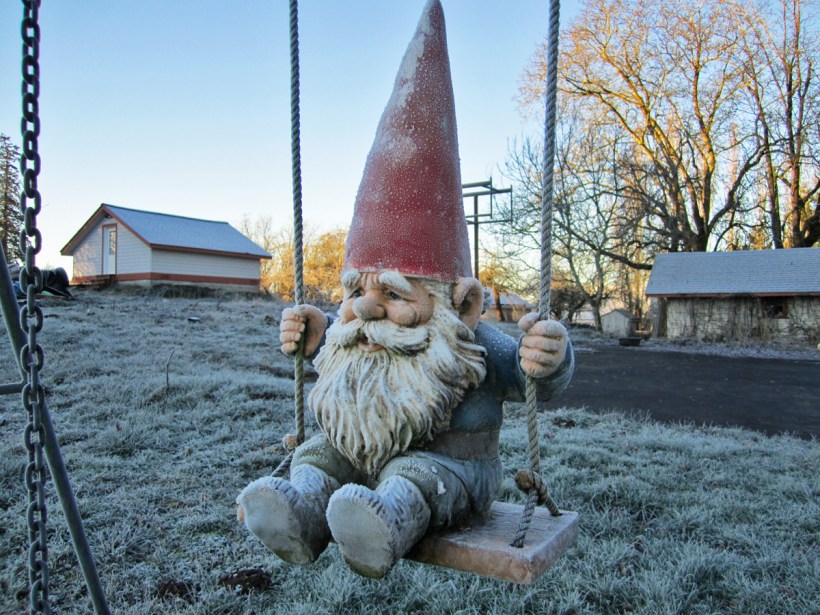
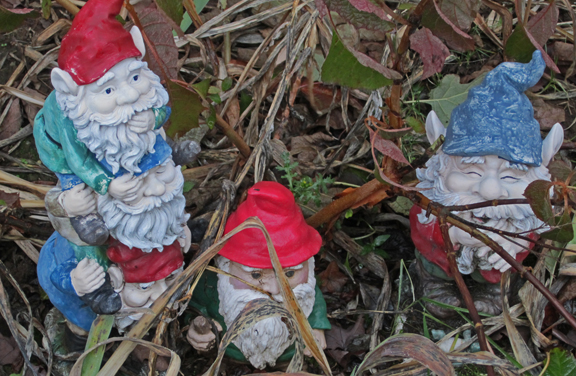
catpyrafrostygnome

photo by Nate Gibson

“Give me the end of the year an’ its fun
When most of the plannin’ an’ toilin’ is done;
Bring all the wanderers home to the nest,
Let me sit down with the ones I love best,
Hear the old voices still ringin’ with song,
See the old faces unblemished by wrong,
See the old table with all of its chairs
An’ I’ll put soul in my thanksgivin’ prayers.”
–   Edgar A. Guest

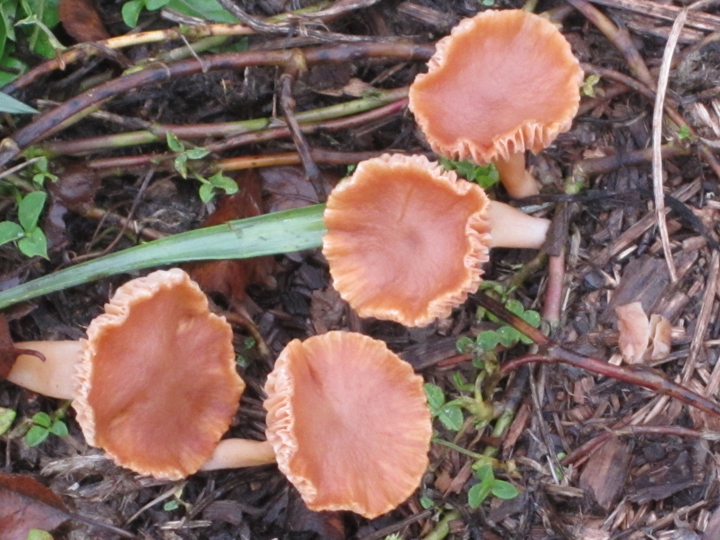
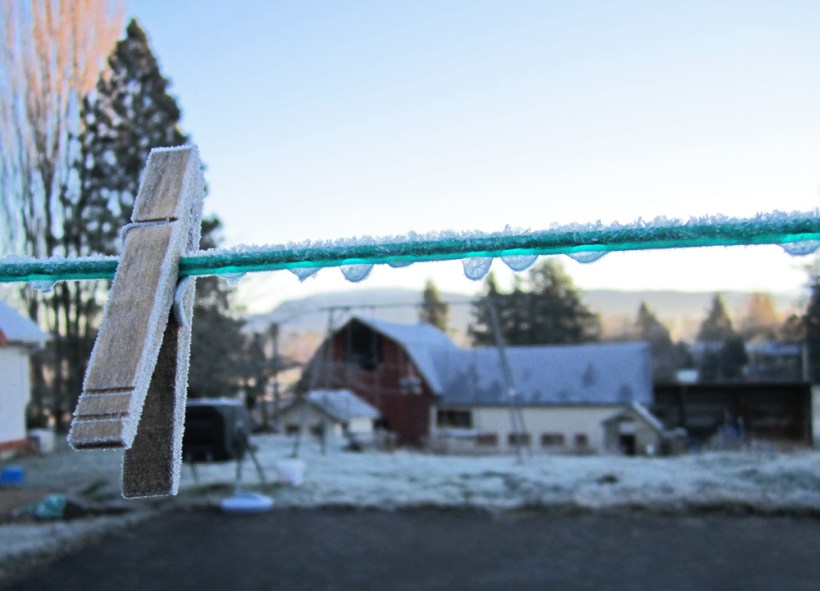
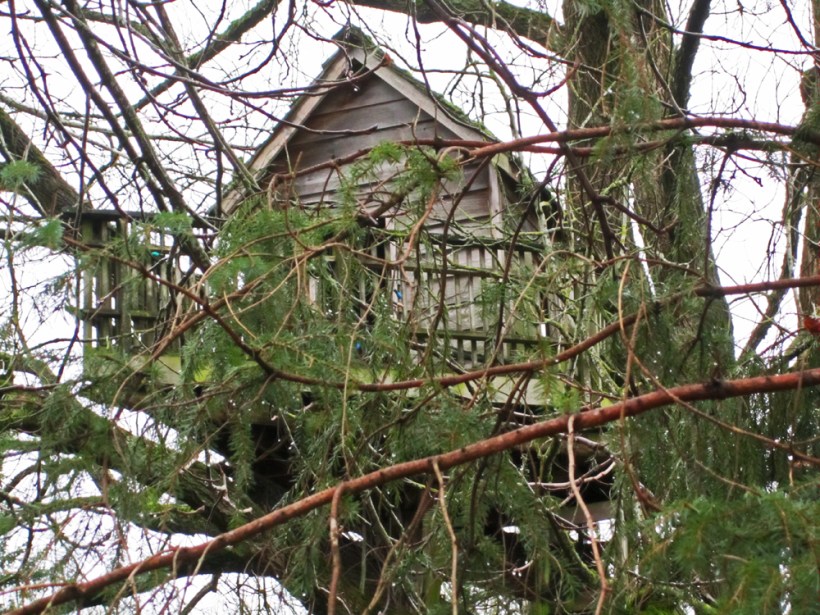
mushroomsclothespinfrostdectreehouse

“Through bare trees
I can see all the rickety lean-tos
and sheds, and the outhouse
with the half-moon on the door,
once modestly covered in
summer’s greenery.

Through bare trees
I can watch the hawk
perched on a distant branch,
black silhouetted wings
shaking feathers and snow,
and so can its prey.

Through bare trees
I can be winter’s innocence,
unashamed needfulness,
the thin and reaching limbs
of a beggar, longing to touch
but the hem of the sun.”
–  Lisa Lindsey, Bare Trees

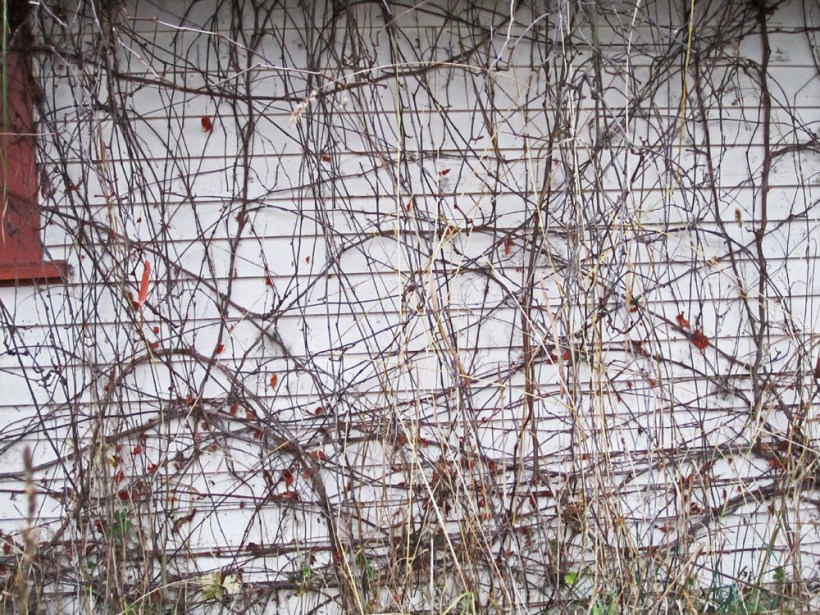
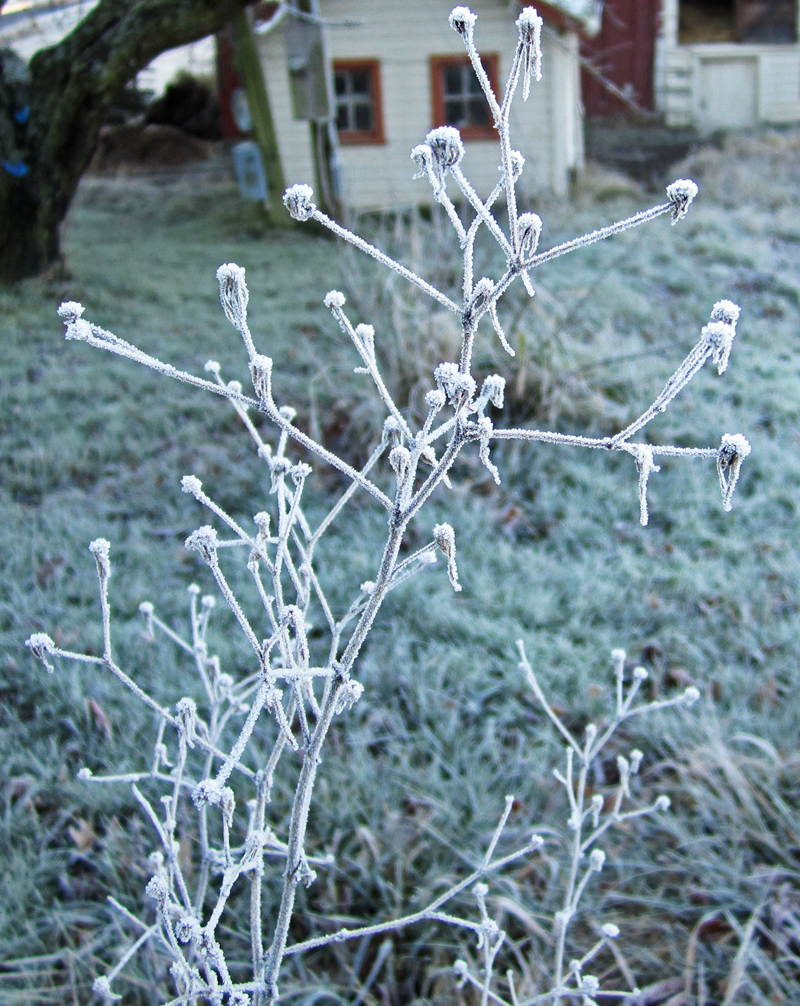
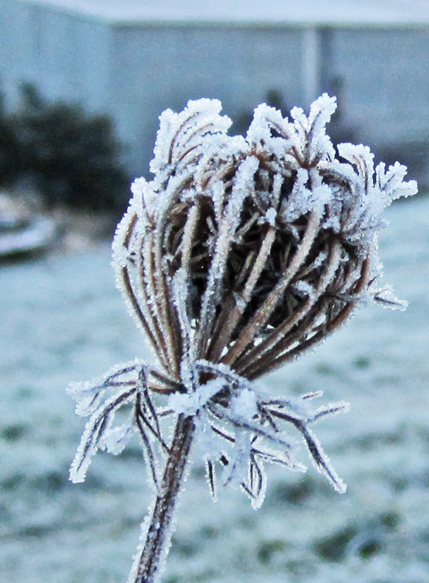
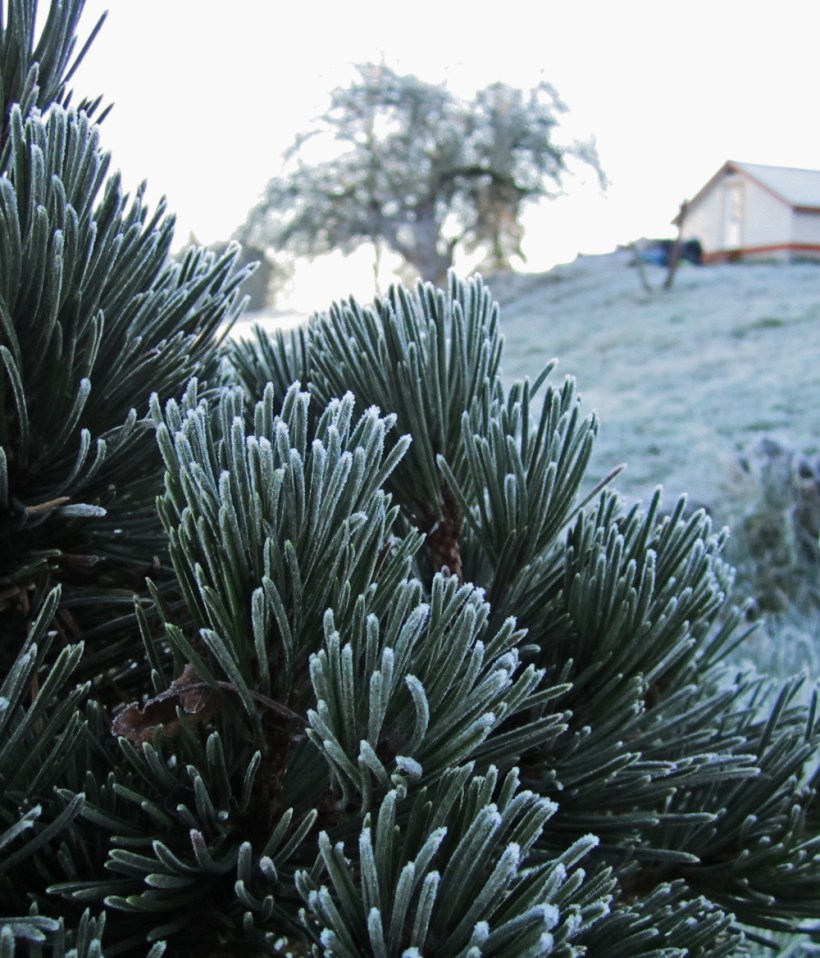
creeperdecdecfrost1queenannedecfrostfir

“There is a privacy about it which no other season gives you …..  In spring, summer and fall people sort of have an open season on each other; only in the winter, in the country, can you have longer, quiet stretches when you can savor belonging to yourself.”
–  Ruth Stout

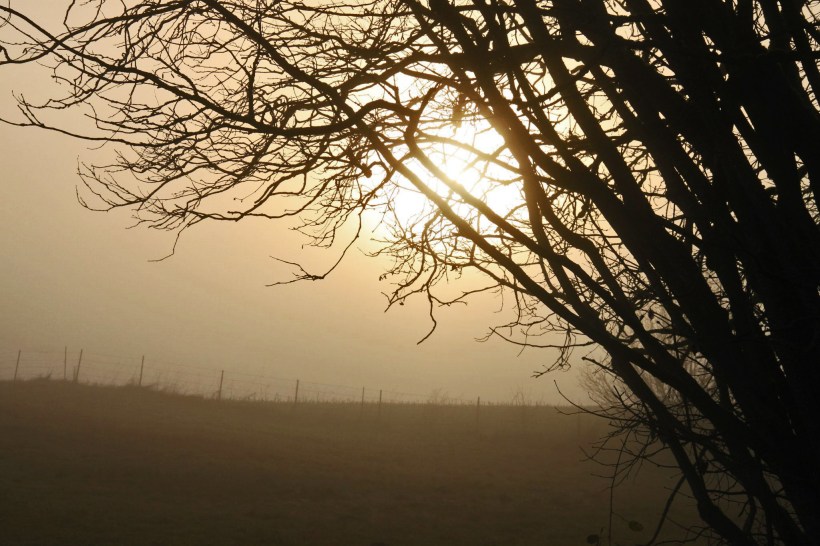
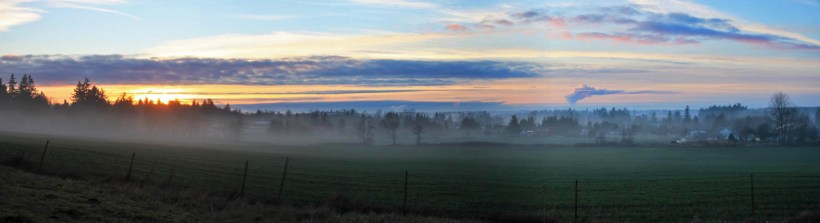
decsun

photo by Nate Gibson

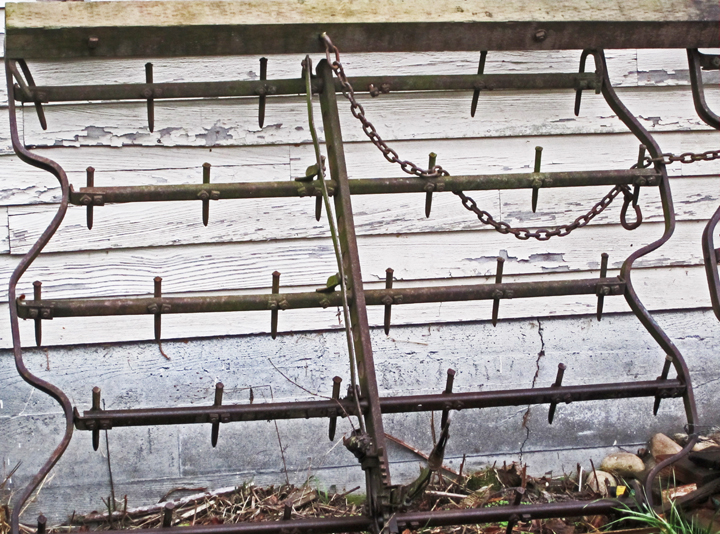
harrow

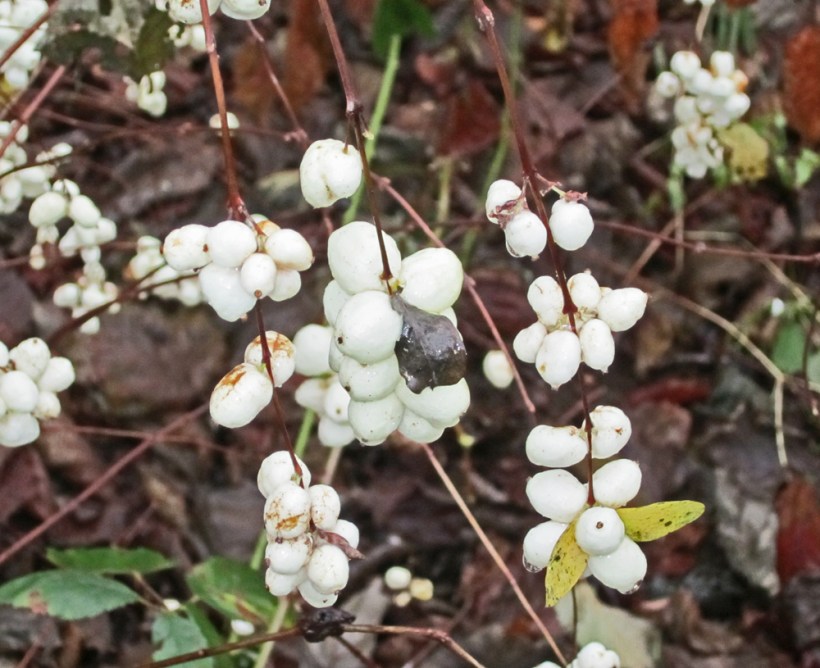
snowberrywintergnomes

photo by Nate Gibson

BriarCroft in Autumn photos

BriarCroft in Winter photos

BriarCroft in Spring photos

BriarCroft in Summer photos

Edging Closer for Company

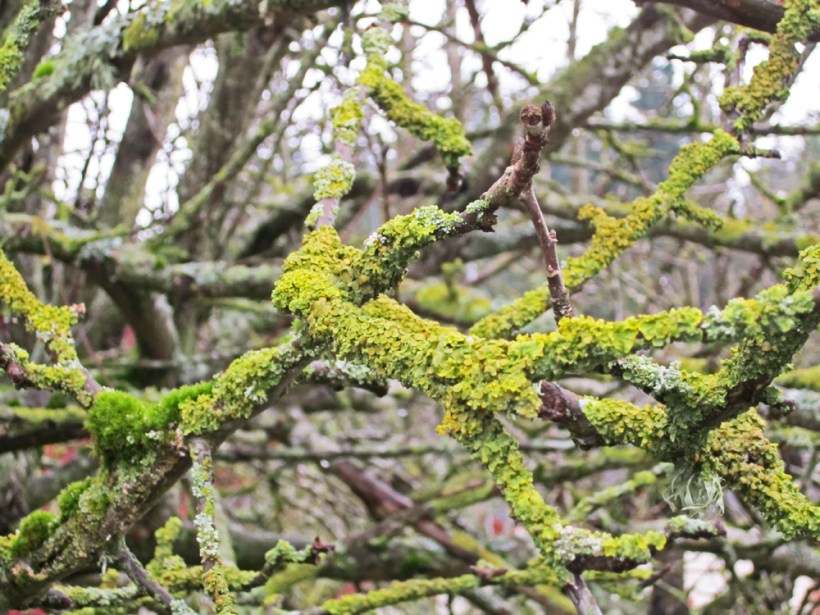
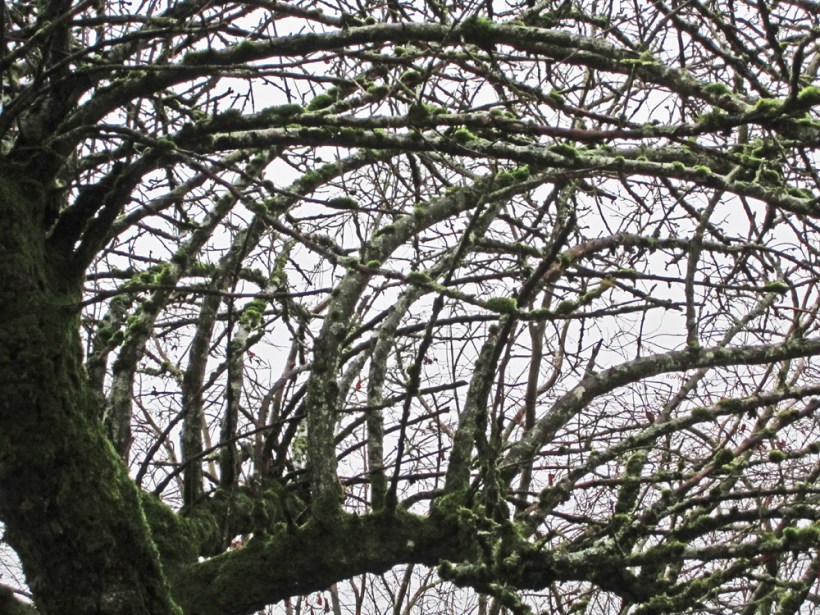
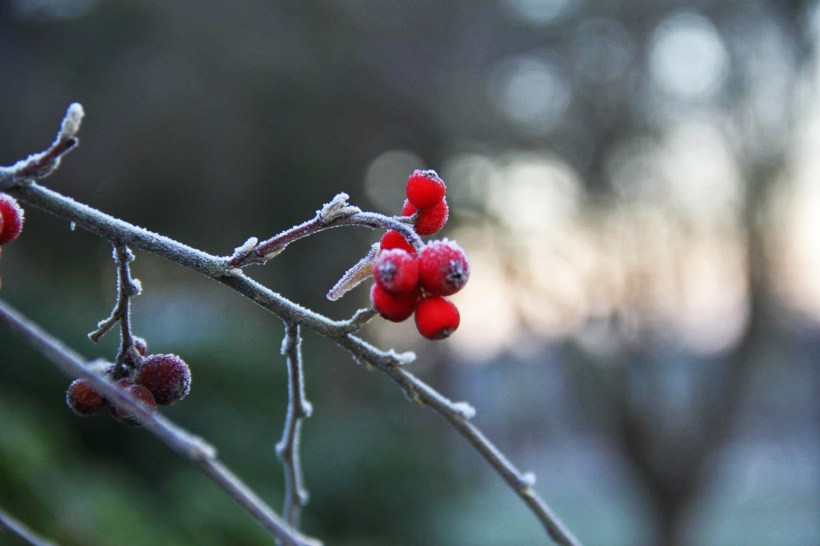
The trees are coming into their winter bareness, the only green is the lichen on their branches. Against the hemlocks, the rain is falling in dim, straight lines… This is the time of year when all the houses have come out of the woods, edging closer to the roads as if for company.
Verlyn Klinkenborg “The Rain It Raineth”

The deciduous trees in our part of the country have all been stripped bare, having come through two rain and wind storms in the last week.  It forces typically leaf-hidden homes out of camouflage and I’m once again startled at the actual proximity of our neighbors.  It isn’t as obvious in the summer given the tree buffer everyone has carefully planted.  Now we’re reminded once again we are not alone and actually never have been.

Even the mountains that surround us from the northwest to the southeast seem closer when the trees are bare and new snow has settled on their steep shoulders.

We think we have autonomy all wrapped up but it takes the storms of autumn to remind us we are unwrapped and vulnerable, stark naked, in desperate need of company when darkness comes early, the snow flies and the lights flicker.

A Doleful Hymn

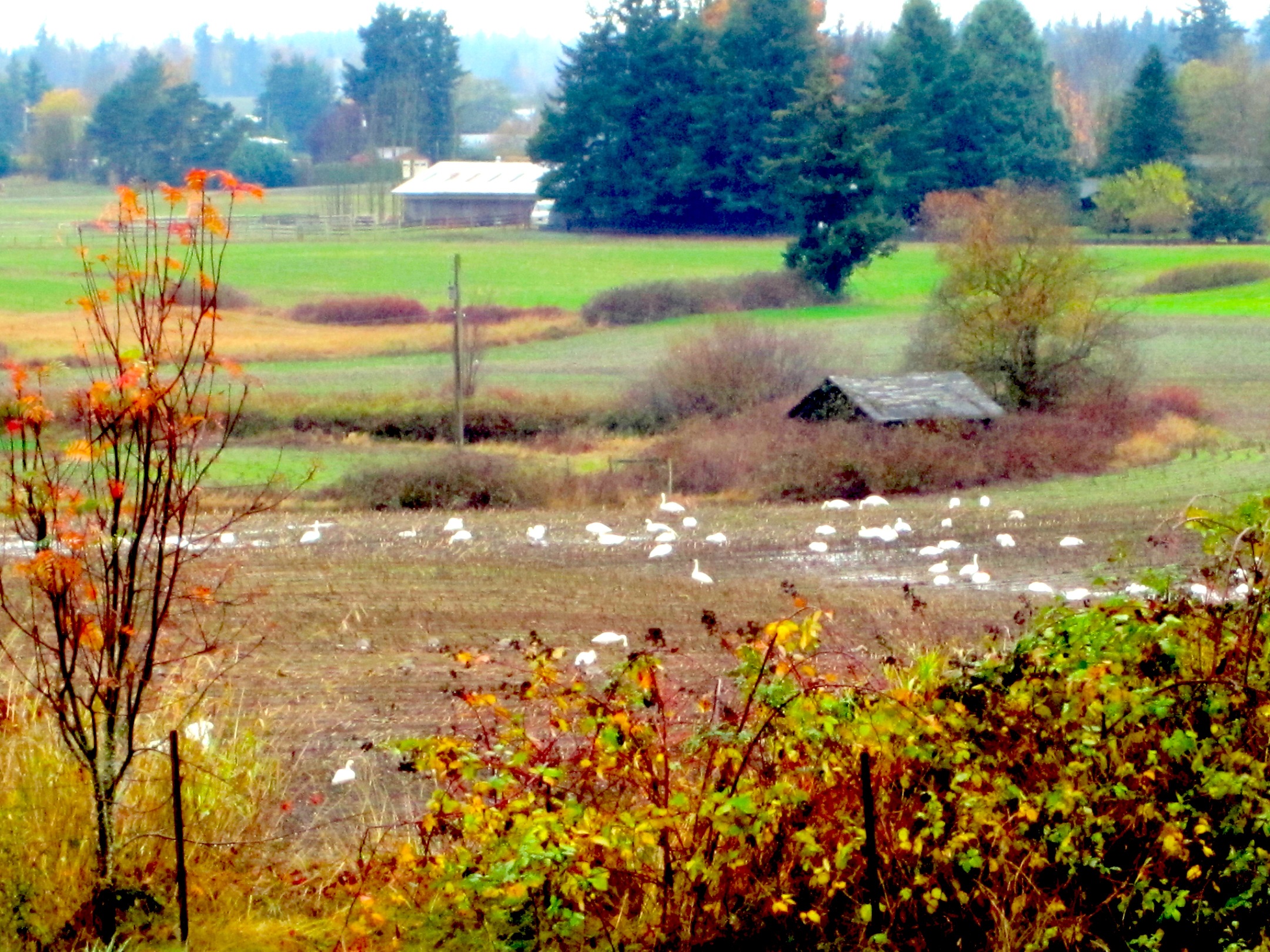
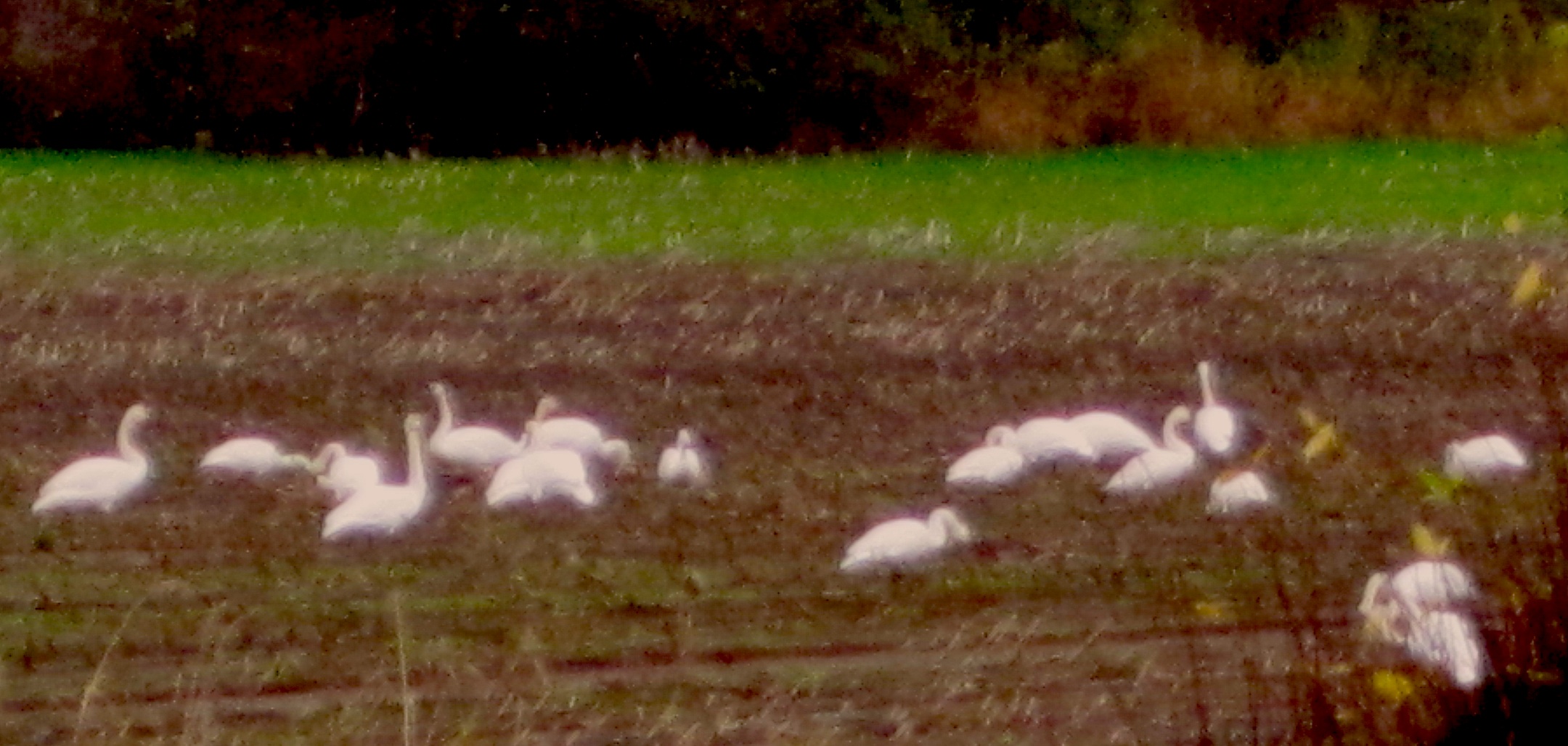
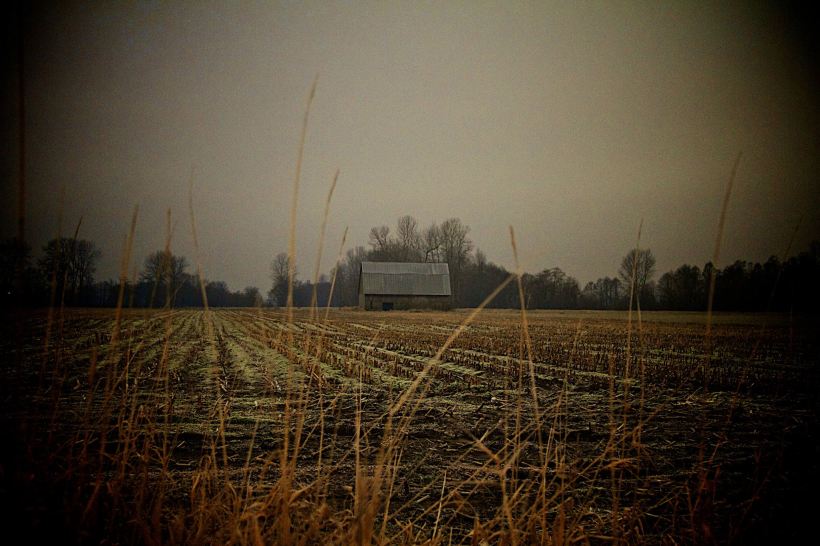
Photo taken today across the road from our farm- feeding swans amid the cornfield stubble
I have looked upon those brilliant creatures,   
And now my heart is sore.
All’s changed since I, hearing at twilight,   
The first time on this shore,
The bell-beat of their wings above my head,   
Trod with a lighter tread.
~William Butler Yeats from “The Wild Swans at Coole”

I was working outside before the sun was up this rainy morning, preparing the horse barn for our vet arriving to perform an on-the-farm surgery on one of our Haflinger horses.  As I prepared the shavings bedding, feeling anxious about the procedure to take place, I heard sounds overhead that come only a few days a year: the swishing hush of wings in flight and the trumpeter swan “doleful hymn” called out as dozens passed above me in a long meandering line against the early dawn greyness.

The swan flocks predictably arrive in early November to eat their fill, feasting in the harvested cornfields surrounding our farm, their bright white plumage a stark contrast to the dulling muddy soil.  And too soon they lift their long graceful necks and fan out their wings to be picked up the wind, leaving us behind and beneath, moving south, heading year after year for their wintering home.

These incredible creatures bring such joy with their annual arrival and brief stay, their leave-taking  a harbinger for this dying time of year, reminding me once again nothing on earth can last.

“‘Tis strange that death should sing…” but in fact,  ’tis strange that death should fly in and out on silken wings.

I give myself over to their beauty, and walk with lighter tread, singing a new song.

I am grateful my sore heart still soars.

‘Tis strange that death
should sing.
I am the cygnet to this pale faint swan,
Who chants a doleful hymn to his own death,
And from the organ-pipe of frailty sings
His soul and body to their lasting rest.
~William Shakespeare from The Life and Death of King John

The swan, like the soul of the poet,
By the dull world is ill understood.
~Heinrich Heine

Getting Home

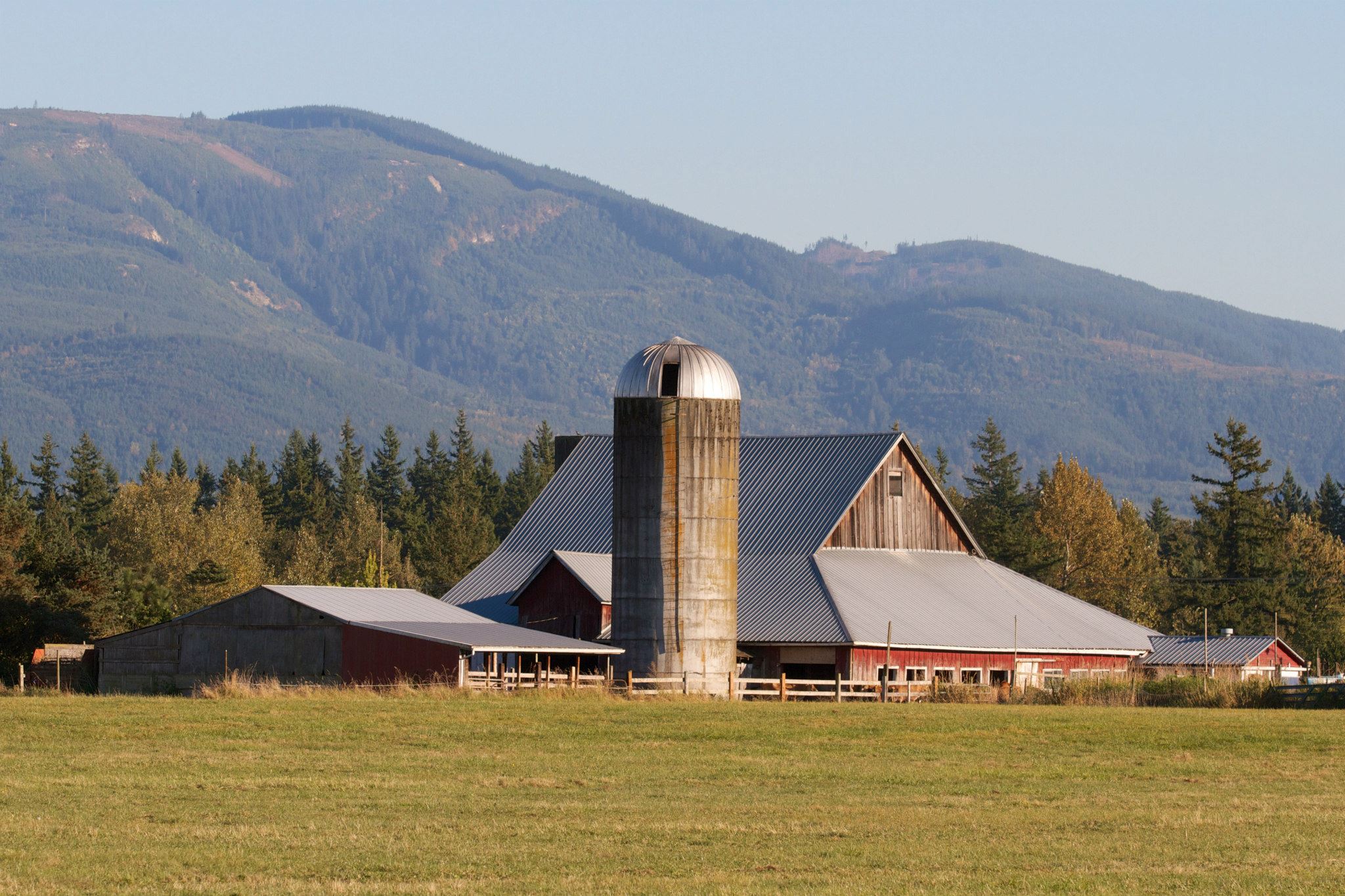
photo of Whatcom County barn by Josh Scholten

“There are two ways of getting home; and one of them is to stay there.”
— G. K. Chesterton

Home can seem elusive and just out of reach for much of our lives.  It may not feel we truly belong in any one place in this modern era of constant transitions and transfers.

In high school, I could not plan a get-away from my home town fast enough, opting to go to college two states away.  Once I was away, I was hopelessly home-and-heartsick.   Miserable, I decided to come back home and go to school there instead.

Once back under my parents’ roof, my homesickness abated but the heartsick continued, having nothing to do with where I ate and slept.  I wasn’t at home inside myself.   It took time and various attempts at geographic cures to settle in and accept who I always had been.

Those who do move away often cast aspersions at people who never wander far from home.  The homebodies are seen as provincial, stuck in a rut, unenlightened and hopelessly small-town.  Yet later in life as the wanderers have a tendency to move back home, the stay-at-homers become solid friends and neighbors.   Remarkably, they often have become the pillars and life blood of a community.  They have slogged through long hours of keeping a place going when others left.

I did end up doing my share of wandering yet sympathizing with those who decided to stay put.   I returned home by settling only a few miles from the stomping grounds of my homesteading great-grandparents, at once backwoods and backwater.   Cast aspersions welcomed.

Now I get back home by mostly staying home.  It takes something major (like a son teaching in Japan) to lure me away from my corner of the world.   Getting away is good, coming back home is better.

Best of all, it’s the assurance expressed so simply by Thomas Hardy in Far From the Madding Crowd,
“And at home, by the fire, whenever you look up, there I shall be–and whenever I look up, there will be you.”

Home so sweet.

photo by Josh Scholten

Where to Search

photo by Josh Scholten

“A man travels the world over in search of what he needs and returns home to find it.”
Kathleen Norris

I remember well the feeling of restlessness, having an itch that couldn’t be reached, feeling too rooted and uneasy staying in one place for long, especially if that place was my hometown.  I knew I must be destined for greater things, grander plans and extraordinary destinations.  There exists in most human beings an inborn compulsion to wander far beyond one’s own threshold, venturing out into unfamiliar and sometimes hostile surroundings simply because one can.   It is the prerogative of the young to explore, loosen anchor and pull up stakes and simply go.  Most cannot articulate why but simply feel something akin to a siren call.

And so at twenty I heard and I went, considerably aging my parents in the process and not much caring that I did.  To their credit, they never told me no, never questioned my judgement, and never inflicted guilt when I returned home after the adventure went sour.

I had gone on a personal quest to the other side of the world and had come home empty.  But home itself was not empty nor had it ever been and has not been since.

There is a Dorothy-esque feeling in returning home from a land of wonders and horrors, to realize there is no place like home.    There was no way to know until I went away,  searching, then coming home empty-handed, to understand home was right inside my heart the whole time.  There was no leaving after all, not really.

So I’m here to stay–there is no greater, grander or more extraordinary than right here.  Even when I board a plane for a far off place, I know I’ll be back as this is where the search ends and the lost found.

My head now rests easy on the pillow.

A Destiny of Many Colors Tied Together

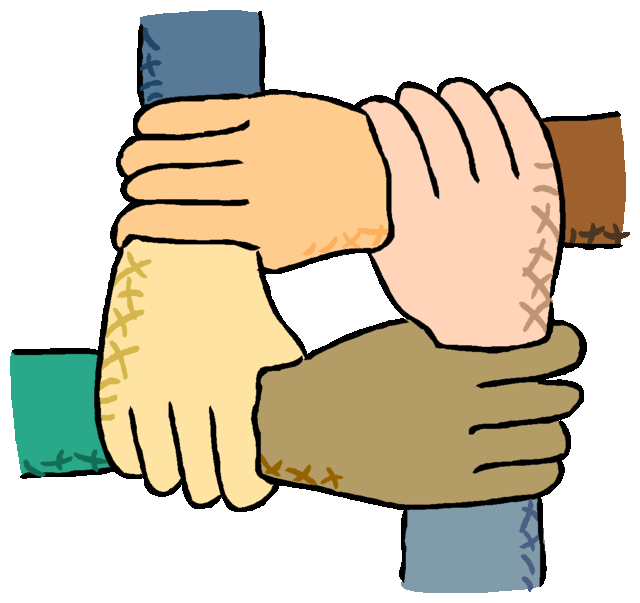
Let me say finally, that in the midst of the hollering and in the midst of the discourtesy tonight, we got to come to see that however much we dislike it, the destinies of white and black America are tied together. Now the races don’t understand this apparently. But our destinies are tied together. And somehow, we must all learn to live together as brothers in this country or we’re all going to perish together as fools. …Whether we like it or not culturally and otherwise, every white person is a little bit negro and every negro is a little bit white. Our language, our music, our material prosperity and even our food are an amalgam of black and white, so there can be no separate black path to power and fulfillment that does not intersect white routes and there can ultimately be no separate white path to power and fulfillment short of social disaster without recognizing the necessity of sharing that power with black aspirations for freedom and human dignity.
Martin Luther King,Jr.– in one of his last speeches, given at Grosse Point, Michigan high school (near Detroit) to a mostly white and often heckling audience, March 14, 1968

I grew up in Olympia, Washington, a fair-sized state capitol of 20,000+ people in the 1960′s that had only one black family.

One.

There were a few Japanese and Korean families, a few Hispanics, but other than the Native American folks from the nearby Nisqually Reservation, our community seemed comprised of homogenized milk. Pretty much plain white.

In 1970, the Caucasian Olympia High School graduation student speaker caused a controversy resulting in numerous parents walking out of the ceremony when in her speech she called our town a “white racist ghetto”. It was the first time I’d heard someone other than Martin Luther King, Jr. actually crack a previously unspoken barrier using only words. What she said caused much anger, but the ensuing debate in the newspaper Letters to the Editor, around lunch counters at the five and dime, and in the churches and real estate offices made a difference. Olympia slowly, in recognition at being called out for racism, began to open its social and political doors to people who weren’t white.

Heading to college in California helped broaden my point of view, to be sure, but in the 70′s there were few diversity admissions initiatives, so it was still a vastly Caucasian campus. When I went to study wild chimpanzees in Africa in 1975, I had the enlightening experience of being one of two whites traveling among hundreds of very dark skinned Tanzanians on trains and boats in the interior of the country. I became the one gawked at, viewed as an oddity, pointed at by small children who were frightened by my appearance, and so constantly felt out of place. I did not belong. Yet I was treated graciously, with hospitality, although always a curiosity.

Returning to the Northwest meant blending in with homogenized white milk again. Although there was some minimal diversity in my medical school class (even women constituted less than 25% of my class of 1980), it wasn’t until I was in family practice residency at Seattle’s Group Health Cooperative that I began to experience the world in technicolor. I joined a group of doctors in training that included a black activist from the east coast, a Kiowa Indian, several Jews, someone of Spanish descent, a son of Mexican immigrants, a daughter of Chinese immigrants, a Japanese American, and a Yupik Eskimo. Not only was I challenged to articulate how I perceived our inner city patients’ cultural and family context, but I witnessed how much more effectively my colleagues and teachers worked with patients who looked or grew up like them. It was such a foundational experience that I was drawn to a medical practice in a Group Health Rainier Valley neighborhood clinic. There I saw patients who lived in the projects that lined Martin Luther King Way, struggling with poverty and social fragmentation, clustered together in diverse little knots of extended family within a few square miles. There were many ethnic groups: African Americans, Vietnamese, Cambodian and Laotian refugees, Askenazi Jews, Middle East Muslims, Russian immigrants and some Catholic Italian families who spoke broken English. I delivered babies who would grow up learning languages and traditions from every corner of the globe. It was a wide world of color that walked into my exam rooms, enriching my life in ways I had never imagined. I found that white milk, nurturing as it was, didn’t hold a candle to some of the flavors I was discovering.

When I married, and later became pregnant myself, we made the decision to move north near my husband’s home community of Lynden, a town of Dutch dairy farming immigrants. We planned to own our own farm to raise our children in a rural setting just as both of us had been raised. There was significant adjustment necessary once again even though it was a primarily Caucasian community. I am not Dutch even though I am as white and tall as the Frieslanders (some of my ancestry is from Schleswig-Holstein in Germany, right across the Holland border).

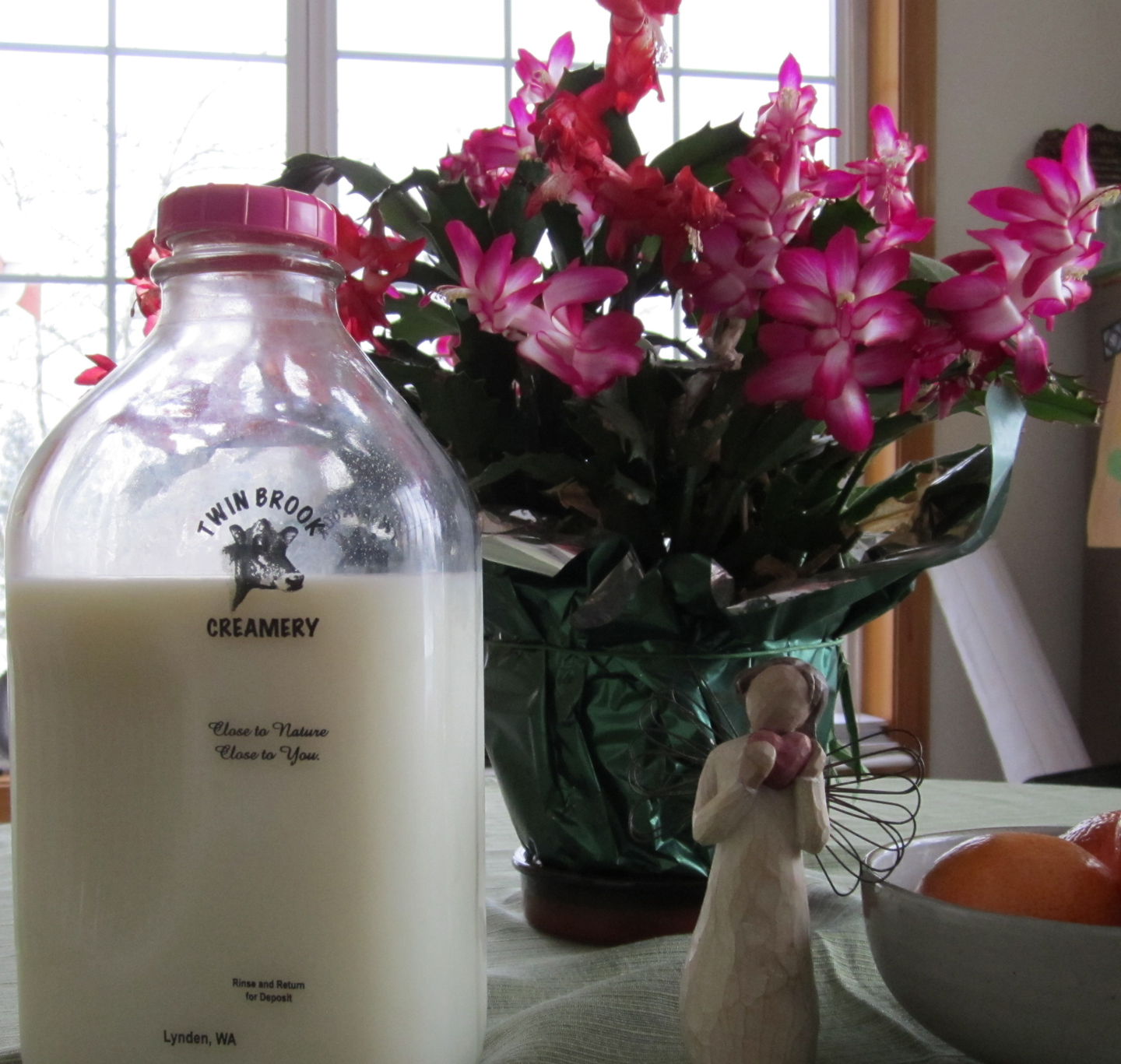
I didn’t have the same cultural background to fit in easily in my new home. The color of my skin no longer was noticeable, but the difference in rituals, the language quirks and traditions stood out. In other words, the milk looked just as white, (maybe skim versus whole or 2%), but varied significantly in taste (were the cows just let out on grass??)

Even with those apparent differences, our rural community has transformed over the last twenty six years since we moved here. We have two growing Native American sovereign nations near by, the Nooksack and Lummi tribes, along with increasing numbers of migrant Hispanic families who work the seasonal berry and orchard harvest, many of whom have settled in year round. My supervisors where I work are African American. Our close proximity to the lower mainland of British Columbia has brought Taiwanese, Japanese and Hong Kong immigrants to our area, and East Indians are immigrating to our county in large extended families, attracted by affordable farmland. I was shopping yesterday at a new rural corner grocery only a few miles from our farm, built and managed by Sikhs who have stocked the shelves with the most amazing array of Indian spices and Mexican chili sauce, with Dutch peppermints and licorice thrown in for good measure.

Our children have grown up rural but, as adults, are now part of communities far more varied. Nate teaches multiracial high school students in Tokyo, Japan (and as of 2014, is married to Tomomi), Ben is a Teach for America high school math teacher on the Pine Ridge Lakota Sioux Reservation in South Dakota, and Lea is deep in Spanish Education courses at college, hoping to continue her summer work in a local Migrant Workers’ Head Start program. They, as I have been, are privileged to work in a kaleidoscope of humanity and our family has become multiracial.

Homogenized can mean something other than just plain white. It can mean blending so there is no longer separation.

Martin Luther King’s term “amalgam” is apt. His well articulated hope and dream is happening within my life time.

Fair Weather Farewell

n1207615738_30186331_7994

n1207615738_30186348_4966

For the first time since 1992, we are not preparing this weekend to spend the week displaying our Haflinger horses at the Northwest Washington Fair in Lynden.  BriarCroft has been a consistent presence at this fair for almost two decades, promoting the Haflinger breed in a well  decorated display, providing 24 hour a day coverage for the horses for the 6 days of the fair. We begged the Fair Board for 5 years to allow us to display at the fair, and they finally said “okay, here’s the space, build it yourself” and we did! We were not there for classes, competition, or ribbons. We were there because people enjoyed our Haflingers and we enjoyed the people.

But this year, it was not to be.  Our faithful trick riders Kelsy and Chesna who performed daring feats on their Haflingers in front of the grandstand crowds are busy with their horse training in Tenino, our adult sons have headed off to work in Tokyo, Japan, and college in Chicago, leaving us short of the crew needed to man the display for the week as Dan and I have to work our day jobs.  It was a painful decision to make, but it was simply not going to be possible to do it this year.  I will miss spending time with our dedicated young helpers–my daughter Lea, and the Vander Haak family–Emily, Christopher and David.  Over the years we’ve had many young helpers spend the week with us, now many of them grown with children of their own.

Every year since 1992, we evaluated whether we had the energy and resources to do it  again–for the initial 6 years when Dan and I were the sole farm doing  the display, it meant a week of vacation from work, and very very long days, juggling our small children as well as several horses. Then, with the help of 3R Farms and Teaglach Farm as well as older children, we were able to rotate shifts, still work at our “real” jobs part days, share duties and expenses together. The older kids watched the younger kids, the inbetween kids did most of the horse stall cleaning duty, and the adults sit and shoot the breeze.

Did this sell horses for us? Not really. But it sure did create good will for the fair visitors who depended on us every year to be there with horses that they and their children could actually pet (and sit on ) without fear, who enjoyed our braiding demonstrations, and our various Haflinger trivia contests with prizes.

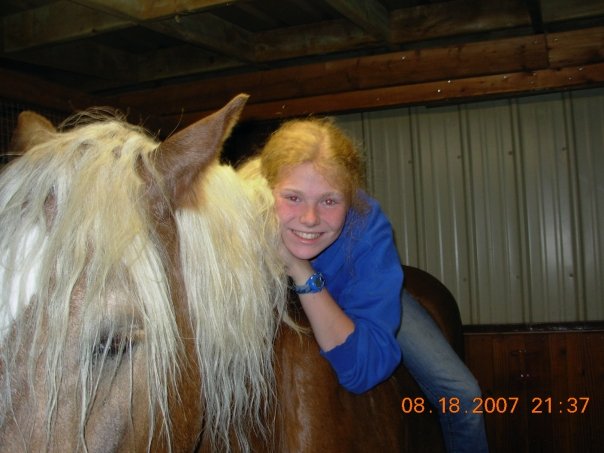
Most of all, why we continued to do this so long, was that we provided what  dreams are made of. I’m not sure how many times a day there would be a bright eyed child who approached our stalls, climbed up on the step stools and reached up to pet a Haflinger nose or neck and looked deep into those big brown Haflinger eyes, and lost their heart forever to the breed. They will not forget that moment when a horse they had never met before loved them back. Haflingers are magic with children and we saw that over and over again.

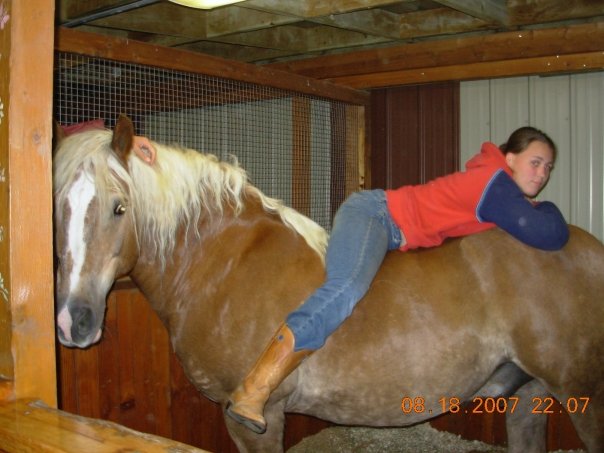
Our first year, in 1992, a mom and her 6 year old son came up to our stalls, as do some  10,000 people a day, and spent a long time petting the horses and talking to them, and enjoying them. They walked off, with the little boy looking over his shoulder at the Haflingers until they turned a corner and went out of sight. An hour later they were back and spent more time with the Haflingers. I offered the little boy a chance to sit on a Haflinger, and he agreed readily, and sat and sat and sat, playing with the mane and petting the shoulder and neck and was simply in heaven, quietly dreaming his own dreams on the back of a horse. His mom told me that they lived in a suburb near Seattle, but always spent this particular week in August at a local beach cabin, and the fair was one of their favorite activities each year. Her son Gary had never had an opportunity to sit on a horse before.

Next year, they were back, and Gary was a little taller, but still a quiet boy, and he kept dragging his mom back to the Haflingers, and she’d sit and visit as he’d sit on the Haflingers. He watched as we watered the horses, or fed them hay, or cleaned their stalls, and pretty soon he was asking if he could do the scooping, or dump the buckets or brush the horses. So he became, out of his own initiative, a helper.

By the time he was 8, he was spending several hours at a time with us at the stalls, taking his turn at the chores, and his mom, trusting that he was in good hands, and that he certainly wasn’t going to wander away from the Haflingers, would check back with him now and then to see if he wanted to go on rides, or see a performance, and his response was always “no, I can do that anytime, but I don’t get to see Haflingers very often!” He would talk a little about his hope someday to have a farm where he could raise Haflingers, and one year even said that his folks were looking at property to buy with acreage, but apparently a job for his dad didn’t materialize, so he remained a city kid in reality, even if he was a future farm kid in his heart.

He was one of our regular kid helpers every year until he was 12 when he started turning out for junior high football, and the football summer camp coincided with our fair week, so we’d only see him briefly on Saturdays as he got into his teens. He’d stop by to say hi, pet the horses, catch up on the Haflinger news, and because he only had a few hours to spend at the fair, he’d head off to other things. I really missed him and his happy smile around the stalls.

When he was 15, I missed seeing him because I was working when he stopped by. When he stopped by at age 16, he strolled up to me and I found I was looking up at this young man who I had to study to recognize. I’m a tall woman of 5’10”–he was at least 4 inches taller than me! He told me he wanted to come by because some of his best summer memories were of spending time with the Haflingers at the fair and he wanted me to know that. He thanked me for welcoming him and allowing him to “hang out” with the Haflingers. He told me his hope and dream someday was to live somewhere where he could raise Haflingers, and he was working hard in school so he could make that happen. He was a  4.0 student and the first string quarterback on his high school football team. I was as proud as if he was my own son.

This young man received a full scholarship to play football at a major university, and over four years waited his turn to be the starting quarterback.  Once he had his chance, after only a few games, he was tackled hard, sustaining a neck fracture which thankfully resulted in no permanent damage, but his college football career was suddenly over.

I hope someday to see Gary again–it would be great to see this tall accomplished young man who so recently was a shy quiet little city boy of 6, draped across the broad back of a Haflinger, and lost in his dreams of a “someday” Haflinger of his own. This is why we’ve done what we have at the fair all these years. It was for people like Gary who made a connection with a horse and never ever forget it. I’d like to think that a little bit of who Gary is and what he is becoming is because he had a dream of a horse farm that he held onto all these years.

Perhaps we’ll be back again at the Lynden Fair in the future if we can organize enough helpers.  We do hope the fair-goers miss the friendly golden horses with the big brown eyes that help make dreams come true.

Outdoor Easter Sunrise Service on our farm

Easter Sunrise Service at BriarCroft
(formerly Walnut Hill Farm)

sunrise view from our hill

Sunday, April 12, 2009, 7:00 AM Easter Sunrise Service on the hill above our farm

When we purchased Walnut Hill Farm from the Morton Lawrence family in 1990, part of the tradition of this farm was a hilltop non-denominational Easter sunrise service held here for the previous 10+ years.  We have continued that tradition, with an open invitation to families from our surrounding rural neighborhood and communities, as well as our church family from Wiser Lake Chapel, to start Easter morning on our hill with a worship service of celebration of the resurrection of Jesus Christ.

At our annual Easter Sunrise Service in Whatcom County, we develop a different Easter theme each year through use of scripture readings and songs, led by Dan Gibson. We sit on hay bales on the hill for the worship service, followed by breakfast of cinnamon rolls, hot chocolate and coffee in our barn.  As many of the people who attend come from some distance from all over the county, we try to conclude by 8 AM so they may have time to get to morning church services.

We invite all to come to our farm to participate in this traditional service of celebration.  Please dress warmly with sturdy shoes as you will be walking through wet grass to reach the hilltop.  Bring heavy blankets or sleeping bags to wrap up in if it is a chilly morning.  In case of rain, we meet in the big red hay barn on the farm, so we never cancel this service.

If you would like more information and directions, please email us at briarcroft@clearwire.net.

Dan and Emily Gibson– Nate, Ben and Lea