A Taste of the Forever Summer

“All in all, it was a never-to-be-forgotten summer — one of those summers which come seldom into any life, but leave a rich heritage of beautiful memories in their going — one of those summers which, in a fortunate combination of delightful weather, delightful friends and delightful doing, come as near to perfection as anything can come in this world.” ~ L.M. Montgomery, Anne’s House of Dreams

Time lurches ahead in imprecisely measured chunks.  Sometimes the beginning and ending of seasons are the yardstick,  or celebrating a holiday or a birthday.  Memories tend to be stickiest surrounding a milestone event: a graduation, a move, a wedding, a birth, a road trip, a funeral.

But Summer needs nothing so remarkable to be memorable.  It simply stands on its own in all its extravagant abundance of light and warmth and growth and color stretching deep within the rising and setting horizons.  Each long day can feel like it must last forever, never ending, yet it does eventually wind down, spin itself out, darkening gradually into shadow.  We let go with reluctance; we feel as if no summer like it will ever come again.

Yet another will, somehow, somewhere, someday.  Surely a never-ending summer is what heaven itself will be.

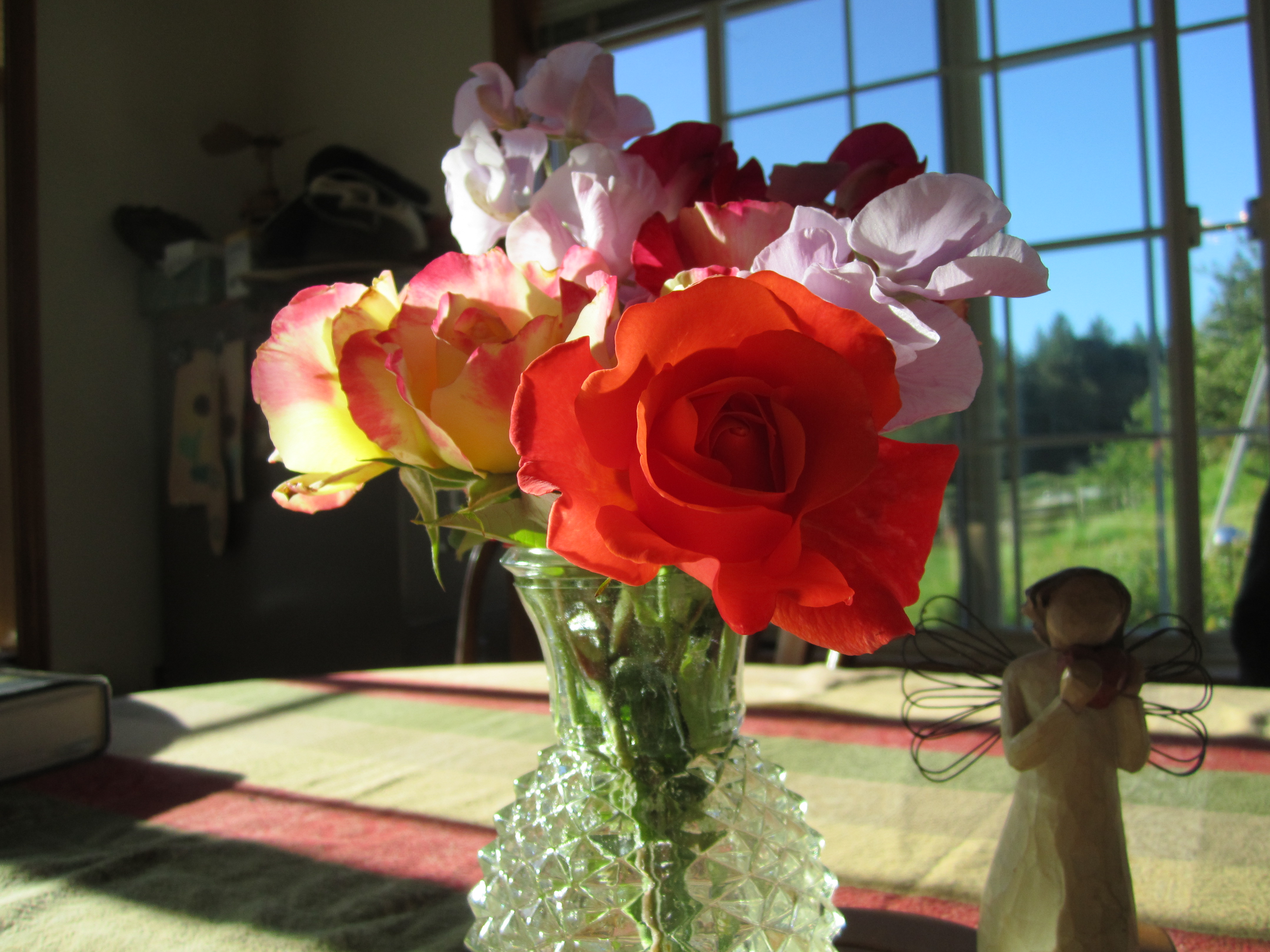
Perfectly delightful and delightfully perfect.  We’ve already had a taste.


No Hurry

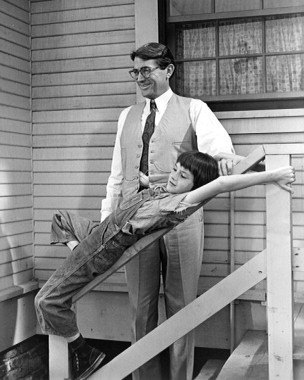
Scout and Atticus

Maycomb was a tired old town, even in 1932 when I first knew it. Somehow, it was hotter then. Men’s stiff collars wilted by nine in the morning; ladies bathed before noon, after their 3 o’clock naps, and by nightfall were like soft teacakes with frosting from sweating and sweet talcum. The day was twenty-four hours long, but it seemed longer. There was no hurry, for there was nowhere to go and nothing to buy… and no money to buy it with.
Harper Lee (Scout narrating at the beginning of To Kill A Mockingbird)

After several days of upper 90’s temperatures, I have greater understanding for the slower moving pace of the south and other warm environs.  There is not much that can be easily accomplished in humid heat other than staying in the shade and sweating.  Cats sprawl like furry puddles on the ground.   Dogs drip with their panting.  Horses have sweat marks under their manes.   And people are soft teacakes with frosting.

Those unfortunate places where the temperatures don’t drop much at night must really slow down to a crawl as attempting to sleep in a puddle of perspiration is just like constant menopause.

So we get a taste of it just to remind us what so much of the world lives with all the time, with air conditioning still being rare almost everywhere except the most fortunate affluent folk.  We are meant to slow down in the summer, stop hurrying, just melt and bathe and nap and simply be.

We usually complain about how fast time passes.  Summer is surely the necessary remedy.

 
"What dreadful hot weather we have! It keeps me in a continual state of inelegance." 
--Jane Austen

Summer Song

;20120726-212655.jpg

“In summer, the song sings itself.”
―William Carlos Williams
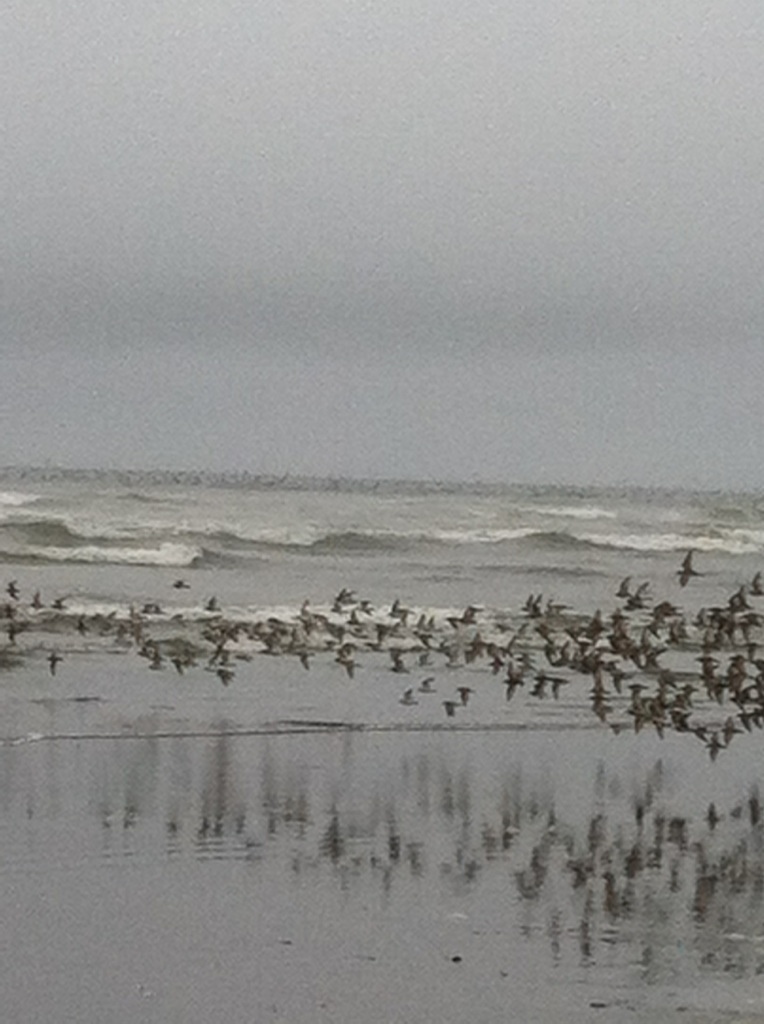
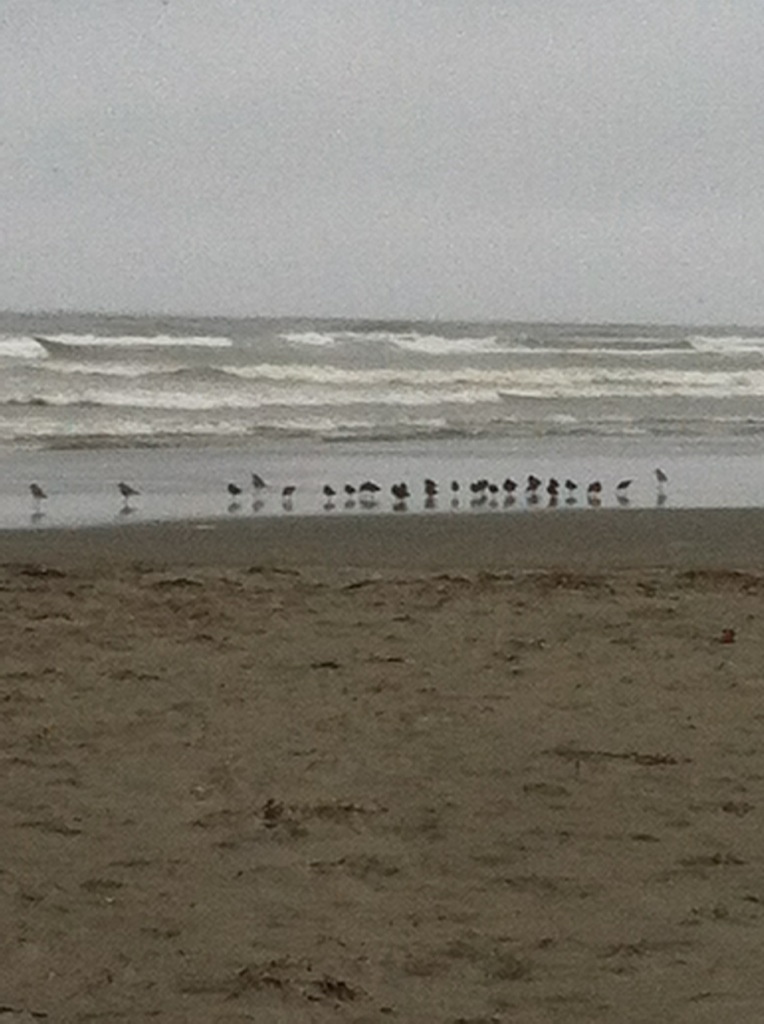
A couple days spent at the Pacific Ocean in mid-summer is a rare concert experience: the song sung by the constancy of the tides, the hymn of waves rolling and tumbling over the sand, the cries of thousands of gulls and other marine birds as they flock and swoop en masse.

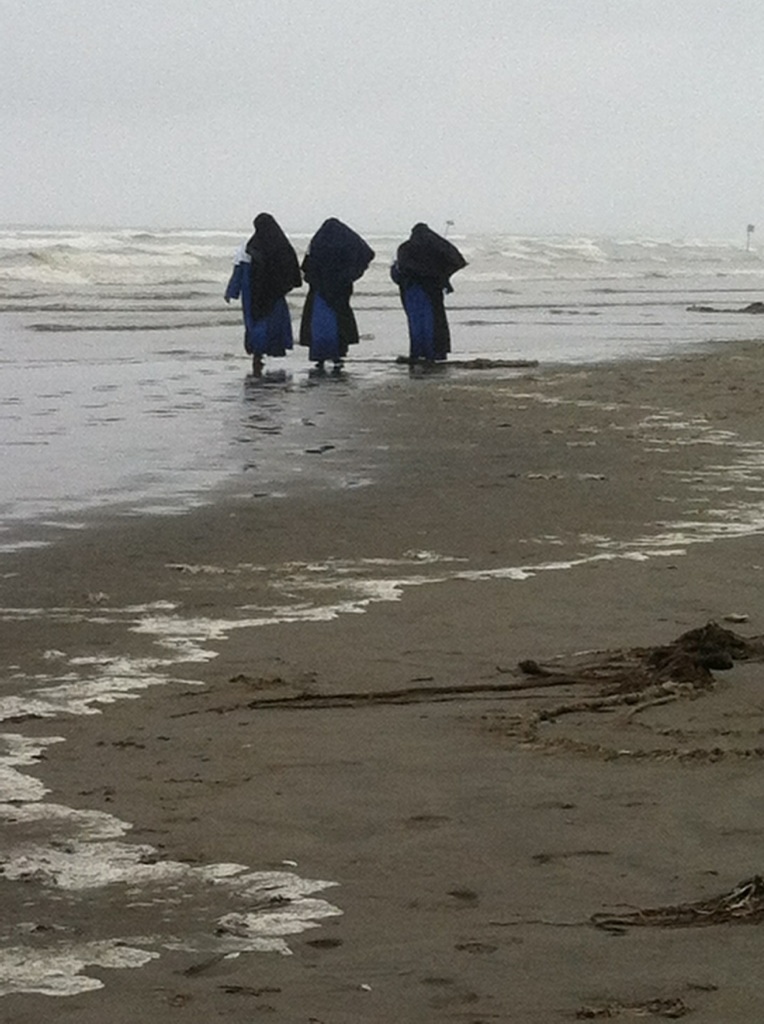
Today a different flock appeared on the beach–a small group of nuns in traditional habits on holiday, walking through the cold salt water in their lace-up black shoes, waves lapping up their skirts, soaking them to their mid-calves. Their smiles were huge; I could hear their hearts singing praises.

And so: summer sings with wet feet, happy faces, and flowing soaring wings of freedom.

20120726-212838.jpg

20120726-213007.jpg

<a

Summer Messaging

photo by Nate Gibson

Don’t let summer make your soul shrivel. God made summer as a foretaste of heaven, not a substitute. If the mailman brings you a love letter from your fiancé, don’t fall in love with the mailman. That’s what summer is: God’s messenger with a sun-soaked, tree-green, flower-blooming, lake-glistening letter of love to show us what he is planning for us in the age to come.
— John Piper

photo by Nate Gibson


“things which eye has not seen and ear has not heard, and which have not entered the heart of man, all that God has prepared for those who love him” (1 Corinthians 2:9).

Green Wet Trembling June

“Green was the silence, wet was the light, the month of June trembled like a butterfly”.
Pablo Neruda

We may be three days into summer but aside from the date on the calendar, it would be difficult to prove otherwise.  It is unseasonably cool, the skies stony gray, the rivers running full and fast, the ground peppered with puddles. Rain fell in torrents last night, hiding behind the cover of darkness as if ashamed of itself.   As it should be.  Then a mid-afternoon thunder and lightening gully-washing storm passed through and completely drenched my drying laundry on the clothesline.

Enough is enough.

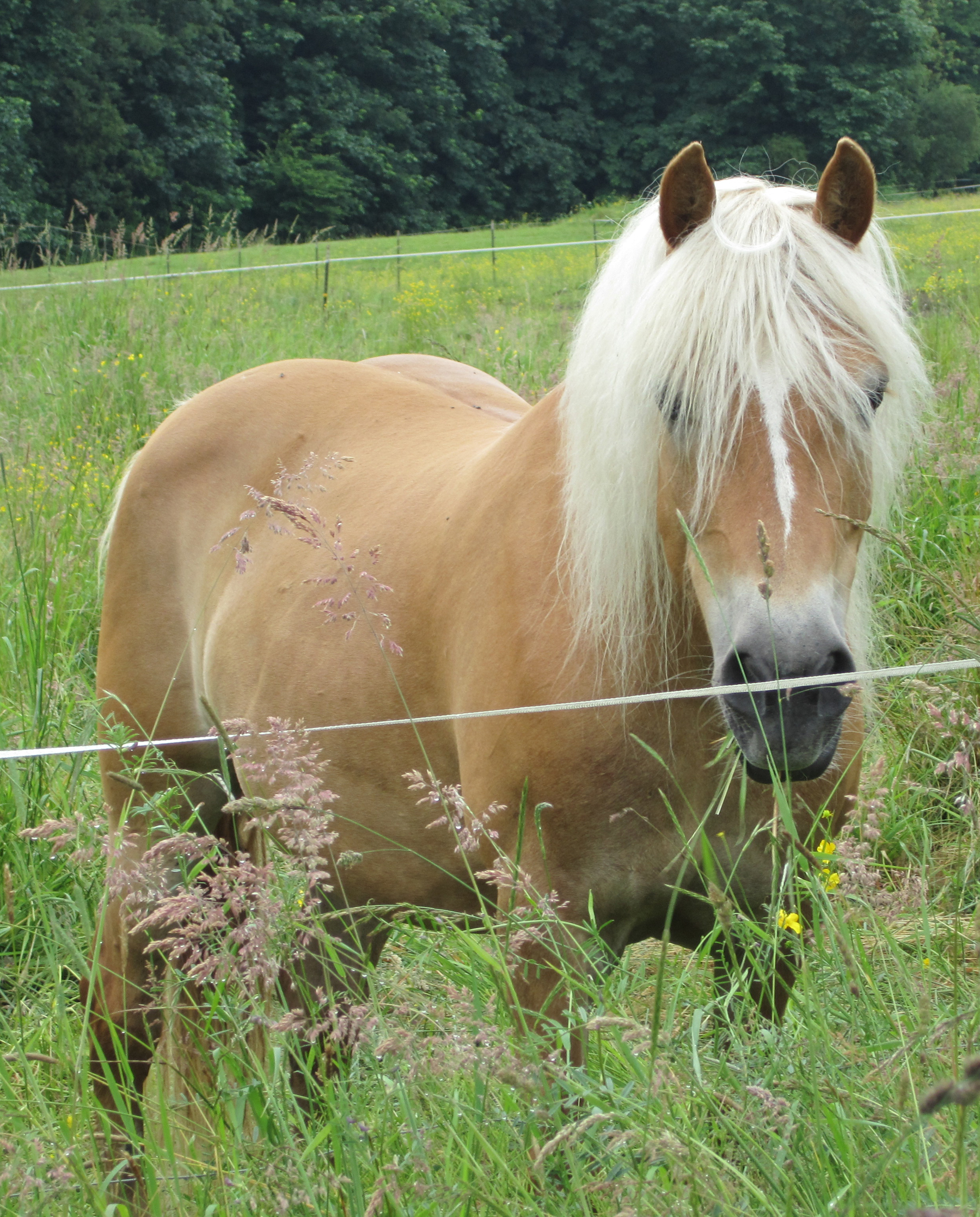
What all this moisture yields is acres and acres of towering grass growth, more grass than imaginable, more grass than we can keep mowed,  burying the horses up to their backs as they dive head long into the pasture.  The Haflingers don’t need to lower their necks to graze,  choosing instead to simply strip off the ripe tops of the grasses as they forge paths through five foot forage.   It is like children at a birthday party swiping the frosting off cupcake after cupcake, licking their fingers as they go.  Instead of icing, the horses’ muzzles are smeared with dandelion fluff,  grass seed and buttercup petals.

June tends to shroud its promise of longer days under clouds in the northwest.  Outdoor weddings brace for rain and wind with a supply of umbrellas, graduation picnics are served in the garage and Fathers’ Day barbeques under tent canopies.  There is a wary anticipation of solstice as it signals the slow inexorable return of darkness from which we have not yet recovered.

So I tremble as I splash through the squishiness of June,  quivering like a wet butterfly emerging from its cocoon ready to unfurl its wings to dry, but unsure how to fly and uncertain of the new world that awaits.  In fact the dark empty cocoon can look mighty inviting on a rainy June night or during a loud mid-day thunderstorm.   If I could manage to squeeze myself back in, it might be worth a try.

After all, there is no place like home.

Exposed

Not long ago on winter mornings
Waking dark to part
From your warm side,
Leaving behind my soft imprint,
I wrap up  in robe
To walk the gravel drive
For the newspaper

Our hilltop farm
Lies silent amid fallow fields
Moon shadows
Broad across my path
Star sparks overhead
Tree lined yard shields
The house from road.

In ink of early morning
I walk noiseless;
Step out to the mailbox
Then turn~ startled~
A flashlight
Approaching on the road-
An early walker and his dog
Illuminate me in dawn disarray
Like a deer in headlights:
My ruffled hair,  my sleep lined face
Vulnerability suddenly
Uncovered in the darkness;
Exposed.

Now summer morning
Wakes me early to streaming light
Poured out on quilt and blankets.
I part from your warmth again
Readied for ritual walk.
Dew sparkling below
Rich foliage above
Road stretches empty
For miles east and west

Crossing to the mailbox
I reach for the paper
Suddenly surrounded by
A bovine audience
Appreciative and nodding
Riveted by my bold approach
In broad daylight.
Yet abruptly scatter, tails in the air
When in rumpled robe and woolen slippers
I dance and twirl
In hilltop celebration
Of ordinary life and extraordinary love
Exposed.

Resuscitating the Hay Barn

photo by Nate Gibson

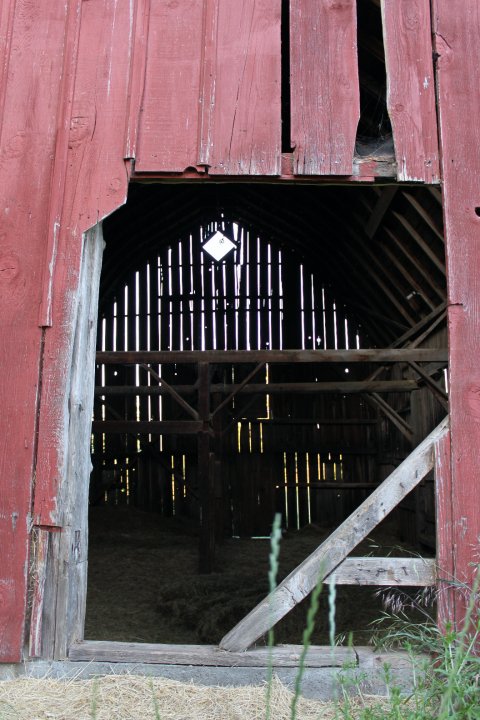
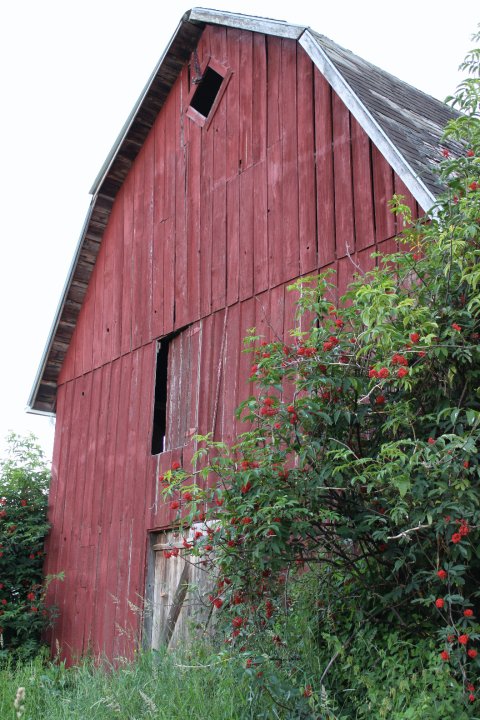
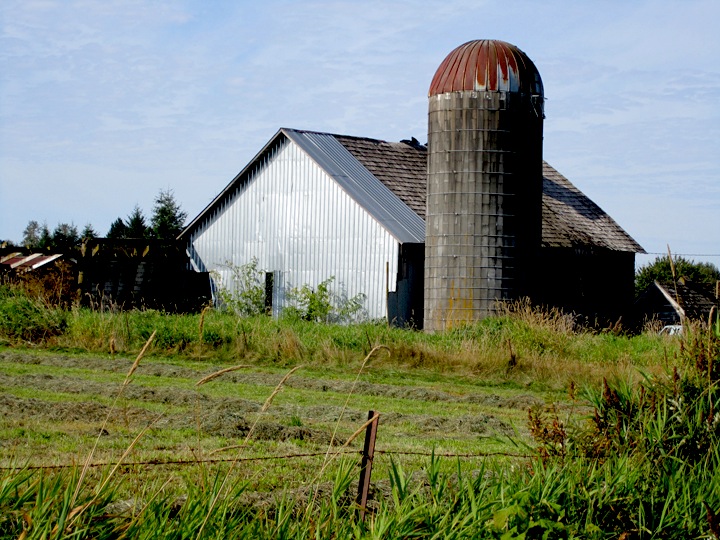
This is the week of the year our barn is at its emptiest, right before it fills up again.  There is something very lonely about a barn completely empty of its hay stores.   Its hollow interior echoes with a century of farmers’ voices, whether soothing an upset cow during a difficult milking, or uncovering a litter of kittens high in a hay loft, possibly shouting orders to a steady workhorse, even startling out loud as a barn owl flies low overhead, or grumbling over a dead tractor battery.    The dust motes lazily drift by in the twilight, seemingly forever suspended above the straw covered wood floor, floating protected from the cooling evening breezes.

There is no heart beat left in an empty barn.  It is in full arrest, all life blood drained out, vital signs flat lined.   I can hardly bear to go inside.

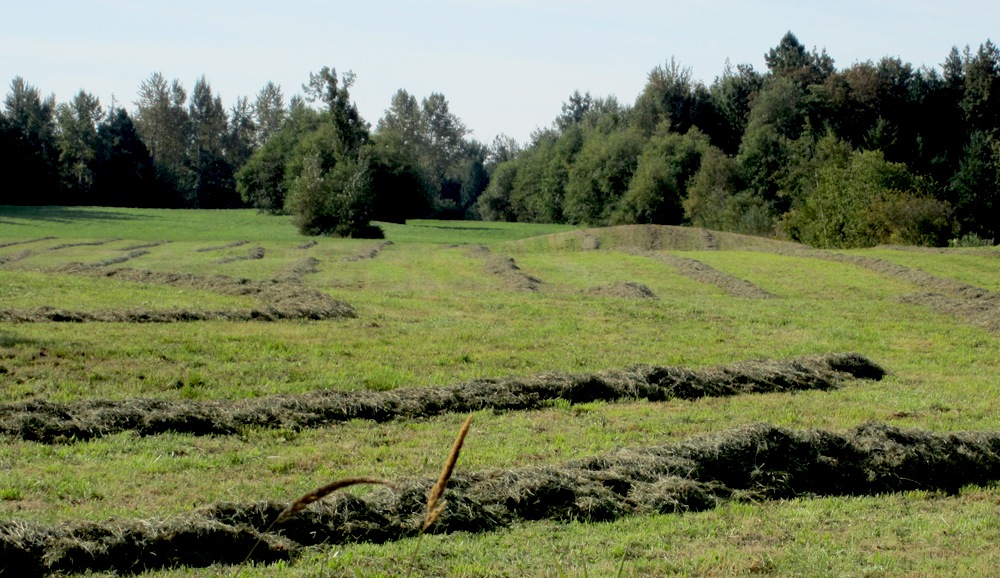
If the weather cooperates before July 4, we’ll be cutting the grass the first day, strewing it about on the field to dry in a process called “tedding” the next, raking it into windrows the third,  and then baling it for pick up by our “family and friends” hay crew.  Suddenly, the barn is shocked back to a pulse, with the throb of voices, music blaring, dust and pollen flying chaotically, the rattle of the electric “elevator” hauling bales from wagon to loft,  the grunts and groans of the crew as they heft and heave the bales into place in the stack.  This often goes on late into the night, the barn ablaze with lights, the barnyard buzzing with excitement and activity.   It almost looks as if it is on fire.

Vital signs measurable, rhythm restored,  volume depletion reversed, prognosis good for another year.

A healthy rhythm is elusive in this modern age of full time jobs off the farm, necessitating careful coordination with the schedule of the farmer who cuts and bales for many neighbors all within the same window of good weather, plus adding in the high cost of fuel and labor.   The farmer races his equipment from field to field, swooping around with a goliath tractor taking 12 foot swaths, raising dust clouds, and then on to the next job.   It is so unlike the rhythm of a century ago when a horse drawn mower cut the tall grass in a gentle four foot swath, with a pulsing shh shh shh shh shh shh tempo that could be heard stretching across the fields. It is an unfamiliar sound today, the almost-silence of no motor at all, just the jingle of the harness and the mower blades slicing back and forth as the team pulls the equipment down the field.  We’ve lost the peacefulness of a team of horses at work, necessitating a slower pace and the need to stop at the end of a row for a breather.

Benjamin Janicki of Sedro Woolley raking hay with his team of Oberlanders

The old barn will be resuscitated once again.  Its floor will creak with the weight of the hay bales, the walls will groan with the pressure of stacks.  The missing shingles on the roof will be replaced and the doors locked tight against the winter winds.  But it will be breathing on its own, having needed only a short rest these last few weeks.

Inside, once again, filled to the brim, life is held tight by twine, just waiting to be released.

photo by Nate Gibson

September Hay Field

By now the fields have survived
A first, and even second cutting
Mowed and tedded
Raked and baled, scalped clean then
Rained upon in spurts and spells.

The grass blades rise again, reluctant-
Certain of the cuts to come;
No longer brazen, reaching to the sky
With the blinding bright enthusiasm of May and June endless days,
But shorter, gentle growth of late summer golden sunsets.

The third cutting sparse and short as thinning hair
Tender baby soft forage, light in the hands and on the wagon
Precious cargo carried back to the barn;
Fragrant treasure for vesper manger meals
A special Thanksgiving and Christmas Eve gift.

Once again the fields are bare, aching for cover
Which comes as leaves rain and swirl in release,
Winds buffet, offering respite of deepening winter
Snowdrifts, blanketing in silent relief and rest
Until patiently stirred by melting soaking warmth

To rouse again, reaching toward the light.

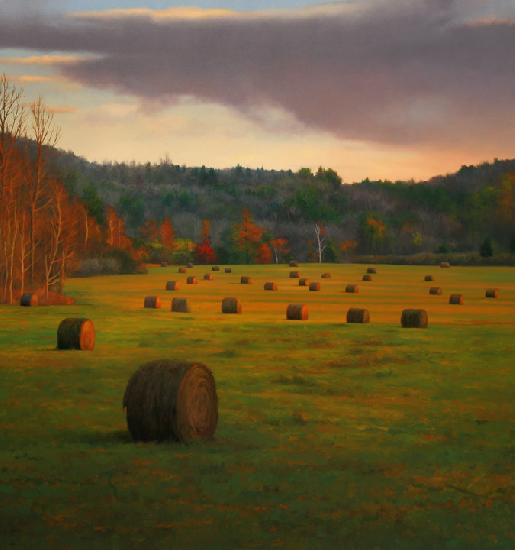
Hayfield--oil painting by Scott Prior www.scottpriorart.com
Hayfield–oil painting by Scott Prior http://www.scottpriorart.com

Reflecting the Light

tonynight

It was a treasured late summer evening when temperatures hover around 70 degrees, there was a slight cooling breeze, clear starlit skies, and barely a mosquito buzzing.  We had just returned from a lovely evening outdoor wedding for two special young friends,  with a special message from our pastor about the profound mystery of marriage, not just for newlyweds, but also for those of us married for many years. As we approach our 28th anniversary next month, we are blessed in the knowledge we depend on God’s grace every day, trying to reflect it back to our children, our community, to each other.

We decided to hike up to the top of our hill after dark to catch the best view of our neighbor Mars before we brought our Haflingers in for the night.  Mars was there to see all right, orange and bright in the southeast sky. But the Haflingers seemed to be afflicted by strange Martian fever, or perhaps it was simply because we rarely wander out into the field in the dark with flashlights in hand. There was no moon yet when we were out –simply starlight and the far-off lights from Vancouver,  British Columbia to the north and Bellingham to the south.

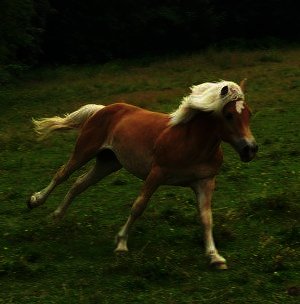
The Haflingers started running in the dark, kicking and snorting and bucking with the joy of a starlit, Martian-lit summer evening. Only all we could see of the Haflingers were their ghostly white manes and tails moving across the fields, jumping and twisting and cavorting.

I’m sure over the generations, in the alpine meadows of the South Tyrol, there must have been some starlit moonless lights when the Haflinger herds would run together, and all you could see in the dark were floating disembodied white manes and tails.

Perhaps that is what enchanted the mountain peasants the most about their sturdy reliable golden companions—at night they become spirit and light. They shine like the stars, even from the ground, reflecting back the lights from the heavens.  And so, in our companionship with each other, and with God, do we glow with His light.

Blackberry Cobbler

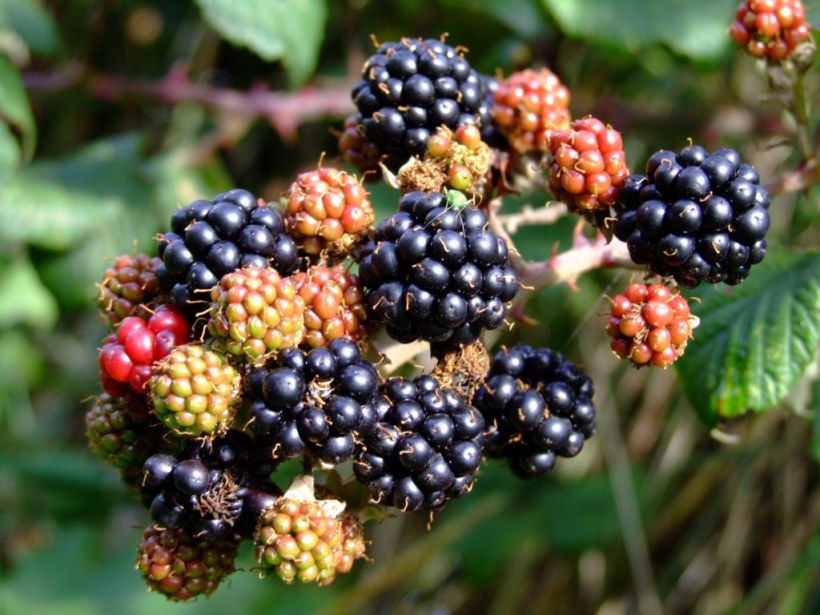
blackberriesWe’ve often been asked about the origin of our farm name, BriarCroft, as it is a bit unusual. I point toward our back field when I explain: banks of blackberry bushes and vines on the periphery of our woods, covering an old barbwire fence, and literally becoming fence itself in their overwhelming growth. So that is the “briar” and the “croft” is our little Scottish “farm on a hill”.

The blackberry vines seem like trouble 90% of the year–growing where they are not welcome and reaching out and grabbing passersby without discriminating between human, dog or horse. But for about 3 weeks in late August and early September, they yield black gold–bursting, swelling, unimaginably sweet fruit that is worth the hassle borne the rest of the weeks of the year.

Today I was on a mission. I wanted to make a blackberry cobbler for a family dinner to serve warm with vanilla ice cream–a true once a year treat to offer up.

It has been an unusually dry summer here in the Pacific Northwest with little rain at all since July, so the fields are brown and even the usually lush blackberry vines are starting to dry. The berries themselves are rich from the sun, but a bit smaller than typical. The Haflingers have been fed hay for the past several weeks as they are turned out in the fields in the mornings as there is not enough pasture for them without the supplement–we are about 6 weeks ahead of schedule in feeding hay.

I had grown a little suspicious the last couple nights as I brought the Haflingers into the barn for the night as several of the mares turned out in the back field were bearing purplish stains on their chests and front legs, and one even had a tell-tale purplish mark on her muzzle with a short blackberry vine still painfully stuck in her lower lip that I extracted for her. Hmmmm. Raiding the berries. Desperate drought forage behavior in an extremely efficient eating machine.

So this evening I headed down the path to the back field, not seeing the mares until I rounded the corner of the woods, and headed toward the berries. They had heard the Haflingers in the other fields talking to me as I passed, and were already headed up to see what was up. When they saw the bowl in my hand, that was it. They mobbed me. I was
irresistible.

So with three mares in tow, I approached the berry bank. It was ravaged. Trampled. Haflinger poop piles everywhere. All that were left were clusters of gleaming black berries up high overhead, barely reachable on my tip toes, and only reachable if I walked directly into the vines. The mares stood in a little line behind me, pondering me as I pondered my dilemma. I looked back at them and told them they were berry thieves and they weren’t getting a single one from me.

I set to work picking what I could reach, snagging, ripping and bloodying my hands and arms, despite my sleeves, determined that I was not going to give up on this vision of steaming blackberry cobbler and vanilla ice cream that I’d entertained all day. Pretty soon I had mares on either side of me, diving into the brambles and reaching up to pick what they could reach as well, unconcerned about the thorns that tore at their sides and muzzles. They were like sharks in water–completely focused on their prey and amazingly skilled at
grabbing just the black berries, and not the pale green or red ones. Three plump Haflingers and one *plumpish* woman willingly accumulating scars in the name of sweetness.

When my bowl was full, I extracted myself from the brambles and contemplated how I was going to safely make it back to the barn without being mugged. Not a problem. I adopted that “look” and that “voice” and they obediently trailed behind me, happy to be put in their stalls for their nightly grain, a gift from me with no thorns or vines attached.

Thorns are indeed part of our everyday life. They stand in front of much that is sweet and good and precious to us. They tear us up, bloody us, make us cry, make us beg for mercy.
Yet thorns did not stop salvation, did not stop goodness, did not stop the promise of sweetness to come. We simply can wait to be fed: a gift dropped from heaven.

Anyone ready for blackberry cobbler?