Listening to Lent — If You Tarry

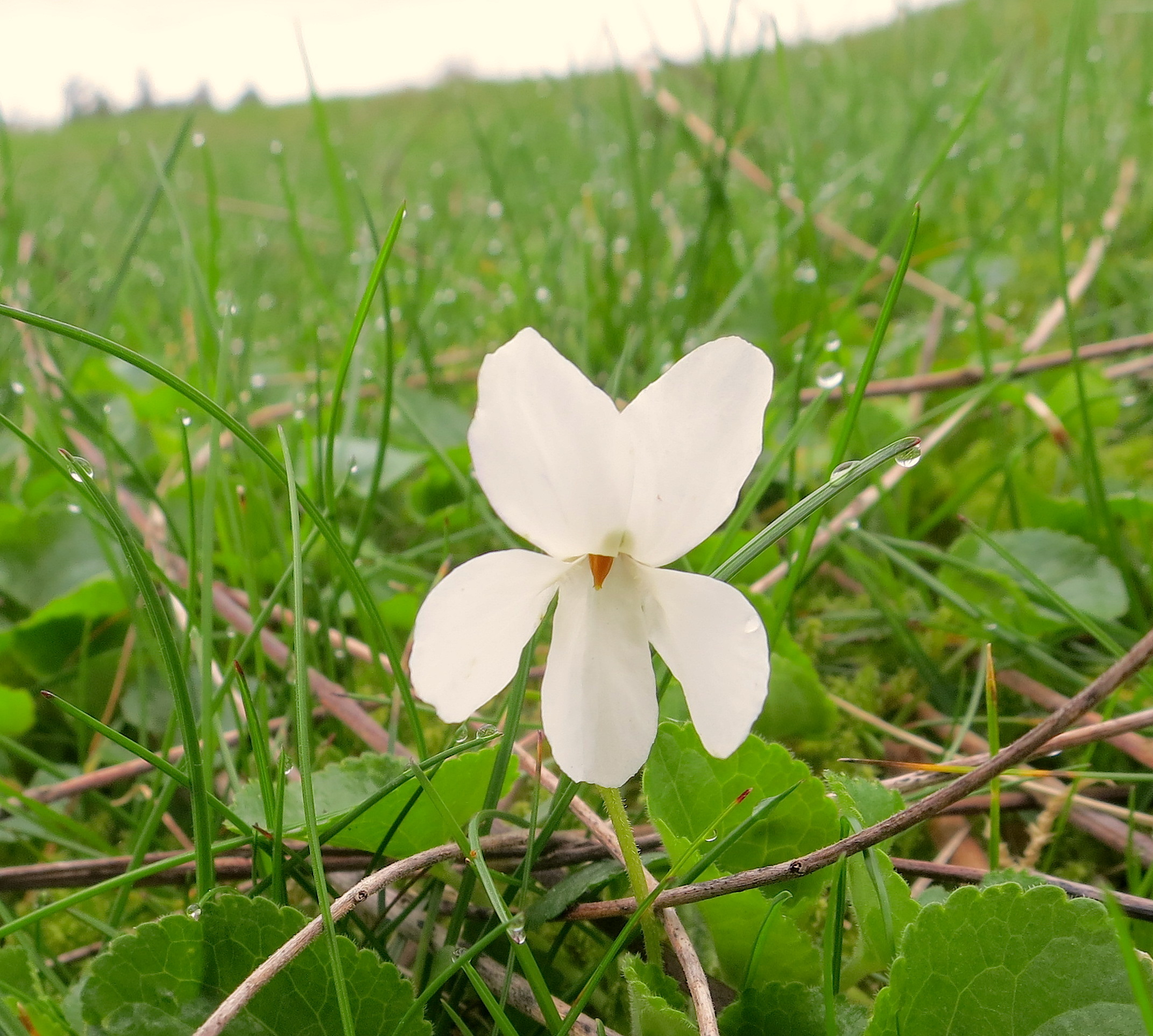
whiteviolet

Come, ye sinners, poor and needy,
Weak and wounded, sick and sore;
Jesus ready stands to save you,
Full of pity, love and power.

Refrain

I will arise and go to Jesus,
He will embrace me in His arms;
In the arms of my dear Savior,
O there are ten thousand charms.

Come, ye thirsty, come, and welcome,
God’s free bounty glorify;
True belief and true repentance,
Every grace that brings you nigh.

Come, ye weary, heavy laden,
Lost and ruined by the fall;
If you tarry till you’re better,
You will never come at all.

View Him prostrate in the garden;
On the ground your Maker lies.
On the bloody tree behold Him;
Sinner, will this not suffice?

Lo! th’incarnate God ascended,
Pleads the merit of His blood:
Venture on Him, venture wholly,
Let no other trust intrude.

Let not conscience make you linger,
Not of fitness fondly dream;
All the fitness He requireth
Is to feel your need of Him.
~Joseph Hart

When we are comfortable,
well fed,
not in longing~
we are slow to respond to the call,
tending to tarry in satiety.

It is in our times of need
and soreness
and worry
that we reach out, frightened,
to find it is then
we are the most fit to be received
into His arms.


Lenten Grace — Fearful Dust

photo from the top of Mt. Baker by Josh Scholten

I will show you something different from either
Your shadow at morning striding behind you
Or your shadow at evening rising to meet you;
I will show you fear in a handful of dust.
~T.S. Eliot in “Burial of the Dead” from “The Wasteland”

We do not want to think of ourselves as the dust we were and the dust we will become.  There is too much of us living right now; we cast shadows before and behind us depending on the time of day and time of life.  We are substance with our shadows only ephemeral reflections of our presence on earth.

Yet the dust we were and the dust we become is a fearful thing.
Nothing but dust…
until the Creator lifts us up in the palm of His hand, and blows on us.  Now we breathe and pulse and weep and bleed.

We become something different than mere shadow.

We become His, awed,  to the last grain of fearful dust with which we are made.  We become so much more.  So much more.

photo by Josh Scholten

Transforming Anxiety

photo by Nate Gibson

…difficulties are magnified out of all proportion simply by fear and anxiety. From the moment we wake until we fall asleep we must commend other people wholly and unreservedly to God and leave them in his hands, and transform our anxiety for them into prayers on their behalf:
With sorrow and with grief…
God will not be distracted.
~Dietrich Bonhoeffer in Letters from Prison

Every day I see college students who are so consumed by anxiety they become immobilized in their ability to move forward through the midst of life’s inevitable obstacles and difficulties.  They become so stuck in their own overwhelming feelings they can’t sleep or eat or think clearly, so distracted are they by their symptoms.  They self-medicate, self-injure and self-hate.  Being unable to nurture themselves or others, they wither like a young tree without roots deep enough to reach the vast reservoir that lies untapped beneath them.  In epidemic numbers, some decide to die, even before life really has fully begun for them.

I grieve for them in their distress.   My role is to help find healing solutions, whether it is counseling therapy, a break from school, or a medicine that may give some form of relief.  My heart knows the ultimate answer is not as simple as the right prescription.

We who are anxious are not trusting a Creator who does not suffer from attention deficit disorder and who is not distracted from His care for us even when we turn away in worry and sorrow.  We magnify our difficult circumstances by staying so tightly into ourselves, unable to look beyond our own eyelashes.  Instead we are to reach higher and deeper, through prayer, through service to others, through acknowledging there is power greater than ourselves.

So we are called to pray for ourselves and for others,  disabling anxiety and fear and transforming it to gratitude and grace.   No longer withering, we just might bloom.


Open for Business

photo by Josh Scholten

Astonishing material and revelation appear in our lives all the time. Let it be. Unto us, so much is given. We just have to be open for business.
~Anne Lamott from Help Thanks Wow: Three Essential Prayers

I have the privilege to work in a profession where astonishment and revelation awaits me behind each exam room door.

In a typical clinic day, I open that door 36 times, close it behind me and settle in for the ten or fifteen minutes I’m allocated per patient.  I need to peel through the layers of a person quickly to find the core of truth about who they are and why they’ve come to me.

Sometimes what I’m looking for is right on the surface: in their tears, in their pain, in their fear.  Most of the time, it is buried deep and I need to wade through the rashes and sore throats and coughs and headaches to find it.

Once in awhile, I can actually do something tangible to help right then and there — sew up a cut, lance a boil, splint a fracture, restore hearing by removing a plug of wax from an ear canal.

Often I find myself giving permission to a patient to be sick — to take time to renew, rest and trust their bodies to know what is best for a time.

Sometimes, I am the coach pushing them to stop living sick — to stop hiding from life’s challenges, to stretch even when it hurts, to get out of bed even when not rested, to quit giving in to symptoms that can be overcome rather than overwhelming.

Always I’m looking for an opening to say something a patient may think about after they leave my clinic — how they can make better choices, how they can be bolder and braver in their self care, how they can intervene in their own lives to prevent illness, how every day is a thread in the larger tapestry of their lifespan.

Each morning I rise early to get work done before I actually arrive at work,  trying to avoid feeling unprepared and inadequate to the volume of tasks heaped upon the day.   I know I may be stretched beyond my capacity, challenged by the unfamiliar and stressed by obstacles thrown in my way.  It is always tempting to go back to bed and hide.

Instead, I go to work as those doors need to be opened and the layers peeled away.  I understand the worry, the fear and the pain because I have lived it too.   I am learning how to let it be, even if it feels miserable.  It is a gift perhaps I can share.

No matter what waits behind the exam room door,  it will be astonishing to me.

I’m grateful to be open for business.  The Doctor is In.

photo by Josh Scholten

Now and Now

photo by Josh Scholten

And so you have a life that you are living only now, now and now and now, gone before you can speak of it, and you must be thankful for living day by day, moment by moment … a life in the breath and pulse and living light of the present…
~Wendell Berry

My days are filled with anxious people, one after another after another.  They sit at the edge of their seat, eyes brimming, fingers gripping the arms of the chair.  Each moment, each breath, each rapid heart beat overwhelmed by fear-filled questions:  will there be another breath?  must there be another breath?   Must this life go on like this in panic of what the next moment will bring?

The only thing more frightening than the unknown is the known that the next moment will be just like the last.  There is a deficit of thankfulness, no recognition of a moment just passed that can never be retrieved and relived.   There is only fear of the next and the next so that the now and now is lost forever.

Their worry and angst is contagious as the flu.
I mask up and wash my hands of it throughout the day.
I wish a vaccination could protect us all from unnamed fears.

I want to say to them and myself:
Stop.  Stop this.  Stop this moment in time.
Stop expecting some one, some thing or some drug must fix this feeling.
Stop being blind and deaf to the gift of each breath.
Just stop.
And simply be.

I want to say:
this moment is ours,
this moment of weeping and sharing
and breath and pulse and light.
Shout for joy in it.
Celebrate it.
Be thankful for tears that can flow over grateful lips.

Stop me before I write,
because of my own anxiety,
yet another prescription
you don’t really need.

Just be–
and be blessed–
in the now and now.

Advent Cries: Overcoming Fear

photo by Josh Scholten

We forget that God is right there, waiting for us to turn to him, no matter how dire our situation.  We forget the reassuring words of his messengers: “Fear not.”
God always seeks to draw close to us — even in the depths of hell.

…it comes down to this: the only way to truly overcome our fear of death is to live life in such a way that its meaning cannot be taken away by death.  It means fighting the impulse to live for ourselves, instead of for others.  It means choosing generosity over greed.  It also means living humbly, rather than seeking influence and power.  Finally, it means being ready to die again and again — to ourselves, and to every self-serving opinion or agenda.
~Johann Christoph Arnold

There is a cacophony of debates about where to place the blame for the current epidemic of senseless mass shootings of innocent people; these arguments are flying around kitchen tables, in barber shops, through countless comments on online blogs and news reports.  We want to place the blame somewhere: the easy access to the weapons used, the lack of access to mental illness treatment, the overparenting, the lack of parenting, the violence of video games and movies, the lack of foundational spiritual faith, the overabundance of fundamentalist spiritual faith.

None of it meets the real problem head on:  evil exists no matter what the weapon used or the mental illness left untreated.   As we learned after the airplanes-as-weapons tragedies of 911, massive expense and legislation barely keeps evil at bay, simply moving its practitioners on to some other means.   No place on this earthly soil is truly secure and no amount of money nor new laws will create that place, as hard as we might want to believe that can happen.

So we must fall back on what we were told long ago: fear not.
Do not be overwhelmed with evil but overcome evil with good.  We have seen it yet again in the case of the heroes in this most recent tragedy: teachers and staff who made themselves the targets, placing themselves in front of those children who depended on them.

The goal of this life is to live for others, to be ready to die, living in a way such that death cannot erase the meaning and significance of a life.
Give up our selfish agendas in order to consider the needs of the greater good.
Cherish life, all lives,  especially those of our precious children — including the unborn — the unwanted, inconvenient, wrong-gendered or genetically impaired.
And we must cherish,  rather than intentionally hastening,  the final months, weeks, days and hours of our completely dependent and disabled terminally ill and elderly.  If we do not protect the lives of the weakest among us, we are turning them over (and we will soon follow) to the darkness.

Our only defense against evil is God’s offense; only He will lead us to the light where everything sad will come untrue.
Only then will there be no more fear — not ever — ever again.

Fear of Sunsets

photo by Nate Gibson

How strange this fear of death is! We are never frightened at a sunset.
George McDonald

In our modern world that never seems to rest, a sunrise can seem more daunting than a sunset.  We are unprepared for the day to start–the ready-set-go of a sunrise can be overwhelming to a tired soul.  There are mornings when the new light of dawn penetrates right through our closed eyelids, enough to wake the dead, if not the sleeping.  It cannot be ignored in its urgency to rouse us to action.

In contrast, the end of the day requires little preparation.  Sunsets signal a slow-down unraveling of tension, a deep cleansing breath, a letting-go of the light for another night.  It eases over us, covering us like a comfortable quilt, tucking us in for the night with a kiss and hug and promise of sweet dreams.

The reason we do not fear the sunset is that we know it isn’t all there is.  The black nothingness of night would be petrifying if we didn’t understand and trust that the light will return, as startling as it may be in its brightness.   It is the rerunning cycle of the light and dark that reassures.   It is as it was created to be, over and over.

Let the sunset tuck us in.   Let the sunrise ready us for a new day.  Let it end, then let it begin again.


Live It Slant

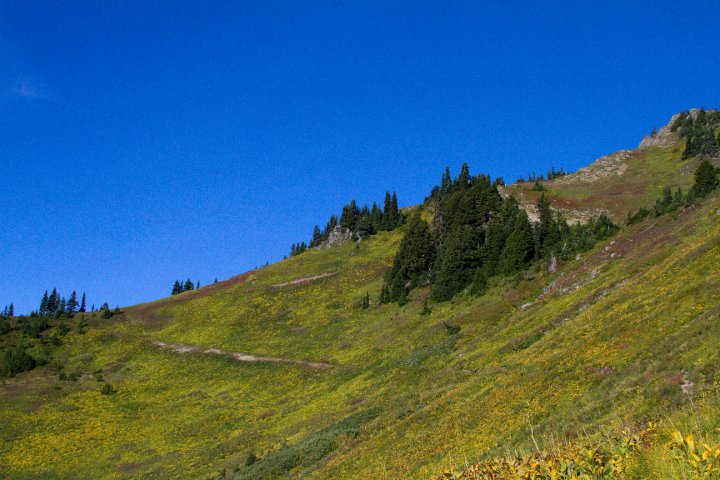
photo of Church Mountain trail by Josh Scholten
Tell all the Truth but tell it slant -- Emily Dickinson

A life well lived is no flat passage.  
There are bumps and hollows, 
pinnacles and valleys. 
Looking up from the path, 
beyond the next step,
it can be surprising to see 
where the road is leading: 
sometimes straight up into the blue, 
sometimes a plunge into an abyss.  

Living slant is each step taken
with eyes focused forward--
no looking back; 
even if the climb exhausts
the descent precipitous,
treading unafraid to reach
a destination unknown
and sure.

Live all of life but live it slant.

photo in North Cascades by Josh Scholten

Lenten Reflection–No Fear

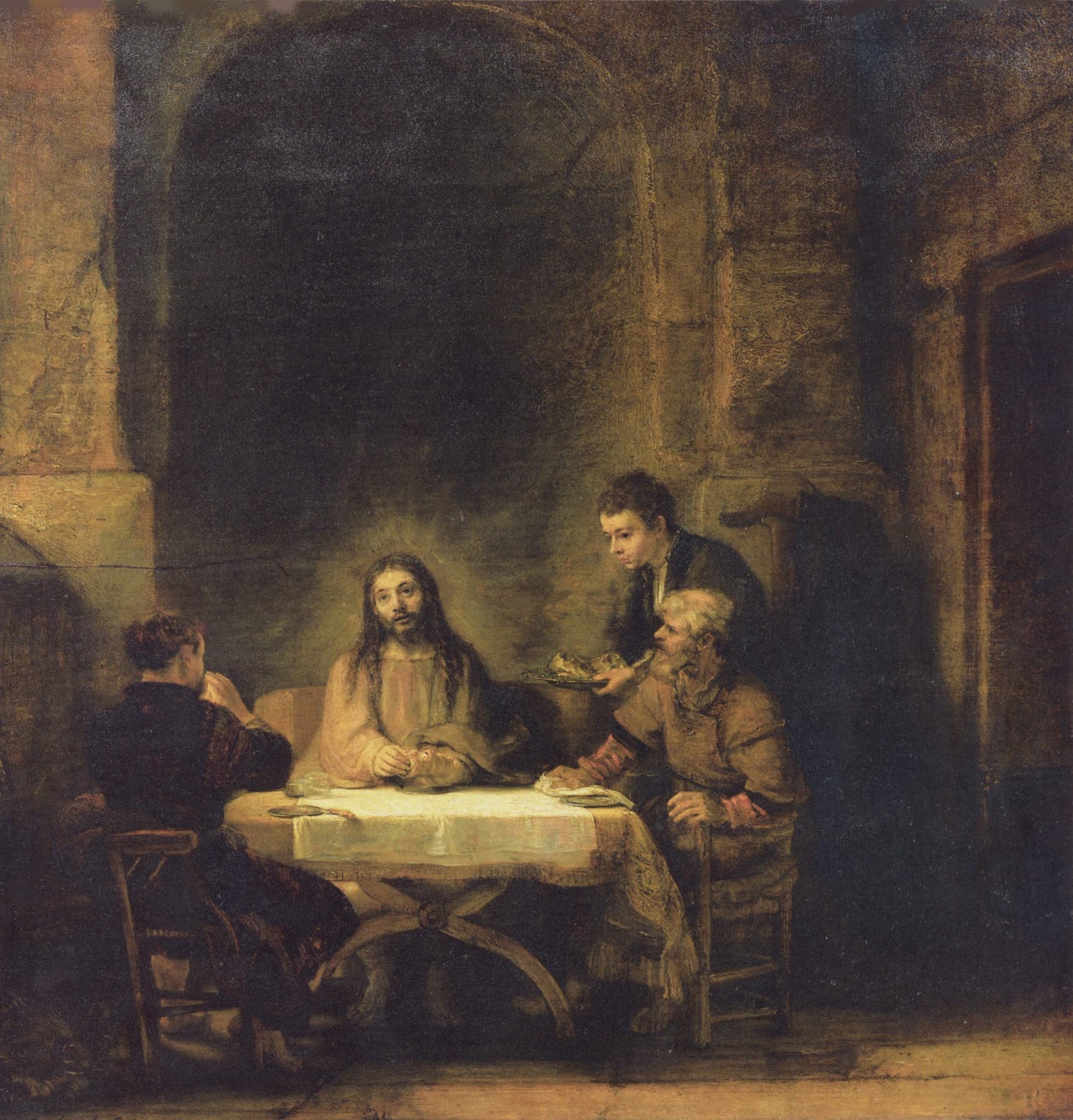
Rembrandt's Christ at Emmaus

There is no fear in love, but perfect love casts out fear
1 John 4:18

The community of faith and community of life in the first love was marked by the risen Christ–the Christ who had said, “I am with you always.” Everything depends on seeing the mystery of the risen Christ as unconditional love. In Christ, God’s love is put into practice.
Eberhard Arnold

Of course there was plenty to fear. There had been a brutal arrest in a garden, facilitated by one of His own. The rest ran or actively denied involvement. There was a hasty hearing, and a trial of sorts, and then beatings and condemnation by acclamation. There was the impossible task of lugging a heavy cross up hill, then being attached by nails, hung, dehydrated, denigrated, left to die.

Plenty, plenty to fear. Those who loved Him were terrified.

When they returned after the Sabbath to care for His body, still concerned for their own safety, they heard again very familiar words: “Do not be afraid.” He was conceived and born under those words, and after His death, those were among the first words they heard the risen Christ say, and He repeated them as often as they needed to hear them, which was often.

Do not be afraid.

Perfect love casts out fear. As we are so flawed, so incapable of perfect-anything, we fear, and fear desperately. But because He is capable of perfect unconditional love, He demonstrates that love tangibly and palpably: breaking bread, breaking Himself, pouring wine, pouring out Himself. He creates an everlasting community of love by promising to be with us always. So we put it into practice with each other, and especially with those who are strangers and enemies.

Why fear any longer? He is walking alongside us illuminating our minds and filling our hearts, He is at the table feeding us, He is holding us as we pass into His arms.

Perfect
mysterious
unending
unprecedented
unconditional
love has no fear
forever.

Answering the Knock on the Door

tony07

From Spring 2004 with an update at the bottom:

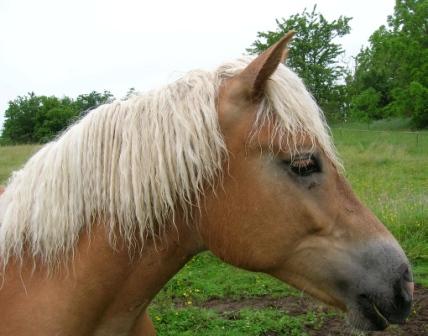
It’s been a challenging few weeks at our farm because one of our two year old geldings, Wallenda, had an emotional crisis of sorts that I’ve been trying to understand and deal with.

Wallenda has always been on the “sensitive” side–not the most laid back of our youngsters, and far more apt than others to need to look at new things closely, stop and stare, and give a snort or two. He’s lived a trauma-free, non-demanding existence, asked only to lead and stand quietly, allow shots and worming, and get his feet trimmed. He has not been a classic Haflinger pocket pony, begging for attention, but he’s never turned away from our attention either.

One day, about a month ago, his world turned upside down. During the day while we were at work, he had managed, in an effort to reach green grass, to wiggle his way under a 12 foot pipe gate in his paddock, getting it partially off its hinges, but still barring the opening enough that his brother and sister opted not to follow him. I came home from work to find him grazing peacefully in the orchard, near the paddock, without a halter on of course. When I tried to approach him with his halter to catch him and bring him in, he reacted fearfully, running madly up and down the fence line, looking very much as if he might jump the tape and wire, just to get away from me. I solved his panic (and my concern) by bringing his brother around on a lead and Wallenda followed him back into the barn and into a stall.

But nothing seemed the same for him. This young horse who formerly would always come up to us in the stall when we opened the door to feed him or put on his halter would bolt for a corner if we approached, literally climbing the walls to get away from us. He wouldn’t take food offered from our hands, and wouldn’t even approach his grain until we moved away from the stall. He was petrified, eyes wide and white, muscles trembling and tense.

We were completely baffled. No one else works or handles the horses here except my husband and I, and no one was at home when Wallenda got out. We wondered if he had, in fact, somehow gotten out to the road
and been frightened there by someone trying to shoo him home, but it seemed so unlikely that he would leave lots of grass and his buddies to venture out that far. Clearly there had been a major emotional trauma over the course of the day, as he didn’t have a mark on him anywhere to indicate he’d been harmed or hurt.

If both of us went into his stall together, we could approach him slowly from either side and he would stand for haltering, but if only one of us went in the stall, he’d immediately turn his butt to us, and swing his front end away, very effectively keeping out of reach, and threatening us with his hind legs and once, when Dan was trying to halter him alone, landed a painful kick on Dan’s ribs. It was clear to us that he was reacting out of fear, not aggression, but that realization didn’t make him any safer to interact with.

We tried to keep his routine the same as best we could. He was haltered, with us approaching him in the stall together, and he would lead fine out to his paddock. However, once in the paddock, there was no way he’d allow himself to be caught to come in at night and the paddock was too large for us to be able to position him to be caught. When we tried once, he ran for the 5 foot board fence, jumped, landed on this belly on the top cracking the top rail and landing in the paddock unhurt on the other side. We were incredulous.

He spent several lonely nights alone in the outdoor paddock because he absolutely would not be caught–not with grass, not with grain, nothing. He would snort and toss his head repeatedly, telling us emphatically not to touch him. I even delayed his meals, thinking a hungry stomach would bring him close as I held out hay to him, but it did not help. It was so un-Haflinger-like that I started to wonder if he had some brain injury causing this aberrant behavior–could he have had a concussion? a tumor? or do horses sometimes go psychotic?

We’ve had a breakthrough over the past week. We started to allow the horses some pasture time, building it up gradually, and he has been out with his siblings in a big field, free to run and eat. At night, they come to the gate to be led in one at a time, and though he would hang back, he would follow the others in to the barn. Each day, I could tell he knew the destination was the pasture and that was where he wanted to be. So it took less and less time to position him for safe haltering in the morning in the stall. He accepted grain from my hand. Two mornings ago, I walked into the stall, he turned and faced me, and ate grain from my hand and then allowed me to halter him, without ever turning his butt to me once. This morning, he came right to the stall door, just like old times, and dove his nose right into the halter without hesitation. I feel like my horse has come back from whatever hell he was in for 4 weeks. His eyes are softer again, and he doesn’t toss his head at me when I look him in the eye and talk to him.

Whatever happened? All I know is that he lost all trust for us, through no action of ours that we can define, and we had to slowly patiently gain it back. It was tempting to get angry with him and his behavior, and react with punishment, but clearly that would be exactly the wrong thing to do as it would only affirm his fear. What he needed was consistency, reassurance, predictability and calmness. And it has worked. I certainly won’t assume that his fear is gone forever but I have a relationship to build from again.

Addendum:  Wallenda went on to become a star student for his trainer, learned dressage, jumping and is now a successful eventing sport horse in Wyoming.
Fear is a powerful emotion that we all know well. It is disabling to the point of causing us to harm others and ourselves in our effort to flee.

I thought about Wallenda when a young depressed college student I’ve been working with for several weeks in my clinic suddenly canceled an upcoming follow up appointment and did not reschedule.  It gave me a bad feeling that she was “turning her back” and not wanting to be approached, just as Wallenda had done. I could have just put on my coat and headed home at the end of a long Friday but decided to call my patient and see what was going on with her. She didn’t answer her phone. I looked up her apartment address and headed over there. I could hear her moving around in her apartment, but she didn’t respond to my knocks or my voice. I decided to stay right there, talking to her through the door, letting her know I wasn’t leaving until she opened up the door, and eventually, tears streaming down her face, she did. She had been drinking heavily, with the intent to overdose herself on aspirin and vodka, and I was the last person she expected to see at her door. Her fear of life was such that she wanted to “flee” so badly that it didn’t matter to her if she died in the process.

She agreed to come with me to the hospital and be admitted for stabilization and when I went this morning to visit her, her eyes were brighter and more hopeful and she greeted me with a hug and thanked me for not giving up on her when she had given up on herself. She never expected anyone to care enough to come looking for her, and to stand firm when she was rejecting all approaches. She was astounded and grateful, and frankly, so was I.

Addendum:  Four years later, a small card arrived this week in my clinic mailbox on a most challenging work day, from an unfamiliar address two thousand miles away. The name looked vaguely familiar to me but when I opened and read the contents, this time it was my turn to let tears flow:

“Dear Doctor,
I am not sure if you will remember me considering you see a number of patients daily; however, I am a patient whose life you changed in the most positive way. I never truly THANKED YOU for listening to me and hearing my silent words of grief and hearing my cries for help when all I could feel was anger and hopelessness. If it had not been for you, had you not knocked on my door, I would not be writing this letter to you today. I don’t know exactly what to say to the person who saved me from hurting myself fatally. You were a stranger in my life, but a dear friend in my time of need. THANK YOU, for everything that you did for me. You have a permanent place in my heart, you have given my spirit hope, you have reminded me that a life is worth living. Thank you, thank you, thank you! Sincerely, ______”

I’m grateful 4 years ago I had the sense to go knock on her door, the stubbornness to stay put until she responded, and most of all, I’m appreciative for her gracious gesture in letting me know it made a difference. Instead of being consumed by her anger to the point of harming herself, she was now reaching out in gratitude.

On a most difficult day this week, this student made a difference for ME. She knocked on my door and I opened it, awash in my own tears of relief at the healing that had taken place.