“Not again,” echoes forth
as she wails silently
searching, eyes wide
in disbelief.
How does a heart
withstand such pain?
“It cannot,” she sings out
from the deepest place.
He cries from the corners
of his eyes, a river of loss
falling into the cavern of his mouth,
a brook run backwards
toward its beginning.
“Where do I put it?” she demands,
“Where can I put the ache?
I need a shelf where
no one can touch it,”
hitting the highest note.
“I put it in a box covered over
by life’s wanderings,” he recalls,
in a remorseful way
in between breaths.
To put it out in the open,
“audacious at best,”
in unison.
And yet – how else can we live?
She reaches up to the shelf,
taking it down, hope and doubt,
unlocking the door
to the abandoned house,
bellowing out, bellowing out.
If Christ is not risen, count
us the greatest of fools.
~Katie Setterberg “Choir Practice”
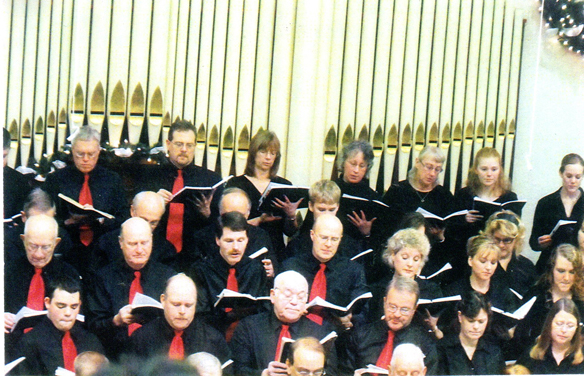
There are times when lifting our voices in song is the only way to express what our hearts are feeling, especially now as we witness the distress of the Ukrainian people who are relying on their cultural bonds, their spiritual faith and their trust that good people of the world will support their defense of their culture and their government.
May our voices be raised along with them, today and whenever freedom is threatened in the future. How else can we live?
One small town
Containing more churches than banks,
A one hundred year old choral society
With a Christmas tradition of singing Handel’s Messiah,
Sixty-some enthusiastic singers recruited without auditions
Through church bulletin announcements
Farmers, store clerks, machinists, students
Middle schoolers to senior citizens
Gather in an unheated church for six weeks of rehearsal
To perform one man’s great gift to sacred music.
Handel, given a libretto, commissioned to compose,
Isolated himself for 24 days, barely ate or slept
Believed himself confronted by all heaven itself
To see the face of God,
And so created overture, symphony, arias, oratorios
Soaring, interwoven themes repeating, resounding
With despair, mourning, anticipation
Renewal, redemption, restoration, triumph.
Delicate appoggiaturas and melismata
Of astounding complexity and intricacy.
A tapestry of sound and sensation unparalleled
To be shouted from the soul, wrung from the heart.
This group of rural people gathers to join voices
Honoring faith foretold, realized, proclaimed.
Ably led by a forgiving director with a sense of humor
And a nimble organist with flying feet and fingers.
The lilting sopranos with angel song,
The altos provide steadfast support,
The tenors echo plaintive prophecy
The base voices full and resonant.
A violinist paints heaven-sent refrain
In parallel duet of counterpoint melody.
The audience sits, eyes closed
As if in oft repeated familiar prayer.
The sanctuary overflows
With thankfulness:
Glory to God! For unto us a Child is born
And all the people, whether singers or listeners, are comforted.
One way to support the people of Ukraine in this crisis is through the
International Red Cross


 Barnstorming