Sun-Dried Manna

emptied and ready
emptied and ready
filling up
filling up
almost full
almost full

They put up hay loose there, the old way,
forking it into the loft from the wagon rack
while the sweaty horses snorted and switched off flies
and the littlest kids were commanded to trample it flat
in between loads until the entire bay
was alight with its radiant sun-dried manna….
It was paradise up there with dusty sun motes
you could write your name in as they skirled and drifted down.
There were ropes we swung on and dropped from and shinnied up
and the smell of the place was heaven, hurling me back
to some unknown plateau, tears standing up in my eyes
and an ancient hunger in my throat, a hunger….
~Maxine Kumin from “Hay”

My parents knew that ancient hunger, both born on farms with teams of horses that brought in hay the old way while the children tramped and stamped the loose piles firm.

I’ve known that ancient hunger, having grown up on a farm that brought in to the barn loose hay the old way by tractor and wagon, having danced in the dusty sun motes on the top of the hay on a bright afternoon, the light cut in stripes over the sweet smelling grass.

We’ve made sure our three children knew that ancient hunger, born to a farm that brought in hay bales stacked to the rafters through community effort, those same dusty sun motes swirling about their heads as they learned their jobs, from bale rolling to lifting to tossing and stacking.

And now the next generation of neighborhood children arrive with shouts on haying days to clamor up and down the bale mountains, answering to the same hunger, blowing the same dusty snot and thrilling to the adventure of tractors, wagons and trucks, celebrating the gathering in of sun-dried manna together.

Surely this is what heaven will be like: we are all together, dancing in the light of the sun motes, our hunger filled to the brim by manna provided from above.

farmkids2

farmcrew

farmkids3

farmgirls

farmcrew3

Melt and Flow

meltingfieldlodge1

Light and wind are running
over the headed grass
as though the hill had
melted and now flowed.
~Wendell Berry “June Wind”

It will soon be haying time, as soon as a stretch of clear days appear on the horizon.  Today was to be cloudless but ended up drizzly and windy, not good hay cutting weather.

The headed grass is growing heavier, falling over, lodged before it can be cut, with the undulations of moist breezes flowing over the hill.   It has matured too fast, rising up too lush, too overcome with itself so that it can no longer stand.  It is melting, pulled back to the soil.  We must work fast to save it.

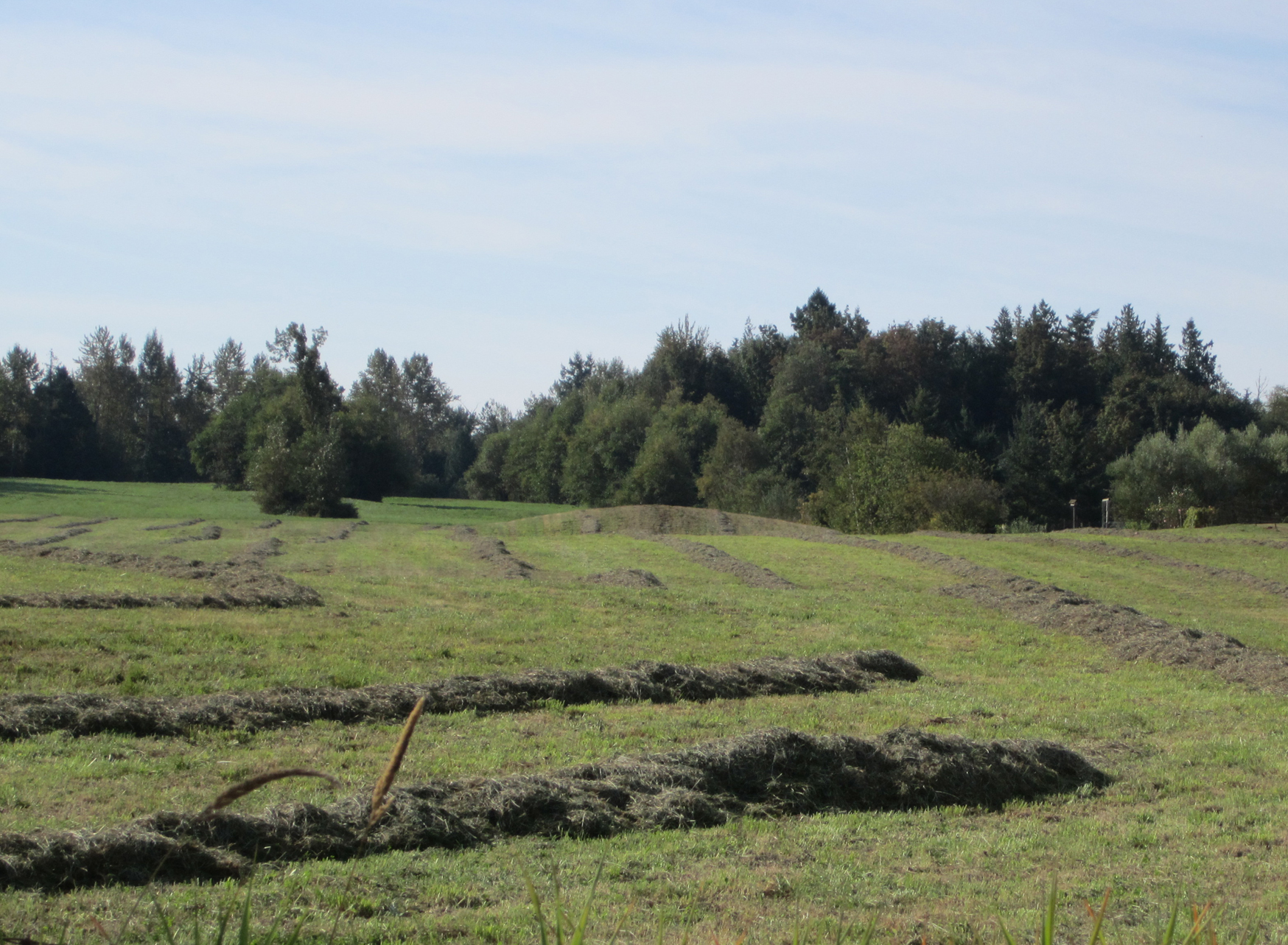
The light and wind works its magic on our hill.  The blades of the mower will come soon to lay it to the ground in green streams that flow up and down the slopes.  It will lie comfortless in its stoneless cemetery rows, until tossed about by the tedder into random piles to dry, then raked back into a semblance of order in mounded lines flowing over the landscape.

It will be crushed and bound together for transport to the barn, no longer bending but bent, no longer flowing but flown, no longer growing but grown and salvaged.

It becomes fodder for the beasts of the farm during the cold nights when the wind beats at the doors.   It melts in their mouths, as it was meant to.

Truly.

531606_557728686564_1157537123_n

Exploring the Gaps

photo by Josh Scholten

It is so self-conscious, so apparently moral, simply to step aside from the gaps where the creeks and winds pour down, saying, I never merited this grace, quite rightly, and then to sulk along the rest of your days on the edge of rage.

I won’t have it. The world is wilder than that in all directions, more dangerous and bitter, more extravagant and bright. We are making hay when we should be making whoopee; we are raising tomatoes when we should be raising Cain, or Lazarus.

Go up into the gaps. If you can find them; they shift and vanish too. Stalk the gaps. Squeak into a gap in the soil, turn, and unlock-more than a maple- a universe. This is how you spend this afternoon, and tomorrow morning, and tomorrow afternoon. Spend the afternoon. You can’t take it with you.
~Annie Dillard from Pilgrim at Tinker Creek

I’m a work horse, always have been.  When others are playing and partying and relaxing, I’m busy busy busy.  This is not so much a moral imperative for me but a consequence of the depression era family in which how I grew up — Aesop’s fable grasshopper/ant parable personified.  If I don’t keep my nose to the grindstone now, what might happen down the road, as winter comes, when there is no one else to do what needs to be done, when there is not enough of anything needed to survive?  Making hay and raising tomatoes indeed.  That’s only the half of it.  It is fertilizing, cultivating, harvesting, storing, preserving and then starting all over again.  I don’t know how else to be or how else to live.  And yes, there can be a fair amount of indulgent sulking.

So, true to obsessive form, I picked a profession that encourages this kind of behavior.  A sixty hour work week is typical, with responsibilities 24/7.   I don’t often allow time to stalk the gaps, enjoy the view, and let life flow over me like a never ending stream.   Even a theoretical “afternoon off” as I’m supposed to have built into my schedule once a week rarely materializes.

Today is my scheduled afternoon off.  Unstructured, uncommitted, open time.  Yikes.

I’m going to spend it rather than losing it forever.  It can’t be banked, stored away, preserved for the future or otherwise saved like an ant loves to do.  Once it is gone, it is gone and it will never return.  It is mine to spend.

I have no idea what to do with it but I’ll figure it out.

Or simply just be.

And definitely not sulking.

The Scent of Work

Fireflies are daughters to the stars
And go in the countryside to catch the scent of hay
Which is the scent of God
Because it smells of work–Giovanni Cerri

Our horses are now officially pulled off the pastures for winter, relegated to smaller dirt paddocks until the fields have rested, recovered and dried sufficiently in April to bear their hooves and teeth again.

So I climb the ladder to the hay loft daily to toss down carefully stacked bales of hay placed there by our hay crew four months ago.   I release the dried stems from their bondage by twine.  The scent of July work hits me full force; I’m transported back to the sweaty days of hay mowing, tedding, raking and baling.   It was just yesterday, so it seems, that my children and their friends were picking up these heavy bales and tossing them onto the trailer, and then bringing them into the barn.

The scent of work on the earth, like fireflies to the stars, is the perfume of heaven.

While We Sleep

Harvest will fill the barn; for that
The hand must ache, the face must sweat.

And yet no leaf or grain is filled
By work of ours; the field is tilled
And left to grace. That we may reap,
Great work is done while we’re asleep.
~Wendell Berry

Every day this time of year I scramble to the top of the hay pile in the barn to push down two bales to feed to our horses, now that the pastures are resting and “left to grace” for the winter.  My husband has been busy spreading our composted manure out on the fields to give them an extra fertilizer boost for next spring’s growth, only a little more than four months away.

As farmers, we have to always be thinking one or two seasons ahead:  the hay brought into the barn in June or July does not leave the barn until late-autumn.  The manure piled up in winter gets spread on pastures the following fall.  The tilled cornfields surrounding us are seeded in May and not harvested until October after several months of rain and sun and rain again.

More than practicing forethought, as farmers we know our meager efforts, as tangible as they are, are dependent solely on grace: that there will be enough rain, that there will not be too much rain, that there will be enough days of sunlight, that the seed will sprout, that the machinery will work when needed, that there will be no blight or pests, and that the hay crew will materialize when needed for harvest.   So much of this is not due to the labor of our hands, no matter how much we sweat and ache, but due to the great work of the Creator in His Creation.

Every hay bale I open spills forth His mercy, a reminder of how grateful I am for seed and sun and rain and a barn full of promises.

Last Sweet Exhalations

photo by Josh Scholten

These things happen…the soul’s bliss
and suffering are bound together
like the grasses….

The last, sweet exhalations
of timothy and vetch
go out with the song of the bird;
the ravaged field
grows wet with dew.
~Jane Kenyon from Twilight–After Haying


So bound together–the sweetness and the suffering.
I have seen it in others and known it myself.

Renewal and rebirth come from ravage.

Already I am emptying out, not yet filling full from the lungs of eternity.
Breathing will be easy one day, so fresh, so cleansing, so infinite.

Until then,
I’m holding my breath tightly,
blessed by that last, sweet gasp.

photo by Josh Scholten

The Smell of Buttered Toast

Great Harvest Bread Company Chocolate Babka

“The smell of that buttered toast simply spoke to Toad, and with no uncertain voice; talked of warm kitchens, of breakfasts on bright frosty mornings, of cozy parlour firesides on winter evenings, when one’s ramble was over and slippered feet were propped on the fender; of the purring of contented cats, and the twitter of sleepy canaries.”
~Kenneth Grahame, The Wind in the Willows

I’m not a practitioner of the ancient art of aromatherapy for medicinal purposes but I do know certain smells can transport me more effectively than any other mode of travel.  One whiff of a familiar scent can take me back years to another decade and place, almost in time traveling mode.  I am so in the moment, both present and past, my brain sees, hears, feels everything as it was before.

The most vivid are kitchen smells, to be sure.  Cinnamon becomes my Grandma’s farm kitchen, roasting turkey is my mother’s kitchen on Thanksgiving Day, fresh baked bread is my own kitchen during the years I needed to knead as therapy during medical training. Today it is the warmth of a slice of chocolate babka bread for breakfast.

Occasionally I have the privilege of babysitting infants whose skin smells of baby shampoo and powder, so like the soft velvet of my own childrens’.   The newly born wet fur of my foals carries the sweet and sour amnion that was part of every birth I’ve been part of: delivering others and delivering my own.  My heart races at the memory of the drama of those first breaths.

The garden yields its own treasure: tea roses, sweet peas, heliotrope, lemon blossom take me back to lazy breezes past blossoms planted along the house, wafting through open bedroom windows.  The fragrance of the earth after a long awaited rain will remind me of how things smell outside this morning.

I doubt any aromatherapy kit would include my most favorite–the farm smells: newly mown hay, fresh fir shavings for stall bedding,  the mustiness of the manure pile, the green sweetness of a horses’ breath.

Someday I’ll figure out how to bottle all these up to keep forever.   Years from now my rambles will be over, when I’m too feeble to walk to the barn or be part of the hay harvest crew any longer,  I can sit by my fireplace, close my eyes, open it up and take a whiff now and then.  It’ll take me back to a day like today with the best smells on earth in my own backyard.

They will simply speak to me with no uncertain voice.

Jose, lord of the manor and farm

Whispering Scythe

Winslow Homer’s The Veteran in a New Field

To the earnest love that laid the swale in rows…

The fact is the sweetest dream that labor knows.
My long scythe whispered and left the hay to make.
~Robert Frost in “Mowing”

I grew up watching my father scythe our hay in our field because he had no mower for his tractor.  He enjoyed physical labor in the fields and woods–his other favorite hand tool was a brush cutter that he’d take to blackberry bushes.   He would head out to the field with the scythe over this shoulder, grim reaper style.  Once he was standing on the edge of the grass needing to be mowed, he would then lower the scythe, curved blade to the ground, turn slightly, positioning his hands on the two handles just so, raise the scythe up past his shoulders, and then in a full body twist almost like a golf swing, he’d bring the blade down.   It would follow a smooth arc through the base of the standing grass, laying clumps flat in a tidy pile in a row alongside the 2 inch stubble left behind. It was a swift, silky muscle movement, a thing of beauty.

This work was a source of his satisfaction and “sweetest dream.”  I know now what he must have felt–there is a contentment found in sweaty work showing visible results.   I understand that “earnest love” that drives us to work, and tangibly leaves the evidence of our labors behind.

Harvest work is not for sissies.   I learned that watching my father’s continual sweep across the field and hearing his whispering scythe.

I wish I too could work with a whisper.

Barbarous in Beauty

Summer ends now; now, barbarous in beauty, the stooks rise
Around; up above, what wind-walks! what lovely behaviour
Of silk-sack clouds! has wilder, willful-wavier
Meal-drift moulded ever and melted across skies?

 I walk, I lift up, I lift up heart, eyes,
Down all that glory in the heavens to glean our Saviour;
And, eyes, heart, what looks, what lips yet gave you a
Rapturous love’s greeting of realer, of rounder replies?

And the azurous hung hills are his world wielding shoulder
Majestic as a stallion stalwart, very-violet-sweet! –
These things, these things were here and but the beholder
Wanting; which two when they once meet,
The heart rears wings bold and bolder
And hurls for him, O half hurls earth for him off under his feet.
~Gerard Manley Hopkins “Hurrahing in Harvest”

Reading Hopkins invokes God’s intentional accessibility “stallion stalwart, very-violet-sweet” in our daily lives, if we simply open our eyes to see and ears to hear.  The details Hopkins captures in marvelous word pictures, painting with sound and syllable, pull us in.  The “heart rears wings” as we are lifted up to see the Lord manifest in Creation.  We can’t help but be harvested to live obediently as we “glean our Savior” through raised heart and eyes to the glory in the heavens.

As Kathleen Mulhern in her blog “Dry Bones” says in her analysis of “a Christ sighting”:
“There is no point in seeing without responding; there is no way to respond without seeing. Christian life and practice require both faith (the sight of the heart) and works (the lurch of the heart toward him in obedience).”

The gleaning of our Savior is particularly manifest in the sacrament of communion, the earthly meal Jesus invites us to partake of His harvest.  In the bread and wine,  “a barbarous beauty” representing his body and blood,  He lifts us up to taste the glories of heaven.

Our heart “hurls for him, O half hurls earth for him” in response.

What else,  at summer’s end,  can we do?

We walk in faith, raised up, glorious.

Sheaves of Wheat in a Field –Vincent Van Gogh

Summer Afternoon at BriarCroft

Tony running in the lower field

“Summer afternoon—summer afternoon; to me those have always been the two most beautiful words in the English language.”
― Henry James

fish pond
Front yard light and shadow under the walnut tree
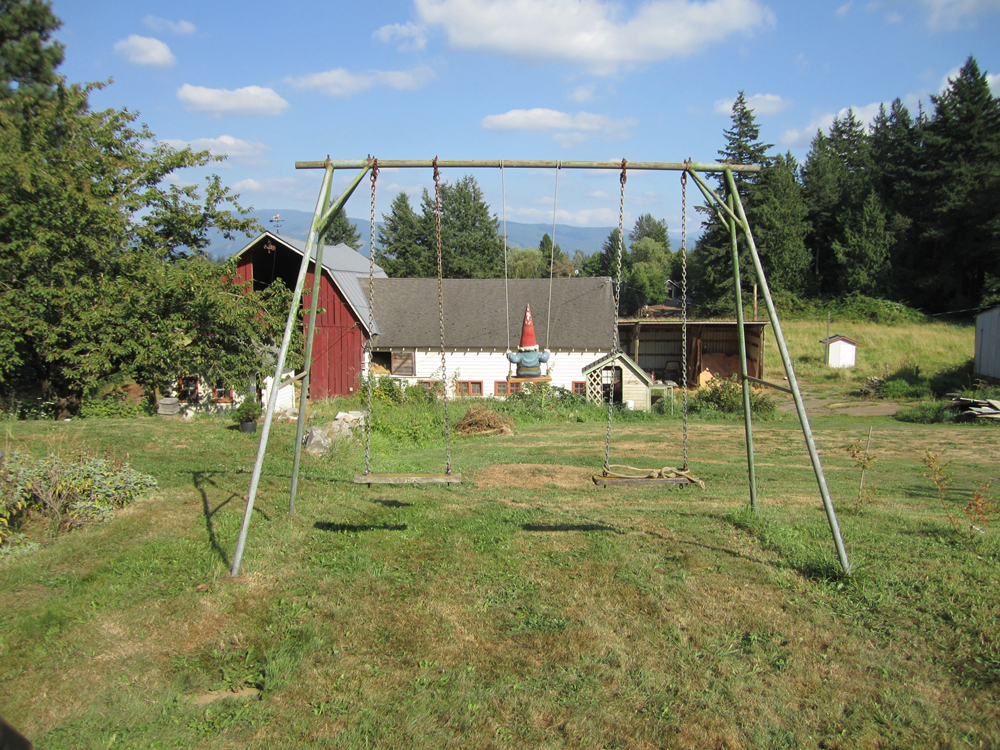
the swing set my dad made when I was little, now perched on our farm

Rest is not idleness, and to lie sometimes on the grass under trees on a summer’s day, listening to the murmur of the water, or watching the clouds float across the sky, is by no means a waste of time.
~John Lubbock

haybarn
2012 Hay Storage

It will not always be summer; build barns.
~Hesiod

tree house in the walnut tree

front porch
Jose, who owns the front porch
Old buddies Dylan Thomas and Bobbie
Samwise Gamgee at 18 weeks
Thistle making more thistle
Gravenstein windfalls
a few of a million blackberries on the farm
silver plum tree

Summer was our best season: it was sleeping on the back screened porch in cots, or trying to sleep in the treehouse; summer was everything good to eat; it was a thousand colors in a parched landscape; but most of all, summer was Dill.
~ Harper Lee in Too Kill a Mockingbird


‘Tis the last rose of summer
Left blooming alone;
All her lovely companions
Are faded and gone.
Thomas More

poplar row

in the filbert grove

Baldwin apple tree

Bartlett pear tree
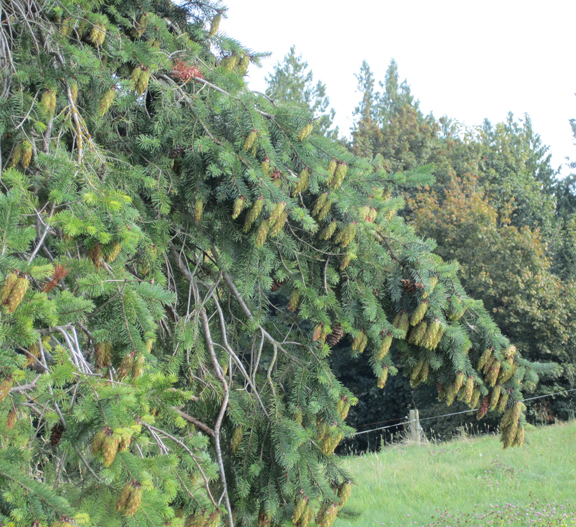
heavy cone crop

And so with the sunshine and the great bursts of leaves growing on the trees, just as things grow in fast movies, I had that familiar conviction that life was beginning over again with the summer.
~F. Scott Fitzgerald in The Great Gatsby

milking barn window
from the field
old milk barn
barn lane

Summer’s lease hath all too short a date.
~William Shakespeare

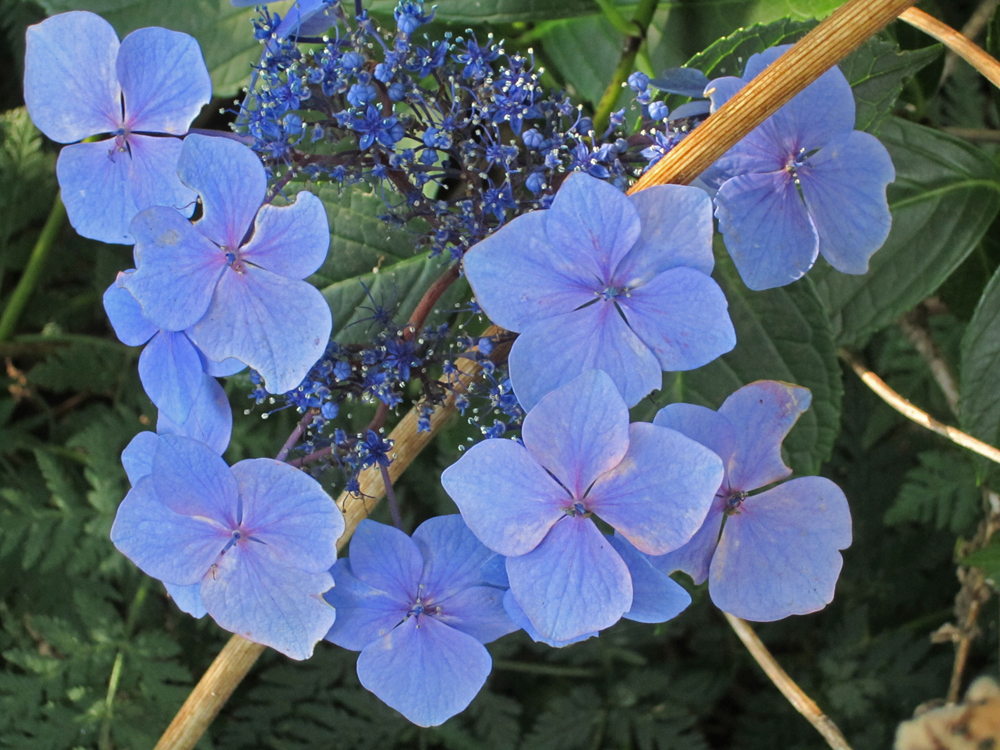
hydrangea

BriarCroft in Winter