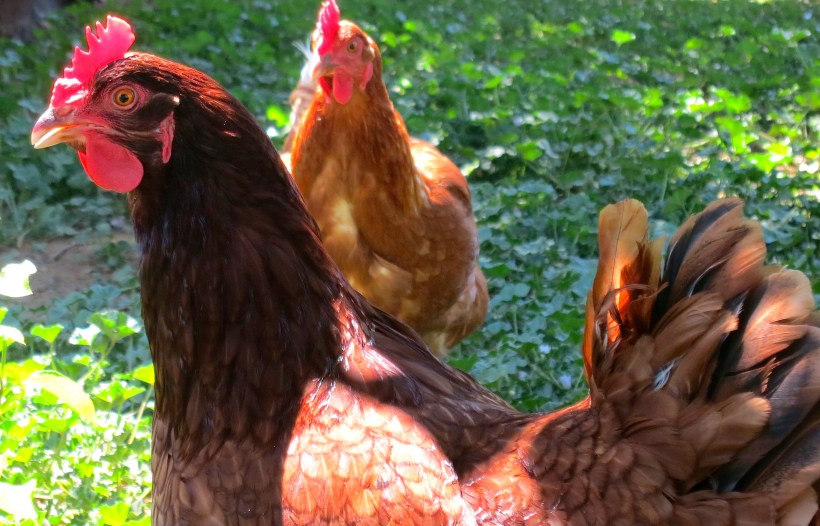
A Terrible One-Sided Accord

johnshens

What did I love about killing the chickens? Let me start
with the drive to the farm as darkness
was sinking back into the earth.
The road damp and shining like the snail’s silver
ribbon and the orchard
with its bony branches.
All eighty-eight Cornish

hens huddled in their crates. Wrapping my palms around
their white wings, lowering them into the tapered urn.
Some seemed unwitting as the world narrowed;
some cackled and fluttered; some struggled.
I gathered each one, tucked her bright feet,
drew her head through the kill cone’s sharp collar,
her keratin beak and the rumpled red vascular comb
that once kept her cool as she pecked in her mansion of grass.
I didn’t look into those stone eyes. I didn’t ask forgiveness.
I slid the blade between the feathers
and made quick crescent cuts, severing
the arteries just under the jaw. Blood like liquor
pouring out of the bottle. When I see the nub of heart later,
it’s hard to believe such a small star could flare
like that. I lifted each body, bathing it in heated water
until the scaly membrane of the shanks
sloughed off under my thumb.
And after they were tossed in the large plucking drum
I loved the newly naked birds. Sundering
the heads and feet neatly at the joints, a poor
man’s riches for golden stock. Slitting a fissure
reaching into the chamber,
freeing the organs, the spill of intestines, blue-tinged gizzard,
the small purses of lungs, the royal hearts,
easing the floppy liver, carefully, from the green gall bladder,
its bitter bile. And the fascia unfurling
like a transparent fan. When I tug the esophagus
down through the neck, I love the suck and release
as it lets go.
I’m empty as I rinse each carcass,
and this is what I love most.

It’s like when the refrigerator turns off and you hear
the silence. Even in just this one thing:
looking straight at the terrible,
one-sided accord we make with the living of this world.
At the end, we scoured the tables, hosed the dried blood,
the stain blossoming through the water.
~Ellen Bass from “What Did I Love”
cedargrove

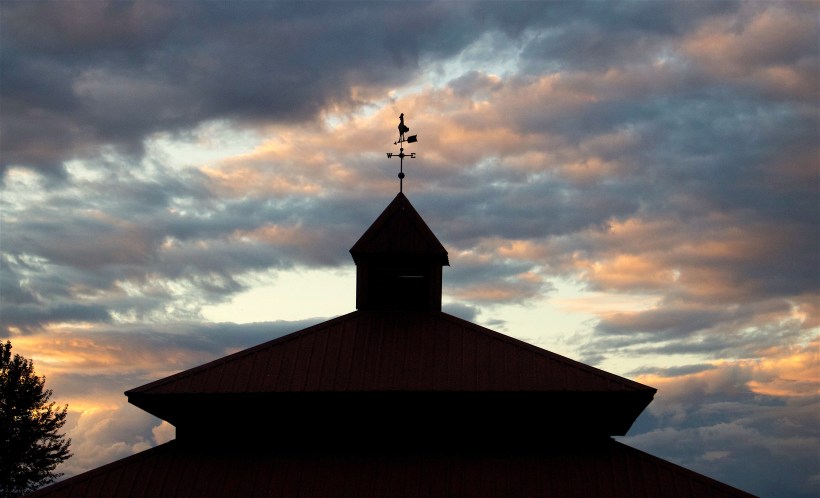
For a number of summers, we spent most of the morning and afternoon of Fourth of July with neighbors at a farm down the road doing that most American of activities: communally butchering chickens.

There is some risk to writing about killing living creatures.  Yet, I also pull carrots, radishes and onions from the ground, dig up potatoes and weed-whack thistles in the field.

It is what farmers do. Shopping at the local farmers’ market or grocery store, we are insulated from this harsh reality, this terrible one-sided accord humans have with the land and growing things.

It is how food ends up sustaining us, supporting the next generation and the next, and these living creatures deserve our blessing of gratitude.

I grew up on a farm where we raised our own meat and my parents, who also grew up knowing the animals that would eventually be on their plate, encouraged us kids to watch and participate in the process so we understood what it meant to sacrifice an animal or a plant for our benefit.  We knew that animal from birth, we named them, looked them in the eye, we petted and held them, we fed them, cleaned up after them, and when the time came, we watched them slump to the ground, their hide or feathers stripped and their steaming carcass prepared.

I cannot take this lightly.  These creatures, who I respected and cared for, were breathing heart-beating beings just minutes before.

It has been quite a few years since we raised our own meat as a family, since those summers our children growing up also learned this relationship with the food on the table.  As a group of neighbors, we would combine our chicken butchering together on Fourth of July so we had an efficient assembly line approach to the process of putting dozens of chickens in the freezer all within a few hours.  There were catchers, holders, choppers, boilers, pluckers, gutters, rinsers and baggers. We all took turns doing different aspects of the task. There was an irreverent reverence to the day, a bit more joking and laughing than was warranted when blood is intentionally spilled.

We had to acknowledge the tight intertwine of life and death though none of us could bear to eat chicken for dinner that night. We too bore the stains of the day.
 

cedargrove1

mayrose516

The Muttering Hens

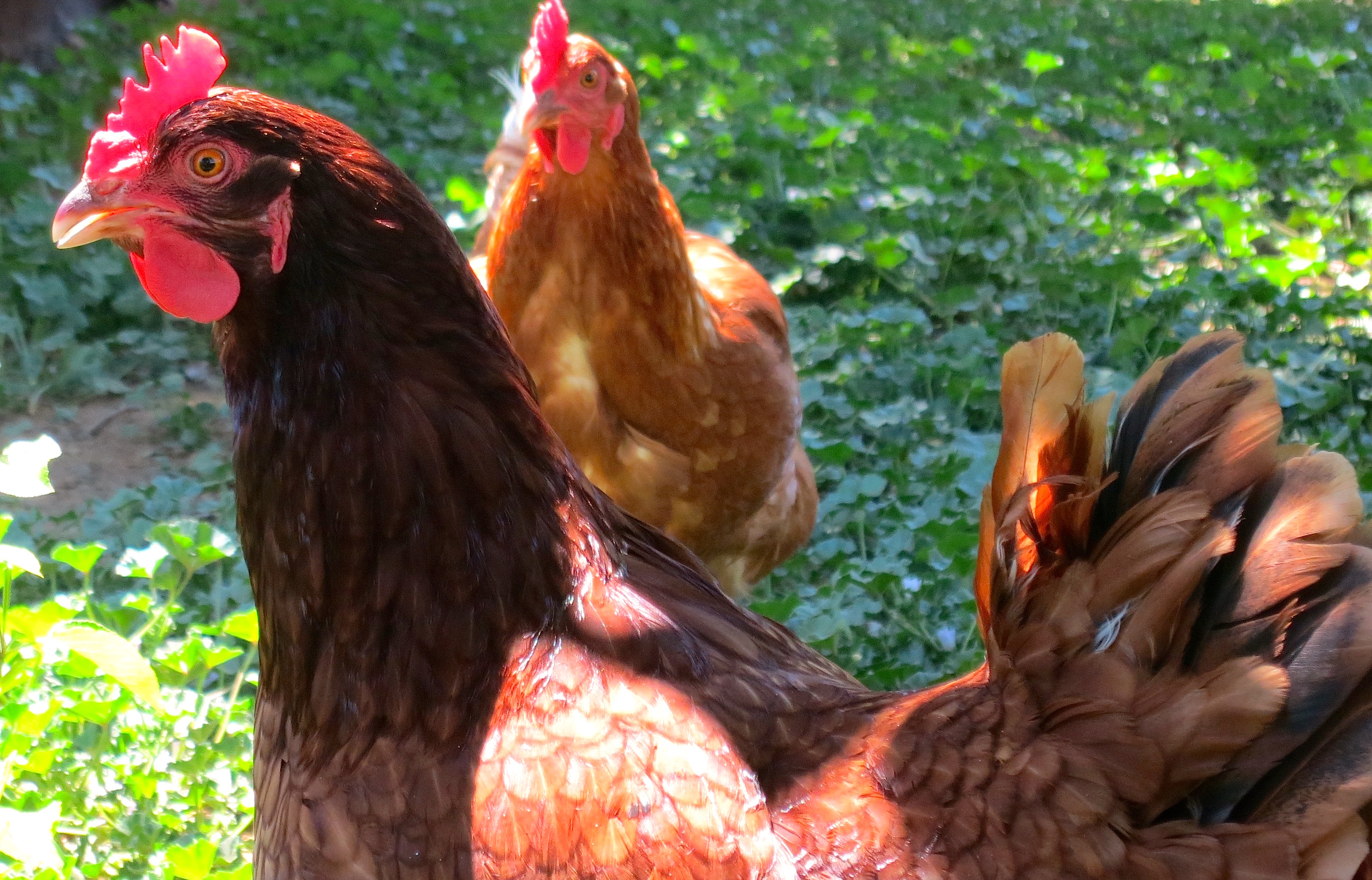
johnshens
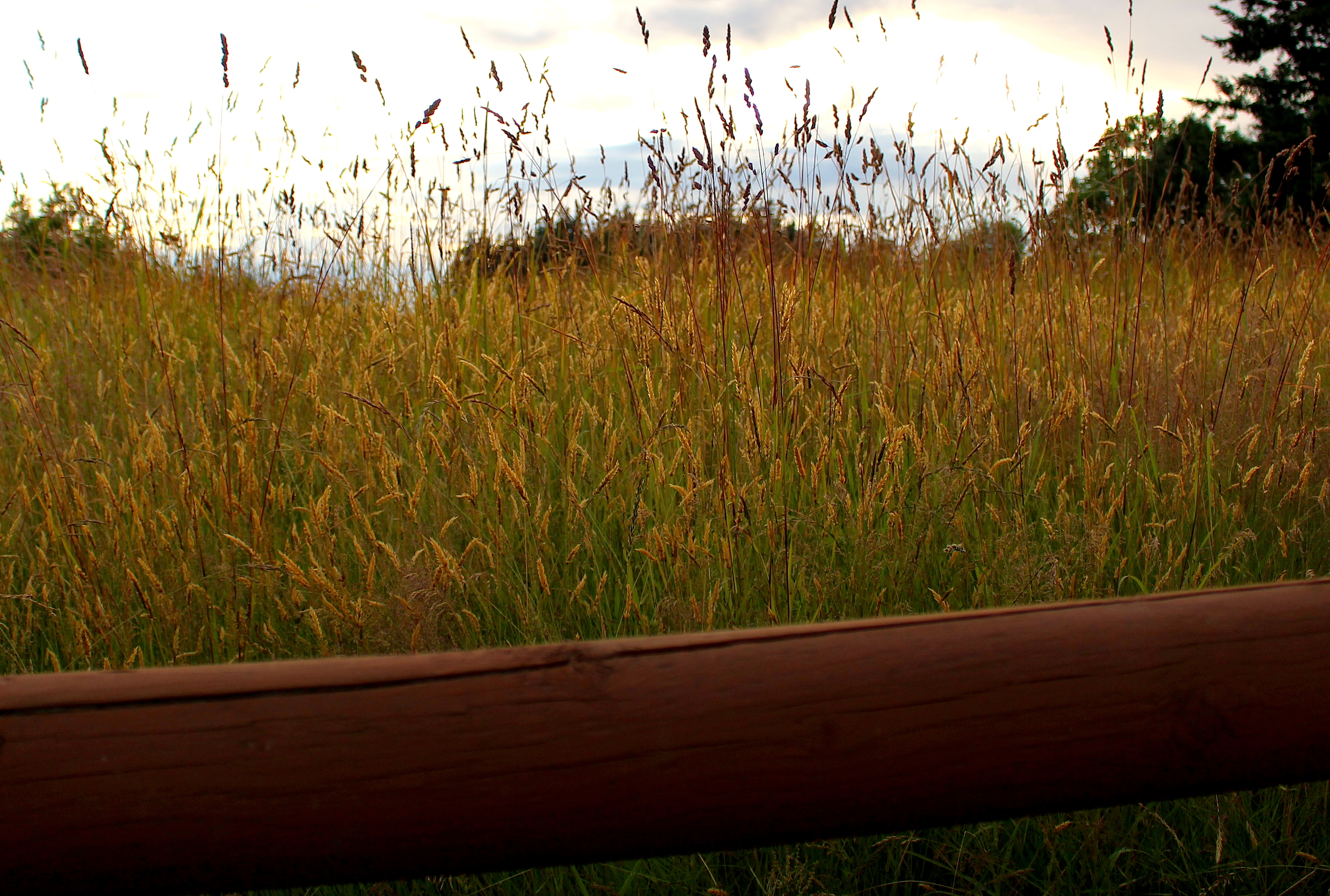
hayfield
frontyard2915
Every few minutes, he wants
to march the trail of flattened rye grass
back to the house of muttering
hens. He too could make
a bed in hay. Yesterday the egg so fresh
it felt hot in his hand and he pressed it
to his ear while the other children
laughed and ran with a ball, leaving him,
so little yet, too forgetful in games,
ready to cry if the ball brushed him,
riveted to the secret of birds
caught up inside his fist,
not ready to give it over
to the refrigerator
or the rest of the day.
~Naomi Shibab Nye “Boy and Egg”
fresheggs

Gathering eggs on my childhood farm
was a source of wonder and terror:
the amazing pleasure of reaching under a downy breast
to wrap my fingers around a smooth warm wholeness;
overcoming the fear of a hen muttering under her breath
and defending what is rightfully hers
and not mine.
It was a game of chicken
in the truest sense,
a stand-off between four year old farmgirl
and two year old hen.
We locked each other’s eyes
while I held the egg,
and I will never let go,
not now,
not ever.
chicken2
briarcroftponies

An Extra Effort

One of the joys of living on a farm is the ability to walk out the back door and harvest what is needed for a meal right out of the ground, or the orchard, or the berry patch, or from within the hen house. “Eat local” can’t begin to compare with “Eat from the Backyard”.

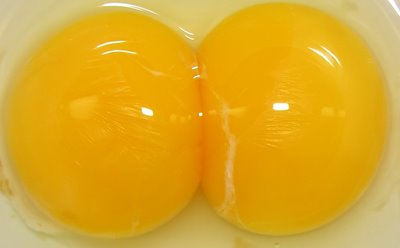
So over the years on the farm, we’ve raised chickens–starting with the chicks under a hot lamp, watching the growing pullets start laying dainty small eggs which, over several months of hen development, become full size oval jumbo AA eggs, discovered warm in a cozy nest under a hen’s breast. There is distinct satisfaction of a “eureka!” moment anytime a new egg is gathered. It is even more gratifying when the egg is broken in the pan and two yolks pour out instead of one, a symbol of that hen’s extra effort that day.

When our hens were free range, the finding of the nest and gathering of the eggs was definitely a greater challenge than simply opening a chicken coop door. It required investment of time and ingenuity to think like a hen trying to hide her brood. I would remind myself that a hen’s brain is smaller than a walnut and mine is, well…. bigger, so this should not have been such a difficult task.

Our chicken raising days ended abruptly a few years ago when a marauder of some sort dug its way under the wire into the coop in a stealth operation in the dark of night and, leaving only feathers behind, took and stole off with every hen from the roost while she slept. We didn’t have the heart to replace them given the possibility of that happening again, no matter what precautions we took.

So these days our fresh eggs arrive weekly with my husband’s uncle, who graciously shares his plentiful egg crop with us when he comes for Sunday dinner. I do miss the daily egg hunt, the cackle of a hen as she is about to lay, the musical hum she makes when she is happily brooding on the nest, and the feel of her plump fluffiness as I reach underneath her to wrap my hand around that warm smooth oval surface.

It all comes back to me when I break one of those fresh eggs into the pan and it is a double yolker.

Some hen made a special effort, just for me.

Buttercup Bantams bred by Benjamin Janicki at Janicki Buttercups

A Calico Diplomat


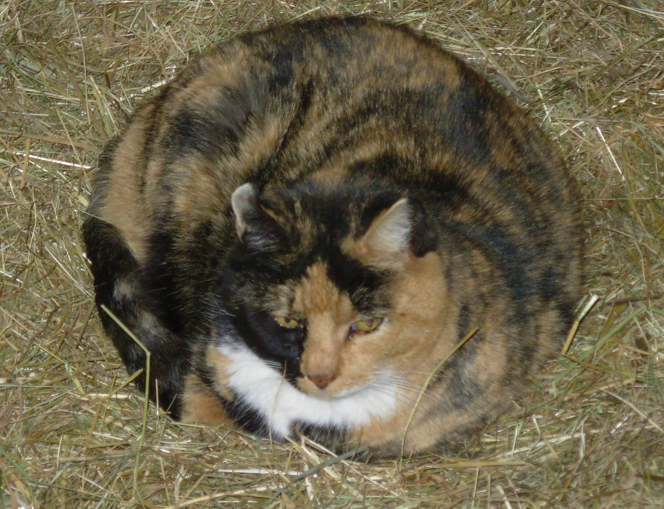
Cally, our adopted calico cat from close friends who moved across the country, was quite elderly and fading fast.  Winter is always a tough time for barn cats, even with snug shelter, plentiful food and water.  We had lost our 16+ year old tuxedo kitty just a couple months previously, and Cally, not much younger,  would not last much longer.  She got up to eat and potty, and still licked her front paws clean, but couldn’t manage much else.  Her frame was thin and frail, her coat dull and matted in places, she’d been deaf for some time and her eyes rheumy.  She spent her days and nights in a nest of hay on the floor of our horse barn, watching the comings and goings of horse hooves and people rolling by with wheelbarrows full of manure.  I brought her a little rug to give her a bit more cushion and protection from drafts, and I was not surprised to find her permanently curled up there in the morning.  Her time had come.

When Cally first arrived as a youngster, she strolled onto our farm and decreed it satisfactory.  She moved right in, immediately at home with the cows, horses, chickens,  our aging dog Tango (who loved cats) and our other cats.   In no time, she became the undisputed leader, with great nobility and elegance.  There was no one questioning her authority.

We knew Cally was unusual from the start.  Tango initially approached her somewhat warily, given the reaction Tango elicited from our other cats (typically a hair raising hiss, scratch and spit).  Instead, Cally marched right up, rubbed noses with Tango, and they became fast friends, cuddling together on our front porch whenever it was time to take a nap.  They were best pals.  Tango surely loved anyone who would snuggle up to her belly and keep her warm and Cally was the perfect belly warmer (as Garrison Keillor says, “a heater cat”).

Our free range Araucana rooster seriously questioned this dog/cat relationship.    He was a bit indignant about a front porch communal naptime and would strut up the sidewalk, walk up and down the porch and perch on the railing,  muttering to himself about how improper it was, and at times getting quite loud and insistent about it.  They completely ignored him, which obviously bugged him, proud and haughty bird that he was.

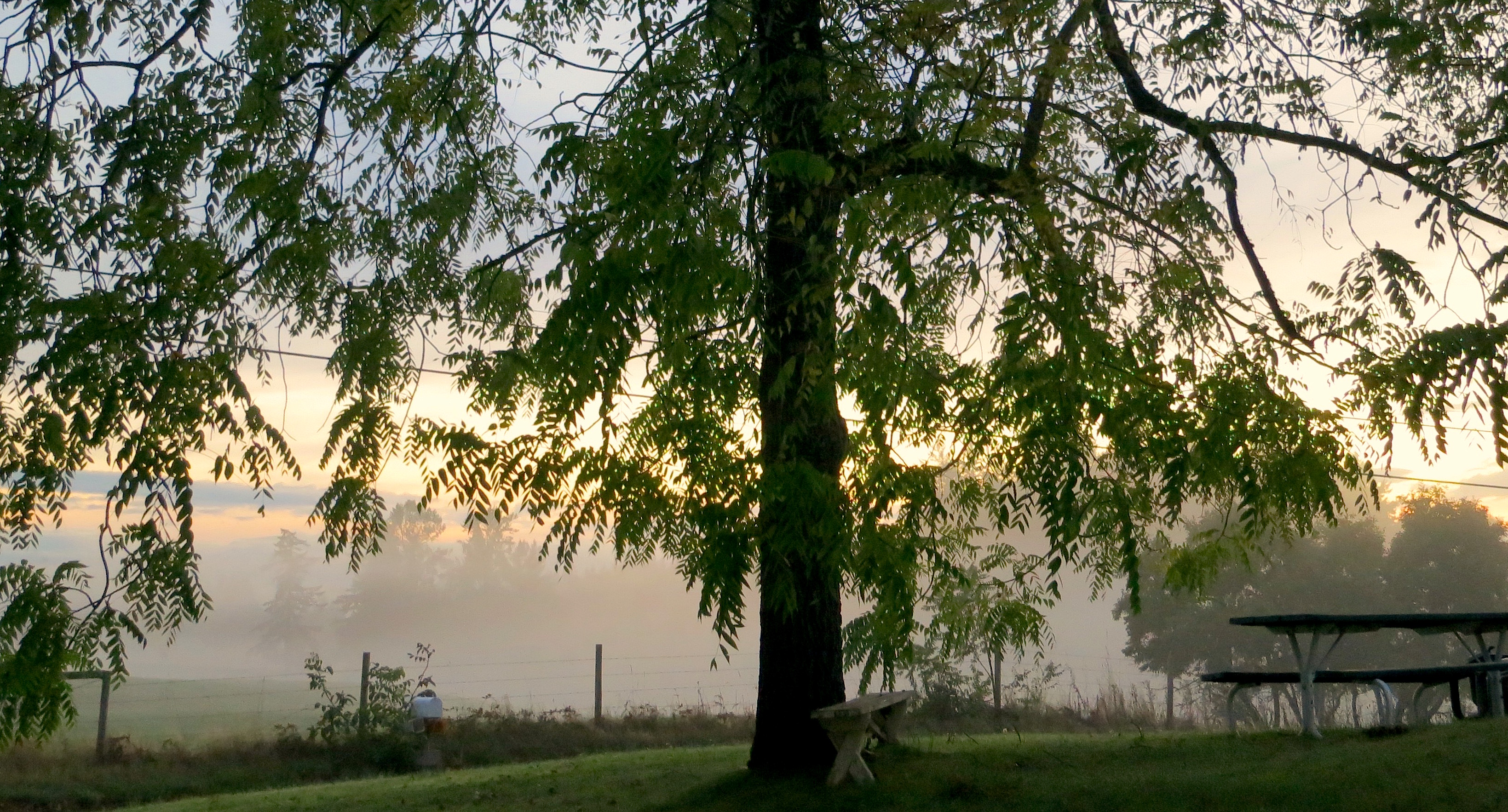
One fall morning, as I opened the front door to go down the driveway to get the newspaper in the pre-dawn mist, I was astonished to see not just a cat and dog snuggled together on the porch mat, but the rooster as well, tucked up next to Tango’s tail.  As usual,  Tango and Cally didn’t move a muscle when I appeared, as was their habit–I always had to step over them to get to where I needed to go.  The rooster, however, was very startled to see me,  almost embarrassed.  He stood up quickly, flapped his wings a few times, and swaggered off crowing, just to prove he hadn’t compromised his cock-sure raison d’etre.

No, I didn’t have my camera with me and I never found them all together ever again.  You, dear reader, will have to just take it on faith.

After Tango died, Cally rebounded by taking on the training of our new corgi pup and making sure he understood her regal authority in all things, and demanding, in her silent way, his respect and servitude.  He would happily chase other cats, but never Cally.    They would touch noses, she would rub against his fur, and tickle his chin with her tail and all he could think to do was smile and wag at her.

So I figure a dog, a cat and a rooster sleeping together was our little farm’s version of the lion and lamb lying down together, diplomacy of the purest kind, the most diverse becoming one.  The peaceable kingdom was right outside our front door,  a harbinger of what is promised someday for the rest of us.  Despite claws, sharp teeth, and talons, it will be possible to snuggle together in harmony and mutual need for warmth and comfort.

Our special Cally made it happen on earth with her special statesmanship.  I suspect she’s met up with Tango, and possibly one rooster with attitude, for a nice nap together on the other side.

Council of Clowns

“Coyotes have the gift of seldom being seen; they keep to the edge of vision and beyond, loping in and out of cover on the plains and highlands. And at night, when the whole world belongs to them, they parley at the river with the dogs, their higher, sharper voices full of authority and rebuke. They are an old council of clowns, and they are listened to.”
N. Scott Momaday in “House Made of Dawn”

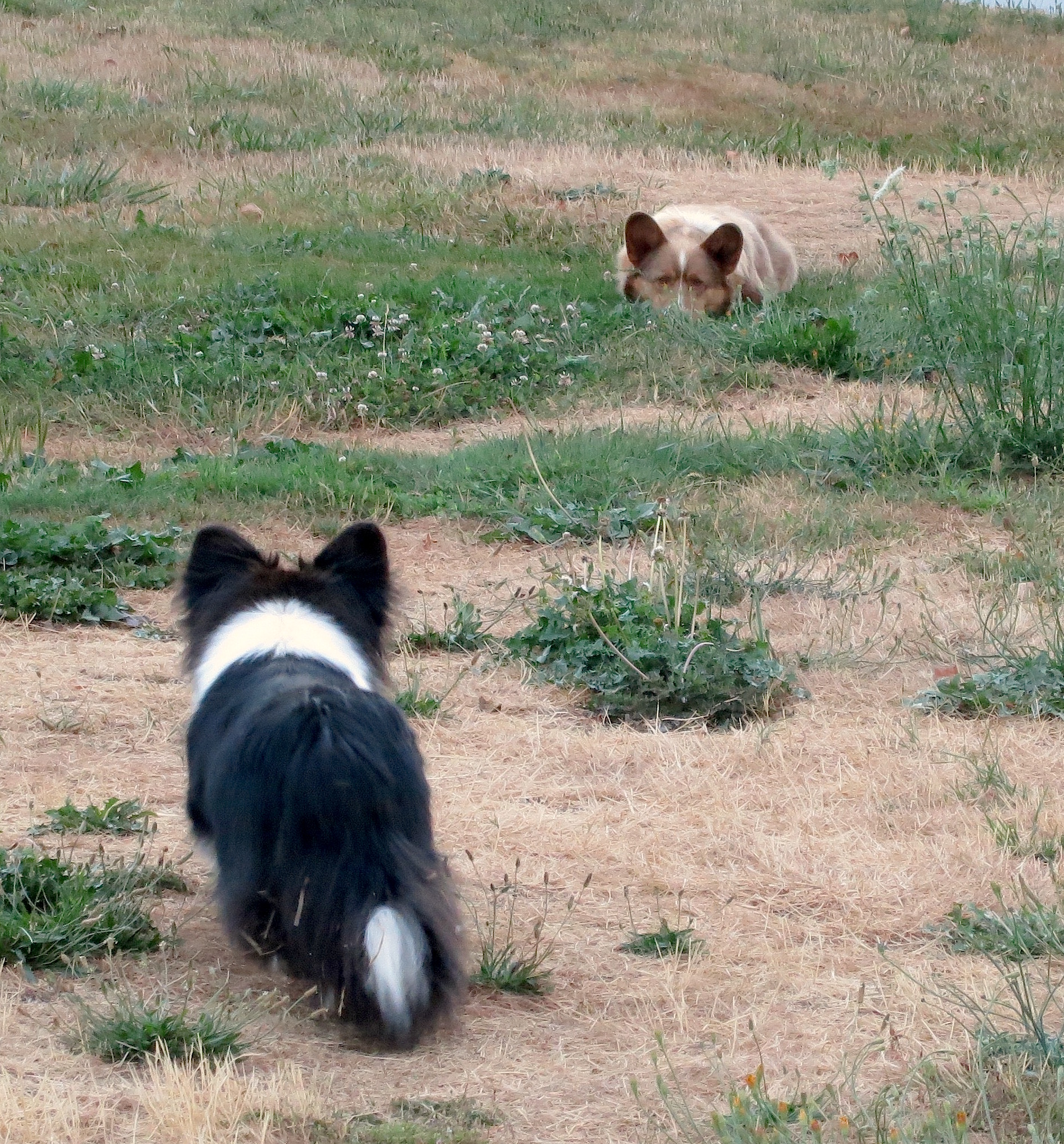
On early summer nights like this, with light just fading from the sky at 10 PM, it will be only a few minutes before the local coyote choristers begin their nightly serenade.   This can be a surround-sound experience with coyote packs echoing back and forth from distant corners of farmland and woodlands below the hill where we live.  Their shrill yipping and yapping song, with hollering, chortling and hooting, becomes  impossible to ignore just as it is time to go to sleep.  Like priming a pump, the rise and fall of the coyote ensemble inevitably inspires the farm dogs to tune up, exercising their vocal cords with a howl or two.  It becomes canine bedlam outside our windows, right at bedtime.

Coyotes send a mixed message:   they insist on being heard and listened to, yet are seldom visible.  In a rare sighting, it is a low slung slinking form scooting across a field with a rabbit in its mouth, or patiently waiting at a fence line as a new calf is born, hoping to duck in and grab the placenta before the cow notices.   They are not particularly brave nor bold yet they insist on commanding attention and ear drums.

Irritating not only for their ill-timed concerts, they also have a propensity for thieving sleeping chickens from coop roosts in the night.  Despite my disgust for that behavior, I have to grudgingly admire such independent self sufficient characters.   They do know how to take care of themselves in a dog-eat-dog world, primarily by eating whatever they can get their jaws around and carry away, no matter who it may belong to.

I can just envision this old council of clowns gathered around giggling and sniggering in the dark at their own silly stories of the hunt.   As I listen from a distance, sometimes just a few yards, sometimes miles, I wish to be let in on the joke.

Just once I want to howl back, plaintive, pleading, pejorative–another bozo adding my voice to the noisy nocturnal chorus– hoping somebody, anybody might listen, hear and join in the laughter.

Double Yolked

One of the joys of living on a farm is the ability to walk out the back door and harvest what is needed for a meal right out of the ground, or the orchard, or the berry patch, or from within the hen house. “Eat local” is nothing compared to “Eat from the Backyard”.

So over the years on the farm, we’ve been through our chicken raising phase–starting with the chicks under a hot lamp, watching the growing pullets start laying little miniature eggs which, over several months of hen development, become full size oval jumbo AA eggs, found warm in a cozy nest under a hen’s breast. There is distinct satisfaction of a “eureka!” moment anytime a new egg is gathered. It is even more gratifying when the egg is broken in the pan and two yolks pour out instead of one, a symbol of that hen’s special effort that day.

When our hens were free range, the finding of the nest and gathering of the eggs was definitely a greater challenge than simply opening a chicken coop door. It required investment of time and ingenuity to think like a hen trying to hide her brood. I would remind myself that a hen’s brain is smaller than a walnut and mine is, well…. bigger, so this should not have been such a difficult task.

Our chicken days ended abruptly a few years ago when a marauder of some sort dug its way into the coop in a stealth operation in the dark of night and, leaving only feathers behind, took and stole off with every hen from the roost while she slept. We didn’t have the heart to replace them given the possibility of that happening again, no matter what precautions we took.

So these days our fresh eggs arrive weekly with my husband’s uncle, who graciously shares his plentiful egg crop with us when he comes for Sunday dinner. I do miss the daily egg hunt, the cackle of a hen as she is about to lay, the musical hum she makes when she is happily brooding on the nest, and the feel of her plump fluffiness as I reach underneath her to wrap my hand around that smooth oval surface.

It all comes back to me when I break one of those fresh eggs, into the pan, and it is a double yolker. Some hen made a special effort, just for me.