Lenten Grace — The Dry Stone

photo by Josh Scholten

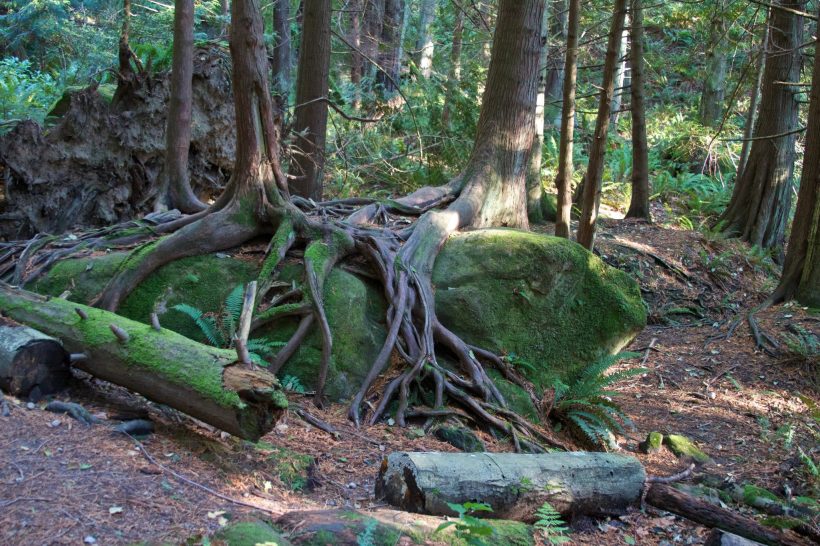
What are the roots that clutch, what branches grow
Out of this stony rubbish? Son of man,
You cannot say, or guess, for you know only
A heap of broken images, where the sun beats,
And the dead tree gives no shelter, the cricket no relief,
And the dry stone no sound of water.
~T.S. Eliot from “Burial of the Dead” in The Wasteland

We are created from perfection yet born broken, like a new toy flawed right out of the box already destined for the rubbish heap.  Out of our detritus there rises a thirst quenched only by hope and promise, coursing through roots that reach deep, surging into branches that rise higher despite a drought of faith.

This promise becomes glue for the brokenhearted, a sticky grace that can’t be shaken off, clinging to us though we are dry and undeserving as a stone.

Broken no more, silent no more, parched no more.  The living water now flows through us, a river of relief and shelter.

Mended As If By Glue

photo by Josh Scholten

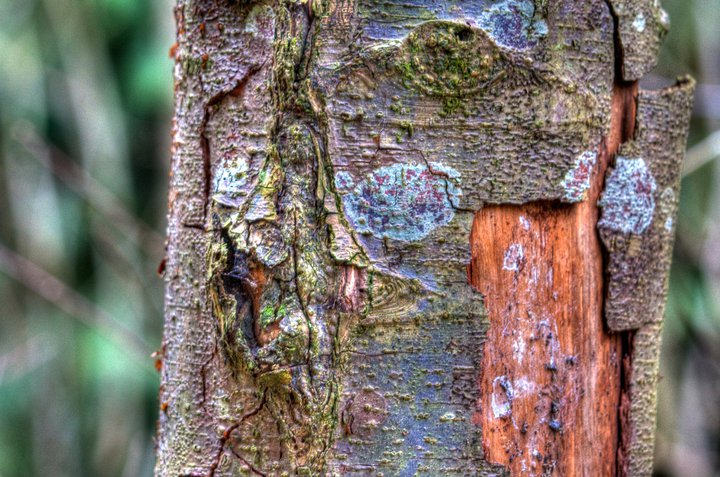
Man is born broken. He lives by mending. The grace of God is glue.
~Eugene O’Neill

We are born hollering,
already aware
of our emptiness
from the first breath,
each tiny air sac bursting
with the air of our fallen world
that is never quite enough.

The rest of our days are spent
filling up our empty spaces
whether alveoli
or stomach
or synapse hungry for knowledge,
still hollering and heart
broken.

So we are mended
through healing another,
sewn up ourselves
by knitting together
the scraggly fragments of lives,
becoming the crucial glue
boiled from gifted Grace,
all holes made holy
when filled
so wholly.


Uprising

To clasp the hands in prayer is the beginning of an uprising against the disorder of the world.
~Karl Barth

Prayer is easier for the youngest among us.  It can be amazingly spontaneous for kids — an outright exclamation of joy, a crying plea for help, a word of unprompted gratitude.   As a child I can remember making up my own songs and monologues to God as I wandered alone in our farm’s woods, enjoying His company in my semi-solitude.  I’m not sure when I began to silence myself out of self-conscious embarrassment, but I stayed silent for many years, unwilling to put voice to the prayers that rattled in my head.  In my childhood, prayer in public schools had been hushed into a mere moment of silence, and intuitively I knew silence never changed anything.  The world became more and more disorderly in the 60’s and 70’s and in my increasingly indoctrinated mind, there was no prayer I could say that would make a difference either.

How wrong could I and my education be.  Nothing can right the world until we are right with God through talking to Him out of our depth of need and fear.  Nothing can right the world until we submit ourselves wholly, bowed low, hands clasped, eyes closed, articulating the joy, the thanks, and the petitions weighing on our hearts.

An uprising is possible when a voice comes alive, unashamed, un-selfconscious, rising up from within us, uttering words that beseech and thank and praise.  To rise up with hands clasped together calls upon a power needing no weapons, only words, to overcome and overwhelm the shambles left of our world.

Nothing can be more victorious than the Amen, our Amen, at the end.  So be it and so shall it be.

Amen, and Amen again.


Advent Cries and Sings: May it Be

Leonardo Da Vinci--The Annunciation
Leonardo Da Vinci–The Annunciation

“I am the Lord’s servant,” Mary answered. “May it be as you have said.”
Luke 1: 38

We want it to be the way we want it: our plans, our timing, our hopes and dreams first and foremost.
And then life happens and suddenly nothing looks the way it was supposed to be. How are we to respond?

In my work in a University Health Center, I see in young adults a tremendous lack of resiliency, an inability to ride the waves that crash and overwhelm. One of the most common responses to the unexpected is to panic, facing uncontrollable anxiety that interferes with eating, sleeping, working, studying. A common response to anxiety is to self medicate in any way easily accessible: alcohol, marijuana, nicotine, sex, a friend’s prescription drugs. A little isn’t working so a lot might be better. The anxiety is compounded and becomes deepening depression.

The sadness and hopelessness, even anger –is a discouragement stemming from the lack of control of circumstances, feeling there is no way out, being unable to find another path to a different future. This leads too frequently to thoughts of ending one’s life as it seems too painful and pointless to continue, and thankfully more rarely, taking others’ lives at the same time in an attempt to make sure everyone else knows the depth of the pain.

There is an epidemic of hopelessness among our society’s young people that I’ve never before seen to this extent in my thirty years of clinical work. To them, their debts seem too great, their reserves too limited, their foundations too shaky, their hope nonexistent, their future too dim. They cannot ride the waves without feeling they are drowning. So they look for any way out.

In the annunciation of the angel approaching a young woman out of the blue, Mary’s response to this overwhelming circumstance is a model for us all when we are hit by a wave we didn’t expect and had not prepared for.

She is prepared; she has studied and knows God’s Word and His promise to His people. She is able to articulate it beautifully in the song she sings as her response. She gives up her so carefully planned life to give life to God within her.

Her resilience sings through the ages: may it be to me as you say.

May it be.
Your plans, Your purpose, Your promise.
Let it be.
Even if it may pierce my soul as with a sword.
You are there to plug the bleeding hole.

And I will sing through my tears.

Advent Sings: How Can I Be Sure?

photo by Josh Scholten

And he [John] will go on before the Lord, in the spirit and power of Elijah, to turn the hearts of the parents to their children and the disobedient to the wisdom of the righteous—to make ready a people prepared for the Lord.”
Zechariah asked the angel, “How can I be sure of this?

Luke 1: 17-18

If God’s incomprehensibility does not grip us in a word, if it does not draw us into his superluminous darkness, if it does not call us out of the little house of our homely, close-hugged truths..we have misunderstood the words of Christianity. 
~Karl Rahner

Zechariah asks:
How can I be sure?
How can I trust this is true even when it doesn’t make sense in my every day world?
How can I trust God to accomplish this?

These are not the questions to be asked; he was struck mute, speechless until immersed in the reality of impossibility and then he sang loudly with praise.

Instead, we are to ask, like Mary:
How can this be?
How am I worthy?
How am I to be confident within incomprehensibility and calm in the midst of mystery?
How am I to be different as a result?

It is when we are most naked, at our emptiest, that we are clothed and filled with God’s glory.
We do not need to be sure.
We just need to be.
Changed.

photo by Josh Scholten

Inexorable Love

photo by Josh Scholten

“God has paid us the intolerable compliment of loving us, in the deepest, most tragic, most inexorable sense.”
C.S. Lewis

Relentless, unstoppable, inescapable, inevitable, unavoidable, irrevocable, unalterable, unceasing love.  It has always been, is now, and always will be.

It is a gift almost too much to bear knowing He bought it through suffering.  Nothing I have done warrants such loving grace.   Therefore I become inexorable too–nonstop and continuously–expressing gratitude, forgiveness, wonder.

The intolerable welcomed.
The inconceivable borne and born.
The incredible believed.

Ploughing Deep

Field with Plowing Farmer by Vincent Van Gogh
O wet red swathe of earth laid bare,
O truth, O strength, O gleaming share,
O patient eyes that watch the goal,
O ploughman of the sinner’s soul.
O Jesus, drive the coulter deep
To plough my living man from sleep…
Lo, all my heart’s field red and torn,
And Thou wilt bring the young green corn,
And when the field is fresh and fair
Thy blessed feet shall glitter there,
And we will walk the weeded field,
And tell the golden harvest’s yield,
The corn that makes the holy bread
By which the soul of man is fed,
The holy bread, the food unpriced,
Thy everlasting mercy, Christ.
~John Masefield from The Everlasting Mercy


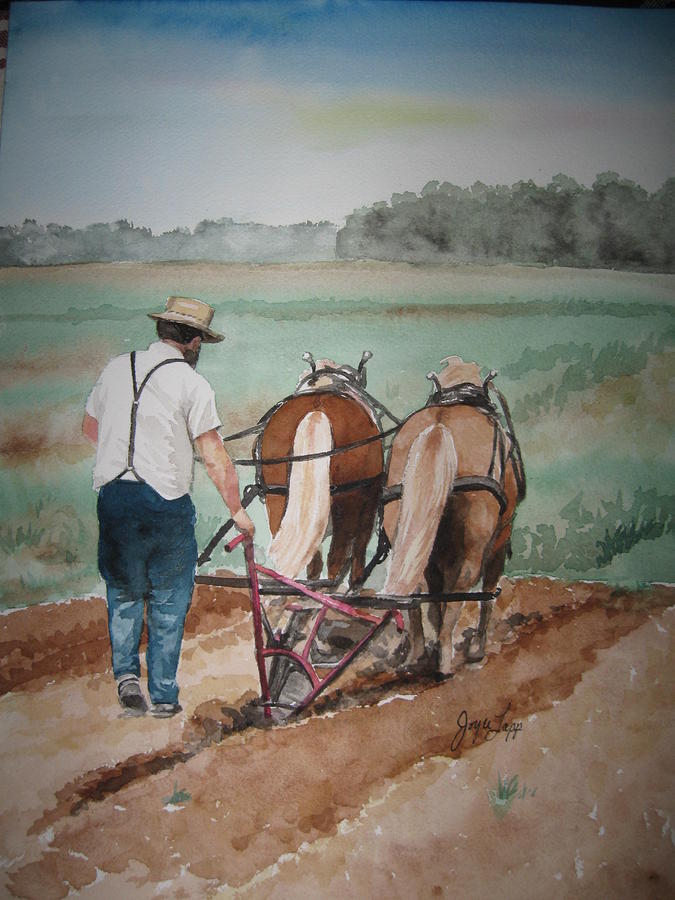
My heart land is plowed,
yielding to the plowshare digging deep with the pull of the harness,
the steady teamster centering the coulter.  
The furrow should be straight and narrow. 
I am tread upon yet still bloom; 
I am turned upside down yet still produce bread.
The plowing under brings freshness to the surface,
a new face upturned to the cleansing dew,
knots of worms now making fertile simple dust. 
Plow deep my heart, dear Lord. 
May it grow what is needed
to feed your hungry children.
Painting “Plowing the Field” by Joyce Lapp
photo by Josh Scholten

Mountains of the Sky

20120823-213239.jpg
It’s wonderful to climb the liquid mountains of the sky. Behind me and before me is God and I have no fears. ~Helen Keller

They don’t make clouds like this in the northwest. These are thunderheads over Sioux Falls, South Dakota tonight, complete with constant lightning flashes sparking the center of the shimmering liquid mountains in the sky.

God behind, before, overhead. I am not ashamed to admit awesome fear of His mighty power.

20120823-213351.jpg

August Rain

20120819-093640.jpg
“August rain: the best of the summer gone, and the new fall not yet born. The odd uneven time.” — Sylvia Plath
Just past mid-August and the leaves are already showing hints of summer fatigue, curling and yellowing around the edges. Photosynthesis has become a repetitive chore.

Like them, there is only so much sun I can absorb before I say, “Enough!” and beg for clouds and drizzle. Dig a little and my roots cry out for a drenching downpour.

I fear the best has passed me by and I wasn’t paying enough attention to know. It is an already-but-not-yet limbo of anticipating autumn’s descent into dying when I fervently hope I’m still very much alive.

This is an odd and uneven time of recognizing what is to come so I must slowly loosen my grip on what has been.

The time to let go is coming.

Just not quite yet.

There’s work to do, chores to wrap up.

Then not yet may come, drenching my roots.  I’ll be ready.

20120819-094348.jpg

Photos by Josh ScholtenCascade Compass

A Bit Messy

“Do not be so open-minded that your brains fall out.”
G.K. Chesterton

Few things are as condemning in this day and age than being accused of being close-minded.  In religion and politics, the most zealous are the least likely to see another point of view, much less tolerate it.  There is no chance of growth or redemption when there is not openness and willingness to change and admit one is wrong.

But I’ve known those who are so open-minded, there is nothing left inside but “whatever.”   It doesn’t matter, anything goes, if it works for you, who am I to judge, it’s a free country.  No boundaries, no barriers, all windows and free to come and go breezes, no foundational beliefs, hopelessly robbed blind.  It is a terribly empty void to behold.

Instead I strive to remain unlocked and ready to answer the knock on the door of my convictions and opinions to see who or what may be there, to be receptive to the possibility of something other.

But in reality I’d rather be open-hearted over open-minded.  It is far riskier, this bleeding of the heart,  when touched, bruised or pierced.   Perhaps even a bit messy.

Intentional, not accidental.  Grace once spilled from an open beating heart and still does.

Always has.  Always will.

“I tell you this
to break your heart,
by which I mean only
that it break open and never close again
to the rest of the world.”
— Mary Oliver