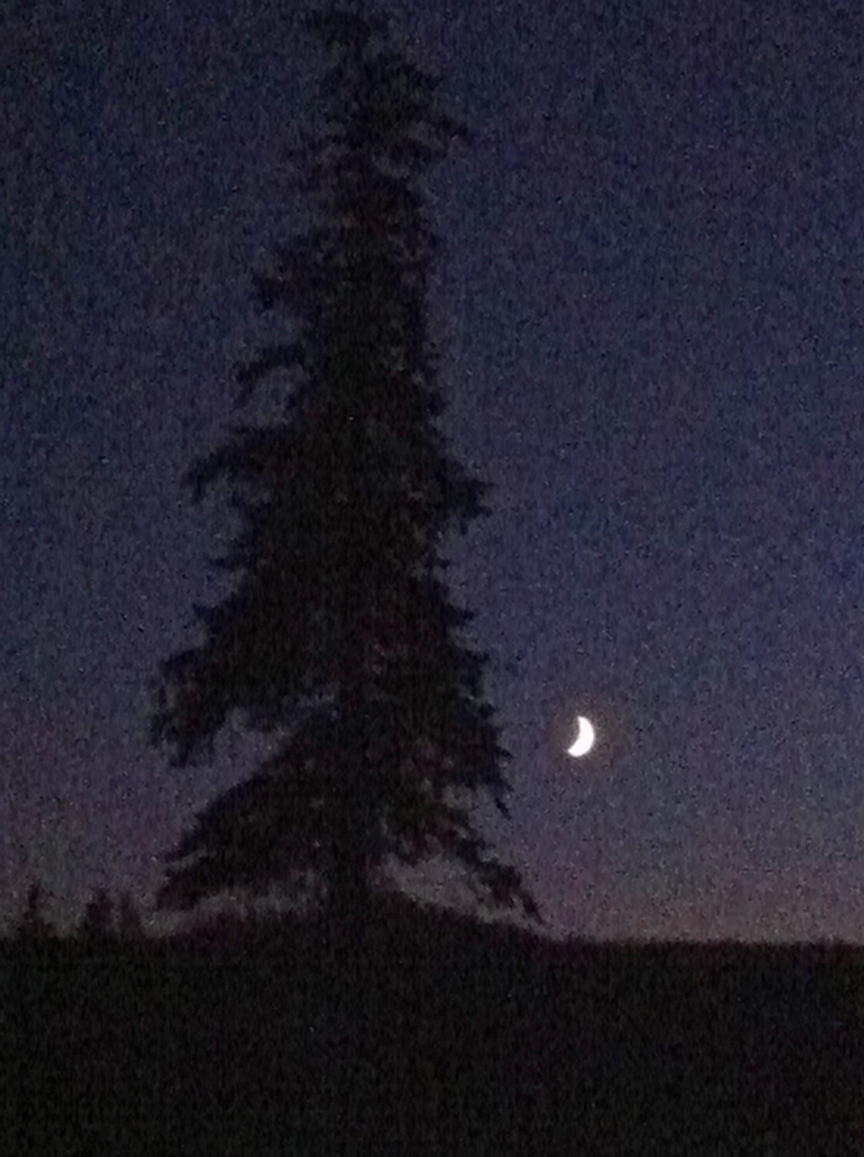
Lyric night of the lingering Indian Summer, Shadowy fields that are scentless but full of singing, Never a bird, but the passionless chant of insects, Ceaseless, insistent.
The grasshopper’s horn, and far-off, high in the maples,
The wheel of a locust leisurely grinding the silence
Under a moon waning and worn, broken,
Tired with summer.
Let me remember you, voices of little insects,
Weeds in the moonlight, fields that are tangled with asters,
Let me remember, soon will the winter be on us,
Snow-hushed and heavy.
Over my soul murmur your mute benediction,
While I gaze, O fields that rest after harvest,
As those who part look long in the eyes they lean to,
Our hair turns white with our ripening as though to fly away in some coming wind, bearing the seed of what we know… Having come the bitter way to better prayer, we have the sweetness of ripening. ~Wendell Berry in “Ripening”
My husband and I walk our country road together on a warm late summer evening, breathing in the smell of ripening cornstalks and freshly mowed grass lined up in windrows, much like the walks we took together nearly thirty years ago when we were newly married. Just down the road, we pass the smaller farm we first owned having left the city behind for a new life amid quieter surroundings. The seedling trees we planted there are now a thick grove and effective windbreak from the bitter howling northeasters we endured. The fences need work after 25 years, the blackberries have swallowed up the small barn where our first horses, goats, chickens and cows lived, the house needs painting, nevertheless there is such sweetness recalling the first home we owned together.
On this road, our children were conceived and raised, strolling these same steps with us many times, but now flown thousands of miles away for their life’s work. My husband and I are back to walking together again, just the two of us, wondering how each child is doing at this very moment, pondering how the passage of time could be so swift that our hair is turning white and we are going to seed when only yesterday we were so young.
We ripen before we’re ready.
It is bitter sweetness relinquishing what we know, to face what we can never know.
It is the mystery that keeps us coming back, walking the same steps those younger legs once did, admiring the same setting sun, smelling the same late summer smells. But we are not the same as we were, having finally come to the fruitfulness intended all along.
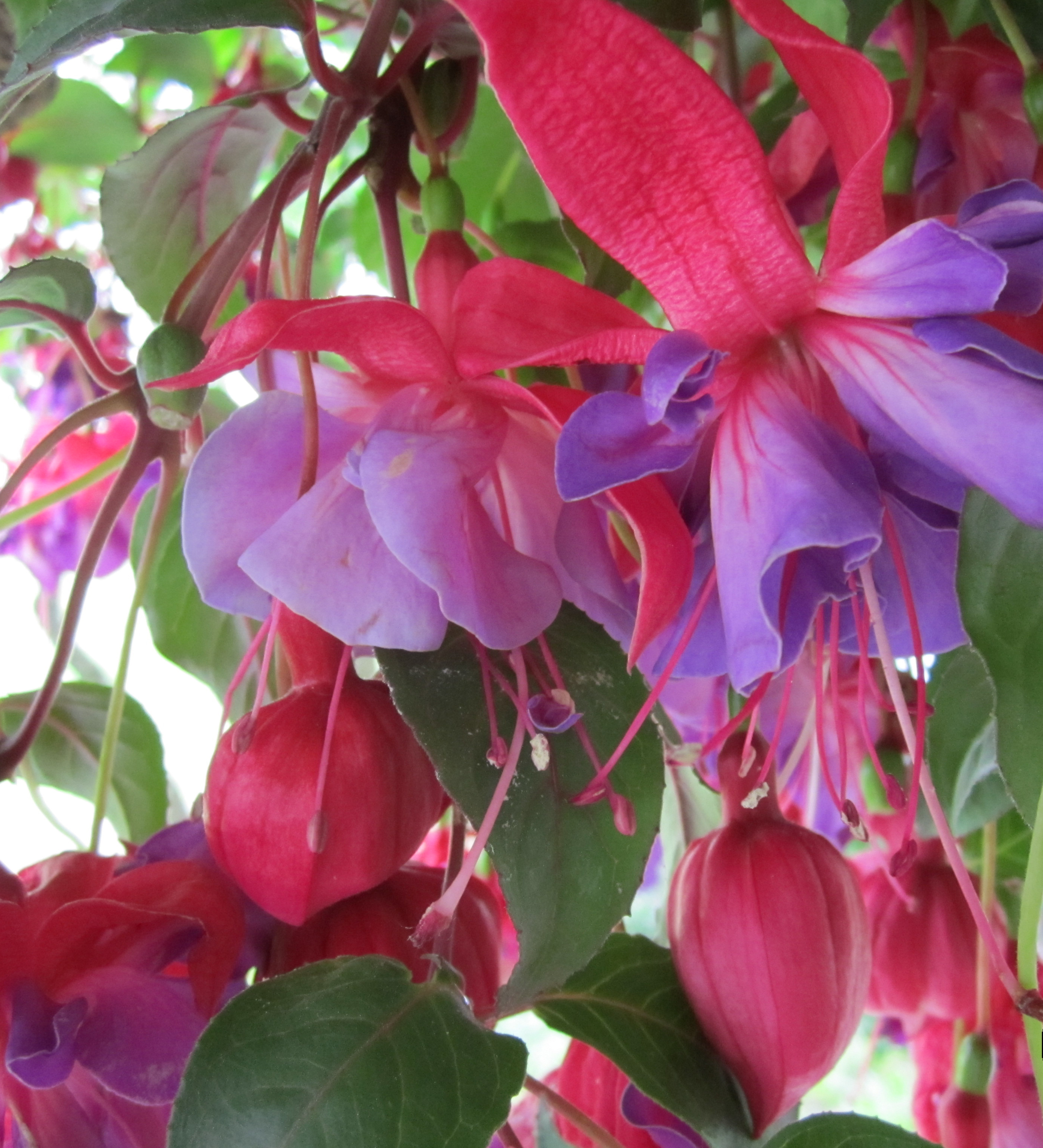
Grandma grew flowers–lots of them. Her garden stretched along both sides of the sidewalk to her old two story farm house, in window boxes and beds around the perimeter, in little islands scattered about the yard anchored by a tree, or a piece of driftwood, a gold fish pond or a large rock. Wisteria hung like a thick curtain of purple braids from the roof of her chicken coop, and her greenhouse, far bigger than her home, smelled moist and mossy with hanging fuschia baskets. For her it was full time joy disguised as a job: she sold seedlings, and ready-to-display baskets, and fresh flower arrangements. She often said she was sure heaven would be full of flowers needing tending, and she was just practicing for the day when she could make herself useful as a gardener for God.
Visiting Grandma was often an overnight stay, and summer evenings in her yard were heavy with wafting flower perfume. She would also allow entry into her “fuschia house” to walk among hundreds of delicate dangling multi-colored blossoms. There was overwhelming temptation to audibly pop the bulbous unopened blossoms but she had a “no touch, just look” policy, reminding her grandchildren that each plant knew the precise instant when a flower should open, and it should not happen a moment sooner or nature’s rhythm would be disturbed.
One of her favorite rhythmic flowers –indeed it was so hardy and vigorous it really could be considered a weed–was the evening primrose. It was one of a few night blooming plants meant to attract pollinating moths. Its tall stems were adorned by lance shaped leaves, with multiple buds and blooms per stem. Each evening, and it was possible to set one’s watch by its punctual cycles, only one green wrapped bud per stem would open, revealing a bright yellow blossom with four delicate veined petals, a rosette of stamens and a cross-shaped stigma in the center, rising far above the blossom. The yellow was so vivid and lively, it seemed almost like a drop of sun had been left on earth to light the night. By morning, the bloom would begin to wither and wilt under the real sunlight, somehow overcome with the brightness, and would blush a pinkish orange as it folded upon itself, ready to die and drop from the plant in only a day or two, leaving a bulging seed pod behind.
I would settle down on the damp lawn at twilight, usually right before dusk fell, to watch the choreography of opening of blossoms on stem after stem of evening primrose. Whatever the trigger was for the process of unfolding, there would be a sudden loosening of the protective green calyces, in an almost audible pop. Then over the course of about a minute, the overlapping yellow petals would unfurl, slowly, gently, purposefully, revealing their pollen treasure trove inside. It was like watching time lapse cinematography, only this was an accelerated, real time flourish of beauty, happening right before my eyes. I always felt privileged to witness each unveiling as Grandma liked to remind me that few flowers actually allowed us to behold their birthing process. The evening primrose was not at all shy about sharing itself and it would enhance the show with a sweet lingering fragrance.
Grandma knew how much I enjoyed the evening primrose display, so she saved seeds from the seed pods for me, and helped me plant them at our house during one of her spring time visits. I remember scattering the seeds with her in a specially chosen spot, in anticipation of the “drops of sun” that would grace our yard come summertime. However, Grandma was more tired than usual on this particular visit, taking naps and not as eager to go for walks or eat the special meals cooked in honor of her visit. Her usually resonant laughing brown eyes appeared dull, almost muddy.
The day she was to return home she came into the kitchen at breakfast time, wearily setting down her packed bags. She gave me a hug and I looked at her, suddenly understanding what I had feared to believe. Something was dreadfully wrong. Grandma’s eyes were turning yellow.
Instead of returning home that day, she went to the hospital. Within a day, she had surgery and within two days, was told she had terminal pancreatic cancer. She did not last long, her skin becoming more jaundiced by the day, her eyes more icteric and far away. She soon left her earthly gardens to cultivate those in heaven.
I’ve kept hanging fuschia baskets on my porch and evening primrose has been in my garden ever since. Grandma is inside each bloom as it opens on its own schedule, according to its own rhythm, unfolding precipitously in the evening. She wafts across the yard in its perfume. Her spirit is a drop of sun coming to rest, luminous, for a brief stay upon the earth, only to die before we’re ready to let it go. But as the wilted bloom lets go, the seeds have already begun to form.
Surely Grandma is still growing flowers, lots of them. They blossom under her loving care, each bud opening on schedule, not a moment sooner than it should.
photo by Troy Mullens from blog ICU Nature
Evening Primrose by John Clare
When once the sun sinks in the west,
And dewdrops pearl the evening’s breast;
Almost as pale as moonbeams are,
Or its companionable star,
The evening primrose opes anew
Its delicate blossoms to the dew;
And, hermit-like, shunning the light,
Wastes its fair bloom upon the night,
Who, blindfold to its fond caresses,
Knows not the beauty it possesses;
Thus it blooms on while night is by;
When day looks out with open eye,
Bashed at the gaze it cannot shun,
It faints and withers and is gone.
It is now my fifty eighth Memorial Day–what I wrote two years ago still is true: I see this as a day for weeping, so the rain coming from the sky is fitting.
On my fifty sixth Memorial Day, I need to be reminded not to forget the sacrifices made by my fellow countrymen. This is not a vacation day. This is a day meant for the hard work of painful remembrance. This is a day to slog through the mud of the battlefields, the searing heat of the deserts, the dripping humidity of the jungles, the icy snowbanks of wintertime battle fronts.
I do not want to forget what it means to get up each morning clothed in liberty, and fall asleep each night without fear. We are meant to cry this day, to weep over the loss of life over the generations, the losses in battles that continue to this day.
The cost of staying free must not bankrupt our souls even as it taxes our resources. Once we forget, if even one of us forgets, then the battle comes…
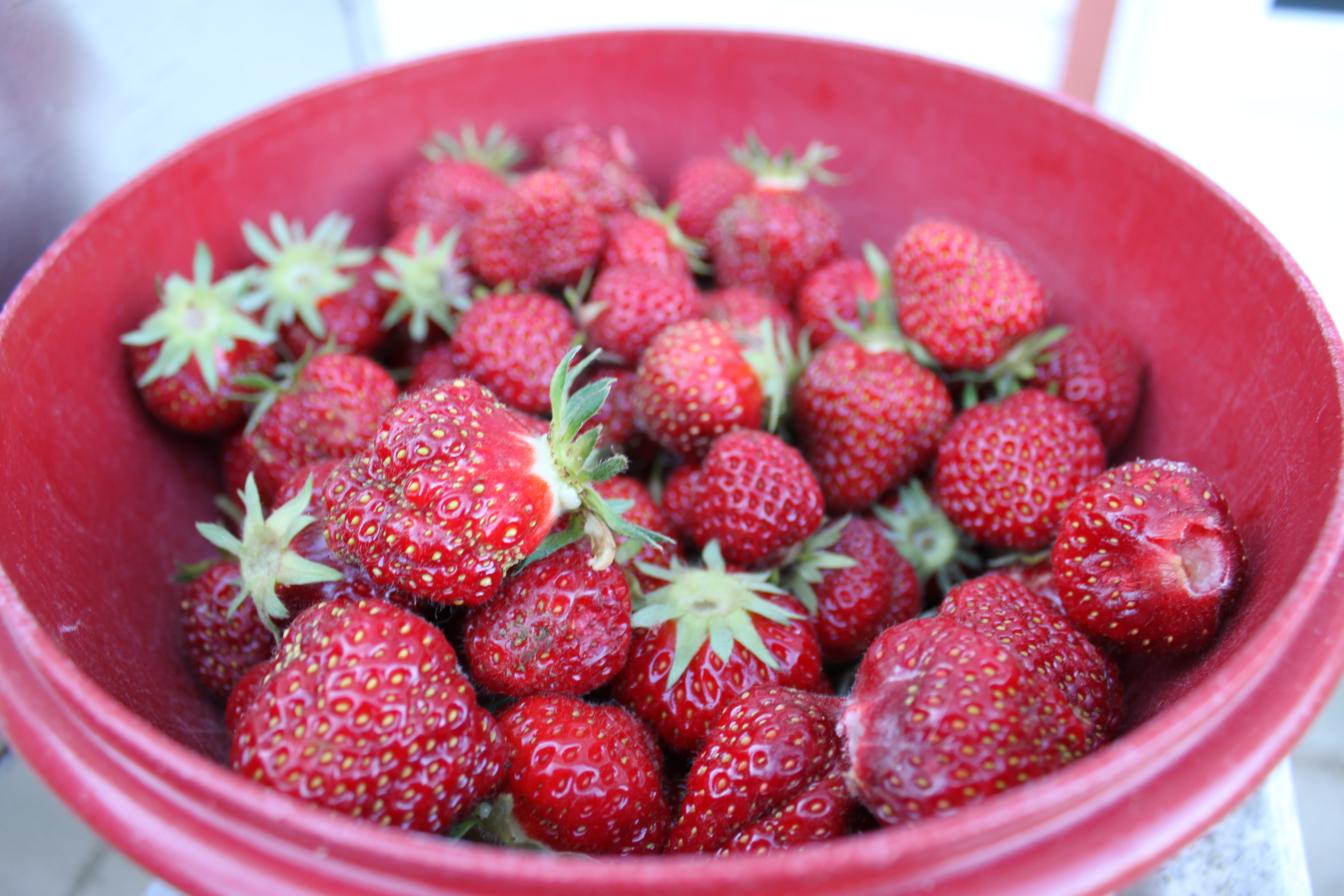
“Do you remember the Shire, Mr. Frodo? It’ll be spring soon. And the orchards will be in blossom. And the birds will be nesting in the hazel thicket. And they’ll be sowing the summer barley in the lower fields… and eating the first of the strawberries with cream. Do you remember the taste of strawberries?” ― J.R.R. Tolkien
In our despairing moments, we recollect and hold on to memories most precious to us, recalling what makes each moment, indeed life itself, special and worthwhile. It can be something so seemingly simple that becomes the most cherished and retrievable–the aroma of cinnamon in a warm kitchen, the splash of colors in a carefully tended garden spot, the cooing of mourning doves as light begins to dawn, the velvety soft of a newborn foal’s fur, the embrace of welcoming arms.
Today, as our family once again heads to two cemeteries to honor our dead, it is those simple things we will recall and treasure, pass on in stories, and never leave buried in the ground. The legacy of these memories lives and thrives in the next and then the next generation, to be told and retold, not to rest, eventually to be forgotten, under a marker.
Do you remember the Shire, Mr. Frodo? Do you remember?
 Lyric night of the lingering Indian Summer,


 Barnstorming