Great Aunt Marion

My great aunt Marion was considered odd, no question about it.  She usually dressed in somber woolens, smelling faintly of mothballs and incense. Her gray hair was bobbed with bangs,  unfashionable for the wavy permanents of the fifties and the beehives of the sixties.  Aunt Marion was a second grade teacher all her life, never marrying,  and she lived for over 50 years in the same small apartment until the day she died in 1975.    She bequeathed what little she had to the church she had faithfully attended a few blocks away and was buried in the family plot on a windswept hill overlooking Puget Sound.

I was overseas when she died, and to my knowledge, none of the extended family attended her funeral.  In her retirement years she had become reclusive and remote.  It was not at all clear visitors were welcome so visits to her became rare.  In an effort to counteract that, I have annually visited her gravesite for the past 20 years, paying homage to this aunt who remained an enigma in life and has become even more mysterious in death.

She grew up in the early 20th century in an impoverished German immigrant family who relocated from Wisconsin to the northwest. Her father was gone most of the year running steamboats up the Yukon, leaving her mother to make do as a some time school teacher and full time mother. Her older brother dropped schooling early for the rough and ready life of the local logging camps but Marion finished teachers’ college and began her life’s work teaching 2nd grade, and became the primary caretaker in her mother’s declining years.

Her shock over her brother’s marriage to a much younger (and pregnant) teenage girl in 1917 created foment within the family that persisted down through the generations.  As the offspring of that union, my father tried to prove his worth to his judgmental aunt.  She politely and coldly tolerated his existence and would never acknowledge his mother.  Though Marion was childless, her heart belonged to her students as well as a number of children she sponsored through relief organizations in developing countries around the world.  Her most visible  joy came from her annual summer trip to one of those countries to meet first hand the child she was sponsoring.  It seemed to fuel her until the next trip could be planned.  She visited Asia and India numerous times, as well as Central and South America.  It  provided the purpose that was missing in the daily routine of her life at home.

I moved to my great aunt’s community two decades ago, 10 years after she had died.  I’d occasionally think of her  as I drove past her old apartment building or the Methodist church she attended.  Several months ago, I noticed a new wing on the old church, modern, spacious and airy.  I commented on it to a co-worker who I knew attended that church.

He said the old church had undergone significant remodeling over the years to update the wiring and plumbing, to create a more welcome sanctuary for worship and most recently to add a new educational wing for Sunday School and after school programs during the weekdays. As one of the council members in the church’s leadership, he commented that he was fortunate to attend a church equipped with financial resources to provide programs such as this in a struggling neighborhood that had more than its share of latch-key kids and single parents barely making do.   He mentioned an endowment from a bequest given over 30 years ago by a schoolteacher in her will.  This lady had attended the church faithfully for years, and was somewhat legendary for her stern weekly presence in the same pew and that she rarely spoke to others in the church.  She arrived, sat in the same spot, and left right after the service, barely interacting.  Upon her death, she left her entire estate to the church, well over $1 million in addition to the deed to an oil well in Texas which has continued to flow and prosper over the past several decades.  The new wing was dedicated to her as it represented her expressed desire for her neighborhood.

I asked if her name was Marion and he stared at me baffled.  Yes, I knew her, I said.  Yes, she was a remarkable woman.  Yes, how proud she would be to see this come to fruition.

There were times as I was growing up I wondered if my Aunt Marion had a secret lover somewhere, or if she led a double life as her life at home seemed so lonely and painful.  I know now that she did have a secret life.  She loved the children she had made her own and she lived plainly and simply in order to provide for others who had little.  Our family is better off having never inherited that money or that oil well.  It could have torn us apart and Marion knew, estranged from her only blood relatives due to her own bitterness and inability to forgive,  money would hurt us more than it would help.

Her full story has died with her.  Even so, I mourn her anew, marveling at the legacy she had chosen to leave.  Of this, I can be deeply proud.
Beyond the Stained Glass


It started with a one hundred year old church moving into a new building after an earthquake destroyed the old one.  It wasn’t a congregation of great wealth or prestige so the new building, by necessity, was a simple rectangular design, the sanctuary paneled in light birchwood, the high windows with clear textured glass allowing floods of muted natural light to stream in even on cloudy days.  It was a pleasant enough place to worship, well-lit and airy.

Then a new pastor arrived–a man well-traveled, well-read with a keen artist’s eye and a mind able to mix together a palette of history, colors and words.   He could see what others had not in the empty canvas of the huge space.  What he envisioned for the sanctuary was to enhance the worship experience through the illustration of Life’s passage, of people growing and changing in God’s glory.  Any worshipper entering the sanctuary would become part of the woven tapestry of color cast by a series of stained glass windows.

Six large symmetrical panels of divided narrow vertical windows lined both upper outer walls leading up to the altar.   In our pastor’s design, these were to become stained glass representations of the various stages of life from young to old.  Our pastor recruited would-be artisans from the congregation to be the primary stained glass workers, teaching them how to precisely cut and fit the glass pieces.  Each church member had an opportunity to choose and place a pane matching his or her stage of life, to become a permanent part of the portrait of this diverse church family.  The new windows were constructed from back to front over the course of a year, all by volunteer effort, until the transformation was complete from simple functional space of wood and light to an encompassing work of art, inclusive for all who entered.  Mosaics of colored sections represented the transition through life, moving from childhood in the windows at the entrance, on to adolescence,  then to young adulthood, moving to middle age, and then finally to the elder years nearest the altar.

Rainbows of color crisscrossed the pews and aisles, starting with pale and barely defined green and yellow at the outset, blending into a blossom of blue, then becoming a startling fervor of red,  fading into a tranquil purple past the center, and lastly immersed in the warmth of orange as one approached the brown of the wood paneled altar.  Depending on where one chose to sit, the light bearing a particular color combination was cast on open pages of scripture, or favorite hymns, or on the skin and clothing of the people,  reflecting the essence of that life phase.  Included in the design was the seemingly random but intentional scattering of all of the colors in each panel.  Gold and orange panes were sprinkled in the “youth” window predicting the wisdom to come, and a smattering of some greens, blues and reds were found throughout the “orange” window of old age,  just like the “spark”  of younger years so often seen in the eyes of the our eldest citizens.

The colored windows reflected the truth of God’s plan for our lives. There was the certainty of the unrelenting passage of time; there was no turning back or turning away from what was to come.  Although each stage shone with its own unique beauty,  none was as warm and welcoming as the orange glow of the autumn of life.  Those final windows focused their brilliance on the plain wood of the cross above the altar.

Beyond the stained glass, as life fades from the richest of colors to the brownest of dust, the light will continue to shine, glorious.


(written on the theme “orange”)

Becoming Sauce

2887826765_58b298da6c

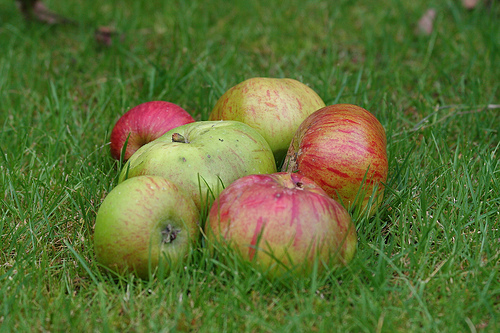
Today will be applesauce-making day on our farm. The number of windfall apples lying on the ground is exponentially increasing, so I could put off the task no longer. The apple trees in our orchard are primarily antique varieties rarely grown any longer. I selected Spitzenburgs, a favorite apple of Thomas Jefferson, a Baldwin or two, some Pippins, a few Kings, but mostly I picked Dutch Mignons, a russet apple undistinguished in appearance, not at all pretty, and easy to pass by for something more showy.

It took no time at all to fill several large buckets. Sadly, some apples were beyond hope; they lay rotting, half consumed by slugs and other critters. Those I left behind.

The task of washing, peeling and coring organic apples is time consuming. They require a fair amount of preparation: the bruised spots must be cut out, as well as the worm holes and tracks. The apples are cut to the core and sliced into the simmering pot to be stirred and slowly cooked down to sauce. Before long, before my eyes, together they become a pale yellow mash, blending their varied flavors together. However the smooth sweetness of this wonderful sauce is owed to the Dutch Mignon. It is a sublime sauce apple despite its humble unassuming appearance. Used alone, it would lack the “stand out” flavors of the other apple varieties, but as it cooks down, it becomes a foundation allowing the other apples to blend their unique qualities.

So it should be with the fellowship of diverse people. We are bruised, wormy, but salvageable. We are far better together than we are separate. And we are transformed into something far better than how we began.

Seven Ducks in a Muddy Pond

_wsb_442x347_Ducks+in+a+pond+2

Perhaps it was his plain talk about the Word of God.  Perhaps it was his folksy stories tying that Word to our lives.  Perhaps it was because he was, like the rest of us, so fully a flawed and forgiven human being.  Pastor Bruce Hempel ministered to thousands over his lifetime of service, yet the simple act of climbing the steps up to the pulpit was nearly impossible for him.

Bruce had one leg.  The other was lost to an above the knee amputation due to his severe diabetes.  He wore an ill-fitting prosthetic leg that never allowed a normal stride and certainly proved a challenge when ascending stairs.  He would come early to the sanctuary to climb the several steps to the chair behind the pulpit so he would not have to struggle in front of the congregation at the start of the service.  As we would enter to find our pew seats, he would be deep in thought and prayer, already seated by the pulpit.

He often said he was a difficult person to live with because of his constant pain and health problems.  His family confirmed that was indeed true, but what crankiness he exhibited through much of the week evaporated once he was at the pulpit.  Standing there balanced on his good leg with his prosthesis acting as a brace, he was transformed and blessed with clarity of thought and expression.  His pain was left behind.

He came to our church after many years of military chaplaincy, having served in Korea and Vietnam and a number of stateside assignments.  He liked to say he “learned to meet people where they were” rather than where he thought they needed to be.  His work brought him face to face with thousands of soldiers from diverse faiths and backgrounds, or in many cases, no faith at all, yet he ministered to each one in the way that was needed at that moment.  He helped some as they lay dying and others who suffered so profoundly they wished they would die.  He was there for them all and he was there for us.

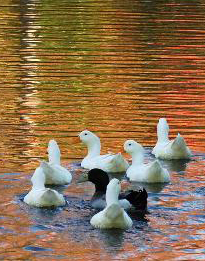
One memorable sermon came from 2Kings 5: 1-19 about the healing of the great warrior Naaman who was afflicted with leprosy.  Pastor Bruce clearly identified with Naaman and emphasized the message of obedience to God as the key to Naaman’s healing.  Like Naaman, no one would desire “Seven Ducks in a Muddy Pond” but once Naaman was obedient despite his pride and doubts, he was cured of the incurable by bathing in the muddy Jordan River.

Even upon retirement, Bruce continued to preach when churches needed a fill in pastor, and he took a part time job managing a community food and clothing bank, connecting with people who needed his words of encouragement.  He was called regularly to officiate at weddings and funerals, especially for those without a church.  He would oblige as his time and health allowed.

His last sermon was delivered on a freezing windy December day at a graveside service for a young suicide victim he had never known personally.  Pastor Bruce was standing at the head of the casket and having concluded his message, he bowed his head to pray, continued to bend forward, appeared to embrace the casket and breathed his last.  He was gone,  just like that.

He was not standing up high at the pulpit the day he died.  He was obediently getting muddy in the muck and mess of life, and waiting, as we all are, for the moment he’d be washed clean.

Sliding to Home

67

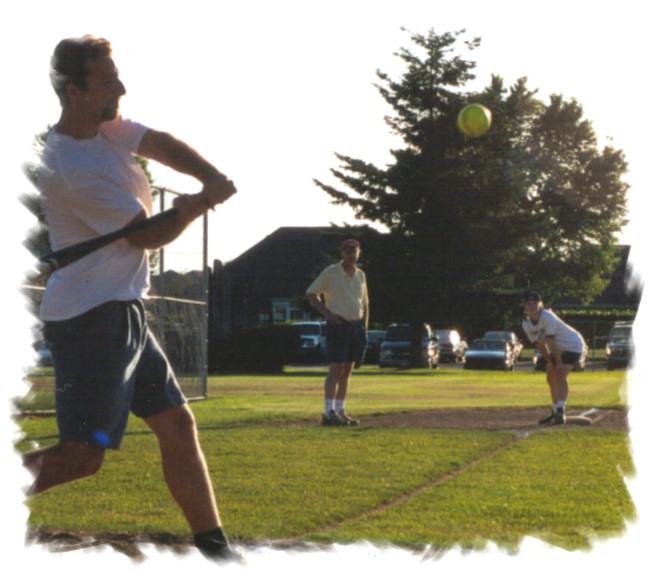
Our church belongs to a summer co-ed softball league, along with 8 other churches and a few local businesses.  This has been a traditional Thursday evening summer activity for the past generation or longer.  Couples have met for the first time on the ball fields and eventually marry. Babies have attended games in back packs and strollers and now are catching at home plate.  Relatives going to different churches find themselves on opposing teams yelling good natured insults.  There are a few bopped heads, abrasions, sprained fingers and broken legs as part of the deal.  Hot dog roasts and ice cream sundaes are the after game rewards.

Yet nothing is quite as wonderful as how a team recreates itself year after year.  It is thrown together by our coach Brenda in a mere two weeks prior to the season starting, with the youngest members needing to be at least age 14 with no upper age limit; we’ve had our share of 70+ year olds on the team over the years.   Some ball players are raw beginners having never played catch or swung a bat outside of school PE class, and others have extensive history of varsity fastpitch in school or other community league play so mean business when they stride out on the diamond.  It is the ultimate diverse talent pool.

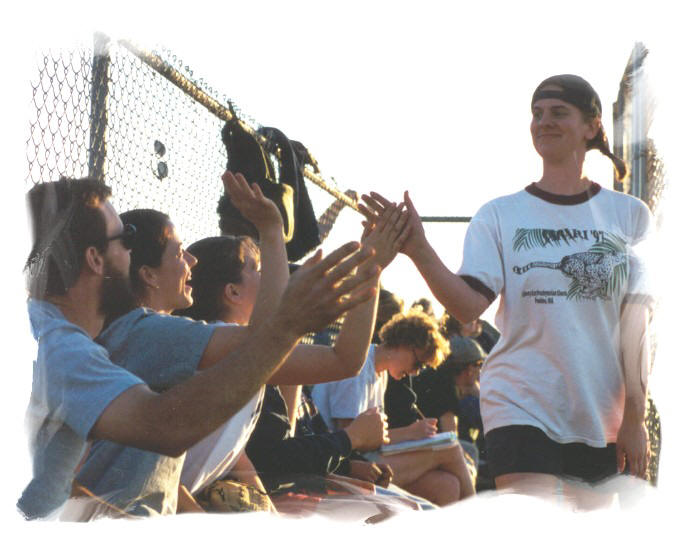
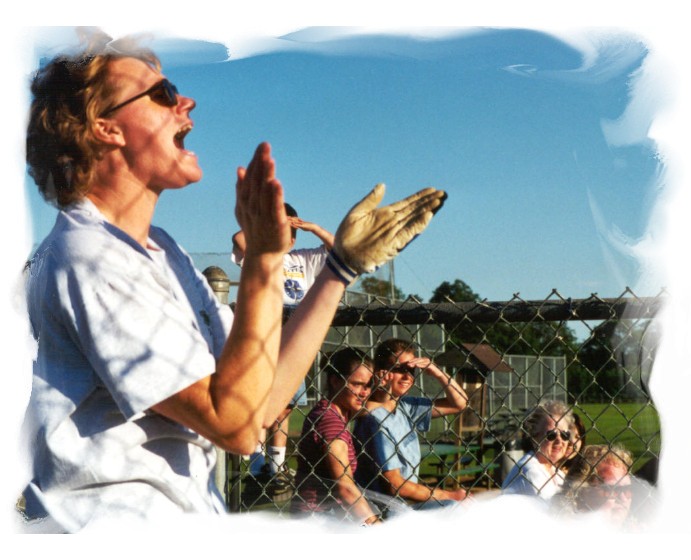
A different dynamic exists in church league softball compared to Little League, Pony League, minors or majors when you watch or play. Sure, there are slow pitch teams that will stock their ranks with “invitation-only” players, reserving the best and most athletic so there is a real chance at the trophy at the end of the summer.  Churches like ours, a mere 150 people average weekly Sunday attendance, have a “come one, come all” attitude, just to make sure we avoid forfeiting by not having enough players week after week.   We always do have enough.  In fact we have more players than we can sometimes find positions for.  And we have a whole bleacher full of fans, dedicated to cheering and clapping for anything and everything our players do, whether it is a pop-up foul ball, a strike out swing, a missed catch, or an actual hit.  We love it all and want our players to know they are loved too, no matter what they do or what happens.

I think that is why the players and fans come back to play week after week, though we haven’t won a game in years.  We root and holler for each other, get great teaching and encouragement from our fantastic coach, and the players’ skills do improve year to year despite months of inactivity.  We have a whole line up of pre-14 year olds eager to grow old enough to play, just so they can be a part of the action.

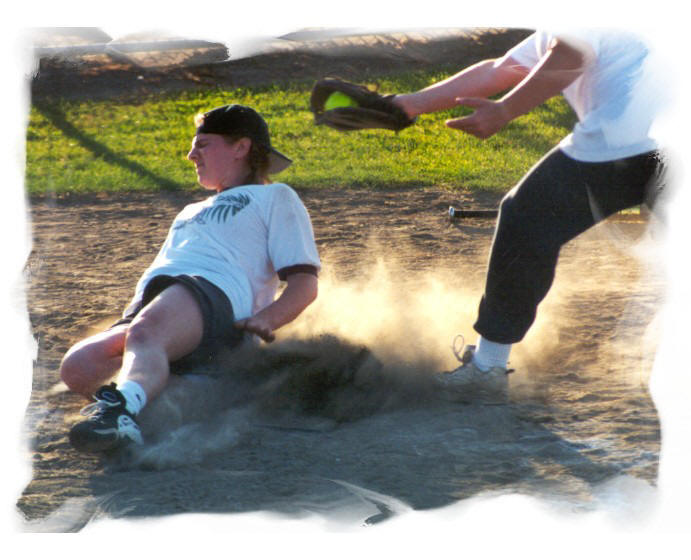
Why does it not matter that we don’t win games?  We are winning hearts, not runs.  We are showing our youngsters that the spirit of play is what it is all about, not about the trophy at the end.  We are teaching encouragement in the face of errors, smiles despite failure, joy in the fellowship of people who love each other–spending an evening together week after week.  We are family; family picks you up and dusts you off when you’ve fallen flat on your face during your slide to base while still being called “out.”

Most of all, I see this as a small piece of God’s kingdom in action.

Our coach models Jesus’ acceptance of all at the table, and embodies the fruits of the spirit: love, joy, peace, patience, kindness, gentleness, faithfulness, and self control.

Our players are the eager, the ambivalent, the accurate, the flawed, the strong, the weak, the fast, the slow: chosen for the game even if they are completely inadequate to the task at hand, volunteering to be part of each moment as painful as it can sometimes be.

The cheering from the bleachers comes as if from heaven itself:  Do not be afraid.  Good will to all.  We are well pleased. Amen!

We’re sliding to home plate, running as hard as we can, diving for safety, covered in the dust and mire and blood of living/dying and will never, ever be called “out”.

Let’s play ball.

1315

Forgetting to Remove Our Shoes

DirtyFeetAfterCrossing

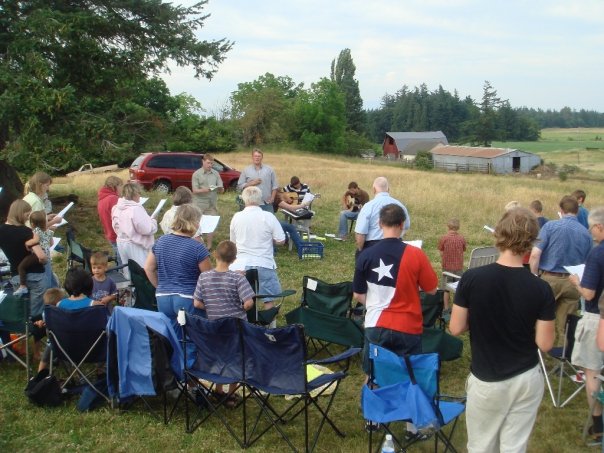
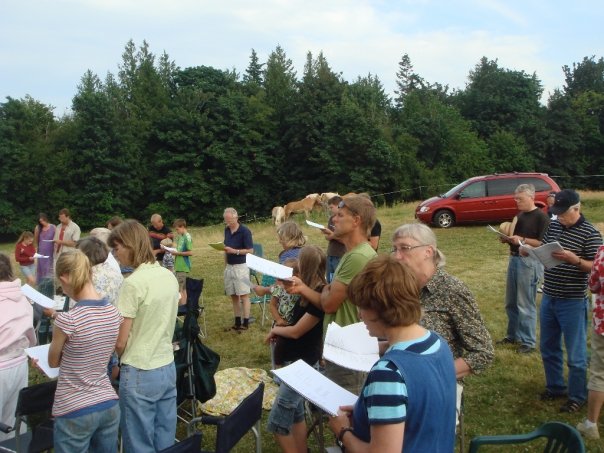
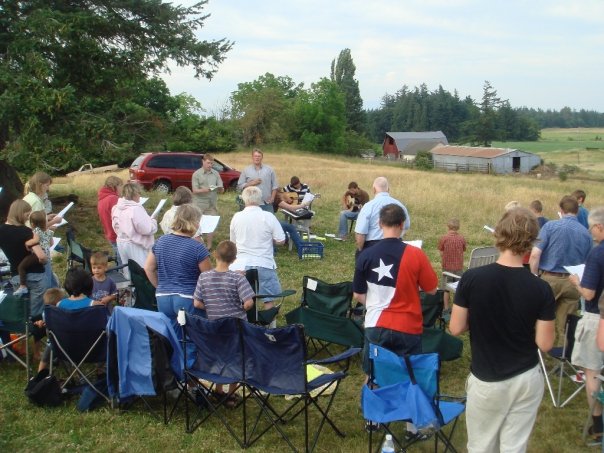
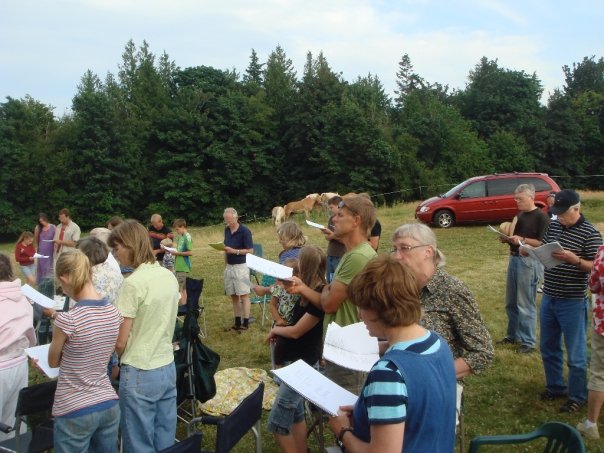
Within the hour, sixty folks would be coming to our hilltop pasture for “campfire church” and a wiener roast.  That was when I realized there were plenty of old horse manure piles still needing to be picked up from the very spots where families would be sitting on the ground, eating their hot dogs and singing their praise songs.  I grabbed the wheelbarrow and pitchfork and trudged up the hill to try to purge the field of poop, at least superficially.

It was no use.  Manure piles don’t pick up easily out of long grass, and the number of mole hills outnumbered poop hills 2 to 1 so there was plenty of dirty stuff to go around.  This would not be a hygienic eating and worshipping experience, no matter what I did at the last minute to try to change things.

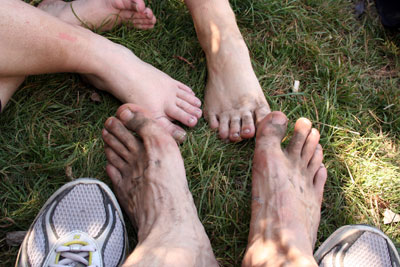
Sure enough, many of the kids and a few of the adults pulled their shoes off to walk barefoot in the pasture grass, and I’m sure a few walked in stuff I’d rather not think about.  Only one got stung by a bee.  The rest of us kept our shoes, sandals and flip flops on,  which meant plenty of the farm went home on bare feet and soles of shoes after the service was over–people actually leaving dirtier than they arrived.  It seemed a bit backwards from how it is supposed to work…

Muslim, Shinto,  Hindu, or Buddhist worshippers ritually leave their shoes at the door of the temple or mosque.  Christians wear shoes into church every Sunday, having walked in muck and mire of one sort or another all week.   We might do our best to try and clean up for Sunday, but we track in the detritus of our lives when we come to sit in the pews.  Rather than leave it at the door, it comes right in with us, not exactly hidden and sometimes downright stinky.  That is when we are in obvious need for a good washing, shoes, feet, soul and all,  and that is why we worship together as a church family.  Jesus Himself demonstrated this on the last night of His life, washing the dusty feet of His disciples.

The Lord told Moses:  “Remove your sandals from your feet, for the place on which you are standing is holy ground.”    He knows it is time for a good bath.

5260_1191428264259_1184942921_564393_5982503_n

5260_1191428304260_1184942921_564394_3562308_n

Where’s the Party?

gnomeparty

Fireworks on our farm's hill taken by Nate Gibson

I  remember childhood summers as 3 months of full-out celebration– long lazy days stretching into nights that didn’t seem to really darken until 11 PM and bright birdsong mornings starting out at 4:30 AM.  Not only were there the brief family vacations at the beach or to visit cousins, but there was the Fourth of July, Daily Vacation Bible School, the county fair, family reunions, and of course and most importantly, my July birthday.  Yes, there were mundane chores to be done, a garden to tend, a barn to clean, berries to pick,  a lawn to mow and all that stuff, but my memories of summer are mostly about fluff and frolic.

So where are the summer parties now?  Who is out there celebrating without me?  Nothing seems to be spontaneous as it was when I was a child. Instead there is still the routine of going to work most days in the summer.

I’m finding myself in the midst of my 55th summer and I have to create celebrations if they are going to happen in my life.  Without that perspective, the bird song at 4:30 AM can feel more irritant than blessing and the long days often mean I fall asleep nodding over a book at 9 PM.  I want to treasure every, every minute of this precious time yet they flow through my fingers like so much water, faster and faster.

I realize there will be few “family” summers left as I watch my children grow into adults and spread their wings.  They may be on to their next adventure in future summers.  So each family ritual and experience together takes on special meaning and needs to be appreciated and remembered.

So….for this summer my family has crammed as much in as we can in celebration of the season:

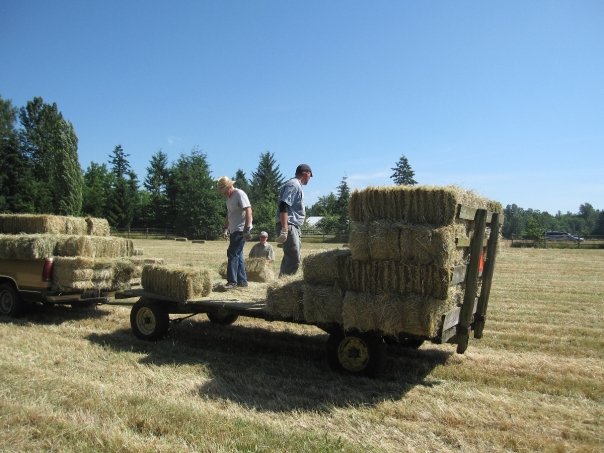
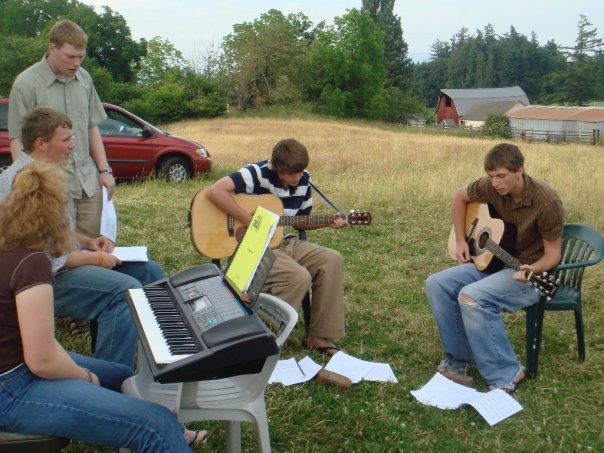
We just spent some time in the hayfields bringing in the bales with friends–our little crew of seven–sweating and itchy and exhausted, but the sight and smell of several hundred hay bales, grown on our own land, harvested without being rained on and piled in the barn is sweet indeed.   Weekly we are out on the softball field in church league,  yelling encouragement and high-fiving each other, hooting at the good hits and the bad, the great catches and the near misses, and getting dirty and sprained, and as happy to lose as to win.  We had a wonderful July 4 barbeque with good friends culminating in the fireworks show on our farm’s hill overlooking miles of valley around us, appreciating everyone else’s backyard displays as well as our own.  We are now able to sing hymns in church in four part harmony, and last night our children helped lead the singing last night in an evening “campfire church” for over fifty fellow worshipers on our hill.  In a couple weeks, we’ll take to the beach for three days of playing in the sand, roasting hot dogs. reading good books, and playing board games.  We’ll try to make the trek down to Seattle by train to spend the day watching the Mariners play (and likely lose). One change this year is we won’t be returning back to the Lynden fair with our horses–due to “off the farm” work and school schedules, we couldn’t muster the necessary round-the-clock crew after seventeen years of being there to display our little part of small town agricultural pursuits.

Yet the real party happens right here every day in small ways without any special planning.  It doesn’t require money or special food or traveling beyond our own soil.  It is the smiles and good laughs we share together, and the hugs for kids taller than I am. It’s adult conversations with the new adults in our family–no longer adolescents.  It’s finding delight in fresh cherries from our own trees, currants and berries from our own bushes, greens from the garden, flowers for the table from the yard.  It is the Haflingers in the field that come right up to us to enjoy rubs and scratches and follow us like puppies. It is babysitting for toddlers who remind us of the old days of having small children, and who give us a glimpse of future grandparenthood.  It is good friends coming from far away to ride our horses and learn farm skills. It is an early morning walk in the woods or a late evening stroll over the hills. It is daily contact with aging parents who no longer hear well or feel well but nevertheless share of themselves in the ways they are able.  It is the awesome power of an evening sunset filled with hope and the calming promise of a new day somewhere else in this world of ours.

Some days may not look or feel like there’s a party happening, but that is only because I haven’t searched hard enough.  The party is here, sparklers and all, even if only in my own mind.

6651_512624400914_148300158_30510731_6701452_n

5260_1191428224258_1184942921_564392_5453600_n

5260_1191428264259_1184942921_564393_5982503_n

Campfire church photos by Bette VanderHaak

sunsett

After the Potluck

eatingdessert

We celebrate end of winter’s overlong stay,
And find a respite from embittered mood,
Ignore our sagging incomes for a day,
With shared potluck communion of comfort food.

Beef stew stocked with veggies and potatoes,
Drizzled bread cubes over macaroni and cheese,
Salted nachos dotted with ripened tomatoes,
Meat loaf topped with ketchup to please.

Home made bread from the oven, steaming and soft
Fresh hot chocolate and coffee provide reason to stay,
Remember the smell of shared food will lazily waft
So welcome and hardy with no debt to pay.

When the job is lost or the family is sour,
Too many nights lonely and aching in pain,
Fellowship together for only an hour,
Nurtured and nourished, is never in vain.

Once gratefully finishing up the last crumb,
When life’s feast is done, the journey’s end near
Hang on to your fork awaiting dessert that’s to come
Instead of clinging to worry and unknown fear.

Keep your fork when uncertain about what comes tomorrow
It will remind you of what you can not yet see;
The meal’s not quite over, there’ll be sweetness, not sorrow:
We’ll celebrate together, the best yet to be.

Hay Bale Pews

n148300158_30161194_6704

Where His people gather, He is.

On the road to Emmaus, men walked alongside Jesus without recognizing him, their hearts “burning within” them as He spoke, yet did not know Him until he broke bread and fed them. Worship and wonder does still take place in unlikely places alongside country roads.

Our farm is along such a road amidst rolling hills of evergreens and fields, next to a crossroads where 100 years ago sat the village of Forest Grove. This small settlement boasted a one room school house, a general store, a saw mill and a small Methodist church. Families would travel by horse and buggy to attend Sunday morning services, and during good weather, would picnic together on our farm’s nearby hill top to enjoy the expansive view. And every Easter, the small congregation would gather on the hill for a service at sunrise.

When the sawmill closed 80 years ago, the village shut its doors as well. The buildings were dismantled; the beams and timbers were transformed into our large hay barn and the humble little church became our farm’s chicken coop, long and narrow with smooth fragrant cedar lined walls and rough fir floors. Hens lay their eggs to the echoes of sacred hymns still resonating in those walls and floor.

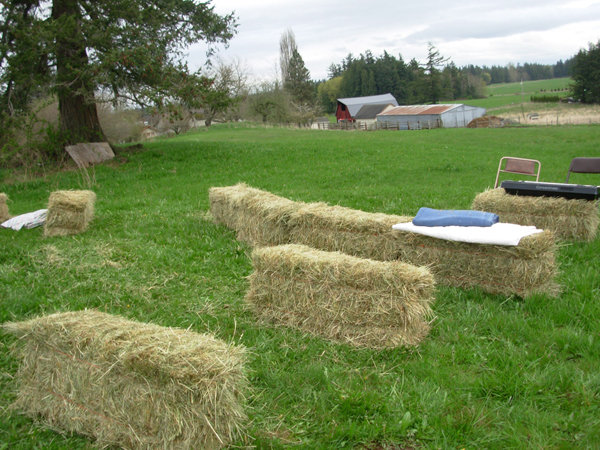
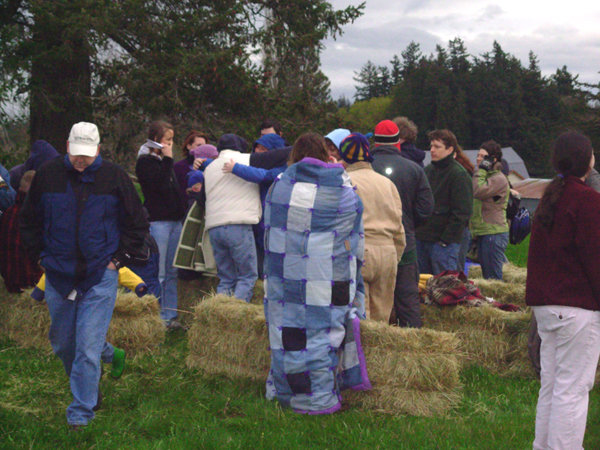
Formal worship moved to nearby towns, yet the Easter Sunrise Service tradition remains alive on our farm. Cherished by local families and neighborhood folk, some of whom have attended since they were children, this service is never canceled for any reason–not rain, not northeasters, not even the occasional Easter snow shower. If it is too stormy to be outside on the hill, the service takes place in the big red hay barn. In either setting, a tiered row of rough stickery hay bales, theater style, creates a semicircle of seats ready and waiting for the intrepid faithful who come annually to celebrate Christ’s resurrection, huddled together for warmth under blankets.

Each year a different Resurrection theme is explored through Bible readings and hymn singing. One year, it was noted how God has walked with His people since the beginning of time. First, in the Garden, He is “walking… in the cool of the day”  looking for Adam and Eve, but after the Resurrection, Jesus walked with the men to Emmaus. Because of Jesus, we go from hiding from God as He walks in the garden, ashamed of the forbidden meal we have eaten, to Emmaus where we walk alongside Him, invited to join Him as He shares with us the Bread of Life.

We are called to worship Him: from knowing dread to being fed.

Hay bale pews don’t create the most comfortable seating for worship. They poke us where we are most tender. Yet it is good to be reminded from where true comfort arises. Even when in shame we hide from Him, even when we do not recognize Him as He walks alongside us, our hearts burn for Him.

And He feeds us wherever we gather.

Amen!

n148300158_30161398_79231n148300158_30161401_51663


On the Trail of Trillium

trillium2

Spring is already in full swing here on the farm.  Grass grows so fast that mowing once a week is not sufficient,  dandelions are dotting the fields in a yellow carpet, the flowering plums and cherries are peaking, the daffodils are in full bloom and the tulips are coming up fast.  The goldfish in our pond have decided to surface from underneath all the winter debris and have grown to a shocking 8 or 9 inches over the winter and now are busy feasting on mosquito larvae as the insects have awakened as well.   At times I feel so overwhelmed by the accelerated pace of growth and activity that I sheepishly long for the dark quiet gray days of winter, if just for the respite of a nap.

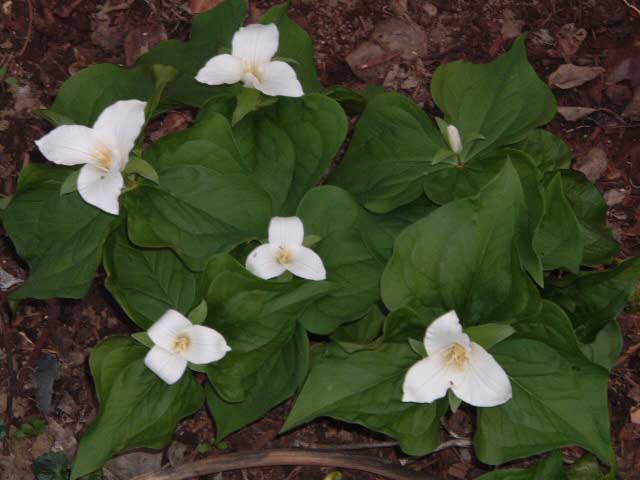
Instead of a nap, I go hunting for trillium.  They are the traditional harbinger of spring and without them, it all seems like just so much pretending.  These are somber plants that will only grow in certain conditions of woods and shade, with leafy mulched soil.  Once established, they reliably spring up from their bulbs every spring with their rich green trio of leaves on each stem that are at once soft and slightly shimmery, and at the top the purest of three white petals, one per leaf cluster.  The blossoms last a week or two, then turn purplish and fade away, followed weeks later by the fading of the foliage, not to spring  again from the soil until the following year.  Picking a trillium blossom necessitates picking the leaf foliage beneath it, and that in turn destroys the bulb’s ability to nourish and regenerate, and the plant never forms again.  I think I have known this from my earliest childhood days as I was a compulsive wildflower gatherer as a little kid, having devastated more than my share of trillium bulbs until I learned the awful truth of the damage I had done.  I have since treated them as sacrosanct and untouchable and have taught that respect in my children.

There are still a few trillium blossoms to be found on our farm, steadfast survivors, yet completely vulnerable to someone’s impulse to bring the beauty indoors for a few days in a vase.  What a tenuous grip on life when people are desiring to pluck them, with their resulting oblivion. How unknowingly destructive we are in our blind selfish pursuit of beauty for our own pleasure and purposes.  These pure triad blossoms and leaves, representing all that is preciously drawn from the earth and enriched and nourished by sunlight, can be obliterated, never to return, never to bloom, never to rise again from the dust.

How much more precious is that which rises again to bloom and flourish forever despite our senseless destructiveness?  And He is here, among us, waiting for us, forgiving us for what we have done.

Trillium have been legendary symbols representing the Holy Trinity of Father, Son and Spirit and I’m reminded of that analogy as our family and larger church family walk through this Holy Week leading to Easter.  We prepare ourselves and our farm for this week’s events–our church’s Thursday evening Bread and Soup supper with communion tonight, then followed by the Tenebrae service Good Friday evening to meditate on the last words of Jesus from the Cross, followed Saturday night by an overnight Easter vigil service around a bonfire on our farm while we “watch and wait”.

Early Sunday morning our neighborhood community meets on our hilltop to celebrate the resurrection of Christ.  We are touched and stricken anew, year after year.

I look at the trillium longingly, wanting to touch them, wanting to own them and hold them, and knowing I never will.  They are meant to stay where they are, as I hope to remain, rooted and thriving for years, yet fragile in the everlasting soil of life.

Alleluia!