Particularity

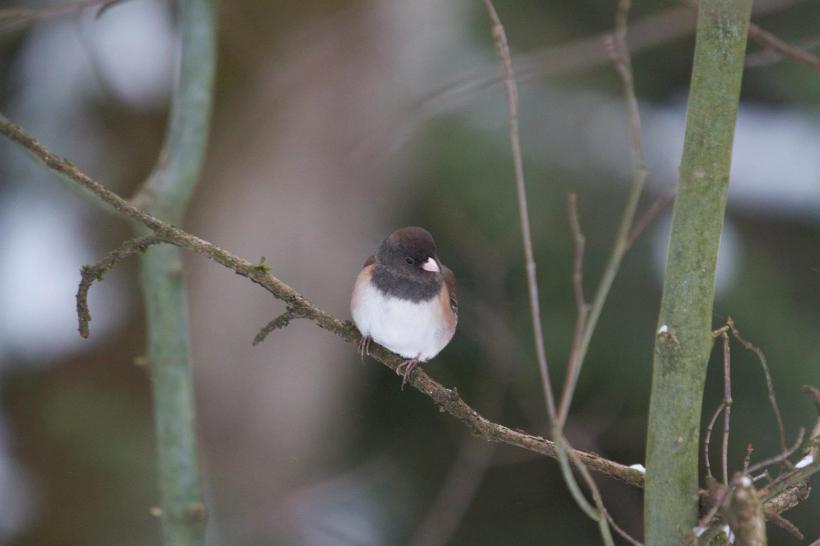
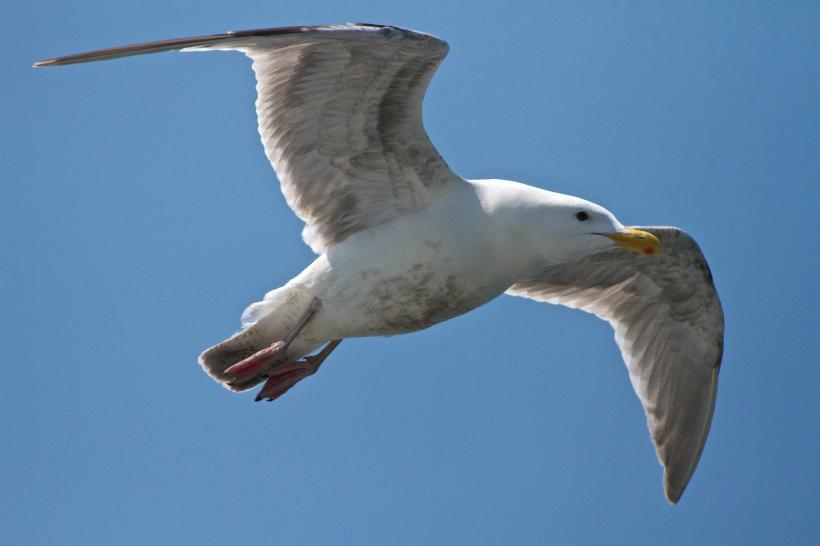
photo of barn swallow from Powdermill Avian Research Center

“Somehow the question of identity is always emerging on this farm. I found the body of a barn swallow lying just inside the barn the other day. There was no telling how it died. I noticed the intense particularity of its body, its sharply cut wings, the way its plumage seemed to glow with some residual celestial heat. But it was the particularity of death, not the identity of life, a body in stillness while all around me its kin were twittering and swooping in and out of the hayloft.”
Verlyn Klinkenborg

Stumbling across death on the farm is always startling.  The farm teems with life 24 hours a day: frogs croaking, dawn bird chorus, insects buzzing and crawling, cats stalking, raccoons stealing, dogs wagging, horses galloping, owls and bats swooping.  Amid so much activity, it doesn’t seem possible that some simply cease to be.   An ancient apple tree mysteriously topples over one morning, a beloved riding horse dies of colic, an old cat finds her final resting place in the hay loft, another old cat naps forever under a tree,  a newborn foal fails to break free of its amniotic sac, another foal delivered unexpectedly and prematurely lies still and lifeless in the shavings of the stall, a vibrantly alive dog is put to sleep due to a growing tumor,  a predator raids the dove cage and leaves behind carnage, our woods bears its own tragic history.

Yet, as often as it happens,  there is a unique particularity about death.  The stillness of death permits a full appreciation of who this individual is, the remarkable care that went into creating every molecule of his being. The presence of absence is a stark and necessary reminder of our mortality.

In truth, we will glow with residual celestial heat, still warm even after our hearts cease to beat.   We are distinct individuals in our own particularity–living and dying at a particular time and place as a unique creature, given a chance in the cosmos of infinite possibilities.  The Creator knit us together specially, every feather, hair, bone and sinew a work of His Hands, and what we do with what we are given is all the stuff between our first breath and our last.  Particularity is a good reminder not to squander our brief time as part of the history of the world.

A guarantee of particularity is the presence of His Holy breath, though momentarily stilled, yet still filling us forever.

photo from St. Lucie Audobon Society

Clover Breath

 “It was the face of spring, it was the face of summer, it was the warmness of clover breath.
Pomegranate glowed in her lips, and the noon sky in her eyes.
To touch her face was that always new experience of opening your window one December morning, early,
and putting out your hand to the first white cool powdering of snow
that had come, silently, with no announcement, in the night.
And all of this, this breath-warmness and plum-tenderness was held forever in one miracle of photographic
is chemistry which no clock winds could blow upon to change one hour or one second;
this fine first cool white snow would never melt, but live a thousand summers.”
Ray Bradbury in Dandelion Wine

Every autumn my father, an agriculture teacher by training, brought home gunny sacks of grass seed from the feed and seed store.  He would start up his 1954 Farmall Cub tractor, proceed to disc and harrow an acre of bare ground in our field, and then fill the seeder, distributing seed on the soil for his annual agronomy cover crop over winter growing experiment.  The little sprouts would wait to appear in the warming spring weather, an initial green haziness spread over the brown dirt, almost like damp green mold.  Within days they would form a plush and inviting velveteen green cushion, substantial enough for a little wiggle of blades in the breezes.  A few weeks later the cover would be a full fledged head of waving green hair, the wind blowing it wantonly, bending the stems to its will.  It was botanical pasture magic, renewable and marvelous,  only to be mowed and stubble turned over with the plow back into the soil as nutrition for the summer planting to come.  It was the sacrificial nature of cover crops to be briefly beautiful on top of the ground, but the foundational nurture once underground.

One spring the expected grassy carpet growth didn’t look quite the same after germination–the sprouts were little round leaves, not sharp edged blades.  Instead of identical uniform upright stems, the field was producing curly chaotic ovoid and spherical shapes and sizes. Clover didn’t abide by the same rules as grasses.  It had a mind of its own with a burgeoning and bumpy napped surface that didn’t bend with breezes, all its effort invested instead in producing blossoms.

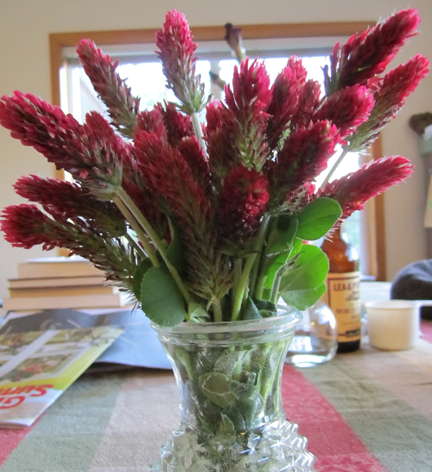
A hint of pink one morning was so subtle it was almost hallucinatory.  Within a day it was unmistakeably reddening and real.  Within a week the green sea flowed with bobbing crimson heads. We had never seen such vibrancy spring from our soil before.  It exuded scented clover breath, the fragrance calling honey bees far and near.  True reverie.

The field of crimson dreams and sated honey bees lasted several weeks before my father headed back out on the Farmall to turn it under with the plow, burying the fading blossoms into the ground.  Their sacrifice bled red into the soil, their fragrant breath halted, their memory barely recognizable in the next summer crop germination.   Yet the crimson heads were there, feeding the growth of the next generation, deepening the green as it reached to the sun.

Such a sweet thing, alive a thousand summers hence in the soil.

What a beautiful feeling.

Crimson and clover, over and over.

To make a prairie it takes a clover and one bee,
One clover, and a bee,
And revery.
The revery alone will do,
If bees are few.
Emily Dickinson

Just Another Day

photo by Josh Scholten

“This is another day, O Lord…
If I am to stand up, help me to stand bravely.
If I am to sit still, help me to sit quietly.
If I am to lie low, help me to do it patiently.
And if I am to do nothing, let me do it gallantly.”
— Kathleen Norris citing the Book of Common Prayer

This day is the wrap-up of my twenty-third academic year working as a college health physician,  my most challenging so far.  Despite diminishing budget, shrinking staffing, higher severity of illness in our patient population, three suicides and more failed attempts,  our staff did an incredible job this year serving students and their families with the resources we have.   Reaching this day today is poignant: we will miss the graduating students we have gotten to know so well over four or five years,  we watch others leave temporarily for the summer, some to far places around the world, and we weep for those three families whose students will not return home again.

In my work I strive to do what is needed when it is needed no matter what time of the day or night.  There are times when I tend to fall short–too vehement when I need to be quiet, too urgent and pressured when I need to be patient,  too anxious to do something, anything when it is best to courageously do nothing.  It is very difficult for a doctor to do nothing but I vowed over thirty years ago in my own graduation ceremony to “First do no harm.”  Never do I want to cause someone harm.

In a sense I graduate as well on this last day of the school year–just not with cap and gown and diploma in hand.  Each year I learn enough from my patients to fill volumes, as they speak volumes with their struggles, their pain, their stories and sometimes their forever silence.

Bless our students and their families on this day, with blessings from us who work toward the goal of sending them healthy into the rest of their lives.

It is not just another day.

photo by Josh Scholten

Even If

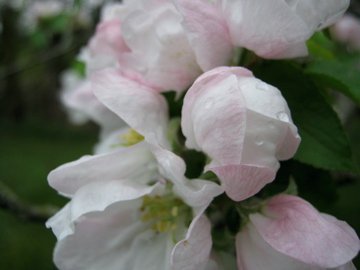
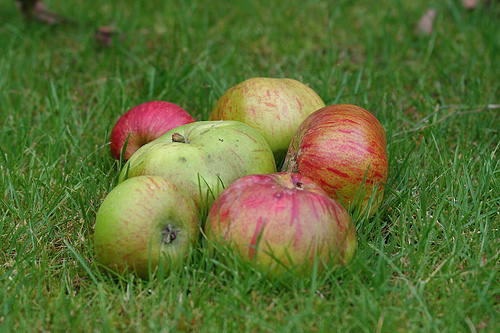
Even if I knew that tomorrow the world would go to pieces, I would still plant my apple tree.
Martin Luther

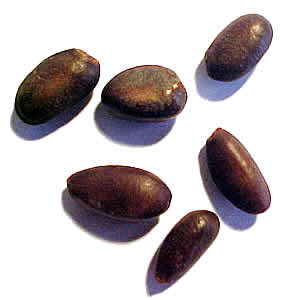
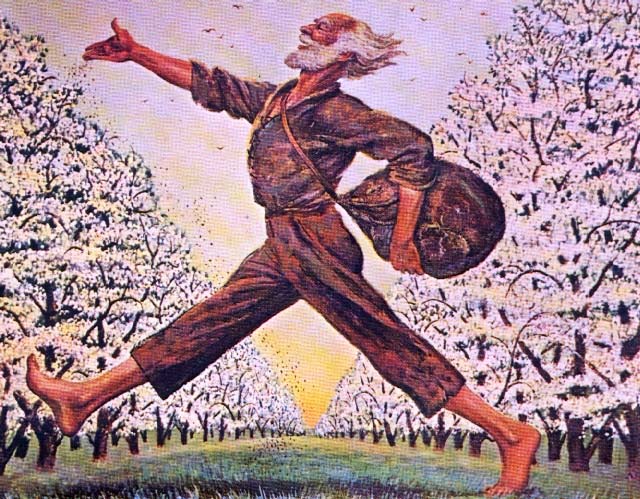
As a child I was fascinated by the story of John Chapman aka Johnny Appleseed who traveled on foot around the young United States creating nurseries of apple trees.  When our family traveled in Ohio and Pennsylvania in the 1960s, we visited places that claimed to have apple trees planted by John Chapman.  I marveled at how one little seed had the potential to produce decades of fruit (and hope) for generations of folk.

My two childhood farms had old apple trees–gravensteins and transparent varieties–good for climbing in and always great as scratching branches and shady snoozing spots for the horses and cows.  One had a platform fort where I spent hours sitting munching on apple cores, surveying the fields and enjoying watching the animals standing beneath me, relaxed, napping, chewing cud and swatting flies.

When we bought our farm here in Whatcom County over twenty years ago, there were left a few antique variety apple trees of a once vital orchard.  They were aging, with bent and broken branches and hollowed trunks, but still continued to produce fruit, great for baking, sauce, cider and winter storage. We’ve lost a few of the old trees over the years to the wind and elements,  though now nearly a century old, the survivors keep providing.

It seems I have followed an appleseed trail myself, a journey of knowing, no matter what may happen, if a seed is planted today, there will be fruit and hope for the future.

I’m determined to keep planting seeds and words in the midst of a world going to pieces.  It just might mean a kid sitting high up in the branches,  contemplating life and its meaning,  has an apple to munch on and words to chew on fifty years from now.

“O the Lord is good to me
and so I thank the Lord
for giving me the things I need-
the sun, the rain, and my appleseeds-
the Lord is good to me!”

Restraint

photo by Josh Scholten

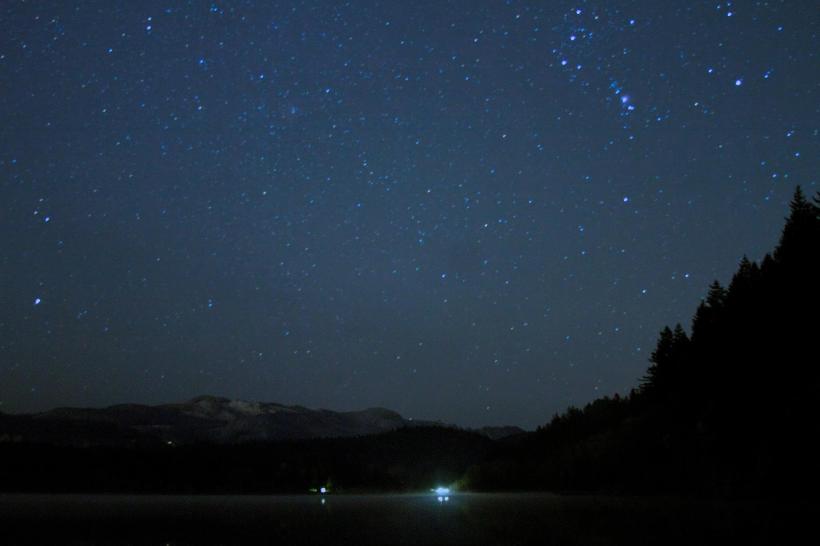
So we sit perhaps in a starry chamber of silence, while the laughter of the heavens is too loud for us to hear… The tremendous figure which fills the Gospels… never concealed His tears. Yet He concealed something… He never restrained His anger… Yet He restrained something… There was something that He hid from all men when He went up a mountain to pray. There was something that He covered constantly by abrupt silence or imperious isolation. There was some one thing that was too great for God to show us when He walked upon our earth; and I have sometimes fancied that it was His mirth.
G.K. Chesterton in his closing words of Orthodoxy

There is humor in the Bible –irony, puns, absurdities, parodies, paradox–yet we miss hearing the laughter of the heavens as we are simply too close to the joke to get it.  In fact, we are likely the punch line of the joke more often than not.  God shows remarkable restraint when it comes to observing the hilarious antics of His children.  We don’t see verses such as, “Jesus laughed” or “Jesus smiled” or “Jesus stifled a chuckle”  even though He surely had plenty of opportunity.

We often take ourselves too seriously.   A little joy can’t hurt.

A lot of joy is hearing the laughter of heaven itself.


Fear of Sunsets

photo by Nate Gibson

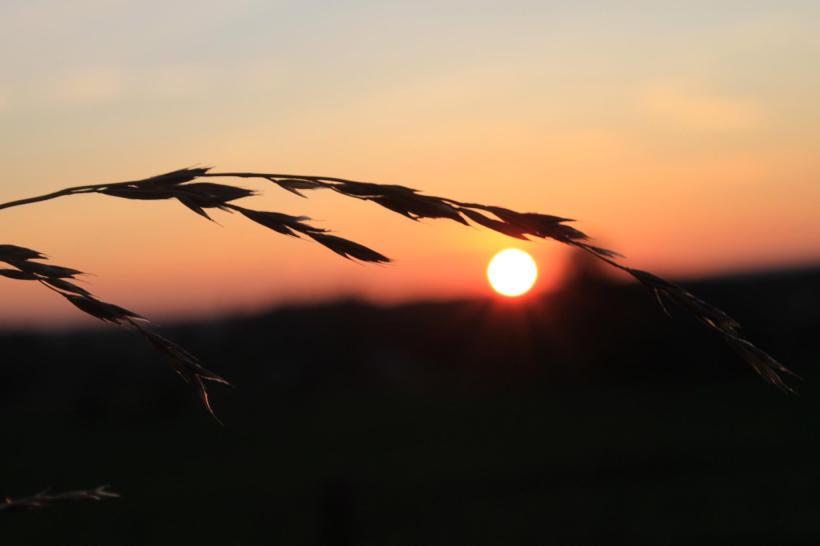
How strange this fear of death is! We are never frightened at a sunset.
George McDonald

In our modern world that never seems to rest, a sunrise can seem more daunting than a sunset.  We are unprepared for the day to start–the ready-set-go of a sunrise can be overwhelming to a tired soul.  There are mornings when the new light of dawn penetrates right through our closed eyelids, enough to wake the dead, if not the sleeping.  It cannot be ignored in its urgency to rouse us to action.

In contrast, the end of the day requires little preparation.  Sunsets signal a slow-down unraveling of tension, a deep cleansing breath, a letting-go of the light for another night.  It eases over us, covering us like a comfortable quilt, tucking us in for the night with a kiss and hug and promise of sweet dreams.

The reason we do not fear the sunset is that we know it isn’t all there is.  The black nothingness of night would be petrifying if we didn’t understand and trust that the light will return, as startling as it may be in its brightness.   It is the rerunning cycle of the light and dark that reassures.   It is as it was created to be, over and over.

Let the sunset tuck us in.   Let the sunrise ready us for a new day.  Let it end, then let it begin again.


This Twittering World

photo by Josh Scholten

Distracted from distraction by distraction
Filled with fancies and empty of meaning…

…Not here
Not here the darkness, in this twittering world.
from Burnt Norton (1936) part of Four Quartets by T.S. Eliot

Eliot didn’t have birds or future tweets of the 21st century in mind when he wrote Burnt Norton in 1936.  He was far more concerned about the concept of time and redemption, using the analogies of a garden, a graveyard, and most disturbingly, a subway train of empty-souled people traveling under London in the dark.  Only the present matters as the past cannot be changed and the future remains unknown, trusting the reassurance and salvation of Logos, the source of  the natural and creative order of all things.   Only God Himself remains outside of the constraints of time and place.

Perhaps Eliot had predicted the unknowable future.  It now is a “twittering world” in a way that Eliot, critical of dehumanizing technology of his time,  somehow was prescient enough to foresee.

When birdsong begins on our farm in early June at 4 AM in the apple, cherry, chestnut, and walnut trees outside our bedroom windows, I am brought face to face, eyes and ears wide open, with the immediate present, distracted from the distraction of my dreams by the distraction of awakening to music of the creative order among the branches,  amidst cool morning air.

Once the birds settle into routine conversation after twenty minutes of their loudly tweeted greetings of the day,  I sit down bleary-eyed at my computer to enter the twittering world of technology, too often filled with fancies and empty of meaning.

Yet, I’m determined.  Not here the darkness, if I can keep it at bay.

No darkness here.

photo by Josh Scholten

Three in One

photo by Josh Scholten

“Spend your life trying to understand it, and you will lose your mind; but deny it and you will lose your soul.”
Augustine in his work “On the Trinity”

A story has been told that Augustine of Hippo was walking on the beach contemplating the mystery of the Trinity.  Then he saw a boy in front of him who had dug a hole in the sand and was going out to the sea again and again and bringing some water to pour into the hole.
Augustine asked him, “What are you doing?”
“I’m going to pour the entire ocean into this hole.”
“That is impossible, the whole ocean will not fit in the hole you have made” said Augustine.
The boy replied, “And you cannot fit the Trinity in your tiny little brain.”

I accept that my tiny brain, ever so much tinier than St. Augustine’s,  cannot possibly absorb or explain the Trinity–I will not try to put the entire ocean in that small hole.  The many analogies used to help human understanding of the Trinity are dangerously limited in scope:
three candles, one light
vapor, water, ice
shell, yolk, albumin
height, width, depth
apple peel, flesh, core
past, present, future.

It is sufficient for me to know, as expressed by the 19th century Anglican pastor J.C. Ryle:  It was the whole Trinity, which at the beginning of creation said, “Let us make man”. It was the whole Trinity again, which at the beginning of the Gospel seemed to say, “Let us save man”.

All one, equal, harmonious, unchangeable.
“It is not easy to find a name that will suitably express so great an excellence, unless it is better to speak in this way:
the Trinity, one God, of whom are all things, through whom are all things, in whom are all things. 
Thus the Father and the Son and the Holy Spirit, and each of these by Himself, is God,
and at the same time they are all one God;
and each of them by Himself is a complete substance, and yet they are all one substance.

The Father is not the Son nor the Holy Spirit;
the Son is not the Father nor the Holy Spirit;
the Holy Spirit is not the Father nor the Son:
but the Father is only Father,
the Son is only Son,
and the Holy Spirit is only Holy Spirit.

To all three belong the same eternity, the same unchangeableness, the same majesty, the same power.
In the Father is unity, in the Son equality, in the Holy Spirit the harmony of unity and equality.

And these three attributes are all one because of the Father, all equal because of the Son, and all harmonious because of the Holy Spirit.”

–Augustine of Hippo, On Christian Doctrine, I.V.5.

Especially the Wilderness

photo by Josh Scholten

To be commanded to love God at all, let alone in the wilderness, is like being commanded to be well when we are sick, to sing for joy when we are dying of thirst, to run when our legs are broken. But this is the first and great commandment nonetheless. Even in the wilderness – especially in the wilderness – you shall love him.
Frederick Buechner

photo by Josh Scholten

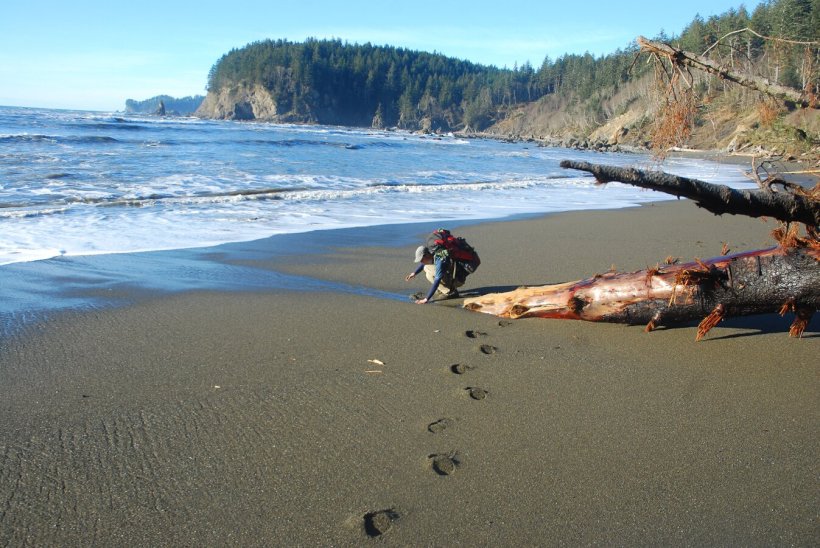
At times of our wandering, whether in the desert, among the cliffs, or in the deep valley of dark alleys, we can feel estranged from God, from Man, from ourselves.  We know the homelessness of the lost and the seemingly abandoned.

But we are commanded to love, no matter how we hunger, or how tenuously we cling to the precipice, or how hidden we are in the desolated dumpsters of life.
Always, always, love brings us back to what we are created to be.

We are designed to bend low and bow down, built for kneeling,  able to smile through tears and cry while laughing.

We know the paradox of being so sick, so dying, so broken, so lost in the wasteland that rescue will be our ultimate joy.

We are found: found loving, never found wanting.


photo by Josh Scholten

Ready to Hatch

photo by Josh Scholten

It may be hard for an egg to turn into a bird:
it would be a jolly sight harder for it to learn to fly while remaining an egg.
We are like eggs at present.
And you cannot go on indefinitely being just an ordinary, decent egg.
We must be hatched or go bad.
C. S. Lewis

I revel in being the good egg.
Smooth on the surface,
gooey inside,
ordinary and decent,
indistinguishable from others,
blending in,
not making waves.

It’s not a bad existence staying just as I am.
Except I can no longer.

There appeared a dent or two in my outer shell
from bumps along the way,
and a crack up one side
extending.

It is time to change or rot.

Nothing can be the same again:
the fragments of shell
left behind
abandoned
as useless confinement.

Newly hatched:
home becomes
the wind beneath my wings
to soar a horizon stretching
beyond eternity.