Did You Cry?

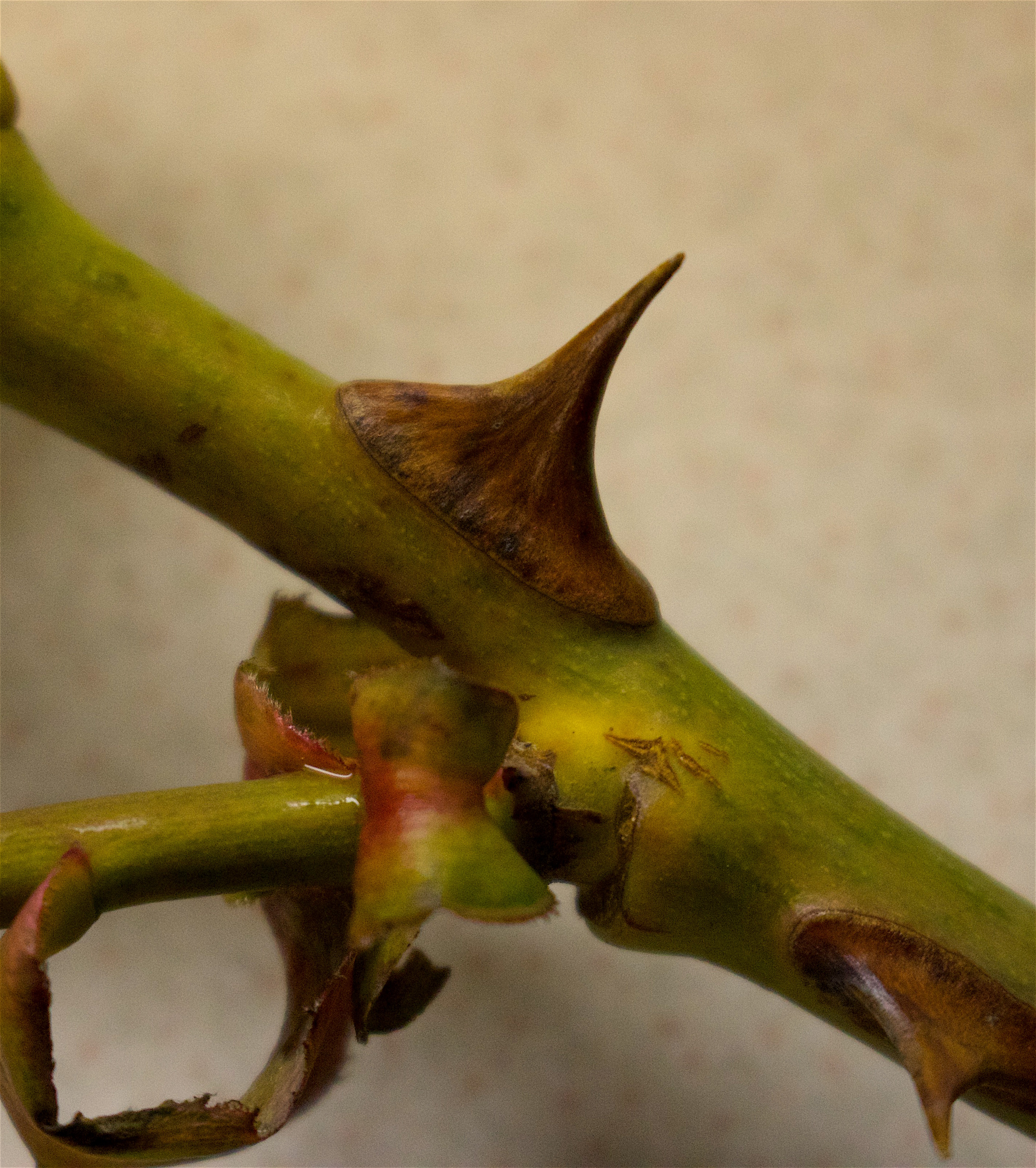
To pull the metal splinter from my palm
my father recited a story in a low voice.
I watched his lovely face and not the blade.
Before the story ended, he’d removed
the iron sliver I thought I’d die from.

I can’t remember the tale,
but hear his voice still, a well
of dark water, a prayer.
And I recall his hands,
two measures of tenderness
he laid against my face,
the flames of discipline
he raised above my head.

Had you entered that afternoon
you would have thought you saw a man
planting something in a boy’s palm,
a silver tear, a tiny flame.
Had you followed that boy
you would have arrived here,
where I bend over my wife’s right hand.

Look how I shave her thumbnail down
so carefully she feels no pain.
Watch as I lift the splinter out.
I was seven when my father
took my hand like this,
and I did not hold that shard
between my fingers and think,
Metal that will bury me,
christen it Little Assassin,
Ore Going Deep for My Heart.
And I did not lift up my wound and cry,
Death visited here!
I did what a child does
when he’s given something to keep.
I kissed my father.
~Li-Young Lee, “The Gift”

Your father enters the poem
early,
storying past
the metal splinter
in your palm.

I set your paternity
—and the poem—
aside,
to reach back for my mother
and try to remember

what kind of day it was
when I played by the barn
where, it is said,
my own father raised pigs
(I do not remember this).

And what kind of day it was
when I found the barn,
door open,
silent

and tried to pluck silver lines
from silver webs
long-left,
then tendered my hand
on noiseless silvered wood

until my palms
were rife with the evidence
of my trying,

and mother
spent the night
with a silver tweezer,
counting as she went…
ninety-eight
ninety-nine
one hundred—

a ritual for my
tears.

And now I wonder,
Li-Young—did you cry,
and who was in the story,
and how many times
have you counted it since,
to forget,
and to remember.

~L. L. Barkat, “Li-Young Lee’s Splinter” from  Love, Etc.
I did, without ever wanting to, remove my child’s splinter, lance a boil, immobilize a broken arm, pull together sliced skin, clean many dirty wounds. It felt like I was always crossing the line between mommy and doctor.  But someone had to do it, and a four hour wait in the emergency room didn’t seem warranted.

My own child learned to cope with hurt made worse by someone they trusted to be comforter. I dealt with inflicting pain, temporary though it may be, to flesh that arose from my own flesh.  It hurt as much as if it were my own wound needing cleansing, not theirs.

Our wounds are His – He is constantly feeling our pain as He performs healing surgeries in our lives, not because He wants to but because He must, to save us from our own destruction.

Too often we yell and kick and protest in our distress, wanting it our way, not His way, making it all that much more difficult for both of us.

If only we can come to acknowledge His intervention is our salvage:
our tears to flow in relief, not anguish, we cling to His protection rather than pushing Him away, we kiss Him in gratitude as we are restored again and yet again.

We Have Big Trouble…

My husband, who I’ve loved for nearly thirty years, has one (and only one) little annoying habit.  He says “oops!” for almost any reason.  It ends up being a generic exclamation that could mean anything from “I just spilled a little milk” to “There is a fire on the stove”.    If I’m driving and he’s a passenger, an “oops” from him might mean an impending crash or just a plastic bag flying across the road.  It is unnerving, to say the least,  to not know immediately what he is exclaiming about, or its significance.

What he doesn’t realize is that “oops!” can cause post traumatic stress disorder response in someone like me…

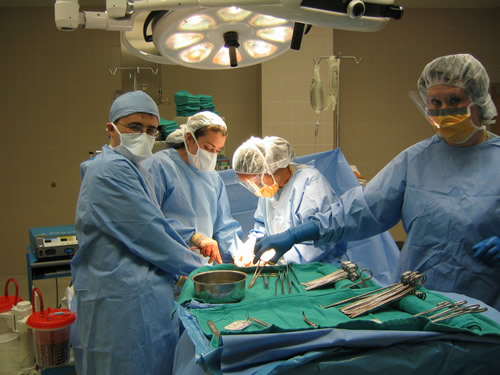
I was a very nervous third year medical student when I walked through the doors of the giant hospital high on a hill for the first day of my Surgical Rotation.  I had never been in an operating room other than to have my own tonsils removed at age four, and that was not exactly my happiest memory.  I worried I was not “cut out” for the OR, and wondered if I would faint watching patients being opened up, smelling the cautery burning bleeding vessels, or hearing the high pitched bone cutter saw.

The first lesson on my first day was to learn how to gown and glove up without contaminating anything or anyone.  It took several hours for an extremely patient nurse to get me to the point of perfection.  She taught me what to do if my nose itched (ask a circulating “non-sterile” nurse to scratch it over my mask), or if I thought I felt woozy (back away from the operating table so I don’t fall on the patient!).  I was ready to watch my first surgery by the afternoon.

It was fascinating!  I wasn’t lightheaded.  I could handle the sight of blood, wounds and pus, and the sounds and smells didn’t phase me.  I went home elated, eager for the next six weeks of caring for patients in a wholly new way.

Each day I helped in three or four surgeries, being asked to do different tasks by the surgeon, from holding retractors so he could see what he was doing, to doing the suctioning of blood in the surgical field, cauterizing blood vessels, and putting staples and sutures in the skin at the end.  The chief resident I worked with most frequently was a very high energy guy, talking non-stop during the surgeries, sometimes teaching (“what’s this that I’m holding? what does this connect to? tell me the blood supply to this?”), all the while listening to Elvis Presley tapes blasting over the sound system.  He’d dance in place sometimes, and sing along.  To this day, I can’t think of gall bladders without hearing “You Ain’t Nothin’ But  A Hound Dog” in my head.

So when the surgery got complicated, I could tell because all the surgeon’s antics stopped.  He got very quiet, and he focused on his hands, including getting more demanding of the staff around him.  Shadow swept in, covering his normally sunny personality, and he’d bark orders, and sometimes grab my gloved hands and move them where he needed them.

One day, we were involved in a high risk surgery on a patient with late stage liver disease, who had a recent near fatal bleed from dilated blood vessels in her esophagus, caused by back up of circulation that could not easily pass through her scarred liver.  The blood vessel shunt procedure the surgeon was doing would allow the esophageal varices to deflate with less chance of breaking open again.   The surgeon had been intently working, without singing or dancing that day, so when I heard him softly exclaim “oops!”, I looked up at his face.  His eyes were big and round, his forehead sweating.  I looked down at the large blood vessel he had just nicked accidentally, and then the wound filling rapidly with blood.

“We have big trouble here!” he shouted.  I was moved out of the way, and the surgical team launched into action.  I was sent five floors down to the lab to retrieve as much blood for transfusion as I could hold in my arms, and spent the next hour running blood up those five flights of stairs.

The patient didn’t make it.

Sometimes in my dreams, I am still running those hospital stairs carrying bags of blood.  I never do save the patient.

And “oops” will always mean big trouble…