Awaiting His Arrival: From Tainted to Awed

dawn12221

What then shall we say to these things?
If God is for us, who can be against us?
He who did not spare his own Son but gave him up for us all,
how will he not also with him graciously give us all things?

Christ Jesus is the one who died—more than that, who was raised—who is at the right hand of God, who indeed is interceding for us.
Who shall separate us from the love of Christ?
Shall tribulation, or distress, or persecution, or famine, or nakedness, or danger, or sword? 

For I am sure that neither death nor life, nor angels nor rulers, nor things present nor things to come, nor powers, nor height nor depth, nor anything else in all creation, will be able to separate us from the love of God in Christ Jesus our Lord.
Romans 8 excerpts


It’s when we face for a moment
the worst our kind can do, and shudder to know
the taint in our own selves, that awe
cracks the mind’s shell and enters the heart:
not to a flower, not to a dolphin,
to no innocent form
but to this creature vainly sure
it and no other is god-like, God
(out of compassion for our ugly
failure to evolve) entrusts,
as guest, as brother,
the Word.
~Denise Levertov “On the Mystery of the Incarnation”

dawn12222

dawn1222

Ununderstandable

meadowfoxtail

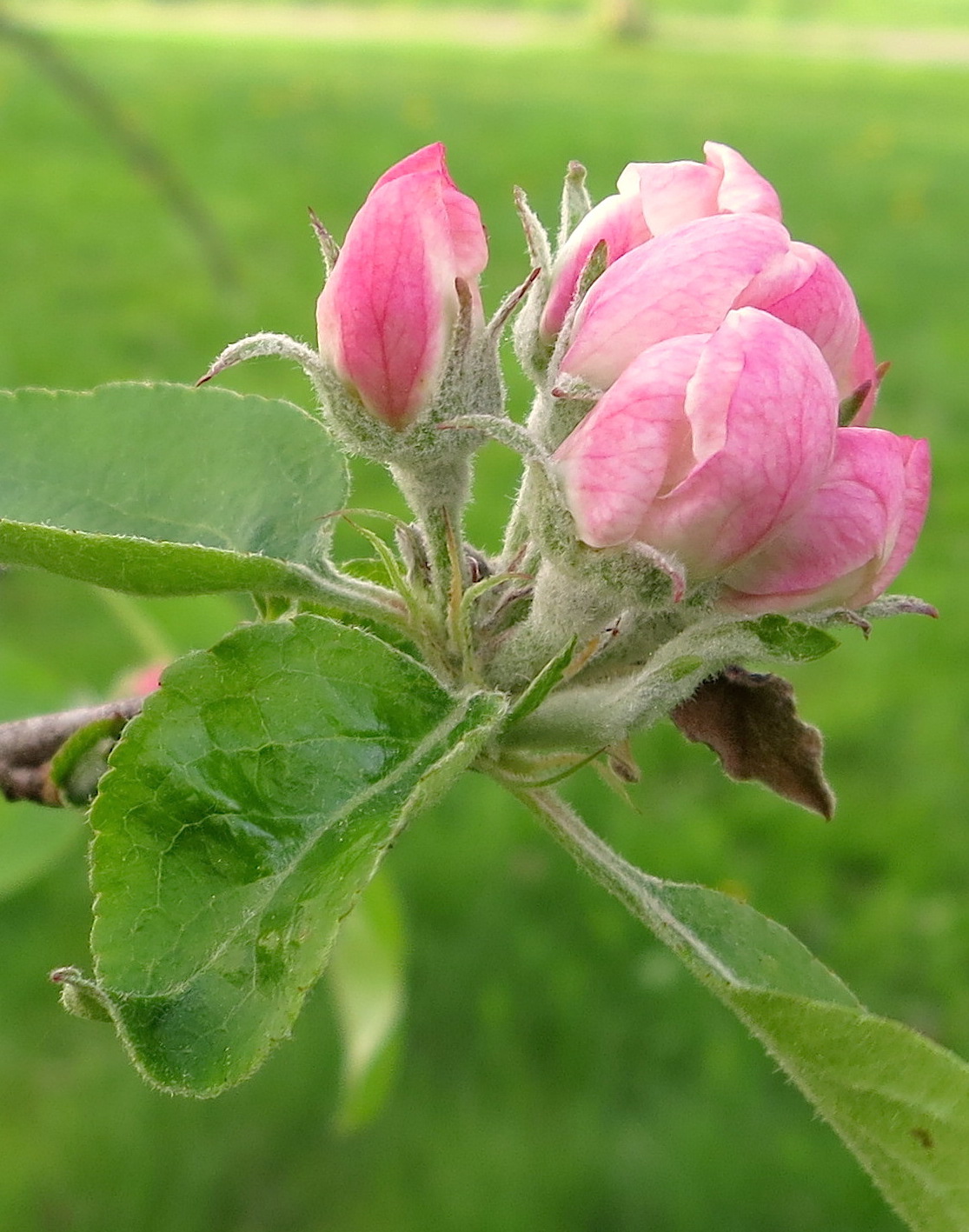
applebuds

This fevers me, this sun on green,
On grass glowing, this young spring.
The secret hallowing is come,
Regenerate sudden incarnation,
Mystery made visible
In growth, yet subtly veiled in all,
Ununderstandable in grass,
In flowers, and in the human heart,
This lyric mortal loveliness,
The earth breathing, and the sun…

…The apple takes the seafoam’s light,
And the evergreen tree is densely bright.
April, April, when will he
Be gaunt, be old, who is so young?
This fevers me, this sun on green,
On grass lowing, this young spring.

~Richard Eberhart

It is a mystery
how dead,
so very dead
can live again.
Ground frozen
mere weeks ago
now leaps lush.
Branches snapped off dry
in midwinter
now burst with bloom.

Beyond understanding
Beyond imagining
Beyond each fevered breath
that could be,
but isn’t,
our last.

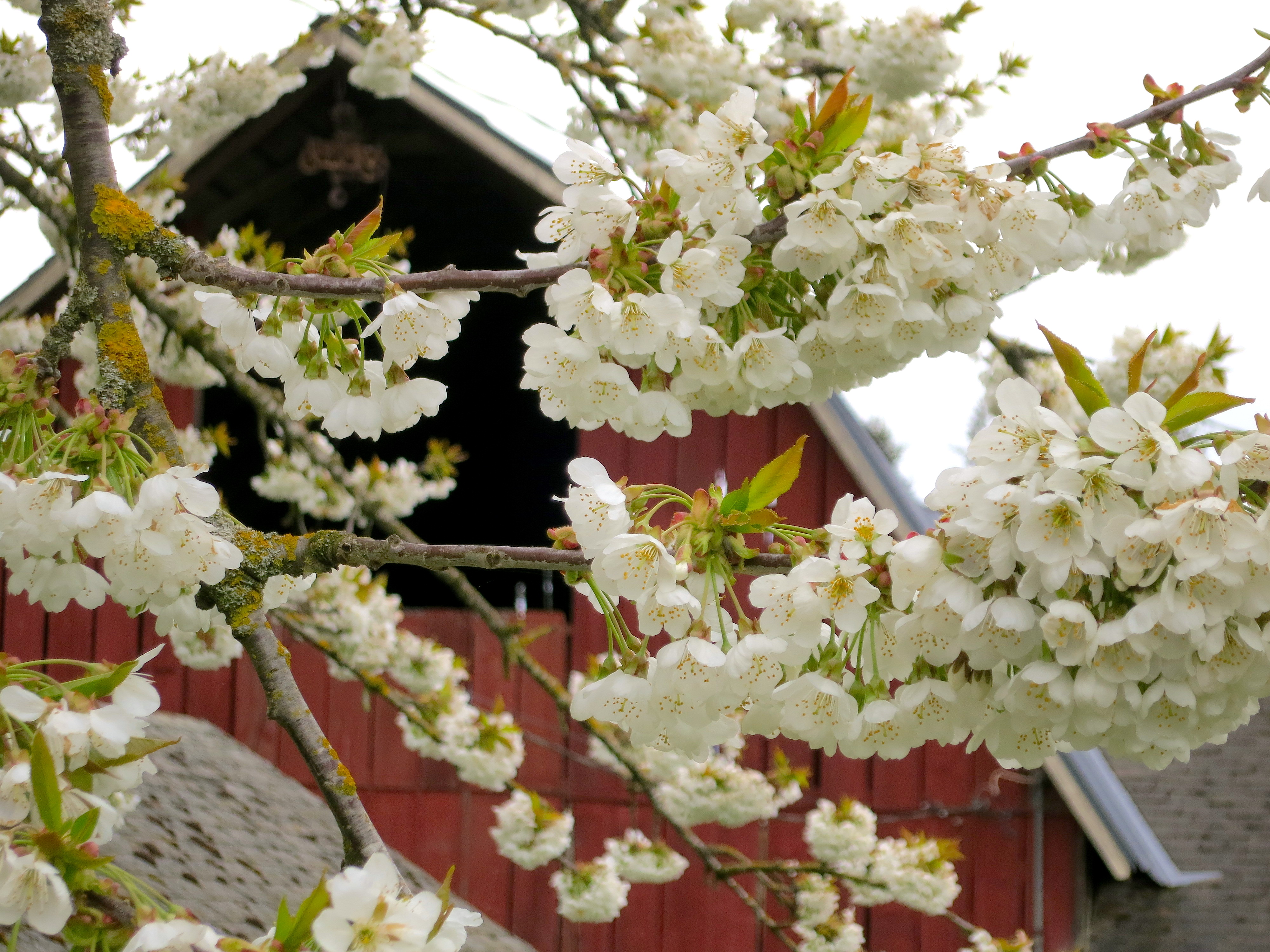
cherrybarn419

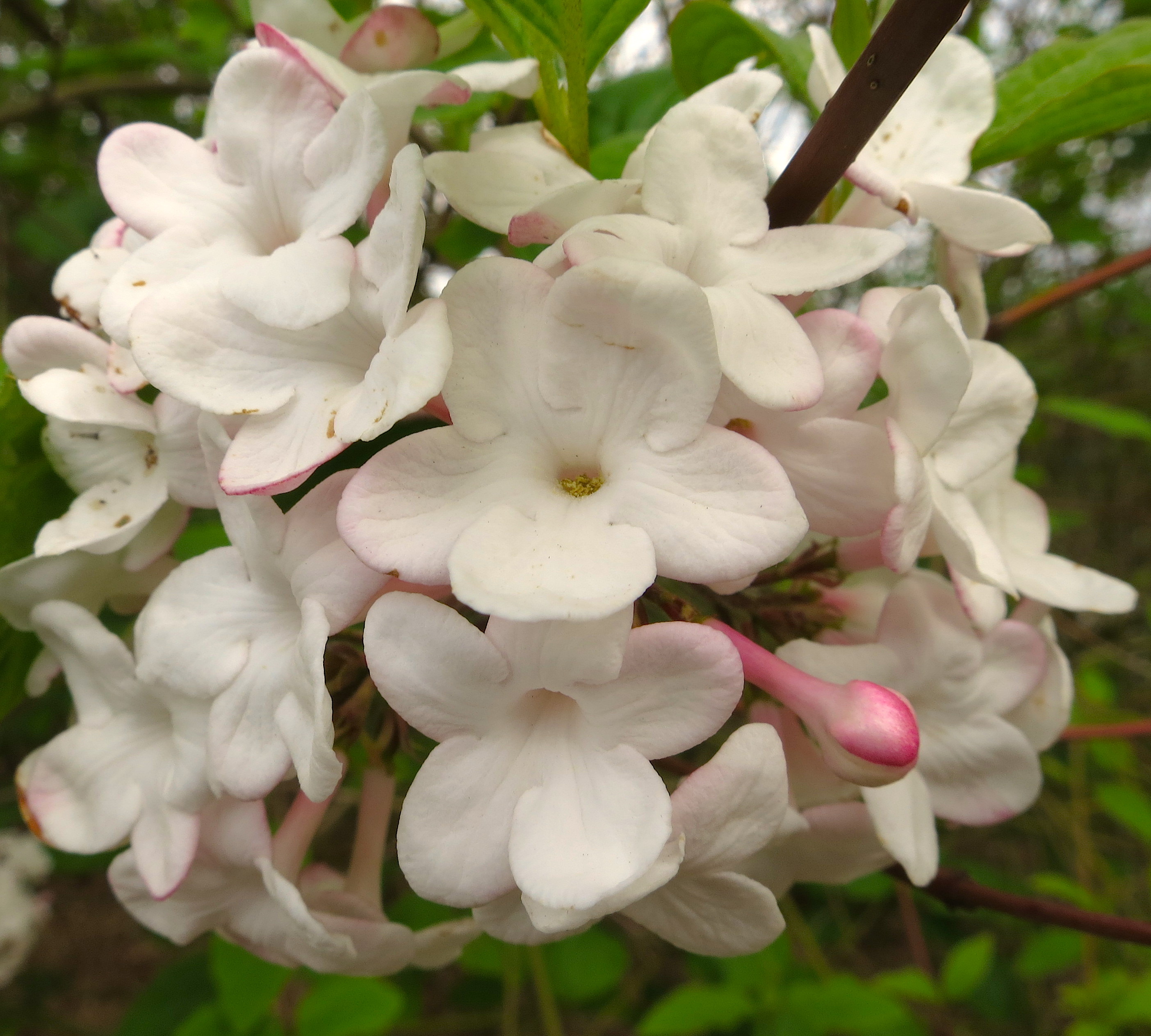
fragrant

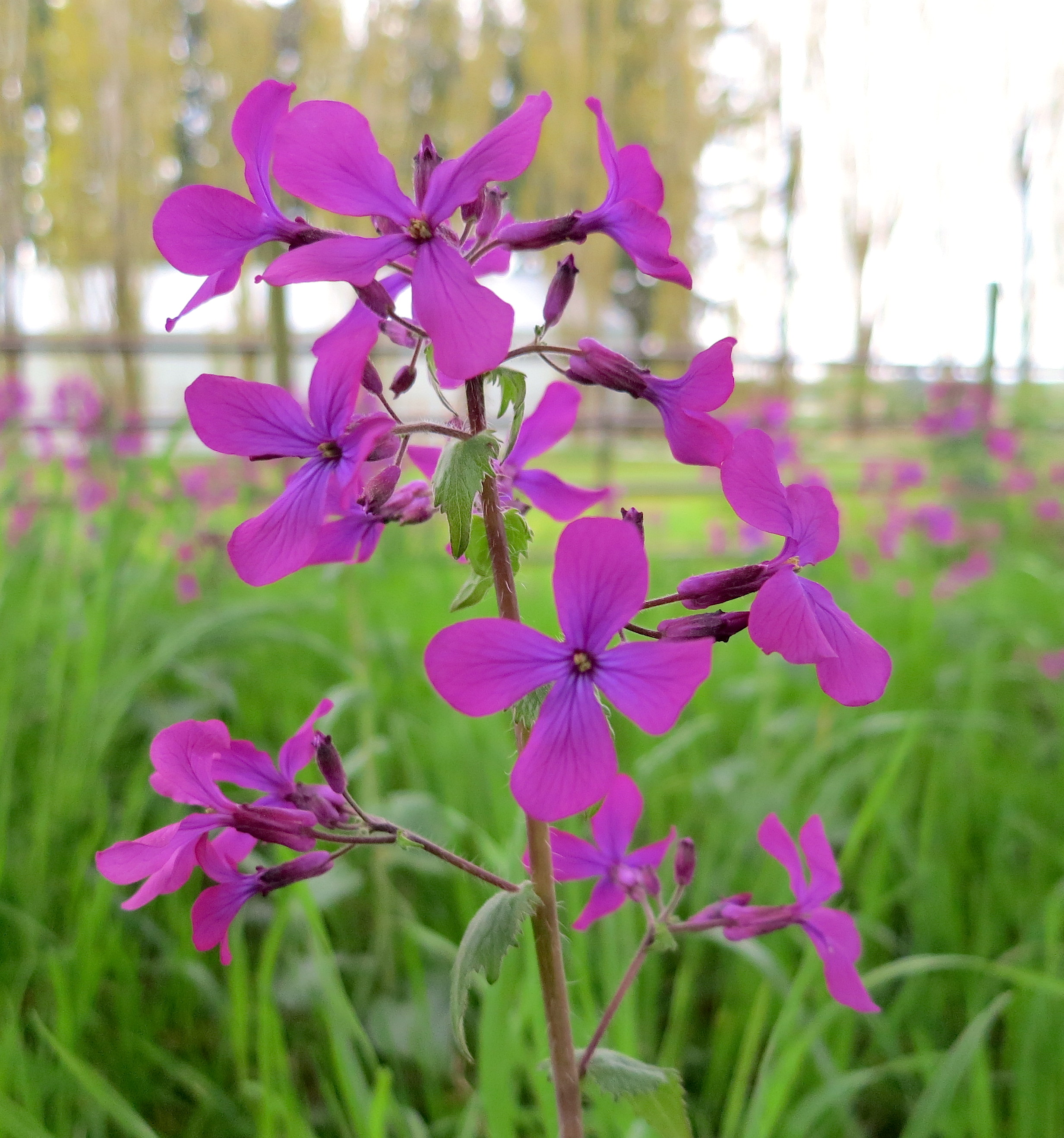
aprilweed

The Corner Has Been Turned

croci3

…To be sure, it feels wintry enough still:
but often in the very early spring it feels like that.
Two thousand years are only a day or two by this scale.
A man really ought to say,
‘The Resurrection happened two thousand years ago’
in the same spirit in which he says ‘I saw a crocus yesterday.’

Because we know what is coming behind the crocus.
The spring comes slowly down this way;
but the great thing is that the corner has been turned.
There is, of course, this difference that in the natural spring
the crocus cannot choose whether it will respond or not.
We can.
We have the power either of withstanding the spring,
and sinking back into the cosmic winter, or of going on …
to which He is calling us.
It remains with us to follow or not,
to die in this winter,
or to go on into that spring and that summer.

~C.S. Lewis–in The Grand Miracle, God in the Dock


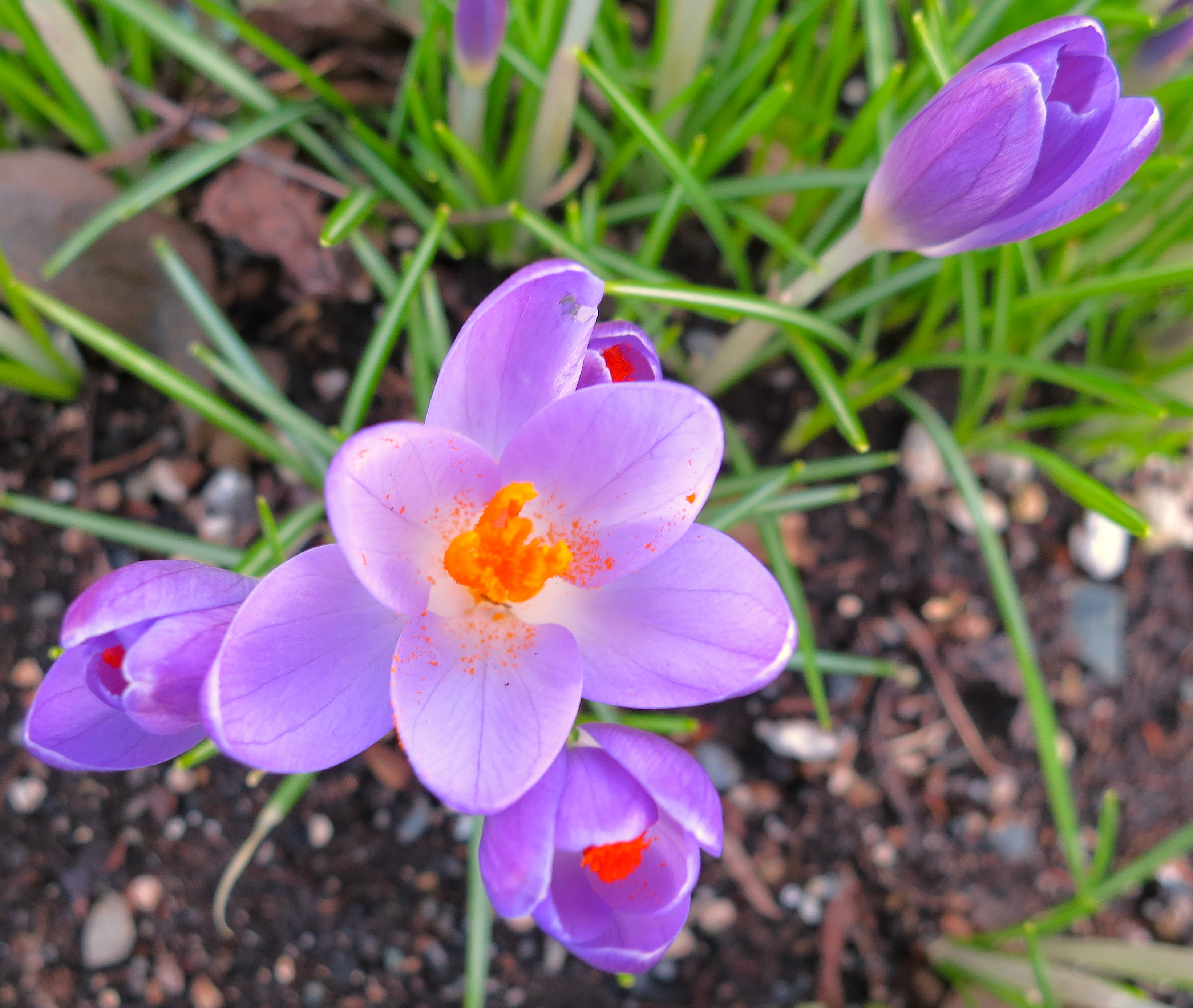
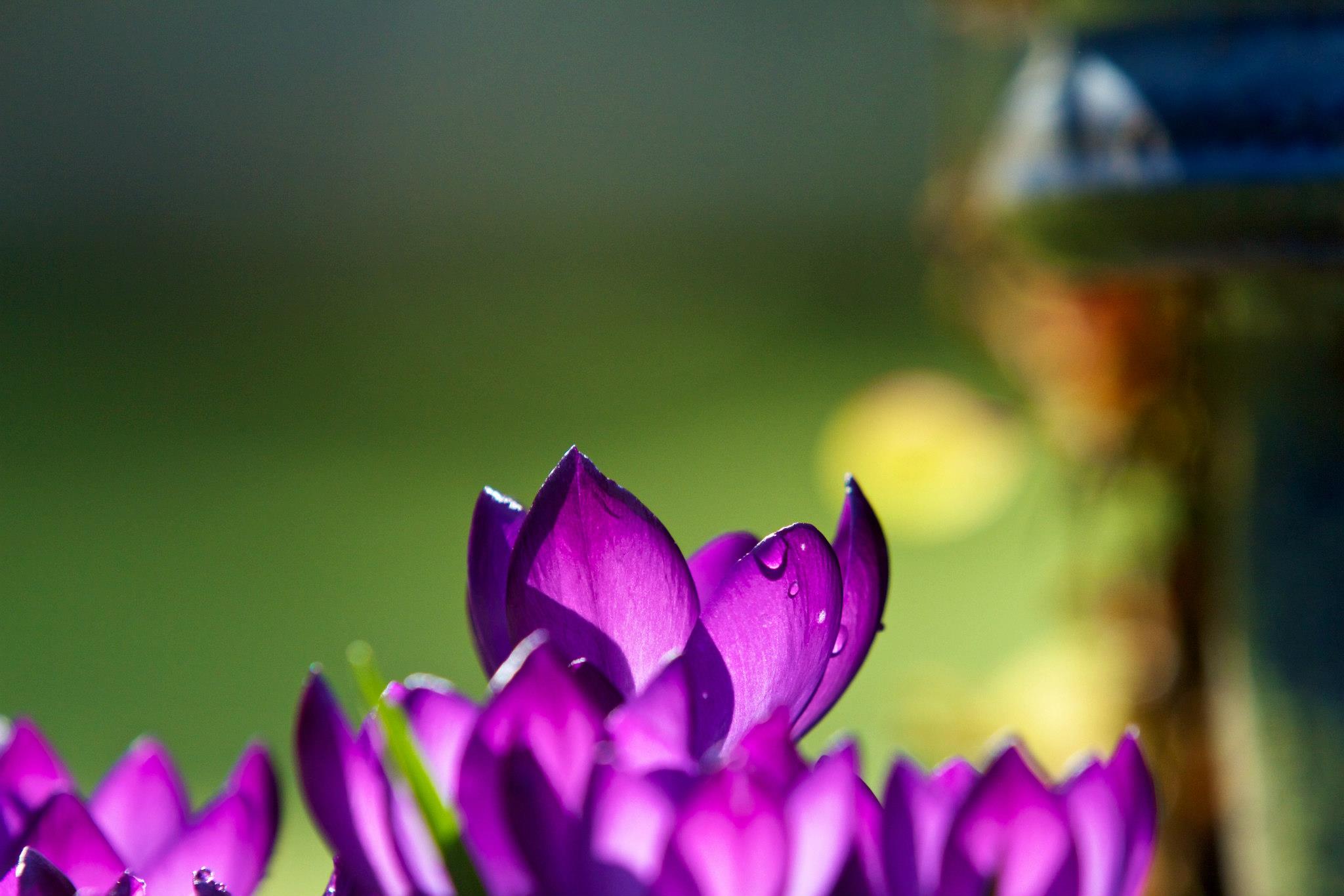
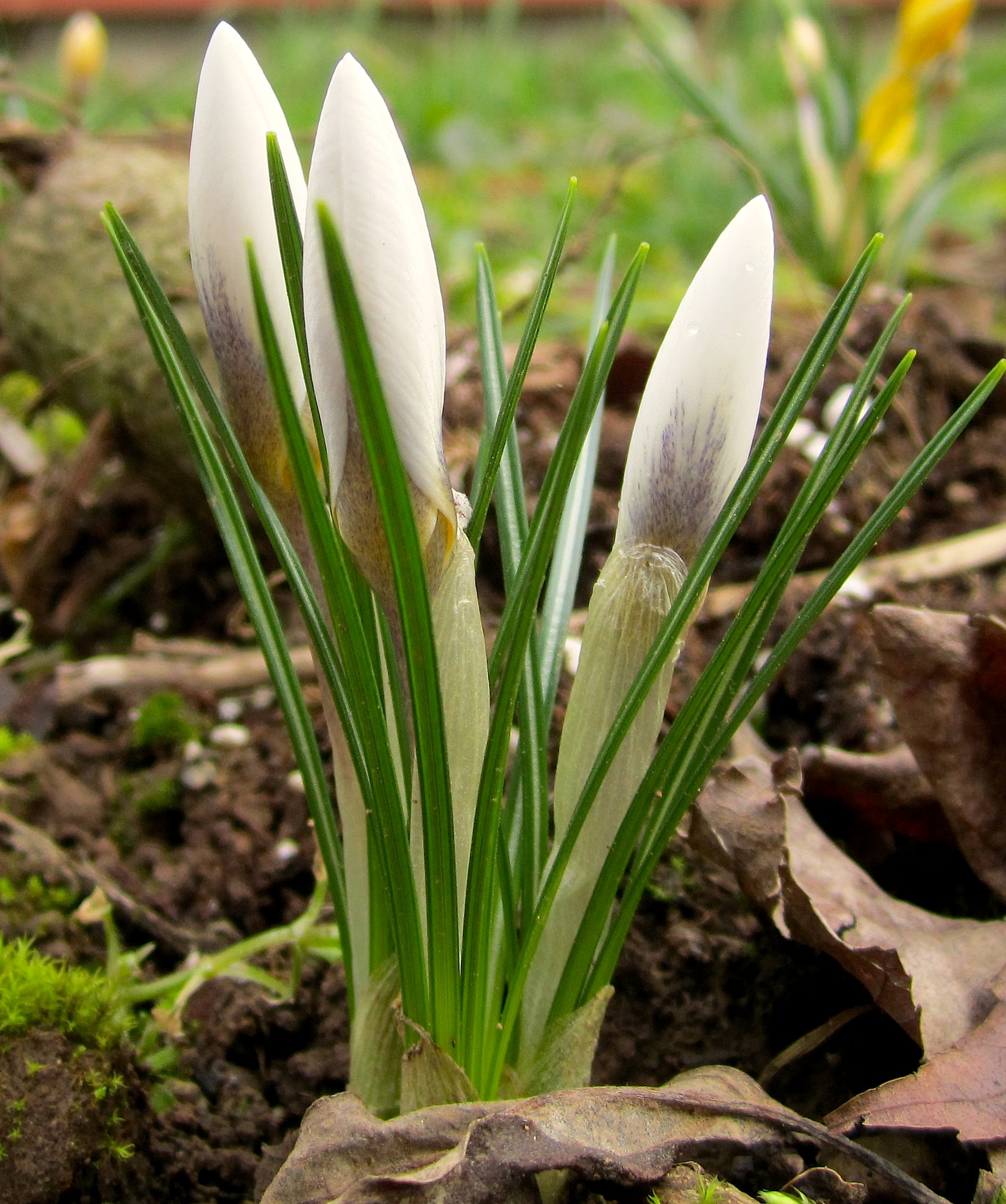
Whether mid-winter or early autumn
the crocus are unexpected,
surprising even to the observant.

Hidden potential beneath the surface,
an incubation readily triggered
by advancing or retreating light from above.

Waiting with temerity,
to be called forth from earthly grime
and granted reprieve from indefinite interment.

A luminous gift of hope and beauty
borne from a humble bulb;
so plain and only dirt adorned.

Summoned, the deep lavender harbinger rises
from sleeping frosted ground in February
or spent topsoil, exhausted in October.

These bold blossoms do not pause
for snow and ice nor hesitate to pierce through
a musty carpet of fallen leaves.

They break free to surge skyward
cloaked in tightly bound brilliance,
spaced strategically to be deployed against the darkness.

Slowly unfurling, the violet petals peel to reveal golden crowns,
royally renouncing the chill of winter’s beginning and end,
staying brazenly alive when little else is.

In the end,  they painfully wilt, deeply bruised and purple
under the Sun’s reflection made manifest;
returning defeated, inglorious, fallen, to dust.

They will rise yet again.

photo by Josh Scholten

croci13

Swaddling Shroud

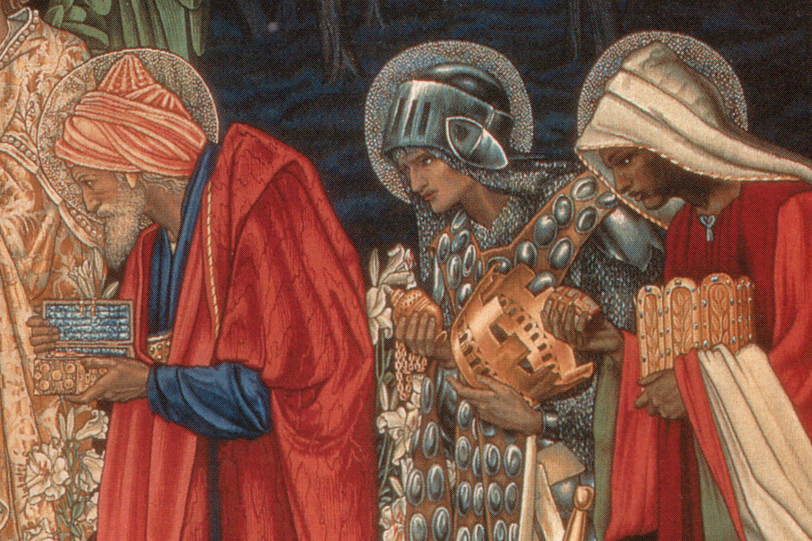
Magi by Dante Gabriel Rossetti

…the scent of frankincense
and myrrh
arrives on the wind,
and I long
to breathe deeply,
to divine its trail.
But I know their uses
and cannot bring myself
to breathe deeply enough
to know
whether what comes
is the fragrant welcoming
of birth
or simply covers the stench of death.
These hands
coming toward me,
is it swaddling they carry
or shroud?

And yet you remind us
that the wisdom
of the womb
points toward the truth
of the tomb:
that what contains us
for a moment
or a season
with your touch
will finally give way
to freedom.
~Jan Richardson from Night Visions –searching the shadows of Advent and Christmas

The Christmas season is a wrap, put away for another year.
However, our hearts are not so easily boxed up and stored as the decorations and ornaments of the season.
Our troubles and concerns go on; our frailty a daily reality.
We can be distracted with holidays for a few weeks, but our time here slips away ever more quickly.

The Christmas story is not just about light and birth and joy to the world.
It is about how swaddling clothes became a shroud that wrapped Him tight.
There is not one without the other.
God came to be with us;  delivered so He could deliver.
Born so He could die in our place
To leave the linen strips behind, neatly folded.

Christmas:  the unwrapping that frees us forever.

sunset1513

Rekindling the Burning Bush

sunset11164

sunset11167

sunset111620

When the people saw the thunder and lightning and heard the trumpet and saw the mountain in smoke, they trembled with fear. They stayed at a distanceand said to Moses, “Speak to us yourself and we will listen. But do not have God speak to us or we will die.”
Exodus 20: 18-19

It is difficult to undo our own damage, and to recall to our presence that which we have asked to leave.  It is hard to desecrate a grove and change your mind.  The very holy mountains are keeping mum.  We doused the burning bush and cannot rekindle it; we are lighting matches in vain under every green tree. Did the wind use to cry and the hills sing forth praise?
~Annie Dillard from Teaching a Stone to Talk

We push God away, not wanting to see His fire, smell the smoke of His burning branches, nor feel the singe of our own eyelashes by His heat.  In our discomfort, we fail to listen to His voice coming from the fire.  So we have doused it, quenched our longing for Him by our fear of submitting to Him.

And we cannot relight the burning bush ourselves;  it is rekindled only by His ignition through His incarnation — God With Us invites us back to the mountain, onto Holy Ground, to face Him.

Once again we can hear the wind cry and the hills sing forth praise by listening for the voice of God Himself.

sunset11161

sunset11162

sunset11166

Doorway Between Two Worlds

Rate This

“I am sorry I ran from you. I am still running, running from that knowledge, that eye, that love from which there is no refuge. For you meant only love, and love, and I felt only fear, and pain. So once in Israel love came to us incarnate, stood in the doorway between two worlds, and we were all afraid.”
~Annie Dillard in Teaching a Stone to Talk

Some doors in our lives remain forever closed and locked.  No key, no admittance, no way in, no way out.   There is clarity in a locked door with no choices to be made.  If there is a choice and I’m unsure of what I should decide, I tend to run scared.

The locked door is an invitation with the potential to change everything when the key is handed to me.  I now must make a choice, even if the choice is to do nothing.

Do I lose the key and stay put where things are at least familiar?
Do I  knock and politely wait for the door to be answered?
Do I simply wait for the moment it happens to open, take a peek and decide whether or not to enter?
Or do I boldly put the key in and walk through?

The choice to be made is as plain as the key resting in my trembling hand.
When I approach, drawn to the mystery, the door is already standing open.

Fear not.
For unto us a child is born, a son is given.

He is the threshold between two worlds, the unlocking love that allows us to throw away the key.

Emptying Like A Cloud

God empties himself
into the earth like a cloud.
God takes the substance, contours
of a man, and keeps them,
dying, rising, walking,
and still walking
wherever there is motion.
Annie Dillard from “Feast Days”

We soon will enter the season of Advent, an opportunity to reflect on a God who “takes the substance, contours of a man”, as He “empties himself into the earth like a cloud.”  Like drought-stricken parched ground, we prepare to respond to the drenching of the Spirit, ready to spring up with growth anew.

He walked among us before His dying, and rising up, He walked among us again, appearing where least expected, sharing a meal, burning our hearts within us, inviting us to touch and know Him.

His invitation remains open-ended.

I think of that every time the clouds open and empty.   He freely falls to earth, soaking us completely, through and through.

photo by Josh Scholten

Particularity

photo of barn swallow from Powdermill Avian Research Center

“Somehow the question of identity is always emerging on this farm. I found the body of a barn swallow lying just inside the barn the other day. There was no telling how it died. I noticed the intense particularity of its body, its sharply cut wings, the way its plumage seemed to glow with some residual celestial heat. But it was the particularity of death, not the identity of life, a body in stillness while all around me its kin were twittering and swooping in and out of the hayloft.”
Verlyn Klinkenborg

Stumbling across death on the farm is always startling.  The farm teems with life 24 hours a day: frogs croaking, dawn bird chorus, insects buzzing and crawling, cats stalking, raccoons stealing, dogs wagging, horses galloping, owls and bats swooping.  Amid so much activity, it doesn’t seem possible that some simply cease to be.   An ancient apple tree mysteriously topples over one morning, a beloved riding horse dies of colic, an old cat finds her final resting place in the hay loft, another old cat naps forever under a tree,  a newborn foal fails to break free of its amniotic sac, another foal delivered unexpectedly and prematurely lies still and lifeless in the shavings of the stall, a vibrantly alive dog is put to sleep due to a growing tumor,  a predator raids the dove cage and leaves behind carnage, our woods bears its own tragic history.

Yet, as often as it happens,  there is a unique particularity about death.  The stillness of death permits a full appreciation of who this individual is, the remarkable care that went into creating every molecule of his being. The presence of absence is a stark and necessary reminder of our mortality.

In truth, we will glow with residual celestial heat, still warm even after our hearts cease to beat.   We are distinct individuals in our own particularity–living and dying at a particular time and place as a unique creature, given a chance in the cosmos of infinite possibilities.  The Creator knit us together specially, every feather, hair, bone and sinew a work of His Hands, and what we do with what we are given is all the stuff between our first breath and our last.  Particularity is a good reminder not to squander our brief time as part of the history of the world.

A guarantee of particularity is the presence of His Holy breath, though momentarily stilled, yet still filling us forever.

photo from St. Lucie Audobon Society

Lenten Reflection–The Cost of Humanity

20120330-185716.jpg

Man was added to Him, God not lost to Him; He emptied Himself not by losing what He was, but by taking to Him what He was not.
Augustine

Look upon the baby Jesus. Divinity may terrify us. Inexpressible majesty will crush us. That is why Christ took on our humanity…that he should not terrify us but rather that with love and favor he should console and confirm.” Martin Luther

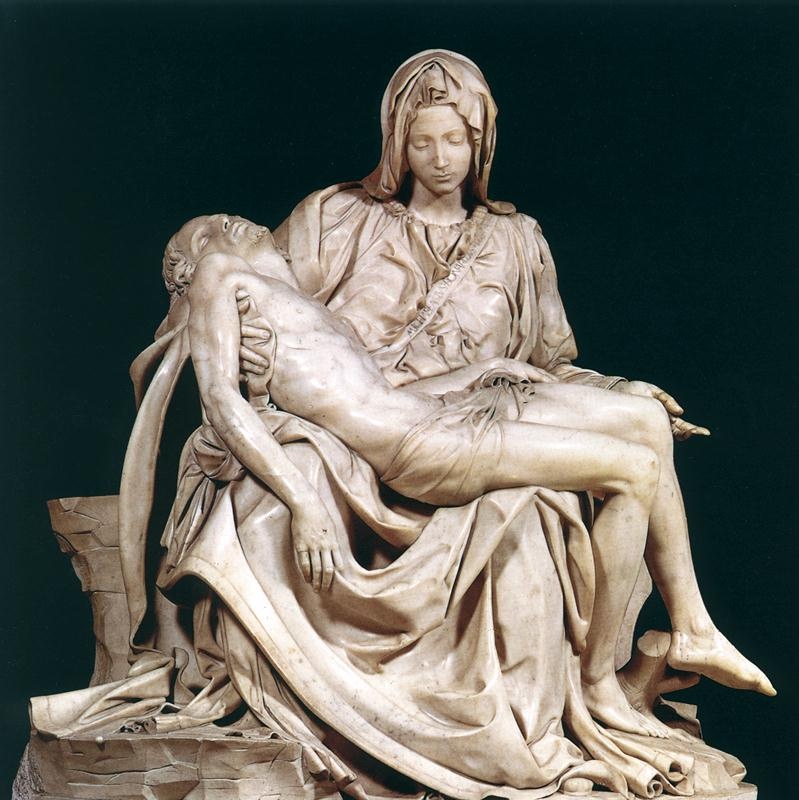
He was pushed out in those first moments on earth, birth-bloodied, then cradled and held in human arms. Three decades later, He was pulled down following  His last breath, death-bloodied, then cradled and held in human arms. The symmetry of His birth and death mirrors the symmetry of our lives, a consolation about how He belongs to us as much as we belong to Him.

The blood shed at birth is the mother’s alone. The blood lost at death is God’s alone, pumping through human heart and arteries, soaking the wretched ground below.

He empties completely because He is fully human; He returns risen and complete because He is fully God.

20120331-005826.jpg