“He (the professor) asked what I made of the other students (at Oxford) so I told him.
They were okay, but they were all very similar…
they’d never failed at anything or been nobodies,
and they thought they would always win.
But this isn’t most people’s experience of life.
He asked me what could be done about it.
I told him the answer was to send them all out for a year
to do some dead-end job
like working in a chicken processing plant
or spreading muck with a tractor.
It would do more good than a gap year in Peru.
He laughed and thought this was tremendously witty.
It wasn’t meant to be funny.
~James Rebanks from The Shepherd’s Life:Modern Dispatches from an Ancient Landscape
(or how a sheep farmer succeeds at Oxford and then goes back to the farm)
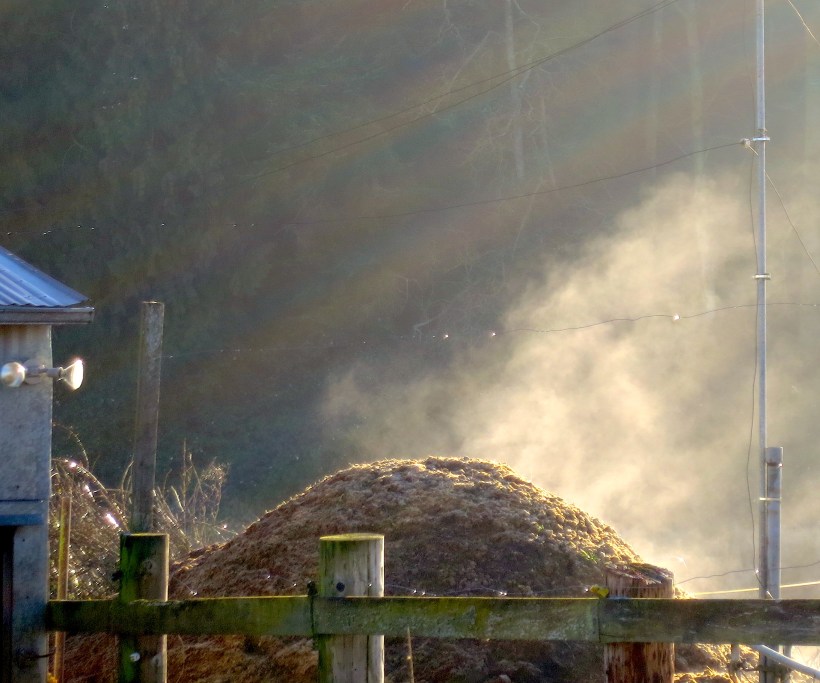
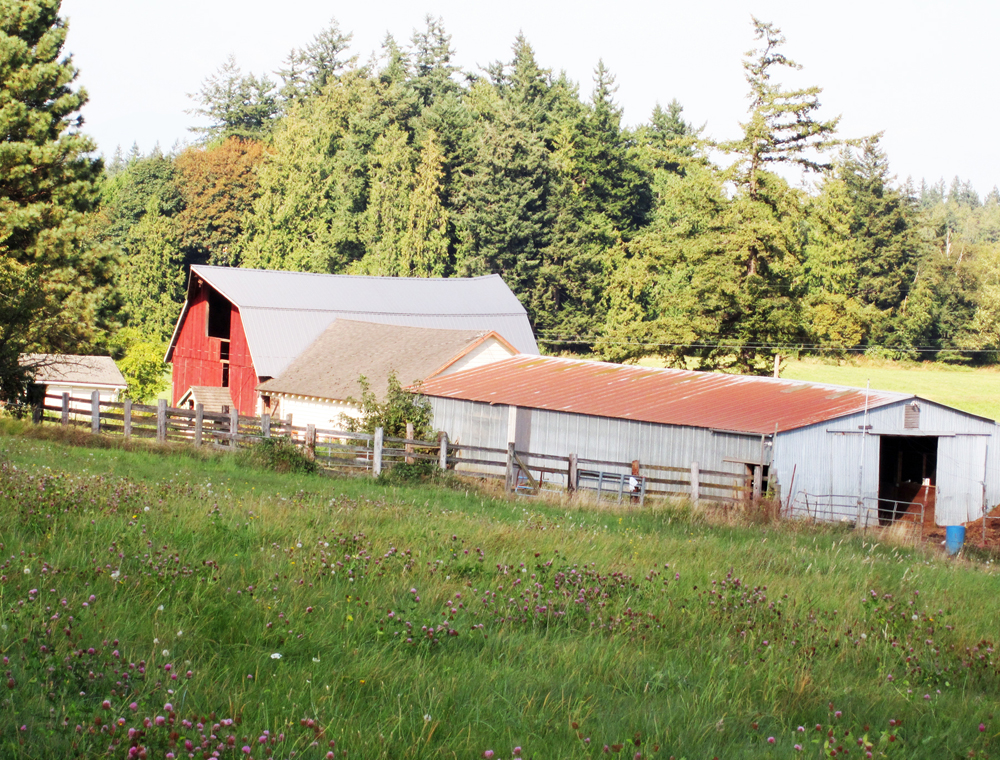
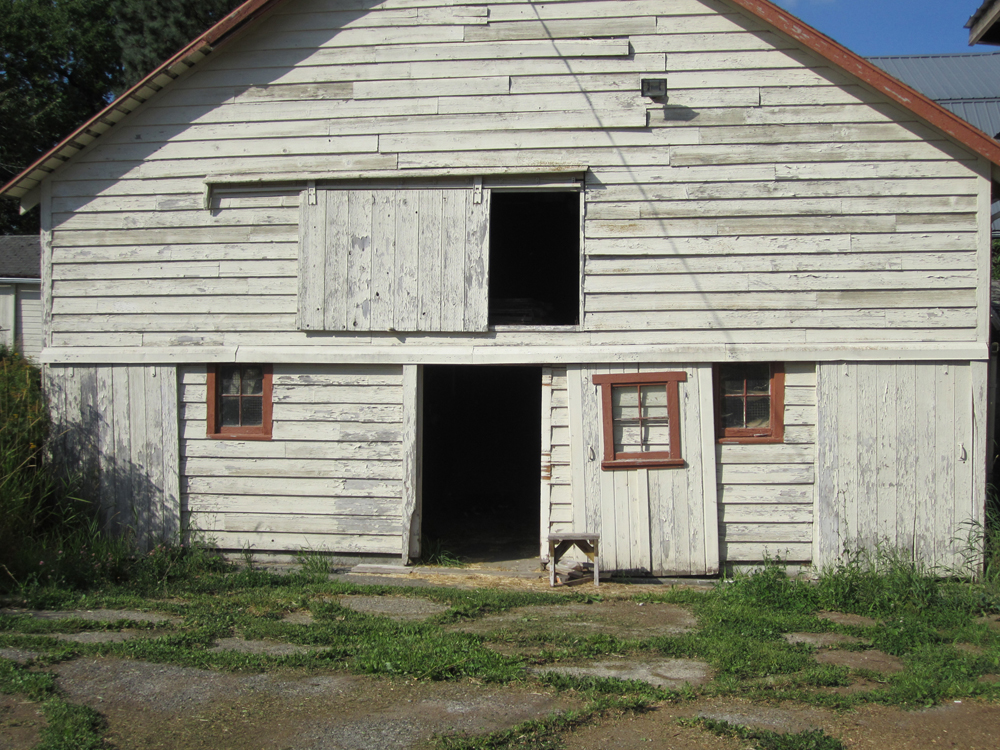
For almost thirty years, I have spent about an hour a day shoveling manure out of numerous horse stalls and I’m a better person for it. Wheeled to a mountainous pile in our barnyard, this daily collection of manure happily composts year round, becoming rich fertilizer in a matter of months through a crucible-like heating process of organic chemistry, bacteria and earthworms. Nothing mankind has achieved quite matches the drama of useless and basically disgusting stuff transforming into the essential elements needed for productive growth and survival. This is a metaphor I can <ahem> happily muck about in.
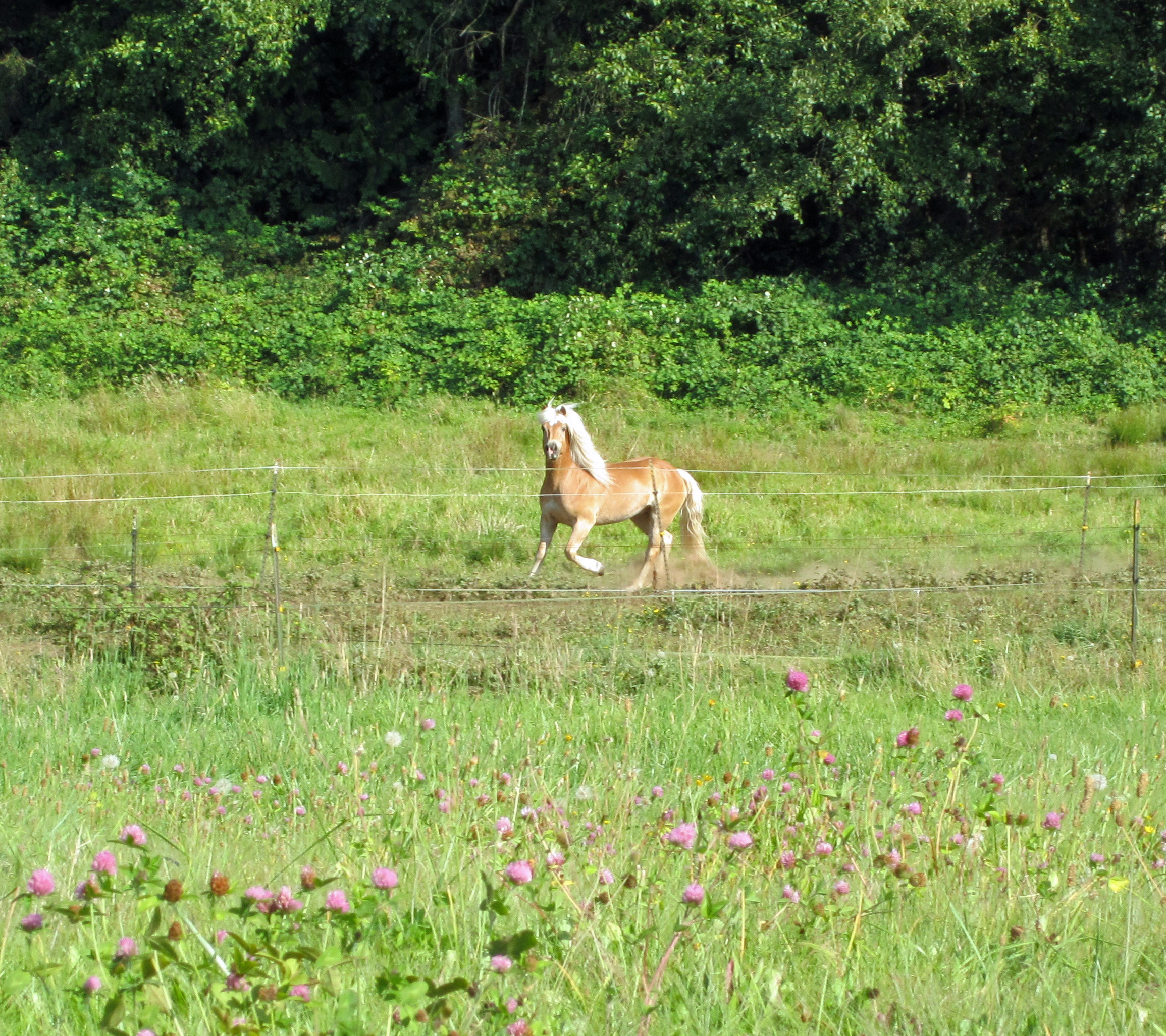
I’m in awe, every day, at being part of this process — in many ways a far more tangible improvement to the world than anything else I manage to accomplish every day. The horses, major contributors that they are, act underwhelmed by my enthusiasm. I guess some miracles are relative, depending on one’s perspective, but if the horses understood that the grass they contentedly eat in the pasture, or the hay they munch on during the winter months, was grown thanks to their carefully recycled waste products, they might be more impressed.
Their nonchalance about the daily mucking routine is understandable. If they are outside, they probably don’t notice their beds are clean when they return to the stalls at night. If they are inside during the heavy rain days, they feel duty-bound to be in my face as I move about their stall, toting my pitchfork and pushing a wheelbarrow. I’m a source of constant amusement as they nose my jacket pockets for treats that I never carry, as they beg for scratches on their unreachable itchy spots, and as they attempt to overturn an almost full load, just to see balls of manure roll to all corners of the stall like breaking a rack of billiard balls in a game of pool.
Good thing I’m a patient person always seeking an object lesson in whatever I see or do ~ mucking out stalls every day helps me tolerate the proverbial muck I encounter every day off the farm. And spending an hour a day getting dirty in the real stuff somehow makes the virtual manure less noxious. Everyone should be mucking out as I think the world would generally be a better place.
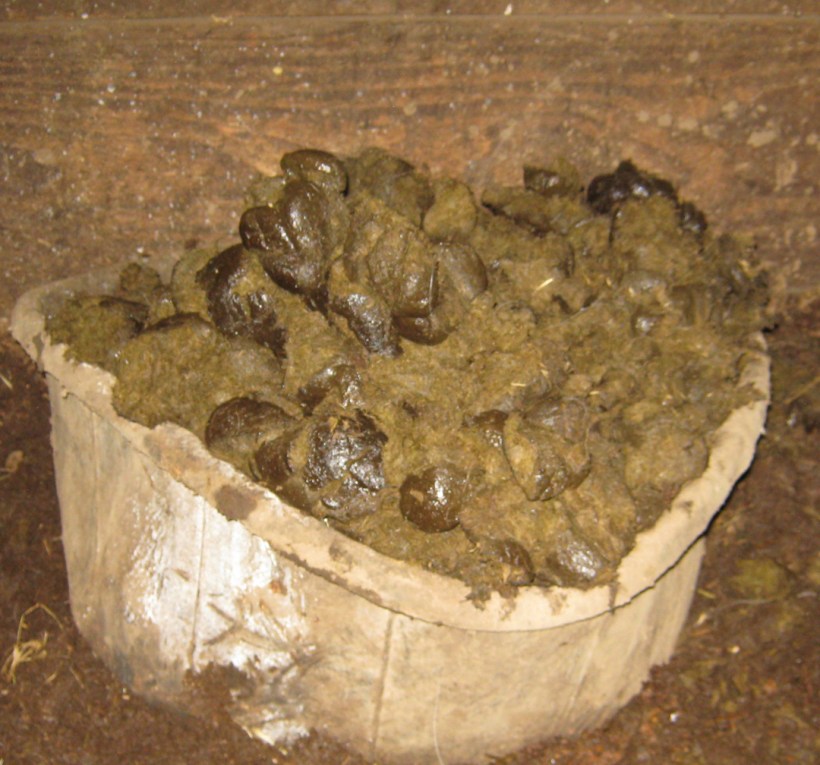
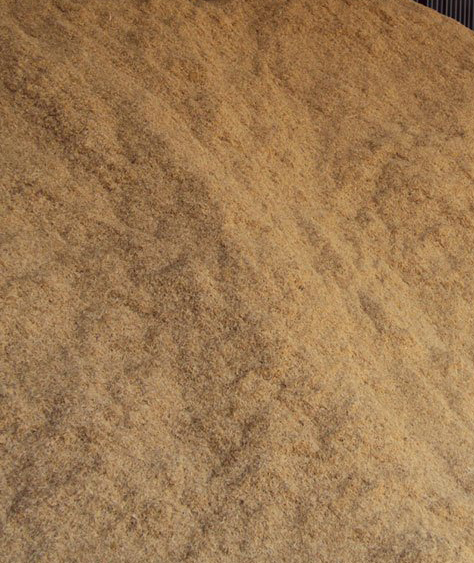
My former stallion, now gelded, discovered a way to make my life easier rather than complicating it. He hauled a rubber tub into his stall from his paddock, by tossing it into the air with his teeth and throwing it, and it finally settled against one wall. Then he began to consistently pile his manure, with precise aim, right in the tub. I didn’t ask him to do this. It had never occurred to me. I hadn’t even thought it was possible for a horse to house train himself. But there it is, proof that some horses prefer neat and tidy rather than the whirlwind eggbeater approach to manure distribution. After a day of his manure pile plopping, it is actually too heavy for me to pick up and dump into the wheelbarrow all in one tub load, but it takes 1/4 of the time to clean his stall than the others, and he spares all this bedding.
What a guy. He provides me unending inspiration in how to keep my own personal muck concentrated rather than spreading it about, contaminating the rest of the world.
Now, once I teach him to put the seat back down when he’s done, he’s welcome to move into the house…

 Barnstorming