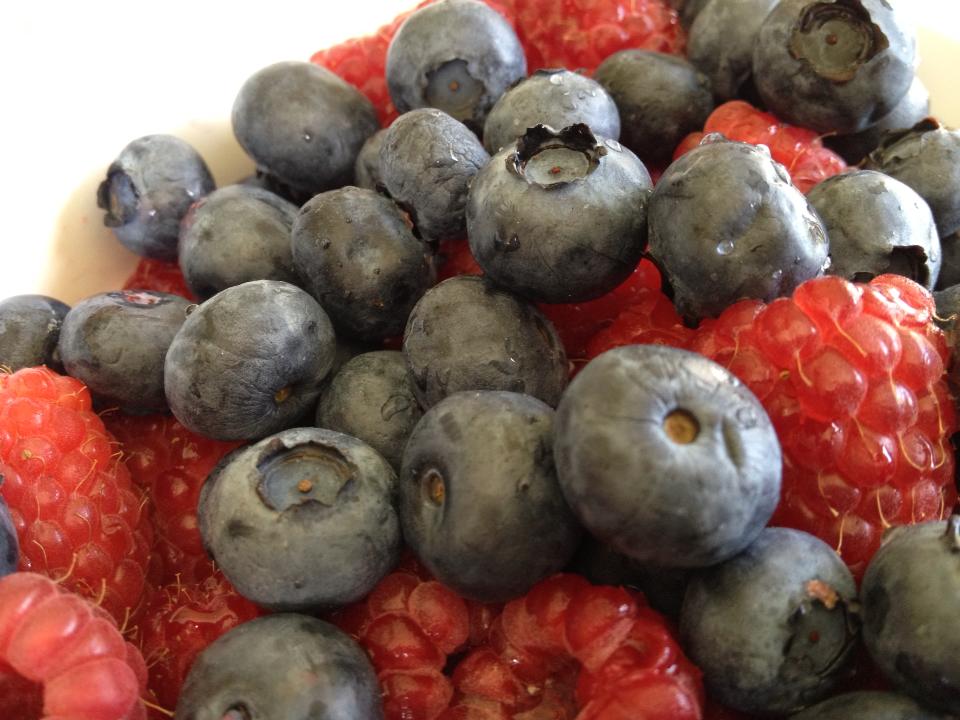
A Berry Bonanza

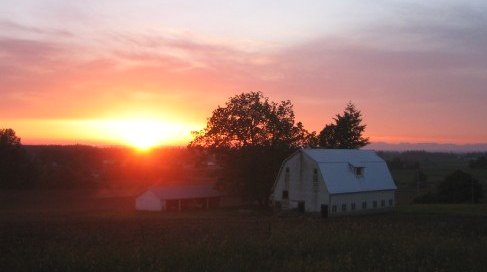
photo by Nate Gibson

We live in the middle of bountiful berries this time of year.  Strawberries just finished a few weeks ago, raspberries have been strong for almost three weeks and the blueberries are hanging in heavy branch-busting clusters begging for relief.  Domesticated marion blackberries are already in the berry stands, but the wild blackberries are about two weeks from harvesting.  There are a few cranberry bogs in the area too, but they have weeks to go before they are ripe.  It is truly a miracle to live within a few miles of all this lovely fruit, with most of them growing in our own back yard.

There are still wild strawberries in close-to-the-ground crawling vines with little thimble shaped berries with a slightly tart taste, far more interesting than the standard sweet juice laden market strawberry.  Orange huckleberries grow wild in the low lands, and purple huckleberries are happiest up in the foothills, a great treasure find for hikers.  Most highly prized, however, are the sweet tiny wild blackberries that ripening close to the ground right now at the edges of the woods, as well as often in roadside ditches or around tree stumps.  They command huge prices per pound because it takes such effort to find and pick them.

As a child of the Pacific Northwest, growing up on a farm with woodlands and meadows with both wild and domesticated berry bushes, this was simply part of summer as I knew it.  I watched the blossoms, then the forming fruit, then watched as the color would get just right, waiting to pick until the precise moment of ripeness before the birds would beat me to it.  I also picked in the local fields as a summer job, including wild blackberries from our own woods, for 3 cents a pound.  For the sweet wild blackberries, a yield of 75 cents was an exceptionally great day.

I preferred blueberry picking most of all.  When I put a blueberry in my mouth, I transport back to those summer days that started at 6 AM, walking down the road to the neighbor’s,  to their low pungent smelling peat ground converted from swamp to productive berry farm before the legislation that now prevents messing with wetlands.  The bushes were tall, towering over my head, providing shade in the hot sweaty July  sun.  The berry clusters were easy to find, there were no thorns to shred sleeves and skin, and the berries made a very satisfying *plink* when they hit the empty pail.  They didn’t smush, or bruise, and didn’t harbor many bees, spider webs or ugly bugs.  They were refreshingly sweet and rejuvenating when a quick snack was in order.   I wasn’t even aware, as I am now, that blueberries contain anthocyanins and other antioxidant chemicals believed to be helpful in preventing the growth of cancer cells.   In short, blueberries were perfect then, and they are perfect now.

There are now so many blueberries,  the local market is flooded and the price per pound has dropped considerably.  A few years ago one farmer put a full page ad in the local newspaper today, begging the public to come pick his ripe blueberries at 99 cents a pound, just to get them off his bushes.  I stopped by another farm’s roadside stand and chatted with the Sikh owner and his three young sons as they measured out my 5 pounds of luscious blueberries.  He was philosophical about the low prices, explaining he was a patient man, and the bushes would yield blue gold for him for a very long time, even if some years will be low price years.

As a fellow farmer, I appreciated his willingness to hold out through the rough times.  He beamed with pride about the perfection of his crop, plentiful as it was.   My tastebuds agree:  this was the perfect berry 45years ago in my backyard, and some things thankfully never change.
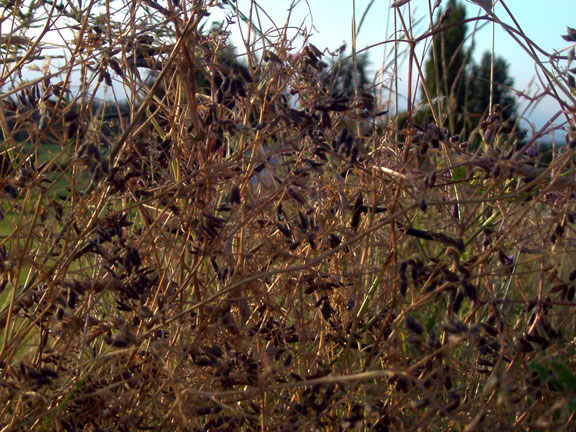
Listening to the Vetch

vetch

Hot humid summer days are barely tolerable for a temperate climate sissy pants like me.  I am melting even as I get up in the morning, and right now our house is two degrees warmer (93 degrees) than the out of doors.  So distractions from the heat are more than welcome.

For me today it started as I drove the ten miles of country roads to get to work in town, running a bit late to an important meeting.  I was listening to the news on the car radio when I puzzled over why the radio station would be playing cat meows over the news.  I turned off the radio, and realized the meows didn’t go away.

As soon as I was able, I pulled into a parking lot and surveyed my van from back to front, looking under seats, opened the back, scratched my head.  Then the meowing started again—under the hood.  I struggled with the latch, lifted up the hood and a distressed bundle of kitten fur hurtled out at me, clinging all four little greasy paws to my shirt.  Unscathed except for greasy feet, this little two month old kitten had survived a 50 mile per hour ride for 20 minutes, including several turns and stops.  He immediately crawled up to my shoulder, settled in by my ear, and began to purr.  I contemplated showing up at a meeting with a kitten and grease marks all over me, vs. heading back home with my newly portable neck warmer.  I opted to call in with the excuse “my cat hitchhiked to work with me this morning and is thumbing for a ride back home” and headed back down the road to take him back to the barn where he belongs, now with the new name “Harley” because he clearly desires the open road.

At that point, my meeting in town was already completed without me so I went out to check fence line as the hot wire seemed to be shorting out somewhere in the pasture as the mares had decided that the wire interfered with their hearts’ desire and had broken through, so it clearly was not hot enough to discourage them.  It has been a very hot few days with persistent drying breezes this afternoon so as I approached the fence line, I heard numerous snaps and pops that I interpreted as hot wire shorting out in the dry grass and weeds, creating a fire hazard and certainly potentially dangerous with the winds whipping up.  I walked closer and was really puzzled to hear snaps all up and down the fence, but could not see sparks.  I approached more closely and heard a little “snap” and a tiny seed pod burst open in front of my eyes, dropping its contents very effectively.  It was the dried common vetch seed pods that were snapping and popping, not hot wire shorting out.  They were literally exploding all up and down the fenceline in a reproductive symphony of seed release.  I put the broken wire back to together, plugged it in and all was well, at least until the next Haflinger decides the adjacent pasture looks better.

Returning to the barn,  I saw our stallion pawing furiously at his round black rubber water tub in his paddock, splashing water everywhere and creating quite a spectacle.  I went up to him to refill the tub with the hose and he continued to paw and splash in the tub and actually went down on his knees in the tub and then tried to lower one shoulder into it and his neck and face.  By this time he had created quite a mud puddle of the thick dust around the tub and his splashing and thrashing was causing mud to fly everywhere, including all over me, my hair, covering his mane and tail and belly and legs.  I took the hose and sprayed the cold water over him and he leaned closer to me, begging me to spray him everywhere, turning around so I could do his other side, facing me so I could spray his face.  I drenched him completely, and he was one happy horsie and I was laughing my head off at what he had done to me.  Both drenched, muddy, dirty, but happy and much much cooler.  What a sight we were.  This is the Haflinger that hesitates sometimes at water hazards on the cross country courses because he wants to splash and play in it.

This was a hot day on the farm indeed but with plenty else to occupy my mind.  It is never dull here.

Remember to bang on your car hood before you get in, keep the hotwire hot, and share a mud bath with your Haflinger. But especially, listen to the vetch and don’t let it fool you that catastrophe is about to happen.  The vetch is simply exploding in noisy reproductive ecstasy.  It doesn’t get much better than that.

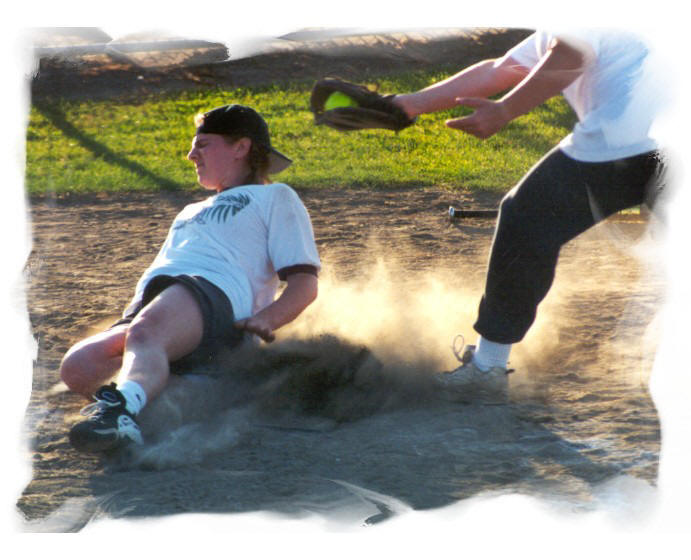
Sliding to Home

67

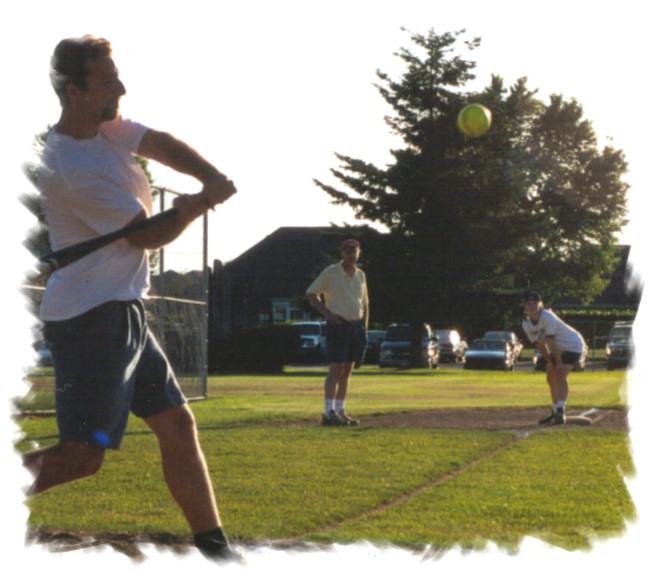
Our church belongs to a summer co-ed softball league, along with 8 other churches and a few local businesses.  This has been a traditional Thursday evening summer activity for the past generation or longer.  Couples have met for the first time on the ball fields and eventually marry. Babies have attended games in back packs and strollers and now are catching at home plate.  Relatives going to different churches find themselves on opposing teams yelling good natured insults.  There are a few bopped heads, abrasions, sprained fingers and broken legs as part of the deal.  Hot dog roasts and ice cream sundaes are the after game rewards.

Yet nothing is quite as wonderful as how a team recreates itself year after year.  It is thrown together by our coach Brenda in a mere two weeks prior to the season starting, with the youngest members needing to be at least age 14 with no upper age limit; we’ve had our share of 70+ year olds on the team over the years.   Some ball players are raw beginners having never played catch or swung a bat outside of school PE class, and others have extensive history of varsity fastpitch in school or other community league play so mean business when they stride out on the diamond.  It is the ultimate diverse talent pool.

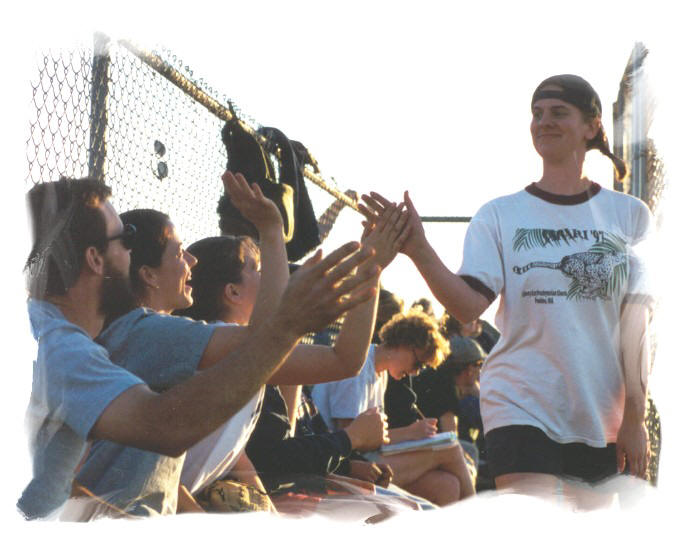
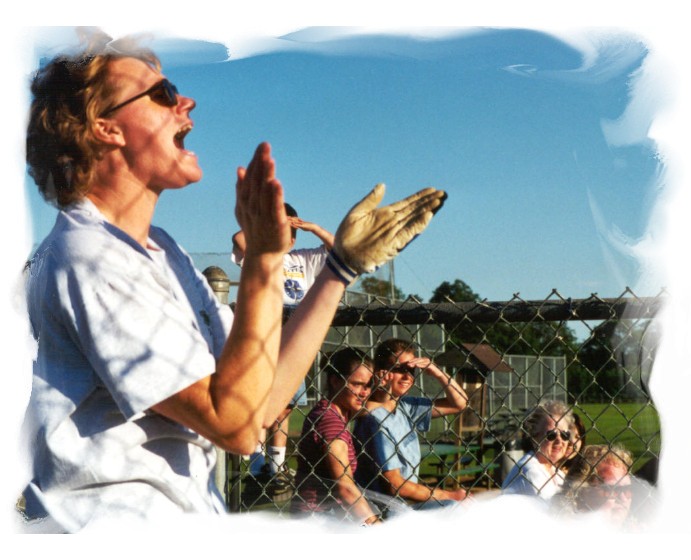
A different dynamic exists in church league softball compared to Little League, Pony League, minors or majors when you watch or play. Sure, there are slow pitch teams that will stock their ranks with “invitation-only” players, reserving the best and most athletic so there is a real chance at the trophy at the end of the summer.  Churches like ours, a mere 150 people average weekly Sunday attendance, have a “come one, come all” attitude, just to make sure we avoid forfeiting by not having enough players week after week.   We always do have enough.  In fact we have more players than we can sometimes find positions for.  And we have a whole bleacher full of fans, dedicated to cheering and clapping for anything and everything our players do, whether it is a pop-up foul ball, a strike out swing, a missed catch, or an actual hit.  We love it all and want our players to know they are loved too, no matter what they do or what happens.

I think that is why the players and fans come back to play week after week, though we haven’t won a game in years.  We root and holler for each other, get great teaching and encouragement from our fantastic coach, and the players’ skills do improve year to year despite months of inactivity.  We have a whole line up of pre-14 year olds eager to grow old enough to play, just so they can be a part of the action.

Why does it not matter that we don’t win games?  We are winning hearts, not runs.  We are showing our youngsters that the spirit of play is what it is all about, not about the trophy at the end.  We are teaching encouragement in the face of errors, smiles despite failure, joy in the fellowship of people who love each other–spending an evening together week after week.  We are family; family picks you up and dusts you off when you’ve fallen flat on your face during your slide to base while still being called “out.”

Most of all, I see this as a small piece of God’s kingdom in action.

Our coach models Jesus’ acceptance of all at the table, and embodies the fruits of the spirit: love, joy, peace, patience, kindness, gentleness, faithfulness, and self control.

Our players are the eager, the ambivalent, the accurate, the flawed, the strong, the weak, the fast, the slow: chosen for the game even if they are completely inadequate to the task at hand, volunteering to be part of each moment as painful as it can sometimes be.

The cheering from the bleachers comes as if from heaven itself:  Do not be afraid.  Good will to all.  We are well pleased. Amen!

We’re sliding to home plate, running as hard as we can, diving for safety, covered in the dust and mire and blood of living/dying and will never, ever be called “out”.

Let’s play ball.

1315

Stacking the Hay

6651_512624400914_148300158_30510731_6701452_n6651_512624395924_148300158_30510730_6814861_n

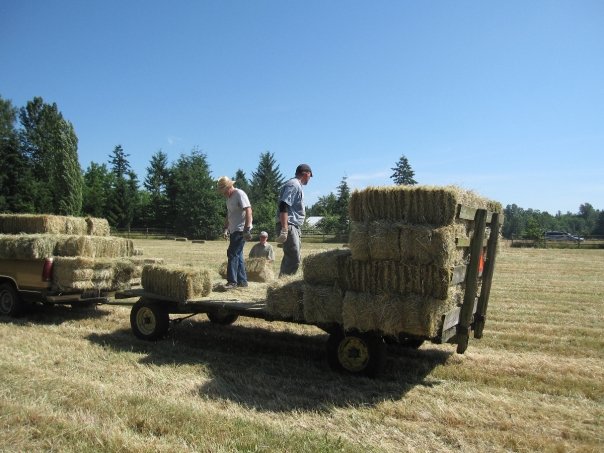
Every hay crew is the same
Though the names change;
Young men flexing their muscles,
A seasoned farmer defying his age
Tossing four bales high,
Determined girls bucking up on the wagon,
Young children rolling bales closer,
Add a school teacher, pastor,
Professor, lawyer and doctor
Getting sweaty and dusty
United in being farmers
If only for an evening.

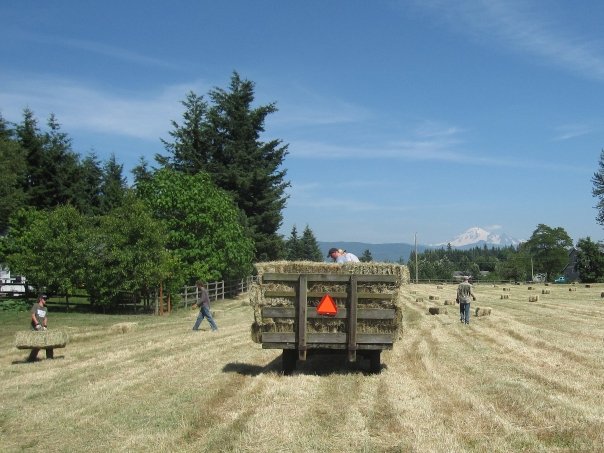
Stacking
Basket weave
Interlocking
Cut side up
Steadying the load
Riding over hills
Through valleys
In slow motion
Eagles over head
Searching the bare fields
Evening alpen glow
Of snowbound
Eastern peaks

Friends and neighbors
Walking the dotted pastures,
Piling on the wagons,
Driving the truck,
Riding the top of hay stack
In the evening breeze,
Filling empty barn space to the rafters,
Making gallons of lemonade in the kitchen.
A hearty meal consumed
In celebration
Of summer baled, stored, preserved
For another year.

Hay crew
Remembered on
Frosty autumn mornings before dawn
When bales are broken for feed
And fragrant summer spills forth.
In the dead of winter

Declaration of Independence

tree

Perhaps day early fireworks
Combusting in spontaneous eruption at dawn.
A pop, then silence
A crack, then several more—

Stirred from spooning pallid oatmeal,
I look up from the morning comics
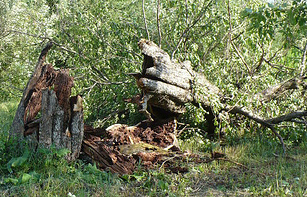
To see the ancient Spitzenburg tree of life
Falling irrevocably split and splintered.

I wonder: hit by lightening? Absurd.
The sky is azure liquid lit.
Perhaps I hear anticipated echoes of dream-like resonance
Of midnight explosion of sulfured flowers and raining sparks.

Yet there it lies in dew-damp still,
Hollowed trunk emptied out like brittle bone broken,
Giving away in gasping expectancy
Of winter windstorms to come.

Perchance I can be patched together
With baling twine and superglue,
To hatch more of Thomas Jefferson’s apple favorites,
Sweet declaration to fuel his raison d’etre.

Instead chose rotting in fragile finale without encore,
Shattered sans wind, lightening or tire swing
Simply coming for to carry me home
Before winter rips me in half, pulling me up by the roots.

Abandon

RoyalAnn

A few yards from the old homestead foundation of
Partially buried cement chunks covered with sod;
An ancient cherry tree leans to the south,
Its northern half bare, the other half
Bearing century old promises.

Once orchard lifeblood of this farm
Its fruit picked for farmers’ market
An early dawn hour’s wagon ride to town;
Now breaking down, forgotten
Until this week of fruitful surrender.

Almost finished, but not quite,
Rooted deep for one more season;
Faithful cycle blooming forth
With budding life from gnarled knots
Yielding glorious from ancient branches.

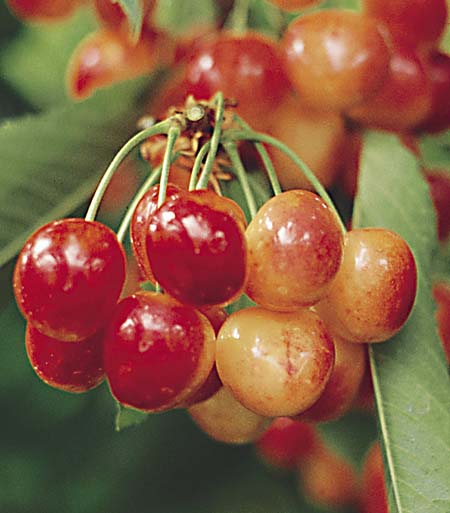
Glistening amber globes with rosy sheen
Cling clustered on crooked lichened limbs
Gathered heaping in bowls of gold,
Ecstatic burst of savored perfection,
Fulfilling a promise of sweet abandon.

Pea Picking

061106_peas1

2707409069_79592901f2_m

It’s pea picking time this week,  thanks to my husband’s dedicated gardening.  The vines are thick with pods and the harvest full and plenty.  As peas are always the first freezable vegetable to ripen in the garden, I’m now full of all sorts of energy for picking, shelling, podding, blanching and freezing.   Ask me again in two weeks how enthusiastic I am about my pea patch…

My earliest childhood memories include the taste and smell of fresh peas.  We lived in farming country north of Seattle where 50 years ago hundreds of acres of peas were grown for canning and freezing.  During the harvest, large pea harvesting machines would arrive for several days and travel down the road in caravans of 10 or 12, going from farm to farm to farm. They worked 24 hours a day to harvest as quickly as possible and traveled the roads late at night because they were so huge, they would take up both lanes of the country roads.  Inevitably a string of cars would form behind the pea harvesters, unable to pass, so it became a grand annual parade celebrating the humble pea.

The smell in the air when the fields were harvested was indescribable except to say it was most definitely a “green” and deliciously fresh smell.  The vines and pods would end up as silage for cattle and the peas would be separated to go to the cannery.  I figured those peas were destined for the city dwellers because in our back yard garden, we grew plenty of our own.

Pea seeds, wrinkled and frankly a little boring, could be planted even before the last frost was done with us in March, or even sometimes on Washington’s birthday in February.  The soil needed to not be frozen and not be sopping.  True, the seeds might sit still for a few weeks, unwilling to risk germination until the coast was clear and soil warmed a bit, but once they were up out of the ground, there was no stopping them.  We would generally have several rotations growing, in the hope of a 6 week pea eating season if we were fortunate, before the heat and worms claimed the vines and the pods.

We always planted telephone peas, so the support of the vines was crucial–we used hay twine run up and down between two taut smooth wires attached high and low between two wooden posts.  The vines could climb 6 feet tall or better and it was fascinating to almost literally watch the pea tendrils wind their way around the strings (and each other), erotically clinging and wrapping themselves in their enthusiasm.

Once the pods start to form,  impatience begins.  I’d be out in the garden every day copping feels, looking for that first plump pod to pick and pop open.  It never failed that I would pick too soon, and open a pod to find only weenie little peas, barely with enough substance to taste.  Within a day or two, however, the harvest would be overwhelming, so we’d have to pick early in the morning while the peas were still cool from the night dew.

Then it was shelling time, which involved several siblings on a back porch, one mother supervising from a distance to make sure there weren’t too many peas being pelted in pique at an annoying little brother, and lots of bowls to catch the peas and the pods.  A big paper sack of intact pods would yield only a few cups of peas, so this was great labor for small yield.   Opening a pod of peas is extremely satisfying though;  there is a tiny audible “pop” when the pod is pressed at the bottom, and then as your thumb runs down the inner seam of the pod loosening all the peas, they make a dozen little “pings” in the bowl when they fall.  A symphony of pea shelling often accompanied by the Beach Boys and the Beatles.

Once the weather got hot, the pea worms would be at work in the pods, so then one encountered wiggly white larvae with little black heads and their webs inside the pods.  We actually had a “Wormie” song we sung when we found one, even in the 60’s recognizing that our organic garden meant sharing the harvest with crawling protein critters. The peas would be bored through, like a hollowed out jack o’lantern, so those got dumped in the discard bowl.

The dull green coat of the raw pea turns bright green during the several minutes of blanching in boiling water, then they are plunged into ice water until cool and packed in ziplock bags.  Those peas are welcomed to the table during the other 11 months out of the year, sometimes mixed with carrots, sometimes with mushrooms, sometimes chased with a little fresh garlic.  They are simply the most lovely food there is other than chocolate.

From an undistinguished pea seed to intricate vines and coiling tendrils–from pregnant pods bursting at the seams to a bounty of meals: the humble pea does indeed deserve a grand parade in the middle of the night.

ploeger epd 530 pea harvester_product

The Farm Dream

n148300158_30188070_8736

5145_512481287714_148300158_30504624_8229602_n

This time of year our farm is brilliant, verdant and delicious to behold.  The cherry orchard blossoms yield to fruit and the pastures are knee high with grass.  By mid-June, the daylight starts creeping over the eastern foothills at 4 AM and the last glimpse of sun disappears at nearly 10 PM.   So many hours of light to work with!  I yearn for a dark rainy day to hide inside with a book.  Instead the lawnmower and weed whacker call my name, and the fish pond needs cleaning and the garden must be weeded.  It’s not that things don’t happen on the farm during months like this.  It’s just that nothing we do is enough.  Blackberry brambles have taken over everything, grass grows faster than we can keep it mowed down, the manure piles spread on the fields in May are growing exponentially again.  The fences always need fixing.  The stall doors are sticking and not closing properly.  Foals have gotten large and strong without having the good halter lessons they needed when they were much smaller and easier to control.   The supply of bedding shavings is non-existent due to the depressed lumber industry, so our shavings shed is bare and old hay is now serving as bedding in the stalls. The weather has become iffy in the last week so no string of days has been available for hay cutting– we are low on the priority list of the local dairy man who cuts and bales our hay,  so we may not have anything but junk hay in the barn this winter in a year when hay will cost a premium.  No one is buying horses in this economy, not even really well bred horses, so we are no longer breeding our stallion and mares, and for the first time in 18 years, have made the painful decision not to be part of our regional fair.

Suddenly our farm dream seems not nearly so compelling.

We have spent many years dreaming about the farm as we hoped it would be.  We imagined the pastures managed perfectly with fencing that was both functional and beautiful.  Our barns and buildings would be tidy and leak-proof, and the stalls secure and safe.  We’d have a really nice pick up truck with low miles on it, not a 25 year old hand me down truck with almost 200,000 miles. We would have trees pruned expertly and we’d have flower beds blooming as well as a vegetable garden yielding 9 months of the year.  Our hay would never be rained on. We would have dogs that wouldn’t run off and cats that would take care of all the rodents.  We wouldn’t have any moles, thistles, dandelions or buttercup.  The pheasant, deer, coyotes, raccoons, and wild rabbits would only stroll through the yard for our amusement and not disturb anything.  We’d have livestock with the best bloodlines we could afford and a steady demand from customers to purchase their offspring at reasonable prices so that not a dime of our off-farm income would be necessary to pay farm expenses.   Our animals (and we) would never get sick or injured.

And our house would always stay clean.

Dream on.  Farms are often back-breaking, morale-eroding, expensive sinkholes.   I know ours is.  Yet here we be and here we stay.

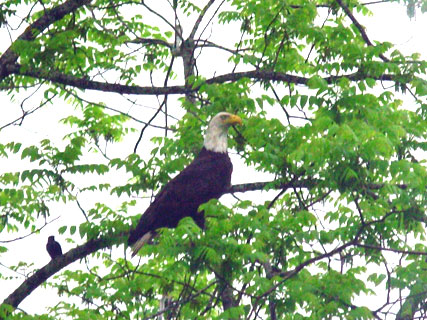
It’s home.  We’ve raised three wonderful children here.  We’ve bred and grown good horses and great garden and orchard crops and tons of hay from our own fields.  We breathe clean air and daily hear dozens of different bird songs and look out at some of the best scenery this side of heaven.  Eagles land in the trees in our front yard. It’s all enough for us even if we are not enough for the farm.  I know there will come a time when the farm will need to be a fond memory and not a daily reality.  Until then we will keep pursuing our dream as we and the farm grow older.   Dreams age and mature and I know now what I dreamed of when I was younger was not the important stuff.

We have been blessed with one another, with the sunrises and the sunsets and everything in between.  This is the stuff of which the best dreams are made.

1eagle

Solstice

pointnopoint

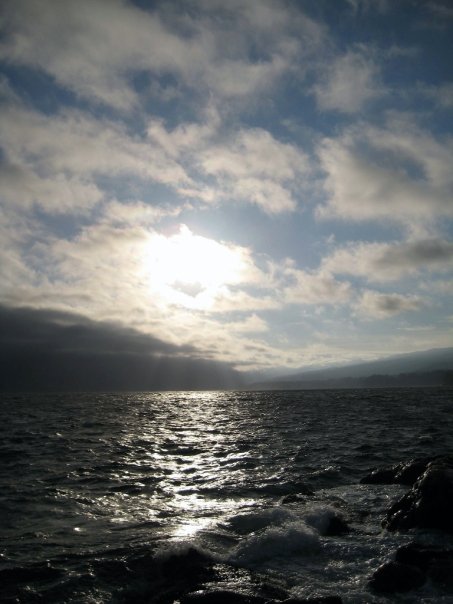
Photo by Nate Gibson of sunset from Point No Point, Vancouver Island

Darkness ebbs in subtle drift,
Each day a little more
Exposed to light
Another languid hour.

Ebbs uncovered
Swayed by glowing
Tidal push of night
A deepened moon pool flowing.

Sun’s waves retreat in
Lengthening shadow stream
Restoring forfeited sleep
And shoring up midsummer’s dream.