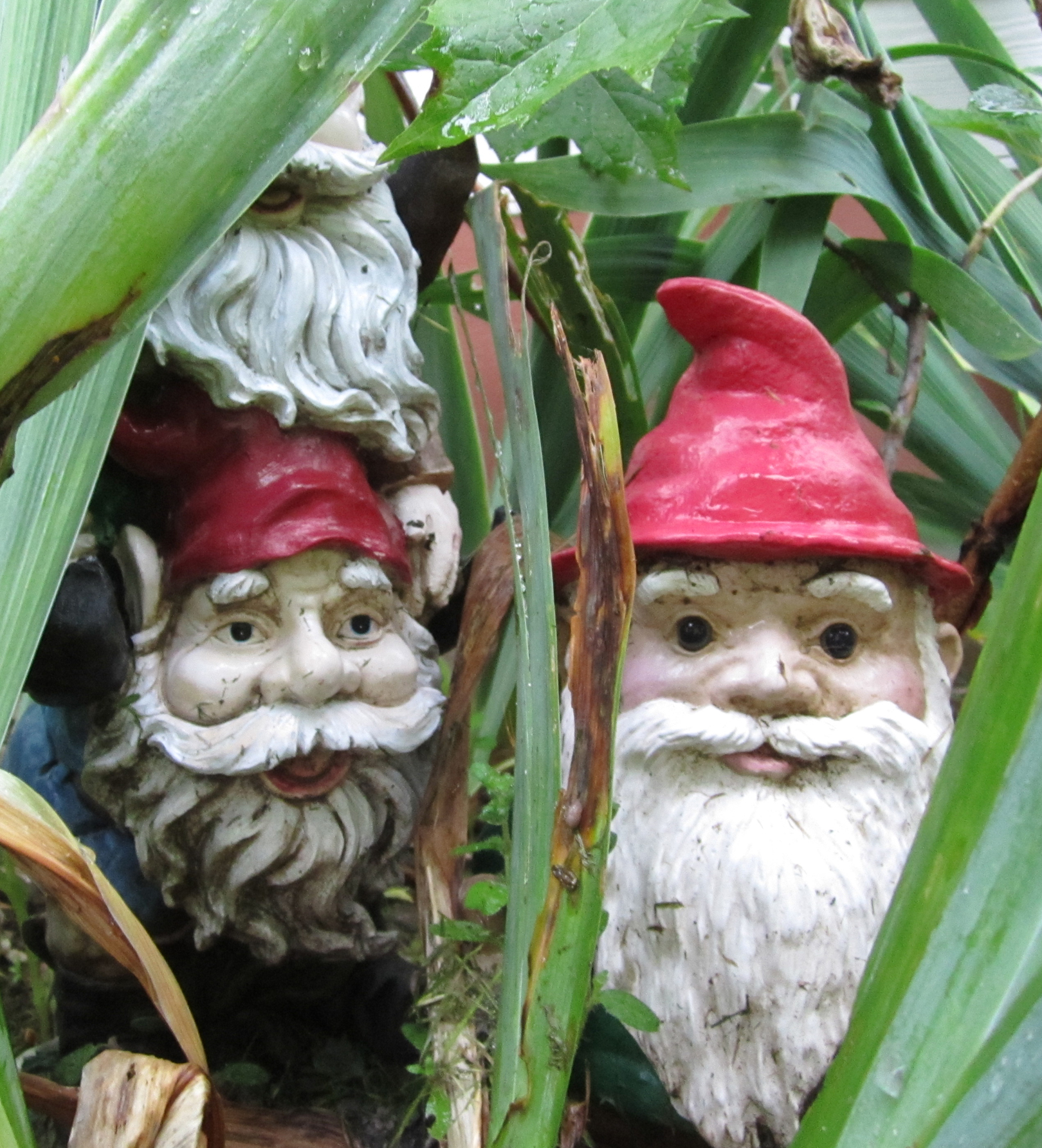
Gernumbli gardensi Infestation

She lingered in that charming little garden to say hello to the gnomes, such a glorious infestation!  How few wizards realize just how much we can learn from the wise little gnomes-or, to give them their correct names, the Gernumbli gardensi.
‘Ours do know a lot of excellent swear words,’ said Ron…
J.K. Rowling in Harry Potter and the Deathly Hallows

It is hard to say exactly when the first one moved in.  This farm was distinctly gnome-less when we bought it, largely due to twenty-seven hungry barn cats residing here at the time,  in various stages of pregnancy, growth, development and aging.  It took awhile for the feline numbers to whittle down to an equilibrium that matched the rodent population.  In the mean time,  our horse numbers increased from three to seven to over fifteen with a resultant exponential increase in barn chores.   One spring over a decade ago,  I was surprised to walk in the barn one morning to find numerous complex knots tied in the Haflingers’ manes.  Puzzling as I took precious time to undo them, literally adding hours to my chores, I knew I needed to find the cause or culprit.
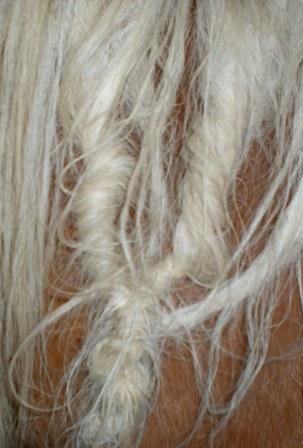
It took some research to determine the probable origin of these tight tangles.  Based on everything I read, they appeared to be the work of Gernumbli faenilesi, a usually transient species of gnome preferring to live in barns and haylofts in close proximity to heavy maned ponies.  In this case, as the tangles persisted for months, they clearly had moved in, lock, stock and barrel.   The complicated knots were their signature pride and joy, their artistic way of showing their devotion to a happy farm.

All well and good,  but the extra work was killing my fingers and thinning my horses’ hair.  I plotted ways to get them to cease and desist.

I set live traps of cheese and peanut butter cracker sandwiches, hoping to lure them into cages for a “catch and release”. Hoping to drive them away, I played polka music on the radio in the barn at night.  Hoping to be preemptive, I braided the manes up to be less tempting but even those got twisted and jumbled.  Just as I was becoming ever more desperate and about to round up more feral cats, the tangling stopped.

It appeared the gnomes had moved on to a more hospitable habitat.   I had succeeded in my gnome eradication plan.  Or so I thought.
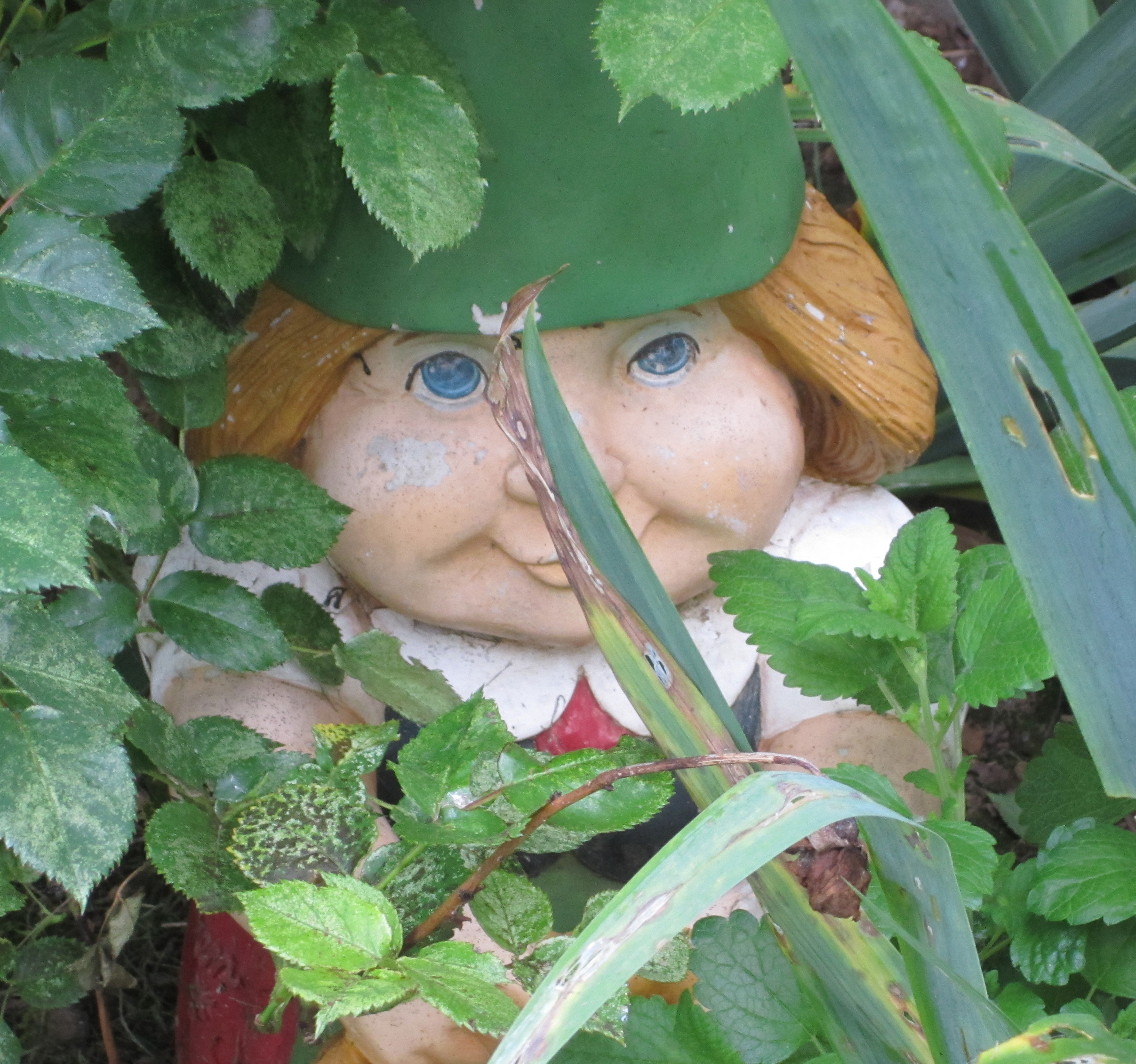
Not long after, I had the distinct feeling of being watched as I walked past some rose bushes in the yard.  I stopped to take a look, expecting to spy the shining eyes of one of the pesky raccoons that frequents our yard to steal from the cats’ food dish.  Instead, beneath the thorny foliage, I saw two round blue eyes peering at me serenely.   This little gal was not at all intimidated by me, and made no move to escape.   She was an ideal example of Gernumbli gardensi, a garden gnome known for their ability to keep varmints and vermin away from plants and flowers.  They also happen to actively feud with Gernumbli Faenilesi so that explained the sudden disappearance of my little knot-tying pests in the barn.

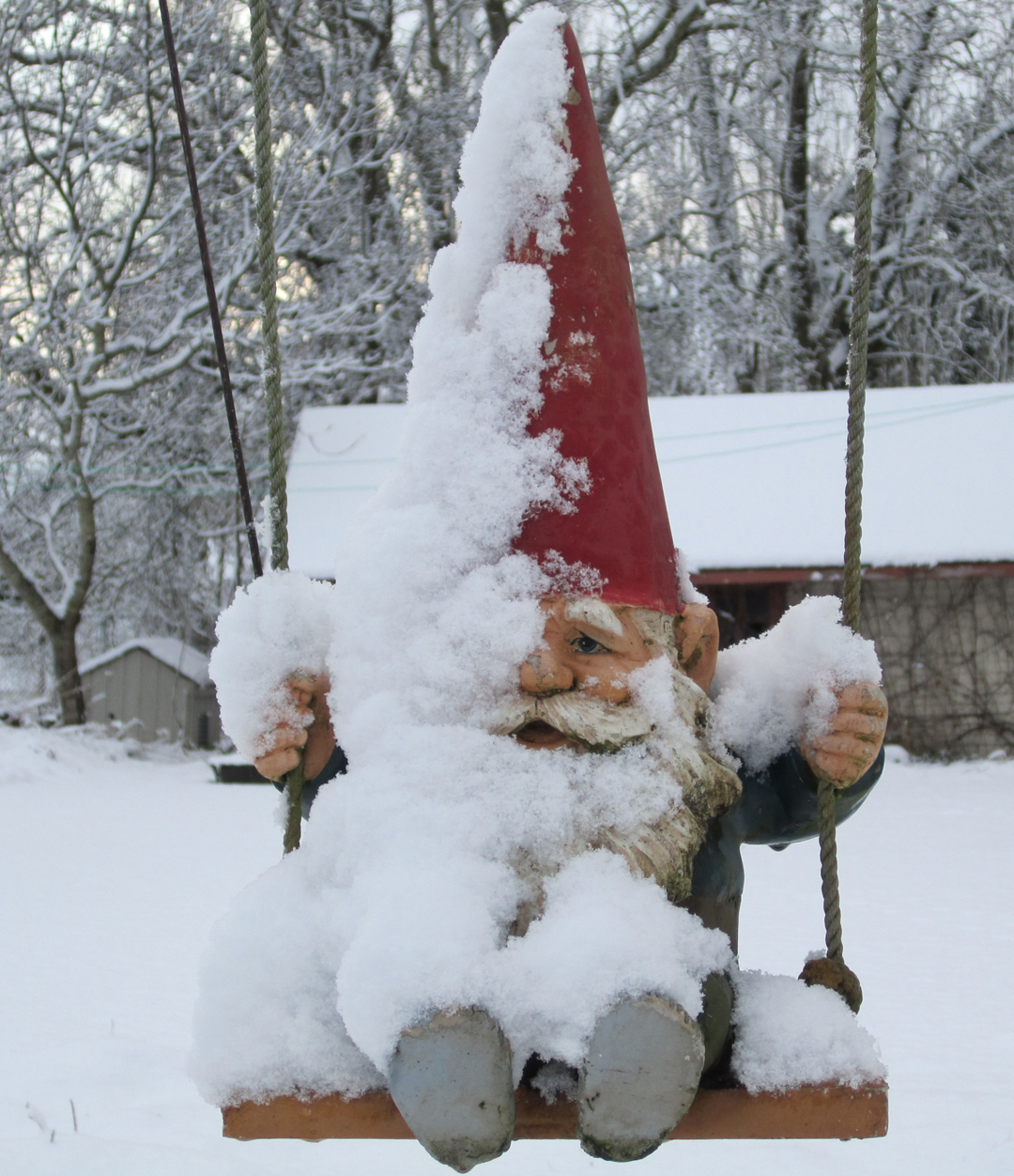
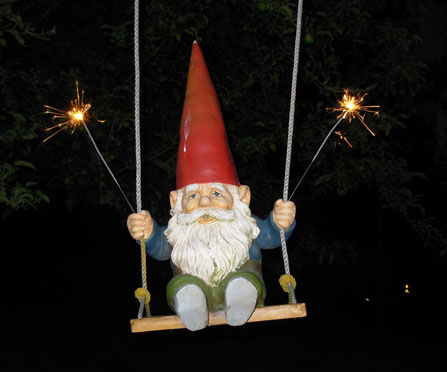
It wasn’t long before more Gardensi moved in, a gnomey infestation.  They tended to arrive in pairs and bunches, liked to play music, smoked pipes, played on a teeter totter, worked with garden tools, took naps on sun-warmed rocks and one even preferred a swing.  They are a bit of a rowdy bunch but I enjoy their happy presence and jovial demeanor.   I haven’t yet heard any bad language as we have a “keep it clean” policy about bad words around here.  They seem quite hardy, stoically withstand extremes in weather, and only seem fearful when hornets build a nest right in their lap.
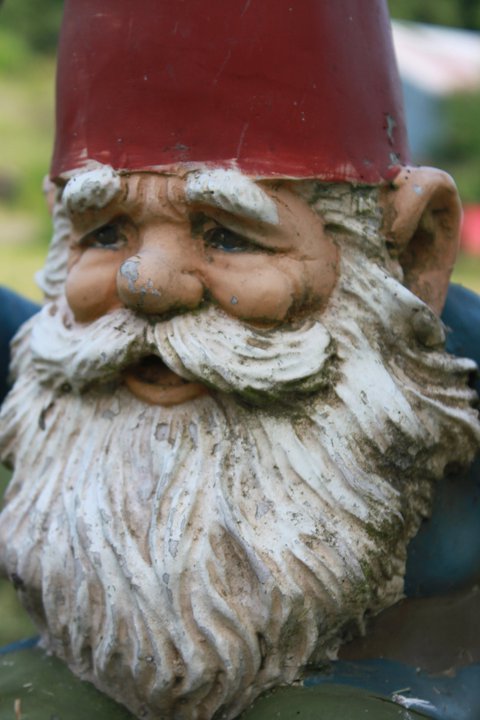
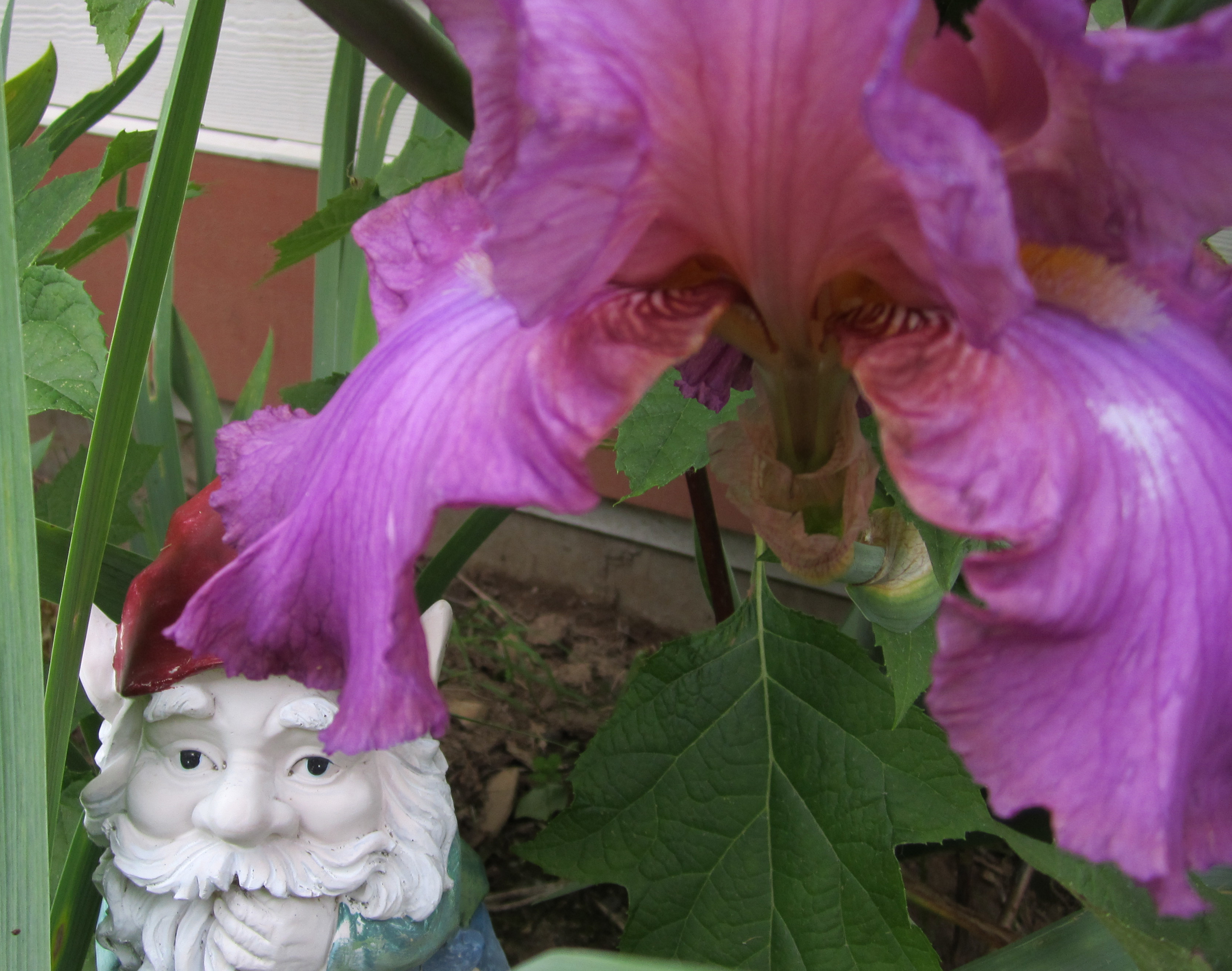
As long as they continue to coexist peaceably with us and each other, keep the varmints and their knot tying cousins away,  and avoid bad habits and swear words, I’m quite happy they are here.   Actually, I’ve given them the run of the place.  I’ve been told to be cautious as there are now news reports of an even more invasive species of gnome,  Gernumbli kitschsi, that could move in and take over if I’m not careful.

I shudder to think.  One has to consider the neighborhood.
Raising the Lodged

After death, willing or not, the body serves,
entering the earth. And so what was heaviest
and most mute is at last raised up into song.
Wendell Berry

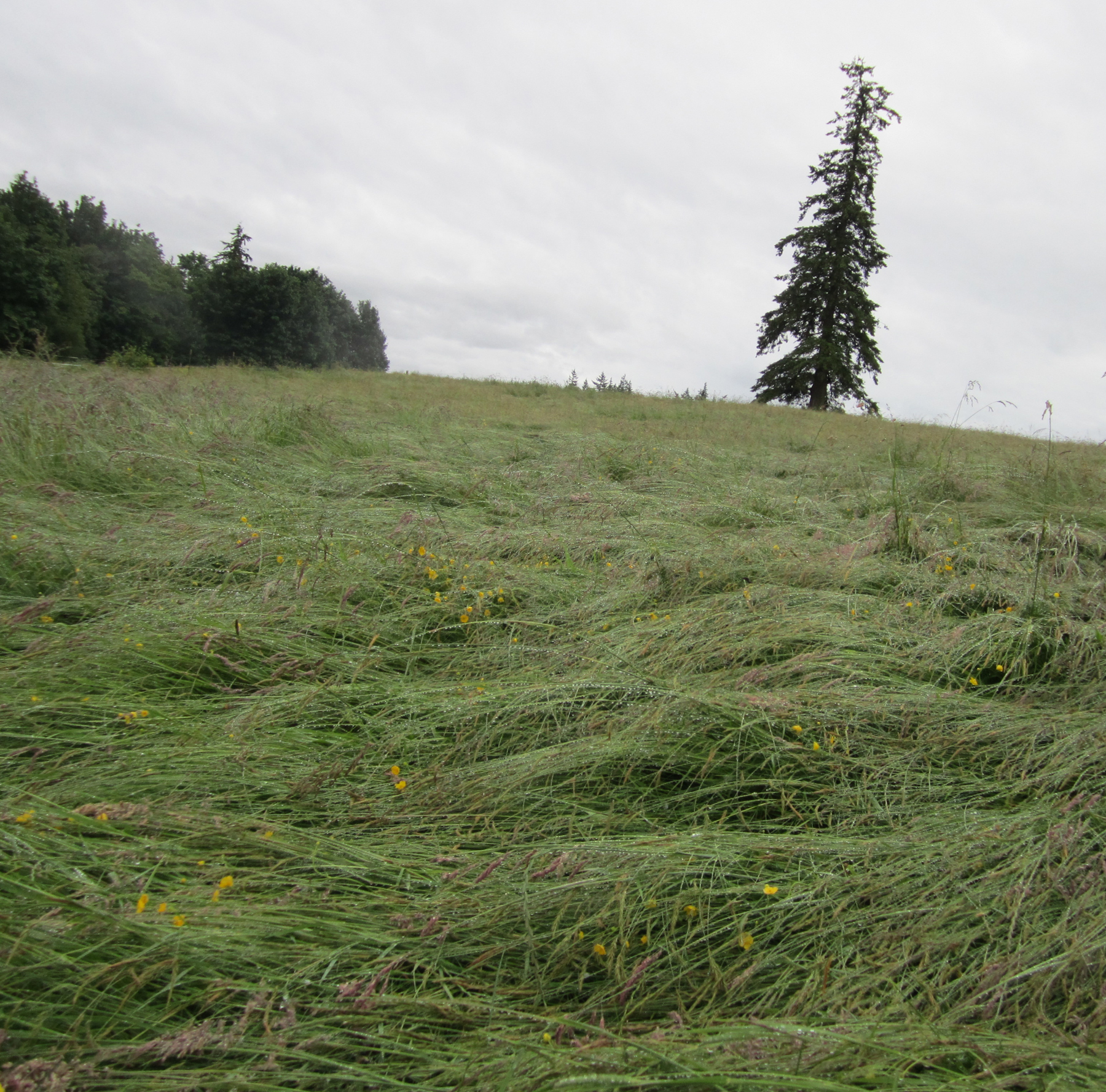
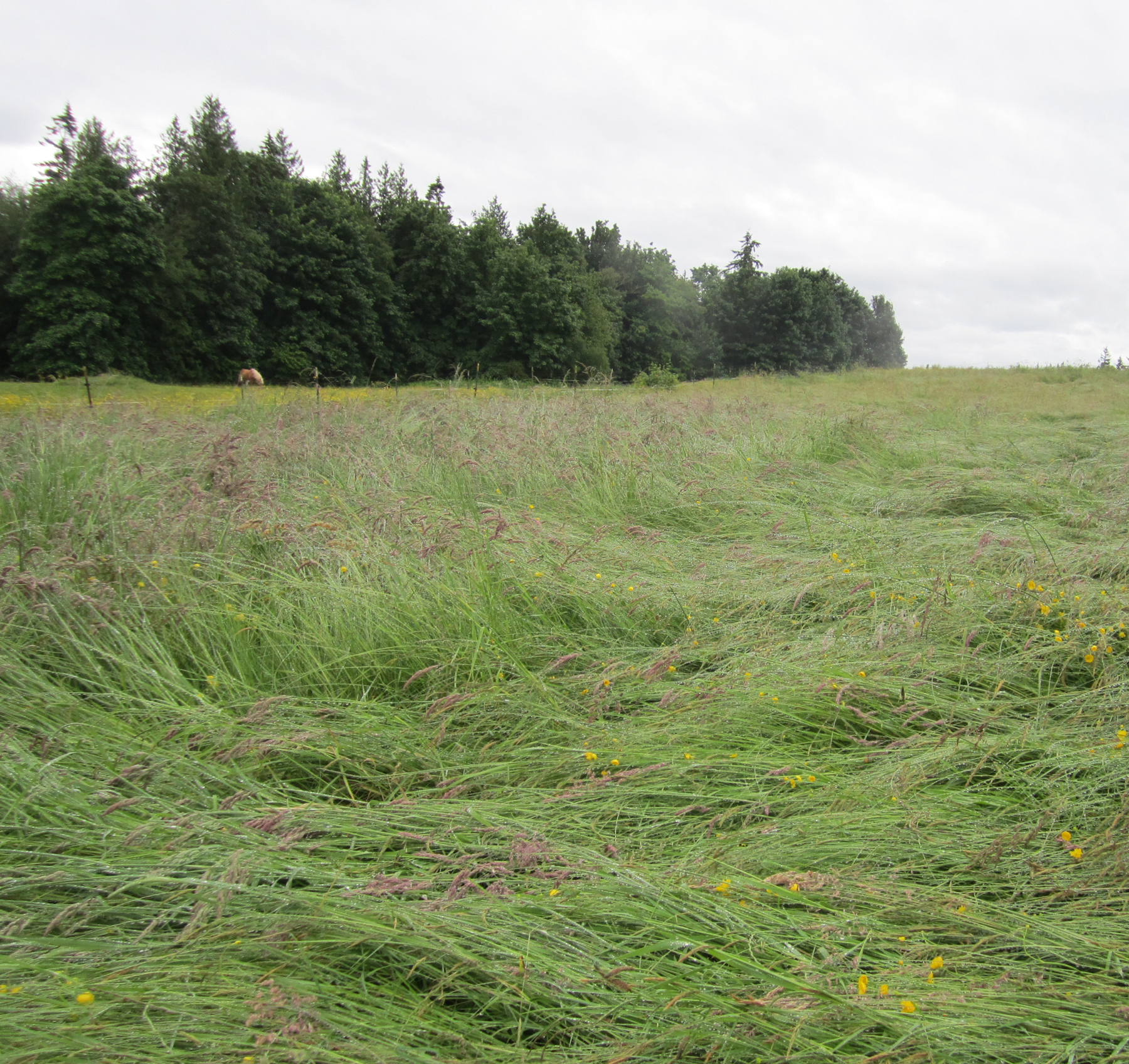
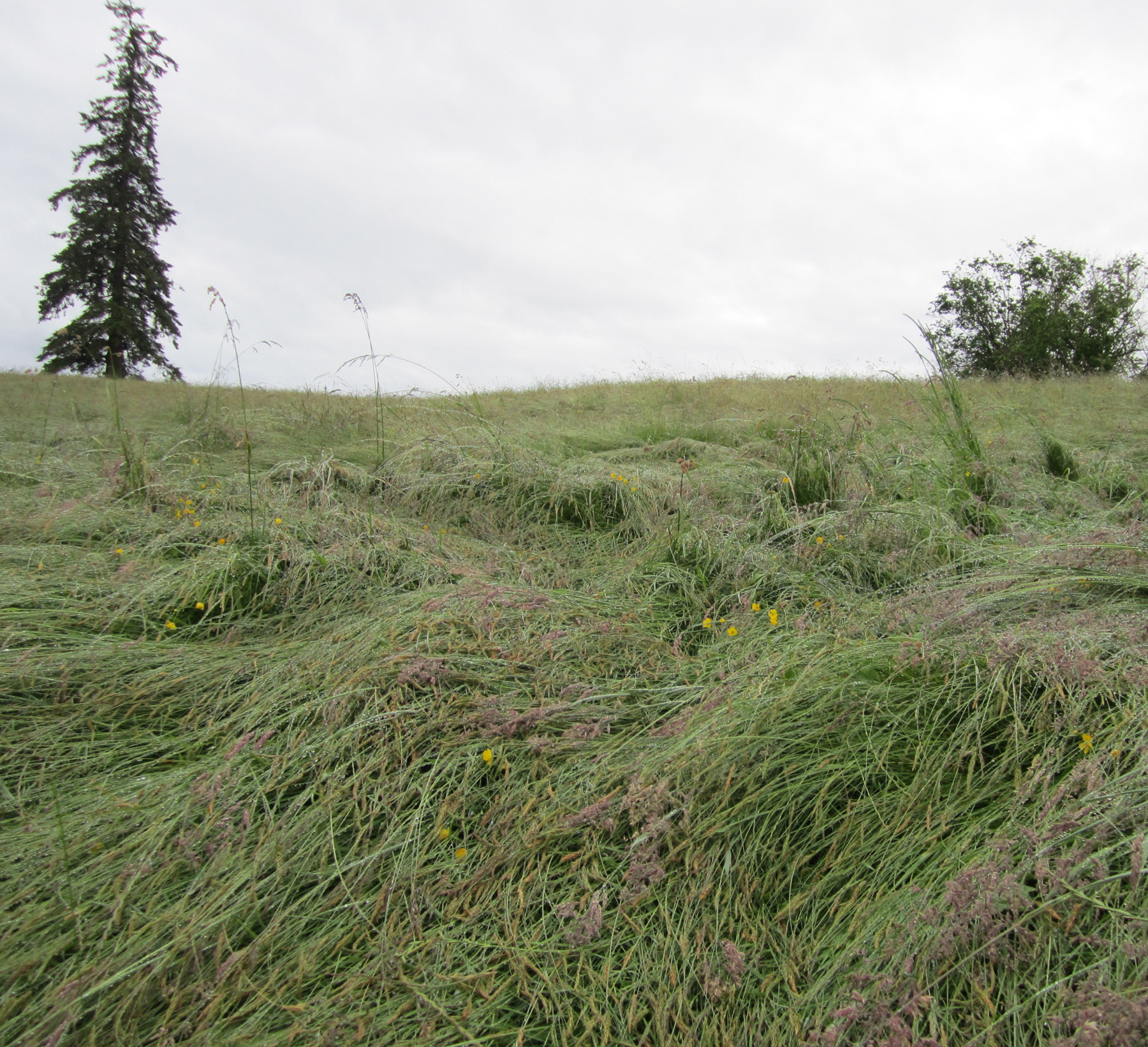
When abundant grasses in our hay field were hit hard with heavy rainfall today, they collapsed under the weight of the moisture.  Thousands of 3-4 foot tall tender stems are now lodged and flattened in undulating waves of green, bent over as if to embrace the earth from which they arose.  If the rain continues as predicted this week, the grass may not recover, unable to dry out enough to stand upright again.  It is ironic to lose a crop from too much of a good thing– heavy growth does demand,  but often cannot withstand, a quenching rain.  The grass simply keels over in community, broken and crumpled, unsuitable for cutting or baling into hay, and will melt back into the soil again.

However–if there are dry spells amid the showers over the next few days, with a breeze to lift the soaked heads and squeeze out the wet sponge created by layered forage–the lodged crop may survive and rise back up. It may be raised and lifted again, pushing up to meet the sun, the stems strengthening and straightening.

What once was heavy laden will lighten;
what was silent could once again move and sing with the wind.

Imparting Quiet

photo by Josh Scholten

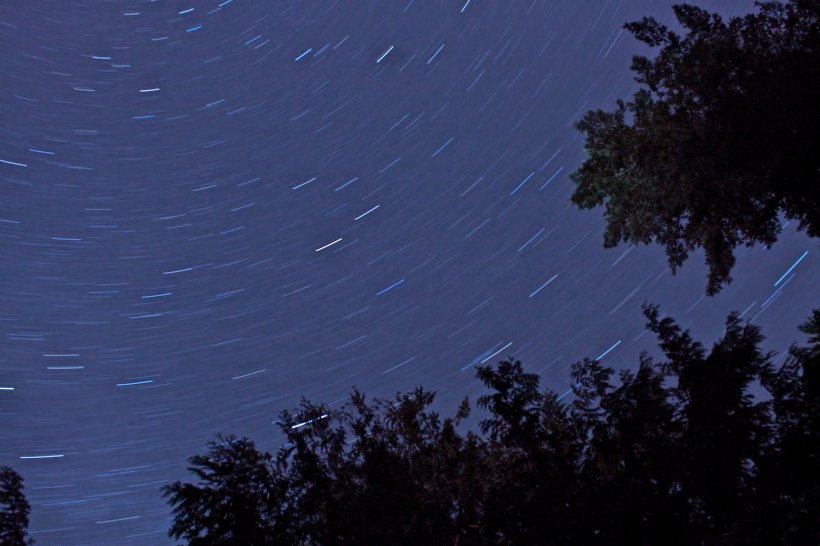
Surely there is something in the unruffled calm of nature that overawes our little anxieties and doubts: the sight of the deep-blue sky, and the clustering stars above seem to impart a quiet to the mind.
Jonathan Edwards

There is much about farm chores that is good for the troubled heart. When the stresses of the working world amass together and threaten to overwhelm, there is reassurance in the routine of putting on muck boots, gloves, jacket, then hearing the back door bang behind me as I head outside. Following the path to the barns, I open wide the doors to hear the welcoming nickers of seven different equine voices. Just as in the house, I am anticipated–truly wanted and needed here.

The routine reassures. I loosen up the twine on the hay bales and open each stall door to put a meal in front of each hungry horse, maneuver the wheelbarrow to fork up accumulated poop, fill the water bucket, pat a neck and go on to the next one. By the time I’m done, I am gratefully calmer, listening to the rhythmic chewing from seven sets of molars. It is a welcome symphony of satisfaction for musicians and audience.

The horses are not in the least perturbed that I may have had a challenging day. Like the dog and the cats, they show appreciation that I have come to do what I promised to do–I care for them, I protect them and moreover, I will always return.

Outside the barn, the wind blows gently through the tree branches, although at times with a fierce bite to remind me who is not in control. I should drop the pretense. The stars are covered most nights by cloud cover, but when they show themselves, glowing alongside the moon in a galactic sweep across the sky, they exude the tranquility of ever-presence over my bowed and humbled head. I am cared for and protected; they are always there.

The balance of ordinary and extraordinary within the routine of farm chores: it is equilibrium delivered, once and ever after, from a stable.

photo by Josh Scholten

Hostelry of Worms

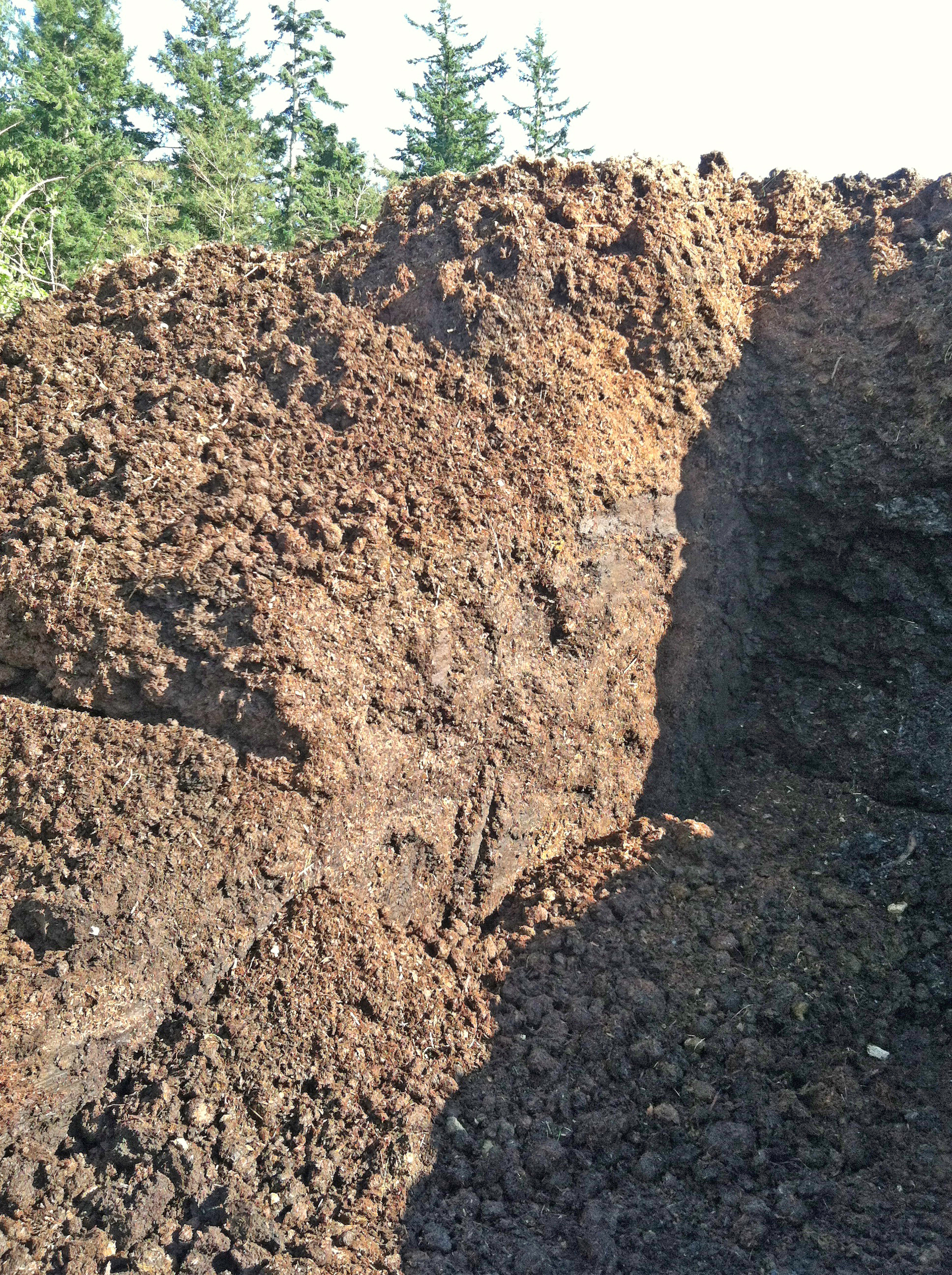
a cross section of 30 months of composted manure
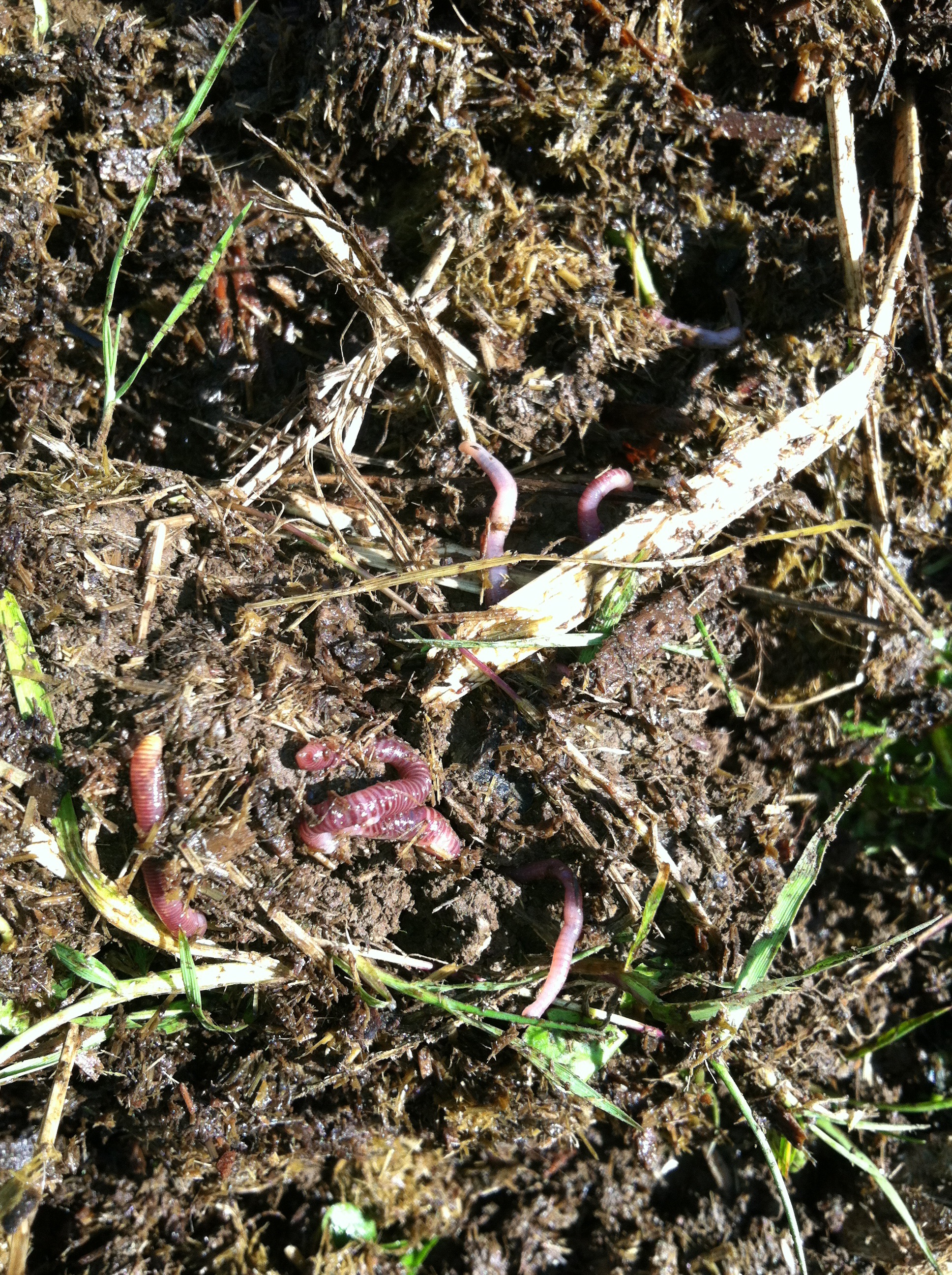
a plethora of red wigglers

A sunny spring day lured us outside for yard and garden prep for the anticipated grass and weed explosion in a few short weeks. We’ve been carefully composting horse manure for over two years behind the barn, and it was time to dig in to the 10 foot tall pile to spread it on our garden plots. As Dan pushed the tractor’s front loader into the pile, steam rose from its compost innards. As the rich soil was scooped, thousands of newly exposed red wiggler worms immediately dove for cover. Within seconds, thousands of naked little creatures had, well, …wormed their way back into the security of warm dirt, rudely interrupted from their routine. I can’t say I blamed them.

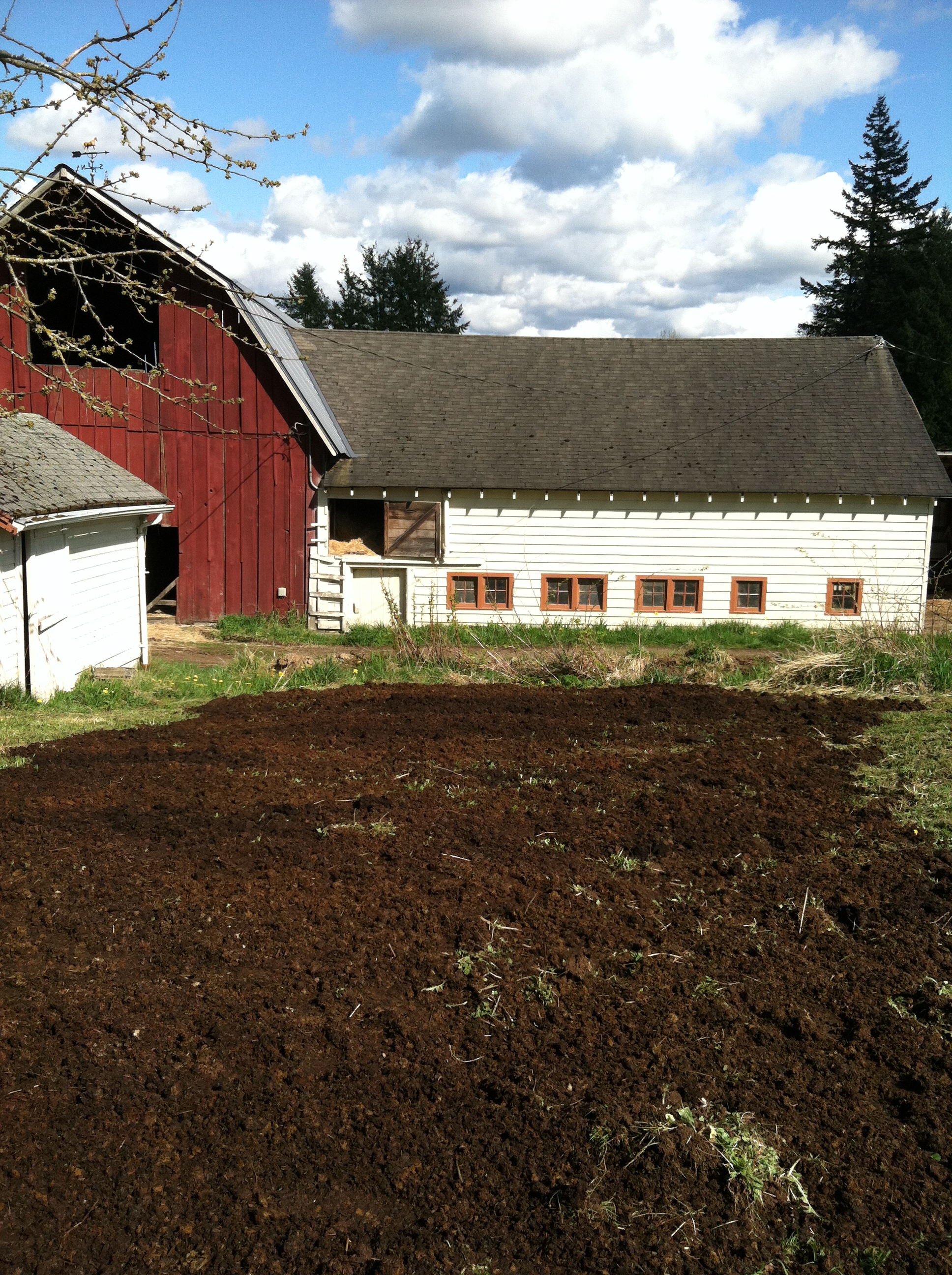
Hundreds of thousands of wigglers ended up being forced to adapt to new quarters today, leaving the security of the manure mountain behind. As I smoothed the topping of compost over the garden plot, the worms–gracious creatures that they are–tolerated being rolled and raked and lifted and turned over, waving their little bodies expectantly in the cool air before slipping back down into the dark. There they will begin their work of digesting and aerating the tired soil of the garden, reproducing in their unique hermaphroditic way, leaving voluminous castings behind to further feed the seedlings to be planted.

Worms are unjustly denigrated by humans primarily because we don’t like to be surprised by them. We don’t like to see one in our food, especially only part of one, and are particularly distressed to see them after we’ve digested our food. Once we get past that bit of squeamishness, we can greatly appreciate their role as the ultimate recyclers, leaving the earth a lot better off once they are finished with their work. We humans actually suffer by comparison, so to be called “a worm” is really not as bad as it sounds at first. The worm may not think so.

I hope to prove a worthy innkeeper for these new tenants. May they live long and prosper. May worms be forgiving for the continual disruption of their routine. May I smile the next time someone calls me a worm.

The garden is covered with rich composted manure