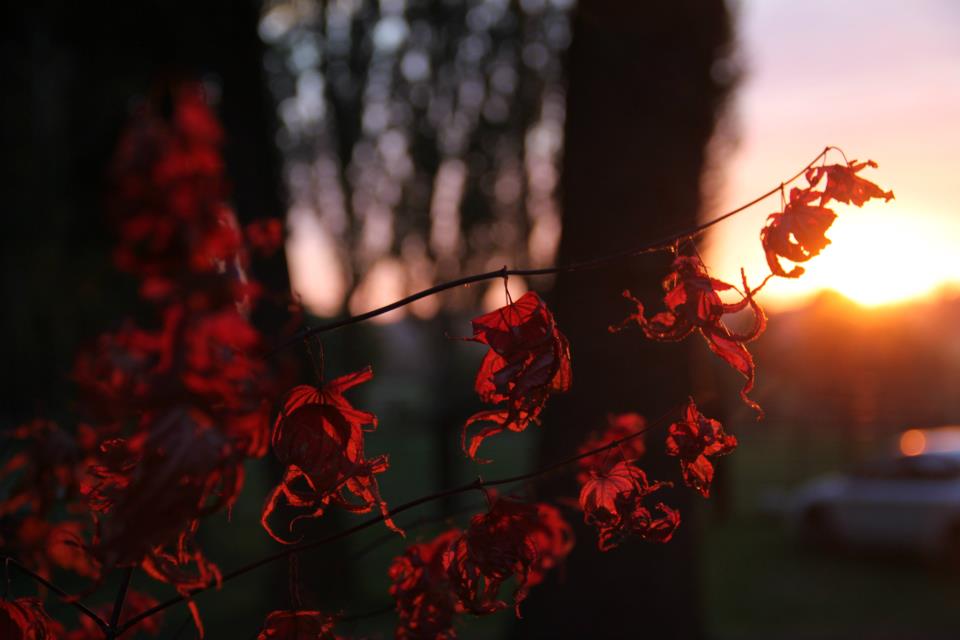
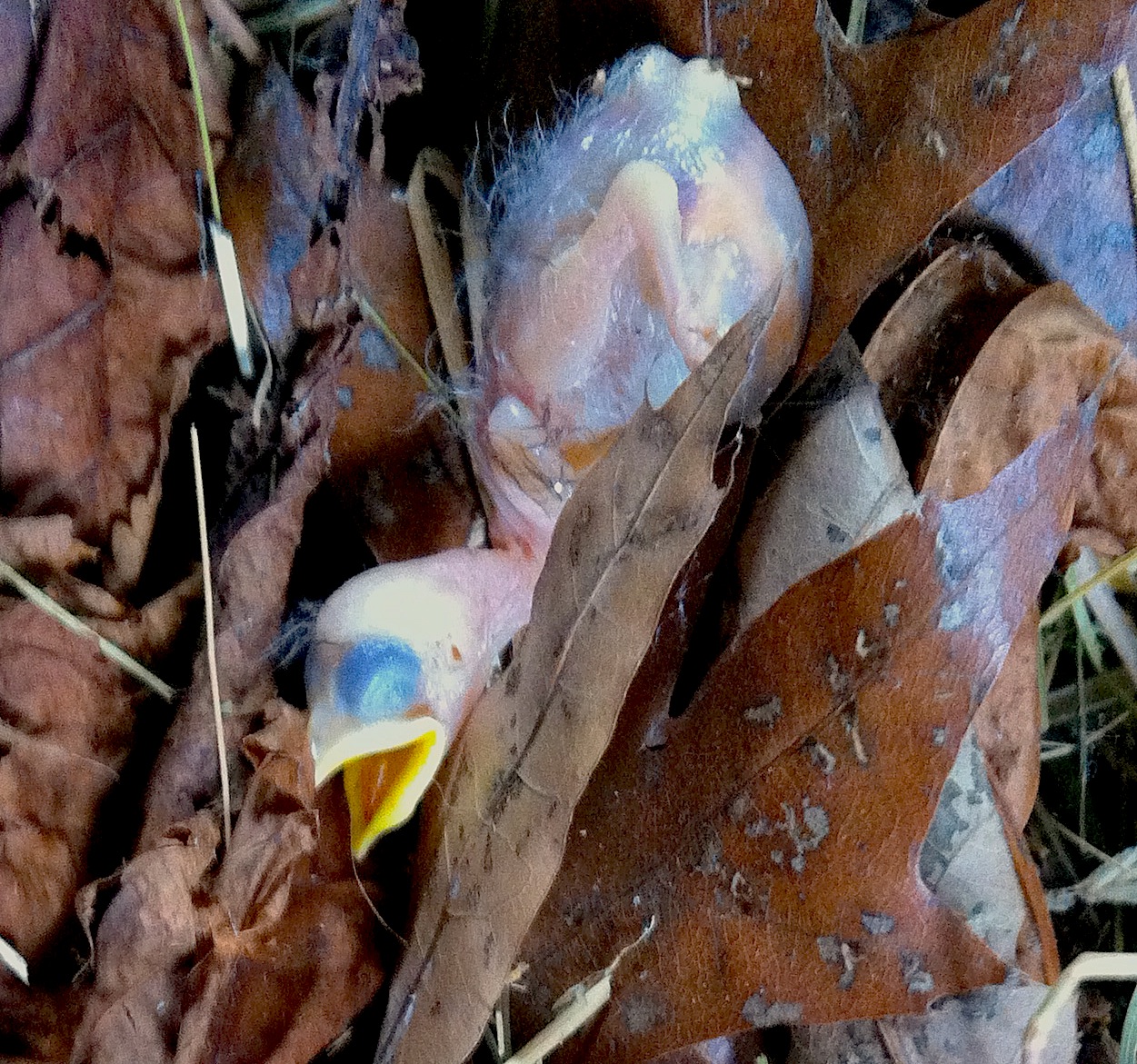
Featherless Hope

photo by Josh Scholten

“Hope” is the thing with feathers—
That perches in the soul—

…And sore must be the storm—
That could abash the little Bird
~Emily Dickinson from Poem 254

The end of the school year is the season of barely feathered hope in my world.  The academic nest is crowded, the competition fierce, the future uncertain.  Those who have struggled to survive in classes, in debt, in relationships, in a tenuous job market,  can find themselves ill equipped and unprepared to fly on their own.  Their lack of feathering becomes obvious the closer they get to the edge.  Bashed and abashed, they worry and panic, sleep little, self-medicate, cry easily, contemplate death.   Sometimes they tumble.

We try to catch them before they fall.

We remind them: it takes only one feather to have hope in a soaring future of grace and strength.  Only one.

The others will come.

And when they do, they will be beautiful.
crowdedout

Transforming Anxiety

photo by Nate Gibson

…difficulties are magnified out of all proportion simply by fear and anxiety. From the moment we wake until we fall asleep we must commend other people wholly and unreservedly to God and leave them in his hands, and transform our anxiety for them into prayers on their behalf:
With sorrow and with grief…
God will not be distracted.
~Dietrich Bonhoeffer in Letters from Prison

Every day I see college students who are so consumed by anxiety they become immobilized in their ability to move forward through the midst of life’s inevitable obstacles and difficulties.  They become so stuck in their own overwhelming feelings they can’t sleep or eat or think clearly, so distracted are they by their symptoms.  They self-medicate, self-injure and self-hate.  Being unable to nurture themselves or others, they wither like a young tree without roots deep enough to reach the vast reservoir that lies untapped beneath them.  In epidemic numbers, some decide to die, even before life really has fully begun for them.

I grieve for them in their distress.   My role is to help find healing solutions, whether it is counseling therapy, a break from school, or a medicine that may give some form of relief.  My heart knows the ultimate answer is not as simple as the right prescription.

We who are anxious are not trusting a Creator who does not suffer from attention deficit disorder and who is not distracted from His care for us even when we turn away in worry and sorrow.  We magnify our difficult circumstances by staying so tightly into ourselves, unable to look beyond our own eyelashes.  Instead we are to reach higher and deeper, through prayer, through service to others, through acknowledging there is power greater than ourselves.

So we are called to pray for ourselves and for others,  disabling anxiety and fear and transforming it to gratitude and grace.   No longer withering, we just might bloom.


If There Were No God

photo by Josh Scholten

“If there were no God, there would be no atheists.”
—G.K. Chesterton

I heard the same message
from several patients:
they would
commit suicide,
but not believing
in God
would mean
jumping from
the pain of living
into

…nothing at all…


I thought
feeling nothing
was the
point
of ceasing
to be


Perhaps they can’t imagine
a God
who created
doubters
sore afraid
of His caring

enough to die
so no one
becomes
nothing.

Mingled with Grief

“The world is indeed full of peril and in it there are many dark places.
But still there is much that is fair. And though in all lands, love is now
mingled with grief, it still grows, perhaps, the greater.”
— J. R. R. Tolkien

What happened last night in Aurora, Colorado is not fair.  There could not have been a darker place than a theater where a masked gunman gassed, then shot and killed escaping movie goers at a midnight showing of the new Batman movie.  I’m not a fan of the genre of troubled superheroes but my children and their friends and many of my patients are.  They like to attend first movie showings at midnight in big batches, celebrating an anticipated release together.  The young people who were killed and injured are just like them.  It is so unfair, just like so many violent tragedies instigated by a desperate person wanting to prove a point through random killings, then make the news in a “suicide by police” gesture.

The media has just released information that the young shooter is a neuroscience graduate student withdrawing from his program–someone whose motives are still unknown but whose struggles were undoubtedly apparent to his family and mentors.  He must be a bright and talented individual to have made it into a PhD program so this somehow compounds the tragedy.   One of the stark realities of our time is that before a shooter is identified by the media, there are dozens, maybe hundreds,  of people who wonder if and fear their family member (or patient) could be the one.   There are so many struggling with dark impulses and those around them often have a clue and have tried to help.   I’ve seen students in my practice with such thoughts and it is a heavy burden for them and for me to sort out how best to reduce the risk of them acting out their impulses.  There have been times when hospitalization isn’t possible, when meds aren’t effective or not taken, when counselors are ignored, when families are non-existent support.   That is when I can only pray on my own for light in my patient’s darkness, that he will not become the next headline, the next suicide, the next mass shooting.

There must be unfathomable grief today on the part of the families of the killed and injured, and on the part of the family of the shooter, and the recent University administrators and others who may have tried to help him.   There is no response possible except to love these hurting people as deeply as possible, surrounding them with hope and prayer.   They will never be the same.  The shooter has made certain of that.

The shooter didn’t extinguish the light nor has he extinguished himself, no matter how hard he hoped to.  We need to make sure he failed in his goal.  The media needs to draw a curtain around this tragedy and limit exposure.   To dwell on it only encourages this and the next mass murderer in their quest for infamy.

Our grief mingled with love grows the light brighter than ever;  prayers for mercy can effectively flood and extinguish the darkest of places.

Perhaps the last thing James Holmes might expect is that there are people who will pray for him as well.

It is only fair.

Sufficient Reason

photo by Josh Scholten

There are a thousand thousand reasons to live this life, every one of them sufficient.
Marilynne Robinson in Gilead

There are a thousand thousand people on any given day who cannot think of one sufficient reason to live this life.
There are a few thousand who will decide this is their last day.
There are a few who say goodbye.

It is enough for me to find just one reason to live today.
It is enough for me to help someone else find just one reason today.
One is enough.
Fully sufficient.

photo by Josh Scholten

Shedding Some Light

I’m a bit confused here.

While more states, including my own, grant the legal right to marry to same sex couples, more and more heterosexual couples are rejecting official marriage that includes a signed “piece of paper”, preferring to bear their children out of wedlock. What one minority segment of U.S. society has fought hard for over several decades, now granted through society’s expanding acceptance and tolerance of diverse lifestyles, the heterosexual majority increasingly deems marriage worthless and to be avoided.

Can someone shed some light on what is going on here?

I’m all for celebrating legal sanctioning of personal commitment. I have seen what happens when there is no commitment to commitment. Without steadfast loyalty, dependability, predictability, and honoring of promises made, relationships flounder and fizzle, descending into selfish silos of an “every person for themselves” approach to life. I watched it happen late in my parents’ marriage as their focus became less on the inherent value of the union of two people who made vows before God to stay together through thick and thin, and more on what’s best for the individual when needs go unmet. Any divorce is heartbreaking and painful, but the implosion of a 35 year marriage is truly tragic and unnecessary. Ironically, their original commitment reignited ten years later as they married again for the last few years of my father’s life.

There are now too many scarred and scared young people unwilling to take the step of marriage, having grown up inside the back and forth visitation homes of divorce or in a home offering no significant modeling of long term emotional commitment. Even monogamous devotion to a new sexual partner is seen as unnecessarily restrictive, while an unplanned new life conceived within that relationship becomes too easily postponed until it is “convenient” for the unprepared parents. We have forgotten what promises mean, what stability represents to a relationship and children, how trusting obedience to the longevity of the union should trump short term individual desires.

My clinic day increasingly is filled with the detritus of failed and failing relationships. Too many of my young adult patients who describe symptoms of depression and anxiety struggle with whether they want to continue to live at all, sometimes expressing their misery in escalating self harming behaviors or anesthetizing with alcohol or recreational drugs. They describe the chaos of parents living sequentially with multiple partners, of no certain “home” outside their school dorm or apartment, unsolvable complications with half- and step- sibling relationships, and all too frequently financial uncertainty. Many grew up supervised by TV and computer games rather than being held accountable to (mostly absent) parental expectations. They are more comfortable with on-line communication than risk being truthful about who they really are with flesh and blood people they see every day. They fear failure as they have seldom been allowed to make mistakes and subsequently experience forgiveness and grace from those who love them. They are emotional orphans.

In short, they know little about how love manifests through self-sacrifice and faithfulness.

Keeping commitment becomes the light that illuminates our lives, as reliable as the fact the sun rises every morning.

At least on that we can depend.

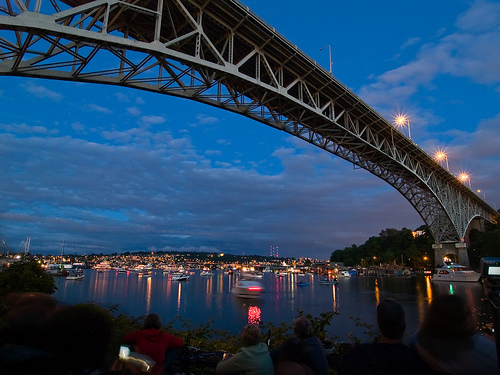
On the Edge

2653998459_ab93059597

In our medical school lecture hall, George always sat on the edge of his seat in the front row. That way, he could be closest to the professor and not miss any detail of the slides projected on the screen, the nuances of the overhead projector diagrams, or the patients paraded into the lecture hall with memorable symptoms. From the first day, it was clear George would be the go-to person if one of us missed a lecture, as he kept the most accurate notes of any medical student in tiny neat almost verbatim script. To read his notes was almost as good as being there and he was willing, with coaxing, to share what he knew. He was, to put it simply, the best and the brightest among us.

Working on a double Ph.D/M.D. degree, he hoped one day to be a physician laboratory researcher in a teaching hospital, although getting that much personal information from him took much coaxing. He was a first generation college graduate in his immigrant family and their hopes and dreams were riding on his success. It was clear he was their bridge to success in their new home and new life. He rarely socialized with other students after class, nor did he join in study groups. At the end of the day, he would cram every book into his huge back pack, sling it over his slight frame and head out for the city bus to return home to his parents’ house located near the north end of Seattle’s Aurora Bridge.

My opportunity to work with George came during our first clinical experience in our first year of classes, working in pairs to interview patients in hospitals, practicing our skills at taking histories. When we divided up the questions beforehand, George was more than willing to let me ask about our patients’ family and spiritual support systems, their interpersonal relationships and sexual history, and their struggles with depression or other mental illness. He was much more interested in the detail of their illness and physical symptoms, so we made a good team documenting excellent patient medical histories. George admitted to me that talking to people was a challenge for him. His passion for healing was in the lab, in his future research and in his hope for discovery of new treatments for disease. He knew his best work would not be at the bedside.

Once our class started full time clinical rotations in hospitals in our third year, students were assigned in small groups together, working under attending physicians, residents and interns in the traditional teaching hospital hierarchy.  Medical students do the grunt work for the medical team, with most of the patient contact being the duty of the medical student.

Despite his quiet nature, George excelled in the clinical work of his internal medicine rotation, and then went on to his 6 week surgical rotation. He was assigned to a particularly difficult chief resident who had a reputation for grilling students over the operating table about anatomy and being very picky about how his patients were cared for. George was always ready for the questions in the OR, never missing a one, and worked beyond the 36 hours on, 12 hours off schedule to make sure all his work was complete. He was barely getting home to sleep, just to turn around to catch the bus in the early dawn to head back to the hospital. One morning, in his exhaustion, he overslept by an hour, and rushed to arrive barely in time for 6 AM rounds at the hospital. He was unable to gather his patients’ lab results or organize information for the chief resident. When it was clear George was not prepared, the chief resident, irritated, told him to leave and not bother to return.

George grabbed his heavy back pack, caught the city bus and in morning rush hour, got off on the south end of Aurora Bridge and started walking toward home. He stopped in the middle of the bridge, set down his back pack on the sidewalk, climbed over the rail and standing briefly on the edge, staring at the water below, he jumped.

At his funeral, his pastor shared the following with his stricken family, instructors and classmates:

“George worked very hard to reach the goals he had set, in his hope to cure diseases. What we must remember is that to reach our goals we must pass over the deepest valleys of our lives. The darkest pit can appear to swallow us up. The Lord is there to bridge that gap as the firm foundation under our feet, ready to hold us up when we teeter on the edge. Don’t ever lose sight of the other side, where the valley will be no more.”

I hope, –no, I know—George is waiting for us there.

Answering the Knock on the Door

tony07

From Spring 2004 with an update at the bottom:

It’s been a challenging few weeks at our farm because one of our two year old geldings, Wallenda, had an emotional crisis of sorts that I’ve been trying to understand and deal with.

Wallenda has always been on the “sensitive” side–not the most laid back of our youngsters, and far more apt than others to need to look at new things closely, stop and stare, and give a snort or two. He’s lived a trauma-free, non-demanding existence, asked only to lead and stand quietly, allow shots and worming, and get his feet trimmed. He has not been a classic Haflinger pocket pony, begging for attention, but he’s never turned away from our attention either.

One day, about a month ago, his world turned upside down. During the day while we were at work, he had managed, in an effort to reach green grass, to wiggle his way under a 12 foot pipe gate in his paddock, getting it partially off its hinges, but still barring the opening enough that his brother and sister opted not to follow him. I came home from work to find him grazing peacefully in the orchard, near the paddock, without a halter on of course. When I tried to approach him with his halter to catch him and bring him in, he reacted fearfully, running madly up and down the fence line, looking very much as if he might jump the tape and wire, just to get away from me. I solved his panic (and my concern) by bringing his brother around on a lead and Wallenda followed him back into the barn and into a stall.

But nothing seemed the same for him. This young horse who formerly would always come up to us in the stall when we opened the door to feed him or put on his halter would bolt for a corner if we approached, literally climbing the walls to get away from us. He wouldn’t take food offered from our hands, and wouldn’t even approach his grain until we moved away from the stall. He was petrified, eyes wide and white, muscles trembling and tense.

We were completely baffled. No one else works or handles the horses here except my husband and I, and no one was at home when Wallenda got out. We wondered if he had, in fact, somehow gotten out to the road
and been frightened there by someone trying to shoo him home, but it seemed so unlikely that he would leave lots of grass and his buddies to venture out that far. Clearly there had been a major emotional trauma over the course of the day, as he didn’t have a mark on him anywhere to indicate he’d been harmed or hurt.

If both of us went into his stall together, we could approach him slowly from either side and he would stand for haltering, but if only one of us went in the stall, he’d immediately turn his butt to us, and swing his front end away, very effectively keeping out of reach, and threatening us with his hind legs and once, when Dan was trying to halter him alone, landed a painful kick on Dan’s ribs. It was clear to us that he was reacting out of fear, not aggression, but that realization didn’t make him any safer to interact with.

We tried to keep his routine the same as best we could. He was haltered, with us approaching him in the stall together, and he would lead fine out to his paddock. However, once in the paddock, there was no way he’d allow himself to be caught to come in at night and the paddock was too large for us to be able to position him to be caught. When we tried once, he ran for the 5 foot board fence, jumped, landed on this belly on the top cracking the top rail and landing in the paddock unhurt on the other side. We were incredulous.

He spent several lonely nights alone in the outdoor paddock because he absolutely would not be caught–not with grass, not with grain, nothing. He would snort and toss his head repeatedly, telling us emphatically not to touch him. I even delayed his meals, thinking a hungry stomach would bring him close as I held out hay to him, but it did not help. It was so un-Haflinger-like that I started to wonder if he had some brain injury causing this aberrant behavior–could he have had a concussion? a tumor? or do horses sometimes go psychotic?

We’ve had a breakthrough over the past week. We started to allow the horses some pasture time, building it up gradually, and he has been out with his siblings in a big field, free to run and eat. At night, they come to the gate to be led in one at a time, and though he would hang back, he would follow the others in to the barn. Each day, I could tell he knew the destination was the pasture and that was where he wanted to be. So it took less and less time to position him for safe haltering in the morning in the stall. He accepted grain from my hand. Two mornings ago, I walked into the stall, he turned and faced me, and ate grain from my hand and then allowed me to halter him, without ever turning his butt to me once. This morning, he came right to the stall door, just like old times, and dove his nose right into the halter without hesitation. I feel like my horse has come back from whatever hell he was in for 4 weeks. His eyes are softer again, and he doesn’t toss his head at me when I look him in the eye and talk to him.

Whatever happened? All I know is that he lost all trust for us, through no action of ours that we can define, and we had to slowly patiently gain it back. It was tempting to get angry with him and his behavior, and react with punishment, but clearly that would be exactly the wrong thing to do as it would only affirm his fear. What he needed was consistency, reassurance, predictability and calmness. And it has worked. I certainly won’t assume that his fear is gone forever but I have a relationship to build from again.

Addendum:  Wallenda went on to become a star student for his trainer, learned dressage, jumping and is now a successful eventing sport horse in Wyoming.
Fear is a powerful emotion that we all know well. It is disabling to the point of causing us to harm others and ourselves in our effort to flee.

I thought about Wallenda when a young depressed college student I’ve been working with for several weeks in my clinic suddenly canceled an upcoming follow up appointment and did not reschedule.  It gave me a bad feeling that she was “turning her back” and not wanting to be approached, just as Wallenda had done. I could have just put on my coat and headed home at the end of a long Friday but decided to call my patient and see what was going on with her. She didn’t answer her phone. I looked up her apartment address and headed over there. I could hear her moving around in her apartment, but she didn’t respond to my knocks or my voice. I decided to stay right there, talking to her through the door, letting her know I wasn’t leaving until she opened up the door, and eventually, tears streaming down her face, she did. She had been drinking heavily, with the intent to overdose herself on aspirin and vodka, and I was the last person she expected to see at her door. Her fear of life was such that she wanted to “flee” so badly that it didn’t matter to her if she died in the process.

She agreed to come with me to the hospital and be admitted for stabilization and when I went this morning to visit her, her eyes were brighter and more hopeful and she greeted me with a hug and thanked me for not giving up on her when she had given up on herself. She never expected anyone to care enough to come looking for her, and to stand firm when she was rejecting all approaches. She was astounded and grateful, and frankly, so was I.

Addendum:  Four years later, a small card arrived this week in my clinic mailbox on a most challenging work day, from an unfamiliar address two thousand miles away. The name looked vaguely familiar to me but when I opened and read the contents, this time it was my turn to let tears flow:

“Dear Doctor,
I am not sure if you will remember me considering you see a number of patients daily; however, I am a patient whose life you changed in the most positive way. I never truly THANKED YOU for listening to me and hearing my silent words of grief and hearing my cries for help when all I could feel was anger and hopelessness. If it had not been for you, had you not knocked on my door, I would not be writing this letter to you today. I don’t know exactly what to say to the person who saved me from hurting myself fatally. You were a stranger in my life, but a dear friend in my time of need. THANK YOU, for everything that you did for me. You have a permanent place in my heart, you have given my spirit hope, you have reminded me that a life is worth living. Thank you, thank you, thank you! Sincerely, ______”

I’m grateful 4 years ago I had the sense to go knock on her door, the stubbornness to stay put until she responded, and most of all, I’m appreciative for her gracious gesture in letting me know it made a difference. Instead of being consumed by her anger to the point of harming herself, she was now reaching out in gratitude.

On a most difficult day this week, this student made a difference for ME. She knocked on my door and I opened it, awash in my own tears of relief at the healing that had taken place.

A Knock on the Door

knockFour years ago, a young woman I’d been seeing for several weeks in my clinic called unexpectedly Friday afternoon and canceled an upcoming appointment for the following Monday and did not reschedule. The receptionist sent me a message as is our policy for patients who “cancel and do not reschedule”. It gave me a bad feeling that she was turning her back on her treatment plan and I was uneasy about the upcoming weekend without knowing what was going on with her.

I could have just put on my coat and headed home at the end of that long Friday but decided to call my patient. She didn’t answer her phone. I mulled over my options, looked up her apartment address and drove there. As I approached her door, I could hear someone moving around in her apartment, but she didn’t respond to my knocks or my voice.

I decided to stay right there, talking to her through the door for about 15 minutes, letting her know I wasn’t leaving until she opened up the door. I finally told her she could decide to open the door or I would call 911 and ask the police to come to make sure she was okay. She then opened the door, tears streaming down her face. She had been drinking heavily, with liquor bottles strewn around on the floor. She admitted an intent to overdose on aspirin and vodka. The vodka was already consumed but the unopened aspirin bottle was in her hand. I was the last person she expected to see at her door.

I called the mental health unit at the local hospital and they had an open bed. I told my patient that we could save time and hassle by heading over right then and there, and avoid the emergency room mess, and the possibility of an involuntary detainment.

She agreed to come with me and be admitted voluntarily for stabilization. I went the following day to visit her and she greeted me with a hug and thanked me for not giving up on her when she had given up on herself. In sobriety, her eyes were brighter and she was more hopeful. She never expected anyone to care enough to come looking for her, and to stand firm when she was rejecting all approaches. She was astounded and grateful, and frankly, so was I.

Four years later, a small card arrived this week in my clinic mailbox on a most challenging work day, from an unfamiliar address two thousand miles away. The name looked vaguely familiar to me but when I opened and read the contents, this time it was my turn to let tears flow:

“Dear Doctor,

I am not sure if you will remember me considering you see a number of patients daily; however, I am a patient whose life you changed in the most positive way. I never truly THANKED YOU for listening to me and hearing my silent words of grief and hearing my cries for help. If it had not been for you, had you not knocked on my door, I would not be writing this letter to you today. I don’t know exactly what to say to the person who saved me from hurting myself fatally. You were a stranger in my life, but a dear friend in my time of need. THANK YOU, for everything that you did for me. You have a permanent place in my heart, you have given my spirit hope, you have reminded me that a life is worth living. Thank you, thank you, thank you! Sincerely, L_____”

I’m grateful 4 years ago I had the sense to go knock on her door, the stubbornness to stay put until she responded, and most of all, I’m appreciative for her gracious note letting me know it made a difference. Now, on a most difficult day this week, she made a difference for me.

She has knocked on my door and I have opened it, awash in my own tears.