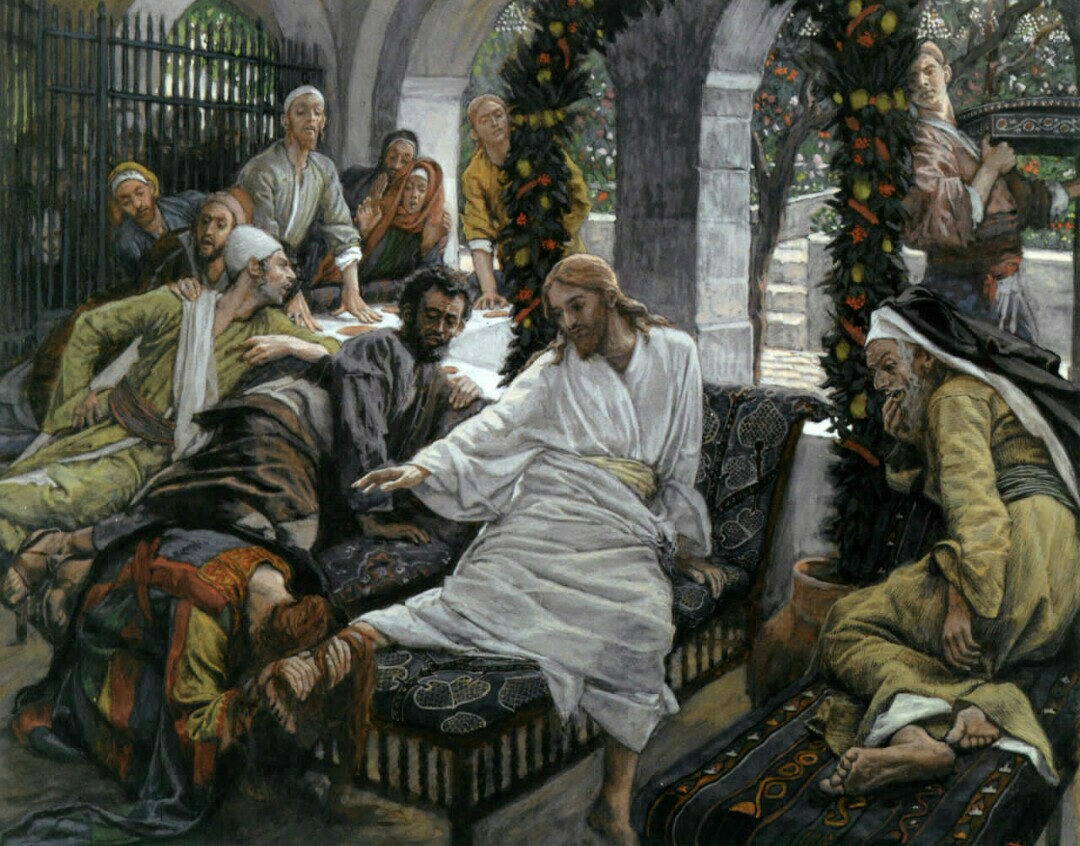
Where You Go, I Will Go: The Center Cannot Hold

Things fall apart; the centre cannot hold;
Mere anarchy is loosed upon the world,
The blood-dimmed tide is loosed, and everywhere   
The ceremony of innocence is drowned…
~William Butler Yeats from “The Second Coming”

At the still point of the turning world.
Neither flesh nor fleshless;
Neither from nor towards;

at the still point, there the dance is,
But neither arrest nor movement. And do not call it fixity,
Where past and future are gathered.

Neither movement from nor towards,
Neither ascent nor decline.

Here is a place of disaffection
Time before and time after
In a dim light: neither daylight
Investing form with lucid stillness
Turning shadow into transient beauty
With slow rotation suggesting permanence
Nor darkness to purify the soul
Emptying the sensual with deprivation
Cleansing affection from the temporal.
Neither plentitude nor vacancy. 

~T.S. Eliot from “Burnt Norton” The Four Quartets

Here at the very centre of all things,
Here at the meeting place of love and loss
We all foresee, and see beyond the cross.

~Malcolm Guite from “The Anointing at Bethany”

For you always have the poor with you, and whenever you want, 
you can do good for them. But you will not always have me. 
She has done what she could; 

she has anointed my body beforehand for burial. 
And truly, I say to you, wherever the gospel is proclaimed in 
the whole world, what she has done will be told in memory of her.
Mark 14:7-9

This Wednesday is a long way from Ash Wednesday,
but all our Wednesdays are marked by ashes —
we begin this day with that taste of ash in our mouth:
of failed hope and broken promises…

On this Wednesday, we submit our ashen way to you —
you Easter parade of newness.
Before the sun sets, take our Wednesday and Easter us,
Easter us to joy and energy and courage and freedom;
Easter us that we may be fearless for your truth.
Come here and Easter our Wednesday with
mercy and justice and peace and generosity.
We pray as we wait for the Risen One who comes soon.

~Walter Brueggeman from “Marked By Ashes”

Jesus makes clear Who is at the center of our salvation. It is our faith and belief in Him, rather than good works we do.

Jesus’ response to Mary of Bethany’s anointing of His feet before He enters Jerusalem carries parallel messages for us all.

Mary acts out of faith even as she confronts the painful reality of Jesus’ predictions of His death and burial. Mary believes what His disciples refuse to hear.

Jesus prays later to have the reality of His suffering lifted from Him, but in obedience, He perseveres out of faith and love for the Father.

Mary acts out of steadfast love for the Master, showing single-minded devotion in the face of criticism from the disciples.

Jesus, on the cross, shows forgiveness and love even while his enemies deride and execute Him.

Mary acts out of significant personal sacrifice–pouring costly perfume worth a full year’s wages–showing her commitment to the living Christ who is here and now before her.

Jesus willingly gives the ultimate sacrifice of Himself–there is no higher price to pay.

Mary responds to His need for compassion and His response clearly shows He is deeply moved by her action.

Jesus, as man Himself, recognizes humanity’s need to be saved, and puts Himself in our place. We respond, incredulous, putting Him first in our lives.

Mary did what she could in the middle of this Holy Week to ease His distress at what He would soon confront. 

She did what she could for Him –
humbly, beautifully, simply, sacrificially.

And so we remember Mary as the harbinger of His suffering and death, just as He said we would. 

She did what she could — as should we.
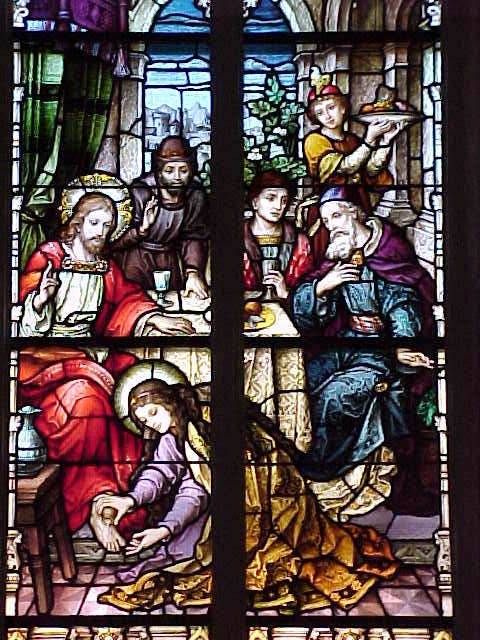
stained glass from Meyers Studio, Munich 1899

This year’s Lenten theme:

…where you go I will go…
Ruth 1:16

One-Time
Monthly
Yearly

Make a one-time or recurring donation to support daily Barnstorming posts

Make a monthly donation

Make a yearly donation

Choose an amount

$10.00
$25.00
$50.00
$5.00
$15.00
$100.00
$5.00
$15.00
$100.00

Or enter a custom amount

$

Your contribution is deeply appreciated.

Your contribution is appreciated.

Your contribution is appreciated.

DonateDonate monthlyDonate yearly
A Bright Sadness: She Did What She Could

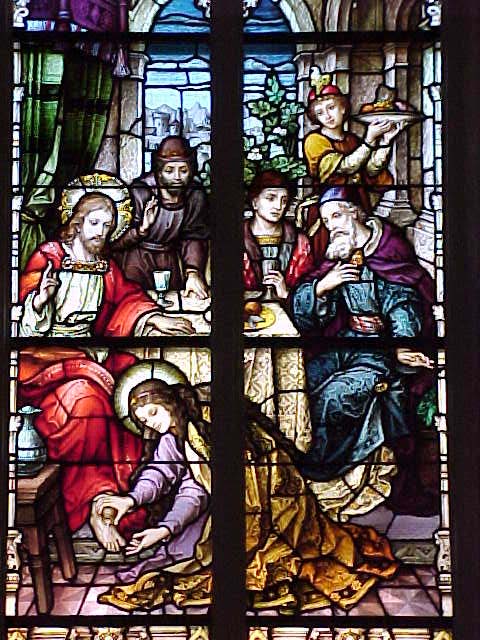
From Meyers’ studio Munich 1899

She did what she could. She poured perfume on my body beforehand to prepare for my burial. I tell you the truth, wherever the gospel is preached throughout the world, what she has done will also be told, in memory of her. Mark 14:8-9

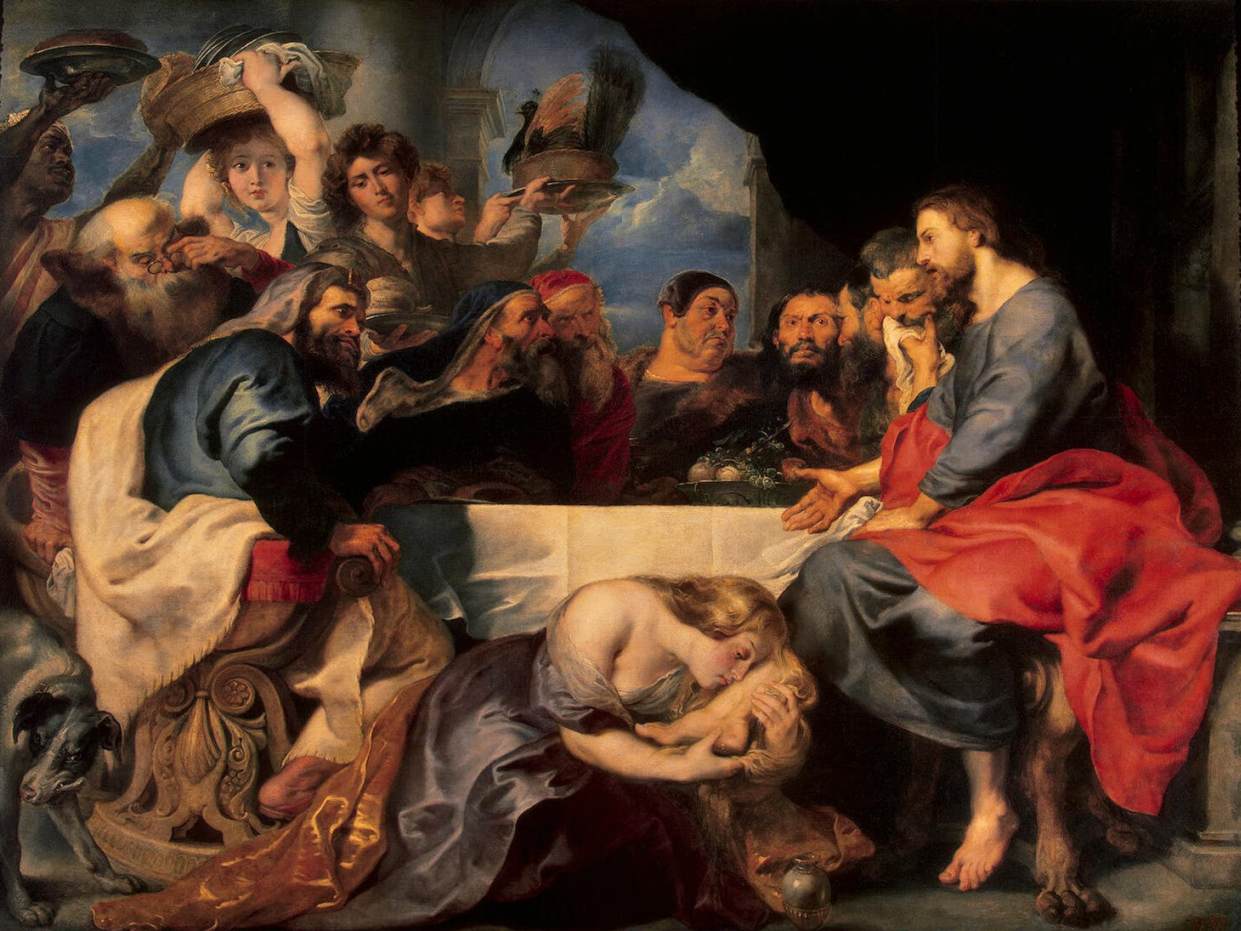
Rubens’ Mary Anointing of Jesus


We naturally wonder if our actions on this earth are pleasing to God, though we understand our faith, rather than good works we do, is the key to salvation.   Jesus’ response to Mary of Bethany’s anointing of His feet the day before He enters Jerusalem is provocative on a number of levels.  However, her story parallels the passion of this Passion week:

Mary acts out of faith even when she confronts a painful reality. She acknowledges Jesus’ predictions of His death and burial. Mary believes what His disciples refuse to hear.

Jesus prays a few days later to have the reality of suffering lifted from Him, but in obedience, He perseveres out of faith and love for the Father.

Mary acts out of her steadfast love for the Master–she is showing single-minded devotion in the face of criticism from the disciples.

Jesus, on the cross,  shows forgiveness and love even to the men who deride and execute Him.

Mary acts out of significant personal sacrifice–pouring costly perfume worth a full year’s wages–showing her commitment to Christ.

Jesus willingly gives the ultimate sacrifice of Himself–there is no higher price to pay.

Mary responds to His need–she recognizes that this moment is her opportunity to anoint the living Christ, and His response clearly shows He is deeply moved by her action.

Jesus, as man Himself, recognizes humanity’s need to be saved, and places Himself in our place. We must respond, incredulous,  with gratitude.

Jesus tells Mary of Bethany (and us),  in response to the disciples’ rebukes, that it is her action that will be told and remembered.   She did what she could at that moment to ease His distress at what He would soon confront.  She did what she could for Him–humbly, beautifully, simply, sacrificially–and He is so grateful that He Himself washes the feet of His disciples a few days later in a personal act of devotion and servanthood.

And today we remember this Mary as the harbinger of His suffering and death, just as He said we would. 

She did what she could — as should we.

James Tissot

Lenten Reflection–She Did What She Could

stained glass from Meyers Studio, Munich 1899

She did what she could. She poured perfume on my body beforehand to prepare for my burial. I tell you the truth, wherever the gospel is preached throughout the world, what she has done will also be told, in memory of her.
Mark 14:8-9

We naturally wonder if our actions on this earth are pleasing to God, though we believe our faith, rather than good works we do, is the key to salvation.   Jesus’ response to Mary of Bethany’s anointing of His feet the day before He enters Jerusalem is provocative on a number of levels.  However, this story parallels the passion of this Passion week:

Mary acts out of faith even when she confronts a painful reality–she acknowledges Jesus’ predictions of His death and burial–she believes what His disciples refused to hear.

Jesus prays a few days later to have the reality of suffering lifted from Him, but in obedience, He perseveres out of faith and love for the Father.

Mary acts out of her steadfast love for the Master–she is showing single-minded devotion in the face of criticism from the disciples.

Jesus, on the cross,  shows forgiveness and love even to the men who deride and execute Him.

Mary acts out of significant personal sacrifice–pouring costly perfume worth a full year’s wages–showing her commitment to Christ.

Jesus willingly gives the ultimate sacrifice of Himself–there is no higher price to pay.

Mary responds to His need–she recognizes that this moment is her opportunity to anoint the living Christ, and His response clearly shows He is deeply moved by her action.

Jesus, as man Himself, recognizes humanity’s need to be saved, and places Himself in our place. We must respond, incredulous,  with gratitude.

Jesus tells Mary of Bethany (and us),  in response to the disciples’ rebukes, that it is her action that will be told and remembered.   She did what she could at that moment to ease His distress at what He would soon confront.  She did what she could for Him–humbly, beautifully, simply, sacrificially–and He is so grateful that He Himself washes the feet of His disciples a few days later in a personal act of devotion and servanthood.

And today we remember this Mary as the harbinger of His suffering and death, just as He said we would.  She did what she could as should we.

Rubens' Mary Anointing of Jesus