Some Sweeping Blast

The winds will blow their own freshness into you, and the storms their energy, while cares will drop away from you like the leaves of autumn.
~John Muir
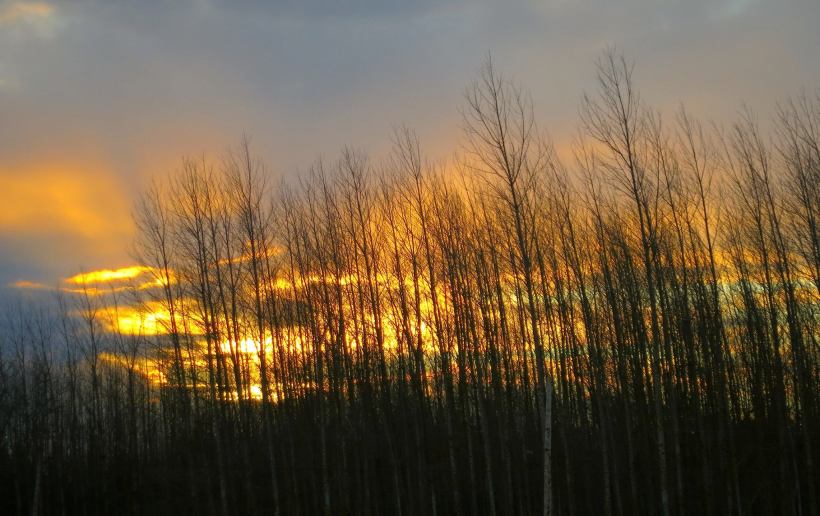

Some sweeping blast may suddenly come o’er us,
Lose our place, and turn another leaf!
~Hannah Flagg Gould from “The Whirlwind”
Earth shuddered at my motion,
And my power in silence owns;
But the deep and troubled ocean
O’er my deeds of horror moans!
I have sunk the brightest treasure—
I’ve destroyed the fairest form—
I have sadly filled my measure,
And I am now a dying storm.

~Hannah Flagg Gould from “The Dying Storm”
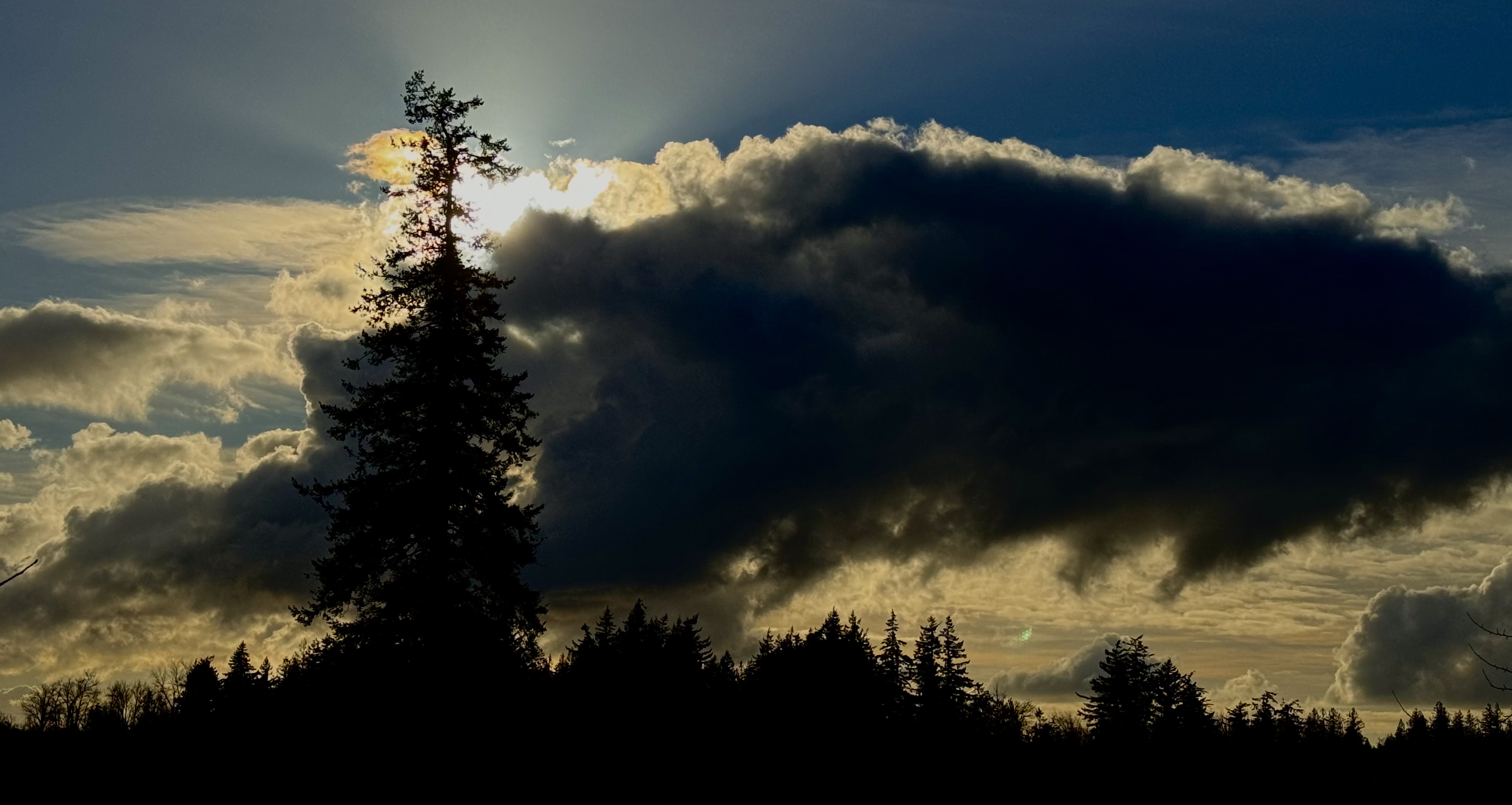
Last night, the Pacific Northwest braced for a “historic” windstorm with unprecedented winds from the east, through the Cascade Mountain passes, rushing to a low pressure system forming in the ocean. The current term for such a storm is a “bomb cyclone,” followed by an “atmospheric river” – ominous descriptions and even more ominous when viewed on satellite images.

The eastern part of Seattle’s King County was hit full force with more than a half million homes left without power last night. It will be a miserable few days for so many in an urban setting as crews try to repair the damage. We live 100 miles to the north and experienced only mild winds, although there was heavy tree fall damage just 15 miles to the south of us in densely wooded Sudden Valley. Our county is usually the focal point for fall and winter windstorms, but we were largely spared this time around.

In anticipation of this storm, the weather services compared it to the historic windstorm on Columbus Day in 1962 which ravaged the region.

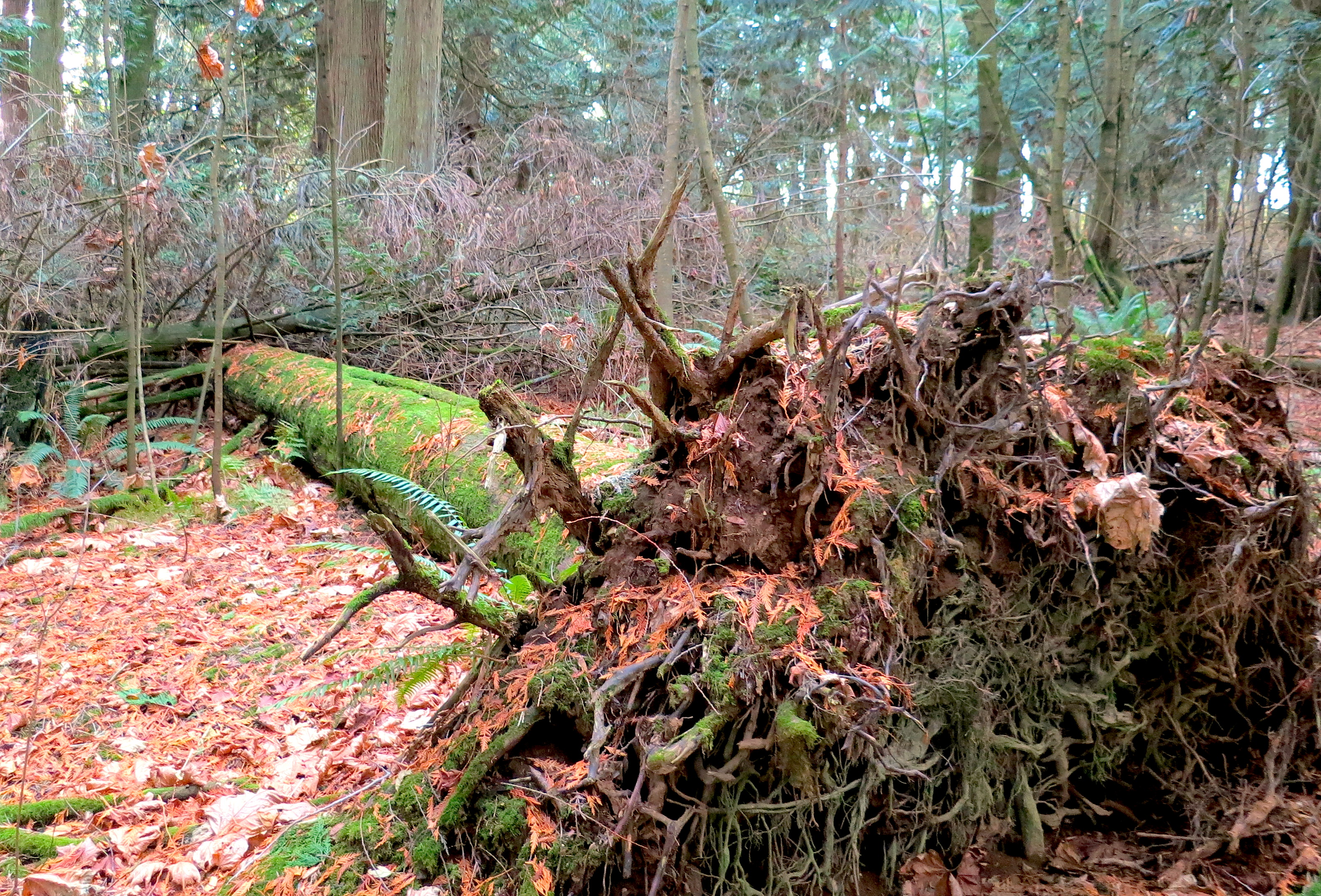
I remember that Columbus Day storm vividly as an eight year old living in Olympia, as the wind gusts clocked in at over 140 mph.  Large fir trees toppled over like toothpicks in the woods all around our house.  The root balls stood 15 feet tall, giant headstones over a mass of tree graves. 

Back then, my family’s home, located outside city limits, remained without power for at least a week. We lost all our stored home-grown meat and produce in our freezer and ate only canned goods, boiling water outside on a camp stove under kerosene lights, roasting hot dogs in our fireplace. We slept in sleeping bags under piles of blankets.

This week, when the predictions poured in about a similar strength storm, we readied our farm’s generator and hunkered down, waiting for the monster to storm into our yards and woods.

But the lights only flickered a few times, the winds meager in comparison to our usual fall and winter storms. Our woods, filled with fallen trees from bygone storms, was left untouched this time around.

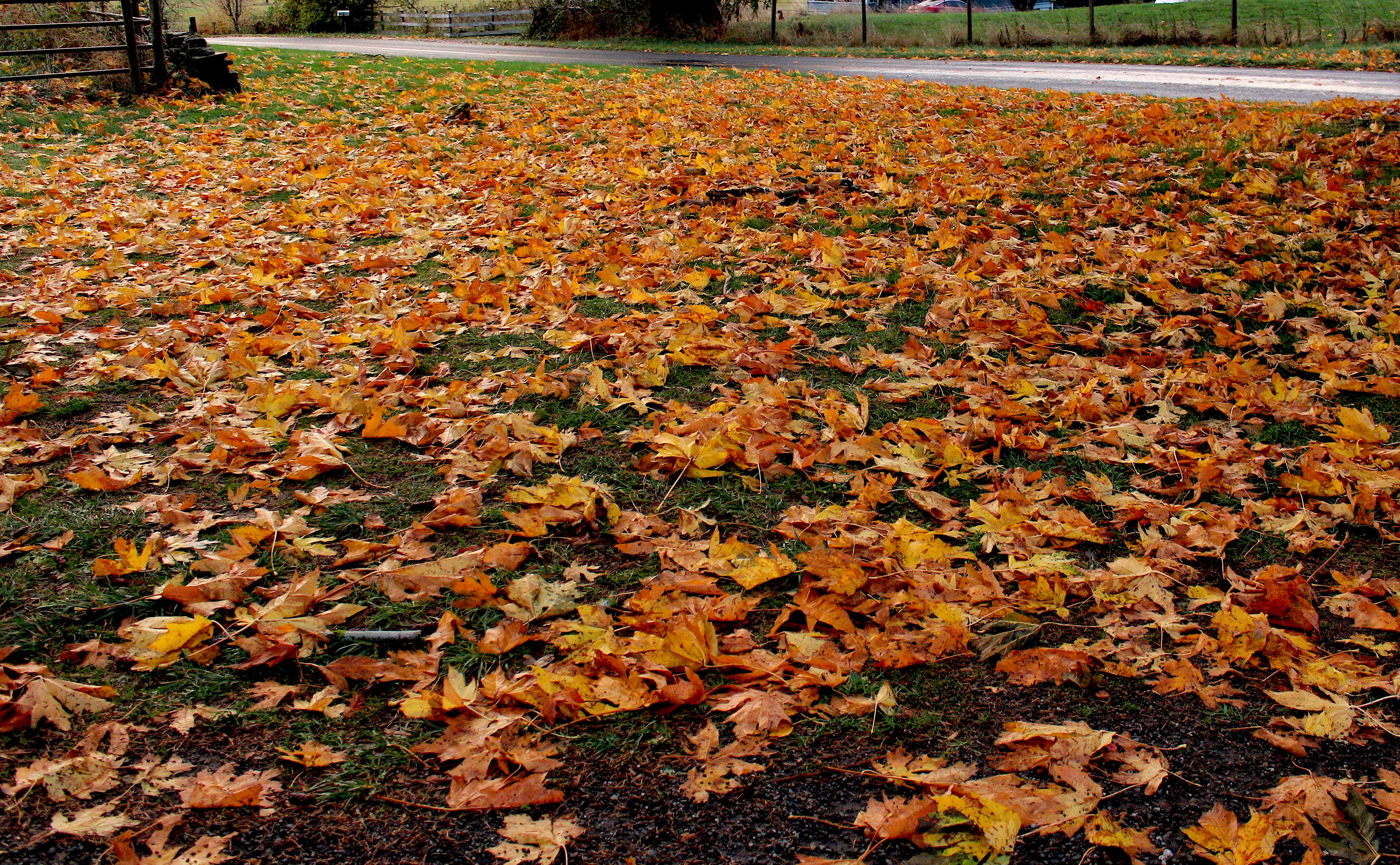
I’m among the many relieved this morning, having aged past the challenge of living days without power. Today, as so many will be dealing with the messy clean up, my cares have dropped away like the leaves forced to let go in the storm, settling silent to wait for what nature might bring next.
AI image created for this post

Most Poignant of All

In the years to come they will say,
“They fell like the leaves
In the autumn of nineteen thirty-nine.”
November has come to the forest,
To the meadows where we picked the cyclamen.
The year fades with the white frost
On the brown sedge in the hazy meadows,
Where the deer tracks were black in the morning.
Ice forms in the shadows;
Disheveled maples hang over the water;
Deep gold sunlight glistens on the shrunken stream.
Somnolent trout move through pillars of brown and gold.
The yellow maple leaves eddy above them,
The glittering leaves of the cottonwood,
The olive, velvety alder leaves,
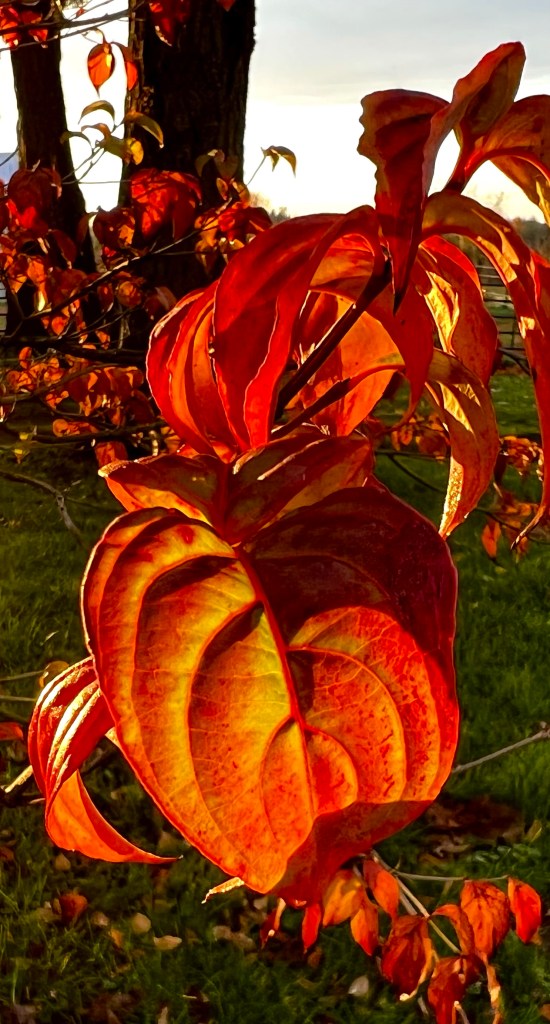
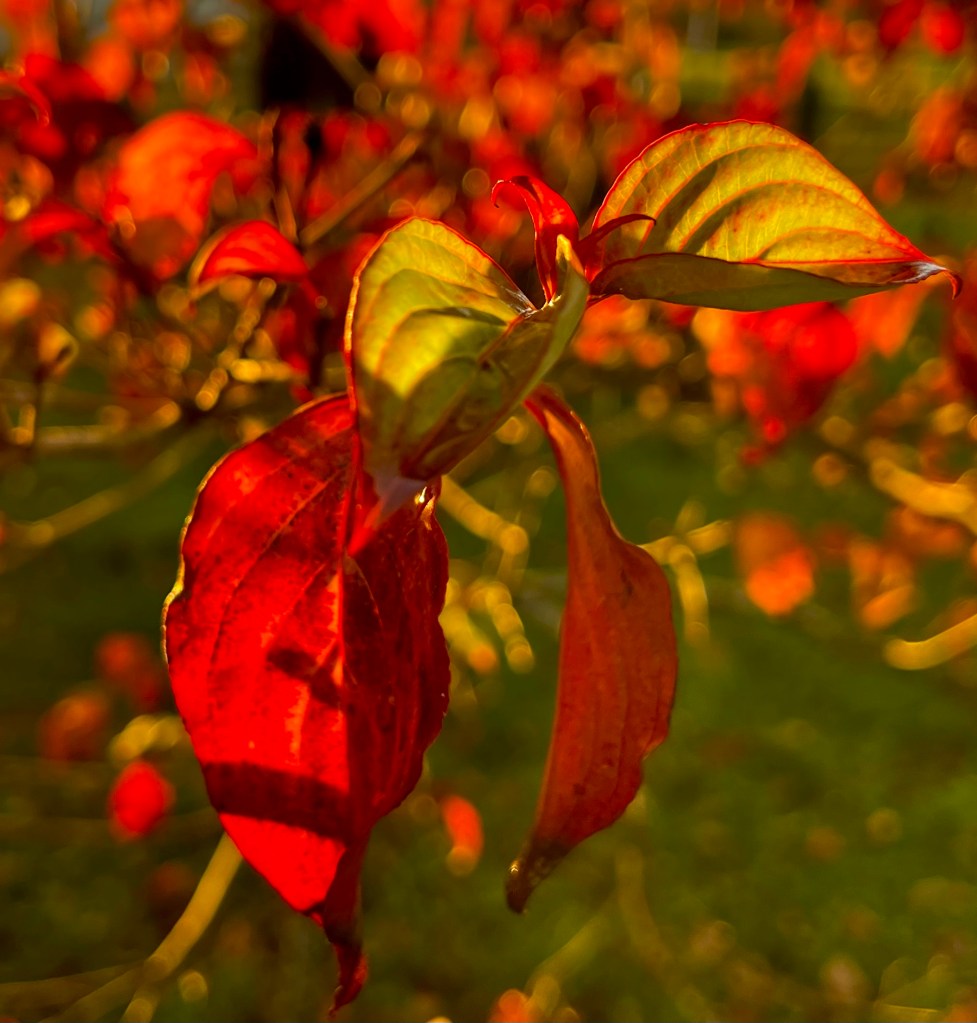
The scarlet dogwood leaves,
Most poignant of all.


In the afternoon thin blades of cloud
Move over the mountains;
The storm clouds follow them;
Fine rain falls without wind.
The forest is filled with wet resonant silence.
When the rain pauses the clouds
Cling to the cliffs and the waterfalls.
In the evening the wind changes;
Snow falls in the sunset.
We stand in the snowy twilight
And watch the moon rise in a breach of cloud.
Between the black pines lie narrow bands of moonlight,
Glimmering with floating snow.
An owl cries in the sifting darkness.
The moon has a sheen like a glacier.
~Kenneth Rexroth, “Falling Leaves and Early Snow” from The Collected Shorter Poems.


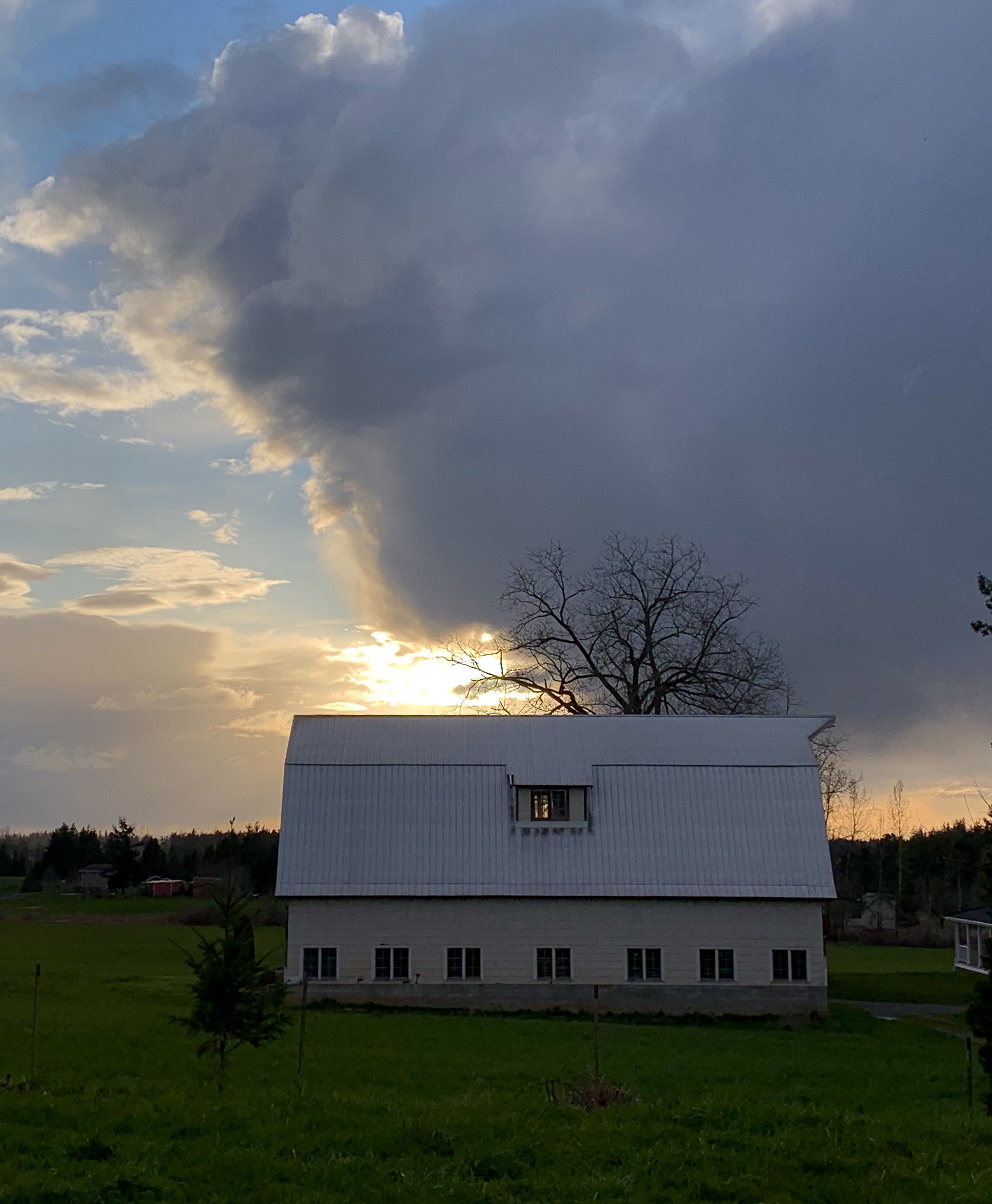
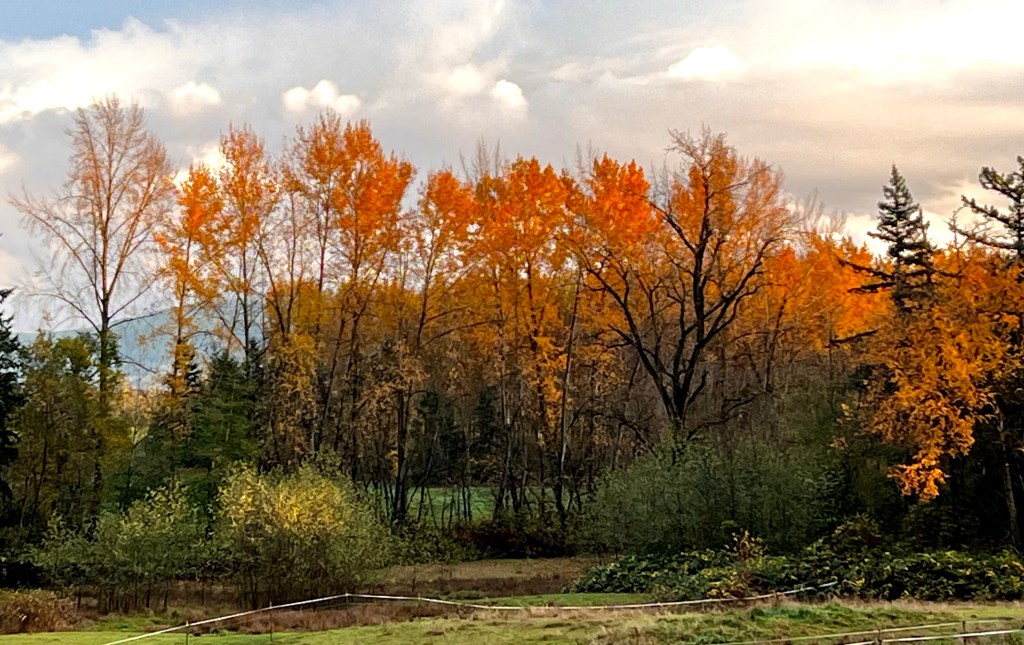
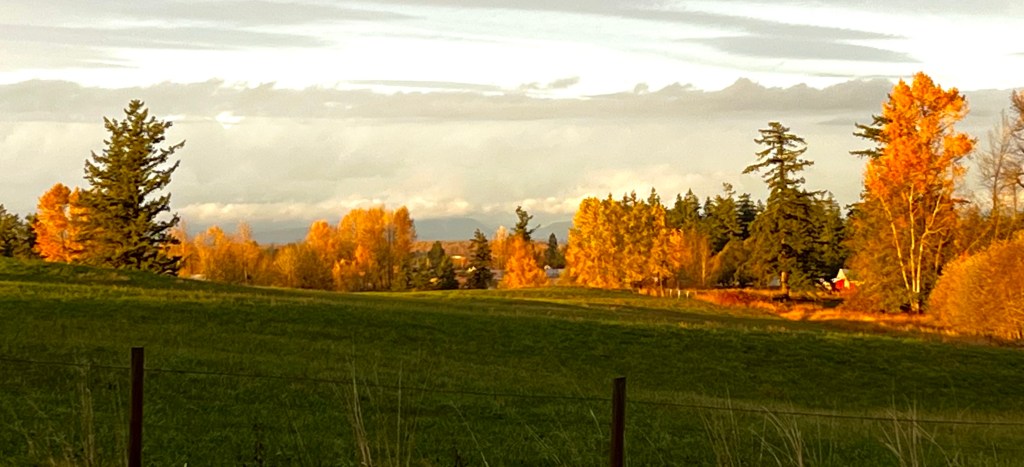
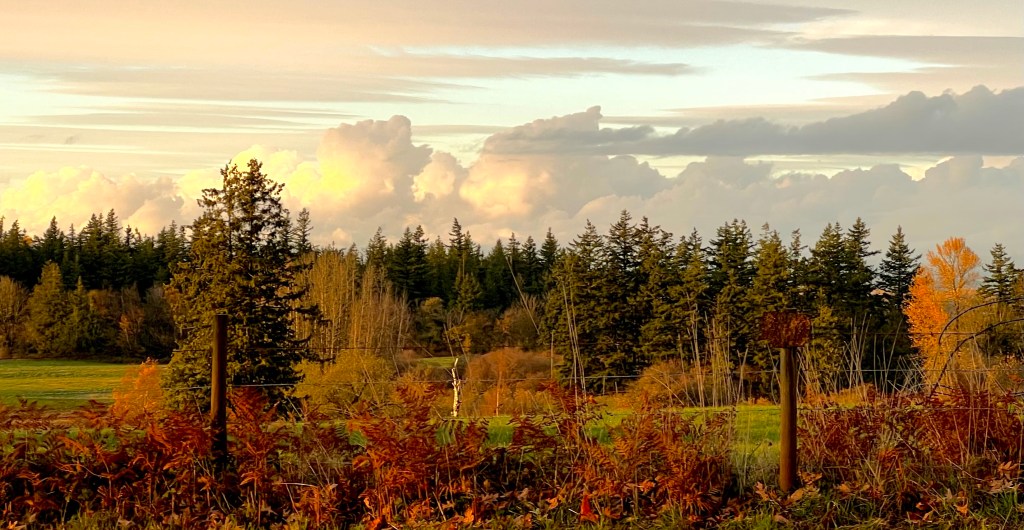
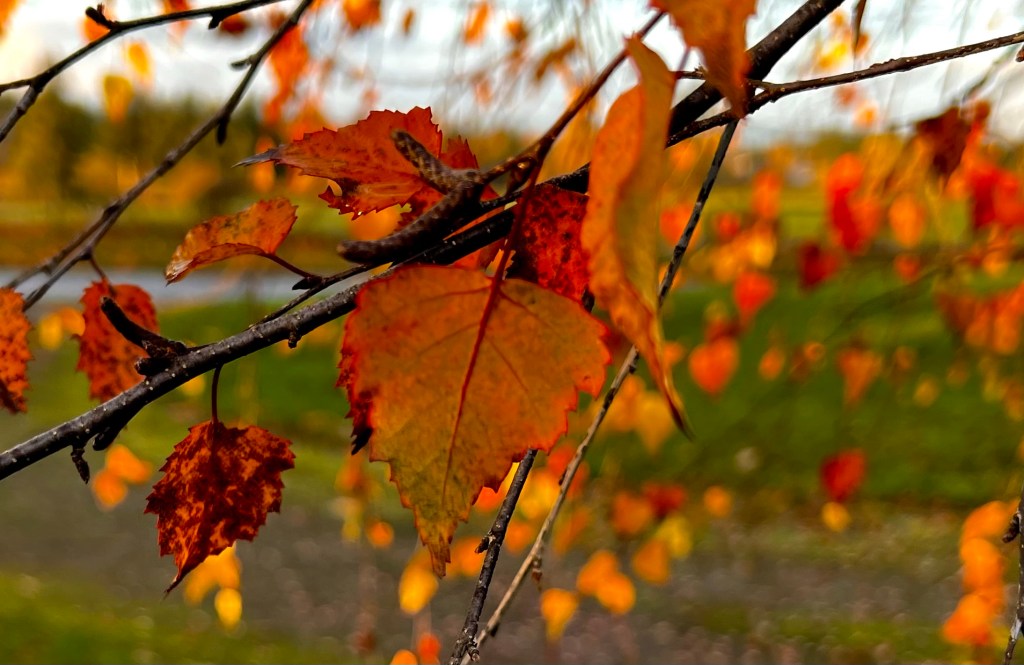
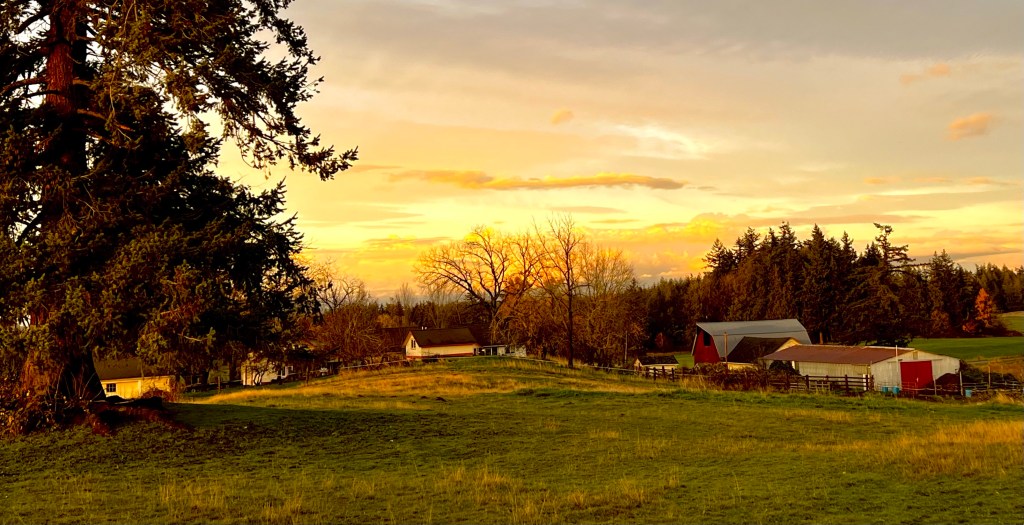
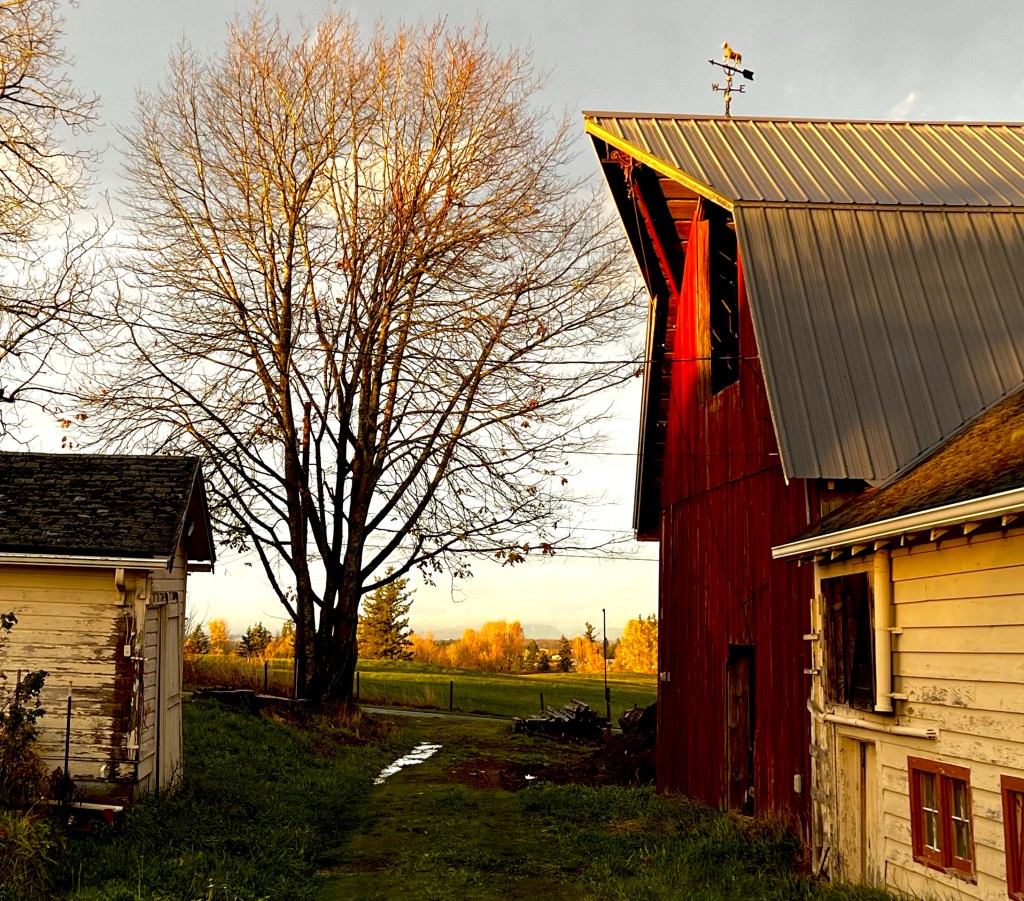
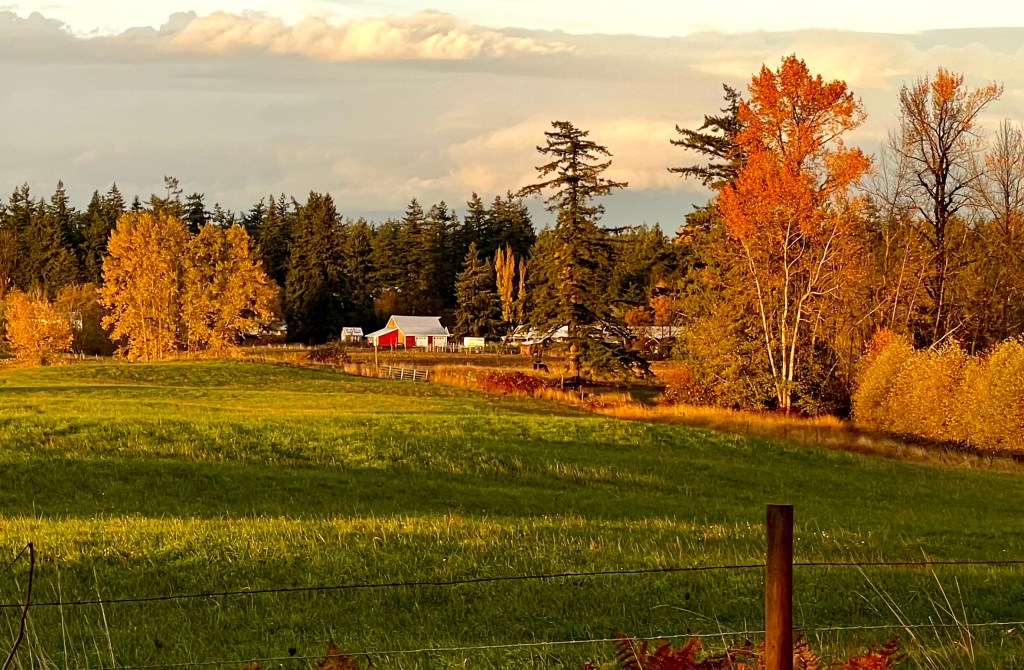
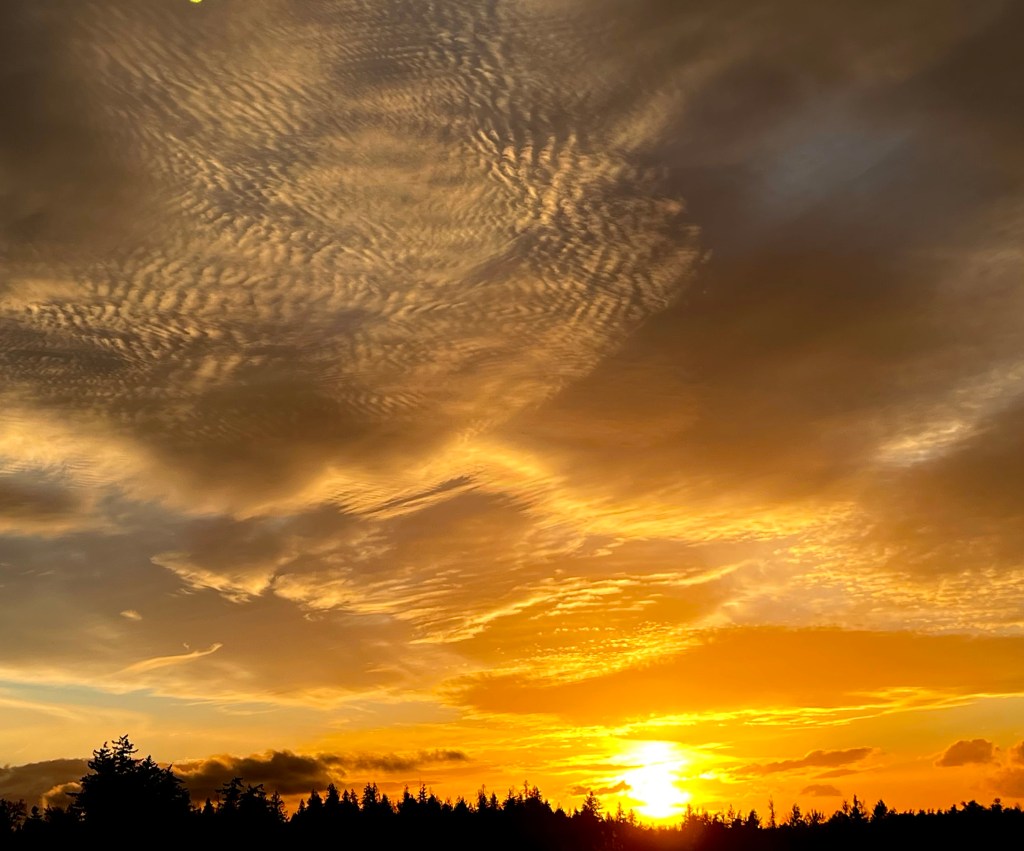
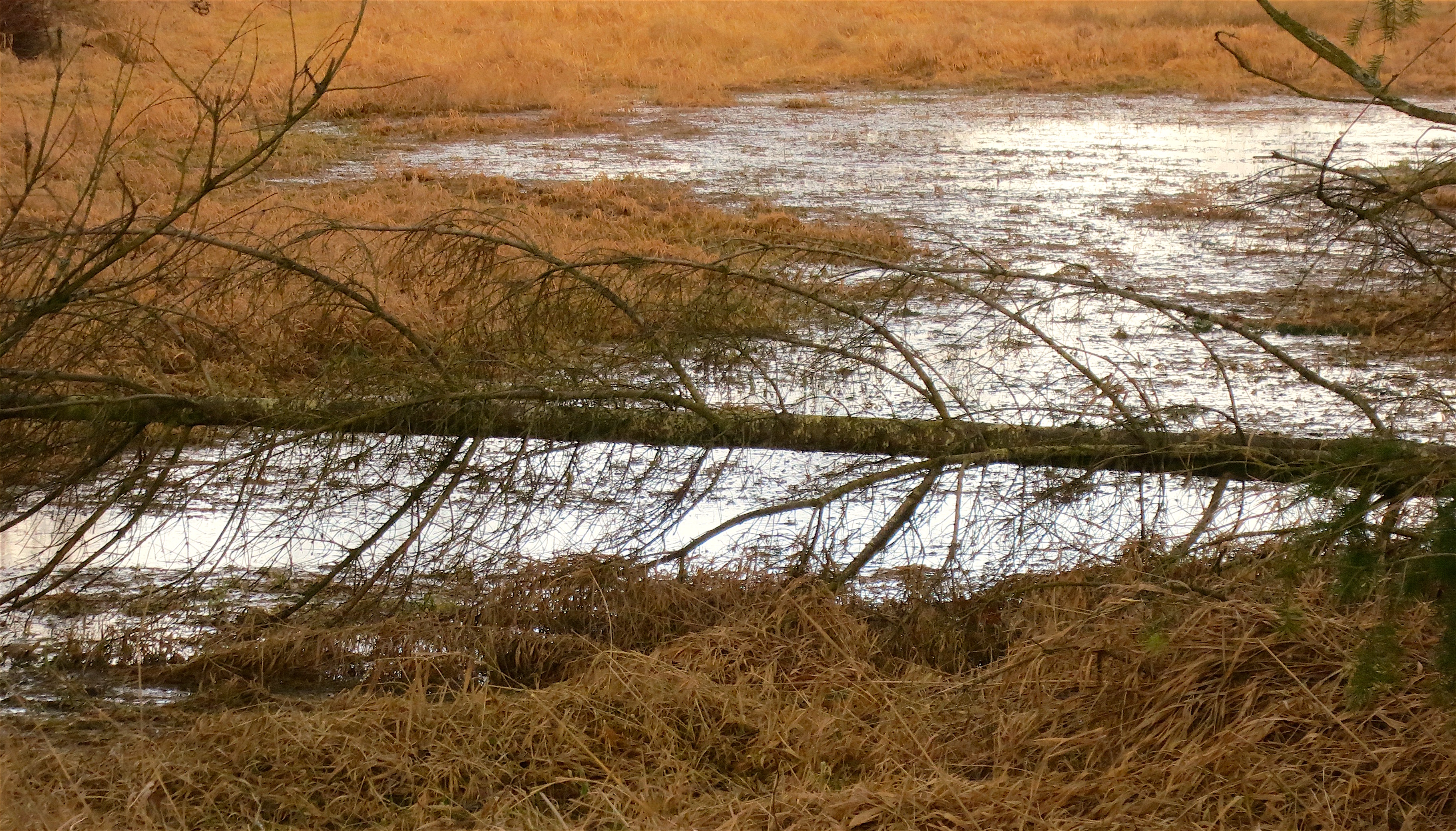
These photos of our farm are from last week, before an atmospheric river fell in torrents from the sky. The downpour precipitated melting of new-fallen snow in the nearby Cascade mountains and foothills, with subsequent cresting of the rivers and streams in lower mainland British Columbia and our local counties over the weekend.

Before the storm hit us, these pictures depict a flood of golden sunshine in the late afternoon. It was the kind of saturation of light we all were needing, unaware that our skies and ground would soon be over-saturated with far too much water in a few days.

Our communities, both north and south of our nearby Canadian border, continue to reel from this unprecedented flood event, with roads impassable due to standing water and landslides, as well as whole towns evacuated by boat and homes and businesses will be uninhabitable for weeks, if not months.

The sun has returned now that the river in the sky has dried up, having dumped its load. We now wait for the waters and the misery to recede.

The scarlet red of the dying dogwood leaves are poignant indeed, but nothing like the poignancy of communities pulling together to restore normalcy after disaster. Churches have quickly become places of refuge for those who have no home this week and in the weeks to come.

Bless those who are able to help, if not with boats and muscle, then with donations:

The Whatcom Community Foundation Resilience Fund is targeting the local efforts as well as support of the Red Cross, critical in meeting all disaster needs everywhere.

Thank you for reading and praying for restoration for the affected Canadians and Americans.